1971 CB350 . . . 40 year hibernation

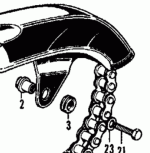
This picture from BaT on a pristine CL350 shows it inside the swingarm, and the clearance on your bike between the sprocket studs and the chain guard bolt/nut seems adequate since those components don't move from their respective positions.
Thanks, Tom. The BaT photo addresses both of my questions. You can see that the bolt for the pegs is very close to the swingarm. In fact, I think they have the bolt head on the outside (probably correct) and I reversed it to create as much clearance as possible.

Is that a stock nut too?
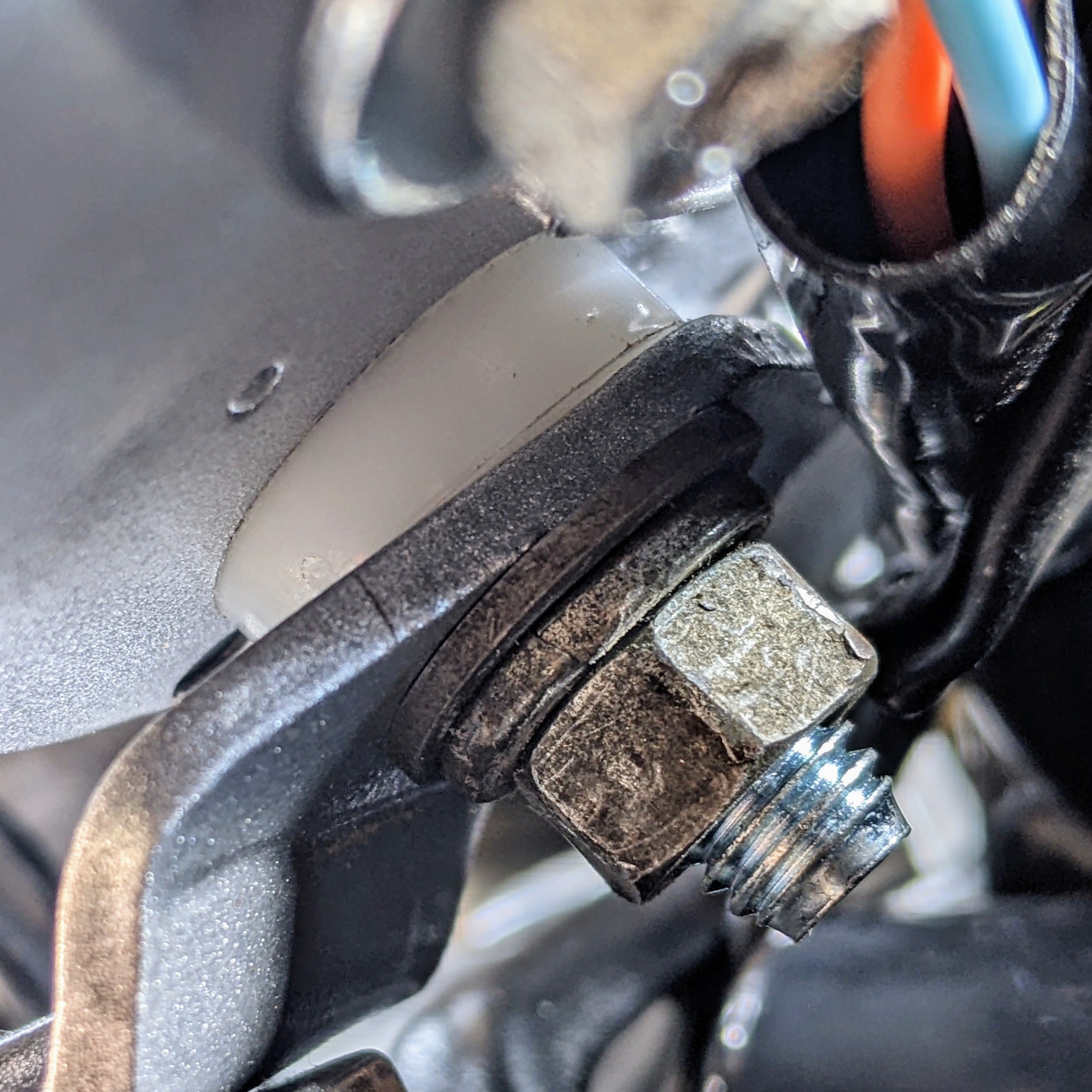
It is, complete with undisturbed patina. =). It is #2 in the parts diagram.

Screenshot_20240523-162355.png
 
Thanks, Tom. The BaT photo addresses both of my questions. You can see that the bolt for the pegs is very close to the swingarm. In fact, I think they have the bolt head on the outside (probably correct) and I reversed it to create as much clearance as possible.


It is, complete with undisturbed patina. =). It is #2 in the parts diagram.
Looks good Brody, all my 350 chainguards are like that, just don't use a too long bolt.

The foot peg nut and bolt will never hit the swingarm, unless you use really longer shocks.
 
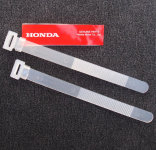
I'd like to use something nicer than zip ties for my wiring harness, but the Honda cable ties seem high at $7.50 a pair.

Screenshot_20240525-180407.png

Does anyone have any alternatives to suggest?
 
Are those from 4into1? If so, they must have gone up a fair amount since I bought a few for my 450. I used black (or red) zip ties where they couldn't be easily seen, like under the tank and seat area, and a few of those above in the areas where they could be seen.
 
Are those from 4into1? If so, they must have gone up a fair amount since I bought a few for my 450. I used black (or red) zip ties where they couldn't be easily seen, like under the tank and seat area, and a few of those above in the areas where they could be seen.
I'm glad you mentioned it. I found those on eBay, but they're $1.25 each from 4-into-1. That's not bad.
 
Last edited:
Wait until you accumulate some other stuff you need so they'll bundle the shipping.
My planning with parts lately has been lacking. I just received an order from 4-into-1 yesterday. I placed another small order including the cable ties and the shipping was $6, so not the end of the world. The harness is near the top of my to-do list for this project.
 
My planning with parts lately has been lacking. I just received an order from 4-into-1 yesterday. I placed another small order including the cable ties and the shipping was $6, so not the end of the world. The harness is near the top of my to-do list for this project.
My fav is when I order a ton. Receive a big box. Full of packages with Honda part numbers on them.

Ya. Good luck figure out which thing is for what.
 
My fav is when I order a ton. Receive a big box. Full of packages with Honda part numbers on them.

Ya. Good luck figure out which thing is for what.
Yes, especially if it is a box full of seals, bolts, and/or screws. Luckily the box I'm working through contains more recognizable items, like coils, mirrors, carb boots, and the like.
 
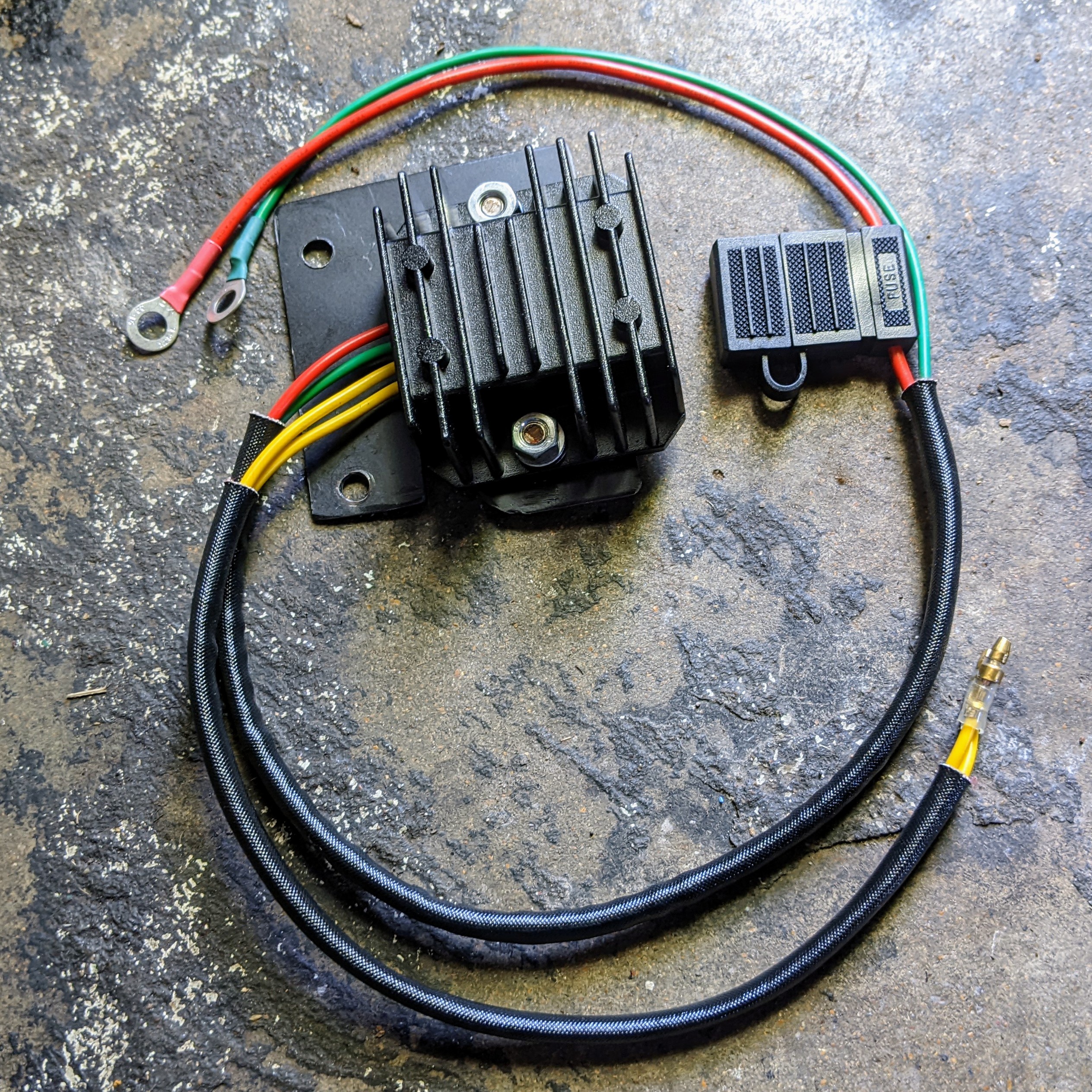
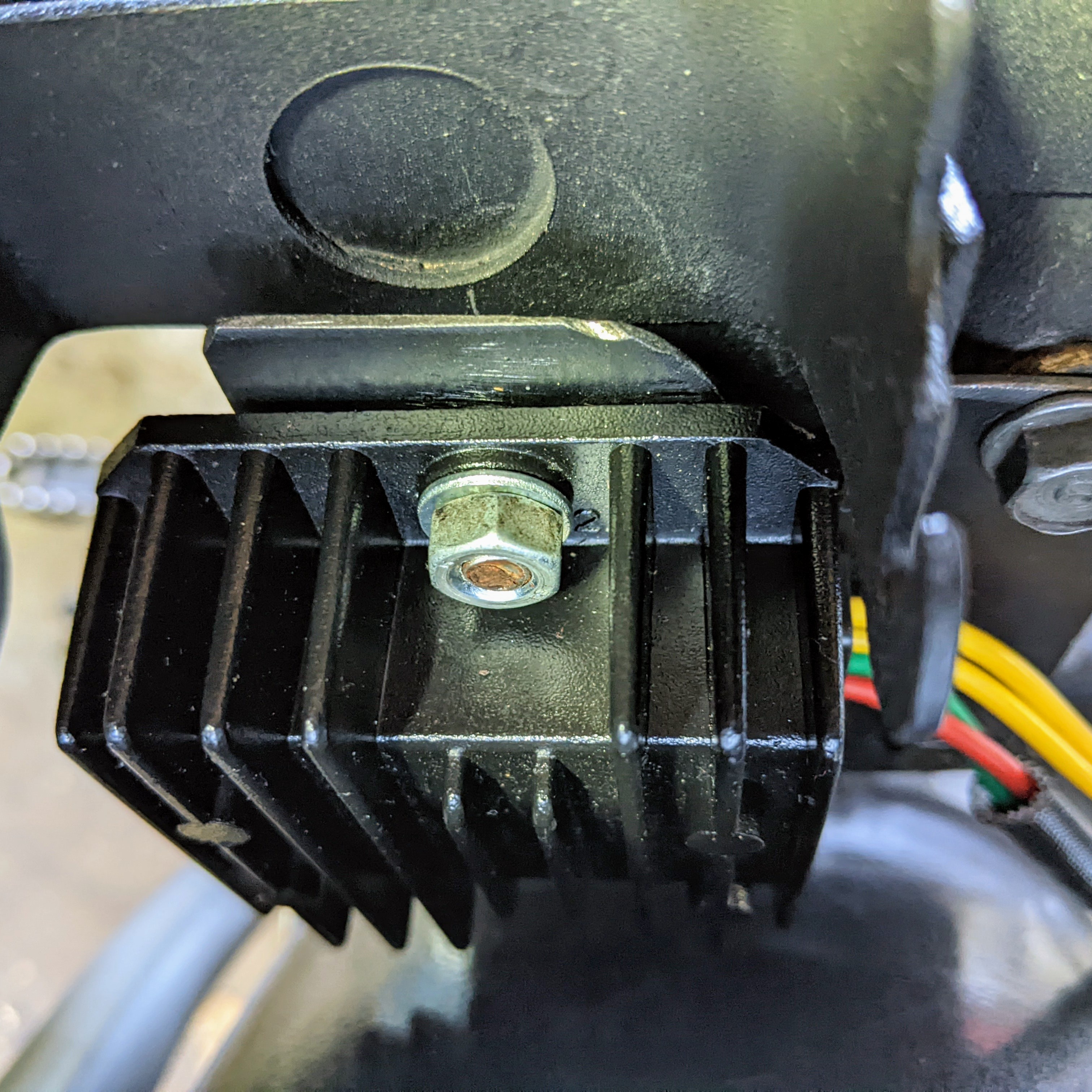
Today's task for this project was to fabricate a mounting plate for the rec/reg. I used the OEM regulator mounting point on the back of the battery box. The plate has two pairs of through holes: one set matches the threaded holes on the battery box and the other set is spaced for the rec/reg, which comes from Rick's Electrics. I like the fact that their rec/reg connects directly to the battery terminals.

EMfxTef.jpg


FOJBMGX.jpg
 
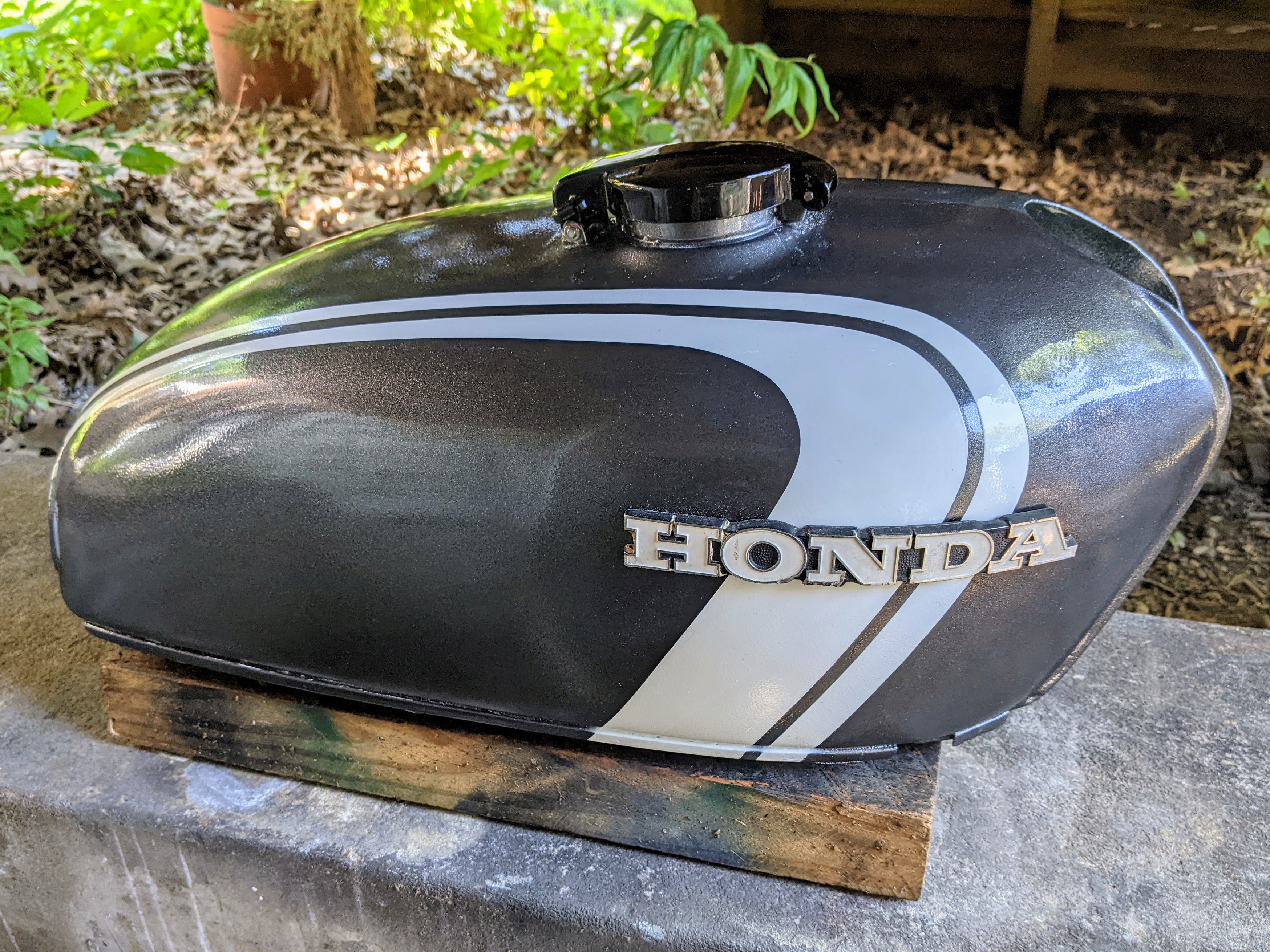
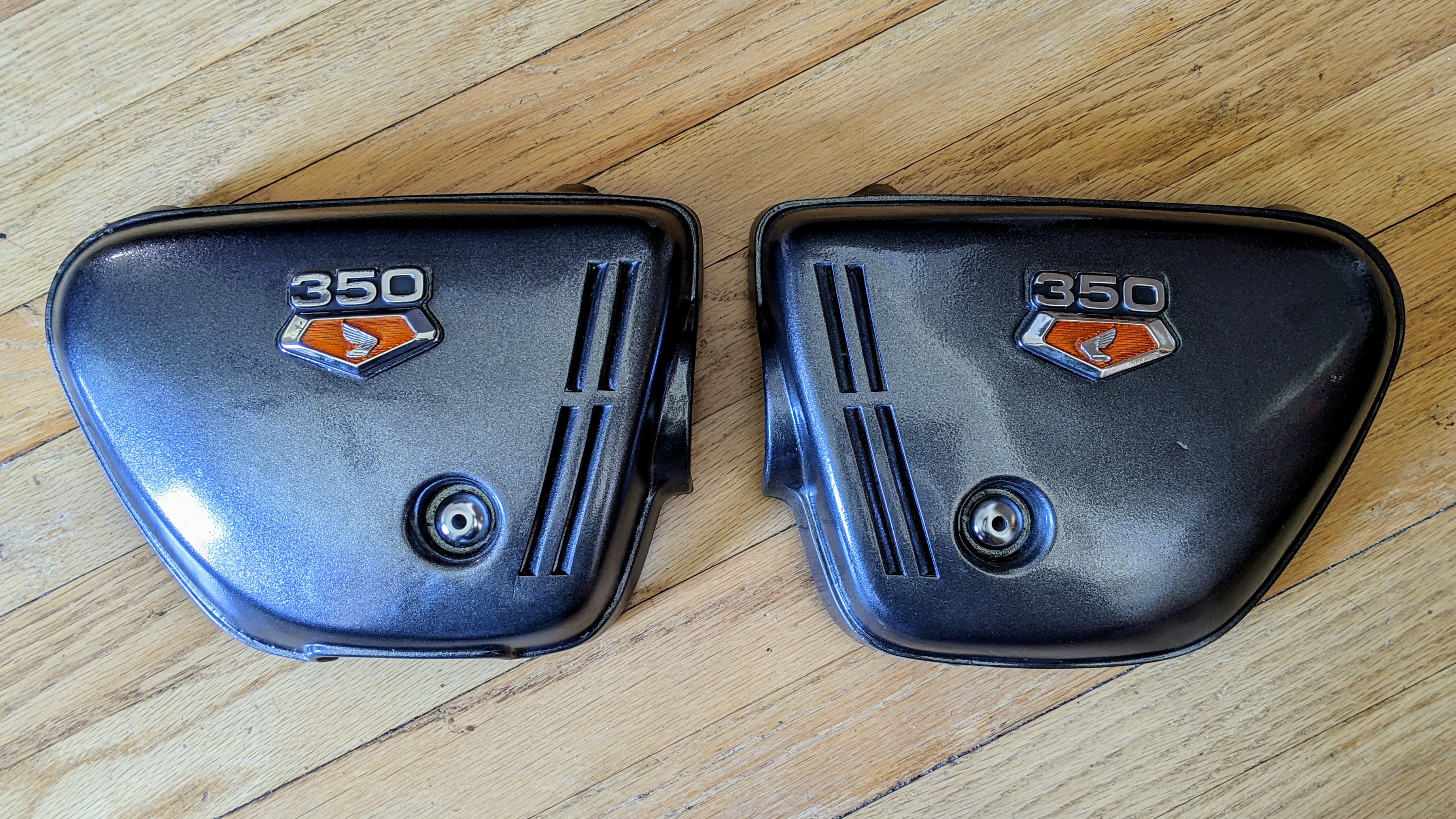
Paint and polish are not among my area(s) of expertise, yet I continue to make attempts. Polishing is really the part that I need to work on. I painted the tank and side covers last year and decided to polish them a bit today to prepare for use. I guess I can always continue to wax and polish them on the bike.

I believe the black gas cap is the same one used by @Domscustom a while back and came from 4-into-1. You may recall that he ran into an issue with the cotton wadding blocking the tank vent. I removed the wadding before installation thanks to his experience.

fWEmVbI.jpg


The badges are aftermarket pieces from Classic Bike Parts (Germany). They came with very small & tight speed nuts. One passed into another dimension as I was pressing it on one of the pins, so I substituted one Honda speed nut. The grommets gave me some trouble until I followed a tip in this thread (post #8), pulling the half-inserted grommet through with a pair of needle nose pliers.

WoN4Z3b.jpg


The pictures make the paint look lighter on the tank. I think this is mostly a lighting/exposure phenomenon, but the paint jobs leave room for improvement.
 
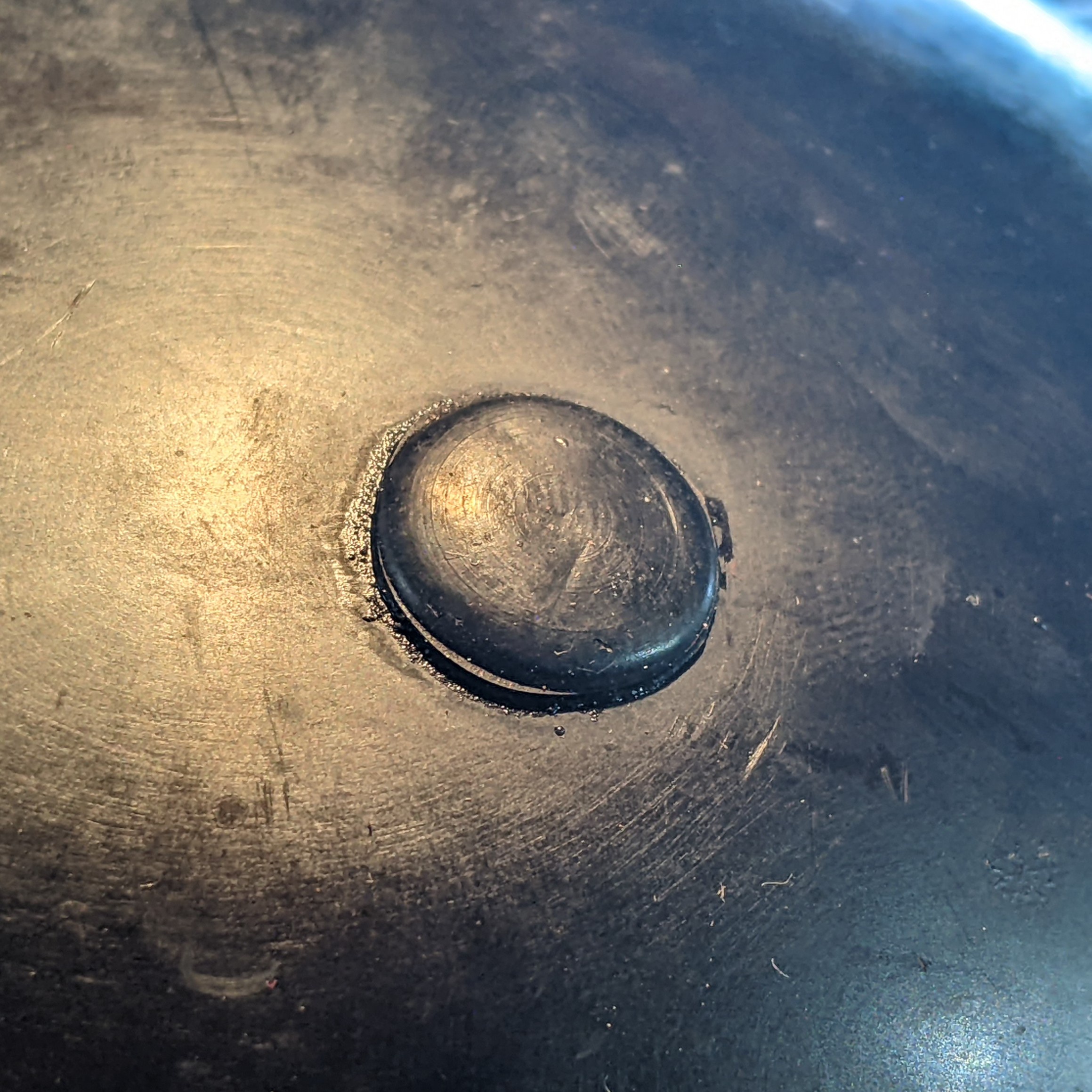
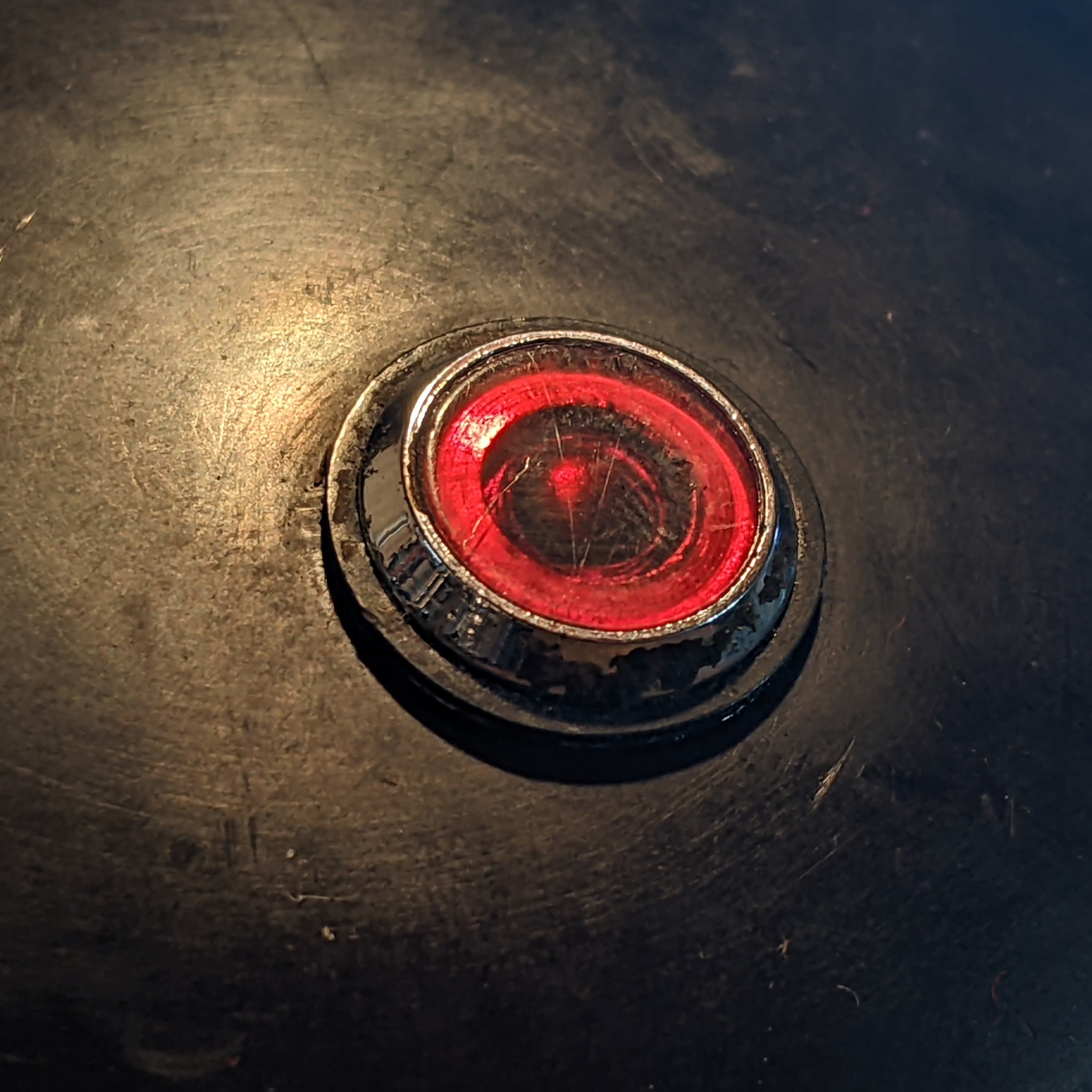
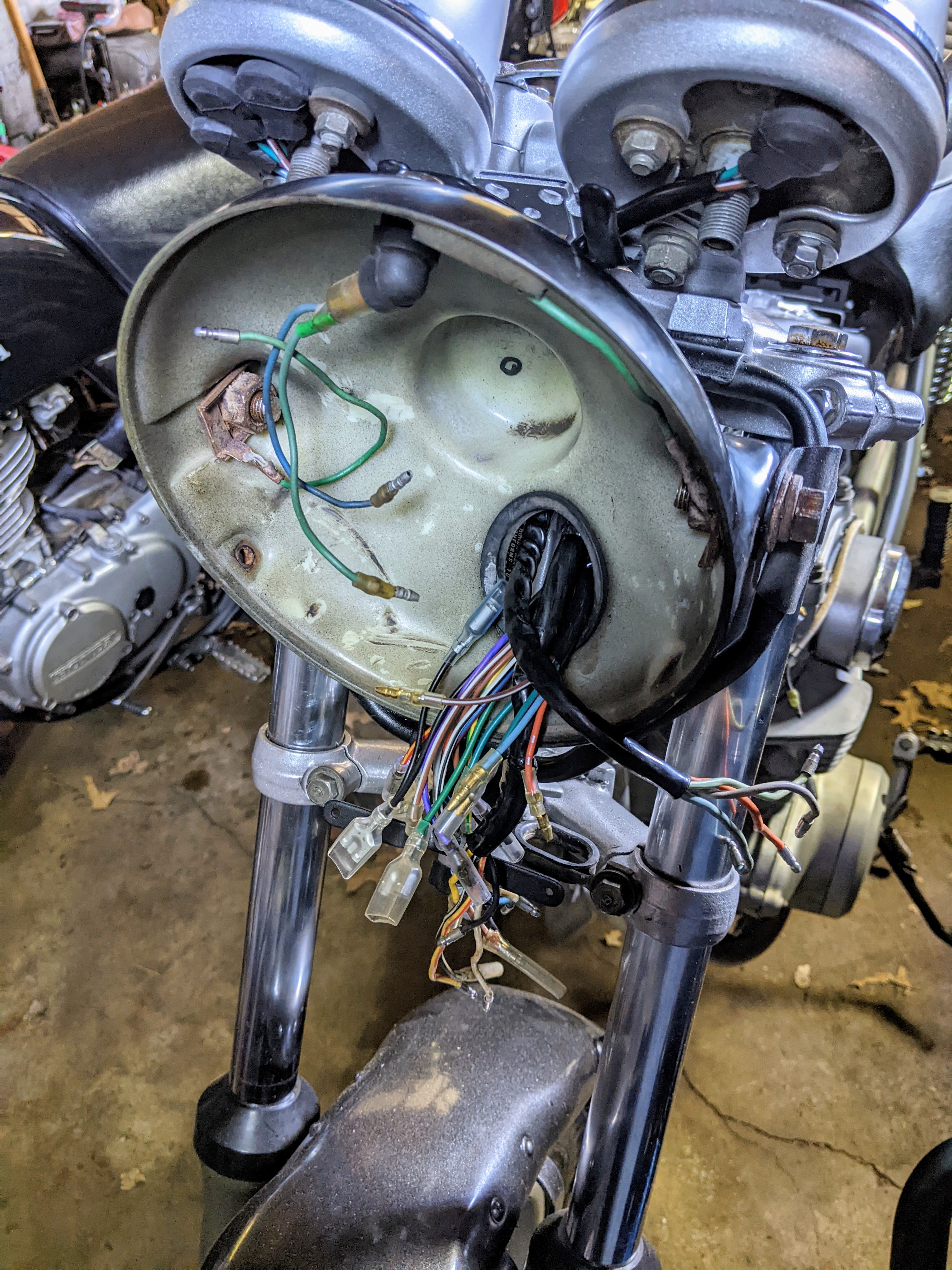
I've slowly been learning about 350/360 headlight compatibility. I'm using a 360 front end and chose to use a 360 headlight bracket. I found out last week that the 350 headlight bucket doesn't fit in the 360 bracket. Today, I received a 360 bucket and found out the 350 bezel is smaller than the 360 bezel. We'll see what I learn next.

Thankfully, the 360 bucket had a rubber button on top that seals a hole just the right size for the 350 high beam indicator.

yXy8KPJ.jpg
miOLDZh.jpg


eTOjtz6.jpg


All the wiring is now roughly in place. In the bucket, it looks like an awful lot of spaghetti for such a small bowl.

OTluAkS.jpg
 
Last edited:
If you reversed the positions of the gauges on the bracket, would it allow them to sit straight?
 
If you reversed the positions of the gauges on the bracket, would it allow them to sit straight?
I believe the mounting point is basically at six o'clock, so they would still be tilted, but in the opposite direction.

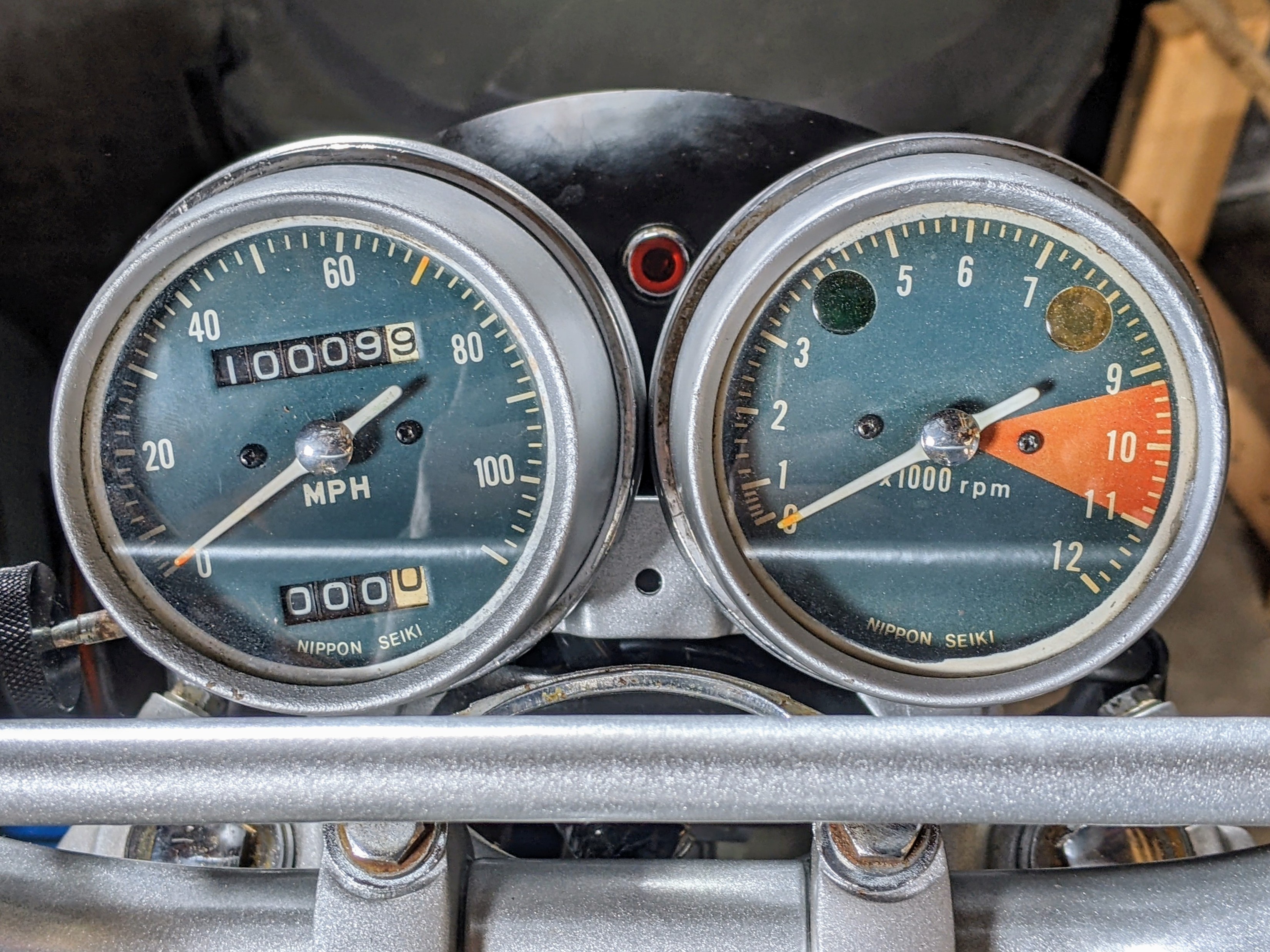
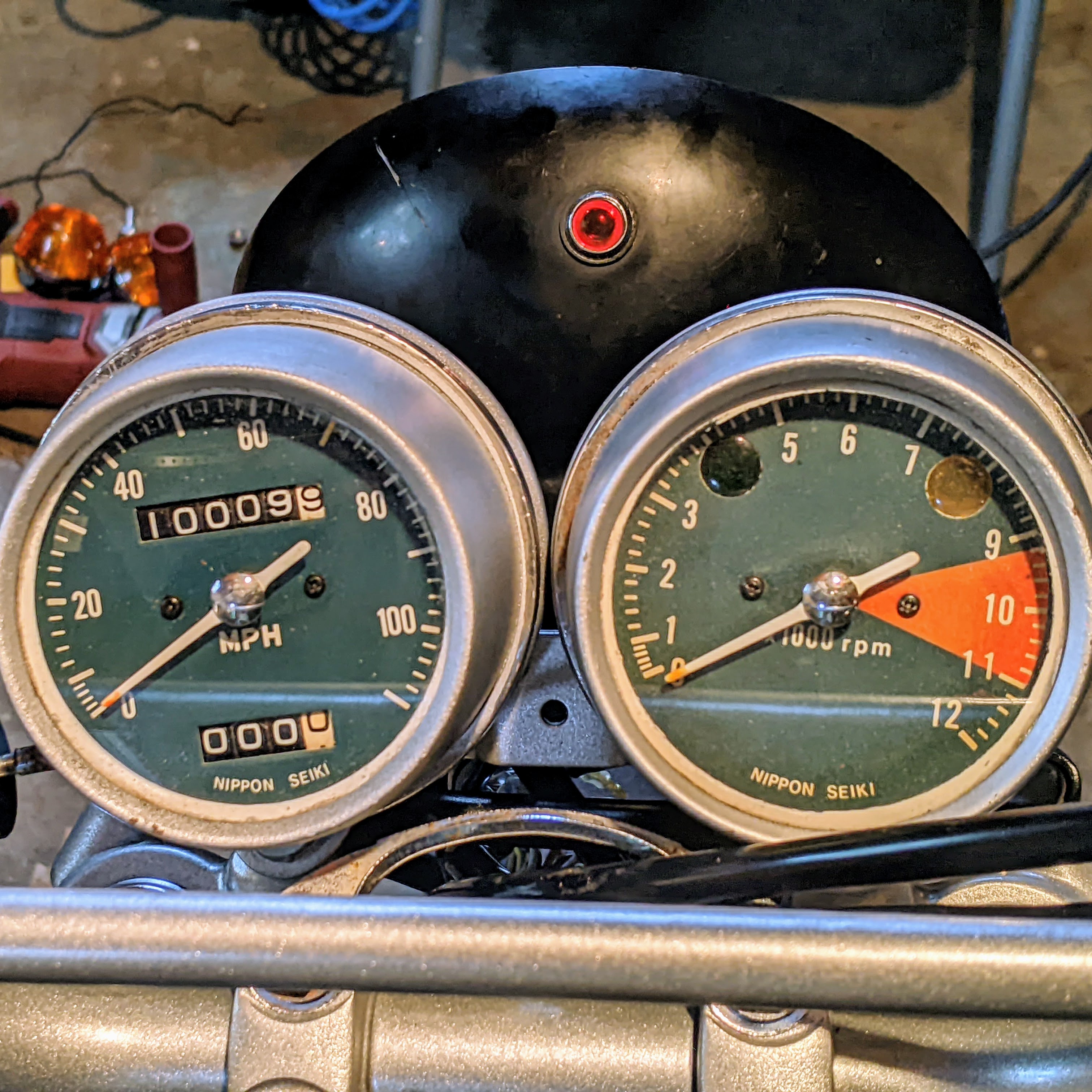
I have an idea about how to straighten them, but will need to get a special bolt. The hex bolt that sits under the gauge has a short head — if I can get a longer bolt with the same style head, then I'll be able to add a spacer to get the gauges over that hump for the indicator lights housing of the 360. That hump is what prevents the gauges from being oriented properly.
 
Last edited:
I invested the time to improve the gauge orientation this morning. The M8x16 gauge bracket bolts were upped to M8x25 with a nylon spacer to raise the gauges above the raised section in the middle of the bracket. I just had to make a trip to Home Depot to get the bolts and figure out what kind of spacers were available. There is still a slight rotation outwards, but this seems acceptable.

jmwNwPb.jpg
KmnR8VT.jpg


I was looking at the photo I posted of the tank previously and learned that the e-clip on the cap hinge had left the building. I replaced it with a 1/8" clip from Home Depot. I bought a pack of two and thought I lost one in the first five seconds. I'm terrible with those small clips.

ZpE5chQ.jpg


I spent about 30 minutes doing these tasks and then decided the yard has been neglected a bit too much recently and spent a couple of hours mowing, pulling weeds, etc.
 
Last edited:
I bought a pack of two and thought I lost one in the first five seconds.
The next 10mm socket?
I spent about 30 minutes doing these tasks and then decided the yard has been neglected a bit too much recently and spent a couple of hours mowing, pulling weeds, etc.
BORING. :ROFLMAO::ROFLMAO:

But necessary now and then. My neighbors would likely agree.
 
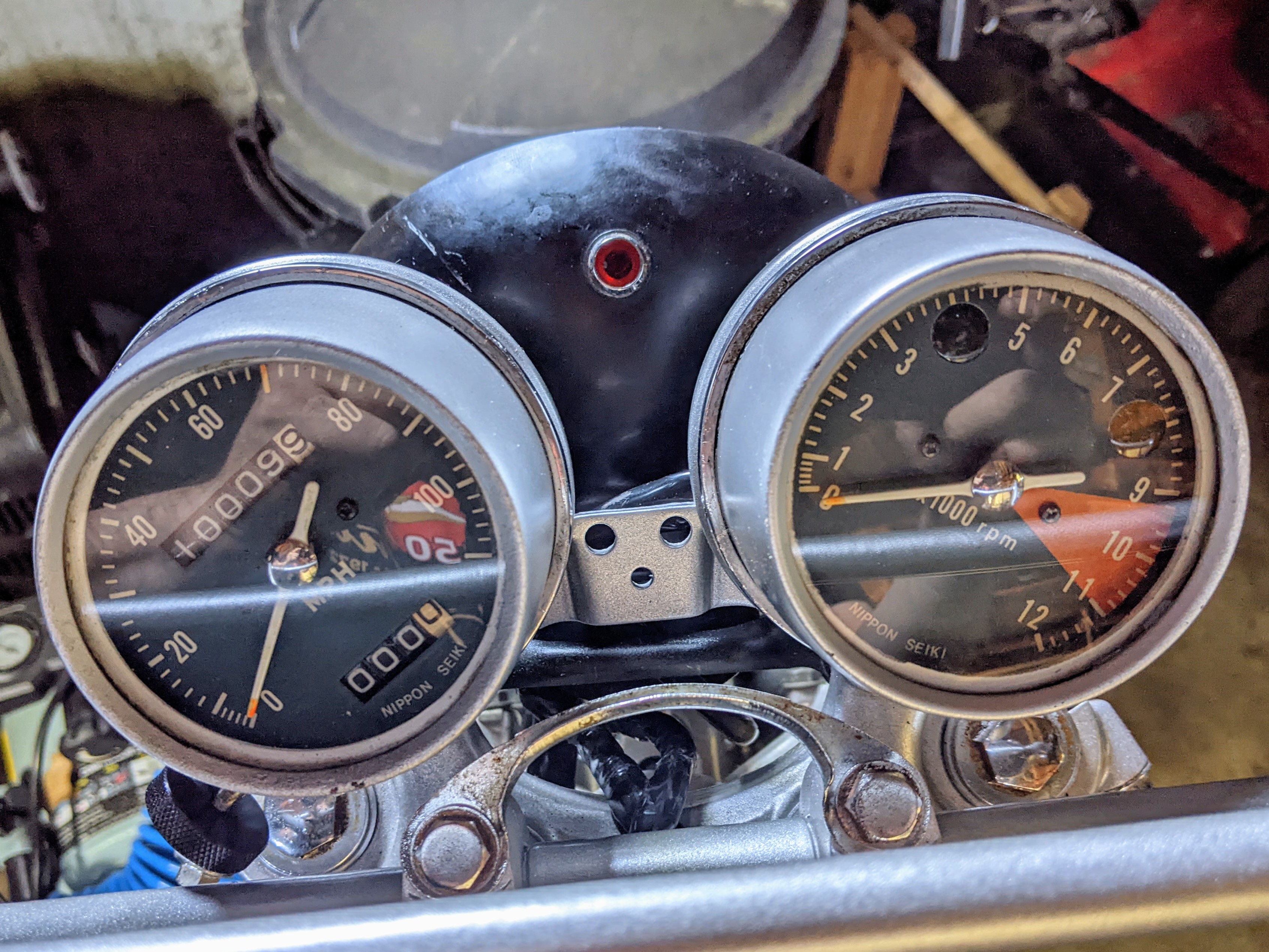
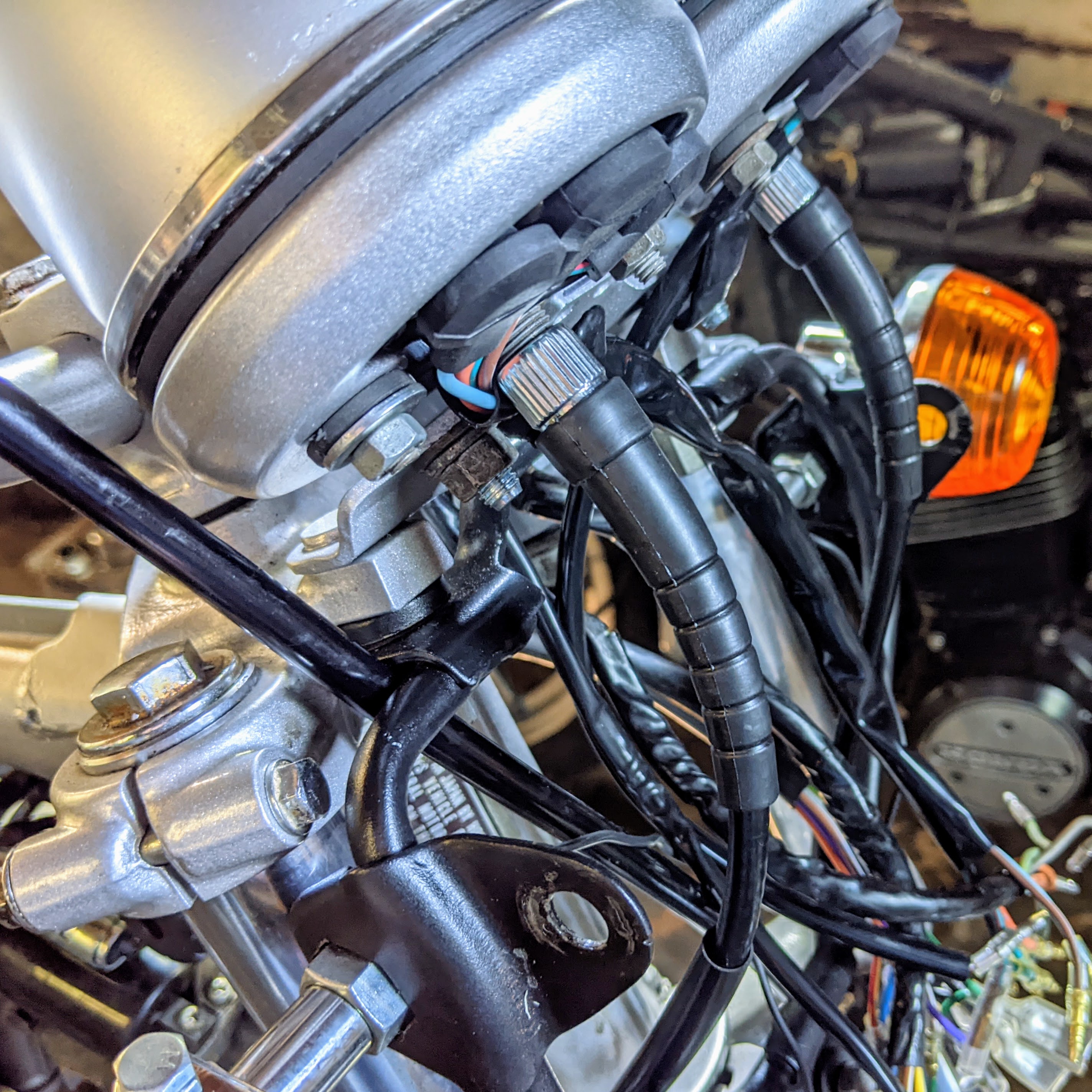
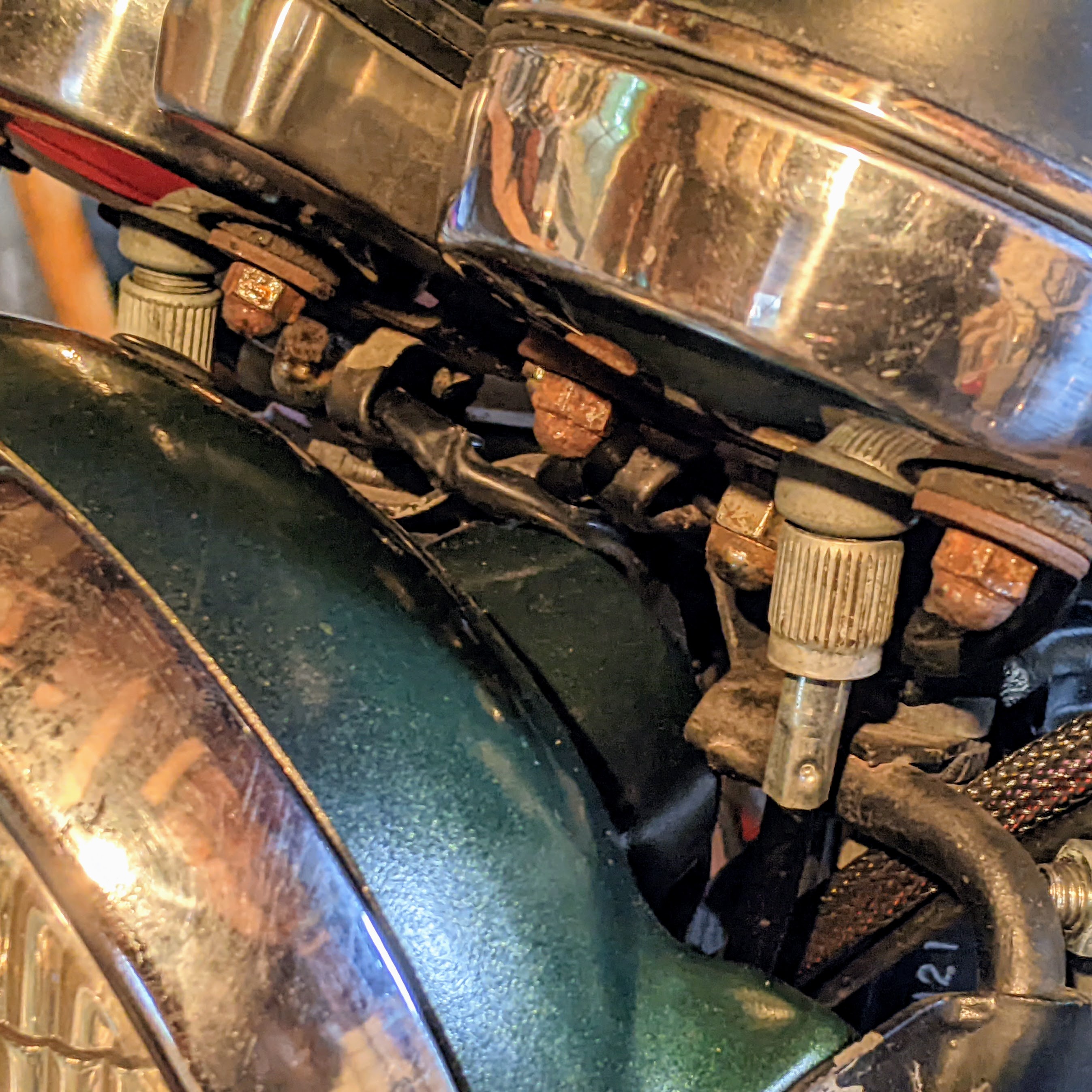
Small bits of progress over the last couple of days. Yesterday I installed the tach and speedo cables and started working on the front brake cable. The tach and speedo cables immediately presented a new problem with the combination of 350 gauges and 360 brackets/headlight. The cables don't really leave sufficient clearance for the headlight bucket. The sneaky Honda engineers circumvented this problem by changing the exit angle of the cables on the tach and speedo housings for the 360 models, as shown below (second picture). I've already made a mental note to get some shiny cap nuts for the 360 gauges.

q1JaruE.jpg
hooG9yW.jpg


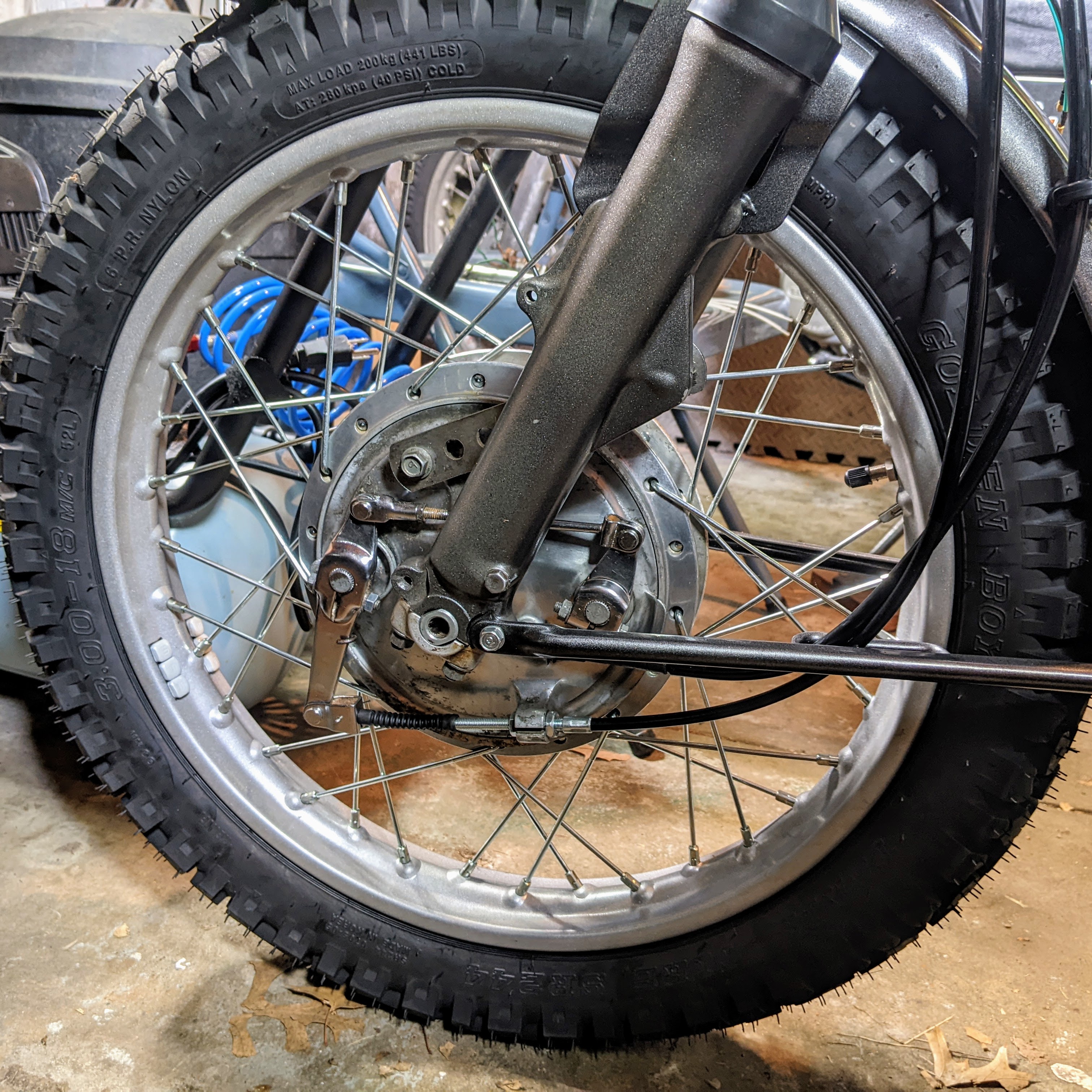
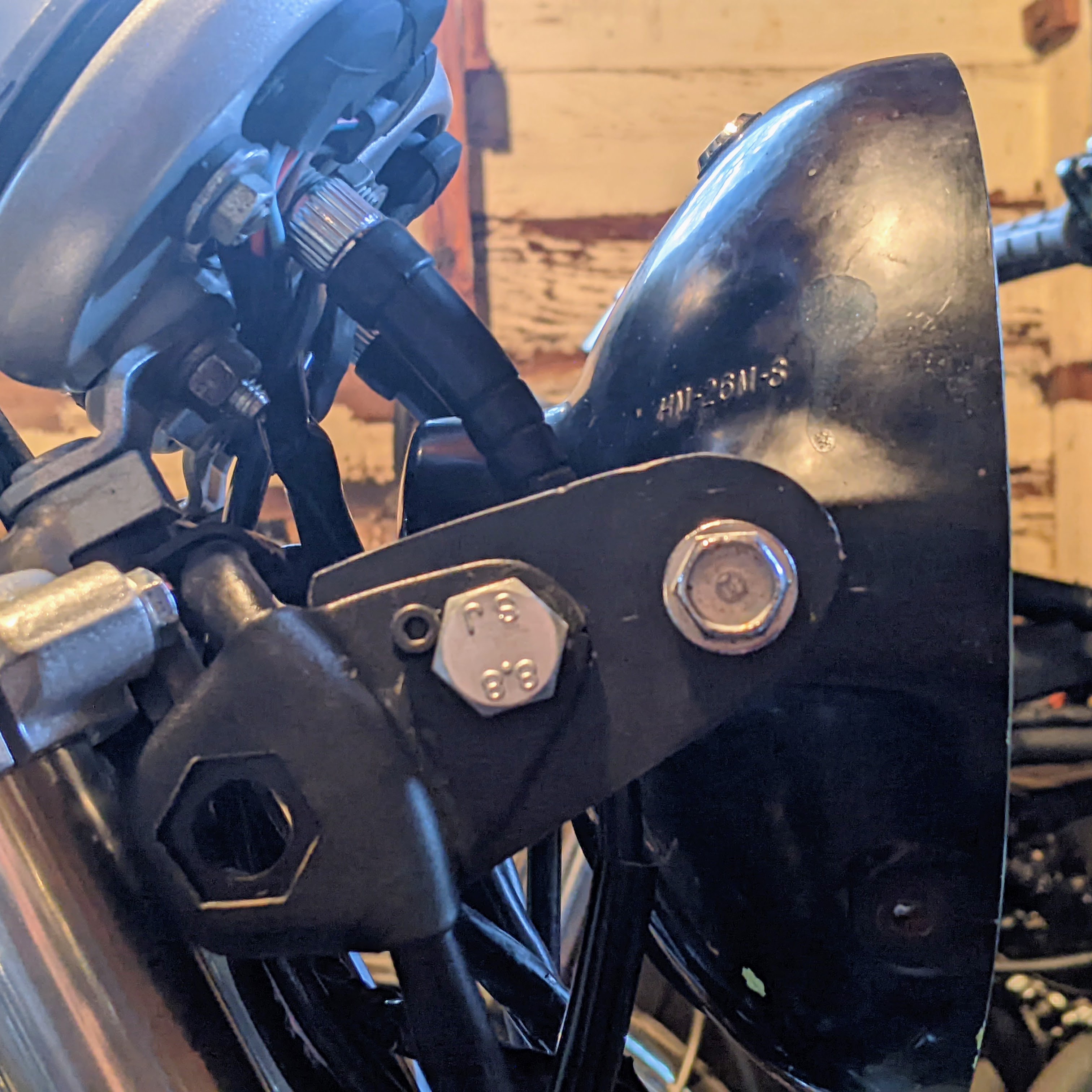
I thought about possible workarounds involving the gauge bracket, but by the end of the day my plan was to extend the headlight bracket to get the headlight out a little bit farther. After making that decision, I had a rough go of it with the brake cable. It initially didn't seem long enough and I thought I might have set up the control arms for the drum incorrectly. Long story short, I wasted a lot of time messing around with the drum plate and control arms and took a break to look at pictures, read the service manual, and think about how everything goes together. The FSM is no substitute for experience and both my 360 and 450 have disc brakes up front, so this is something of a new animal for me. This morning things went much better and I finally got the cable installed, although I wasn't sure if the brake cable was supposed to go through both cable stays or just the one at the bottom. Currently it is going through the lower stay on the fender as well as a loop in the lower triple tree and then the cable bracket above the top bridge.

5BgdmwR.jpg


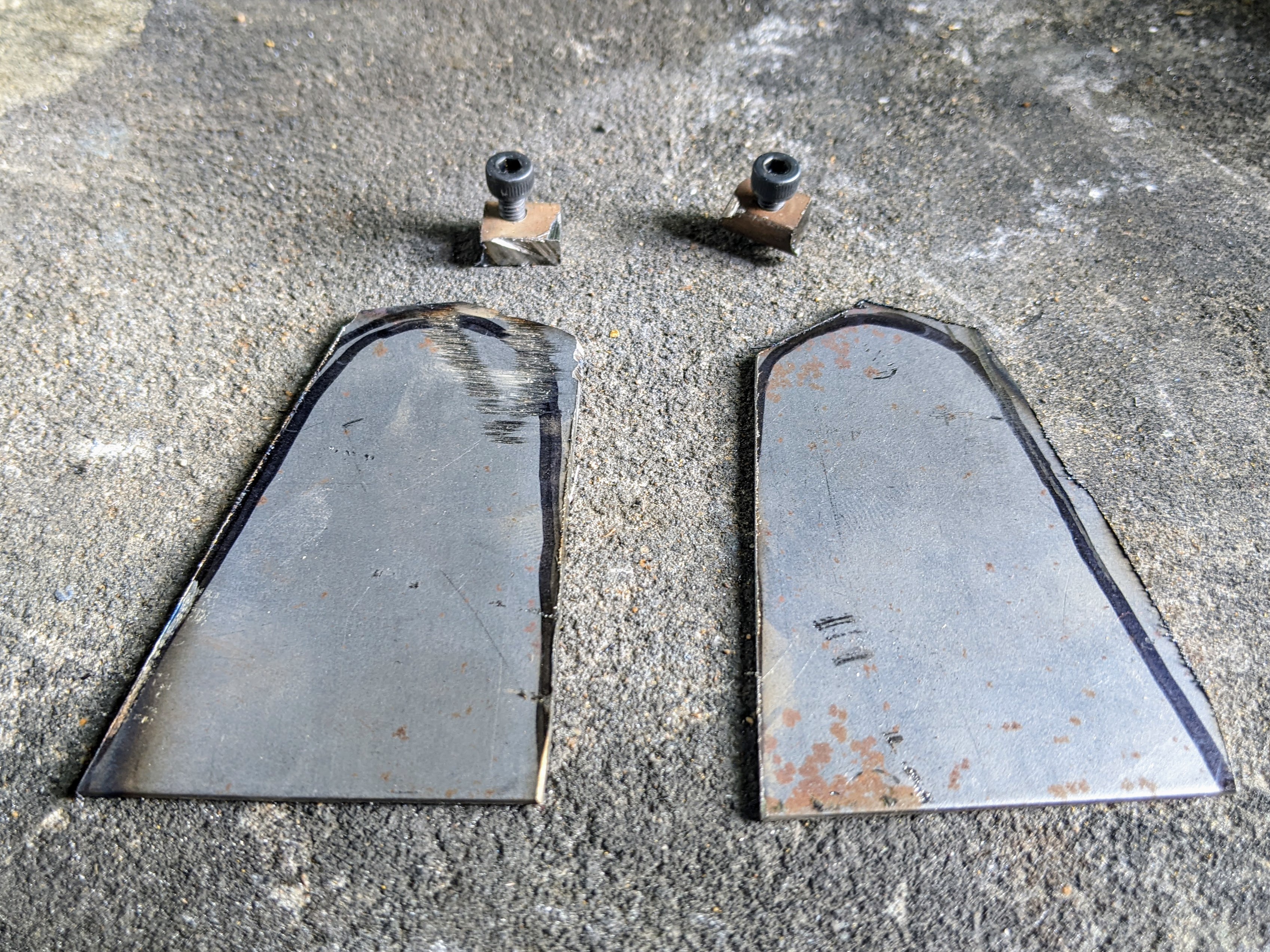
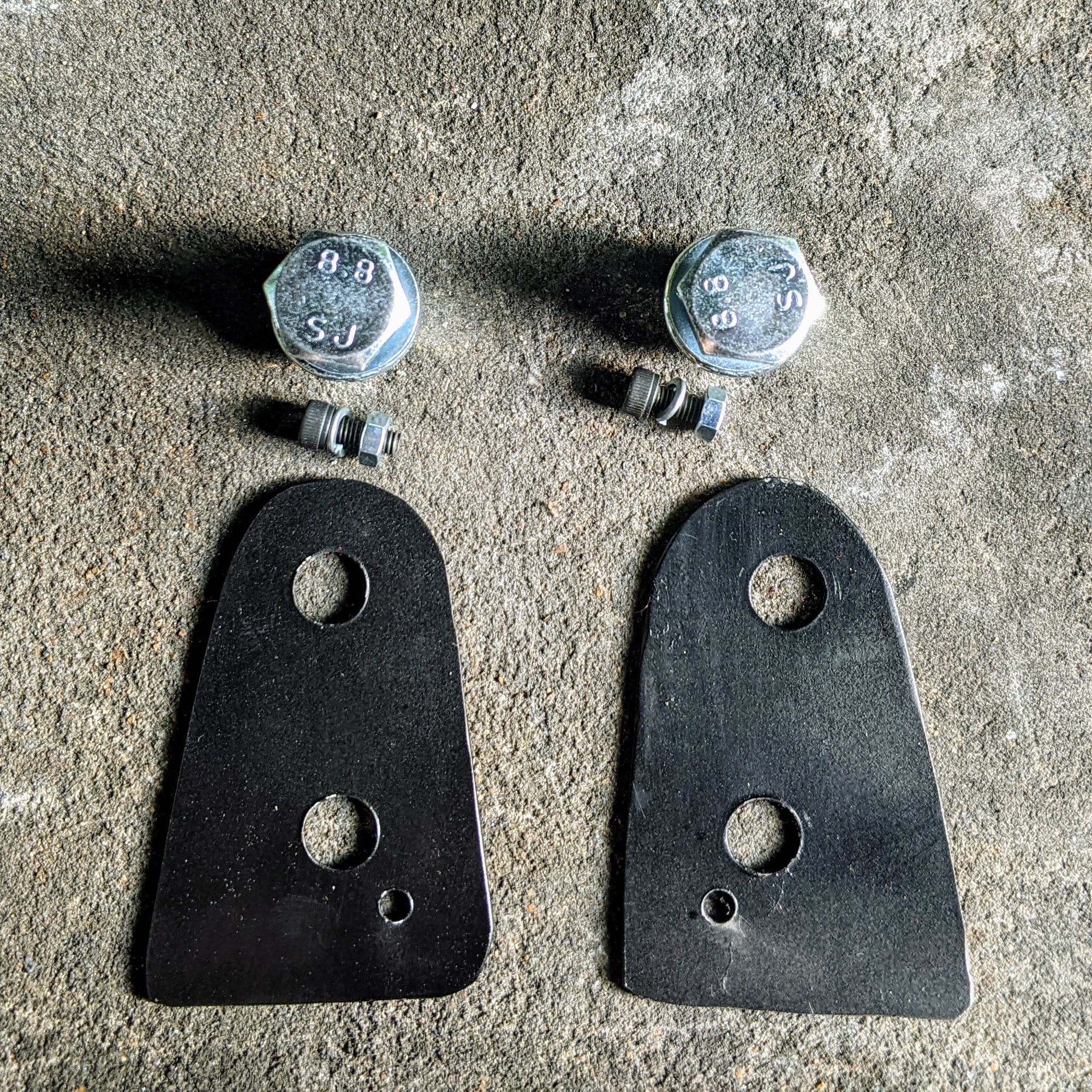
I spent most of the afternoon fabricating extensions for the headlight bracket. I used a piece of cardboard to trace out a design using the existing bracket and rough cut them from a steel plate using the cutting wheel on my angle grinder. I then put a flap disc on the angle grinder to smooth out the parts using the Sharpie outline as a guide. The first picture shows a couple of 4mm bolts with homemade nuts — don't worry — I went to the store to buy real hex nuts later. The purpose of the 4mm bolts is to prevent unwanted rotation of the extensions.

AsLnj8f.jpg
Zw3dcn7.jpg


The mock-up suggests that this will work okay. It's a little annoying to me that there is no easy way to get nice metric bolts nearby. I'm definitely going to replace the 10mm bolt used to attach the extensions to the original headlight bracket, but I'll have to order them online. One extra benefit of the extensions is that the high beam indicator in the top of the headlight shell will be easier to see — the picture below conveys this despite being taken from a bad angle. Without the extensions, the gauges nearly block the rider's line of sight to the indicator (as seen two posts back: #871).

6fgi118.jpg


pKzbxt6.jpg
 
Last edited:
Looks like you need to paint the axle caps to match the lower fork legs now :)

Creativity is always necessary when modifications are involved, and routing cables to maximize their length and avoid increased lever pressure from tight bends can be challenging. Good thinking on extending the headlight ears without further disassembly and welding on the factory bracket.

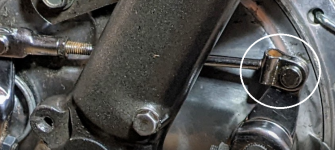
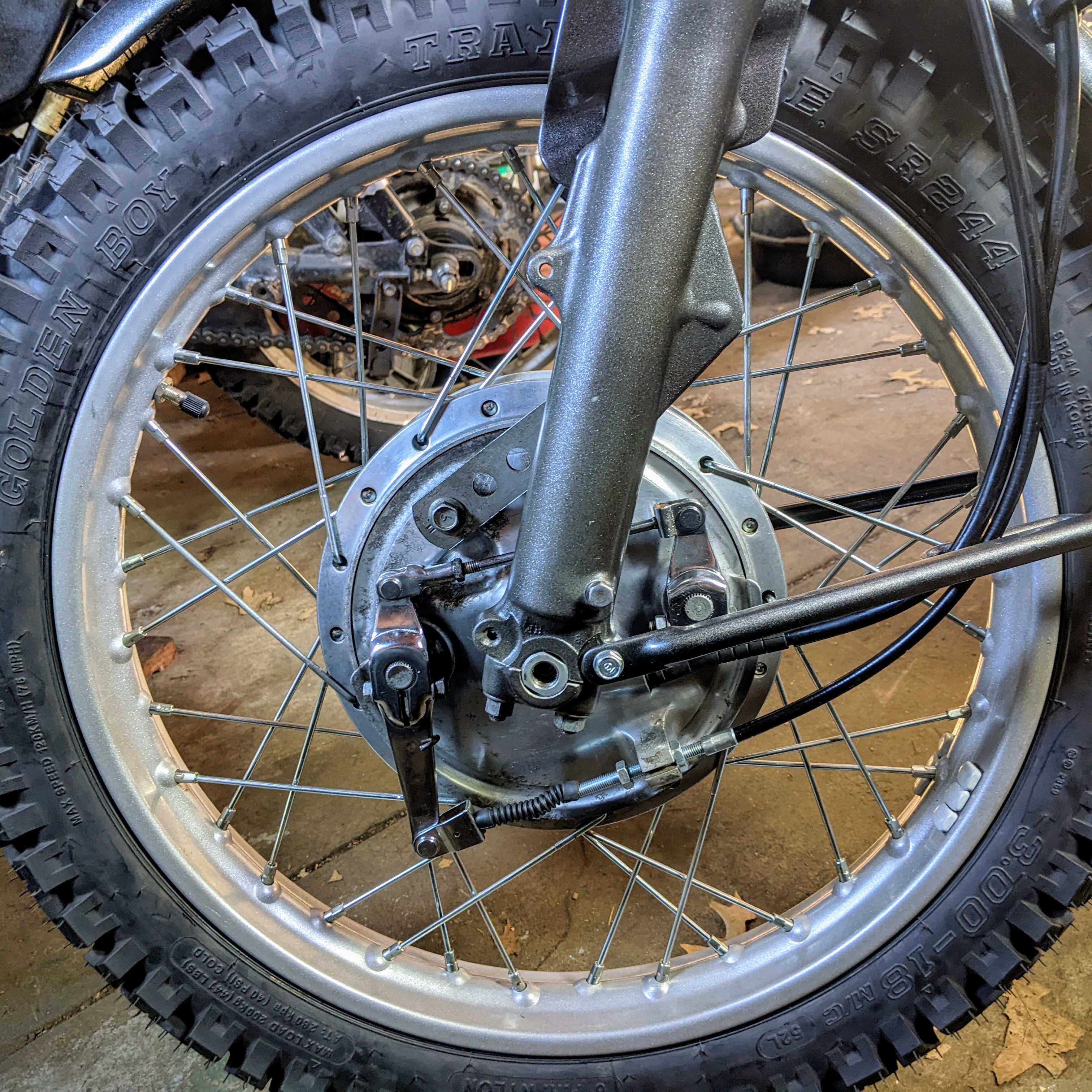
Are you sure the actuating arms on the front brake are in sync? The angle of the clevis on brake arm B seems off compared to the angle of the rod.

1717938022556.png
 
Looks like you need to paint the axle caps to match the lower fork legs now
Haven't you ever seen someone wearing white sneakers with black socks? Apparently, some people think it looks okay. This is the result of a powder coat error on my part — I didn't send the axle caps with the rest of the parts. I can at least make a rattle can improvement, otherwise I'll really pile up the demerits.

Are you sure the actuating arms on the front brake are in sync? The angle of the clevis on brake arm B seems off compared to the angle of the rod.
I'm not sure, but will look into it further. I never removed the clevis from either arm, but I separated the two arms at the threaded rod. I will get another angle later for further discussion.
 
Haven't you ever seen someone wearing white sneakers with black socks? Apparently, some people think it looks okay.
:ROFLMAO: so in this case, will it be lighter or darker gray for the shoes...?
This is the result of a powder coat error on my part — I didn't send the axle caps with the rest of the parts. I can at least make a rattle can improvement, otherwise I'll really pile up the demerits.
Like so many things located lower on the bike, most people will never notice a rattle can touch-up there.
I'm not sure, but will look into it further. I never removed the clevis from either arm, but I separated the two arms at the threaded rod. I will get another angle later for further discussion.
And that explains it. You'll want to be sure they both move and actuate simultaneously, of course.
 
And that explains it. You'll want to be sure they both move and actuate simultaneously, of course.
Ah. This is what I mean about the FSM being no substitute for experience. I definitely changed the length of the rod while fiddling around with it and I see what you see now. I appreciate the fact that you looked closely enough to catch this. The wheel needs to come off for two reasons now.

What is the purpose of that rod being adjustable?
 
I appreciate the fact that you looked closely enough to catch this.
You know that's what we do here. And this is yet another validation for the reason we always say pictures, pictures, pictures. For me, it's a daily challenge to help identify some of the little things that might not get noticed yet are very important.
 
I probably would have needed to buy a vowel, at least right after reading this. The expression "buy a vowel" comes from the game show Wheel of Fortune — not sure if that airs in the Netherlands, but I would guess so.

The simpler explanation is above, but maximizing the braking force of a double leading shoe brake means both actuator cams must open the shoes to contact the drum at the same time. Kinda like carb syncing.
Thanks for spelling it out.

You know that's what we do here.
Still worth acknowledging from time to time.

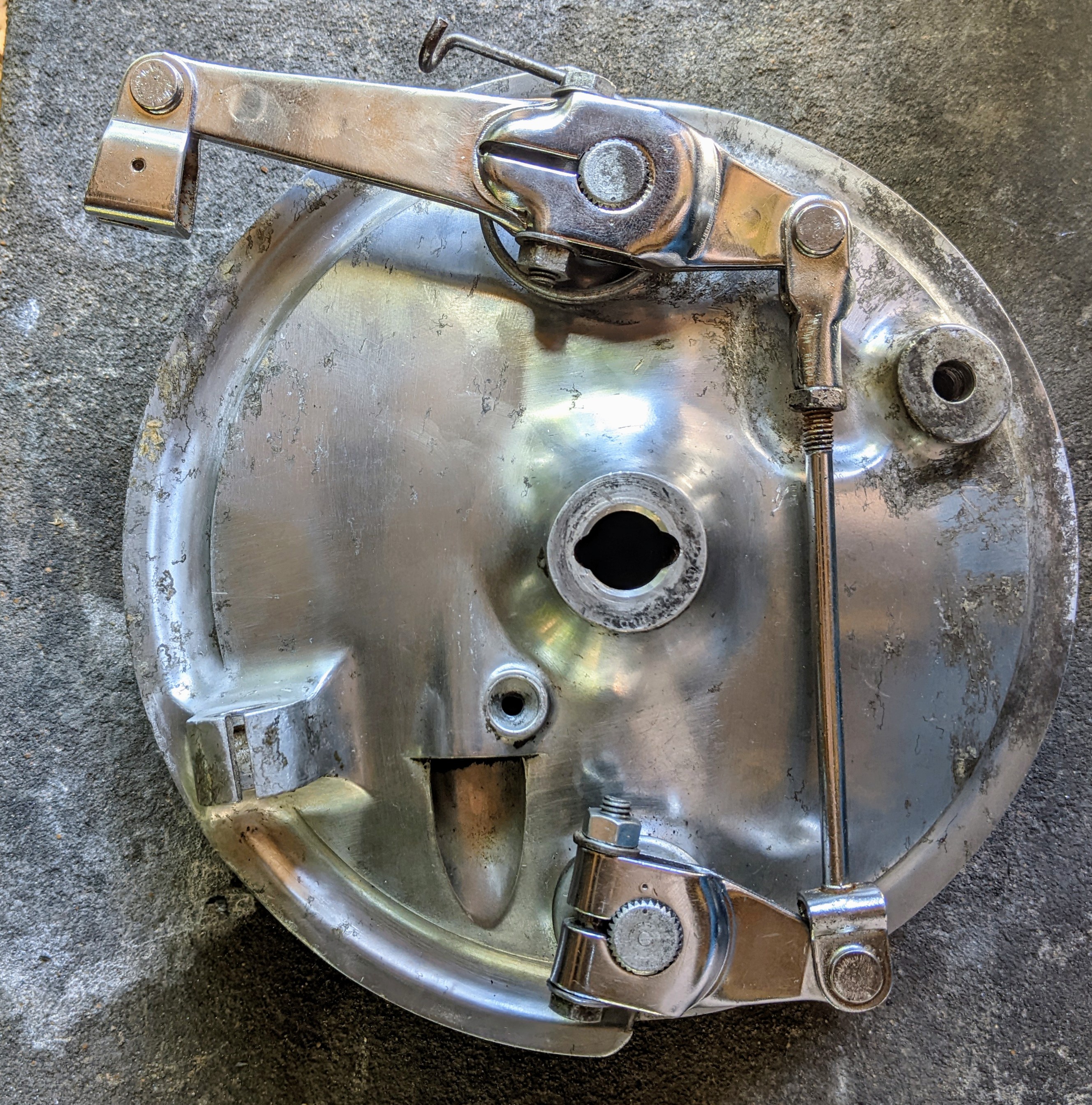
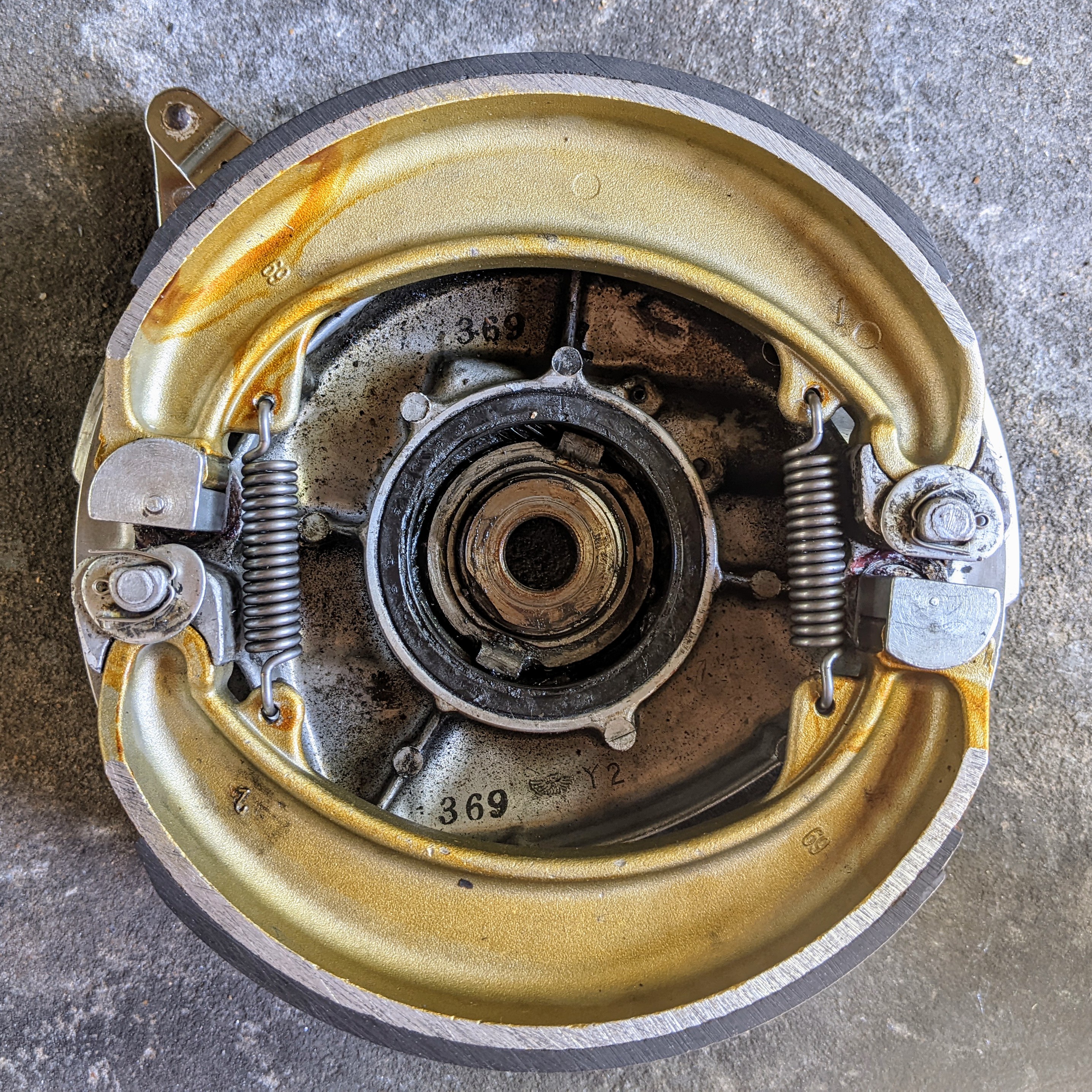
Okay, drum brake control arms setup, Take #5. Dots align, arms are parallel, rod appears straight. Return spring mounted after photo shoot. Good?

u6AfJoP.jpg


fvjww4A.jpg


96BeS15.jpg
 
Last edited:
The last test is to watch both shoes move outward at the same exact time when you move the front lever, just like the carbs - but there could still be a small amount of difference between the shoes so something PJ suggested the other day could be done to truly fine-tune it with the wheel put together.
Going back and looking at the pictures you can see the operating arms are not parallel, that should be the starting position with new shoes and only minor adjustment needed to get full contact on both.
I tend to use a large adjustable on operating arm to pull it tight then adjust the other side to be tight at the same time.
There is usually enough 'slop' in the link so you can apply brake with lever (usually have to tie it off with zip tie or two) then check the 'slave arm' is also tight.
 
I have to laugh at many people who act like drums don't stop well, my 450 has more than enough front brake to make you cautious about using it strongly. Since I'm not road racing the fade of a drum isn't important, even when I'm riding in the mountains it never gets crazy enough to worry about it. And not having to deal with hydraulics and brake fluid is nice too.
 
I have to laugh at many people who act like drums don't stop well, my 450 has more than enough front brake to make you cautious about using it strongly. Since I'm not road racing the fade of a drum isn't important, even when I'm riding in the mountains it never gets crazy enough to worry about it. And not having to deal with hydraulics and brake fluid is nice too

A close break system is also more reliable in rain and dusty / dirty environments.
 
A close break system is also more reliable in rain and dusty / dirty environments.
True but not important anymore, I never ride in the rain now. You mentioned it yourself previously and I agree, I don't enjoy washing bikes any more than you do.
 
Interesting. Here in Florida we have almost daily afternoon rains around 4 pm from mid to late June to September, during the peak of our hot summer which only adds to our already high humidity.
Unfortunately not avoidable in the Netherlands, not for nothing we have the saying "a Dutch summer".
Sometimes you don't recognize American expressions, but in this case it seems you understand a popular one from the New York area.

Sorry Brody, back to your thread. :)
 
Back
Top Bottom