1971 CB350 . . . 40 year hibernation

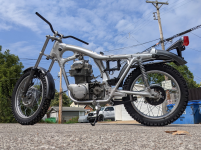
This weekend I installed the front fender, front wheel, swingarm, shocks, and rear wheel. It's now a roller and I took the opportunity to get a couple decent pictures of the progress to this point.

1695582079391.png

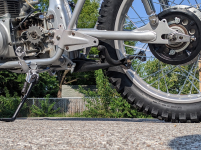
This allowed me to check the design of the center stand stop that I added to accommodate the scrambler exhaust. I was concerned that the center stand might sit too low, but it's actually a bit high. As shown I think it would interfere with the chain, but I included a stop bolt that will allow me to correct the height.

1695582163847.png

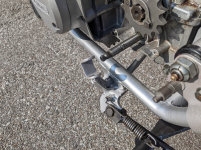
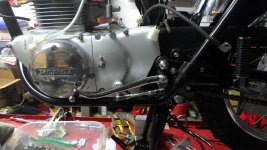
I did a test fit of the step bar and I noticed that there is not much clearance on either side of the motor — does this look normal? This is my first CB350, so correct me if I'm wrong here, but it seems that the sprocket cover would be really difficult to install without removing the step bar. I am able to remove that cover on my CB360 and CB450 without removing the pegs, although it definitely takes some fiddling around.

1695582208739.png

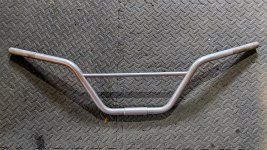
I was planning to install the rear fender and freshly powder coated handlebar, but ran into issues. The handlebar came from a CL350 CL450 and it includes a larger diameter section between the clamps that is too wide for the clamps on my CB360 top bridge. This is a complete oversight on my part and I plan to look for a CL360 handlebar as a replacement. The rear fender had mismatched bolts when I disassembled the bike and I failed to pick up on that clue. One of the threaded holes in the fender is completely stripped, so I'm going to have to repair it. Currently, I'm thinking about using the welder to fill the hole and then retapping the hole.

CL350 CL450 handlebar

PXL_20230917_143839731.jpg
 
Last edited:
The peg bracket does look too close to the shift shaft, though I don't really have a point of reference except my CB350K1 which might shed some light on it when I have a moment to go look at it today. Also did not realize the handlebar mount width was different on the top bridges, one of the many things you learn when combining different pieces that look similar when viewed separately. Shame about the rear fender mounting nut, but welding up the hole to re-tap it will burn the paint in the area though with those large shouldered mounting bolts you don't have many options. Otherwise things are coming together nicely.
 
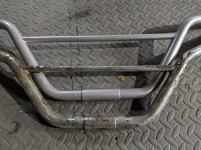
After looking through my spare parts, I see that the problem with the handlebars is not due to different spacing on the 350/360 handlebar clamps. That larger diameter section on the handlebar shown in the earlier thread measures about 7.5 cm, which matches the spacing on the CB450 risers. I found that I do have the spare CL350 bars and the larger diameter section on that bar measures about 5.5 cm. The spacing on the 350/360 risers is just over 5.5 cm, so the CL350 bars should work on either a 350 or 360 top bridge. The error occurred when I looked at the two bars and thought that I should use the CL450 bars because they were in better condition without noticing that the center sections had different widths. Unfortunately, the CL350 bars that I have are ugly and appear to be bent, so I'm still shopping for bars, but at least I can widen my search to CL350 or CL360 bars.

1695582445763.png
 
Last edited:
After looking through my spare parts, I see that the problem with the handlebars is not due to different spacing on the 350/360 handlebar clamps. That larger diameter section on the handlebar shown in the earlier thread measures about 7.5 cm, which matches the spacing on the CB450 risers. I found that I do have the spare CL350 bars and the larger diameter section on that bar measures about 5.5 cm. The spacing on the 350/360 risers is just over 5.5 cm, so the CL350 bars should work on either a 350 or 360 top bridge. The error occurred when I looked at the two bars and thought that I should use the CL450 bars because they were in better condition without noticing that the center sections had different widths. Unfortunately, the CL350 bars that I have are ugly and appear to be bent, so I'm still shopping for bars, but at least I can widen my search to CL350 or CL360 bars.

Now that explains it, good find.
 
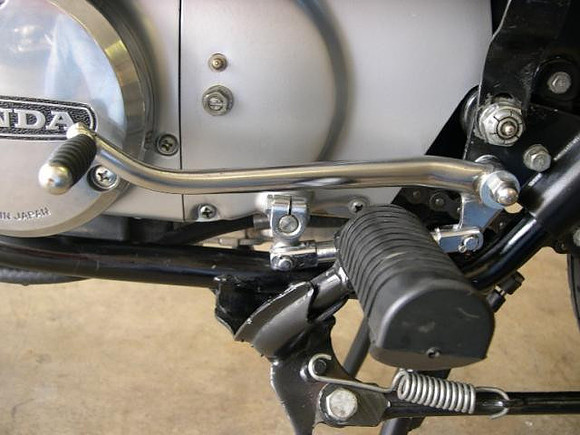
As to your step bar and shift shaft proximity, I was remiss in thinking I could look at my 350 to see how it compared - the pegs are off mine so no help there. But it did get me thinking about it and if this picture is any validation, you might have a CL step bar there since the CB pipes go inside the pegs (though that still wouldn't explain it being THAT close to the shift shaft)

1024px-Honda_350.jpg
 
That's CB step bar, the CL has an @2.5" gap between the frame and pivot point. That's for clearance of the original shifter linkage. If you're planning on not using that and only a shifter lever then it'll be fine
 
That's CB step bar, the CL has an @2.5" gap between the frame and pivot point. That's for clearance of the original shifter linkage. If you're planning on not using that and only a shifter lever then it'll be fine

So the left CB exhaust goes outside the step bar? Doesn't look that way in the pic I posted above though
 
STL360:
seems that the sprocket cover would be really difficult to install without removing the step bar.
On my CB350 K4 I only have to remove the gear change lever to remove the front sprocket cover.
The step bar is not in the way.
Maybe it is on the CL for ground clearence reasons...
Cheers
 
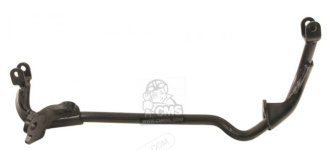
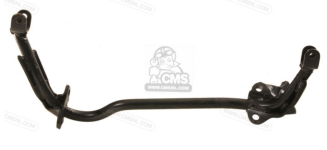
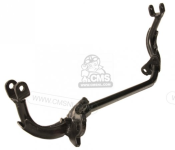
I did some sleuthing on CMSNL to attempt to identify the step bar (shown below). The step bars for the CB350 K0 and K2—K4 do not seem like a match, but the CB350G step bar (unique to that model) has some resemblance. It also looks very similar to the step bar shown to be compatible with the CL350 K2—K4 models. I think it is the CL350 K2—K4 step bar because the bend on the right side is not as tight as the one for the CB350G. I am also including one picture of a CB350K2—K4 step bar at the end to show that it is not a close match because it has no bend on the right side.

ezE4tHY.jpg


CB350G
CB350G.png


CL350K2—K4
CL350K3.png


CB350K2—K4
CB350K3.png
 
Last edited:
After looking through my spare parts, I see that the problem with the handlebars is not due to different spacing on the 350/360 handlebar clamps. That larger diameter section on the handlebar shown in the earlier thread measures about 7.5 cm, which matches the spacing on the CB450 risers. I found that I do have the spare CL350 bars and the larger diameter section on that bar measures about 5.5 cm. The spacing on the 350/360 risers is just over 5.5 cm, so the CL350 bars should work on either a 350 or 360 top bridge. The error occurred when I looked at the two bars and thought that I should use the CL450 bars because they were in better condition without noticing that the center sections had different widths. Unfortunately, the CL350 bars that I have are ugly and appear to be bent, so I'm still shopping for bars, but at least I can widen my search to CL350 or CL360 bars.

AIL4fc9H8I8pcf3wr_vMIMUzt9zuhtFvVp3GQ4dw98BsUULbnnZhA3OuJCLsvTUaWIsRwejd8Gr3HG6OWMWXsMjvXHUB5DzVMyt2aCkr9vtcQi2iR3QKSTIZvTMY7WMsB4lTdzVMZntPCU6ZOJZ5QzkO3OZy3jPB2IDksu8EaJ2UACDDK6dmWllf-Do5X7w4IjTR0hZyH9SBruepftGdoWkPks7FvgTK0etBnvnub1KDzqr1DepZYZ8ARKN4OZtuEP7XnXrdyRdjhY45aaiioKorAqMRZD8EBlxKQeJ1hzeR-1pbLQycZy0LgB6f4TJXXQgOnF3nl1dwZbbdCS-H9qBcU8icUKaoZPsvdkspoqrOcvrJXbv81vCvINIiVDkD0CL1nFrmUnAuVJQcwm6hm5c47PEBNBBFRPPDPQSshakM8Dh84orEsrIKyc53EkXOeKbSWXEzptmc9uJAq3Xux9_fOVWMe7XxR_s4TPDvf_L0zkY1uf9fh_WyjWUHcMygUN0LwGTYgVSpE9bfGfB2HdcS4h8ki-aQInBJROGFY-TSku84ltGVUjoyb_1DiN0hMjxfEkir0VgHmqykFnJeCh99r3pXul3BYO-1SHG0McBbHo9QQ-uRkmZjP8bCAkfjMx0MGX6Nwx-1PIP26pIdDISqGV-_dOYCb5oOsnACQNgAXXvzICMIb2IQMGbZjydZ0JF3gnUfC_bInZ65vCYPFygFP15MpUVnNnexUpMyzt0mvi8A0Qk0boDOh5S8vystfqsCrb3kxsr2DjEP46PA0baM_DHj6Bh6dmExX7wysfUFp31nGVg_kyEN-K0jjUhdI6eVRvgewg-qZTz8inP_4mHCMsga3JYXK7CCI2kIIodQuX57axelyi3_rlX9WjRQ2gYLFeOXtwQiH24FFKU3n6tw7MQ=w1910-h1432-s-no
I'd be tempted to remove 1cm from each end of that spacer with a dremel cut off wheel since it will be covered by the clamps.
 
I'd be tempted to remove 1cm from each end of that spacer with a dremel cut off wheel since it will be covered by the clamps.
I thought about whether that might be possible and decided I didn't know enough about how it was manufactured to determine how that would end up. What do you think?

I've since ordered a CL350 bar that looks like it will be fine with a little polishing. The Arjent Silver CL450 bar is up for grabs.
 
I thought about whether that might be possible and decided I didn't know enough about how it was manufactured to determine how that would end up. What do you think?

I've since ordered a CL350 bar that looks like it will be fine with a little polishing. The Arjent Silver CL450 bar is up for grabs.
My guess would be it's spot welded and hopefully not near the ends, a hack saw may be easier still.
Hope your 'new' bars work out.
 
My guess would be it's spot welded and hopefully not near the ends, a hack saw may be easier still.
Hope your 'new' bars work out.
Are there pipe cutters that would cut steel pipe? Maybe that would be the way to go?

I'm hesitant to try it in on otherwise nice bar without testing the idea on something disposable, i.e., a really bent bar.
 
I forgot which shifter you going to use. I see the pivot on the swing arm bracket for the linkage style.
I haven't made a firm decision, partly because it didn't have a shifter when I brought it home. Do you see any advantages one way or the other?

I guess my main concern is that whatever I choose needs to be compatible with the step bar.
 
Are there pipe cutters that would cut steel pipe? Maybe that would be the way to go?

I'm hesitant to try it in on otherwise nice bar without testing the idea on something disposable, i.e., a really bent bar.
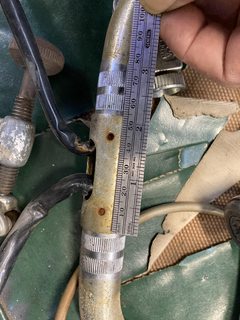
My small pipe cutter will fit and may take many turns to get through it but of concern is the stake/weld at 1cm from the edges (at least on my CL350 bars here). That sleeve needs to stay anchored to the bar so it won't slip and cut the wiring.
 
I guess test fitting all the footbar, headers and shifter will tell. Shifter choice seems to vary on personal opinion. I'm kind of a newb on these too, so not sure.
 
Here is my smallest tubing cutter and it does fit the sleeve. It may be useful to at least scribe around it for further cutting with a hack saw blade. Also, a pic of the staking/weld of the sleeve to the bar and it is right at 1cm in from the edges of the sleeve. I know your 450 bars are wider in the sleeve at 7.5 cm but, hopefully the stake is further in, allowing for removal of 1cm without cutting the staking out.

NBA7oI7m.jpg
QJLdeWhm.jpg
 
Here is my smallest tubing cutter and it does fit the sleeve. It may be useful to at least scribe around it for further cutting with a hack saw blade. Also, a pic of the staking/weld of the sleeve to the bar and it is right at 1cm in from the edges of the sleeve. I know your 450 bars are wider in the sleeve at 7.5 cm but, hopefully the stake is further in, allowing for removal of 1cm without cutting the staking out.
Thanks for looking into this, Tom. I'll have a look at the powder coated bar for signs of the spot welds, but with a replacement bar ordered, I don't have a good reason to cut into the CL450 bar.

Once a ring is removed on either side, I would still need to cut across the ring with a Dremel to remove it from the bar.
 
I've ridden 350s with both styles of shift lever, including the originals when brand new. The linkage lever works well when the pivot points are tight, but of course when they wear and get sloppy then it adds a fair distance to the movement. Though the direct shift lever is effectively shorter, it doesn't add much to the force required to shift. Since most bikes of that era have a direct shift lever, using the linkage lever on the 350 is really the outlier and most of us have ridden plenty of bikes with a direct shift lever already, not unlike Brody's own CB450 that he is quite used to.
 
I've ridden 350s with both styles of shift lever, including the originals when brand new. The linkage lever works well when the pivot points are tight, but of course when they wear and get sloppy then it adds a fair distance to the movement. Though the direct shift lever is effectively shorter, it doesn't add much to the force required to shift. Since most bikes of that era have a direct shift lever, using the linkage lever on the 350 is really the outlier and most of us have ridden plenty of bikes with a direct shift lever already, not unlike Brody's own CB450 that he is quite used to.
Thanks, Tom. I'm glad you introduced the term "direct shift" lever to the thread because I was having a hard time finding words to capture the difference. Hearing about sloppy linkages is almost enough on its own to push me towards the more familiar direct shift lever.
 
Thanks, Tom. I'm glad you introduced the term "direct shift" lever to the thread because I was having a hard time finding words to capture the difference. Hearing about sloppy linkages is almost enough on its own to push me towards the more familiar direct shift lever.

Again, it's really all based on the condition of the pivot points on your existing linkage. Honda went the inexpensive route using standard steel pins instead of heim joints, which did exist then, likely for cost purposes but I'd guess maybe 10% of owners understood those needed regular lubrication to avoid excess wear based on how rusty most of them have been that I've seen. A couple years ago I had a complete 350 linkage setup, all the parts, that was in as good a condition as any used one I've seen - virtually no wear at all, both joints snug and rust-free. I had taken it to Barber twice (along with some other stuff) to sell at Don's vendor tables and no one wanted it, so I brought it home and eventually it went to Chris in a parts swap deal we made. Too bad I don't still have it or you'd be welcome to it.
 
Thanks, Tom. I'm glad you introduced the term "direct shift" lever to the thread because I was having a hard time finding words to capture the difference. Hearing about sloppy linkages is almost enough on its own to push me towards the more familiar direct shift lever.
But it won't look as nice as this.
RIMG0504.JPG
But it won't
 
Can't disagree with the beauty of original parts installed where they belong as it was delivered when new. (y)
 
That does look nice, Jim.

Those linkages strike me more as something that one should find on a CA92 or CA95, rather than a 70s Super Sport.

Yes, and like some features of Honda's bikes back then - like the eccentric valve adjuster shafts only on the 350s and DOHC 450s - they only did it on one model.
 
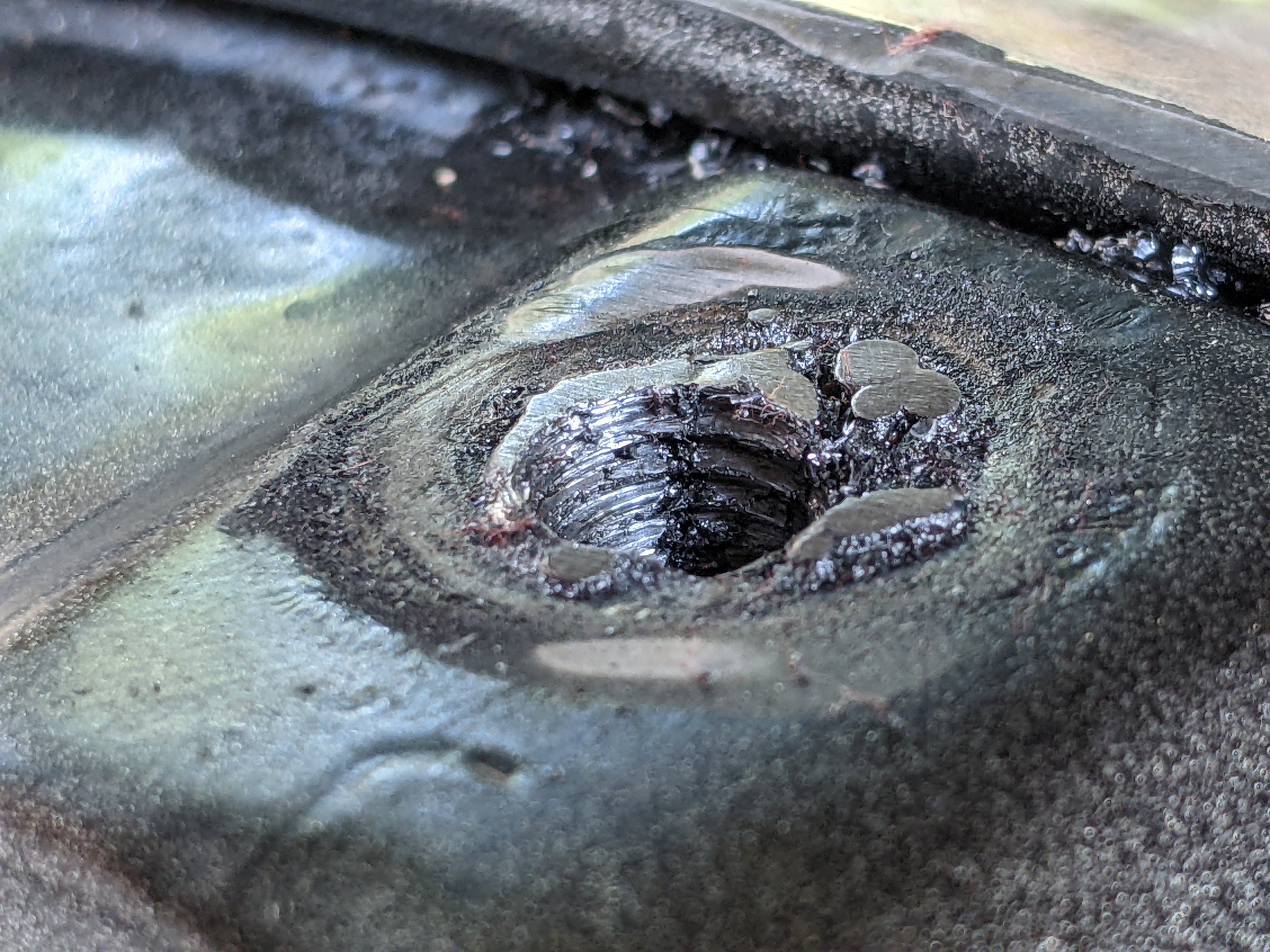
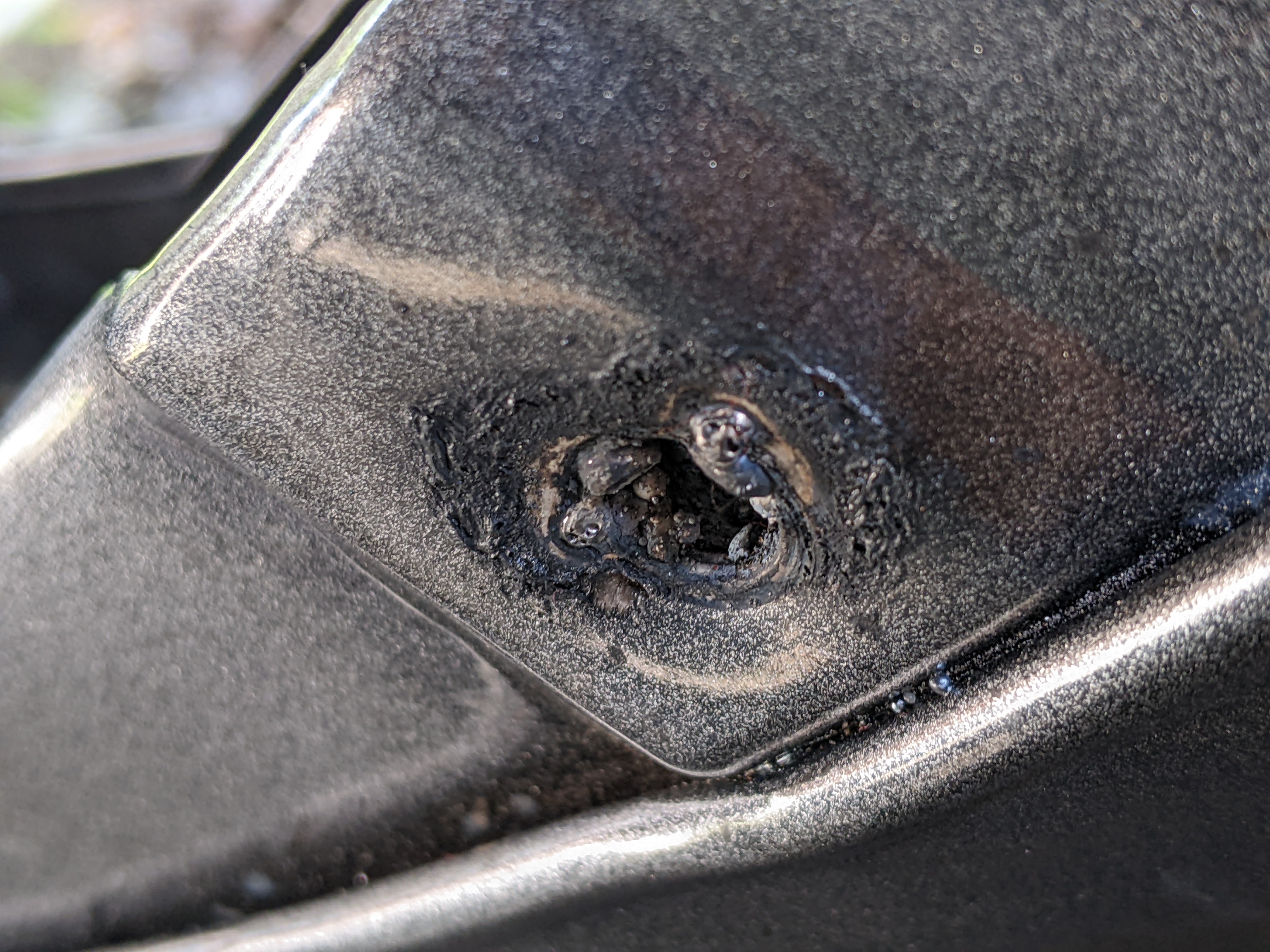
This weekend I managed to install the rear fender and toolbox — I was surprised to see how the toolbox is part of the structural design of the rear fender. I managed to repair the stripped hole in the rear fender using my flux welder, but it was a lengthy process. I initially tried to add a little metal without completely filling the hole. When I thought I had enough new metal I tried to tap the hole and promptly broke the tap. Once I got the broken remnant of the tap out of the hole I filled it entirely with weld (probably not the full depth) and then drilled and tapped. Luckily, I had a spare set of taps that included M8x1.25. The heat from the welder singed the paint near the hole, but this is not visible with the fender mounted on the bike.

1695582902149.png

I also wired up the tail light and pulled the wires through the underside of the fender in preparation for installing the wiring harness. I think my next task will be to install the remaining components of the rear brake along with the drive chain and chain guard. The replacement CL350 handlebar arrived and I dropped it off for blasting and powder coating — it was too pitted for me to clean up myself.
 
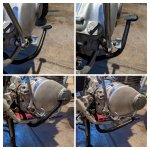
I started gathering all the parts needed to finish the rear brake assembly. I had two pedals and chose the one that appears less bent. However, it still appears to be too bent. The picture below shows the lowest and highest points in the pedal's range of motion from two different angles.

20230924_191209-COLLAGE.jpg

Does it look bent to you? (whoever is reading this)
 
Absolutely, when you think of the bike's weight coming down on the area past where it curves under the frame and up to the pedal, you can understand how it likely got bent right at the curve under the frame.
 
Absolutely, when you think of the bike's weight coming down on the area past where it curves under the frame and up to the pedal, you can understand how it likely got bent right at the curve under the frame.
Thanks for putting eyes on it, Tom. I guess it should be no surprise that I keep finding bent and broken parts as I reassemble this bike. It has fought me the entire time.

I just ordered what appears to be a decent pedal on eBay for $20 from mistermonkeyclaw. I don't keep track, but I wonder how many times I've bought from him...
 
Thanks for putting eyes on it, Tom. I guess it should be no surprise that I keep finding bent and broken parts as I reassemble this bike. It has fought me the entire time.

I just ordered what appears to be a decent pedal on eBay for $20 from mistermonkeyclaw. I don't keep track, but I wonder how many times I've bought from him...
That pedal could be straightened without heating it if you just had a big, solid vise to clamp it in on a bench that wouldn't move when you slipped a big cheater pipe over the end of it, down to near that curve under the frame. But for $20 I guess it's worth rolling the dice on another one.
 
That pedal could be straightened without heating it if you just had a big, solid vise to clamp it in on a bench that wouldn't move when you slipped a big cheater pipe over the end of it, down to near that curve under the frame. But for $20 I guess it's worth rolling the dice on another one.
I'm amazed that you can see where it's bent — it's such a goofy shape that I couldn't tell there was a problem until it was installed. So, I think it would definitely take a few iterations if I tried to straighten it. It's still a good idea if my $20 wager doesn't pay off.
 
Thanks for putting eyes on it, Tom. I guess it should be no surprise that I keep finding bent and broken parts as I reassemble this bike. It has fought me the entire time.

I just ordered what appears to be a decent pedal on eBay for $20 from mistermonkeyclaw. I don't keep track, but I wonder how many times I've bought from him...
I think the Claw gets some money from all of us eventually! He has trash and treasure, something for everyone.

The brake pedal on my bike is bent too. It looks like someone took a torch to it to straighten it out.
I'll probably look for a replacement as well when I get there.
 
A 2" cheater pipe to bend it further down by slipping it over the lever a good 5 or 6 inches, then a large plumber's wrench to level out the actual foot pad has worked well for me. All done with it mounted on the bike so I can get the distance from the side case right too.

Kudos on the thread weld. Did you drill after welding and before tapping? It's hard to tap an uneven hole without the tap jamming and risk it snapping. A 4 flute tap might be better than a 3 flute for that.
 
Kudos on the thread weld. Did you drill after welding and before tapping? It's hard to tap an uneven hole without the tap jamming and risk it snapping. A 4 flute tap might be better than a 3 flute for that.

The first picture I posted was attempt #1. After taking that picture, I tried to create a round hole for the tap, breaking a drill bit in the process. Eventually I could get the tap in and after about 1.5 turns, the tap snapped. It took a fair amount of work to remove the end of the tap.

Attempt #2 started by filling the hole with weld from one side and then I used my drill press to get a clean hole for the backup tap, working my way up from smaller bits to larger ones. The tap cut much more smoothly the second time around.

It's always a learning process.
 
The first picture I posted was attempt #1. After taking that picture, I tried to create a round hole for the tap, breaking a drill bit in the process. Eventually I could get the tap in and after about 1.5 turns, the tap snapped. It took a fair amount of work to remove the end of the tap.

Attempt #2 started by filling the hole with weld from one side and then I used my drill press to get a clean hole for the backup tap, working my way up from smaller bits to larger ones. The tap cut much more smoothly the second time around.

It's always a learning process.
When tapping always turn it just a bit, maybe less than an 1/8 turn, then reverse twist to help clear the cutting edges on the tap. Back and forth, going forward (clockwise) just a bit further each time. Also use oil for tapping and the taps last longer too.
 
When tapping always turn it just a bit, maybe less than an 1/8 turn, then reverse twist to help clear the cutting edges on the tap. Back and forth, going forward (clockwise) just a bit further each time. Also use oil for tapping and the taps last longer too.
Good tips. I think the broken tap was really due to the unevenness of the hole on my first attempt. Despite trying to round it out, it felt like I was asking it too cut too much. Still, I was surprised I could snap an M8 tap, albeit from HF.
 
Good tips. I think the broken tap was really due to the unevenness of the hole on my first attempt. Despite trying to round it out, it felt like I was asking it too cut too much. Still, I was surprised I could snap an M8 tap, albeit from HF.
You get a feel for how much you can cut and learn to work it gradually. Quality taps are worth it. I replace my HF set with better ones over time. Different tap designs are useful to have too, ie. tapered, straight, blind, etc.
Taps are hardened to stay sharp but do snap easier.
 
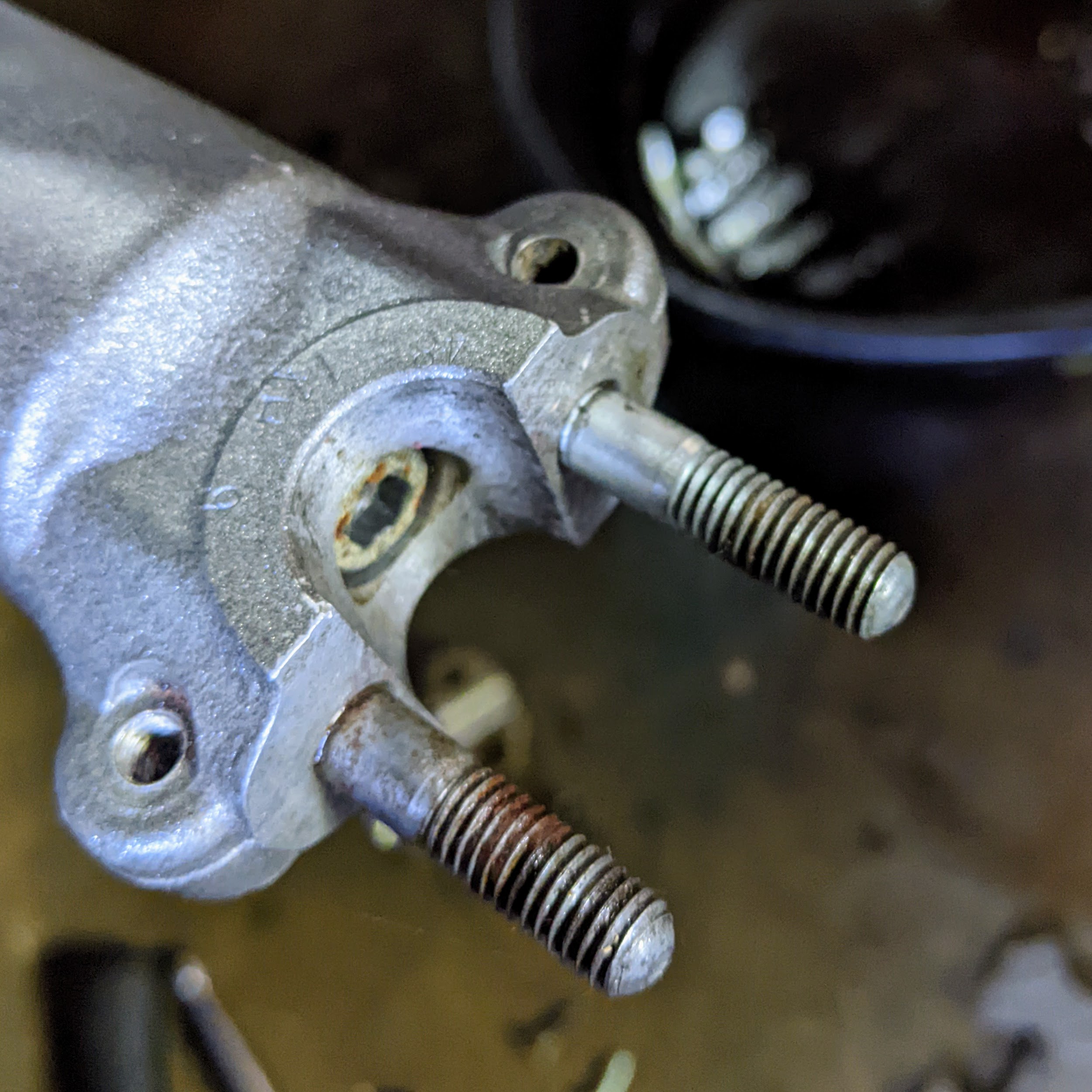
There was a small puddle of fork oil under the front tire by the end of the week and I'm not quite sure where the leak is. Are the studs on the bottom side of the forks a potential source?
RnNxVvb.jpg


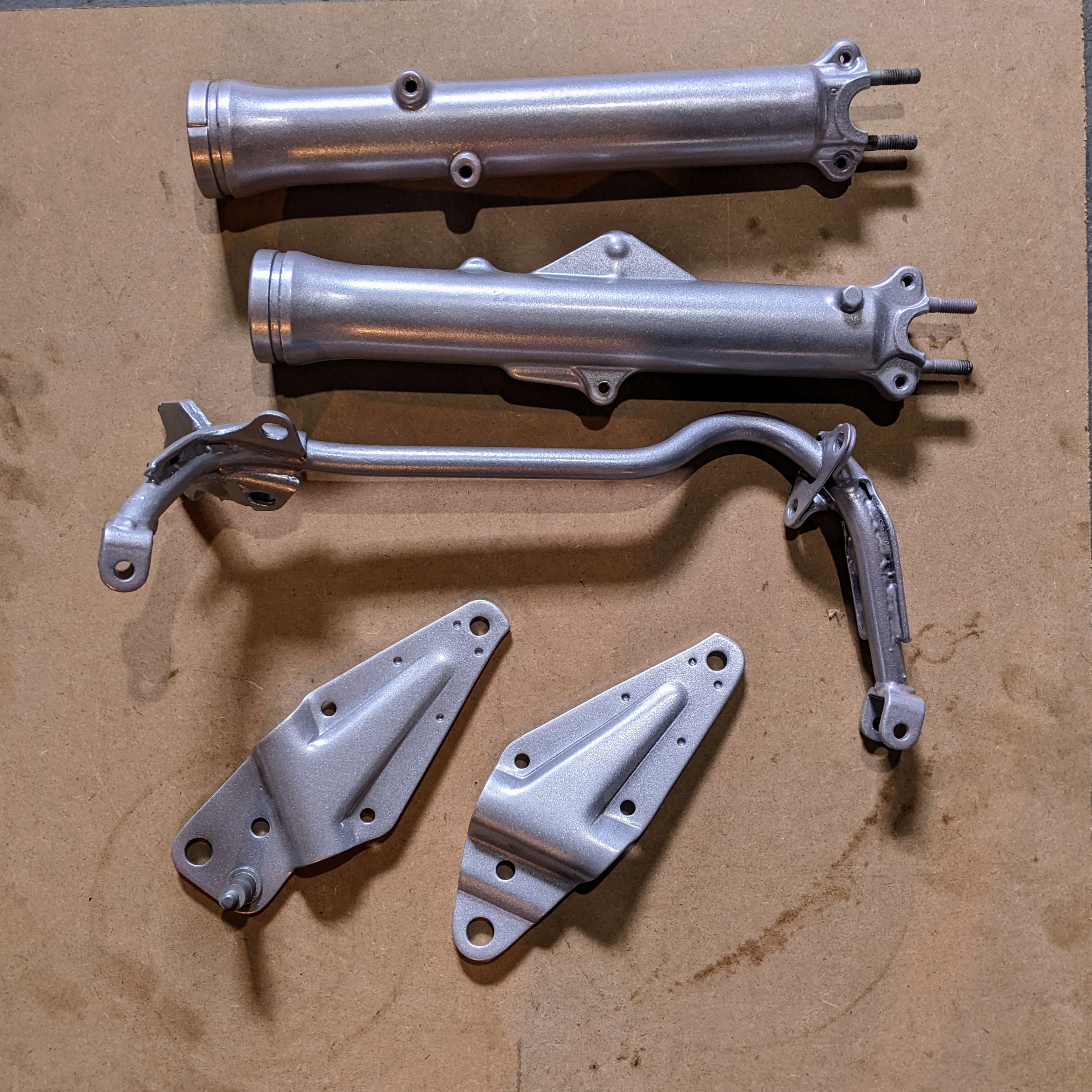
I recently acquired a 1971 CB350 step bar to compare with the one I had powder coated. I did a test fit and found that new step bar provides more clearance on the clutch cover side.

ACIwsMV.jpg
 
There was a small puddle of fork oil under the front tire by the end of the week and I'm not quite sure where the leak is. Are the studs on the bottom side of the forks a potential source?
Not the studs, most likely the allen bolt. I've never seen a leak from one of the studs, but I've seen those copper washers leak after re-use once in a while.
 
Thank you, both. I removed both forks and have them leaning against a wall in the garage. I hope the leaky one will leak some more so I can narrow down the source. In the mean time I will order new washers.
 
Before re-using a copper seal of any kind, from a head gasket down to a small seal washer, you should anneal it. That softens the copper after it has been work hardened or crushed. Just make a small hook on a piece of stiff wire, hang the washer on the hook, and dangle it in a gas flame -- a kitchen stove burner will work fine, and it is quicker than getting out your torch. You could use an electric stove if you wait for it to heat up.

Hold the washer in the heat till it lights up cherry red. Quench it in some cold water at the kitchen sink. You can re-use copper over and over this way. My '64 Triumph is running the original head gasket that it was born with. I annealed it and re-used it. 12,000 miles later, no problems!

Typically, I will do this process even when I am about to use a new bit of copper. It only takes a few seconds, and helps prevent leaks. It should have been done when the part was made, but who knows?
 
Back
Top Bottom