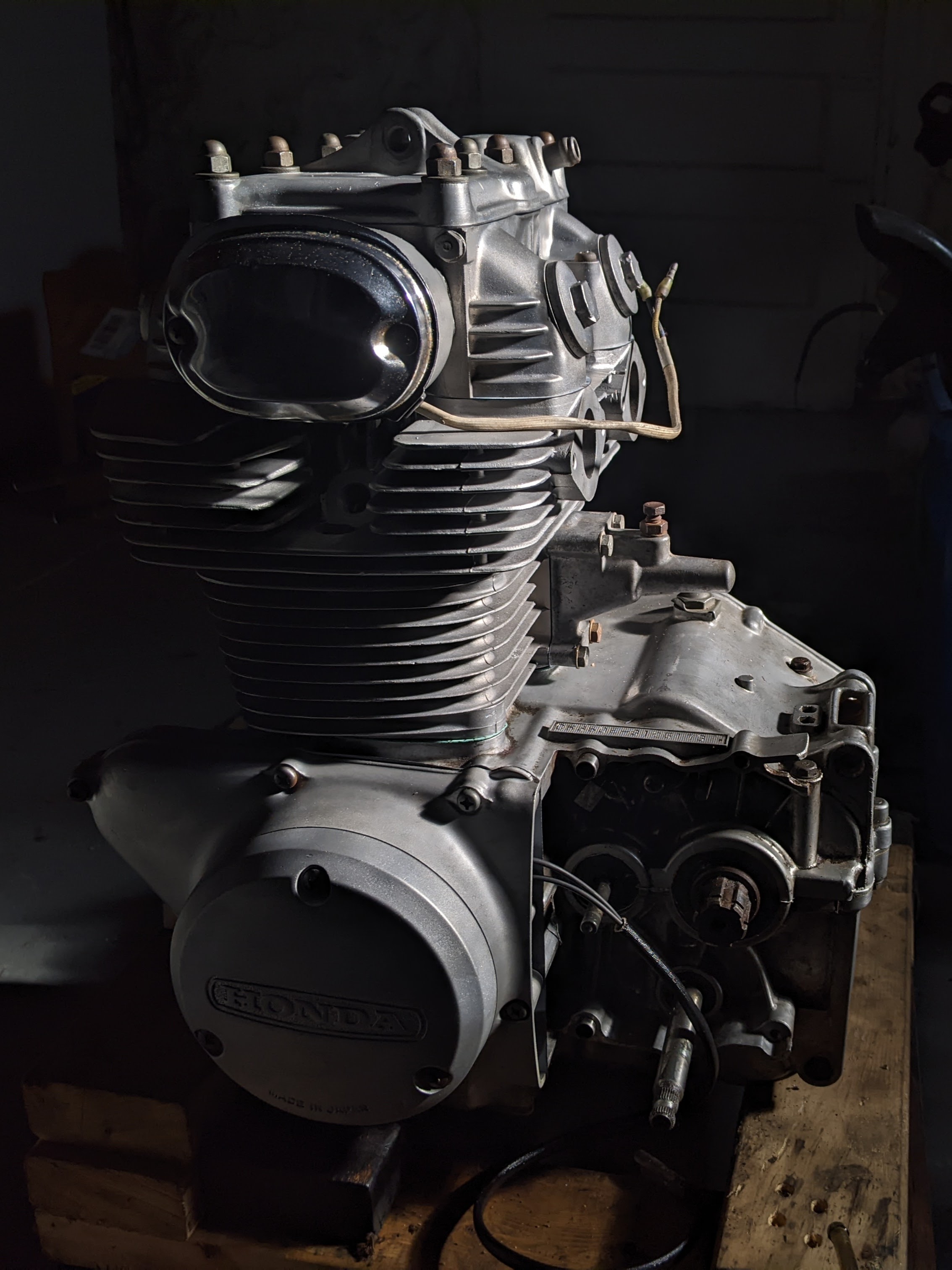
1971 CB350 . . . 40 year hibernation

The seat came out really nice, that sheet metal edging is a great touch that often gets skipped, I think.

The assembly lube is just for that start up. I just ran my starter with plugs out, tappet covers off (and coil unplugged) to wait for the oil to get up to, and drip from, the rockers (I used a flashlight).

I can get down my 73 CL350 seat for a rivet shot pic, if you want. I'm sure craft and leatherwork shops have those studs if Sirius is out.
 
The seat came out really nice, that sheet metal edging is a great touch that often gets skipped, I think.

I can get down my 73 CL350 seat for a rivet shot pic, if you want. I'm sure craft and leatherwork shops have those studs if Sirius is out.

Thanks, Tom! I may check the local craft stores before ordering the SCI buttons. I do have a couple of CL seats for comparison, but thanks for the offer of photos. I need to check whether the holes in the two styles are in different locations, though.

Good job on the seat cover stl360. Looks very professional.
Gary

Thanks, mate. I appreciate your helpful tips — keep 'em coming!
 
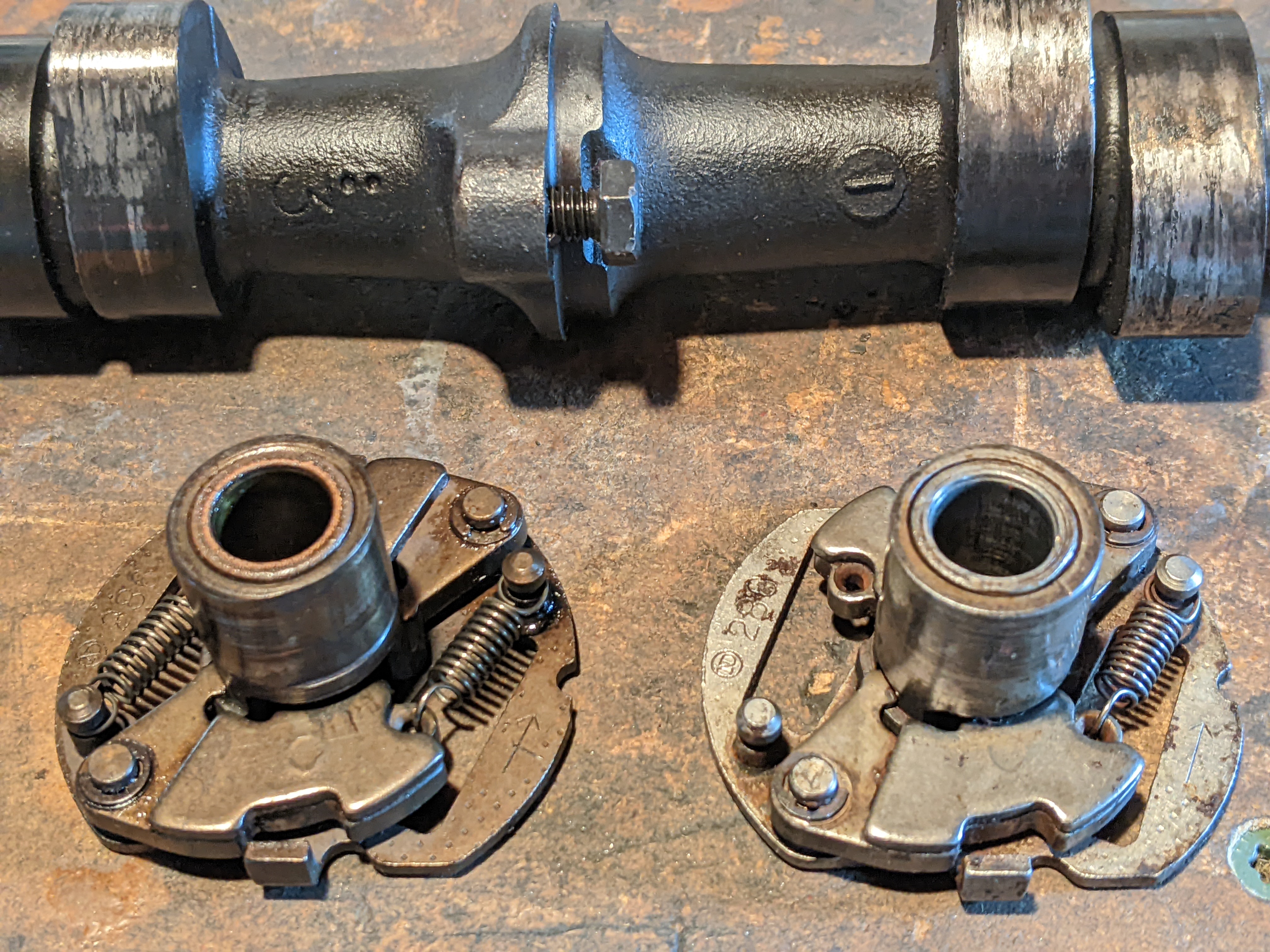
I am in the process of installing the advancer and chose the better of the two units available to me, better because it had both springs intact and the other is missing one spring. When I went to slide it over the end of the cam it seemed very tight. I tried the other advancer, which came from the same motor as the camshaft I am using, and it slid on easily. I then tried the first advancer on the matching camshaft and it slid on easily there while the second advancer felt slightly loose on that shaft. I notice that the cams have different numbers on them. In particular, one cam seems to have a roman numeral I and the other has a II. Is it possible that the advance mechanisms are not compatible?

Right now, I am planning to steal a spring from the tight advancer to complete the other and proceed with the advancer that was originally on the camshaft in the motor, but I thought I would check first.

lJHNvzx.jpg


LwyDr3n.jpg
 
I'm sure Honda had an explanation for the differences and even whether the 'I' and 'II' were relevant to anything, but this is not something I've ever been aware of. And I find it odd that there would be a very slight difference in the diameter of the stub in the cam for the advancer.
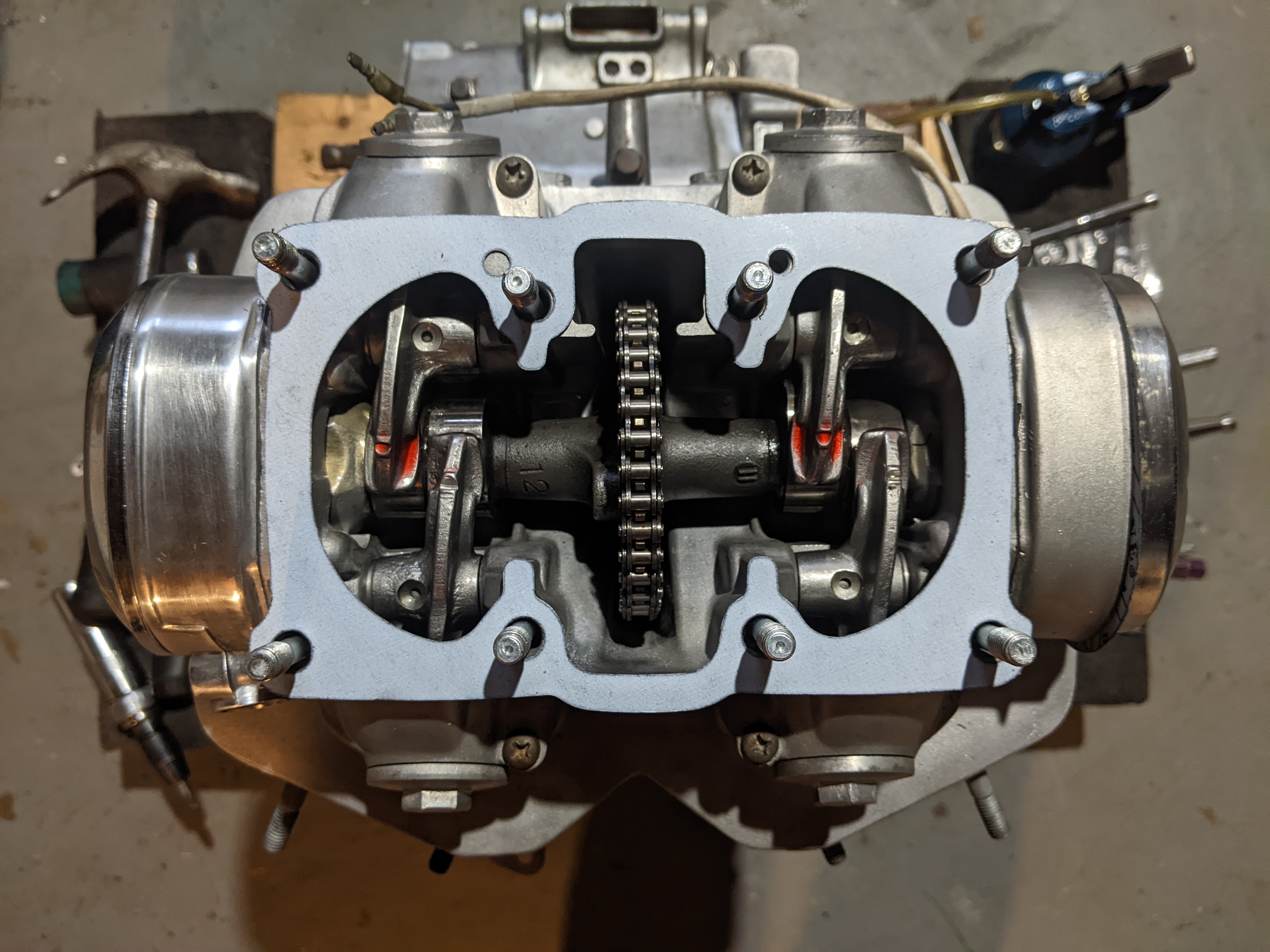
 
I'm sure Honda had an explanation for the differences and even whether the 'I' and 'II' were relevant to anything, but this is not something I've ever been aware of. And I find it odd that there would be a very slight difference in the diameter of the stub in the cam for the advancer.

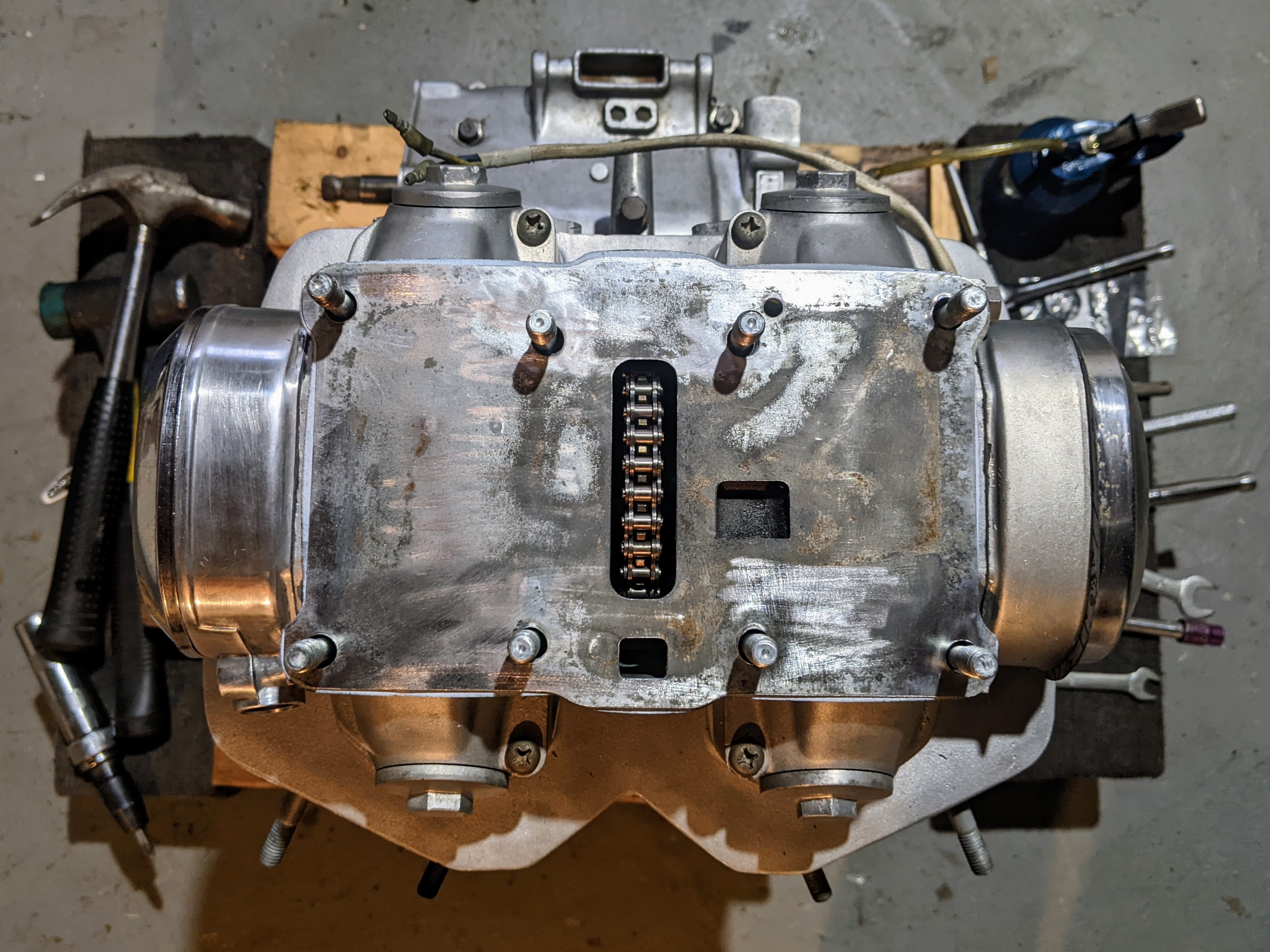
I will try to put a micrometer (at least a pair of calipers) on those surfaces to see if it's measurable. Maybe it has something to do with the parts wearing together.
 
There's only 1 advance unit, I looked at a K0 parts book and it the same number as later models. There is a different washer used but that applies to the K2's and earlier.
I would use the one that has the best fit to the cam, steal springs as needed.
The Roman numeral mark is cast so that indicates it's a different mold, other markings would indicate the version of that mold. All done for QC purposes and parts failure tracking.
 
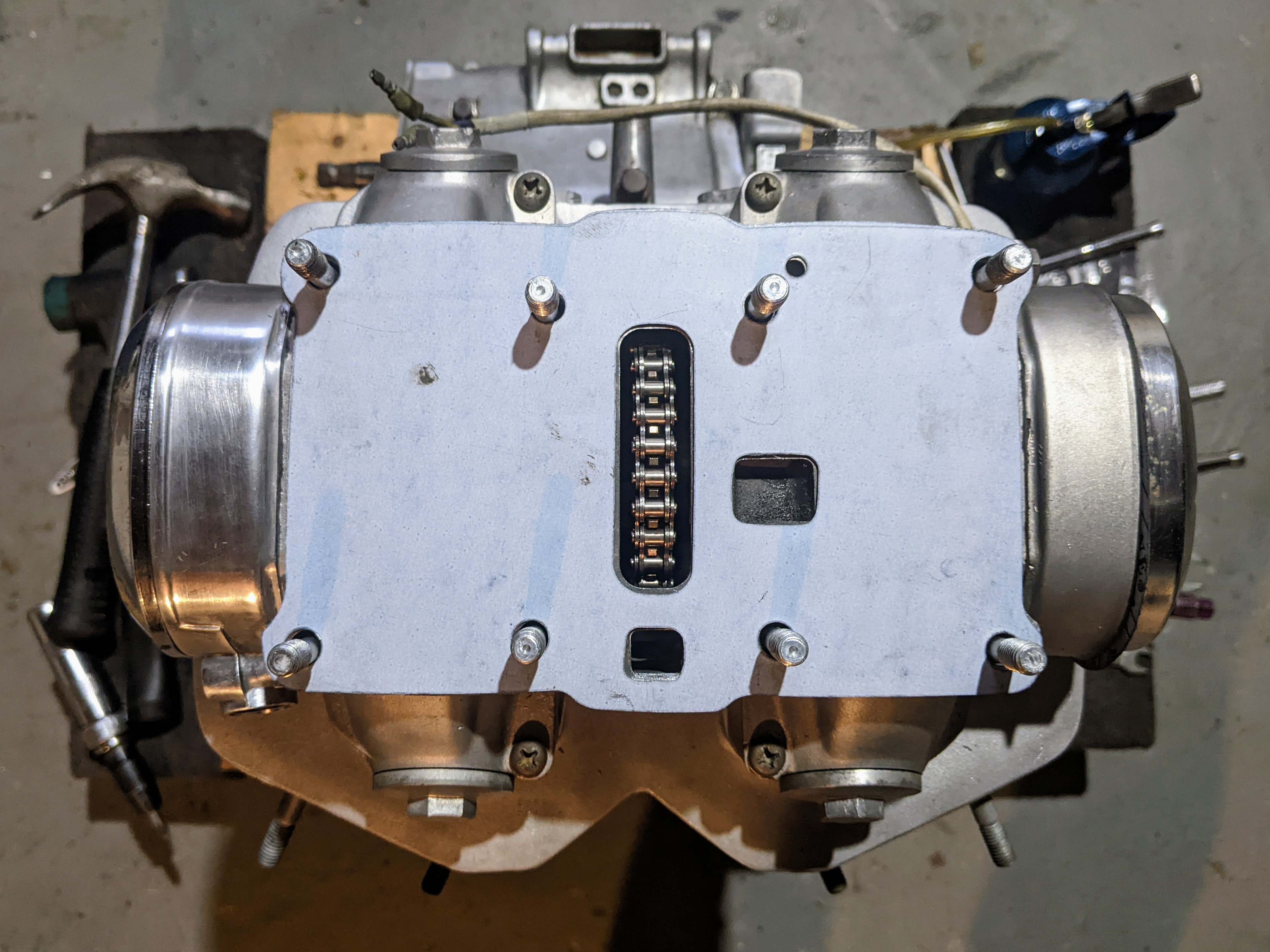
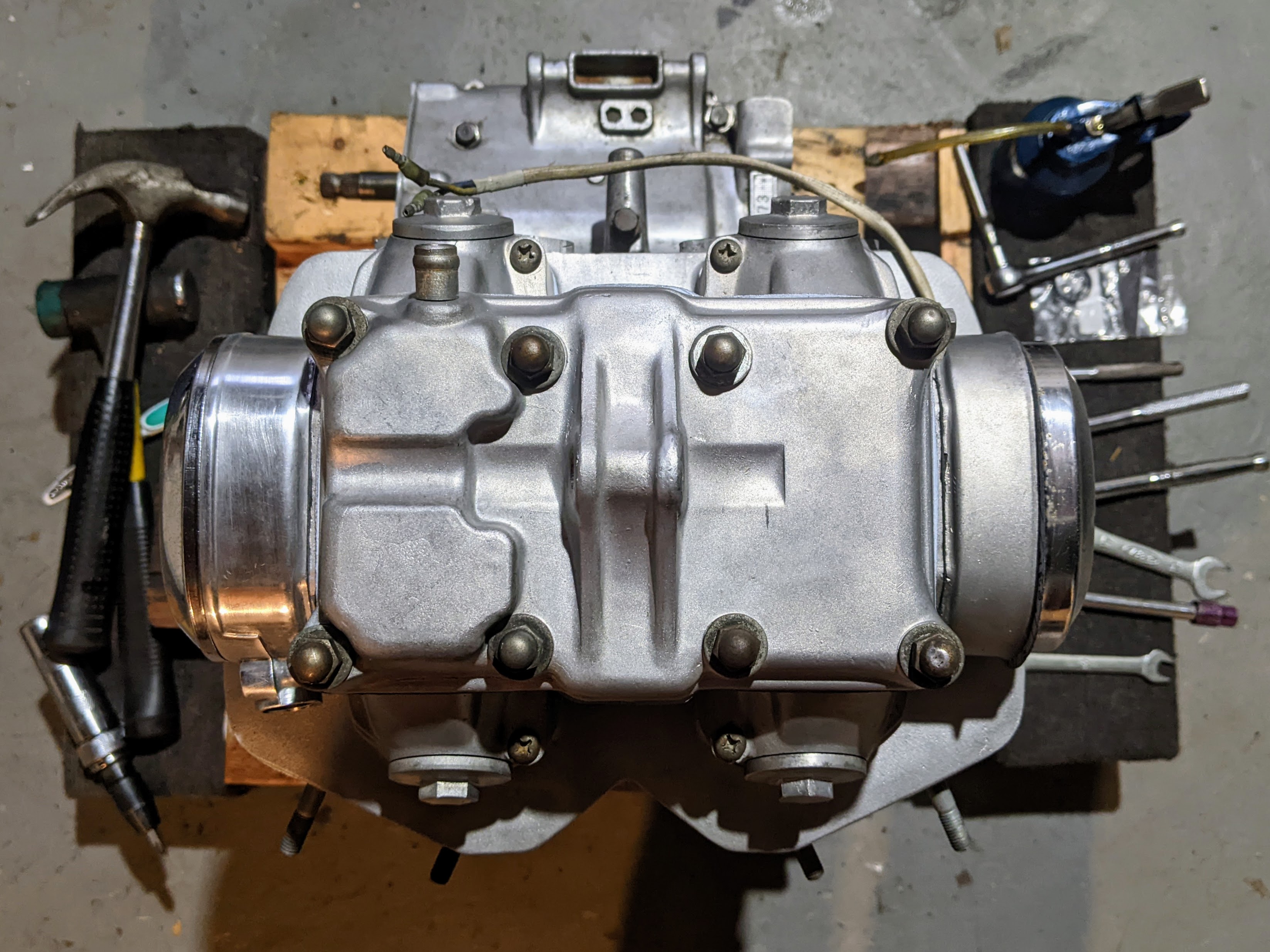
I moved a spring from the tight advance unit to the matched unit and finished the installation there. The last thing I need to do with the top end is torque the cylinder studs. I figure there's no harm in waiting until I post pictures of the gasket and cover installation, just in case. Don't want to take any backward steps after torquing the head.

w60O2us.jpg


ic5zYhk.jpg


aFNOBWi.jpg


A3xBfij.jpg


a5jxeBc.jpg


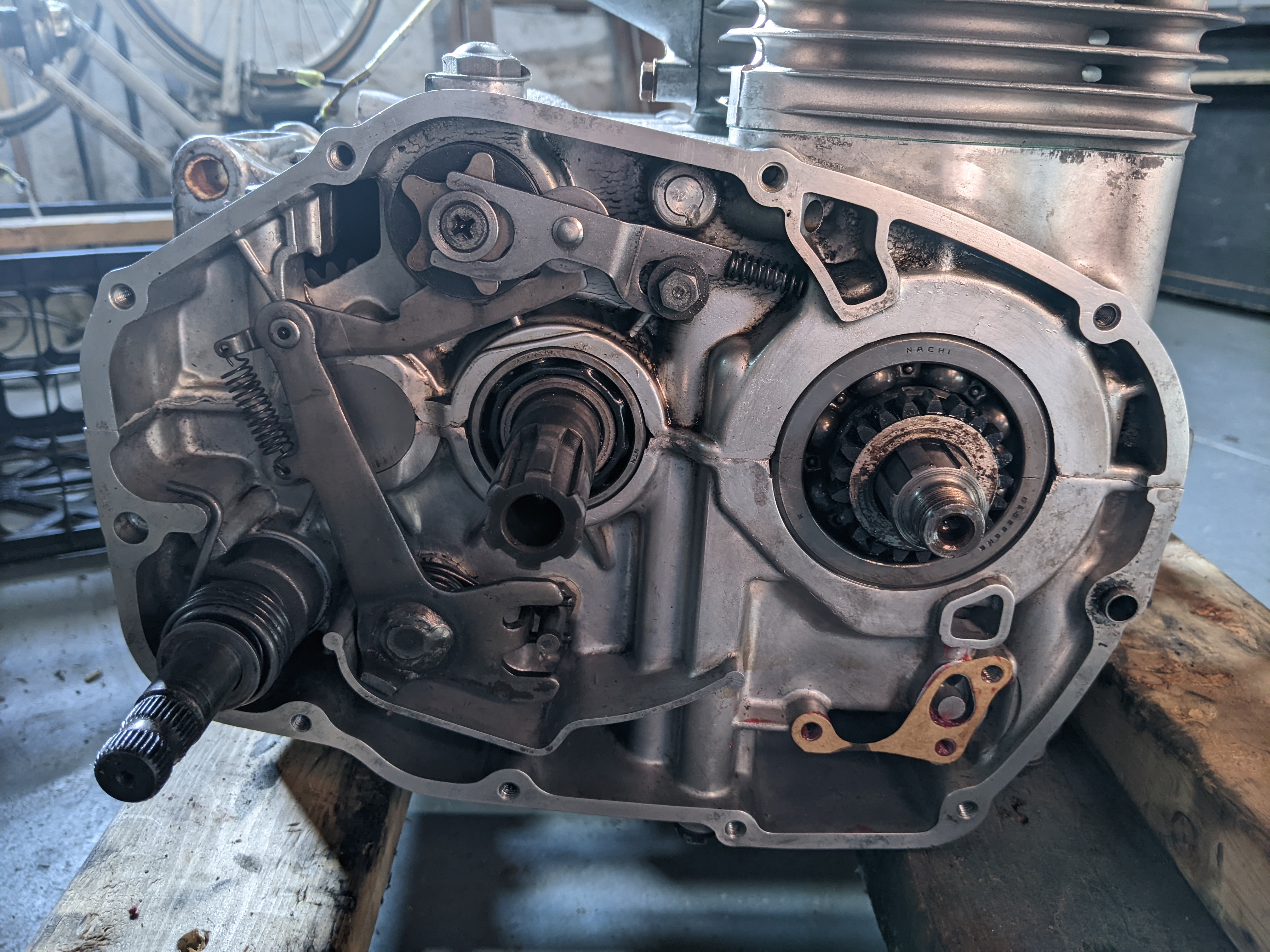
The next step for me will be to reinstall the clutch, oil pump, and centrifugal filter. to wrap up the right side of the motor. Then it will be time to lay the frame over the motor.
 
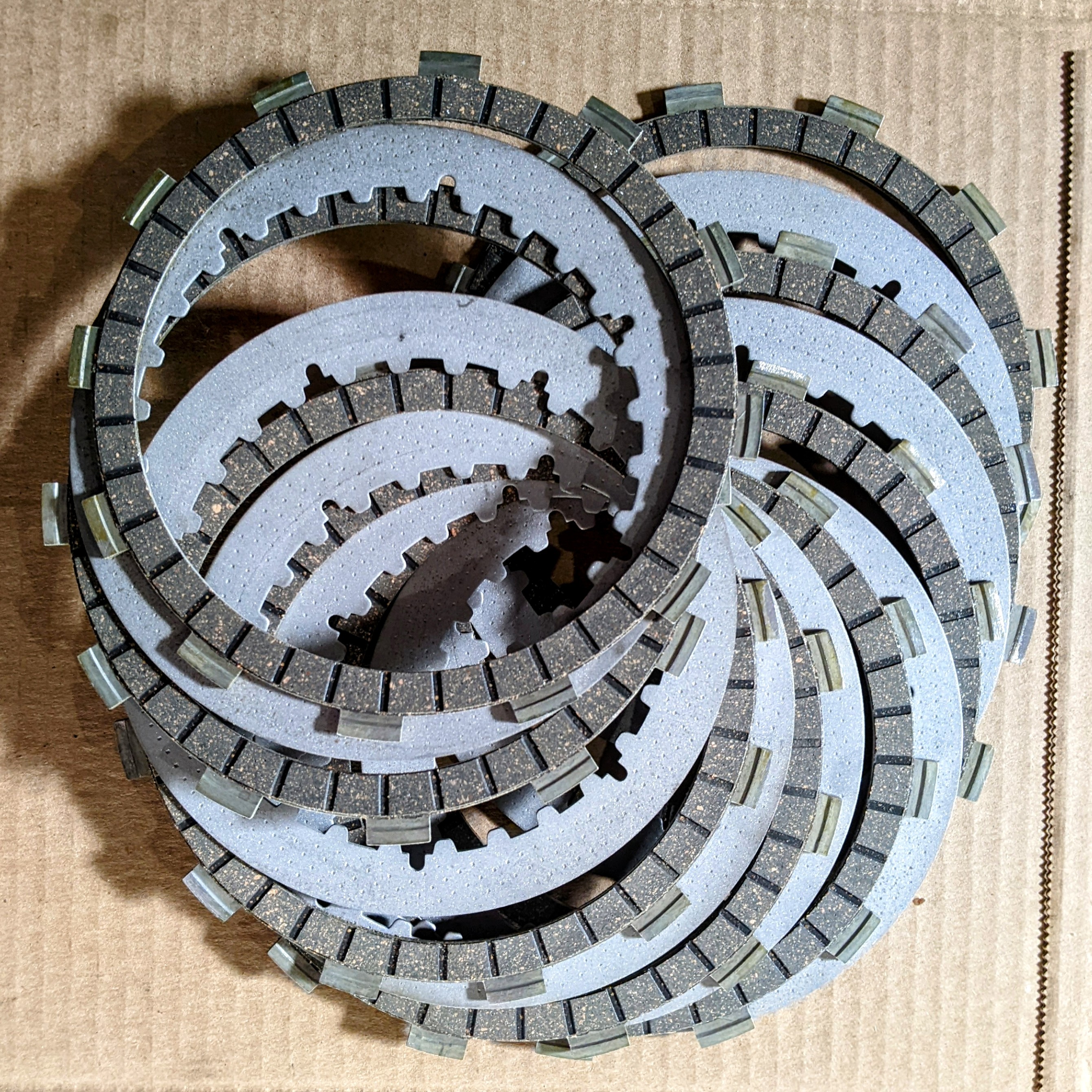
After a quick road trip out East, during which I got to spend a couple of hours hanging out in ballbearian's garage, I got back to work on my project today. A ways back I mentioned that I would try to soda blast my clutch plates. My soda blasting apparatus didn't really impress on that task, so I threw the plates in with some other stuff that was being vapor blasted back in July. They turned out very nice and I am pairing them with new EBC friction disks for the rebuild.

w56MriD.jpg


After soaking the friction disks in some used oil, I began assembly of the clutch and oil pump. I used a thin smear of grease to hold the pump gasket in place and then slipped the basket and pump into position.

xGFkNW4.jpg


GFYsngK.jpg


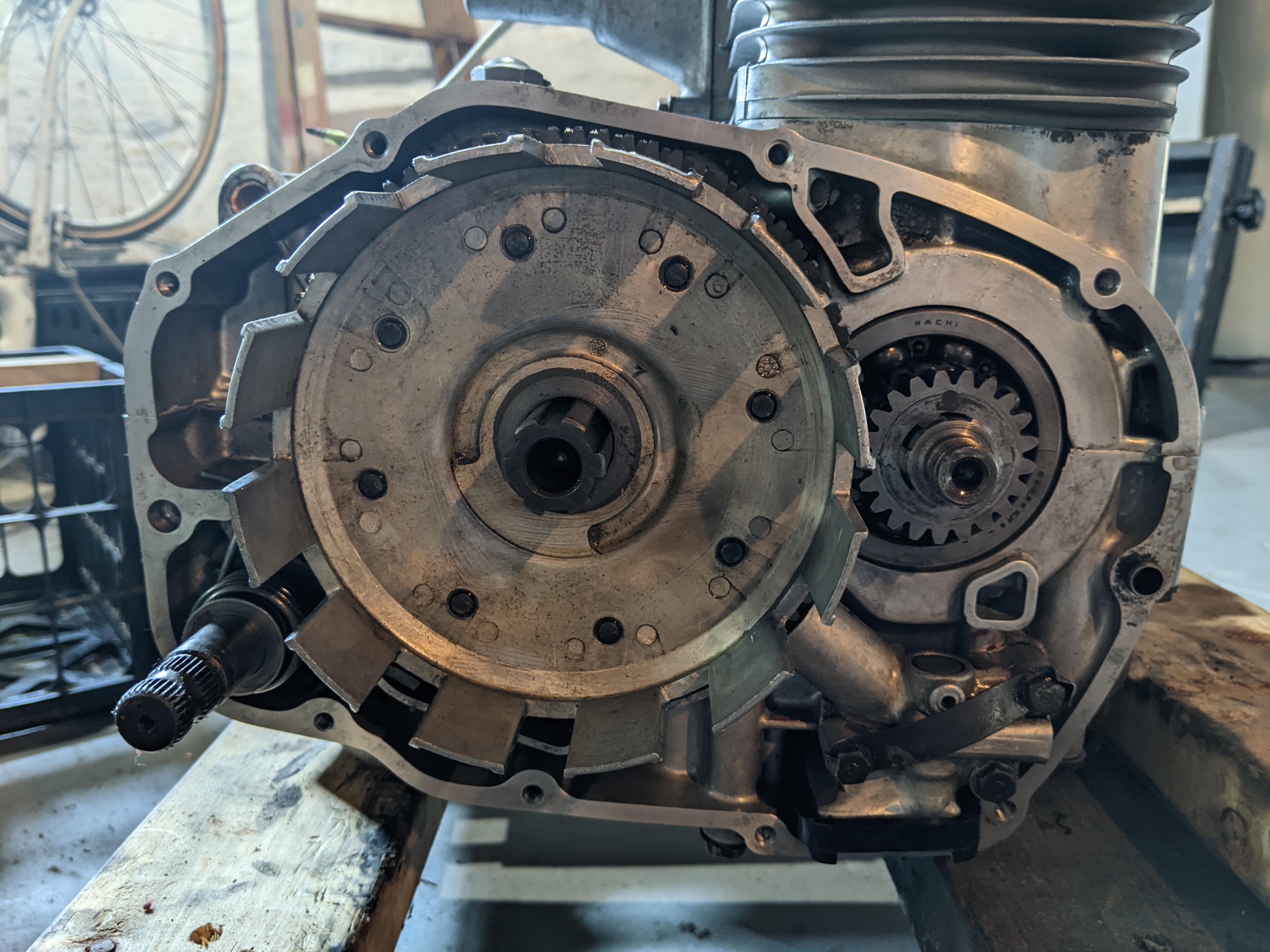
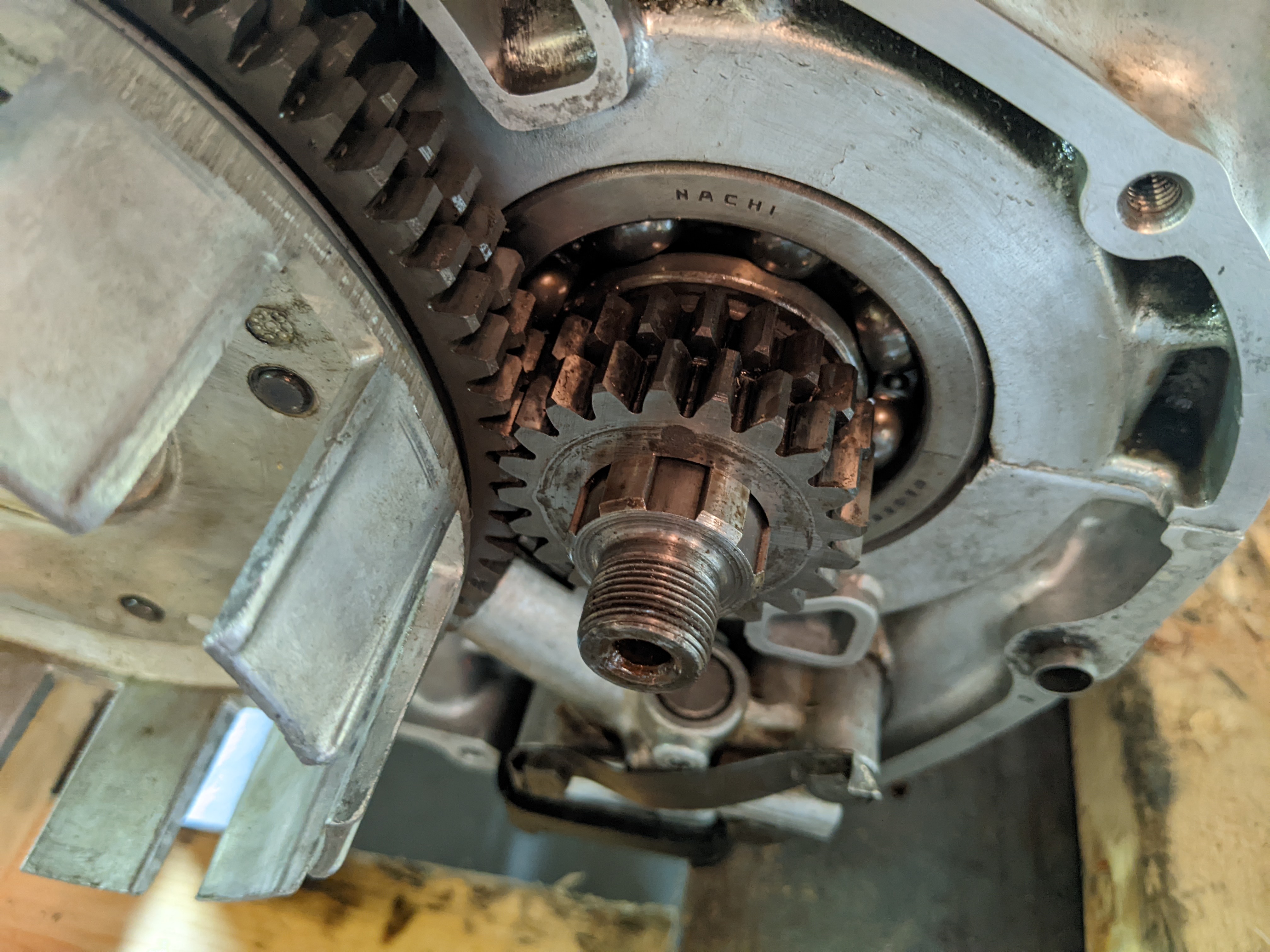
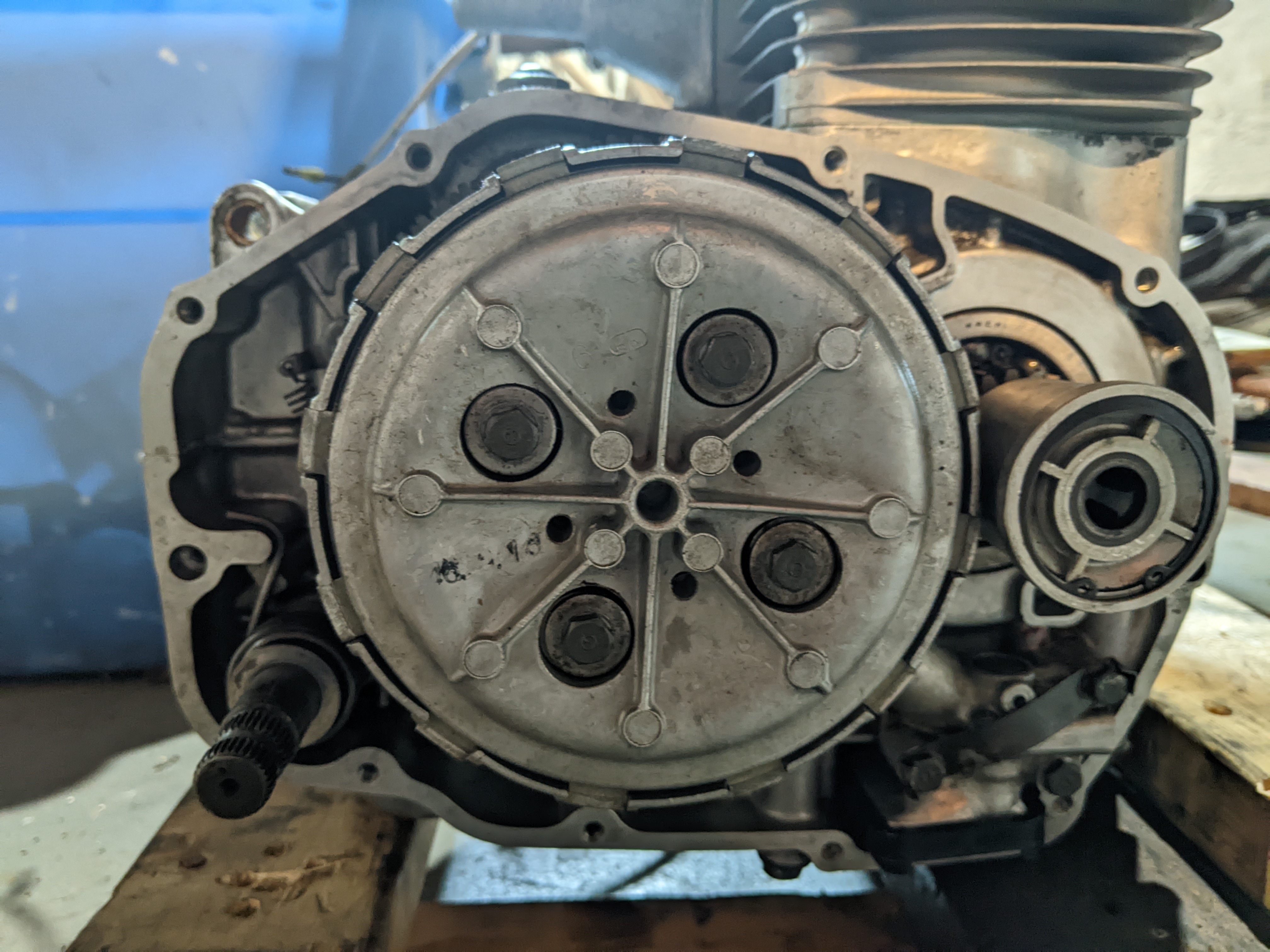
I found the offset primary gears a little odd, but I suppose there must be an engineering reason for it. Reduced wear maybe? Then, I finished up by adding all of the clutch internals, the pressure plate, springs, and bolts. The centrifugal oil spinner was secured and capped.

InKcX5L.jpg


Gzfd4IW.jpg


I realized I need to replace the three cross screws (93700-050-160, M5 x 16 mm) that secure the oil filter cover in the side case, so I'm going to order those now. I should still be able to add the side cover and place the frame over the motor soon.
 
Glad you made it home safe after your trip and our brief but fun visit.

Your project is really picking up steam now. I enjoy the re-assembly but try not to forget something in my excitement.
 
Neat! Looking good. I have new clutch plates coming tomorrow.
I'll be pulling the clutch and the oil pump in the next day or so.
 
The offset crank/clutch gears are for noise reduction

I remember hearing once that those straight cut gears are more efficient for power transfer but are noisier than helical cut gears. Helical cut is more expensive to produce, the Benly's might have been the last ones Honda did.
 
I found the offset primary gears a little odd, but I suppose there must be an engineering reason for it. Reduced wear maybe?

Though I do not know the actual reason behind it, I believe in part it was a simple way to reduce straight-cut gear noise in the primary drive. During that era other bike manufacturers used helical gears to reduce gear whine because of the longer tooth-engagement design, but they also cause axial thrust which loads the crank bearings and can cause accelerated wear.
 
I remember hearing once that those straight cut gears are more efficient for power transfer but are noisier than helical cut gears. Helical cut is more expensive to produce, the Benly's might have been the last ones Honda did.
Straight cut gears are always noisy. Honda's solution is basically 2 sets of gear that are making noise but because of the offset the gear noise is cancelled by each by introducing an opposing noise. Has to do with frequency wave forms.
 
Straight cut gears are always noisy. Honda's solution is basically 2 sets of gear that are making noise but because of the offset the gear noise is cancelled by each by introducing an opposing noise. Has to do with frequency wave forms.

It would be interesting to see Honda's research on that noise reduction strategy. I studied acoustics back in my engineering days and the idea is pretty simple. Placing two point sources in close proximity to one another with a well-chosen phase difference creates an acoustic dipole, resulting in a destructive interference pattern as you describe. I'm surprised that the noise would be such a concern to warrant the research and added complexity, but I am really happy to learn of this.

How did you come by this knowledge, Jim?
 
Can't speak to Jim's knowledge and how he acquired it (except to say it's a lot), but I wonder if it was a combination of Honda's ongoing effort in that era to make these bikes as pleasant and friendly to the general masses as possible in a time when bikes were still widely vilified as being associated with 'bikers', most of whom had bad reputations then. Small but incredibly reliable bikes that got ridiculous fuel mileage and had quiet exhaust all fit into the narrative Honda used in their "You meet the nicest people" commercials that turned the industry into what it became not much more than a decade after their arrival. And of course, not long after that the EPA came into being and started locking down not only pollution levels but noise as well. Even driveline and intake noise was reduced afterward.
 
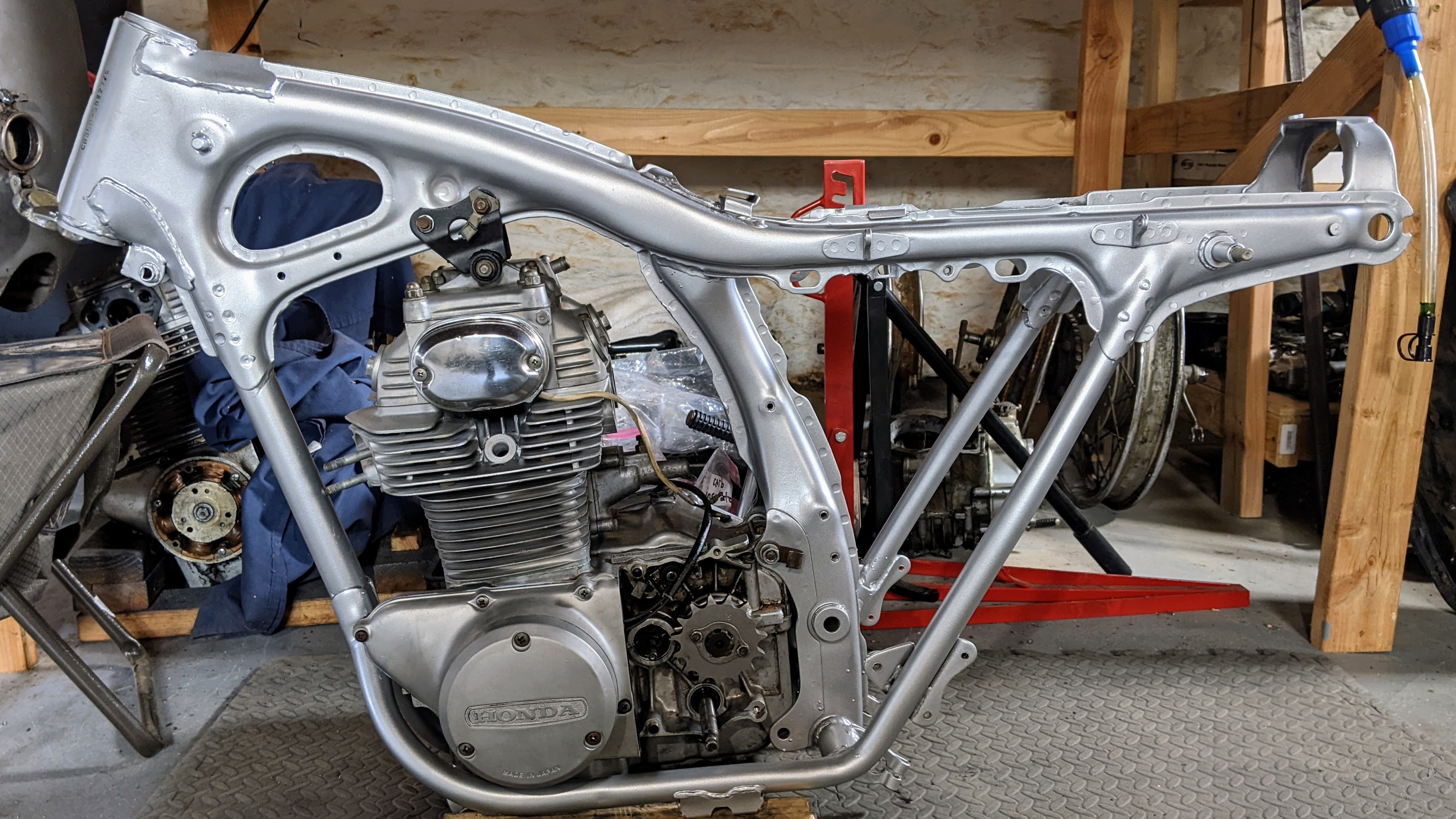
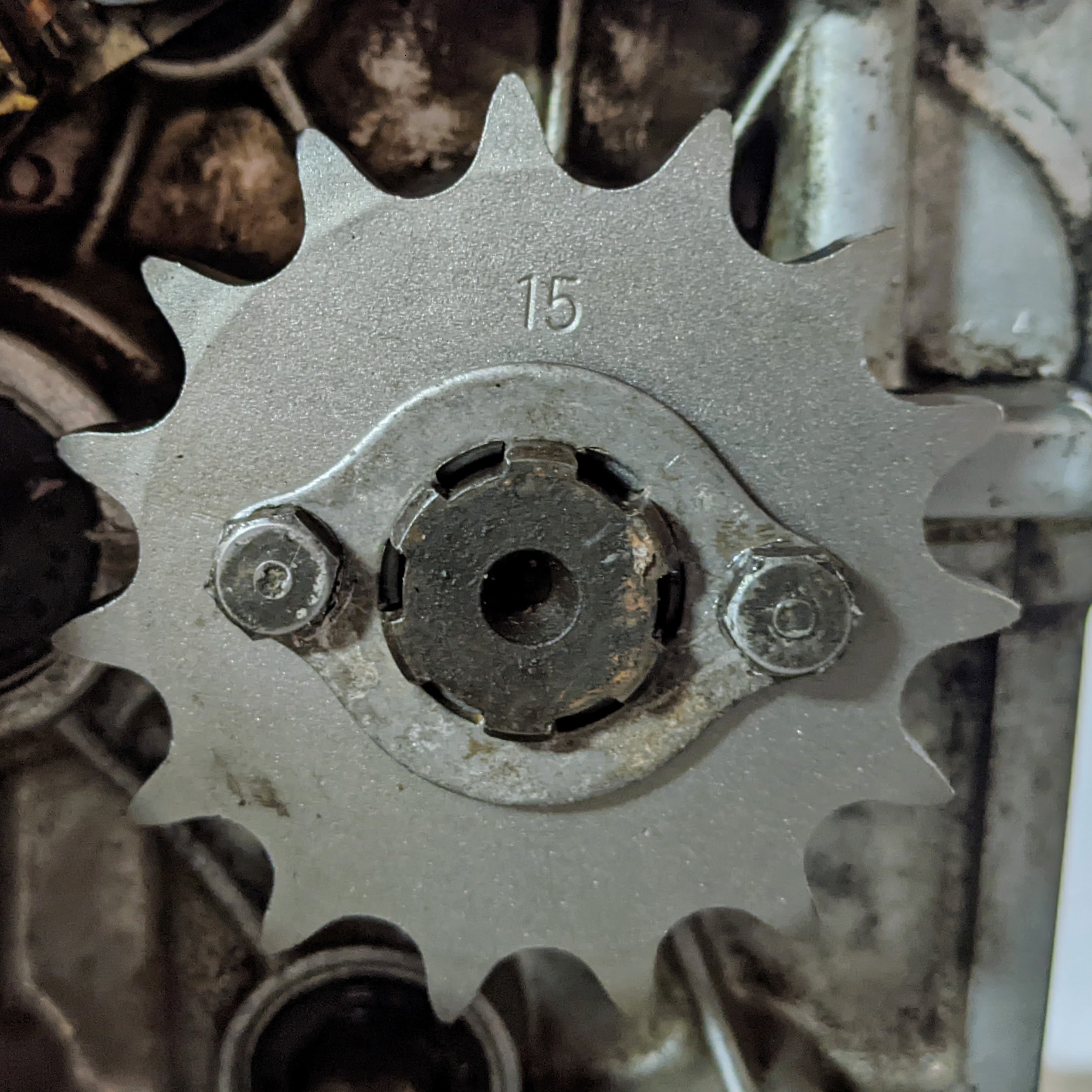
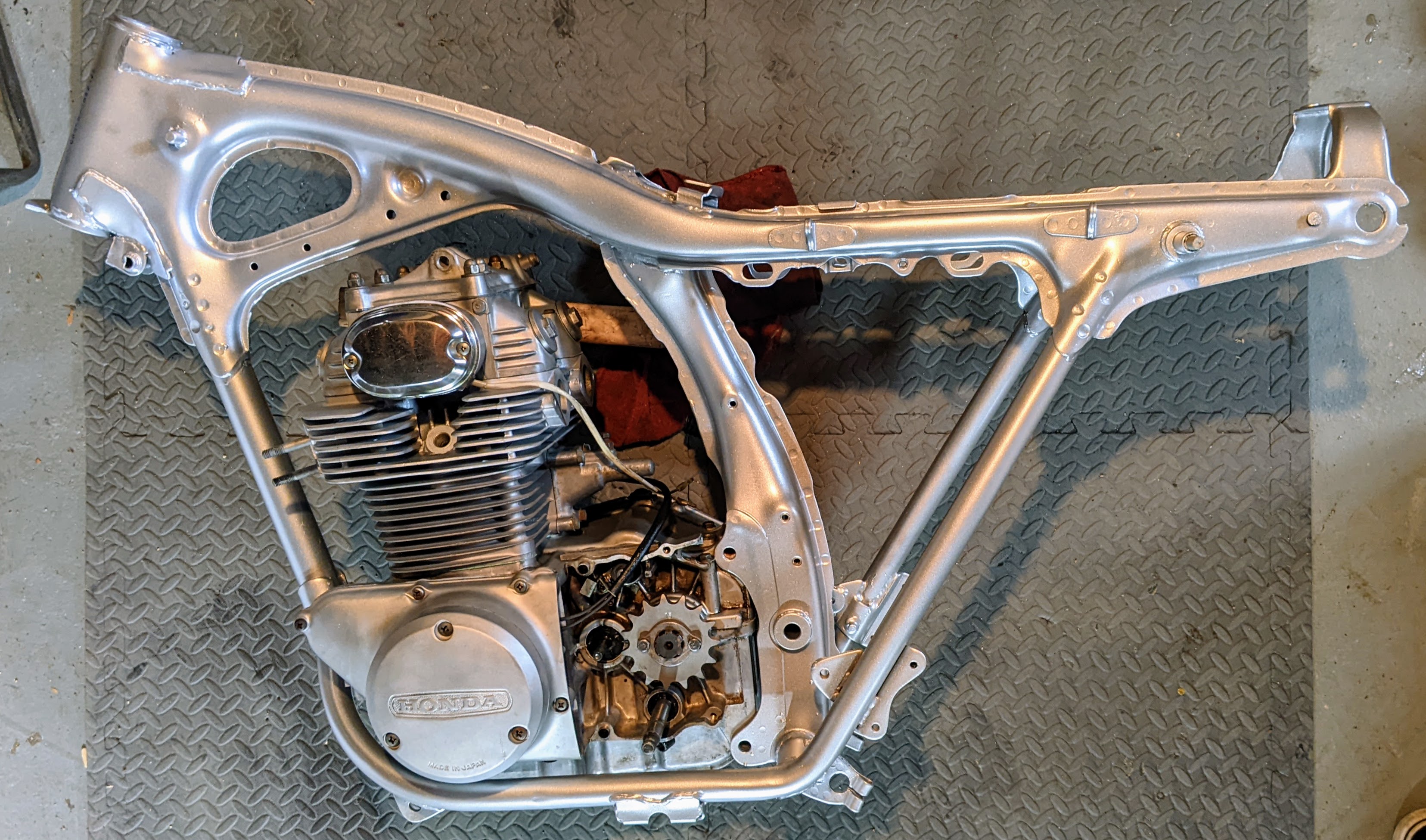
Today I added the right-side cover (minus the oil filter cover), installed a 15-tooth front sprocket from Parts Unlimited, and mounted the frame over the motor. This was my first frame-over-motor installation and it is definitely easier than banging the motor around to get it into an upright frame. It still took me a little while to get the frame over all of the humps on the motor in the right way, but I could see it getting easier with repetition. I initially put the two lower, front bolts in to secure the motor and tried to place the others after uprighting the frame and motor. I had trouble lining up the engine hangers on top and ultimately put in the top, rear bolt, removed the two lower bolts up front, and placed the frame/motor back on its side to line up the engine hangers. That worked better. At that point, the rest of the bolts slide in easily. I didn't locate the washer and nut for the lower, rear bolt yet, so that one still needs to be installed.

5oIEIRe.jpg


Ion9xSh.jpg


dhQU5Nf.jpg


The next step will be to move the frame out to my garage to continue the build.
 
Don't forget the spacer between the lower front mount tab and the engine.

Those front sprocket retainer plate bolts look like the chain was thrown in the past, or someone used the wrong socket on them.
 
I wonder if it was a combination of Honda's ongoing effort in that era to make these bikes as pleasant and friendly to the general masses as possible in a time when bikes were still widely vilified as being associated with 'bikers', most of whom had bad reputations then. Small but incredibly reliable bikes that got ridiculous fuel mileage and had quiet exhaust all fit into the narrative Honda used in their "You meet the nicest people" commercials that turned the industry into what it became not much more than a decade after their arrival. And of course, not long after that the EPA came into being and started locking down not only pollution levels but noise as well. Even driveline and intake noise was reduced afterward.

That seems like a plausible explanation and I guess they make enough money to justify investing time and money in such advancementd even if a certain percentage of their customers are going to swap out the OEM mufflers for straight pipes. =)

Don't forget the spacer between the lower front mount tab and the engine.

Thsnks. The spacer is in there, it's just hiding at that camera angle.
 
Thsnks. The spacer is in there, it's just hiding at that camera angle.

It wasn't that I couldn't see it as much as I know how easy it would be to forget. But good to know you didn't, which I really didn't think would be the case anyway.

Good to see it coming together, and the silver frame looks really nice.
 
It wasn't that I couldn't see it as much as I know how easy it would be to forget. But good to know you didn't, which I really didn't think would be the case anyway.

Good to see it coming together, and the silver frame looks really nice.

That's what these threads are all about. The more eyes on the build, the lower the chance for error. Much appreciated.

We're getting close to the time when the merit of my color choices will be put to the test. I remember you were not quite sold on the combination of dark and light silver and I have to admit I won't know for sure how I feel about it until it comes together.
 
We're getting close to the time when the merit of my color choices will be put to the test. I remember you were not quite sold on the combination of dark and light silver and I have to admit I won't know for sure how I feel about it until it comes together.

Seeing the frame with engine in it caused me to think about the painted parts again, and I'm starting to change my mind a bit. Looking forward to seeing the two colors next to each other for the real visual.
 
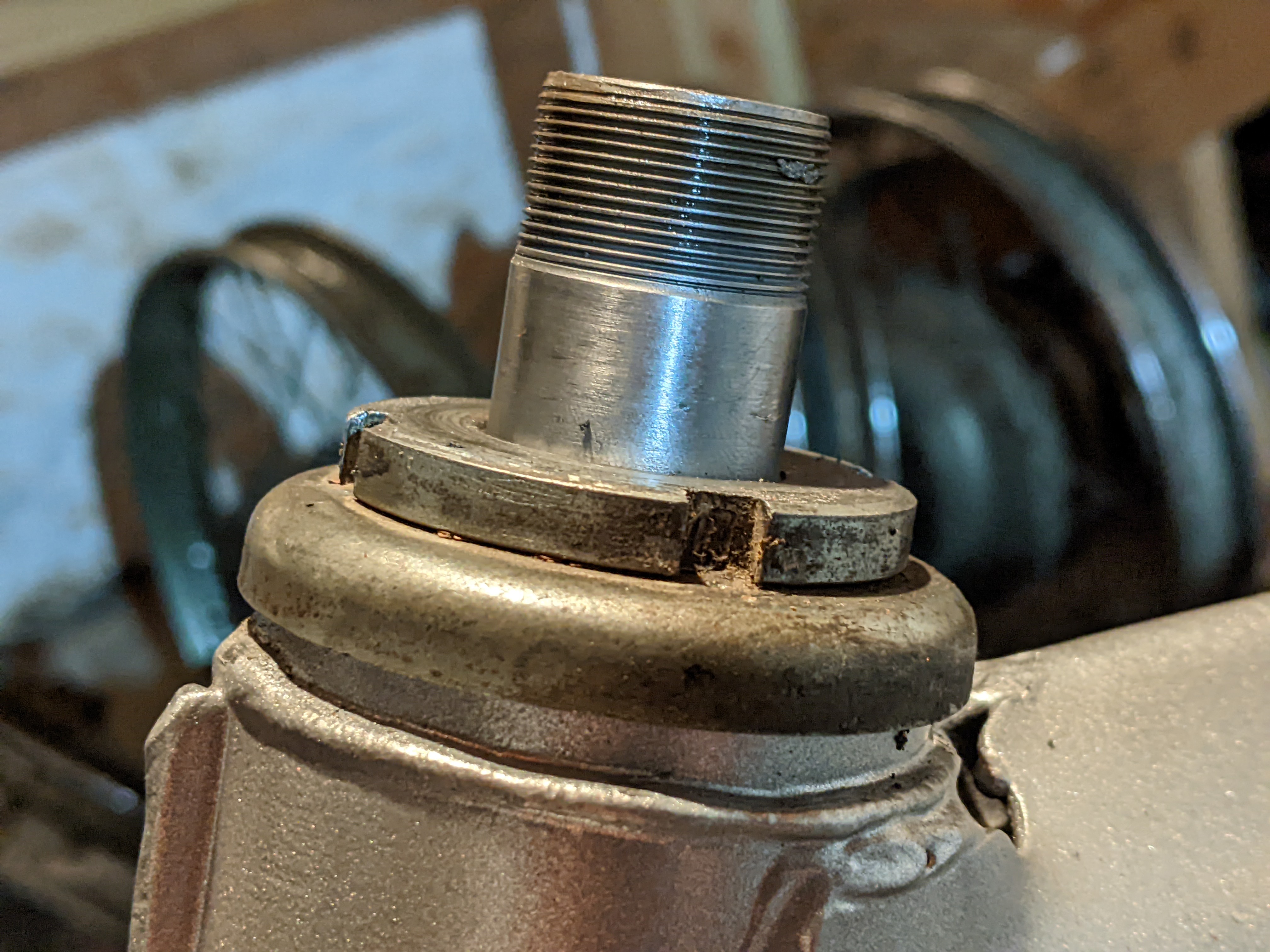
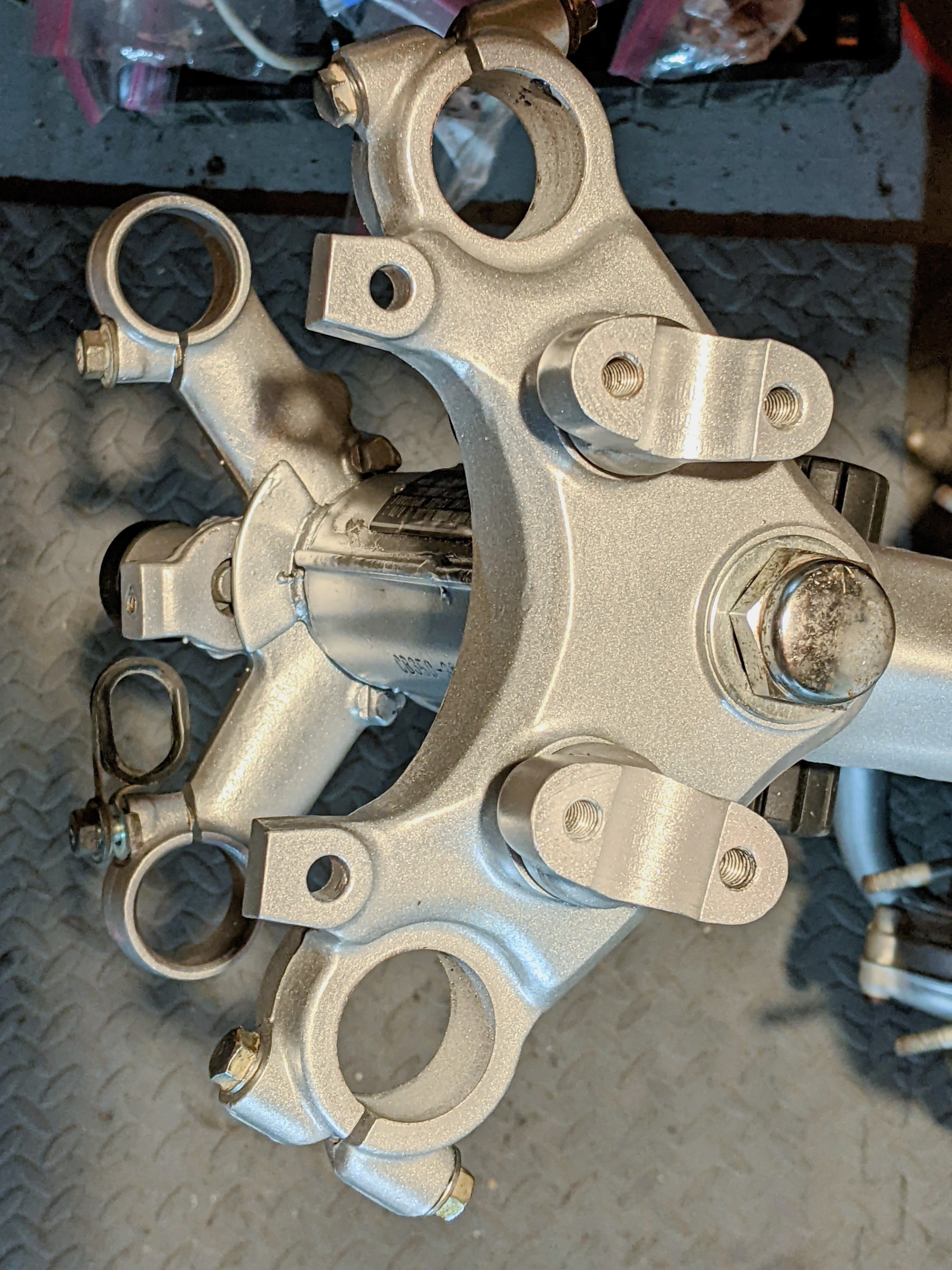
I am at the point of rebuilding the steering stem and top bridge and want to make sure I'm going about things correctly. I am using tapered steering stem bearings along with the stem and bridge borrowed from a CB360.

The first thing I want to verify is the order/orientation of the components (from bottom to top):
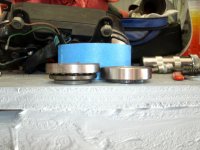
  • spacer, if needed (the picture shows both of the available spacers: 2mm and 4mm)
  • bearing seal (cup oriented upward)
  • lower tapered bearing
  • lower bearing race
  • steering tube (not shown)
  • upper bearing race
  • upper tapered bearing
  • bearing seal (cup oriented downward)
  • head top thread (head nut?)
  • top bridge (not shown)
  • washer
  • top nut.

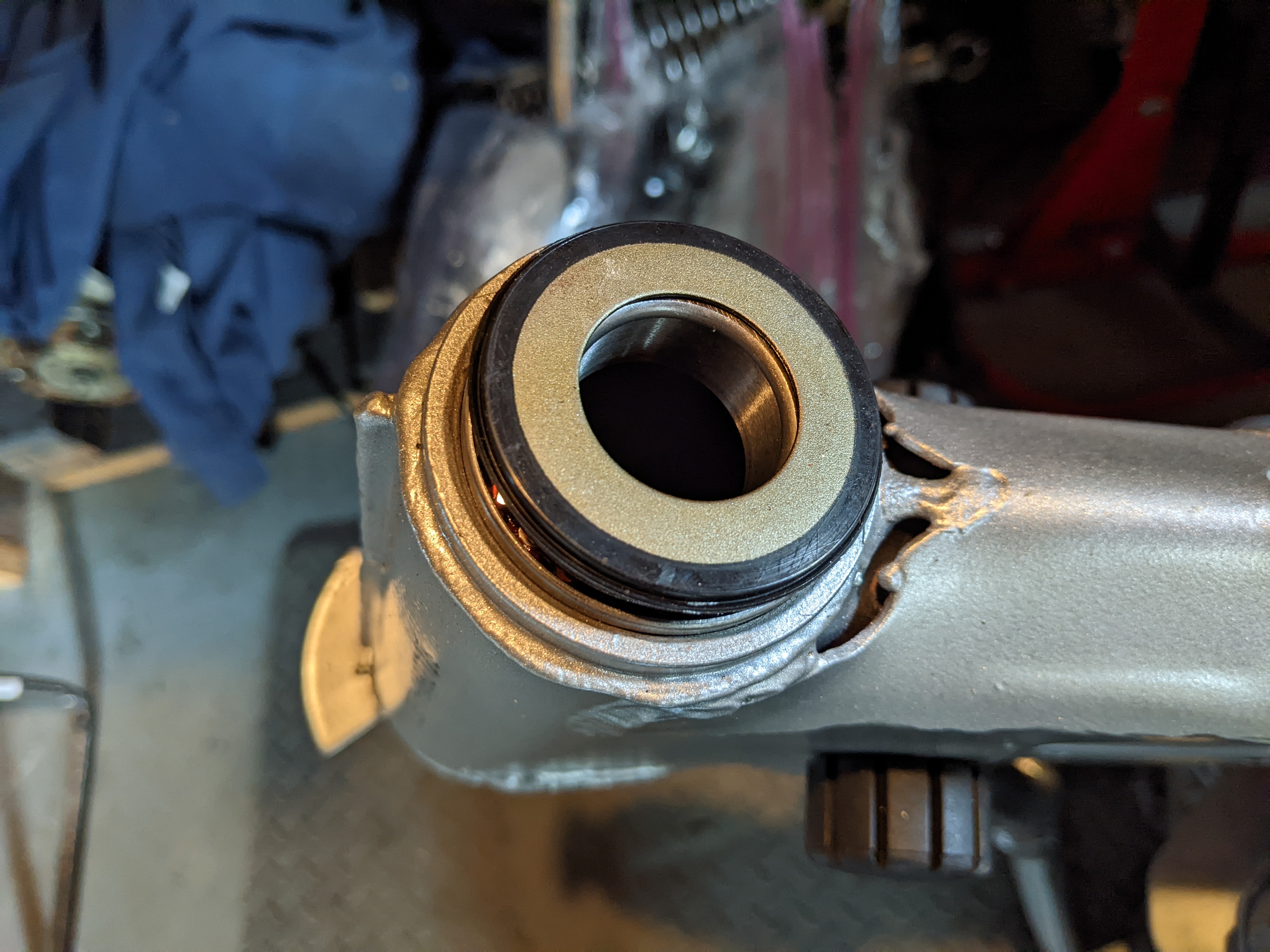
I measured the diameter at the bottom of the tube at 49.6 mm while the race measured 50.0 mm. At the top I measured the tube at 48.0 mm while the race measured about 48.5 mm. I guess I should heat and freeze things as appropriate before assembly?

YZDPrXg.jpg


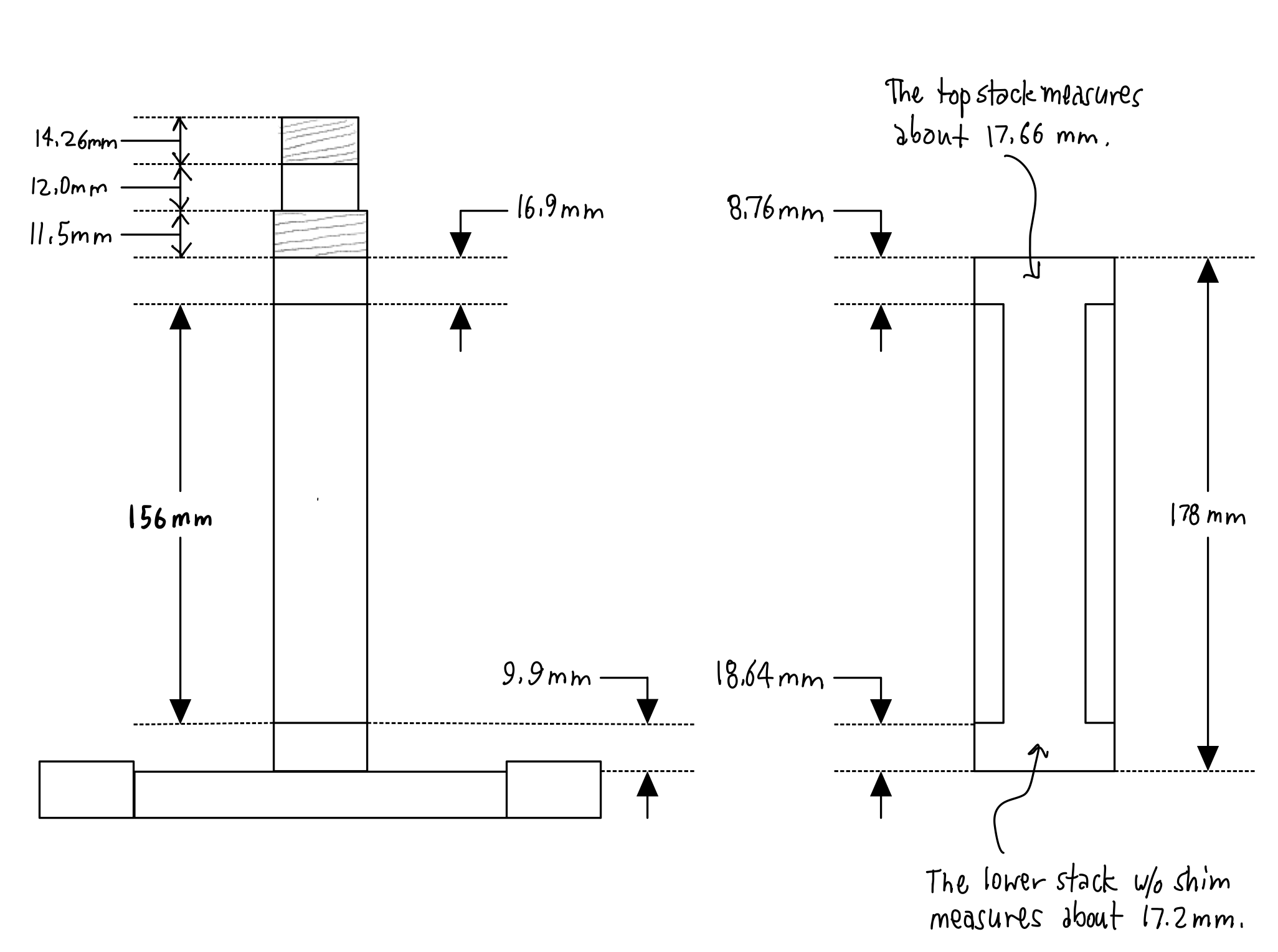
I also took various measurements on the stem and tube to try to figure out whether a spacer is needed. I set the tapered bearing on its seal and measured the lower stack height at 17.2 mm without any spacer. The space for the bearing in the bottom of the tube measured at 18.64 mm in height, so the lower stack is coming up about 1.44 mm short. This suggests to me that the 2mm spacer is appropriate and will make the lower stack about 0.5 mm taller than the lip in the lower tube. Does this sound reasonable?

tiY2lfa.png


Taking into account other measurements shown in the above picture, I also would like to make sure the head nut will be landing in the right spot for the threads. Accounting for various +/- terms here leads to 178 - 18.64 - 8.76 + 2.0 + 17.2 + 17.6 = 187.4 mm for the happenings in the tube, while on the stem the space below the threads adds up to 9.9 + 156 + 16.9 = 182.8 mm. This seems to confirm that the head nut will be in the threaded section. Also good?

Thanks in advance for reading and correcting as needed.
 
You shouldn't the need thick spacer at the bottom.
You also shouldn't need to heat/freeze anything. The lower bearing should tap down pretty easily and the top bearing just drops on to the stop.
You will come up a few threads less at the top, this is normal.
 
You shouldn't the need thick spacer at the bottom.
You also shouldn't need to heat/freeze anything. The lower bearing should tap down pretty easily and the top bearing just drops on to the stop.
You will come up a few threads less at the top, this is normal.

Thanks! I've read in other threads about 1mm and 2mm spacers, but my kit came with 2mm and 4mm options. I am currently planning to use the 2mm option based on the measurements. Does that seem off to you?
 
I'm sure you removed any powdercoat from the land where the spacers/bearing sits so all is perpendicular. Along strip of emerycloth will polish the interferance fit area of the lower triple so it can be tapped on easily.
 
Thanks! I've read in other threads about 1mm and 2mm spacers, but my kit came with 2mm and 4mm options. I am currently planning to use the 2mm option based on the measurements. Does that seem off to you?
Assemble the old bearing and races to sit on a bench top. Now put the new bearing ass'y next to it. You'll see the height difference and by adding one or the other washer you'll get it very close to the same
GEDC2531.jpg GEDC2529.jpg
 
I'm sure you removed any powdercoat from the land where the spacers/bearing sits so all is perpendicular. Along strip of emerycloth will polish the interferance fit area of the lower triple so it can be tapped on easily.

The old lower race protected the bottom of the stem during powder coating. Same for the lips of the tube, top and bottom. I will need to remove a bit where the tapered bearing sits on the top part of the stem. It was taped off, but not far enough down.
 
Assemble the old bearing and races to sit on a bench top. Now put the new bearing ass'y next to it. You'll see the height difference and by adding one or the other washer you'll get it very close to the same

I've read about this, but didn't think it would be appropriate since I'm mixing the 350 frame with 360 stem and bridge. I don't have all of the old 360 components, but I should have all of the old 350 components. I will try to compare with the 350 lower stack.
 
I've read about this, but didn't think it would be appropriate since I'm mixing the 350 frame with 360 stem and bridge. I don't have all of the old 360 components, but I should have all of the old 350 components. I will try to compare with the 350 lower stack.
In that case just be sure there enough but minimal clearance of the lower triple to frame. Be sure to turn the triple back and forth to check.
I would start with the 2mm washer
 
I've read about this, but didn't think it would be appropriate since I'm mixing the 350 frame with 360 stem and bridge. I don't have all of the old 360 components, but I should have all of the old 350 components. I will try to compare with the 350 lower stack.

Do you have the 350 stem to compare to 360 stem? That should be enough.
 
In that case just be sure there enough but minimal clearance of the lower triple to frame. Be sure to turn the triple back and forth to check.
I would start with the 2mm washer

Thanks, Jim. That is exactly what I was going for with all of the measurements and it seemed like the 2mm spacer buys about 0.5 mm clearance if all of my measurements and thoughts are correct.
 
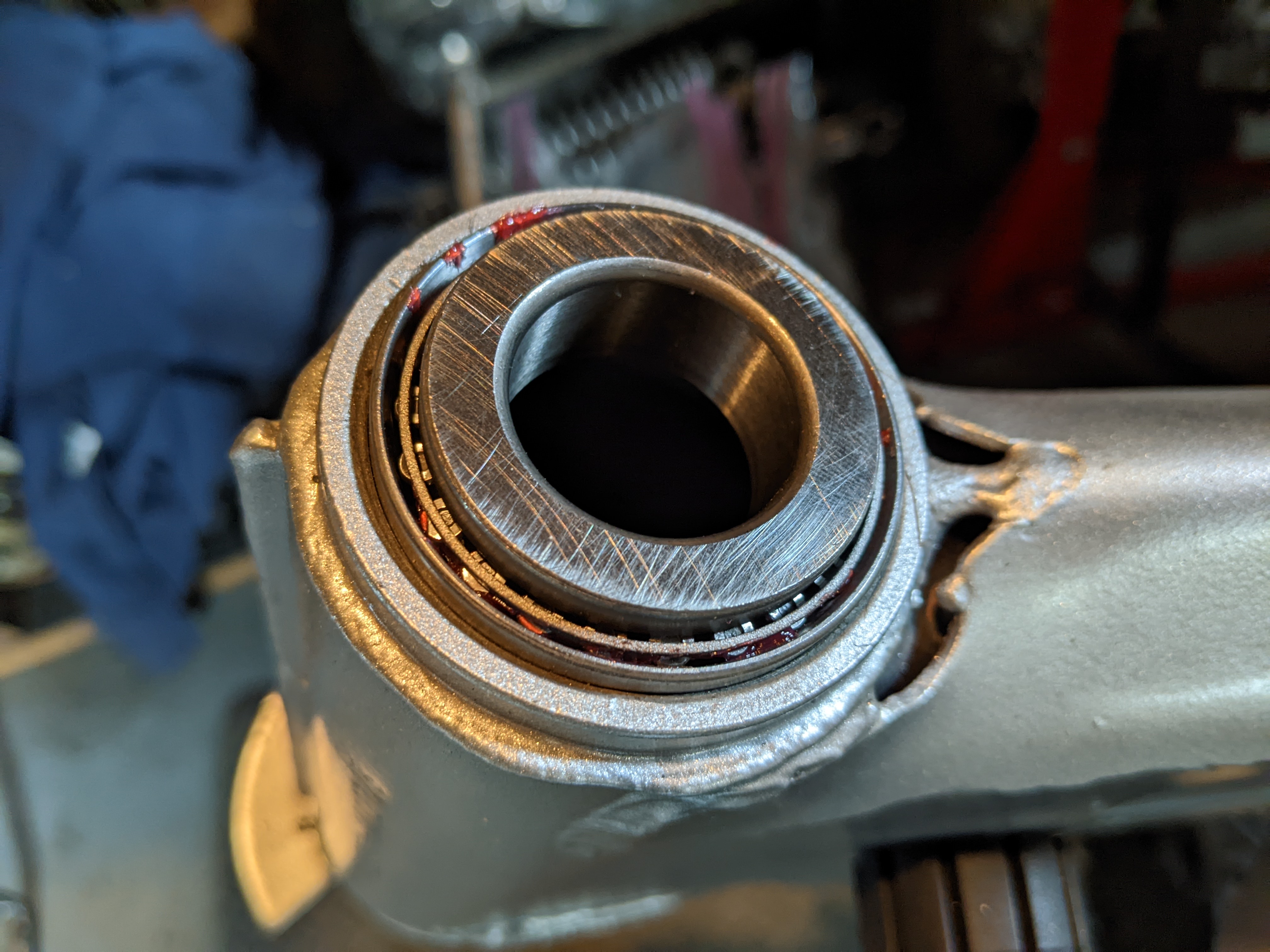
It turns out that the old CB350 steering stem bearings had already left the building, so I couldn't make a comparison of the lower stacks. I think the measurements I made accomplished the same thing and the 2 mm spacer seems to work fine. The stem moves smoothly from one stop to the other and I don't feel any sloppiness. I used a little heat on the spacer and lower bearing to help install them on the stem, but, otherwise, no hot/cold treatment was needed, as Cycleranger mentioned.

er9Rh6a.jpg


tKaRbAi.jpg


lLP7ydH.jpg


fMpaxaC.jpg


The project is headed to the garage, just as soon as the local heat wave passes.
 
Back
Top Bottom