

stl360+450
Veteran Member
Thanks, Ray!


The footbar you just got looks like it will work for CB down pipes. The powdercoated one seems like a CL.
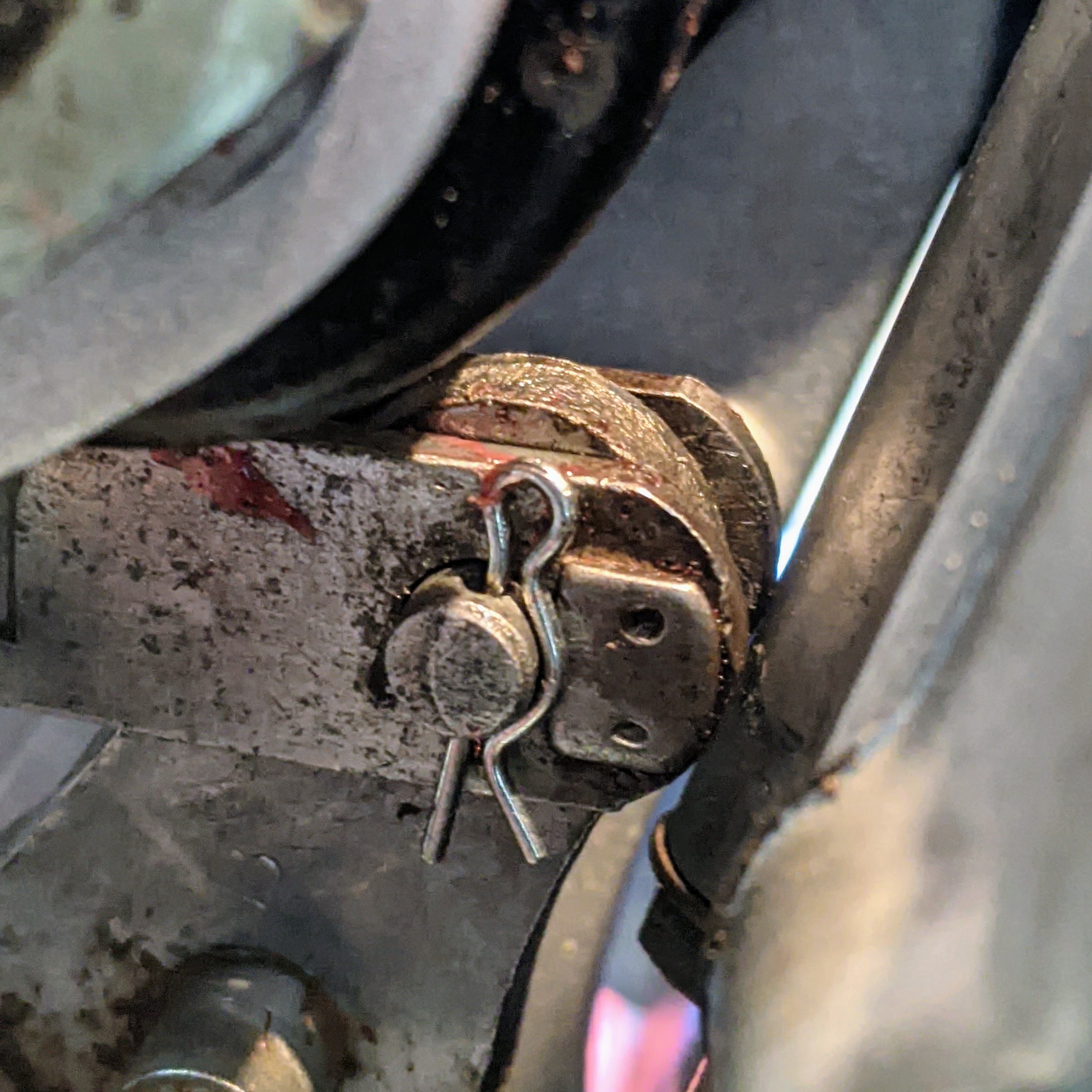

I don't mind learning the hard way. Makes me think more about how everything goes together.Probably should have mentioned it, but it's a lot easier if you do that before putting the swingarm back in the frame.
That's a nice pile of progress. I enjoy that phase of putting together all the cleaned up, painted, lubricated sub assemblies and parts. I think, I too, have learned to fit the brake strap and pedal rod to the swingarm and pedal first. Experience is slowly accumulating.I don't mind learning the hard way. Makes me think more about how everything goes together.
Also, I was swapping out the bent brake pedal for a replacement, so I still would have had to do this the hard way or remove the rear wheel and swingarm again just to change the pedal.


If there’s no blood, it’s not a projectThat's a nice pile of progress. I enjoy that phase of putting together all the cleaned up, painted, lubricated sub assemblies and parts. I think, I too, have learned to fit the brake strap and pedal rod to the swingarm and pedal first. Experience is slowly accumulating.
I like the red grease, it almost looks like a little blood, which is very hardcore resto.
Certainly when dealing with vintage Honda twins!If there’s no blood, it’s not a project

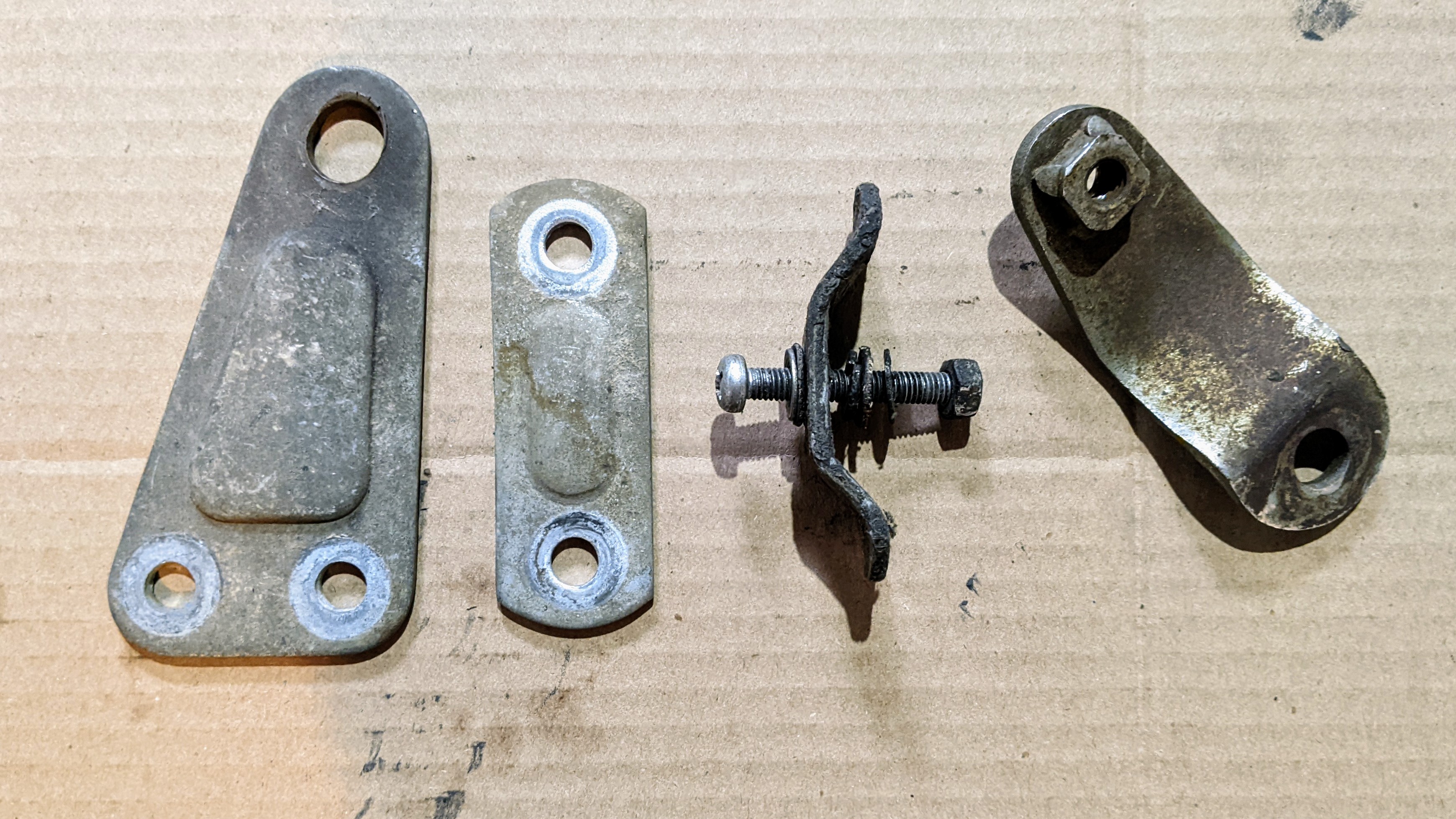
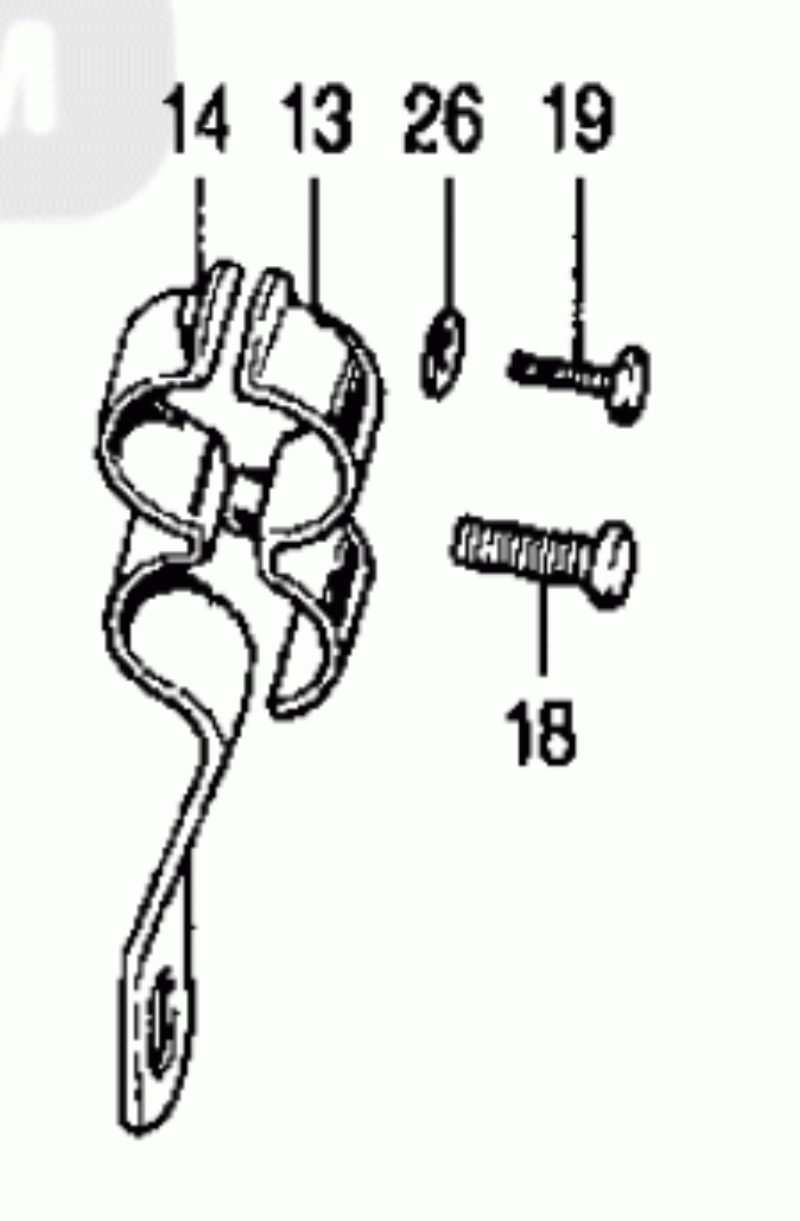
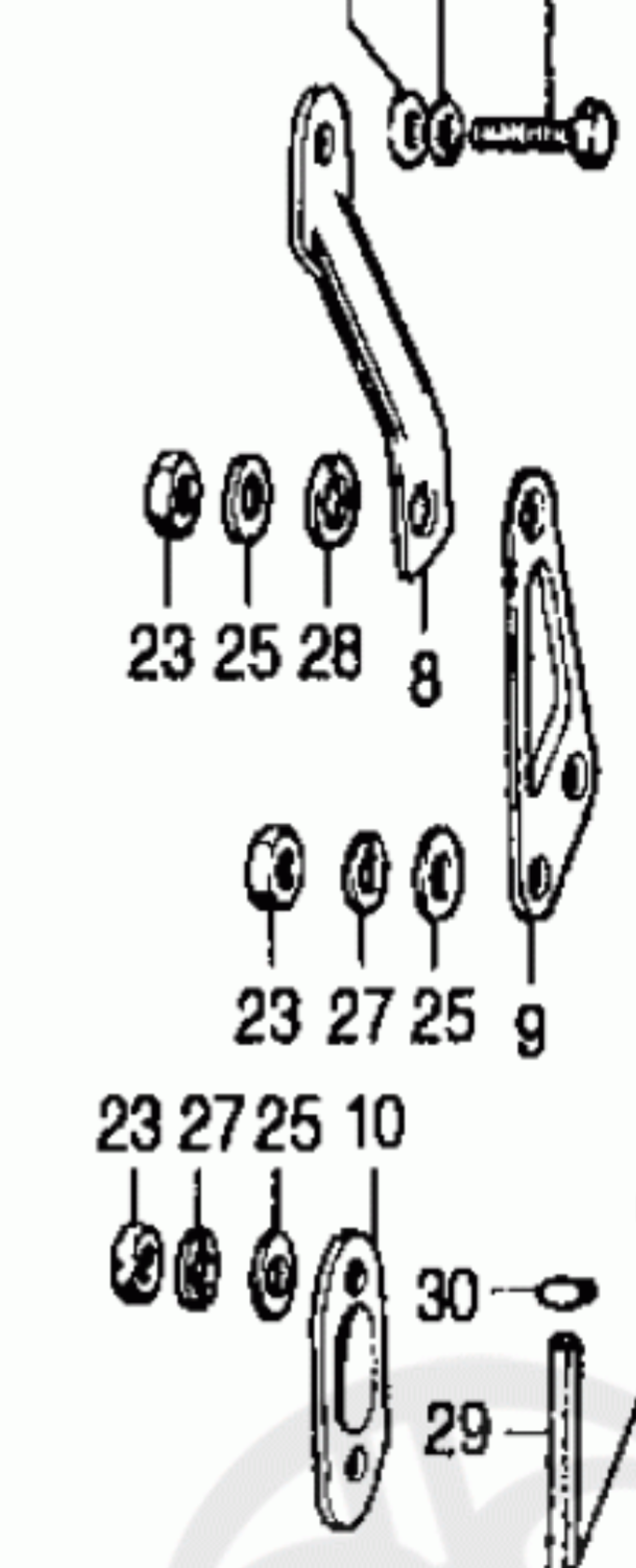

It does like like one of those. Interesting.The third from the left looks a lot like a Givi Monolock mounting plate bracket.
The black footbar is for the linkage style shifter and will be too far back to reach a stock direct shifter. Maybe a shorter direct shifter could work.I recently acquired a 1971 CB350 step bar to compare with the one I had powder coated. I did a test fit and found that new step bar provides more clearance on the clutch cover side.

Thanks, Tom. Based on your findings, I decided to acquire a linkage shifter for this project, although 4-into-1 seems to sell both long and short shifters of the direct variety for the 350. The linkage shifter will look better on this bike.The black footbar is for the linkage style shifter and will be too far back to reach a stock direct shifter. Maybe a shorter direct shifter could work.
I'm good with a sharpie to mark the metal housing to get the bakelite backing put back right and cleaning the contacts, but I have one that needs the key cylinder fixed from someone using a screwdriver or something. I'd like to keep that original key that also fits the fork lock and seat lock. Those tiny springs and pins in there are missing a few.I haven't forgotten about this project and hope to spend more time on it over the next few weeks. I decided to inspect the key switch today and found no connectivity regardless of the key position. It's a bit grimy, so I'll plan to take it apart for a cleaning. That will allow me to freshen up the black paint or maybe go silver to match the frame.
Just to do the contacts, you have to straighten 3 little dented in spots on the back where the black bakelite fits the metal housing.Does the cover just pry off?
Took me a second to see what the dimples were for.Just to do the contacts, you have to straighten 3 little dented in spots on the back where the black bakelite fits the metal housing.

I'm impressed if you can rebuild one of these key switches successfully. I tried cleaning mine this evening. The key cylinder is wonky — the key must be rocked to turn it counter clockwise. The contacts and the bakelite housing have significant wear from the travel of the moving parts. I put it back together and was getting spotty and high resistance measurements. Ultimately, I decided to go with an Emgo replacement to remove the concern of a poor contact.I'm good with a sharpie to mark the metal housing to get the bakelite backing put back right and cleaning the contacts, but I have one that needs the key cylinder fixed from someone using a screwdriver or something. I'd like to keep that original key that also fits the fork lock and seat lock. Those tiny springs and pins in there are missing a few.
I don't know, it might be too messed up, even for a locksmith. I wouldn't want it to be unreliable or have the key fall out while riding. I'm using an Emgo now too that's new but it would be nice not to have two different keys.I'm impressed if you can rebuild one of these key switches successfully. I tried cleaning mine this evening. The key cylinder is wonky — the key must be rocked to turn it counter clockwise. The contacts and the bakelite housing have significant wear from the travel of the moving parts. I put it back together and was getting spotty and high resistance measurements. Ultimately, I decided to go with an Emgo replacement to remove the concern of a poor contact.
In your case, the goal would be to repair or rebuild the cylinder? Do you think a locksmith could/would do that?
What about obtaining a set of matching locks from another bike? Aren't they all changeable?My best shot might be to just patiently search for a used switch with the same key code on ebay, even if I have to wiggle and jiggle, stand on only my left foot with my tongue sticking out to the right.
Not really, but my '72 CB350 (Mom's Bike) has the same set of three, and it is the same key T9927 (imagine that!). The earlier bikes had a different fork and a different lock there. No seat locks prior to '72 either, but ignition switches are similar, except the wiring plug (no big deal).What about obtaining a set of matching locks from another bike? Aren't they all changeable?
What about obtaining a set of matching locks from another bike? Aren't they all changeable?
Is there a lock that cannot be removed and replaced on the 350's or were you only pointing out that the type and number of locks changed over the production run? I saw a relevant thread about the steering lock being removable here. Probably you're already aware, but I figured I would share the link just to be sure.Not really, but my '72 CB350 (Mom's Bike) has the same set of three, and it is the same key T9927 (imagine that!). The earlier bikes had a different fork and a different lock there. No seat locks prior to '72 either, but ignition switches are similar, except the wiring plug (no big deal).
I'm sorry for not being more specific with my 'not really'. I meant they are not all interchangeable due to production changes, specifically to the fork locks. They are somewhat similar and are removable, but the early and late styles do not interchange, IIRC.Is there a lock that cannot be removed and replaced on the 350's or were you only pointing out that the type and number of locks changed over the production run? I saw a relevant thread about the steering lock being removable here. Probably you're already aware, but I figured I would share the link just to be sure.
No apology needed — forum format (like any written format) makes it easy for small miscommunications to occur and a little more awkward to square them away.I'm sorry for not being more specific with my 'not really'.

Yeah, I'm not interested in buying any of them at this time, except maybe a used key switch for the '73 CL, but only if it has a T9927 cylinder.they also want more for them than I would have expected.
I think you still need the key to rotate it in order to remove it when the cover is off.I do have an extra fork lock that came in the ebay steering stem I replaced on the same bike, but no key for it. Come to think of it, I probably just removed the screw and it came right out. I previously said a key or 'pick job' was needed but now I think that's wrong. If it is unlocked it will come out.

Must be my CRS (can't remember s.....) acting up. I got it out somehow without a key.I think you still need the key to rotate it in order to remove it when the cover is off.
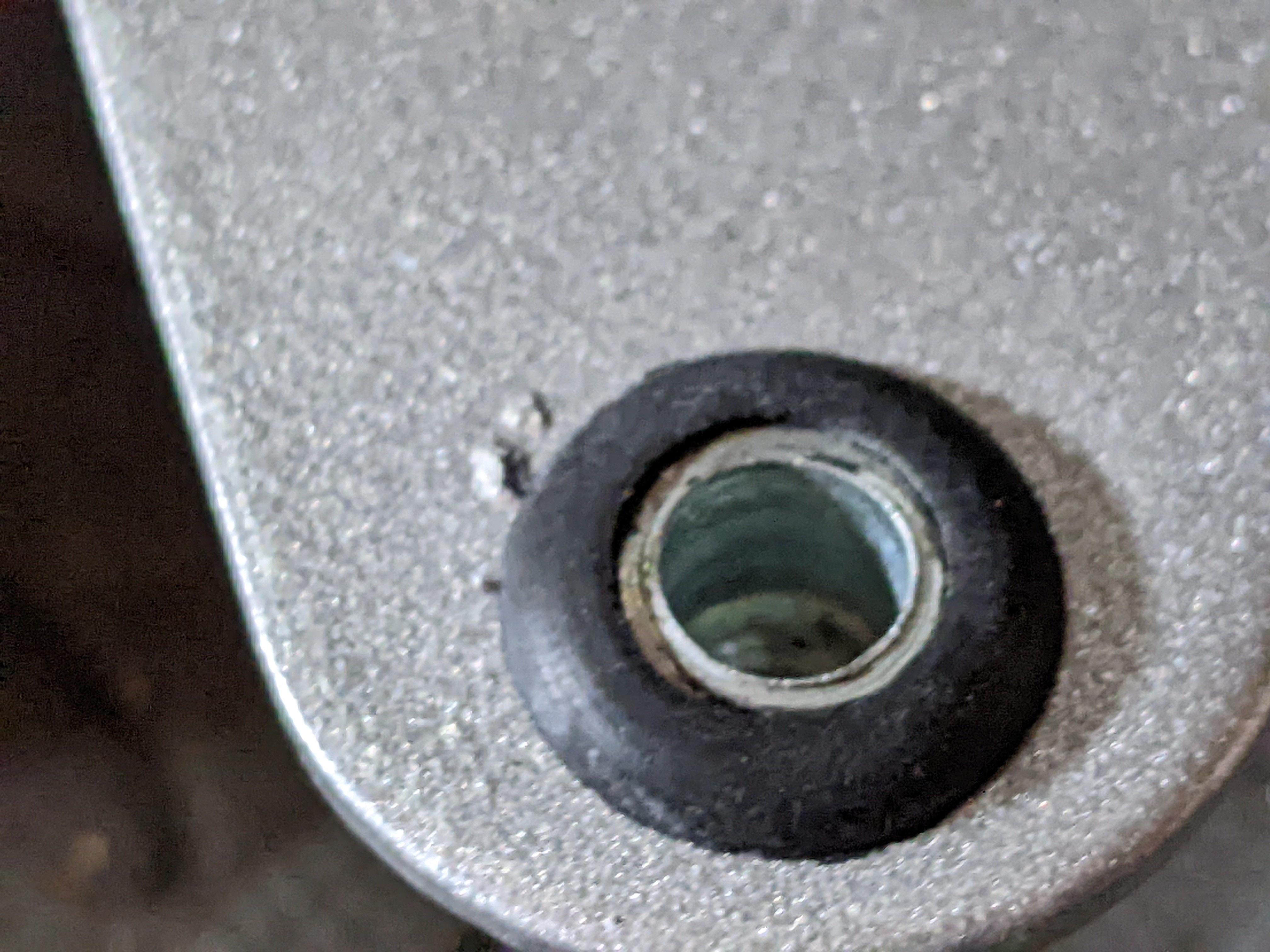
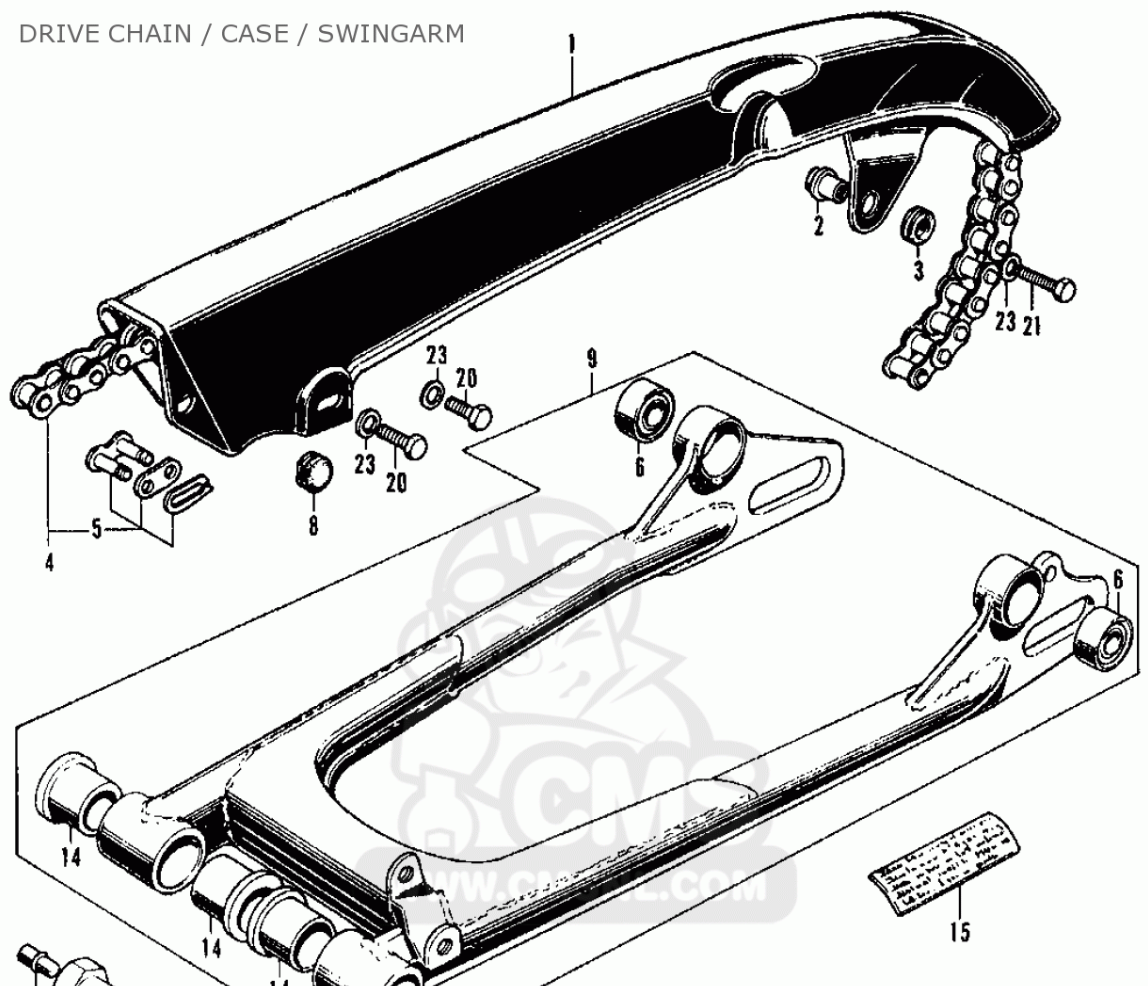
I looked through the build thread by @GaryJames and found that I installed the chain guard the same way he did, so I guess I'm good.Looking at the pieces it seemed like it should be on the inside, but my instinct was telling me it should go on the outside.
I wondered about that myself after going through something similar with mine, but looking at yours it's obvious that the inside is the correct position.I looked through the build thread by @GaryJames and found that I installed the chain guard the same way he did, so I guess I'm good.


Patina? I will add spacer cleaning to the to do list. If all goes as planned, it won't spin at all.What is up with that unclean spacer? The rest is so clean. You can’t ride it like that. No way it will spin right.
Based on the look of the 'patina', it would seem the spacer has been put back in the hub in a reversed position from its last orientation. That alone should have required it to be cleaned.Patina? I will add spacer cleaning to the to do list. If all goes as planned, it won't spin at all.
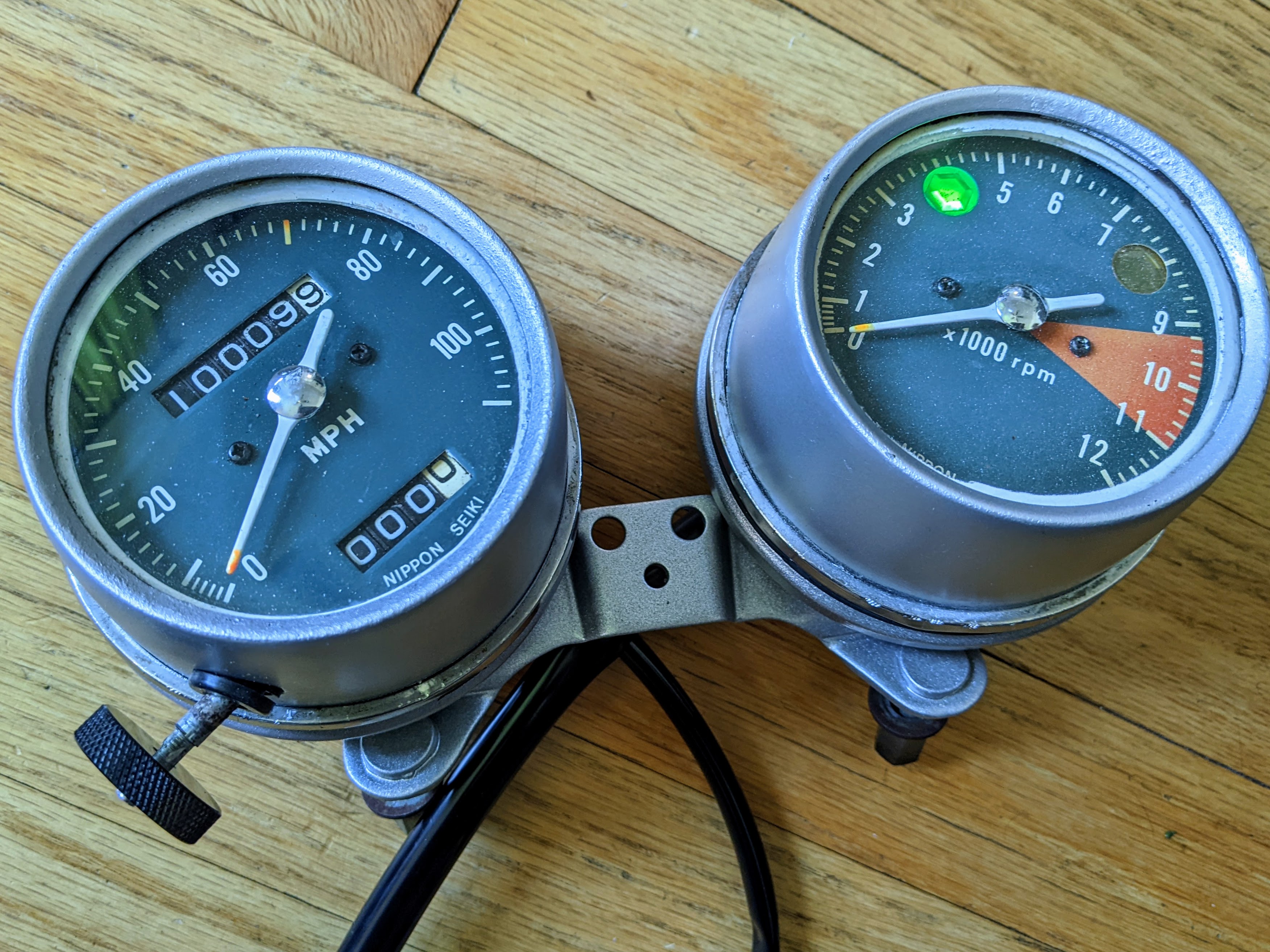
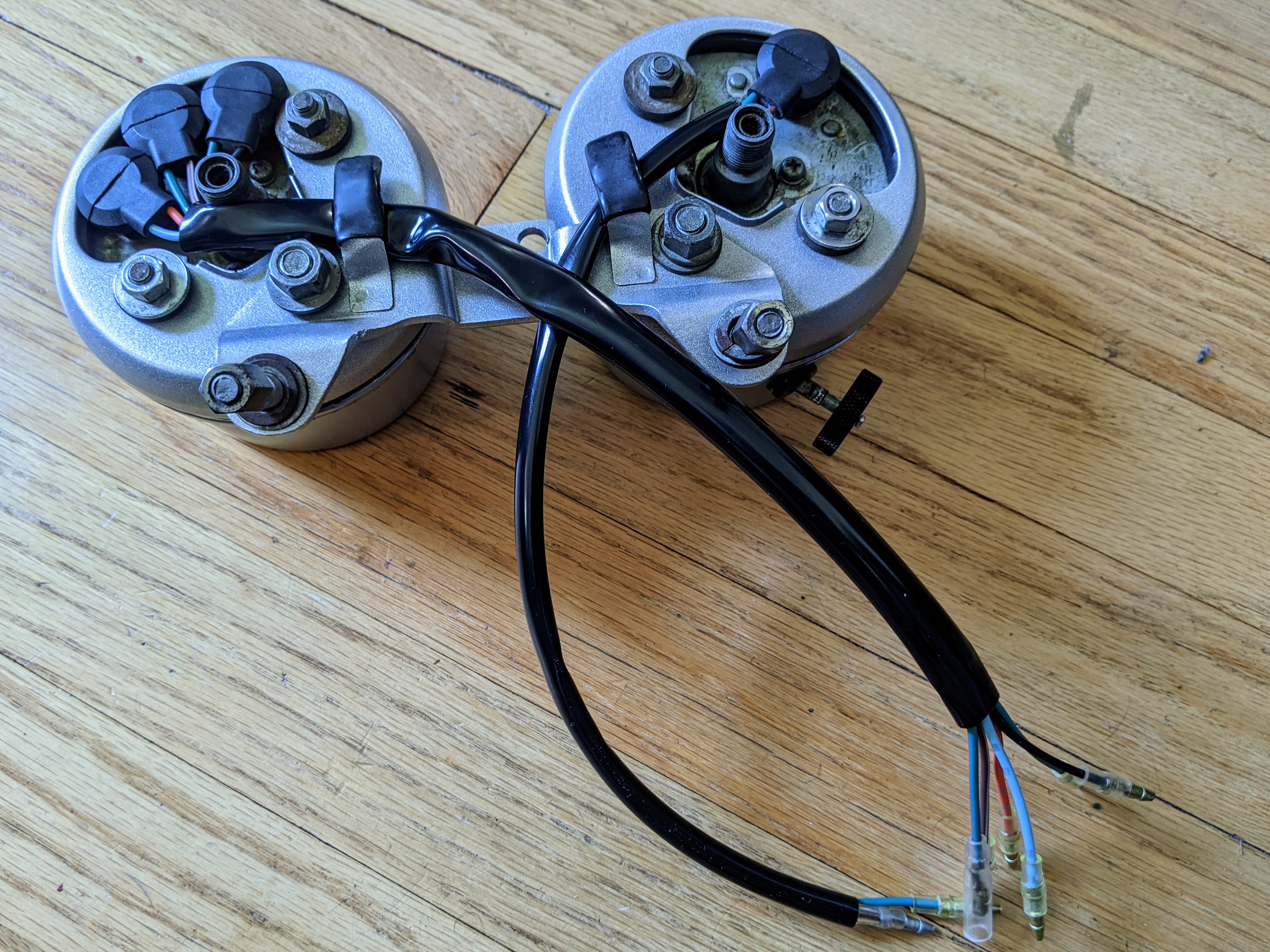

It's a huge upgrade over no usable sockets! But, seriously, I liked how everything came together. The hardest part was getting the wires through the sleeves.T10 sockets sounds like a good upgrade. Nice work.

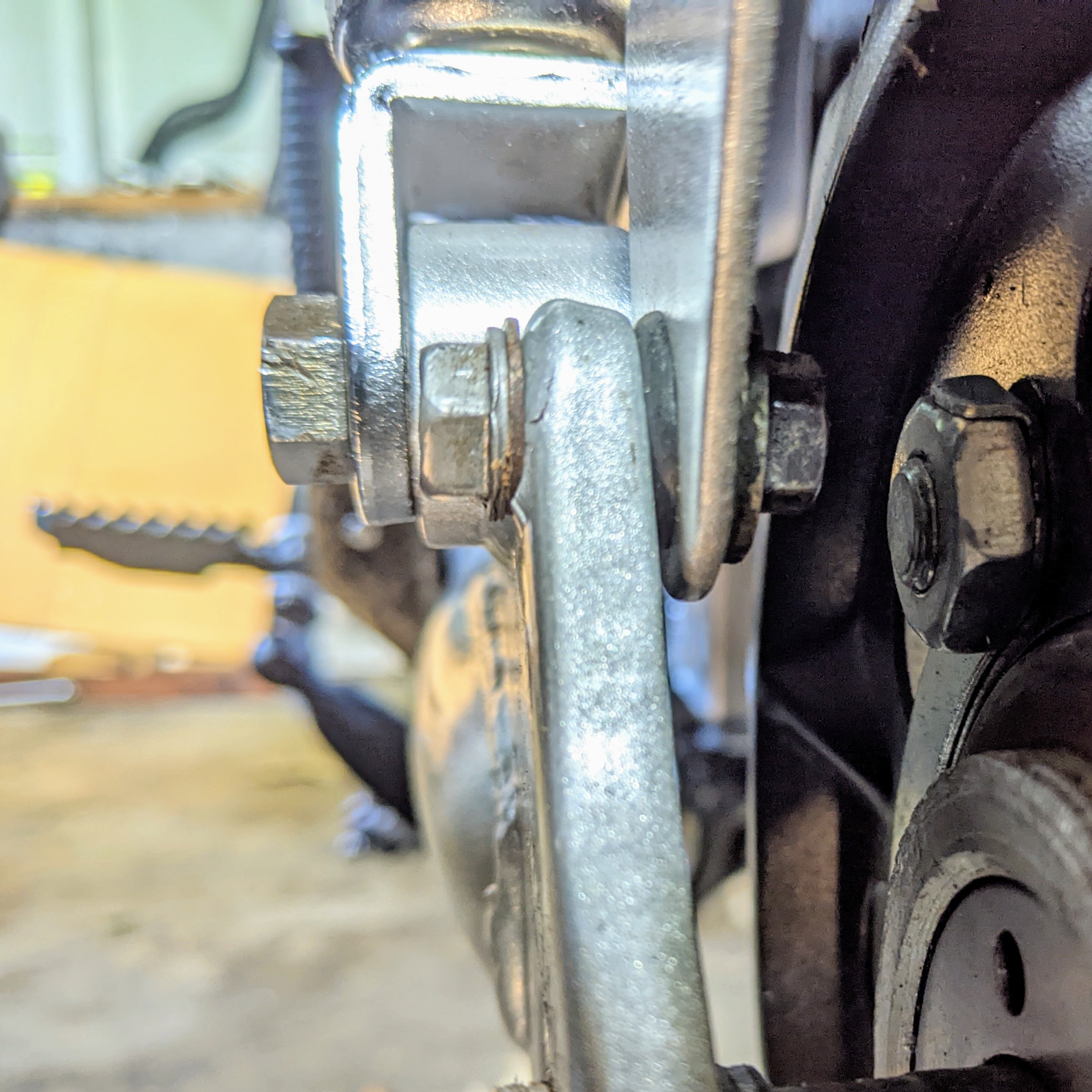
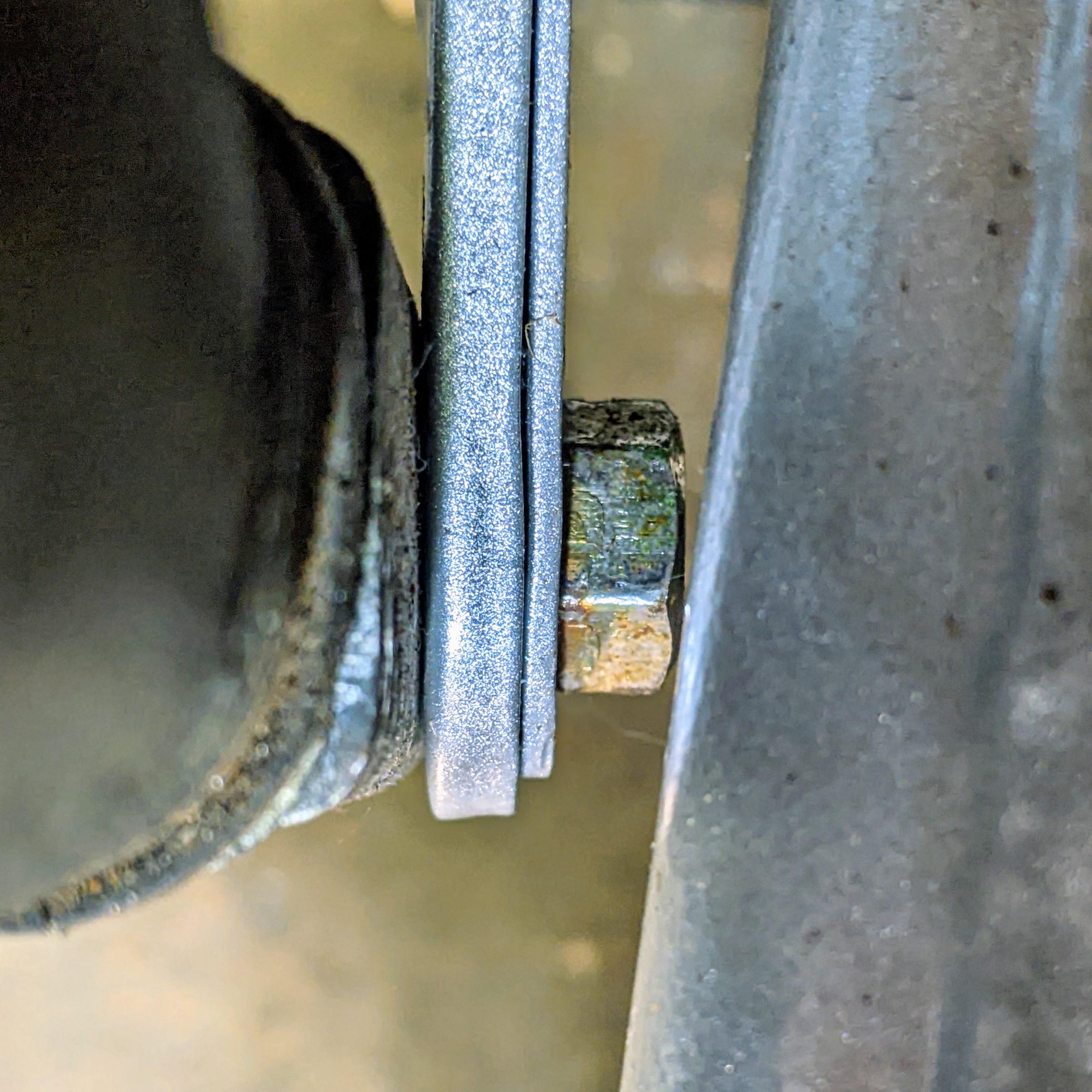
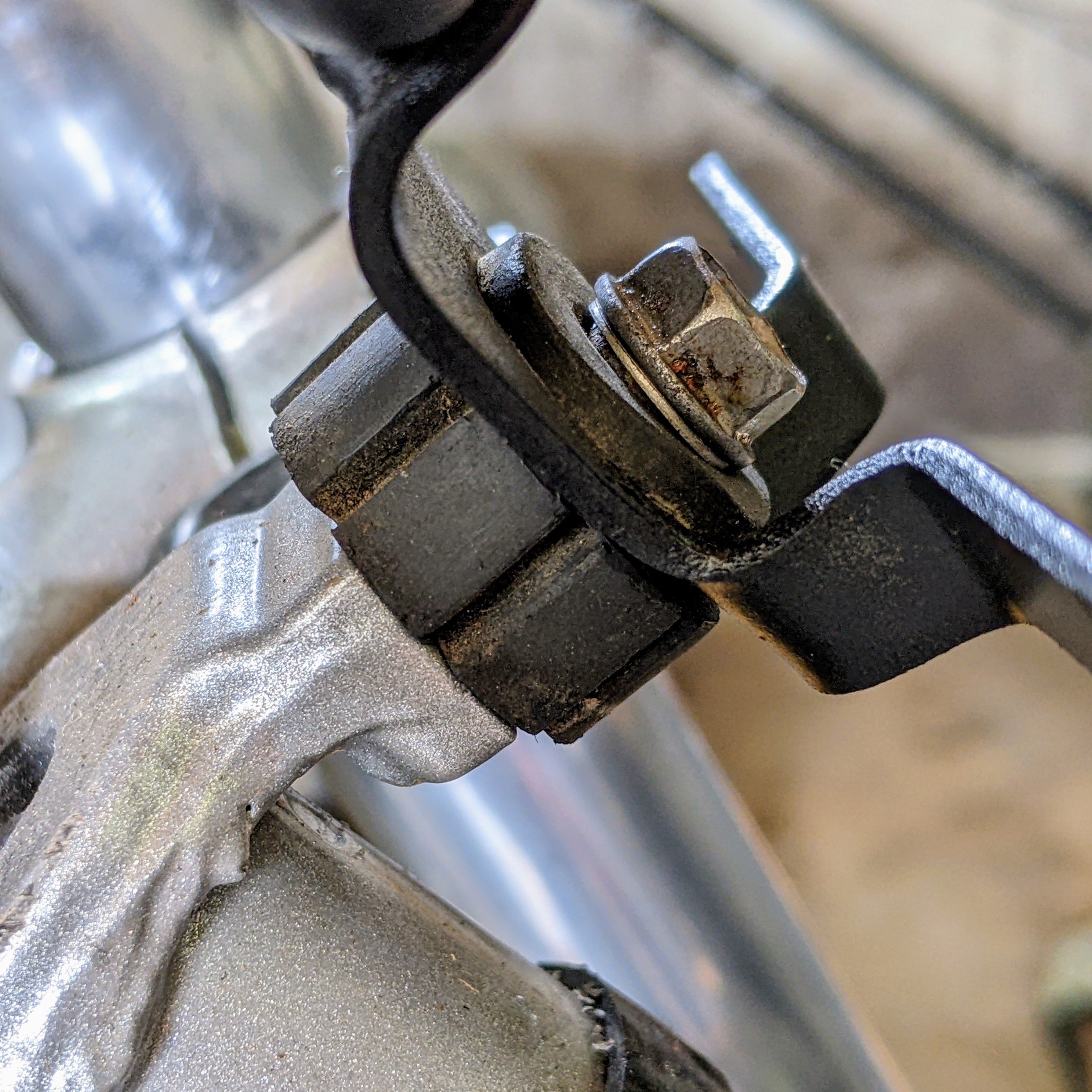
 If the spacer length is too long after trimming the grommet, you could grind the spacer length down a bit.
My 69 has it on the inside. Not that this is definitive since the 69 also doesn’t have a grommet and the rear nut is fixed.Continuing in reverse answer order, was the chain guard on the inside originally? I thought it was earlier in this thread and the bracket seems to be bent for that. This picture from BaT on a pristine CL350 shows it inside the swingarm, and the clearance on your bike between the sprocket studs and the chain guard bolt/nut seems adequate since those components don't move from their respective positions.