Mousetown, my own 73 CL350

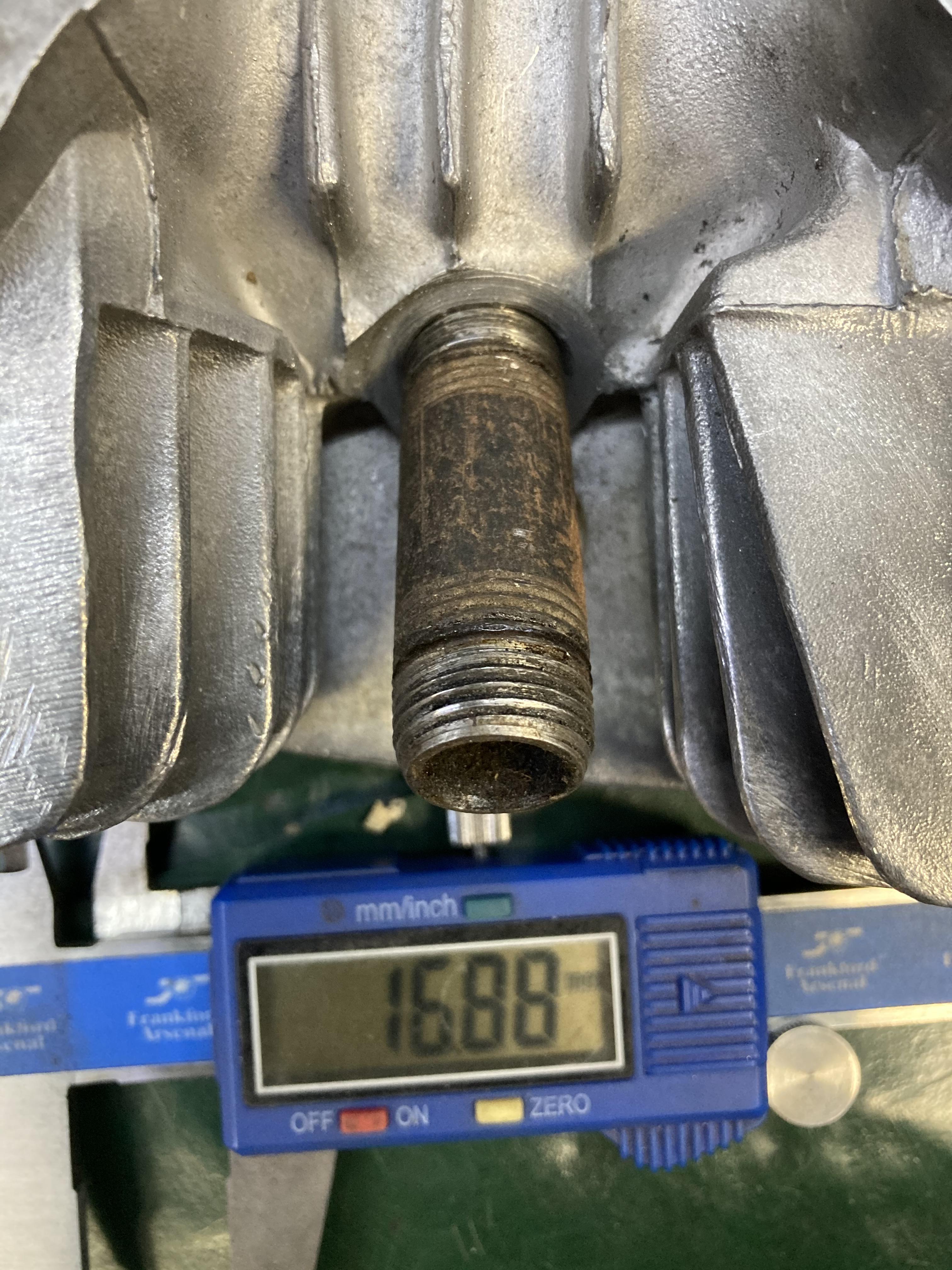
Funny thing. Chris Schumann post a picture 3 hours ago of a 3/8 NPT outer thread spark plug insert he makes.
 
Funny thing. Chris Schumann post a picture 3 hours ago of a 3/8 NPT outer thread spark plug insert he makes.
Would that O.D. (.675") fit the worn out spark plug hole ?
 
The head he was working on was a Suzuki but it's worth making contact with Chris and asking.
I commented on his FB page and may message him. It looks like it may just work. Here is a 3/8NPT used pipe nipple just lightly finger tight.

pcRSsKN.jpg
 
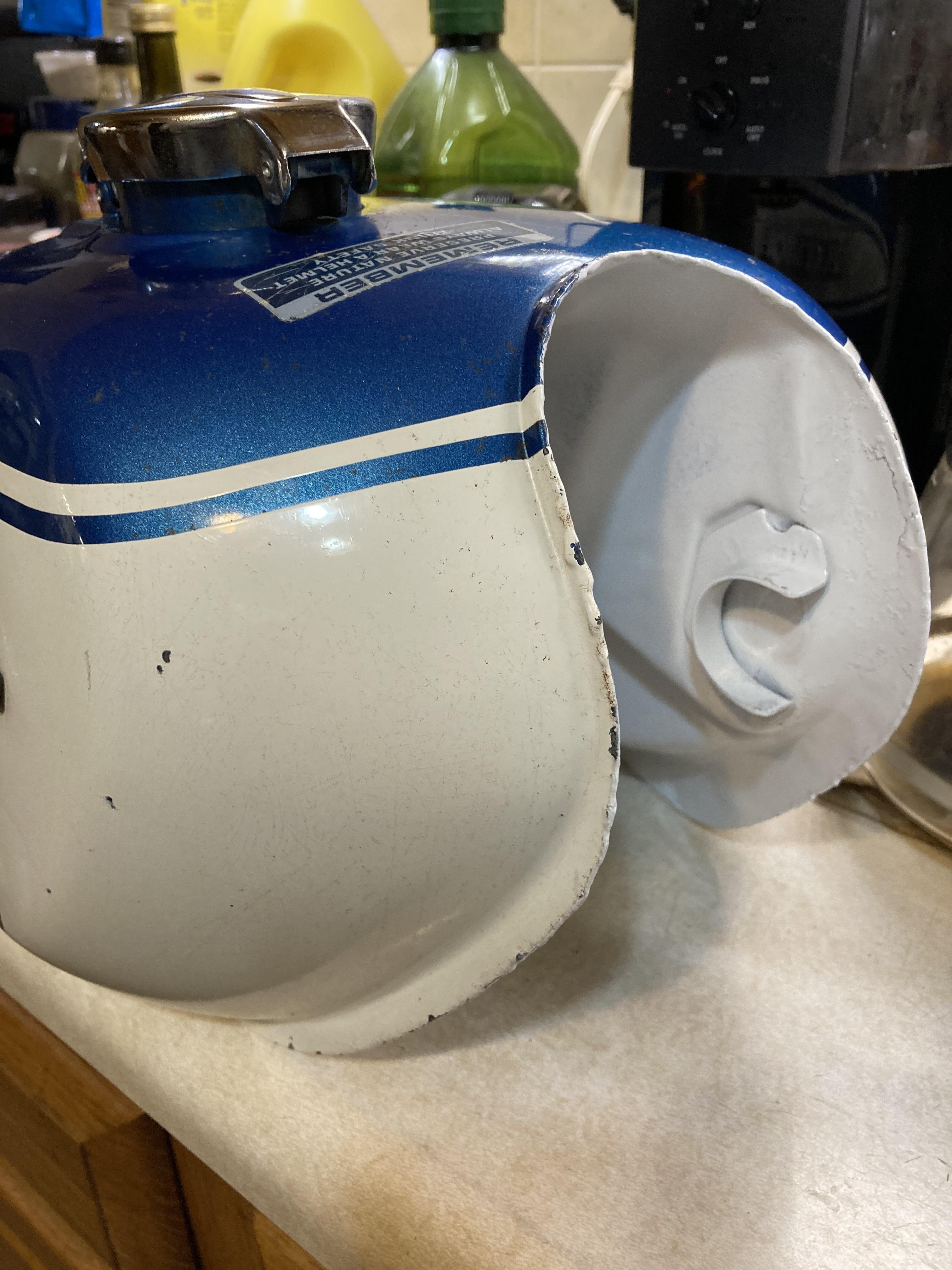
Here is the tank with the rusty micro scratches all cleaned out and a good coat of modern polish. The underside is now painted too.

QUBDUqG.jpg
 
Looking at intake valves, the normal part no. is 14711 286 030, but these are 14711 KT6 000. Ad says for the CB350 but is this Ok? Also says 1986 ??

Tom,that 'KT6' Honda center code is different than '286'.. :unsure:
I would do a Google search using the correct #14711-286-030 and you'll have many more proper matches that will fit.
Trying to trace-out that part number to match for your 350 is 'an exercise in futility'. (n)
 
Tom,that 'KT6' Honda center code is different than '286'.. :unsure:
I would do a Google search using the correct #14711-286-030 and you'll have many more proper matches that will fit.
Trying to trace-out that part number to match for your 350 is 'an exercise in futility'. (n)
Yeah, I was just wondering. DSS has them but a bit more. Who knows what kind of funky chicken an '86 350 is.
 
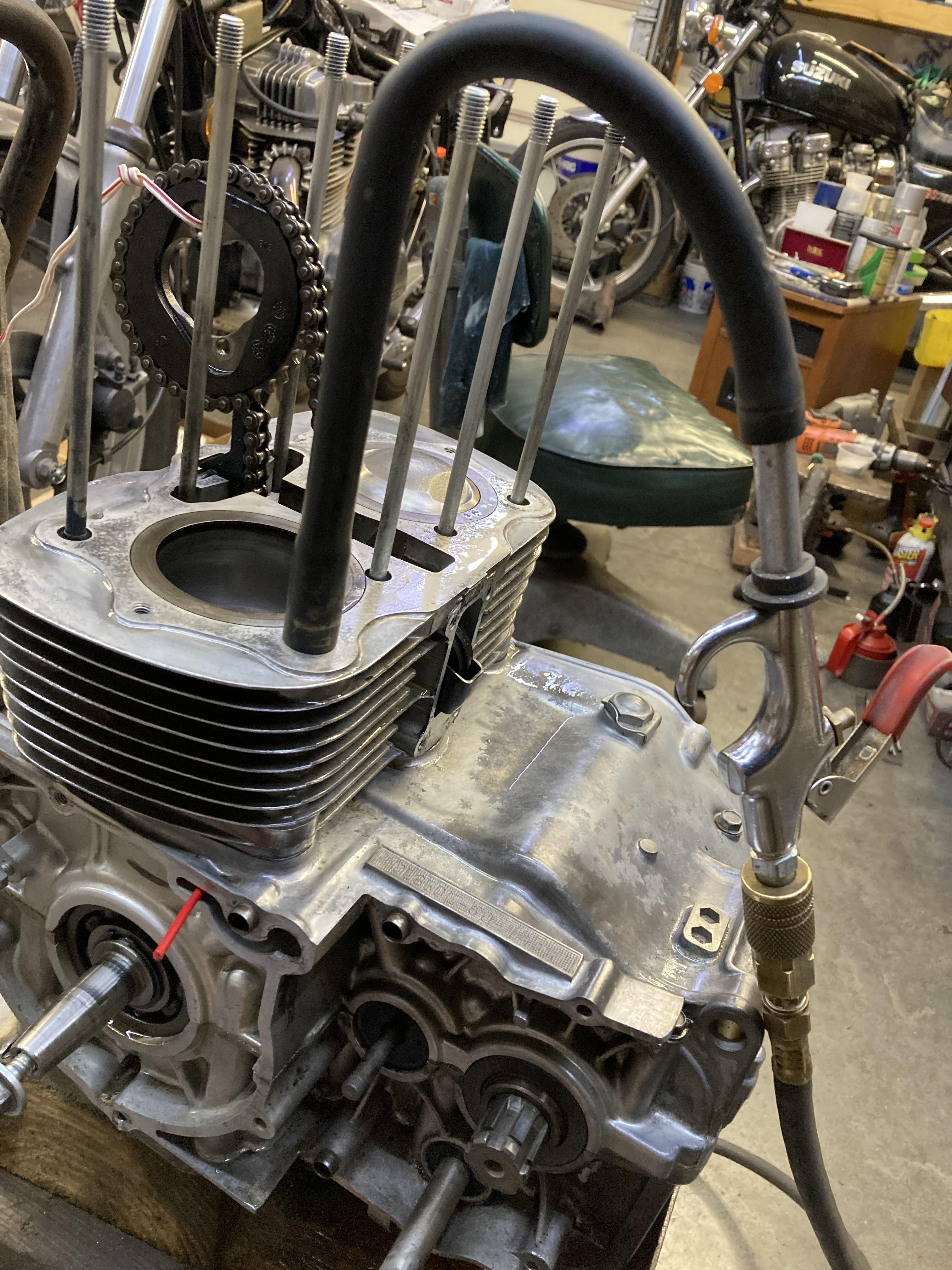
Clearing all oil passages, or at least the ones going to the cams and head, was something I wanted to do before reassembly. The tiny orifices on top of the crankcase were not going to be exposed, because I was not pulling the cylinders off this time. A rubber tube to my compressor and placed over the rear outer studs, at first didn't work, but after I dribbled some gasoline down the stud holes, it did blow through, and I verified they were open. the small bit of red wire shows where the air exited. Just blowing from the right side where the oil supply from the pump enters the upper crankcase main oil passage was not sufficient due to the additional pathways to the crank center main bearings, but I'm fairly confident they are open due to their downward angle and less restrictive diameter.

OQh7tqO.jpg


Beyond this job there is lapping the existing valves and if they pass the leak test of filling the head ports, then the motor going back together.
 
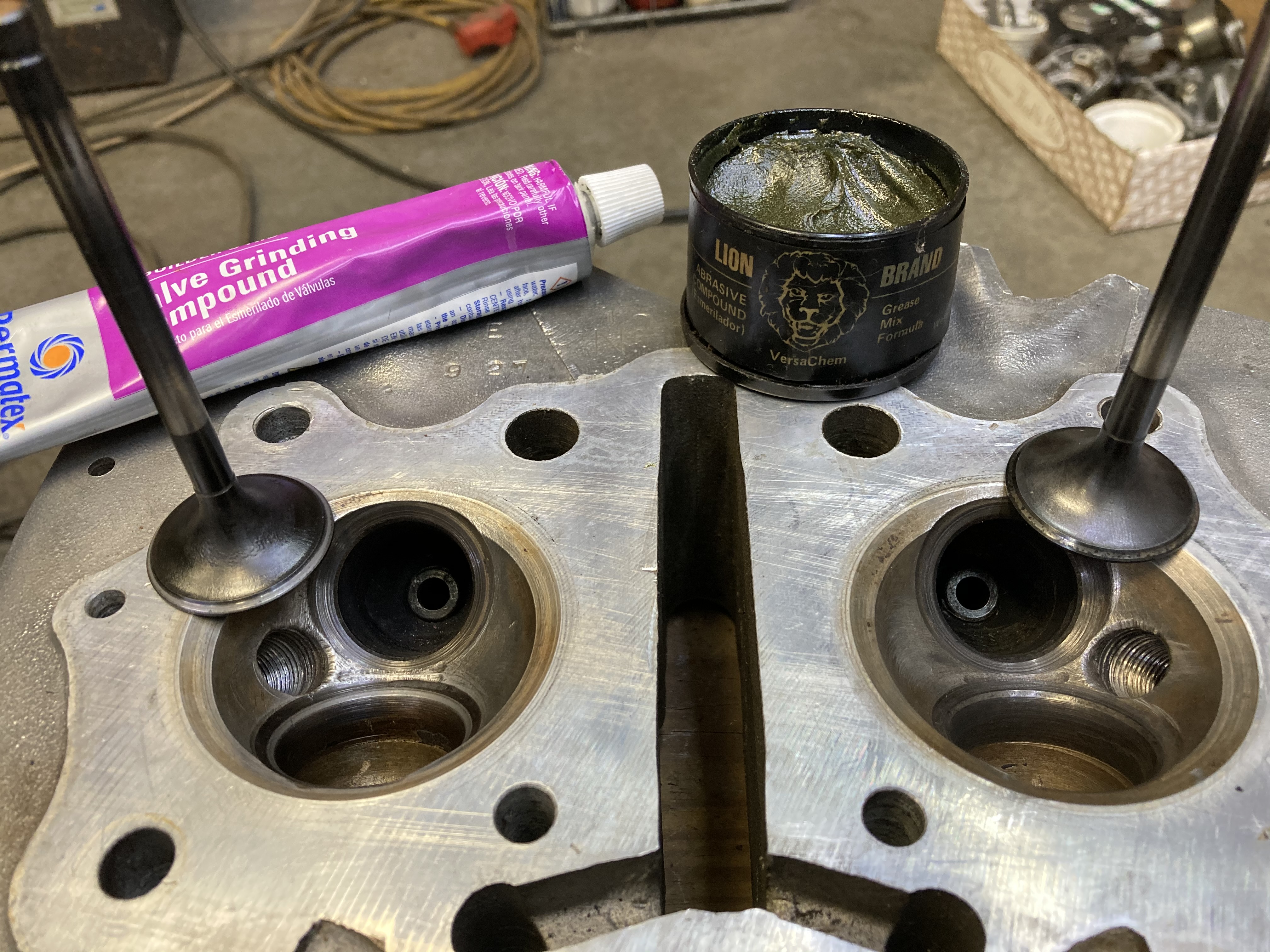
Lapping the valve seats and faces wasn't too bad as this motor only had 7K and minimal pitting from some surface rust. The contact area ring was at 2mm or less and no real cupping at all. The intakes were the worst with some on both surfaces but the exhausts only had just a little on the seats, the valves were almost untouched. The pic shows the valve and seat on the left ater a few minutes of lapping and the right side of the pic shows the 'before' condition.

8SNc1WC.jpg


below is a better 'before pic of the intake.

sW2dqks.jpg


This is about where I stopped. The Permatex lapping compound is supposed to start as a course 120 grit then reduce to a 240 grit as you grind.

XRlQKkE.jpg


I gave up on using the suction cup stick as it was just too hard to keep it on the valve and wouldn't turn it half the time, so I attached a piece of fuel line to the valve stem and chucked up the fuel line in my drill then applying slight finger pressure on the valve head as it spun.
Git er done.
 
Look at the picture od the old valve, notice the seating area is pretty evenly centered on the face? That's a correct positioning.
It's hard to say where the finished valve is sitting but appears to be all the way to the edge which is very bad. Might want to paint the valve with a Sharpie or Dykem Blue and twist the valve on the seat to get a better idea of seating position.
 
Look at the picture od the old valve, notice the seating area is pretty evenly centered on the face? That's a correct positioning.
It's hard to say where the finished valve is sitting but appears to be all the way to the edge which is very bad. Might want to paint the valve with a Sharpie or Dykem Blue and twist the valve on the seat to get a better idea of seating position.
I double stack 2 pairs of reading glasses on my nose (2.00+2.50=4.50) to see the contact but will do the Sharpie just to verify if centered.

Is there an appreciable benefit to using the fine lapping paste?
 
I double stack 2 pairs of reading glasses on my nose (2.00+2.50=4.50) to see the contact but will do the Sharpie just to verify if centered.

Is there an appreciable benefit to using the fine lapping paste?
I haven't used either version for valves since the early 70's. I've used fine for lapping gears together.
 
I double stack 2 pairs of reading glasses on my nose (2.00+2.50=4.50) to see the contact but will do the Sharpie just to verify if centered.

Is there an appreciable benefit to using the fine lapping paste?
Yes,it leaves a smoother finish;plus it does the least amount of wearing-away of the factory contours of the valve and seat.
A valve grinding machine is the proper way to re-contour a good set of valve seat sealing surfaces.
I like getting my valves and seats ground by a good machinist;they seal better than when I did lapping.
 
Look at the picture od the old valve, notice the seating area is pretty evenly centered on the face? That's a correct positioning.
It's hard to say where the finished valve is sitting but appears to be all the way to the edge which is very bad. Might want to paint the valve with a Sharpie or Dykem Blue and twist the valve on the seat to get a better idea of seating position.
I did as you said with a blue Sharpie (couldn't see much with a black one) and the contact is closer to the edge of the valve but not on it, about a millimeter back and the width is at the 2mm limit without very much face curvature (recession) at all.

I did not go further with the fine lapping compound. I went ahead and reassembled just to see if it would pass the gas in the ports leak test. It did with only a bare hint of moistness but no drops.

I'm thinking that this may be the rare case of a motor that does not really need the full treatment. I know it will not last as long but with the cylinders so rust free and compression very good (160+) before it sat in my garage, I will let it be a rebuild virgin unless it fails the first start up and revive.

As far as the bottom end (crank sludge traps) goes, it had nothing on the lower case floor near the oil pump pick up or anywhere else, so I'm going to let it go and put this motor back into it's 'new' frame.
 
I did as you said with a blue Sharpie (couldn't see much with a black one) and the contact is closer to the edge of the valve but not on it, about a millimeter back and the width is at the 2mm limit without very much face curvature (recession) at all.
The area between the seat and edge of the valve is called the "margin". If you took the valve face width and divided it into quarters and/or thirds you'd want the margin to be the lower 1/4 or 1/3. IE; 4mm valve face = 1mm margin
 
The area between the seat and edge of the valve is called the "margin". If you took the valve face width and divided it into quarters and/or thirds you'd want the margin to be the lower 1/4 or 1/3. IE; 4mm valve face = 1mm margin
I didn't realize that 'off center' was good. It is slightly less than a mm, perhaps only .5mm
 
The inner area of the valve seat(closer to the stem)is the seal & good when first cut.
The valve 'slams home' over many miles and wears;finally the valve gets sharper along the outer edge/circumference along with the valve sinking further down into the seat in the head.. which is the time to replace it and have both surfaces ground nice.

I like getting new valves and having both the valve and seat equally 'faced to match' at my machinist,which gives them both a great sealing surface and long life.
 
Last edited:
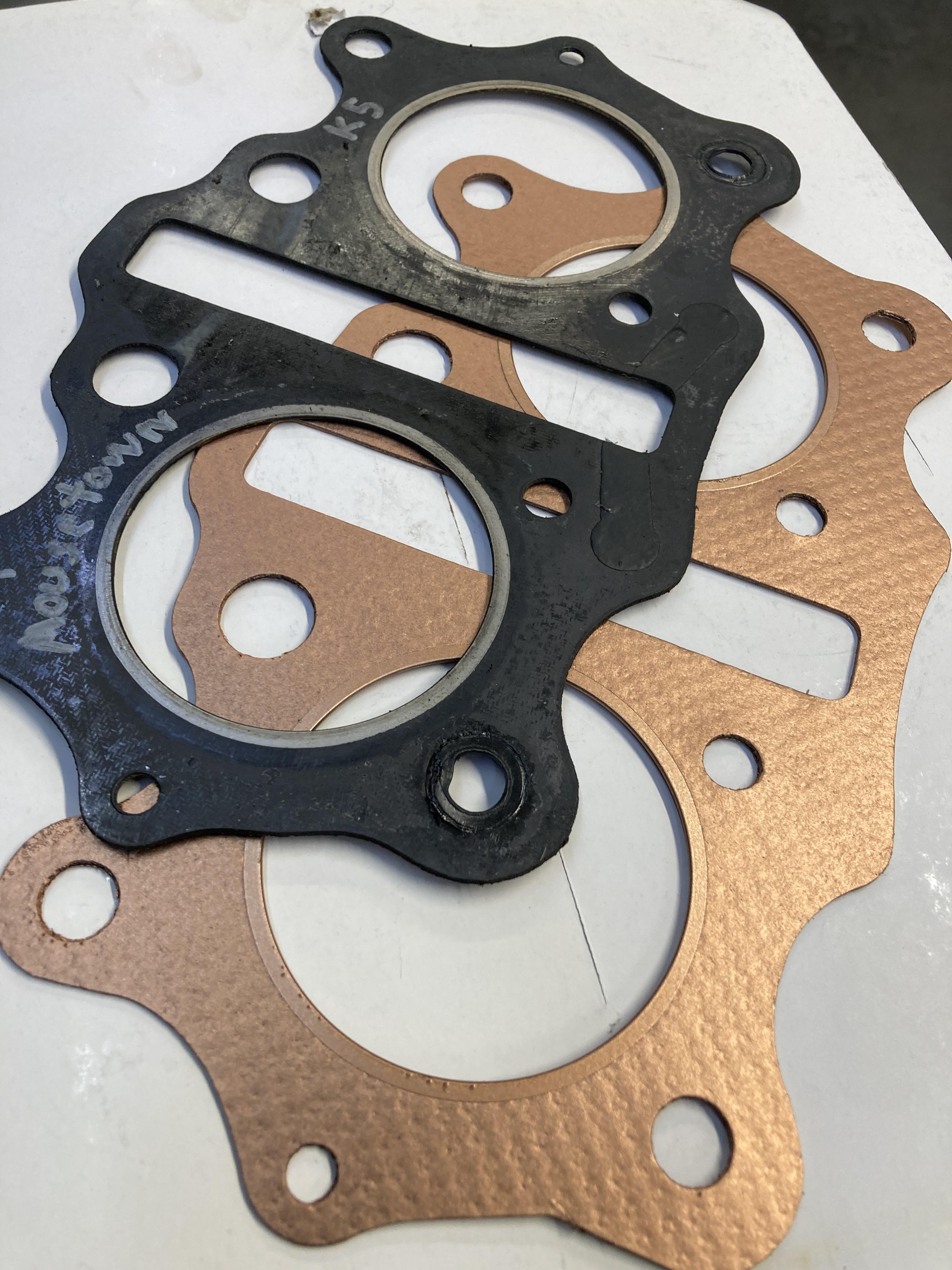
I'm guessing this is the original factory head gasket. It has some black O rings still stuck to it. I couldn't find O rings used on these K5's in the parts listings. The NE and Athena gasket sets say for 73 and don't include any either, so should I just skip it and go without O rings? These were in back on the oil studs, not the knock pin ones, in front.
Should I add any RTV or Honda bond around those oil stud holes?

One more question, on the metal ring there is a thicker side and a thinner side, which goes up? There is no difference on the OEM one (both sides thick).

DuunuAZ.jpg
 
I'm guessing this is the original factory head gasket. It has some black O rings still stuck to it. I couldn't find O rings used on these K5's in the parts listings. The NE and Athena gasket sets say for 73 and don't include any either, so should I just skip it and go without O rings? These were in back on the oil studs, not the knock pin ones, in front.
Should I add any RTV or Honda bond around those oil stud holes?

One more question, on the metal ring there is a thicker side and a thinner side, which goes up? There is no difference on the OEM one (both sides thick).

DuunuAZ.jpg
Tom,what brand of gasket set did you purchase? The Vesrah complete(full engine)gasket set may have those square 'o-ring type' seals;if they don't then assemble the bare head gasket(flip it to the best position to align all the ports)while looking carefully at the OEM online parts description/fiche to verify if they used those seals originally.
I like the Vesrah Made in Japan gasket sets the most because the stuff is good quality and usually includes everything.
 
Tom,what brand of gasket set did you purchase? The Vesrah complete(full engine)gasket set may have those square 'o-ring type' seals;if they don't then assemble the bare head gasket(flip it to the best position to align all the ports)while looking carefully at the OEM online parts description/fiche to verify if they used those seals originally.
I like the Vesrah Made in Japan gasket sets the most because the stuff is good quality and usually includes everything.
I've prepped the NE headgasket with the copper spray.
I've not found these OEM style with the Orings in ANY fiche. Even the $50 headgasket only, on CMSNL's site, don't show these Orings. The Orings are not listed separately anywhere, or for any 350 model. I have not found any Vesrah kits for sale and if I did, I would not pay an exorbitant price.
As I said, these Orings are only in the back and surround the oil studs only, which are not under any real pressure. On further consideration, it would not be wise to get any sealer in the small oil holes that deliver oil to the studs.

I'm just trying to verify if the regular head gasket will work. Both NE and Athena kits specify that they are for '73's and, while not perfect, should be useable.
 
I've prepped the NE headgasket with the copper spray.
I've not found these OEM style with the Orings in ANY fiche. Even the $50 headgasket only, on CMSNL's site, don't show these Orings. The Orings are not listed separately anywhere, or for any 350 model. I have not found any Vesrah kits for sale and if I did, I would not pay an exorbitant price.
As I said, these Orings are only in the back and surround the oil studs only, which are not under any real pressure. On further consideration, it would not be wise to get any sealer in the small oil holes that deliver oil to the studs.

I'm just trying to verify if the regular head gasket will work. Both NE and Athena kits specify that they are for '73's and, while not perfect, should be useable.
Seems like you've got what you need for now.
The Vesrah CB/CL350 kits(#VG-145)can sometimes be difficult to locate;the NOS Honda parts are also,although I prefer them.
 
Last edited:
I think they were built into the quality original OEM head gasket;I had re-used one once with no leaks..
The original looked pretty good for 7K miles but I'd only use it if in dire straits. It's interesting that the kit from 4into1, that I only looked at, had a decent looking head gasket and also included valve guide seals and 2 rubber Oring like sleeves, which I don't know what they go to. So does the New NE kit I got from Scrambler. The kit I used was a few years old NE kit that the head gasket was a little off and I had to elongate one of the stud holes very slightly to get it closer to centered on the bore rings.
None of the kits have an oil pump gasket, except the Honda kit, for only the sides, that outobie gave me. I guess I'll make my own. Again.
I was hoping this gasket kit hokey pokey was done when I went from the 60's bikes to the 70's.

I did try flipping the head gasket for a better fit but I'm thinking that NE (Taiwan) stands for "Not Exact".
 
The original looked pretty good for 7K miles but I'd only use it if in dire straits. It's interesting that the kit from 4into1, that I only looked at, had a decent looking head gasket and also included valve guide seals and 2 rubber Oring like sleeves, which I don't know what they go to. So does the New NE kit I got from Scrambler. The kit I used was a few years old NE kit that the head gasket was a little off and I had to elongate one of the stud holes very slightly to get it closer to centered on the bore rings.
None of the kits have an oil pump gasket, except the Honda kit, for only the sides, that outobie gave me. I guess I'll make my own. Again.
I was hoping this gasket kit hokey pokey was done when I went from the 60's bikes to the 70's.

I did try flipping the head gasket for a better fit but I'm thinking that NE (Taiwan) stands for "Not Exact".
Those 'sleeve' type o-rings are always accidentally put into the 350 gasket sets from many aftermarket suppliers, but they're the style the DOHC 450 uses on the two right hand studs where the oil flow goes to the top end, similar to the rear studs on the 350. I remember seeing the o-rings included in Honda head gaskets for the 350 long ago, I'd forgotten about them until I saw what you pulled from that engine as it's been decades since I did a 350 top end. I've used both Vesrah and NE gasket sets on my 450 and had no issues though I've never used the stock size head gasket due to the 4mm overbore.
 
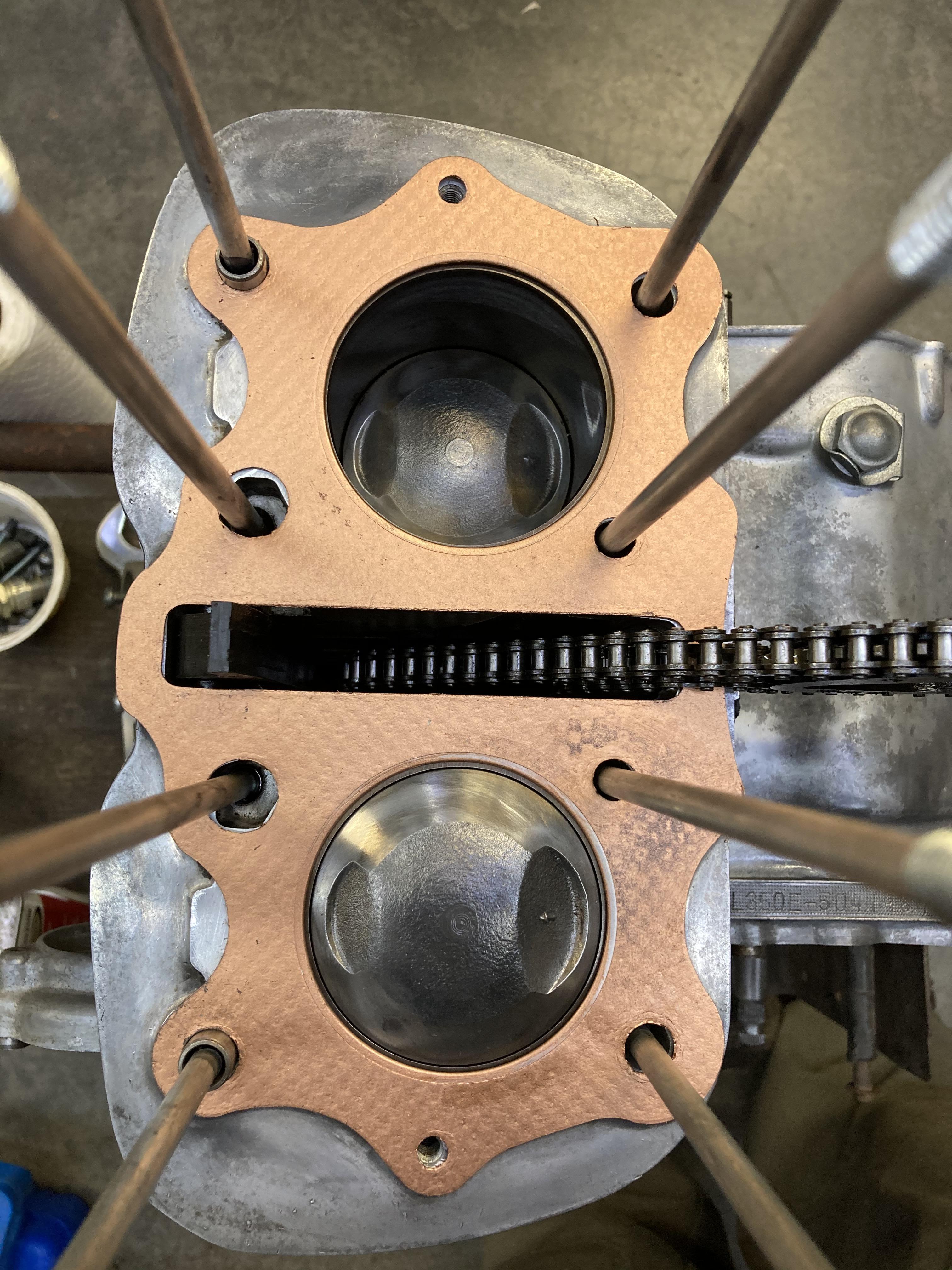
Well, I'm going to use the NE headgasket since it fits good enough. This isn't a rebuild as much as it is a clean up; no cylinder boring, pistons and rings, no cam regrind, no bottom end clean up. I just don't see any signs of real neglect or abuse, just moderate wear.

lajneBR.jpg


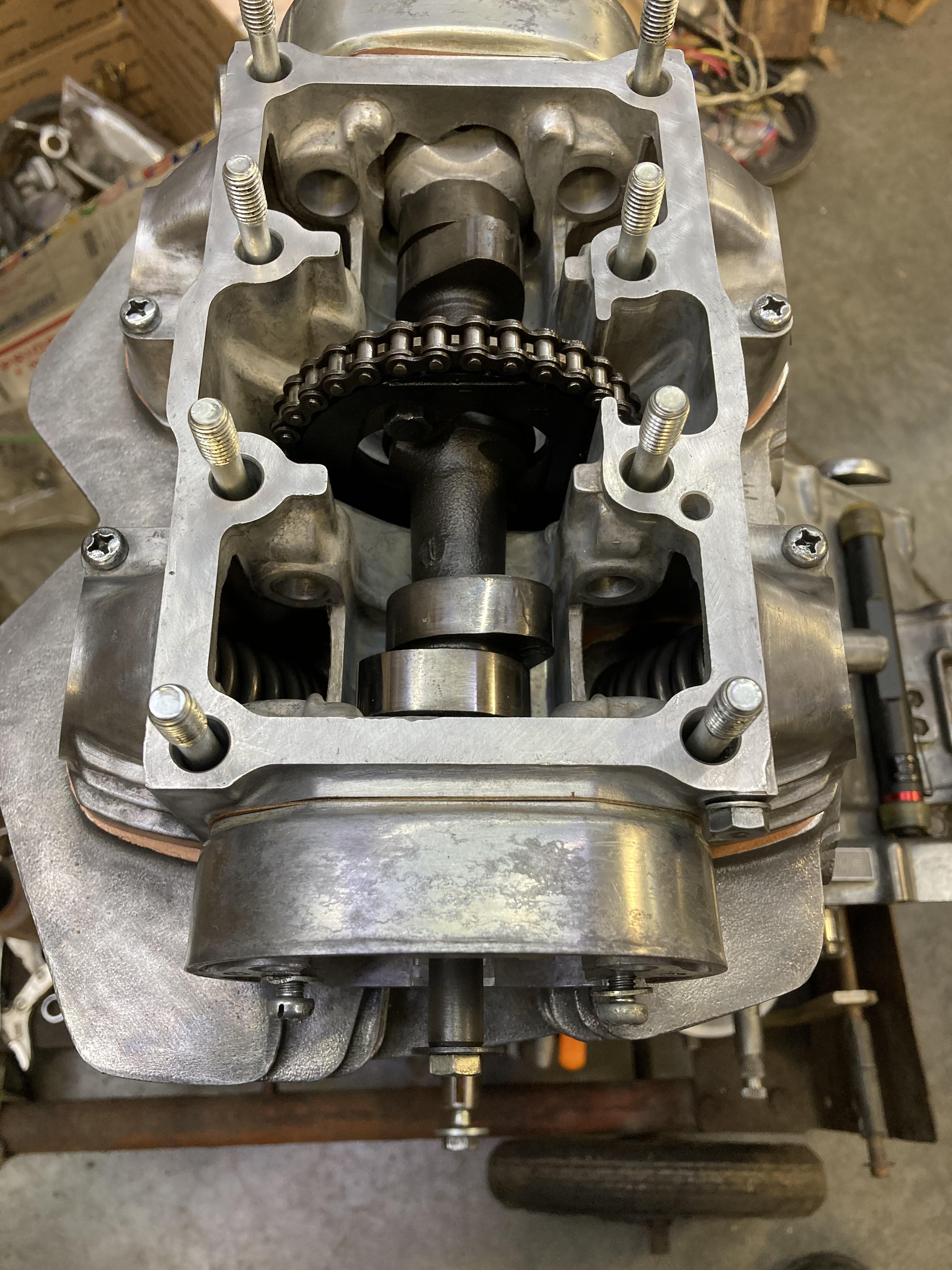
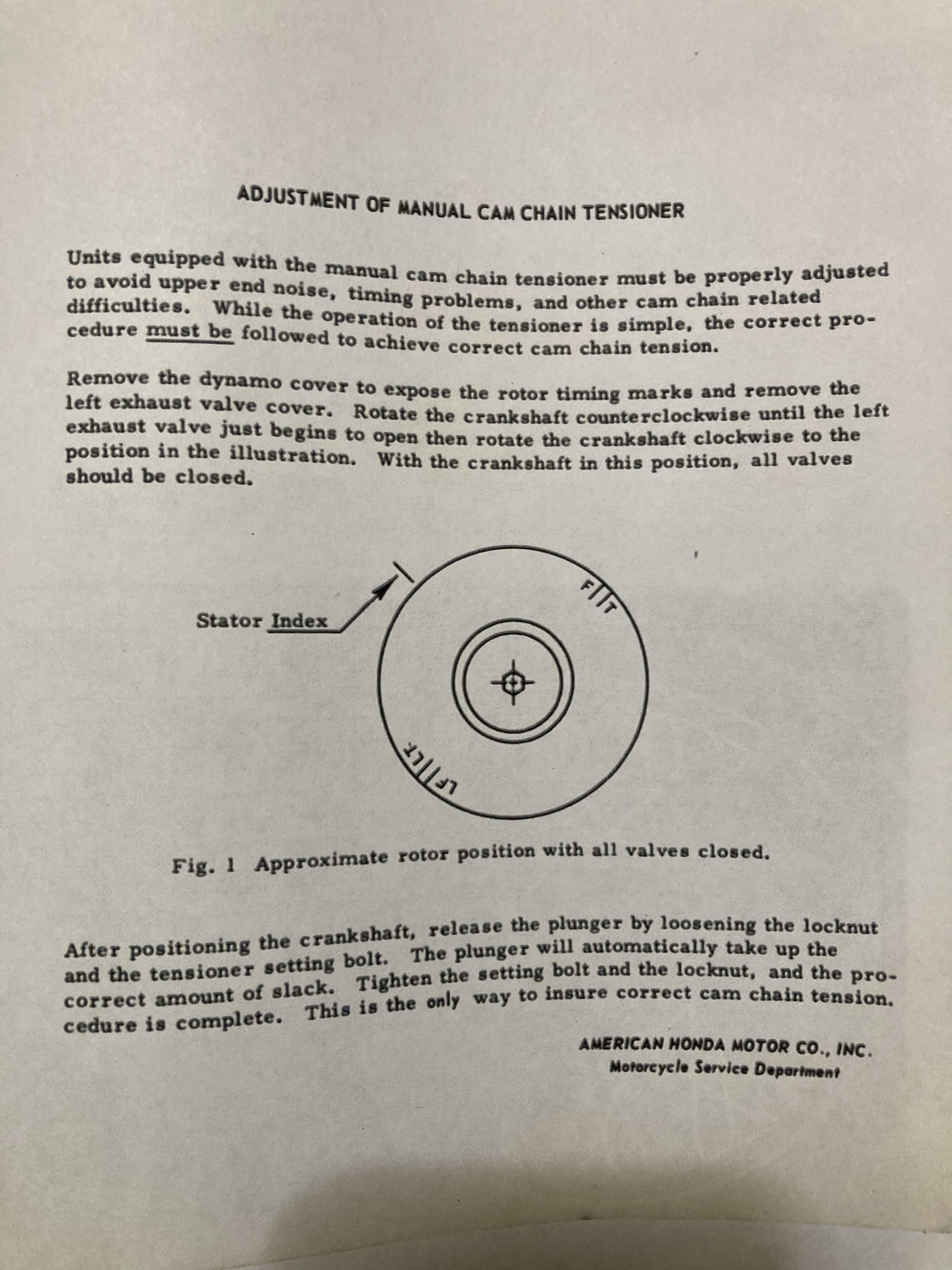
I just want to keep marching to Mousetown. I hope I've got it back together correct, cam wise. The crank is at LT, the cam sprocket has L on top, the sprocket bolts are in the same holes (shouldered below and regular on top), the cam itself looks like compression TDC with the exhaust ready to open, the advancer pin is up (the points cam mark is down). Am I missing anything?

Qfv8HcP.jpg


Probably kind of boring for a lot of you all, but it's the first 350 for me, so....
 
I had to backtrack to see that the tensioner was in place. Never boring for me.
It’s easier to bolt in the cam before installing the tensioner unless still fully retracted.

Ballbearian - did you check cam end play? There may be a shim “needed” (usually on the tach side). I put needed in quotation marks because I don’t thinks it’s critical but you may end up with some extra noise at mid to high RPM
 
Also, you get even more slack if you torque down the studs with some stacks of washers. After you put the tensioner, rotate everything a few times to make sure cam timing hasn’t slipped a tooth or two
 
It’s easier to bolt in the cam before installing the tensioner unless still fully retracted.

Ballbearian - did you check cam end play? There may be a shim “needed” (usually on the tach side). I put needed in quotation marks because I don’t thinks it’s critical but you may end up with some extra noise at mid to high RPM
Yes, but will recheck after torquing the cam bearing housings with new 'thinner' gaskets. It had 1 shim (.20 ?) on it as a virgin top end.
 
I was actually referring to the tensioner arm and roller because the cylinders were already on it and down.
I was thinking to lock it, then loosen the four bolts for slight slack while I put in the rockers. Yes, the cylinders were left undisturbed so I only looked down at the center roller and slipper, which all looked good and the rubber wheels were still soft.
 
Tom, it helps to check all 4) valves for play;you can vary the procedure of setting the crankshaft slightly.. a neutral position for the chain to be under the least pre-load.
The way they describe it is (y) .
Try to imagine the position(and how you 'set'/'turn w/ a wrench' the alternator rotor bolt)where all the camshaft lobes are at their lowest height,at the same time;this will loosen the chain as much as possible for the spring(only)to tension the chain to it's correct tension.
 
I'm guessing this is the original factory head gasket. It has some black O rings still stuck to it. I couldn't find O rings used on these K5's in the parts listings. The NE and Athena gasket sets say for 73 and don't include any either, so should I just skip it and go without O rings? These were in back on the oil studs, not the knock pin ones, in front.
Should I add any RTV or Honda bond around those oil stud holes?

One more question, on the metal ring there is a thicker side and a thinner side, which goes up? There is no difference on the OEM one (both sides thick).
Tom for future reference the thicker fire ring faces the head and the thinner ring faces the steel sleeve liners in the barrels. Likely not a biggie here now that your well past flipping it over. Not all head gaskets have two different sized fire rings, as some are equal on both sides.
 
Tom for future reference the thicker fire ring faces the head and the thinner ring faces the steel sleeve liners in the barrels. Likely not a biggie here now that your well past flipping it over. Not all head gaskets have two different sized fire rings, as some are equal on both sides.
Thanks for answering that question. On second thought that makes sense since the 'squish' edges of the head chamber may expose more of that surface to the combustion heat and gasses.
Yet another 'roll of the dice', as the valve job and ring situation are a gamble on this motor. It may be a while to find out if it makes it any distance, at the rate I go and the miles I ride it.
 
Thanks for answering that question. On second thought that makes sense since the 'squish' edges of the head chamber may expose more of that surface to the combustion heat and gasses.
Yet another 'roll of the dice', as the valve job and ring situation are a gamble on this motor. It may be a while to find out if it makes it any distance, at the rate I go and the miles I ride it.
As it was explained to me the steel of the sleeve liners needs less contact area of the fire ring vs the all aluminum head surface. Hence the larger surface faces the combustion chamber.
 
As it was explained to me the steel of the sleeve liners needs less contact area of the fire ring vs the all aluminum head surface. Hence the larger surface faces the combustion chamber.
That has the ring of truth. :ROFLMAO:

At least this is not an oversize bore. I imagine a cheap gasket would be even more challenged to do it's job in that case.

I'm going to finish torquing the head and whistle past the graveyard on my way to the chapel to marry this motor to it's frame.
 
Back
Top Bottom