

ballbearian
Veteran Member
No picture?
.
Oops. Thanks. They are larger than the smaller bikes I've done recently.

No picture?
.
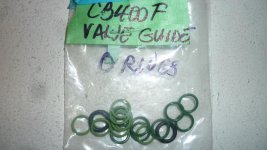
Must be someone close by with a gasket set that as noted use these same green O rings for the valve guide seals. Very few people replace valve guides in any engine, so you end up with lots of these left over. If you have ever done a larger twin or small four or a large bore four they all use the same sized valve guide green O ring.
I used these when I rebuilt the CL175 twin motor on the rear dowels of the barrels, as a perfect fit and correct green O ring.
View attachment 19251

You can buy those O-rings at any given specialised store (rubber, O-rings, etc), preferably in Viton. Costly but worth the money, Viton can withstand high temperatures and oil. I also use Viton for the O-rings used for the valve guides. No smoking engines any more. To my experience, if an engines smokes after rebuild, 9 out of 10 times the O-rings around the valve guides are not replaced. I have an Excel sheet of all O-rings, sizes and material somewhere, just like the CB450's and CB400F, somewhere on a back-up disk.
Those green o-rings could be the same ones I use when I take my XR200R cylinder head to the machinist to have the guides replaced: 10x1.6

I'm assuming that Buna N is what is commonly called Nitril, is this so? I have some nitril that is only rated to 212F. As Jensen said the Viton should be used in high heat applications.
I have at least a couple US made gasket sets that include the 11x2mm Orings. I could not find the Viton wording on the Ebay listing you posted but, again, assuming that a quality gasket set would have viton, or appropriately heat resistant, Orings for the head use.
I think I should not use the Nitril Orings, but stick with the supplied ones from the set.
Perhaps, I question too much, but the dimensional fit between the outer diameter of the Orings and the noticably larger hole in the head gasket, made me wonder if a better fit and better sealing could be had by a slightly larger Oring (or a thicker section from 2.00 to, say 2.50mm). When I examine the old Orings they are smashed and stretched to be close to the hole size in the gasket, but no longer tight around the knock pins at all.
For what it's worth, both knock pins and Orings are larger on my 305 than on all the smaller bikes I've worked on.
Tom, If you have the complete gasket sets and the correct O rings are supplied then definitely use them. My belief is the green O rings supplied in these kits are Viton vs Buna N or Nitrile. As previously noted the Viton has superior resistance to heat and chemicals vs the Buna N material. If the correct size is 11X2 mm that is sufficient as supplied in these kits for the use on the dowel pins.
Larger isn't necessarily better, as with a squish effect they maybe too large and not seal correctly. If the wrong O ring material is used then they could also break down and fail.

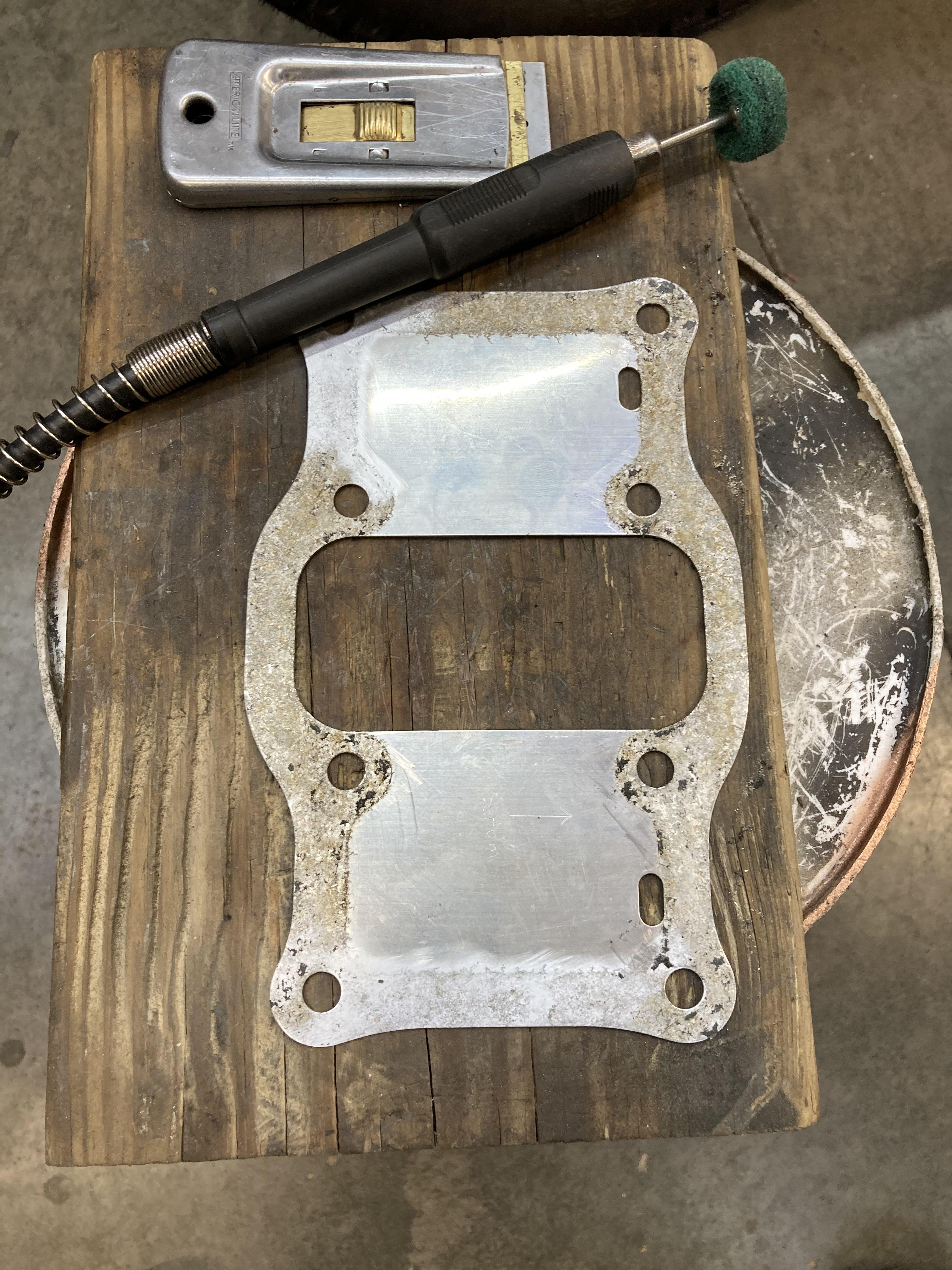
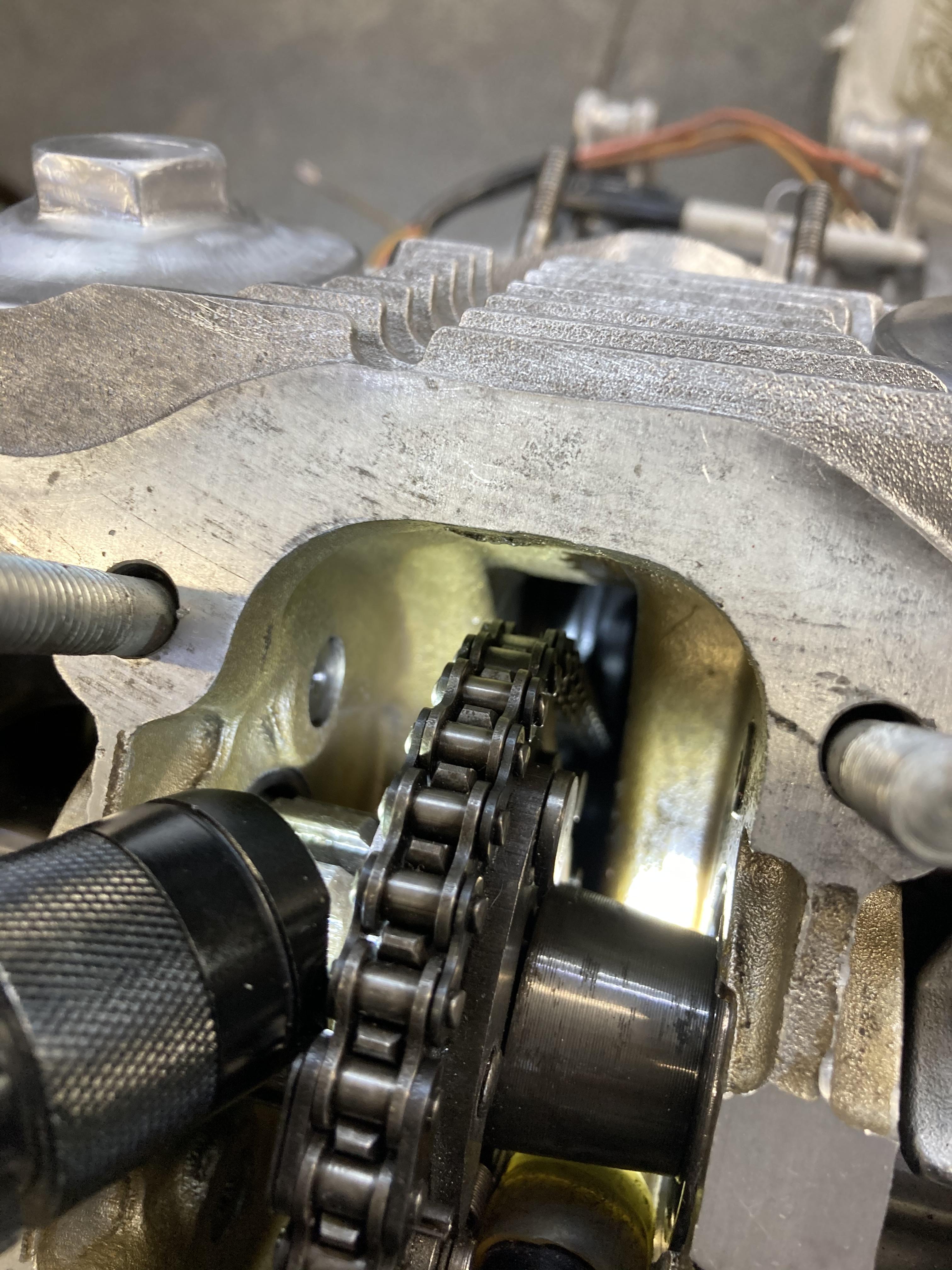
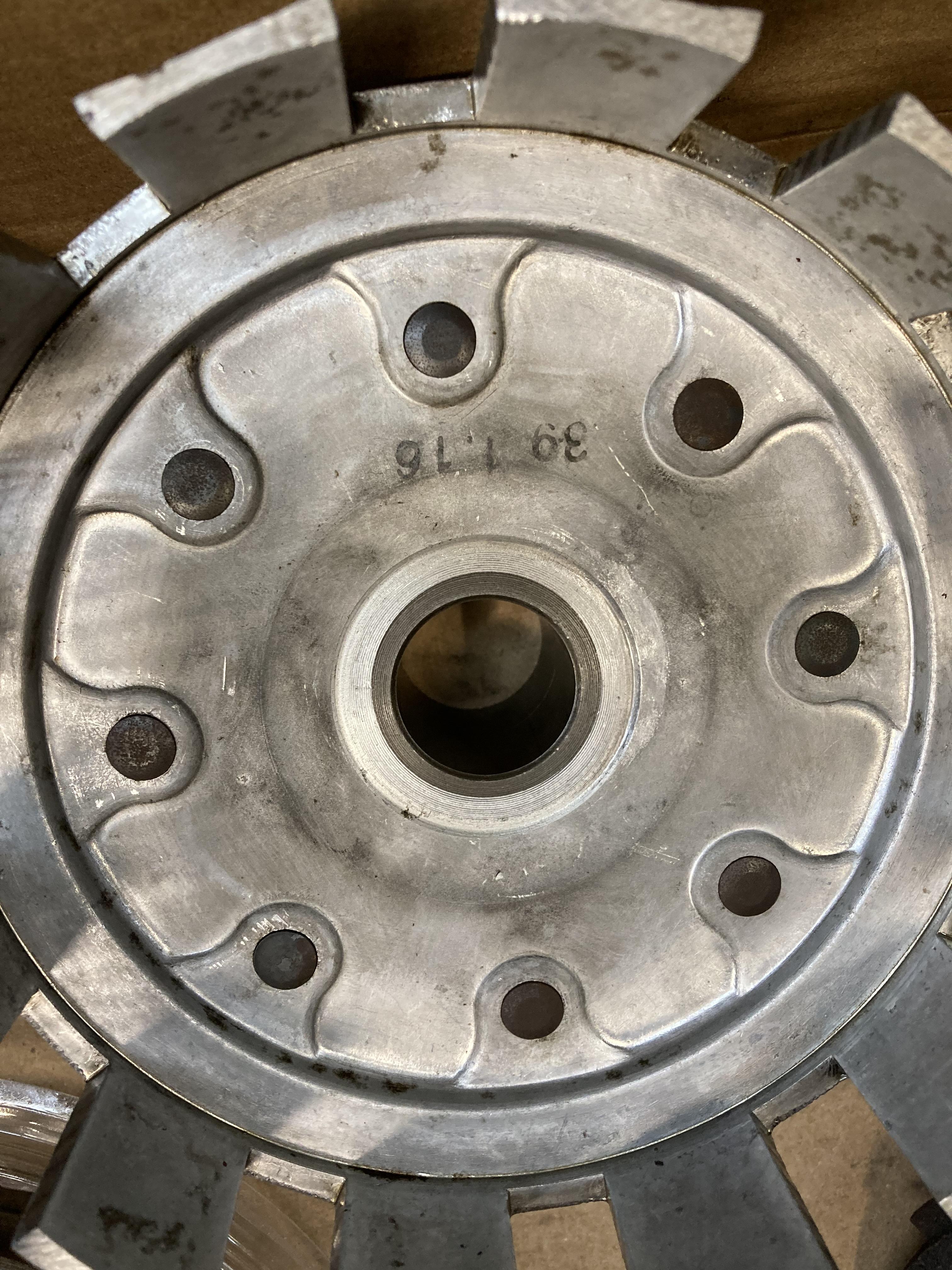
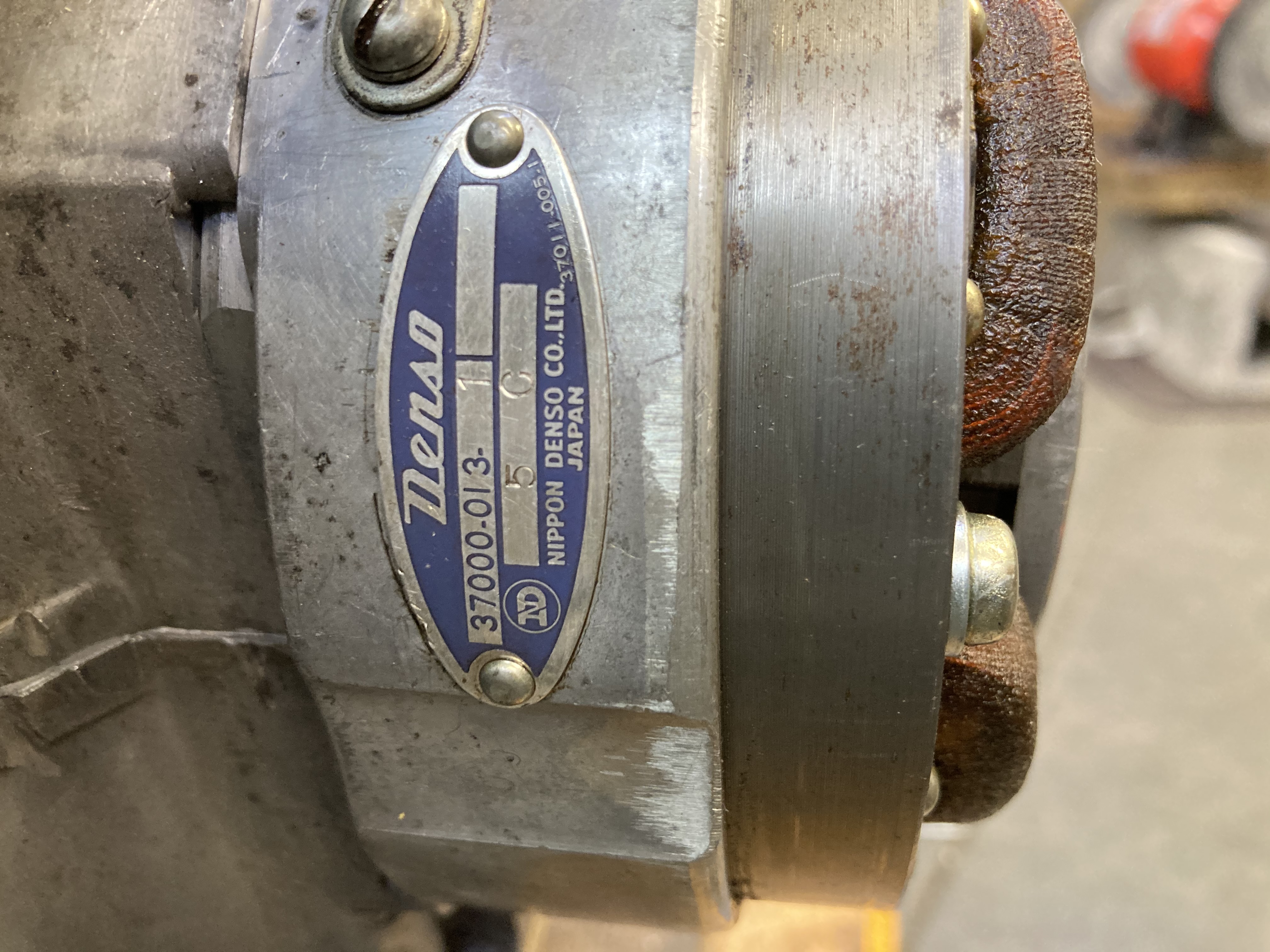
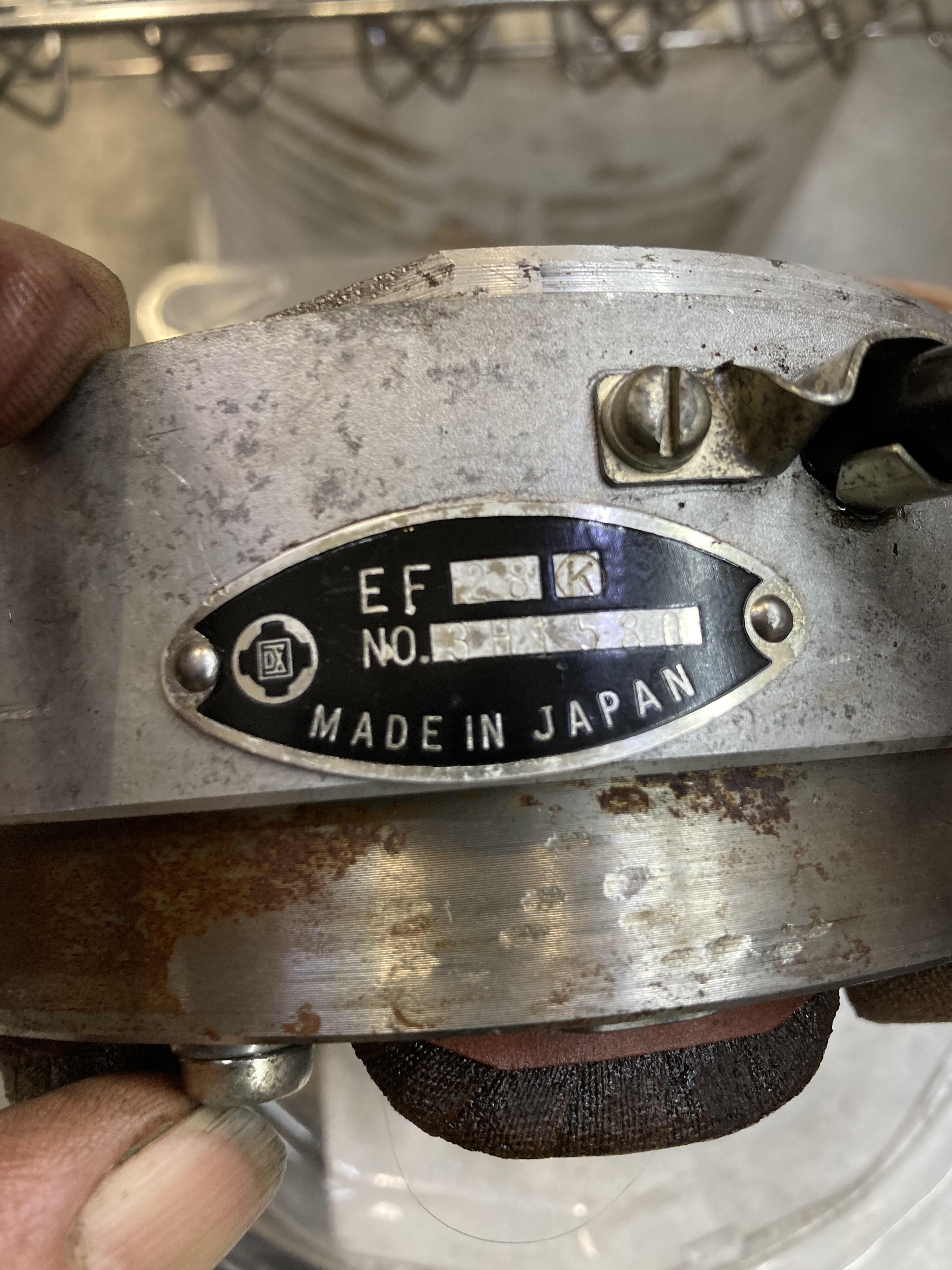
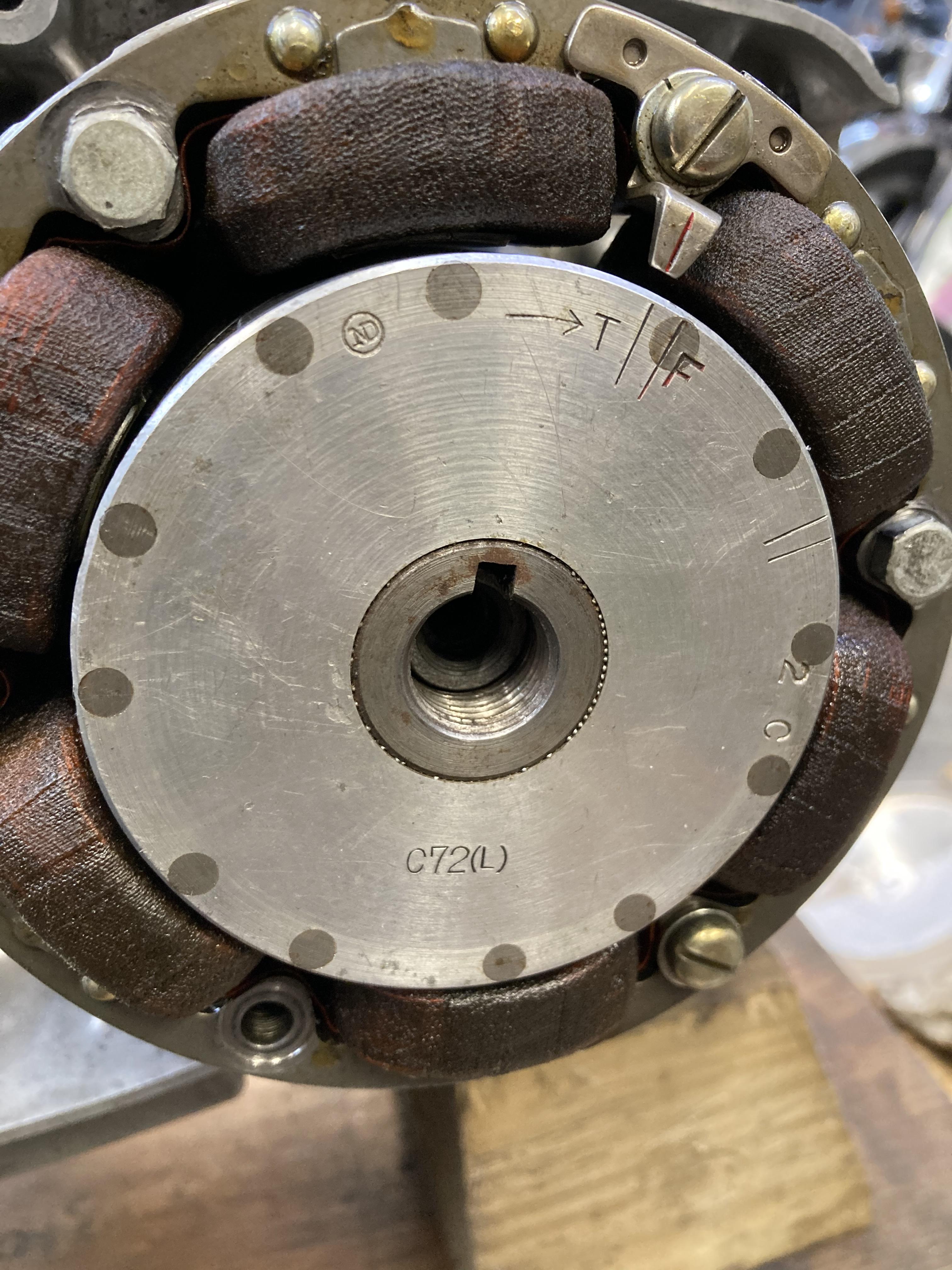
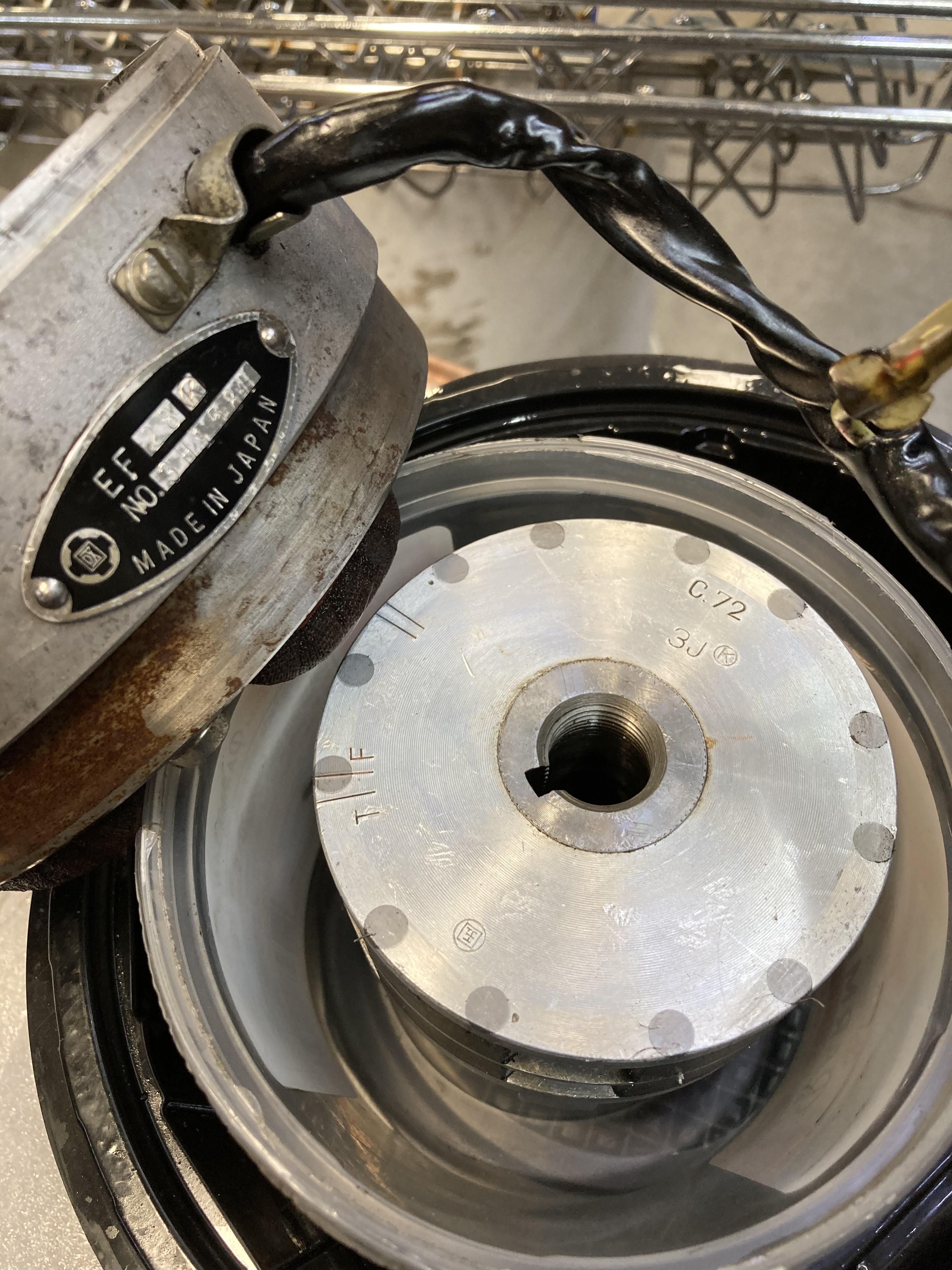
I'm curious too. I may do better just waiting till the bike is up and running to test it and determine any differences. At least that is an easy 'on bike' job. After I cleaned them up, I thought to post pics, that someone may recognize them.
I need to re-read Bill Silver's notes too. Even though the Denso one is newer than the black label one, it is still from a '64 and upgrades may not have happened until '65. Wish I had pics from Charles '65 when we had it apart.
I also don't know if magnet strength increase without appropriate increase in windings on the stator would do anything. Jensen's comment on the lower output mark (L) on the Denso rotor, makes me think that may be so.
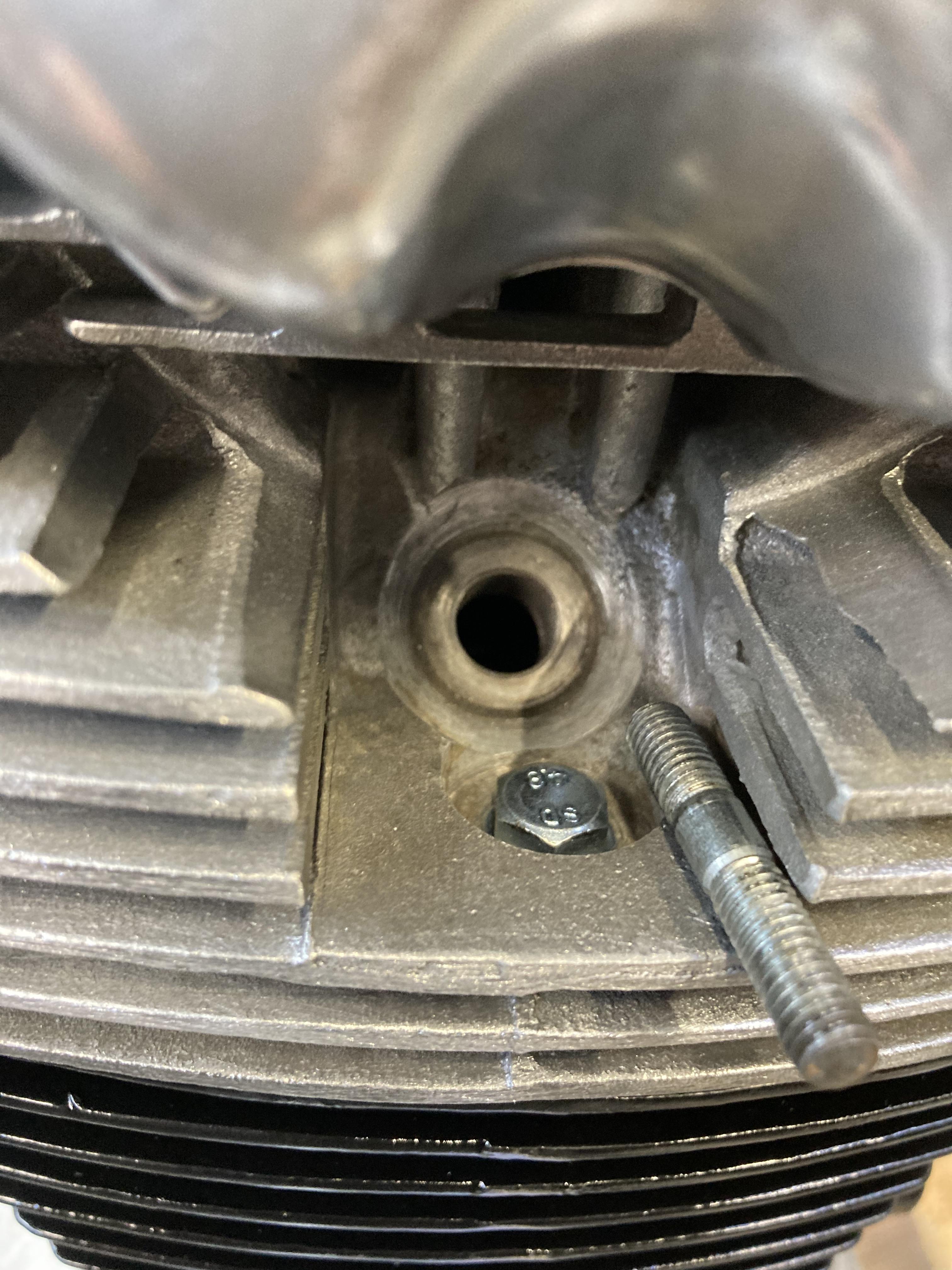


For me it makes sense that the long end of a stud would go into the piece so there's as many threads as possible for load pressure. But it there's threads still exposed after the stud stops then I switch it around.They are the originals, just clean. 35mm overall, as per the FPM spec, which seems short because the bolts I have in there are 35mm. Maybe the long end went into the cylinder, I can't remember. Thanks for the heads up on socket clearance, makes me want to reconsider just keeping the bolts.
What say ye learned elders, bolts OK?
For me it makes sense that the long end of a stud would go into the piece so there's as many threads as possible for load pressure. But it there's threads still exposed after the stud stops then I switch it around.
Though I've never tried it, I can't see why it wouldn't work the same way. Was never sure why they used studs on the smaller twins and bolts on the 350.
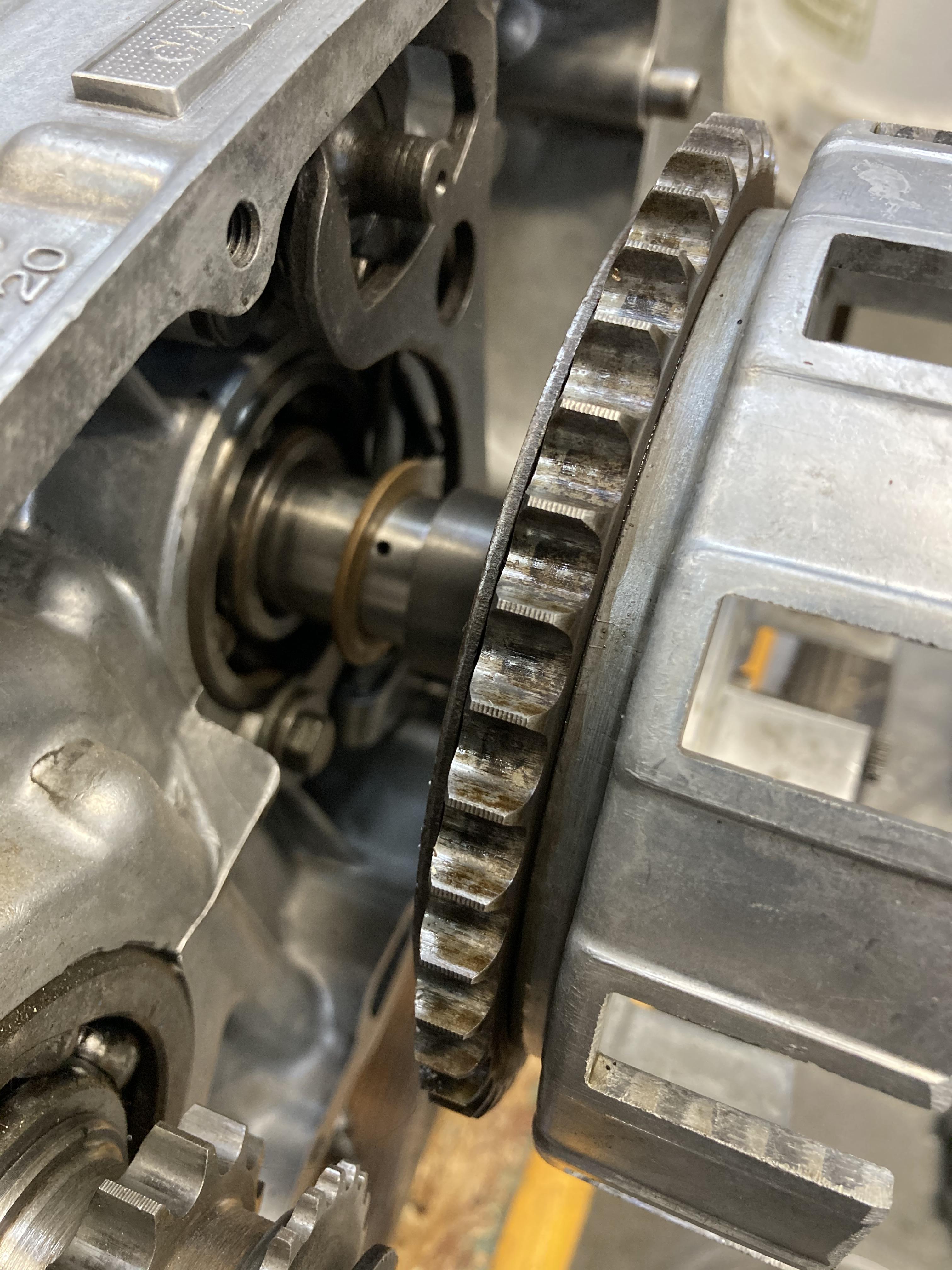
They are the originals, just clean. 35mm overall, as per the FPM spec, which seems short because the bolts I have in there are 35mm. Maybe the long end went into the cylinder, I can't remember. Thanks for the heads up on socket clearance, makes me want to reconsider just keeping the bolts.
What say ye learned elders, bolts OK?
That seems to be correct as I put mine in backwards and that is why I needed to trim the head studs for the spark plug wrench clearance. I also did the same on the exhaust studs and just removed them and switched them around, so there is less threaded area in front of the retaining nut. More threads in the aluminum part makes sense for a stronger hold.
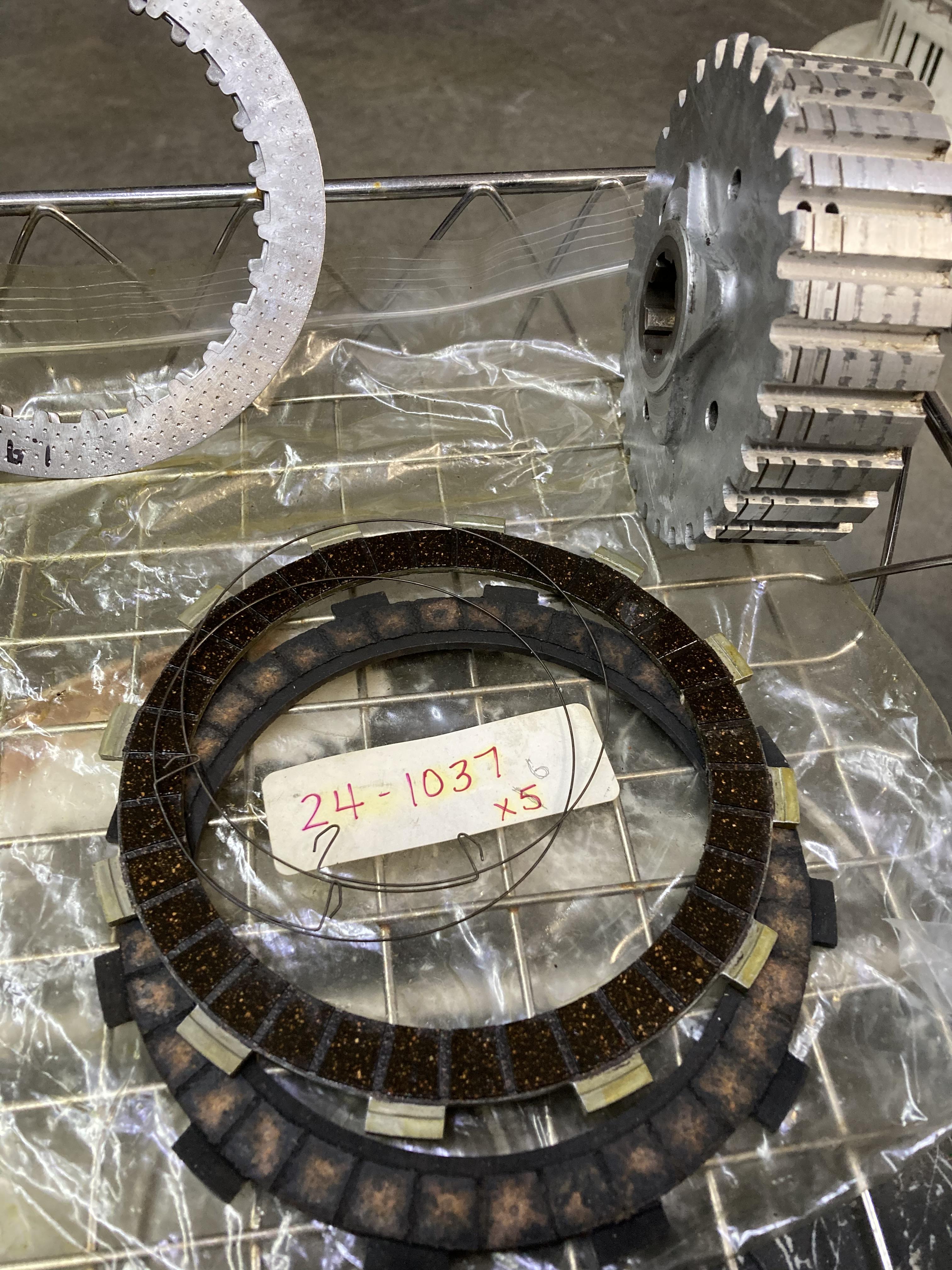
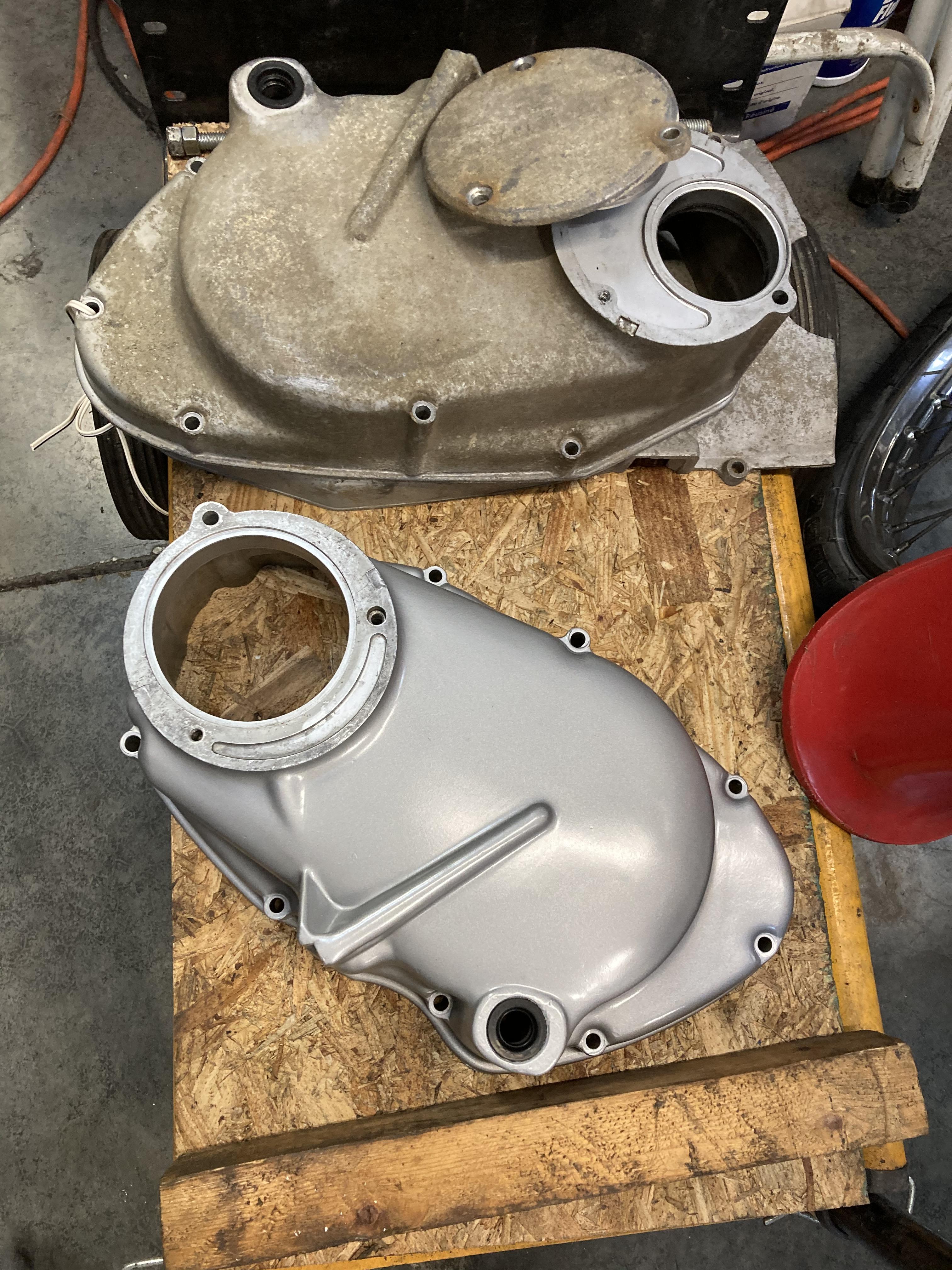
Flyin900 said:Your fearless with the "I'll try anything once attitude" on these work arounds. I enjoy seeing that in your work.

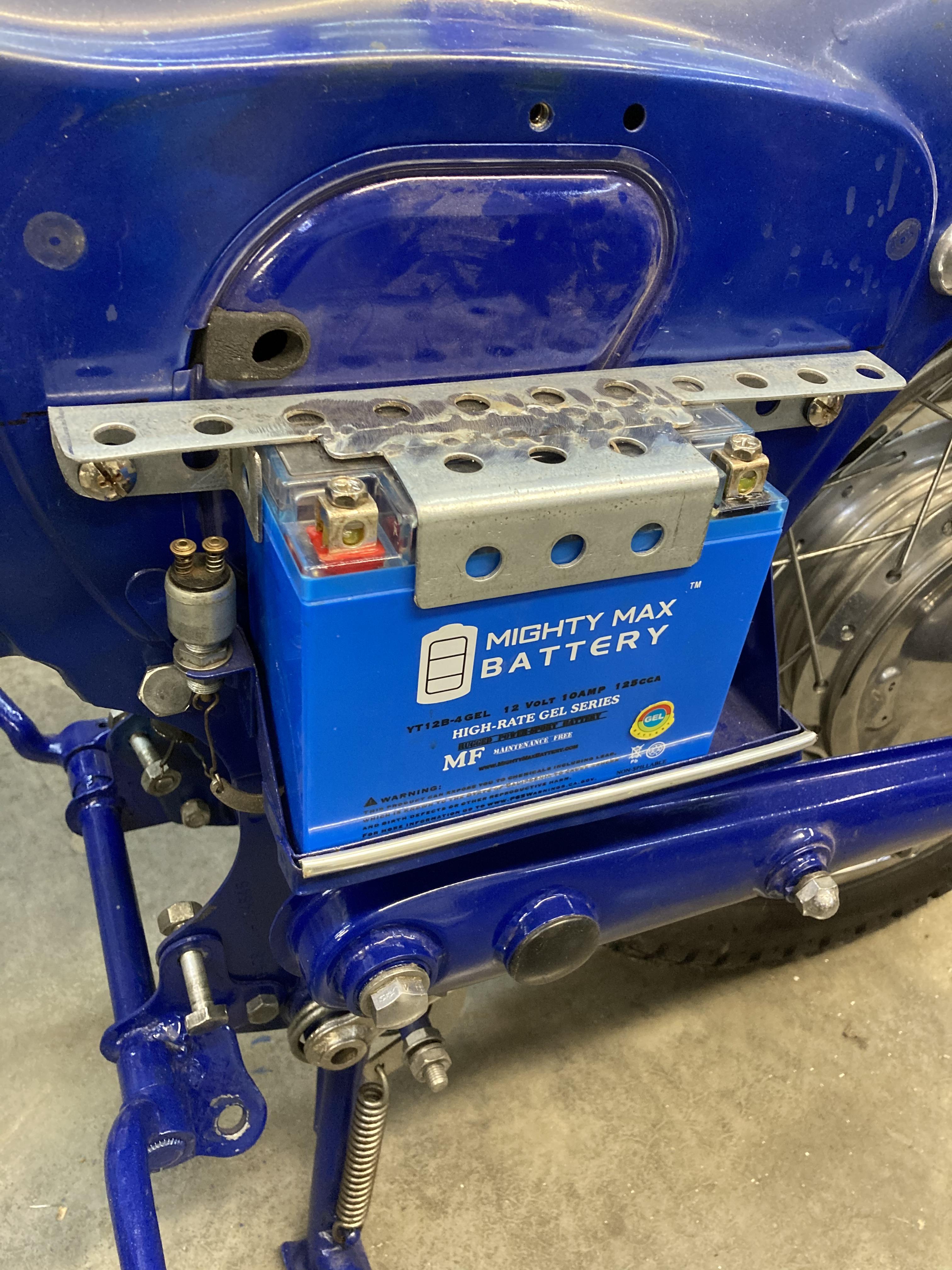

A rare early battery tray is not what I want to pay gold-plated prices for, so I made my own from left over punched angle strut from my garage door guy days. Excuse my crappy welding but I think it's pretty solid.
A rare early battery tray is not what I want to pay gold-plated prices for, so I made my own from left over punched angle strut from my garage door guy days. Excuse my crappy welding but I think it's pretty solid.
It is pretty solid and has more clearance for the connections than the stock one had, which always makes me nervous that it could short so easy.
I was happy to see it was original blue, not repainted blue, when I found it, even though the damaged areas did get a good bit of repaint. I think the old patina paint looks intentional not just neglected and I'm happy with that.
This bike has the early style battery which is tall, thin and longer. It takes a stock battery that is no longer made. This is the only AGM that I have found thin enough that will fit. Later Dreams, like Charles '65, can use a Motobatt MB9U which has the same footprint as the common CB350 size, just a bit shorter. These Mighty Max Gels really are awesome and a third the price of Motobatt.

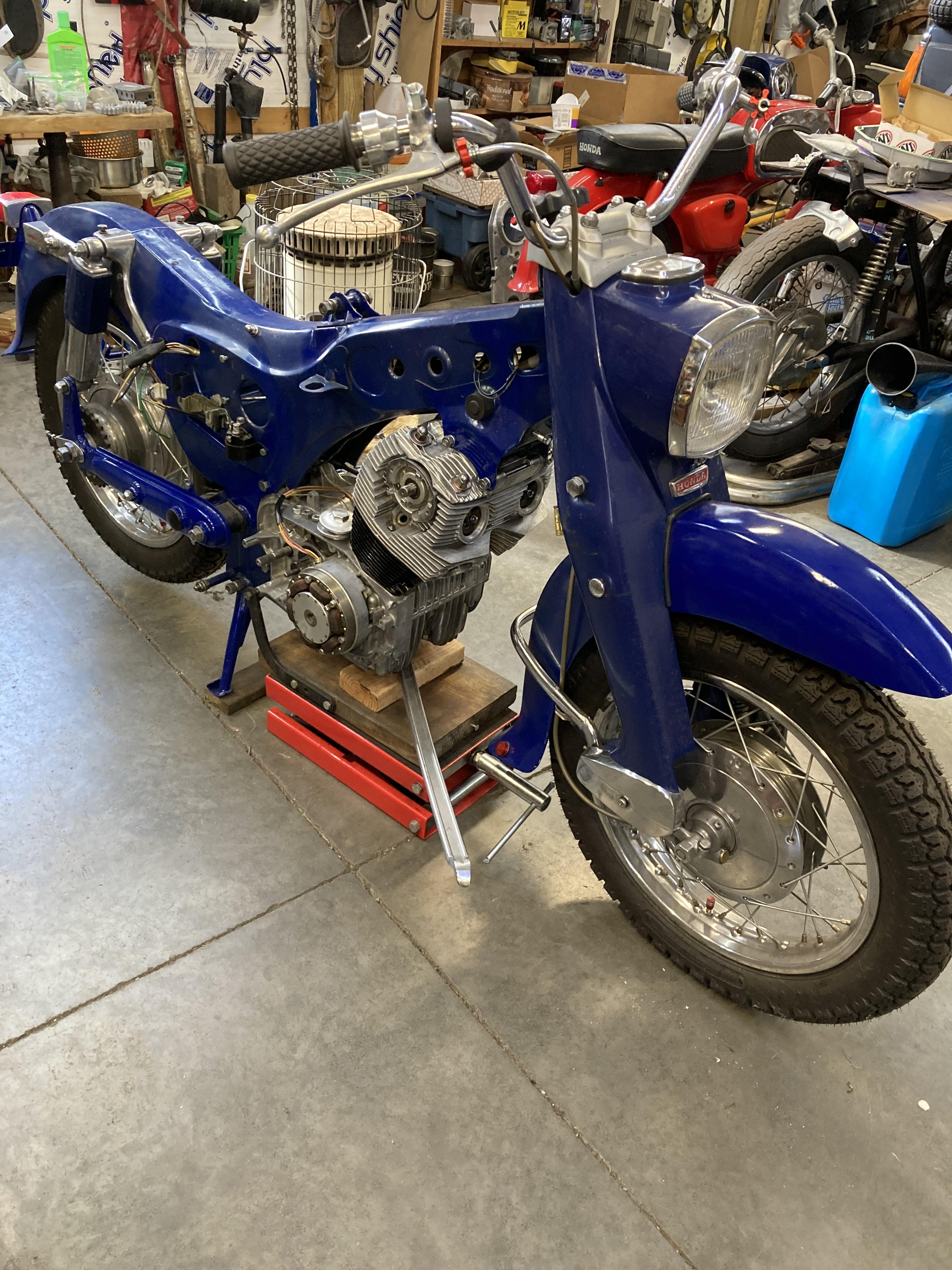
Using a giant tire tool as a lever.
More lever + more age = more leverage.
I torqued the head and hung the motor, after going back and checking the gasket metal ring was centered and deciding to skip extra sealant on the Orings due to a healthy coat of copper spray.
