Blue Dream CA78

Thanks for sharing this. I have not seen this done before but will definitely be a useful technique to use going forward.

If it feels rough to the finger, it needs it. Works great before trying to disassemble an old engine. The peening helps break loose the corrosion and the work hardening toughens the screw cross. I rarely have to drill out the screws.
 
Last edited by a moderator:
Rotor magnetism. How do you check it or measure it and
keep it and how does one re-magnetize them?
There are four different rotors listed in the parts catalogue and two stators. 2 of the four are high output and 2 low output. I have 2 differently marked rotors; C72 and C72L, which Jensen said the L means low output.
It is difficult to discern any difference between them as to magnetic strength. I suppose I could put one on a postal scale and see how much upwards force is required to separate it from a steel bolt and thereby find any difference.

Just trying to figure out which to use before I reattach the starter clutch and wrap up the motor assembly. The final parts orders are showing up soon.
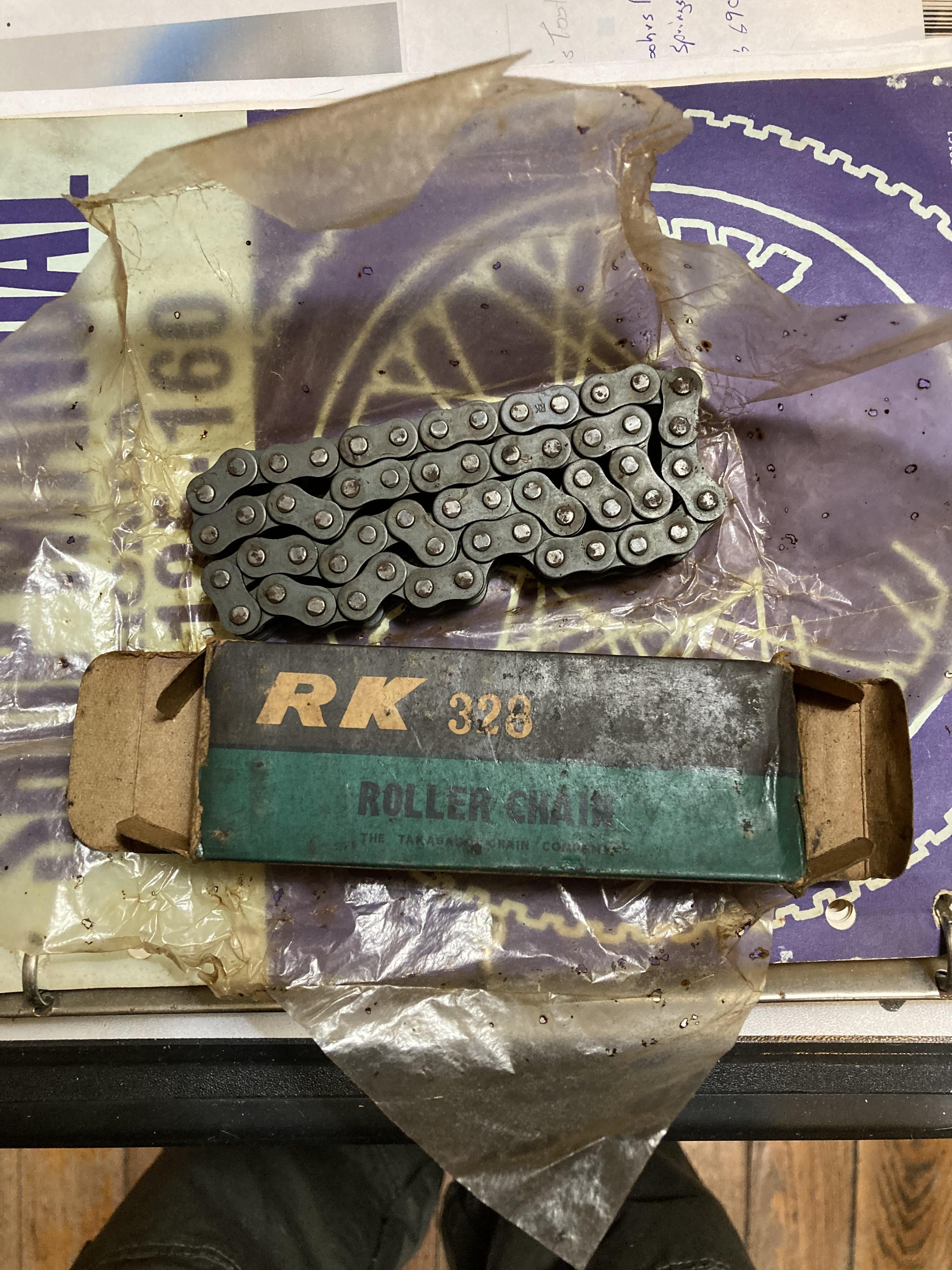
Here is the NOS primary chain sporting it's very pricey shelf dust.

xQhzvNK.jpg
 
Good to see your progress Tom (y)
I see what you've said to me about that being a unique chain pitch:the pins look very close together.
 
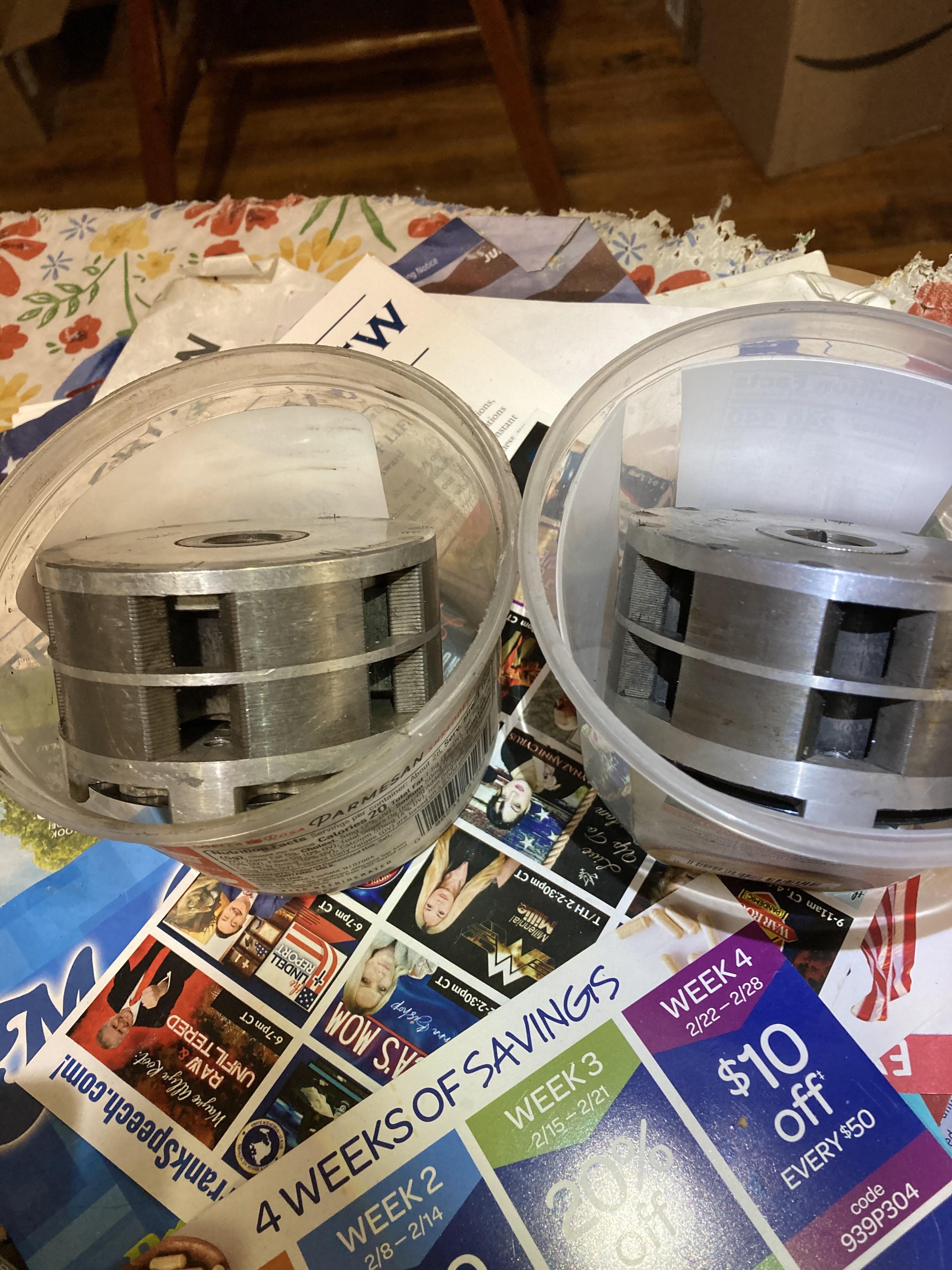
Ok, the rotor marked L (ND) weighs 8.8 kg and the other one (K, Kokusan?) weighs 9.6kg.
When I take a small metal clip and lift, they both take about 2kg of upwards force before separating.

I can only deduce that there is about equal magnetic force in each but the mass must be what would cause a difference in AC output. They are the same in external size.

The lighter weight one, on the left has a 2-3mm void on the bottom of it's magnet, next to the aluminum back plate, whereas the right one's magnet is flush to the back.
This would be the difference in weight.

U166XET.jpg


Another question would be if it is ok to swap rotors with stators or should they be matched? I can see no discernable differences in the stators windings or other physical differences.

I was hoping this post would attract our "Professor Wonderfuls" or doctorate level 3rd grade science teachers to provide some basic magnetism learning.
 
Tom,a factor in strength for the stator/rotors is the clearance between the rotor and stator coils:the closer they are to each other while spinning,the more output.
 
Tom,a factor in strength for the stator/rotors is the clearance between the rotor and stator coils:the closer they are to each other while spinning,the more output.

Good point Bill. The rotors are the same diameter but I will check the stator windings inner diameter.
 
I checked for continuity between the stator wires. And for any shorts to the frame/ground.

Denso stator (low output) "K" stator

brown-yellow 3.9 ohm 3.3 ohm
yellow-pink 4.4 ohm 4.1 ohm
brown-pink 2.7 ohm 2.0 ohm

No shorts.

Do these numbers look good? Is one better than the other?
 
@work we have a good sensor that can magnetism, so I used this to calibrate my own "do it yourself" setup. You need a small piece of mild steel, a thin wire (fish line will do), and an angle meter (Iphone). The rest you can guess I think...
 
@work we have a good sensor that can magnetism, so I used this to calibrate my own "do it yourself" setup. You need a small piece of mild steel, a thin wire (fish line will do), and an angle meter (Iphone). The rest you can guess I think...

Yes, a good suggestion for a more sensitive "instrument" for measuring the relative forces.
I was just speculating if there is any standard or specification for a functional rotor vs. one that has somehow been de-magnetized over these almost 60 years and also equally curious how one might re-magnetize one to a functional level.
 
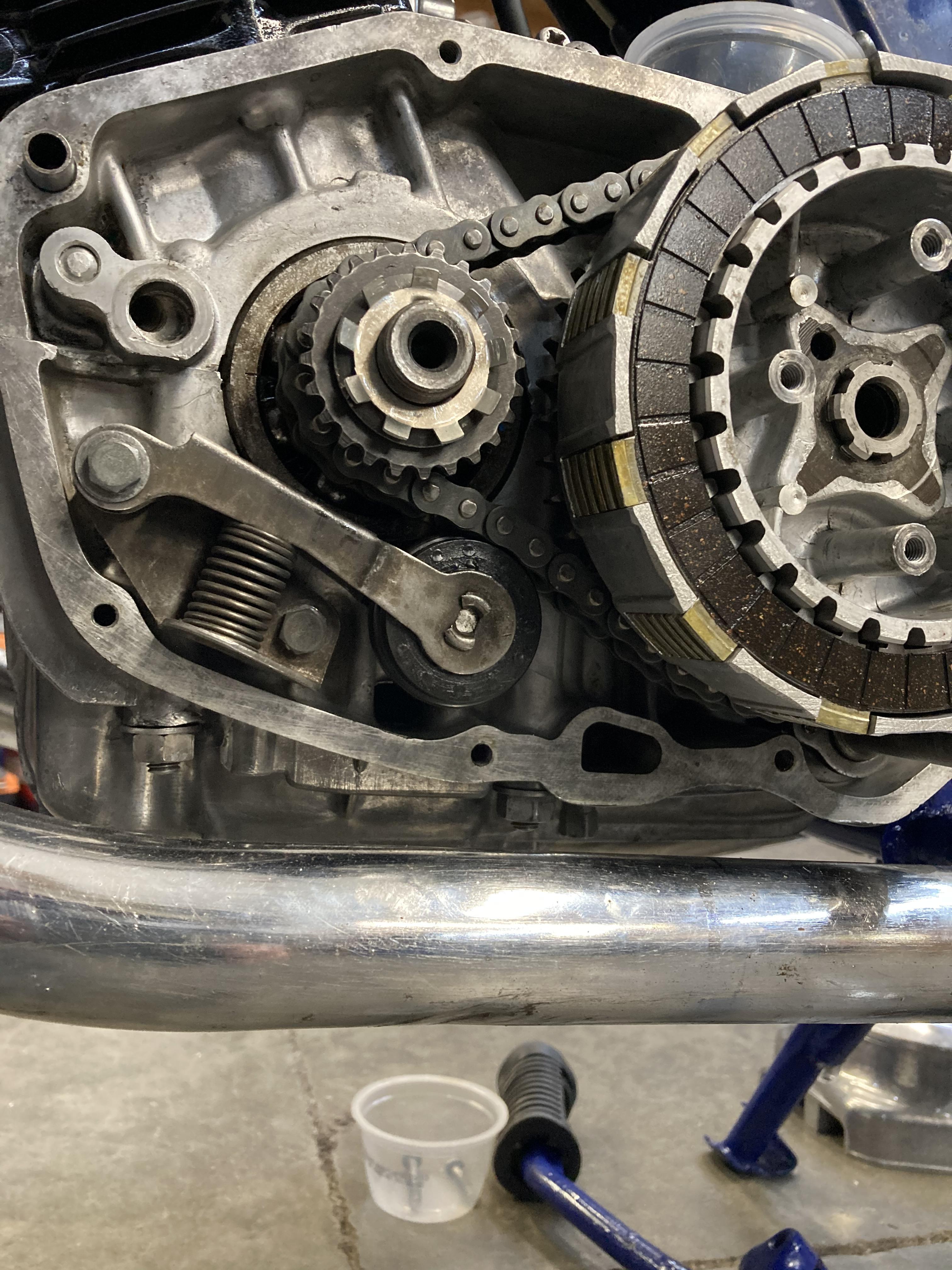
Here is the new RK primary chain on the 305 motor. Still some slack and the sprockets are not new but pretty good shape.

zL10emi.jpg
 
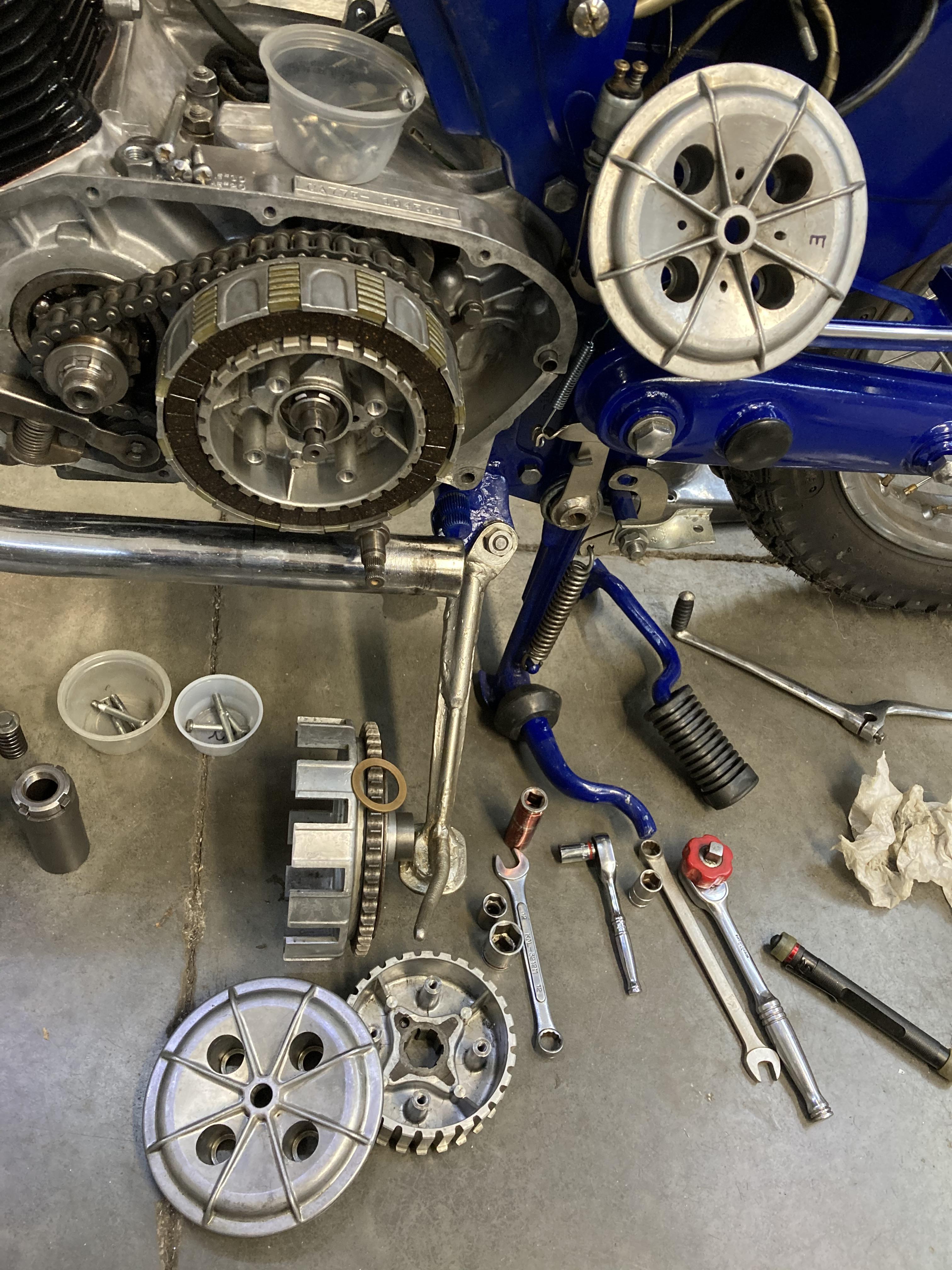
The newer style clutch with additional oil passages and thicker casting at the bases of the fingers seemed like a better choice. The cush drive was also tight as it should be.

DU1KNXW.jpg
 
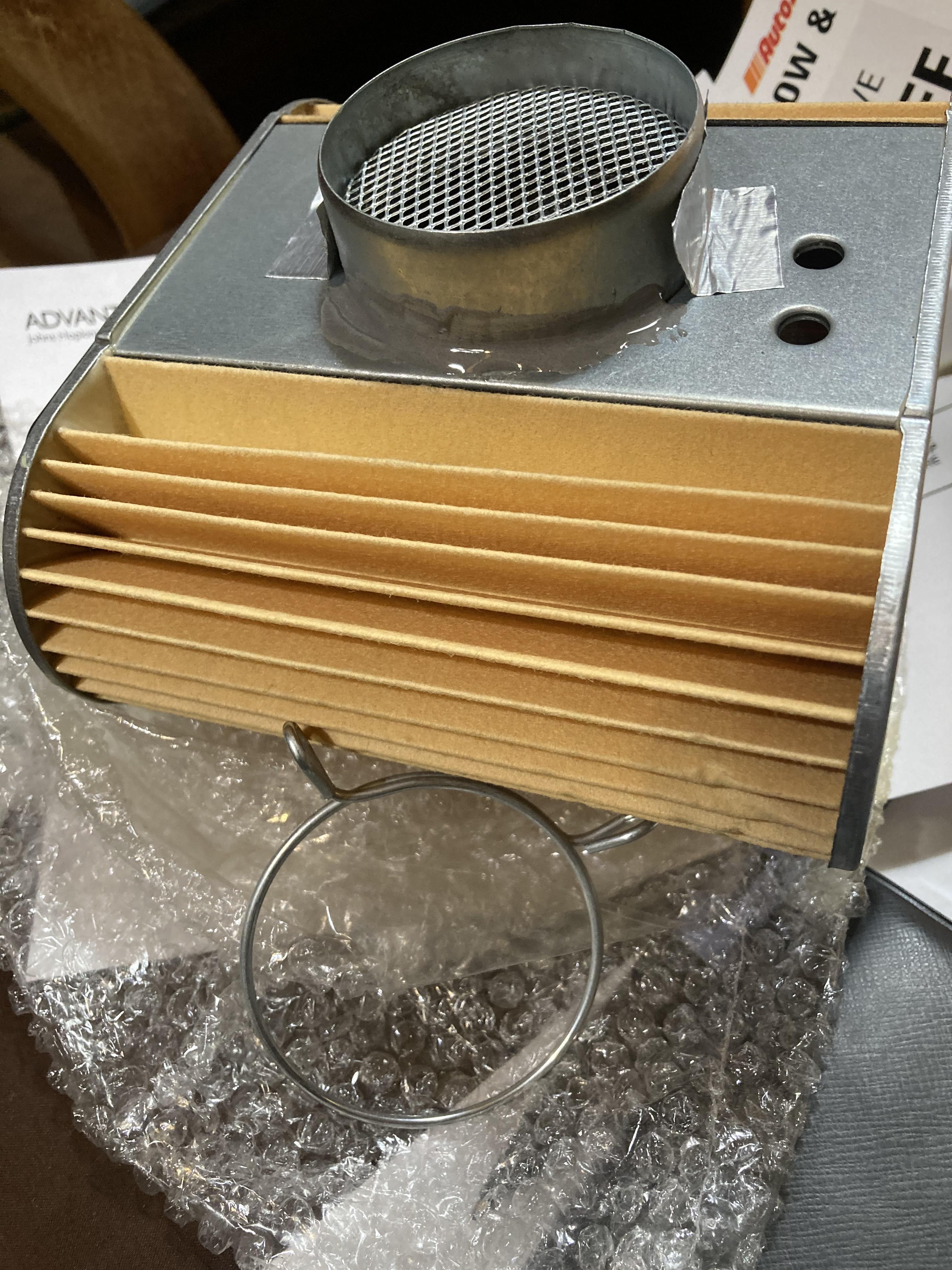
The motor is buttoned up. Now all the little concerns, like the loose collar on a new air filter, JBweld to the rescue.

AqPpZoy.jpg


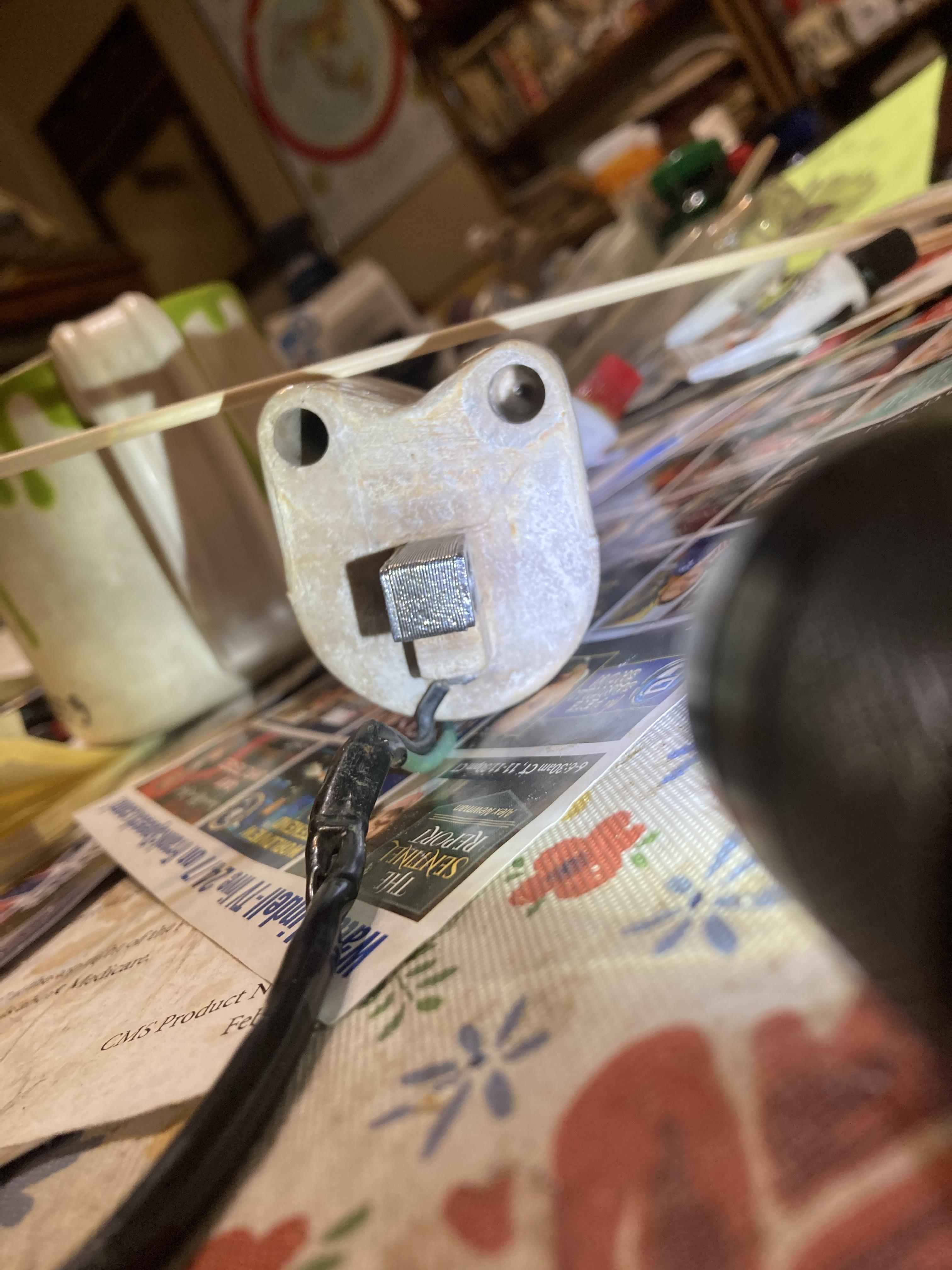
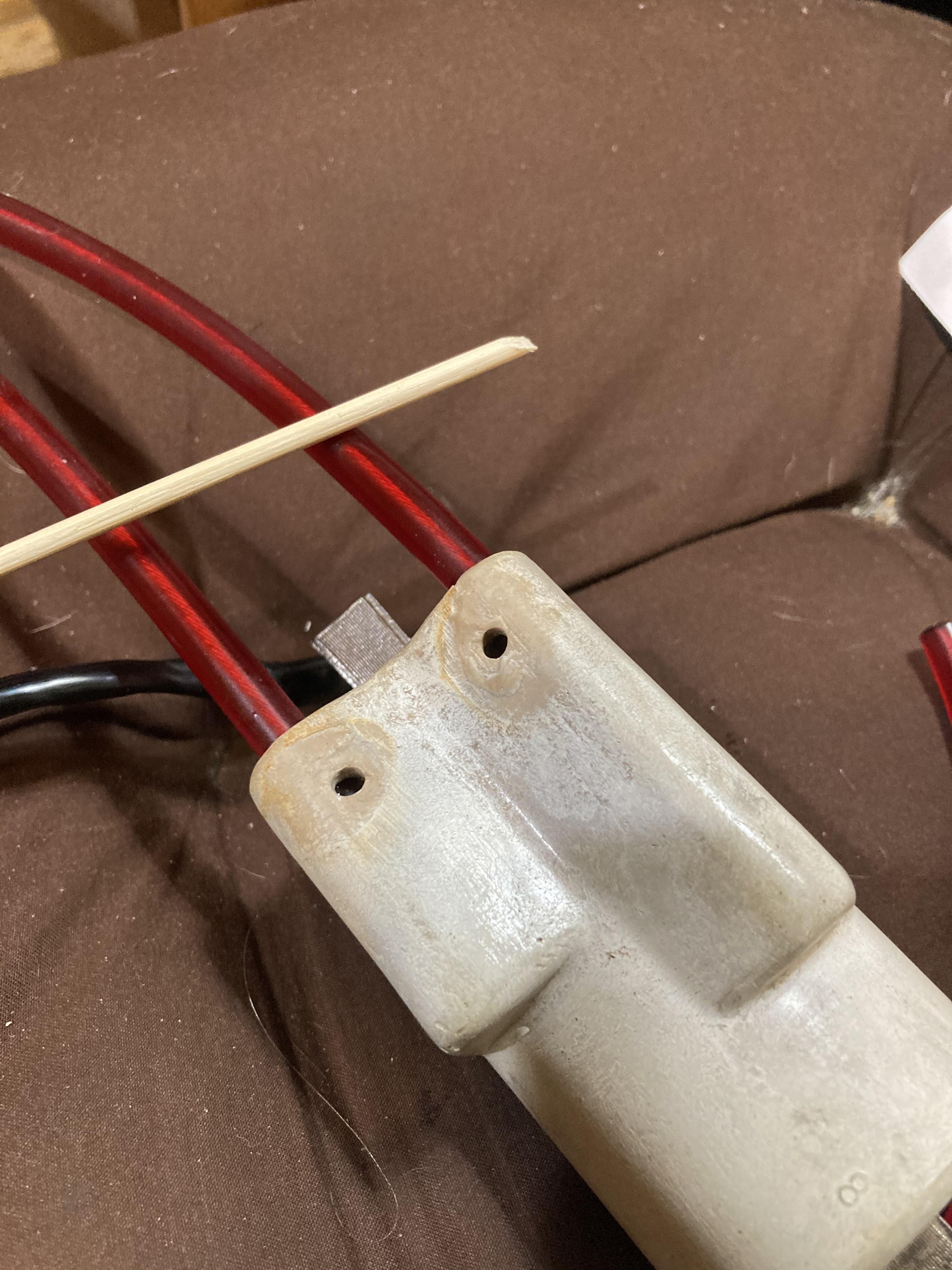
My plug wires needed replacement as they were hard and cracked. Months ago I used LDR's test to see if the coils had decent spark and they did. I dug out the bamboo peg that holds the wires in the case and cleaned the contact spike inside the hole where the wire screws in, similar to the course threaded spike in the spark plug caps but a bit thinner. You can just see the spike in the holes. Hibachi bamboo skewers from the picnic aisle at the grocery store must be what Honda used originally. I just put some Shoe Goo to seal the wires and the stub of the pegs.

gV3WVre.jpg


kKPVIYH.jpg


Finally, the OEM spark plug caps. I don't know why they look blue, they are grey. They come apart and can be cleaned and checked for cracks. No resistors in there but I could use some new rubber seals, I'll have to look for them.

Jjq6l62.jpg


It is getting closer. Just need to finish all the wiring before I put the carb in, it's easier, so more grounds and all the turn signal stuff.

I can't wait to make some big racket.
 
Last edited by a moderator:
LED light makes for some odd color displays at times, it did that on my crankshaft sediment picture when illuminated with my LED flashlight in the garage. Snazzy red plug wires now too. JB Weld is great, except it didn't stick to both the (nylon?) throttle pipe or the piece of PVC pipe connector I cut and trimmed to add to the throttle tube in an effort to make a quick throttle a few days ago. Sat overnight and was nice and hard so it seemed to be cured, as soon as I started trimming the height of the PVC ring I added to the cable area of the throttle pipe the JB broke loose.
 
LED light makes for some odd color displays at times, it did that on my crankshaft sediment picture when illuminated with my LED flashlight in the garage. Snazzy red plug wires now too. JB Weld is great, except it didn't stick to both the (nylon?) throttle pipe or the piece of PVC pipe connector I cut and trimmed to add to the throttle tube in an effort to make a quick throttle a few days ago. Sat overnight and was nice and hard so it seemed to be cured, as soon as I started trimming the height of the PVC ring I added to the cable area of the throttle pipe the JB broke loose.

That was it, my LED fill light.

I don't think Poly Vinyl Chloride can be solvent welded to nylon with PVC cement. If you could find another nylon ring, perhaps in the threaded plumbing plastic aisle, you could heat weld (melt) them together.
That HVAC aluminum foil tape is pretty handy stuff too but not sure if it would work in your situation. You'll have to show a pic of this quick throttle idea.
 
You'll have to show a pic of this quick throttle idea.

I just assumed JB Weld would stick to practically anything. To increase the rate of cable pull for the same amount of throttle pipe turn, you just increase the diameter of the area where the cable wraps around the pipe. I'm using a push/pull throttle and have ground off the "close" side cable connection point, dremeled out the inside of the housing to allow for larger diameter at the cable wrap-around area and sliced off a piece of PVC ring from a larger threaded coupler, then used the JB to glue it around the original wrap-around area. It just didn't stick. I'm sure I can come up with something else to increase the diameter of the cable pull area and it's not important, I've run stock throttles on all my bikes over the years but thought if I could make this one a little quicker it would be helpful (lesser handful to grab when leaving the starting line)
 
The motor is buttoned up. Now all the little concerns, like the loose collar on a new air filter, JBweld to the rescue.

My plug wires needed replacement as they were hard and cracked. Months ago I used LDR's test to see if the coils had decent spark and they did. I dug out the bamboo peg that holds the wires in the case and cleaned the contact spike inside the hole where the wire screws in, similar to the course threaded spike in the spark plug caps but a bit thinner. You can just see the spike in the holes. Hibachi bamboo skewers from the picnic aisle at the grocery store must be what Honda used originally. I just put some Shoe Goo to seal the wires and the stub of the pegs.

Finally, the OEM spark plug caps. I don't know why they look blue, they are grey. They come apart and can be cleaned and checked for cracks. No resistors in there but I could use some new rubber seals, I'll have to look for them.

It is getting closer. Just need to finish all the wiring before I put the carb in, it's easier, so more grounds and all the turn signal stuff.

I can't wait to make some big racket.

Oh Yeah Tom (y) You're getting into the 'home stretch' ;)
 
Last edited by a moderator:
I just assumed JB Weld would stick to practically anything. To increase the rate of cable pull for the same amount of throttle pipe turn, you just increase the diameter of the area where the cable wraps around the pipe. I'm using a push/pull throttle and have ground off the "close" side cable connection point, dremeled out the inside of the housing to allow for larger diameter at the cable wrap-around area and sliced off a piece of PVC ring from a larger threaded coupler, then used the JB to glue it around the original wrap-around area. It just didn't stick. I'm sure I can come up with something else to increase the diameter of the cable pull area and it's not important, I've run stock throttles on all my bikes over the years but thought if I could make this one a little quicker it would be helpful (lesser handful to grab when leaving the starting line)

Gottcha. Sort of a "gunner gasser" as was talked about in another build.
 
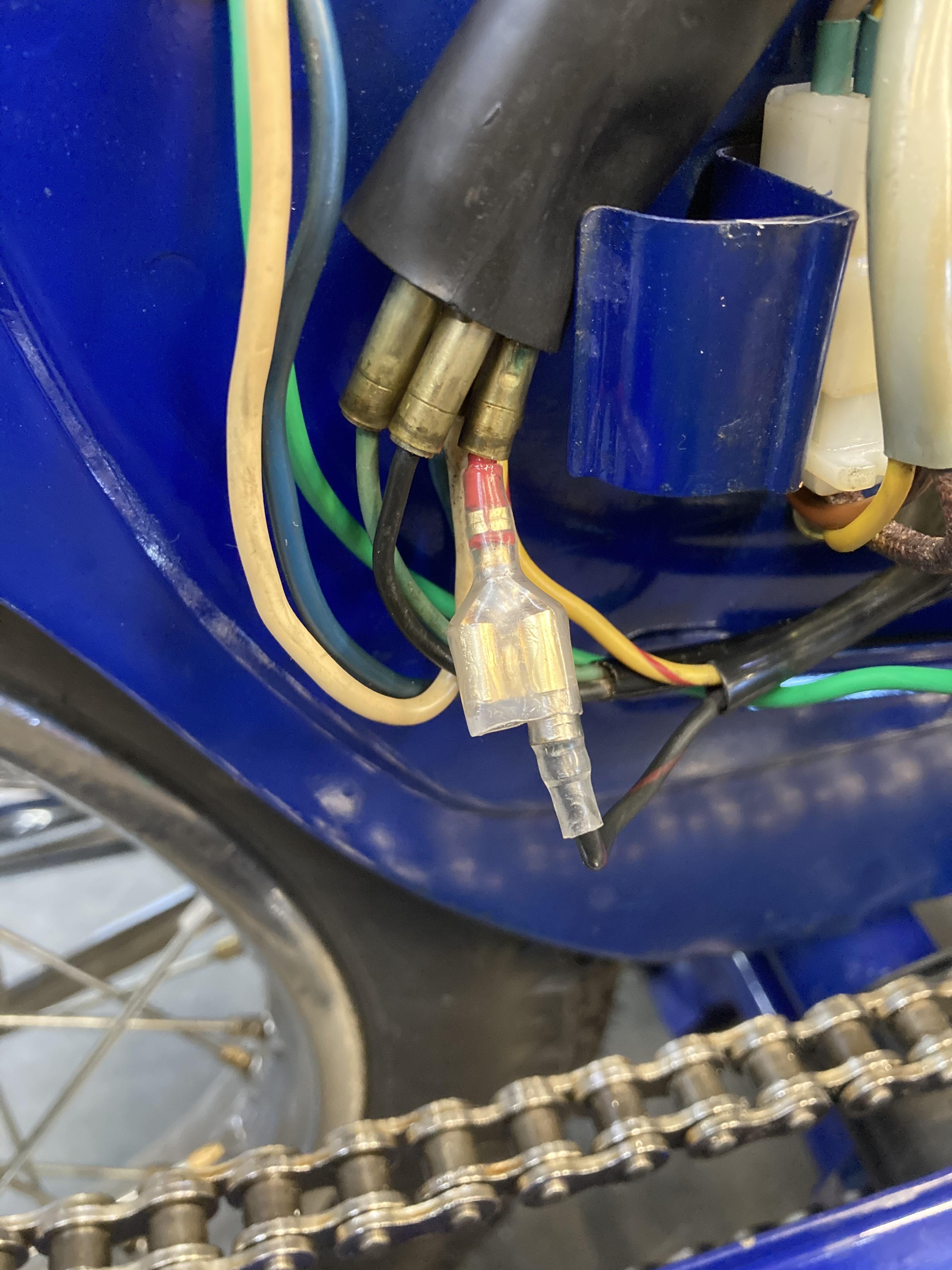
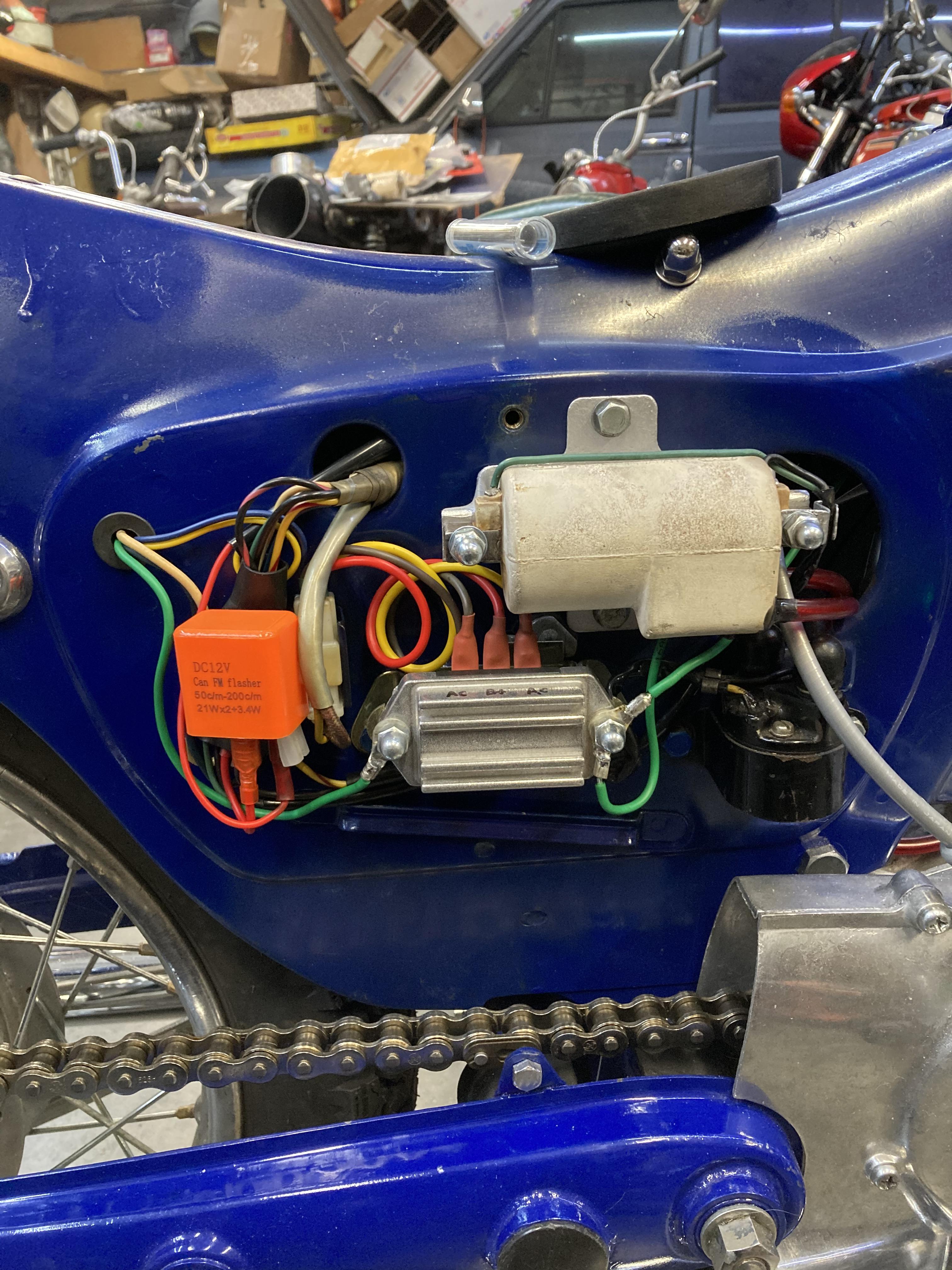
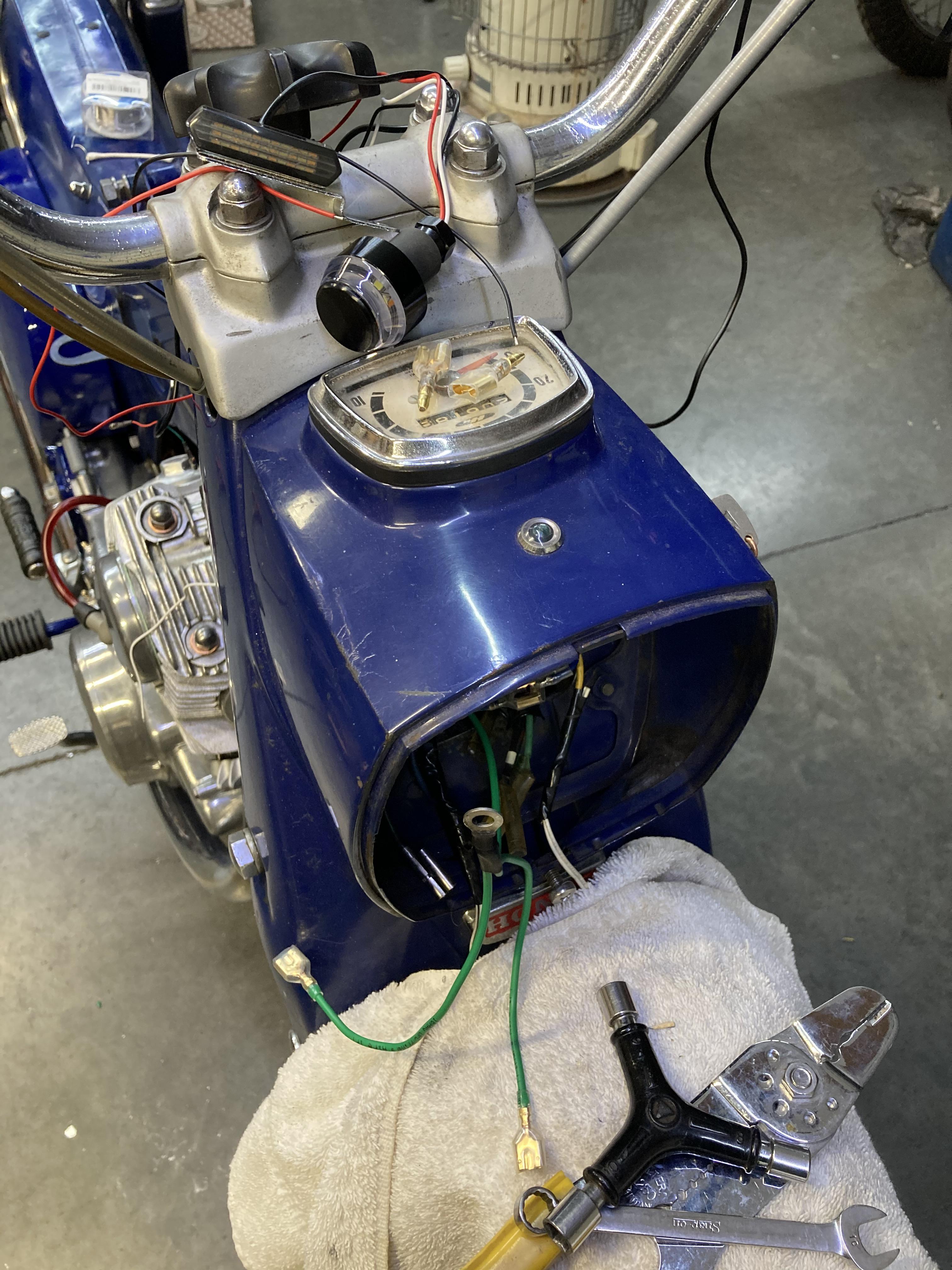
These older bikes don't have much in terms of electrics anyway. There was no good place to get power for my winker relay so I added this duplex on the solenoid hot wire. I just didn't want to cut on the original wiring harness and they had no provision on the US bikes for adding turn signals in 1964.

gxhqvb0.jpg
 
These older bikes don't have much in terms of electrics anyway. There was no good place to get power for my winker relay so I added this duplex on the solenoid hot wire. I just didn't want to cut on the original wiring harness and they had no provision on the US bikes for adding turn signals in 1964.

Hello Tom,I see the hot wire connection with your installed 2 into 1 red wire now to power your turn signals on your quality CA77 build.
Will the turn signals have power even though the key is turned off ?
 
Last edited by a moderator:
Hello Tom,I see the hot wire connection with your installed 2 into 1 red wire now to power your turn signals on your quality CA77 build.
Will the turn signals have power even though the key is turned off ?

Thanks Bill for the kind words. With the key off there is no power to the solenoid, so no.
 
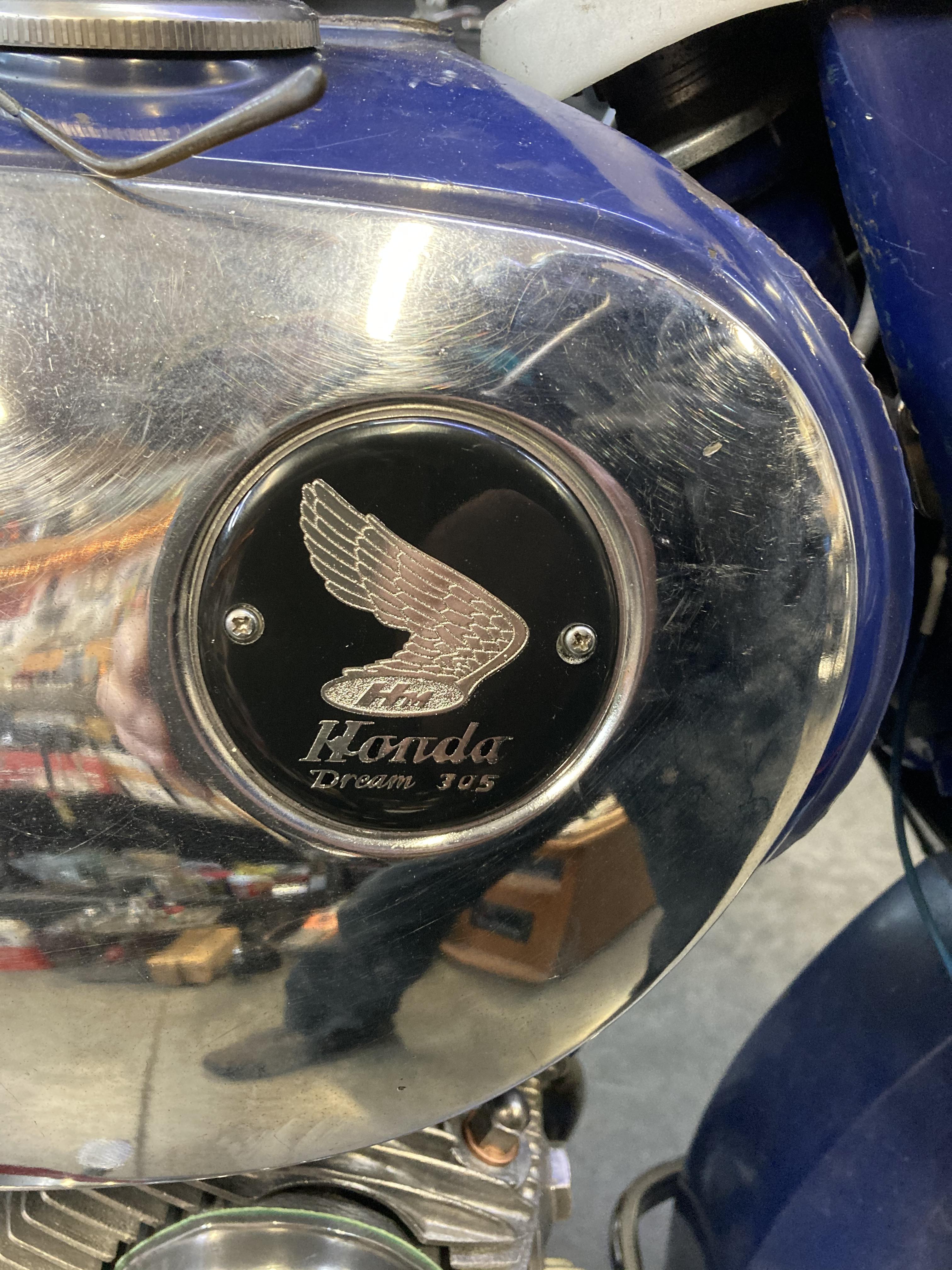
Running turn signal wires and adding a little bling. Had to go with 18 gauge as the 16 I had wouldn't fit in the 1/4" sleeve I got. I had put off doing the rear wires and so got to spend at least an hour snaking them through the fender channels with the rear wheel in place. I took a few breaks and painted my oil filter cover and put on the new tank badges. These badges aren't exactly stock but they look great to me and are well made, even having a brass base plate. The originals only say 'Honda 300' and are more convex but mine were very brittle and full of cracks.

kOonxYH.jpg


The three extra redundant grounds go to the tail light, the headlight nacelle and to the negative battery strap mount on the motor mount.

2QMNVd8.jpg


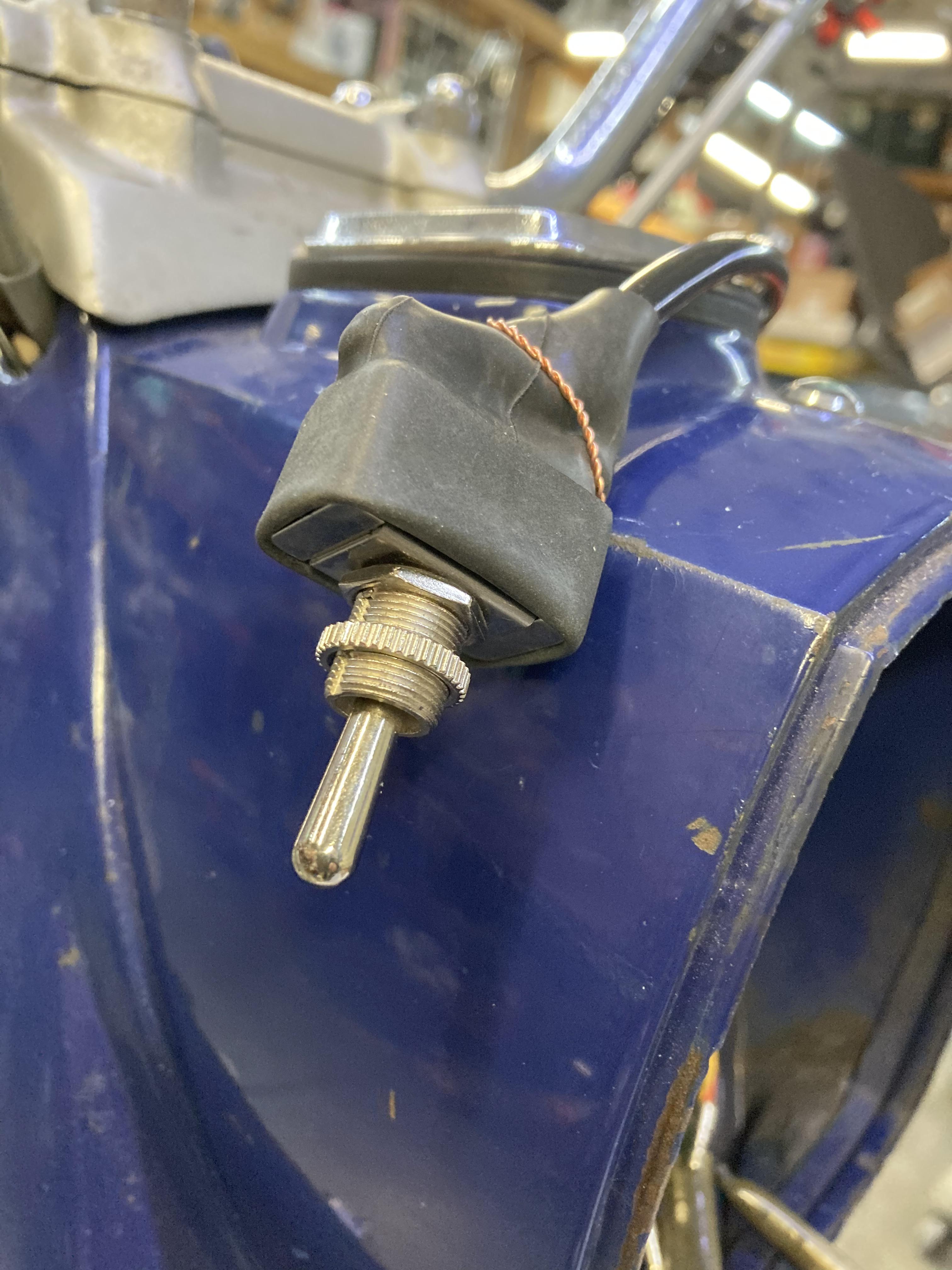
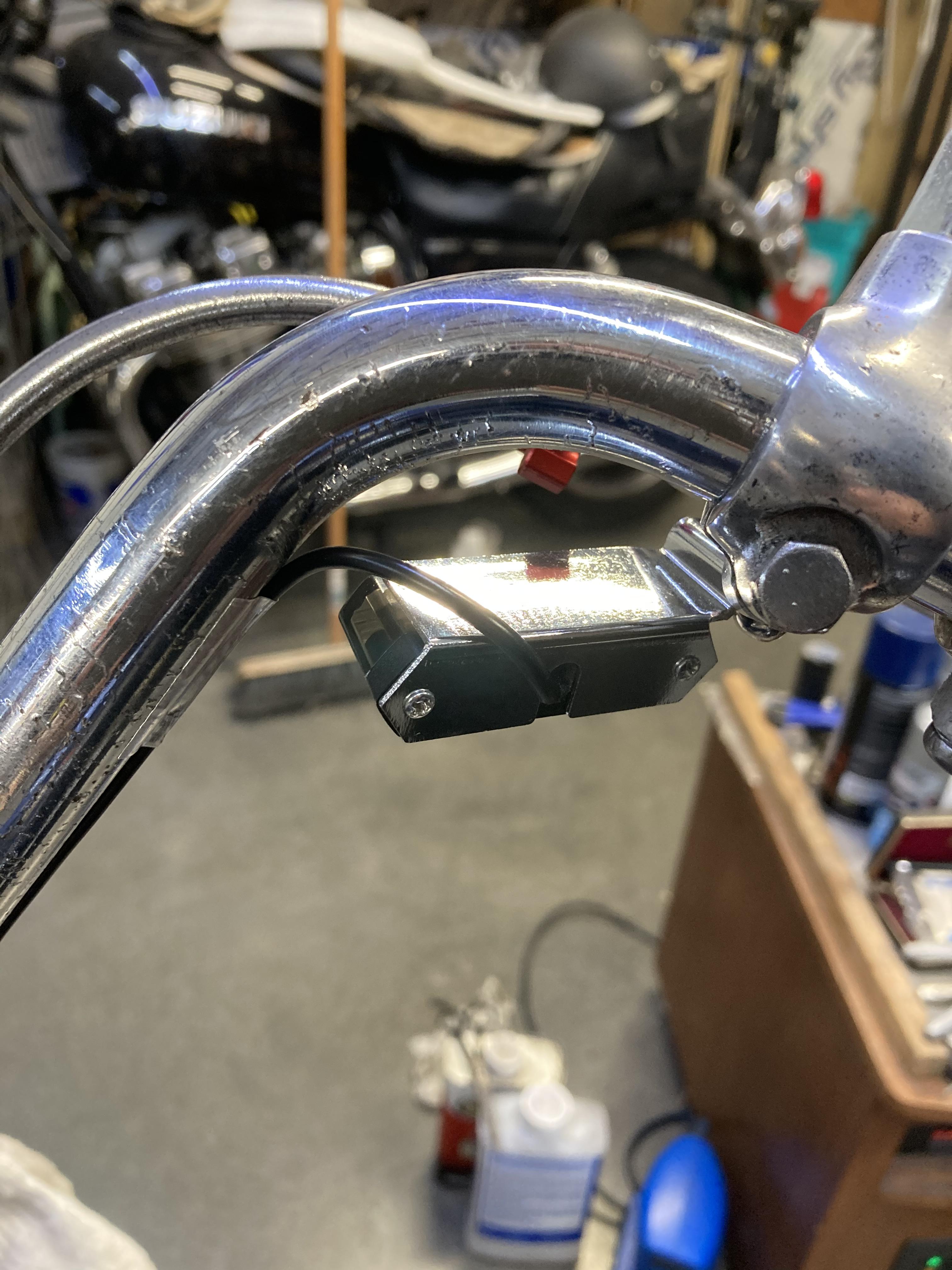
The winker switch must be on the left for me and so it gets the industrial retro-resto add on. I did this on Charles' Dream 2 years ago and it's great, plus it doesn't change the original control switches but it will get a surface mount for the wiring sleeve.


XVHWax6.jpg


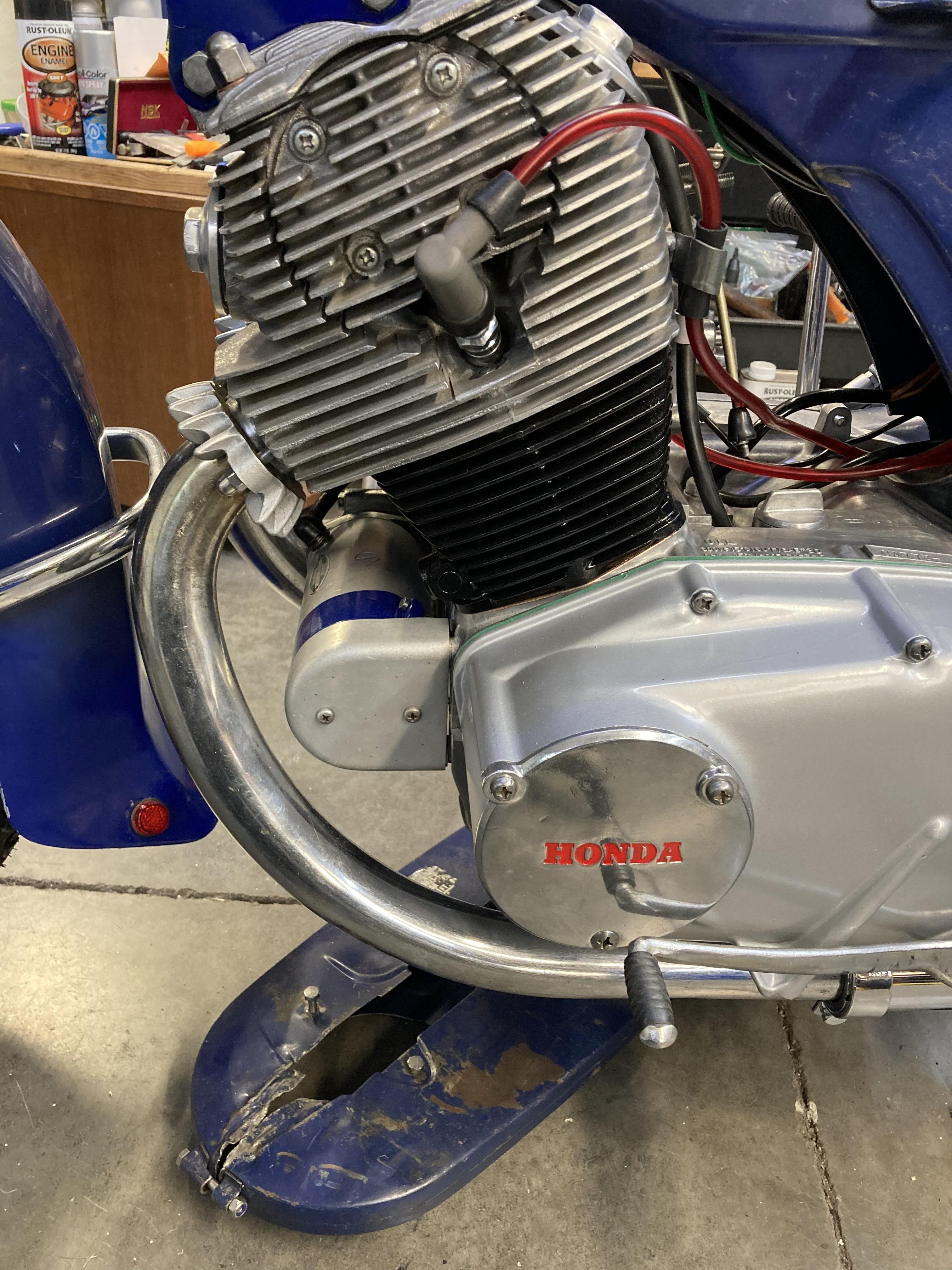
Seems there's always one more nasty to do and the chain guard is it, pretty bented and danged. The PO actually folded some of the overlapping edges and hammered them flat to force it together with the same precision he used when he painted the side covers baby blue WITH A BRUSH!

KVIG8dX.jpg


Only one more furnace blower to put back together and then I can keep 'Dreaming', at least until the kitchen oven igniter shows up. Even if I had idle hands, the Devil seems to spend a lot of time down the road from here, in the place they call the Swamp. Appalachian high ground for me.
 
Nice tidy wiring on the coil/solenoid/rec/reg area and a simple but effective add-on turn signal switch too. Shame it doesn't have a rubber cover to keep the elements out, but we typically try to avoid inclement weather anyway.

Man, POs do some of the worst work... that chain case looks like it got shoved into a meat grinder. Wonder if the bike threw the chain prior and that was the cause.

The kitchen gas stove top (in an island with a motor-driven vertical hideaway vent fan, glass top glued down in place) went crazy at our house a few years ago, continuously sparking at one burner even after the burner was going and the knob was turned past the igniter area, and even after all burners were shut off. I disconnected the igniter at that one burner thinking that would stop it but no, it jumped to a different burner and it all continued until I just unplugged the power supply to the igniter. Now we light the burners with a grill lighter, cheaper and way easier than trying to get inside that island jammed up against the exhaust fan duct that goes down under the slab and comes up outside the kitchen wall. Not something my lower back will allow anyway, worse than a faucet replacement. Good luck with your igniter replacement.
 
Nice tidy wiring on the coil/solenoid/rec/reg area and a simple but effective add-on turn signal switch too. Shame it doesn't have a rubber cover to keep the elements out, but we typically try to avoid inclement weather anyway.

Man, POs do some of the worst work... that chain case looks like it got shoved into a meat grinder. Wonder if the bike threw the chain prior and that was the cause.

The kitchen gas stove top (in an island with a motor-driven vertical hideaway vent fan, glass top glued down in place) went crazy at our house a few years ago, continuously sparking at one burner even after the burner was going and the knob was turned past the igniter area, and even after all burners were shut off. I disconnected the igniter at that one burner thinking that would stop it but no, it jumped to a different burner and it all continued until I just unplugged the power supply to the igniter. Now we light the burners with a grill lighter, cheaper and way easier than trying to get inside that island jammed up against the exhaust fan duct that goes down under the slab and comes up outside the kitchen wall. Not something my lower back will allow anyway, worse than a faucet replacement. Good luck with your igniter replacement.


Thanks. I was planning on tailoring a cover for the connections on the back from inner tube rubber and have a boot for the toggle but like the naked look too.
Hard to say on the chainguard but you're right that would be the most likely cause.


Unlike stove top burners, the oven has a pre heat threshold on the gas valve that the igniter supplies that permission to open.

A thermo couple, was the term I was thinking. Like the old standing pilots on waterheaters.
 
Last edited:
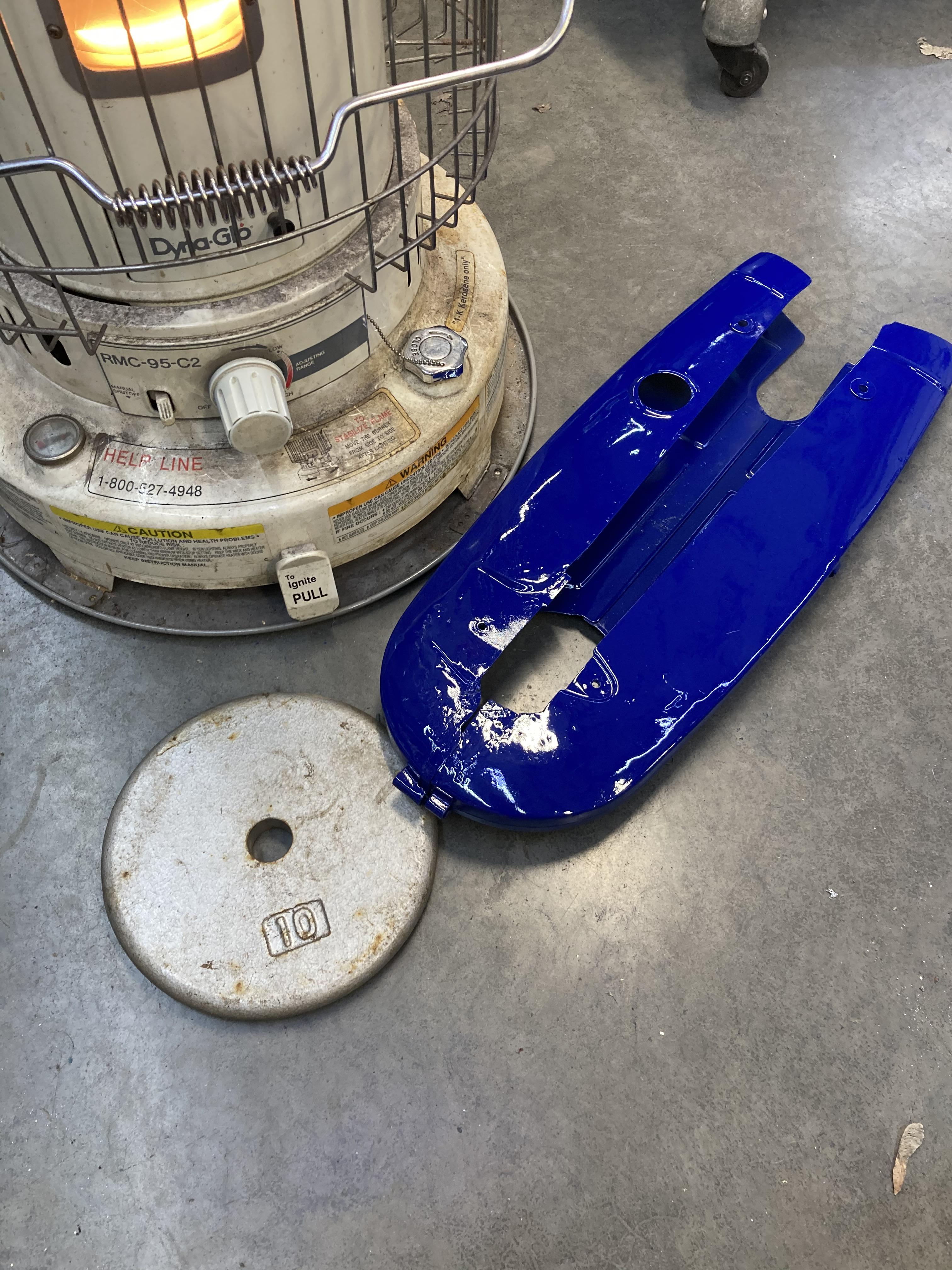
The crumpled chain guard got hammered out as best I could using this cast barbell weight as a dolly. The kerosene heater did the curing on the VHT caliper paint. I could only qualify for a participation trophy for my paint and sheet metal skills but this old Dream is a lot better than it was.

hwktwsi.jpg
 
The crumpled chain guard got hammered out as best I could using this cast barbell weight as a dolly. The kerosene heater did the curing on the VHT caliper paint. I could only qualify for a participation trophy for my paint and sheet metal skills but this old Dream is a lot better than it was.

You made lemonade from the lemons you got and it turned out pretty good. The best part is (I think) it's the backside of the chain case, won't be as visible. Besides, the glare off that super-shiny blue will dazzle them into missing any minor points of character (or flaws, in shorter words)
 
When LDR said, "you can't have too many grounds", I may have gotten carried away but this 1964 bike had none and no wiring for any turn signals.

WSrqnsB.jpg


I did make a boot for my turn signal switch. Genuine Japanese Inoue bicycle inner tube.

Yipw8P7.jpg


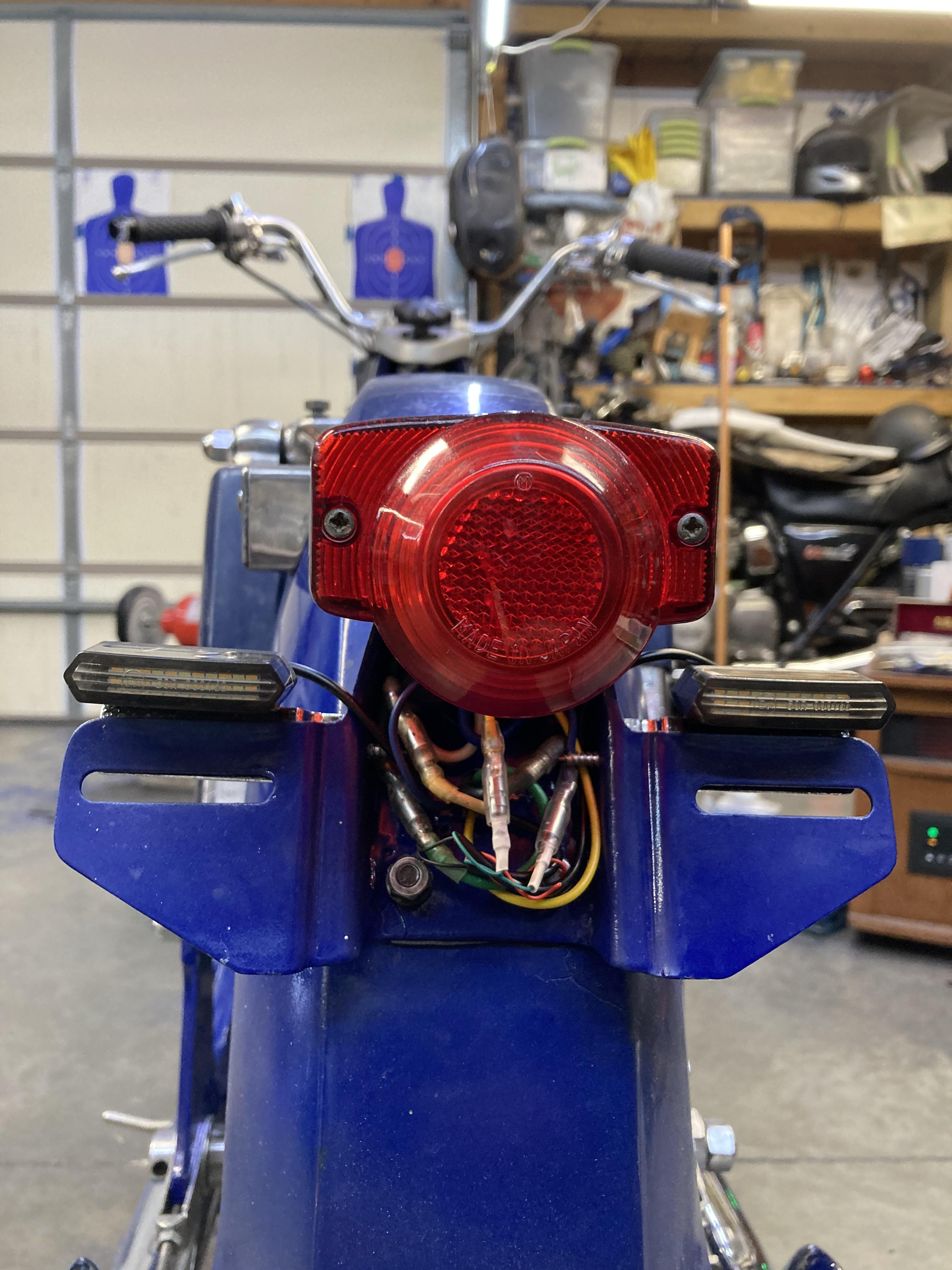
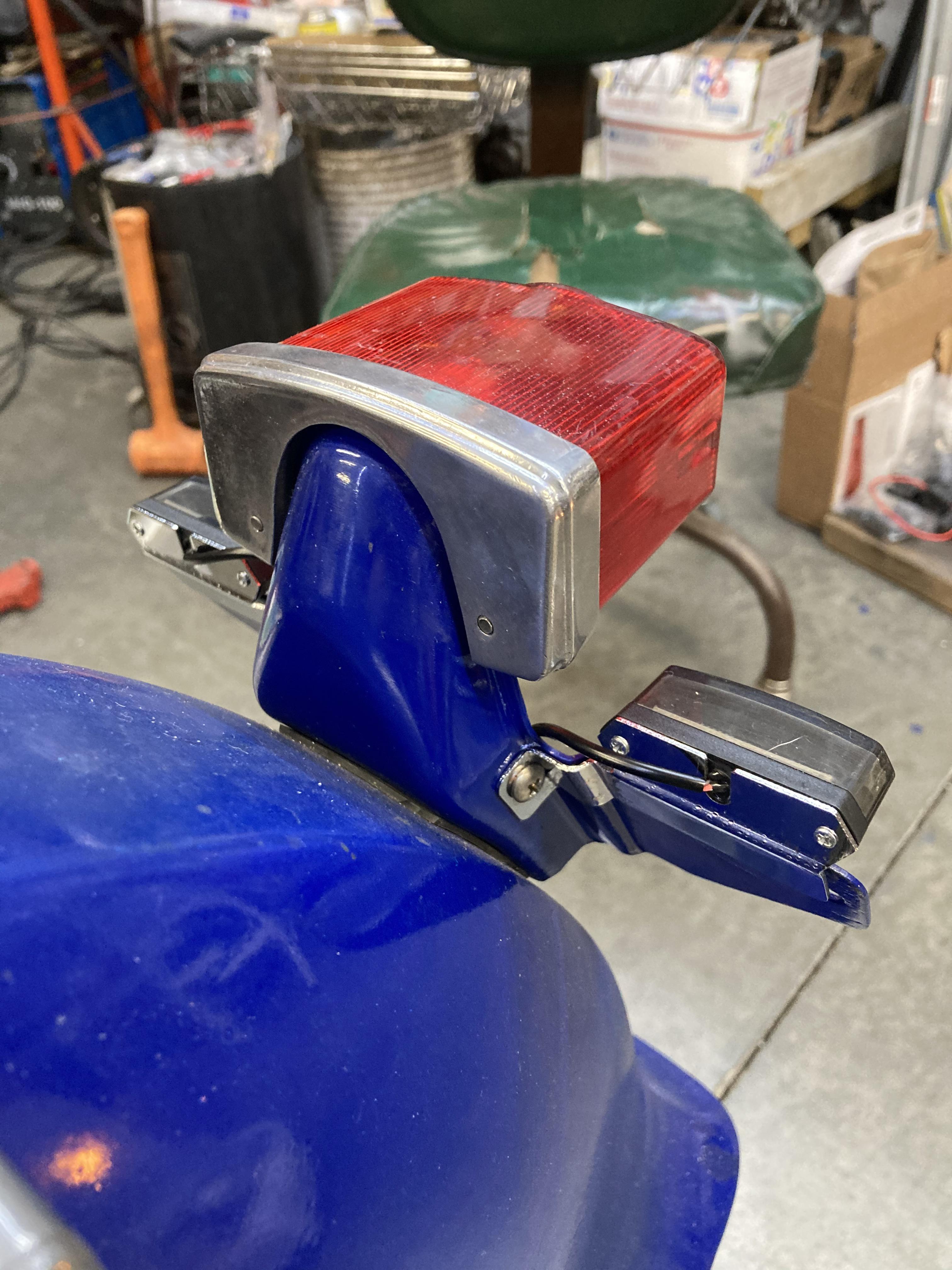
I liked the minimal look of these little sequential lamps. The squarishness kind of goes with the Dream styling. I wasn't sure what would happen with a flasher unit but it works.

QfqMk8d.jpg


pDSBIFL.jpg


o5UEHMb.jpg


With the bar end lights, that are also wired for white running lights, there are 3 turn signals on each side.

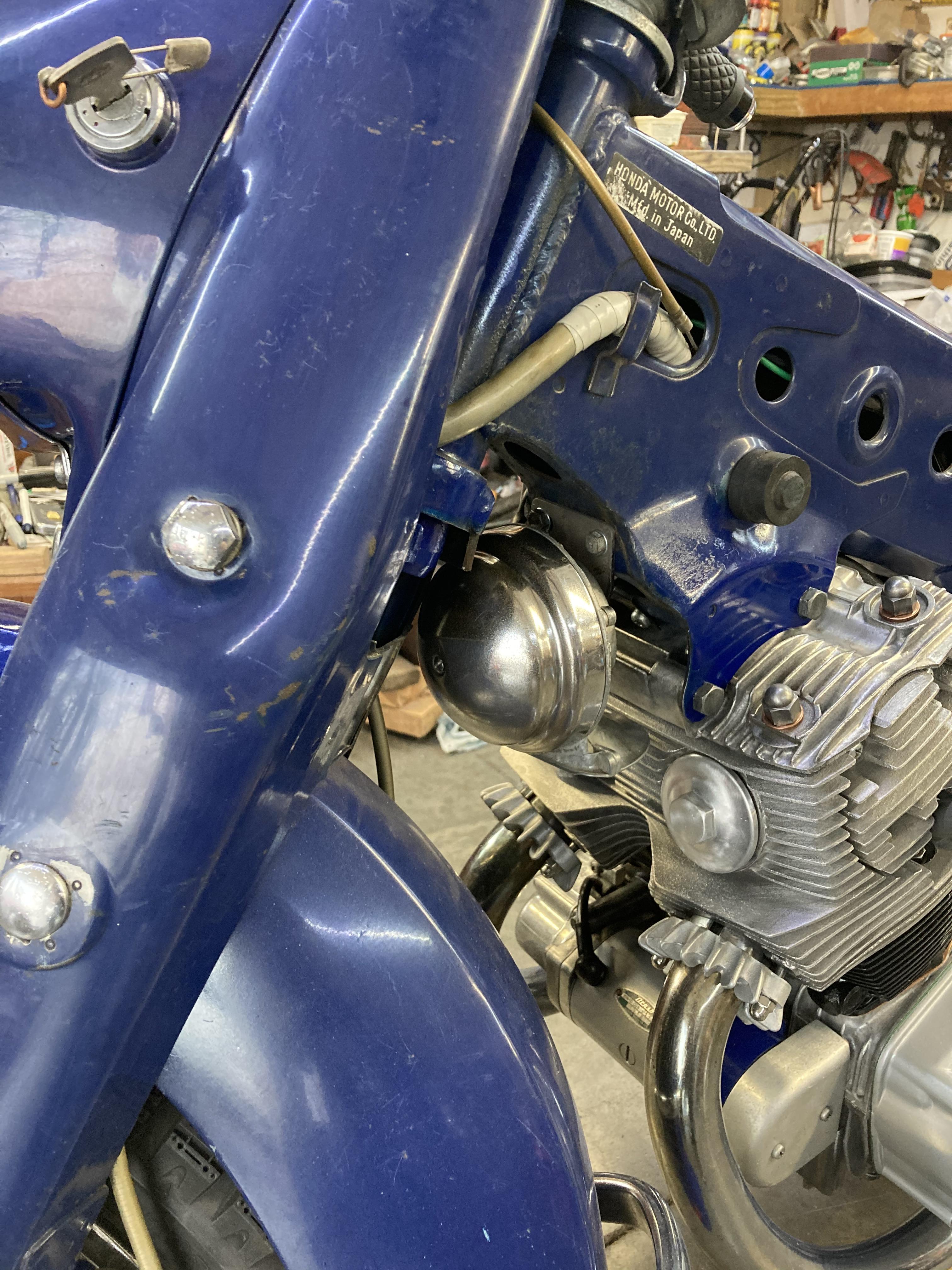
I also decided to ditch the Honda horn for one of the made in England dual horns that are branded Clear Hooters. I used the lower tone unit and it's pretty loud.

Gnh9cMr.jpg


Glad all these put it off type jobs are done. Soon to get carb and points in, then time to send oil to cams.
 
Last edited by a moderator:
Nice clean job of mounting the signals, they're definitely low profile. My only concern might be for the rear mountings, I'm hoping vibration from the 360° crankshaft doesn't cause the little tabs on them to break right near the one mounting screw. If you had included loops in the brackets from under the signals on each side that the tag bolts could go through it would give them support at both ends.
 
I just bent the brackets that came with. I could bend some stepped washers I suppose. The vibration is something there, that's probably why so many have cracks in the fender where the tail light is welded on. Mine was removed, cracks welded then rubber mounted with bolts.

Other good news, the chain guard doesn't rub! :biggrin:
 
Tip: If you pour oil into tappet holes on a fresh rebuild, make sure to replace covers on the exhaust tappets first (sloper type motor). Handy to have Charles around to say, "Woah, whoa.....". Also handy to have that extra starter only position on these old CA key switches for extended starter cranking. I can see oil dripping from the bottoms of the intake rocker shafts so I think I'm oiling ok.

Got the carb on but need to check for bowl leaks and fuel level. My "no swell float bowl gaskets", round bowl version, from 2Fastmoto/Motomentum arrived too late or I was impatient to get them in but may have to change it anyway to adjust level.

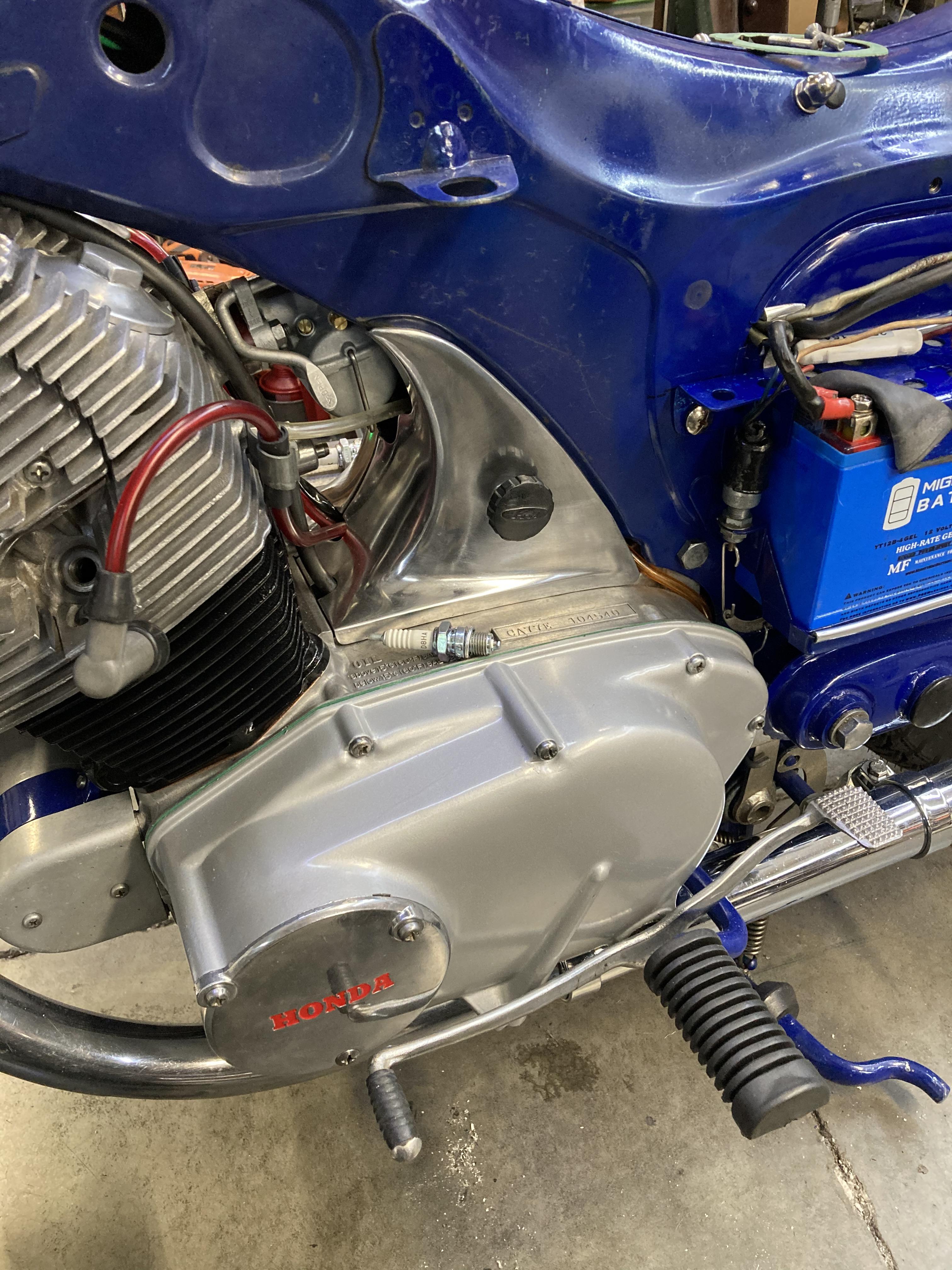
I went full shiny on the curvaceous carb covers instead of silver paint.

G99cAdh.jpg


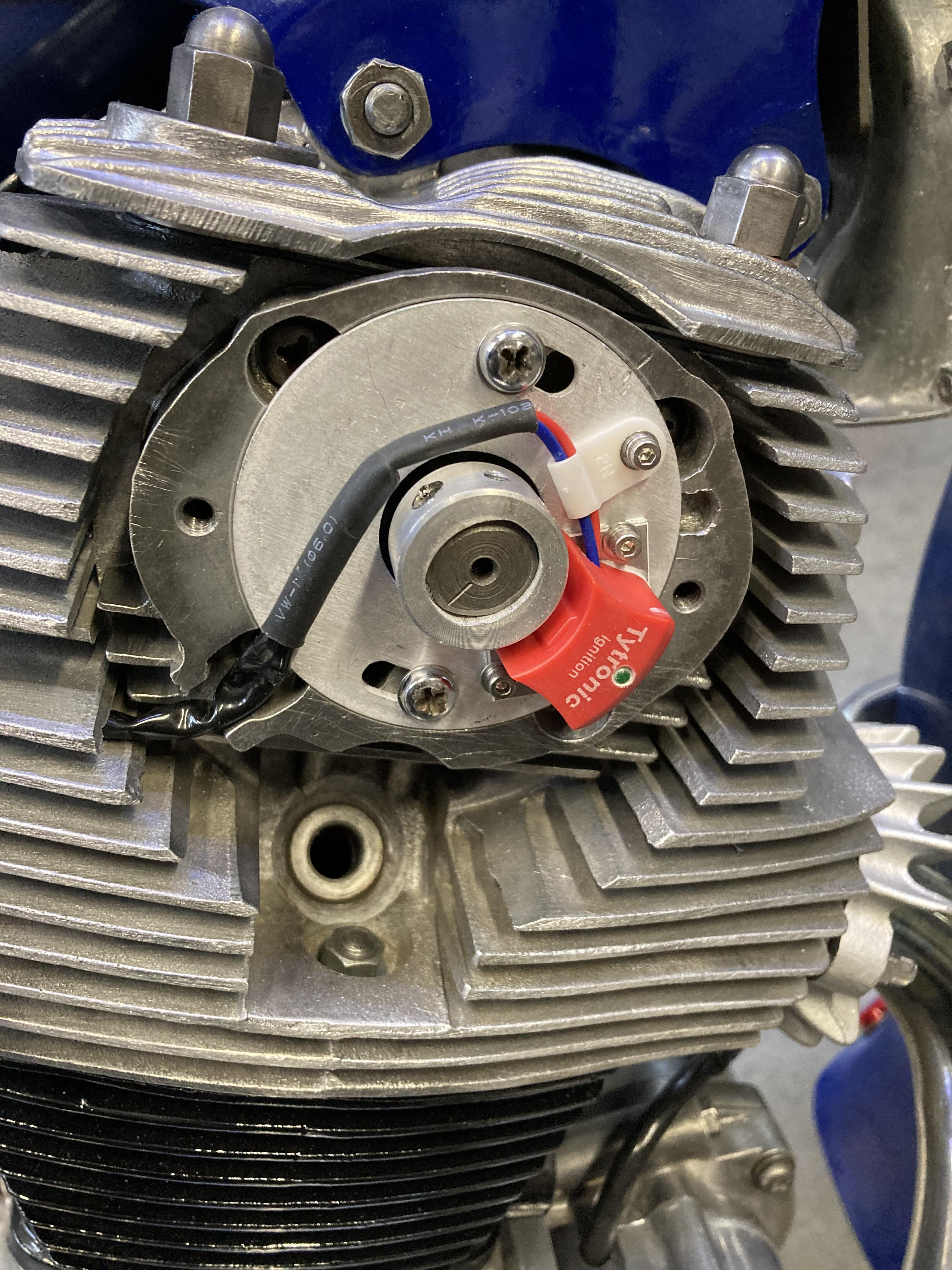
The Tytronic ignition went in pretty easy. On a 360 crank, you can't really get anything off or backwards on this. There are 4 magnets (2 for on and 2 for off) that trigger the coil providing 2 firings per cam revolution. I did have to solder up one more extra wire to bring switched power to the E ignition. Static timing is easy with the LED built in light. I may have to lengthen the adjusting slots once it's running and can be dynamically timed. I bought this one from Niche cycle for $115 a year ago, IIRC.

qYdWSyi.jpg


Almost ready now, after 2 and a half years, to make some music.
 
I like the shiny cover, gives it another touch of bling. So the Tytronic didn't come with a grommet for the wires out of the cover?
 
I like the shiny cover, gives it another touch of bling. So the Tytronic didn't come with a grommet for the wires out of the cover?

Not this one, at least it had sheathing. I should make something for it though.

Thanks, can't wait to get it into the sunshine to see the patina vs. bling mix, kind of shine and swine.
 
It kickstarted and rumbled like a good Dream should, sounds great. Reminds me of my '64 CA72 with shotgun mufflers on it back in '69. I tried to copy it to upload elsewhere but FB doesn't allow any right-click attempts on videos, no menu at all. If he wants to share it with everyone he'll have to upload it to YT or Google photos.
 
I put it in my usual Imgur collection. I've seen short Imgur vids here, but couldn't figure out how to do that.

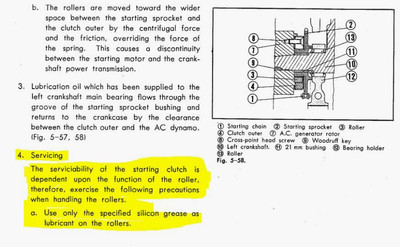
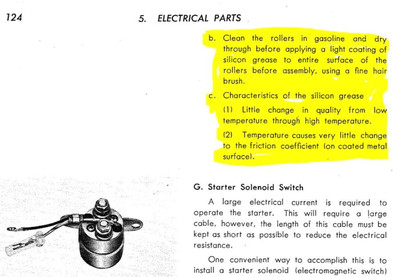
I lightly greased the springs, caps and rollers in the starter clutch. I wonder if that was not a good idea. I'm sure I'll find out.

I'll need to put one of the seats around here on it soon, I can't wait to hit the road.
 
I put it in my usual Imgur collection. I've seen short Imgur vids here, but couldn't figure out how to do that.

I lightly greased the springs, caps and rollers in the starter clutch. I wonder if that was not a good idea. I'm sure I'll find out.

I'll need to put one of the seats around here on it soon, I can't wait to hit the road.

IIRC the starter clutch and alternator are in a dry environment, so then the grease won't get washed away and mixed into the motor oil once a few heat cycles happen so you might end up taking it apart and cleaning it up some. I don't have any experience with the 305 engine so others can confirm or refute.
 
Thanks Tom. That was it on the starter clutch. I just cleaned out the grease and gave a bit of oil. I knew it was a dry area there so I thought something should be there but shouldn't have used wheel bearing grease.

I'll try to remember what I did then on the first vid. I'm hopeless. :sad:
 
IIRC the starter clutch and alternator are in a dry environment, so then the grease won't get washed away and mixed into the motor oil once a few heat cycles happen so you might end up taking it apart and cleaning it up some. I don't have any experience with the 305 engine so others can confirm or refute.

The 350 FSM calls for silicone grease. I used plumber's grease from Ace Hardware on my CL350 sprag clutch. Just recently, I used Dielectric grease, which is also silicone grease, for my SL350. This got into a bit of a discussion when I posted it "back in the day" on the old forum.


The 350 FSM calls for silicone grease. I used plumber's grease from Ace Hardware on my CL350 sprag clutch. Just recently, I used Dielectric grease, which is also silicone grease, for my SL350. This got into a bit of a discussion when I posted it "back in the day" on the old forum.


Dielectric grease sounds like a great idea, very light bodied.
 
Back
Top Bottom