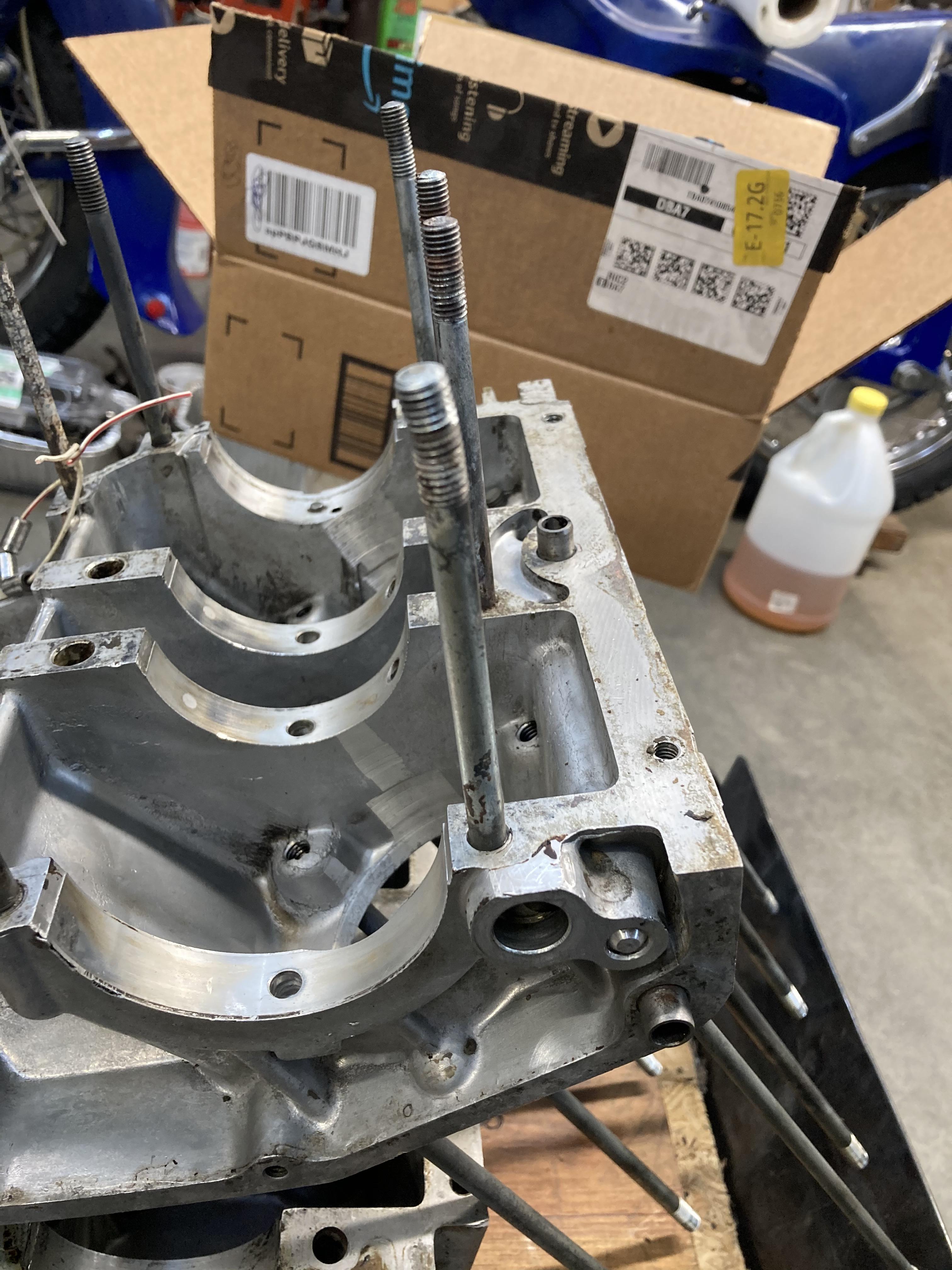
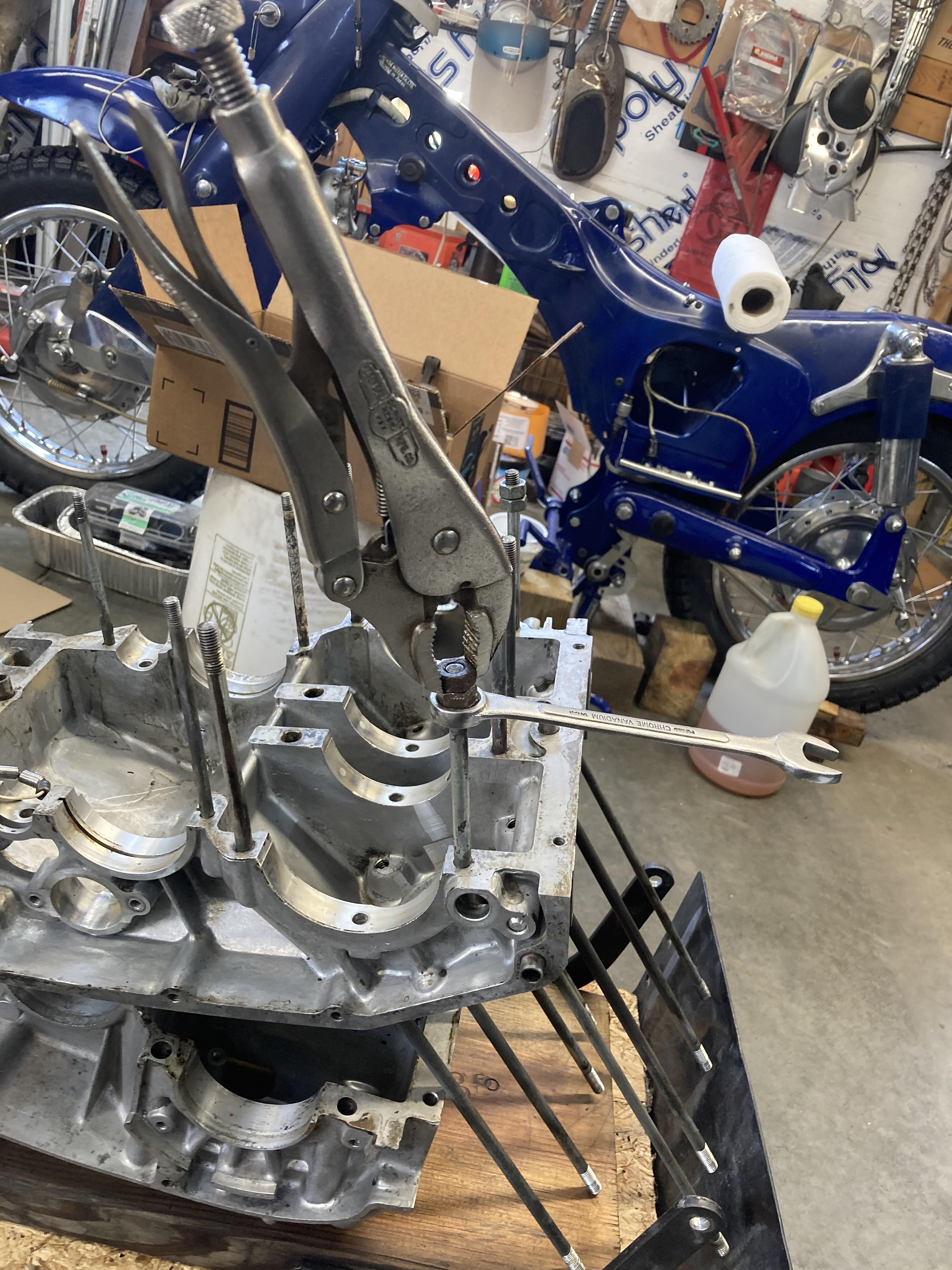
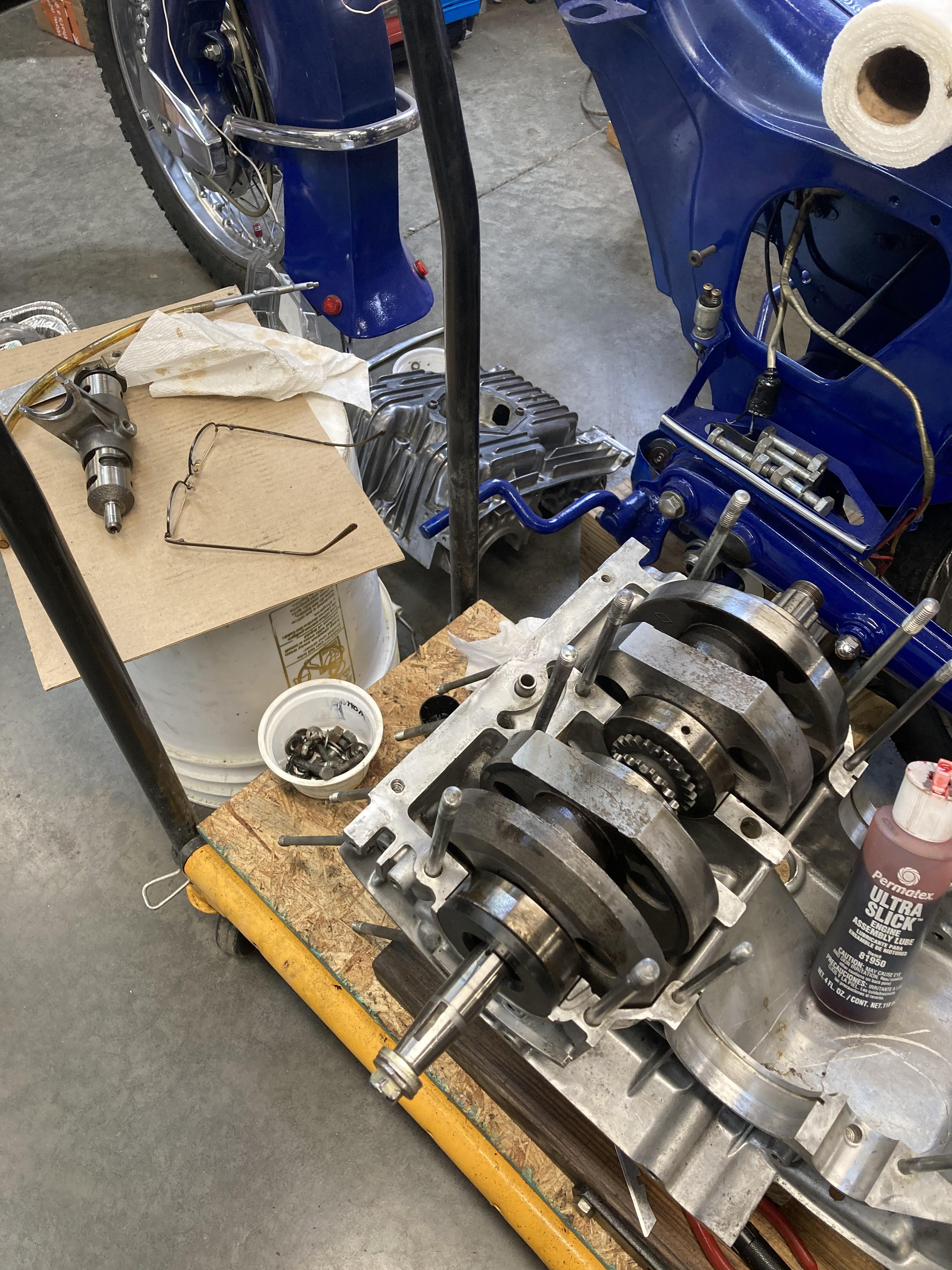
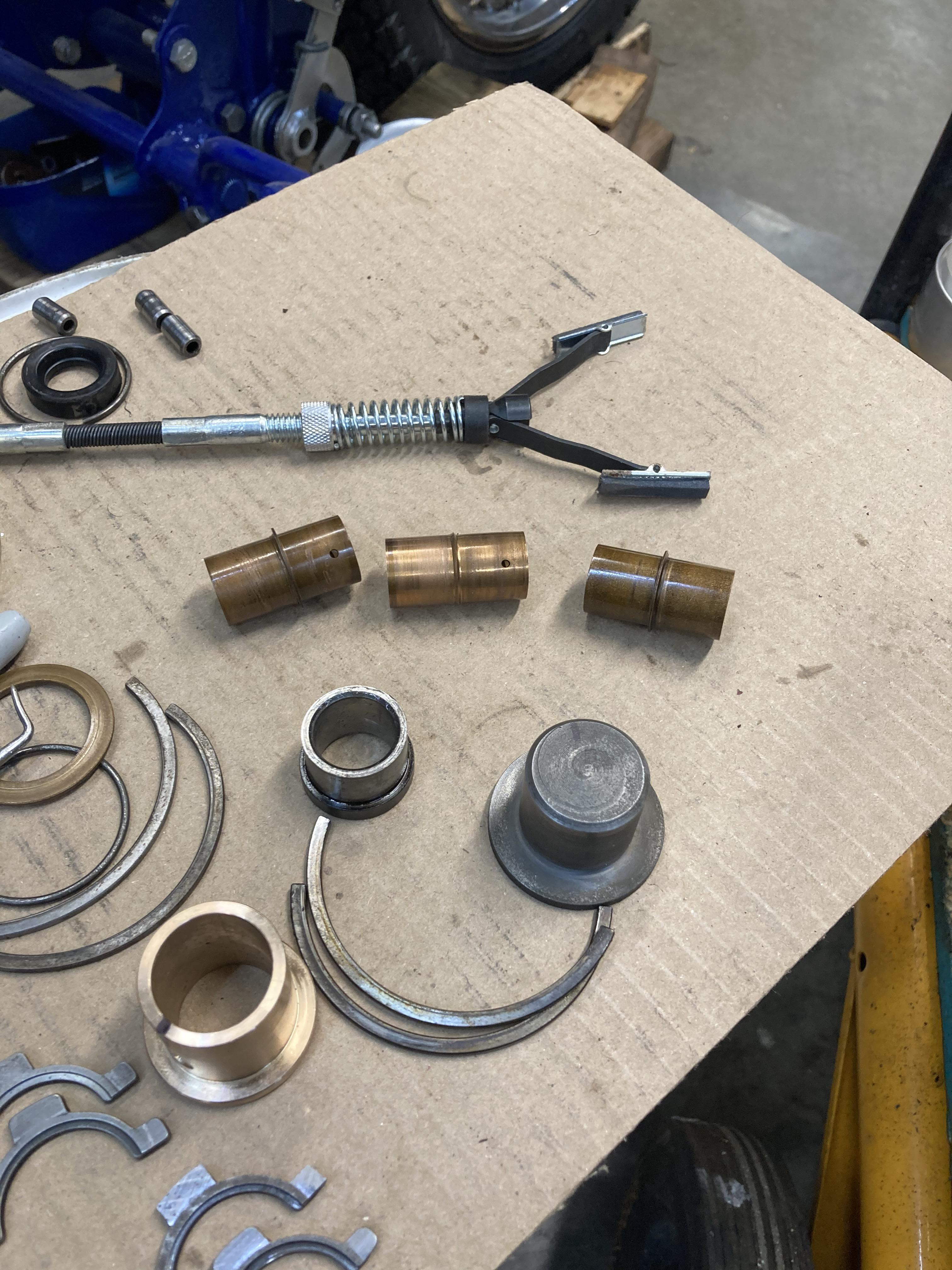
Blue Dream CA78

New pistons 1mm over, telescoping and bore dial gauges arrived. I remeasured bores in both cylinder blocks (not that much difference) and decided to send one out to the new to me machinist with a set of the pistons. Nice fellow and I hope to do more with him in the future. He has not done any twins that he can remember, mostly MX and other off road racing stuff. He did seemed surprised when I asked if he could do less than .001 inch. I handed him a copy of Bill Silver's spec sheet ( since the FSM is hard to read, spread over several pages), he nodded.

Just an opinion on the IMD pistons that come with their own set of specs. If they differ from the Bill Silver specs or the Honda specs; I would go with those that match the piston kit. The bore tolerances are tight on Honda engines for sure, yet my machinist did some further research and used the upper level of the spec supplied by IMD.
Whenever using any non stock piston go with the specs from the supplier rather than the FSM. Different metallurgies create different expansions.
 
Whenever using any non stock piston go with the specs from the supplier rather than the FSM. Different metallurgies create different expansions.

New pistons 1mm over, telescoping and bore dial gauges arrived. I remeasured bores in both cylinder blocks (not that much difference) and decided to send one out to the new to me machinist with a set of the pistons. Nice fellow and I hope to do more with him in the future. He has not done any twins that he can remember, mostly MX and other off road racing stuff. He did seemed surprised when I asked if he could do less than .001 inch. I handed him a copy of Bill Silver's spec sheet ( since the FSM is hard to read, spread over several pages), he nodded.

Just an opinion on the IMD pistons that come with their own set of specs. If they differ from the Bill Silver specs or the Honda specs; I would go with those that match the piston kit. The bore tolerances are tight on Honda engines for sure, yet my machinist did some further research and used the upper level of the spec supplied by IMD.


I opened the 2nd set of pistons to check for spec info., nothing was included. I will contact Kevin at Scrambler and IMD as well to check. What clearance did your machinist use Flyin900?
 
It wasn't the washer that was incorrect, they jammed that little metal post on the spinner shaft somehow into the wrong spot and it also damaged the angled slot on the outer removable round cover. It did a number on both the metal drive gears and the chain, so I ordered a replacement used spinner and chain. The gear was good on the used spinner, yet the chain didn't pass the hang test.

I have replaced so many parts in this engine with new that new chains while an additional expense and possibly not needed; I am in too far to not do the replacements.

No wonder it's trashed. That was one talented dissembler. I will BOLO for chains also.
 
I opened the 2nd set of pistons to check for spec info., nothing was included. I will contact Kevin at Scrambler and IMD as well to check. What clearance did your machinist use Flyin900?

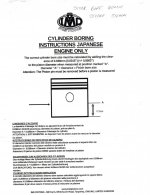
I am not sure but will ask him for a number. Here is the paperwork I received from IMD, as I bought them directly from the company in England. I did contact them since the pistons come with the rings installed and Honda specs a ring gap measurement on their rings. The fellow indicated that there is no need to do the ring gap measurement and they are good to go. My guy did check a ring anyway and said the spec was off compared to the Honda specified spec.

He did think the product was well made with very springy rings and when he measured the pistons diameter they were both identical in spec, which is good.

IMD pistons.jpg
 
No wonder it's trashed. That was one talented dissembler. I will BOLO for chains also.

Yes it falls under the adages "Some people should not be allowed to touch tools" Or the "If I can't fix it... I'll fix it so no one else can!" ;)
 
I just received this from my machine shop fellow who did the work on my CL77 cylinders and went a little larger towards the end spec as shown on the IMD instructions.

Here is what Paul indicated he did on my barrels. He researched it further and I believe these bikes can have issues with the mechanical advancer over advancing or the bike running hotter and susceptible to seizing at times.

QUOTE: (Yes, final cylinder to piston clearance instructions is listed as .0015” (one and a half thou). Better to run them at .0018 a lot of people say)
 
I just received this from my machine shop fellow who did the work on my CL77 cylinders and went a little larger towards the end spec as shown on the IMD instructions.

Here is what Paul indicated he did on my barrels. He researched it further and I believe these bikes can have issues with the mechanical advancer over advancing or the bike running hotter and susceptible to seizing at times.

QUOTE: (Yes, final cylinder to piston clearance instructions is listed as .0015” (one and a half thou). Better to run them at .0018 a lot of people say)


Thanks Flyin900 for sharing that info. If Steve and Tom chime in (as Jim above has) then I'll be totally confident in deviating from Honda's FSM. I will forward IMD's spec sheet to Randy at Fastmann Racing in PA doing my work.

All this underscores the need to set timing with a stroboscopic timing light at proper full advance limit and allowing for acceptable variance to advance at idle, usually retarded and not a problem, even a positive for low end pick up.
 
Last edited:
Ignition timing should be not be too advanced with these engines. The mechanical advancer is a critical part, and if the neoprene rings around the advancer stop are gone, the dynamic advance will be too big. To avoid this I use a e-ignition and discard the use of the mechanical advancer. I know it's expensive, but I use an e-ignition from Sachse (German) (https://www.elektronik-sachse.de/shopsystem-3/en/). The timing is taken from the crank, and combined with the choices in advance curves and max rpm, a big step in running much better. I also have a Sachse ignition on my K2, but the timing is still taken from the camshaft, and that's something what could be better.

I always have the minimum spec in piston-cylinder clearance, knowing that the ignition, combined with the synthetic 10W40, keeps the engine cool enough to avoid any issue's. I also never paint the engine cases, cylinder and head. For durability I let use wetblasting for my engine cases, cylinder and head. Paint is a good isolator, and will have a negative effect on heat dissipation too.
 
I always have the minimum spec in piston-cylinder clearance, knowing that the ignition, combined with the synthetic 10W40, keeps the engine cool enough to avoid any issue's..

So to confirm your running a multi grade oil in the 305cc motors and not the 30W as specified? Why synthetic vs say a 15W 40W Rotella conventional oil which has more zinc additives? The zinc has been removed from most new oil today is my understanding, yet these older air cooled engines do benefit from an oil with more zinc.
 
Last edited by a moderator:
So to confirm your running a multi grade oil in the 305cc motors and not the 30W as specified? Why synthetic vs say a 10W 40W Rotella oil which has more zinc additives than new conventional motor oils? The zinc has been removed from most new oil today is my understanding, yet these older air cooled engines do benefit from an oil with more zinc.

Yes, I do run a full synthetic multi grade, high detergent, low on ZDDP, 10W40, 10W50 or even 10W60 in engines around that era. Not starting an oil debate here, but that's what I do, and I see less wear, hear less noise. I don't advice you to do that, because I prepared my engine for this type of oil, just as I prepared my CB450 K0 engine to accept these type of oils (a link to a thread were I reflect my experience can be seen here:https://www.hondatwins.net/threads/...resh-build-cb450-k0-engine-from-mile-0.33075/)
 
If Steve and Tom chime in (as Jim above has) then I'll be totally confident in deviating from Honda's FSM. I will forward IMD's spec sheet to Randy at Fastmann Racing in PA doing my work.

From my perspective, Jim has been involved in probably 100 times more engine rebuilds than I have and if he says go with a slightly looser fit, then I agree. I did have the experience once with a momentary seizure on a fresh bore on my Mom's SL175 when it was set up at .0015" and the conditions it happened in were not extreme. Obviously, the intent behind the tighter clearance is for longevity.
 
Yes, I do run a full synthetic multi grade, high detergent, low on ZDDP, 10W40, 10W50 or even 10W60 in engines around that era. Not starting an oil debate here, but that's what I do, and I see less wear, hear less noise. I don't advice you to do that, because I prepared my engine for this type of oil, just as I prepared my CB450 K0 engine to accept these type of oils (a link to a thread were I reflect my experience can be seen here:https://www.hondatwins.net/threads/...resh-build-cb450-k0-engine-from-mile-0.33075/)

I was interested in the oil info, as I will have to cross that bridge at some point. I read your article noted above and it is quite detailed and interesting. I will stick with conventional oils; hopefully the 15W-40W Rotella is an option.
 
The 30w Honda mentions was said long ago when oil availability was much less diverse and far less refined. I'm sure Rotella T4 will be fine in your engine, and honestly I don't know that any additional zinc would be necessary on yours since the 305 engines aren't known for cam lobe/rocker arm wear issues nearly like the 350 and DOHC 450 are later on, and the cam bearings being ball-type eliminates that issue as well.
 
My chime-in....
I absolutely agree with using the piston manufacturer's clearance specs, but I define clearance slightly differently, therefore preferring the tighter/smaller clearance specs...
Except for that and exact terminology (see Jim's quote), I defer to Jim's vast experience with engine building....
For scratches all I'm seeing are a couple minor diagonals which are probably from the 3 stone honing tool.
.002" gauges on either side mean there's .004" piston to cylinder clearance, sounds like way out of spec.
In order to fully explain, let me describe how I define clearance, and how I would use "feelers" to verify fitment.....
For this example let's say the clearance specs are .0004" to .0020".....(Pretty much Honda's standard specs)...
balbearian's pic shows two .002" feelers on opposite sides, so he is already at max spec....
I cut my feelers/shim-stock into three 1/8" wide strips and place them 120 degrees apart, but the result would be the same: .0020" CLEARANCE all around the centered piston...Right at max spec....
To me, this NEEDS oversize pistons and bored...
My thought terminology varies in that the mentioned .004" that Jim calls clearance, I call piston to bore difference....
This is always twice my clearance spec as the piston must have that clearance all around....(cross-sectionally on both sides)
However, I would be having this bored for a .0010" difference (.0005" clearance) on the new/oversize pistons, (close to Honda's minimum .0004" spec)....
NOT saying my terminology is correct, just how I approach it.....Fortunately, my machinist understands how and what I'm saying......
 
In summary then, I offer the following thoughts:

The conjunction of multiple opinions on clearance seems to be that .0015 or a bit more be maintained.

Maximum advance needs to be 45 degrees, limited either electronically or mechanically. Advance at idle can be 10 degrees, even as a static setting. I find this true even on my CA95, with good low end throttle response.

Since, "quantity has a quality all it's own", oil pump volume output should be a concern as well.
 
My chime-in....
I absolutely agree with using the piston manufacturer's clearance specs, but I define clearance slightly differently, therefore preferring the tighter/smaller clearance specs...
Except for that and exact terminology (see Jim's quote), I defer to Jim's vast experience with engine building....

In order to fully explain, let me describe how I define clearance, and how I would use "feelers" to verify fitment.....
For this example let's say the clearance specs are .0004" to .0020".....(Pretty much Honda's standard specs)...
balbearian's pic shows two .002" feelers on opposite sides, so he is already at max spec....
I cut my feelers/shim-stock into three 1/8" wide strips and place them 120 degrees apart, but the result would be the same: .0020" CLEARANCE all around the centered piston...Right at max spec....
To me, this NEEDS oversize pistons and bored...
My thought terminology varies in that the mentioned .004" that Jim calls clearance, I call piston to bore difference....
This is always twice my clearance spec as the piston must have that clearance all around....(cross-sectionally on both sides)
However, I would be having this bored for a .0010" difference (.0005" clearance) on the new/oversize pistons, (close to Honda's minimum .0004" spec)....
NOT saying my terminology is correct, just how I approach it.....Fortunately, my machinist understands how and what I'm saying......


IMD pistons recommends .0015 so distributed would be at (very near) the Honda median value of .00075 (.0004-.0012 range). Randy, the machinist, will be happy to hear this and less bug eyed at my .001 request. I do loath having dissent with experienced professionals but, rather, joy at being on the same page as my betters.

Gentlemen, thank you all for bearing ;) with this novice.

Tom Hanna
 
IMD pistons recommends .0015 so distributed would be at (very near) the Honda median value of .00075 (.0004-.0012 range). Randy, the machinist, will be happy to hear this and less bug eyed at my .001 request. I do loath having dissent with experienced professionals but, rather, joy at being on the same page as my betters.

Gentlemen, thank you all for bearing ;) with this novice.

Tom Hanna


Tom,I have had very difficult experiences with machine shops in my past;just to follow the specs for the piston to cylinder clearance with a photocopy of the page from the Honda service manual.I can't begin to describe how many times I have had bore jobs ruined by machinists who said that the clearance written on that paper was wrong ! :rolleyes: :cry:
I have even had 'Powersports machinists' do the same thing..
I finally(after years of searching)found a Powersports Machinist who lives about an hour away and all his work is excellent.
The problem is that he's also very independent and very busy :frown: so I need to be patient :dizzy: 'it's a work in progress'.
I love having a good job done to spec:there's nothing as good as that (y) (y)
 
The 30w Honda mentions was said long ago when oil availability was much less diverse and far less refined. I'm sure Rotella T4 will be fine in your engine, and honestly I don't know that any additional zinc would be necessary on yours since the 305 engines aren't known for cam lobe/rocker arm wear issues nearly like the 350 and DOHC 450 are later on, and the cam bearings being ball-type eliminates that issue as well.

Would love to hear thoughts on Honda's own 10w-40. That is my current fleet go to. Is Rotella more cost effective or superior?
 
I don't think it's more superior but I'd guess it's more cost effective. I bought a 2.5 gallon jug of T4 from Tractor Supply a while back for about $32. In a quick search I just found Honda GN4 10w40 at Amazon for $29.50 a gallon
 
Tom,I have had very difficult experiences with machine shops in my past;just to follow the specs for the piston to cylinder clearance with a photocopy of the page from the Honda service manual.I can't begin to describe how many times I have had bore jobs ruined by machinists who said that the clearance written on that paper was wrong ! :rolleyes: :cry:
I have even had 'Powersports machinists' do the same thing..
I finally(after years of searching)found a Powersports Machinist who lives about an hour away and all his work is excellent.
The problem is that he's also very independent and very busy :frown: so I need to be patient :dizzy: 'it's a work in progress'.
I love having a good job done to spec:there's nothing as good as that (y) (y)

This is my first Cha-cha with Randy and I decided against providing the FSM copy and went with Bill Silver's one page sheet from his guide. Flyin900 provided the IMD sheet that came with his set, bought directly from England but is not available on their website. :sad: A copy is going to Randy for sure.
 
Last edited:
This is my first Cha-cha with Randy and I decided against providing the FSM copy and went with Bill Silver's one page sheet from his guide. Flyin900 provided the IMD sheet that came with his set, bought directly from England but is not available on their website. :sad: A copy is going to Randy for sure.

I would like to see if Bill Silver's sheet is available to me to give to another machinist if I happen to use them:is it a generic sheet for Honda's clearance specs ? is he related to David Silver of David Silver Spares in the UK?
 
I would like to see if Bill Silver's sheet is available to me to give to another machinist if I happen to use them:is it a generic sheet for Honda's clearance specs ?

Bill sells his guide download (includes lots of great stuff)
Vintage Honda Motorcycle Restoration Guides and Information
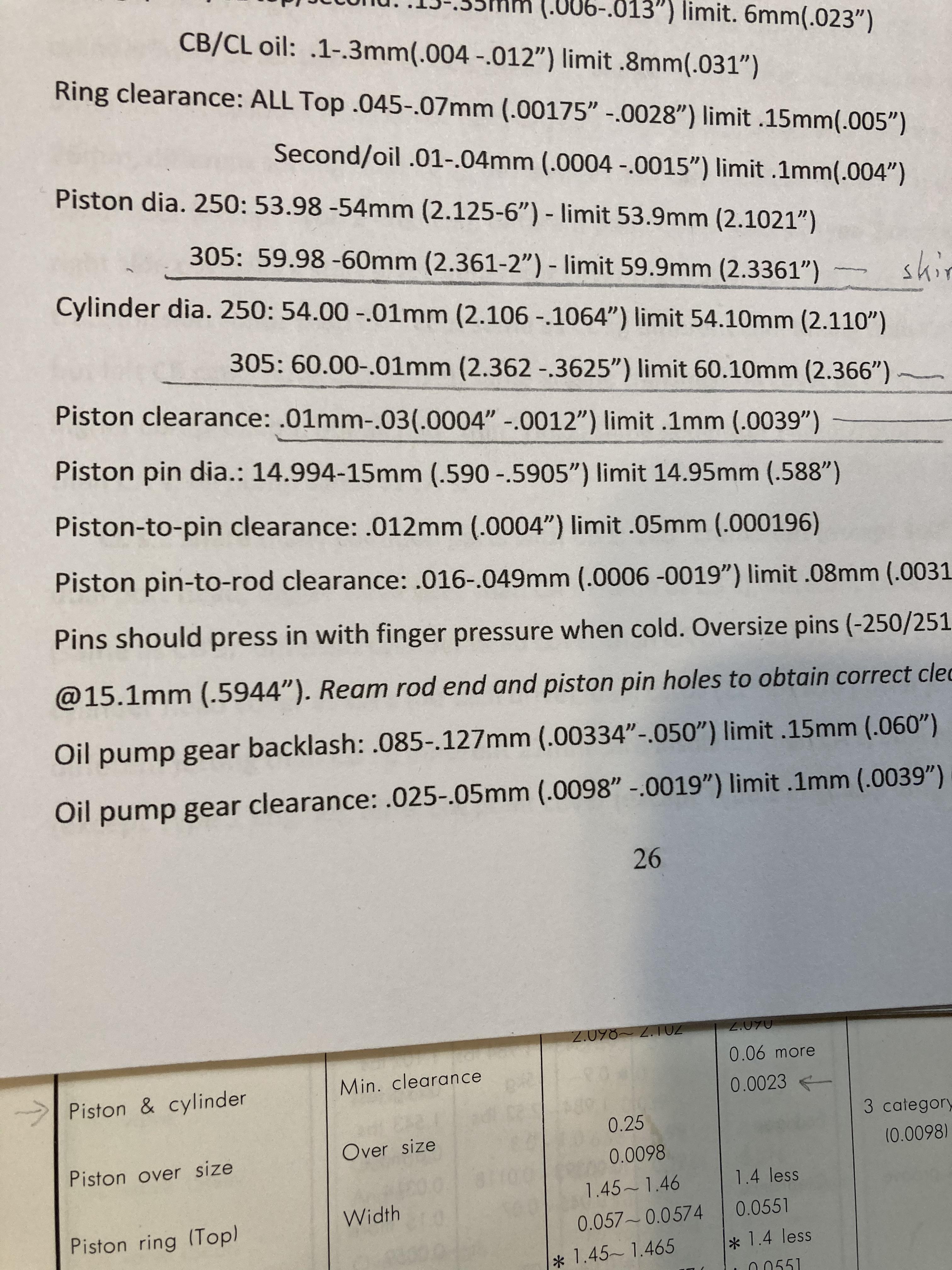
I recommend it. Here is a taste, I hope he won't mind. He is a member here, you can PM him.
At the bottom is the cryptic FSM repairing limit spec, ( the blank columns are supposed to have the ranges but are blank leaving one to do the math from the piston and cylinder bore diameters pages):sad:

23Vt5zd.jpg
 
Last edited:
May not help but I had my CB 77 bored to .0015 and it ran fine. Dont know why I didnt give this to you sooner. I bought all my 305 parts from Tim McDowall at Classic Honda Restoration.

Bill H
 
May not help but I had my CB 77 bored to .0015 and it ran fine. Dont know why I didnt give this to you sooner. I bought all my 305 parts from Tim McDowall at Classic Honda Restoration.

Bill H

That's good to know. .0015 seems to be the most common. Did Tim sell you Wisco pistons? He is an hour and a half away from me so not my first option for boring and Scrambler had the IMD pistons for cheaper than Tim's.
 
The Honda piston to cylinder clearance is for original parts only, if you use pistons from a different brand your clearance is different too, depending on the piston design, piston material, and the way it's made (moulded versus forged). With NOS Honda pistons you're always safe with the mentioned minimal clearances, with other brands the whole discussion is pointless.
 
That was about 17 years ago probably why it took so long to think about it. I had to replace the crank , rods and one sleeve. Bought a matched set of pistons with rings , piston pins and clips from TIM. The manufacture stated the .0015 .

Bill H
 
That was about 17 years ago probably why it took so long to think about it. I had to replace the crank , rods and one sleeve. Bought a matched set of pistons with rings , piston pins and clips from TIM. The manufacture stated the .0015 .

Bill H

Tim has standard bore pistons only so I would have to get liners done too. I'm pretty sure at least one of the cranks has good rods.
 
Did Tim sell you Wisco pistons?

You mean Wiseco ? To my knowledge Wiseco makes forged pistons, and the behaviour of forged pistons is different then cast pistons. When using Wiseco or any other forged piston you need a larger clearance.
 
The Honda piston to cylinder clearance is for original parts only, if you use pistons from a different brand your clearance is different too, depending on the piston design, piston material, and the way it's made (moulded versus forged). With NOS Honda pistons you're always safe with the mentioned minimal clearances, with other brands the whole discussion is worthless.....

That does make good sense that OEM would be the tightest, however the lack of clarity and omission in their FSM does not inspire confidence, even after doing the math for the differences in the columns for the standard range taken from the lines for "cylinder sleeve- in. dia." and "piston skirt" (.0005-.0012). The difference taken from the separate repairing limits columns is a whopping .08 and does not jive with the stated .0023 on the "piston & cylinder" line. No wonder the confusion, not to mention the extra time spent.
 
You mean Wiseco ? To my knowledge Wiseco makes forged pistons, and the behaviour of forged pistons is different then cast pistons. When using Wiseco or any other forged piston you need a larger clearance.

Yes, Wiseco. Thanks again. IMD pistons are forged also.
 
Tim has standard bore pistons only so I would have to get liners done too. I'm pretty sure at least one of the cranks has good rods.

Tim doesn't specify the manufacturer on his site, so you need to know the specs of the manufacturer to comply with that recommendation. As previously noted the specs in the FSM are for Honda OEM pistons which are likely a different metal composition, especially if NOS from 60 years ago.

I know nothing in this area and trust the machinist since his work is meticulous with everything that he does for himself. The fact he did some further research on the 305 engine before deciding to move the finished spec up to the higher number is reassuring for me personally.
 
Tim doesn't specify the manufacturer on his site, so you need to know the specs of the manufacturer to comply with that recommendation. As previously noted the specs in the FSM are for Honda OEM pistons which are likely a different metal composition, especially if NOS from 60 years ago.

I know nothing in this area and trust the machinist since his work is meticulous with everything that he does for himself. The fact he did some further research on the 305 engine before deciding to move the finished spec up to the higher number is reassuring for me personally.

I bought the same as you only 1mm over IMD forged. Tim did say in comment that Wiseco forged is what he has (currently standard bore only). You are fortunate to have a good machinist to work with. Again, thank you for sharing IMD's Japanese engine spec sheet. And thanks to all the VHT members here of meticulous and well informed understanding willing to share.
 
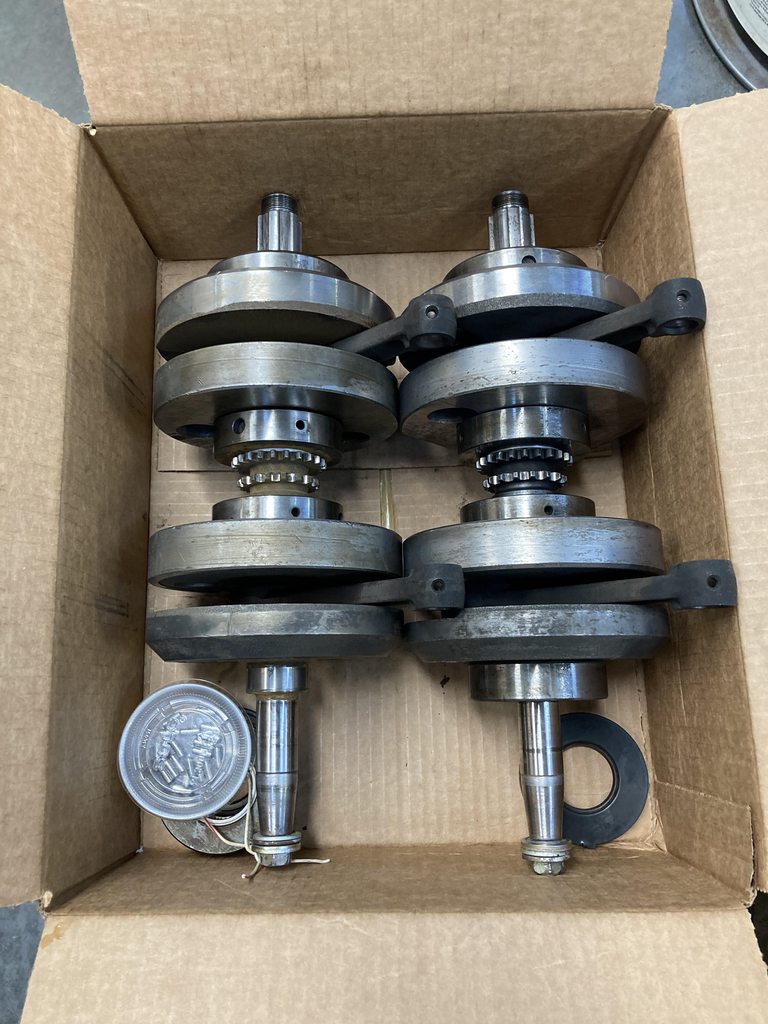
Got both cranks cleaned up enough to determine if or which to use. The left is from the bike with 20K miles and the right is the spare with 10K miles.

LEshS64h.jpg


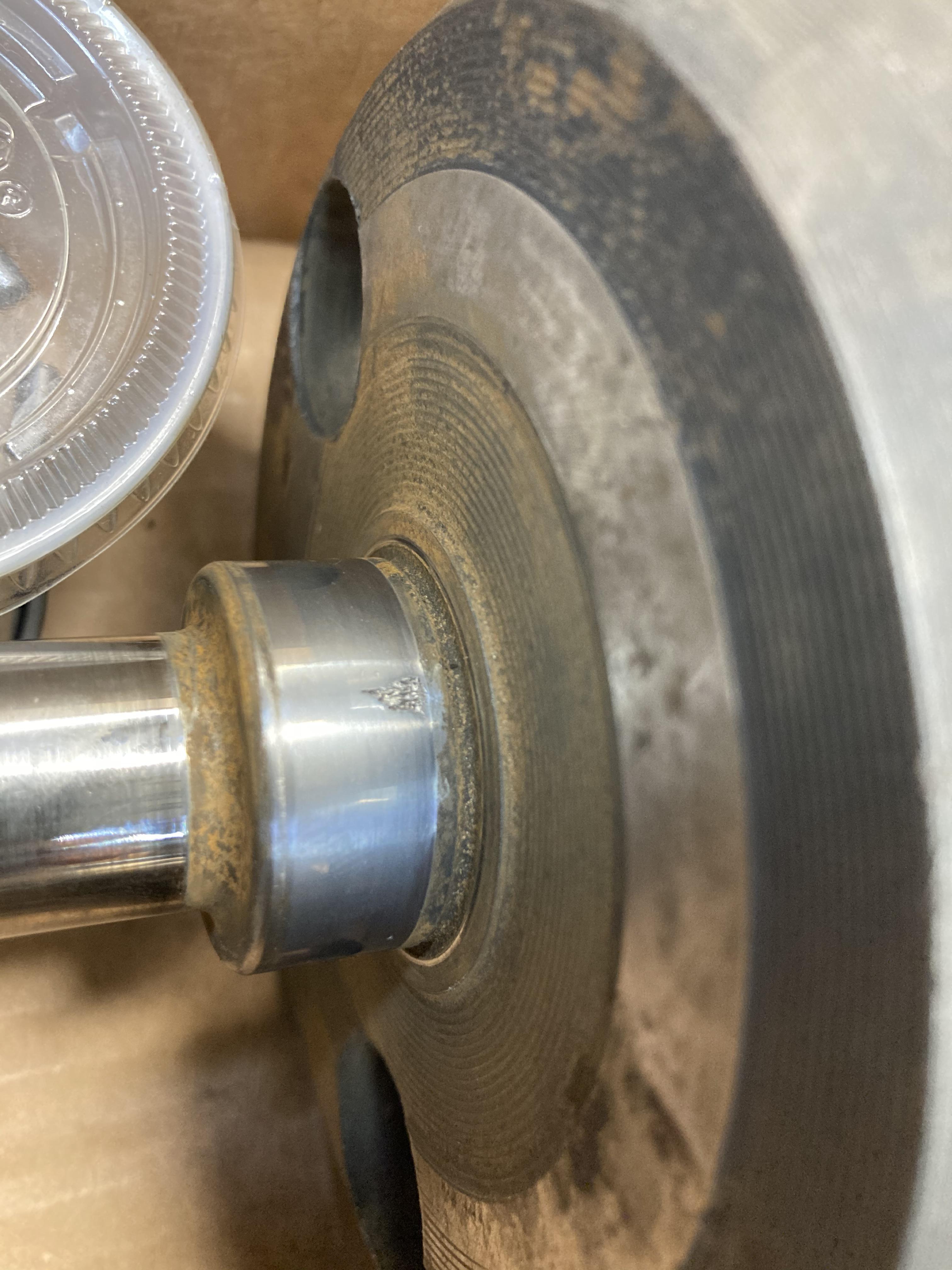
I grabbed a new wrist pin and tried the small rod ends finding all fairly decent. Barely discernable play in all four but better in the spare. The 2 center roller bearings did have noticeable play and some in the left end outer ball bearings, again better and acceptable, IMO, play in the spare. The right end outer roller bearings were marked different in that the original, or 20K, crank had not only one of it's 22 roller MIA but a pit on the journal surface.

IPrNrAd.jpg


I think we have a clear winner and a good candidate for a dependable rider.
Further cleaning and oilway checking, mating surfaces prep, and to straighten or swap the two forward outer case studs. I believe the bent studs are due to the mounting of the brackets for the crash bar. I have often observed the mounting of accessories to be a poorly thought out affair and for that reason I usually avoid them on many machines.

gHQjopj.jpg


Next, to cherry pick the best tranny parts and begin the valve situation whatever, with the 2 heads.
If I stay focused perhaps I'll be ready when the cylinders return from the machinist. I try to maintain a fresh supply of distractions:lol:. Like Mom's bike (new project '71 CB350)
 
lDBukLJ.jpg


I only tweaked em back about 1/2 way. I did not want to weaken or snap them. I think the case will seal ok and the crank bearings will be supported.
 
Coming about

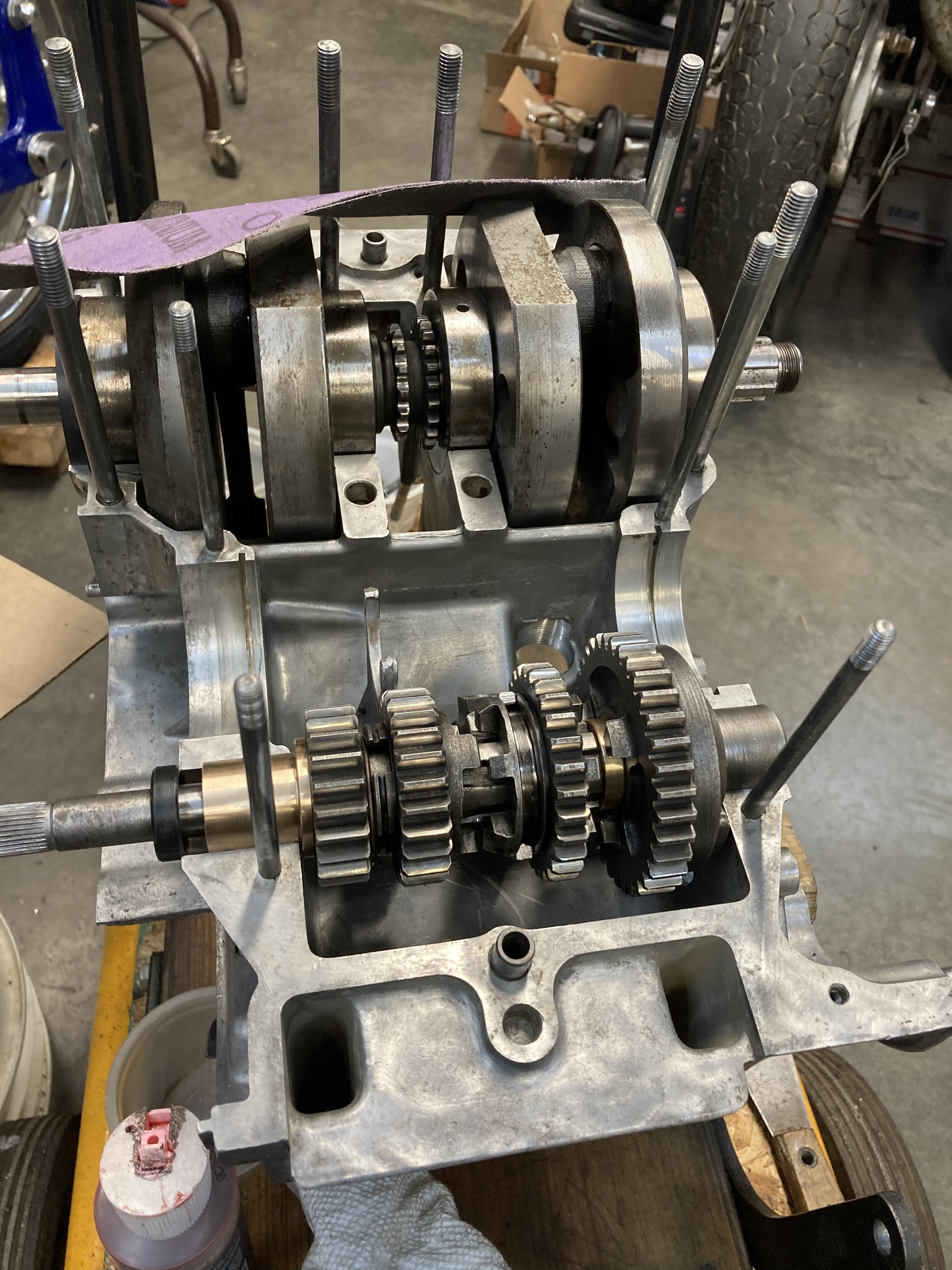
Got the best crank back in. Now it's a search for the "best of" tranny, oil pump, head and the rest. Anxious to get the cylinder block and pistons back. If the rest of the herd behaves themselves, I may get this done yet.

85Co2ZW.jpg
 
When you put the tranny back together check the dog engagement on the second gear. some of the 305s,not all, have a problem of jumping out of 2nd gear. You might put in a .010 cotter when you put it back together. I had to put one in my CB 77. Just a thought.

Bill H
 
When you put the tranny back together check the dog engagement on the second gear. some of the 305s,not all, have a problem of jumping out of 2nd gear. You might put in a .010 cotter when you put it back together. I had to put one in my CB 77. Just a thought.

Bill H


I'm not quite there yet. Been sidetracked with charging/rectifier issues on both Charle's Dream and the Benly. Still cleaning and picking best parts from the 2 sets of trans parts. There were 2- standard and 1- .01 and 1- .04(?) cotters to play with. If I have to get more, hopefully that will be the last trans parts to obtain.
 
G-mans's repair/upgrade countershaft kit

His kit has excellent instructions that you download from dropbox with great photos.
CB72 Kickstart Shaft Improvement Reduced.pdf - Dropbox

My kickstart shaft had a badly worn spot from the rollers so I had to clean up a burr on it. Now the interference fit with the new hardened bearing sleeve is too loose so I plan to "knurl" it with the serrated jaws of my vice before final assembly. Also knocked out the low gear bushing and replaced with new bronze kit version. The new 14mm bushing is, thus shorter and press fit into the sleeve gear. Using the weight of the gear as a slide hammer, it got a little tight so I gave the bushing a slight reaming with an old brake master 2 stone hone. I'll dry fit the new tiny rollers before I Knurl and press for the final countershaft assembly.
wArppYD.jpg

xUSZnIb.jpg

Picking and dry fitting the mainshaft parts is about done. Then fit up the cotters and final check the shifting fork alignments. Fork tip to gear groove tolerance is .25mm, via Bill Silver.
ULPgG5O.jpg


I really enjoy this part of the build. It's all new to me. I was, kind of, the shop expert on Sturmey Archer 3-5 speed internal bicycle hubs a long time ago.

And 5 out of 5 to Graham Curtis for a well designed upgrade.
 
Good stuff, the very reason VHT exists and it's always great to see things like this as a result. Nice work, things are going really well.
 
And 5 out of 5 to Graham Curtis for a well designed upgrade.


Looking good and I like the solution on that first gear bushing replacement. Does the extra few mm's of width on that bushing move the gears over slightly too? If so what is the purpose of that for gear engagement?
 
Looking good and I like the solution on that first gear bushing replacement. Does the extra few mm's of width on that bushing move the gears over slightly too? If so what is the purpose of that for gear engagement?

Actually, the new low gear bushing is only .75mm thicker and accounts for the .75 ridge on the original double ended bushing. Graham Curtis explains this in his dropbox instructions, which are quite informative. I've put the link in the above post.
 
Actually, the new low gear bushing is only .75mm thicker and accounts for the .75 ridge on the original double ended bushing. Graham Curtis explains this in his dropbox instructions, which are quite informative. I've put the link in the above post.

And there's also this link to his Flickr account which has lots of pictures, some of which I suspect apply to this situation.

https://www.flickr.com/photos/63154743@N00/page1
 
A 1965 CB 77 was my first frame off rebuild. Your bringing back a lot of memories. Great work.

Thanks

Bill H

Thanks for the vote of confidence. This is my first engine breakdown. Last year I got 3 finished up and back on the road but they were running, sort of. '63 CA95 (head off, repaint), '73 CB350G and '78 CB400Tii Hawk (last two mainly fuel system and hydraulics). I got this one in August and Had no idea what a molested bag of tales it would be. I've found non metric fasteners, home brew shims on trans shafts, broken and missing spokes on frozen nipples, just yesterday I noticed a trans gear that is from a later trans with under cur engagement dogs. With 2 engines and some more ebay parts, it gets confusing sometimes, but at least I got options. It's titled, plated, registered and insured so I'm on a forced march. :)
 
Back
Top Bottom