-
Don't overlook our Welcome Package, it contains many links to important and helpful information about functions at VHT like posting pictures and sending PMs (private messages), as well as finding the parts you need.
AD
You are using an out of date browser. It may not display this or other websites correctly.
You should upgrade or use an alternative browser.
You should upgrade or use an alternative browser.
1979 CM400A Winter Rebuild [COMPLETE]
- Thread starter Maraakate
- Start date
-
- Tags
- cm400a hondamatic rebuild


Maraakate
Veteran Member
It's different. If you make it up here some day we can ride it. For these bikes I always call it "High" and "Low" for the gears, Honda calls it "2" and "1". Low is for when you come to a stop. The real way you're supposed to ride these (and most people don't) is to not shift into "High" until at least 40mph. Ideally 50mph. I know, it sounds scary, but it won't blow up. It doesn't even start making any real power until around 30-35mph. At this point the engine gets louder obviously and people get scared and immediately shift into "High" and wonder why these bikes dog it. There's even marks on the speedo to show the shift points.I've never ridden an auto with a torque convertor, might be an interesting experience. I sense the low/mid range like coming out of a corner that I had to slow a bit more than I thought but just use throttle to pick back up.
When you slow down I tend to shift back into "Low" around 20-25mph. But you can do it even lower than that. I wouldn't recommend doing it above 40mph it's probably not good for it, but I've never tried and I see no advantage in doing that.
To shift you just roll off the throttle and shift. Just like the old Honda Z50s, etc.

ballbearian
Veteran Member
It is an interesting shift Honda made, going from the 180 crank, dual carb 350's to this 360 crank, also with dual carbs. The 350's really buzzed/vibrated and these are smooth smooth with the balancer too. They still get up and go pretty good, at least my Hawk flys for me.I believe it had something to do with the pulses generated as the engine fires. These are not high performance engines whether the CX series or CM series.
If you love the bike then enjoy the ride.
Good detailed work there Frank. Is it still wearing one of those mufflers?
Maraakate
Veteran Member
They're fun little bikes for sure. I think it's kind of a shame the Hondamatic's weren't as popular as they're a fun bike. It makes sense of the era though, late 70s, gas crunch. Same era as the height of moped popularity. But for some reason the idea of an automatic motorcycle was still off-putting. I'd speculate the 750A might have soured people, but that was only for like one or two years. It seemed like Honda found some small success in the 400A's for a brief time. I really think it's the perfect street bike for someone starting out. It makes sense that all this eventually evolved into the 450 Rebel.It is an interesting shift Honda made, going from the 180 crank, dual carb 350's to this 360 crank, also with dual carbs. The 350's really buzzed/vibrated and these are smooth smooth with the balancer too. They still get up and go pretty good, at least my Hawk flys for me.
ballbearian
Veteran Member
That's good the speedo is marked so everyone knows what it's normally capable of and one must admit to one's own choice to ride like a little old lady. IOW, it ain't the bikes fault.It's different. If you make it up here some day we can ride it. For these bikes I always call it "High" and "Low" for the gears, Honda calls it "2" and "1". Low is for when you come to a stop. The real way you're supposed to ride these (and most people don't) is to not shift into "High" until at least 40mph. Ideally 50mph. I know, it sounds scary, but it won't blow up. It doesn't even start making any real power until around 30-35mph. At this point the engine gets louder obviously and people get scared and immediately shift into "High" and wonder why these bikes dog it. There's even marks on the speedo to show the shift points.
When you slow down I tend to shift back into "Low" around 20-25mph. But you can do it even lower than that. I wouldn't recommend doing it above 40mph it's probably not good for it, but I've never tried and I see no advantage in doing that.
To shift you just roll off the throttle and shift. Just like the old Honda Z50s, etc.
Maraakate
Veteran Member
It's kind of a general problem with all of these old Hondas. Many people lug the the manual bikes of any Honda vintage at 2-3K RPM like it's a BMW or Harley and they wonder why the battery gets low.That's good the speedo is marked so everyone knows what it's normally capable of and one must admit to one's own choice to ride like a little old lady. IOW, it ain't the bikes fault.
ballbearian
Veteran Member
They deserve to have their own following. Same, kinda with the CT90's.They're fun little bikes for sure. I think it's kind of a shame the Hondamatic's weren't as popular as they're a fun bike. It makes sense of the era though, late 70s, gas crunch. Same era as the height of moped popularity. But for some reason the idea of an automatic motorcycle was still off-putting. I'd speculate the 750A might have soured people, but that was only for like one or two years. It seemed like Honda found some small success in the 400A's for a brief time. I really think it's the perfect street bike for someone starting out. It makes sense that all this eventually evolved into the 450 Rebel.
Honda marketing geniuses took their best shot and debuted with a 400 (probably for American big bore mentality) but I wonder why it wasn't say the Twinstar or the next notch down if only for beginners.
They are a legit full on bike for wide usage. I think they will always endure.
ballbearian
Veteran Member
I know. Honda's are good physical therapy because they promote a full range of motion in one's right wrist.It's kind of a general problem with all of these old Hondas. Many people lug the the manual bikes of any Honda vintage at 2-3K RPM like it's a BMW or Harley and they wonder why the battery gets low.
Maraakate
Veteran Member
Machined parts arriving Tuesday.
Maraakate
Veteran Member
Parts are here! Going to unbox and see how far I can get with assembly tonight. 

Maraakate
Veteran Member
It's a runner with oil pressure and doesn't walk backwards!
Cranked starter multiple times while giving it a rest as well to pump up oil pressure and verify. Set valves, started it up. Bike is still very cold and time is short so will return to the rest of it tomorrow.
Things I did notice (and I do have pictures for the rest of reassembly.
Cranked starter multiple times while giving it a rest as well to pump up oil pressure and verify. Set valves, started it up. Bike is still very cold and time is short so will return to the rest of it tomorrow.
Things I did notice (and I do have pictures for the rest of reassembly.
- Remember to pull that tensioner all the way UP before you put the head on or it will be very "fun"/impossible to get the sprocket and chain on the cam. Missed that step.
- Be careful with the Hondabond on the rockers so you don't block the oil jets on the outsides of them.
- The aftermarket exhaust collector sounds fine.
- The aftermarket exhaust collector tangs for the header pipes to collector don't seem to line up. Will need to dremel for that.
ballbearian
Veteran Member
It does sound good. I remember only that it was fun putting my exhaust back on the Hawk and it was the same parts. I think I just left everything loose until it was together then tightened it all up.
Maraakate
Veteran Member
Hawk is slightly different and never worked on one so can't comment. For this I mounted the collector and put the mufflers on. Once head was on doing the headers was fairly simple. I didn't tighten the header to collector clamps yet but they're in there and not moving so will be OK for now until I can dremel the slots.
Starter works great so glad thats fixed and should be good for another 35k.
Starter works great so glad thats fixed and should be good for another 35k.

Yeah, considering where the starter clutch parts are located in this version, now was definitely the time and you'll be glad to have it back in full working order.Starter works great so glad thats fixed and should be good for another 35k.

Yeah, if the tensioner isn't pulled all the way up it's impossible to get the sprocket on the cam.
- Remember to pull that tensioner all the way UP before you put the head on or it will be very "fun"/impossible to get the sprocket and chain on the cam. Missed that step.
- Be careful with the Hondabond on the rockers so you don't block the oil jets on the outsides of them.
- The aftermarket exhaust collector sounds fine.
- The aftermarket exhaust collector tangs for the header pipes to collector don't seem to line up. Will need to dremel for that.
Maraakate
Veteran Member
Another thing I noticed is that you CAN install the head with the carbs attached to the airbox but you want to have the triangle mounting bracket on the head otherwise one of the bolts interfere when trying to put it on later. Pretty sure you can remove the throttle cable and avoid that will report back.
Maraakate
Veteran Member
Got things back together this morning, minus that one bolt. Will drop carbs later and do that. And eventually fix those clamps too. If they're pushed over it does remove the small exhaust leak so good enough for this moment.
The exhaust collector does appear to work as an extended silencer. The bike is a bit more throaty now. Not enough to scare the neighbors but enough to make someone who is familiar with these bikes know it's been changed.
Carbs need synced and adjusted but rideable as-is.
The exhaust collector does appear to work as an extended silencer. The bike is a bit more throaty now. Not enough to scare the neighbors but enough to make someone who is familiar with these bikes know it's been changed.
Carbs need synced and adjusted but rideable as-is.
Maraakate
Veteran Member
Synced.
Maraakate
Veteran Member
Took it out 20 miles, gave it some hell upto 75mph. Runs well. Will give the valves a check again at 100 miles. I did check the oil multiple times throughout these runs and it's still good not consuming a lot of it.
One thing that was funny to me is the cam chain adjustment was unnecessary because... well it's new! Turned that 10mm nut back and didn't even need to.
One thing that was funny to me is the cam chain adjustment was unnecessary because... well it's new! Turned that 10mm nut back and didn't even need to.
Didn't you do a fresh bore?Took it out 20 miles, gave it some hell upto 75mph.
Maraakate
Veteran Member
Yes, but me personally I don't think break-in is really much of a thing. That's a controversial subject and there are many who agree and disagree if you should just ride it as-is or baby it every so many miles with certain rev ranges, etc. If you feel what I did was wrong or you don't agree that's fine.Didn't you do a fresh bore?
It's your bike, do whatever and I hope it works out okay. I'm probably too soft on break-ins, but it just seemed pretty early to me.Yes, but me personally I don't think break-in is really much of a thing. That's a controversial subject and there are many who agree and disagree if you should just ride it as-is or baby it every so many miles with certain rev ranges, etc. If you feel what I did was wrong or you don't agree that's fine.
Maraakate
Veteran Member
Got some time so here's the pictures and next steps during cylinder and head reassembly. I may not get much time because of the baby so it may abruptly stop for a bit and there's many pictures.
Cylinder as received:
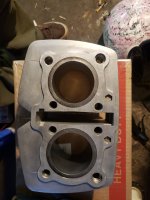
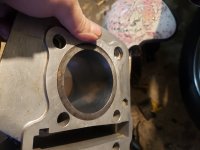
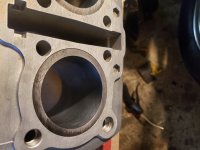
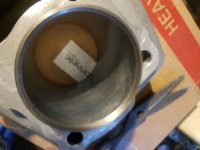
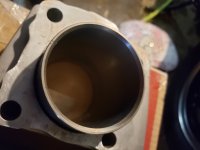
Now take a towel with brake cleaner and remove the grease. Keep doing this with new towels until it comes up clean, then immediately re-oil it.
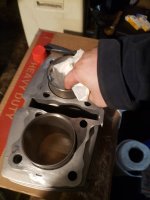
Get your pistons, they'll be different for each side and your machinist should have these labeled for you. Get your piston pin and oil it.
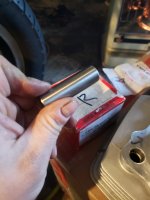
Now put one clip in, the one for the inside. This makes it easier when the pistons are on the rod so you only have to do the outer clips.
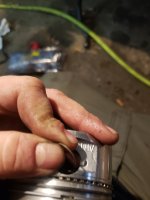
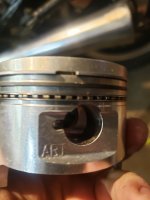
Make sure to slide the pin in there and push up against the clip to be certain it is seated properly.
Suspend your chain, lay towels down as to not drop the clips down there and get the pistons installed on the rods.
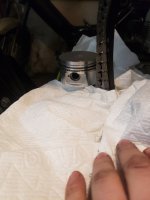
I didnt get as many good pictures as Jim as time was limited. But do the same for the other piston.

(Continued in next post)
Cylinder as received:
Now take a towel with brake cleaner and remove the grease. Keep doing this with new towels until it comes up clean, then immediately re-oil it.
Get your pistons, they'll be different for each side and your machinist should have these labeled for you. Get your piston pin and oil it.
Now put one clip in, the one for the inside. This makes it easier when the pistons are on the rod so you only have to do the outer clips.
Make sure to slide the pin in there and push up against the clip to be certain it is seated properly.
Suspend your chain, lay towels down as to not drop the clips down there and get the pistons installed on the rods.
I didnt get as many good pictures as Jim as time was limited. But do the same for the other piston.
(Continued in next post)
Maraakate
Veteran Member
Get your tensioner installed. There is an o ring here use a new one.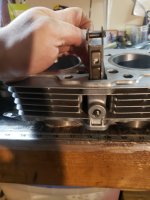
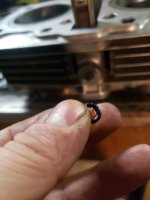
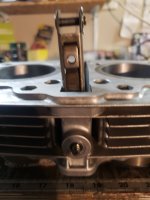
Add your base gasket, dowel pins, piston blocks and ring compressors...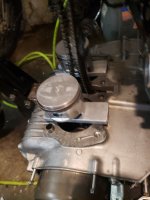
Be sure to oil the ring compressor itself and the rings and piston.
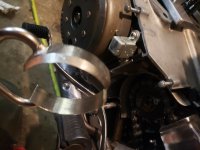
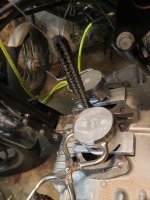 Give it a go, slowly!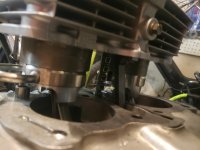
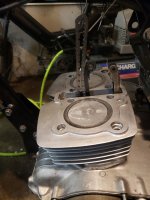
Now do the same trick Jim mentioned with the drill bit to get the slipper on the tensioner, then install the pin and circlip. Finally, push the slipper in as far as you can to get it up and tighten the 10mm nut.
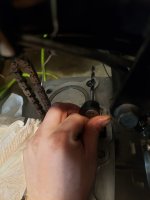
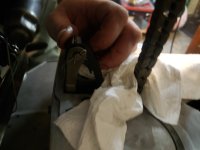 Installed, now put the front cam chain guide in.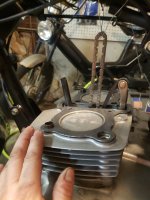
(Continued in next post)
Add your base gasket, dowel pins, piston blocks and ring compressors...
Be sure to oil the ring compressor itself and the rings and piston.
Give it a go, slowly!Now do the same trick Jim mentioned with the drill bit to get the slipper on the tensioner, then install the pin and circlip. Finally, push the slipper in as far as you can to get it up and tighten the 10mm nut.
Installed, now put the front cam chain guide in. (Continued in next post)
Maraakate
Veteran Member
Do not forget the new seals on the dowels. Grease them before assembly or be rewarded with an oil leak.
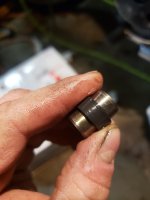
(No pictures here sorry) put your new head gasket on, suspend the cam chain and get it in.
I did a shortcut here to keep carbs on and aligned, but if you do this then make sure you install the boots first and the triangle mount. You won't be able to get to the upper left bolt otherwise.
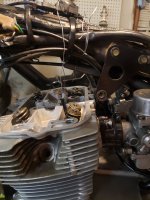
(No picture here sorry) The additional bolt for the cam chain tensioner gets installed on the head. It gets a new o ring as well, dont forget!
NOS Sprocket
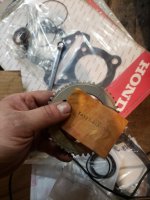
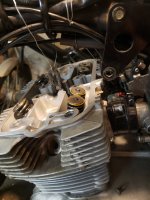
Now fish the cam from the RIGHT side of the bike and sprocket and get the cam chain on there. Might be "fun" if things are all new, like mine.
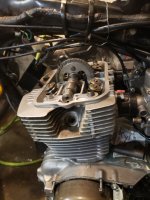
(No pictures here sorry) Set to TDC/T Mark on flywheel and line the cam sprocket lines so they're parallel with the head.
Put Hondabond on the rockers. Be absolutely certain you don't block the oil jets. You can see a stain on mine where that passageway is.
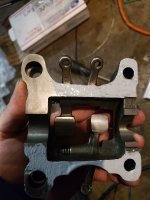
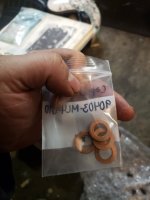
New copper washers for the inner bolts. Don't forget these.
Install the bolts and tighten in the proper sequence per FSM and torque in multiple stages stages. I did 60 in/lbs, then 100 in/lbs, then 150 in/lbs, then 200 in/lbs, then 240 in/lbs and finally 23 ft/lbs.
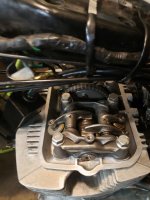
New adjuster screws.
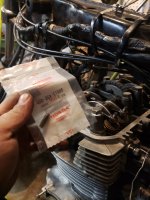
(No pictures here sorry) Fill the rockers lobe area with oil then set valve clearances. Do this by installing the adjuster screws completely loose then turn over SLOWLY to make sure they are actually loose. Then get to T mark and the side of the cam that had the lobes pointing down is the side you set the clearances, rotate and do again.
Install the exhaust, then kick over or run the starter multiple times until you see oil spraying out of the top. Check oil again, the put the valve cover on and start it up!
(No pictures here sorry) put your new head gasket on, suspend the cam chain and get it in.
I did a shortcut here to keep carbs on and aligned, but if you do this then make sure you install the boots first and the triangle mount. You won't be able to get to the upper left bolt otherwise.
(No picture here sorry) The additional bolt for the cam chain tensioner gets installed on the head. It gets a new o ring as well, dont forget!
NOS Sprocket
Now fish the cam from the RIGHT side of the bike and sprocket and get the cam chain on there. Might be "fun" if things are all new, like mine.
(No pictures here sorry) Set to TDC/T Mark on flywheel and line the cam sprocket lines so they're parallel with the head.
Put Hondabond on the rockers. Be absolutely certain you don't block the oil jets. You can see a stain on mine where that passageway is.
New copper washers for the inner bolts. Don't forget these.
Install the bolts and tighten in the proper sequence per FSM and torque in multiple stages stages. I did 60 in/lbs, then 100 in/lbs, then 150 in/lbs, then 200 in/lbs, then 240 in/lbs and finally 23 ft/lbs.
New adjuster screws.
(No pictures here sorry) Fill the rockers lobe area with oil then set valve clearances. Do this by installing the adjuster screws completely loose then turn over SLOWLY to make sure they are actually loose. Then get to T mark and the side of the cam that had the lobes pointing down is the side you set the clearances, rotate and do again.
Install the exhaust, then kick over or run the starter multiple times until you see oil spraying out of the top. Check oil again, the put the valve cover on and start it up!
Maraakate
Veteran Member
Finally got around to removing the carb and fixing the hanger. Dremeled the slots on the collector. While I was at it, with the carbs off, figured I'd extract the idle jets and emulsion tubes and use the spare NJ/JN from the junk carb (those were OEM, because nobody thinks to replace them on the CV carbs). Did one last final pilot mixture adjustment and well... I'm totally satisfied and would say this project comes to an official close mechanically. So mods can mark this as [COMPLETE] or however you do it here. Next year we can do some cosmetics on here, which will be fun.
At some point I will take the relevant pictures and descriptions and make this into a PDF so it's easy to search and more organized.
At some point I will take the relevant pictures and descriptions and make this into a PDF so it's easy to search and more organized.
Personally I think it's fine as it is, you did a good job of documenting with relevant pictures along the way, better than most so it will be very informational to future readers. Marked complete for now, subject to easy revision later if you add anything to it.
Maraakate
Veteran Member
A journey for sure. First real big tear down, not as scary as I thought it would be. Learned a lot with help from everyone here and studying the FSM. I'd say for anyone else who is thinking about doing this do it! Just make sure you get the right tools. Having good tools and the right tools make it so much easier. That and patience. If you get mad, just walk away. I made three mistakes on this one during re-assembly, but nothing too bad. If I can do it, so can you.Personally I think it's fine as it is, you did a good job of documenting with relevant pictures along the way, better than most so it will be very informational to future readers. Marked complete for now, subject to easy revision later if you add anything to it.
Now that this is done, guess I'll need to start thinking about swapping out that cam chain tensioner on the CB550

ballbearian
Veteran Member
And for his next trick, Frank will demonstrate how to change a diaper with one hand and swap a cam chain tensioner with the other.
Sorry, popcorn machine broken, make your own.
Sorry, popcorn machine broken, make your own.
Maraakate
Veteran Member
Small update: Only 33 miles so far as I've been out of town. I noticed before I left that you'd get some slight hesitation when going from idle to WOT and it was bothering me. Checked the float height and it was off. About 17-18mm. Set it to 15mm both sides and problem is now resolved.
I also received an NOS "packing gasket" for the air box (see the other 79 I worked on) and have done measurements. It's about 3mm wide and it's simply a glued o-ring cord stock. When cut at the glue point and laid out it's about 16 inches. I ordered some 3mm NBR cord stock from MCM and should be here soon enough and I'll update on that. I also found NOS NJ/JN sets for the 79 CM400A year and will finally determine if it's D449 (what I suspect is correct) or the 47B needles.
I also received an NOS "packing gasket" for the air box (see the other 79 I worked on) and have done measurements. It's about 3mm wide and it's simply a glued o-ring cord stock. When cut at the glue point and laid out it's about 16 inches. I ordered some 3mm NBR cord stock from MCM and should be here soon enough and I'll update on that. I also found NOS NJ/JN sets for the 79 CM400A year and will finally determine if it's D449 (what I suspect is correct) or the 47B needles.
Maraakate
Veteran Member
Confirmed it is a D449 for the 79 CM400A carbs. I believe they are brass and not beryllium coated but its hard to say.
Maraakate
Veteran Member
Update: at some point during the float height adjustments I also extracted the idle jets and emulsion tubes as they were never done before. After a day or so it started idling kind of erratic and then it lead to anything from closed to 1/4 throttle being incredibly lean. Verified this in a basic way by holding choke about half way then it magically ran well. I know Mike is pretty adamant that the choke is not as reliable, but I feel it is a good test when driving and you don't have a roll of tape on you to test it by taping off part of the duct. I also at some point had one of the needle jet holders fall down into the float bowl as I was trying to be careful and not over-tighten it.
In any case, the problem was very likely a small chip from the tap (yes, used grease) that was closing off the idle jet. I took the entire carb apart, including unracking, and really gave it a go over. This time I verified all passage ways and jets at least 10 (yes really, 10) times with a high e guitar string, jet cleaners (appropriate size of course), followed by compressed air, then finally with carb cleaner to verify flow. Put it back together, runs absolutely perfect. So those of you out there, really make certain that you cleaned those idle jets.
I have found the following symptoms for the VB carbs and the 400/450 twins as easily recognizable to help you diagnose issues while on the road:
In any case, the problem was very likely a small chip from the tap (yes, used grease) that was closing off the idle jet. I took the entire carb apart, including unracking, and really gave it a go over. This time I verified all passage ways and jets at least 10 (yes really, 10) times with a high e guitar string, jet cleaners (appropriate size of course), followed by compressed air, then finally with carb cleaner to verify flow. Put it back together, runs absolutely perfect. So those of you out there, really make certain that you cleaned those idle jets.
I have found the following symptoms for the VB carbs and the 400/450 twins as easily recognizable to help you diagnose issues while on the road:
- Closed to ~1/4" throttle causes it to die, backfire, slow take off is a plugged idle passage and/or the jet.
- Turning the pilot adjustment screws in until they seat and it does not cause the bike to die or almost die after blipping the throttle is usually indicative of a bent pilot mixture screw at the tip, the tip is broken off, or the o-ring is damaged. You can also test that the passageway is not blocked by removing the pilot mixture screw while the bike is running. When you do you should hear a lot of vacuum sucking and likely it will die.
- If you find that mid-range is completely missing and bogs out really bad it can be the needle jet holder fell out, the jet needle is incredibly worn (unlikely), or float height is not at ~15mm. Drop the bowl, make sure the needle jet holder did not fall out, that the jet itself did not fall out, and verify float height. While on the road you can, in an emergency, shut the fuel flow off and see if it magically gets better right before it runs out of gas.
- Bogging out at 1/2" to Full throttle is when the main jet has fallen out. While on the road you can, in an emergency, shut the fuel flow off and see if it magically gets better right before it runs out of gas.
- If bike runs OK, but backfires on decel it can be the pilot mixture screw is a bit too lean, plugged idle passageways, loose exhaust clamps/exhaust leaks, air cut off valve is distorted or the d-ring needs replaced, passage plugs missing/distorted/floating in the bowl.
- Erratic idle can be from plugged idle passageways, incorrectly adjusted pilot mixture screws, incorrect sync, air leaks, tight valve clearances, ruined throttle plates. Verify there are no air leaks, especially at the bottom side of the clamps, then verify the sync screws are not missing/loose/missing the washers, then adjust valves, then verify that passage plugs are not missing/distorted/floating in the bowl, verify air cut off valves, check that throttle plates are not ruined at the bottom from someone using drill bits, etc. to bench sync, clean passageways. Then do carb sync. You cannot adjust pilot mixtures until the carb sync is done.
- Goofy return to idle can be from air leaks, CV piston springs missing or incredibly worn, CV piston has a nick in it, CV piston nylon spacer is installed upside down. When verifying the CV pistons push up on the CV piston from the choke side and see if it falls back down. If it doesn't something is sticking.
- Bogging out or dieing after bike is fully warm (assuming idle speed is adjusted) can be from incorrectly routed choke cable (it's really important look at the book!), choke cable is sticking at the carb, choke spring isn't set correctly or binding, plugged idle passageways/etc., incorrect float height, air leaks, incorrect ignition coil (most of the aftemarket ones I see are way over 1.0 ohm. They seem to be SOHC4 aftermarket coils that just happen to fit.), cam chain is incredibly loose, valve timing/clearances, stator is overheating, CDI is overheating. Verify spark before you do anything else, when the bike cools off then adjust cam chain, then check valve clearances, then do the rest with the choke, verify float height, finally carb cleaning.
Last edited:
Those itty bitty filings from tapping the idle jets are troublesome. I blow them out it reverse of regular flow, backwards. Takes more than once to clear then usually.
Maraakate
Veteran Member
Yeah I blew it both ways, forgot to mention that. I'd clean with the guitar string then spray from both ends, including blocking an end to force it out the emulsion holes then compressed air the same way.
I believe, when I did it for myself, that I forgot to use the compressed air and thats what hurt me.
On the positive side, now it is fixed and future carb servicing will be easier.
I believe, when I did it for myself, that I forgot to use the compressed air and thats what hurt me.
On the positive side, now it is fixed and future carb servicing will be easier.
Maraakate
Veteran Member
This is pre-final tune with the NOS D449 JN/NJ combo, ~14.5mm float height, properly cleaned carb, new o-rings for the carb, etc. I bench synced via Mike's method of watching the bypass ports. This method is quite easy because the throttle plates are almost mirror like in appearance so you can adjust the idle screw until you barely see the bypass port then adjust the sync screw. Turn in the idle screw a bit more until you get right past the bypass port and check your work. Might take a try or two, but I did this then set the final position of the idle screw to be about half open on the bypass port. Started right up. Idles just fine, so I'd imagine it's probably very close, possibly within 4cmHG which is the target. I'll verify that at a later date, but as you can tell runs very well and this is fully warmed up.
Maraakate
Veteran Member
Another ~30 miles yesterday. Officially at 94 miles since rebuild. Been busy, then snow, then snow runoff, followed by rain, waiting for rain to evaporate, and finally it is 40F during the day and 33F in the evening. Cold does not bother me, but black ice does. Finally had a chance to really put it to the test with 30 miles of cruising, errands, idling during warm up at the gas station while going inside, etc. Absolutely perfect. I'm totally satisfied.
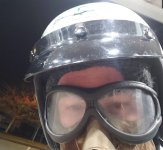
Shout out to those who still ride, carefully, in winter. Layers are important as well as a face mask. I wear a shirt, thermal shirt, flannel, then insulated overalls, and a jacket. This will keep you warm. Never had a need for heated grips or heated jackets. Too cold with insulated gloves? At stops ill put my hands on the cylinder!
Be smart, dont ride too late at night or very early in the morning. Many years ago in my early 20s I got cocky at 4AM and dropped this bike at 5mph on black ice. The layers helped that I had no scratch, but seeing sparks from the bike dragging is unfun.
Shout out to those who still ride, carefully, in winter. Layers are important as well as a face mask. I wear a shirt, thermal shirt, flannel, then insulated overalls, and a jacket. This will keep you warm. Never had a need for heated grips or heated jackets. Too cold with insulated gloves? At stops ill put my hands on the cylinder!
Be smart, dont ride too late at night or very early in the morning. Many years ago in my early 20s I got cocky at 4AM and dropped this bike at 5mph on black ice. The layers helped that I had no scratch, but seeing sparks from the bike dragging is unfun.
Maraakate
Veteran Member
Officially reached 250 miles the other day. Took the valve cover off and checked the valves. Still where they need to be. No leaks. Probably will change the oil before 500 miles just for the general principle of the thing.
One thing I did do was bypass the blow-by re-circulation system. All it does is end up leaving goo in your airbox, putting film on your filter and your CV pistons. I got a roll of hose from Honda and basically ran this behind the rear brake light switch and down below for the breather. I trimmed off the tube at the airbox and then closed it off. I left the two hoses at the bottom of the airbox "open" so there's no plugs. Everything still working great.
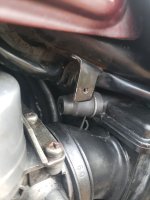
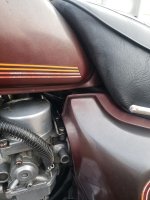
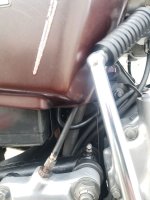
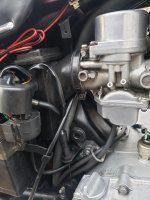
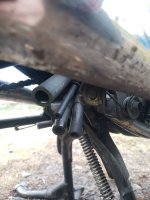
One thing I did do was bypass the blow-by re-circulation system. All it does is end up leaving goo in your airbox, putting film on your filter and your CV pistons. I got a roll of hose from Honda and basically ran this behind the rear brake light switch and down below for the breather. I trimmed off the tube at the airbox and then closed it off. I left the two hoses at the bottom of the airbox "open" so there's no plugs. Everything still working great.
There should be no film/oil appearing on the air filter with the breather hose intact unless you're missing the interior hose. As long as the owners performs the drain of the hoses every oil change there shouldn't be any downside to leaving the system as Honda designed.
The road draft tube set up you have is going to leave an oil film on the bike behind it.
The road draft tube set up you have is going to leave an oil film on the bike behind it.
Maraakate
Veteran Member
All hoses are there. I got fed up with remembering to drain it then it does cause a film and stuff swimming at the bottom. I just run without the plugs, always have for years.
Is there a better routing location?
Is there a better routing location?
To do it properly you need catch tank of some sort. All that is is a can, bottle, etc. where the engine hose drops into. Also needed is an opening to vent the air pulse. The can should be filled with plastic or SS pot scrubbers so the vapors from the engine hose blow thru them separating oil from air.
The engine hose should be in @1/4 of the can height surrounded by the scrubbers.
This arrangement will still require draining at regular intervals.
The engine hose should be in @1/4 of the can height surrounded by the scrubbers.
This arrangement will still require draining at regular intervals.
This struck me funny, you spent time and effort getting the air box lid O-ring to seal it up while running with open drains.All hoses are there. I got fed up with remembering to drain it then it does cause a film and stuff swimming at the bottom. I just run without the plugs, always have for years.
MC_Collector
Member
We talked on the phone last night, but just to reiterate it here... When you get this heavy into it you will NEVER get it back. You do it simply because you love the bike and want to do it. At the price I'm spending I could literally buy two more CM400As. But who knows their history? And there's fun and pride in how hard and long I've riden this one until rebuild time. Then going another 40K on the same engine and frame.
I know most people don't care, but to me it's fun and will be a good learning experience into diving into more complex bottom ends. Something I want to do if I want to be able to help others.
MC_Collector
Member
This is a great read and another example of how your determed help kept me from junking a very good bike that had been in my family for 22+ years. I've ridden over 500 miles with the reverse engineered CDI and it's running great at 45000 miles.
Maraakate
Veteran Member
Thanks! May i ask your name? I always love stories of people who have bought my CDI and driving their bikes again.This is a great read and another example of how your determed help kept me from junking a very good bike that had been in my family for 22+ years. I've ridden over 500 miles with the reverse engineered CDI and it's running great at 45000 miles.
MC_Collector
Member
I would have bought one of your CDI's if I had known you were offering them. I was aware of the Hondatwins forum and used some of LongDistanceRider's posts to troubleshoot my no spark issue. I got a used CDI which was either bad or damaged by my failed stator (which had a bad trigger unit and rust on one of the ground wire connections). After getting a good used stator I still had no spark. I was about ready to give up on the bike and use it for some yard art, but I came across an ebay seller in Washington State offering a assembled CDI board replacing the factory module function. Under the listing details he put a link to your excellent instructions on github. I bought it and had some dialog with the seller and learned that he and a friend had two CM400s with bad CDI and using your instructions had sourced the parts and had PC boards made. Due to the vendor minimum order requirements he wound up with an extra board which he assembled and I purchased untested. The instructions had credits which enabled me to find VHT. I have maintained and repaired stuff many years, but after attempting to dig the potting compound out of the dead CDIs I had I couldn.t see how to do it without wreaking complete destruction to the units. I was also unaware of many of the sources for NOS parts. Thanks Again!Thanks! May i ask your name? I always love stories of people who have bought my CDI and driving their bikes again.
Dusty Evans
Maraakate
Veteran Member
ballbearian
Veteran Member
Beautiful. Looks like Inagadadavida on an LP.
Maraakate
Veteran Member
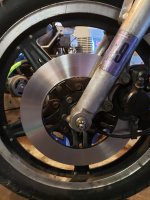
It does look pretty sharp. Still have a long while to go on cosmetics though. Still waiting on a good deal for a used headlight bucket. Mine has some cracks that are beyond filling and plastic welding.Beautiful. Looks like Inagadadavida on an LP.
ballbearian
Veteran Member
Hopefully good used will pop up. Wire screen mesh and JBweld works good if possible.It does look pretty sharp. Still have a long while to go on cosmetics though. Still waiting on a good deal for a used headlight bucket. Mine has some cracks that are beyond filling and plastic welding.
Maraakate
Veteran Member
It's been wire meshed and plastic epoxied before. I'd say one of the worst parts of this bike in regards to the frame is the fork "ears" and the bucket. You drop it just once, even on the centerstand it's bent for good.
Maraakate
Veteran Member
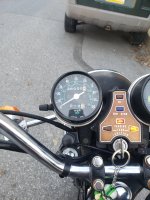
61F today so had some time to get some riding in. 300 miles/36000 total. Still going strong.