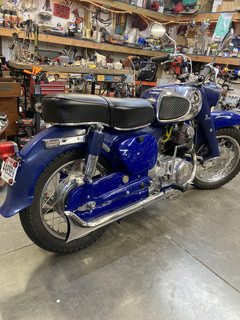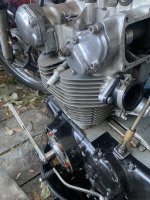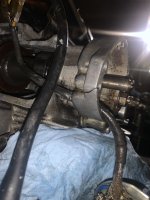
1971 CL450 that sat for 40 years.

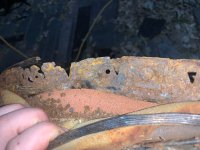
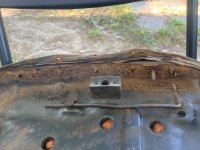
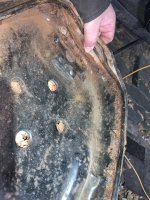
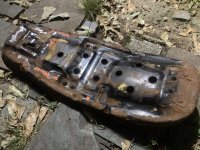
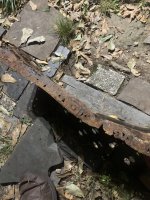
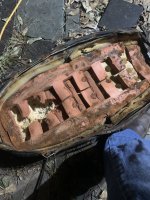
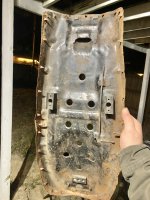
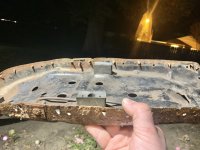
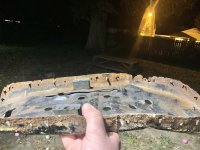
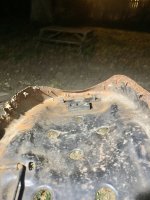
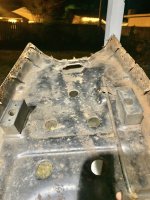
In regards to the seat pan it’s looking pretty rough. I don’t personally see this as having much hope left.

DAE944EB-91D1-4A68-9205-CF8948BFB0BD.jpeg
11411662-7912-4D3D-B5B7-D5771F8988F4.jpeg
EA392E2F-E4CC-45D5-8877-49054B780225.jpeg
 
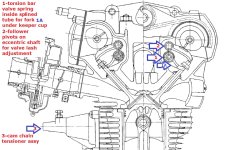
Now that you have the follower and shaft back in you can spend the time cleaning the gasket surface of the head. As Jim says, it needs to be clean enough that your mother would eat off it. Then, once the surface on the head looks like the cam bearing in cleanliness (and I just looked at it also, there are a few little spots that can be cleaner) you can button that one up. Leave the valve adjustment to later, for now (with the crankshaft in the exact same position) just rotate the eccentric shaft while lifting the follower until the follower has max clearance to the cam lobe and leave it there, it will help on the next one.

If all went as well as it seemed to (but of course, I can't see it from here) then you're out of the woods as far as any disasters go. There are 3 cam bearing gaskets alike, and one is different as you may have already seen. The oddball goes on the points side of the exhaust cam IIRC.
Just to clarify. Leave as much clearance as possible between the cam lobe and follower? Will I be lifting the follower by hand or will turning the eccentric shaft do that for me?
 
In regards to the seat pan it’s looking pretty rough. I don’t personally see this as having much hope left.

View attachment 25300
View attachment 25301
View attachment 25302
Up to you. I try to save almost everything and it's my hobby. They often rot around the edges. That metal edge could be replaced by welding or even pop rivets. You just have to get it apart to get rid of all the crumbly metal and crumbly foam to see what's left.

Texavina does make some nice replacement seats though, if you can spend some money.
 
Up to you. I try to save almost everything and it's my hobby. They often rot around the edges. That metal edge could be replaced by welding or even pop rivets. You just have to get it apart to get rid of all the crumbly metal and crumbly foam to see what's left.

Texavina does make some nice replacement seats though, if you can spend some money.
This is the closest thing to OEM I have found on their website. It would be missing those silver snap buttons on the side and Honda logo, but I’m sure something could be crafted to address that. More importantly, I would have a seat lol.


Would it be an option for you to work on this seat pan that I have?
 
I'm not sure if you've learned about CMSNL yet, but they are a parts supplier in the Netherlands that has many new and NOS parts. I use their parts fiches more than their inventory, but I did get some important new parts for my XL350 that made a huge difference. Believe it or not, CMSNL shows a new one (only one!) available for a tidy sum of about $1300!

I checked CMSNL after looking at the current eBay options, which are not very good. If the worst of it is the rough edge shown above, I think I agree with ballbearian about trying to save it by pop riveting some new metal in where the edge is the worst. The first step, as he said, is getting all the rusted stuff off.

I wonder how hard it is to fit a later side hinge seat on the frame. I believe I have two CL450 seat pans and they are both side hinge. I'm not using either of them.
 
This is the closest thing to OEM I have found on their website. It would be missing those silver snap buttons on the side and Honda logo, but I’m sure something could be crafted to address that. More importantly, I would have a seat lol.


Would it be an option for you to work on this seat pan that I have?
The other thing is your foam, is it too far gone? May as well tear it down and see. Another member bought a new foam that turned out good but it was a 350, not sure if they have one for yours and it was pricey for that. By the time you got a cover and shipping to me and back and foam too the Texavina might be better. You can get a Honda stencil for the back to spray the logo and chrome rivets are at good craft stores or Bezos bizarre (amazon).
 
I'm not sure if you've learned about CMSNL yet, but they are a parts supplier in the Netherlands that has many new and NOS parts. I use their parts fiches more than their inventory, but I did get some important new parts for my XL350 that made a huge difference. Believe it or not, CMSNL shows a new one (only one!) available for a tidy sum of about $1300!

I checked CMSNL after looking at the current eBay options, which are not very good. If the worst of it is the rough edge shown above, I think I agree with ballbearian about trying to save it by pop riveting some new metal in where the edge is the worst. The first step, as he said, is getting all the rusted stuff off.

I wonder how hard it is to fit a later side hinge seat on the frame. I believe I have two CL450 seat pans and they are both side hinge. I'm not using either of them.
Wasn't it you, Brody, that got a new foam for your 350? He may need that, if available. If the rear hinge and side hinge seats are the same length etc. it may be pretty easy to change hinge location, if the latch hook in front is the same (this may be the most important issue). Who knows, will need to compare pics of the bottom of the pans with a yardstick from you both.
 
Wasn't it you, Brody, that got a new foam for your 350? He may need that, if available. If the rear hinge and side hinge seats are the same length etc. it may be pretty easy to change hinge location, if the latch hook in front is the same (this may be the most important issue). Who knows, will need to compare pics of the bottom of the pans with a yardstick from you both.
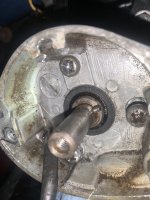
That's right. It was from Sirius Consolidated Inc. and that seems to be one of the few specialized seat foams (CB350) that they sell. They also show bulk seat foam. I have used several of their covers and have always been happy.

I think the seat latches changed when the side hinge was adopted. Maybe the easier switch would be putting the rear hinge on the side hinge pan?
 
Last edited:
Personally I have never used a rivet gun before. Or welded for that matter. I know the 1st step would be rust removal to see what the damage is and then finding the correct sheet metal to use. A seat cover would be easy to acquire off eBay. The mystery to me would be acquiring the correct foam and installing that.

Texavina lists their K1-K4 model (rear folding) seats as:

Front Width: 7.5 inches

Middle Width: 10.5 inches

Length: 25-25.5 inches

K5-K7 model (side folding) seats as:

Front Width: 7.5 inches

Middle Width: 11 inches

Length: 25.5 - 26 inches

So maybe some differences there with fitment.

And if the seat rebuild could be done by a forum member for under $200 I would go that route as well. Decisions decisions
 
Google: pop rivet tool. It's basically a fancy stapler and I think you could handle that aspect of the repair if you go that route. Also, not expensive. You can buy thin steel plates at Home Depot and would need an angle grinder or something to cut things the right size.

You know those little triangular points that are used to hold the seat cover? If those are damaged you can buy sheet metal strips with them on it and pop rivet those in as well. That was my reason for buying a pop rivet tool several years ago.

The nice thing about seats is that the cover will hide most of the ugliness involved in the repair.

If you could add a couple close-ups of the two or three worst spots, that might help. I think you already showed a good picture of the worst spot. Is anything else close to that bad? Is it mostly the sides where the rust is really bad?
 
Google: pop rivet tool. It's basically a fancy stapler and I think you could handle that aspect of the repair if you go that route. Also, not expensive. You can buy thin steel plates at Home Depot and would need an angle grinder or something to cut things the right size.

You know those little triangular points that are used to hold the seat cover? If those are damaged you can buy sheet metal strips with them on it and pop rivet those in as well. That was my reason for buying a pop rivet tool several years ago.

The nice thing about seats is that the cover will hide most of the ugliness involved in the repair.

If you could add a couple close-ups of the two or three worst spots, that might help. I think you already showed a good picture of the worst spot. Is anything else close to that bad? Is it mostly the sides where the rust is really bad?
C686B387-44BC-4E6A-8FCB-3A491C75B4E1.jpeg
This is honestly the only spot that is bad. The metal is flimsy in the middle. Around the rest of the pan, the edge has barely chipped and I can’t manipulate it with my fingers.
 
You fellas have been a great help. Tomorrow I’m going to get the supplies to start the rust removal process, and then evaluate from there. Oh and shipping is probably around $80 from Vietnam(Texavina). So a seat from them is probably $260 total.
 
View attachment 25307
This is honestly the only spot that is bad. The metal is flimsy in the middle. Around the rest of the pan, the edge has barely chipped and I can’t manipulate it with my fingers.
Only one spot, hmmmm. Can you take one of the whole pan bottom? And a whole foam pic and note any places where it is crumbled or is hard (and will crumble). The metal repairs are easy for me but getting the foam right is something I'm concerned with because you want it to not have lumps or unevenness under a new cover.
 
You fellas have been a great help. Tomorrow I’m going to get the supplies to start the rust removal process, and then evaluate from there. Oh and shipping is probably around $80 from Vietnam(Texavina). So a seat from them is probably $260 total.
Ok, that ups the motivation to possibly repair yours.

I find it pretty quick to used a 3-4" diameter course wire wheel in an electric drill to remove rust and it saves some elbow grease too.
Plus I use the wheel on all kinds of things from bolts to brackets, even lightly on chrome (after the new bristles break in and start to lay over just a bit).
You learn quick to keep skin and the drill cord away from it. :)


The 3 inch fine wires are handy too. I go through 3 or four of these a year, inside fenders, on kickstands, rusty chainguards, etc.
 
Only one spot, hmmmm. Can you take one of the whole pan bottom? And a whole foam pic and note any places where it is crumbled or is hard (and will crumble). The metal repairs are easy for me but getting the foam right is something I'm concerned with because you want it to not have lumps or unevenness under a new cover.
05930DF5-0DD1-4F20-979E-F33FBB691114.jpeg
0AC48846-5C94-4F85-9962-DC30AC37DB66.jpeg
575C5335-6B85-4A58-A590-175537EDA469.jpeg
66D6E720-EB78-4B5E-BD1C-30C14C915F1B.jpeg
E0F9894D-6D76-404F-B1CA-1F28277E05DE.jpeg
D32A8E16-ED72-4F13-8AA8-45FA9272D7E3.jpeg
6B3F9E38-B2B5-48F7-8273-62110C0F2F06.jpeg
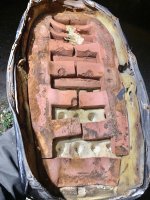
All of the red foam is a little pliable, but has definitely hardened some. The yellow is still squishy, but of course has a big deteriorated hole in it. Plus, there is possibly a combo of mold/dirt/rust on all of it.
 
All of the red foam is a little pliable, but has definitely hardened some. The yellow is still squishy, but of course has a big deteriorated hole in it. Plus, there is possibly a combo of mold/dirt/rust on all of it.

It looks save-able, One more pic of the top of the foam with the vinyl cover off please.
Need to strengthen the side edges of the metal in a few spots and the one area where it's rotted through with a new strip of steel about 2" wide and a couple inches longer than the bad area, either welded or popriveted (can't rivet in the rotted area). The new steel could be cut with some large tin snips/shears but it needs to be about the same thick gauge as the original pan and not super easy to cut with shears. There will be some hammering for curves as it gets fitted.
It may work to spot stuff some foam into the deteriorated hole then cover the whole upper foam with either some thick quilters batting or a 1" sheet of upholsterer's soft foam under the new cover.
May need to do some strategic contact cement gluing of the red foam to get it 'straight' if it or the yellow part has shifted in spots.
It's all kind of trial and error and a bit of work but if it looks decent and is comfortable you've won.
 
My 1973 CB350 seat pan looked like yours, rusted most of the way round on the edges.
i contemplated welding a new metal strip but considered that the whole pan is a pressed unit that provides strength to sit on and for the cushion and cover to be stretch over. I didn’t think my welded on repairs would have been good or strong enough. Consider the seat needs to be robust and not moving about when riding. A safety issue if you will….
so I bought a bare seat pan from Texavina and I note they have CB450 ones too.


at not too bad a price.
then I bought a shaped foam pad from Sirius and a vinyl cover with the logo from eBay.
I think I paid in USD. 90 + 85 + 45 for the items so money well spent and I am happy with the job.
about 100 in total for freight from where ever to Auckland NZ.

putting it together however takes patience and a hot air gun to stretch the cover on.
then plenty of patience putting the chrome strip back around it.
the quality of manufacturing the pan was okay but average as it was not a true full pressing like the original but parts welded together, cleaned up then powder coated. But since it is hidden it is not seen. It is also made from thicker gauge metal than the original so plenty strong.
all the side hinge, latch, rubber mounting holes, operators book mounting we’re all correctly positioned so I was well pleased with the final result.
repairing old rusty tin plate is not my thing!
cheers
 
My 1973 CB350 seat pan looked like yours, rusted most of the way round on the edges.
i contemplated welding a new metal strip but considered that the whole pan is a pressed unit that provides strength to sit on and for the cushion and cover to be stretch over. I didn’t think my welded on repairs would have been good or strong enough. Consider the seat needs to be robust and not moving about when riding. A safety issue if you will….
so I bought a bare seat pan from Texavina and I note they have CB450 ones too.


at not too bad a price.
then I bought a shaped foam pad from Sirius and a vinyl cover with the logo from eBay.
I think I paid in USD. 90 + 85 + 45 for the items so money well spent and I am happy with the job.
about 100 in total for freight from where ever to Auckland NZ.

putting it together however takes patience and a hot air gun to stretch the cover on.
then plenty of patience putting the chrome strip back around it.
the quality of manufacturing the pan was okay but average as it was not a true full pressing like the original but parts welded together, cleaned up then powder coated. But since it is hidden it is not seen. It is also made from thicker gauge metal than the original so plenty strong.
all the side hinge, latch, rubber mounting holes, operators book mounting we’re all correctly positioned so I was well pleased with the final result.
repairing old rusty tin plate is not my thing!
cheers
That's great to hear Texavina's pan is at least as strong as OEM. The overall rigidity would come from the edges being at 90 degrees to the 'flat' pan, so any repairs could result in as solid or more than original , if done right. Outside of rust, I've seen many OEM seats with stress cracks which means Honda was pretty minimal in it's design (of course rider weight would make a big difference).
I think the main issue here is the foam, if only a repro shaped foam were available for the 450'sfrom Sirius. Too bad Texavina doesn't sell their foams separately.
Yeah, the chrome strip is a whole other rodeo. He doesn't have one to replace and Texavina doesn't have one either. I did a Dream seat with 1/2" truck door edging that looked pretty good.
tPhGjlcm.jpg
 
that looks great BB, I love fish tails.
Pity we don’t have many dreams in NZ. I guess a very few are hidden away.
in 30 years I have never seen any C72,77 or others of the mid to late 60,s come up for sale.
thousands of step through 50,s though….
However things improved in the 70,s with CB250/350 being quite common relatively.
not a lot of CL models though.
 
Back to the engine... are we working on this thing today?
There was a final question I had asked above. Probably got buried in the seat talk lol.

“Just to clarify. Leave as much clearance as possible between the cam lobe and follower? Will I be lifting the follower by hand or will turning the eccentric shaft do that for me?”
 
There was a final question I had asked above. Probably got buried in the seat talk lol.

“Just to clarify. Leave as much clearance as possible between the cam lobe and follower? Will I be lifting the follower by hand or will turning the eccentric shaft do that for me?”
It did get lost, sorry. Both is the answer, you rotate the follower shaft and lift the follower with your fingers to feel (and visually see) the shift in position of the follower and the increase in clearance (distance of movement) under the cam lobe. This will also teach you about how the eccentric follower shafts work with respect to adjusting the valves later. You should be able to turn the follower shaft (without the nut on it) with your fingers so it will be easier to watch the follower itself.

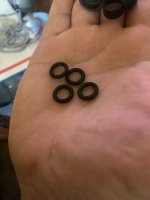
You did get new o-rings for the follower shafts, right?
 
It did get lost, sorry. Both is the answer, you rotate the follower shaft and lift the follower with your fingers to feel (and visually see) the shift in position of the follower and the increase in clearance (distance of movement) under the cam lobe. This will also teach you about how the eccentric follower shafts work with respect to adjusting the valves later. You should be able to turn the follower shaft (without the nut on it) with your fingers so it will be easier to watch the follower itself.

You did get new o-rings for the follower shafts, right?
I’m glad that you reminded me of those o-rings. My kit came with Rocker Shaft x4

91659F4E-AE8A-4049-BD17-AEF19B28D065.jpeg
 
Good - so you have both the left intake cam bearing head surface and the cam bearing cover surface clean and ready to finish assemble then?
 
Yes that would be correct
Then you can wrap that one up and get ready to duplicate that effort (minus the loose follower incident) on the next one. Be sure to use the correct gasket on it and slip the new o-ring on the follower shaft. Might as well do the other intake bearing gasket next, but of course wait to rotate the engine a little bit until you have the left bearing reinstalled and the screws tightened. And leave the valve adjustment loose.
 
Then you can wrap that one up and get ready to duplicate that effort (minus the loose follower incident) on the next one. Be sure to use the correct gasket on it and slip the new o-ring on the follower shaft. Might as well do the other intake bearing gasket next, but of course wait to rotate the engine a little bit until you have the left bearing reinstalled and the screws tightened. And leave the valve adjustment loose.
I will need to make sure the right intake valve is closed correct? How do I avoid the loose follower incident from happening again?
 
I will need to make sure the right intake valve is closed correct? How do I avoid the loose follower incident from happening again?
Yes, and from the picture further above all you have to do is rotate the engine back a little to get that lobe pointing upward. All you can do to avoid the follower shaft from coming out is to try to push inward on it (with the nut removed of course) as you pull the bearing cover off. I know, if the gasket is stuck it will not be easy, and if the o-ring on the follower shaft is also stuck in the bearing cover it might come out anyway but as long as there is no tension on the cam lobe then you can get a good look at the follower (actually a good thing since this engine is totally unknown to you) and put it back in again, you already learned it can be done... :)
 
Yes, and from the picture further above all you have to do is rotate the engine back a little to get that lobe pointing upward. All you can do to avoid the follower shaft from coming out is to try to push inward on it (with the nut removed of course) as you pull the bearing cover off. I know, if the gasket is stuck it will not be easy, and if the o-ring on the follower shaft is also stuck in the bearing cover it might come out anyway but as long as there is no tension on the cam lobe then you can get a good look at the follower (actually a good thing since this engine is totally unknown to you) and put it back in again, you already learned it can be done... :)
Does the lobe pointing upward indicate that the valve is closed?
 
Yes, and from the picture further above all you have to do is rotate the engine back a little to get that lobe pointing upward. All you can do to avoid the follower shaft from coming out is to try to push inward on it (with the nut removed of course) as you pull the bearing cover off. I know, if the gasket is stuck it will not be easy, and if the o-ring on the follower shaft is also stuck in the bearing cover it might come out anyway but as long as there is no tension on the cam lobe then you can get a good look at the follower (actually a good thing since this engine is totally unknown to you) and put it back in again, you already learned it can be done... :)
For some reason I am nervous to rotate the engine backwards even just a little bit. I think I read a horror story a few nights ago on one of the forums. In this case it’s ok?
 
For some reason I am nervous to rotate the engine backwards even just a little bit. I think I read a horror story a few nights ago on one of the forums. In this case it’s ok?
A progress report at this point would be helpful. We've exchanged a lot of words but I haven't seen any visuals of where you're at right now. Let me see the current status and we'll talk about how to be sure turning it backward a little will be okay. The horror stories you read are mostly fictional or from misguided people. When the engine is in a good state of maintenance it can be rotated in either direction with no ill effects. After all, it's a bunch of mechanical parts timed to operate together properly, and they work the same way in reverse.
 
A progress report at this point would be helpful. We've exchanged a lot of words but I haven't seen any visuals of where you're at right now. Let me see the current status and we'll talk about how to be sure turning it backward a little will be okay. The horror stories you read are mostly fictional or from misguided people. When the engine is in a good state of maintenance it can be rotated in either direction with no ill effects. After all, it's a bunch of mechanical parts timed to operate together properly, and they work the same way in reverse.
Left intake cover - buttoned up
2EA3D473-F97E-44BF-9522-C7192FE1427F.jpeg

Right cam lobe set to pointing straight up

DB9DB5F3-CD13-4756-BCA1-5029444FE2BF.jpeg

About to start cleaning up the cover bearing - the previous goo, even though excessive, didn’t leave much gasket material. I won’t be leaving any though

BAE8C4EA-D79F-43C9-A117-927DA64EEFC1.jpeg


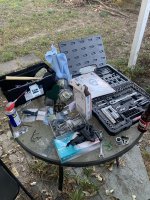
Bonus picture: My erm… uhh.. workstation lol

5C915CC8-85F0-420C-A487-98BE27E3B721.jpeg
 
Bonus picture: My erm… uhh.. workstation lol
You're perilously close to alcohol abuse, that Killian's is too near the edge of that table.

So I was under the impression you were going to wait until I got to see the progress, but you obviously turned the engine and then proceeded to pull the right intake apart.

Yeah, plenty of goo on that gasket. I'm sure the shop it resided in over the last 20 years would disavow any knowledge of that situation.
 
I wanted to convey to you a way you could make sure it would be safe to rotate the engine backward before you actually did it.

Now I have to get in the shower, then put the clean sheets on my 42 year old waterbed before sitting down to TV with my wife.
 
I wanted to convey to you a way you could make sure it would be safe to rotate the engine backward before you actually did it.

Now I have to get in the shower, then put the clean sheets on my 42 year old waterbed before sitting down to TV with my wife.
Well, I actually never turned it backwards. I just rotated it forwards until the cam lobe was straight up. When I started to turn it backwards, maybe 1/4in if that, the top of the cam lobe was turning away from the ceiling. And then of course, that random fear set in of moving it backwards.

Edit: I’m assuming all procedures still apply the exact same for the exhaust intake side?
 
Last edited:
Edit: I’m assuming all procedures still apply the exact same for the exhaust intake side?
I assume you mean exhaust side, since you just did the intake side. Yes, except that there are different components to deal with on the exhaust side like the points and advancer, and the tachometer drive on the right side.

Using what you've learned on the intake side - rotate the engine so cam lobe facing away from the follower, no rotation after the cam bearing is removed, etc. - you should be okay to do the exhaust. But, perhaps you should study the parts involved in the tach drive side first. You can't really screw anything up, but you can lose an important thrust washer if you don't realize it's there, and you need to understand about the engagement of the tach drive into the end of the camshaft.

Pay close attention to #23 and the engagement tangs on the camshaft side of #3. I'm going to the living room now.

honda-cl450-scrambler-1971-k4-usa-tachometer-gear-box-points-basepoints_bighu0030e6s01_d776.gif
 
Last edited:
I assume you mean exhaust side, since you just did the intake side. Yes, except that there are different components to deal with on the exhaust side like the points and advancer, and the tachometer drive on the right side.

Using what you've learned on the intake side - rotate the engine so cam lobe facing away from the follower, no rotation after the cam bearing is removed, etc. - you should be okay to do the exhaust. But, perhaps you should study the parts involved in the tach drive side first. You can't really screw anything up, but you can lose an important thrust washer if you don't realize it's there, and you need to understand about the engagement of the tach drive into the end of the camshaft.

Pay close attention to #3 and the engagement tangs on the camshaft side of #23. I'm going to the living room now.

honda-cl450-scrambler-1971-k4-usa-tachometer-gear-box-points-basepoints_bighu0030e6s01_d776.gif
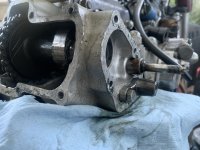
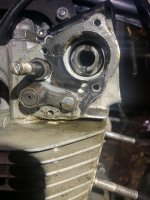
After re-reading your post a few times, and studying the diagram, here are a couple of pictures the moment after I slowly removed the cover.

2D2A87DD-F73A-4400-9E86-F605A142C28A.jpeg
E15DEE5B-A8AA-45B1-847B-F6FA46E0353F.jpeg

Edit: I may have unscrewed the cover in backwards steps? The tach cable and ‘assembly’ is still attached to the cover
 
Last edited:
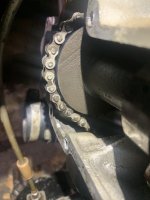
Also, I do remember you asking about the white residue on the cam chain. It appears to be paint in my eyes. It scrapes off with the lightest scrape of a nail.

F3F38D8A-2766-4A34-A4C1-3CB3B9426EDF.jpeg
 
AEEE42F8-7FDB-411D-B7D4-3B51CA0FE25B.jpeg
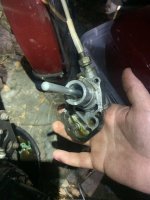
Right exhaust side cleaned and buttoned up. Took a minute to line up that rod, but I’m confident that it’s back in place.
 
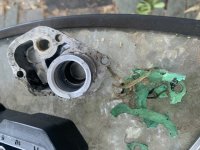
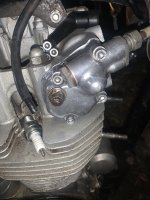
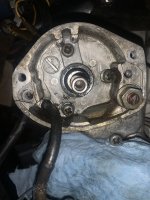
After making sure the right exhaust(tach cover) side was installed back. And setting the left exhaust valve closed(cam lobe up). I am on the fourth and final cover. Exhaust left side, behind the points. Currently running into problems.

This is my first time running into a screw stripped this bad(top screw). It will not budge. Also, there is a crack on the left side which I am sure isn’t supposed to be there.

29F3D098-743F-43C2-88B3-49EFA9FC0BEC.jpeg
B1357953-11F3-4B99-8EFD-2FD8CA414EDC.jpeg
 
After making sure the right exhaust(tach cover) side was installed back. And setting the left exhaust valve closed(cam lobe up). I am on the fourth and final cover. Exhaust left side, behind the points. Currently running into problems.

This is my first time running into a screw stripped this bad(top screw). It will not budge. Also, there is a crack on the left side which I am sure isn’t supposed to be there.
I know you're focused on your bike here but you may want to read my post today about stripped screws. I hope it helps.

Not sure but that cracked piece might still be usable. Clean it good then spray some carb cleaner in the crack after that you could push some JBweld epoxy in there to help stabilize it.
 
I know you're focused on your bike here but you may want to read my post today about stripped screws. I hope it helps.

Not sure but that cracked piece might still be usable. Clean it good then spray some carb cleaner in the crack after that you could push some JBweld epoxy in there to help stabilize it.
I tell you what, frustration is setting in again. This bike has not been shy of putting out surprises. I joked with my Dad today and said “You know I used to look for what’s wrong on this bike, now I’m looking for what works”. LOL. But, I’m glad to be able to vent, and take breaks. Everything can be fixed with you guys here to help.

Anyways, I’m assuming this crack happened by the PO applying force to this stripped screw with no results. I have come across a few tough screws already, my go-to was tightening them a 1/4 turn with all my might, then unscrewing. That always broke them free. Not this one though. I have sprayed some WD40 on it a few times. I’ll be back to the drawing board tomorrow. I’ll still be up to reply for a little while.
 
I tell you what, frustration is setting in again. This bike has not been shy of putting out surprises. I joked with my Dad today and said “You know I used to look for what’s wrong on this bike, now I’m looking for what works”. LOL. But, I’m glad to be able to vent, and take breaks. Everything can be fixed with you guys here to help.

Anyways, I’m assuming this crack happened by the PO applying force to this stripped screw with no results. I have come across a few tough screws already, my go-to was tightening them a 1/4 turn with all my might, then unscrewing. That always broke them free. Not this one though. I have sprayed some WD40 on it a few times. I’ll be back to the drawing board tomorrow. I’ll still be up to reply for a little while.
Did you read about not trying to keep unscrewing a stripping head? STOP. Before there is no head to save and peen the flared cross. READ it.
 
Did you read about not trying to keep unscrewing a stripping head? STOP. Before there is no head to save and peen the flared cross. READ it.
I tried twice to unscrew it, then I posted here. Then I read your article, haven’t touched it since. Unfortunately, it was probably very stripped before I tried. This is how it sits now.

4259FC5C-8DAA-4CCD-BA51-5245FD04D03B.jpeg
 
I tried twice to unscrew it, then I posted here. Then I read your article, haven’t touched it since. Unfortunately, it was probably very stripped before I tried. This is how it sits now.
Yeah, you totaled that one. The next step is to remove the other two then drill off the head, remove the cam box and use a vice grips to grab the stump and remove it. Put your plug back in to keep any drill chips out of the combustion chamber.
I was kind of thinking of you when I wrote that post in 'Tips and Tricks'.
 
Yeah, you totaled that one. The next step is to remove the other two then drill off the head, remove the cam box and use a vice grips to grab the stump and remove it. Put your plug back in to keep any drill chips out of the combustion chamber.
I was kind of thinking of you when I wrote that post in 'Tips and Tricks'.
I am thinking that the screw was already on its way out when I found it. Unfortunately, I put the nail in the coffin with my couple of tries. I appreciate the efforts
 
I am thinking that the screw was already on its way out when I found it. Unfortunately, I put the nail in the coffin with my couple of tries. I appreciate the efforts
There's always a few that are beyond redemption. Just go easy drilling the head off. Use a 1/4" bit as that is about 6mm the same as the threaded part and the head will pop off when you're through it.
 
Back
Top Bottom