

Yeah, I was a bit surprised to find 4 different pictures of 4 different parts for that same part number.Yeah, eBay sellers can rarely be trusted for correct part number application, but you'd expect better from NOS Parts Now.

-
Don't overlook our Welcome Package, it contains many links to important and helpful information about functions at VHT like posting pictures and sending PMs (private messages), as well as finding the parts you need.
AD
You are using an out of date browser. It may not display this or other websites correctly.
You should upgrade or use an alternative browser.
You should upgrade or use an alternative browser.
1966 Honda CL160 commissioned build
- Thread starter Flyin900
- Start date

I have the spacer and I think it maybe flanged on both sides. I looked this morning and cannot see the inside flange against the outer speedo hub. Everything lines up OK it is just strange the speedo hub rotates with the wheel. It only goes partway around then hits the upper area of the fork. At that point the cable connection is pointing straight down to the ground. 
It just seems strange that the reliance of holding it in the correct fixed position comes down to the cable connection. I wonder if I torqued the front axle more in the 50-60 ft lb range if it would sandwich the spacer harder against the outer speedo area???
The FSM spec is 89 ft lbs of torque, which seems excessive to me. Given the mistakes in translation of these early manuals I suspect that number is wrong???
It just seems strange that the reliance of holding it in the correct fixed position comes down to the cable connection. I wonder if I torqued the front axle more in the 50-60 ft lb range if it would sandwich the spacer harder against the outer speedo area???
The FSM spec is 89 ft lbs of torque, which seems excessive to me. Given the mistakes in translation of these early manuals I suspect that number is wrong???

I'd suspect the torque value is wrong as well, but the bearings and spacers are designed to tighten up the centers of everything in between while allowing proper movement of the wheel on the bearings. The spacer in the speedo drive unit should provide the right contact in the center to tighten against the inner race so the body of it sits still while the interior parts rotate. That drive unit looks suspiciously like the CB77 and DOHC 450 speedo drive, are you certain it's from the 160?
CB160

 www.cmsnl.com
CB77
 www.cmsnl.com
CB450K2 (last drum brake model)
 www.cmsnl.com
CB160
BOX SPEED GEAR for Honda - order at CMSNL
✓ Good to order: BOX SPEED GEAR ✓ Manufacturer Part Number: 44800-216-000 ✓ Quality part
www.cmsnl.com
CB77
BOX SPEEDO GEAR for Honda - order at CMSNL
✓ Good to order: BOX SPEEDO GEAR ✓ Manufacturer Part Number: 44800-268-020 ✓ Quality part
www.cmsnl.com
CB450K2 (last drum brake model)
BOX SPEEDO GEAR for Honda - order at CMSNL
✓ Good to order: BOX SPEEDO GEAR ✓ Manufacturer Part Number: 44800-283-000 ✓ Quality part
www.cmsnl.com
That's the part and I think it looks the same so hopefully it is correct. As I have previously noted this bike has so many wrong or missing parts that it is a best guess. I torqued the wheel to both 30 ft lbs and it was semi seized, then at 60ft lbs it was fully seized. The speedo drive still rotates with the wheel if it is tightened or if it is much looser. Looser will allow less stress and pull on the speedo cable is my thoughts.
Since it uses the more modern slider design with the half moon lower locking clamp assembly on the aluminum forks. Where the steel forks use a full encircled lower fork that the axle slides through the slider.
The clamping of those lower retainers will hold the axle in place and the tightening of the axle castle nut can be a lower value I believe. So someone chime in here if you know differently.
I think I will tighten the axle castle nut to about 15 ft lbs and the cable will hold the speedo drive in place.
If someone has a CB or CL version with the aluminum lowers it would be interesting to see how their set up is on the right hand side of the speedo drive setup. I don't see any place the speedo drive locks into the lower fork with a tab like on more modern Honda fork legs.
Since it uses the more modern slider design with the half moon lower locking clamp assembly on the aluminum forks. Where the steel forks use a full encircled lower fork that the axle slides through the slider.
The clamping of those lower retainers will hold the axle in place and the tightening of the axle castle nut can be a lower value I believe. So someone chime in here if you know differently.
I think I will tighten the axle castle nut to about 15 ft lbs and the cable will hold the speedo drive in place.
If someone has a CB or CL version with the aluminum lowers it would be interesting to see how their set up is on the right hand side of the speedo drive setup. I don't see any place the speedo drive locks into the lower fork with a tab like on more modern Honda fork legs.
Thanks for the input AD. I would say that Chris is glad that part ins't missing, given the US costs of those items.I'd suspect the torque value is wrong as well, but the bearings and spacers are designed to tighten up the centers of everything in between while allowing proper movement of the wheel on the bearings. The spacer in the speedo drive unit should provide the right contact in the center to tighten against the inner race so the body of it sits still while the interior parts rotate. That drive unit looks suspiciously like the CB77 and DOHC 450 speedo drive, are you certain it's from the 160?
CB160
BOX SPEED GEAR for Honda - order at CMSNL
✓ Good to order: BOX SPEED GEAR ✓ Manufacturer Part Number: 44800-216-000 ✓ Quality part
CB77
BOX SPEEDO GEAR for Honda - order at CMSNL
✓ Good to order: BOX SPEEDO GEAR ✓ Manufacturer Part Number: 44800-268-020 ✓ Quality part
CB450K2 (last drum brake model)
BOX SPEEDO GEAR for Honda - order at CMSNL
✓ Good to order: BOX SPEEDO GEAR ✓ Manufacturer Part Number: 44800-283-000 ✓ Quality part
That is not the right solution, it's like putting loctite on a bolt that you can't tighten as fully as it should be because the parts don't fit right.I think I will tighten the axle castle nut to about 15 ft lbs and the cable will hold the speedo drive in place.
Is #9 in place behind the speedo drive unit?
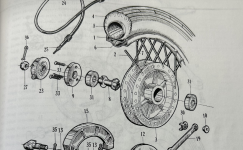
Yes it is there. I didn't look at it closely as it was already inside the hub assembly.
Ok I just removed the wheel and the speedo drive. There is no locking flange on the inner lower slider. Nothing that locks it into #9 in the hub. The inner part of the speedo drive frame part is smooth with nothing to lock it into # 9.
As I noted that axle I don't think is meant to be torqued hard. With just 30 ft lbs the wheel was hard to rotate and dragging from the axle torque. The lower cap covers will hold the axle in place and it think it only needs a minimum amount of side pressure to stop any sideways movement. I think the cable is the retainer and the less pull from the wheel rotation the better. More torque on the axle nut equals more resistance against the speedo drive as in more drag.
Here are the parts I removed.
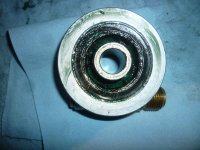
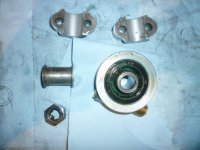
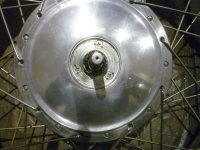
INNER SLIDER RIGHT SIDE.

Ok I just removed the wheel and the speedo drive. There is no locking flange on the inner lower slider. Nothing that locks it into #9 in the hub. The inner part of the speedo drive frame part is smooth with nothing to lock it into # 9.
As I noted that axle I don't think is meant to be torqued hard. With just 30 ft lbs the wheel was hard to rotate and dragging from the axle torque. The lower cap covers will hold the axle in place and it think it only needs a minimum amount of side pressure to stop any sideways movement. I think the cable is the retainer and the less pull from the wheel rotation the better. More torque on the axle nut equals more resistance against the speedo drive as in more drag.
Here are the parts I removed.
INNER SLIDER RIGHT SIDE.
Last edited:
Amannl
Veteran Member
I don’t remember where the file came from years ago but it lists 54-61 ft/lbs. for the front axle nut (for a CB).
I have a service sheet for the CB77 and CB450 so it doesn’t directly address the CL160 but it does reference alloy forks, so...might help with the order of tightening
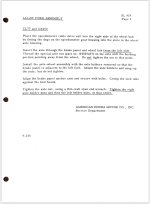
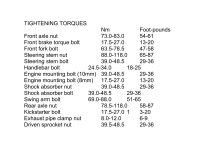
I have a service sheet for the CB77 and CB450 so it doesn’t directly address the CL160 but it does reference alloy forks, so...might help with the order of tightening
Last edited:
Given those pictures. Have you
1) made sure that the bearing inside the speedo drive is turning easily
2) Make sure that spacer is in - right direction. Diameter of flange looks smaller on one side
3) Held onto the speedo drive after installed to see if it will remain in place when you hand spin wheel? (I have seen drives that rely on the speedo cable to keep them in place)
4) If #3 is false, as you are tightening the axle nut - see where it starts to want to spin the drive where you can't hold it. That indicates that your bearing in wheel may not be completely seated
1) made sure that the bearing inside the speedo drive is turning easily
2) Make sure that spacer is in - right direction. Diameter of flange looks smaller on one side
3) Held onto the speedo drive after installed to see if it will remain in place when you hand spin wheel? (I have seen drives that rely on the speedo cable to keep them in place)
4) If #3 is false, as you are tightening the axle nut - see where it starts to want to spin the drive where you can't hold it. That indicates that your bearing in wheel may not be completely seated
Thanks for the suggestions.
1) yes it is freely turning
2) Not different each side is identical on the spacer.
3) I am convinced that is the option. Snug the castle nut while the speedo drive is still moveable. Once you apply 15-20 Ft lbs the drive is locked solid to the wheel hub and spins with the hub.
4) That happens quite quickly once you apply 15 lbs of side thrust to the spacer. That is what is causing the issue IMO.
I plan to snug the castle nut while not side loading the speedo drive too much. The cotter pin will hold the axle /castle nut in place and the cap bottoms hold the axle to the forks.
1) yes it is freely turning
2) Not different each side is identical on the spacer.
3) I am convinced that is the option. Snug the castle nut while the speedo drive is still moveable. Once you apply 15-20 Ft lbs the drive is locked solid to the wheel hub and spins with the hub.
4) That happens quite quickly once you apply 15 lbs of side thrust to the spacer. That is what is causing the issue IMO.
I plan to snug the castle nut while not side loading the speedo drive too much. The cotter pin will hold the axle /castle nut in place and the cap bottoms hold the axle to the forks.
Yakeye: Thanks for the correct pics. I was able to download and print them for the binder I have for the bike.Flying , reading the above I realized I have a CL160 parts catalog!!! It shows the aluminum fork lowers not the steel. Shows an axle spacer with flange on both sides ; part #44311-216-000. One appears to be available at NOS Parts now. Maybe this will help sort front wheel?View attachment 53388
View attachment 53389View attachment 53390
View attachment 53391
View attachment 53392
No bearing replacement on the front wheel. I did replace a rear wheel bearing on one side of that hub.. You can see the original factory stake marks on the 3 screws on one side of that hub with the #9 part held in with 3 screws. So that side I am sure is a factory bearing untouched.Did you replace the wheel bearings? If so and you still have the old ones - put a caliper on them and check width. 15-20lbs is insanely light for an axle bolt
I have no idea here what is happening and it seems few members have a working CB/CL160. Actually I think BB has a CB160 so I will send him a PM for some insight.
The tighter you torque the castle nut the more it side loads that spacer. With the dual flanges on the spacer the inside flange butts against the speedo outer housing. So it makes sense that it would lock the spacer to the outer speedo drive housing. Which in turn locks the inside of the speedo drive to the outer section of #9 the protective cap that covers the wheel bearing and dust seal. Since that is now all locked to the outer wheel hub area as shown in my picture in a previous above post. The speedo drive then is going to want to turn with the hub assembly.
It doesn't make sense in any normal way of assembling a front wheel. It requires someone familiar with the workings of that CB/CL 160 front hub and speedo drive.

RobMan
Veteran Member
Are there lips that hold the bearings in place in the hub or do they depend on the spacer #8 in the parts breakdown above to space them properly? Seems like I read the tabs on the spacer can get pushed in to far and cause issues when I was doing the bearings on my 450. Perhaps a PO messed something up.
Keep the suggestions coming. I just checked and the brake plate side hub is a original Japan bearing with the correct part # and designation of RS on the end of the number. So at first glance the bearings seem original. The spacer is in there and both bearings are smooth and the one I just noted is seated properly. I also checked the brake plate and it is spaced and not hitting the outer area of the bearing.
When I tighten up the axle just on the wheel it still exhibits the same issues. Once you torque the castle nut down it locks the speedo drive and the brake plate also isn't as free rotating either.
Someone who has this bike and has worked on the front wheel may have a better idea of what works. The FSM is silent on anything related to the front wheel.
When I tighten up the axle just on the wheel it still exhibits the same issues. Once you torque the castle nut down it locks the speedo drive and the brake plate also isn't as free rotating either.
Someone who has this bike and has worked on the front wheel may have a better idea of what works. The FSM is silent on anything related to the front wheel.
After more thought and some research I discovered the same issue someone was also having on the other site in 2020. Both Sprint and AD had some inputs and it was solved by replacing the speedo drive in that case.
I think this front wheel maybe off another Honda bike or at least the speedo drive could be. AD was on the right track earlier with his posting of the different drives.
What I think is happening is the snout on the speedo drive is too long or maybe correct if it is for another wheel application which doesn't cause the side loading of the bearing.
I feel the tightening of the castle nut pushes the snout of the speedo drive tighter against the outside of that inner bearing and causes it to start to lock up. I agree the axle should be tightened much more than 10 15 ft lbs! The solution may lie in shaving off 1 or 2 mm of the height, so the snout is not touching the bearing when the axle is tightened properly.
I have to visit Paul next week for the rear wheel tire mounting and some machining on the front brake stay rod. The bolt spacer I received from CMSNL is just a little too large for the opening in the original brake stay arm. Paul has a Bridgeport and should be able to machine the brake stay and shave down the snout on the speedo drive. I hope that is the solution and my assessment of the problem is correct.
The snout area that I believe is side loading the ball bearing on the outer RH side of the hub.
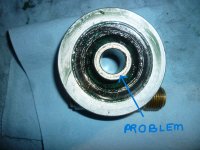
I think this front wheel maybe off another Honda bike or at least the speedo drive could be. AD was on the right track earlier with his posting of the different drives.
What I think is happening is the snout on the speedo drive is too long or maybe correct if it is for another wheel application which doesn't cause the side loading of the bearing.
I feel the tightening of the castle nut pushes the snout of the speedo drive tighter against the outside of that inner bearing and causes it to start to lock up. I agree the axle should be tightened much more than 10 15 ft lbs! The solution may lie in shaving off 1 or 2 mm of the height, so the snout is not touching the bearing when the axle is tightened properly.
I have to visit Paul next week for the rear wheel tire mounting and some machining on the front brake stay rod. The bolt spacer I received from CMSNL is just a little too large for the opening in the original brake stay arm. Paul has a Bridgeport and should be able to machine the brake stay and shave down the snout on the speedo drive. I hope that is the solution and my assessment of the problem is correct.
The snout area that I believe is side loading the ball bearing on the outer RH side of the hub.
Last edited:
Well that idea was a bust.
I ground down the snout of the speedo by about 2 mm on the bench grinder today. I confirmed it is no longer if it ever was touching the side of the outer ball bearing in the RS of the hub. Same issue. Soon as the castle nut is more than hand tight the drive and wheel seize up. I was able to drive the brake plate side of that bearing in a extra 1/2 mm with no change. I also placed a large spacer washer on the brake plate side to ensure that the brake plate wasn't contacting that outer bearing on that side either. Same thing soon as the axle is tightened the system seizes up. I checked the axle for trueness which was fine.
Totally at a loss on why the wheel and the speedo drive lock up when the axle nut is tightened with a low amount of torque.
I ground down the snout of the speedo by about 2 mm on the bench grinder today. I confirmed it is no longer if it ever was touching the side of the outer ball bearing in the RS of the hub. Same issue. Soon as the castle nut is more than hand tight the drive and wheel seize up. I was able to drive the brake plate side of that bearing in a extra 1/2 mm with no change. I also placed a large spacer washer on the brake plate side to ensure that the brake plate wasn't contacting that outer bearing on that side either. Same thing soon as the axle is tightened the system seizes up. I checked the axle for trueness which was fine.
Totally at a loss on why the wheel and the speedo drive lock up when the axle nut is tightened with a low amount of torque.

Perhaps a spacer on the axle between the wheel and speedo drive?
Jim your right I went the wrong way in removing 2 mm off the snout of the inner speedo drive bushing. I tried shimming the inner bushing tonight with some washer spacers. Still with the same outcome. The fellow on the old site who solved the issue did apply a 1 mm washer spacer which solved his issue. He then bought a replacement speedo drive which corrected his issue. He had the earlier steel forks though.
The washer spacer could also be an issue since it will push out the speedo drive unit slightly which then it may not fit between the fork gap correctly. He didn't test the fix with the washer back on the bike. Sprint answered most of his questions on the old forum and suggested there could be a possible wheel fitment issue with the washer spacer. The fellow only tested the washer spacer with the wheel off the bike and with everything tightened up axle wise it worked properly.
What the fellow determined which now makes sense is the outer rim of the drive is binding against the #9 inner bearing cover when the inner snout bushing isn't touching the inner race of the ball bearing. I mistakenly thought the inner snout would bind the bearing with a side load. Yet it looks like when its correct it rides on that bearings inner race centre. Which allows the outer speedo drive cover to sit slightly proud of the #9 inner bearing cover. It makes sense in theory. Yet when I used a bunch of washers to achieve the same spacing it still bound up???
I want Paul to look at it next week as a new set of eyes on the issue.
The washer spacer could also be an issue since it will push out the speedo drive unit slightly which then it may not fit between the fork gap correctly. He didn't test the fix with the washer back on the bike. Sprint answered most of his questions on the old forum and suggested there could be a possible wheel fitment issue with the washer spacer. The fellow only tested the washer spacer with the wheel off the bike and with everything tightened up axle wise it worked properly.
What the fellow determined which now makes sense is the outer rim of the drive is binding against the #9 inner bearing cover when the inner snout bushing isn't touching the inner race of the ball bearing. I mistakenly thought the inner snout would bind the bearing with a side load. Yet it looks like when its correct it rides on that bearings inner race centre. Which allows the outer speedo drive cover to sit slightly proud of the #9 inner bearing cover. It makes sense in theory. Yet when I used a bunch of washers to achieve the same spacing it still bound up???
I want Paul to look at it next week as a new set of eyes on the issue.
Last edited:
An interesting development on the bearing retainer ring under the speedo drive. The one on the bike has some monkey business done to the slotted areas that drive the internals on the speedo drive.
Here is what a NOS part looks like and what I have installed in the wheel presently. I did pull the one side bearing and confirmed the inner spacer is correct and intact with both bearings working well.
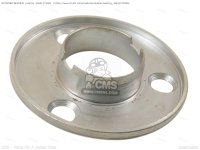
What I have installed in there seems someone was trying to either modify it or there was some damage done otherwise????
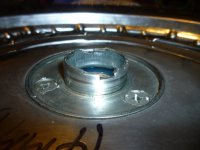
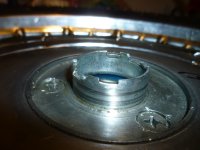
Here is what a NOS part looks like and what I have installed in the wheel presently. I did pull the one side bearing and confirmed the inner spacer is correct and intact with both bearings working well.
What I have installed in there seems someone was trying to either modify it or there was some damage done otherwise????
According to my parts fiche only 4 models use this drive as I noted. So I would need the CA95 to compare. Lots of these parts look the same yet they are not compatible. The speedo drive is a one year only model for both bikes. The CB160 uses one part, then the CL160 another part for a one year only. So there are differences?
Those top cut grooves look cleanly machined in the damaged part, yet the deeper cut grooves on the new part are what is used it appears.
Those top cut grooves look cleanly machined in the damaged part, yet the deeper cut grooves on the new part are what is used it appears.
Good eye there the top cut grooves are indeed pushed inward and there is an inside ledge below each one. The damage may not be the cause of the issue though as none of that damaged area contacts any part of the drive body. Unless there is internal damage inside the speedo drive. It seems to operate smoothly though.
I have contacted a fellow who is a member here in Canada and has a load of CL77 parts for sale on Marketplace. If he has the bearing cover and the CL77 drive unit I will buy both and replace those parts.
I am still stumped as to why this unit and wheel are acting the way they are.
I have contacted a fellow who is a member here in Canada and has a load of CL77 parts for sale on Marketplace. If he has the bearing cover and the CL77 drive unit I will buy both and replace those parts.
I am still stumped as to why this unit and wheel are acting the way they are.

I’ve got an extra I think. After having to combine both sets of forks into one usable set, the other bike is getting a CMX250 front end. Leaves me with a spare wheel - let me see what kind of condition that Speedo plate is in.Good eye there the top cut grooves are indeed pushed inward and there is an inside ledge below each one. The damage may not be the cause of the issue though as none of that damaged area contacts any part of the drive body. Unless there is internal damage inside the speedo drive. It seems to operate smoothly though.
I have contacted a fellow who is a member here in Canada and has a load of CL77 parts for sale on Marketplace. If he has the bearing cover and the CL77 drive unit I will buy both and replace those parts.
I am still stumped as to why this unit and wheel are acting the way they are.
Pete if you have both the plate and speedo I need both of them. Let me know what you have available when you get a chance please. I do have an extra side stand with a very slight bend in it at the bottom if your looking for one of those still?
I should be able to get to it tonight. The speedo is in the spare parts bin - let me clean it up and check if it’s operational.Pete if you have both the plate and speedo I need both of them. Let me know what you have available when you get a chance please. I do have an extra side stand with a very slight bend in it at the bottom if your looking for one of those still?
Thank's Pete anything will help here I think. I can arrange to have you just ship it within the USA to simplify it.I should be able to get to it tonight. The speedo is in the spare parts bin - let me clean it up and check if it’s operational.
Thank's Pete anything will help here I think. I can arrange to have you just ship it within the USA to simplify it.
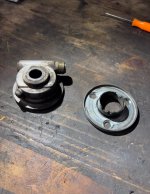
At the very least, the plates in good shape. Let me clean them up a bit but shoot me a PM with the address.
Thanks Pete that will help for sure. Don't care about clean..... that's the cats job.View attachment 53508
At the very least, the plates in good shape. Let me clean them up a bit but shoot me a PM with the address.

ballbearian
Veteran Member
When dis-assembling speedo drive pay attention to number and location of very thin shims under crown gear of speedo. IIRC, there was 2 or more.
I am not disassembling it since the seal is likely going to be damaged and I don't see a part number to replace it. I have taken a few newer ones apart and yes there are shims on the backside of the gear. How did you get the seal out without damage?When dis-assembling speedo drive pay attention to number and location of very thin shims under crown gear of speedo. IIRC, there was 2 or more.

Well I popped out the seal with no damage and took the main body gearing apart. No issues I can see beyond me trimming 2 mm of the main bushing snout.
It has two thrust washers behind the main drive gear as BB noted above. The internal parts look good. There is a space in between the end of the barrel gear and the input shaft where the main speedo cable will attach to the housing. I think that is normal as I cannot move the barrel gear on the assembly.
The mystery continues until it doesn't! Hopefully a replacement drive spline for the hub and a replacement speedo gear may help the issue.
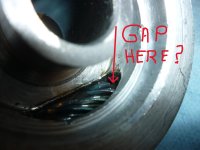
Here are the internal parts of the main assembly removed and in good condition it appears.
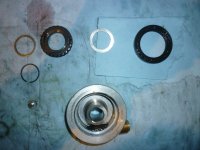
It has two thrust washers behind the main drive gear as BB noted above. The internal parts look good. There is a space in between the end of the barrel gear and the input shaft where the main speedo cable will attach to the housing. I think that is normal as I cannot move the barrel gear on the assembly.
The mystery continues until it doesn't! Hopefully a replacement drive spline for the hub and a replacement speedo gear may help the issue.
Here are the internal parts of the main assembly removed and in good condition it appears.
Last edited:
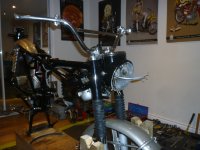
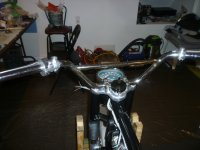
A little more positive news on the front wheel issue. With the speedo drive now empty of the main gearset. I installed it along with 3mm of washers to compensate for my mistake on removing some of the metal bearing bushing earlier. I was able to torque the axle nut up tight and the housing is now stationary on the axle. It is no longer locking to the hub face.
So there are some issues with either the drive plate, which as previously shown is chewed up, or the drive internals are damaged. Pete is kindly sending me some replacement parts to fix both of the issues. Hopefully those will end this saga of the locked speedometer housing on the front hub assembly.
So there are some issues with either the drive plate, which as previously shown is chewed up, or the drive internals are damaged. Pete is kindly sending me some replacement parts to fix both of the issues. Hopefully those will end this saga of the locked speedometer housing on the front hub assembly.
The gasket for the stator engine cover arrived today and it fit perfectly and I believe it was as the seller noted a NOS Honda gasket. I installed the cover and had to fabricate a strain relief bracket for the stator wiring harness. Guess what the correct bracket was missing. LOL.
I used a nut retainer for the rear sprocket drive which uses two or these metal half moon shaped items to retain the nuts that hold the sprocket to the flange drive assembly. Folded it in half and bent the retaining tangs over like the original correct bracket would have used to located the assembly on the engine webbing.
I also had Paul install the rear tire and tube back on the newly laced rear wheel, so that is ready to install along with the engine back into the frame soon.
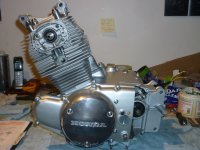
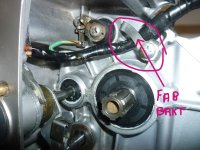
I used a nut retainer for the rear sprocket drive which uses two or these metal half moon shaped items to retain the nuts that hold the sprocket to the flange drive assembly. Folded it in half and bent the retaining tangs over like the original correct bracket would have used to located the assembly on the engine webbing.
I also had Paul install the rear tire and tube back on the newly laced rear wheel, so that is ready to install along with the engine back into the frame soon.

Good solution for the missing cable hold down.

Flyin, do you have some extra sealant around your oil seals in the above photo?? I have always just put them in place dry except oil on the inner opening lip and the shaft. Am I missing something I should be doing???
They are dry seals yet with all the issues this bike has presented in the build. I am just being extra cautious and sealing those areas too. I used green grease for the lube around the different shafts, since it was on the desk already where I did the buildFlyin, do you have some extra sealant around your oil seals in the above photo?? I have always just put them in place dry except oil on the inner opening lip and the shaft. Am I missing something I should be doing???
It never hurts to put some Hondabond on the outer perimeter of the clutch rod seal since they can be known to blow out sometimes and make a huge oil loss in seconds, that's kinda what it looks like to me.Flyin, do you have some extra sealant around your oil seals in the above photo?? I have always just put them in place dry except oil on the inner opening lip and the shaft. Am I missing something I should be doing???
I installed the rear wheel and tidied up the wiring harness run by adjusting the locations of the tie downs and wire lengths for all areas. The front wheel brake stay is mounted and the bolt locking hardware CMSNL sent was incorrect. I fortunately had the right bolt locking plates in stock. I will keep the wrong items, as they may fit another application.
Just working on installing the rear brake lever and then the cable. The back end of the bike is mostly done.
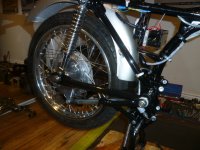

Just working on installing the rear brake lever and then the cable. The back end of the bike is mostly done.
One small job finished with the installation of the rear brake lever and the rear brake cable and a fabrication of the missing brake switch spring. I have the standoff for the rear brake cable to the frame. Since I covered the old brake cable sheathing with a heat shrink tubing with an internal glue base. I cannot get the hole in the standoff to fit over the cable now. The rubber standoff part is hard rubber now with zero flex and I don't want to break it so the cable lays against the frame OK.
The missing rear brake switch spring was fabricated after a number of tries from a stiffer shorter spring. The alignment isn't straight from the switch to the brake pedal attachment. It took some different spring styles and routing to get one that pulled with enough force to activate the switch pull tang.
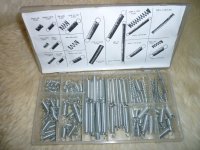
A box of springs comes in handy in these situations. Princess Auto for the save.
Spring that worked the switch correctly now.
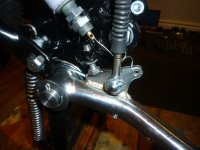
Cable and brake lever assembled.
The missing rear brake switch spring was fabricated after a number of tries from a stiffer shorter spring. The alignment isn't straight from the switch to the brake pedal attachment. It took some different spring styles and routing to get one that pulled with enough force to activate the switch pull tang.
A box of springs comes in handy in these situations. Princess Auto for the save.
Spring that worked the switch correctly now.
Cable and brake lever assembled.
All looks very good!! What rear shocks are those that you have installed??One small job finished with the installation of the rear brake lever and the rear brake cable and a fabrication of the missing brake switch spring. I have the standoff for the rear brake cable to the frame. Since I covered the old brake cable sheathing with a heat shrink tubing with an internal glue base. I cannot get the hole in the standoff to fit over the cable now. The rubber standoff part is hard rubber now with zero flex and I don't want to break it so the cable lays against the frame OK.
The missing rear brake switch spring was fabricated after a number of tries from a stiffer shorter spring. The alignment isn't straight from the switch to the brake pedal attachment. It took some different spring styles and routing to get one that pulled with enough force to activate the switch pull tang.
A box of springs comes in handy in these situations. Princess Auto for the save.
View attachment 53684
Spring that worked the switch correctly now.
View attachment 53685
Cable and brake lever assembled.
View attachment 53686
No clue on the shocks they were on the bike. This bike as you have been following the journey is a bitsa bike. Between missing parts and wrong parts it is a CL160 on the title only.All looks very good!! What rear shocks are those that you have installed??
A few more bits added today. Once I get the front wheel sorted and installed I can then get the motor and carbs back in the frame. Some more welding is outstanding on the exhaust which is missing a rear baffle and the engine bash plate.
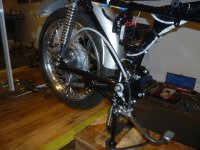
Installed the rear foot rests today and checked the impedance on the primary and secondary windings and installed the coil. The plug caps are messed up and miss matched, so XS650 (PartsNmore) had the correct NGK ones in stock and on order now.
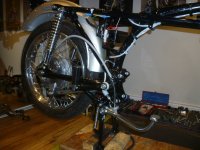
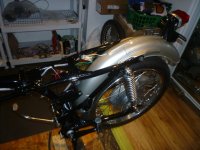
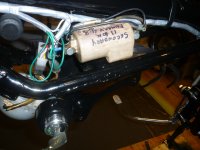
Installed the rear foot rests today and checked the impedance on the primary and secondary windings and installed the coil. The plug caps are messed up and miss matched, so XS650 (PartsNmore) had the correct NGK ones in stock and on order now.
I got a new camera in the form of an A16 iPad. On sale at a local vendor. Look out I am camera happy now.
So much better pictures than the digital camera with way better lighting. I checked over the wiring harness and electrical functions and all work as intended per the owners manual. The exception is the lighting switch isn't working as noted though. It should have a centre off position which on this one it doesn't work. No big deal as day time running lights have been law up here since I was a young fellow. So there are 4 positions on the ignition switch which were covered in the owners manual. 1/Off. 2/On with power to coils and brake light and horn. 3/ On with power to everything, headlight, taillight running/brake light, lighting inside speedo gauge, horn. 4/ Rear taillight running light for night parking.
I also installed the control cables on the handlebar controls and speedo gauge too this morning.
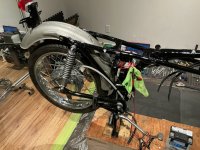
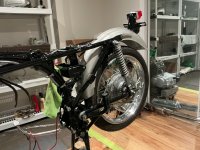
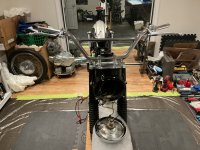

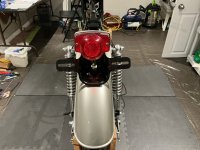

Look out I am camera happy now. So much better pictures than the digital camera with way better lighting. I checked over the wiring harness and electrical functions and all work as intended per the owners manual. The exception is the lighting switch isn't working as noted though. It should have a centre off position which on this one it doesn't work. No big deal as day time running lights have been law up here since I was a young fellow. So there are 4 positions on the ignition switch which were covered in the owners manual. 1/Off. 2/On with power to coils and brake light and horn. 3/ On with power to everything, headlight, taillight running/brake light, lighting inside speedo gauge, horn. 4/ Rear taillight running light for night parking.
I also installed the control cables on the handlebar controls and speedo gauge too this morning.
Last edited:
Gregg
Member
I have a CL160D. It is a 1968 that I have done a lot of work to over the years. The D models were originally CBs. Because of sales trend at the time Honda offered conversion kits to the dealers to change the CB road bike into a scrambler. This is why the Ds have the electric start. Recently I broght mine out of 49 years of storage. It is alive and well.Pete, I am not really familiar with the model, which is what interested me when he asked for assistance in completing the project. I know the 1968 CL175 Sloper models well, which seem to share quite a number of similar features.
I will see what model he has in the garage tomorrow and what I am getting into here.
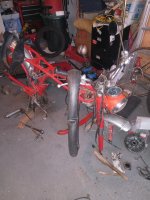
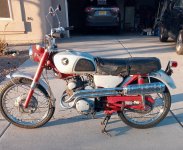
Your bike is mostly complete as a bonus for the restoration. Which makes your bike build year worth exploring, since it is using the early style steel fork lowers and the press stamped rear passenger peg brackets. This 1966 CL160 has the later aluminum fork lowers and the later round tube style rear passenger peg brackets.