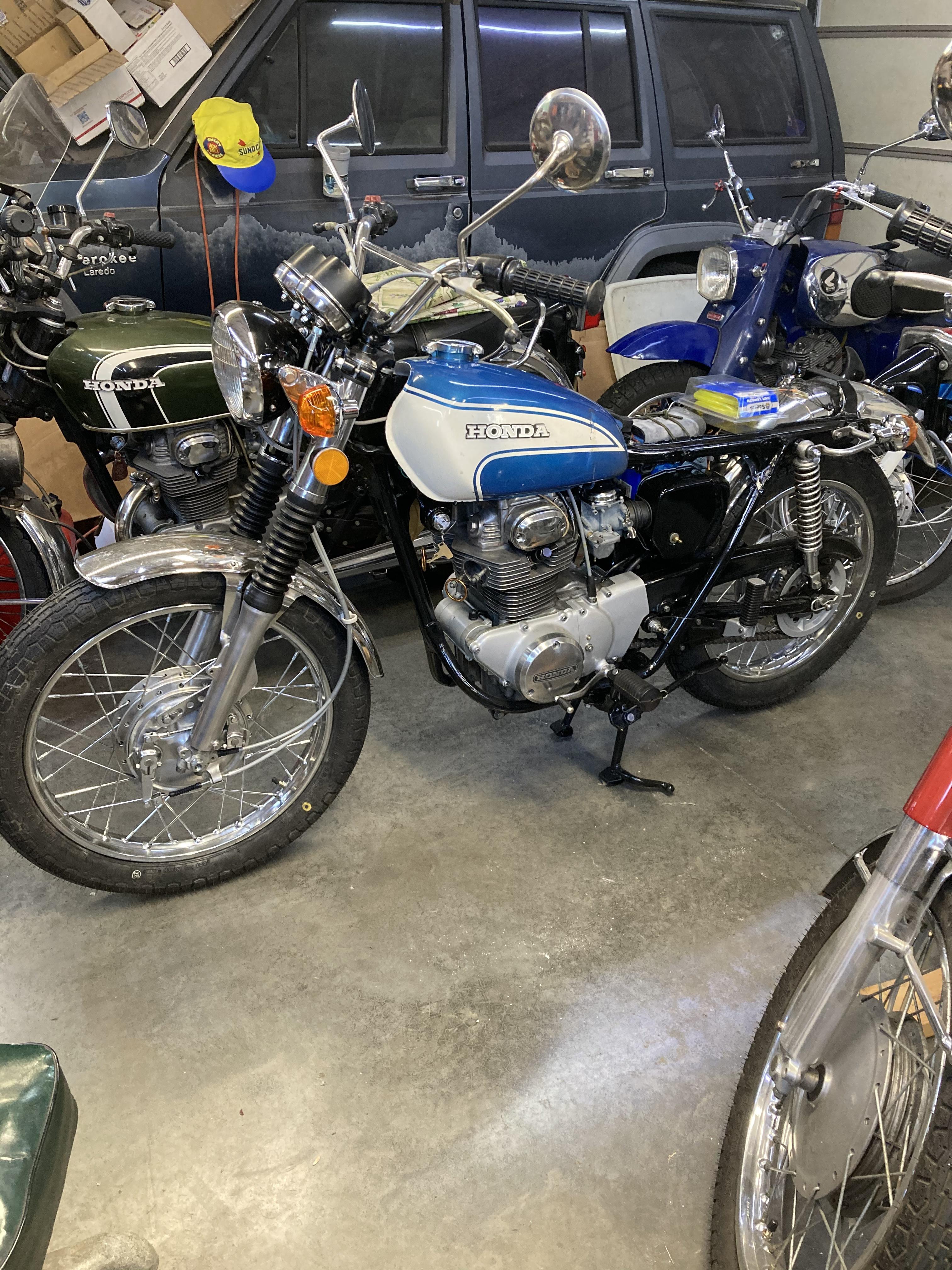
Mousetown, my own 73 CL350

There's a number of the diaphragms that are made with heavier rubber and that will delay the piston rise which in turn will probably cause a flat spot in the power curve.
You need to drill slide lift holes 0.04~0.06mm larger with the thicker diaphragms.
BTW, slide lift holes go to air-box side.
Slides will bounce around and hammer themselves to destruction if fitted with lift holes on head/valve side.
I've tried a load of different cleaners, 'Members Mark' (Sam's Club/Walmart) dishwasher powder seems best so far without spending a ton on 'real' ultrasonic cleaner.
 
You need to drill slide lift holes 0.04~0.06mm larger with the thicker diaphragms.
BTW, slide lift holes go to air-box side.
Slides will bounce around and hammer themselves to destruction if fitted with lift holes on head/valve side.
I've tried a load of different cleaners, 'Members Mark' (Sam's Club/Walmart) dishwasher powder seems best so far without spending a ton on 'real' ultrasonic cleaner.
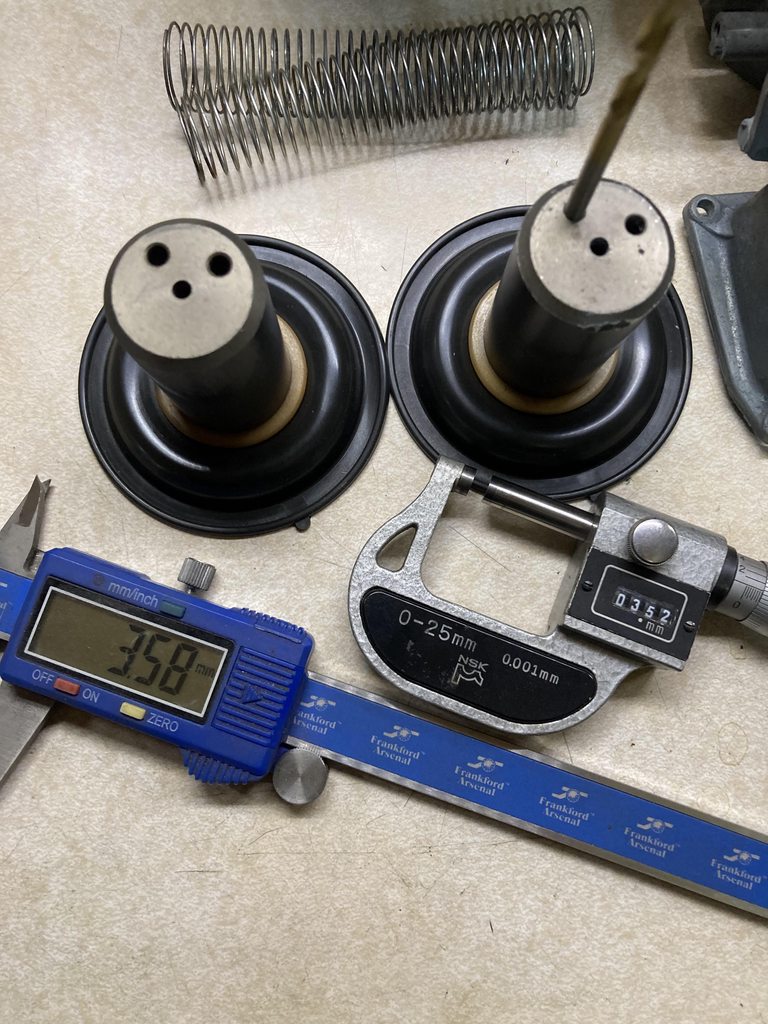
The slides have different size lift holes in these ebay carbs, not surprising. 3.52 and 3.58mm (.0141"). Wouldn't cha know, that's the one size drill bit I'm missing, it falls between a #27 and #28.

J84UhG1h.jpg


The 25% Pinesol, original flavor, got rid of the fat boils and no white crusties. It did mildly make the finish less glossy. More like the Simplegreen Extreme (50%). I'm well over a half dozen 18min. cycles now, but they are getting pretty clean.
I read the LPS cleaner did not recommend use on aluminum or magnesium. Maybe good old Cascade dishwasher powder might be good too.
 
Last edited:
Well, good news is that the replacement right carb body arrived from Ausman1000. It even has nice shafts and plates, so I won't use the bad choke plate.
Also, the felt washers came, so I'll do them too.

Now I need to climb out of the rabbit hole of diaphragm thicknesses and lift hole diameters in the slides. Summary to follow.
Gotta get the band back together in Mousetown and make some music.
 
The slides have different size lift holes in these ebay carbs, not surprising. 3.52 and 3.58mm (.0141"). Wouldn't cha know, that's the one size drill bit I'm missing, it falls between a #27 and #28.

J84UhG1h.jpg


The 25% Pinesol, original flavor, got rid of the fat boils and no white crusties. It did mildly make the finish less glossy. More like the Simplegreen Extreme (50%). I'm well over a half dozen 18min. cycles now, but they are getting pretty clean.
I read the LPS cleaner did not recommend use on aluminum or magnesium. Maybe good old Cascade dishwasher powder might be good too.

You need to drill slide lift holes 0.04~0.06mm larger with the thicker diaphragms.
BTW, slide lift holes go to air-box side.
Slides will bounce around and hammer themselves to destruction if fitted with lift holes on head/valve side.
I've tried a load of different cleaners, 'Members Mark' (Sam's Club/Walmart) dishwasher powder seems best so far without spending a ton on 'real' ultrasonic cleaner.
... and thus the reason I am shopping for a micrometer. I'm glad ballbearian is doing the experimental hole drilling :ROFLMAO:
 
... and thus the reason I am shopping for a micrometer. I'm glad ballbearian is doing the experimental hole drilling :ROFLMAO:
The only time I needed my mic was to get around the outer rib on the diaphragms to measure their thickness in the middle. 95% of the time I just grab my digital slide calipers but the parallel jaws won't work for that but they do have the small tips for measuring the inside diameter of holes.
The decent $25-35 slide caliper I have will resolve to hundredths of a mm, or 5 ten thousandths of an inch and will convert from mm to inch, or back, with the push of a button. Keeps my arithmetic brain cells lazy. :p It also has a zeroing button to reset accuracy or to measure just the differences between two items. It does not have a vernier scale for manual measuring but 357 watch batteries are common as dirt.
It's definitely my most important measuring tool. My 25mm mic was purchased back in my FIAT days to measure valve tappet shims but its too small to measure the snap bore gauges for our bike cylinders, I'd need like a 100mm for that. I bought the snap bore gauge set that Oldtimer wanted to sell but haven't bought a big mic to use with that yet.

So, for this job, I'm using the inside tips of the slide, which is hard to do with consistency and accuracy, backed up by finding the closest drill size from my number, letter, fractional drill bit index set from HF. This set says that a #28 bit is .140" (3.56mm) but I measure it at 3.50mm with the slide and 3.52 mm with the mic. I figure either all these HF bits are slightly undersized or (more likely maybe) there is a convention of working tolerance involved when actually drilling, such that holes end up being very slightly larger than the measured diameter of the bit. IOW, this 3.50mm bit may drill 3.56mm holes, just guessing. I'm missing the next larger numbered size, #27, which is supposed to be .144" (3.66mm), but I'd bet that it is also undersized if measured, but may drill 3.66mm holes. o_O
I'm so glad I don't live inside a real precision machinists head, I just want to fix these carbs. Here is what I've found, before I lose it.:oops:

SUMMARY: of lift holes and diaphragms (in a nutshell, from 4 sets of carbs).
---Almost all the diaphragm thicknesses are .27mm, + or - .02-.05mm in different spots on the same item. Except the new repro ones from Scrambler which are almost a tenth of a mm thicker.
---Almost all the lift holes in the slides are 3.50mm, +or- .02mm. Except for one of the slides from my ebay carb set, that is larger, at 3.58 measured only with the inside tips of my slide caliper, not a precision pin gauge set and micrometer.

GOAL: Apply PJ's logic and remedy to enlarge slide lift holes to account for thicker aftermarket diaphragms.
--- One of the ebay slides is already at the increased amount recommended by PJ (+.04-.06mm). I'll leave poor little Wellenuff alone.
--- Other slide needs reamed or drilled (with a bit I don't have) to match the other ebay slide. I may have a conniption if forced to watch a bunch of youtube watchmaker videos.

Other common-sense considerations (doncha hate that guy).
-All lift air must pass thru the plastic golf tee anyway, #16 on parts diagram, 16132-286-004, no variants listed. Would the 4 holes in this need reamed too?
-David Silver Spares lists replacement slides with diaphragms at $75 each (16111-286-034) or $235.29 each (16111-287-004, special order only). No specs available on hole diameters or diaphragm thickness, although probably more trustworthy than congressional testimony. An expensive gamble for me but not Congress because it's not their money anyway.
-Maybe Scrambler's diaphragms are actually as flaccid as OEM anyways and as I've heard said, 'it's not the meat, it's the motion'.


Makes me long for the mindless simplicity of twisting nipples and rust removal.
 
The variance between that bit (which actually will cut slightly larger on a softer material) and the sizing you’re looking for would likely be the equivalent of a change in barometric pressure.

I’d have to dust off the remnants of that 8AM physics class I took the year I bartended, but there’s a way to calculate the PSI variance created by the vacuum, and since pressure is directly proportional to density/inversely proportion to temperature. You could essentially be talking about the difference between a cold day at sea level versus a warm day at 5000 feet.

I may have been over-inhaling but I think since the plastic tees are a static variable, you’d leave those be and only account for the pressure difference created by the rigidity of the thicker membrane.
 
The variance between that bit (which actually will cut slightly larger on a softer material) and the sizing you’re looking for would likely be the equivalent of a change in barometric pressure.

I’d have to dust off the remnants of that 8AM physics class I took the year I bartended, but there’s a way to calculate the PSI variance created by the vacuum, and since pressure is directly proportional to density/inversely proportion to temperature. You could essentially be talking about the difference between a cold day at sea level versus a warm day at 5000 feet.

I may have been over-inhaling but I think since the plastic tees are a static variable, you’d leave those be and only account for the pressure difference created by the rigidity of the thicker membrane.
Thanks. Concise, I need to practice that.
The different size holes from R to L slide just bug me. I'm thinking make them even is as good as it gets. Balance.
 
I would be inclined to try the Scrambler Cycle diaphragms without making alterations to the holes in the pistons, at least to start. It's kind of hard to size up the effect of the diaphragm thickness without making an experiment of some kind (sounds like PJ has experience here, though) and you can always open the carbs up to make alterations after trying them. Maybe you'd want to get diaphragms that are closer to the originals or alter the holes, but the latter is a lot harder to undo than do.

Addendum: Also keep in mind that a given percentage increase in the diameter of a hole will increase the area by slightly more than twice that percentage, e.g., a 5% increase in diameter corresponds to a 10.25% in area.

Concise, I need to practice that.

You did write "IOW" instead of taking all the space to write "In other words". What more can we ask for?
 
Last edited:
The only time I needed my mic was to get around the outer rib on the diaphragms to measure their thickness in the middle. 95% of the time I just grab my digital slide calipers but the parallel jaws won't work for that but they do have the small tips for measuring the inside diameter of holes.
The decent $25-35 slide caliper I have will resolve to hundredths of a mm, or 5 ten thousandths of an inch and will convert from mm to inch, or back, with the push of a button. Keeps my arithmetic brain cells lazy. :p It also has a zeroing button to reset accuracy or to measure just the differences between two items. It does not have a vernier scale for manual measuring but 357 watch batteries are common as dirt.
It's definitely my most important measuring tool. My 25mm mic was purchased back in my FIAT days to measure valve tappet shims but its too small to measure the snap bore gauges for our bike cylinders, I'd need like a 100mm for that. I bought the snap bore gauge set that Oldtimer wanted to sell but haven't bought a big mic to use with that yet.

So, for this job, I'm using the inside tips of the slide, which is hard to do with consistency and accuracy, backed up by finding the closest drill size from my number, letter, fractional drill bit index set from HF. This set says that a #28 bit is .140" (3.56mm) but I measure it at 3.50mm with the slide and 3.52 mm with the mic. I figure either all these HF bits are slightly undersized or (more likely maybe) there is a convention of working tolerance involved when actually drilling, such that holes end up being very slightly larger than the measured diameter of the bit. IOW, this 3.50mm bit may drill 3.56mm holes, just guessing. I'm missing the next larger numbered size, #27, which is supposed to be .144" (3.66mm), but I'd bet that it is also undersized if measured, but may drill 3.66mm holes. o_O
I'm so glad I don't live inside a real precision machinists head, I just want to fix these carbs. Here is what I've found, before I lose it.:oops:

SUMMARY: of lift holes and diaphragms (in a nutshell, from 4 sets of carbs).
---Almost all the diaphragm thicknesses are .27mm, + or - .02-.05mm in different spots on the same item. Except the new repro ones from Scrambler which are almost a tenth of a mm thicker.
---Almost all the lift holes in the slides are 3.50mm, +or- .02mm. Except for one of the slides from my ebay carb set, that is larger, at 3.58 measured only with the inside tips of my slide caliper, not a precision pin gauge set and micrometer.

GOAL: Apply PJ's logic and remedy to enlarge slide lift holes to account for thicker aftermarket diaphragms.
--- One of the ebay slides is already at the increased amount recommended by PJ (+.04-.06mm). I'll leave poor little Wellenuff alone.
--- Other slide needs reamed or drilled (with a bit I don't have) to match the other ebay slide. I may have a conniption if forced to watch a bunch of youtube watchmaker videos.

Other common-sense considerations (doncha hate that guy).
-All lift air must pass thru the plastic golf tee anyway, #16 on parts diagram, 16132-286-004, no variants listed. Would the 4 holes in this need reamed too?
-David Silver Spares lists replacement slides with diaphragms at $75 each (16111-286-034) or $235.29 each (16111-287-004, special order only). No specs available on hole diameters or diaphragm thickness, although probably more trustworthy than congressional testimony. An expensive gamble for me but not Congress because it's not their money anyway.
-Maybe Scrambler's diaphragms are actually as flaccid as OEM anyways and as I've heard said, 'it's not the meat, it's the motion'.


Makes me long for the mindless simplicity of twisting nipples and rust removal.

Thanks. Concise, I need to practice that.
The different size holes from R to L slide just bug me. I'm thinking make them even is as good as it gets. Balance.
The differing hole sizes on your factory slider pair seems odd to me. I will sample a few sliders I have with my pin set and see what's what.
 
The differing hole sizes on your factory slider pair seems odd to me. I will sample a few sliders I have with my pin set and see what's what.
Come to think of it, not sure my pin set goes that large. I'll take a looksee anyhow.
 
The slides have different size lift holes in these ebay carbs, not surprising. 3.52 and 3.58mm (.0141"). Wouldn't cha know, that's the one size drill bit I'm missing, it falls between a #27 and #28.

J84UhG1h.jpg


The 25% Pinesol, original flavor, got rid of the fat boils and no white crusties. It did mildly make the finish less glossy. More like the Simplegreen Extreme (50%). I'm well over a half dozen 18min. cycles now, but they are getting pretty clean.
I read the LPS cleaner did not recommend use on aluminum or magnesium. Maybe good old Cascade dishwasher powder might be good too.

Just got done measuring half a dozen slides and all holes measured 3.3mm
The slides have different size lift holes in these ebay carbs, not surprising. 3.52 and 3.58mm (.0141"). Wouldn't cha know, that's the one size drill bit I'm missing, it falls between a #27 and #28.

J84UhG1h.jpg


The 25% Pinesol, original flavor, got rid of the fat boils and no white crusties. It did mildly make the finish less glossy. More like the Simplegreen Extreme (50%). I'm well over a half dozen 18min. cycles now, but they are getting pretty clean.
I read the LPS cleaner did not recommend use on aluminum or magnesium. Maybe good old Cascade dishwasher powder might be good too.

Just got done measuring half a dozen slides and all holes were 3.30mm / 0.130". The slides are from a 722a, 3d and even a 350a carb model. And I used the same method as you, calipers.
 
Last edited:
I suppose it matters how sharp the blades of the calipers are and how many angels can dance on the head of a pin.
 
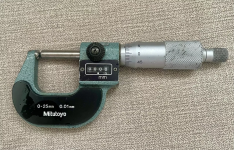
That is a special micrometer for measuring the thickness of curved parts, like solid connecting rod bearings, or tubing wall thickness. Notice the ball tips on the anvil and spindle.
It is desirable to have, but maybe not as handy to use for everyday measurements.
I just noticed that. One will be careful, then to maintain perpendicularity to tangent, or observations will be prejudiced.
 
That is a special micrometer for measuring the thickness of curved parts, like solid connecting rod bearings, or tubing wall thickness. Notice the ball tips on the anvil and spindle.
It is desirable to have, but maybe not as handy to use for everyday measurements.
Good eye fxray! I saw the ball tips and thought this will be a good universal useage tool. Any reason why this cannot do double duty as a flat measurement tool?
 
I just noticed that. One will be careful, then to maintain perpendicularity to tangent, or observations will be prejudiced.
Exactly my thinking.

I can eye a 90 degree pretty well with my x7 magnifier flip down visor.

It's not like I am stocking up on tools for my next career as a fitter/ turner/machinist :)
 
Last edited:
The rabbit hole of slide holes that PJ sent me down is, as far as I'm concerned, done for now. I just drilled the other odd slide to match the oversized one that I had. I don't know what PJ meant when he said 'thicker' diaphragms. How much thicker is thicker? I will use the Scrambler ones that are only <.1mm thicker, or about 25% more only. IOW, common hole size being about 3.50 +/- .02mm is now about 3.58 on this pair I'm going to use. We'll see how it runs.
As I remember reading Oldfart's carburetor series, the slides are a compensation mechanism for vacuum variations. What a great series. As long as both sides act somewhat similar, then I'm happy. And as Brody pointed out, swapping slides and diaphragms later is no biggy.

I even looked into the carbs from Outobie's bike (thanks be that he did drain them) and they were the same standard size small holes, Stock jets (105,70,35) and needle (244004).

Onwards to felt shaft seals and a cracked overflow bowl tube.
 
The rabbit hole of slide holes that PJ sent me down is, as far as I'm concerned, done for now. I just drilled the other odd slide to match the oversized one that I had. I don't know what PJ meant when he said 'thicker' diaphragms. How much thicker is thicker? I will use the Scrambler ones that are only <.1mm thicker, or about 25% more only. IOW, common hole size being about 3.50 +/- .02mm is now about 3.58 on this pair I'm going to use. We'll see how it runs.
As I remember reading Oldfart's carburetor series, the slides are a compensation mechanism for vacuum variations. What a great series. As long as both sides act somewhat similar, then I'm happy. And as Brody pointed out, swapping slides and diaphragms later is no biggy.

I even looked into the carbs from Outobie's bike (thanks be that he did drain them) and they were the same standard size small holes, Stock jets (105,70,35) and needle (244004).

Onwards to felt shaft seals and a cracked overflow bowl tube.
I think you'll be good. Just the fact that both sets of holes are now the same size should be a good thing, and how it reacts with the new diaphragms remains to be seen.
 
Hey, wait up ballbearian. Before you rush off to another subject, you need to finish the discussion at hand. We need you to calculate the effect on engine performance based on a few more factors.

If those holes need to be precisely the same size, an inquiring mind wants to know why. I always thought those holes were simply to allow atmospheric pressure to act upon the bottom of the diaphragm, while vacuum or reduced pressure was above the diaphragm.

The concern over the precise diameter (and hence the cross-sectional area of the holes) makes it appear that we need to be more concerned with air velocity through the holes as the slide moves up / down. But wait, if one hole is smaller than the others, would the air think it was moving through a venturi and simply speed up to move the same cubic centimeters of air through the smaller hole as through the larger holes? Can air even think in the first place? Would an increased air speed through the smaller holes cause an imbalance in the slide, perhaps cocking it in the bore -- maybe even enough to make it stick?!? o_O

Sure, you measured the thickness of the new diaphragm, but did you then calculate its greater volume? Do we know the mass densities of the new vs. old diaphragms? What about the moment of inertia on the moving diaphragms, or even the whole slide assembly, for that matter? How can we determine which hole size is required until we get into these other details?

OK, I'll stop now. This is just my tongue-in-cheek way of saying that you may have been needlessly nudged into that rabbit hole from the outset. But you probably already knew that, right? :sneaky: ;) :D
 
I know you chipped in to have PJ bait this trap. :ROFLMAO: Being thickerer than most is entertaining. Oh well, I better climb back up on the turnip truck.
 
Anybody have a good way to fit the round bowl gaskets to the house shaped bowl groove? I'm just going to use some non-hardening gasket adhesive. Thought I'd ask. I didn't order ones from Sirrius so, it's try these or wait for an order.

There was no usable brass for these carbs but Scrambler's kits are better made than a lot of others I've seen. Taiwan not PRC (China). Drillings were checked and are good and consistent. Sizes were marked on all three jets! 105, 70, 35, D20Z needles and 2.2 float body. Both carbs got full kits and the repop diaphragms.

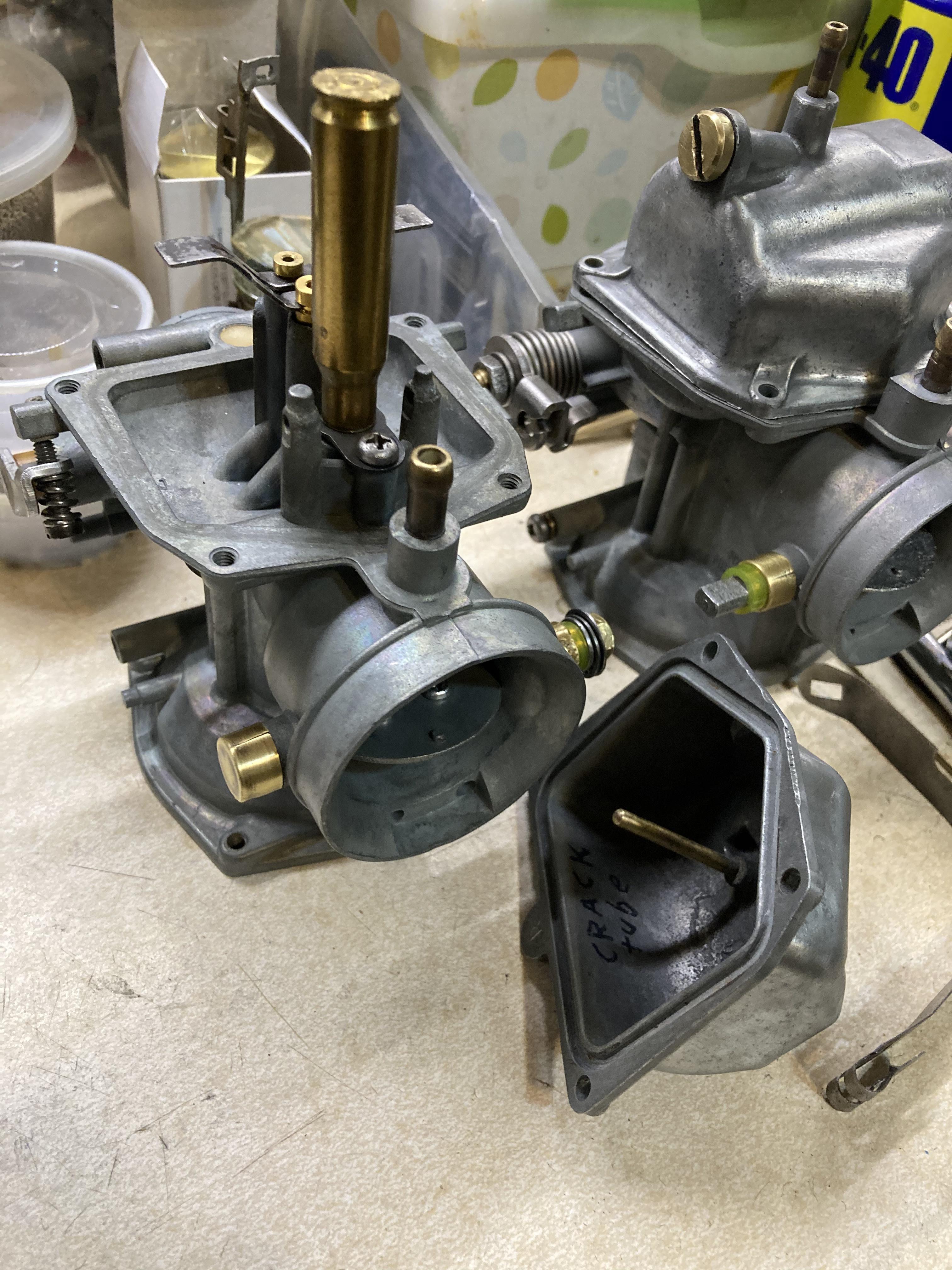
The float valve body and Oring weren't cooperating going into the carb body. I remembered Rule 308 (Breaker Morant, I got to watch that movie again) and it fit perfectly, 7.62mm, to drive it in.
gJrvFAU.jpg


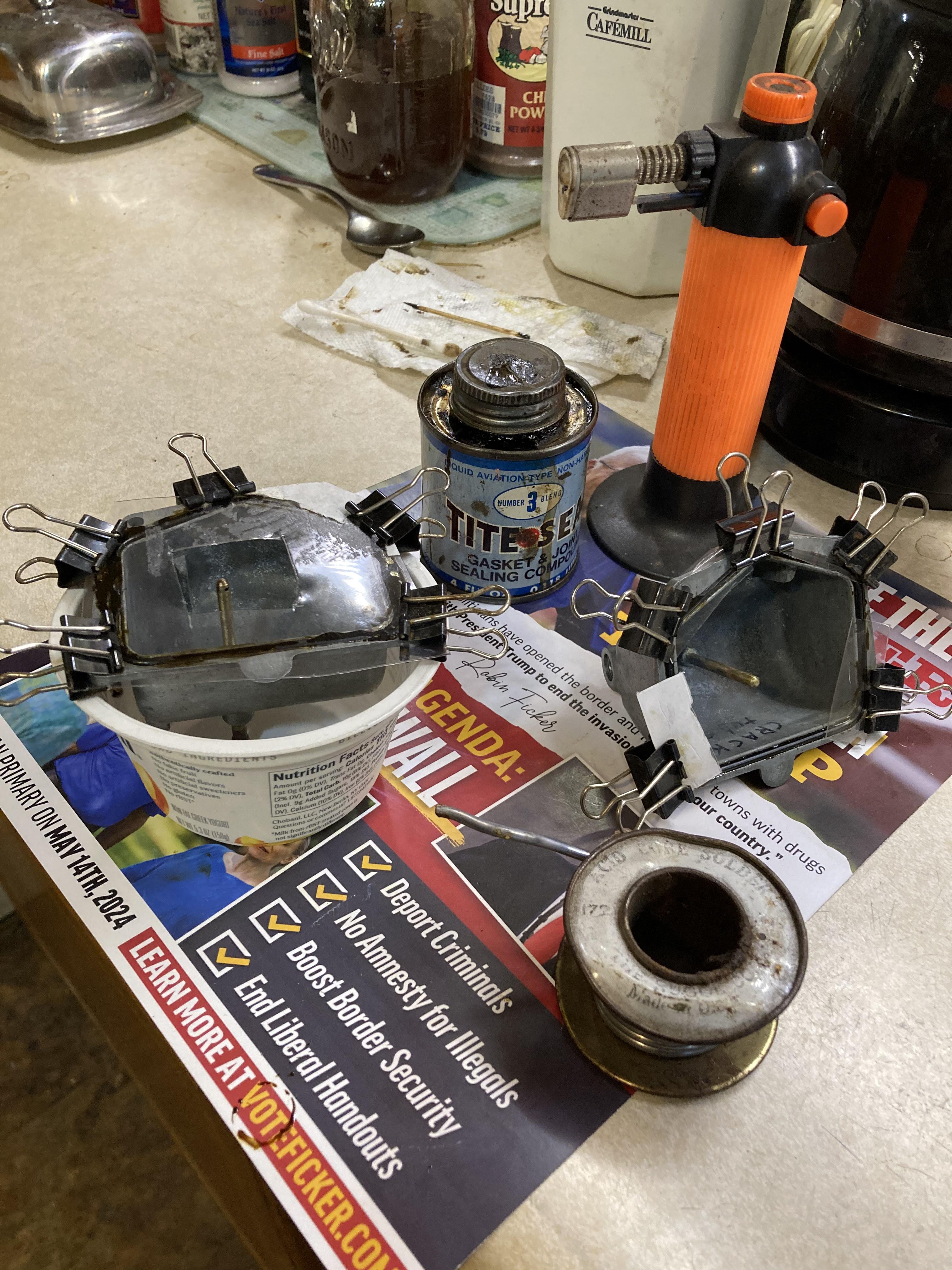
I did solder up a cracked bowl tube with some antique acid core plumber's solder and a mini butane torch. Leak tested with gas.

The next 4 sets of carbs are gonna have to wait. I have to finish this build before it gets reinfected with vermin.
 
Anybody have a good way to fit the round bowl gaskets to the house shaped bowl groove?

I had read at one point about using Vaseline to hold them in place until the bowls were on. I used that tip with the original CB360 carb bowls and it worked pretty well, but I never had to "break in" fresh round gaskets.
 
I hate those round O-rings. Only thing you can do is glue them in place, I've used GasGaCinch by wiping the rubber down with it and then inserting in the groove.
If you want to wait a few days I'll put a pair of Viton O-rings in the mail, ones from Sirius. Or order from them as they were here 3 days after the order by DHL.
 
I still have this can of Tite Seal Aviator Gasket ......tar, from the late 70's. It's still easy to make a nasty mess with too, which I did, and put too much on one bowl. I'll clean the excess off but I'll put a light coat of grease on the body so it doesn't stick too well to that side too. That is a piece of clear plastic from a take out food container to keep pressure with the clips.
There may be a fat slice of humble pie coming my way for this.

That's very kind of you Jim to offer the nice gasket Orings but I will order some myself to have for the other carb sets to be done later, or if this doesn't work out.
IgJwm8K.jpg


It does look kind of funny, like ladies at the beauty shops back in the day setting curls or something.
 
I still have this can of Tite Seal Aviator Gasket ......tar, from the late 70's. It's still easy to make a nasty mess with too, which I did, and put too much on one bowl. I'll clean the excess off but I'll put a light coat of grease on the body so it doesn't stick too well to that side too. That is a piece of clear plastic from a take out food container to keep pressure with the clips.
There may be a fat slice of humble pie coming my way for this.

That's very kind of you Jim to offer the nice gasket Orings but I will order some myself to have for the other carb sets to be done later, or if this doesn't work out.
IgJwm8K.jpg


It does look kind of funny, like ladies at the beauty shops back in the day setting curls or something.
It does look kind of funny, like ladies at the beauty shops back in the day setting curls or something. :ROFLMAO:

images.jpg
 
Last edited:
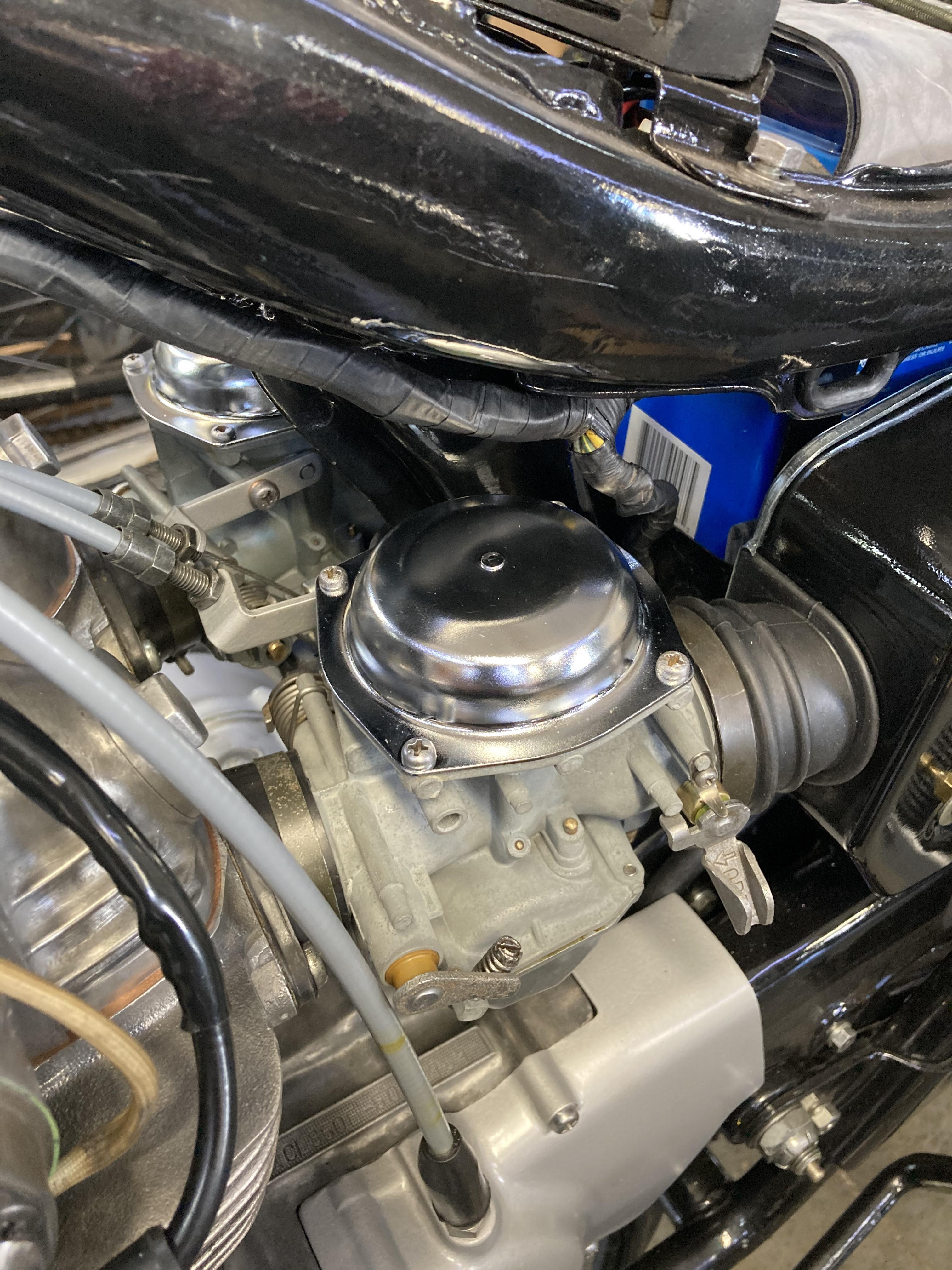
It will be a year since starting this project and thread on June 6th. Not that it really matters but there is more to do around here, so maybe I'm pushing it. The carbs are together and in the bike with their gooey round bowl gaskets and no leak tests. Somewhere between calculated risks and throwing caution to the wind, life just happens.
I'd like to think I'll improve my ridin to wrenchin ratio this season. We'll see.
Anyway, here's progress.
oLcLuB4.jpg

Ef01qQX.jpg
 
Back
Top Bottom