


fxray
Veteran Member
Looking through the forum, there seems to be a lot of questions about the black sealing ball in the 350 engines. Several people have pointed out where it goes, but there still seem to be questions as to why it is there in the first place. I have been working on my SL350 recently and took some pictures that may help explain the mystery to the newer folks.
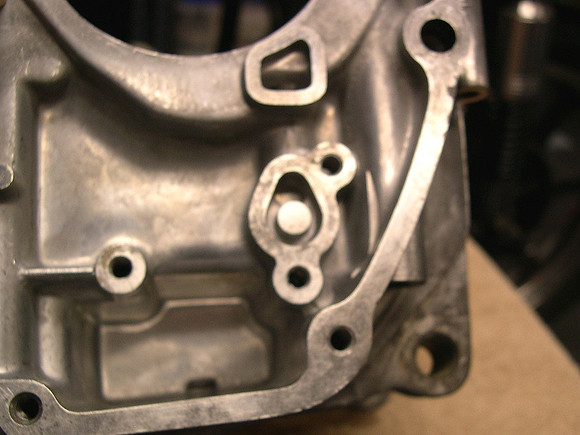
The RH side of the lower crankcase is where the oil pump is mounted. Here are the three mounting bolt holes surrounding the port to accept the output of the pump. (The three most central holes shown here.)
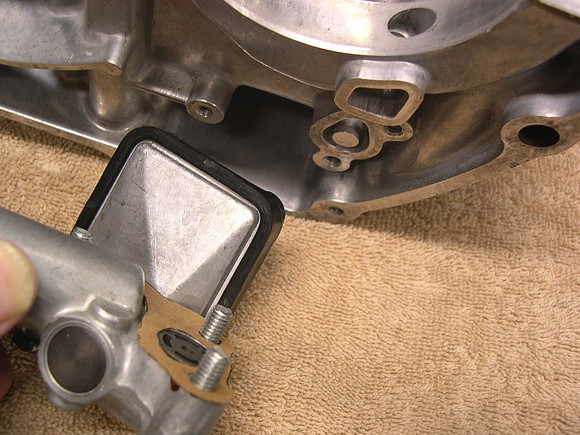
On the bottom of the pump body, there is a screen-covered intake port that is submerged in the oil in the sump. Like any pump, this piston pump operates by creating an increasing volume (piston is withdrawn from the pump body) at its input port and decreasing volume (piston is pushed into the pump body) at its output port.
Increased volume at the input port creates a vacuum, so atmospheric pressure acting on the oil in the wet sump pushes the oil into the input port.
When the piston is pushed back into the pump body, a check valve inside the pump prevents the oil from flowing back out the inlet port, and the oil is pushed out of the pump's outlet port. It flows into the odd shaped hole cast into the side of the lower crankcase.
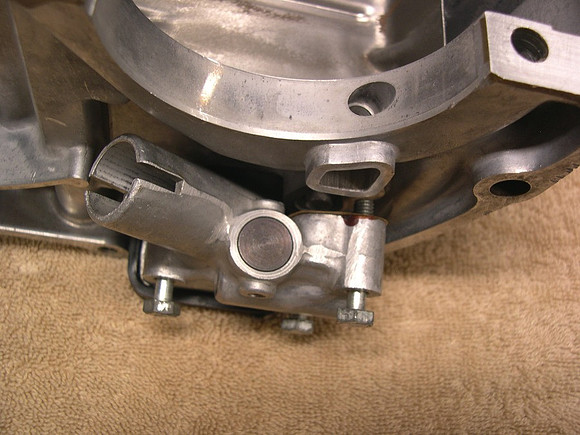
From there, the oil flows upward through a drilled hole to the port shown directly above the pump body in the above picture. These two passages in the side of the lower crankcase are interconnected via the drilled hole:
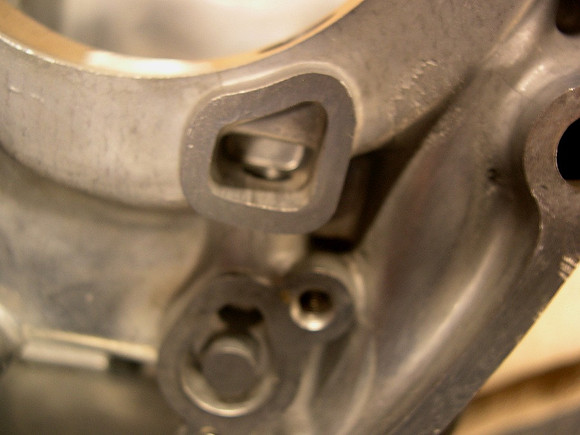
That upper port directs all of the oil output from the pump into the RH side cover of the engine and into the centrifugal oil filter contained therein. After the oil filter, there are other passages to direct the oil as needed throughout the engine.
The only way to drill a hole connecting those two ports is by drilling down through the crankshaft bore that is directly above the two ports. Note that the upper part of this drilled hole is enlarged to create a counterbore, sort of like a little shelf inside the drilled hole.
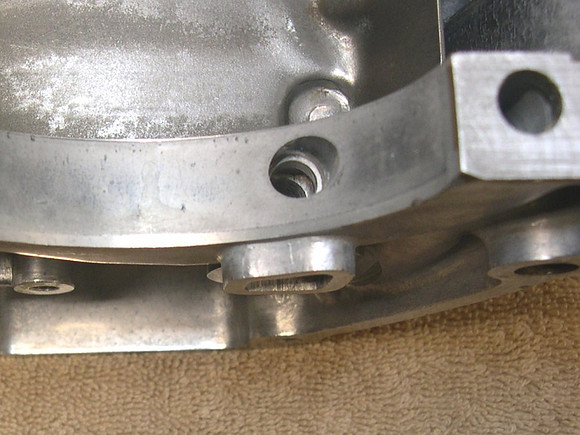
That is where the black ball comes into the picture:
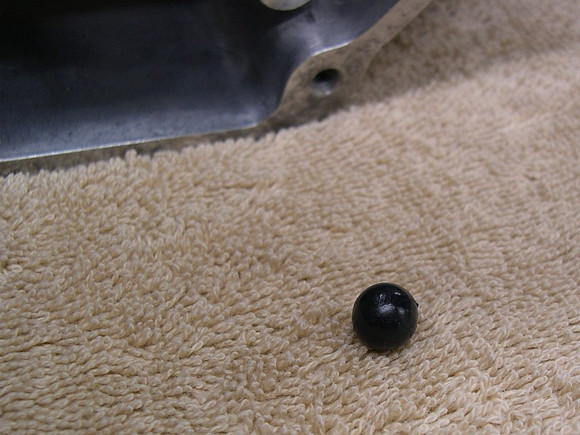
It fits snugly into the enlarged upper part of the drilled hole.
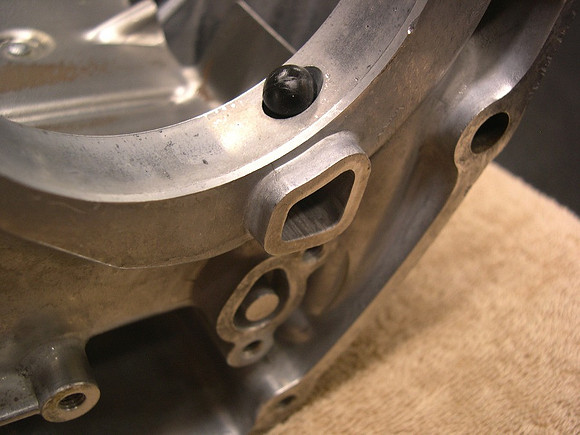
. . . and then is pushed down into the hole by you, the assembler, until it sits on that counterbore.
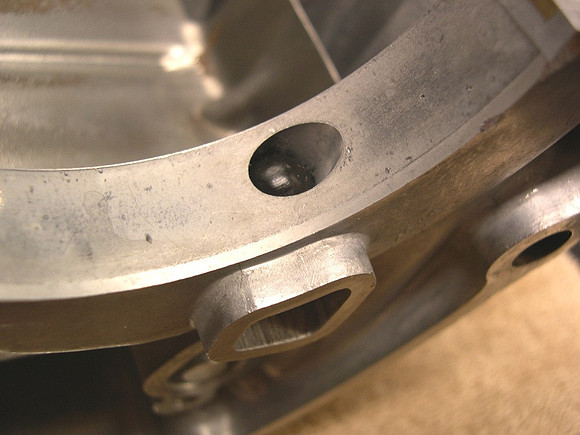
Once the crankshaft is installed, the little black ball is trapped there until the next person opens up the engine, hopefully far into the distant future.
This is a good example of what is called a process hole. That means that some of the hole is not intended to be used but has to be there in order to drill the rest of the hole. Once in place, the part of the hole that is not needed has to be blanked or sealed off.
Hope this helps explain the reason for the infamous black ball.
Ray
The RH side of the lower crankcase is where the oil pump is mounted. Here are the three mounting bolt holes surrounding the port to accept the output of the pump. (The three most central holes shown here.)
On the bottom of the pump body, there is a screen-covered intake port that is submerged in the oil in the sump. Like any pump, this piston pump operates by creating an increasing volume (piston is withdrawn from the pump body) at its input port and decreasing volume (piston is pushed into the pump body) at its output port.
Increased volume at the input port creates a vacuum, so atmospheric pressure acting on the oil in the wet sump pushes the oil into the input port.
When the piston is pushed back into the pump body, a check valve inside the pump prevents the oil from flowing back out the inlet port, and the oil is pushed out of the pump's outlet port. It flows into the odd shaped hole cast into the side of the lower crankcase.
From there, the oil flows upward through a drilled hole to the port shown directly above the pump body in the above picture. These two passages in the side of the lower crankcase are interconnected via the drilled hole:
That upper port directs all of the oil output from the pump into the RH side cover of the engine and into the centrifugal oil filter contained therein. After the oil filter, there are other passages to direct the oil as needed throughout the engine.
The only way to drill a hole connecting those two ports is by drilling down through the crankshaft bore that is directly above the two ports. Note that the upper part of this drilled hole is enlarged to create a counterbore, sort of like a little shelf inside the drilled hole.
That is where the black ball comes into the picture:
It fits snugly into the enlarged upper part of the drilled hole.
. . . and then is pushed down into the hole by you, the assembler, until it sits on that counterbore.
Once the crankshaft is installed, the little black ball is trapped there until the next person opens up the engine, hopefully far into the distant future.
This is a good example of what is called a process hole. That means that some of the hole is not intended to be used but has to be there in order to drill the rest of the hole. Once in place, the part of the hole that is not needed has to be blanked or sealed off.
Hope this helps explain the reason for the infamous black ball.
Ray


