TexasAggie’s first bike build

TexasAggie

Veteran Member
Joined
Jun 3, 2020
Total Posts
225
Total likes
0
Location
Texas
I’m going to start rebuilding my “old” thread with summaries/pictures, but slowly. Past few days I’ve been taking a break from working on the bike anyways so the switch was actually timed well.
I’m going to be almost exclusively a mobile user though, so bear with me.

Also I’m changing the title because I realized “first bike rebuild” was not super unique lol.
 
I think I'm going to do this too by copy/pasting all of the posts and pictures, and taking care to attribute other member's posts, like:

ancientdad said: You mobile guys... jeez :D :D
 
Going to do a summary followed by a wall of pictures. Pour some coffee first before diving into this:

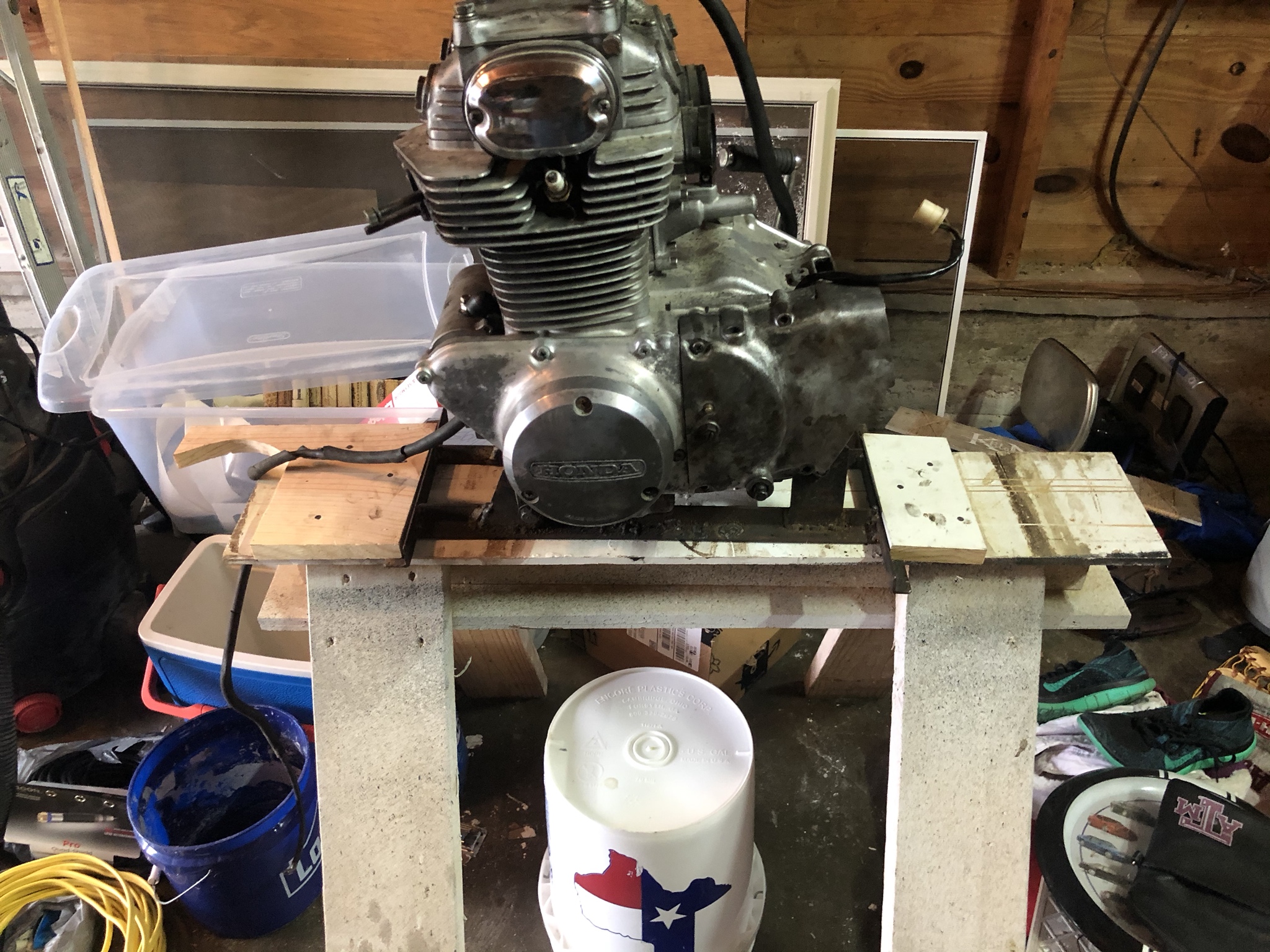
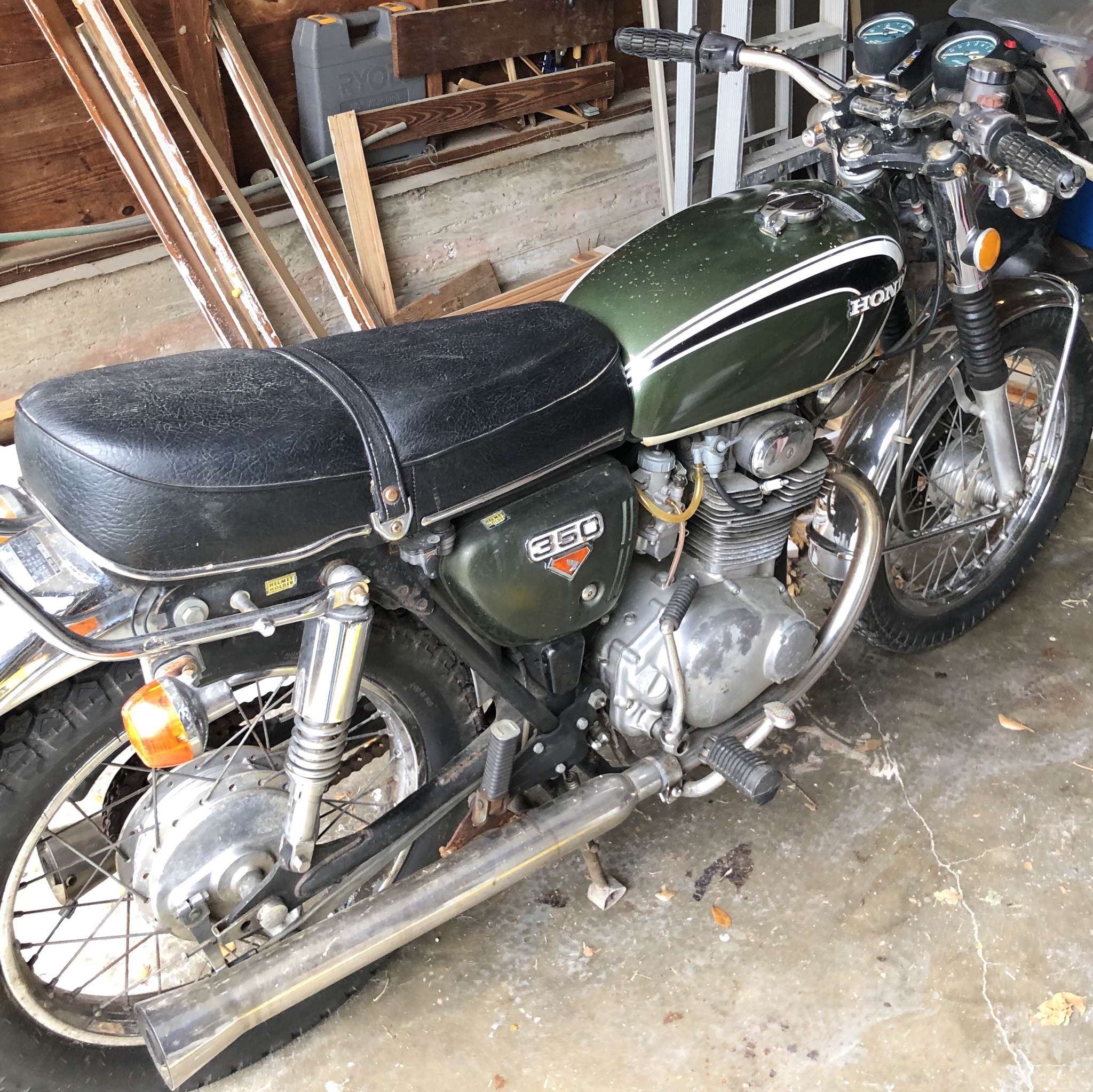
Bought the bike on Craigslist because I convinced my wife I needed a fun engine project and this was cheaper/easier to get my hands on than a beat up ranch truck (my first pitch to her). I’ve lusted over an old cb for a few years now and pulled the trigger on this one because after research decided the 350 was for me, I love green, and I had watched the ad sit for a few weeks.

On to the bike:
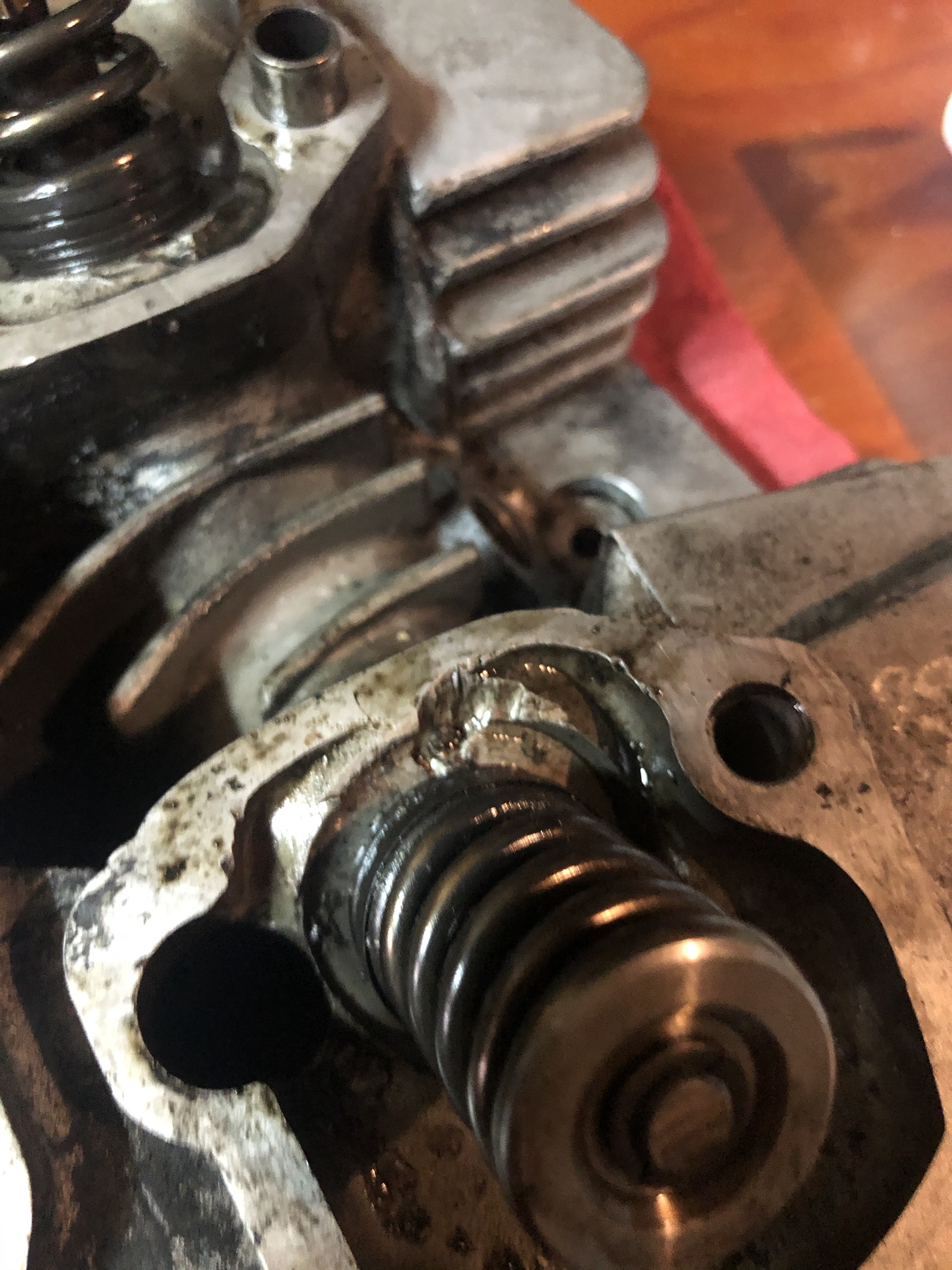
PO was the second owner and rode it Atlanta for 6 years then carried it with him to Austin in ‘17 not running. He had gotten “performance” upgrades from Todd henning racing and installed a gen 1 pamco. I had a long list of disillusions based on what he told me haha. He said there was an oil leak and it needed new gaskets. Turns out, they had installed valve springs that were about 3mm from spec then washered them up with 6 washers to reach the rockers. This damaged the head, and combined with the 2.5mm overbore pistons had me purchasing a new head + jugs for the top end.

Tear down:

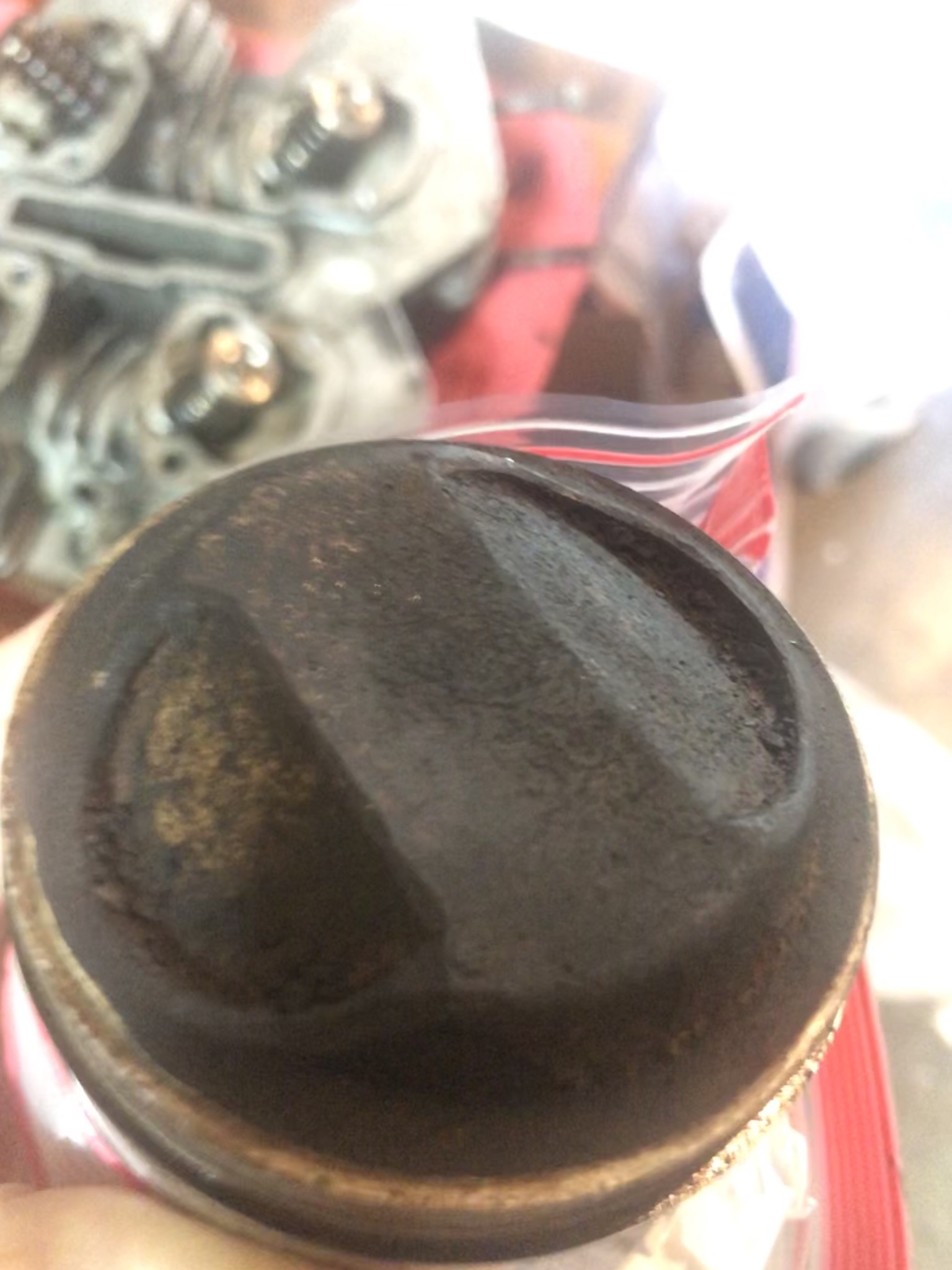
I was excited to get to work and tore the bike apart almost immediately. First thing I noticed was the Pamco dropped some of its components on the ground immediately after I unscrewed the points cover. Internally, there was a lot of wear. Head was cracked/damaged, pistons were cooked, and one of the short valve springs were broken. Camshaft looked good and there was some wear on the rockers but they’re back in the engine now so hopefully not too bad (fingers crossed). Also filled the front brake with fluid and realized the piston was stuck so I tore it apart too.

Rebuild:
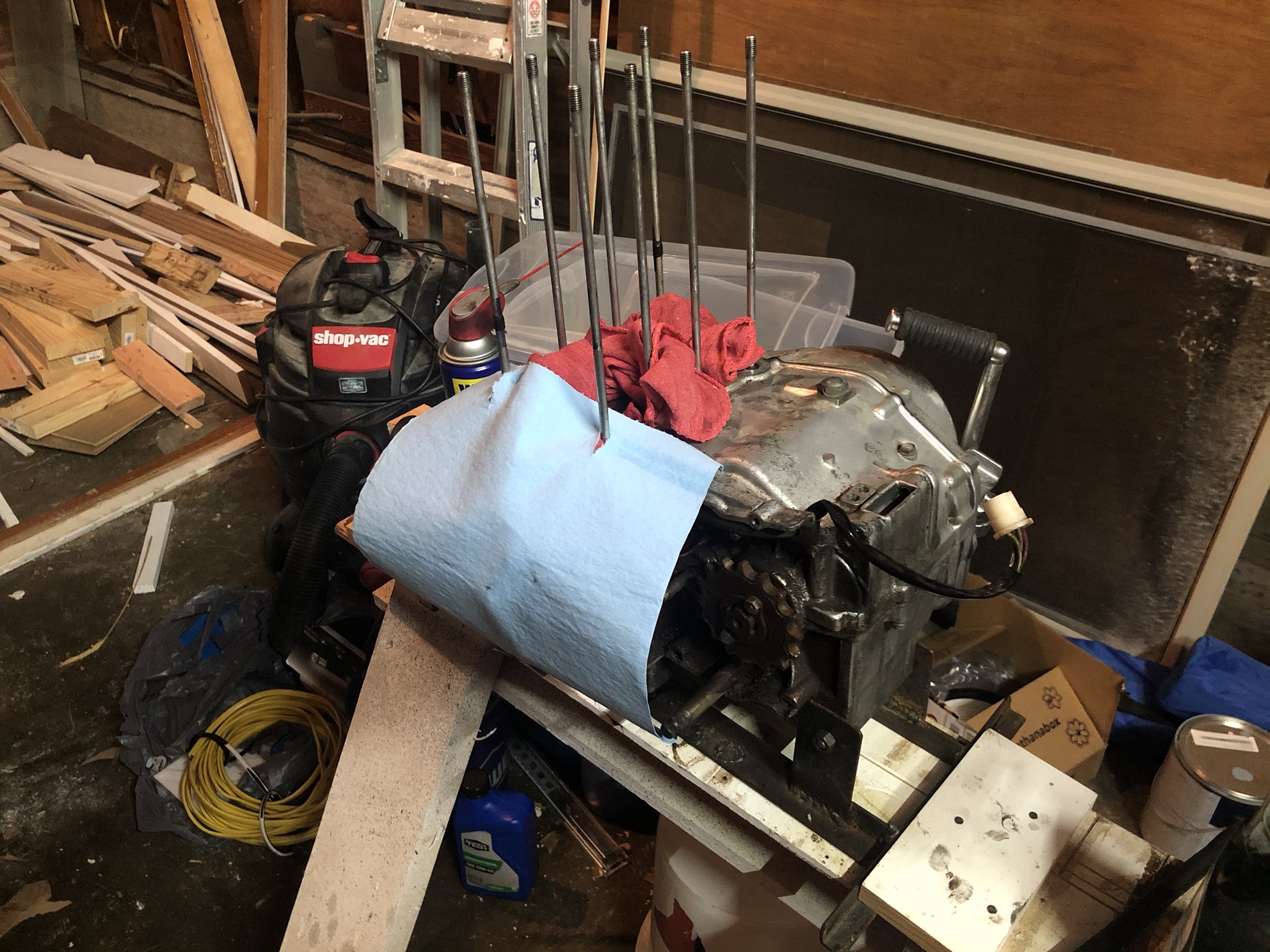
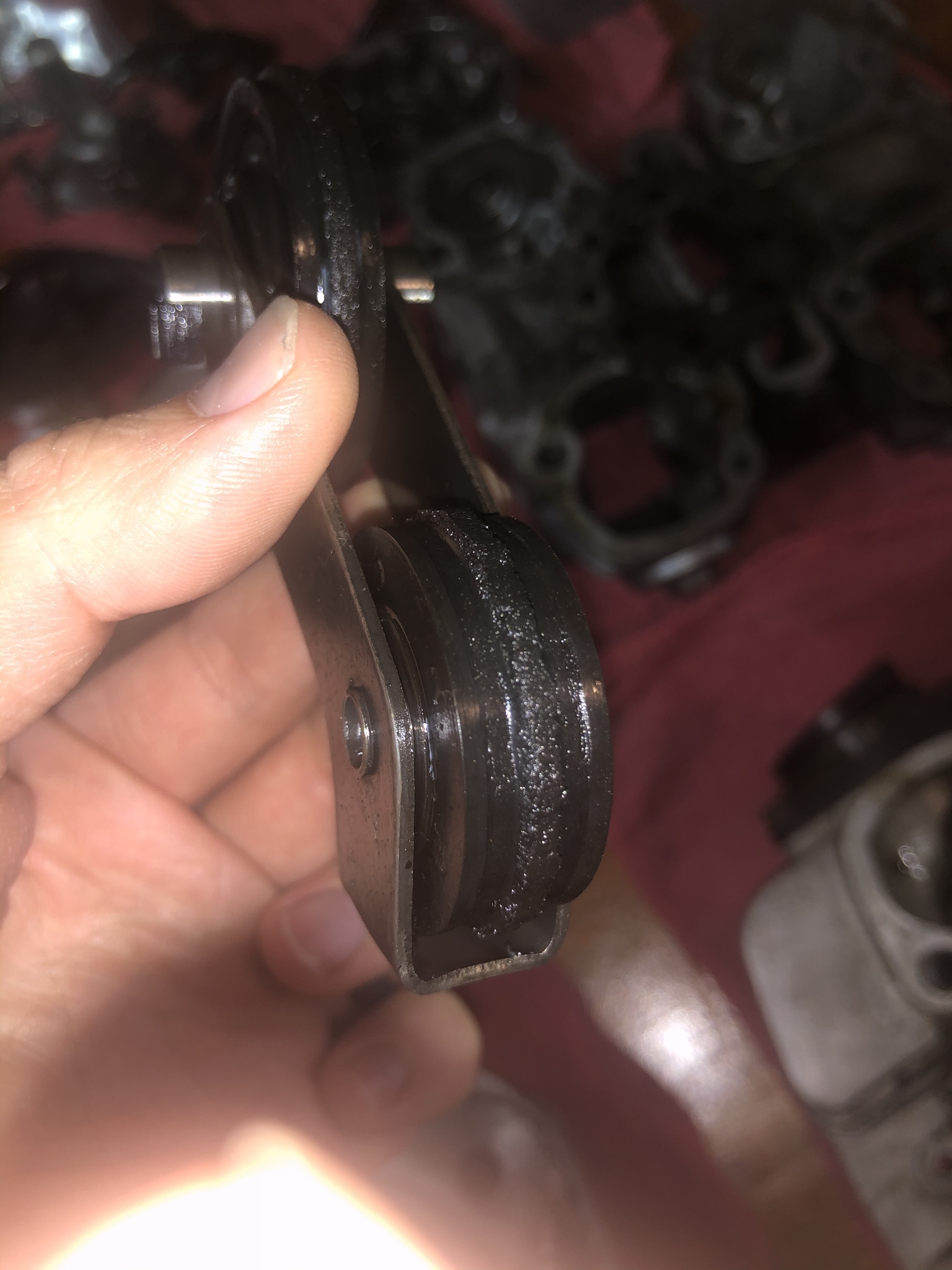
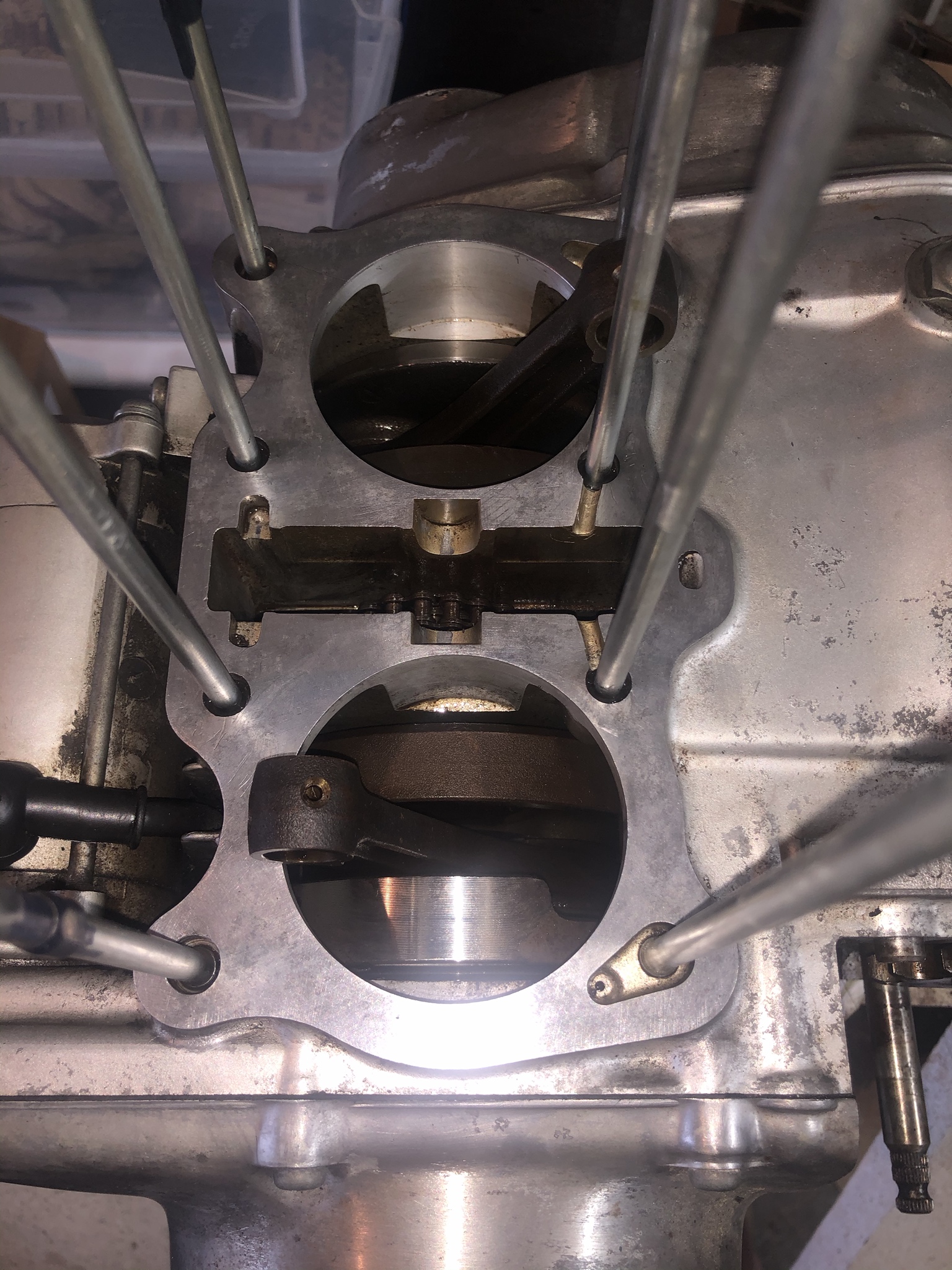
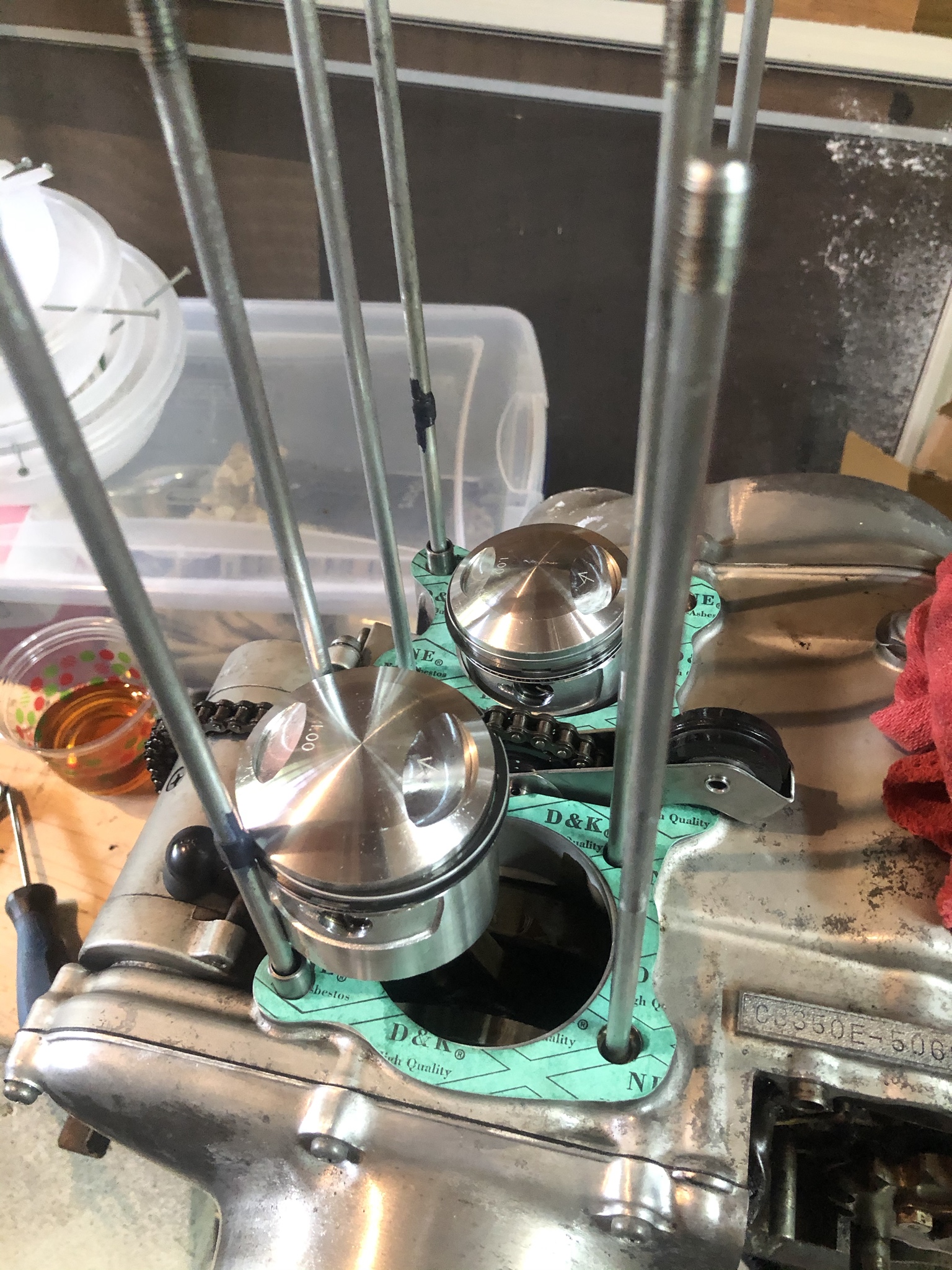
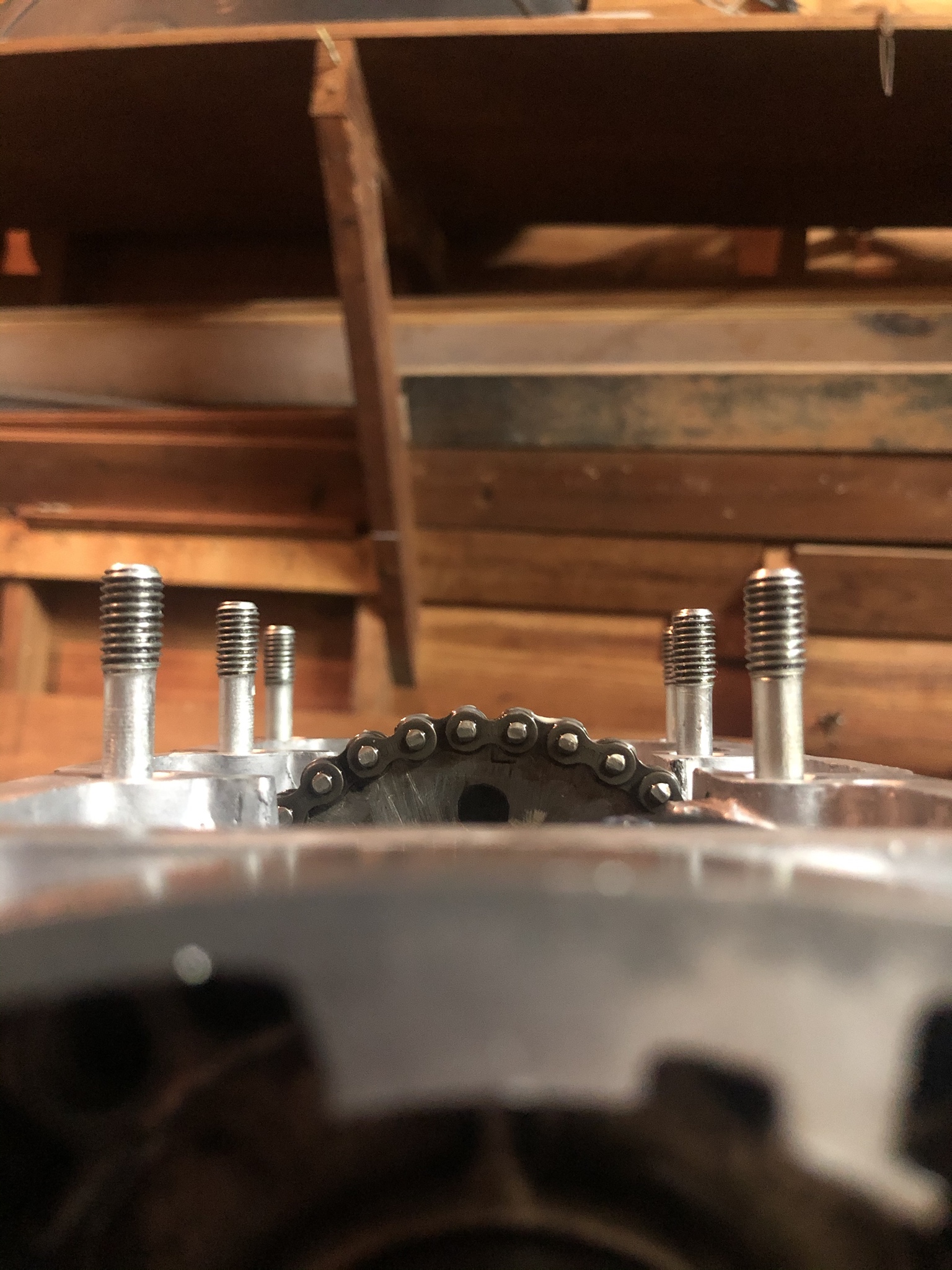
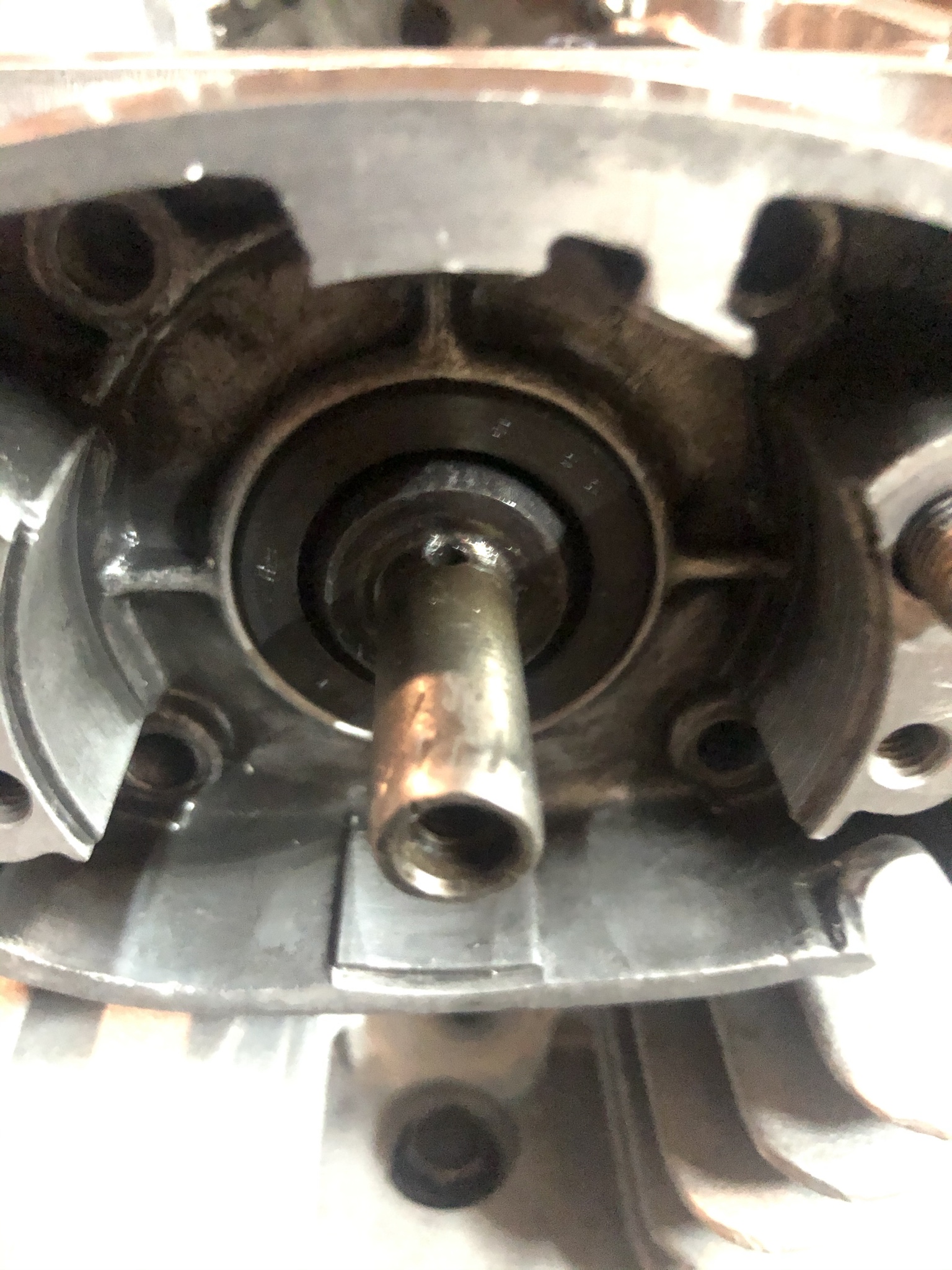
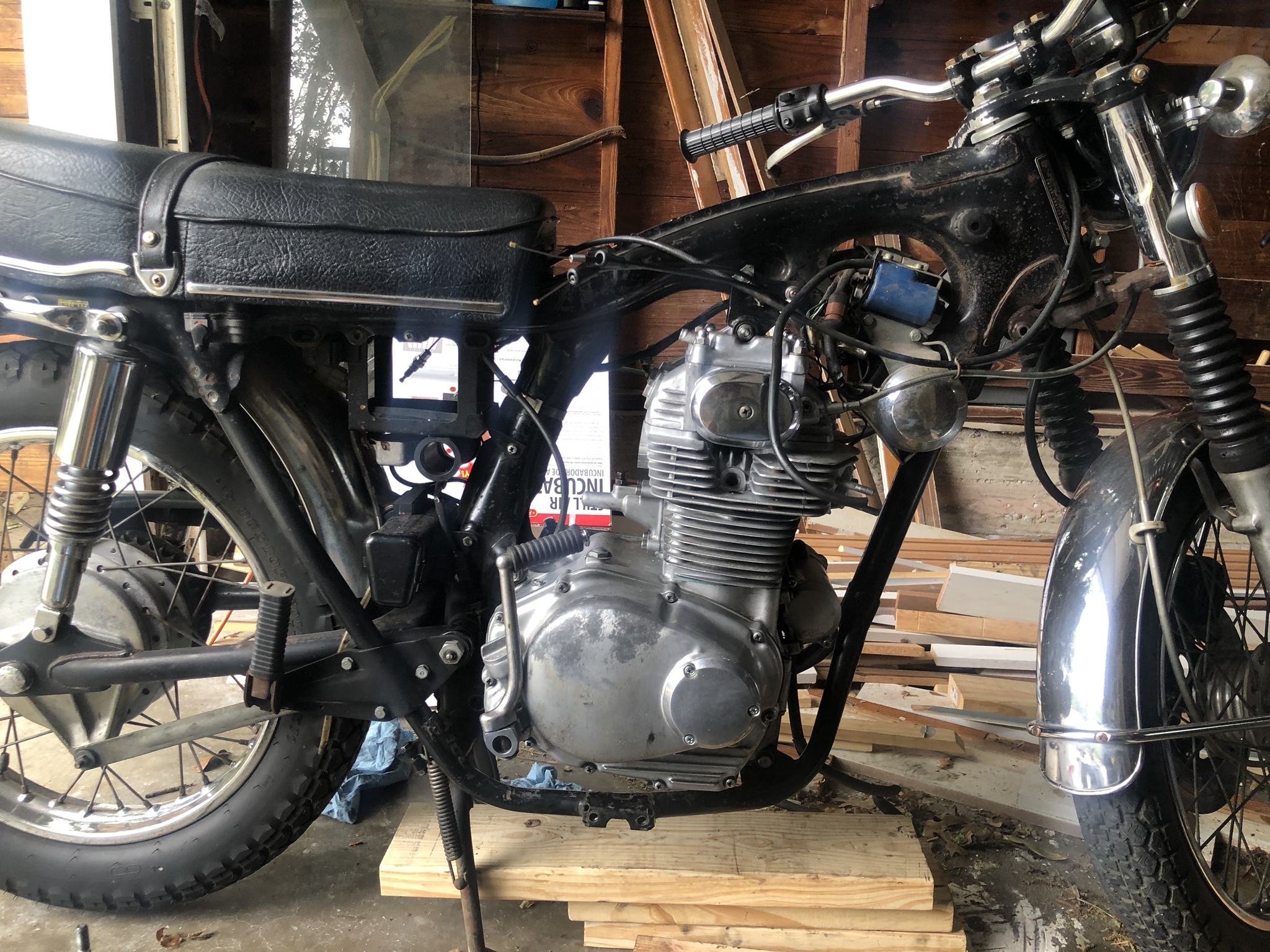
Purchased a used top end (head, jugs, cam case) as a complete set. Purchased new valves, gaskets (a set from dime city that was missing 2 top end gaskets. Don’t get this set unless you don’t need the metal head gasket B or head gasket A), used springs, new 1mm over pistons/rings, and new cam tensioner wheels. Took the top end to my local machine shop for a bore/hone as well as inspection of the valve guides. While that was going on I used my soldering skills from intro to electrical engineering at A&M and attempted to put my pamco back together (the first time lol). Also repaired the front back both replacing all the master cylinder and slave cylinder wear parts. Put the pistons in once, forgot the cam wheels (kill me) and then dropped one of the tiny little rubber pieces into the bottom end (see: mysterious black box of gears). Agonized over that for a while (<direct copy from the old thread), then got some advice from a former local Honda mechanic to just flip the engine and shake it until the piece came out which worked. Then steadily worked my way back up, installing the pistons again this time with the tensioner, timed the cam as close as it would allow, cursed as I reinstalled the bearings 5 times a piece each side, and put the engine in the bike. Easy!
 
Well pictures are looking more difficult on mobile than I thought...
 
You mobile guys... jeez :D :D
Haha my work computer doesn’t belong to me so my internet browsing is almost exclusively on my phone. This thread is looking like it might require me to dust off my college laptop though...
 
UqZJRdN.jpg
3br8nC4.jpg
Q4QjpvF.jpg
 
Ok I’ve got a solution using imgur. Picture wall incoming.
 
Currently trying to solve my ignition issue. The main thing stopping me from buying fresh points and condensers is a realize that’s won’t be all I need, I’ll need a points plate and the bushing that’s closes the points. Plate seems easy, but the bushing seems to be organized with the advancer parts # wise and searches for just that piece have proved fruitless... and cb350 advancers go for $200 on eBay it seems.
Also, I do want to fix the pamco still because I’m a nerd and I like e/i. I’ve been researching trying to figure out what components I’m missing and how to check the ones I still have on the plate, I’ll update here when I figure out what direction I’m going.
 
I would totally grab that third one because it includes everything I need, but it doesn’t look right. The condensers on my 73 (po left them unplugged) are on the coils.
Thanks for the other ones though, I admittedly only looked at clean ones because subconsciously I want the pamco to work. It looks like I can do the full switch for about $60-$80 which after my spending spree last month is going to take wife approval.
 
Alright points family... Avert your eyes. Also plz don't ban me.

I'm rebuilding the pamco.

I've been obsessed this past week with learning how it works, and I understand electronic ignition better now, at least enough to diagnose/repair this one. Plus learning about it has been fun.

Here's everything I learned to demystify the pamco e/i:

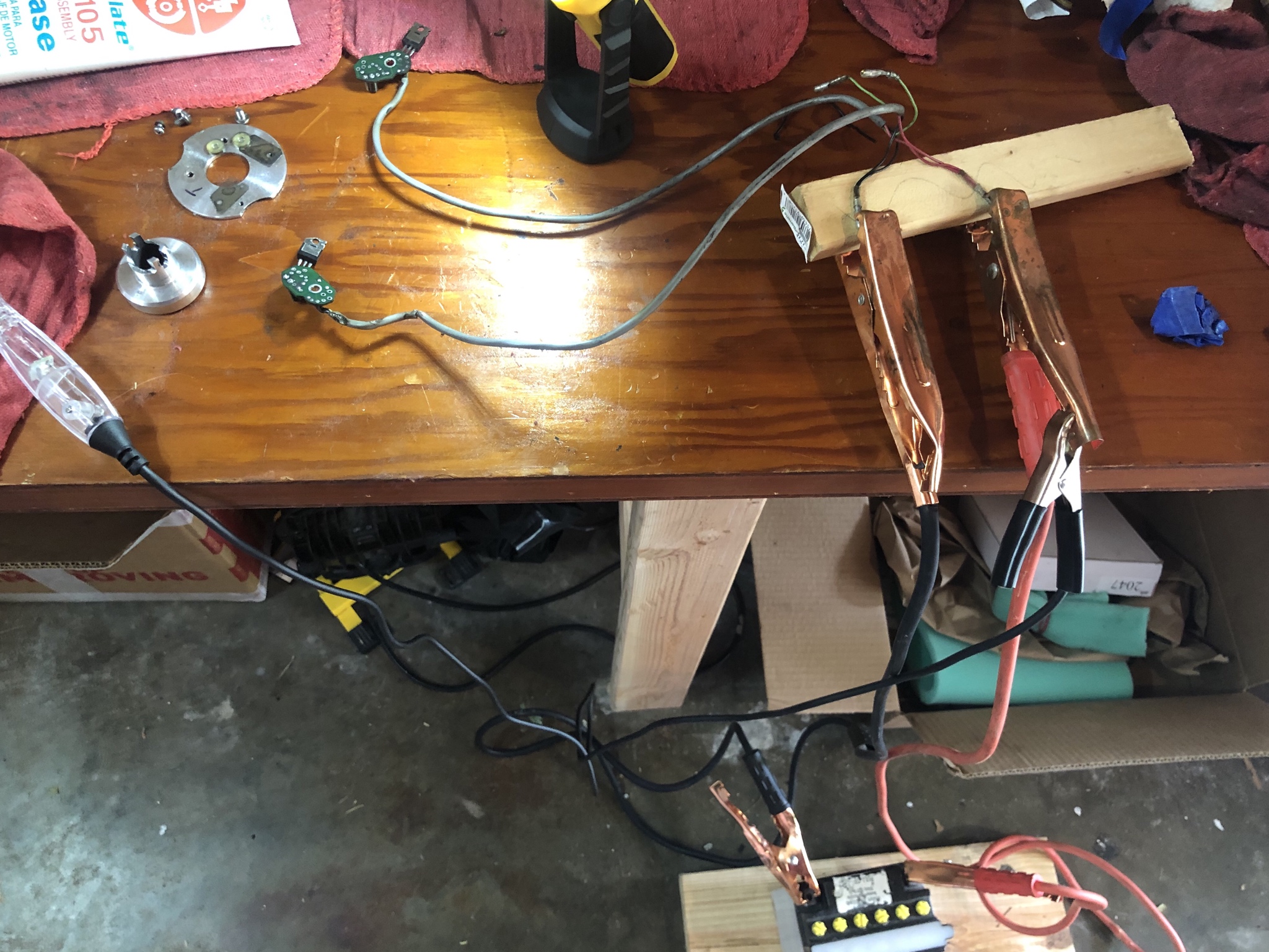
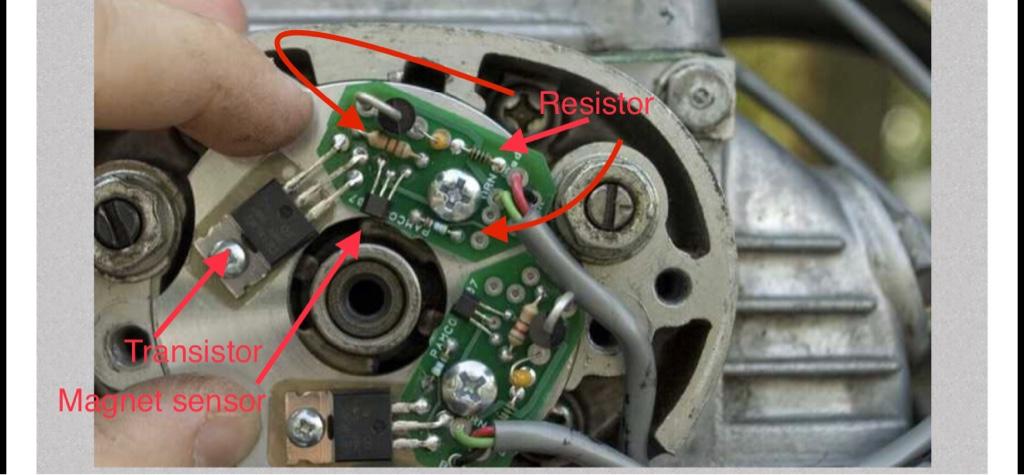
First, it functions exactly the same way as points in theory. At least the gen1 unit that still relies on the mechanical advance. Ground to the coil is open until the cam spins to a point, closes the circuit to the coil, coil charges, cam spins to a new point that opens the circuit back up, coil makes spark. The difference is that the pamco relies on spinning magnets (one north pole one south pole) to switch the circuit on/off. The magnets, under the half moon dimples of the pamco rotor, go North Pole first closing the circuit and South Pole second opening the circuit back up. The basic components to accomplish this are a “Hall effect” sensor (switches on/off for magnet passes) and a transistor (I think pamco Pete speced an ignition specific one). The sensor senses the magnet and the transistor acts like a gate opening/closing the circuit to the coil. Resistors are combined with these components to control the flow. Not an electrical engineer so can’t say why Pete chose the size resistors he did, but those are labeled with stripes so easily replaceable.

Here's a labelled diagram of the components above using one of pamco's instruction pictures. You’ll notice each board has 3 wires (green for coil ground, black for e/i circuit ground, and red for power), 1 each transistor and Hall effect sensor then 3 resistors. There are also two more components that I didn’t label that I’ll get to in a minute.
fa99e852123aeadef1720ca9ab45d7c8.jpg


On my E/I, the left cylinder was missing a 8.2k ohm resistor which kept the circuit from closing. I replaced it earlier this week ($5 for 25 8.2k ohm resistors if anybody wants some). Here’s a video of me testing the left cylinder circuit after replacing the resistor, it works exactly as intended now:

https://imgur.com/a/NpI2Rqn

The two other components confused me, until I dove deeper and did more research.
The large black cylindrical component in the corner of each board is what fell out and I found on the ground at the very beginning of my build. They have model numbers and I was able to find out they are “power rectifiers” which is a fancy phrase for diode and they function like check valves for electricity. However, the little yellow device next to it was missing on both of my circuits, see below:
3be3b7670464babc1555bd453ec9dca4.jpg

f9cd9533b1eebd6c542ac9e4553084ae.jpg


Searching for the final component, I found this helpful website:
http://thebitwiserebellion.com/blog/2013/05/30/diy-electronic-ignition-conversion/
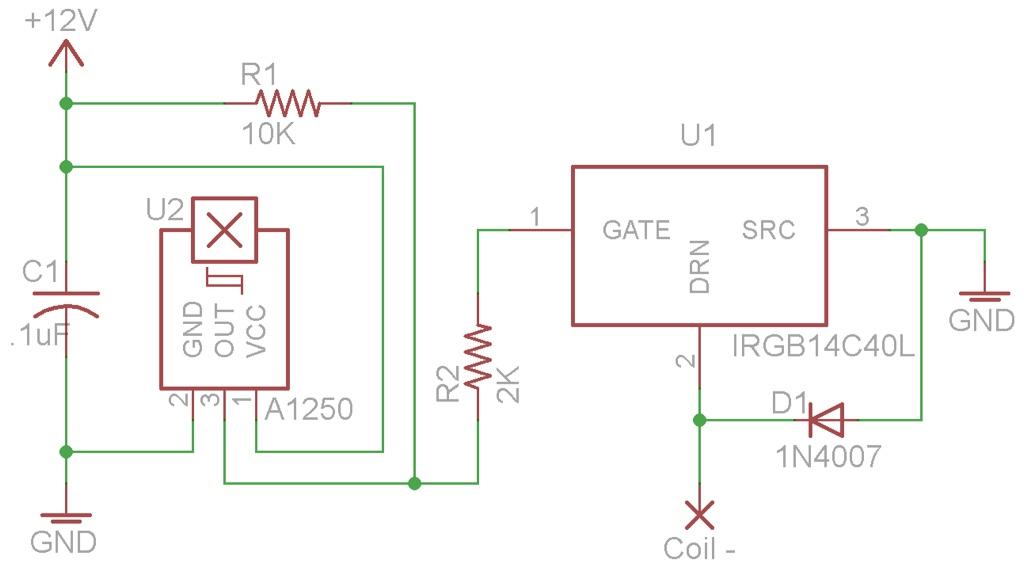
Here somebody builds a custom E/I for a CB77 and even cites the pamco unit as inspiration. Here’s his wiring schematic:
d6ba58640222c81d2e5b6118f95ca27d.jpg


You’ll see that he lists mostly the same components as me above (hall sensor is A1250, transistor is IRGB thing, resistors and a diode D1) plus one more: a capacitor. He mentions it’s use in his article and quick google confirms the missing component from my circuit is a likely “decoupling capacitor” which is just any normal capacitor used specifically to filter noise. In our case, Pete used a axial one for space reasons and it acts to protect the circuit from the noise caused by the coil discharging. It also explains why my test bench worked without it, it’s just a safety valve. After asking around, I went with .1uf capacitors (also $5 for 25 on amazon) because the smaller value blocks higher frequency noise.

So maybe the pamco isn’t maintenance free like they claimed. But, all of the components are replaceable for cheap, the magnet wheel isn’t going to fail, and Pete’s board design is pretty smart. With a multimeter, test light and a soldering iron each component can be tested/replaced if you know what you’re looking at.


Sent from my iPhone using Tapatalk
 
Theoretically haha, I guess we’ll really see when I finally start the bike.
And should I probably still buy points parts just in case?... Yeah my soldering skills are right at adequate. But for now I’m going to roll with this.


Sent from my iPhone using Tapatalk
 
I like what you've done and the explanation you've given. It's too bad my one year of a two year electronics course almost 40 years ago didn't stick with me as well as I'd wished or I'd have a better grasp of it all, it got displaced by 3 different self-taught careers since. Ugh. Maybe one day I'll be able to change my signature... good luck with yours. (y)
 
I’ve ordered some wintergreen oil on that I’m going to soak my carb boots in. They look to be in decent shape, but a little stiff so I’m going to try this method before reassembling the air/fuel parts of the bike.

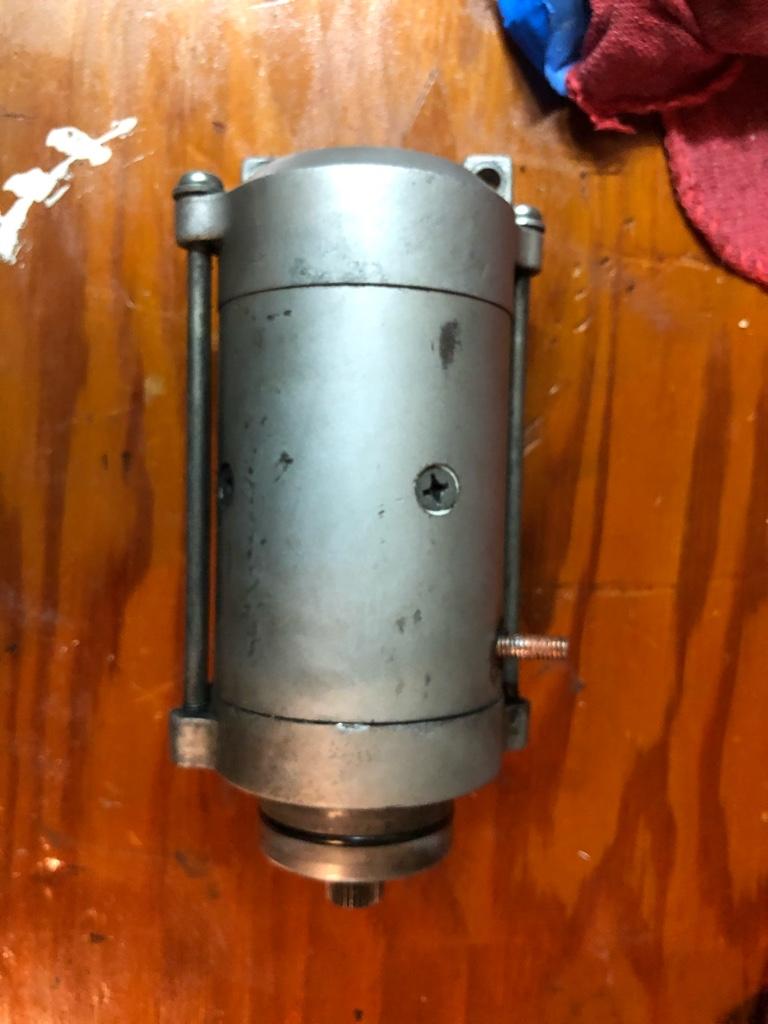
In the meantime I’ve started taking a look for any electrical demons. Don’t have a battery yet, but do have an old atv battery I’ve been using for testing. First issue I’ve noticed is the starter is shorted somewhere. Connected the bikes ground terminal then checked the starter terminal with my test light and it’s coming off as grounded. Is this common and can it be fixed on the bike? I never removed the starter during my rebuild.
dadadb6c694d3f853912246687b415a6.jpg


Sent from my iPhone using Tapatalk
 
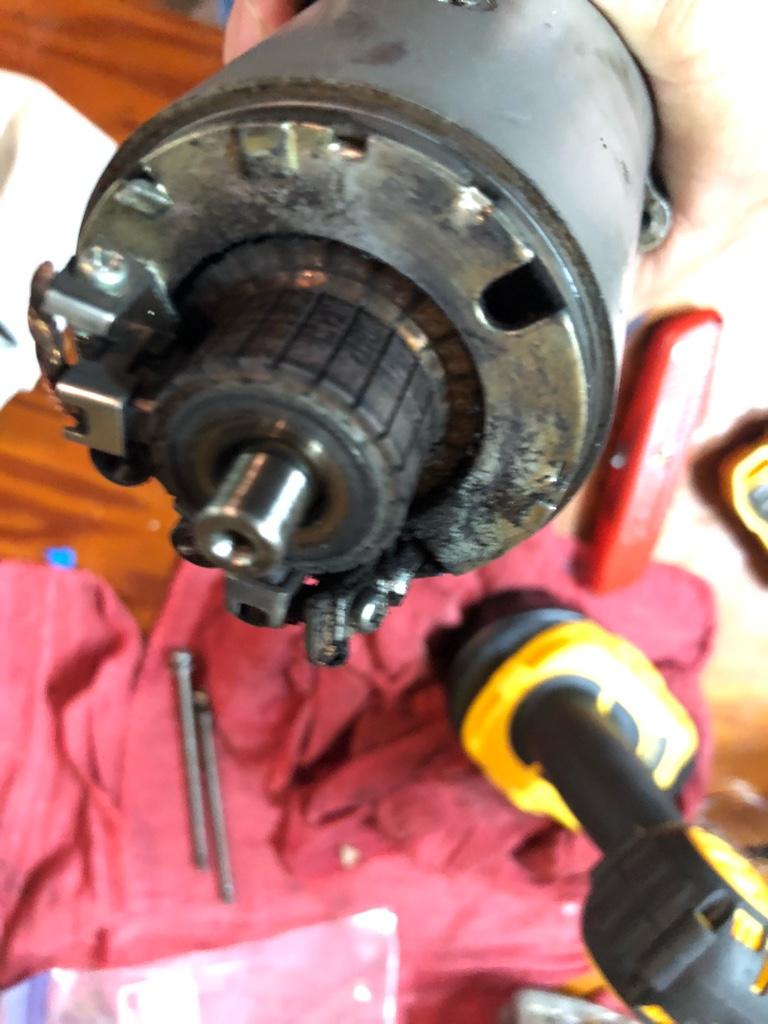
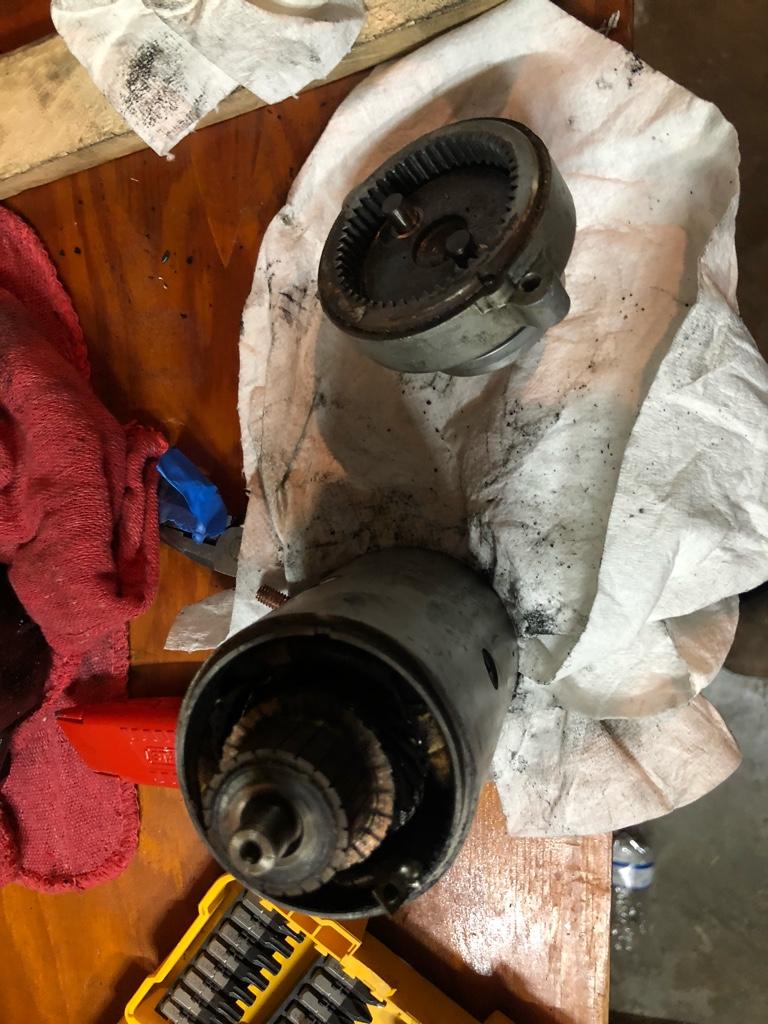
So I got bored during lunch and took a look at the starter. The positive terminal on it was wiggling loose and turned freely so I’m guessing the lock nut for it fell in the can (after looking at diagrams of it’s insides). Decided I was just bored enough to take the starter off too. I naively hoped the case plate would hold the starter gear in place but I was wrong. [emoji854] I probably should start sticking to one task at a time.


Sent from my iPhone using Tapatalk
 
Starter disassembly:
Let’s find out what this is gonna cost me

aa2eca58d702b370198807ee97b127e0.jpg

30217b3e20aafe85e2373b8aa4930c11.jpg
582969e1b3c5f1e005efcb9eda2aabf7.jpg

Planetary gears (not pictured) looked good and bearing turned easily. At this point I was a little surprised the the motor itself was stuck. On to lid removal.
3959693046c8355439b3ce395c5da081.jpg


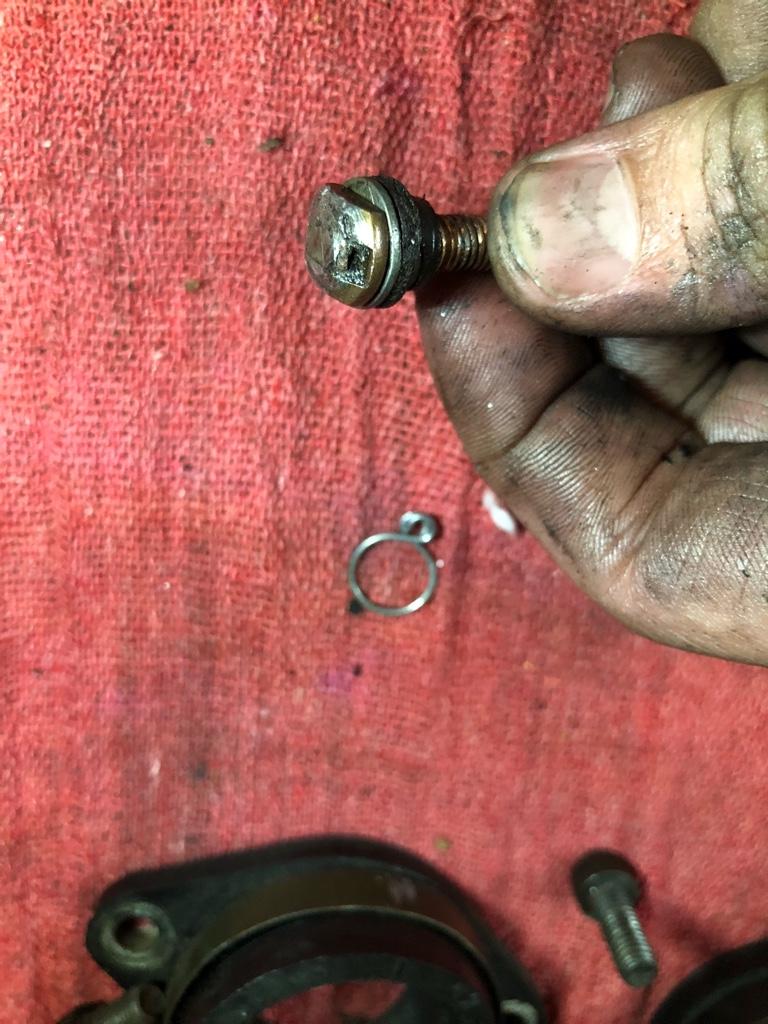
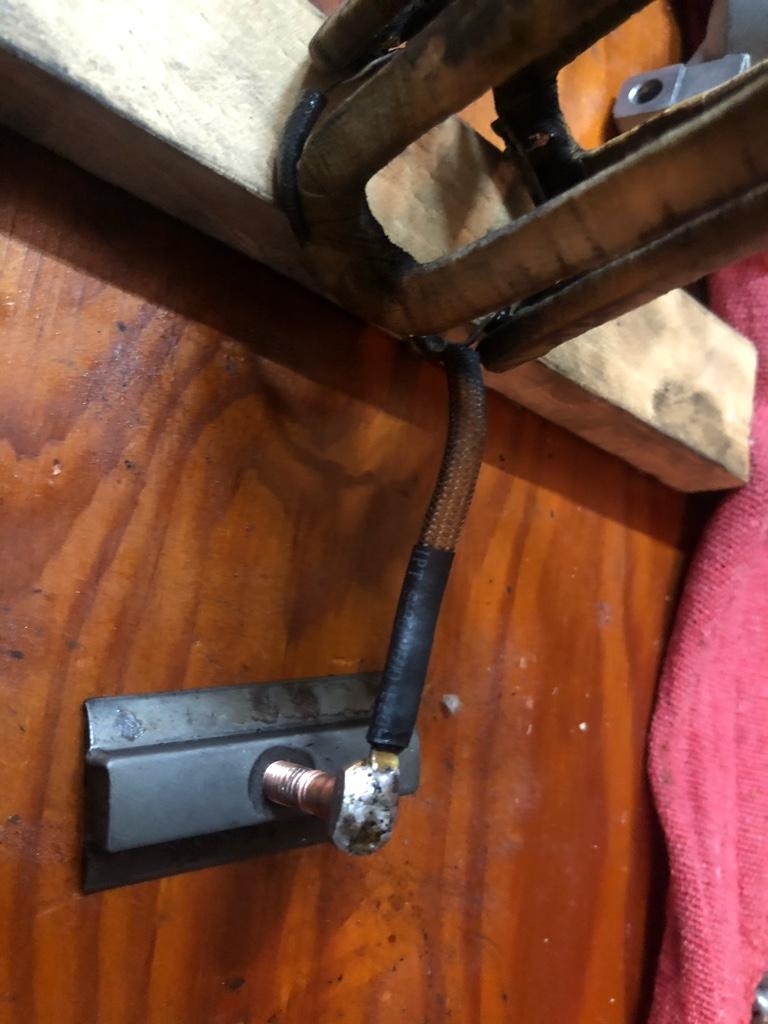
Discovered the culprit, the screw turns freely under the wire, but that fleck of metal was jamming the starter from turning and almost stopped it from coming out of the can. This weld job is not stock right?
88357beda3b83902619fa26196f47926.jpg


Sent from my iPhone using Tapatalk
 
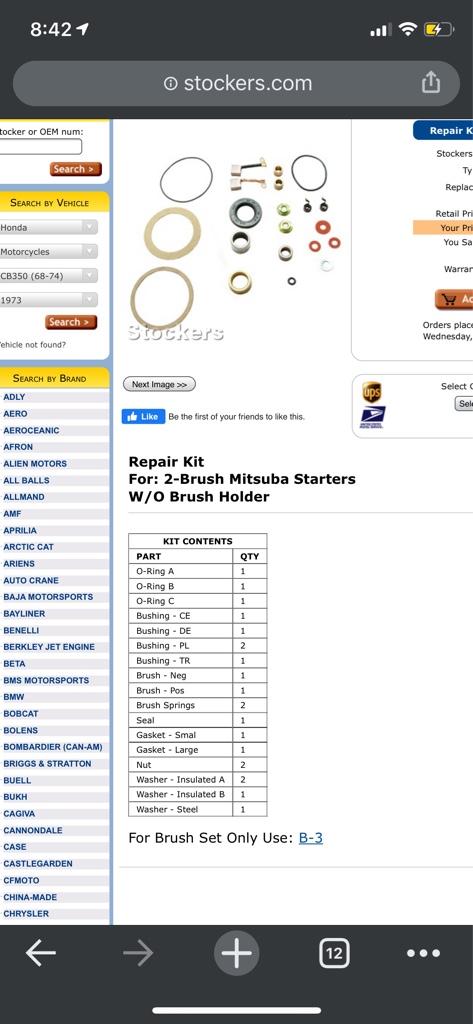
It doesn’t include the copper plated screw, are the nuts in this kit for the screw and I can replace the screw with any good conductor?
1e7dce8353b17b5ef80e6e2db77bd7d9.jpg


Sent from my iPhone using Tapatalk
 
88357beda3b83902619fa26196f47926.jpg


Sent from my iPhone using Tapatalk

This appears to be soldered back on in the wrong spot. It looks like the wire originally fit into that channel in the lug/screw. It must have broken at some point and an attempt was made to repair it. You may be able to heat that up and remove the old solder and wire remnants, then if the wiring left over is long enough you could strip it and re-solder in the correct position.

Or,
I just removed the starter from my bike, but it was in good working order before downsizing the battery and electrical system. I think the 360 and 350 starters should be the same right? If so, I would be willing to send it and save you the hassle of rebuilding a motor. It may still need cleaned up.


Sent from my iPhone using Tapatalk
 
Last edited:
This appears to be soldered back on in the wrong spot. It looks like the wire originally fit into that channel in the lug/screw. It must have broken at some point and an attempt was made to repair it. You may be able to heat that up and remove the old solder and wire remnants, then if the wiring left over is long enough you could strip it and re-solder in the correct position.

Or,
I just removed the starter from my bike, but it was in good working order before downsizing the battery and electrical system. I think the 360 and 350 starters should be the same right? If so, I would be willing to send it and save you the hassle of rebuilding a motor. It may still need cleaned up.


Sent from my iPhone using Tapatalk

That’s what I’m thinking happened too, and I’m probably the one who “broke” the solder joint by messing with the starter wire during my rebuild. I’ll probably need to get creative because the wire is pretty short now.

And I appreciate the offer, but I’ve got a rebuild kit on the way already. If the rebuild goes south I’ll reach out to you.


Sent from my iPhone using Tapatalk
 
No problem! If that wire ends up being too short you might be able to replace it with something comparable. If the other end is soldered too it might be a simple replacement with a little soldering skill. I guess it it possible that the wire broke, and then an arc stuck it back onto the screw. If also be willing to cannibalize the starter motor I have if you need a part you can’t get from a rebuild kit. It is just sitting on a shelf otherwise.


Sent from my iPhone using Tapatalk
 
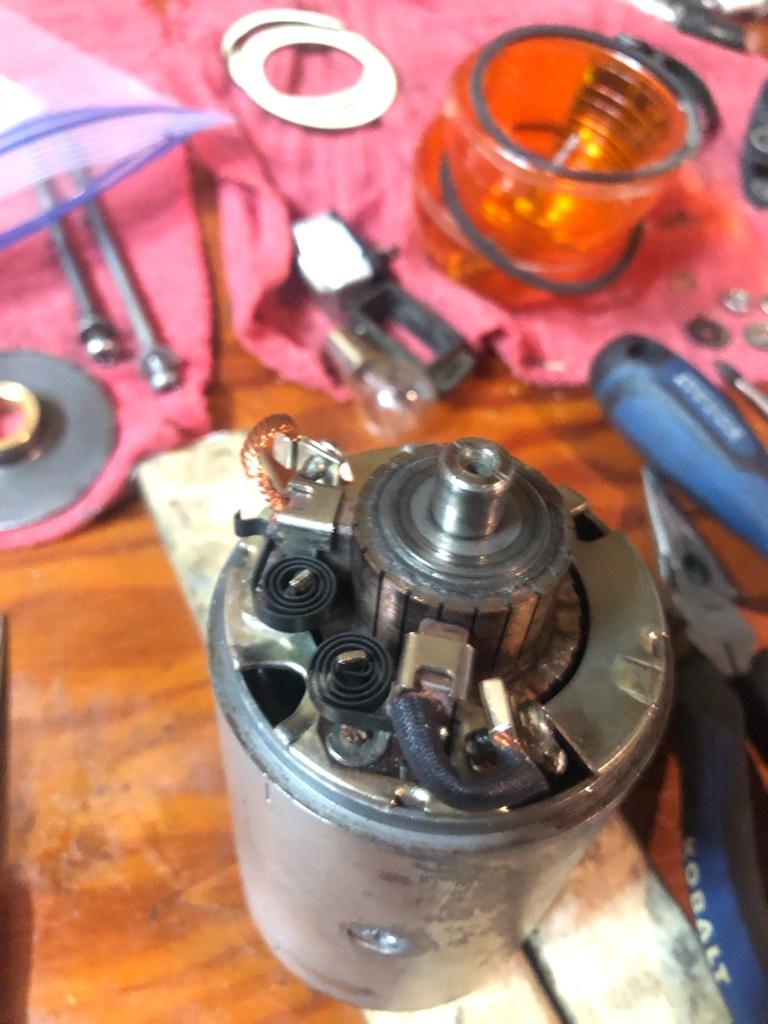
Separated my starter wire from the can tonight, not too tough with an impact driver.
9e9beca6d0ee16e375549bcfa6c9f525.jpg

I’m going to get some contact cleaner before cleaning it up and soldering the connection back.
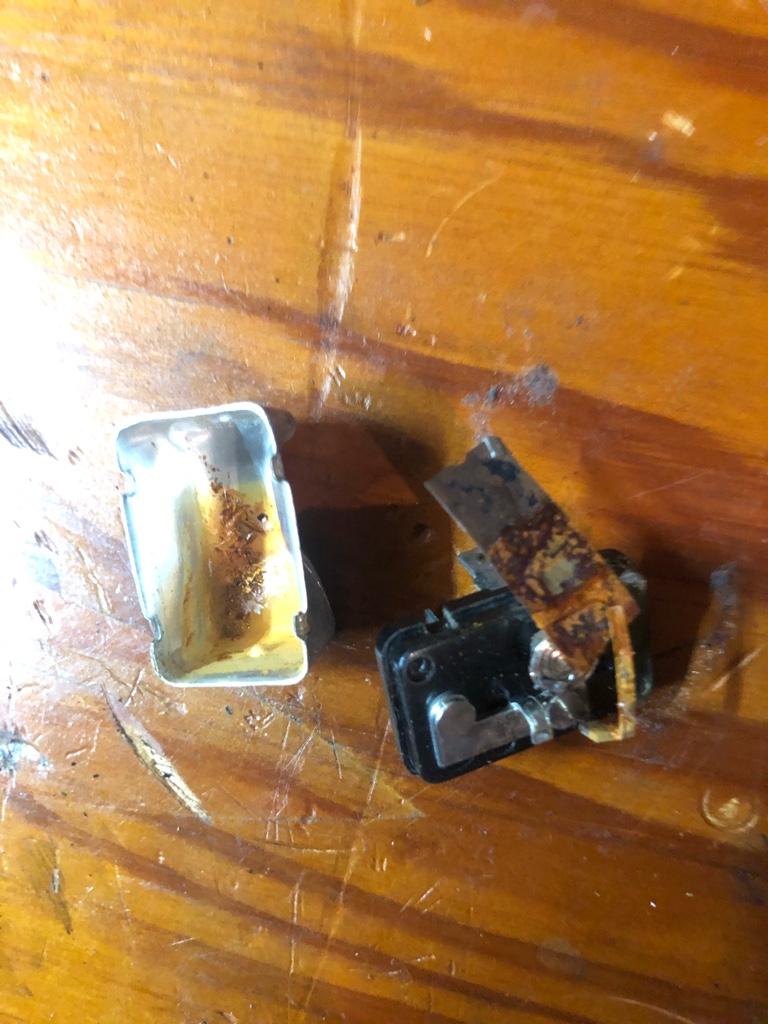
During my electrical tests I also realized the turn signals didn’t flash, they were stuck on. Bored, I decided to crack open the relay knowing I’m replacing it anyways. Take a look if you’re curious:
12e4b0ec208c3b192b88700e092adfb2.jpg


Sent from my iPhone using Tapatalk
 
Got the rebuild kit and started the reassembly.
First I soldered the hot wire back to the copper screw, the inner plates are the same size screw/thread so it made good clamp stand.
513ea7e18950b3b6e8daef2d2873bf31.jpg

Mine came with a small rubber washer that squeezed in the can hole so reassembly from the inside looked like this:
5cdc0d3eb5361287dba7393e8de9d27b.jpg

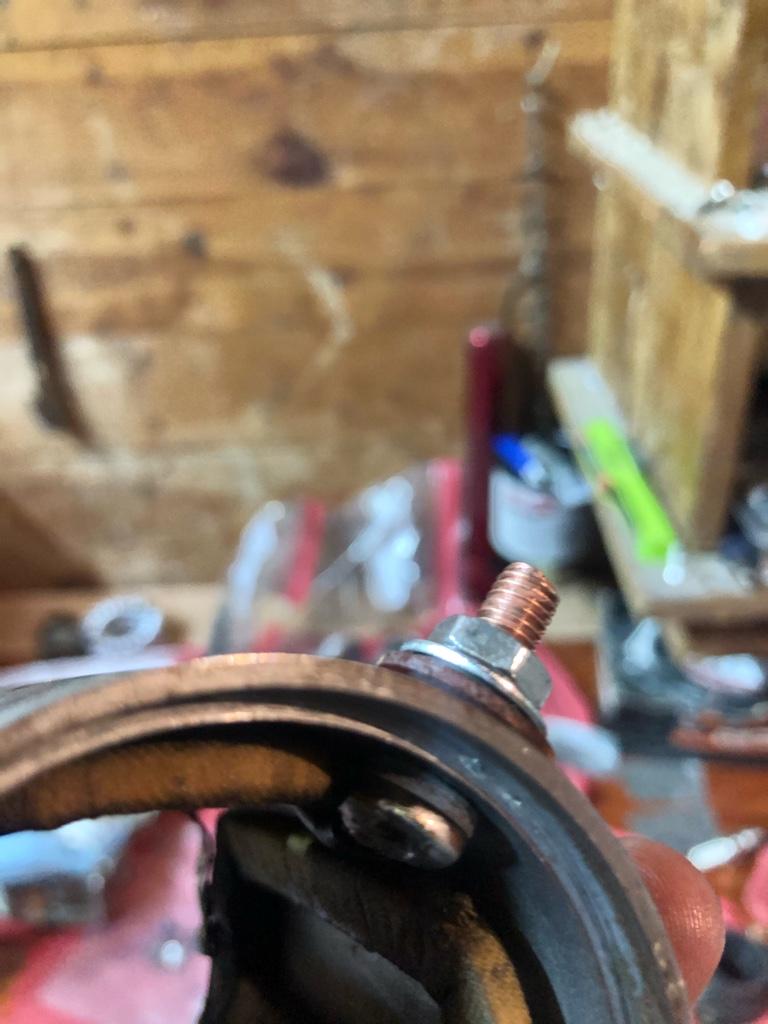
Final product of the screw (sans the nut that clamps down the starter wire):
65dddee94adb06b95c715d255f7a310e.jpg

You’ll notice I had to use the flat washer under the bottom nut because I damaged the thread of the screw removing it initially. Without the washer there I run out of thread before I get the screw in tight.

Inserted the armature:
0123eb42fa12b61f8d5444eae68f7d13.jpg


That and putting the top cap on is all I’ve finished tonight, on the gear side I’m having a lot of difficulty. I replaced the plate and both planetary gear bushings, but I couldn’t get the main gear out of the bottom cap. Decided to just put I back together as is, but now the planetary gears don’t fit. I’m hoping it’s because the spindle thing was still too hot from my heat gun that I was using to try to remove it. I’ll try again tomorrow.


Sent from my iPhone using Tapatalk
 
Finished up my starter rebuild, but I’m a little concerned with the results. I’ll roll through the rebuild first:
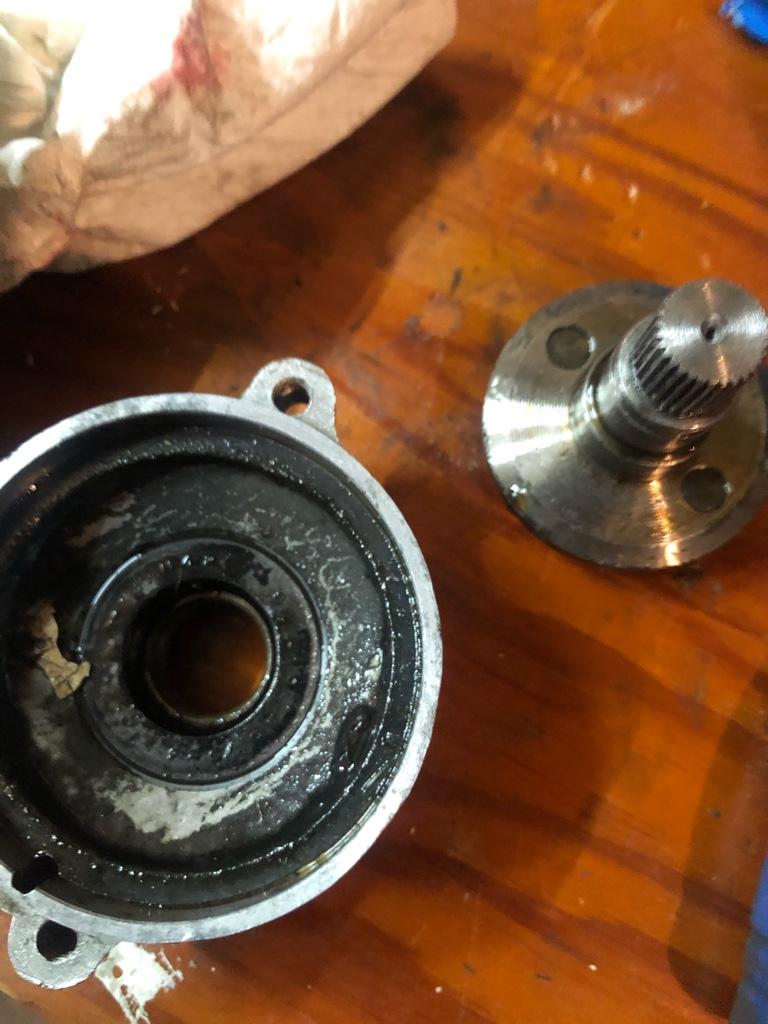
First, it took a while but I finally got the gear side apart:
8d60a62454b89f6e6edc458349b43fb5.jpg

After cleaning it all out with mostly contact cleaner I replaced the plastic piece and repacked the ball bearings with grease. I also replaced that dirty gasket with the skinny one from the kit.
After I started to reassemble it, I realized that the planetary gears still didn’t fit. Even after I removed the bushings from the gear, they wouldn’t squeeze down onto the assembly. Luckily, I still had the old steel bushings so I went back to them. Greased then up and got the cap put back together.
The problem is that it is now very difficult to turn by hand compared to before. And hooking it up to 11.4 volts, it turns but pretty slowly even though it has no load. Is this normal? I understand that on the bike it’ll have a solenoid powering it, but I’m still concerned.


Sent from my iPhone using Tapatalk
 
f108f69a97d01969cb4badad3b777172.jpg

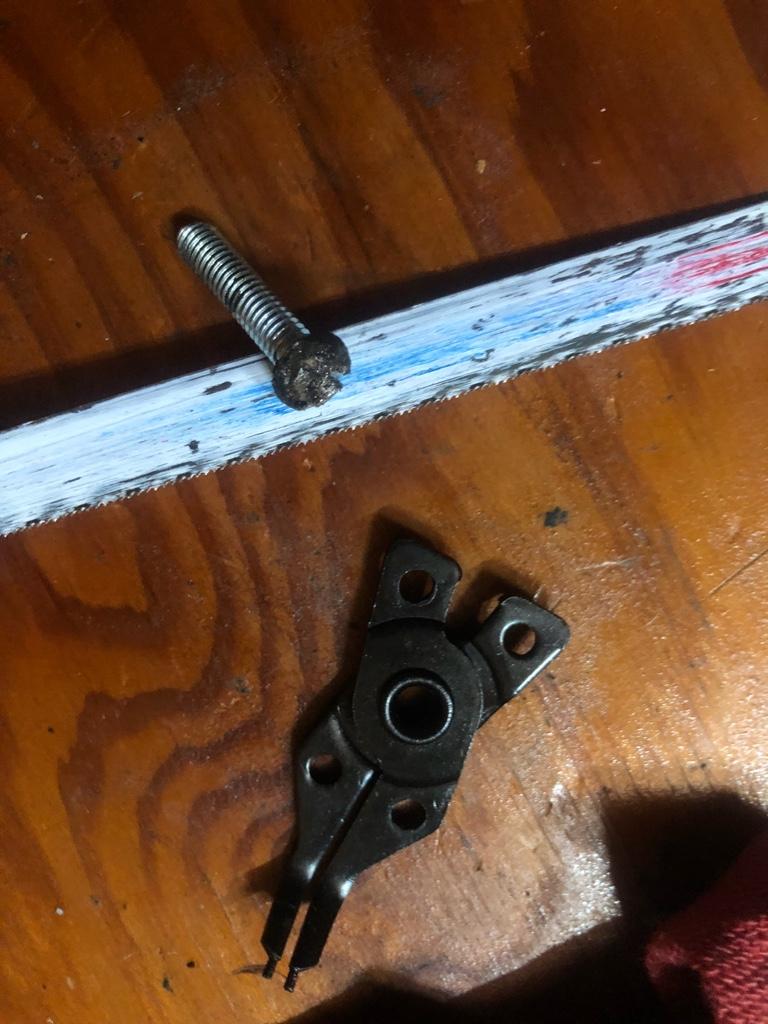
I also conquered the totally stripped screw from my left side crank cover. I don’t have a dremmel, but luckily there was enough room to get a hacksaw in there and that allowed me to put a flat blade bit in and pop it out with the impact driver.
Now I can put the starter back in when I decide if it’s ready.


Sent from my iPhone using Tapatalk
 
The solenoid is just a switch, won't improve the starter function.
Have you tried using jumper cables from a car to power the starter?
The turning harder by hand is of concern also.
 
To be fair, I was never able to turn the starter by hand while it was fully in tact before because the positive screw was jamming the armature. I can say that it was easier to turn the planetary gears cap removed from the rest of the motor than it is to do it now.

I thought the solenoid works exactly like the ignition coil to create a brief surge of voltage for the starter?


Sent from my iPhone using Tapatalk
 
The solenoid is just a switch, won't improve the starter function.
Have you tried using jumper cables from a car to power the starter?
The turning harder by hand is of concern also.

He sent me a PM and I think we got it sorted out. His starter has about the same resistance as mine. Probably just new brushes and springs are making it harder to turn.
 
I’ll try it on my car now and see


Sent from my iPhone using Tapatalk
 
Got some serious arching/burning on the positive nut when I hooked it up to my Jeep.
Took it back into the garage and this is what the test light shows
d11f435631c2a22a0cb95079102b8e41.jpg

Same problem from before unfortunately


Sent from my iPhone using Tapatalk
 
To be fair, I was never able to turn the starter by hand while it was fully in tact before because the positive screw was jamming the armature. I can say that it was easier to turn the planetary gears cap removed from the rest of the motor than it is to do it now.

I thought the solenoid works exactly like the ignition coil to create a brief surge of voltage for the starter?


Sent from my iPhone using Tapatalk

A solenoid is kind of like a relay, but creates mechanical movement. Instead of just switching something.
 
4d19078133f4a83c912a357b36658bb9.jpg

This is the same test with the armature removed, so the short isn’t in the wiring. I tested the positive brush too and no light. Does this mean somehow the armature is shorted?


Sent from my iPhone using Tapatalk
 
4d19078133f4a83c912a357b36658bb9.jpg

This is the same test with the armature removed, so the short isn’t in the wiring. I tested the positive brush too and no light. Does this mean somehow the armature is shorted?


Sent from my iPhone using Tapatalk

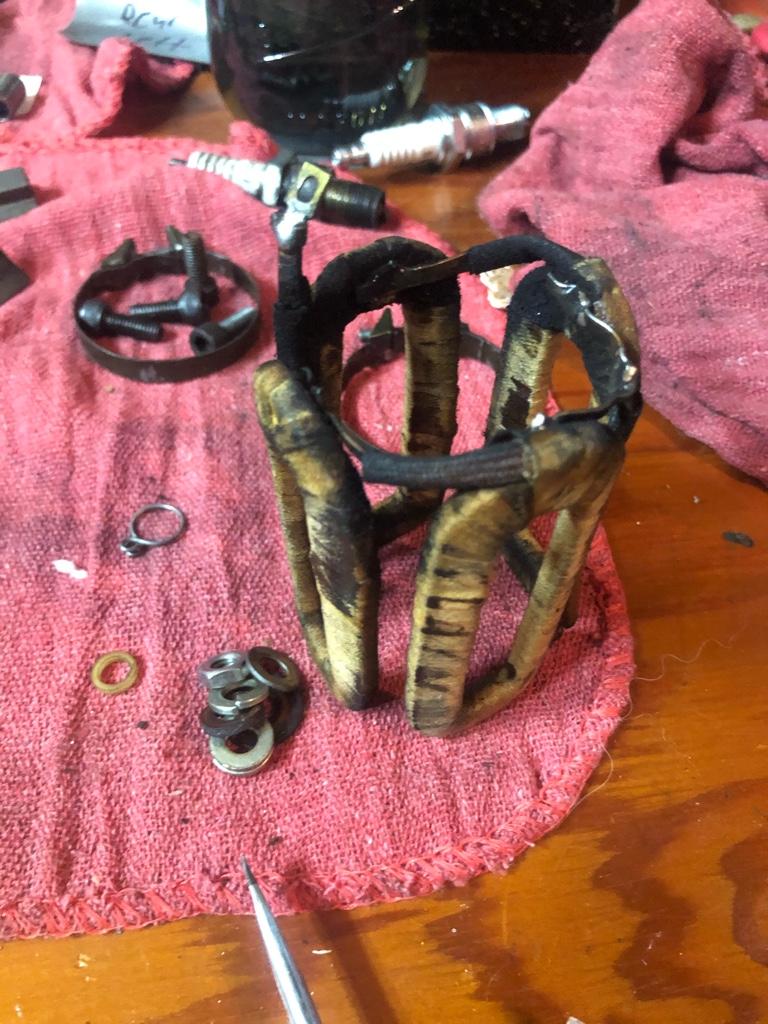
I noticed in a couple picture that the windings on the case have a couple bare spots. You could be getting a short to the armature across that. Double check that nothing is touching.
 
Trying it with the armature in the can, it seems like the commutator is shorting. When I push the positive brush off the commutator, the light goes out.


Sent from my iPhone using Tapatalk
 
Google says there should be continuity across the commutator, and I get a resistance of .5-.8 ohms but I don’t know if that’s good or bad.


Sent from my iPhone using Tapatalk
 
Back
Top Bottom