Rebuild of my English CB175K6, 1972

My order was 2 ring sets and 2 plugs, so it is my guess the rings are on your side of the Big Pond.
CMSL had cheaper but not by much and I doubt faster delivery, they possibly were not original parts either.
The bike had cost me £3000 so far and not on a road yet...

Lots of other things to do while I wait and fortunately the weather is not good here, so the garden is not on the list, a paint brush is though...

Still not sure about how theoil gets into the exhaust and why the carbs do not respond to the pilot jets.
 
Just noticed the UK supplier WEMOTO list an inlet seal for the cb but it is the same as the exhaust seal (AB5633) but there is no way of locating it on the inlet valve stem. Maybe just a mistake on thier site, but are CB200 inlet seals fittable to the 175?
 
Valve stem seals only on exhaust valves on your engine......And different than CB 200 stem seals.....
 
I hoped there was an 'upgrade'....
Presumably, the inlet needs good lubrication where the exhaust is kept dry, odd way round.
 
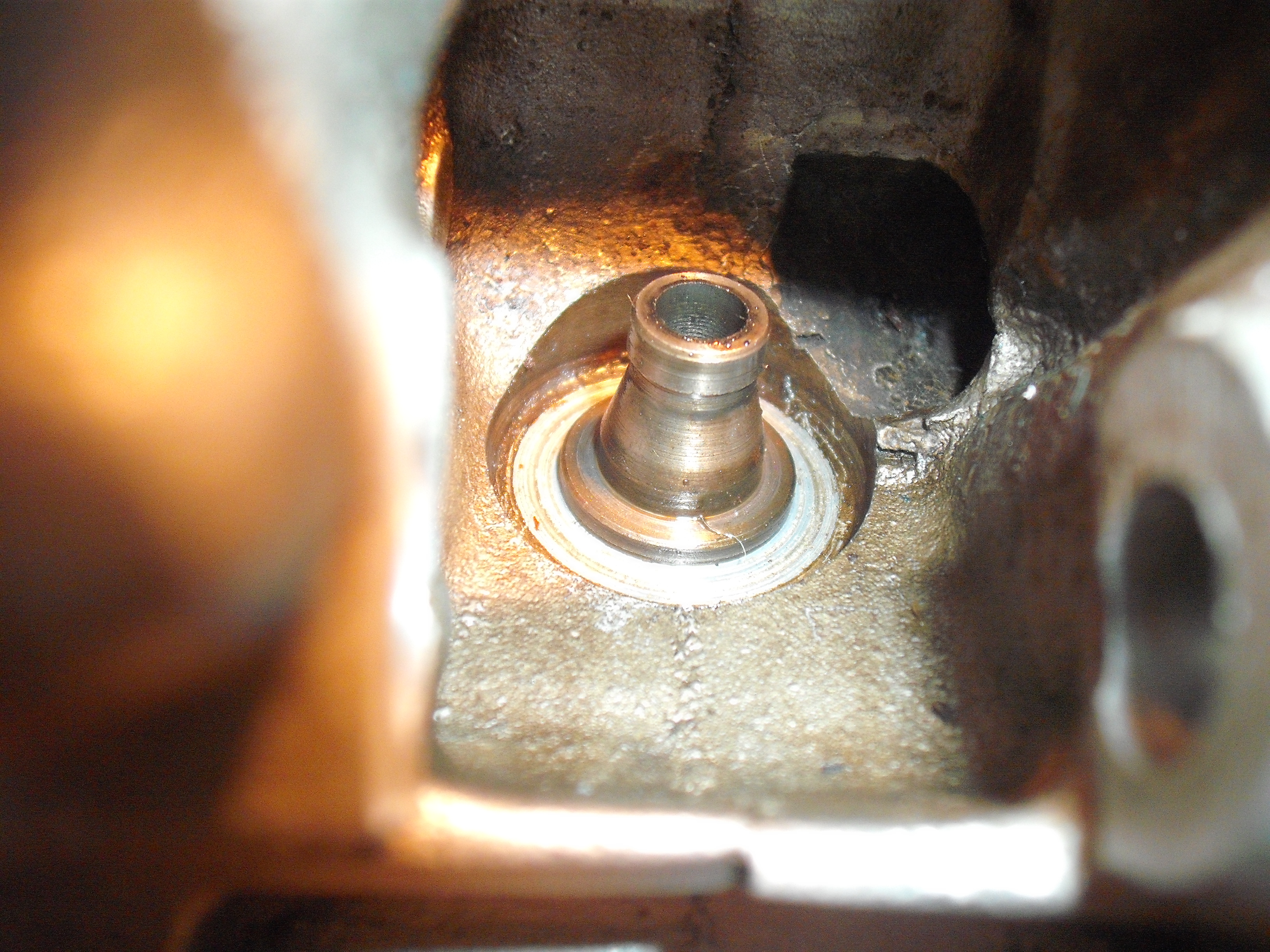
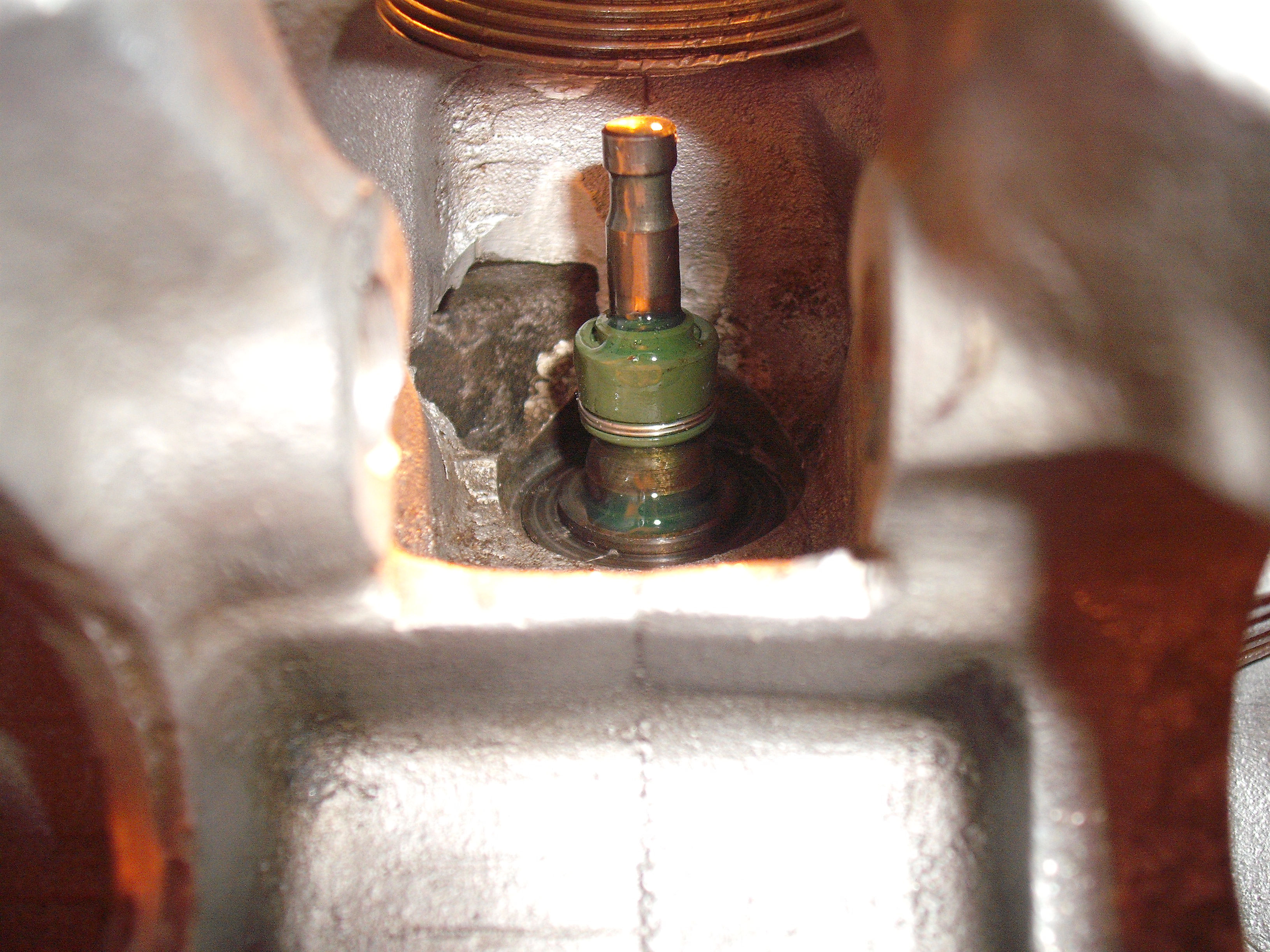
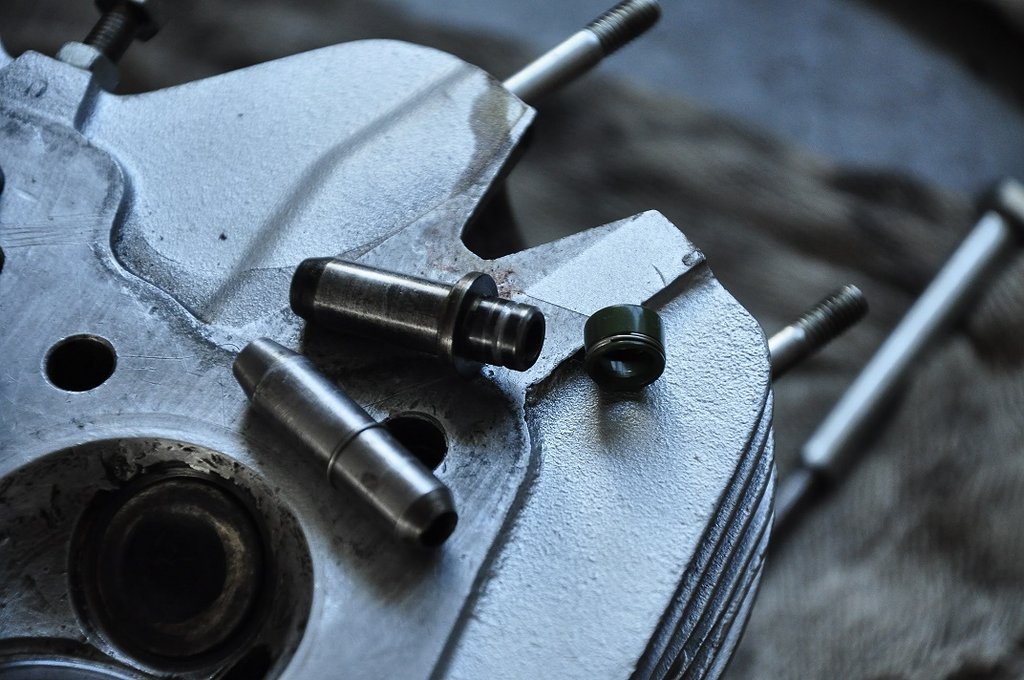
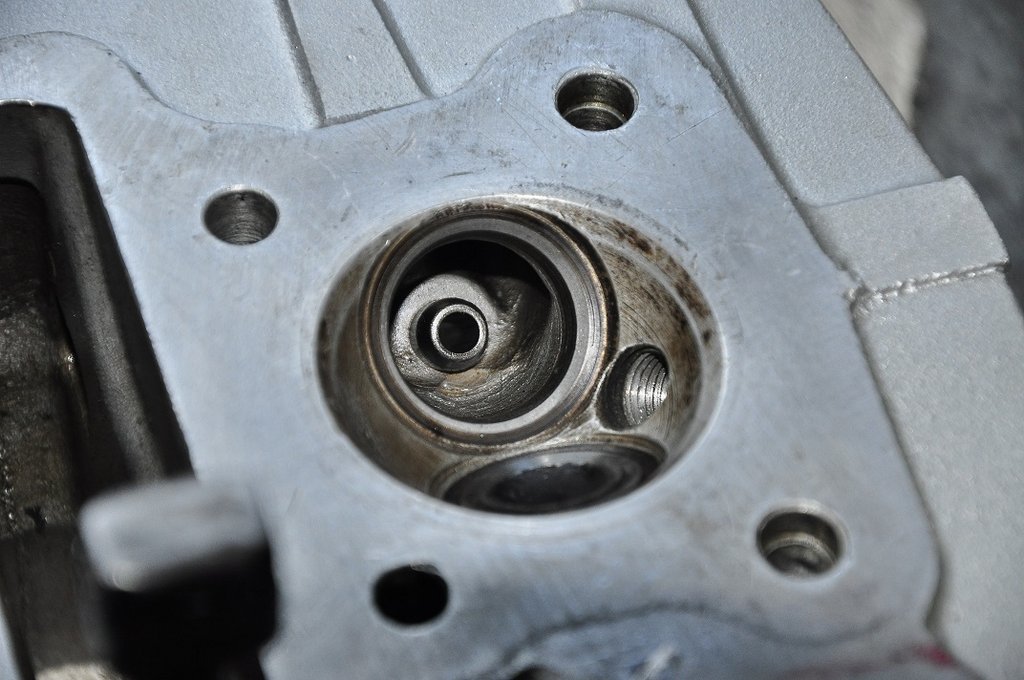
Here's a couple of pics of the CB200 set up from my as yet rebuilt but never run engine. Valve guide has a groove to retain oil seal.

Wemoto website simply incorrect regarding 175 inlet seals.

In Zekes thread on dotheton forum, they fitted a CB200 head to one of their 175 engines.

fcai5gq.jpg


ZZ2hCfj.jpg
 
Thinks - it wouldn't be impossible to fit CB200 guides to the 175 head ?

Might need to be shortened, but a man with a lathe could sort that out.
 
That is the right design!
Interesting that Honda did this for the cb200.
I asked Wemoto why they have a seal, the same as the ex. For the inlet.
They agreed the site was wrong, will save some confusion for others in the future.
Ill rebuild as stock and cross my fingers.
I don't fancy getting the steel guides out and loosing the alignment to the seat.

Went through the original carbs yet again and have confirmed that the drillings from the front of the carb, the hole drilled below the brass tubed hole is clear to brake cleaner and air from there all the way back to the fine hole behind the slide.
Both carbs the same, so the air mix screw will work if I can get the tick over down to 1400 or less.

Are all twins as hard as my two have proven so far.
 
New Honda NOS +0.75mm rings arrived yesterday, so started to look to re-build the engine.
Popped the rings in to find the gaps were still a bit big, in tolerance but only just.
Having seen that made me think and have stopped doing this rebuild.
Also, there is a corrosion break out, a small patch on one bore right at the top which is quite deep, I did not notice/feel this at the first build, so it has got worse during the short running recently and that means a Change of Plan.


Have ordered a used cylinder block which is on stock piston dia with some water marks (as it is described) from a good bike breaker who has sold me lots of bits, all really good when nice and clean.
They recommend a 'first bore over' to clean it up, that would be 0.5mm.


Plan is to have the bore machined 0.75 over so I will have virgin rings and pistons in a virgin cylinder block at the lowest cost.

Richard, if you read this, you have pm from me.


I think this is the best tac in the long run. That corrosion spot/area (about 6mm dis) is right at the spot the top 2 rings rest at TDC/fire and will just get worse.
It is now also on my mind, and will be a worry if ignored.


Hope to get it all back by Xmas, but that may be difficult. The machine shop I intend to use will be busy.
 
Good plan, any damage to the cylinder walls will destroy the rings in short order. I have noticed that rings for the most part are all in the max spec range for end gap or higher. I went thru 4 sets doing my 350 until I got a set that as just below max. You might source some 1mm over rings and file the ends down to get a closer fit. I didn't have that option since I was already at 1mm over for pistons.
 
I think this engine has been at +0.75 for some time, I paid too much attention to money than quality, and paid the price!
With all this attention, it should be a nice engine!
 
My replacement block is due tomorrow, so hoping to deliver to the machine shop Wednesday.

The cylinders should be stock dia, and my new pistons are 0.75mm over, thus he bore will be to suit the pistons, ie + 0.003" over the piston dia measured under the gudgeon pin.

Question: am I correct to tell the machine shop piston dia +0.003"?
 
I believe with the stock cast pistons it should be .002", but I'm not a machinist... it's just what I remember from the many bore jobs I've had done for OEM pistons in the past
 
I've read recently a few 'variations' on this (of course) hence the clarification needed to tell the machinist what is needed.

Some say 2 thou piston to bore, ie 4 thou on diameters, so 2 thou radius, 2 thou all way round.

The new cast pistons are far more than that in the original bores.

So, are you saying 2 thou on diameters, ie 1 thou from piston to bore wall all round?

This bike has done 26K miles so surprised it is at 0.75mm over already. The previous owner fitted new pistons but I'm not at all sure the rings were new(!)
 
The way I've seen it measured in the past after boring is with a .002" feeler between piston and cylinder wall, but again I'm not a machinist and do not really know the proper methods of measurement, just going on what I've heard discussed by the guys who have bored cylinders for me in the past
 
Yes, that is the method I've seen here too.
That will give a diameter difference of piston to bore of 2 though, sounds right to me, thanks for the replies.
Graham.
 
Well, of course that did not work.
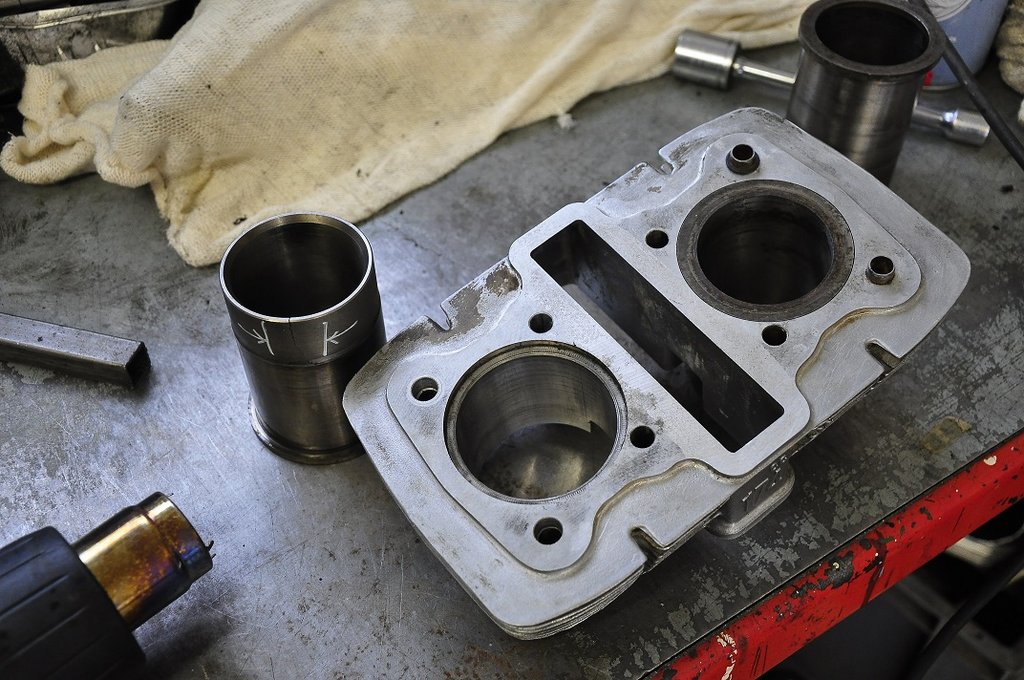
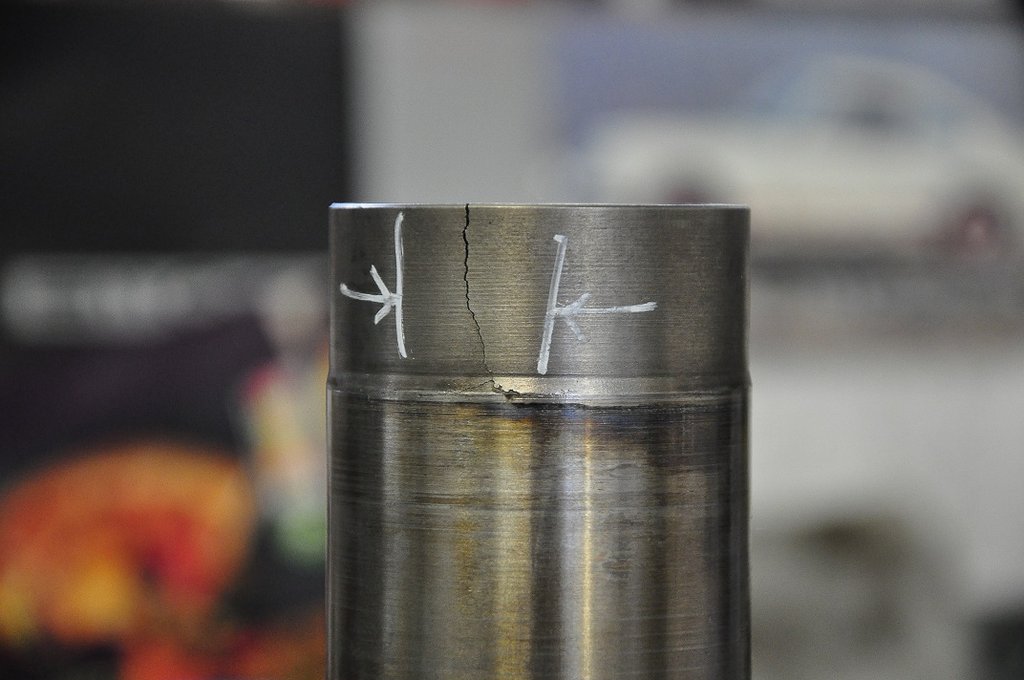
The replacement cylinder barrel arrived today, cleaned it all only to find a 20mm crack in the exposed part of the one cylinder, and you can see where the piston had been scraping past it at 9000 rpm...

So, pointless reboring it as the crack will never be flat and probably keep progressing.

The supplier I think will credit me back, but only has a barrel set off a cb 175 K0, 1968, and that part number is different to the one I have off the original bike.
Honda would only give it another part number if there is a difference between the two.

Anyone have a skip for this thing?
icon_evil.gif
 
Right, having recovered from this disappointment, got to find a solution!

I have two options and need some info please.
1
I've been offered a barrel set from a cb175 K0, 1968. The Honda part number for this is different to the barrel for my K6/1972.
For Honda to give it a different number, there must be..a difference. The K0 part needs a full rebore to remove rust, and I'm dubious if a 0.75mm over will clean them.
Therefore, this is a high risk action.
Does anyone know if the '68 part will fit the 69 on cb engine? I think the 68 CB is the Sloper??

2
I get (I hope) a credit for the part I've just got, about £60.
I buy a set of 1mm over pistons and rings for £44 from Japan and re-bore my cylinder block to 1mm over from 0.75mm over, I sell by new 0.75 over pistons with real Honda rings for ebay for about £30 (guess).

I'm in for the £60 rebore cost with either approach.

Option 2 seems the best route, buy new pistons and rings, rebore the cylinder barrels I have to suit in the New Year.


Any thoughts on option 1? If I go Option 1 I can use my new 0.75 over pistons and rings.
 
I don't know the answer for option 1, but if it were mine I'd just bite the bullet and go with 1mm over pistons and a fresh bore
 
Agree, I hope to get a full refund on the cracked part which will easily cover the cost of the Pistons and rings.
Should have gone in this direction in the first place....
 
Graham,

I have a spare 175 liner that you are welcome to have gratis, std size, not rebored. It's from the cylinder on the other side to the one that I drilled out.

I can warm the jacket up in the morning, get the liner out and drop it into the parcel post box.
 
Thank you Richard, very kind of you indeed.
Sounds a good way out and I can use my current pistons and rings after the bore.
I will pm my address to you tomorrow morning.
I would like to pay in some way, so would like to make a donation to the rspca.
thanks again!
Graham.
 
Thanks Richard, looks a jem.

The costs to restore here in England are far higher than in the USA. The usual sources CMSL and David Silver are pricey, but most parts are there, but there are pattern parts too that seem good. However, you can almost feel the quality of NOS Honda parts. Something here for £100 is $100 or less in the USA, something $100 shipped to the UK is about £130.

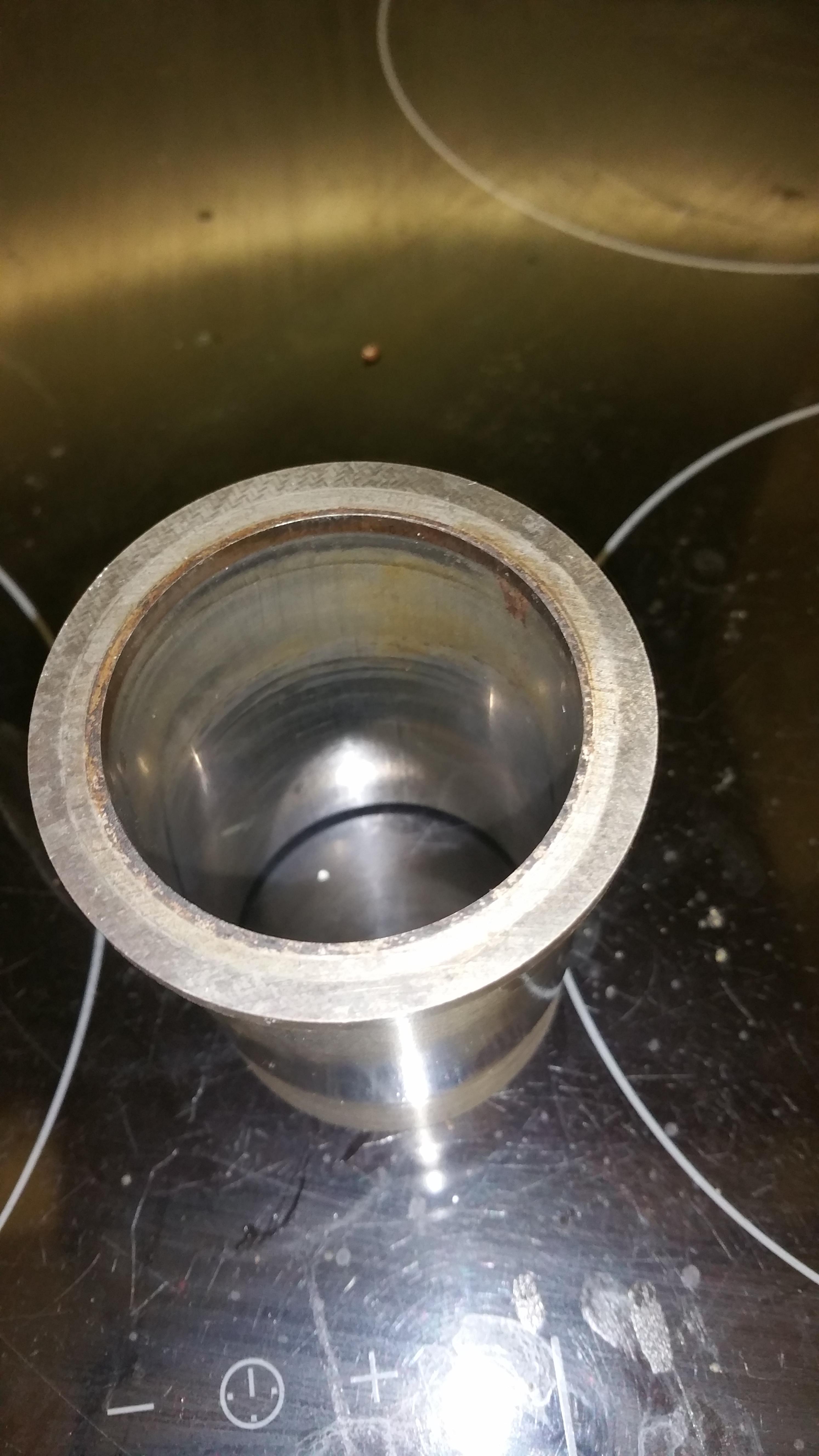
I warmed the block of my scrap original cylinder barrels and without much heat or effort it tapped out with light blows from the plastic hammer.

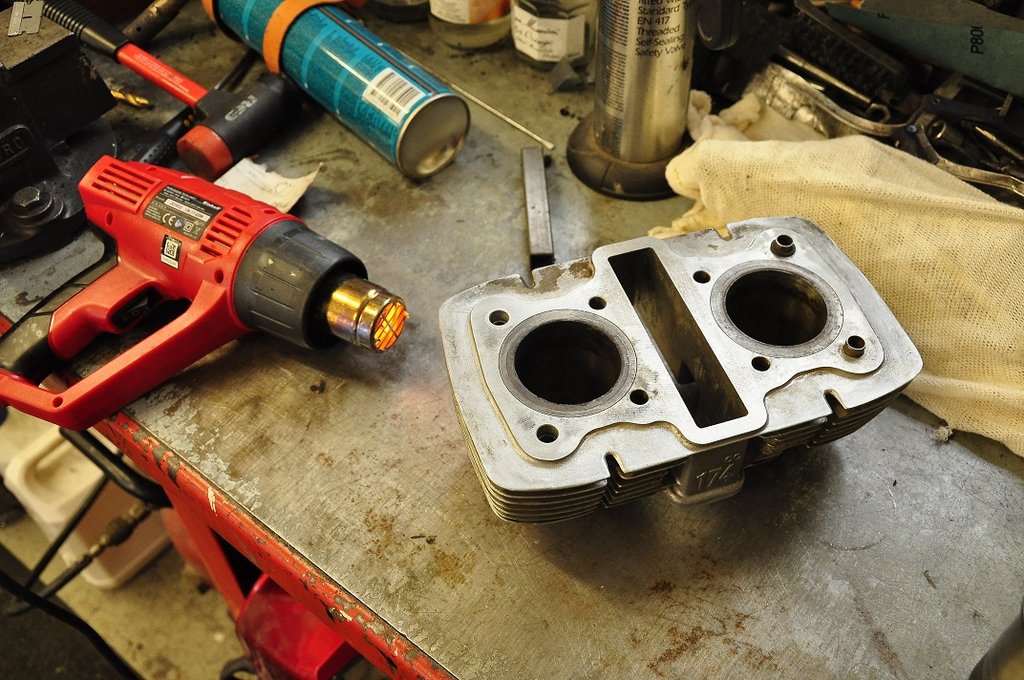
Encouraged by this, put more heat into the replacement head and the cracked barrel almost fell out!
Thus, I'm ready for the Father 'Richard' Christmas pressie of the barrel to replace it.

Fabulous!

If this all goes Due South then I have a Plan C, and that will be to have bored the other barrel set I have that is currently a smooth but worn +0.75 over that could take a bore to a full 1mm over and those bargain new pistons and rings from Japan. This 3rd barrel block has 30 thou ring gaps using new +0.75 rings...

All money, but I do want a perfect interior to this troublesome engine.

When I did my Gold CB (1976) it got the lot, bore, pistons, rings, valves everything as the stock parts were knackered. I should have done this lot again.

My new Chinese starter clutch assembly has also arrived a week early, going to fit it now as I can't do anymore on the bike in prep for the re-bore.

That crack was propagating badly!


That cracked liner is horrendous. I can't imagine what caused that, amazed that breaker didn't examine parts before despatch. DK ?

I'm afraid I just stuck the block into our fan oven, set at 200c. Less than 15 minutes later, starting from cold, the liners just drop straight out, no force required. Lifted out using oven gloves, then left to cool naturally. Needless to stay, parts were scrupulously clean, wouldn't want to taint the turkey !

I've included the original piston and rings, std size, so you can get a feel for running clearance. Seems pretty tight, just by feel and mk1 eyeball.

Package went into Royal Mail parcel post box at Shrub Hill station at 9:00 am on the 16th, first class, not signed for. Just seen the news reports of pressure Royal Mail is under, so hope it arrives OK.
 
I really ought to make an inventory of my spares hoard.

Whilst rooting around in the loft for bits to send to Graham, I pulled out my spare set of cylinders, which I did know about. Used, but good, still on standard bore. I had completely forgotten that I had also got a pair NOS std pistons and pins, along with a set of 0.25 oversize NOS rings, all genuine Honda. Need to sort the ring gap, then ready to fit if / when one of my engine goes pop !

Along with a spare used cam, journals, and followers, cam chains etc, that little rubber thing on the cam tensioner rod, most eventualities covered. Picked up a NOS kick starter gear last week. I've already got a NOS camchain tensioner assembly fitted into my 'spare' engine, mounted in the SL175.

I suppose I ought to look out for some valves and valve springs, but most other stuff, like gaskets, seals, clutch plates etc seem to be easily available when required.

Loads of good used crank assemblies on Ebay, which speaks volumes for the robust nature of the motors bottom end. Can't think of anything else to look out for ...
 
Thanks Richard. I sent a parcel by Post Office to my mum in Ashby de la Zouch and it arrived the following morning!!
Before I got this latest bike I bought a stash of cb175 bits in a box, surprisingly useful over time.
The breaker was DK, first time I've had a duff part from them. They offered to swap the block for a standard size block but from a K0/1968 with heavy corrosion in the bores. CMSL show a different part number for the K0 to the K6 blocks, so refused the offer. No offer of a refund!
Of a similar nature, the new starter assembly from China arrived and of course it does not fit in any way though described for the K6. Every dimension is too big to fit. Supplier is insistent it is the correct part...typical of all my luck on this bike. The gold one was a breeze in comparison the way this one is going.
I look forward to the Big Parcel!

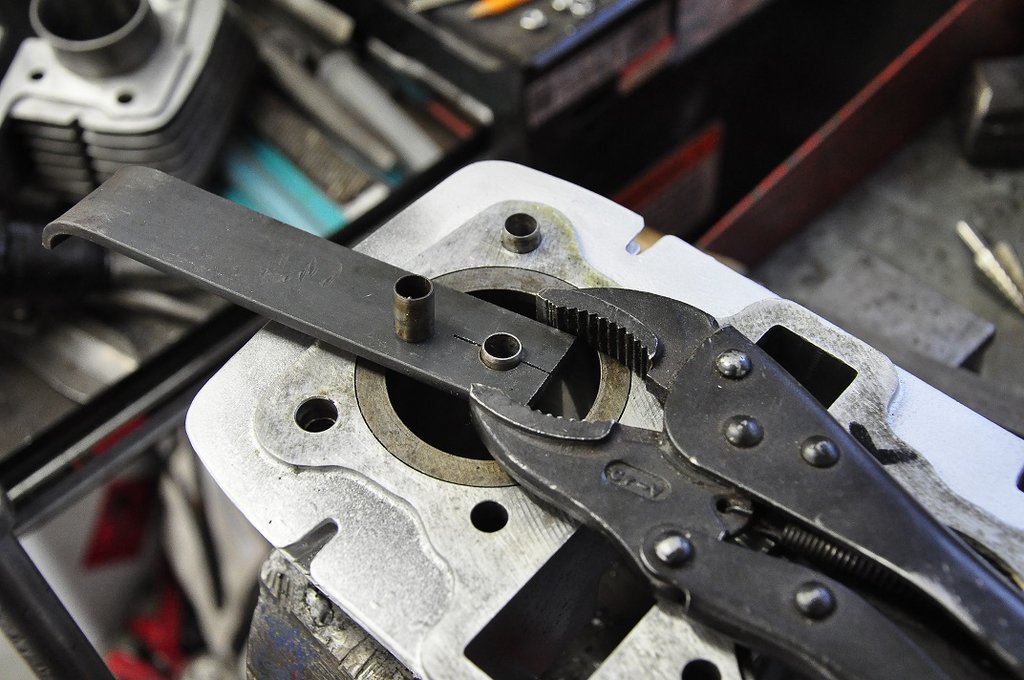
The barrel block has a number of guide sleeves to locate the head and the barrel block to the case, and I needed to get them out of the old block ready for the re-bored barrel block. Very tight in place and no way to drift them out so made a small 'spanner' as the pic. All came out a treat with a squirt of WD40 to help. Clamp and gently twist little by little moves with a bias upwards.

Moving up the engine and back to the irritation of no seals on the inlet valve stems.

Just dug out my scrap head (actually the original had off this bike) and have heated the head, and tapped out the inlet and exhaust valve guides.

Have ordered two seals from Wemoto with a view to machining my inlet guides to take the seals, and if not possible will fit some CB200 guides @ about £30 pair from cmsl.
The guides came out well. I think this will be a good mod on the engine, obviously, Honda did too.
To hedge my bets and because I have 2 good exhaust valves, bought a set of exhaust valve seals and metal caps from CMSL so i could fit exhaust valves guids instead of the inlets, and fir cb 175 seals to the inlet side so would have 4 exhaust seal assemblies in the head which will save some machining etc.
will need to strip the inlet valves out etc, but I feel this will be a good move forward and only an hour or so to do it all.

A nice little sub-project.

 
CB200 seals arrived today from Wemoto so got going on the head conversion, but not for long...

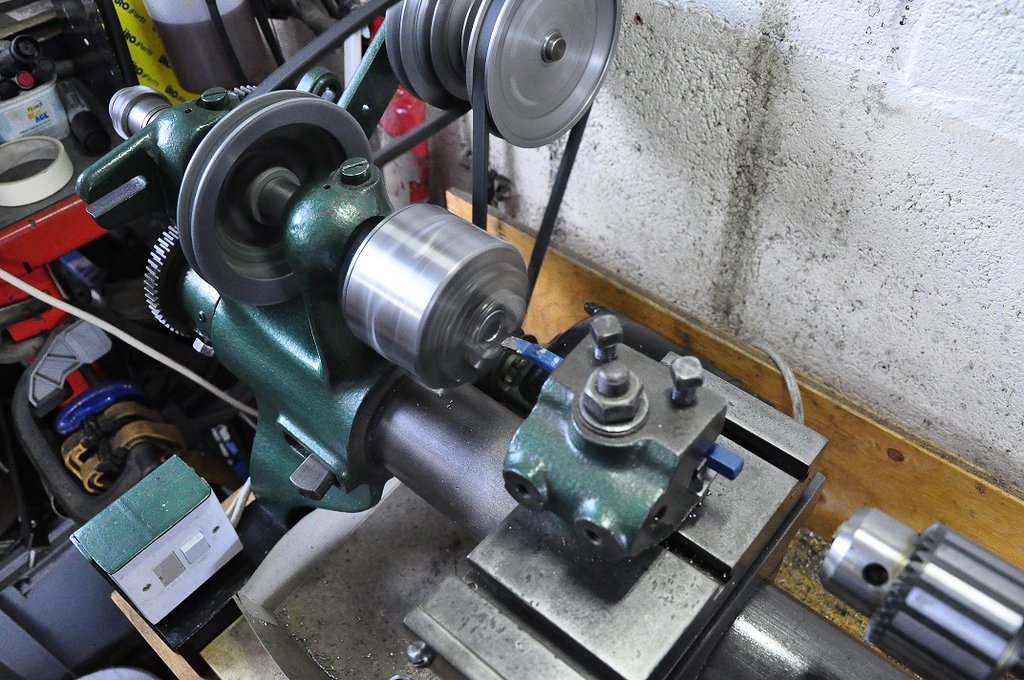
Knocked the original inlet guides out after some heating of the head casting, easy. Knocked the spare exhaust guides in straight after some more heat and they drifted in well. I turned a drift that was stepped to slide into the guide and a shoulder to rest on the end to save any damage to the diameter.

Did this after measuring the overall length of the really snug fitting seal so to be sure it would not be crushed by the spring top cover/collet cap during use. All good.
The seals are really nice, however...

They are also too big to pass into the inner valve spring by about 0.25mm dia! Really should have checked that, but, being VERY impatient (my wife agrees) I skipped that bit.
However, still moving forward, I also ordered from CMSL new cb 175 exhaust seals which will pop on a dream, and they will be here Wednesday next.

To get the outside valve spring to sit at the right height I needed 2 washers which I turned from oversize steel washers for the spring to sit on levelling everything up using my fab 1944 ex war department Drummond lathe.
Thus play came to an end until Wednesday.

I hope Richard's cylinder turns up Monday so I might 'just' get it machined before Xmas, but that will be a tall order.

Exhaust guide has the shoulder on it, and that is the CB 200 seal.


The seals are really nice, however...

They are also too big to pass into the inner valve spring by about 0.25mm dia!
Interesting stuff. This explains why the CB200 valve springs are a different part to the 175 items.
 
But not by much!
The barrel has just arrived this morning, looks great, thank you.
Hope to get it to the machine shop today if they are open....and after a quick call to Reedspeed, "no chance until the New Year'.
How the cookie crumbles sometimes.
Seals from CMSL on Wed and can re-assemble the head at least.
Graham.
 
Forgot to add, then I'll be quiet.

Piston/cylinder clearances.

Looks like the difference between both is 0.002" after fresh machine/hone which is what I'm planning.
Anyone with an alternate view?

The stock piston/barrel Richard sent me shows a tight 3 thou using a thin blade feeler gauge.
My new +0.75 piston in the not fresh barrel shows 0.002"

From my Cb of 5 years ago, the stock piston shows 0.003" in Richards used cylinder.

From this lot, seems 0.002" is right, 3 thou ok too.
 
When I 're-built' ( I use this term loosely) this engine I eventually found out, just before all this carb thing kicked-off that the kick start lever only engages after a 90 turn of the lever before the mechanism engages, so only 1/4 of a turn of movemwent left to turn the engine.

I have obviously assembled it wrong, so while this bike is 1/2 torn down, makes sense to fully disassemble it, correct the k'start and bolt it all back together.

Before U do this, is there any trick to correct the engagement 'outside' of a full strip?
 
The shaft HAS to rotate some before engaging, otherwise the kickstart wouldn't disengage and allow the transmission to spin......
Your lever arm may be a spline or two off, but sounds relatively normal to me......
 
Interesting, I went out to check the movement after I posted, the lever is as upright as I can go and still access the oil filler hole, and to engage the kick start (to when the crank turns) is not a 1/4 turn, it is 1/8th, or 45 deg.
If that is normal then I will leave alone.
The engine does not leak oil so it would be a shame to disturb it.
Thank you as ever for your post.
 
I'm sure you know this already, but for the benefit of others, here goes …

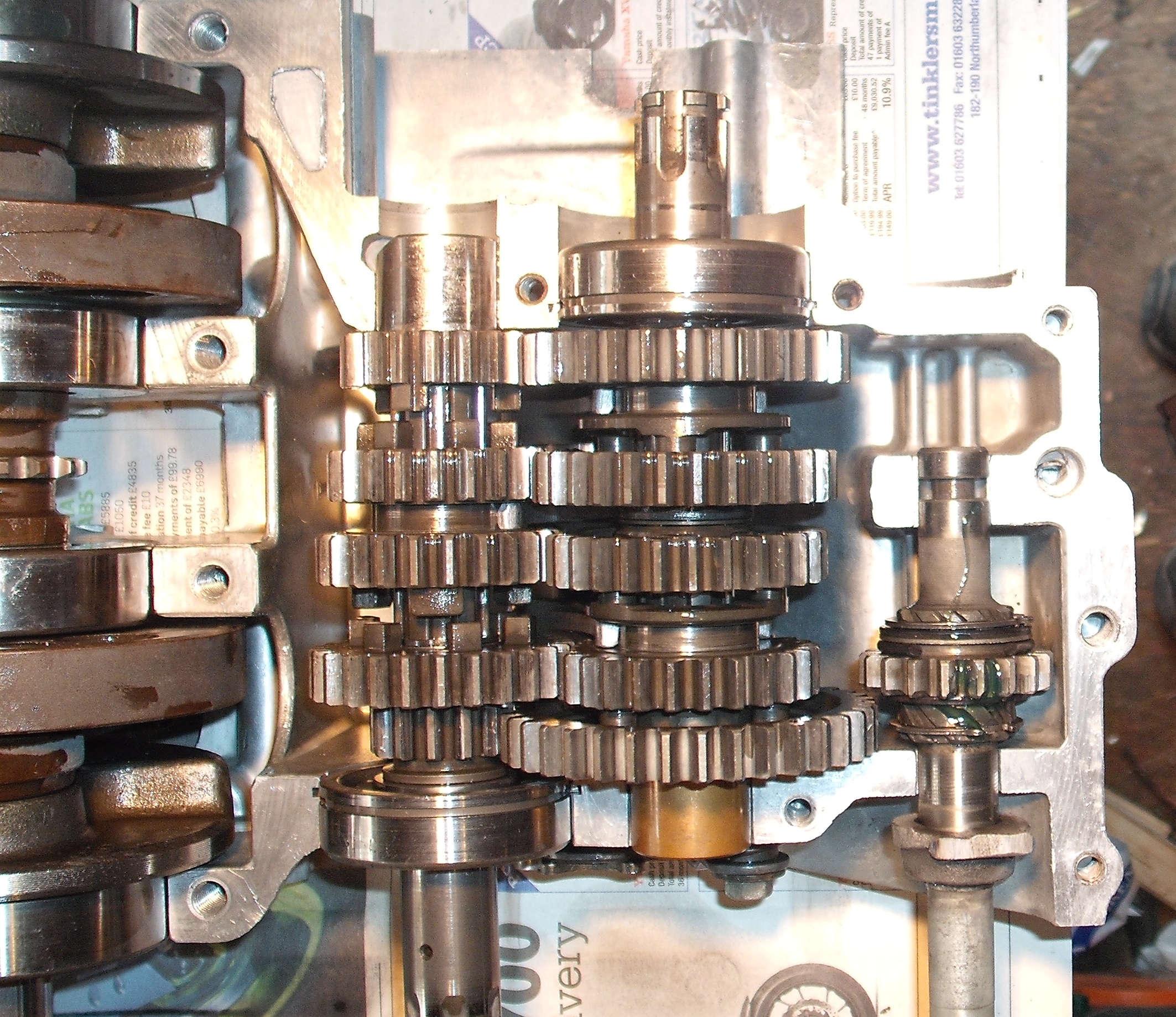
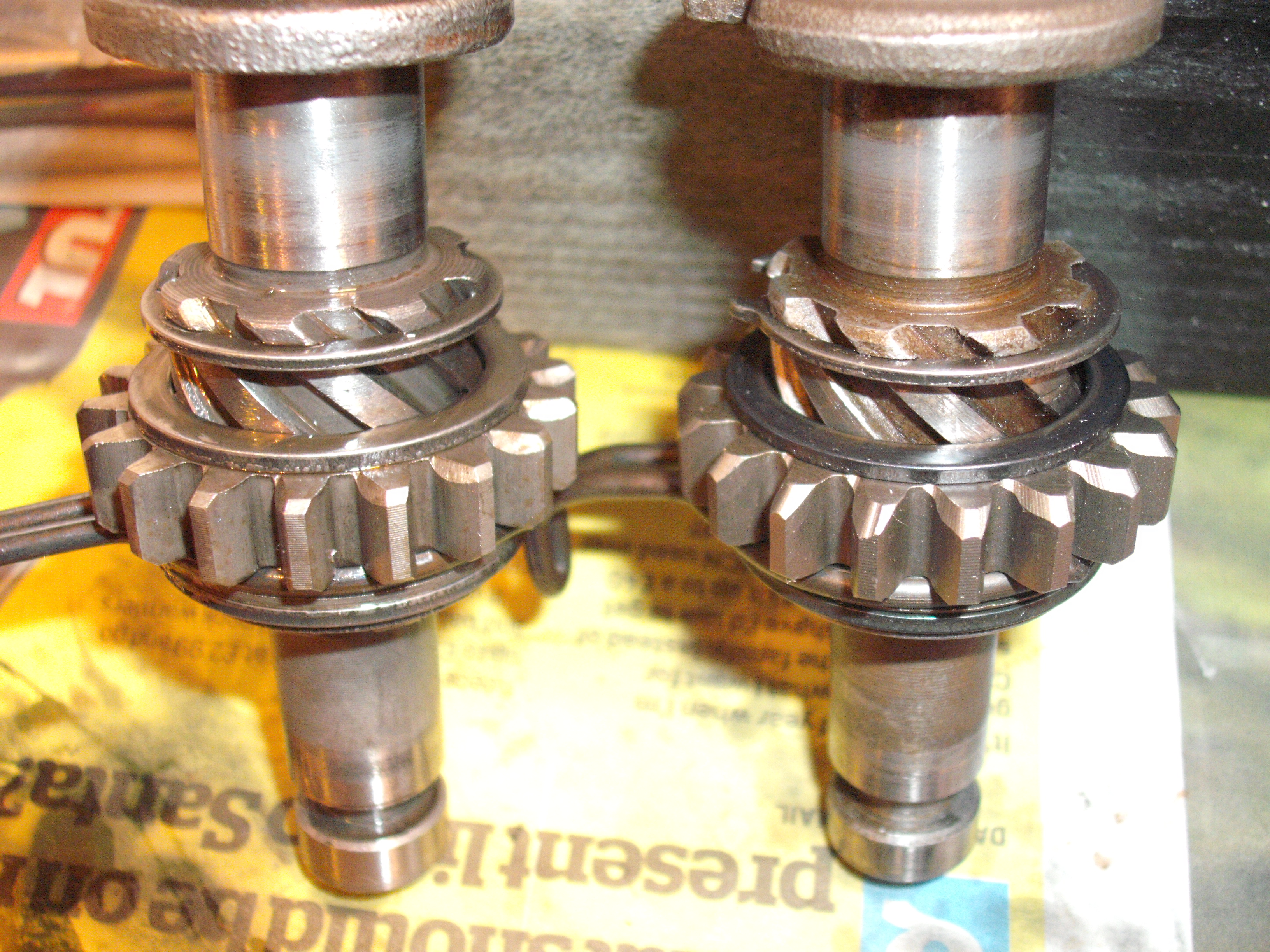
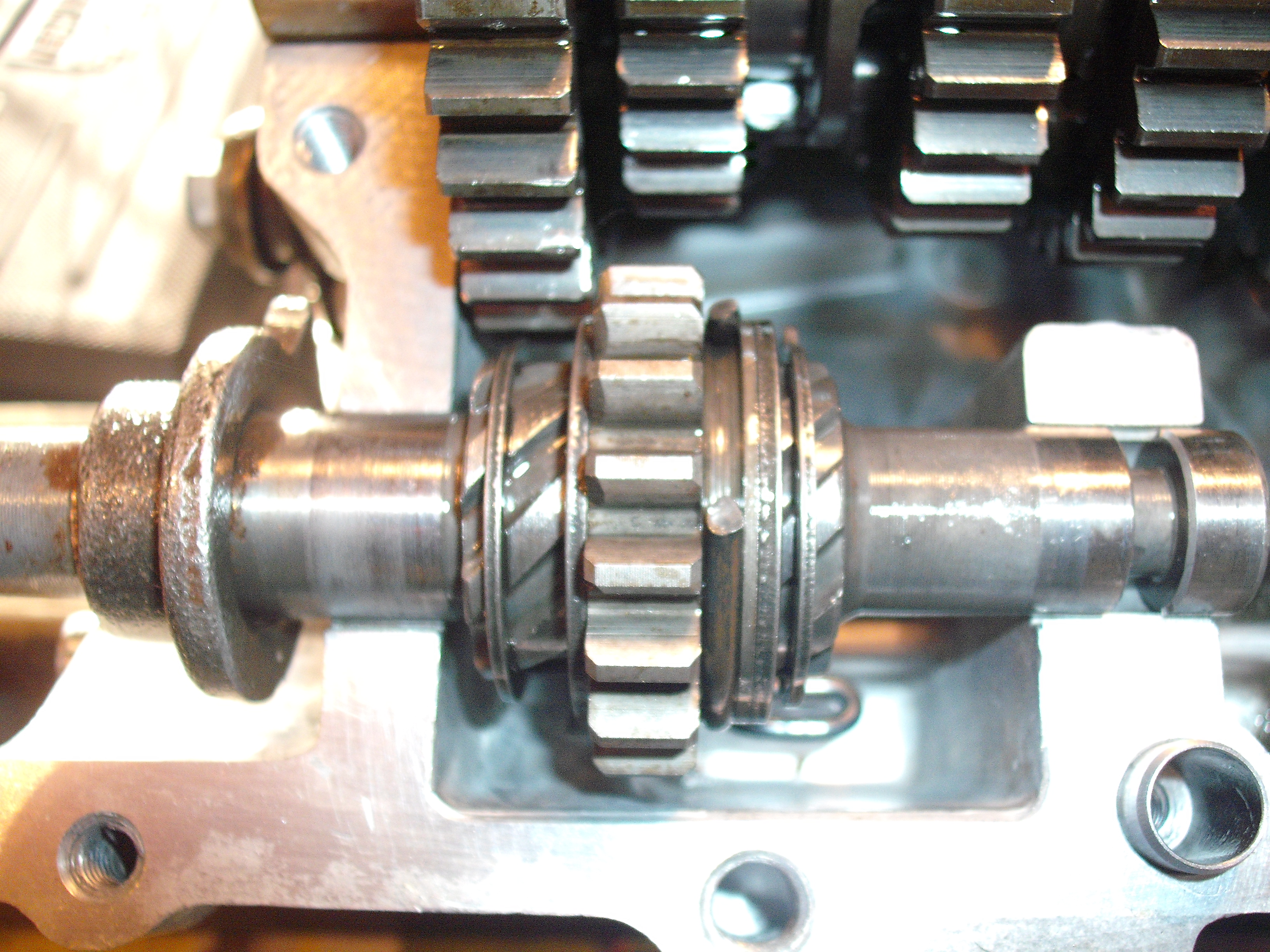
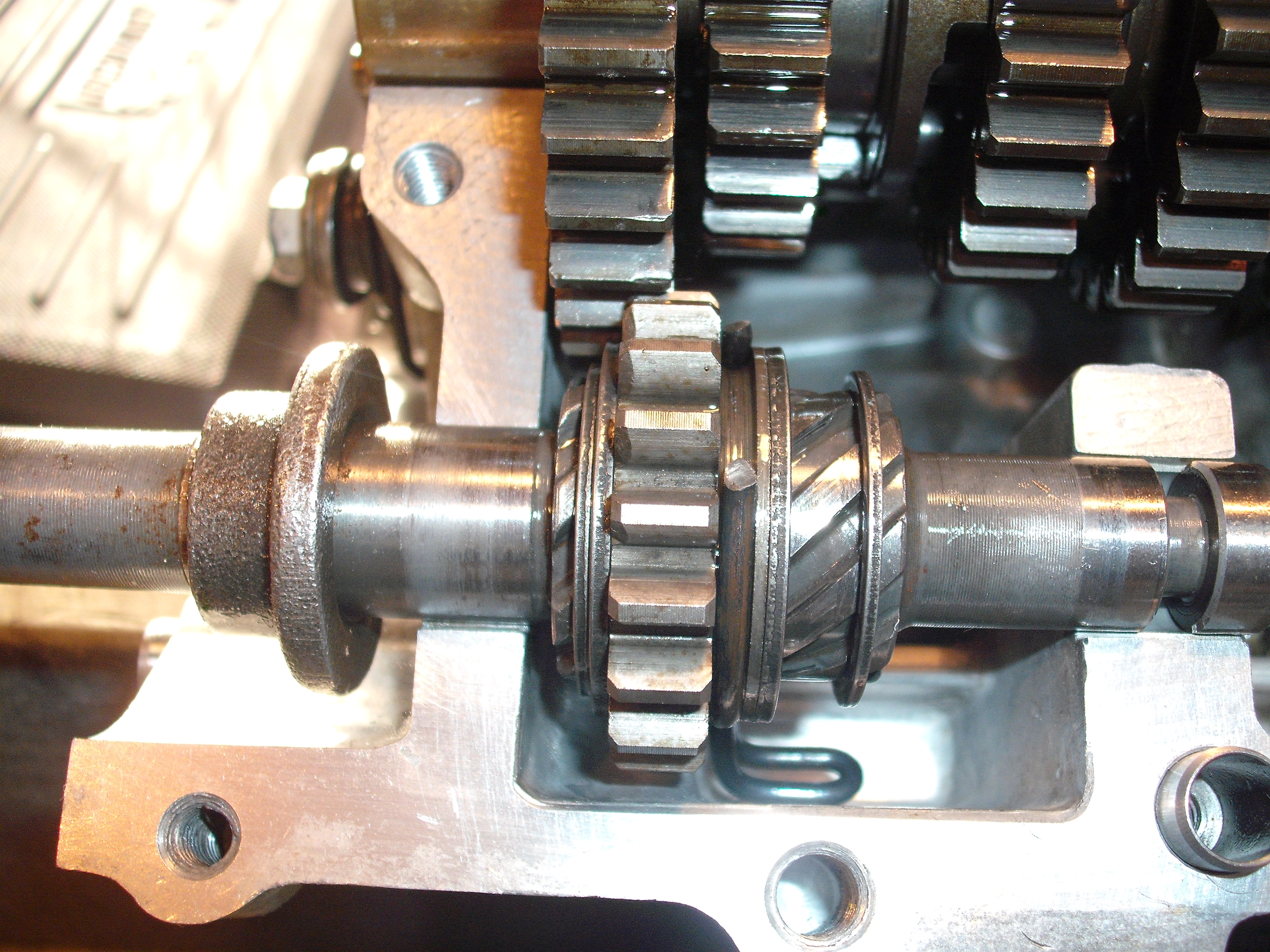
The kickstarter gear is on a threaded shaft, which has to rotate for the gear to climb the thread and engage with the gearbox to crank the engine. This accounts for the initial 1/8 travel before the kick start engages. Easiest explained in photos.

Also why the kick start should not be operated with the engine running, stationary kick start gear meets spinning gear box, goodbye kick start gear.

(SL175 uses a conventional ratchet type kick start mechanism.)

Kick start at rest.

TnDbXID.jpg


Kick start engaged.

NgP86bo.jpg
 
Thanks for the pics Richard.
Must admit, I've NEVER used the kick start on this or the Gold cb, but on the evil French Terrot bike I restored after the Gold one, the engine was 'wound' round by the k start until the piston was at compression, and then you kicked it down so maximising the number of turns on the crank to start (2 stroke engine, single pot).

This blue cb is still up on the assembly bench while I re-do everything I've previously done (no better way to destroy your mojo..) so I think on the cb you do not index the engage round to compression and thrust down, you just open the foot lever and thrust down. That will run the gear along the spiral track, engage the engine via the clutch and turn the crank.
So, not much point in taking it apart as I think there is a no indexing of the shaft as pictured?
Will have a read of the blurry pictures in the Haynes manual.

I wonder if I have the friction spring with the 90 deg loop on it outside the cast pocket?

Just removed the clutch side cover, the start shaft 'cam' which you can see when you remove the large start spring out of the way is fully located against the engine case rib and aligns with the wear on that soft aluminum rib
created by many returns of the starter lever bouncing back to the 'vertical' position.

Can't see how you can go wrong really, so while in there removed the oil filter cover and saw clean oil, but the filter gauze was surprisingly choked by a fiber material, bit like a shredded gasket or a small piece of mulched cloth, most odd. It went back in clean when I rebuilt the engine....
There is no mention in the manual of the internal spring having to be in the pocket as shown in Richard's pictures.

However, no metal particles in it, and it is clear again.
 
I had to take it apart.
Took the bottom case off to see if that friction spring was 'in the groove', so off came all required to allow it to come off, and when off...
It was all correct!
Mr Sprint was correct.
Om my 1972 engine the bow/loop in that spring sits in a neat channel and not like Richard's picture at all, but it was located correctly.
So, back it all went together, all bolts torqued-up then noticed how cold it was getting, so called it a day. Will have all the out parts back on tomorrow and any chipped paint touched up.

Will get the head rockers etc also all done, then time to wait for the shop to open on Jan 4th and off to the re-bore man, Phill.
 
You are quite right about the spring locating in that groove in the top engine case. My photos showed the shaft installed in the bottom case.

I still think that it is a daft design, a potential hand grenade waiting to wreck the bottom end of the engine. On other engines, the kick start pinion is permanently meshed with the gear train, with a ratchet mechanism to engage it. All that happens with that type of mechanism is that you get a clacking noise from the ratchet, if operated with engine running.

Correct assembly of CB175 kick start mech.

wL70Ol9.jpg
 
That's re-assuring Richard, thank you. Mine is the one on the left!
Even my 2 Lambretta's were ratchet type kicks, wind the engine round to compression and kick down.
All back together now, was going to do the clutch etc but cold in the garage and we have an inch of slush/snow, something of a surprise this morning.
 
The SL350K1 & 2 have the same issue. Main shaft gear meshed with an idler gear that the kick drive gear engages. Idler gears break and have been NLA forever. Without the idler gear the engine is a boat anchor. There is a gentleman making new gears finally at $228.
 
England is getting dragged through a crisis so many things have slowed down, but the cylinder block is with Readspeed close by for a 0.75mm over, 2 thou clearance to the new piston dia, and I have no idea when it will get done.
People are getting Covid in an uncontrolled rate now, so Readspeed's machinist may fall yet. You can't travel, so everything goes by post.

Thus the cb stands still in the 0 deg Celsius garage.

I looked on YouTube at 'cb175 stuff' and watched a Canadian guy check the timing of his '72 CL 175 that has prompted this post.

He was using a buzzer in his meter wired as normal to check points opening etc and used the 2 unmarked lines on the ststor about 15 degrees to the left (anticlockwise) to the F and T marks.

When he got to the unmarked line (closest to the 'F/T') aligned to the pointer the buzzer stopped.
He had a works manual that said this was correct.

I have never used these 2 unidentified marks, so is this all correct?

https://youtu.be/IoBy37N2eGw
 
I looked on YouTube at 'cb175 stuff' and watched a Canadian guy check the timing of his '72 CL 175 that has prompted this post.

He was using a buzzer in his meter wired as normal to check points opening etc and used the 2 unmarked lines on the ststor about 15 degrees to the left (anticlockwise) to the F and T marks.

When he got to the unmarked line (closest to the 'F/T') aligned to the pointer the buzzer stopped.
He had a works manual that said this was correct.

I have never used these 2 unidentified marks, so is this all correct?

https://youtu.be/IoBy37N2eGw

NO......That line is one of the pair of FULL ADVANCE indicating lines......
For "static" timing, the points should open EXACTLY as the "F" line aligns with the index, not an advance line.......
 
Last edited:
Thank you Sprint, I have been using the F line -up throughout, just the first time I saw those marks being used, so though I might have been missing a trick.
 
Back
Top Bottom