
Does anyone know where I can find (or if someone has any) the filter for the crankcase breather or a good substitute? Also has anyone found a good replacement for the air filter foam in the airbox? I can find the (oem?) foam online but was wondering if anyone's used maybe a k&n or maybe the housebrand from Advance Auto Parts. I know this is the predecessor to the Rebels so would older Rebel parts (like the filters) be interchangeable? Also, what inline fuel filters would someone suggest for the bike (tank has some rust I believe) or is the petcock filter sufficient? Thank y'all!

-
Don't overlook our Welcome Package, it contains many links to important and helpful information about functions at VHT like posting pictures and sending PMs (private messages), as well as finding the parts you need.
AD
You are using an out of date browser. It may not display this or other websites correctly.
You should upgrade or use an alternative browser.
You should upgrade or use an alternative browser.
1982 CM250 Custom parts
- Thread starter B.C.
- Start date

Honda sells the replaceable element for $11.81 https://www.partzilla.com/catalog/honda/motorcycle/1982/cm250c-a-250-custom/air-cleaner

The cheapest solution is a section of 3/8” Uni filter foam (available all over the internet) - or even the generic Autozone stuff. Just cut to fit.Does anyone know where I can find (or if someone has any) the filter for the crankcase breather or a good substitute? Also has anyone found a good replacement for the air filter foam in the airbox? I can find the (oem?) foam online but was wondering if anyone's used maybe a k&n or maybe the housebrand from Advance Auto Parts. I know this is the predecessor to the Rebels so would older Rebel parts (like the filters) be interchangeable? Also, what inline fuel filters would someone suggest for the bike (tank has some rust I believe) or is the petcock filter sufficient? Thank y'all!
Inline filters can be problematic, but they do have their use cases. Frankly, the brand doesn’t matter as much as making sure they don’t kink the hose or drop below the float bowl. Just get ones that are the exact size of your fuel line, impact them regularly and after a couple of tanks - remove and toss them. Get a 10 pack off Amazon - you’ll want the really small ones to make routing the fuel lines easier.
Thank you LongDistanceRider and EzPete. It may be a bad idea but would using an inline fuel filter as a crankcase breather filter be feasible? I'm still unsure exactly why they route it into the filter element, bypassing the air filter, and running straight into the carb. I have the original crankcase breather box, but the filter is missing. I know there's clamp-on filters out there, but it seems odd to me why the original is encased and the aftermarket ones are open. Wouldn't that call for more frequent maintenance than if it were enclosed? That's the reason I'm wondering if a good inline fuel filter would work in its place. ThanksThe cheapest solution is a section of 3/8” Uni filter foam (available all over the internet) - or even the generic Autozone stuff. Just cut to fit.
Inline filters can be problematic, but they do have their use cases. Frankly, the brand doesn’t matter as much as making sure they don’t kink the hose or drop below the float bowl. Just get ones that are the exact size of your fuel line, impact them regularly and after a couple of tanks - remove and toss them. Get a 10 pack off Amazon - you’ll want the really small ones to make routing the fuel lines easier.
That era was super early for emissions controls and EGR tech. Why they did what they did was based on a need to get compliant as quickly as possible. The filter element is basically just a piece of foam.Thank you LongDistanceRider and EzPete. It may be a bad idea but would using an inline fuel filter as a crankcase breather filter be feasible? I'm still unsure exactly why they route it into the filter element, bypassing the air filter, and running straight into the carb. I have the original crankcase breather box, but the filter is missing. I know there's clamp-on filters out there, but it seems odd to me why the original is encased and the aftermarket ones are open. Wouldn't that call for more frequent maintenance than if it were enclosed? That's the reason I'm wondering if a good inline fuel filter would work in its place. Thanks
Honestly, the clamp on ones work just fine, I run one myself on my GL - not the inline fuel filter type, that would be a disaster, or you can just run a hose down through the center of the bike like the pre-CARB bikes from the 70’s.
As long as the exhaust gases escape it doesn’t really matter if it’s got a filter (although it could be a bit messier).
Not familiar with this models system but a fuel filter would be too restrictive. Sadly the FSM has zero information.
Thanks for y'all's help. After doing a search it would seem that possibly a sponge type of material might be a good replacement for the crankcase breather box. I might just try a piece of filter foam similar to the one used in the airbox and see how that fares. I'm tempted to try a piece of magic eraser in it to see if that'll work, just me and my redneckism.
You’re overcomplicating this. Just use filter foam, if anything. The rest of the stuff you keep thinking of is way too restrictive. Heck, even just window screen works fine if you’re dead set on doing something different.Thanks for y'all's help. After doing a search it would seem that possibly a sponge type of material might be a good replacement for the crankcase breather box. I might just try a piece of filter foam similar to the one used in the airbox and see how that fares. I'm tempted to try a piece of magic eraser in it to see if that'll work, just me and my redneckism.
The whole point of that system is to pump “bad” gasses back into the airbox so they get burned off as intake air The gasses have to escape the crankcase in order to not create too much pressure and blow the seals out - prior to this they just vented through a tube that ran to the center stand area since the air is kind of oily and would create a sooty mess if it just vented wildly.
Oh ok, that makes sense. I was just wanting to keep the system more original. Would you have anymore advice for this bike, tips, tricks? Thanks for your help.You’re overcomplicating this. Just use filter foam, if anything. The rest of the stuff you keep thinking of is way too restrictive. Heck, even just window screen works fine if you’re dead set on doing something different.
The whole point of that system is to pump “bad” gasses back into the airbox so they get burned off as intake air The gasses have to escape the crankcase in order to not create too much pressure and blow the seals out - prior to this they just vented through a tube that ran to the center stand area since the air is kind of oily and would create a sooty mess if it just vented wildly.


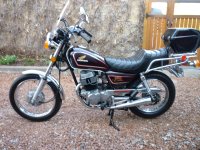
- check the oil before every ride
- don’t use aftermarket cheap stuff on anything with the ignition or carbs
- read the FSM and follow that for maintenance
- ride often. Machines only die when they quit moving.
- don’t use aftermarket cheap stuff on anything with the ignition or carbs
- read the FSM and follow that for maintenance
- ride often. Machines only die when they quit moving.
Thanks, y'all.
It's a '82, chain drive. I'd assume your model would be very similar, but I don't know.Is this the bike your working on with the belt drive system or a chain drive? If so I restored one 15 years ago and parts were available back then other than the belt was a bit difficult to find new.
Bikes are identical other than the chain drive difference. Easy to work on with the single carb and parts should be available even now either new or aftermarket or used. The CMX250 Rebel was the replacement bike around 1985/86 and tons of them were sold as starter bikes. So there should be plentiful crossover parts between these two series.Thanks, y'all.
It's a '82, chain drive. I'd assume your model would be very similar, but I don't know.
Thank you sir, I'll keep that in mind! Yeah, I still need to get a cover for the airbox side, replace the tires sometime, do some simple fixes here and there and eventually improve the look of it. I ordered some generic air filter foam (65 ppi), and got some of those cheap 10 pack of fuel filters coming in. Gonna do a carb soak probably in some Berryman chem-dip.Bikes are identical other than the chain drive difference. Easy to work on with the single carb and parts should be available even now either new or aftermarket or used. The CMX250 Rebel was the replacement bike around 1985/86 and tons of them were sold as starter bikes. So there should be plentiful crossover parts between these two series.
Remove all rubber parts from the carb if you dip it as the old Berryman's would melt rubber bits and likely damage plastic parts like a float too.Thank you sir, I'll keep that in mind! Yeah, I still need to get a cover for the airbox side, replace the tires sometime, do some simple fixes here and there and eventually improve the look of it. I ordered some generic air filter foam (65 ppi), and got some of those cheap 10 pack of fuel filters coming in. Gonna do a carb soak probably in some Berryman chem-dip.
Will do. Was there any things you had to fiddle with or common issues you know about this bike seeing you've done a rebuild pretty much on the same model?Remove all rubber parts from the carb if you dip it as the old Berryman's would melt rubber bits and likely damage plastic parts like a float too.
Mine was a carb clean and a cosmetic repaint of the engine and some elbow grease in cleaning the bike up. The bike had pretty clean paint and chrome parts, with no need to open up the engine as it ran great. I have done lots of vintage bike restorations so it was dead simple overall. Just take lots of pictures when your disassembling everything. That way you know how it goes back together when the time comes for assembly.
AlrightyMine was a carb clean and a cosmetic repaint of the engine and some elbow grease in cleaning the bike up. The bike had pretty clean paint and chrome parts, with no need to open up the engine as it ran great. I have done lots of vintage bike restorations so it was dead simple overall. Just take lots of pictures when your disassembling everything. That way you know how it goes back together when the time comes for assembly.
 . Have you used the chem-dip to clean out a gas tank before? I'm thinking after I clean the carb, I'll do a rebuild and dump some chem-dip in the tank and let it soak then run some sea foam through the system after reassembling it.
Before you dig into these carbs, you’ll want to read through this thread. https://www.vintagehondatwins.com/forums/threads/how-to-rebuild-the-vb-carburetors.24/Alrighty
Chem dip won’t really work on a fuel tank - that would be a waste. If it’s rusty, you’ll want Rust 9/11 concentrate or the like.
After a rebuild, there’s no real need for Seafoam - the carb is the system and it’s theoretically completely clean at that point.
Thank you sir. Would air filter oil be needed on the foam I bought or would running it as is be okay? Do you know of any "homemade" ways to clean a tank?Before you dig into these carbs, you’ll want to read through this thread. https://www.vintagehondatwins.com/forums/threads/how-to-rebuild-the-vb-carburetors.24/
Chem dip won’t really work on a fuel tank - that would be a waste. If it’s rusty, you’ll want Rust 9/11 concentrate or the like.
After a rebuild, there’s no real need for Seafoam - the carb is the system and it’s theoretically completely clean at that point.
Leave the foam dry. It’s easy to choke that engine out with too much oil on the foam.Thank you sir. Would air filter oil be needed on the foam I bought or would running it as is be okay? Do you know of any "homemade" ways to clean a tank?
You can always try the cleaning vinegar (the 35%+ stuff at Home Depot) with some spare nuts made out of a ferrous material. Soak for a few days and shake it periodically. You’ll just immediately have to neutralize it after with baking soda.
By the time you do all that you could Amazon a bottle of the 4 gallon concentrate of rust 911, soak it for a day or two, drain and save the liquid to derust other stuff. You get about 2-3 uses out of it.
Okay. Have you tried Evapo-rust? I've heard it works if soaked for days and put on different sides and shook around some I think.Leave the foam dry. It’s easy to choke that engine out with too much oil on the foam.
You can always try the cleaning vinegar (the 35%+ stuff at Home Depot) with some spare nuts made out of a ferrous material. Soak for a few days and shake it periodically. You’ll just immediately have to neutralize it after with baking soda.
By the time you do all that you could Amazon a bottle of the 4 gallon concentrate of rust 911, soak it for a day or two, drain and save the liquid to derust other stuff. You get about 2-3 uses out of it.

I've used Evaporust though not on a tank but it works, rinses off with water and it's safe for paint.Have you tried Evapo-rust?
It may not be the best idea, but... has anyone ever removed the lower half of their carb (the float cover?) and simply soak the rest in chem-dip? I just removed the cover and yep, there was dusty junk in it. Float still looks okay though.
Simple green works fine. Dawn dishwashing liquid too. That stuff cleans up pretty easily or needs to be replaced.
Proper removal of the jets and thoroughly blasting out all the air intakes and internal passages is the key here.
Proper removal of the jets and thoroughly blasting out all the air intakes and internal passages is the key here.
Thanks! Yeah, I think I got most of it apart. The link to the carb rebuild is good, but I feel like it may lack a little, at least to me. The model used was a twin carb? Mines a simpler set up, a VB 15abuci carb. Am I supposed to remove the screw thing above the piston needle for cleaning? Also, where the black plug is on the bottom side of the carb, do I unscrew the screw thing underneath that plug for cleaning as well? Thanks!Simple green works fine. Dawn dishwashing liquid too. That stuff cleans up pretty easily or needs to be replaced.
Proper removal of the jets and thoroughly blasting out all the air intakes and internal passages is the key here.
This is what you do not want to do. There’s some plastic and rubber seals in there that will get ruined by the chem dip. You want to disassemble the whole thing carefully. Ideally you can get that screw and needle out to make sure it’s clean. That screw can be a real easy one to strip so tons of PB Blaster and a perfectly fitting screwdriver are needed. It’s still possible to clean it without that screw removed so don’t butcher the thing if it’s truly frozen.It may not be the best idea, but... has anyone ever removed the lower half of their carb (the float cover?) and simply soak the rest in chem-dip? I just removed the cover and yep, there was dusty junk in it. Float still looks okay though.
Of particular relevance to the thread above is the cleaning of the jets and passages - primarily the idle circuit as that’s the part of these carbs that clogs the easiest, the idle and slow jets are tiny. If you can get some guitar string scraps they work the best.
That passage plug needs to be removed and the jet below needs to be removed and cleaned. Ideally the black plug should be replaced but they can be reused in some cases.
Alrighty, will do. What about the ports (?) on the sides, the little ball bearing things, will soaking be enough to clean those up well?This is what you do not want to do. There’s some plastic and rubber seals in there that will get ruined by the chem dip. You want to disassemble the whole thing carefully. Ideally you can get that screw and needle out to make sure it’s clean. That screw can be a real easy one to strip so tons of PB Blaster and a perfectly fitting screwdriver are needed. It’s still possible to clean it without that screw removed so don’t butcher the thing if it’s truly frozen.
Of particular relevance to the thread above is the cleaning of the jets and passages - primarily the idle circuit as that’s the part of these carbs that clogs the easiest, the idle and slow jets are tiny. If you can get some guitar string scraps they work the best.
That passage plug needs to be removed and the jet below needs to be removed and cleaned. Ideally the black plug should be replaced but they can be reused in some cases.
Also, I noticed that the piston has some kind of grease on it and the ring for it. Do I need to add a certain kind of grease to it during reassembly or lubrication anywhere in the carb for that matter? Are there any other gaskets aside from the bowl? I know there's o-rings but didn't know if there's more seal anywhere else since I didn't notice any.
Last edited:
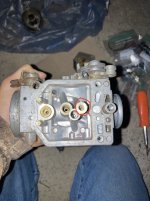
It’s a jet. It needs to come out to be cleaned.
First off - check to see if it’s already unscrewed all the way and just needs to be shaken out - they can get hung up on gunk so sometimes a spray of some carb clear through the other side will help coax it out.
If it’s not out, you need to unscrew it the rest of the way. Use a screwdriver that fits the slot exactly to stop chewing it up - it looks like the screwdriver used has been to thin and it’s tearing up the slotted head. It may take some trial and error to get it right, but you should file a screwdriver down so it just barely seats all the way in the slotted head. It’ll make it much easier.
First off - check to see if it’s already unscrewed all the way and just needs to be shaken out - they can get hung up on gunk so sometimes a spray of some carb clear through the other side will help coax it out.
If it’s not out, you need to unscrew it the rest of the way. Use a screwdriver that fits the slot exactly to stop chewing it up - it looks like the screwdriver used has been to thin and it’s tearing up the slotted head. It may take some trial and error to get it right, but you should file a screwdriver down so it just barely seats all the way in the slotted head. It’ll make it much easier.
It doesn't want to come out. I sprayed carb cleaner through it and tried making a screwdriver out of a filed-down key but nope, it's still there. I can see light through it though. Would it be okay to leave it in? I'm thinking it's best to at least have something there in the carb than to end up making bigger problems by trying to forcibly move it. At this point I believe it's the final part before soaking it.It’s a jet. It needs to come out to be cleaned.
First off - check to see if it’s already unscrewed all the way and just needs to be shaken out - they can get hung up on gunk so sometimes a spray of some carb clear through the other side will help coax it out.
If it’s not out, you need to unscrew it the rest of the way. Use a screwdriver that fits the slot exactly to stop chewing it up - it looks like the screwdriver used has been to thin and it’s tearing up the slotted head. It may take some trial and error to get it right, but you should file a screwdriver down so it just barely seats all the way in the slotted head. It’ll make it much easier.
It is an emulsion tube which has side holes on the brass inner section where it mixes both air and gas on the secondary jet. It needs to come out to be checked and cleaned. If you don't check it you risk that mid range circuit still having issues when you install the carbs back on the bike. Another tip is to test the carbs with an auxiliary gas source while they are off the bike for leaks and overflow issues. Best to discover that before you install them and they leak and have to remove them again.It doesn't want to come out. I sprayed carb cleaner through it and tried making a screwdriver out of a filed-down key but nope, it's still there. I can see light through it though. Would it be okay to leave it in? I'm thinking it's best to at least have something there in the carb than to end up making bigger problems by trying to forcibly move it. At this point I believe it's the final part before soaking it.
The only way to safely removes it is as already indicated a slotted screwdriver which fits that slot perfectly with zero slop. I custom ground down one which is what I use for a perfect fit. You need a heat source such as a small pin torch to loosen the varnished gas residue that is holding it tight in there.
Most people end up buggering up that slot since it is a thin "ear" only top part of the emulsion tube. Heat the outer tower where it is located with the torch flame for 15 seconds and then tap the screwdriver into the slot with a few raps. Try to turn it out and break the bond. If it doesn't give way with a bit of force then reheat the tower again and repeat until it releases.
Don't use a large propane torch you want something more localized heat wise and smaller in size and flame.
Do you have an ultrasonic? If so - give it about 4 rounds with heat.
If not, try soaking that in the chemdip with the lid closed in the hottest spot you can find during the day. I’ve put a black plastic bag over the can and put it in the sun here in TX - if you can get it to about 120 degrees in that can for a few hours it’ll help.
If not, try soaking that in the chemdip with the lid closed in the hottest spot you can find during the day. I’ve put a black plastic bag over the can and put it in the sun here in TX - if you can get it to about 120 degrees in that can for a few hours it’ll help.
As Pete noted heat is the key and the only way to get that emulsion tube out safely. I prefer a pin torch, yet I have done tons of carbs so I have a little more experience here with using a heat source.

You could try a soldering gun with a clean tip but it may not generate enough heat. You could also Google for a pocket butane torch, should be able to find something for under $20. Just be careful as they produce a lot of heat.
Thanks! Has anyone tried boiling the carb to loosen these parts up?You could try a soldering gun with a clean tip but it may not generate enough heat. You could also Google for a pocket butane torch, should be able to find something for under $20. Just be careful as they produce a lot of heat.
That would be a good work around solution. You wouldn’t need to hit boil per se just something in the 160-180 F range for 20 minutes and a set of insulating gloves when you remove from the hot water. Grind a slotted screwdriver to fit the slot in the tube and tap it into the slot and twist with some pressure. It should release if not heat again for the same amount of time or a little longer.Thanks! Has anyone tried boiling the carb to loosen these parts up?

crazypj
Veteran Member
- Joined
- Jun 5, 2020
- Total Posts
- 1,536
- Total likes
- 991
That jet needs to come out as the cross drillings are often restricted even when not blocked (and if it isn't original jet may have wrong size cross drillings)
I haven't found ultrasonic cleaner to work very well on them until they are removed .
It can be a real pain to drill out, I use a pin vice and enlarge centre hole little bit at a time, any power drill and things happen too fast, carb could get destroyed
Get a new one before you start so you can take some measurements
I haven't found ultrasonic cleaner to work very well on them until they are removed .
It can be a real pain to drill out, I use a pin vice and enlarge centre hole little bit at a time, any power drill and things happen too fast, carb could get destroyed
Get a new one before you start so you can take some measurements

Boosted
Veteran Member
Another tip to "extracting" that brass "main nozzle" is to insert a toothpick into its center hole and then some penetrating oil (Liquid Wrench, PB Blaster, Kroil, etc..) and at least 30 mins of time letting the penetrant soak into the varnish holding that nozzle stuck in the carb body
REMINDER TO USE A TIGHT-FITTING flathead screwdriver when attempting to unscrew the brass. 4mm by 1mm is the blade size of the ideal screwdriver for this "extraction"
REMINDER TO USE A TIGHT-FITTING flathead screwdriver when attempting to unscrew the brass. 4mm by 1mm is the blade size of the ideal screwdriver for this "extraction"
Thanks. Yeah, this carb's been soaking in hot water for awhile, still nothing. I'll try the toothpick trick.Another tip to "extracting" that brass "main nozzle" is to insert a toothpick into its center hole and then some penetrating oil (Liquid Wrench, PB Blaster, Kroil, etc..) and at least 30 mins of time letting the penetrant soak into the varnish holding that nozzle stuck in the carb body
REMINDER TO USE A TIGHT-FITTING flathead screwdriver when attempting to unscrew the brass. 4mm by 1mm is the blade size of the ideal screwdriver for this "extraction"
Well... it looks like boiling your carb with baking soda may help to clean it some at least. It makes washing soda and is apparently non-acidic I believe.
Also I did want to know if it’s okay to stay in the carb if the flow still reaches this point? The PBblaster, when sprayed into the tip (blue circle) from the inside of the carb, comes out the port (red circle).

Also I did want to know if it’s okay to stay in the carb if the flow still reaches this point? The PBblaster, when sprayed into the tip (blue circle) from the inside of the carb, comes out the port (red circle).
crazypj
Veteran Member
- Joined
- Jun 5, 2020
- Total Posts
- 1,536
- Total likes
- 991
I think it has to come out, has to be unscrewed before nozzle can be pushed out
That's the primary discharge nozzle but it's also connected by drillings to bypass ports, mostly covered by throttle plate when closed and progressively uncover more as throttle is opened. If you look end on you may see a brass 'ball bearing' blocking where main drilling was made?
I don't remember if it has 3, 4 or 5 drillings, around 0.5mm and smaller. (70's carbs only had three holes, 0.5~0.75mm)
The 'red' circle is air bleed jet, holes are quite a lot larger, don't think I've ever measured them
You 'could' pull the alloy plug in first picture between bosses for jet and fuel screw but it isn't really recommended, not sure you can get new ones? (It's weird, sometimes Honda lists them for one bike but you have to buy new carb for another, even though plug is same size)
If you open throttle plate you'll probably see them?
I have made plugs for CB350 after the nylon ones got old, brittle then fell apart but I didn't need 3x reading glasses back then to see what I was doing, micron tolerances were a lot easier. (nowadays I have to use an x7 loupe to read Imperial 1/10,000" or metric 1/1000mm micrometers if I want accurate reading)
I did start modifying a Harley Sportster tank to fit a 250 Rebel, got a smashed 'Webble' (Monty Python) tank, cut top off, decent HD tank, cut bottom off, started welding back together then didn't see Jeff for about 5 years. it's still u der something in garage.
That's the primary discharge nozzle but it's also connected by drillings to bypass ports, mostly covered by throttle plate when closed and progressively uncover more as throttle is opened. If you look end on you may see a brass 'ball bearing' blocking where main drilling was made?
I don't remember if it has 3, 4 or 5 drillings, around 0.5mm and smaller. (70's carbs only had three holes, 0.5~0.75mm)
The 'red' circle is air bleed jet, holes are quite a lot larger, don't think I've ever measured them
You 'could' pull the alloy plug in first picture between bosses for jet and fuel screw but it isn't really recommended, not sure you can get new ones? (It's weird, sometimes Honda lists them for one bike but you have to buy new carb for another, even though plug is same size)
If you open throttle plate you'll probably see them?
I have made plugs for CB350 after the nylon ones got old, brittle then fell apart but I didn't need 3x reading glasses back then to see what I was doing, micron tolerances were a lot easier. (nowadays I have to use an x7 loupe to read Imperial 1/10,000" or metric 1/1000mm micrometers if I want accurate reading)
I did start modifying a Harley Sportster tank to fit a 250 Rebel, got a smashed 'Webble' (Monty Python) tank, cut top off, decent HD tank, cut bottom off, started welding back together then didn't see Jeff for about 5 years. it's still u der something in garage.
Last edited:
I've let Rust 9/11 soak in the tank for awhile but was wondering if you'd any experience with tank sealants. I've seen that Caswell or I think POR-15 are some options but if there's some other options to just keep the rust from returning....If it’s rusty, you’ll want Rust 9/11 concentrate or the like.
Sealants won’t keep it from returning really. Regular use will, as will non-ethanol fuel.
You can also swirl a bit of oil or spray a bunch of WD 40 in there after draining the Rust911. That particular product actually does a really good job of inhibiting flash rust after.
If you do start to see pinholes, a liner can help some. I’ve used KBS and Caswell products, just follow the directions to the letter.
You can also swirl a bit of oil or spray a bunch of WD 40 in there after draining the Rust911. That particular product actually does a really good job of inhibiting flash rust after.
If you do start to see pinholes, a liner can help some. I’ve used KBS and Caswell products, just follow the directions to the letter.
Ok, that makes it cheaper, thank the Lord. I don't think the tank was eat up with it, though I haven't looked deep into it. I can definitely hear some metal flakes though. Would adding Seafoam prior to adding the gas and shaking it around help or should I just spray a bunch of PB into it?Sealants won’t keep it from returning really. Regular use will, as will non-ethanol fuel.
You can also swirl a bit of oil or spray a bunch of WD 40 in there after draining the Rust911. That particular product actually does a really good job of inhibiting flash rust after.
If you do start to see pinholes, a liner can help some. I’ve used KBS and Caswell products, just follow the directions to the letter.
Save the Seafoam. Regular motor oil, PB, WD40 all work.Ok, that makes it cheaper, thank the Lord. I don't think the tank was eat up with it, though I haven't looked deep into it. I can definitely hear some metal flakes though. Would adding Seafoam prior to adding the gas and shaking it around help or should I just spray a bunch of PB into it?
Before you drain the tank, shake it around pretty good, wait a couple hours, shake it again, maybe repeat a few times. There’s going to be quite a bit of rust dust.
crazypj
Veteran Member
- Joined
- Jun 5, 2020
- Total Posts
- 1,536
- Total likes
- 991
I need to put reading glasses on, I thought you were going to use PBR
May actually work as a rust inhibitor?I need to put reading glasses on, I thought you were going to use PBR