1973 CL350 Restore

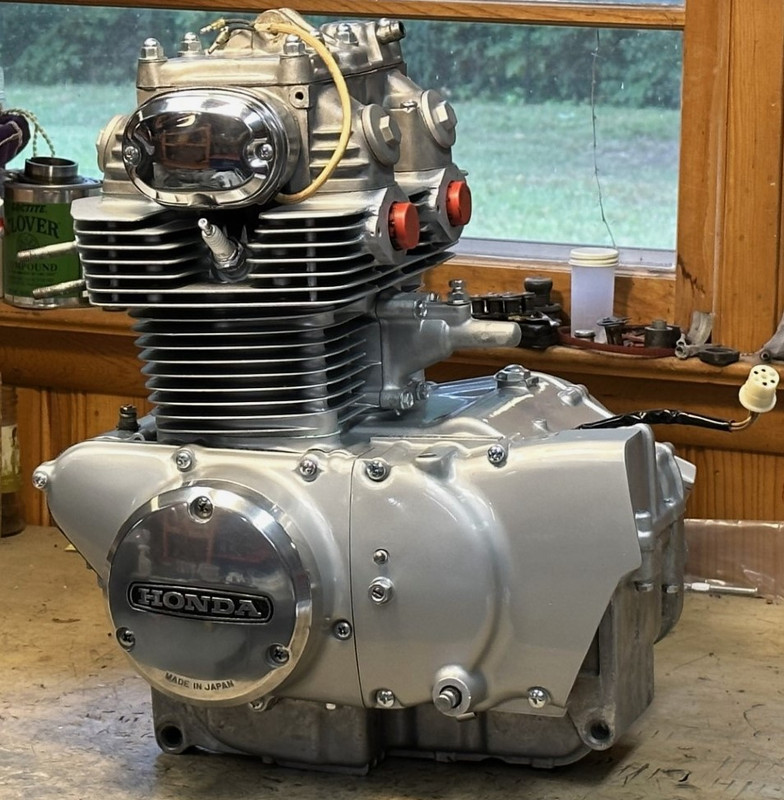
That would be ugly. Once I jury rigged a stand to hold the upper case upside down, it was child's play to lay the shafts in and line up the pins and rings. I also learned the hard way many years ago never to force anything in to place.
 
I also learned the hard way many years ago never to force anything in to place.

And based on your previous work here, I figured you realized and understood clearly. I just can't help mentioning it when I see engines going together and that view isn't clear, because if it slips by you and the pin gets punched through the upper case the shaft will be allowed to move laterally after a while and it will begin to affect shifting and will eventually require work that could have been avoided, of course. (y)
 
Are those locating pins standard procedure on all Honda Twins?

Yes, all transmission shafts have either set rings (half circle piston ring-like rings that fit in machined grooves in the upper case to locate a ball bearing outer race) or locating pins for the small end bushings or caged roller bearing outer races.
 
Yes they are, and yours is particularly pretty with the extra effort you've put into it and the OEM JIS screws in use. IMO they look best that way. Very nice Dave, but I feel like I'm repeating myself often saying it. (y)
 
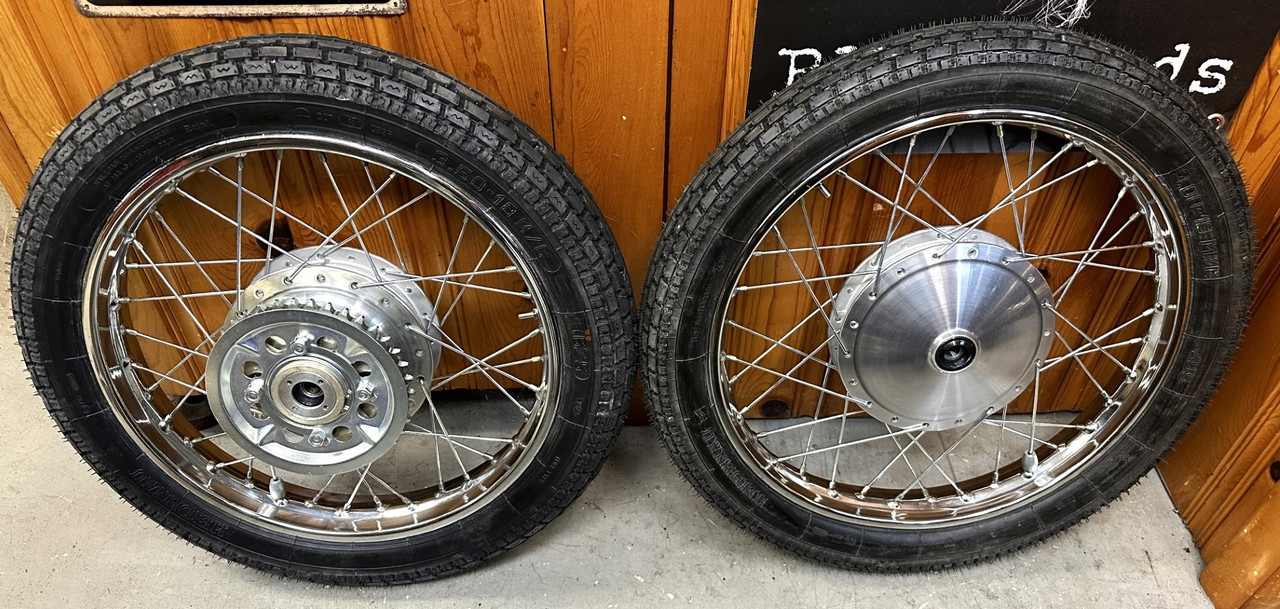
Very nice! Those look sort of like Heidenau tires, but the name looks different. I cannot quite make it out. What are they?

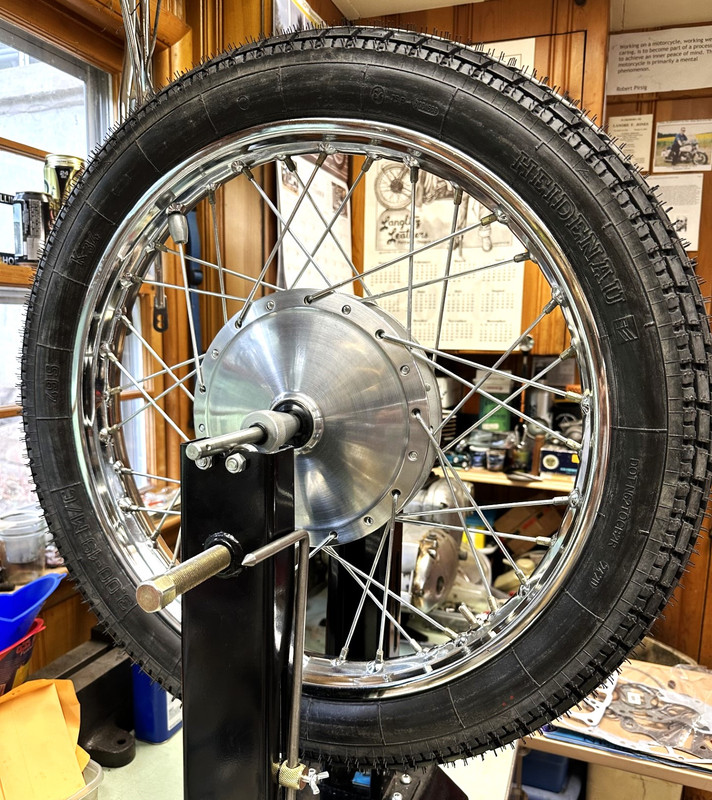
Your spokes look nice in fresh zinc, and the rims look great too.
 
Dave, when you think that way, the only mistake in your logic is you're thinking of the way you do it - the right way. Which involves following the true definition of the word "restoring". How many ads do we see for bikes that have been 'restored' and yet we can pick them apart with all the flaws and things left out of the restoration process... so yes, if you actually do a restoration correctly, of course you're not going to make any money on it - unless it's then sold to a collector who truly understands, and will pay for, the full effort you've put in.
 
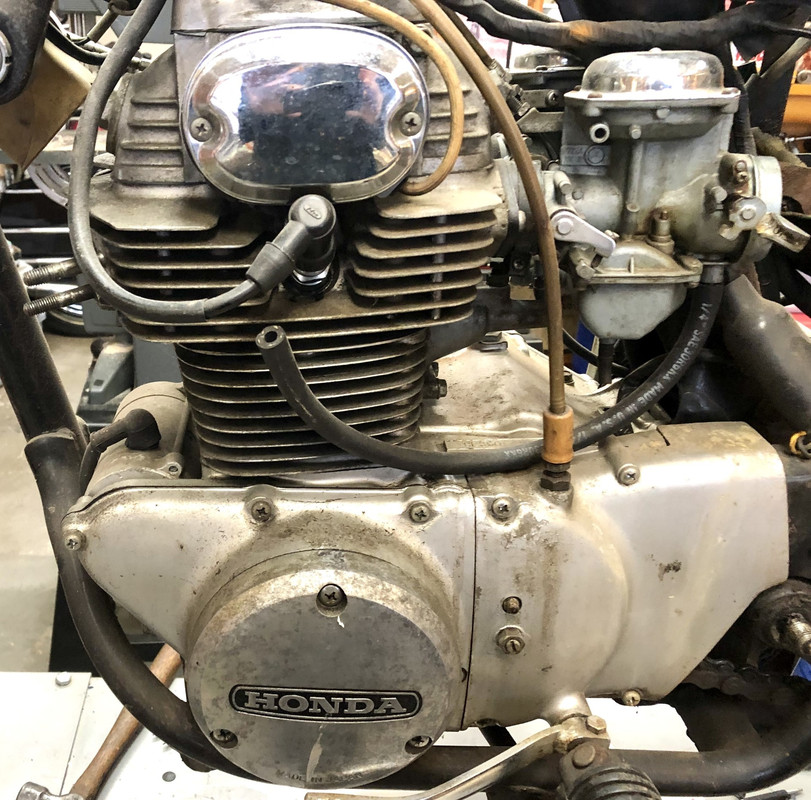
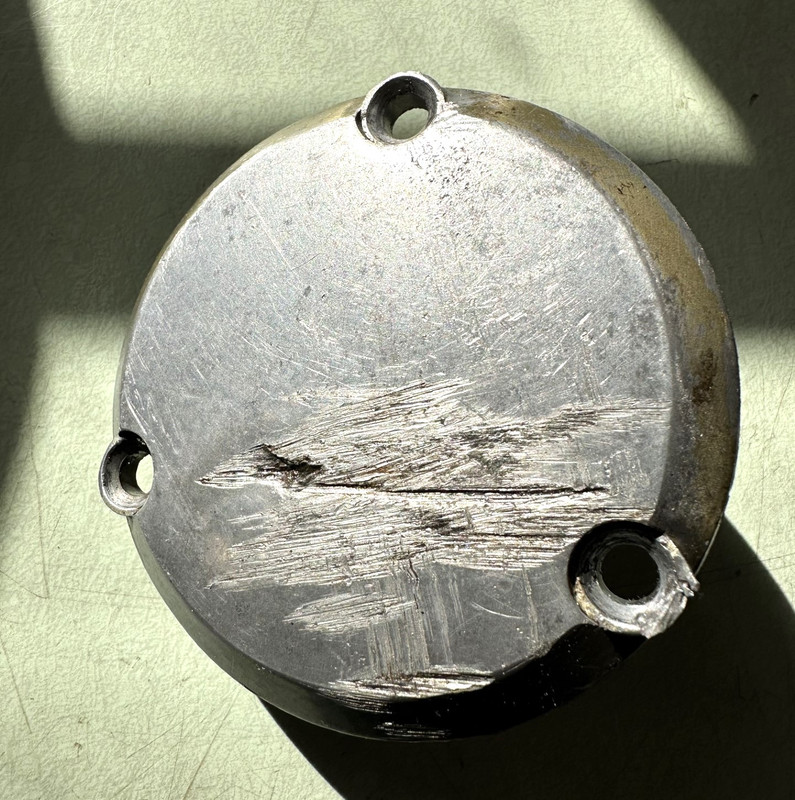
Yeah I'd say so, that's way more ugly than the same cover on my 450 after getting to know the gravel driveway personally during our trip to the SC mountains last fall. As in "that won't buff out"
 
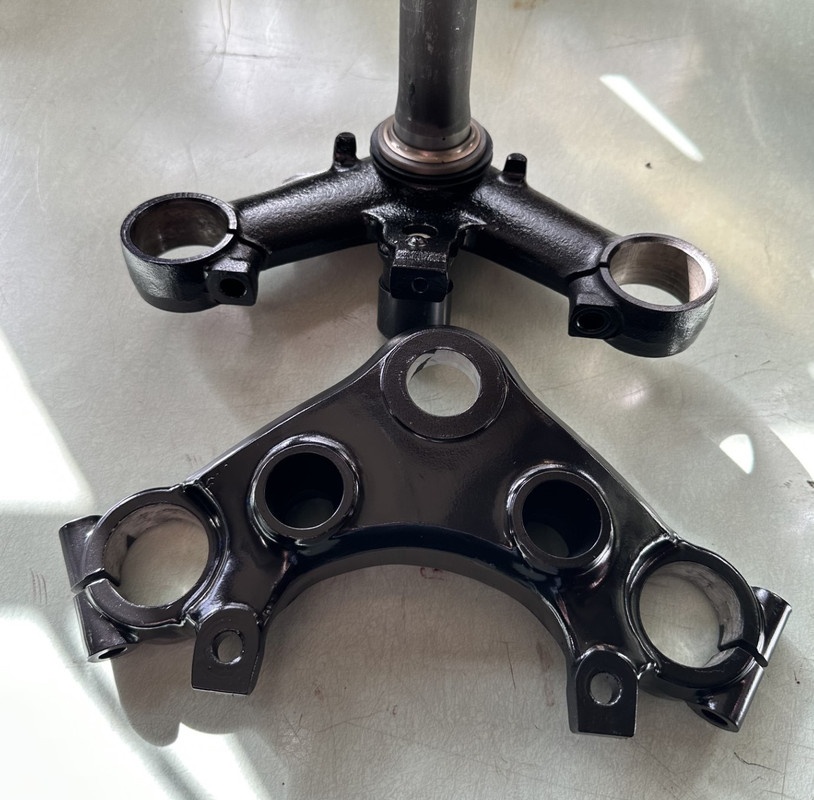
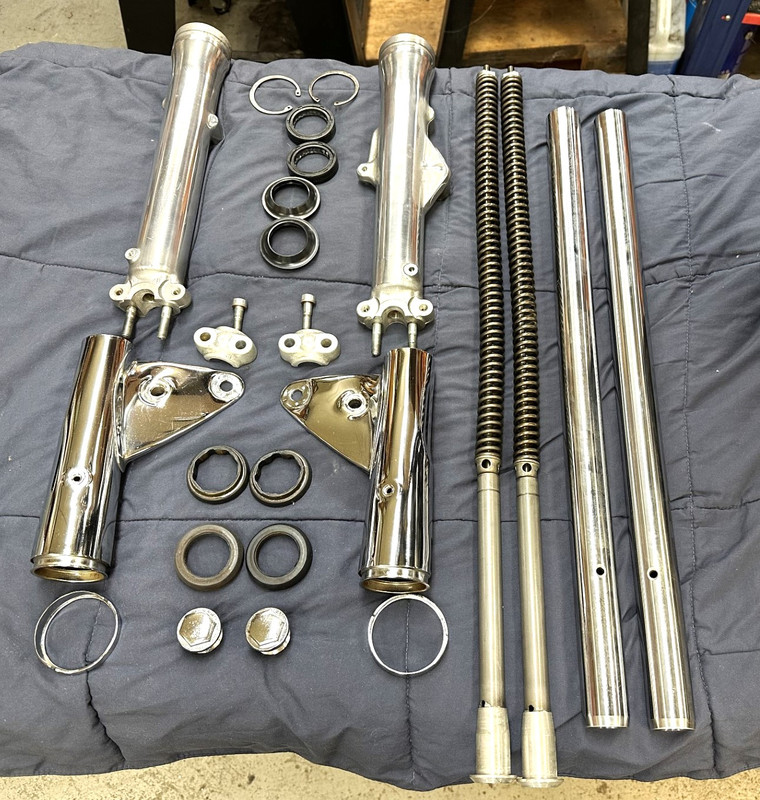
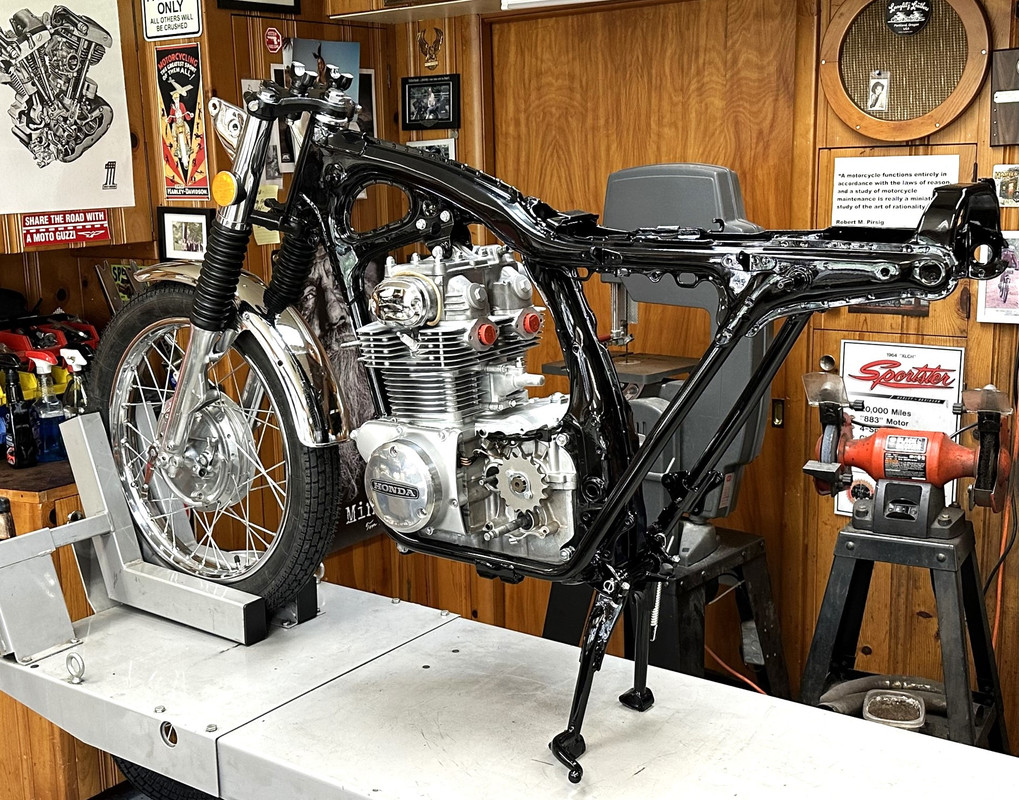
The front end is ready for assembly.

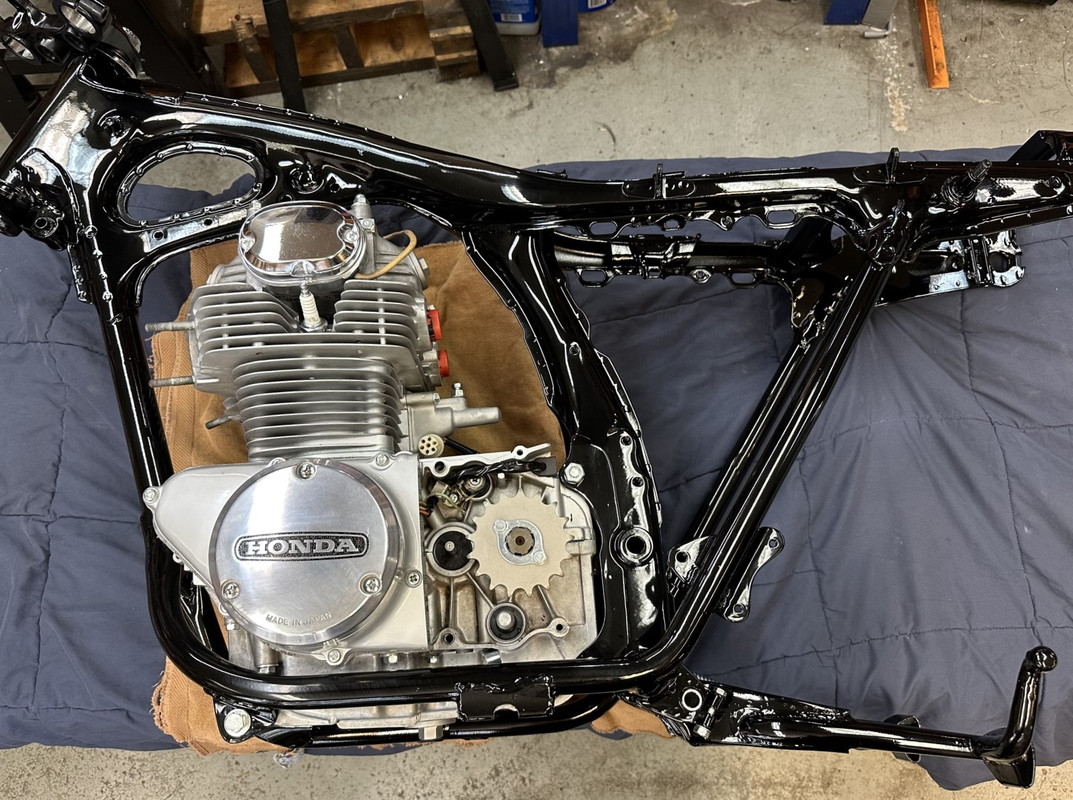
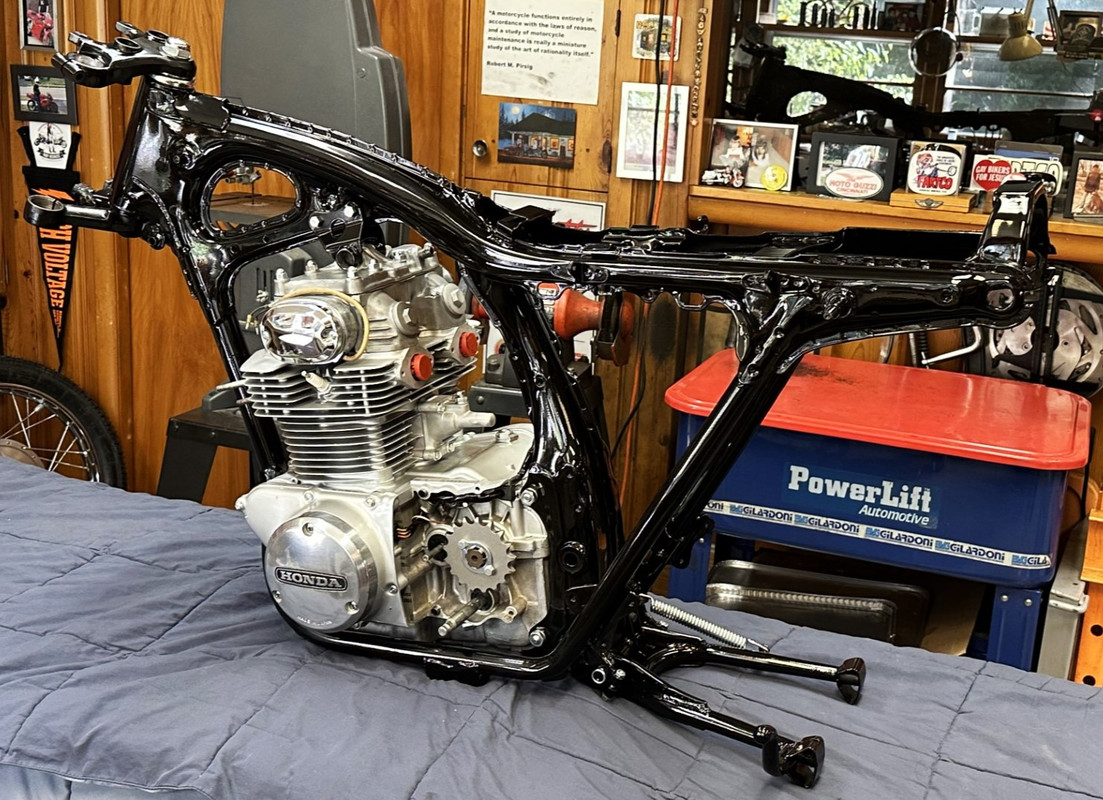
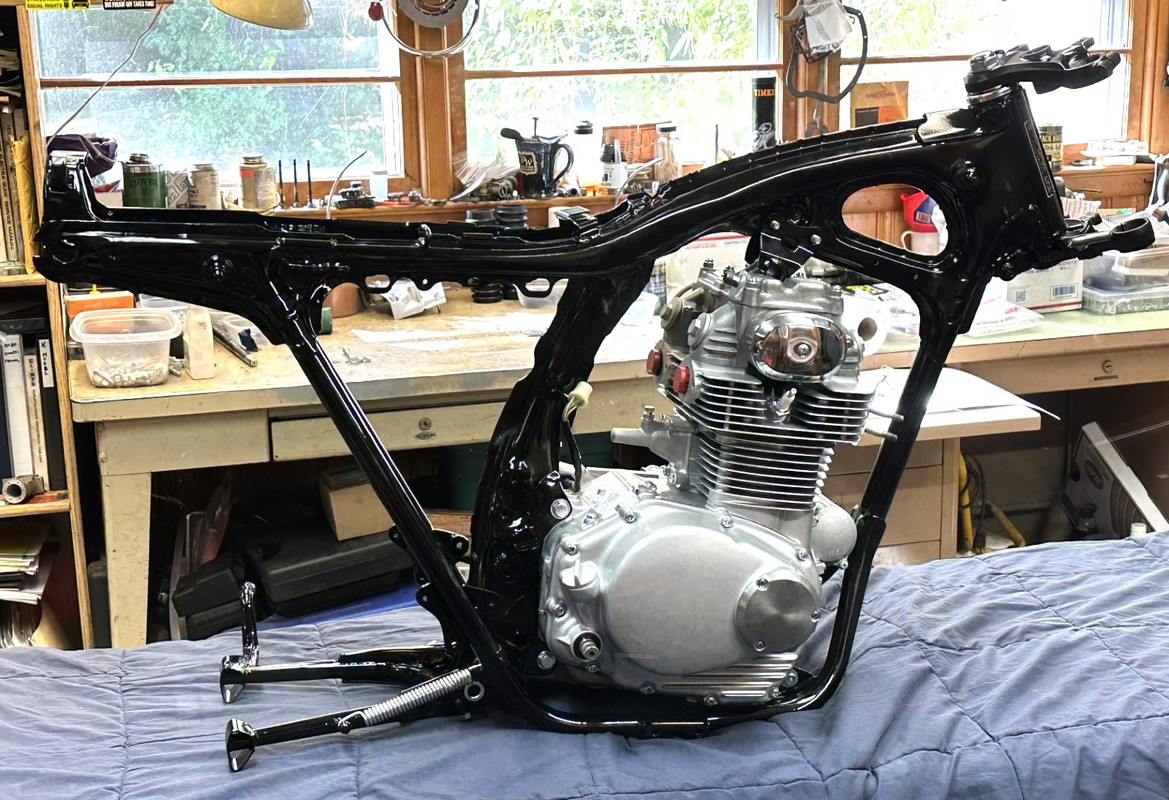
What's the easiest way to mount the engine? Engine and frame mated up while laying on their side, or hefting it in normally with frame upright?

 
I've done it the hard way over the years until someone mentioned laying the frame over the engine while I was putting my 450 together, and I've done it that way since. A whole lot easier and makes protecting that new finish much simpler.
 
I've done it the hard way over the years until someone mentioned laying the frame over the engine while I was putting my 450 together, and I've done it that way since. A whole lot easier and makes protecting that new finish much simpler.
I'm soon facing this rodeo with a nice motor and nice frame. I'm not sure I want to try it as a one man job.
 
Lay the engine on it's right(clutch) side and drop the frame over it.
Don't forget the spacer on the left front mount.
Don't forget to clean any paint or powder coat off the frame to engine contact points.
 
You're sure these pics weren't photoshopped from the Honda assembly line into your garage? That looks like a brand new bike going together.
 
Well, that may be but clutter is not the same as clean. My shop looks dingy compared to it. And cluttered.

Really nice work Dave.
 
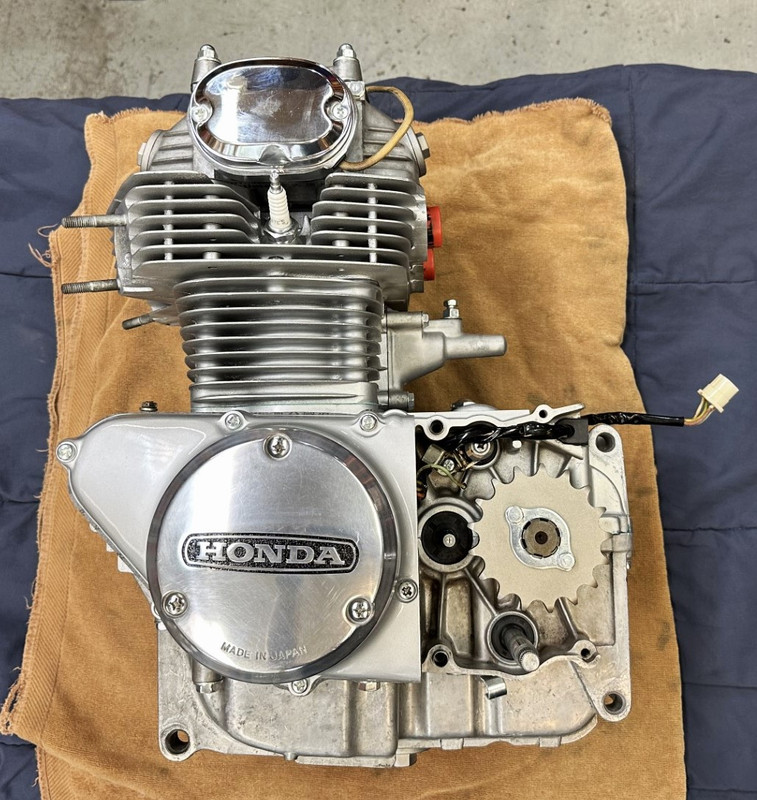
That is looking great, Dave. Were you able to reuse the rubber grommet where the alternator wires exit from behind the sprocket, or is that a new one? If new, where did you find it?

One thing to think about is in regard to the clutch push-rod seal. When fully seated, there is room to add a "fillet" of silicon calk around the periphery with the tip of one finger. Once it sets up, this will help prevent the seal from walking out. Those are notorious for gradually working loose until they pop out completely. When that happens, it dumps all your engine oil in front of your back tire and can make you crash while causing engine seizure. Other than that, no big deal if it comes out. :rolleyes:

If you need to replace the seal later, the caulk is easy enough to remove. Some people stake the seal into place. That would NOT be so easy to undo. Others go to the trouble of adding a metal clip or wire to retain the seal, but I have never quite gone that far. It may be a good idea, but the area is a bit tight for that.
 
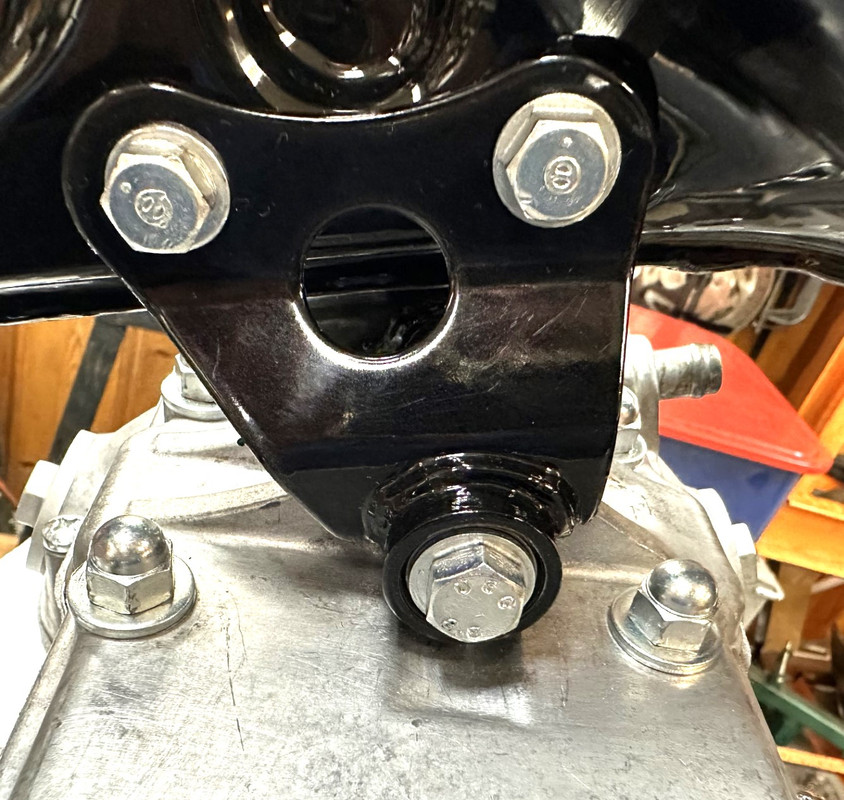
Where did you find upper motor motor mount shock bushings?
ScooterWorks has this bushing for a lot less, but the ID is only 7.5mm. It will probably need to be carefully drilled out a bit.

 
Everything looking great as usual. I assume you have the copper washers for the allen bolts that go in the bottom of the lower fork legs.
 
Belt and suspenders. I ordered both. :) The ScooterWorks parts got here first. Partzilla hasn't shipped yet.
Ok, cool. I'm interested to see if the OEM ones really are available. Are you going to use washers on the inside of the mount with those scooterworks bushings?
 
Ok, cool. I'm interested to see if the OEM ones really are available. Are you going to use washers on the inside of the mount with those scooterworks bushings?
I have a feeling the Partzilla bushings are not OEM. I will let you know when they arrive.

I used washers, and spring washers on the nut side.

 
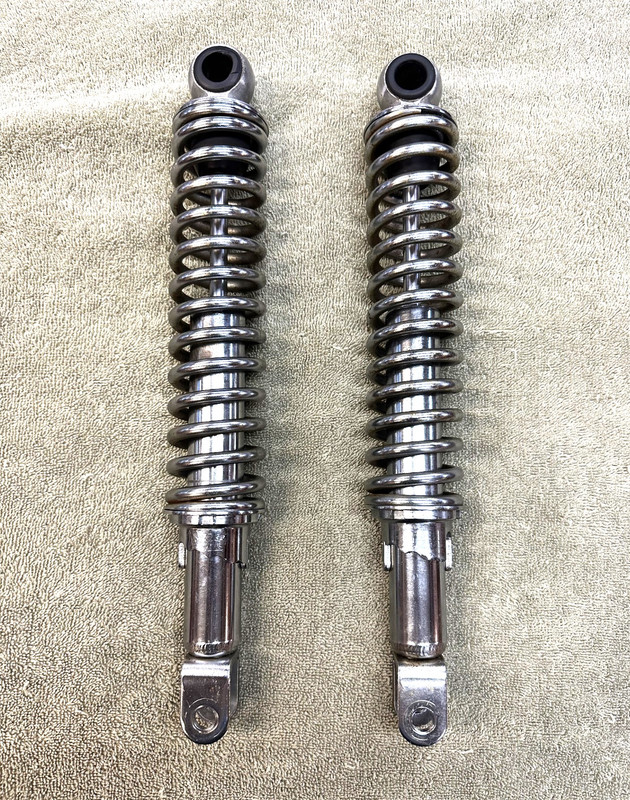
I wasn't looking forward to disassembling the rear shocks.

The shocks were very cruddy and couldn't be cleaned to my standards without taking them apart. I also wanted to check the action of the damper rod to make sure it was doing what it should.

It took all morning but mission accomplished. A good portion of the morning was required to cobble together the tooling needed to disassemble and re-assemble.


Last edited:
So you unscrewed the top from the shock shaft? I've never tried it myself though some appear to be disassemble.
 
So you unscrewed the top from the shock shaft? I've never tried it myself though some appear to be disassemble.


I came up with this which enabled me to pick out the semi circular wedges. The ID of the plastic pipe was machined to clear the spring, with a ridge that rested on the top washer, but big enough to clear the wedges.

 
Back
Top Bottom