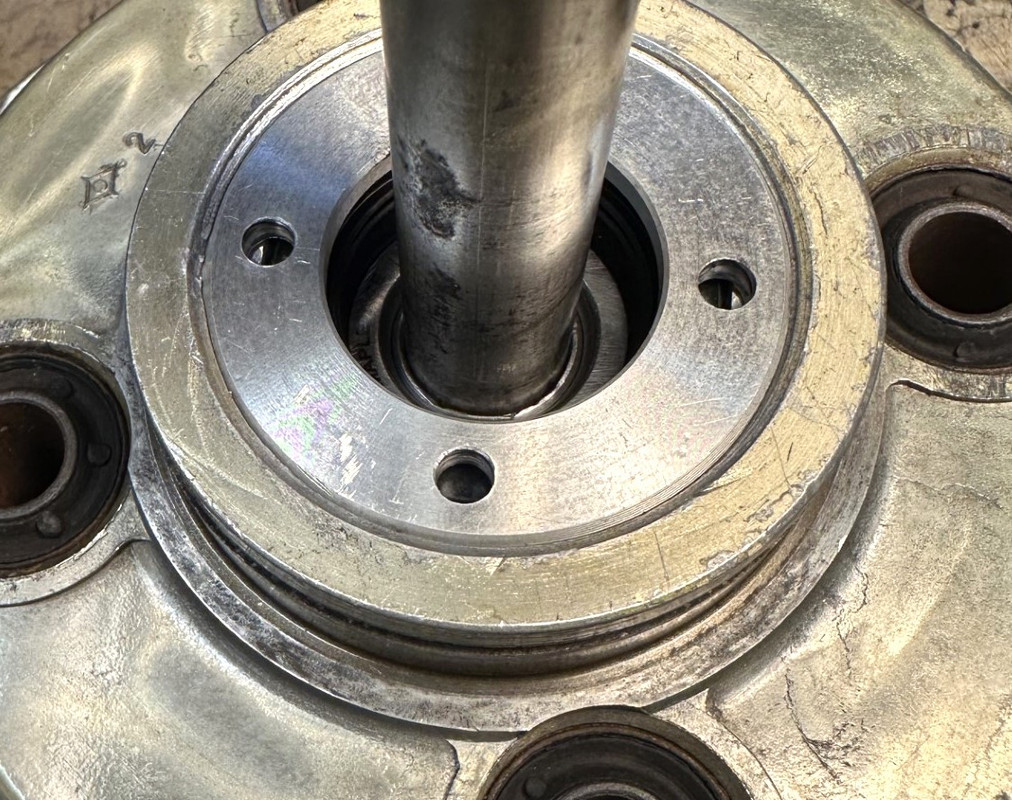
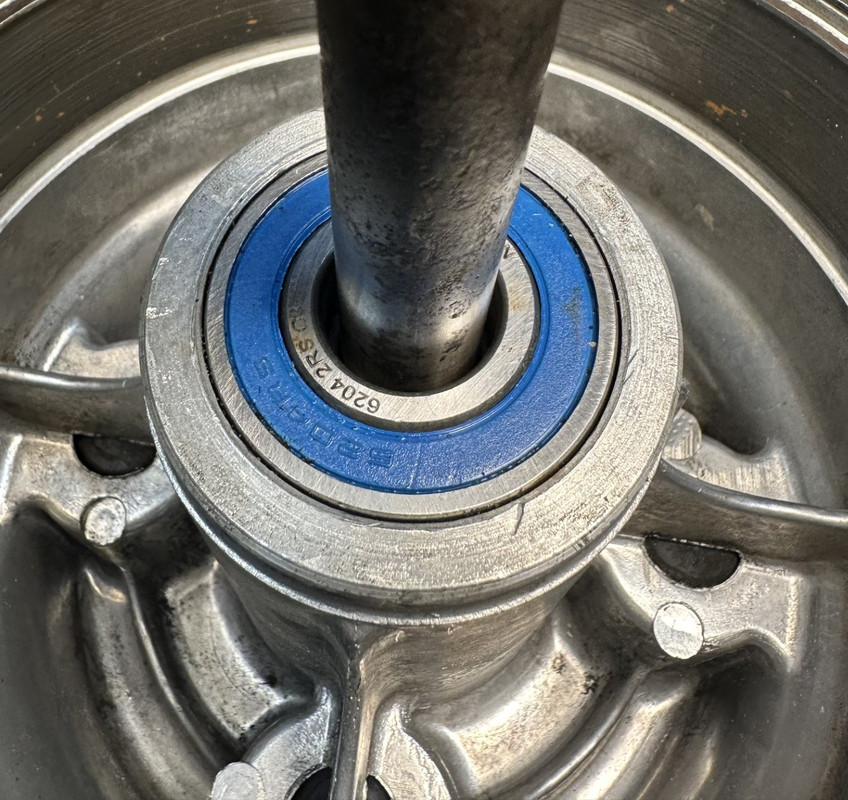
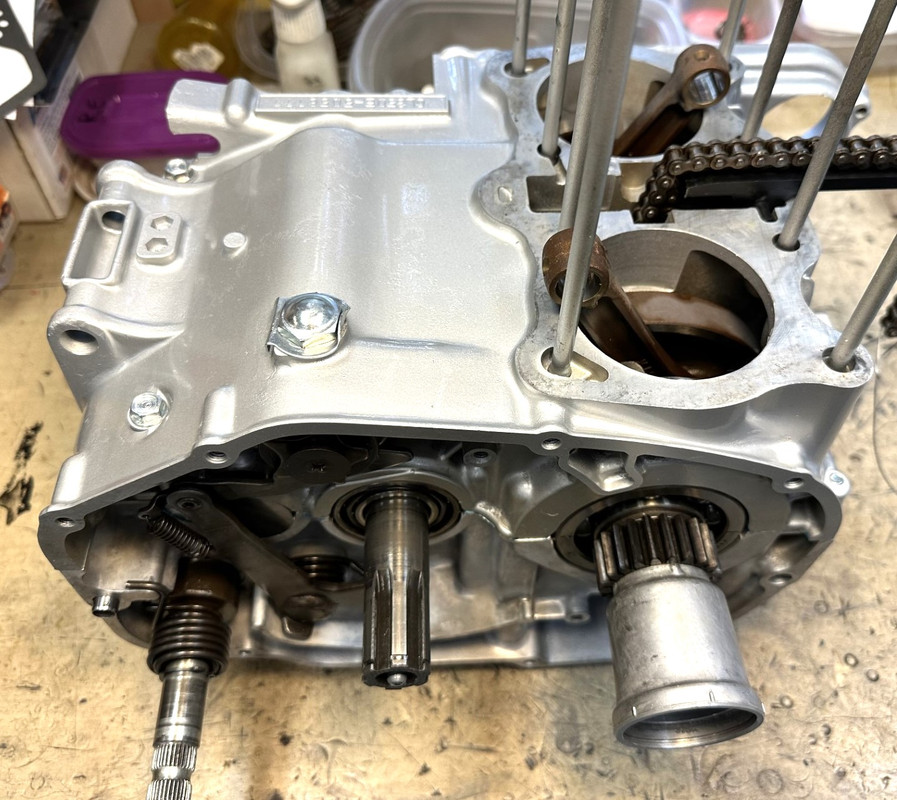
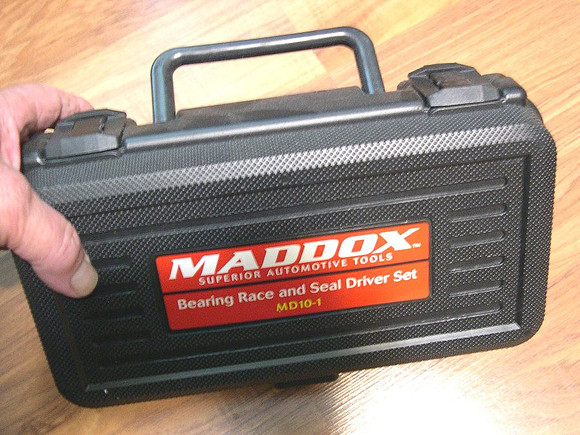
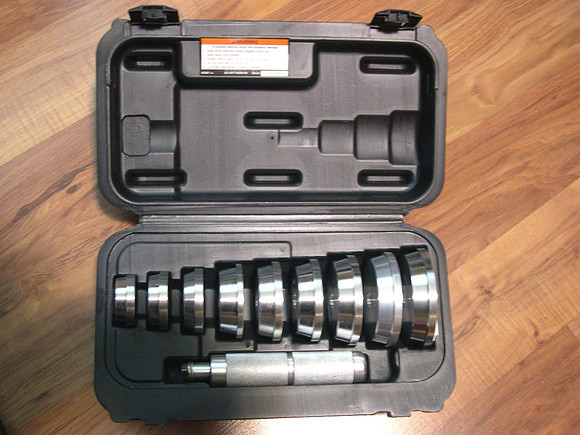
When you drive in those new bearings, the driver you use can cause a problem. The inside bearing (the one you are going to replace) should be driven in to the bottom of its counterbore. The other bearing (the one with the top hat spacer) should only be driven in until its center race, along with the top hat spacer, contacts the center distance piece. To accomplish this, I recommend a driver like this one:
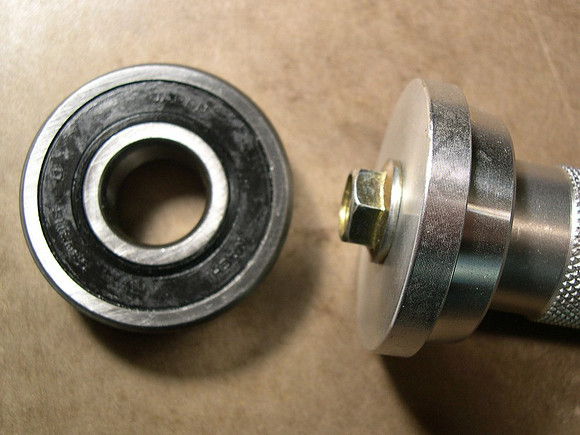

By using a driver that is flat across the face (and contacts both the inner and outer races), it will stop when the inner race makes contact. At that point, the outer race will
NOT be in contact with the bottom of the counterbore.
On the other hand, If you drive the bearing in by using something like a large socket wrench that contacts only the bearing's outer race, you can easily drive the bearing past the point where the inner race has made contact, and you will have side-loaded the ball bearings in their race. The same is true if you use a punch, and tap only around the outer race. It is possible to drive the bearing into the counterbore to the point where the center race is not only against the distance piece, but it has such a side load against it that the bearing will not turn.
I am sure that the wheel is built this way to allow for tolerance stack-up. They could not have the inner race on one bearing, then the distance piece, then the top hat spacer then the inner race on the other bearing all in contact, and also have the outer race of both bearings pressed to the bottom of their counterbores. Hence, the counterbore on the brake side is deeper to provide clearance. The critical thing is to have contact from one side of the axle assembly to the other via the inner races and the distance piece. The bearings themselves are designed to accept the side load encountered during riding.
As a side note, think about how the axle, spacers, wheel adjusters, inner bearing races, washer and nut all clamp together at final assembly. Neither of the bearings' inner races rotate as the motorcycle rolls down the road. The ball bearings, outer races, and the wheel rotate around the stationary inner races.
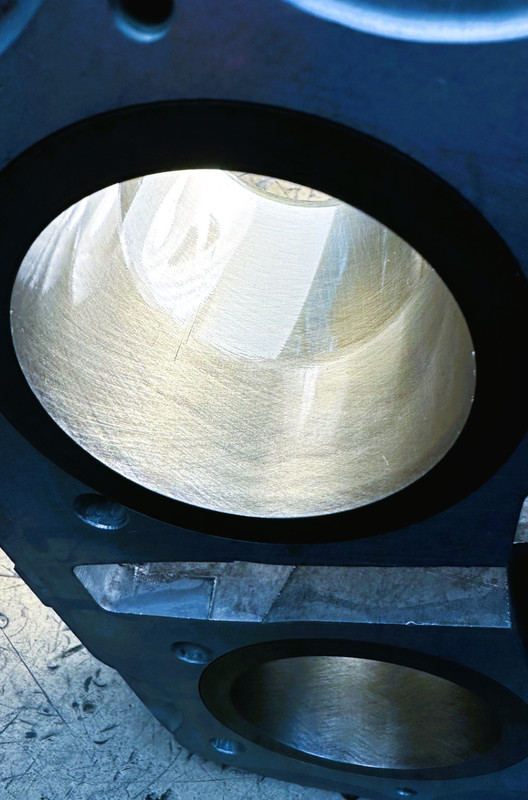
If anyone disagrees, it is easy to see this by measuring some depths with your calipers (using the depth rod that sticks out the end). Also measure your bearing face widths, and the length of the distance piece and do some calculations. You can also look into the hub's counterbore and see where the outer race of the old bearing stopped when it was pressed into place. It was never pressed to the bottom of the counterbore.
This issue has come up a number of times in the past and was discussed on that old forum clear back in 2011 when people were wondering why their back wheel was binding.
Ray
p.s. That driver kit is fairly cheap and came from
You know where.