1971 SL350

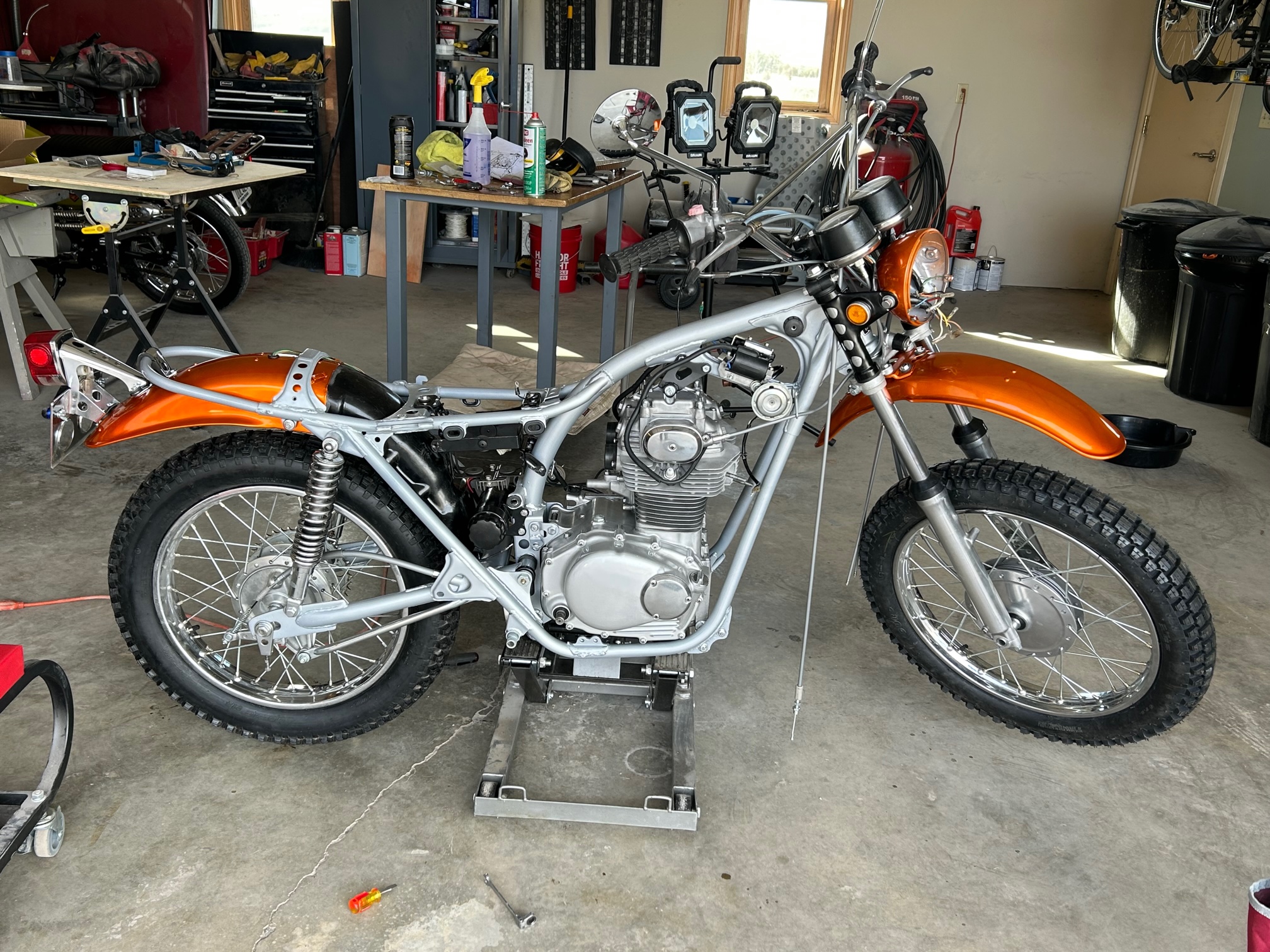
It looks amazing. I love all those candy colors Honda had in the 70's. Plus, you simply can't match the rich color of paint on metal vs today's plastic parts...
 
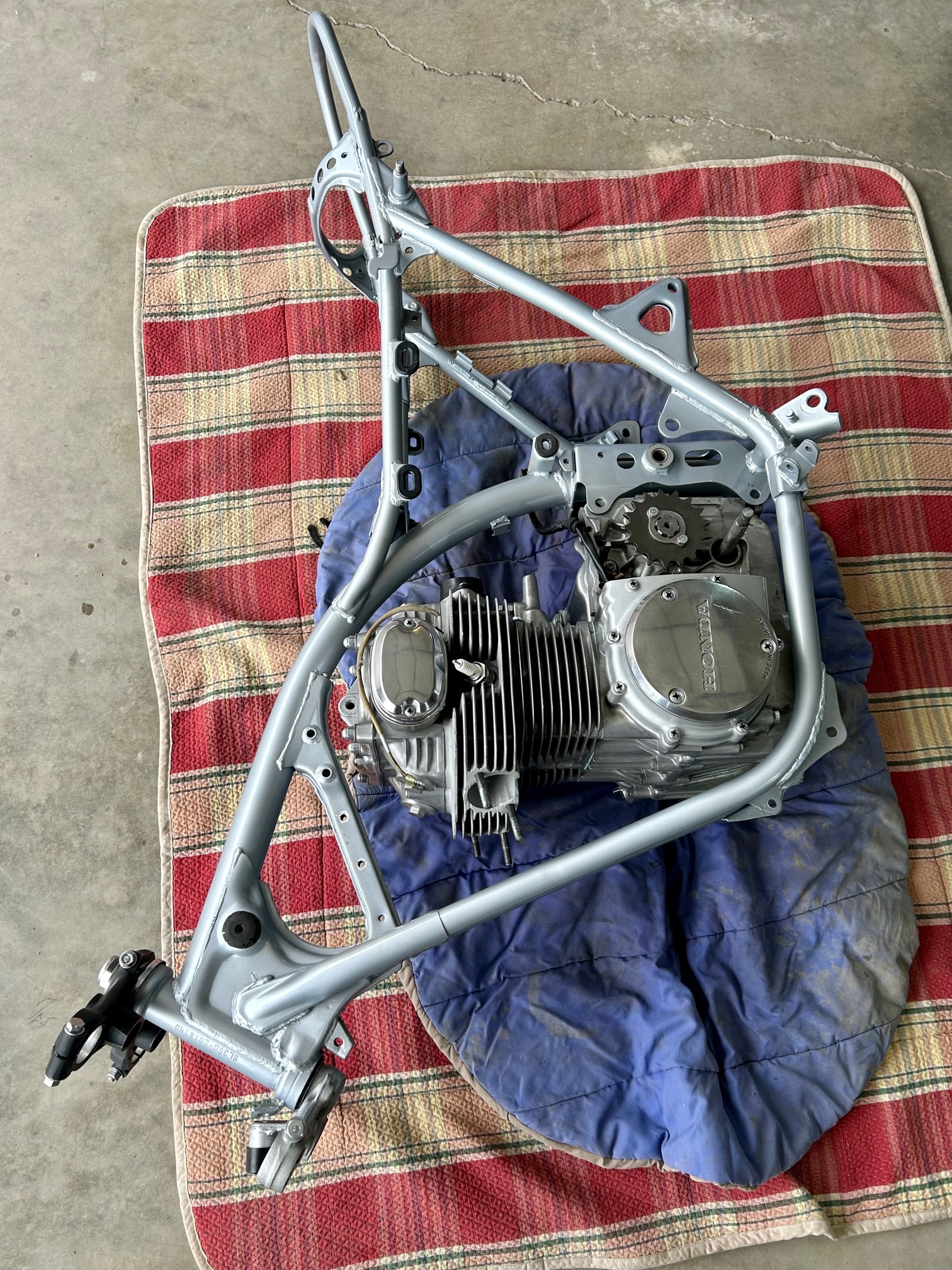
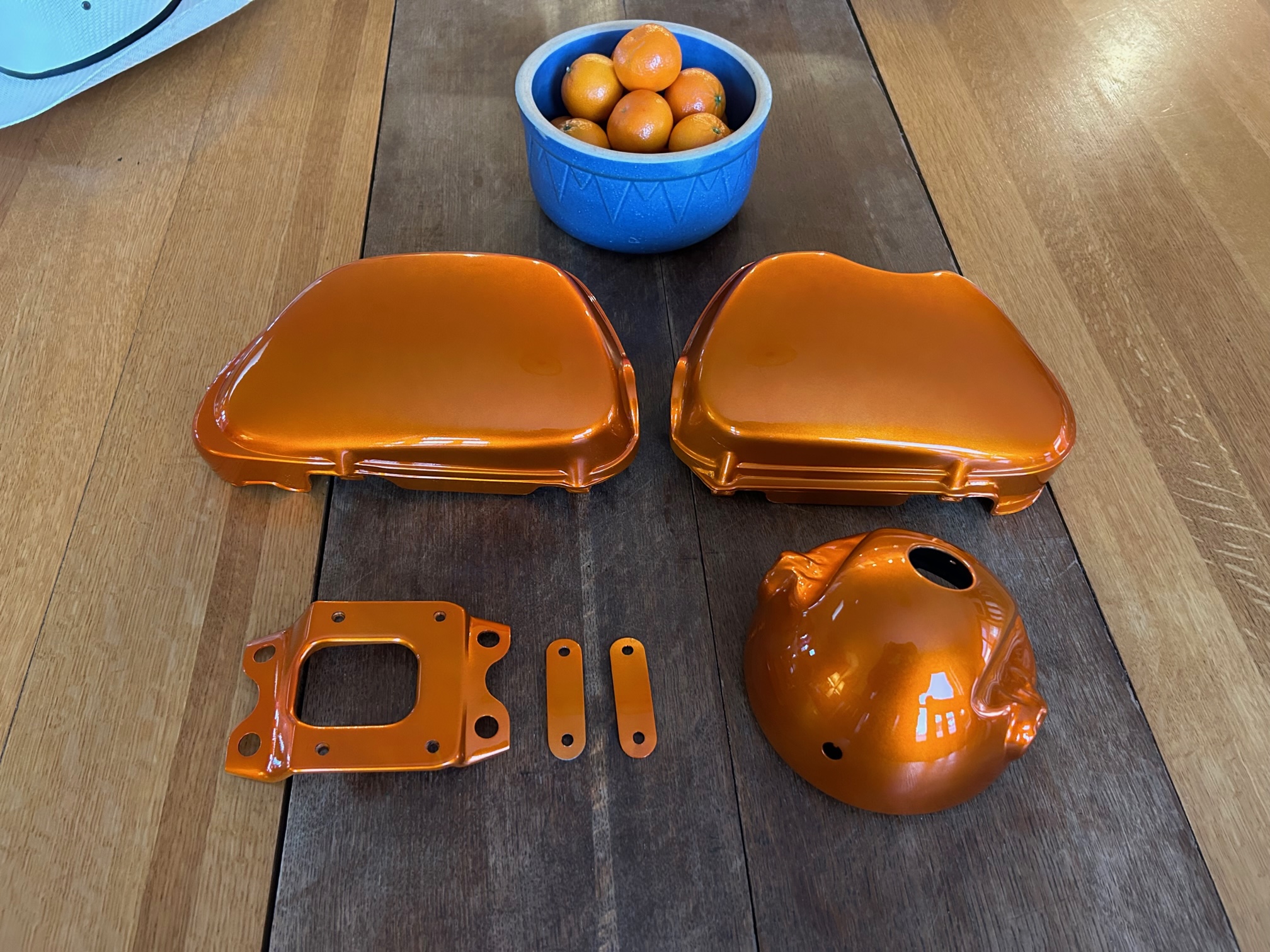
Finished up with the candy topaz orange on the remaining parts yesterday. I could do all the parts in one day as I didn't have room enough to prevent overspray.

CB7vJnD.jpg
 
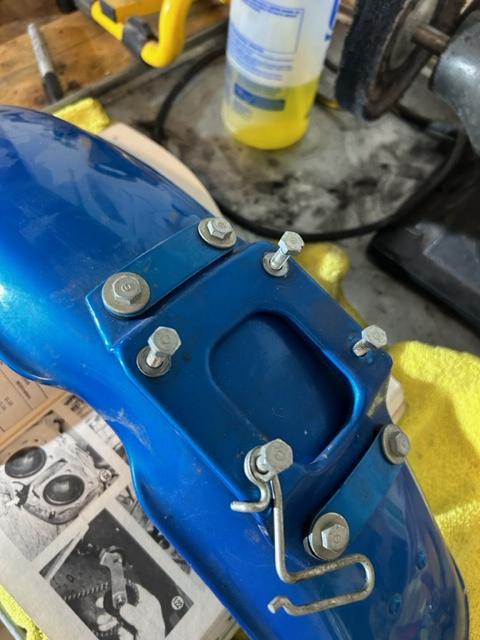
Here is a bit of a mystery....when I took the bike apart, the two thin front fender plates were mounted on top of the rubber grommets.

v2ng8nC.jpg


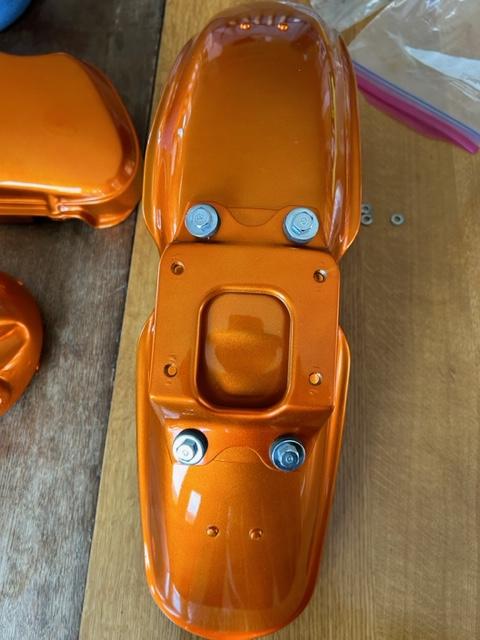
When I looked up the drawings...the plates were clearly under the mount. https://images.cmsnl.com/img/partsl...ng-stem-front-fender_big3IMG01172142_8519.gif So that's how I mounted them for the time being..

RddpxaK.jpg


The interesting thing to me is that if you google images of the fender mounts, you see multiple examples of them both ways. The only thing I can think is that there were a whole lot of smashed up front fenders that got reassembled wrong....or that I'm about to mount this one wrong....
 
I think the parts fiche view is correct, I remember there being a discussion about it somewhere (maybe the dealership when the K1 came out, or maybe a bike magazine article) because of the aluminum fenders. I think it was to give more support around the bolt holes because of the aluminum usage.
 
Here's my followup on my camshaft experience with Oregon Cam Grinding Inc. As one might remember, I sadly destroyed the NOS camshaft I was going to use and as a Plan B, purchased a eBay skinny camshaft from a 1972 CB350 (14101-286-040) with the intent to get it ground to the SL350 K1/k2 profile.

The eBay camshaft was about $63 with shipping. It was in decent shape.

I sent it in and it arrived to Oregon Cam on March 23. The ground camshaft was returned today (Apr 21) so it took less than a month.

Charges for grinding were $109 and shipping was $28.46 for a total of $137.46 to Oregon Cam Grinding.

kv4rqOJ.jpg


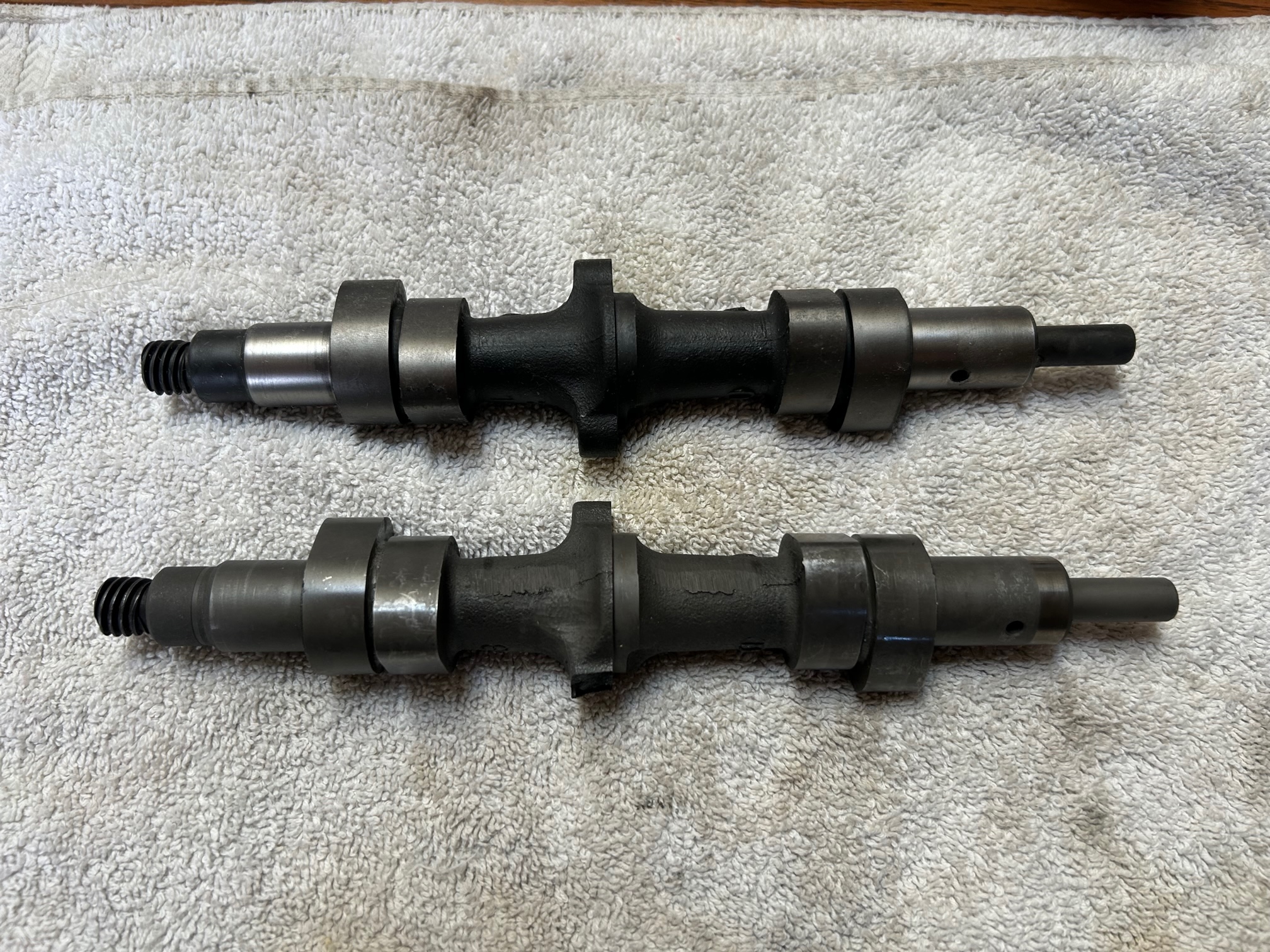
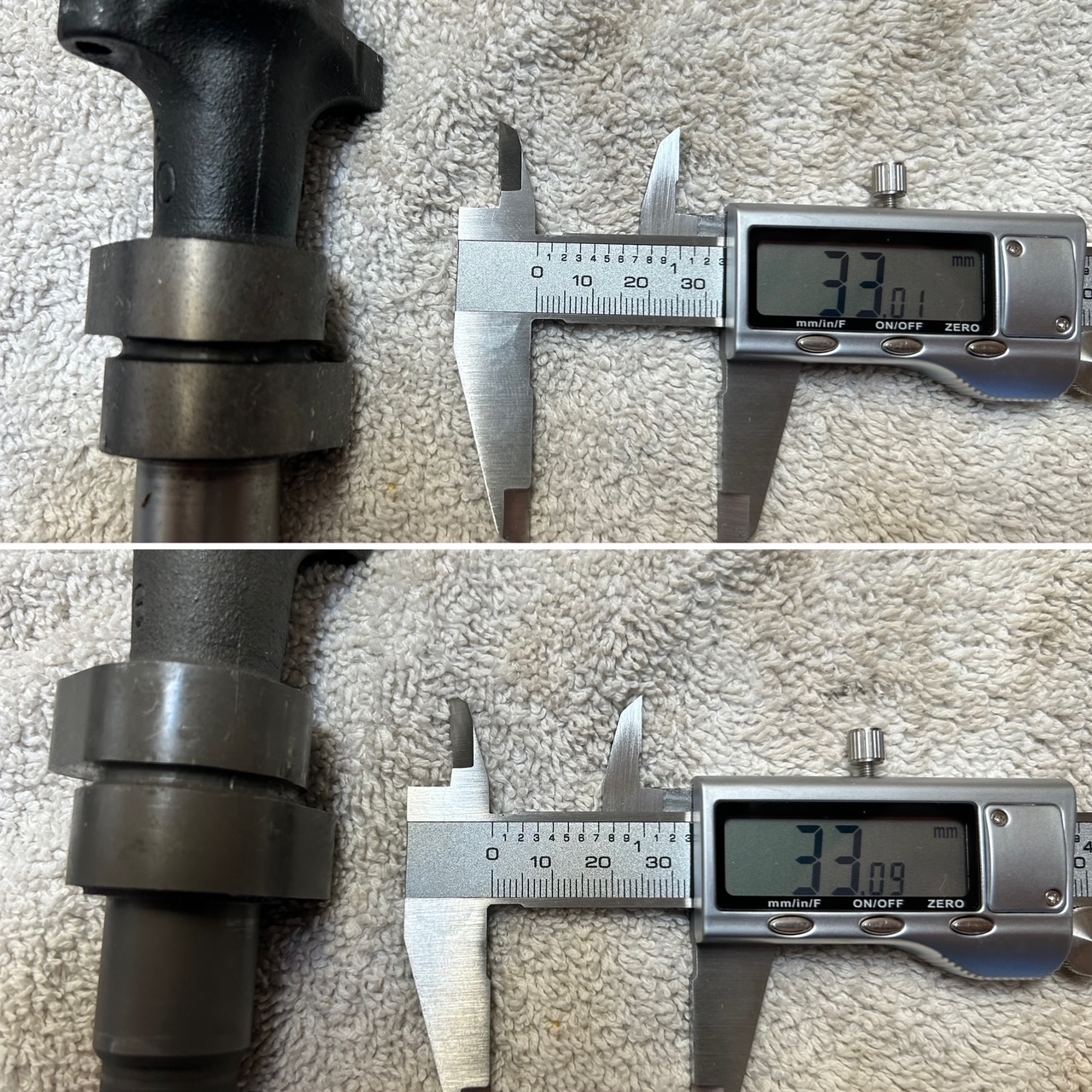
The ground camshaft is on the top, the busted NOS is on the bottom.

3dRz8Qs.jpg


The base circle on the ground camshaft is just slightly smaller than the original. Pretty close according to my calipers.

7f69vQa.jpg


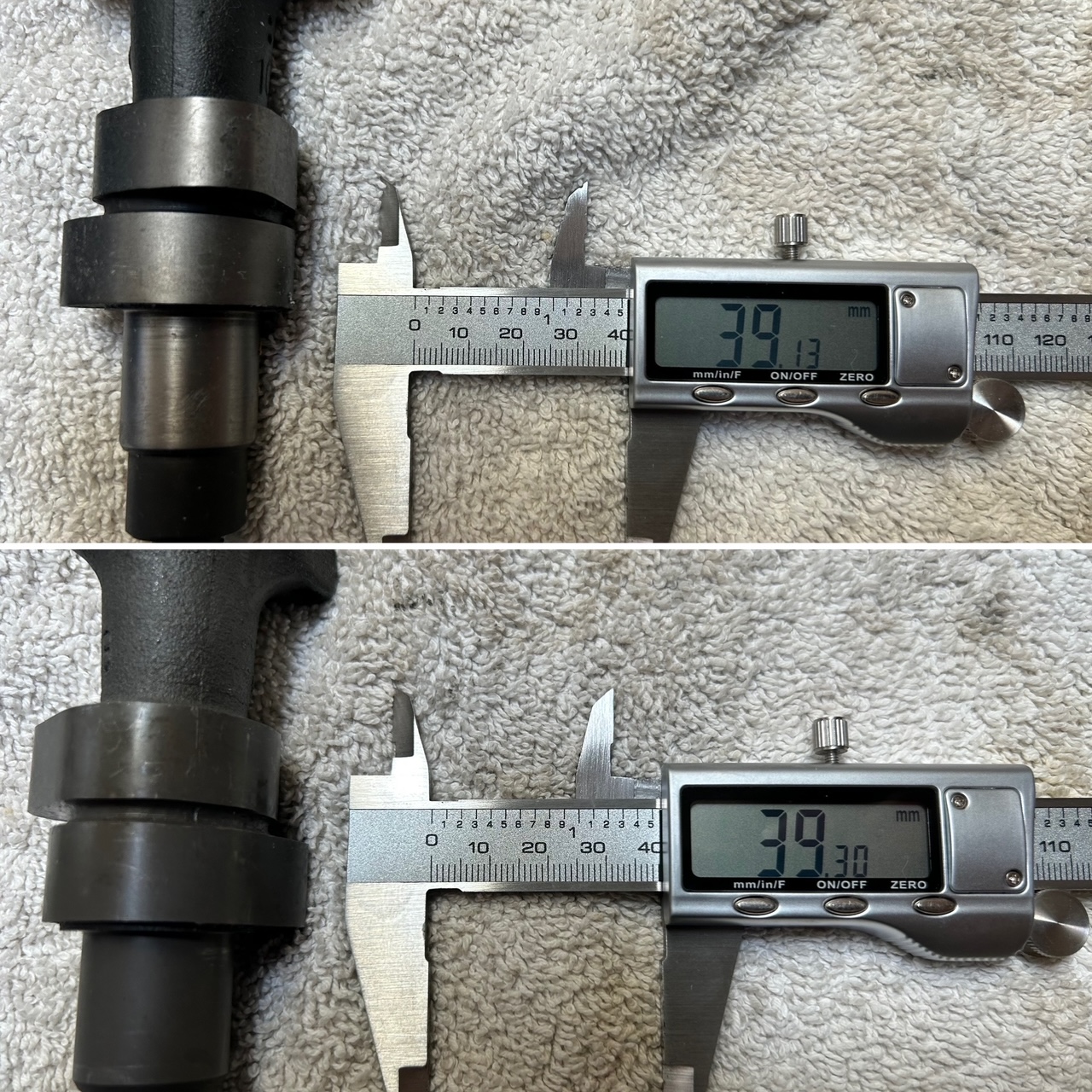
The lobe centerline measurements are also very close....

Xg1D6MG.jpg


The ground cam came with a coating of some sort of rust preventative.

All and all. I think Oregon Cam Grinding did a great job.

Thanks to LDR for getting them set up for the work.
 
Very cool, I've been meaning to check up on this with Ken but hadn't gotten around to it. The base circle being less could be just the clean up or possibly needed to get toe of the cam profile correct.
 
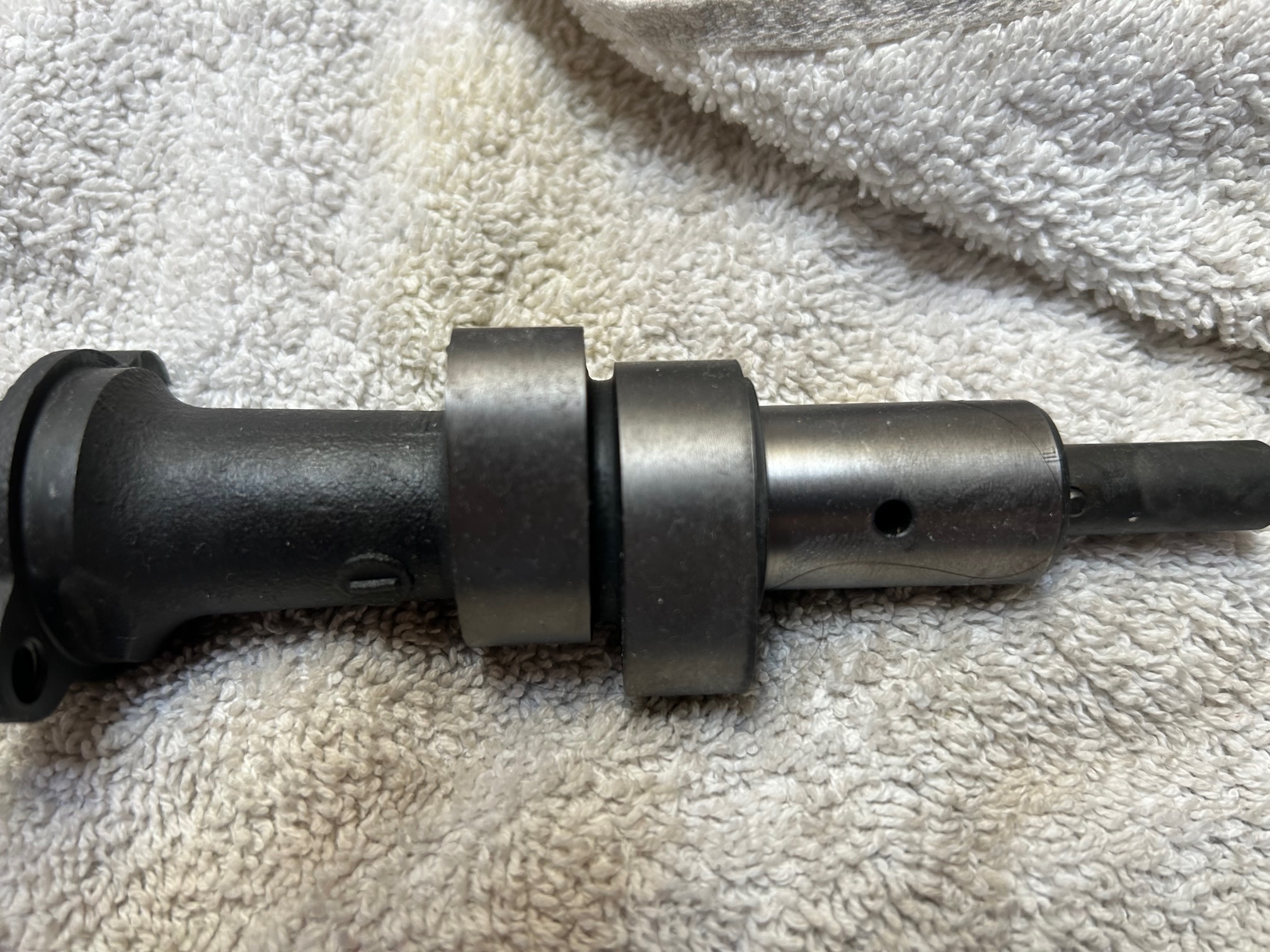
It's more fun to put the engine together if you don't wreck your camshaft in the process! Anyway, I was setting the valve clearance this morning. I'm encouraged that the angle of the slots on the adjustment pins look correct. I had heard stories of camshafts that had been ground that were so messed up that you couldn't set the clearance. I'm feeling pretty good about Oregon Cam Grinding on the SL350 K1/K2 cams at this point and think I'm in business!

w5bJVSm.jpg
 
Out of curiosity I stopped by Oregon Cam yesterday and talked with them about your cam. It was a fairly simple operation it turns out, a slight change in lobe centers, knock down the lift in favor of duration and light clean up on the base circle. All made possible by you and the OEM cam to make the master with.
 
I guess yours will be the guinea pig, I assume it could be the first from them but maybe not. Either way the quality looked good so I'm thinking you'll be fine, and it's nice to see the index parks in the usual positions.
 
I ran into another "not sure what I'm doing here" situation.

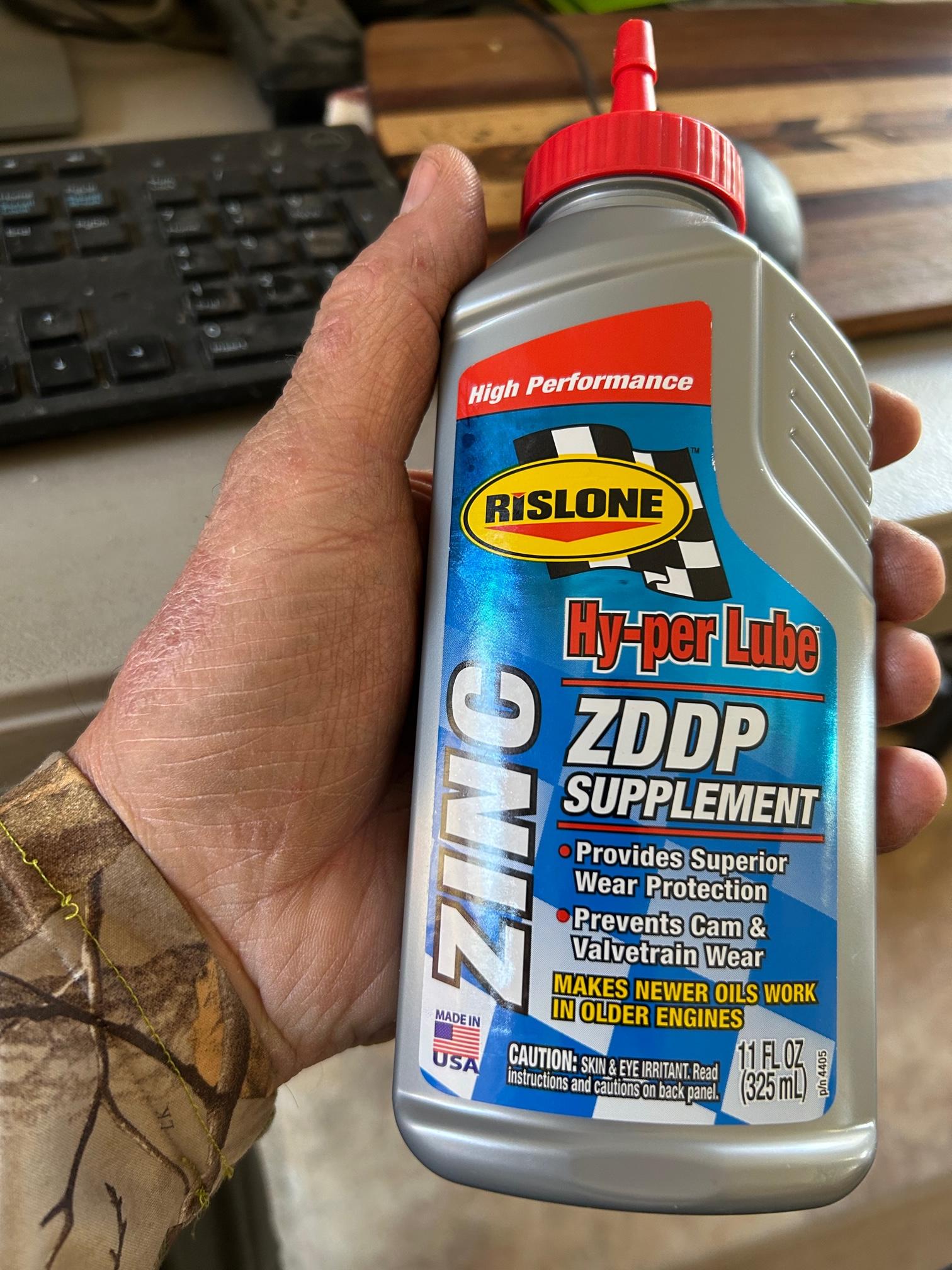
Because the cam has been ground, and the cylinder bored to +1 mm, I was going to try to pay some attention to the break in. It seemed like adding ZDDP supplement to the oil was a good idea, and I thought I would use Rotella T4 15/40 as its readily available.

So I bought a bottle of the Rislone ZDDP supllement and took it home. Then I read the instructions and it said "4-stroke marine & motorcycle (non-wet clutch), agriculture, industrial and racing engines- Add 2 ounces for every quart of capacity"

Is the Rotella OK? And will this snake oil ZDDP stuff mess up the clutch pack, or did I buy the wrong stuff? Hate to pull another bone-headed move at this point! My pocket book has suffered enough on this bike!

iNrmvTq.jpg
 
The ZDDP supplement I bought is a different brand (Lucas) so I can't speak to whether or not the concentration is the same. I use a couple ounces of ZDDP in the Rotella T4 15w40 I use in my 450 every change (almost 3 quarts) and it has had no effect on my clutch. I just checked the bottle in my garage and it doesn't mention a specific concentration though it says to use the entire bottle (16 oz) in a V-8 oil change so typically 5 quarts.
 
I'll take that stuff back. Sounds like there are brands out there that are safe for wet clutches.
Well, to be clear there's no mention of wet clutches one way or the other on my Lucas bottle, and there's the obligatory warning about not using it in vehicles with catalytic converters as well. I can only relate my experience with it in my bike, and I'm obviously using significantly less than is recommended for an engine without integral transmission and clutch like a car V-8. I would think that ZDDP is ZDDP, but you might do a search to see if there is any variance between brands.
 
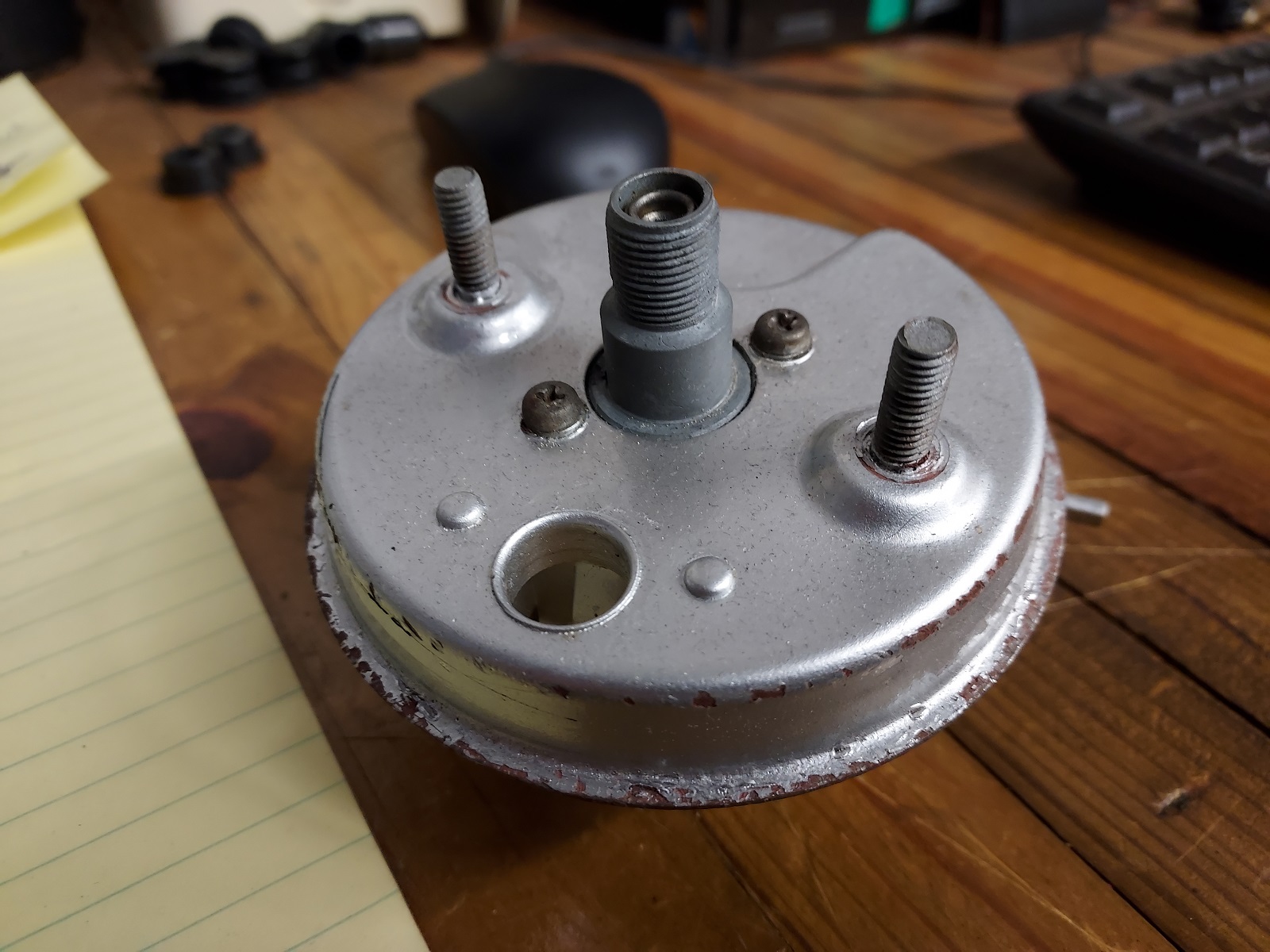
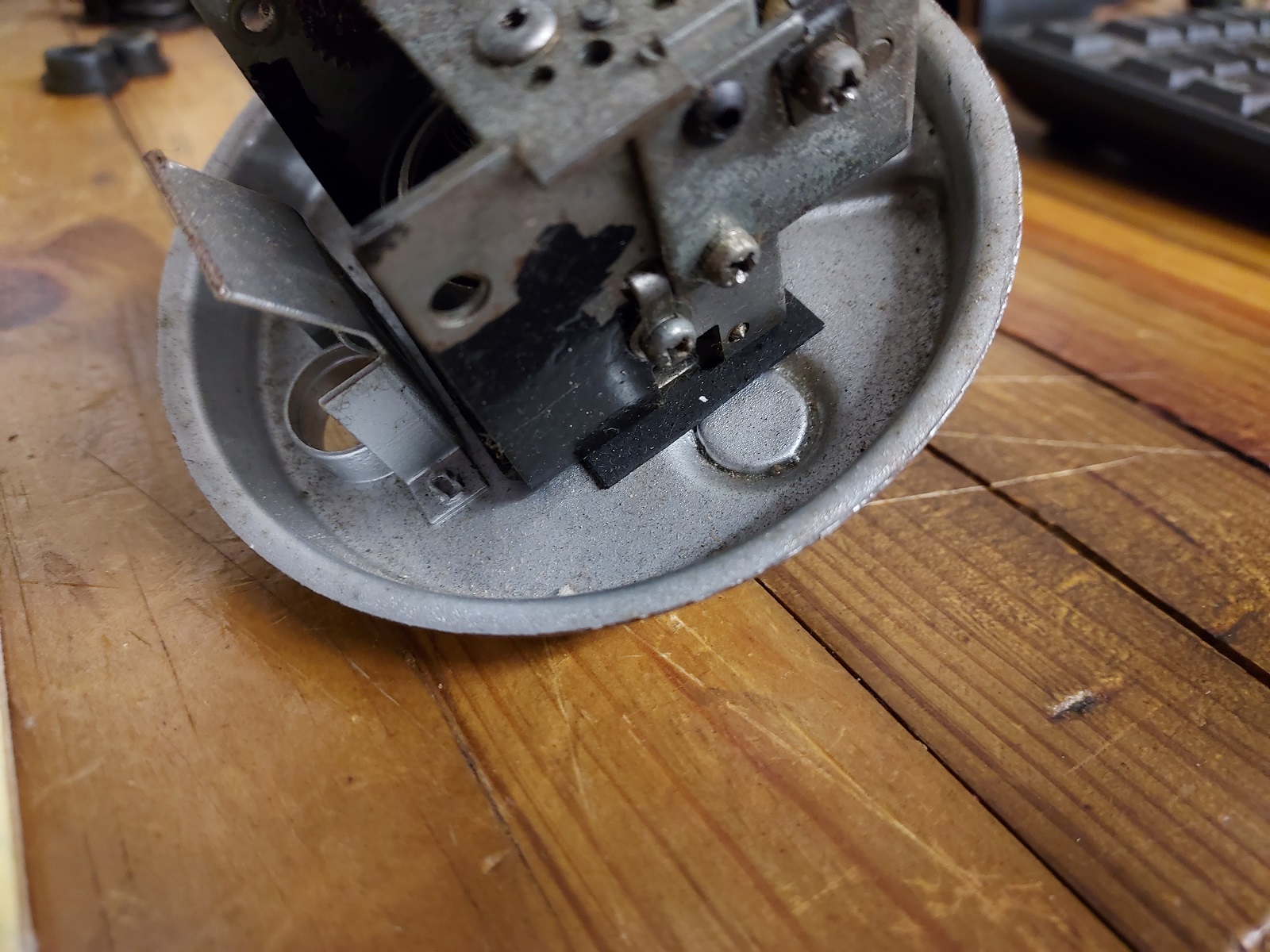
Everything is going together pretty well but have had a couple issues. Apparently I received a 100 link chain instead of the 102 I ordered. Unfortunately, I tore open the box and struggled with it awhile before I fgured out what was going on. So I ordered another. And then, I snapped one of the mounting bolts off the speedo....it must have been already damaged as I wasn't tightening it yet. Not sure if the bottom plate comes off or not to repace the bolt. Guess I'll find out. Other than that, so far so good!

sat9t9D.jpg
 
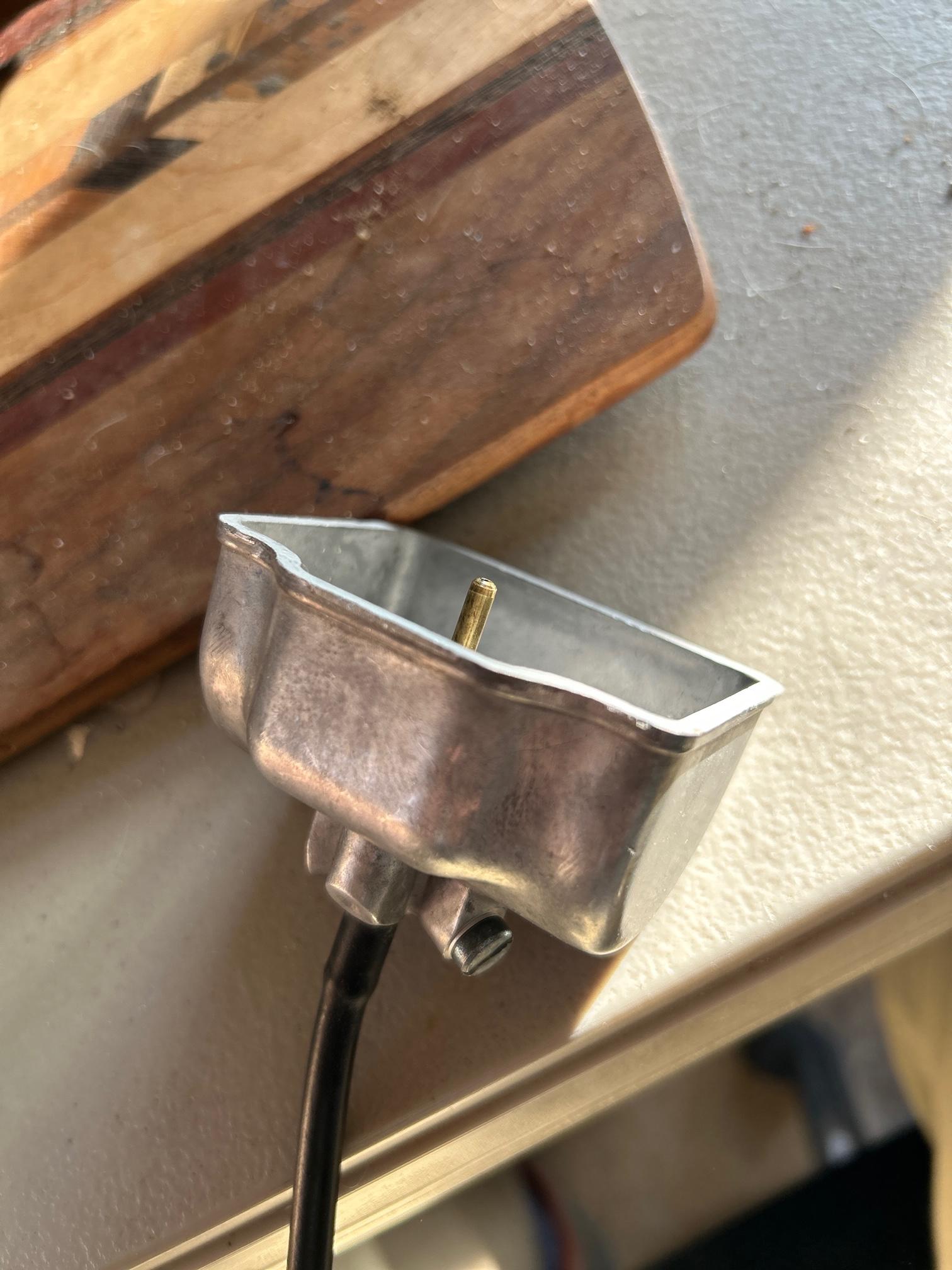
I noticed a slow drip out of the overflow tube on one carb before I disassembled the bike. Looking into it....there is a teeny, tiny hole on the overflow tube about 1/4 inch from the top of the tube (not sure if you can see it in the pic, I could could see little bubbles when I filled the bowl with gas and could see the holewhen I looked with a magnifying glass).

I've also seen where the recommendation for cracked brass overflow tubes is to solder the tube....Is that a special solder? and can you use an electric soldering iron? Or is JB Weld acceptable?

Thanks...

zckTq5u.jpg
 
Pretty sure you can solder it with a soldering gun/iron, probably one around 200 to 250 watts would do it. I'd imagine typical solder like you'd use on wiring would work, just be sure to clean the brass and use a little paste.
 
JB Weld won't last. Clean the area until it's shiny, add flux paste and solder. When done blow thru the tube to be sure it's open, sometime the solder can block the tube and need to be drilled thru
 
JB Weld won't last. Clean the area until it's shiny, add flux paste and solder. When done blow thru the tube to be sure it's open, sometime the solder can block the tube and need to be drilled thru

That worked pretty easily even with my cheapo Radio Shack iron. Seems like my anxiety was for naught!
 
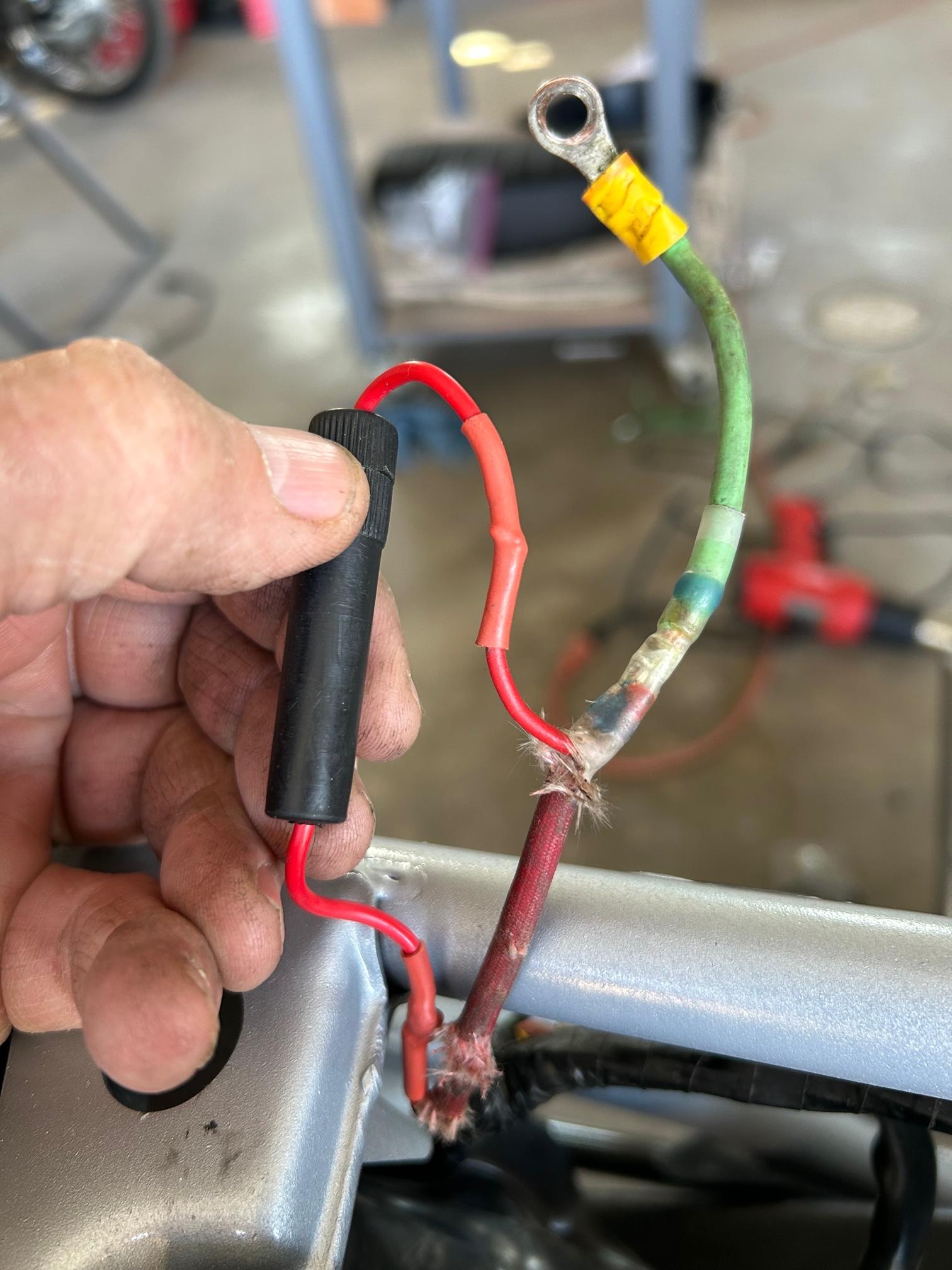
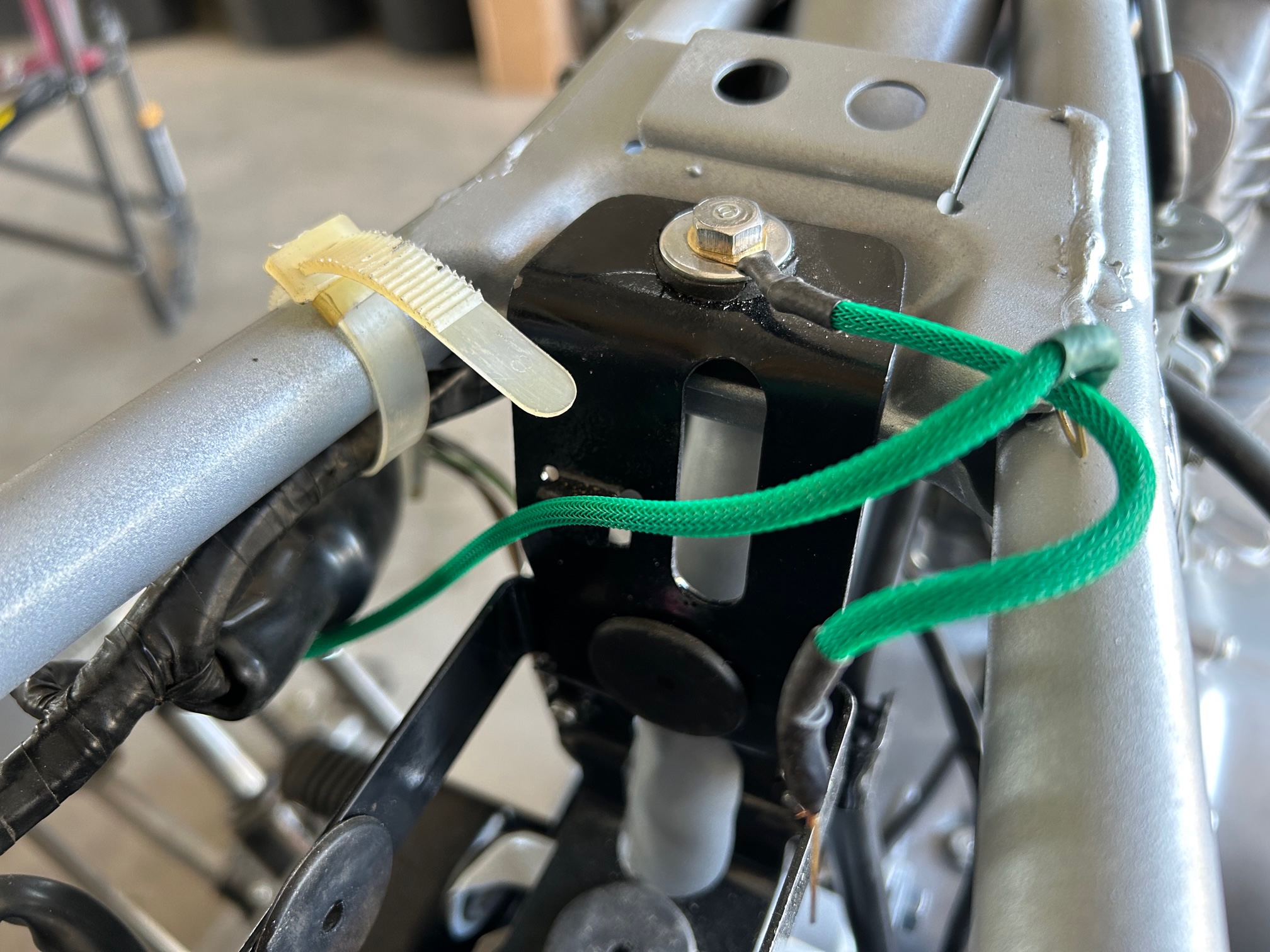
This bike was so incredibly abused in all the bad ways. Check out the battery wiring, the positive had a chunk of green wire spliced in and originally a blade fuse out of a Pontiac (I guess). The ground was composed of 4 spliced sections of various guage wire. Anyway, I fixed the ground and added an extra ground to frame. Tomorrow, I'm going to tackle positive.

I've been getting my monies worth out of the Vintage Connections kit.

4AhtoEA.jpg


UB0J7np.jpg
 
Quick irrelevant question (warning: I might be the only person on the planet who is interested)...

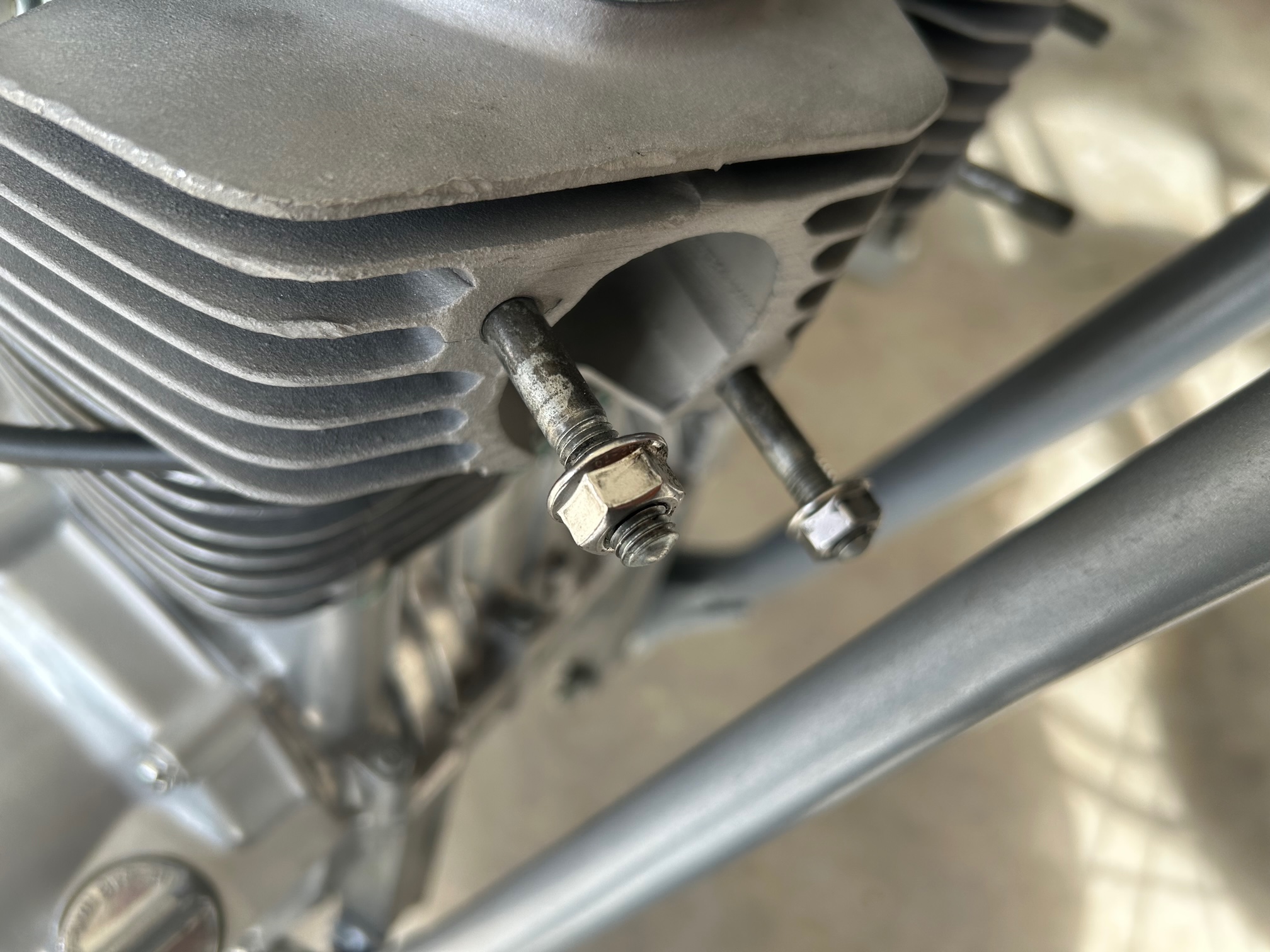
This bike came to me with serrated flange nuts (as opposed to a lock washer and hex nut) holding the exhaust collars. The parts lists show the hex nut/lock washer combo....but looking at images on the web, I do see other SL350's with the flange nuts, and others with hex nut/lock washers.

Are the flange nuts definately non-honda? Or did some come with the flange nuts?

XWmVhL2.jpg
 
Flange nuts there are non stock.
Flange nuts/bolts are used for 1 of 2 things. 1st is the fastener is clamping a higher than normal load requiring more surface area at the ends. 2nd is the hole is oversized and a normal nut may suffice to clamp 360 degrees.
 
Flange nuts there are non stock.
Flange nuts/bolts are used for 1 of 2 things. 1st is the fastener is clamping a higher than normal load requiring more surface area at the ends. 2nd is the hole is oversized and a normal nut may suffice to clamp 360 degrees.

Thank you! That makes a lot of sense....and I learned a bit about flange nuts!
 
I used them on the exhaust on my 450 just because I liked the look and they have somewhat of a built-in lock washer. Definitely not original on the early '70s twins, you started to see them on the late '70s bikes like the SOHC twins
 
Flanged nuts/bolts are are at least as good(or better) at holding bolted-up assemblies together as the more traditional nut/bolt + flat washer combination. Plus fewer parts used on the assembly line helps the Company make a tiny bit more money on every unit sold.
 
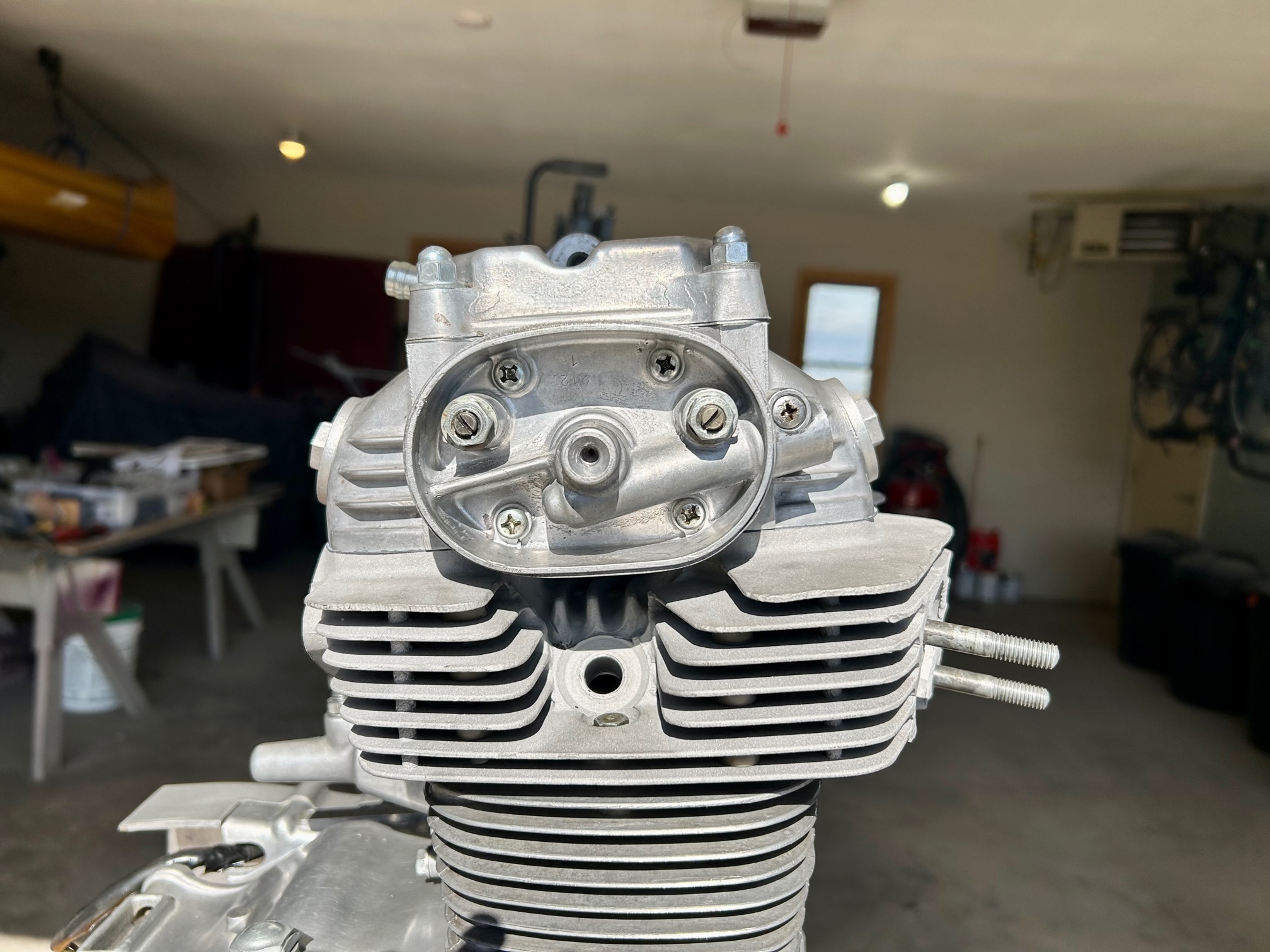
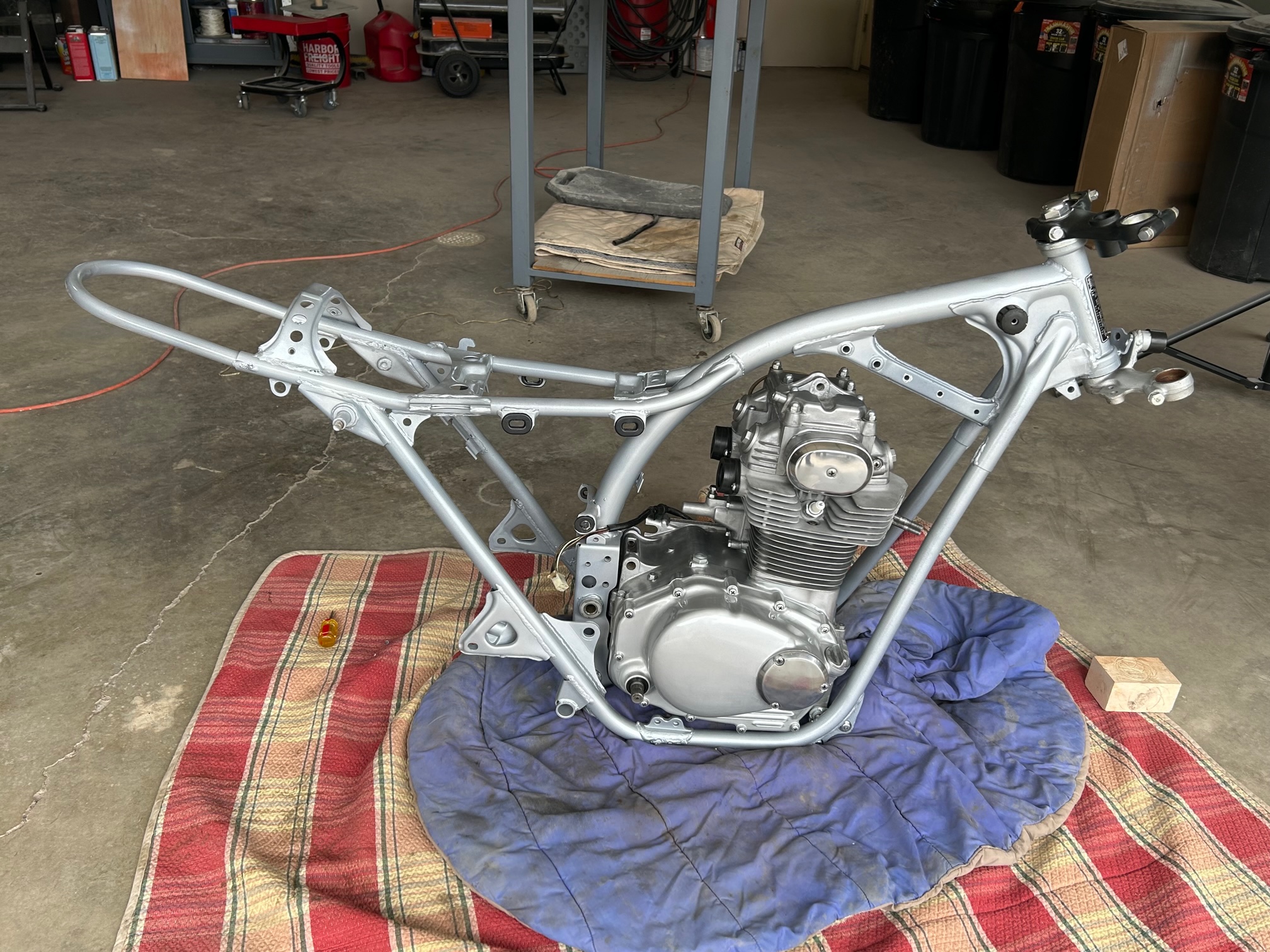
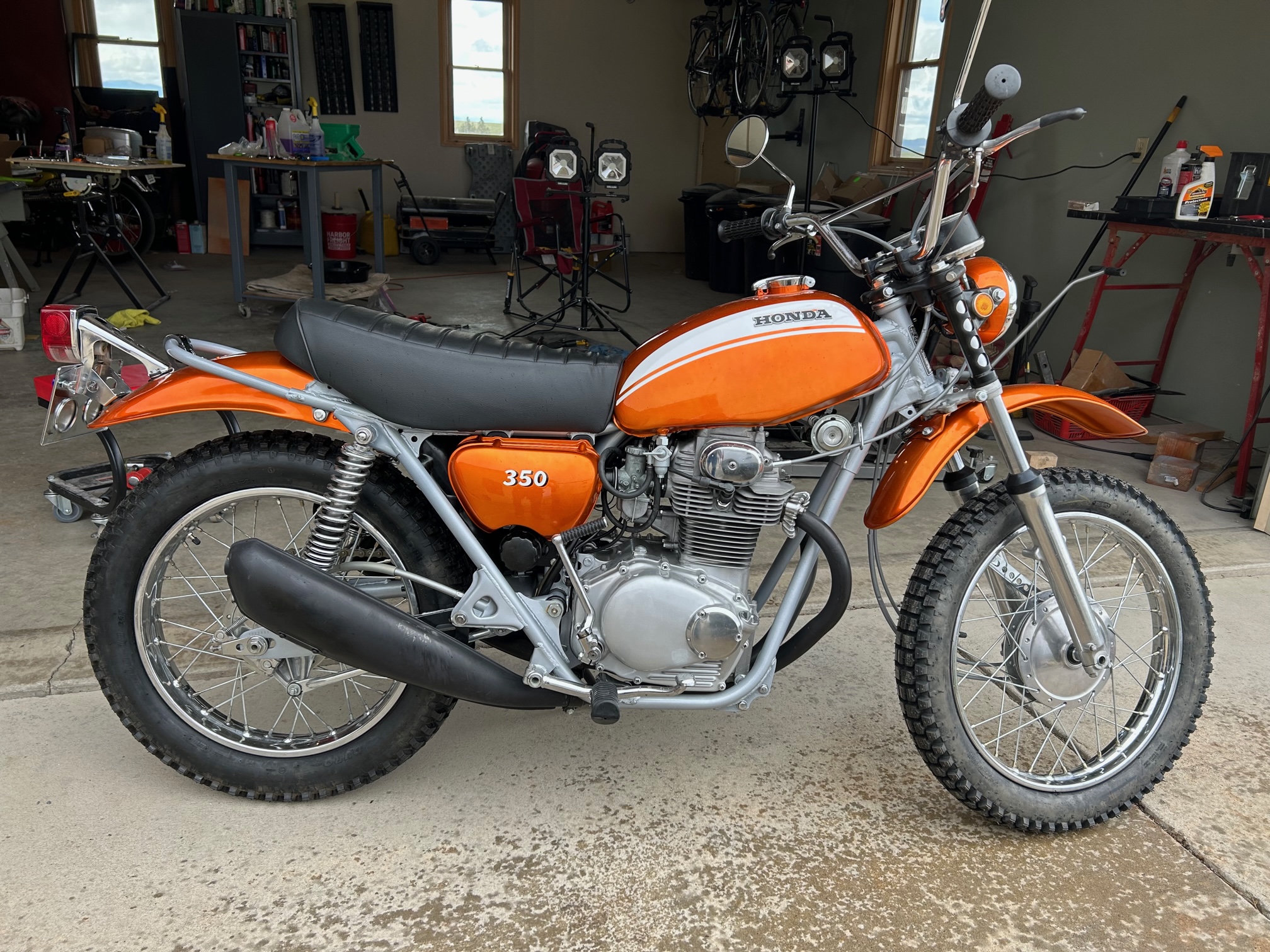
Any suggestions on breaking in the new piston and cam? The cylinder was bored. Started up after 4 kicks....no wierd noises or leaks that I can hear or see!

eqD4Uxm.jpg


Absolutely agree, it looks fabulous. I wouldn't let it idle too much without cooling air blowing over it since it has a fresh bore with higher friction.
 
Absolutely gorgeous (y)

2 schools of thought for break in: 1) ride it like you stole it. 2) Ride it using mid range, @5K, rpm for shift points and also downshift on decel for @2-5 miles. Raise the shift to 6K and repeat. Raise shift 7K and repeat. On the decel side of this once in 5th hold for a mile then decel down to @3K, downshift to 4th and repeat, keep doing it until 1st and final stop. You're trying to build rpm flexibility into the engine by using accel and decel in each gear at successfully higher rpm limits. After the initial break-in retorque the head nuts, change oil, check valves, timing chain adjustments, timing and mixtures. You don't want to hold a constant rpm in any gear for more than a mile at a time.
 
What a beautiful job you've done! Certainly ride it around and I'd follow LDR's complex plan, because it means you'll be riding and paying attention, all at the same time. I live on a very steep hill, so whenever I first take out a project I try to only go uphill, so I can coast home. And, bring your cell phone. First days are the best.
 
Absolutely gorgeous (y)

2 schools of thought for break in: 1) ride it like you stole it. 2) Ride it using mid range, @5K, rpm for shift points and also downshift on decel for @2-5 miles. Raise the shift to 6K and repeat. Raise shift 7K and repeat. On the decel side of this once in 5th hold for a mile then decel down to @3K, downshift to 4th and repeat, keep doing it until 1st and final stop. You're trying to build rpm flexibility into the engine by using accel and decel in each gear at successfully higher rpm limits. After the initial break-in retorque the head nuts, change oil, check valves, timing chain adjustments, timing and mixtures. You don't want to hold a constant rpm in any gear for more than a mile at a time.

I like to go easy at first always keeping the rpm's moving;then after a certain few(30?)miles I choose to do the +1 'school of thought' as mentioned ;) along with what LDR said. The engine needs to be 'worked' and those new rings need to be seated-in while the cylinders are still rough(window of opportunity)to 'machine' them smooth,imo. I avoid decellerating quickly from high rpms in low gears which is tough on the piston skirts;but accelerating is whats needed,forces the rings against the cylinder walls and seats them,imo. ;) (y)
I used to go 'too easy' and it took a Long time for the rings to seat,which caused a lot of carbon on my piston and firing zone which later causes pre-ignition,etc.

Your bike looks amazing :cool:
 
Back
Top Bottom