1971 CB350 . . . 40 year hibernation

That top end needs to come apart anyway, if the valves are stuck it will have lots of other needs too.
 
I was wondering what other mysteries might be found. This is quite the learning opportunity.

I can see that you are not in a hurry for the title but I see it as a real challenge.

Have you tried the valve adjusters? Maybe spray something on the valve stems and some gentle tapping to see if they'll close.

Definitely. I have reanimated a few other bikes, but this figures to be the most thorough project I have undertaken, thanks in no small part to what I have learned from this community. I expect to learn a lot of new things along the way.

The PO is basically selling me the parts at a minimum, but if he can get the title in his name, it will pave the way for me to purchase the frame/title. It amounts to the fact that he bought the bike 40+ years ago, but never completed his end of the paperwork. I read up on the process here in Missouri and I think it should work out, but there will be late fees involved. I won't invest real money in the project until the title is in my name. I should know, one way or the other, in the next 2-3 weeks, but it's completely out of my hands.

I may try some PB blaster or equivalent to free up the valves. I turned it to TDC on the left cylinder and the intake rocker felt like it had too much lateral freedom. I'll plan to do more investigating before disassembly.

That top end needs to come apart anyway, if the valves are stuck it will have lots of other needs too.

For sure. I intend to split the cases so I can have a look at the internals and, at the least, want to start with fresh seals and gaskets all around.

The right cylinder didn't look too bad through the borescope, but I'll have a better idea once it's unbuttoned.
 
I did some Googling and if you read Missouri statute 301.192 you might have a way to get a title. I'd have the prior owner say he has had the thing for more than 25 years, when he bought it he didn't get a title. I would not say that there ever was a title - you really don't know.

http://revisor.mo.gov/main/OneSection.aspx?section=301.192&bid=15743&hl=

You can also look at this old posting:

https://www.jalopyjournal.com/forum/threads/getting-a-title-in-missouri-bonded-title.461057/

Thanks for doing this research, Bob. It's nice to know there is another channel to try if the current effort is unsuccessful. Since they do have the title, but just never took it to the DMV to be put in his name, they really only need to fill out one form (title application) and pay all the appropriate fees. The late fee sounded scary at first because it's written as $25 per 30 days after some initial period, but it is capped at $200. For the time being, this still feels like the path of least resistance. Part of the delay I've mentioned is simply due to my friends being out of town for a vacation.
 
I took a video with the borescope today. Both intake valves appear to open and close, while the exhaust valves move, but never close. The video is from the right exhaust.

 
With valves moving there's hope that the valve guides will be ok, probably the corrosion causing them to hang open

That makes sense. I was wondering if that was the case or if the valves may have slipped, since there was no way to bring the tappet clearance into spec. The heavy corrosion jives with the idea that they are sticking at a certain point.
 
And it's mainly because the engine was left open to a degree, didn't you say the plugs were out?
 
There were plugs in the head, but the headers had been off for the whole forty years. On the intake side the carbs were on, but without the air boxes.

Okay, I wasn't sure and didn't look back at the early part of the thread but in that case the result is the same. Especially with one exhaust valve likely slightly open the whole time. At least the CV carbs offered double protection for the intake side even without the air filters because of both the butterflies and the slides.
 
Have you tried the valve adjusters? Maybe spray something on the valve stems and some gentle tapping to see if they'll close.
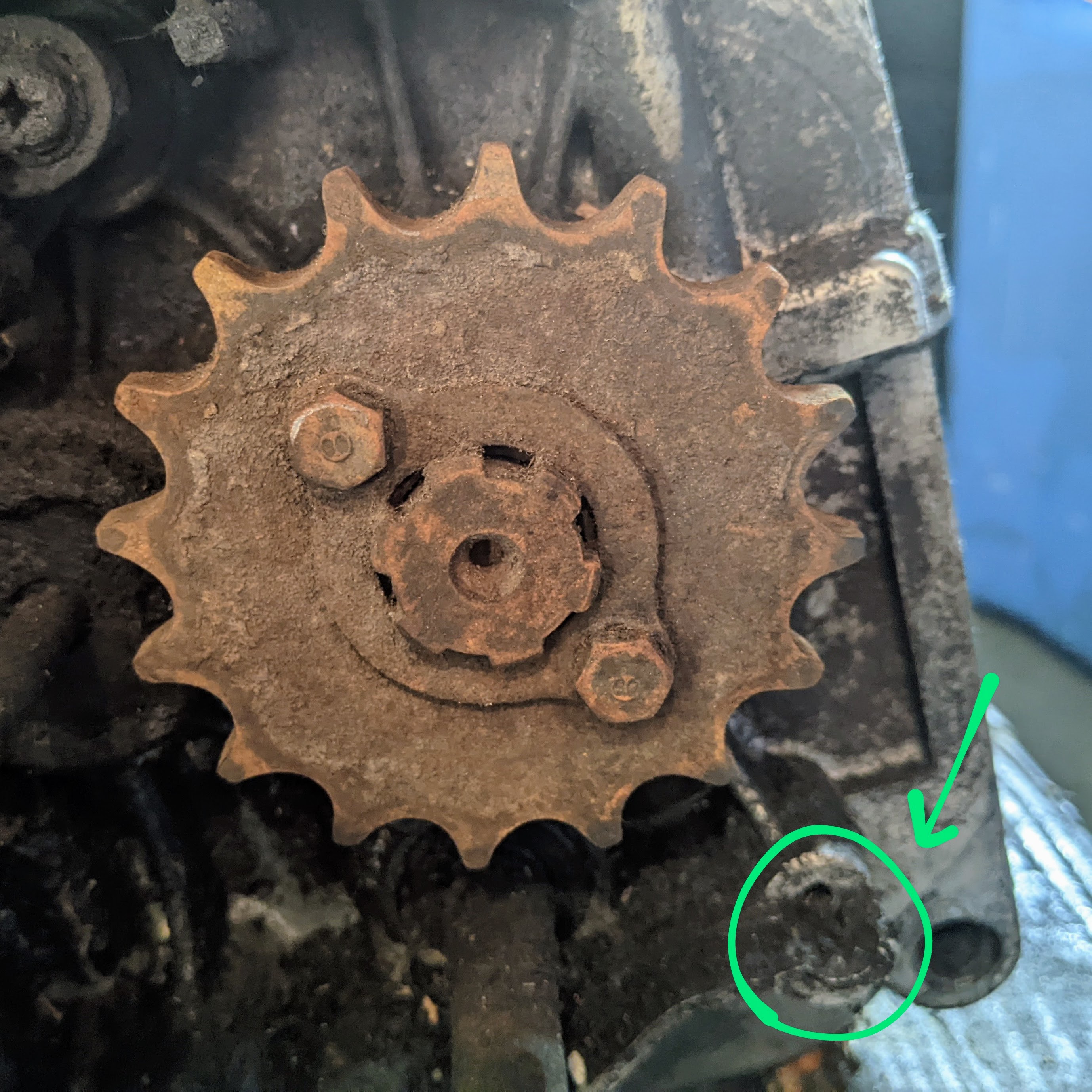
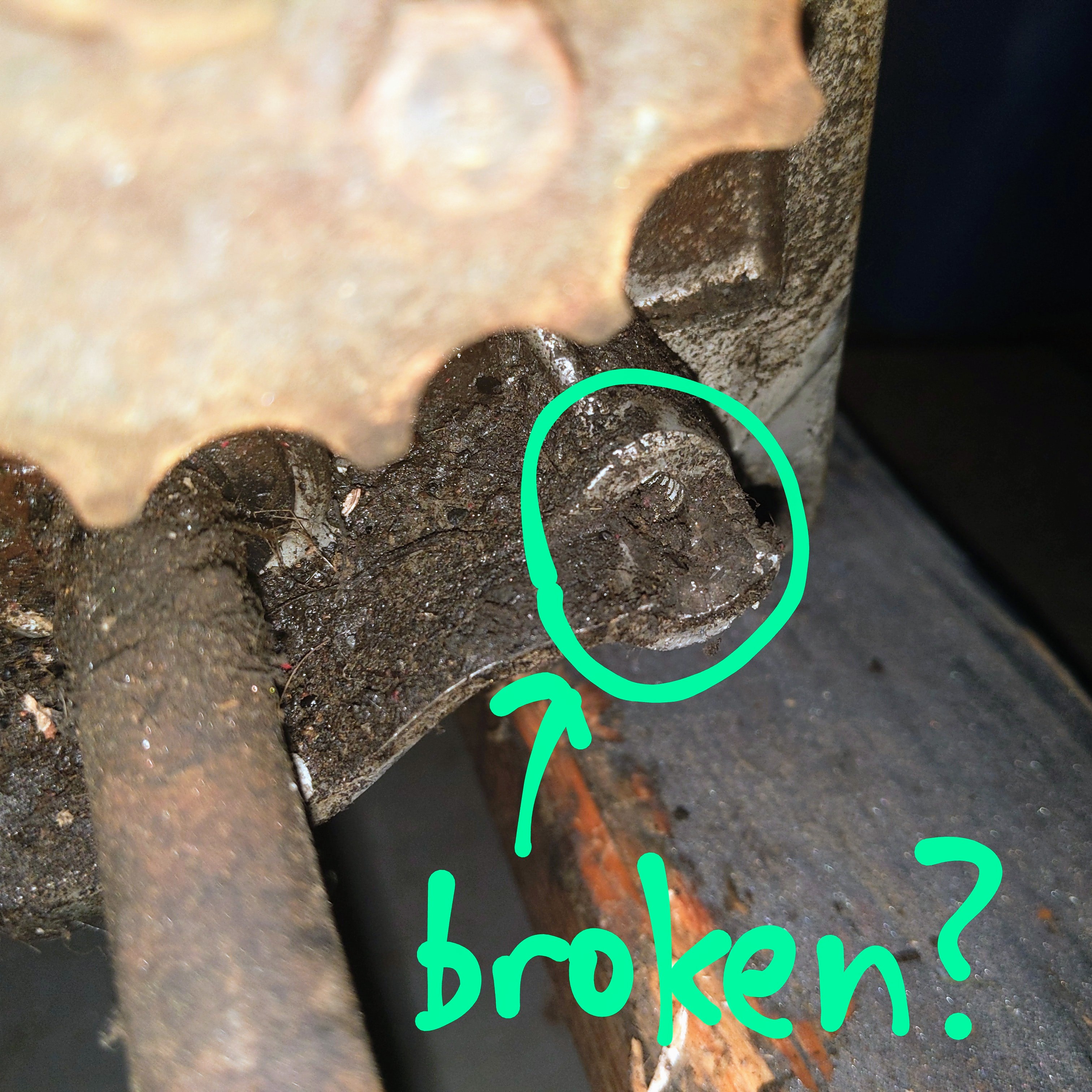
I tried, unsuccessfully, to free up the exhaust valve stems today with PB Blaster. They move, but get snagged by buildup on the stems as the valves try to close. I sprayed them from below while the valves were fully open, hoping some of the oil would be pulled up with the stem. I also sprayed oil from above and tapped gently on the valves. No luck. I will probably open up the top end fairly soon to have a look at the cam, pistons, and cylinders.

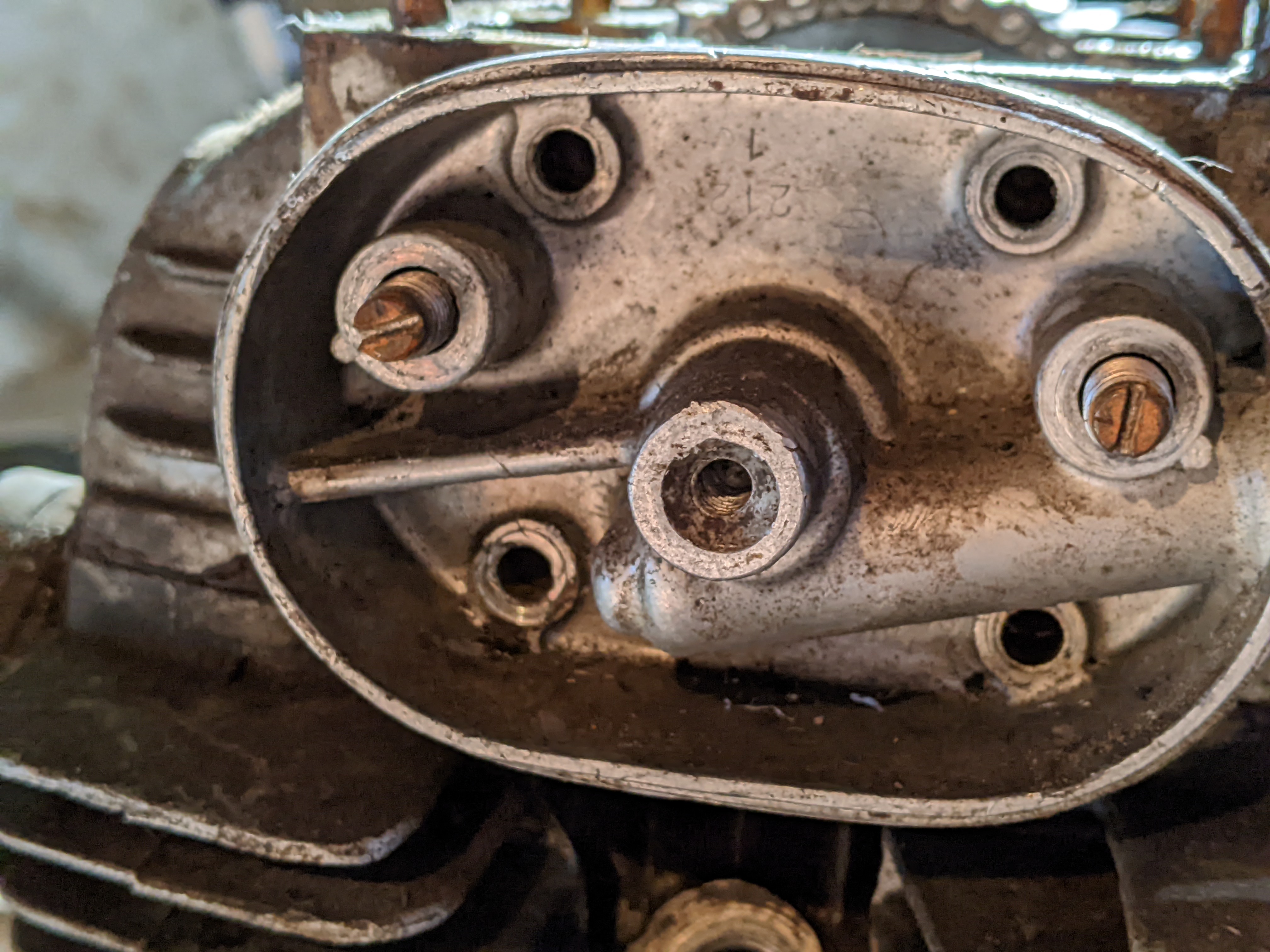
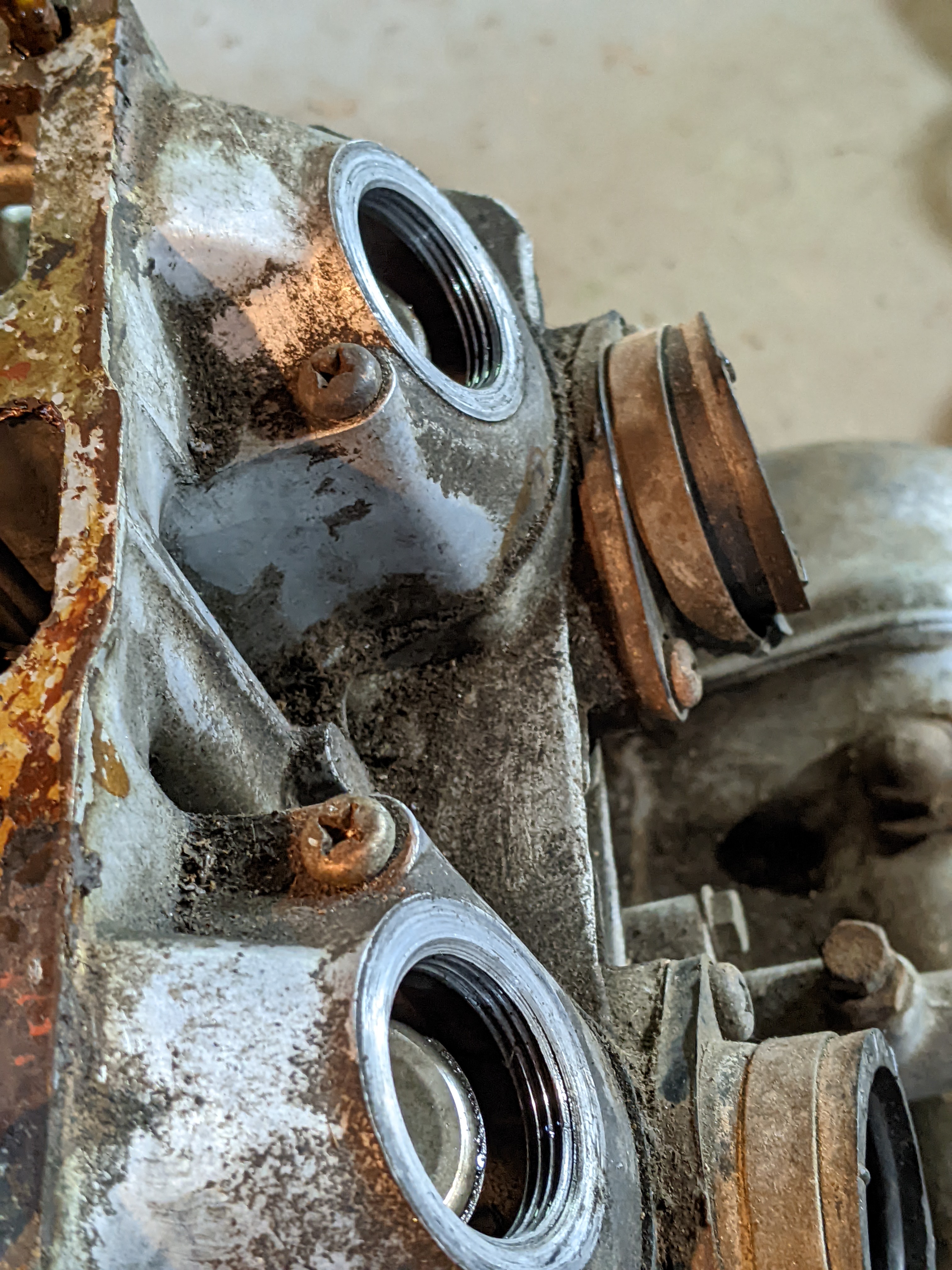
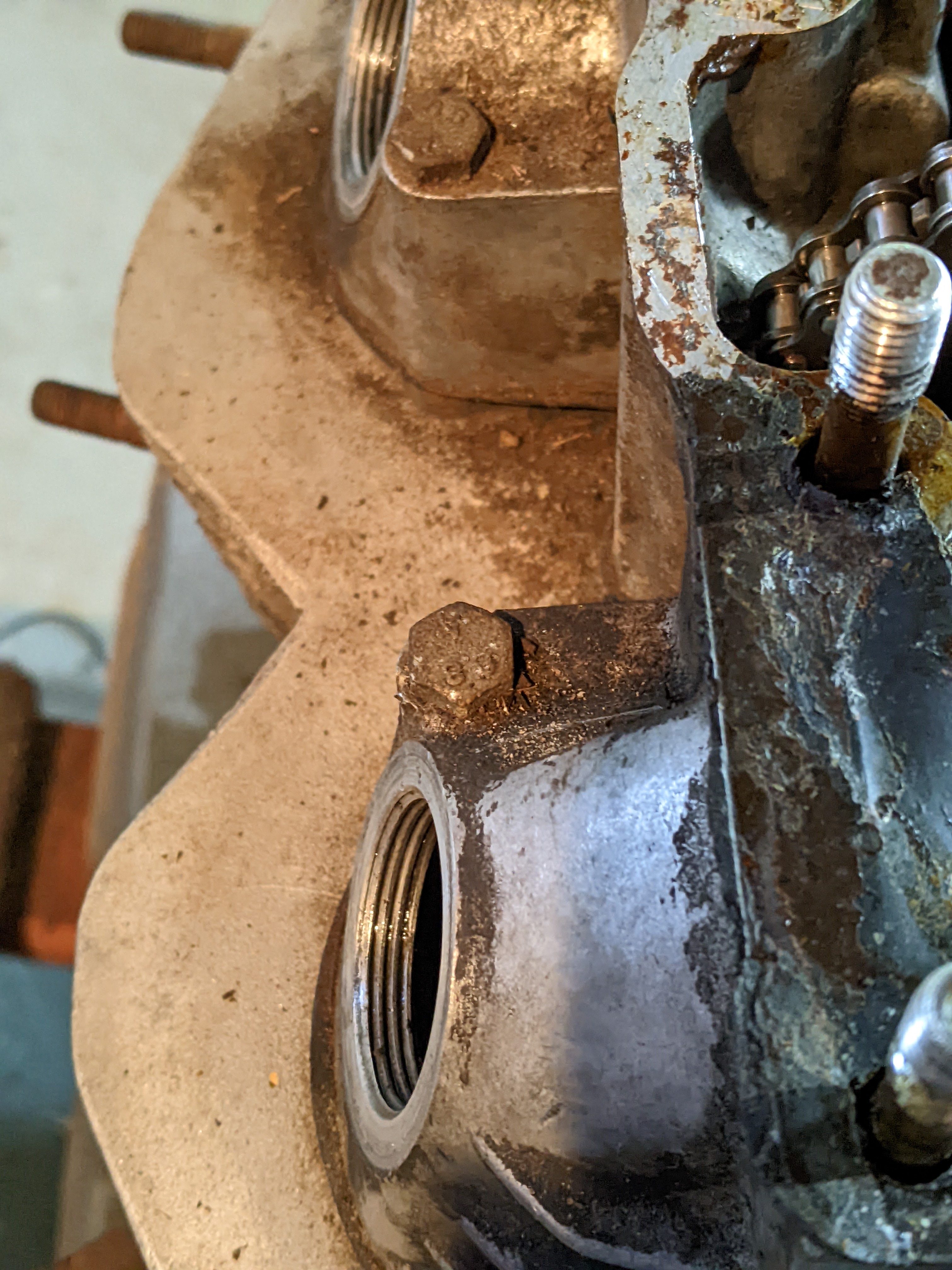
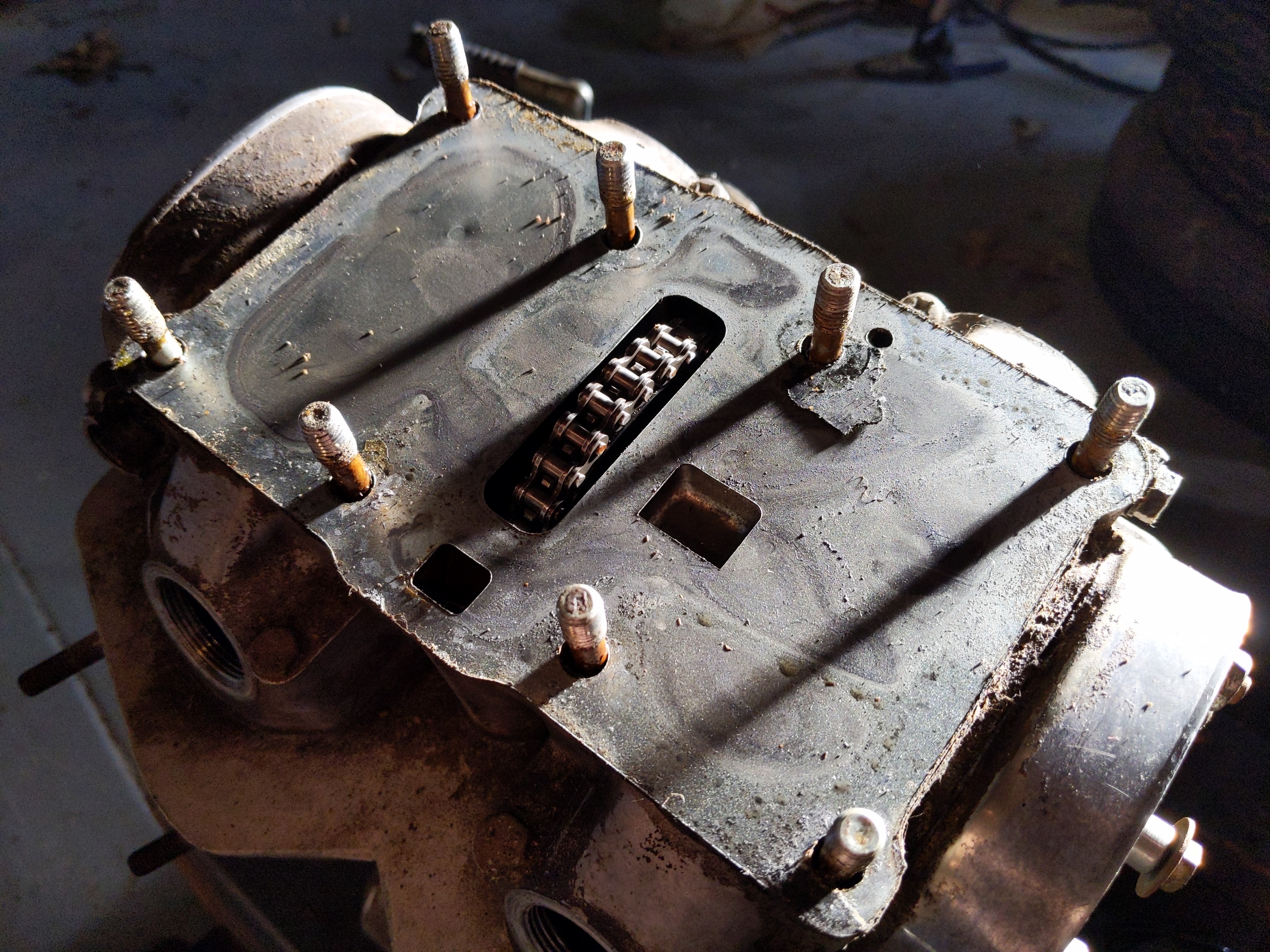
Do the pictures below show a damaged bolt/dowel pin hole?

ppBSQNA.jpg

eA7tiQ2.jpg
 
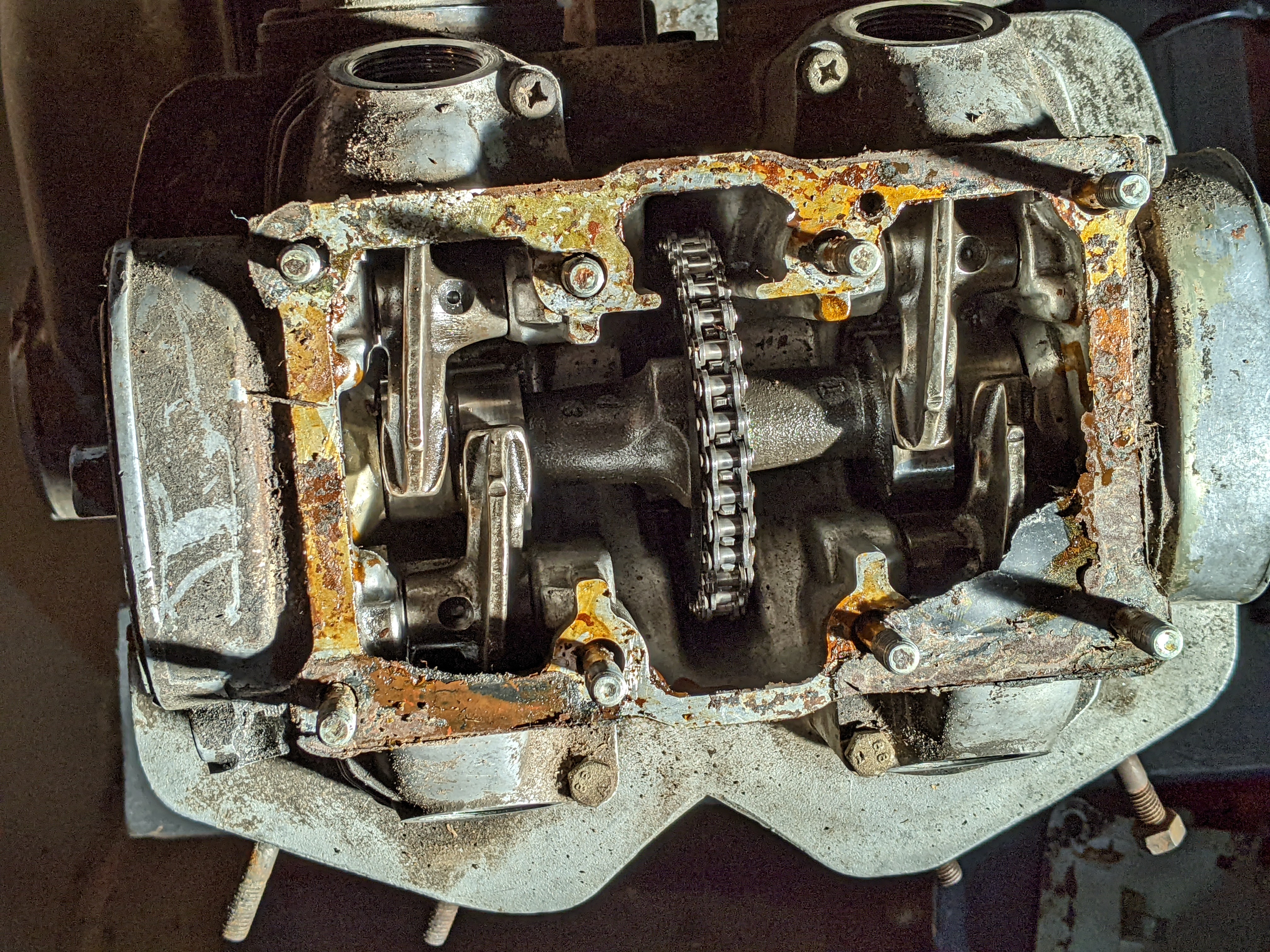
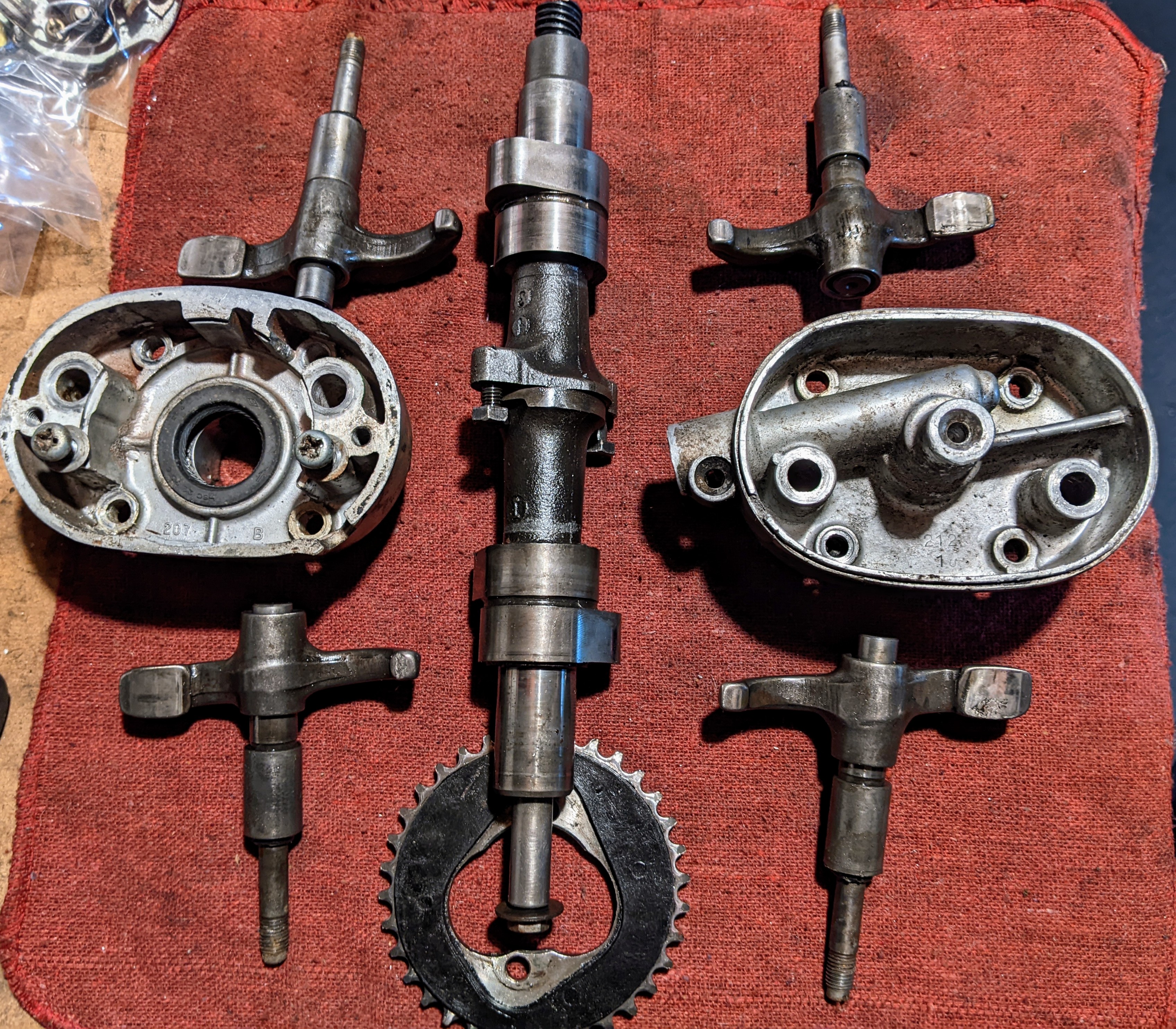
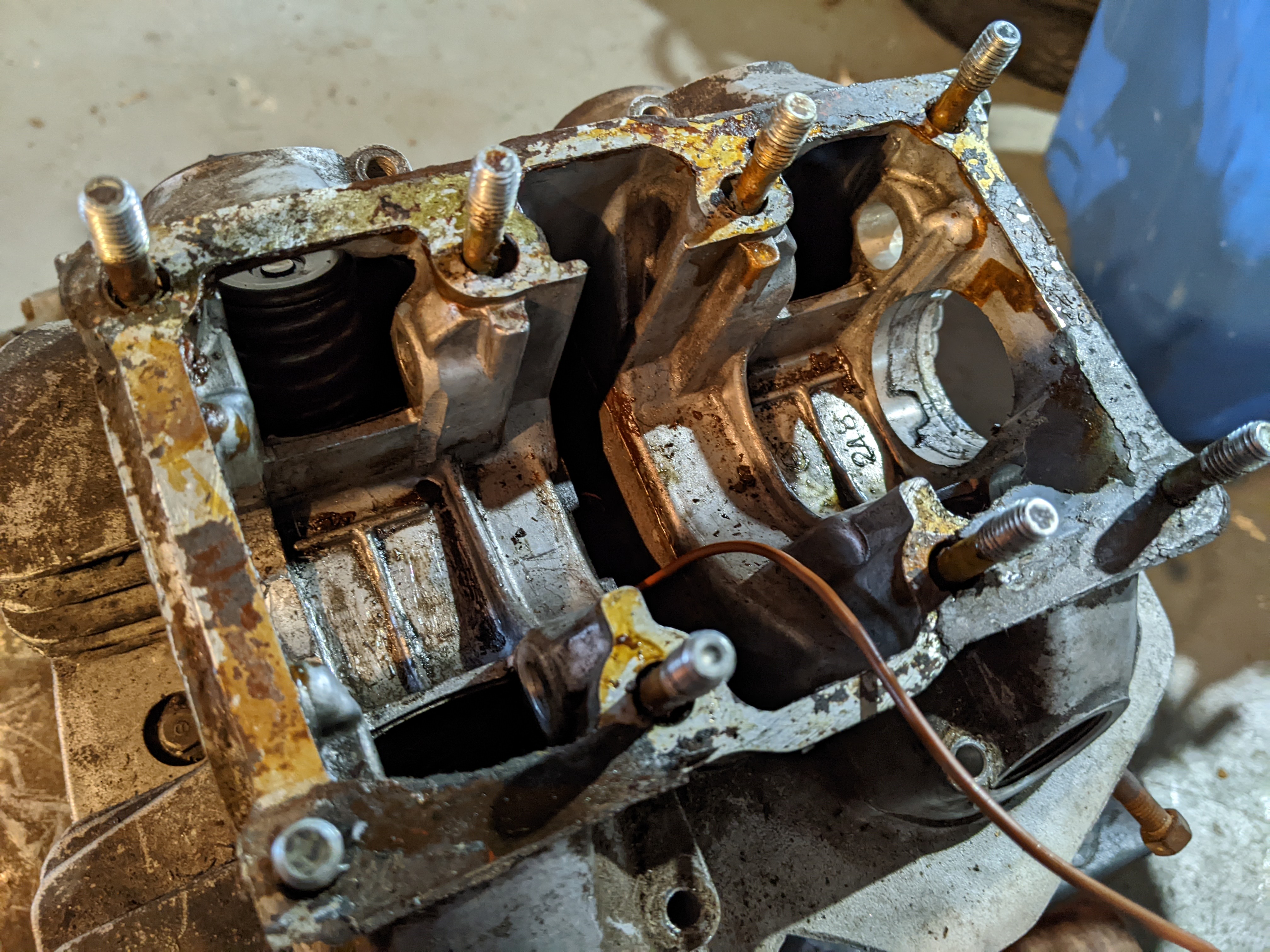
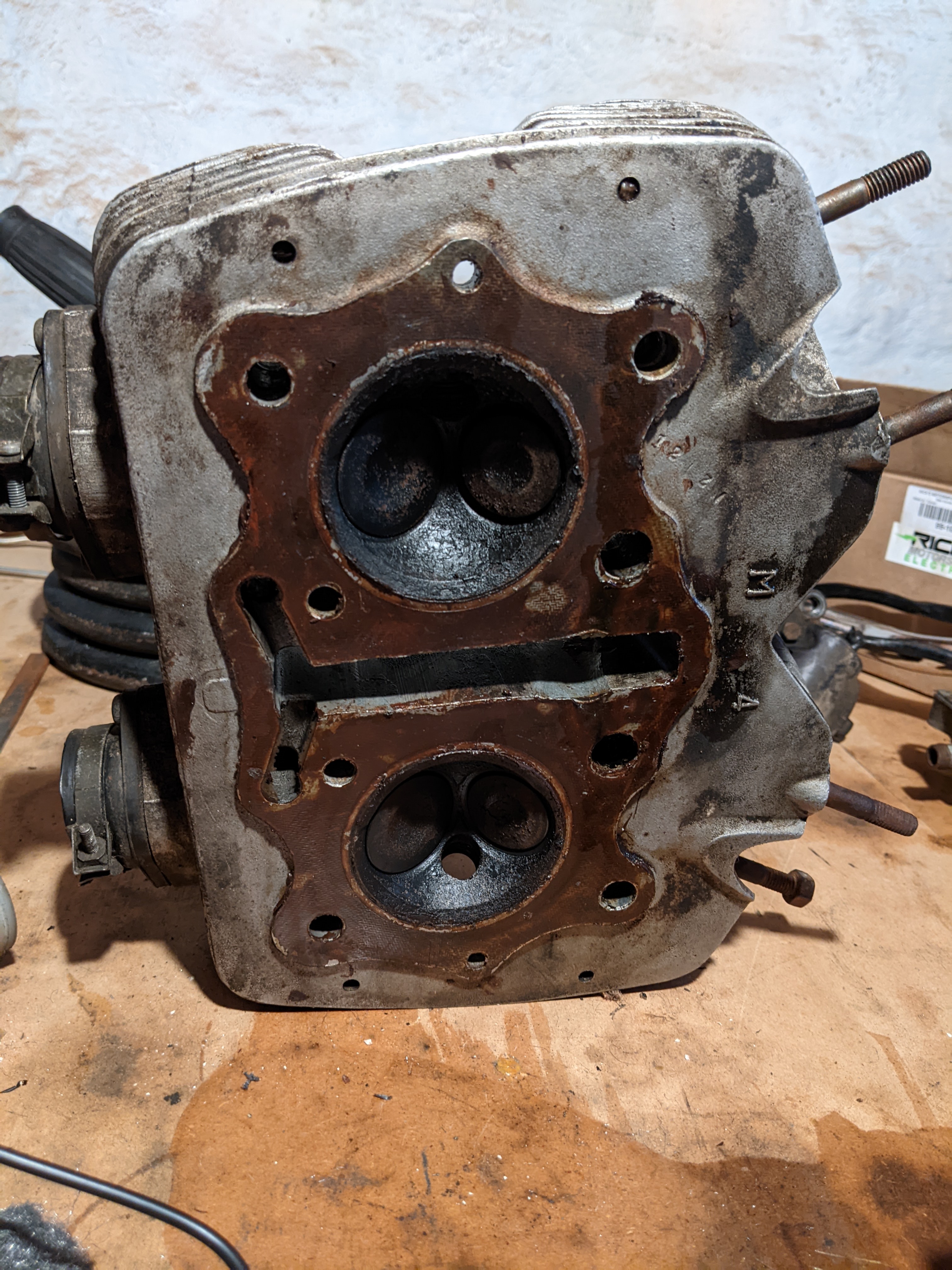
I took apart the top end tonight. More of the same, although now I can almost believe the bike was running at some point in the past.

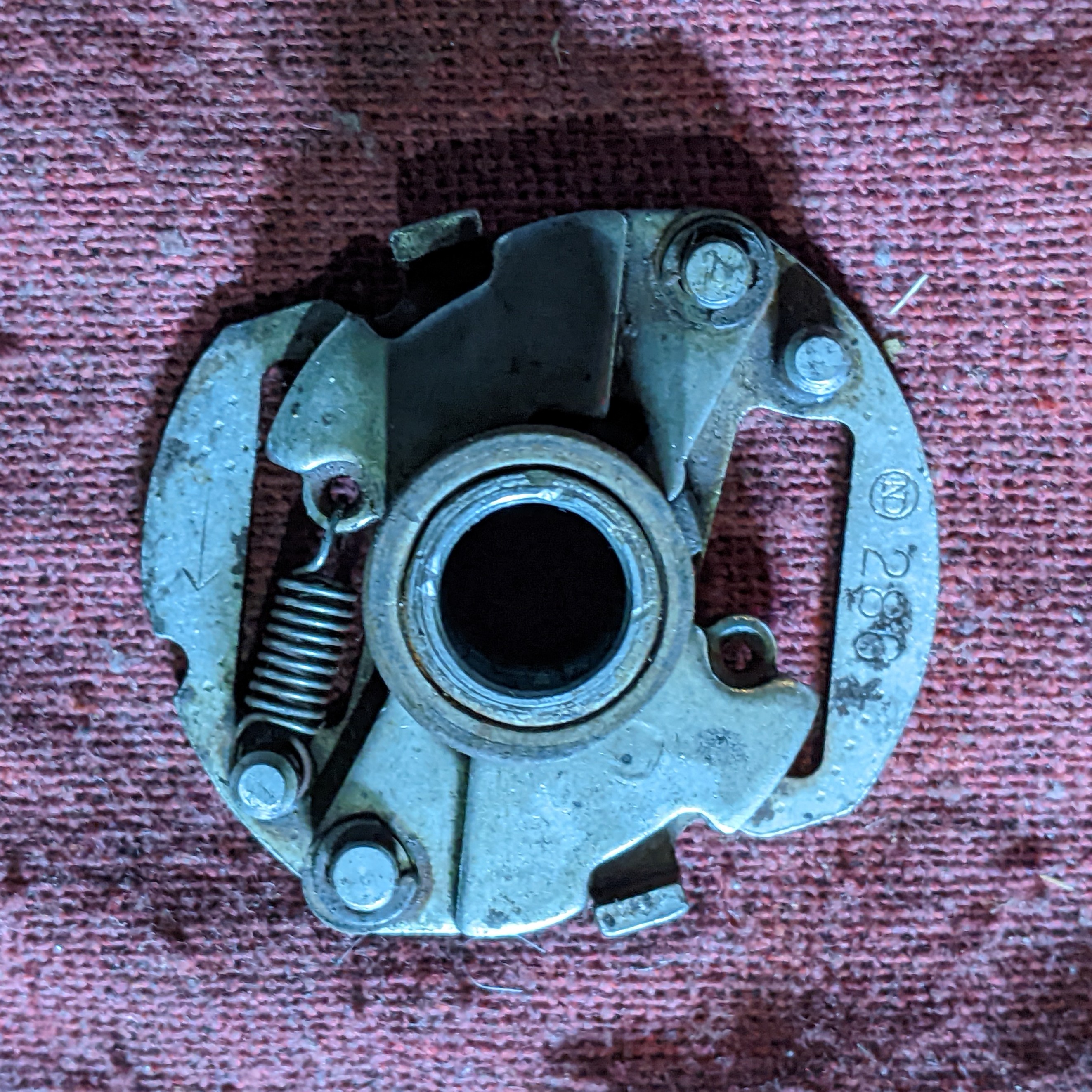
The advance is missing one spring.
0jy4PJp.jpg


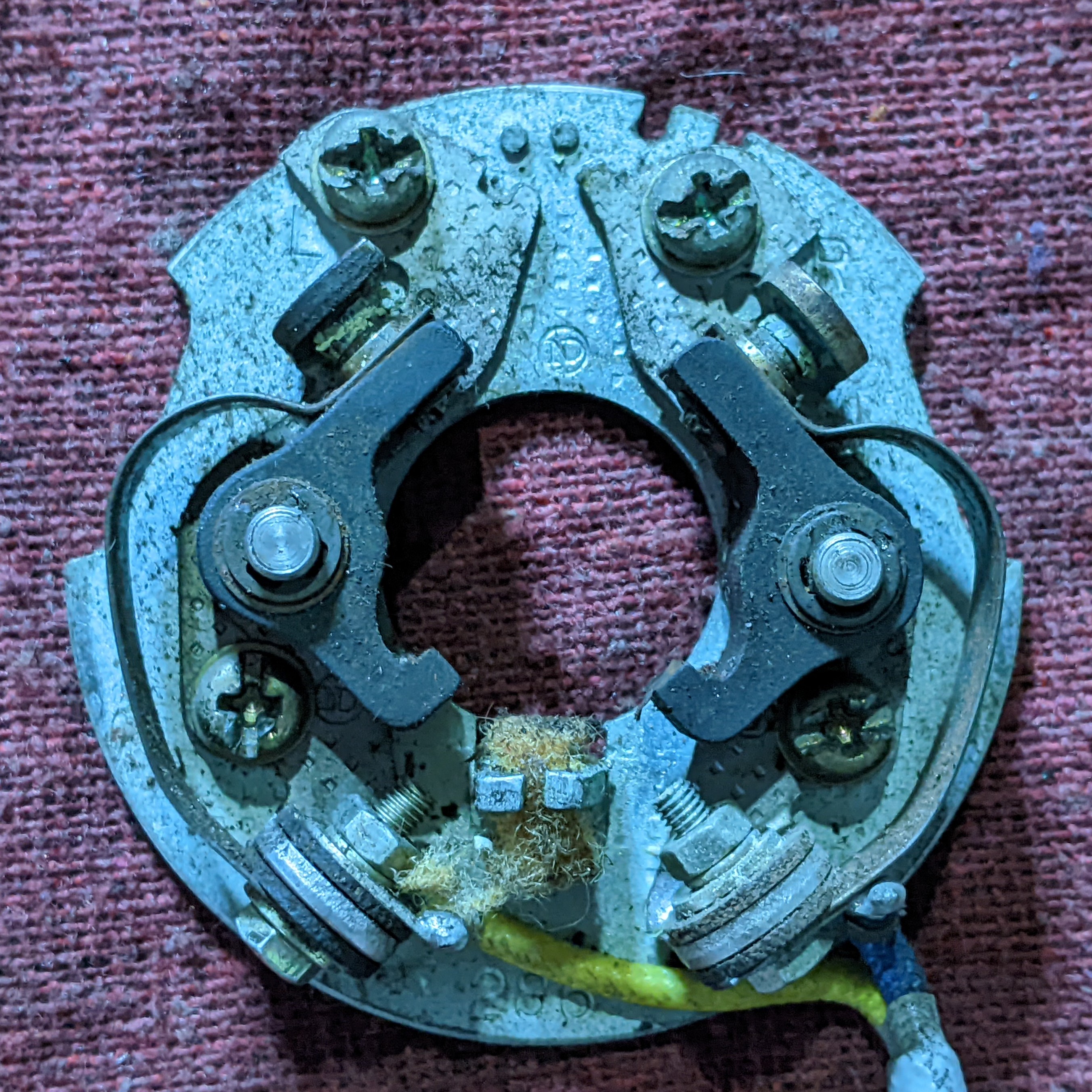
The timing plate looks like it was in pretty good shape when the bike was stored, although the points show a fair amount of corrosion.
T0FSy98.jpg


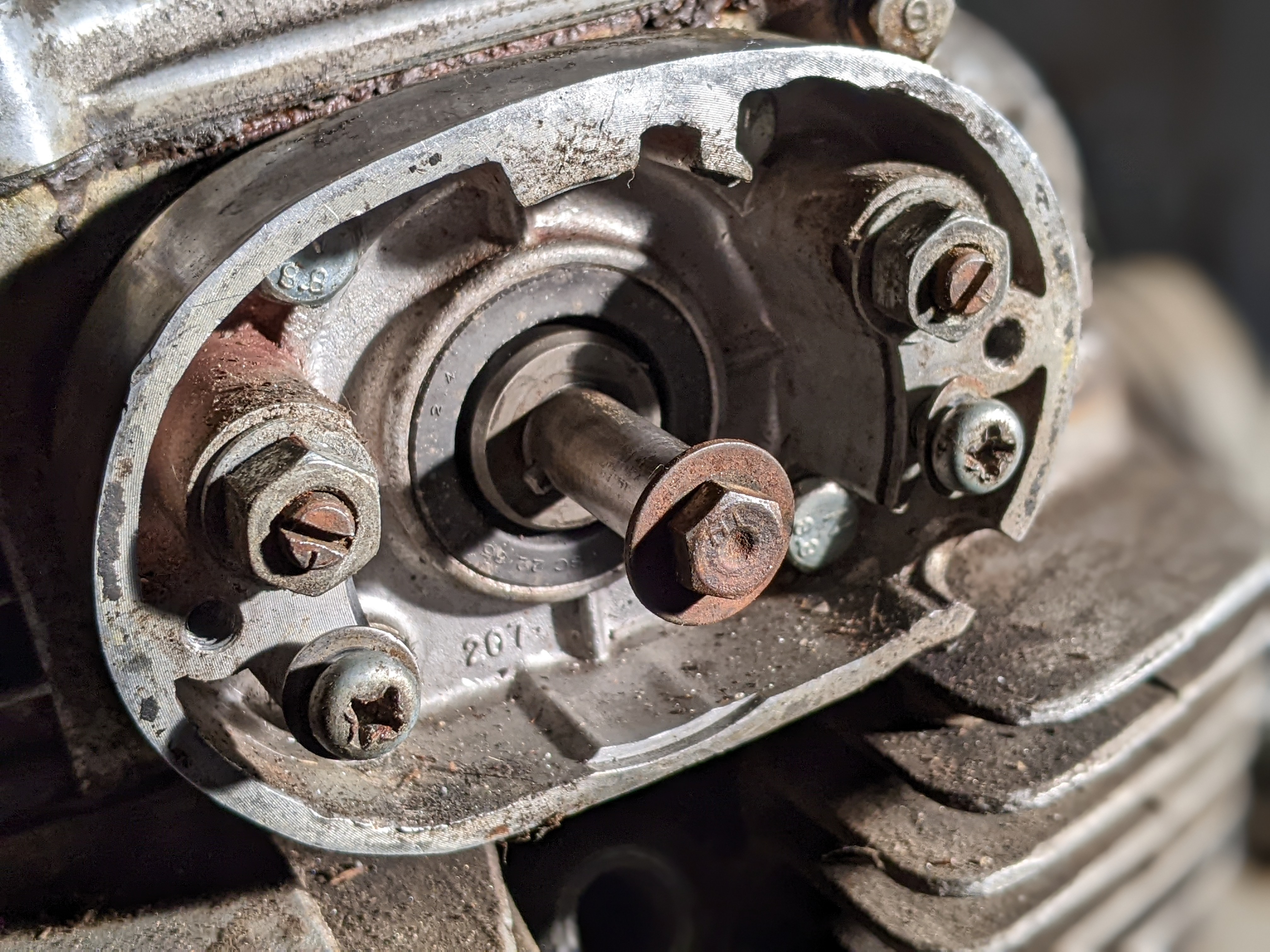
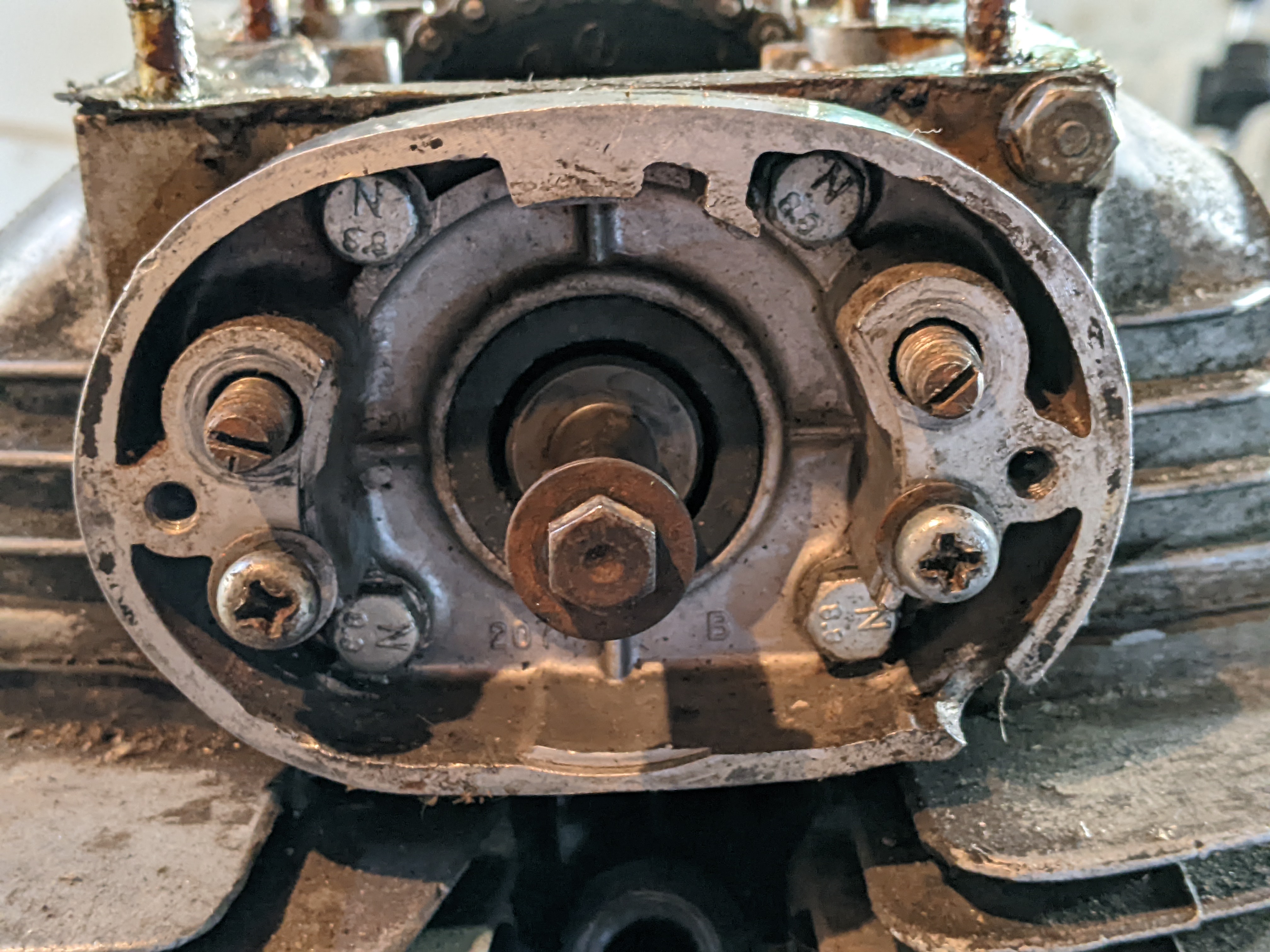
The left cover looks okay, but the JIS mounting bolts were replaced with hex bolts. Very difficult to get a socket on and I had to use a screw extractor on one of them. The right cover has a chip out where the tach cable goes in, so I'll need a replacement.
1wvxF1e.jpg

pWrXHsN.jpg

OkE7BRp.jpg
 
The valve cover bolts on the intake side were replaced at some point.
5G3BXVP.jpg


ZYVQbtf.jpg


lM0ebHx.jpg


cmQk7EH.jpg


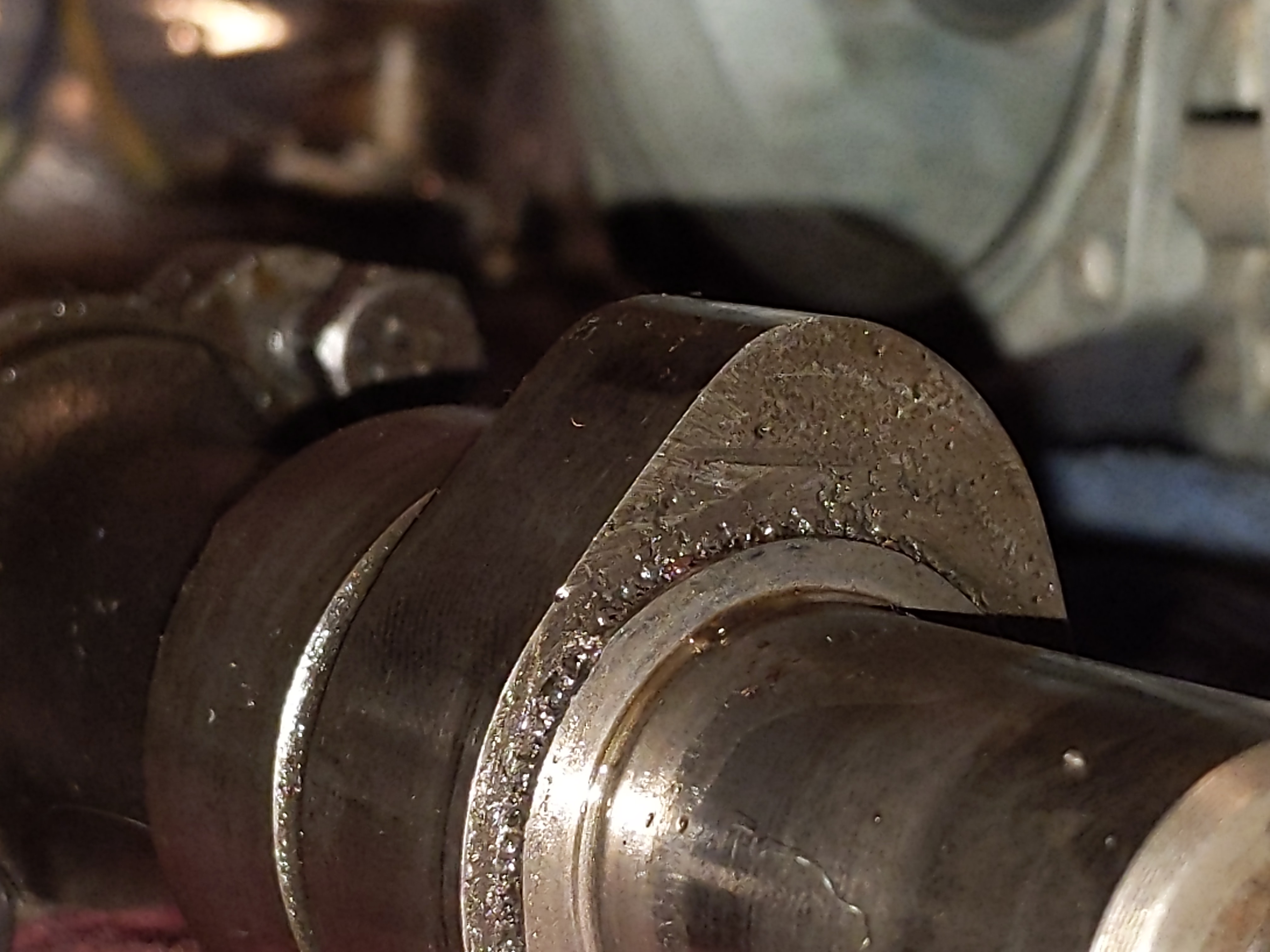
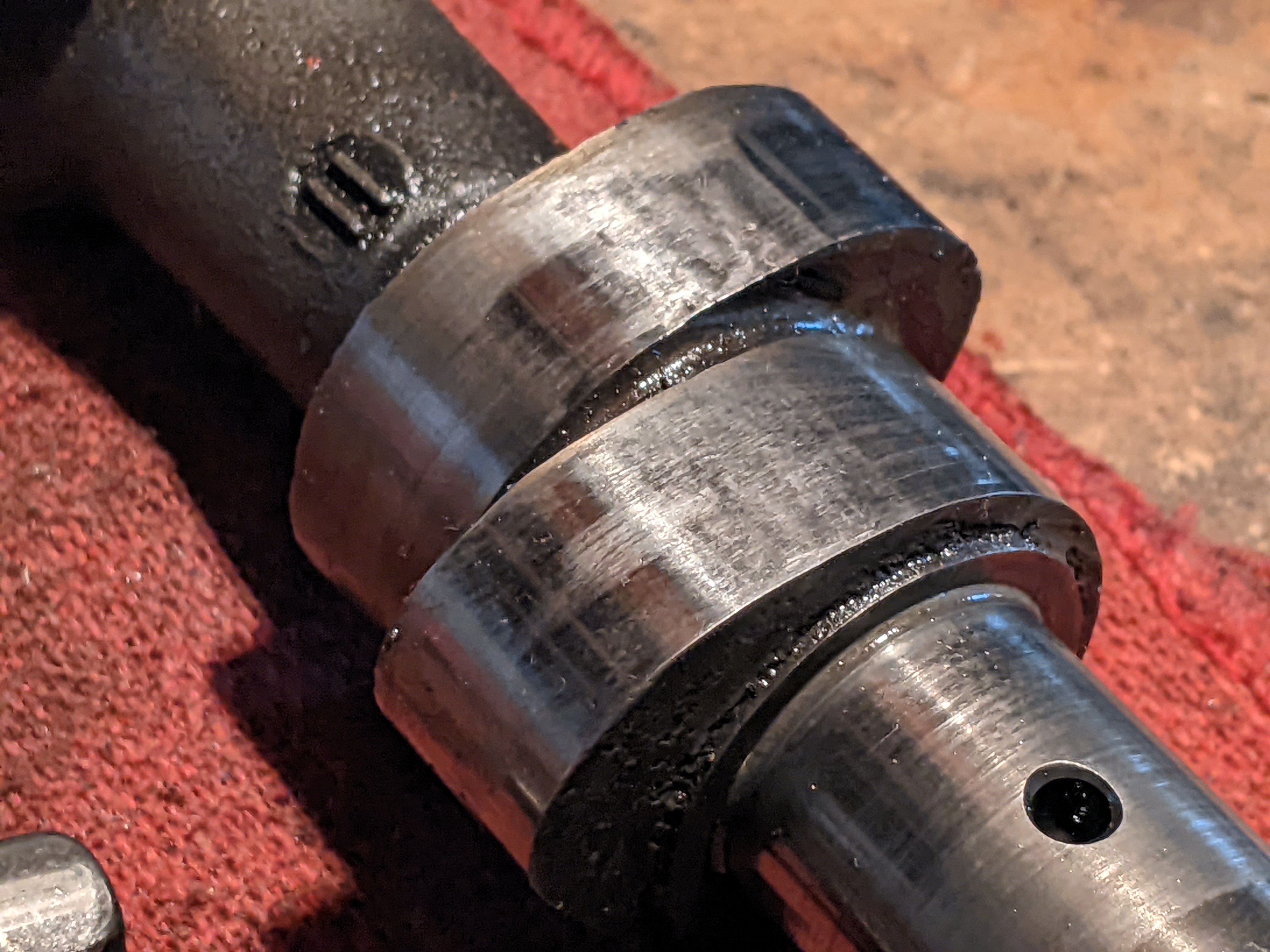
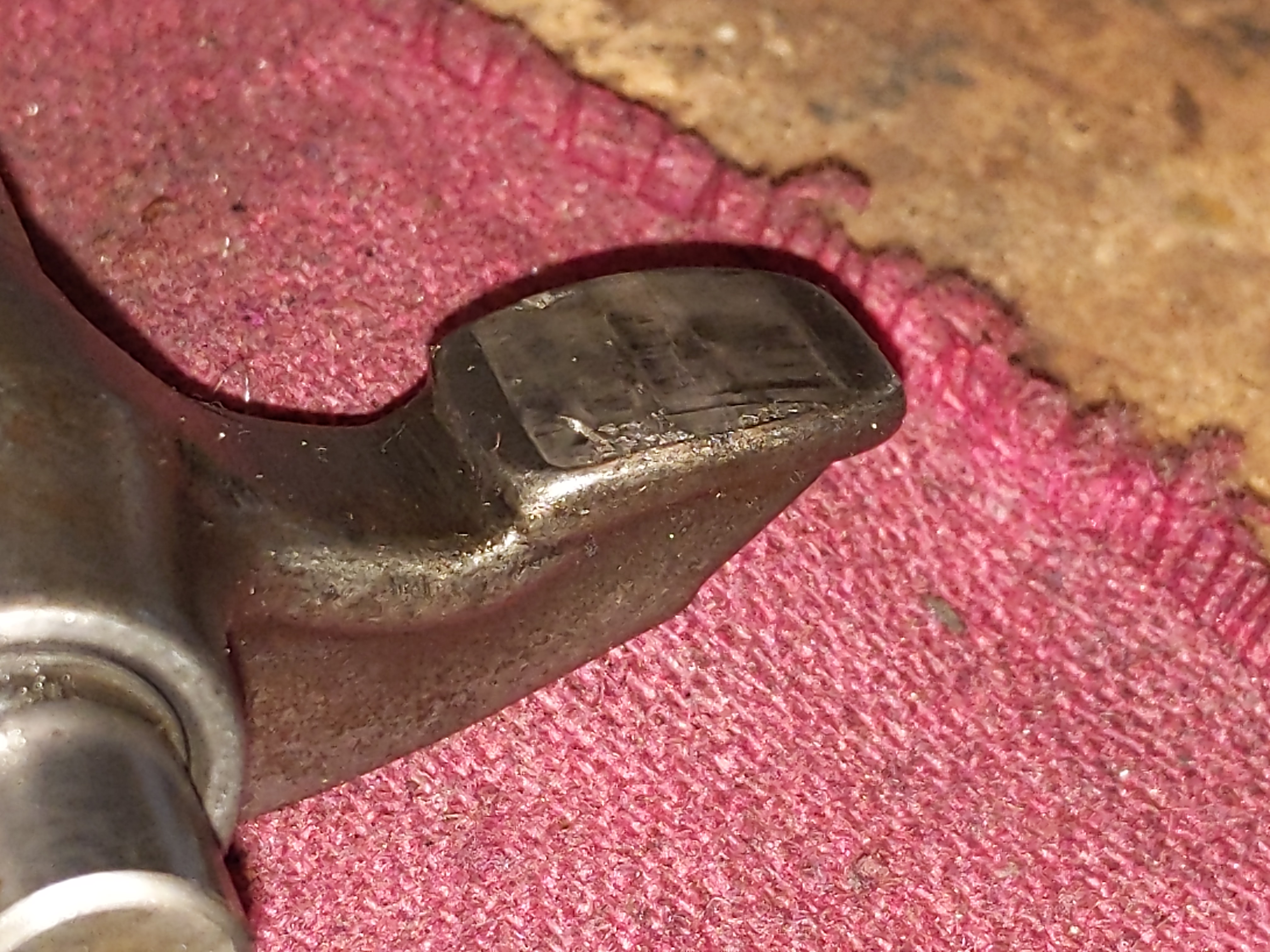
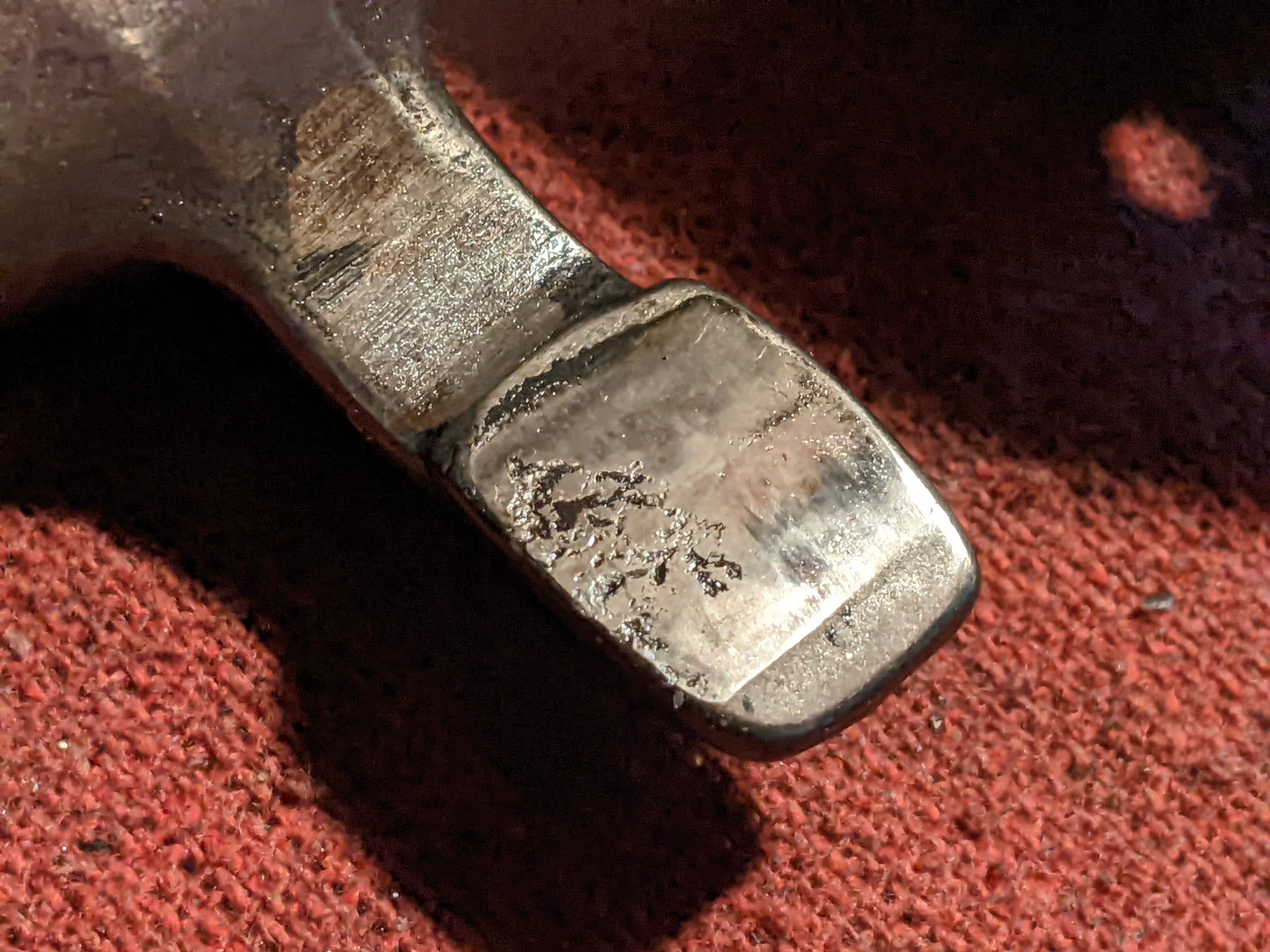
The followers on the intake side (right in the photo) seem heavily worn, with noticeable cupping on the right intake follower and some pitting on the left intake follower. One of the left cam lobes also seems to have some cupping in the front side of the lobe.
9ILV1rD.jpg

Wb1hsGK.jpg
 
Both exhaust valves are stuck open, but did move. Valves need to come out.
bHuPYRK.jpg


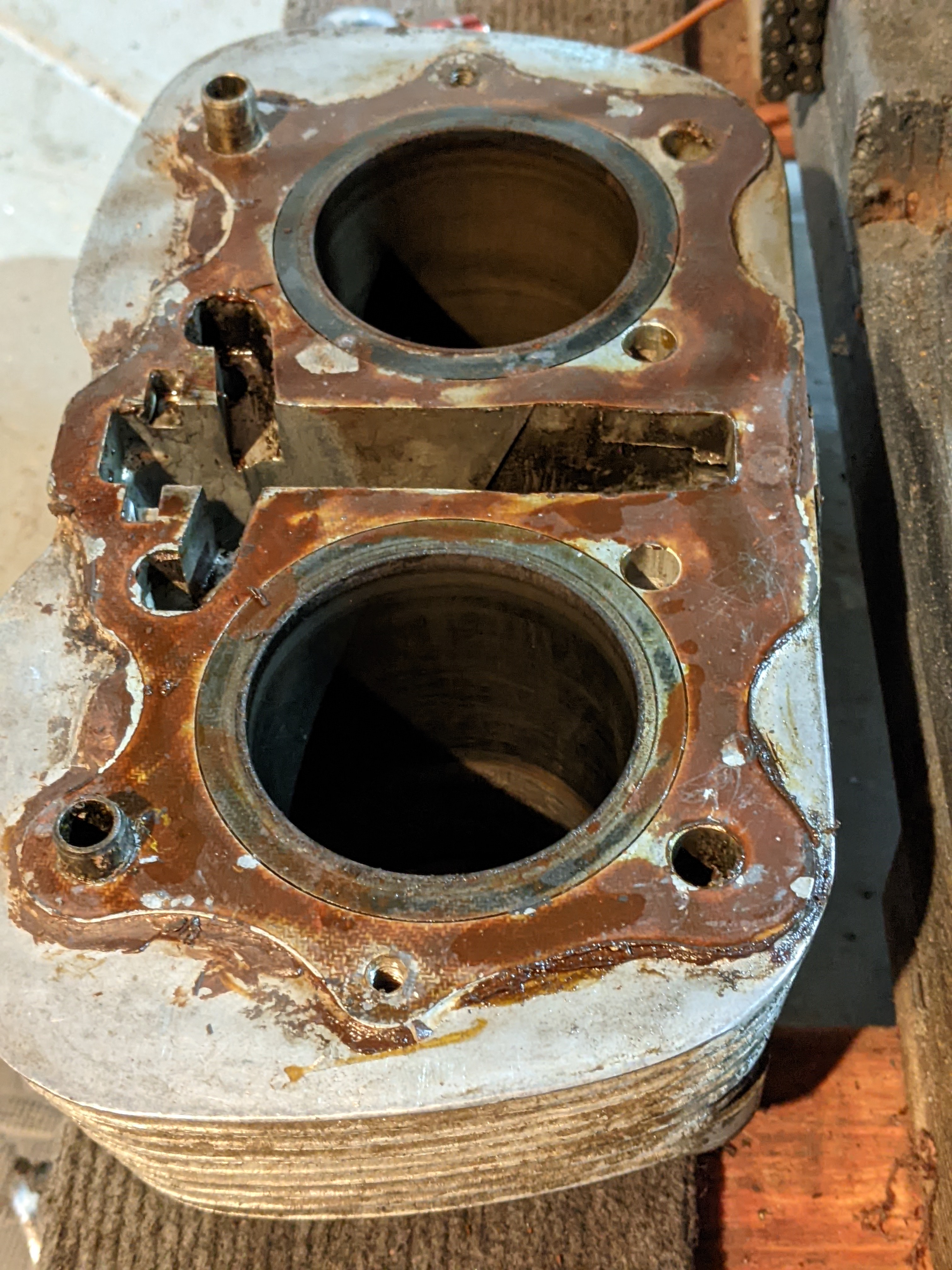
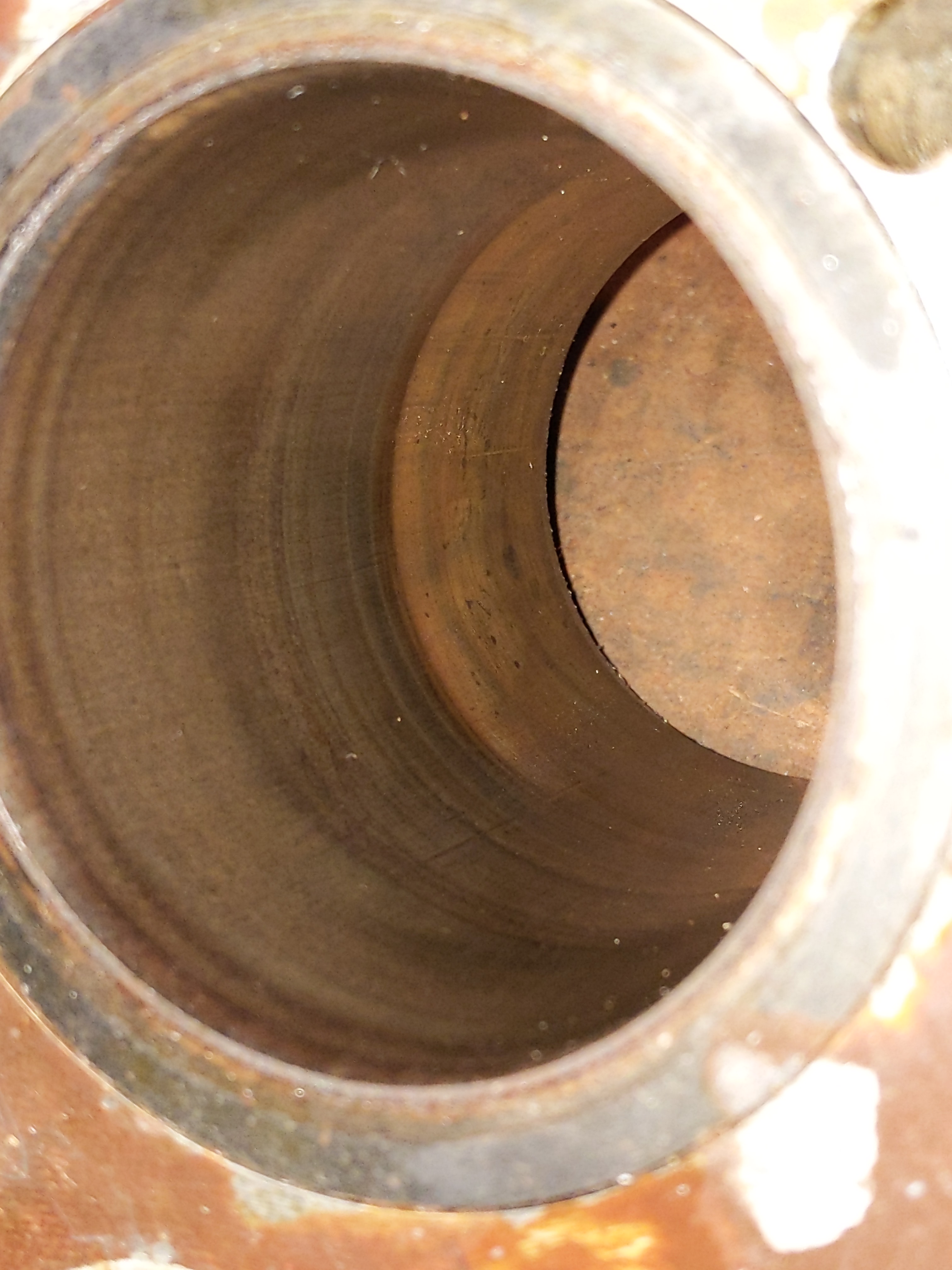
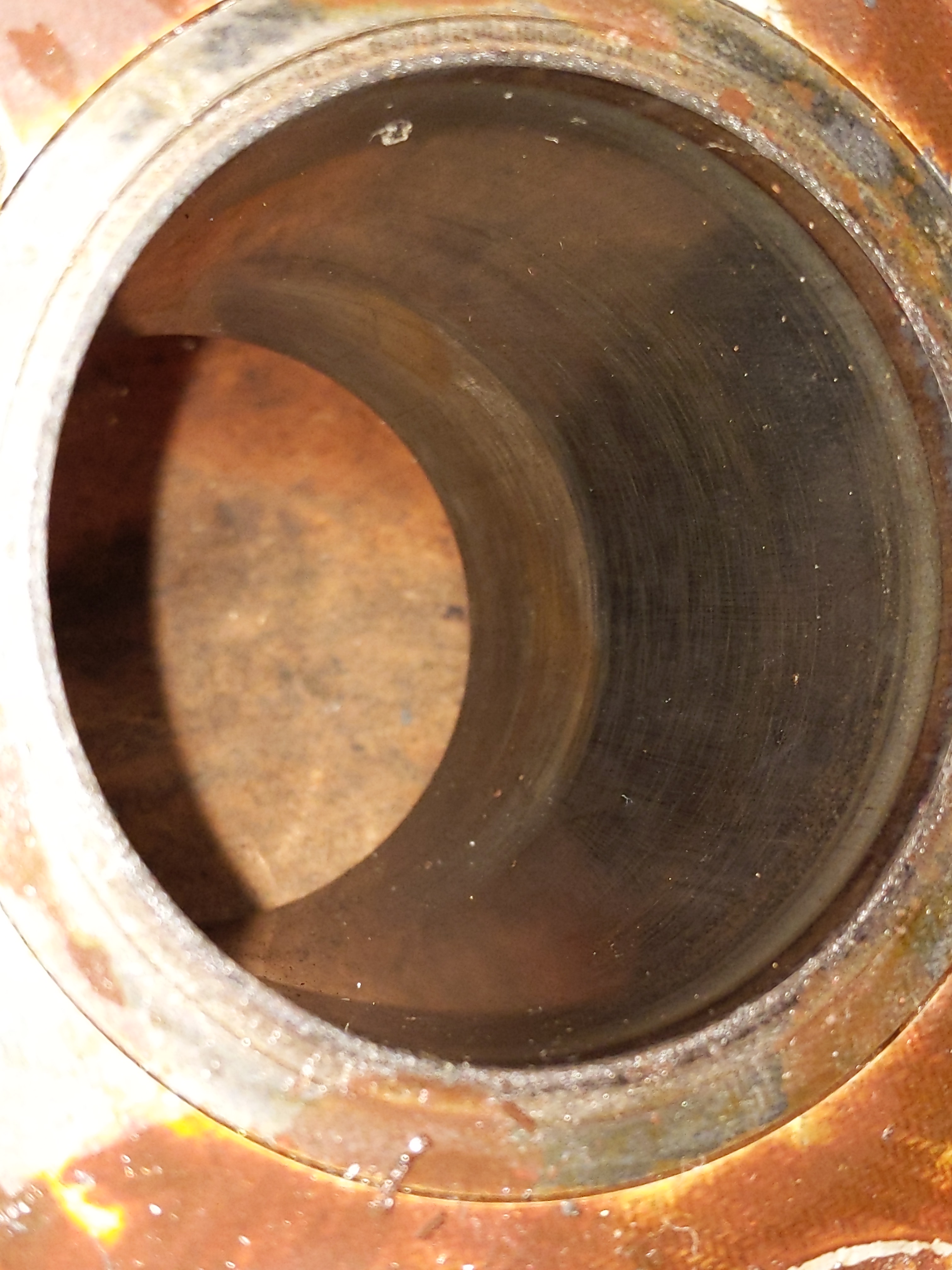
I expected the cylinders to be in worse condition than they actually are.
uP4ZuXX.jpg


I believe this is the left cylinder.
2exNBph.jpg


And that should make this the right cylinder.
ea0m6Gb.jpg


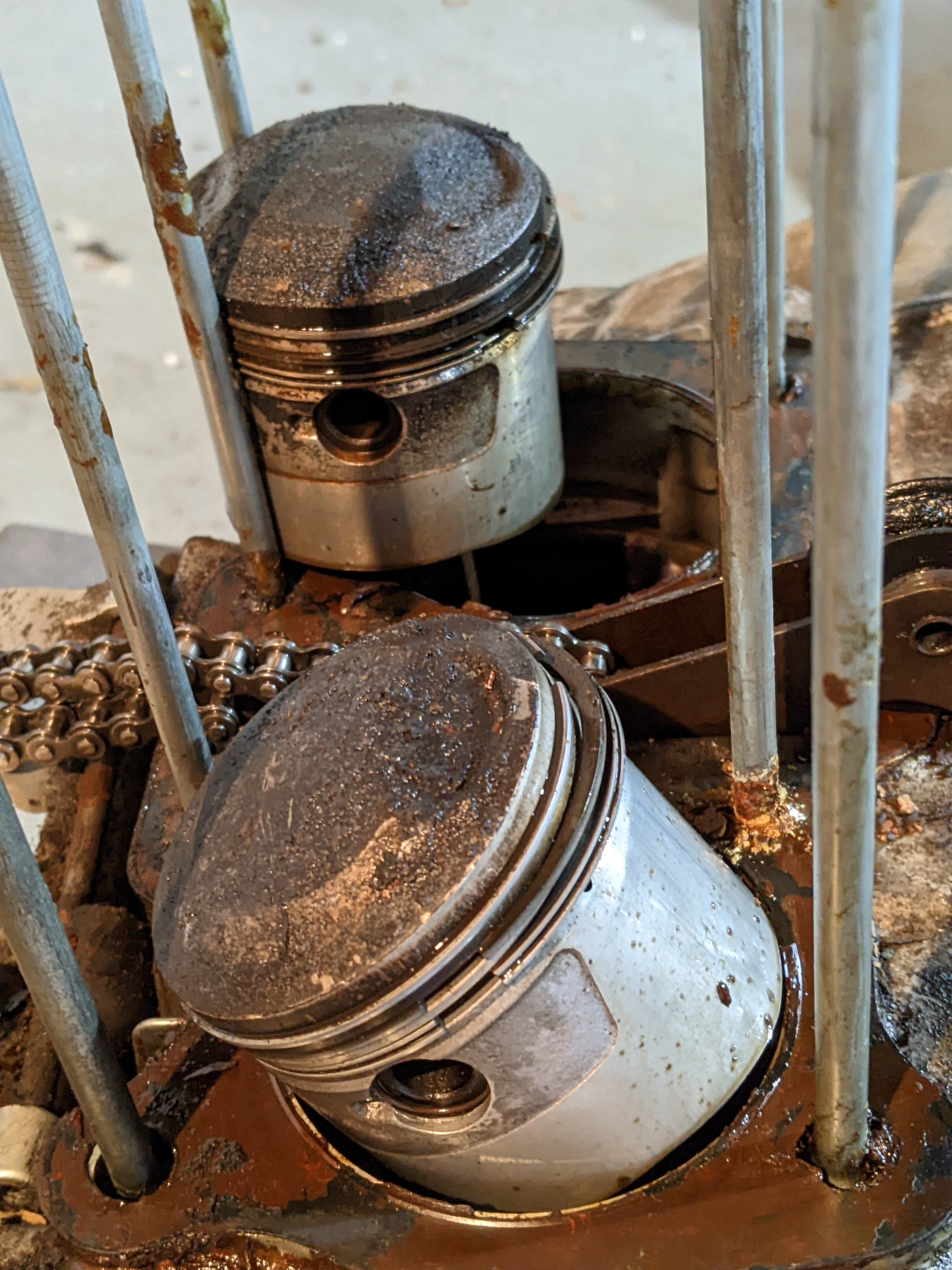
The pistons look extra grimy due to the PB Blaster I had been spraying in an attempt to free the exhaust valves up further. I don't see major scuffing or any big issues with the pistons at first glance.
20tKEJg.jpg
 
Great photos. I'm hoping you might catch a break when all is cleaned up and measuring begins.
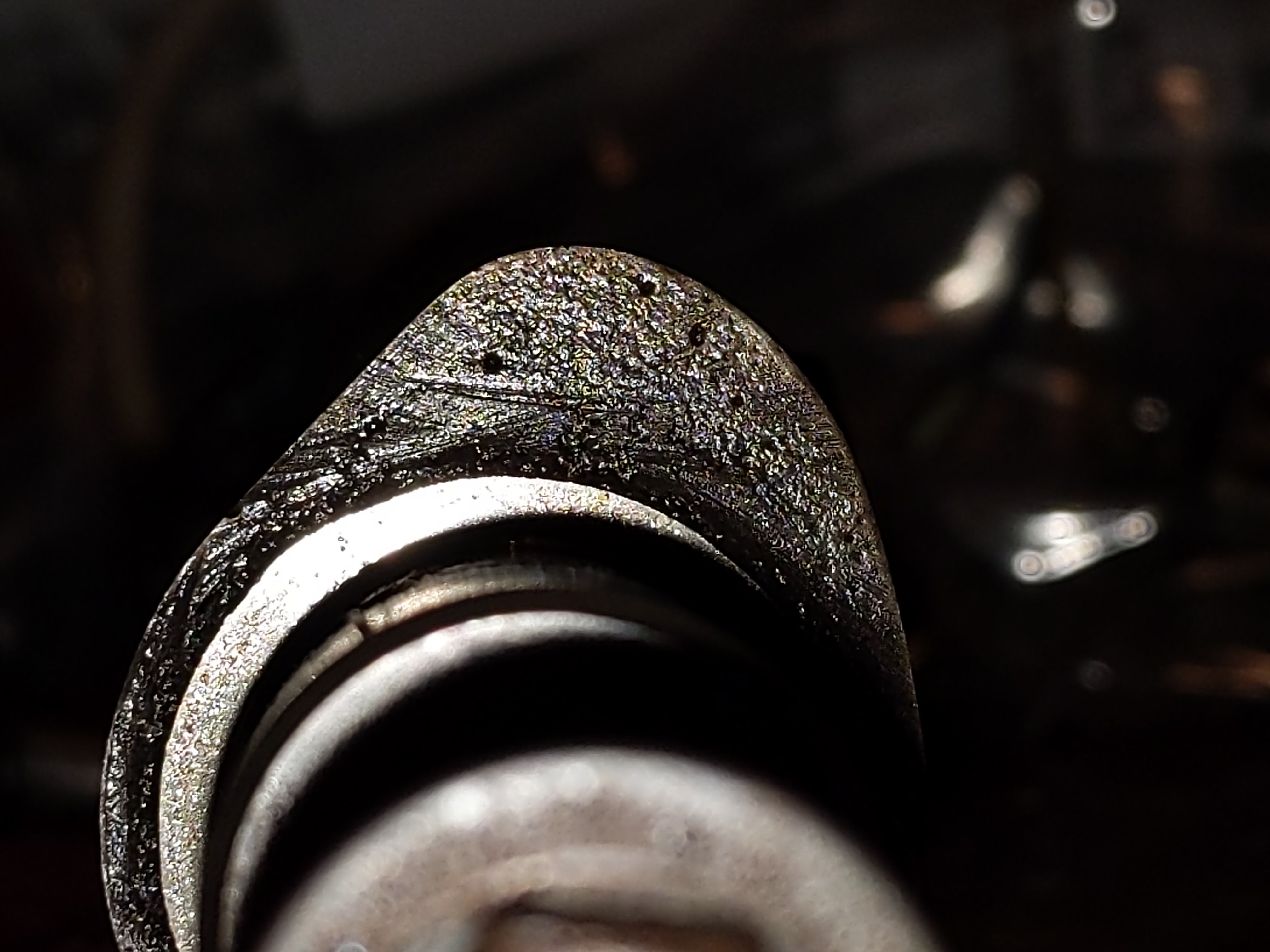
Thank you. It would definitely be nice if I could reuse some of the components. I'm concerned about the cam already, based on the visual inspection, but I don't have much experience with the measurement and evaluation of engine parts. That is definitely one area I'd like to grow through this project. In the past, I have done rebuilds to address low compression or known damage and crossed my fingers to a certain extent that parts I wasn't checking carefully would be serviceable.
 
The micrometer I have is too small to measure the cam diameter, so I plan to order a larger one. For the time being, I put my calipers on the cam and the end diameters are in the right ballpark at just under 22mm. However, I'm seeing a range from roughly 33mm to 39mm when I check each lobe. The FSM says the max diameter should be in the range 36.858-36.898mm. Am I missing something?

Left exhaust lobe: Seems to be cupped slightly on the front of the lobe.

66FN54u.jpg

sDWhrN4.jpg


9IIRVLO.jpg


There is definitely cupping on the right intake follower.

F309D1i.jpg


And here is a closeup of the left intake follower, showing some pitting.

foSHJJc.jpg
 
Yep, fairly typical wear for a 350 cam. Looks like it was run low on oil, maybe with really dirty oil or just run hard when cold without a decent warmup, but the scuffing on the lobes and the cupping of the rocker arm shouldn't be there of course. The pitting is just a fact of long term wear for these cams, seems they all do it eventually. Fortunately it seems we have new choices for the repairs on these thanks to Jim's efforts so you should be able to get them fixed.

excellent pictures BTW
 
Yep, fairly typical wear for a 350 cam. Looks like it was run low on oil, maybe with really dirty oil or just run hard when cold without a decent warmup, but the scuffing on the lobes and the cupping of the rocker arm shouldn't be there of course. The pitting is just a fact of long term wear for these cams, seems they all do it eventually. Fortunately it seems we have new choices for the repairs on these thanks to Jim's efforts so you should be able to get them fixed.

excellent pictures BTW

Thanks, Tom. Do you have any idea why I'm seeing a larger lobe diameter than the FSM suggests I should find?
 
Thanks, Tom. Do you have any idea why I'm seeing a larger lobe diameter than the FSM suggests I should find?

No I don't, and I'm not nearly as familiar with the 350 as I am the 450. The cam doesn't look to have been welded up and reground either, at least from what I can see in the pics. As with so many things we find in these old FSMs, it could simply be a typo. Did you compare those specs to another FSM for the 350? We have more than a few versions in the library, might find one to be different.
 
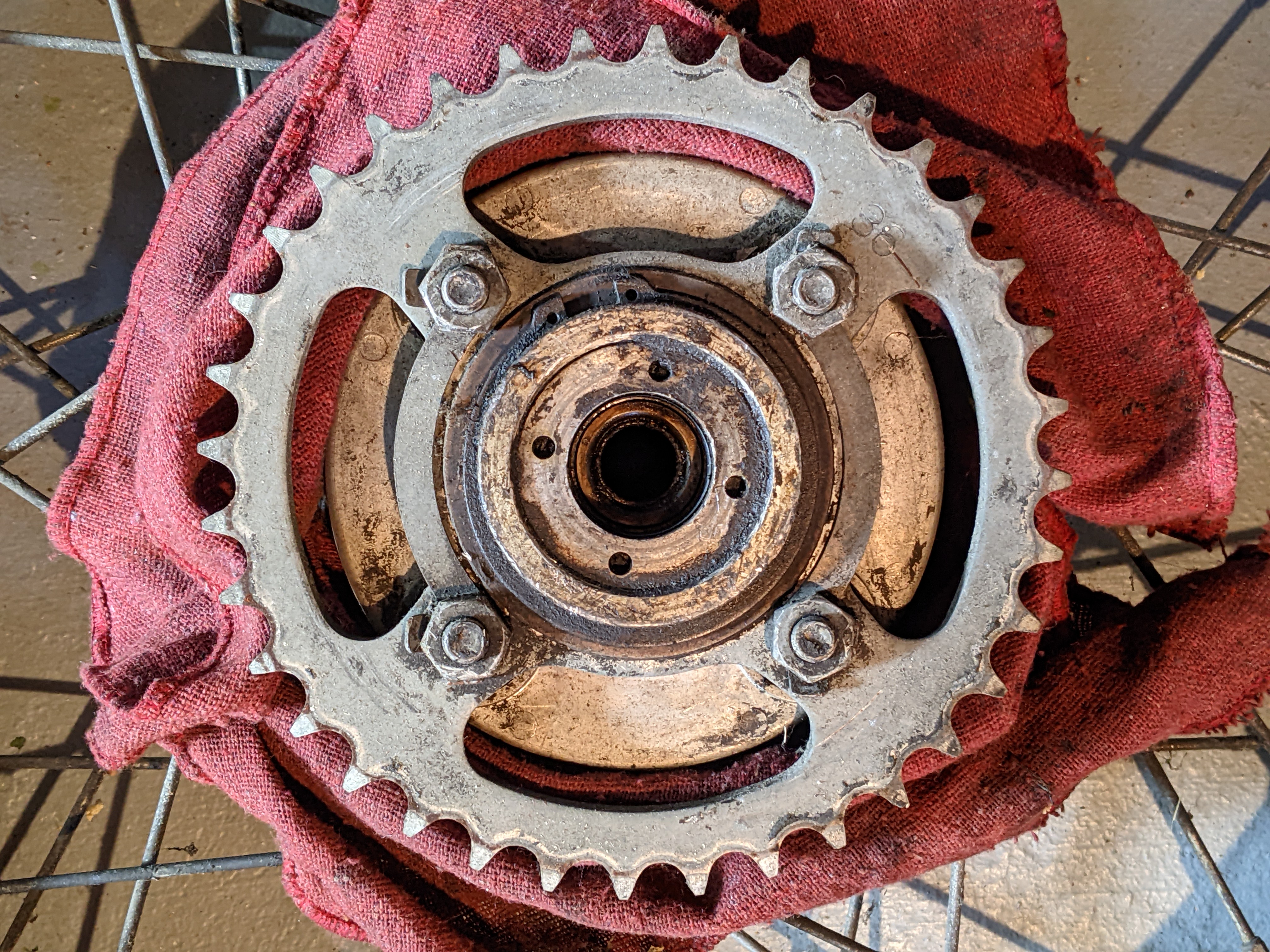
(quote)"The PO didn't seem to know how to use the lock tabs on the rear sprocket (36T).

rqXGCJE.jpg


"
Actually, those tabs are correctly installed, the tabs that line up with the flats on the nuts are folded over. That sprocket doesn't look too bad, compared to the rest of the machine.
 
No I don't, and I'm not nearly as familiar with the 350 as I am the 450. The cam doesn't look to have been welded up and reground either, at least from what I can see in the pics. As with so many things we find in these old FSMs, it could simply be a typo. Did you compare those specs to another FSM for the 350? We have more than a few versions in the library, might find one to be different.

After a little research it looks like the FSM is giving the early fat cam dimensions, whereas this K3 has the skinny cam. Now to track down the correct spec for it...
 
Actually, those tabs are correctly installed, the tabs that line up with the flats on the nuts are folded over. That sprocket doesn't look too bad, compared to the rest of the machine.
You're right -- my bad. I didn't see the folded tabs when reviewing the picture. I'll have to chalk one back on the board for the PO.
 
I happen (according to my Excel overview) to have an FSM of the CB250/CB350, CL250/CL350, SL350 (K0-K5) printed in sept. 1976, which FSM are you using ?
 
I happen (according to my Excel overview) to have an FSM of the CB250/CB350, CL250/CL350, SL350 (K0-K5) printed in sept. 1976, which FSM are you using ?

The only date I see easily is 1974 on the front cover (lower left), so 1976 should be an improvement.

I managed to find another electronic version of the FSM online. This one describes the base circle diameter as well as the lift, while the previous only spoke of the cam lobe diameter.
 
Are you going to proceed with this bike ? If so, I happen to have some stuff for the 350T, p/n 286, and according to my list I have a cam sprocket and 8 rockers.
list.jpg
 
Are you going to proceed with this bike ? If so, I happen to have some stuff for the 350T, p/n 286, and according to my list I have a cam sprocket and 8 rockers.

This is still to be determined based on the title paperwork, but I hope to know in the next couple of weeks. I will definitely share the result here and can reach out by PM when I know one way or the other.
 
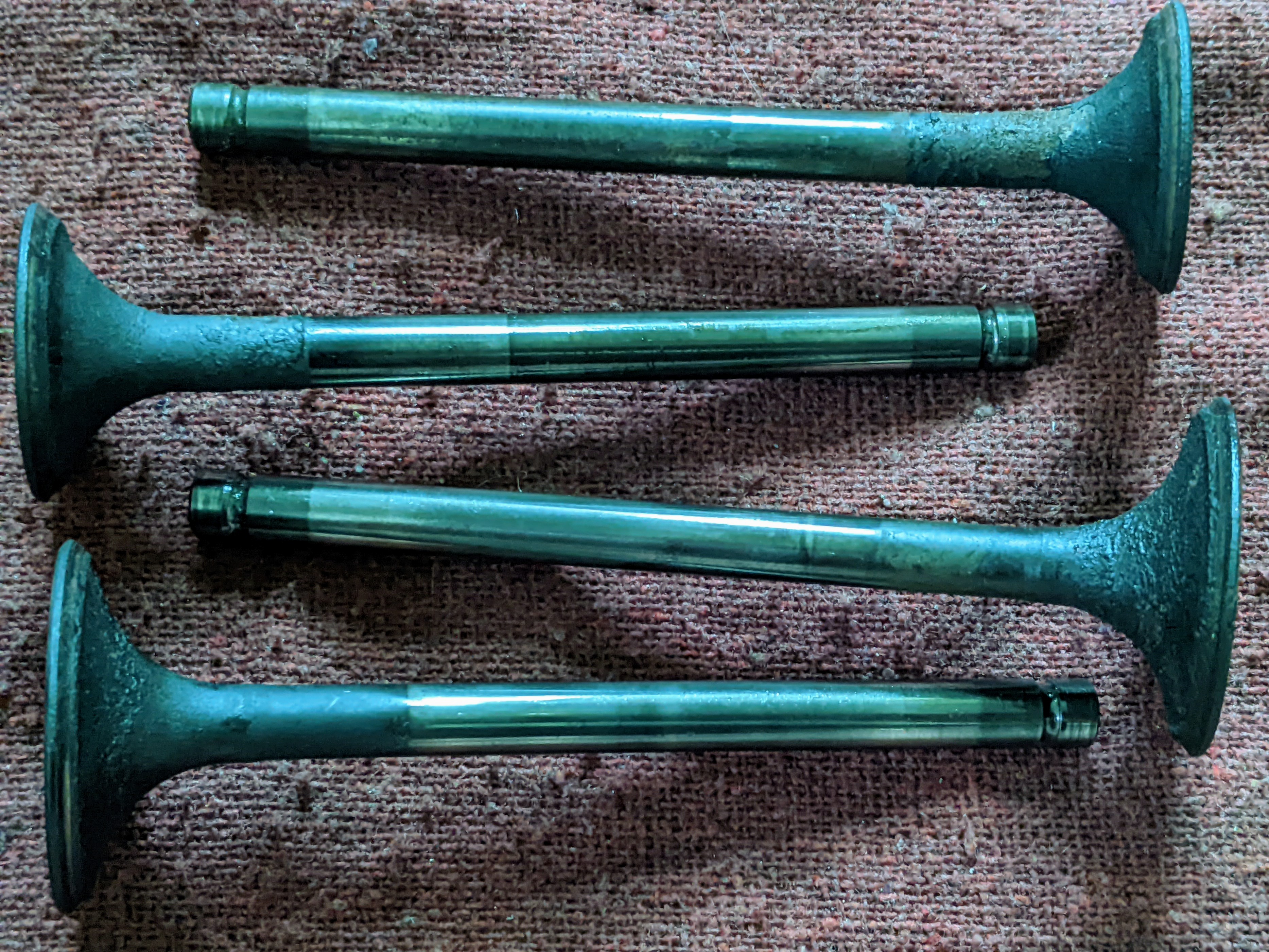
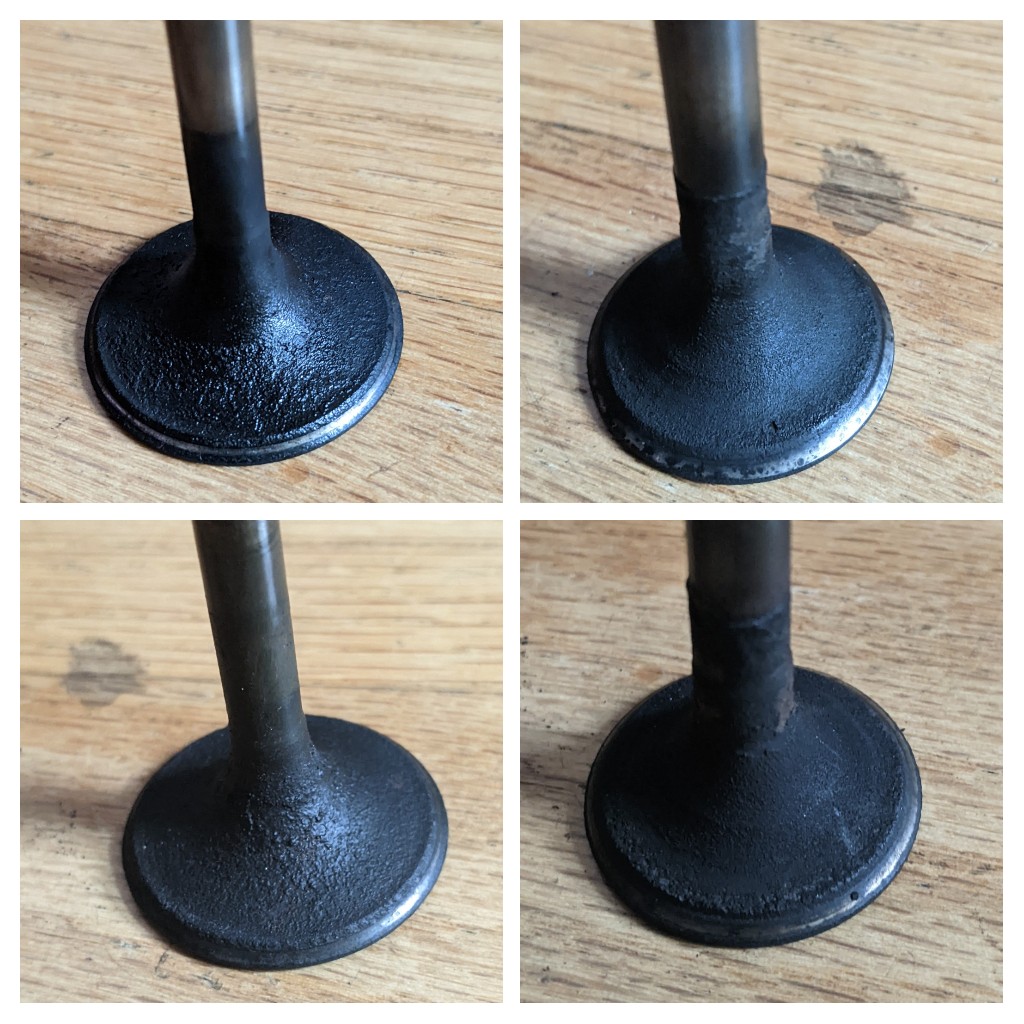
I ordered a valve spring compressor from Amazon yesterday and it arrived today. This was my first time removing valves from a head. I haven't measured anything yet, but the guides looked clean and smooth, so I'm hoping for no damage there. I'll include two pictures of the valves below.

The valves from top to bottom: right exhaust, left exhaust, right intake, left intake.

5o6bOzI.jpg


Close-ups: left intake (top left), left exhaust (top right), right intake (bottom left), right exhaust (bottom right).

PTdrvnr.jpg

Three of the valves came out of the guide smoothly and easily once the keepers came out. The right exhaust valve required a light tap to come free.
 
Looks like an illusion from the camera angle, but maybe not. Easy enough to slip it back in the guide and see if it seats fully.
 
Is it me, the way it is photographed, or is the right exhaust bend (first picture of your last post, valve at the top) ?

That is the most questionable valve based on all evidence up to this point, so I will give it a closer look.

Looks like an illusion from the camera angle, but maybe not. Easy enough to slip it back in the guide and see if it seats fully.

Thanks. Will do. Do you think it would/should be noticeable if I spin it with a hand drill?
 
Do you think it would/should be noticeable if I spin it with a hand drill?

There's always that option, sometimes it's easily seen. Best bet is to clean up the valve face and fit it by hand, then see if any light shines past it anywhere. If not, then put the springs back on and do a leak test. Or give it a light lapping, if it isn't straight only part of the face will show full contact.
 
I should've looked closer at the straightness when I pulled them out. I guess I was just pleased that my Amazon valve spring compressor actually worked. The picture below (left to right) shows left intake, right intake, left exhaust, and right exhaust. It looks like both exhaust valves are bent -- I oriented them so they appear to lean towards each other to emphasize the bends.

Xw4mO9D.jpg
 
Oh yeah, and so it was not an illusion. They were both stuck and got bent the first time it was turned over after sitting. At least it's only the exhausts and not all 4.
 
Wow! This is incredible thread. I have surely come to the right place to learn and be impressed. The little bit of repairs that I need to do seem like a joke after reading all of this. I will be checking daily for updates. I have to say though, that I feel like a complete novice now. But as with anything, with desire, effort, and good sources of knowledge, all things are possible.
 
Wow! This is incredible thread. I have surely come to the right place to learn and be impressed. The little bit of repairs that I need to do seem like a joke after reading all of this. I will be checking daily for updates. I have to say though, that I feel like a complete novice now. But as with anything, with desire, effort, and good sources of knowledge, all things are possible.

It remains to be seen what will become of this bike, but with a little luck on the title, I'm sure it can be made to ride again based on the support of this community.
 
I’m not sure about your state laws, but here in FLA, the guy I got my bike from runs a vintage bike sales shop and he bought it from a guy who got it at an estate sale after the owner died. No title could be found so he just got a new title with the engine VIN. I found the old registration from the dead guy in the tool kit. Not only was the VIN different, but my bike went from a 1973 to a 1972. Date of manufacture 11/71. I was very alarmed at this initially… I thought it may be hot, but as it was explained to me, back then it wasn’t uncommon to register the bike with either VIN. As to the year change, I was told if the bike was registered by the frame VIN, the year was established by the date of sale. Still sounds a little fishy, but it may be something for you to look into if the title cannot be resolved conventionally.
 
Really enjoying this triage process. You've done a great job sharing with pics.

Onwards! To the valve seats and cylinders!
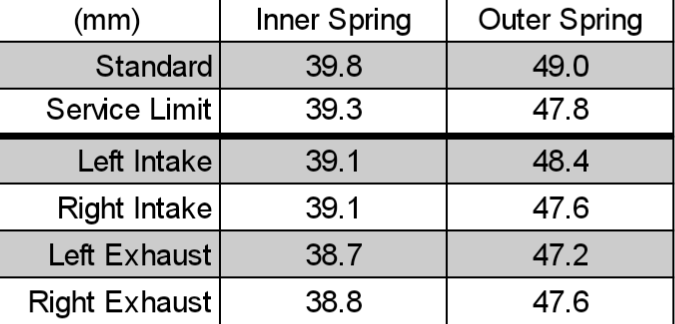
 
I measured the valve springs this morning. It looks like the majority of the valve springs are compressed beyond the serviceable limit and the other one is close.

tbeUoUs.png


I think I will replace all four valves and I plan to measure the valve seat contact width soon. I am also awaiting a set of micrometers to get more accurate measurements on the cam, although it already looks like the cam should be repaired or replaced. I would also like to evaluate the rocker shafts, pistons, and cylinders. Would it be useful to check the ring end cap with the used rings? Is there anything else useful that I could do with the cylinders and a standard caliper? The cylinders show no large scratches or other damage, so I wonder if I will be able to use standard pistons, maybe even the used pistons.
 
I’m not sure about your state laws, but here in FLA, the guy I got my bike from runs a vintage bike sales shop and he bought it from a guy who got it at an estate sale after the owner died. No title could be found so he just got a new title with the engine VIN. I found the old registration from the dead guy in the tool kit. Not only was the VIN different, but my bike went from a 1973 to a 1972. Date of manufacture 11/71. I was very alarmed at this initially… I thought it may be hot, but as it was explained to me, back then it wasn’t uncommon to register the bike with either VIN. As to the year change, I was told if the bike was registered by the frame VIN, the year was established by the date of sale. Still sounds a little fishy, but it may be something for you to look into if the title cannot be resolved conventionally.

I've lived in Florida for 61 years and have never seen a bike titled by engine number, but depending on the county you live in anything is possible. Before Honda adopted the 17 digit VIN in the late '70s, Hondas were titled the year they were sold. This is why we go more by the K series than the year on these bikes, because the unsold bikes back then would be titled the following year - or the year after that in some case if they were overstock sitting new in the crate - once they were sold. I worked at a Honda dealership in the early '70s and bought a new CL450K4 which should have been titled a '71, but it was late summer and the title clerk at the dealership asked me if I wanted her to hold the paperwork until after September 1st so it could be titled the next year for resale purposes. I said yes and it was titled by frame number (as they always do in the west central Florida counties) as a '72.
 
I would like to clean up some of the components that I hope to reuse, in particular the cylinder head, cylinders, and rocker box for now. A local shop offers a vapor blasting service and I'm considering that, but I'm also interested in at-home options, particularly those requiring few parts of elbow grease.

I don't currently have an air compressor or a pressure washer, but I'd probably be willing to buy either, although I tend to go cheap on tools I don't use often (Harbor Freight). I also do not have a parts washer, but am not very interested in getting one due to the chemicals involved (kerosene?) and space required.

If you have any advice to share, I'm all ears.
 
I would like to clean up some of the components that I hope to reuse, in particular the cylinder head, cylinders, and rocker box for now. A local shop offers a vapor blasting service and I'm considering that, but I'm also interested in at-home options, particularly those requiring few parts of elbow grease.

I don't currently have an air compressor or a pressure washer, but I'd probably be willing to buy either, although I tend to go cheap on tools I don't use often (Harbor Freight). I also do not have a parts washer, but am not very interested in getting one due to the chemicals involved (kerosene?) and space required.

If you have any advice to share, I'm all ears.

I have had a compressor for the last 30+ years, they're invaluable to more than just bike work but they are an investment in money and space to get something good enough for all around use. I wouldn't be without a parts washer either. I bought the HF base model (sadly it's gone up about $40 since I bought mine) and was told you couldn't use petroleum-based solvent in it, and they recommended their biodegradable water-based solvent. I bought a couple jugs of it and used it nearly full strength, and it was a joke, the best cleaning it did was on my driveway when I drained it out. I've since used 5 gallons of NAPA's solvent in it followed by two 5 gallon pails of similar solvent from Tractor Supply. They won't say exactly what is in it and I'm sure it's something like kerosene but the pump still works just fine after being used for 5 years. Yes, it requires proper disposal once dirty but the convenience of washing parts in a "sink" designed for it with a pump circulating a solvent that actually works is invaluable for getting engine parts ready.
 
I would like to clean up some of the components that I hope to reuse, in particular the cylinder head, cylinders, and rocker box for now. A local shop offers a vapor blasting service and I'm considering that, but I'm also interested in at-home options, particularly those requiring few parts of elbow grease.

I don't currently have an air compressor or a pressure washer, but I'd probably be willing to buy either, although I tend to go cheap on tools I don't use often (Harbor Freight). I also do not have a parts washer, but am not very interested in getting one due to the chemicals involved (kerosene?) and space required.

If you have any advice to share, I'm all ears.


Vapor blasting isn't cheap. At least degrease the parts first. $50/hour. Use spray engine degreaser from auto parts store or car wash. AD is right about a pump for a washer, makes it much easier and faster especially the brushes with a hose.

An elevated fuel can with a siphon hose above your wash tub can work.
 
At least degrease the parts first

This is something well worth expounding on.

I made a parts and labor deal a couple years ago for a head and cylinders for my drag bike project, then sent the head out to Schumann Motor Works to have the head ported and new titanium valves made for it. At the time, I was not aware (nor did I notice) that the head was NOT degreased before media blasting and the result was small areas of remaining grease and media lodged in the cracks and crevices of the head, which was discovered by Schumann during his work. He literally had to scrape the small areas of media/goo out of the head for me. Had he not noticed it, I might have easily assumed it was clean enough to run and once hot engine oil was circulated through the engine I'm quite sure some abrasive material would have been released into the engine with potentially damaging effect.
 
This is something well worth expounding on.

I made a parts and labor deal a couple years ago for a head and cylinders for my drag bike project, then sent the head out to Schumann Motor Works to have the head ported and new titanium valves made for it. At the time, I was not aware (nor did I notice) that the head was NOT degreased before media blasting and the result was small areas of remaining grease and media lodged in the cracks and crevices of the head, which was discovered by Schumann during his work. He literally had to scrape the small areas of media/goo out of the head for me. Had he not noticed it, I might have easily assumed it was clean enough to run and once hot engine oil was circulated through the engine I'm quite sure some abrasive material would have been released into the engine with potentially damaging effect.


That could have caused a very bad day.

Parts cleaning is good therapy in proper doses and nothing like laying your own eyeballs on every nook and cranny.
 
Back
Top Bottom