1966 Honda CL160 commissioned build

Given these rear brake cables on cb and cl160s are very hard to obtain….. wonder if a previous owner just switched to a brake rod system and deleted the parts that were original to the original rear cable?
These rear brake cables are available from various suppliers in either the US or Thailand as NOS original Honda parts. They are expensive unless your paying in US currency and shipping to the US.
 
Last edited:
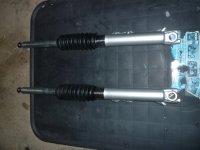
Looks like yours is the latest forks, alloy lowers, not steel.

The bottom line is, that the bolt will not bottom out and deform the bore of the lower leg. Measuring the depth of the hole with whatever special shouldered spacer washers in place before torquing the bolt should work to prevent that.
Thanks Tom, if I seem a little grumpy it‘s because I am. :) Taking a break for awhile from all these suprises and parts chasing.
 
Last edited:
You may want to check this thread I started re: that front brake arm spacer. From what I've gathered there are two different spacers- which one you need will depend on the brake arm you have.

I am unsure as the current CMSNL list only shows one spacer and it is the backside picture you have posted, which doesn’t give a clear indication of what is correct. I have the later arm with the welded on washer. BB indicated my forks are aluminum, so a later model.
CMSNL is sourcing the spacer from a supplier, so I have asked them to verify it will fit the arm with the washer which is what they currently stock.
 
These rear brake cables are available from various suppliers in either the US or Thailand as NOS original Honda parts. They are expensive unless your paying in US currency and shipping to the US.
Not really anymore. The de minimis tariff exemption expired so now even shipments below $700 are hit with 40% tariff rates.

I just bit the bullet on one of the Thai cable sets and gasket sets. shipping and taxes were half of the amount.

Front brake shoes are apparently another fun item. NOS Parts Now has them, but I haven’t really dug around.
 
Last edited:
Not really anymore. The de minimis tattoo exemption expired so now even shipments below $700 are hit with 40% tariff rates.

I just bit the bullet on one of the Thai cable sets and gasket sets. shipping and taxes were half of the amount.

Front brake shoes are apparently another fun item. NOS Parts Now has them, but I haven’t really dug around.
So unfortunately your paying the same price as a Canadian now.
Yes, I ordered a Thailand cable set and a complete new wiring harness since the old one was really crusty. It is starting to add up with some CMSNL parts needed too and in the pipeline now.
 
Last edited:
I had a better day with my neighbour doing a weld build for that broken off rear brake cable standoff on the frame. I have just over 1/2" of solid metal to drill and tap and it is vertical to the frame now. I have the correct piece on order with CMSNL and it will be early October, as a bunch of the parts are not in their warehouse presently.
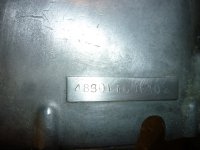
I also included a shot of the motor serial number. Has anyone ever seen a motor with this configuration of numbers and letters? o_O I guess if you put the first four numbers on the back of the digit string, the motor and frame would only be 70 or 120 digits apart.

P1100912.JPG

Engine numbers.


P1100916.JPG
 
That engine number stamping is crude and bizarre, not to mention in a format I've never seen (I do get the missing C, seen that before). Almost looks like the upper case was replaced and it was stamped by a dealership.
 
That engine number stamping is crude and bizarre, not to mention in a format I've never seen (I do get the missing C, seen that before). Almost looks like the upper case was replaced and it was stamped by a dealership.
If it could only speak, I am sure there is a tale to tell there.

I can only go by the bikes I have restored and owned since 2004 and I have never seen anything like that before. Maybe a case replacement was done at the dealership? I have heard that the CB750 SOHC early models were prone to holing the case when the drive chain broke. I believe Honda supplied blank cases to the dealer to re and re the engine at their shop.
 
If it could only speak, I am sure there is a tale to tell there.

I can only go by the bikes I have restored and owned since 2004 and I have never seen anything like that before. Maybe a case replacement was done at the dealership? I have heard that the CB750 SOHC early models were prone to holing the case when the drive chain broke. I believe Honda supplied blank cases to the dealer to re and re the engine at their shop.
The 750s yes, but I'm pretty sure the 160 was unlikely to throw the chain through the crankcase nearly as often. But it does look like someone less than professional did that stamping, though I must say I've worked with a few guys at dealerships who could easily have been the bozo who did THAT engine number stamping. I just can't imagine any decent Honda franchise letting something that sloppy looking get out of their shop.
 
I believe Brad has the answer on the engine serial number mystery. The more I look at this the raised edge and crosshatch on the plate area from the factory is missing. I think someone did file off the top section of the plate area on this engine case. They did some creative stamping for a reason that is unknown. Fortunately the frame number on the ownership is used for the legal registration.
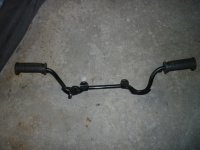
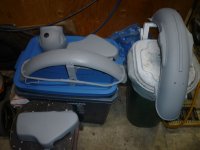
I was taking inventory of the found parts later today and just realized the steps provided do not have the articulating foot rests and they are part of the overall bar. The rear fender was from a CB160 as it had the holes drilled in the bottom rear for the duck tail rubber splash guard. So are these items possibly off a CB160 model too?

P1100917.JPG
 
Last edited:
As I recall, the replacement cases from Honda had a blank serial number area but there were dimples in the area. It almost looks like the dealer or PO replaced the case with a used case and filed off the old numbers and stamped in the original serial numbers but somehow punched them in the wrong order.
 
I hear you AD and I doubt the engine drive chain caused the issue, yet maybe it was another problem that required a case replacement. If someone did do it at the shop as a replacement. How likely would the shop then tell Honda that bozo Bill messed up the stamping and they needed another replacement case? :unsure:

I was taking inventory of the found parts later today and just realized the steps provided do not have the articulating foot rests and they are part of the overall bar. The rear fender was from a CB160 as it had the holes drilled in the bottom rear for the duck tail rubber splash guard. So are these items possibly off a CB160 model too?

View attachment 50042
Those match the ones that were in the box of stuff with the CB’s I picked up.
 
I hear you AD and I doubt the engine drive chain caused the issue, yet maybe it was another problem that required a case replacement. If someone did do it at the shop as a replacement. How likely would the shop then tell Honda that bozo Bill messed up the stamping and they needed another replacement case? :unsure:
Can't speak to how that might have been handled, I was only involved in a few crankcase replacements (one being a CB750K0) and was never part of the process of getting a set from Honda, or a replacement set if screwed up.
As I recall, the replacement cases from Honda had a blank serial number area but there were dimples in the area. It almost looks like the dealer or PO replaced the case with a used case and filed off the old numbers and stamped in the original serial numbers but somehow punched them in the wrong order.
Yes, the part in bold is how I've always seen them, the area for the numbers looked almost knurled - matching the look of one delivered new in a complete bike, minus the actual number stamped in it. I have to agree, this upper case was probably a used replacement done by who knows, maybe not even a dealership but someone with the similar stamping dies. Certainly an embarrassing effort though.
 
The footbar is neither, the CB160 had both sides with the big down loops for the headers and no sidestand fitting.
 
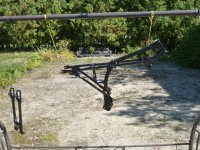
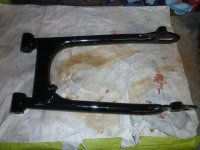
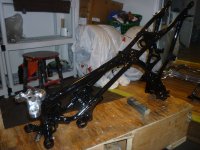
Well in some positive news. I painted the frame and swing arm with a new black finish and shot clear coat over it. We have had a really decent week of painting weather recently. I finally finished all the body work on the panels, tank and fenders so they are all now in high build primer.
Next week I plan to shoot the new silver paint on those parts. I also bought a couple of gloss black rattle cans of paint from Top Shop for the headlight bucket and fork ears.
Then it is break time as I move the parts into the basement room for some further cleaning and eventually the motor work. I suspect there will be some surprises in there too.

Frame and swingarm

P1100919.JPG


P1100922.JPGP1100925.JPGP1100928.JPG
 
Last edited:
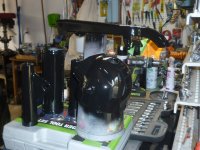
Another good warm day today so this afternoon I painted the black trim items for the forks and headlight bucket and chain guard with a rattle can of Top Shop paint. It was only $12.50 per can and one can did all these parts shown. No clearcoat needed on these pieces and they will match the frame and swing arm which was a basecoat black that I sprayed from my paint gun, where I mixed together two remaining part cans of ready to shoot black paint I had left over.
A 2x4 on a wooden base was the perfect prop stand for the chainguard to hold it horizontal. (y)

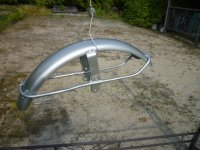
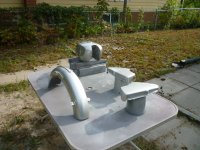
I then sprayed the silver parts (tank, side covers and both fenders) in a silver flake base coat and then a top coat of urethane clear that is gas and oil resistant. So I am pretty well done painting the big stuff with a few smaller items remaining. A change coming next week with a fair bit of rain forecast and cooler weather.

P1100936.JPG
P1100932.JPGP1100934.JPG
 
Last edited:
Could you please link your build thread to this one so I have some reference to your work and the bike
Sorry I missed this request- I assume you were talking to me, if not no worries...


I'm moving at a snail's pace and I don't post too often in there, but if you want to feel better about what you are are starting with, have a look lol
 
Some more progress on a few pieces and our member Chris Crawford has been kind enough to assist me with a few key used parts and some smaller pieces that were missing from this bike when purchased.
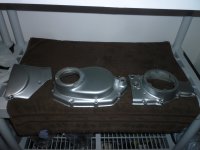
I was able to fix up the rear brake cable as noted in another post and the engine side case covers are supposed to be painted silver. They were poorly buffed with likely a basic piece of equipment. I am repairing a couple of dings in the clutch cover side with the Tech Steel compound. It is harder to sand that material to get it to blend in smooooth. :) So that cover is still under construction.

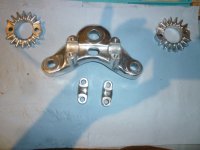
I have polished the top triple tree which was wire wheeled by the PO and clear coated with something that yellowed after a few years. So now it is properly polished and clear coated with VHT clear coat which will last much longer. I repainted the fork slider lowers too, so they are at least respectable now.

I want to get into the engine sooner rather than later, as I am sure there are surprises inside for sure. The left side exhaust valve has 35% leak down and through the spark plug holes I can see all the valves have been lapped. I want my friend Paul the machinist to check the bore spec as I can see the cylinders have some honing marks. There are a used set of piston rings in a baggy with the parts, so I suspect it was a "Mop and Glow" quickie top end rebuild. o_O

P1100975.JPG
P1100976.JPG


Oh yes the kick-starter shaft is semi stripped too. It is a project that keeps on giving (more issues) and taking (more cash). Do you hear that sucking sound? :cry:

P1100977.JPG
tgo
 
Last edited:
K start shaft splines are not nearly idiot proof, IMO. I'd break out the welder and jeweler's files to make it work. or drill and roll pin it, or leave it off and say, push start or electric only. No doubt, many a shaft now trash binned and gone from unobservant types. Extinction will put an end to that. Teary eyed rebuilder rant, done.
 
I bought a really clean used one from NOS Parts Now for under $100 Canadian landed here. I planned to tear the motor completely down. Given all the other issues and the amnesia the PO has with regards to his handiwork on some areas. It is the prudent thing to do for Chris the current owner.
 
I finished repairing the right side motor clutch cover dents and got it nice and smooth with the final topcoat of silver paint. I installed the triple trees and bearings in the frame with new grease. The motor is downstairs now and I will start into the teardown of the unit soon. I wish to see the internals and what maybe required for it to be serviceable as an occasional rider for Chris.
There is still a lot of repairs to do on various components. The exhaust is missing the rear baffle (cut out) and I have the one from the old S90 muffler that will fit and can be welded into the end cap. The motor bash plate has 3 good cracked areas that need some metal work and then welding back together. My neighbour is the go to guy there, as I don't weld .
I am pleased with the progress on the bike as the painting is 90% done and we have a few more decent warm days it seems to finish those parts up. Many parts from various suppliers are caught up in the Canada Post mail strike. They are here in country, yet will not be processed until they either settle an agreement, or the government mandates them back to work.

P1100984.JPGP1100985.JPGP1100988.JPG
 
I bought a really clean used one from NOS Parts Now for under $100 Canadian landed here. I planned to tear the motor completely down. Given all the other issues and the amnesia the PO has with regards to his handiwork on some areas. It is the prudent thing to do for Chris the current owner.
It's too late, David, to lower your usual standards now. It's just your habit to do great work. If I were Chris I'd ask you to sign your work somewhere on it.
 
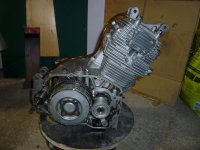
Well some sort of good news as I start into the engine. There are .75 new O/S pistons and rings and a fresh bore done at some point in the past. The motor has never been run yet. The head gasket came apart when the head and barrels were separated. So some new gaskets and seals will be required. The not great news is every valve seat is pitted and someone looks like they ran the valves through a valve grinding machine? The cam chain clip has a bunch of lateral movement that I don't remember having on other cam chains. I know on the 1968 CL175 when I broke the clip on installation I needed to get a few different new ones. The cam chain clips seem to be different for say a DID brand chain vs a RK cam chain. I do have a few extra clips, so I will try a new one on there when the time comes.

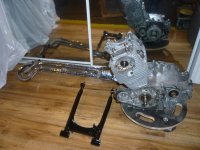
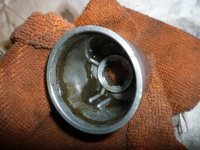
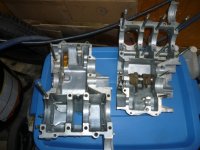
I just split the cases tonight and the piston pins needed heat to remove them as they were pretty stuck in the rods or the piston bore. So some more work to see why that is the case. The oil spinner was really sludged up and some usual aluminum filings from the cam chain hitting the side of the barrels at some point.

Here it is after removing 3 times that amount of sludge. It required some more work and Dremmel wire brushes to clean it properly.


P1100991.JPG


The bottom case isn't too bad with minimum amounts of sludge in there.


P1110011.JPG


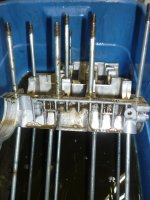
Top end needs to come apart as I can see some minor surface wear on the rings where the shift forks ride in their respective gearset.


P1110013.JPG
 
If the cam chain was incorrectly routed through the tensioner, there will be no tension, slapping chain grinds aluminum in barrels and head, filling oil filter and crank sludge traps, starving piston pins, small rod bushes, skirts and rings. Hopefully it wasn't run much like that. Cam timing would surge and float around, running poorly.
These PO blunders were covered in my 160 build.

 
Tom when I get the crank out I will use your guide to clean the sludge traps. The motor wasn’t run and I am not sure if the chain was routed correctly. These engines all seem the have some wear on the inside of the barrels from the cam chain not being tensioned properly at some point in time.
My CL175 and Joes CL175 both had the same wear stripes inside where the tensioner rod is located in the barrels.
The pistons used don’t have any Honda markings such as ART so they maybe some other brand. The rings though are a 3 piece setup typical of Honda early rings.
 
So I took the rest of the internals out of the cases this morning and cleaned up the inner and outer case sections. I have them in primer presently and will paint the aluminum colour coat this afternoon on the outsides. The shift forks are in decent condition with just a smidge of wear on each fork inner half moon. The main tangs are all good with no wear to speak of on them.
I found a source for replacement Shin Nippon valves in Thailand and they are more expensive than I recall for the CL175 ones but what isn't these days. I have so many shipments stuck in the Canada Post strike in country that I don't want to order more goods. There will be a huge backlog of goods when they settle and it opens more possibilities for things to go astray.

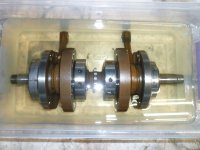
Cleaning the cases in Kerosene and soaking the crankshaft in the same to clean on the bearings. I don't think I can get at the sludge traps on the crank as it is the same design as my old CL175 unit. There are stoppers formed in the crank so the inner caged roller bearings will only shift sideways a millimeter or so. I will just continue to soak and blow with compressed air to assist in the cleaning of the roller bearings at least.

P1110030.JPG

Nice and clean on the inside and outside and read for some primer and paint finish.

P1110031.JPG

Crankshaft soaking in Kerosene (y)

P1110032.JPG


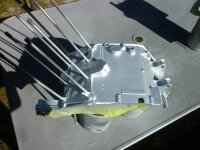
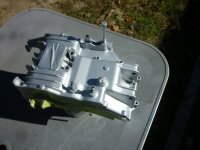
New coat of aluminum paint on the top and bottom cases. Just borderline as temps today are around 12 C but sunny and its working. (y)

P1110033.JPGP1110034.JPG
 
Last edited:
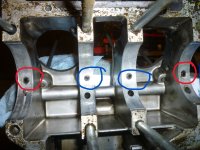
One question on the upper case crank bearing location pins. The two middle pins (circled in blue) are removable and sit a few mm taller than the half moon surface. They engage into their bearing which has a hole in the outer section for the locking of the bearing into the upper case.
The two outer pins ( circled in red) are flush with their half moon circle, so they don't seem to be able to lock into the bearing holes which are present on both outer bearings. The pins are not removable on either side like the two middle ones are. One outer pin is in a blind hole and the other has an opening below it into the case where I can see the bottom of that pin. I have tried to tap it up slightly and it is locked solid in there.
Is anyone familiar with this set up? I seem to recall on the CL175 Sloper motor it has the same four pins, yet I think the outer pins did engage with the bearings holes. It has been awhile though and I don't trust my memory here.

Pins in question:

crank location pins.JPG
 
Last edited:
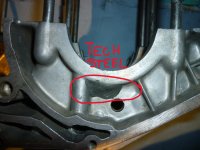
Well some bad news on the above! This motor with the hinkey serial number is CB motor cases that someone switched the internal parts over it appears at some point in the past. The crankshaft main bearings were not seated on the knock pins correctly on the two outer pins. So the bearings when the case was tightened pushed the pins down and a cap piece off the bottom on one side and split the webbing on the blind hole side.
Hence the two outer pins being flush with the case area. I was able to get one pin out and fix the area with Tech Steel. The blind hole side with the split webbing is likely going to need aluminum welding done to repair the area. That pin is stuck and I broke the top pin section off trying to remove it. So it needs machining out and CMNL has them in stock for a few bucks.
I will talk to Chris tonight as this is getting out of control cost wise and he is going to blow way past his budget. Too bad, as I know how he was excited that the project was finally getting done.
 
Last edited:
Yeah was going to say those pins were all up and seated into the crank bearings on my 160 motor. It took me a minute to get all four seated in the crank bearings when I put it all back together. Crazy whoever rebuilt that didn't notice the crank wasn't seated and just tightened it all back up, although not surprising based on some things I've seen...
 
Crazy whoever rebuilt that didn't notice the crank wasn't seated and just tightened it all back up, although not surprising based on some things I've seen...
I say that every time I see a transmission locating pin pushed through an upper case too, and we've seen a fair share of them as well. I saw my first one when I was still in high school, a riding buddy back then helped another friend rebuild his 350 engine and later it was shifting funny so we went into the right crankcase cover, pulled the clutch and oil pump and went "oooh, that's a problem". He got so lucky, the bearing cap was almost perfectly lined up when we tapped it back flush with the crankcase and the pin actually tapped down into the bearing outer.
 
I say that every time I see a transmission locating pin pushed through an upper case too, and we've seen a fair share of them as well. I saw my first one when I was still in high school, a riding buddy back then helped another friend rebuild his 350 engine and later it was shifting funny so we went into the right crankcase cover, pulled the clutch and oil pump and went "oooh, that's a problem". He got so lucky, the bearing cap was almost perfectly lined up when we tapped it back flush with the crankcase and the pin actually tapped down into the bearing outer.
Well what I have seen on this bike so far is just so far fetched that it borders on unbelievable. I have seen my share of hinkey stuff over the years, yet I have never seen anything like this bike. The cam chain clip I am sure is incorrect with the amount of side play it has in the clip link. Who knows what would have happened there once the motor was running again.

I‘ve made my share of mistakes over the years, as we all are on a learning curve when working on these old bikes. Yet here the o_O "monkey man" should not be allowed near tools.
 
Last edited:
Slightly off topic, but as I read through this, I see mention of a CL175 sloper. I would assume you did a project thread but I'm not sure how to find it. Could you (or an admin) point me in the right direction please? I'm about to embark on a CD175 sloper project and would be curious to read your notes on the engine.
Thanks
 
Tom when I get the crank out I will use your guide to clean the sludge traps. The motor wasn’t run and I am not sure if the chain was routed correctly. These engines all seem the have some wear on the inside of the barrels from the cam chain not being tensioned properly at some point in time.
My CL175 and Joes CL175 both had the same wear stripes inside where the tensioner rod is located in the barrels.
The pistons used don’t have any Honda markings such as ART so they maybe some other brand. The rings though are a 3 piece setup typical of Honda early rings.
Truthfully, I did not discover the plugged crank issues on my 160 (only on my later 350 spare motor build) and probably did only a superficial cleaning of it. Both my skirts and small end rod bushes had significant wear, as in visible scoring. New piston pins seemed to reduce that clearance to what seemed reasonable by feel and I let it go at that. I'm not even sure there are similar sludge traps on the 160. I think so, looking at the paltry drawing on page 28 of the FSM. Sadly, Honda had scarce info on the oilflow architecture through the crank, but it must be there, as there is only that to supply the rods, cylinders and pistons. After all soaking, flushing (a la Teebow's pump) and pressure blowing is done, standing the crank vertically, on it's end and squirting oil into the center bearing outers to observe if the oil makes it to the big end rods, is about as good as it gets. If it doesn't then pressing it all apart to clean all the passages seems the only logical remedy. Only Graham Curtis and Jensen have ventured into this extreme engine rebuilding crankshaft miniverse, that I know of. Any light you can shed here of your efforts is greatly appreciated.

The cam chain should never have contacted the inner surfaces of the barrel chain tunnel. Both up and down runs of the chain should be towards the middle, as both the roller and push pad, for the tensioner are outside the chain runs. Again, skimpy chain drawing in FSM, Fig.3.17 pg. 14. Also, my 2 pics showing first the incorrect as found and later the correct routing.

The age of these bikes means likely 2-3 or more times the motor has been apart and so exponential boobus factor is in play. We could use a dozen more talented machinists like Chris Schumann scattered around to keep these old girls running. I, myself, wonder about the cranks on both my Dream and 160, as I only learned later about these issues and had buttoned up those motors and have been running them. Another rebuild on them both was not something I had planned on.
 
Slightly off topic, but as I read through this, I see mention of a CL175 sloper. I would assume you did a project thread but I'm not sure how to find it. Could you (or an admin) point me in the right direction please? I'm about to embark on a CD175 sloper project and would be curious to read your notes on the engine.
Thanks
Troy, I didn’t do a project thread as I restored the bike before I was a member here. Or just around the time I had become one. The only thing I covered on that bike here was a head refresh on a later replacement head. That was covered on the second link to past builds in my signature at the bottom of the post.
 
I was able to speak to Paul about the knock pin issue stuck in the top case. He indicated they are very tough and brittle metal which I found out in trying to extract it yesterday. The pins are only used to correctly locate the bearings in the proper spot for the oil feeds from the main galley. He indicated I don't really need one as long as I located the bearing properly to prevent oil starvation. That spot is actually an outer bearing that is mostly splash fed, while the other 3 bearings have oil feeds into the bearing directly. The case clamping when closed up will hold them in place from rotating once tightened down.

I still repaired the side webbing on the one side of the case that was split and reformed the missing bottom cap on the other side both using the Tech Steel. While it isn't as strong as new, it isn't under a lot of stress per se. This at least allows the pin on the one side to be placed at the correct height now.
The other stuck broken pin fortunately being hollow I used a cut down shaft from a Dremmel wire brush to fix a smaller pin. That at least has some way of locating the proper bearing alignment. I will also mark the correct spot on the outer bearing to ensure it is placed correctly this time before clamping the cases down.

Another save hopefully that didn't cost Chris any more money for a case replacement. (y) She isn't pretty; but it's better than it was with the damage done by the force of the pins going into the case.

Pin repair.JPGP1110041.JPG
 
Looks strong enough to save those cases. I'd still try to align the oil holes for both outer bearings, as the FSM says all 4 are pump fed.
 
Looks strong enough to save those cases. I'd still try to align the oil holes for both outer bearings, as the FSM says all 4 are pump fed.
I only see 3 as pump fed and the 4th outer bearing has a 1/2 of the inner diameter thin slot cut in the upper and lower case that has no oil feed I can see. Yet it is directly above the oil pump, so maybe something is fed from there. You can see the slot in question in post #80 on the left hand side of the case. The small hole is a blind hole with no feed that I can see in either the upper or lower case which both have that slim slot cut in each case.
In that same #80 post you can see the 3 large oil feed holes in the upper case and all those bearings have oil feed holes in the outer race. The 4th outer ball bearing has no oil feed hole in the outer race only the retaining hole which is shallower than the other 3 retaining holes.
After repairing the one lower outer pin hole with the Tech Steel. I can now position the proper pin correctly at the right height on that bearing. The other damaged pin I have inserted a new pin which is smaller in diameter than the original pin. I plan on marking that outer bearing and aligning it correctly. The new pin will assist in getting the bearing in place and will hold it if necessary.
Paul indicate the pins are there to hold the bearings in place to align the oil feed holes into the bearing.
 
Last edited:
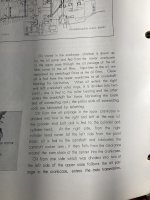
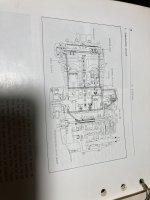
image.jpgIt is hard to see how the left bearing gets oil. The text says the upper case transverse oil galley feeds all four but I can’t tell from the drawing exactly how. image.jpg
 
Thanks Tom. I need to do further investigation, as I may have plugged the oil feed from the ball bearing on the outer case with the new pin repair. That slot is there for a purpose on both case halves and the hollow pins seem to go into blind holes on the other three case positions. Maybe that roller bearing pin hole is an oil feed?
The hole in the roller bearing outer shell is about half the depth of the other pin holes. Yet those pin holes are not the oil feeds in the other three bearings. There are separate oil feed holes about 3/4 inch further around the bearing and the pin holes in the bearings are blind holes. The ball bearing pin hole also appears to be a blind hole into the outer bearing case.
Those half round slots on the roller bearing side of the case are there for a reason. Yet the small holes in the case slots are blind holes too. The roller bearing does not have an oil feed hole into the bearing, as there is only the one hole for the locating pin in the outer case of the bearing. I will double check that the shallower locating hole in the roller bearing outer case is a blind hole, which I believe it was when I checked it before.
 
Last edited:
I'm blank without my extra motor cases and crank in front of me. That stuff is pretty buried in garage right now. I think the FSM and parts books on these are worse than the Benlys or Dreams.
EZPete is just tearing his motor down and he may look at that left bearing for clues about pins, grooves and oiling.
 
I just checked it and I have the case halves apart. I think it is splash fed as it is behind the oil spinner filter. There are main oil galleys all around the area yet there is no direct feed into that roller bearing. The slots are a mystery in the upper and lower case halves though. They clearly have a purpose, yet it isn clear to me presently.
I don’t think I plugged the hollow pin on the roller bearing, as the shallower hole into the bearing shell is a blind hole for sure.
 
Curiosity got the best of me and I went and looked. Yes, not the left side but right and a ball bearing that must be fed from splash from primary gears.
I must concur with all you said in both above posts, and, sadly, am no help in solving the slot to nowhere. At least you got the knock pins raised to do some good.
Maybe Pete will give us the Ah-ha moment.
Maybe the designers were going to put a 4th roller on the right, but the cost cutters said the ball bearing was good enough and just left the slot in there. There doesn't seem much provision for controlling end thrust either, just that 35mm C clip on the left and the oil cup nose on the right. The rods do seem to take a beating on these, especially with low oiling from plugged cranks.
 
Tom when you get a chance could you verify with your spare cases the upper case ball bearing hole is actually a blind hole.
 
Tom when you get a chance could you verify with your spare cases the upper case ball bearing hole is actually a blind hole.
Yes, it's blind. I checked closely. No oil circuit feed to that ball bearing and I'm trying to figure how any splash could get there.
 
Yes, it's blind. I checked closely. No oil circuit feed to that ball bearing and I'm trying to figure how any splash could get there.
Thank you then I should be good. I just found the engine top cover that holds everything snug and is a stress motor mount. It has a 2 inch long micro crack right beside the engine mount side of the surface. After I bead blasted it there was a black streak that was oil seeping through.
Chris is away on the Thanksgiving weekend here. So later this week I need to discuss the cost overruns and the costs still to come.

The oil is throughout that whole area so possibly the spinning filter may throw off some oil. Those cut grooves must have some function as they are in both cases.
 
Another top plate shouldn't be too hard to find, since it's a not wear item and not too expensive.

The filter is too high for the surface to fling oil and the cup is contained. I'm thinking only the clutch basket gets down into sump level to throw any oil around. What a mystery.
 
Another top plate shouldn't be too hard to find, since it's a not wear item and not too expensive.

The filter is too high for the surface to fling oil and the cup is contained. I'm thinking only the clutch basket gets down into sump level to throw any oil around. What a mystery.
Tom I found the top plate. It is just another cost which is adding up fast. It is from a Western Canadian seller on eBay, but still $80.00 Canadian with shipping and taxes. I have around 50 hrs into this bike and I did offered Chris a cheaper hourly rate than my normal charge. Yet it is getting expensive! He is going to be around $2K in parts/paint alone, once the new valves and new seats are cut plus all the other missing items are bought.
Every small shaft has spline damage, so I worked on the shifter one and got it useable again. The kick starter shaft from NOS Parts has perfect splines, yet the tiny kick starter lever that came with these weird parts is off who knows what bike. It is partially stripped on one side of the inner splines and a replacement kick starter lever is $80.00
I have a request on the site here and on the CVMG parts wanted site with no response. This bike isn't a common one that is being restored with someone with spare parts laying around in their garage.
 
Last edited:
Back
Top Bottom