(Not so) Budget drag bike project - DOHC 450, of course

The next best things you could do is to bore out the oil gallery plugs, clean the gallery's and plug them with a copper or aluminium plug.
 
Had a nice visit with VHT member and 450 oil pump design genius Jays100 yesterday. He happened to be in Florida for his job and was able to take some time to drive over. He took my wife and I out for a very nice lunch and we enjoyed a couple cold ones in the garage afterward. Of course we talked about everything Honda and the 450 in particular, and he shared a few thoughts and ideas with me about cleaning up my 4 speed crankshaft oil passages.

With respect to that last subject, I had made some progress scraping loose the modest amount of buildup in the curved and circular channel in the inner crank throws where the feed holes are for the big end rod bearings. After finding something I could use to get in there to scrape the (essentially) centrifuged micro-debris stuck in each side, there was a small scattering of it on the bench. It looked like just gray crud, but I wanted to see if any of it was metal that could be picked up with a magnet. To my surprise, virtually all of it was.


The debris stuck to the magnet tip is illluminated with LED light from a flashlight, it isn't really bright color as it looks in the picture.

So now more fun will be had. Most, if not all, of the accumulated debris is out of one side but of course some of it ended up falling into the main bearing on that side as it came loose because you have to retract the outer main bearing race to get to the curved groove machined into the the inner side of the crank throw.

This is a basic look at where it accumulates, behind the main bearing outer race is the half-circle groove machined into the inner crank throw. I couldn't find an image online, and I'm pretty sure my phone camera wouldn't focus properly on it with all the other parts of the crankshaft in varying degrees of closer to the lens.
Great post with photo and graphic Tom. Nice that you and Jay could meet and spend some time together too. That is awesome!

I think this area of the crank is the most overlooked and daunting area to address when cleaning a disassembled motor. Jensen is right, the best way to do it is to press the crank apart, clean, and reassemble but I do not know of anyone I would trust with that job either. There is a guy on Facebook in the UK, Graham Curtis, who has made some excellent posts on his work doing this to Bomber cranks. His work seems top-notch.
Outside of the ability to clean the passages by disassembly, I am always open to new and effective ideas on accomplishing this task. I think it is worth mentioning that in addition to the later 450 crank, the CB/CL 350 crank is of a similar design and needs to have the same issues addressed during a rebuild.
 
Last edited by a moderator:
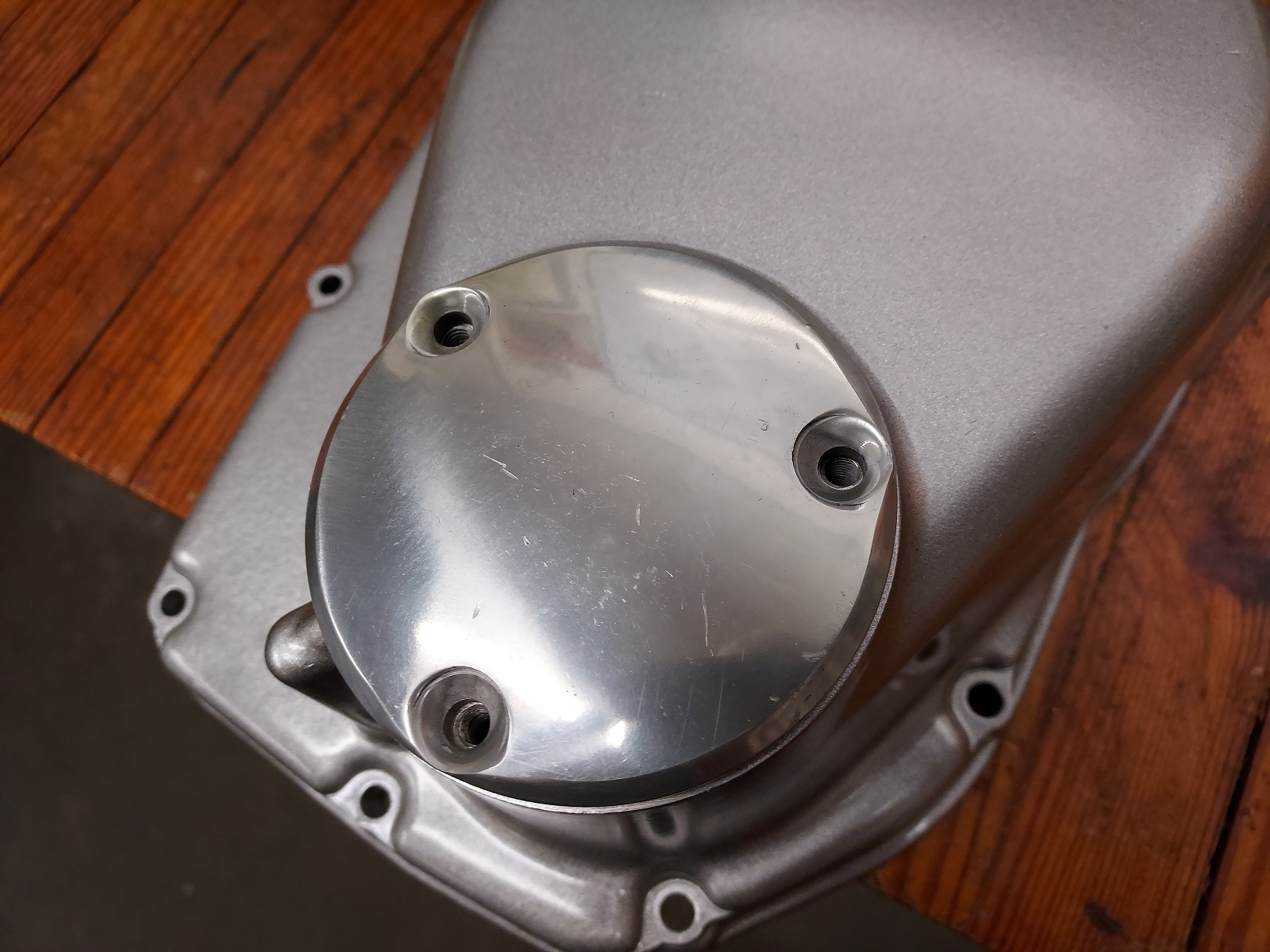
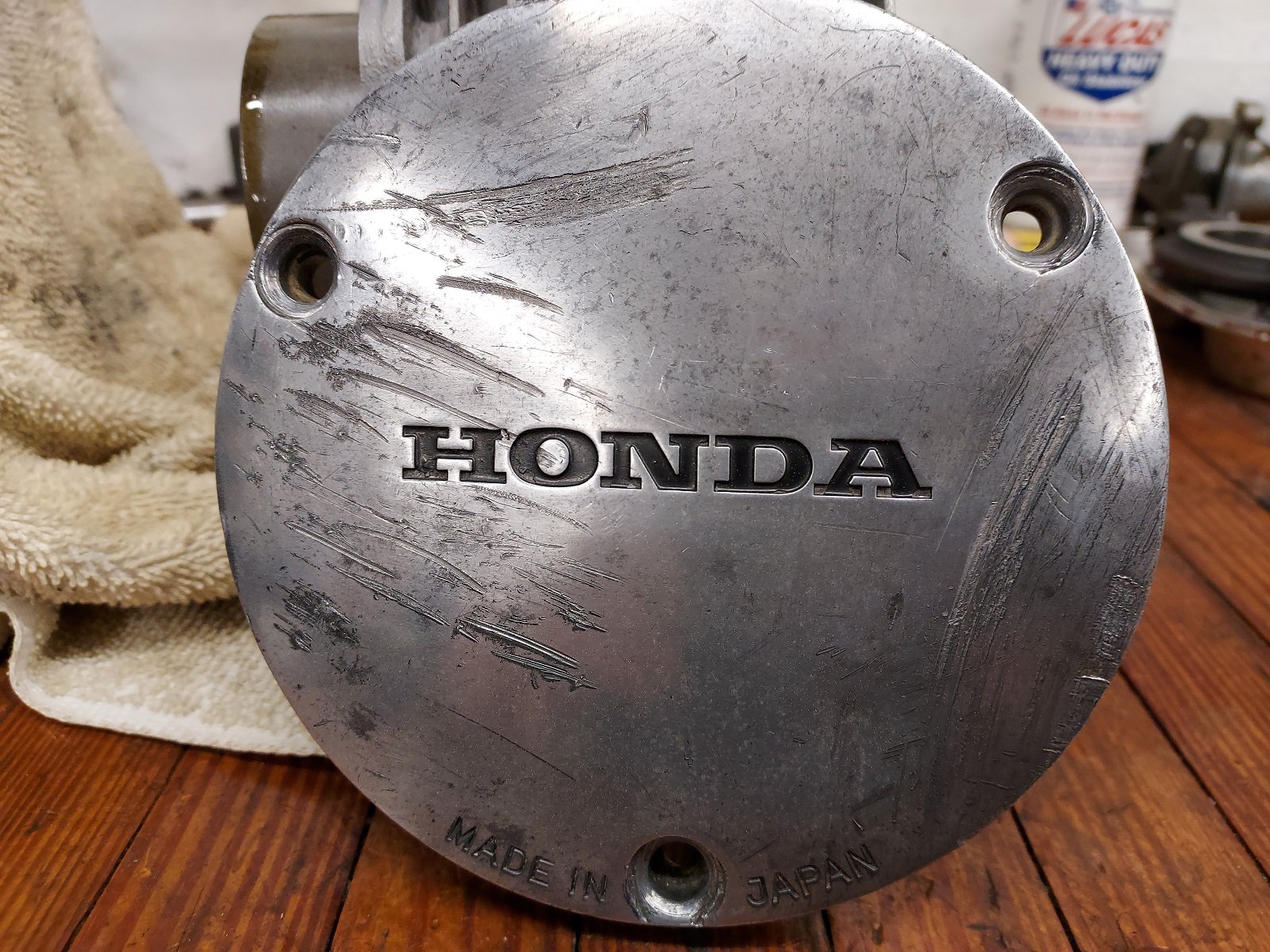
I did some additional cleanup, painting and other stuff to the outer covers of the bottom end. Decided to lightly polish the rotor cover while leaving the patina/damage, so I just used the polishing compound that was already on the cloth wheel.

EWP9ZqI.jpg


Since the bike will be running total loss ignition, all the charging components will be removed from the left crankcase cover along with no rotor on the end of the crank for quicker acceleration. But without the stator there are no threads for the rotor cover screws to hold it on, so I JB Welded some 6mm nuts to the tabs inside while the screws held the cover on finger-tight to be sure they were properly aligned.

bHn7Y2d.jpg


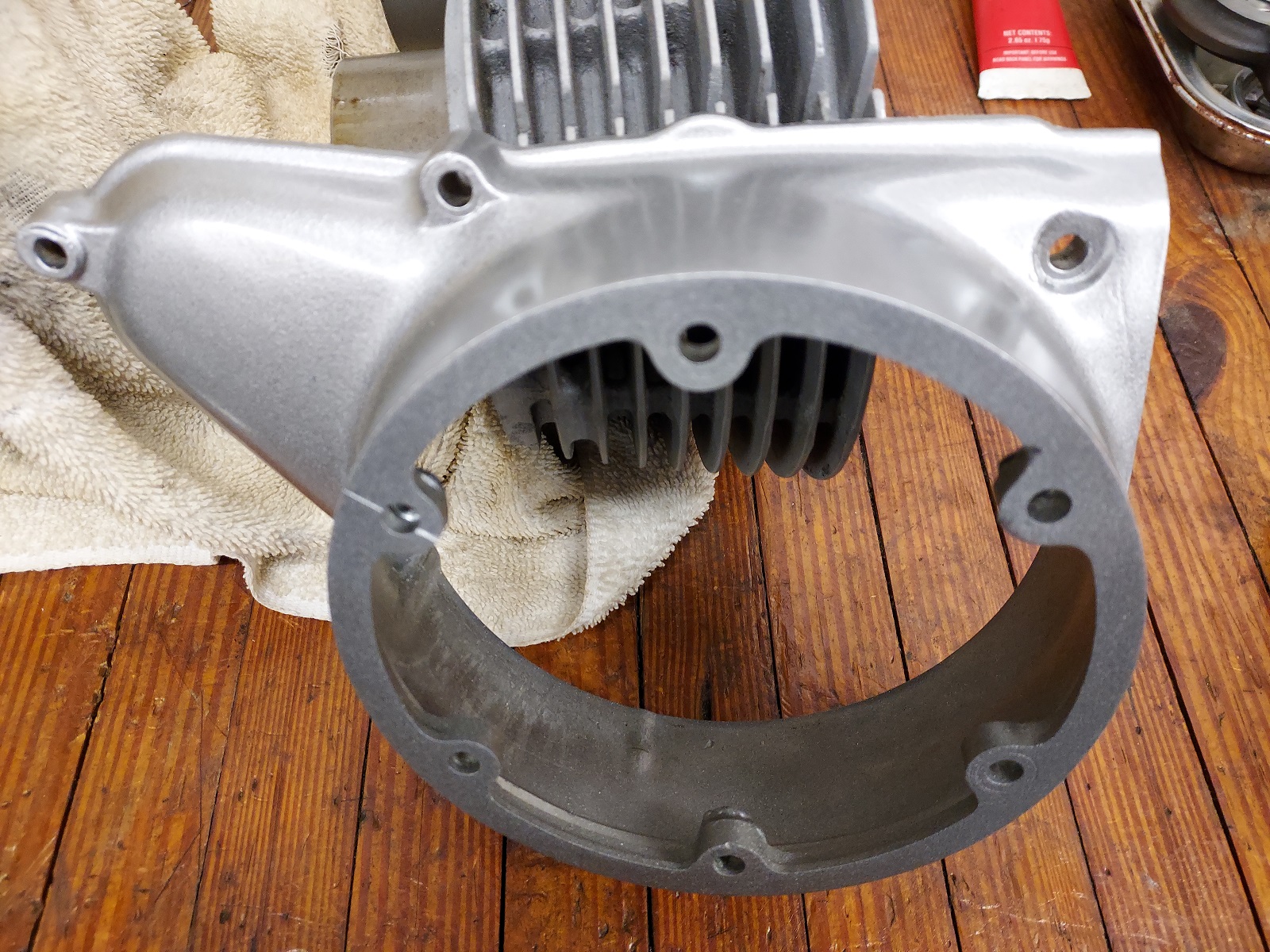
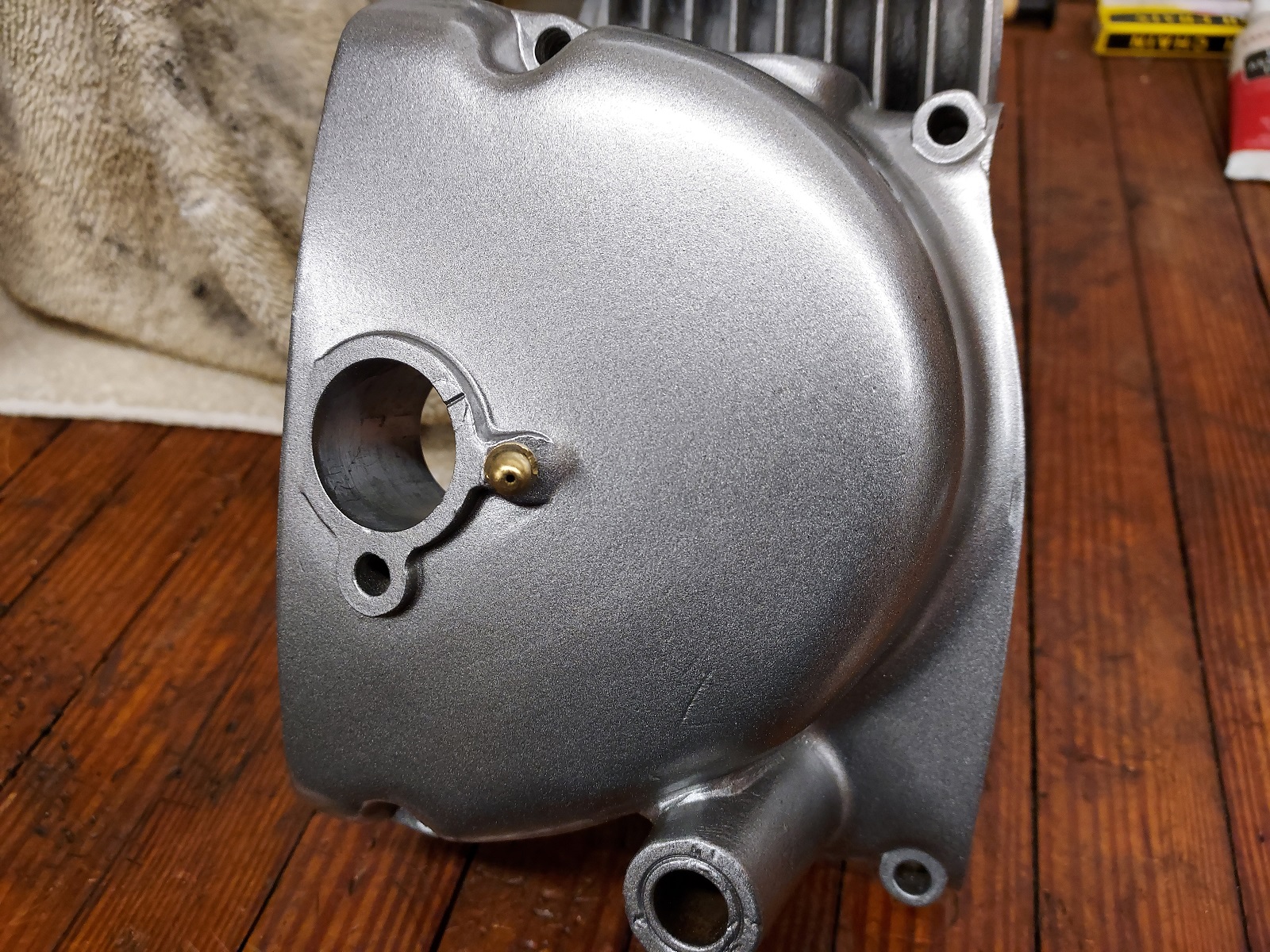
Then the 3 covers got paint. Finally used the replacement Honda Oyster silver that I bought to replace the can my father left me in his huge stash of spray cans from doing outboard motors. It still doesn't match what is on the covers on the red bike despite being the exact name and stock number as what came from my Dad's garage but at least all these covers will match.

NFL8iZa.jpg


7Glj57L.jpg


fgEczg6.jpg


The oil filter cover is different on the 4 speed engine and I was able to find one at David Silver that was reduced in price because it was scratched.

FxjoRQY.jpg


But on closer inspection it might have gotten scratched simply because it had a minor problem that kept it on the shelf all these years - one of the screw holes is just slightly off. I'll have to wobble the hole just slightly, the 3rd screw won't start in the threads.

HPNU7Rn.jpg
 
That is odd. I'm sure you checked the oil passages alignment to confirm it's correct before investing any more time. Assuming it's an actual defective part.
 
A known issue (by me), just bore out the holes a bit (all three of them), and you will be fine. An oil ring on the screws will keep the oil in, make sure you don't damage those O-rings (preferably viton, shore 80-90) by using the right bolts (you're showing the wrong bolts anyway).
 
make sure you don't damage those O-rings (preferably viton, shore 80-90) by using the right bolts (you're showing the wrong bolts anyway).

Those screws were for visual threaded hole alignment purposes only, I will buy new oval-headed screws for both the oil filter cover and the alternator rotor cover along with new o-rings.

I guess I shouldn't be surprised that you'd seen the misaligned screw holes before with as many 4 speed engines as you've worked on. I've never encountered a 5 speed engine where the oil filter cover screw holes didn't properly align.
 
Not all of them, however, I did run into a few. The original screws, aside from the oval head type, has a threaded part, and a smooth part. The smooth part is where the O-ring sits when mounted, an O-ring on a thread won't stop the oil from leaking.
 
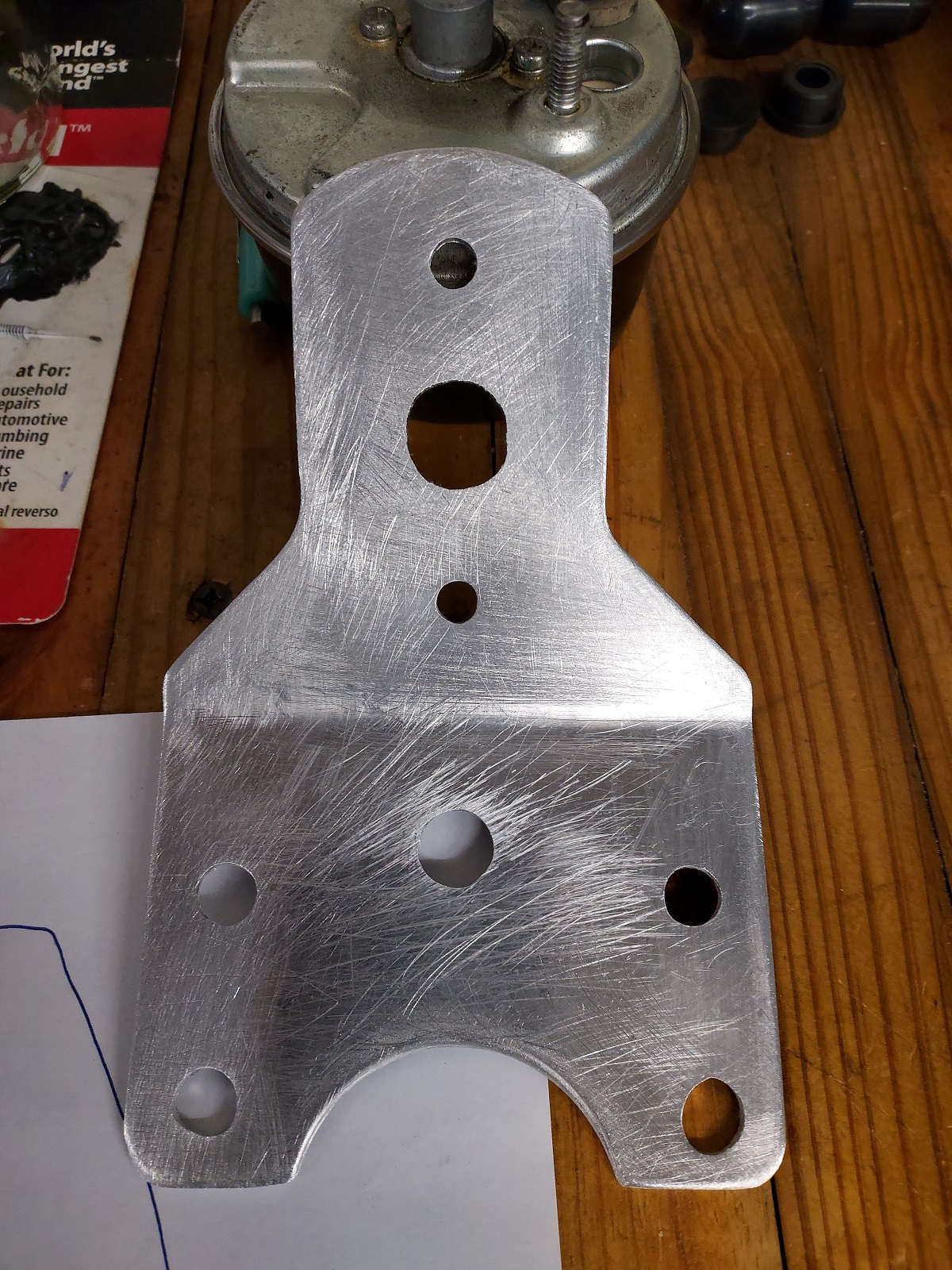
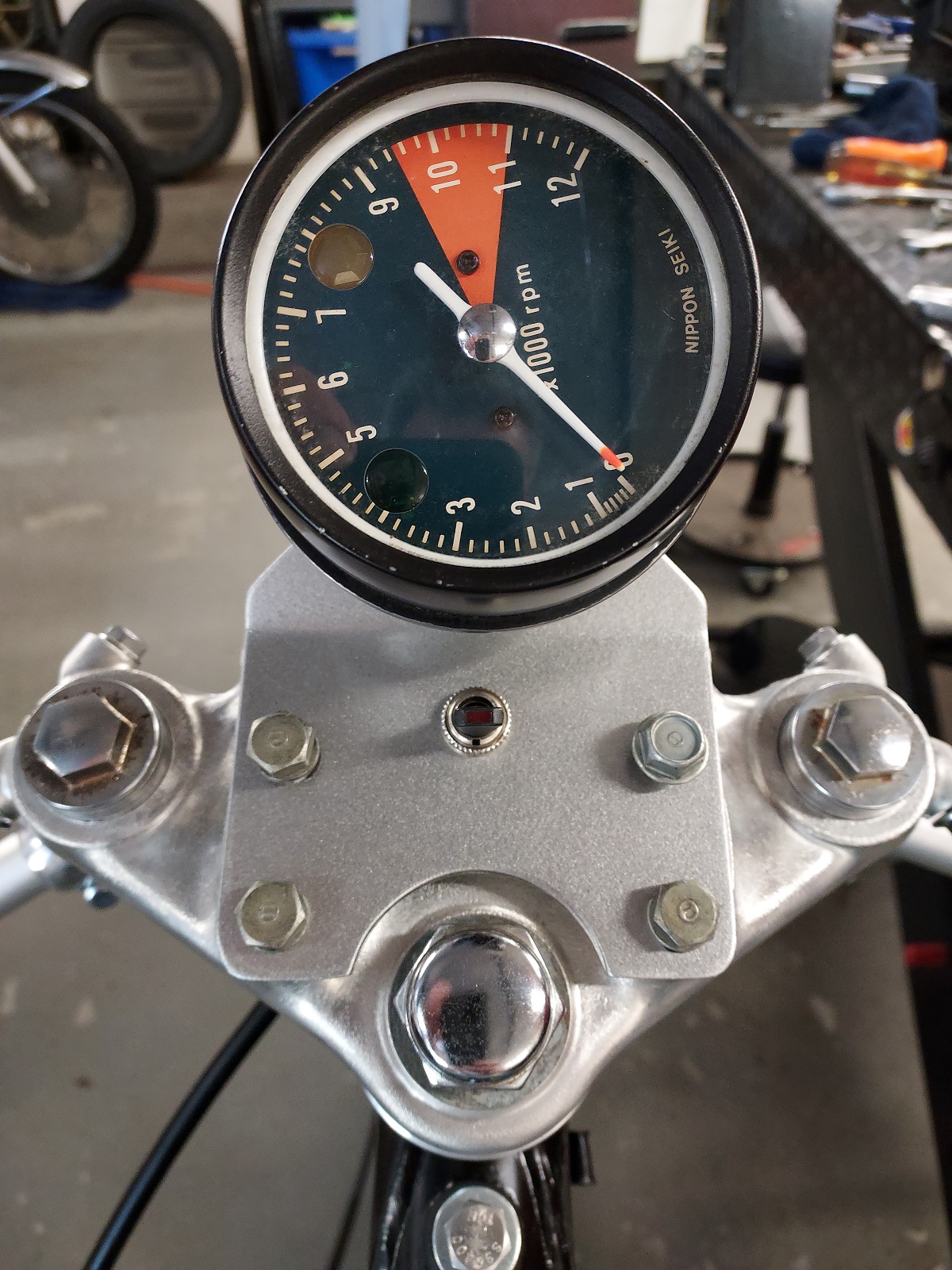
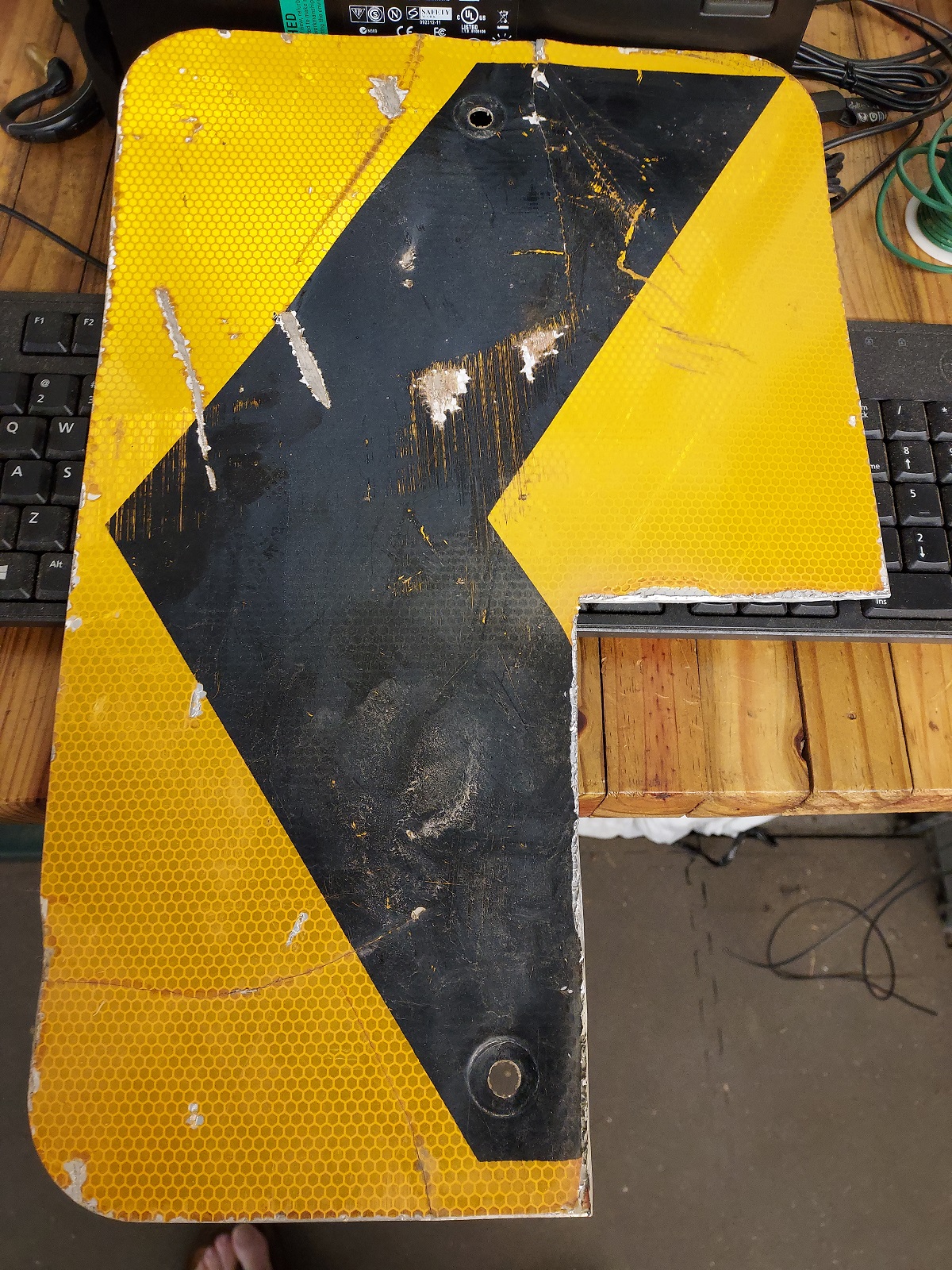
$5 curve warning sign from Pickens, SC to make a tach bracket from the missing piece. Man, let me tell you that adhesive used on the reflective sticker is some tough stuff. I put paint stripper on it twice, softened the sticker and scraped it off with a putty knife but the glue remained. Wire wheel on the grinder only pushed it around, carb spray softened it some but didn't wash it off and I finally just soaked it in a shallow pan of gas.

NnrHtRv.jpg


After a few hours of cutting wheel, hacksaw, bench grinder, hole saw, flat and round files, holes drilled and then bent in the big Wilton vise between a couple blocks of wood. And my very simple wiring diagram for the total loss ignition.

c8Ar7yP.jpg


Holes were off a little bit, got everything aligned and test mounted, then sanded and ready for paint. Thought about polishing it but this bike doesn't have to look that pretty.

tvHpk88.jpg


Painted it, scrounged up some bolts (too long in the front holes for the handlebar clamps, have to pick up more hardware for many areas), assembled it with my 30 amp LED lighted toggle main switch and the tach to see how it looked

m7XioNz.jpg


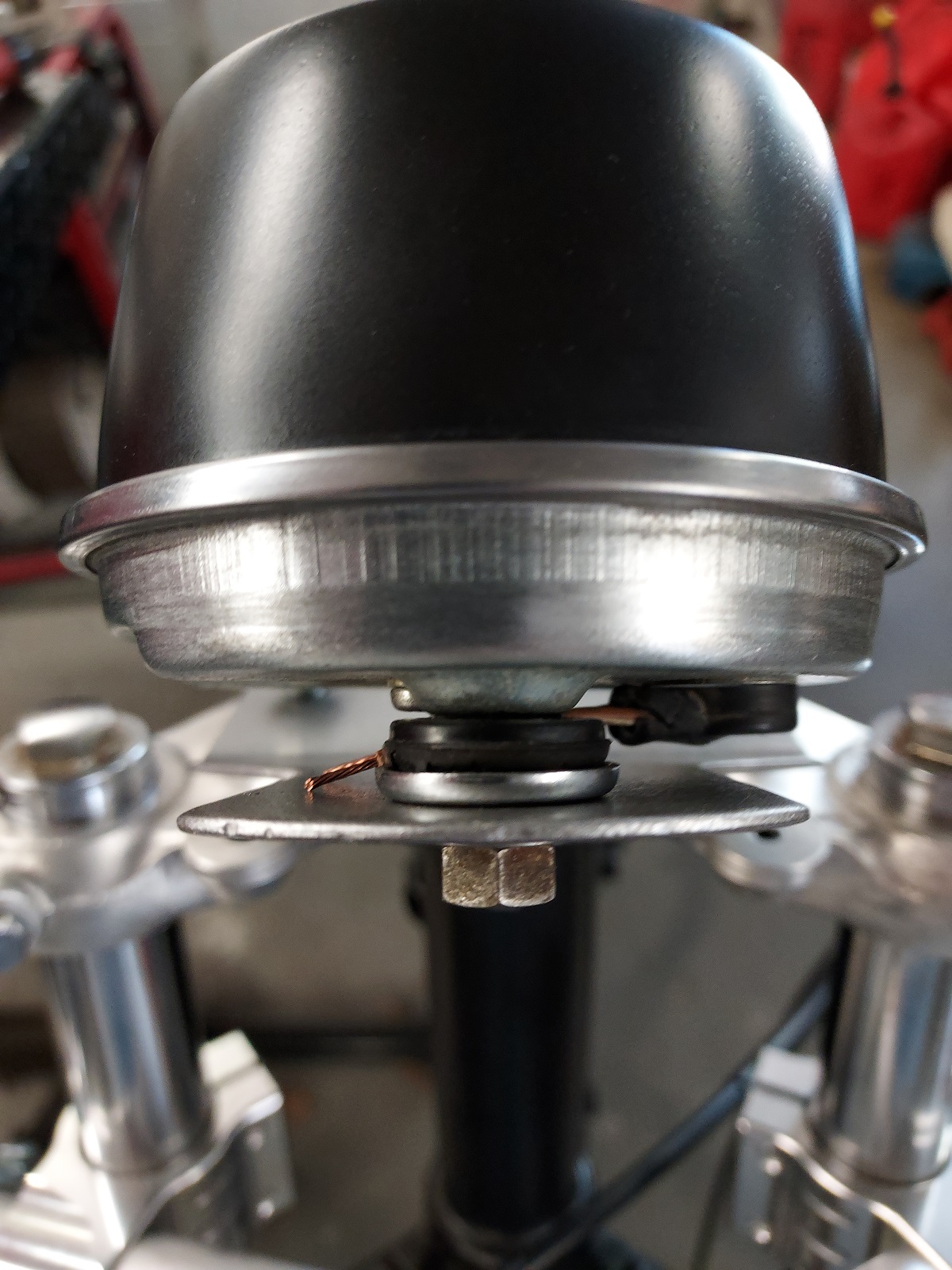
Also scrounged a couple of old valve cover bolts from a SOHC 400 hardware lot I bought a couple years ago for the nuts and bolts, cut the bolts to save the grommets and cap washers and used them to help cushion the tach a bit. I plan to use 6mm nylock nuts so I can just snug them up enough. Had an extra LED bulb for the illumination socket too

VOpbFuM.jpg


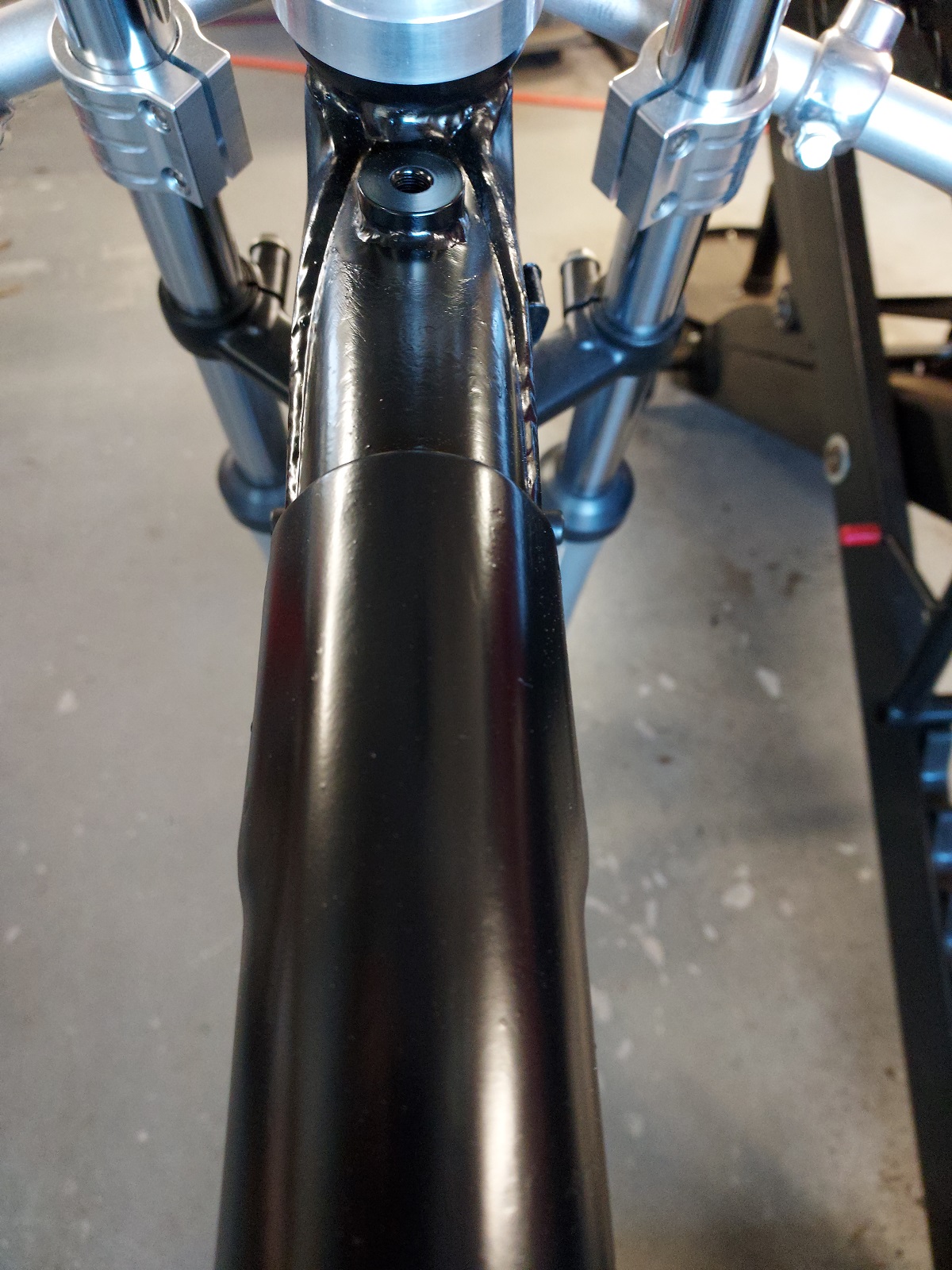
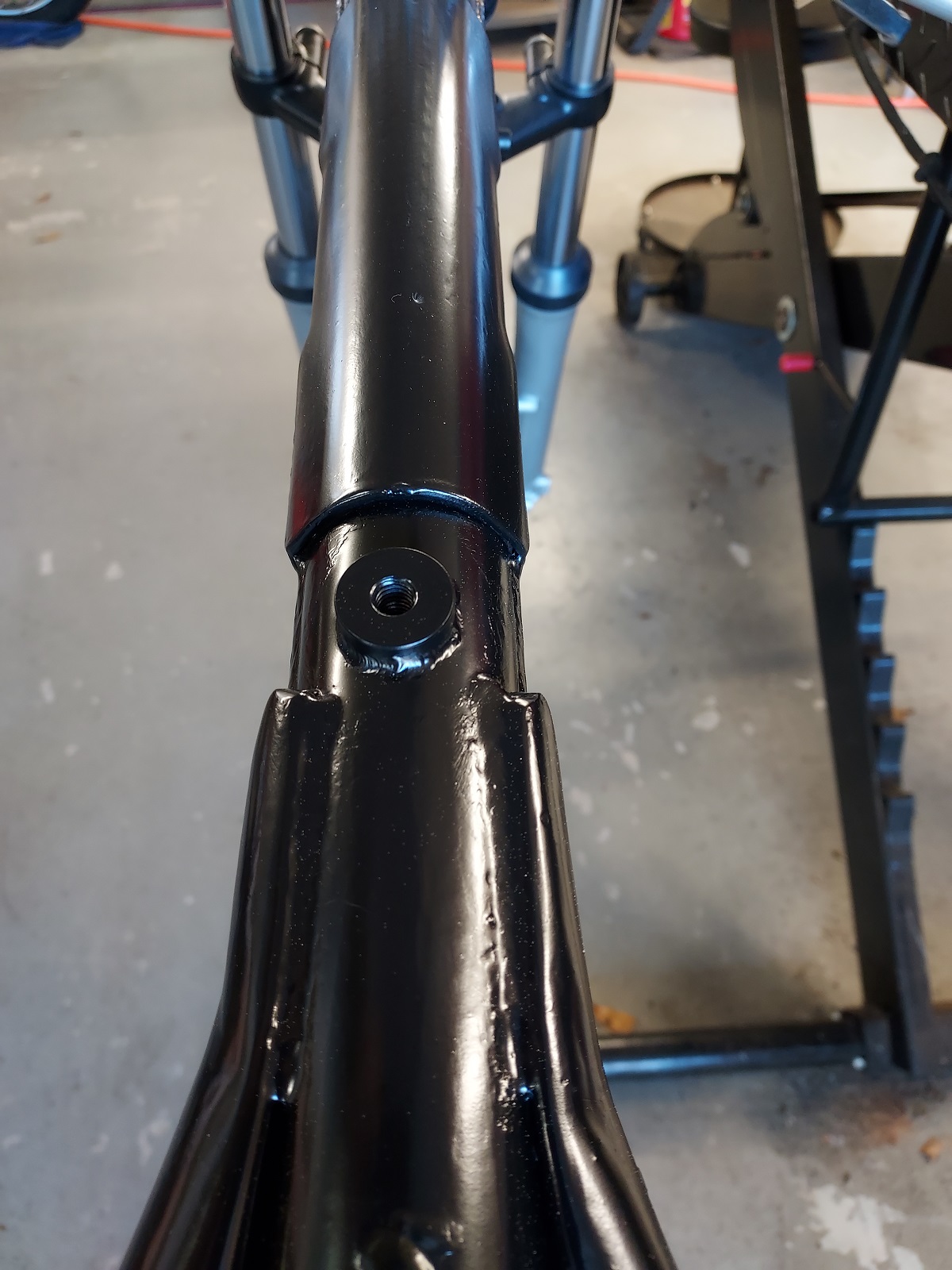
Finally went back to finish painting the frame where Russ welded the mounts for the tank and seat, had to hand wire brush the light rust away from me not doing it sooner (phone camera just won't focus on both at the same time, too much other stuff closer)

cJMiZLm.jpg


ue3Hkrb.jpg


baD410L.jpg


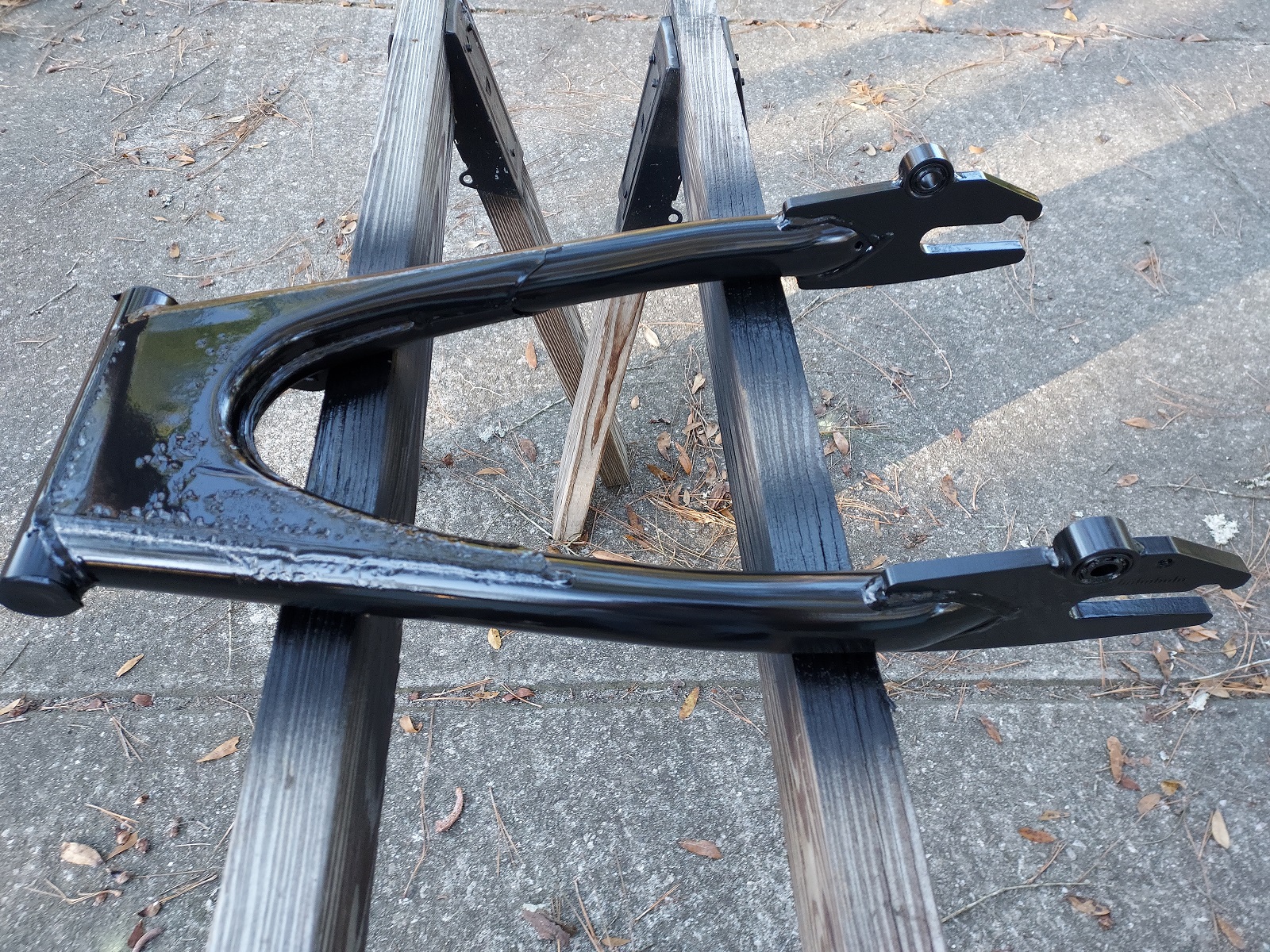
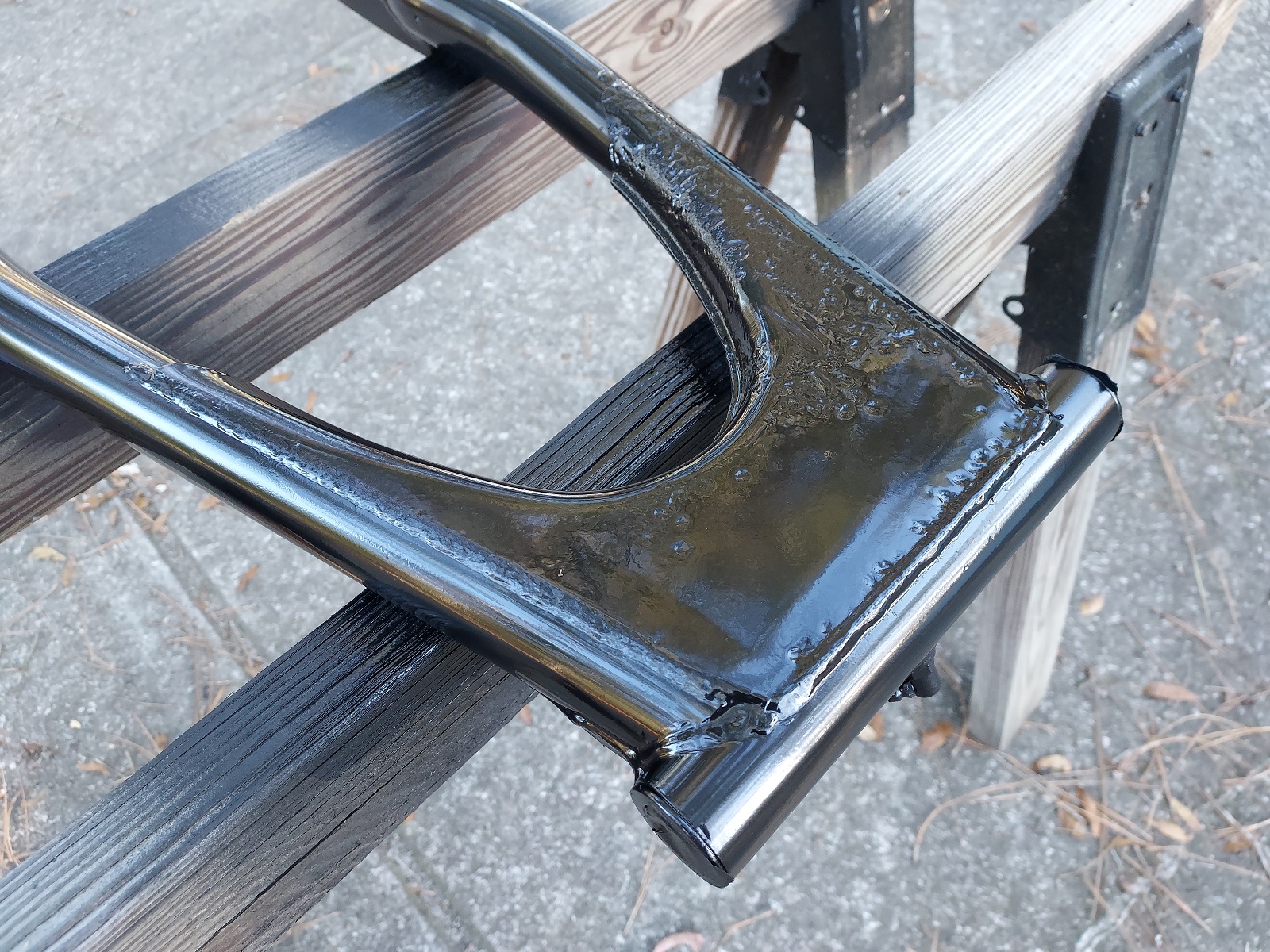
Aaand spent more time wire brushing the previously-sandblasted swingarm that also had light rust on it again. Poor bike it came from (CB650C) must have sat outside during its life, huge rust pits in the chain area which could have been caused by the battery drain tube, who knows. As an old hot rod acquaintance of mine used to say, "paint it flat black and it's outta there" meaning no one will pay attention to it. Yeah, that was how he worked.

32BE7Iw.jpg


6HWolA9.jpg
 
Last edited:
Tach mount turned out great!

Thanks, it was challenging to get things straight and reasonably symmetrical using the most basic tools. I have a nice little air nibbler that my father bought for me years ago, doesn't get used much and I thought I'd be able to use it this time but the sign aluminum was too thick to fit the tip of it. So it had to be done the old-fashioned way, hard work. Lots of grinding and hand filing along with the hacksaw cuts since it's (or at least I'm) more accurate with that than with a cutting wheel. Now hopefully it's stout enough so the tach doesn't vibrate too much. My father made the one on my drag bike in the '70s, I came home from work one day and he had cut it out along with the base for the seat he made for me out of yet another (absconded at the time) road sign.
 
Thanks, it was challenging to get things straight and reasonably symmetrical using the most basic tools. I have a nice little air nibbler that my father bought for me years ago, doesn't get used much and I thought I'd be able to use it this time but the sign aluminum was too thick to fit the tip of it. So it had to be done the old-fashioned way, hard work. Lots of grinding and hand filing along with the hacksaw cuts since it's (or at least I'm) more accurate with that than with a cutting wheel. Now hopefully it's stout enough so the tach doesn't vibrate too much. My father made the one on my drag bike in the '70s, I came home from work one day and he had cut it out along with the base for the seat he made for me out of yet another (absconded at the time) road sign.


Yeah, well done. I love this kind of stuff. When I did a lot of commercial steel doors, I got pretty good with those hand held jig saws (sabre saw) and the fine hack saw blades.
 
Yeah, well done. I love this kind of stuff. When I did a lot of commercial steel doors, I got pretty good with those hand held jig saws (sabre saw) and the fine hack saw blades.

Thanks. If I'd had a metal blade for my jigsaw I'd probably have used it, would have saved me quite a bit of time.
 
Very nice work on the bracket, Tom. It's nice to see progress on this build.

Thanks. Things are picking up a bit, I'm torn between getting the 900F back together or working on the drag bike and with only one lift to use as a platform to work on the 450 engine and not enough room even to work off the floor on anything else if I wanted to, I'm trying to make progress on the 450 before the weather gets hot here since there's so much more to do on it. Wiring harness and battery box mount are the next items, then back to the engine and the crankshaft cleaning so I can assemble the bottom end. Then there's exhaust planning and rear brake pedal mount, disassembling the mocked-up roller to finish the front forks (fluid and tightening all the hardware) and ready the frame to drop over the engine along with replacing the front brake shoes since I discovered they won't even stop the roller with my weight on it (!), among the other little details that escape me right now but will assuredly turn up along the way.
 
Very nice to see you find time for your own projects in between helping so many of us out with ours.

Thanks Troy, it's definitely enjoyable to spend some time in the garage during a stretch of spring-like weather here right now. And I have a computer in the garage too so I can still do forum business while giving my back a rest periodically. (y)
 
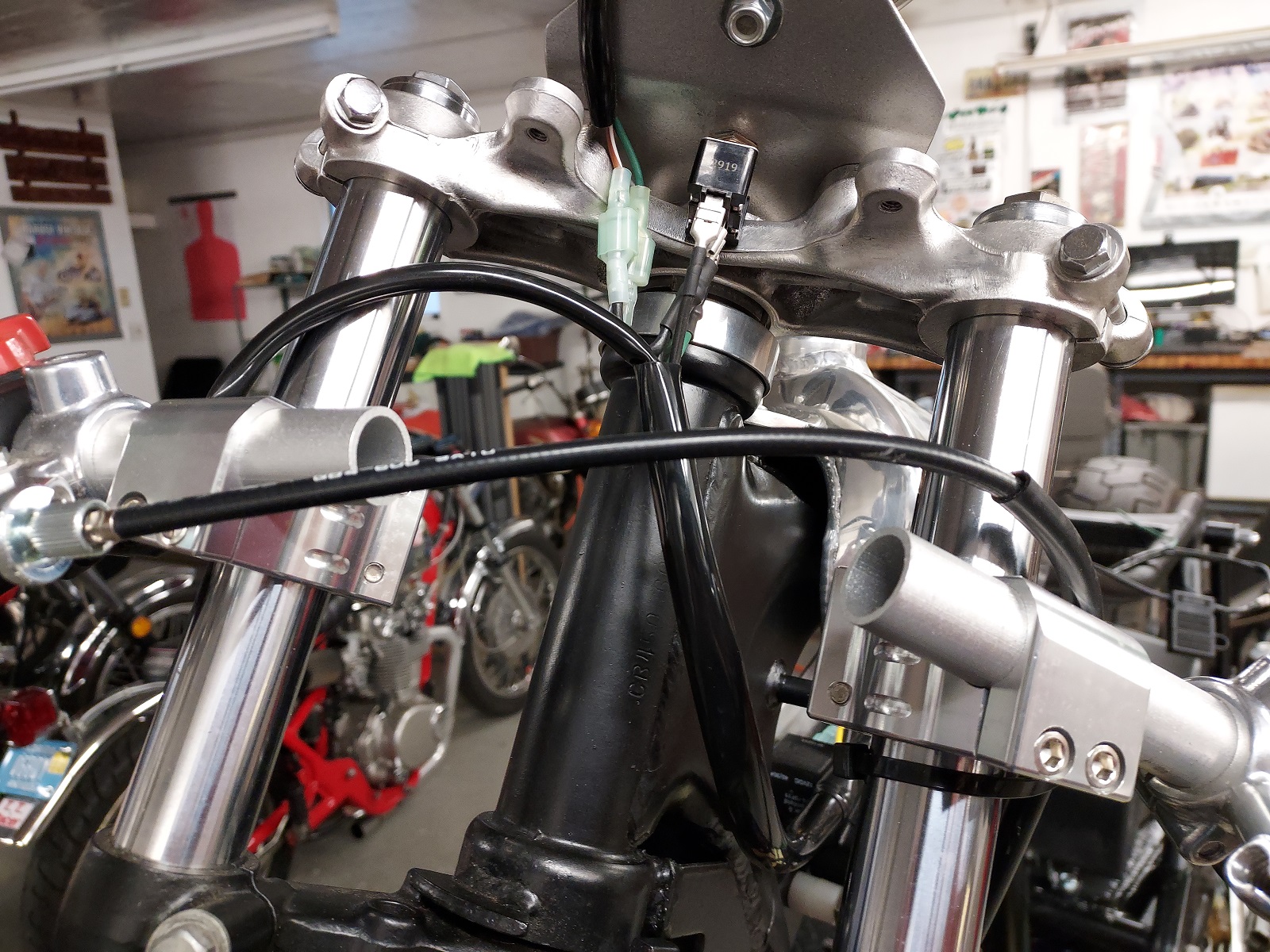
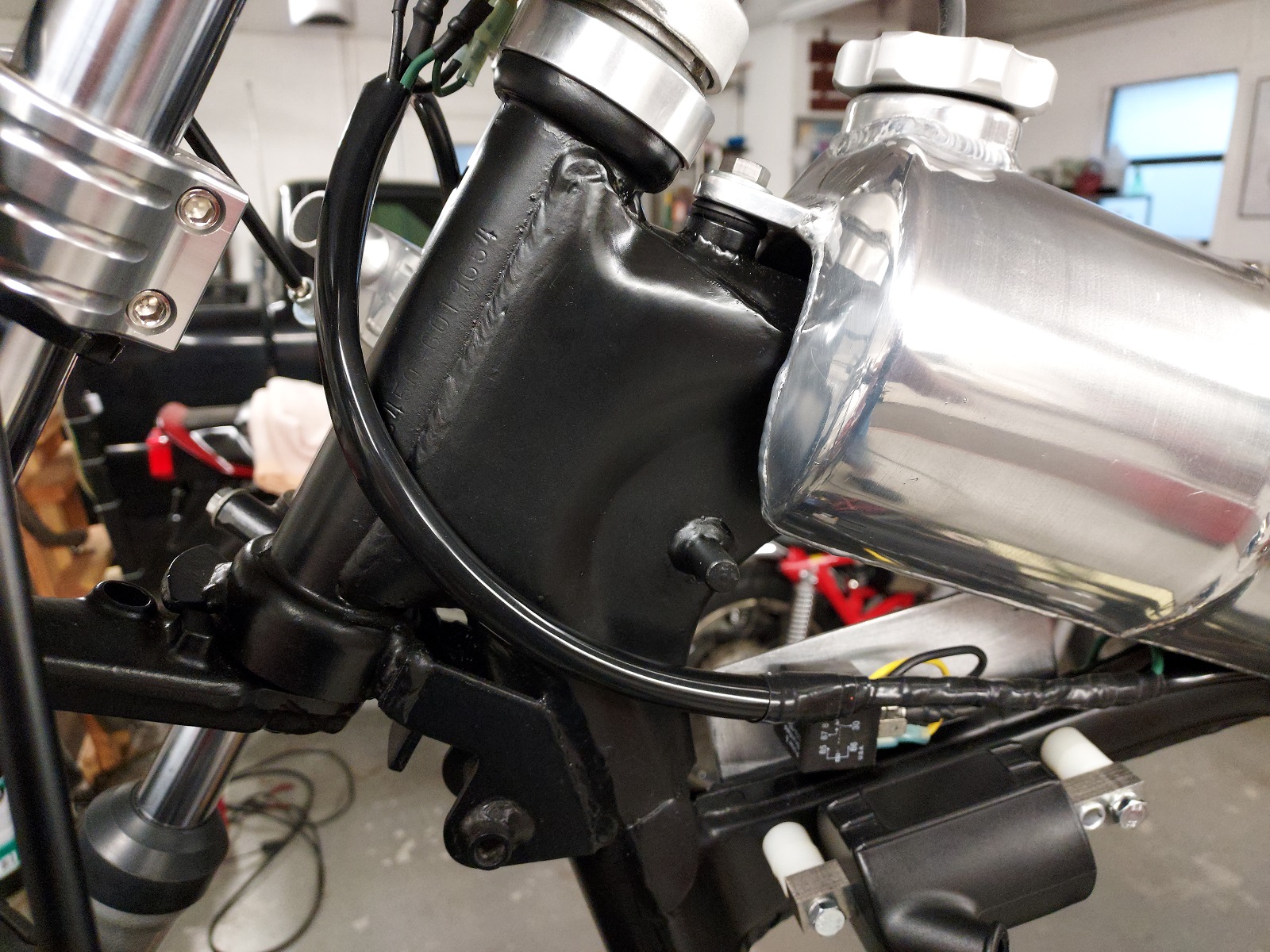
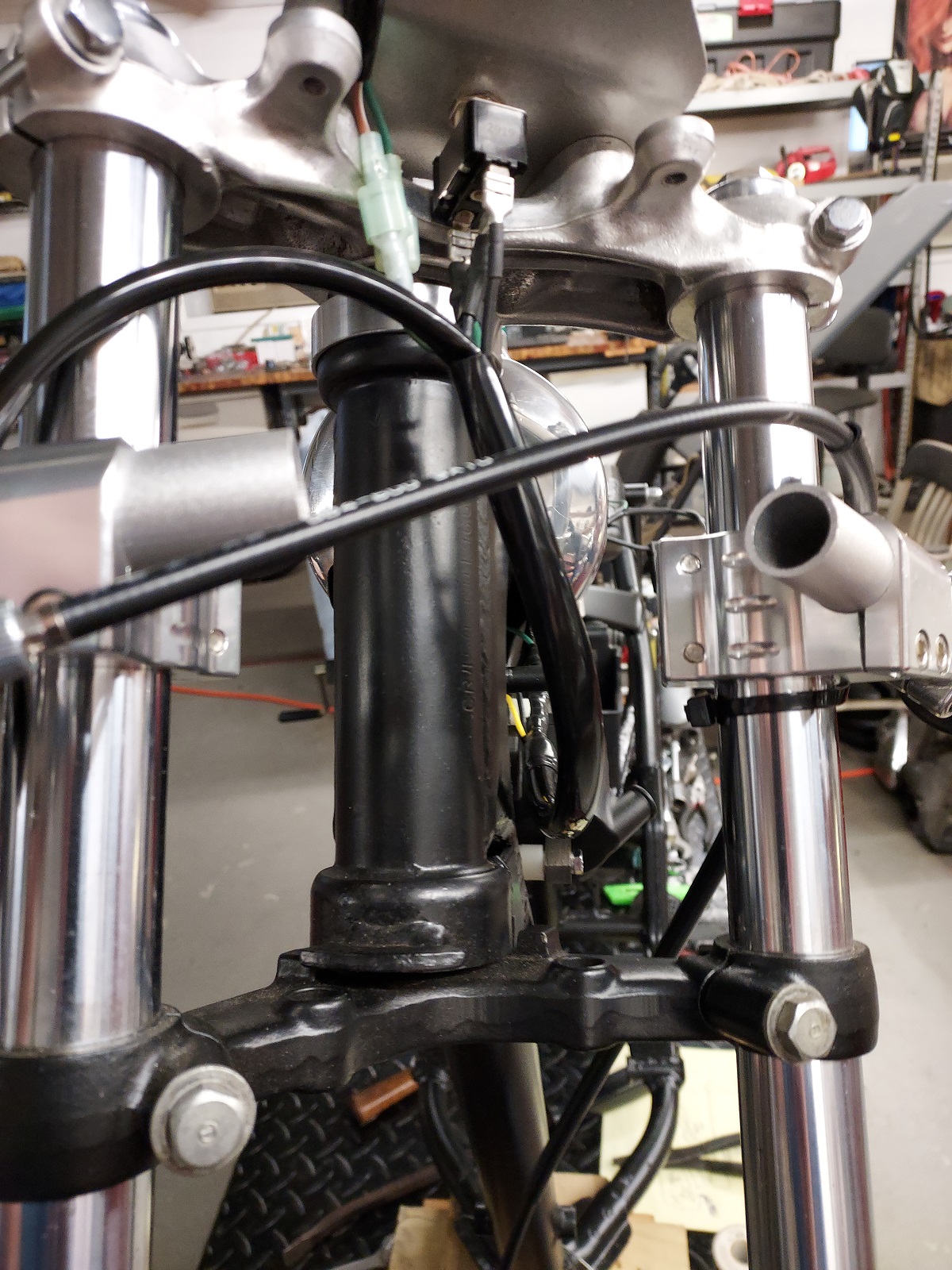
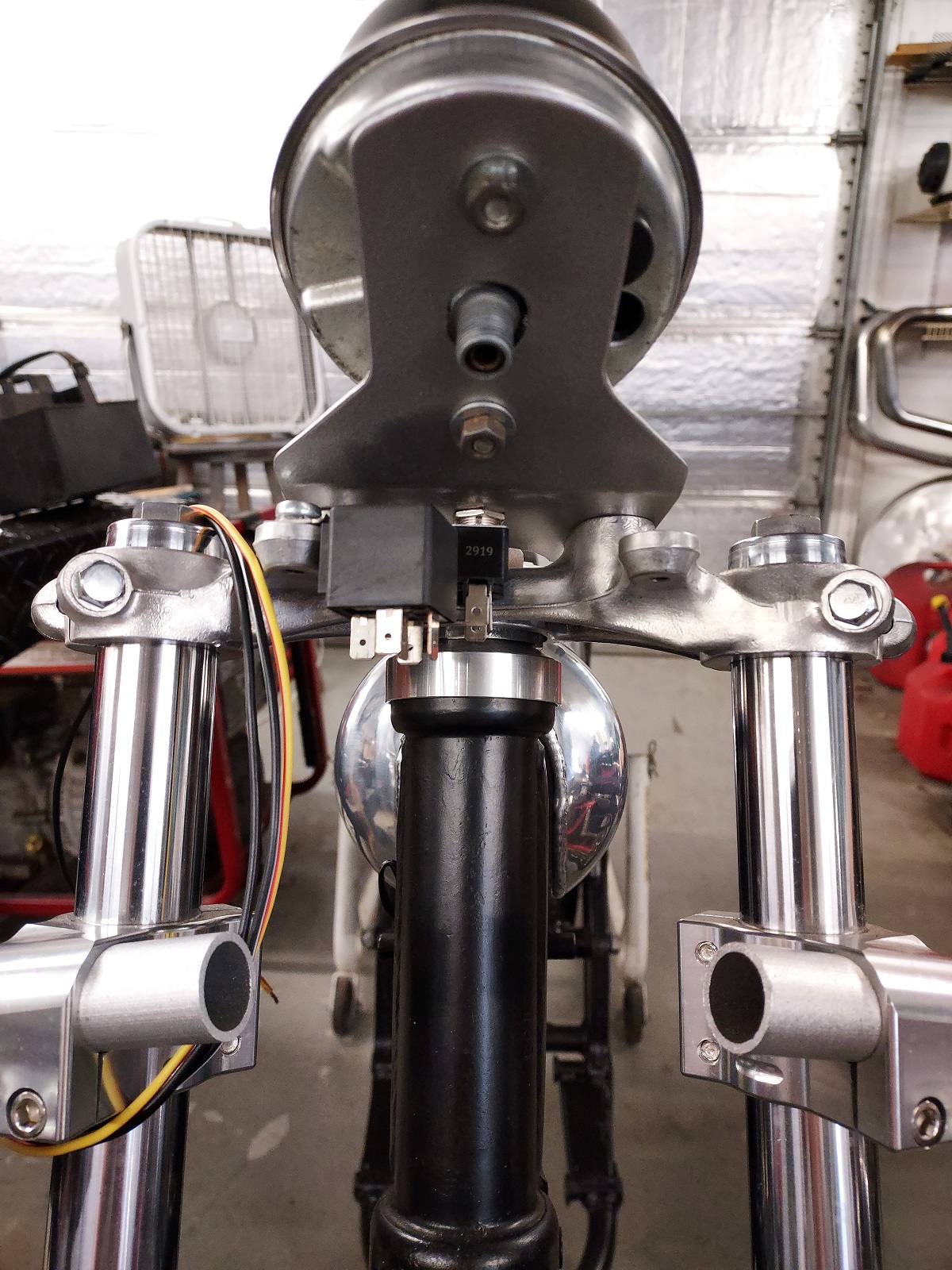
Worked on a few small things today. Drilled a locating hole in the right clip-on bar for the Honda throttle assembly I plan to use, mounted it with throttle tube and put the grips on both sides. Discovered a nice spot for the shift relay, attached to one of the CM250C gauge mount points on the top bridge very near the main power switch. Since the starter button I'll be using for the shifting kill is a later model 4 cylinder piece, the starter button sends 12v from the button through the yellow/red wire (not ground like most of the twins) so it will open the relay to break power to the coils. The yellow/red, as well as the black/white power output to the coils (through the kill switch on top of the assembly) are both fed by the single incoming black wire, so having the relay in close proximity will make the wiring short and compact. I just need to extend the power and ground from the tach illumination socket and tie the brown/white into the power feed past the main switch.

rJrPGEz.jpg


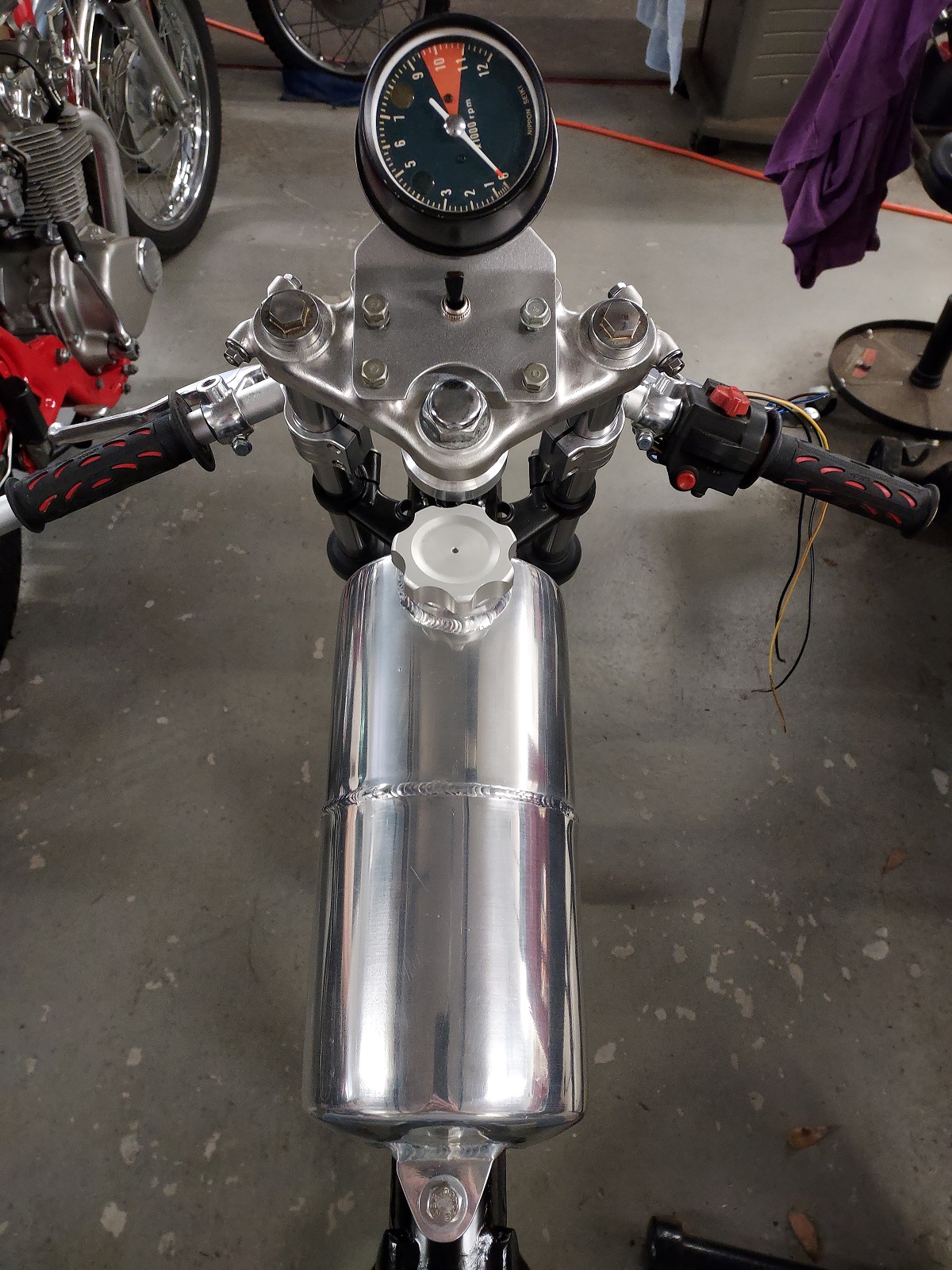
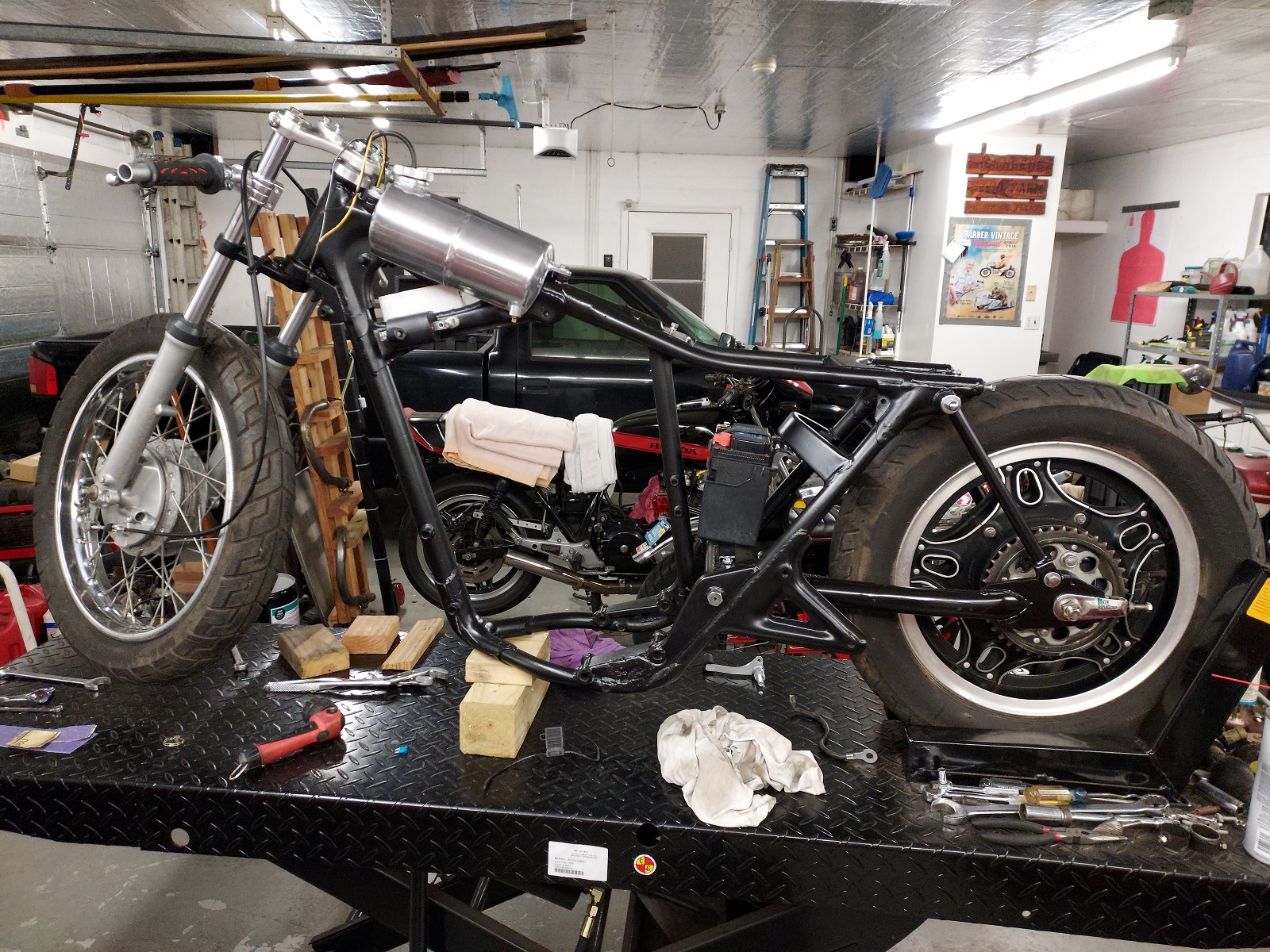
Had to slip the tank on so the front end is basically mocked up (minus the cables) to see how it looked.

5pz8veh.jpg


Looking at all of it reminds me just how good Russ the machinist is.
 
It is nice work....from both the design and styling to excution of the build!

Thanks Dave, I had plenty of help from Russ the machinist of course. The tank and seat base are things I could never have accomplished myself, not to mention the steering head bearing adapters. It's coming along, I'm trying to get as much of the little stuff done so there's less to do once the engine is finished. Obviously it's taken me longer than I wish it has but it's also given me more time to think about some of the little details and get them to fit together as best they can.
 
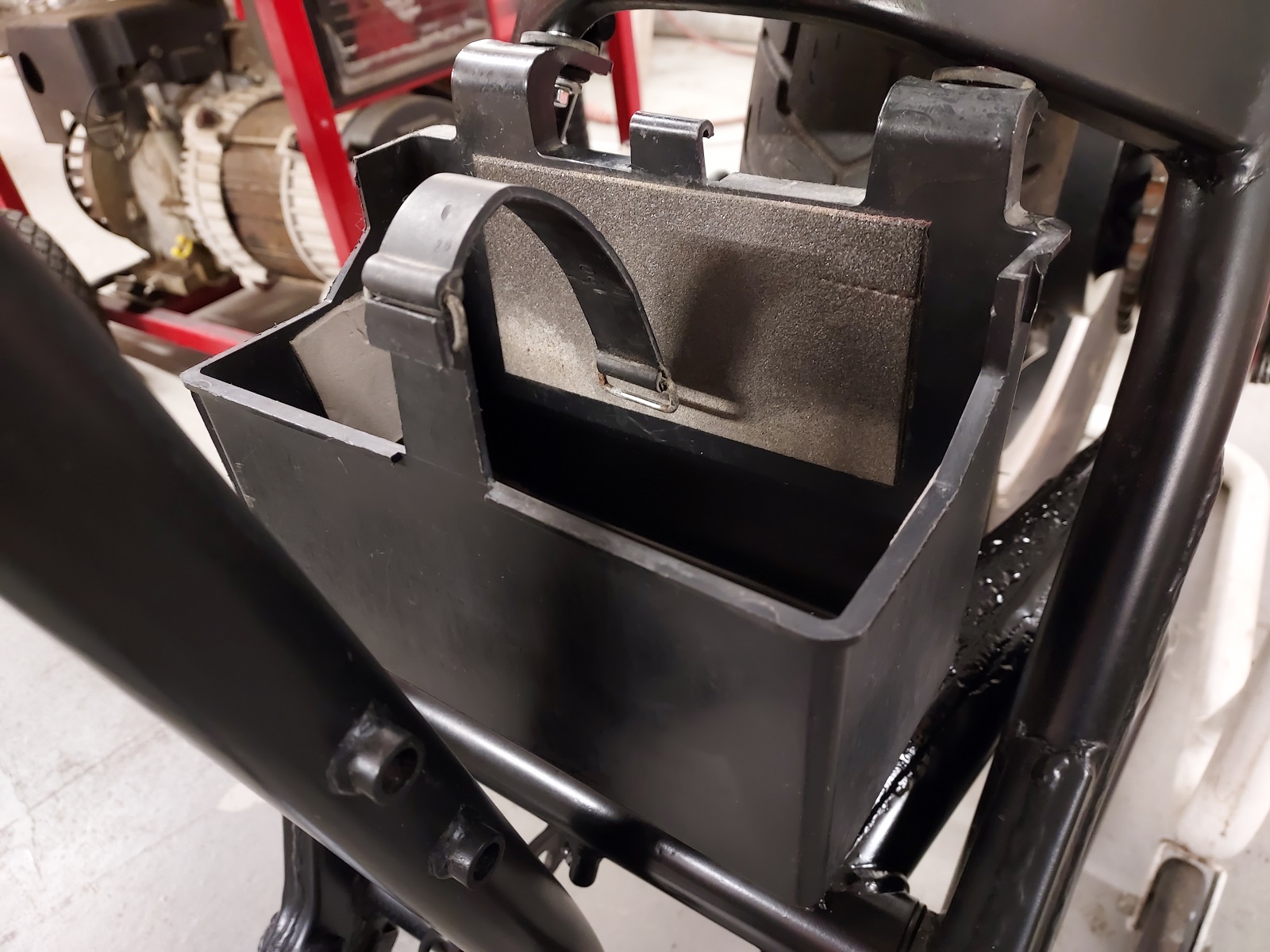
At least 2 years ago I found a used plastic battery box that was close to the dimensions of the LiFePO4 battery I planned to buy and bought it. I'm not sure I even knew what bike it came from and really hadn't paid any attention to it until recently when I noticed the small crossed tuning forks logo molded into the rubber strap, then saw on the bottom someone had written in black Sharpie on a black battery box "Venture Royale". I wanted at least a 20 amp battery for the total loss so I could run an entire evening at the track without worrying about recharging like I had to do with my first 450 back in the '70s running just the original lead acid Yuasa 12N12A-4A. So the dimensions are really close, within a tenth of an inch or so based on what I finally bought today. The lifespan is plenty long enough at this point in the build to make the purchase, and I did it so they wouldn't run out if I waited any longer. (who knows if you can believe them when they say "only 3 left")

So it was time to figure out how to mount it. I'd been considering lots of ideas but they were all more complicated and would require material I didn't have on hand, so I went back to the mental drawing board and realized I could use a simpler method since it's just under 4 lbs, won't really need anything overly strong or exotic.

NGoE8VO.jpg


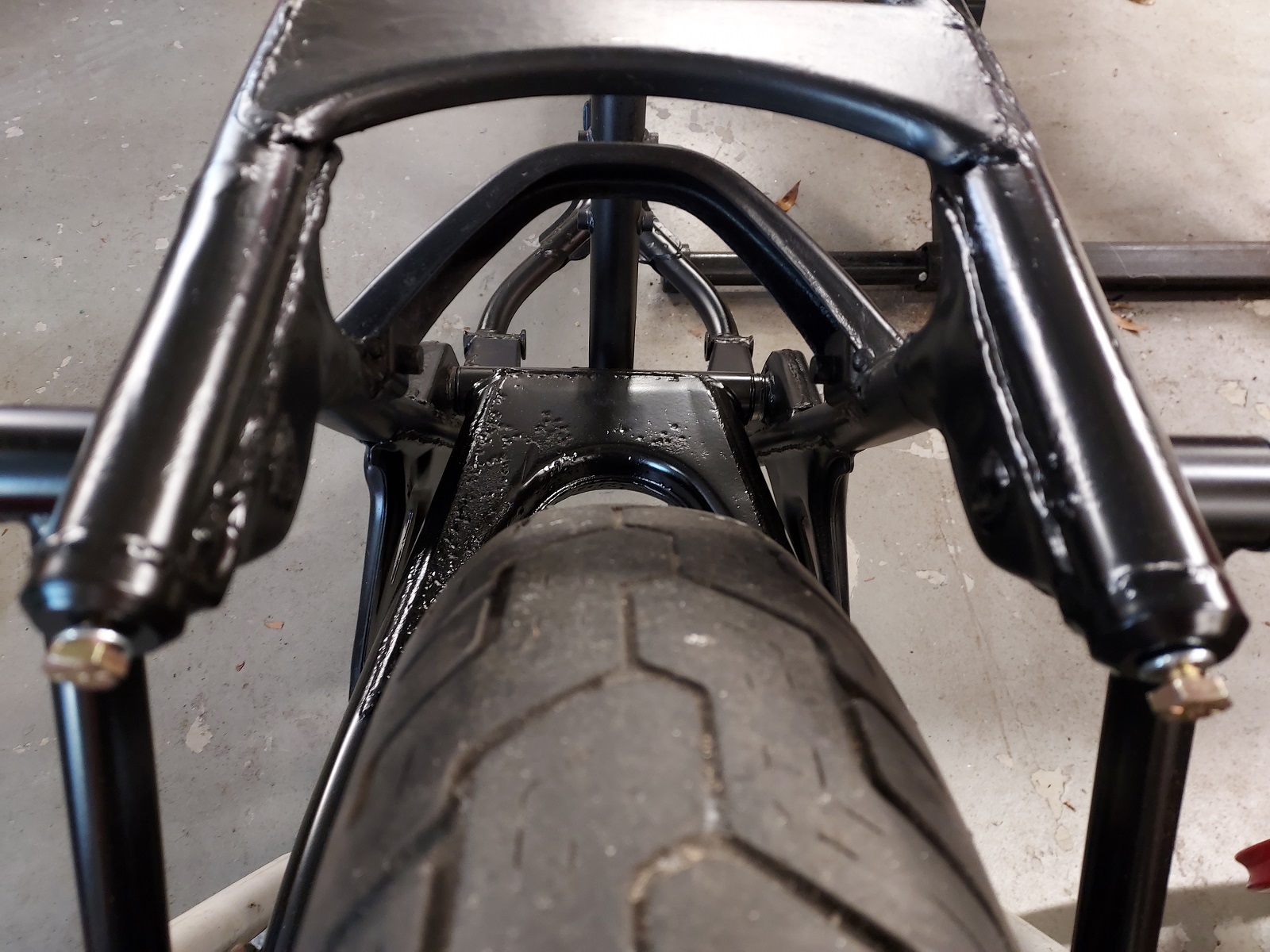
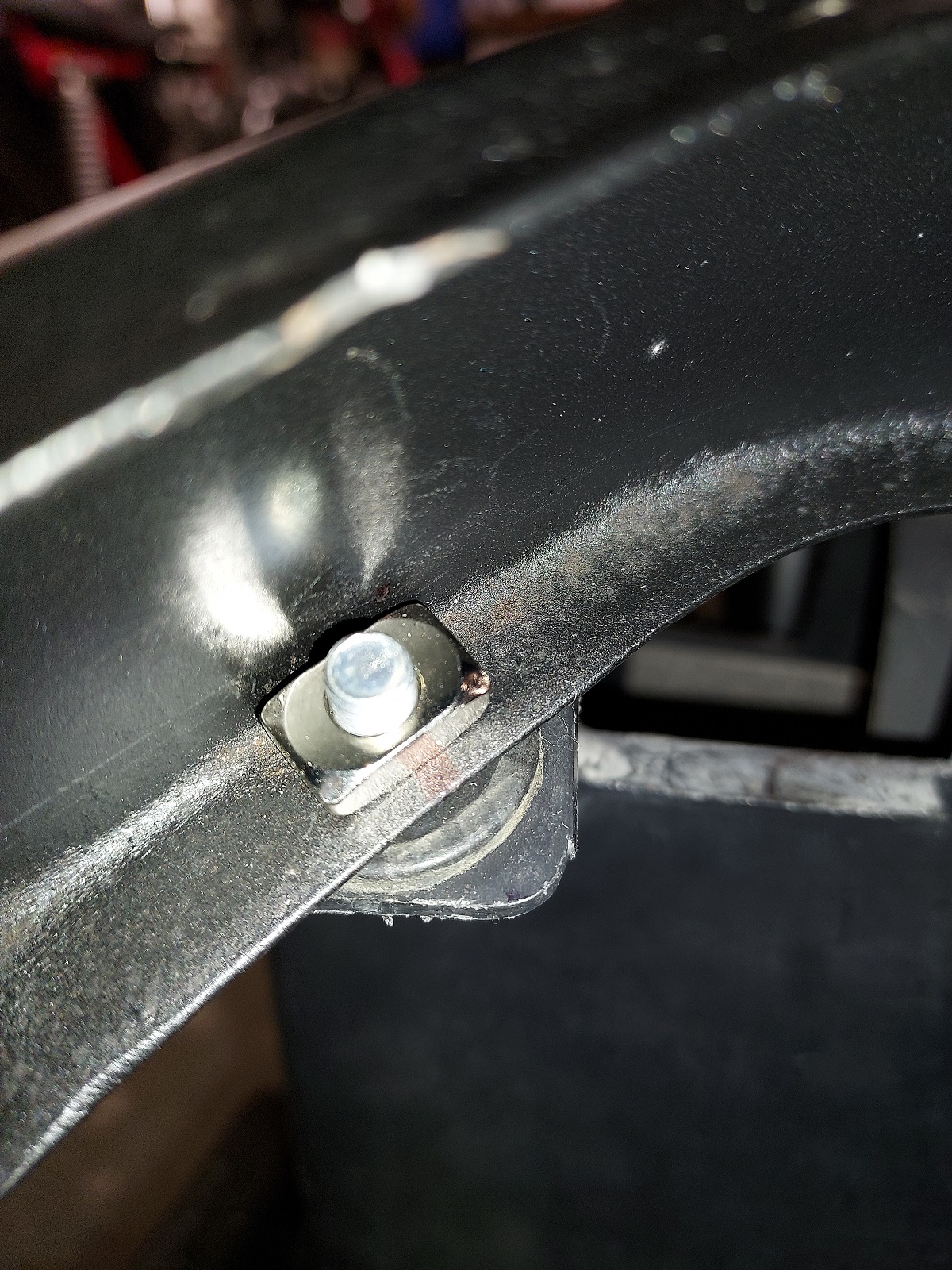
I considered making a strap bracket to support the bottom but again, lack of the best material for it and I didn't want to use an old universal cruise control unit mounting bracket because they resemble a stiffer version of plumber's strap. It occurred to me I could use the heat gun to bend the plastic tabs downward to conform to the angle of the bottom edge of the stamped and welded frame brace/forward rear fender bracket mount. A bit tricky drilling into it with the rear wheel in place but it would have taken an hour to clear the lift and put it up there, so I winged it (wung it?). Came out close enough, so then I had to find the right hardware to mount it to the new holes. I found some nice metric bolts my father left me and some tubular inserts for the rubber grommets so they wouldn't get crushed and offer some softness to the mount, then discovered the perfect nuts for the job - rectangular steel 6mm flat battery post nuts that the channel of the frame would hold still naturally. It's so great to have lots of useless crap lying around until it becomes useful.

KgDDYce.jpg


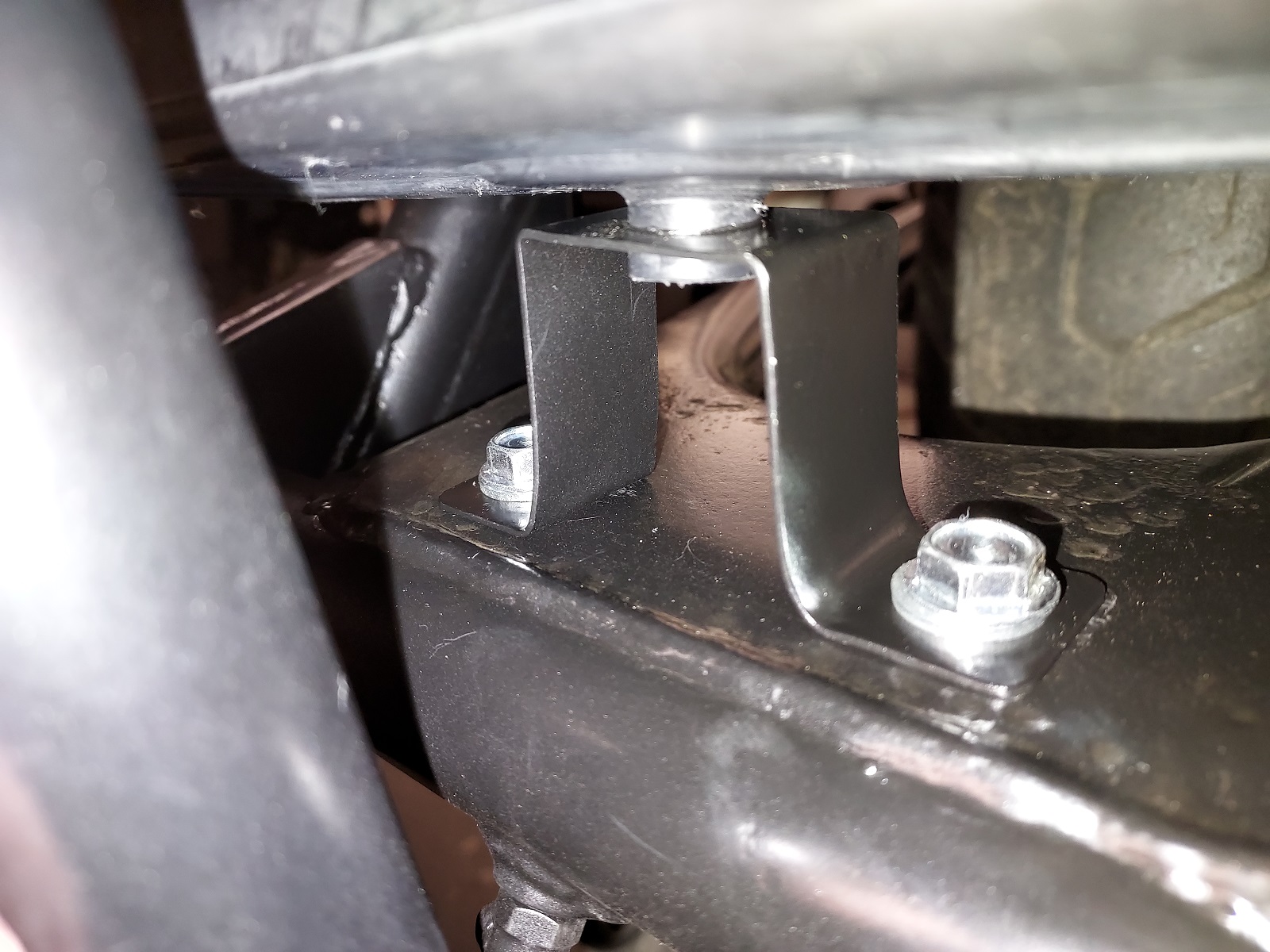
Top mount complete, I had to figure out something for the bottom and the box already had a roughly 1/2" plastic post that undoubtedly went into another rubber grommet on the Yamaha, so I set out to devise something to work with it. All I had was a short piece of pretty soft strap metal so I made a standoff out of it, derusted it with Evaporust and bent it up. Also thankful for the drill press clamp my father left me or I'd been trying to hold it with a pair of vise grips to use the drill press. Cleaned up, drilled, painted and slipped it onto the post on the bottom of the box to mark the hole locations in the top of the swingarm. Normally I would never drill into the swingarm but it's the forward area where flat metal was welded to the tubes and it isn't being used as suspension anymore anyway, plus it's a CB650 swingarm and this bike will weigh barely over half what the 650 weighs. Used some stout sheet metal screws left over from something, nice clean and shiny 7/16" heads that will never be seen.

oOCAYrn.jpg


Slipped it in and bolted it up. Now hopefully I'll be able to get the battery into it without removing the box, but even if I have to it will be a simple 2 bolts.

a4FS7Aa.jpg


Finally making a little progress almost every day.
 
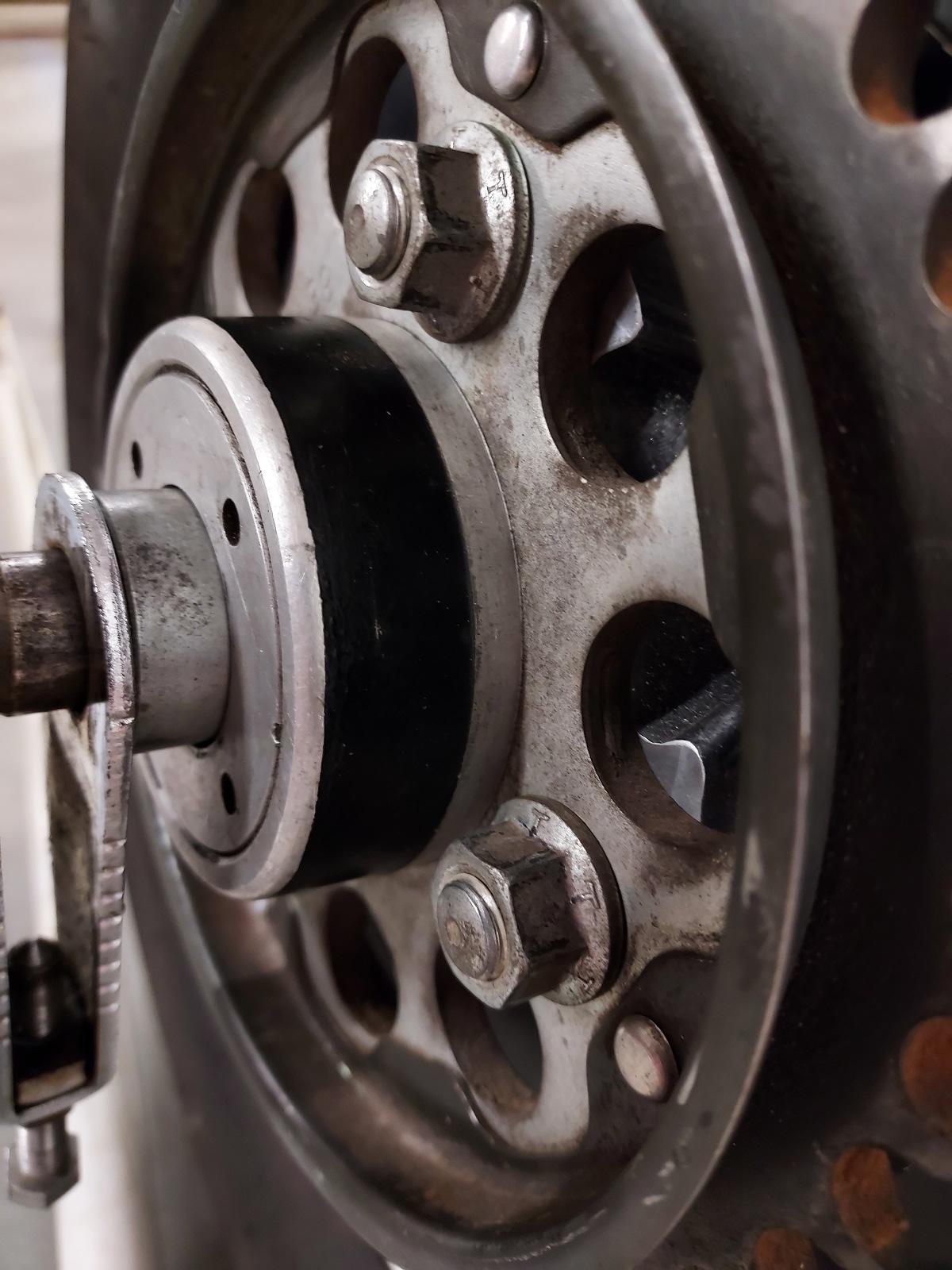
Got a couple things accomplished today that I'd been holding off doing until I could mull it over a lot more and try to come up with a better idea. First one was the rear sprocket drive flange and the depth of the 12mm studs that hold the sprocket. I had Russ remove the thickness of the sprocket from the bosses where the studs go in to align the rear sprocket with the front (mocked up previously here after this). That created the problem of the factory studs being too long, and I really didn't want to use spacers or even worse, washers under the flange nuts that hold the sprocket. The factory studs have an unthreaded area where the sprocket sits so shorter replacement bolts or studs would have had threads in that area which could wear down and allow sprocket movement later, so I considered shortening them instead. They're big and beefy compared to the studs used on the stock 450 rear wheel so I figured they could stand to be a little shorter in the drive flange. Shortened one, cleaned up the threads, screwed it into the flange and then realized the whole problem wasn't the length but the depth of the hole that stopped the studs from screwing in further (open holes on the backside with about 5mm or so more space). So it finally dawned on me I could simply remove some of the outer threads by drilling the top of each hole a bit larger to accommodate the unthreaded part of the stud so they'd screw in further... and it worked out really well. Mounted the sprocket afterward and hammered the 12mm nuts (17mm heads) down hard with the 1/2" drive cordless impact. (y)

tnDbq8M.jpg


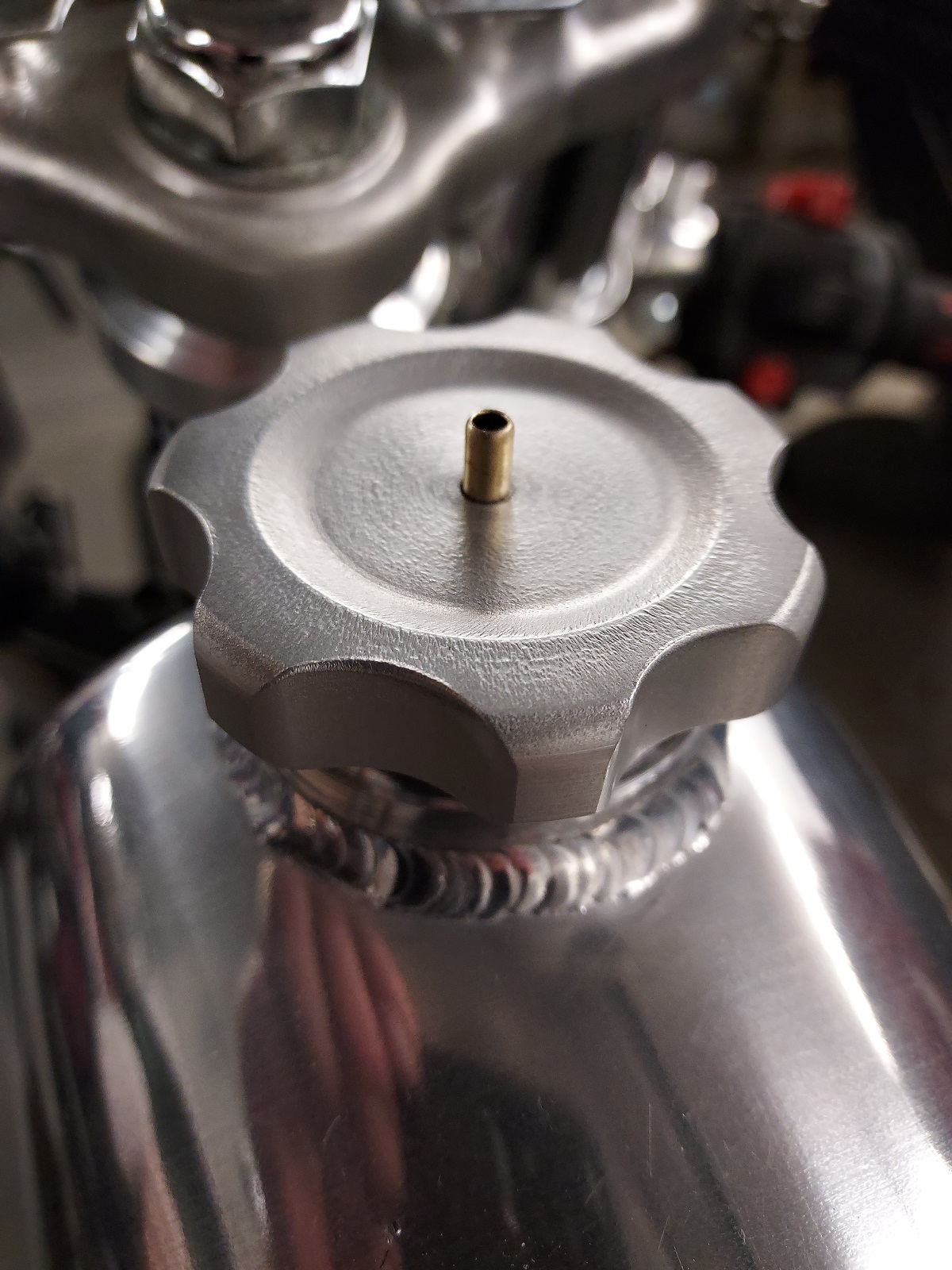
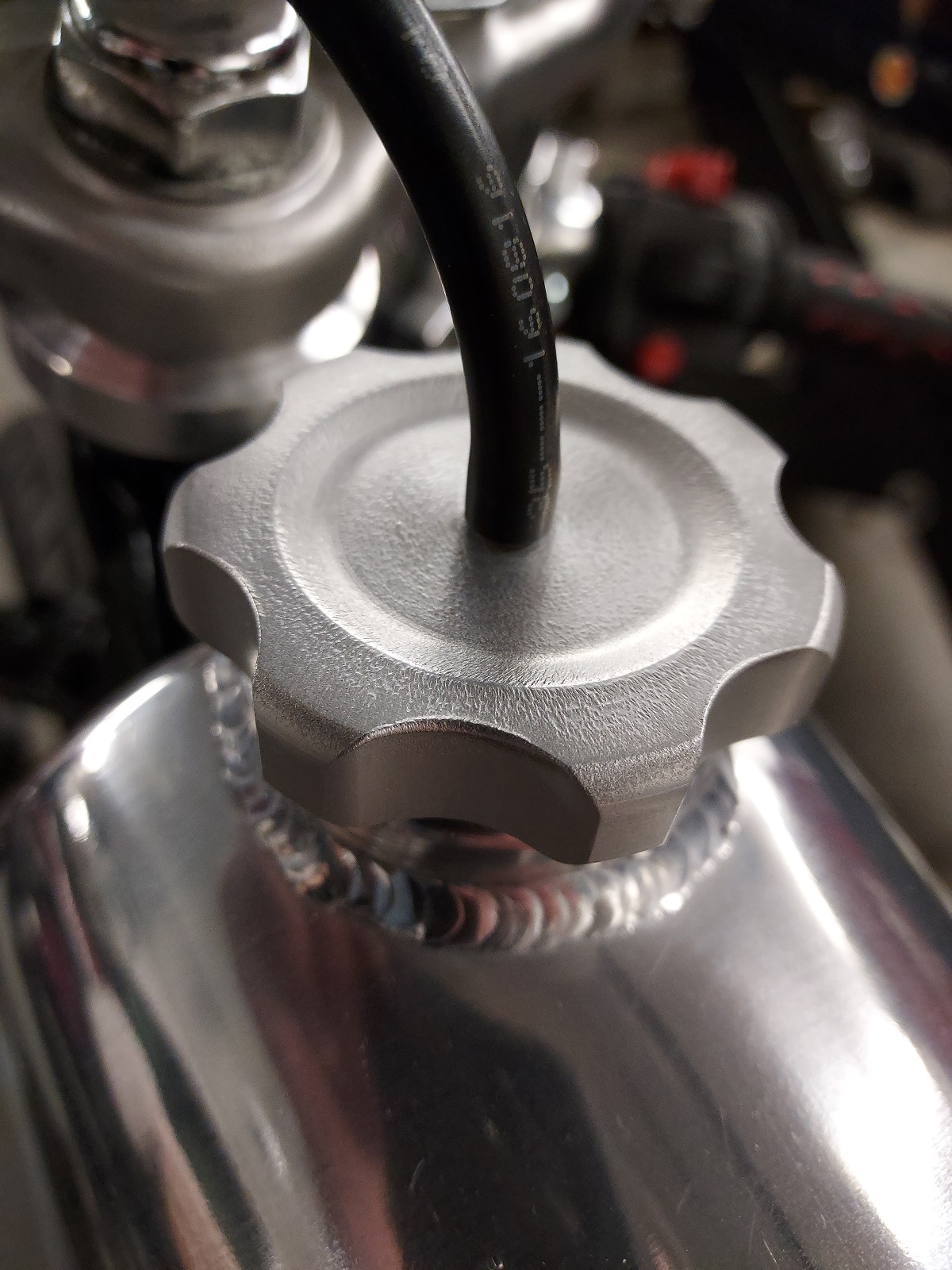
When Russ made the gas tank for me it needed a vent. I searched for a really small piece of metal tube of some sort, ended up buying a little brass tube from the plumbing area of Ace Hardware with no idea what it was originally used for. It had a thin flange end and my first thought was to drill the cap from the underside to the actual tube size, countersink it the size of the flange and deep enough that the roughly half inch long tube would stick out of the top about 1/4" to 5/16" to slip a piece of 3.5mm Honda fuel line onto. I tried to drill the cap well over a year ago and my little drill bit broke off in the cap so Russ had to fix it for me, making the hole a little larger and easier for me to deal with. So today it occurred to me that it didn't need the little flange on the end if it pressed into the cap tightly enough. So, I carefully ground off the flange, clamped the cap in the drill press vise between a couple blocks of wood and drilled a 5/32" hole through the cap, then pressed the tube into it. Worked out perfectly, now I need to order a length of 3.5mm line to run it back to the rear of the bike along with the crankcase breather tube.

r4rJ4wz.jpg


zyUAB5d.jpg
 
Are you going to keep the thin chainguard on the sprocket? If you ditch it, it would look more dangerous and thus cooler. It is, after all rotating weight ;).
 
Are you going to keep the thin chainguard on the sprocket? If you ditch it, it would look more dangerous and thus cooler. It is, after all rotating weight ;).

That's only a few ounces. I should be far more concerned with the excess dead weight in my middle that I'll be adding to it as cargo...
 
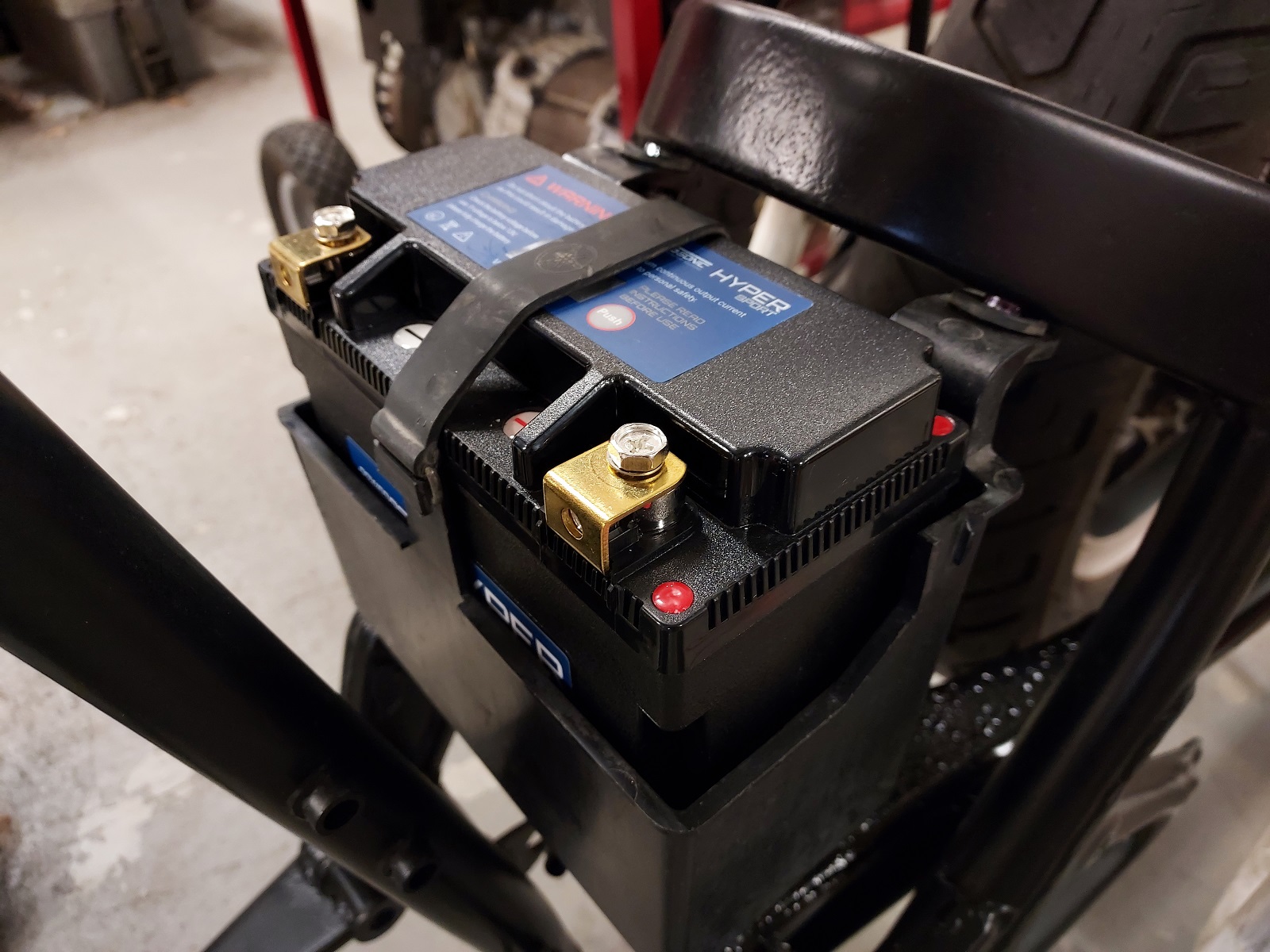
The new LiFePO4 battery arrived a couple days ago, fits like a glove. The factory Yamaha battery strap fits over it like it was designed for it too.

O99hGFC.jpg


DoDLRrl.jpg


I neglected to think about checking for enough clearance for the drive chain to run below the battery when I chose the mounting spots and the resulting height it placed the battery and box. Looks like it will be enough for a hardtail where the slack can be minimal and the height of the top run never changes during use.

XJ0lNXj.jpg


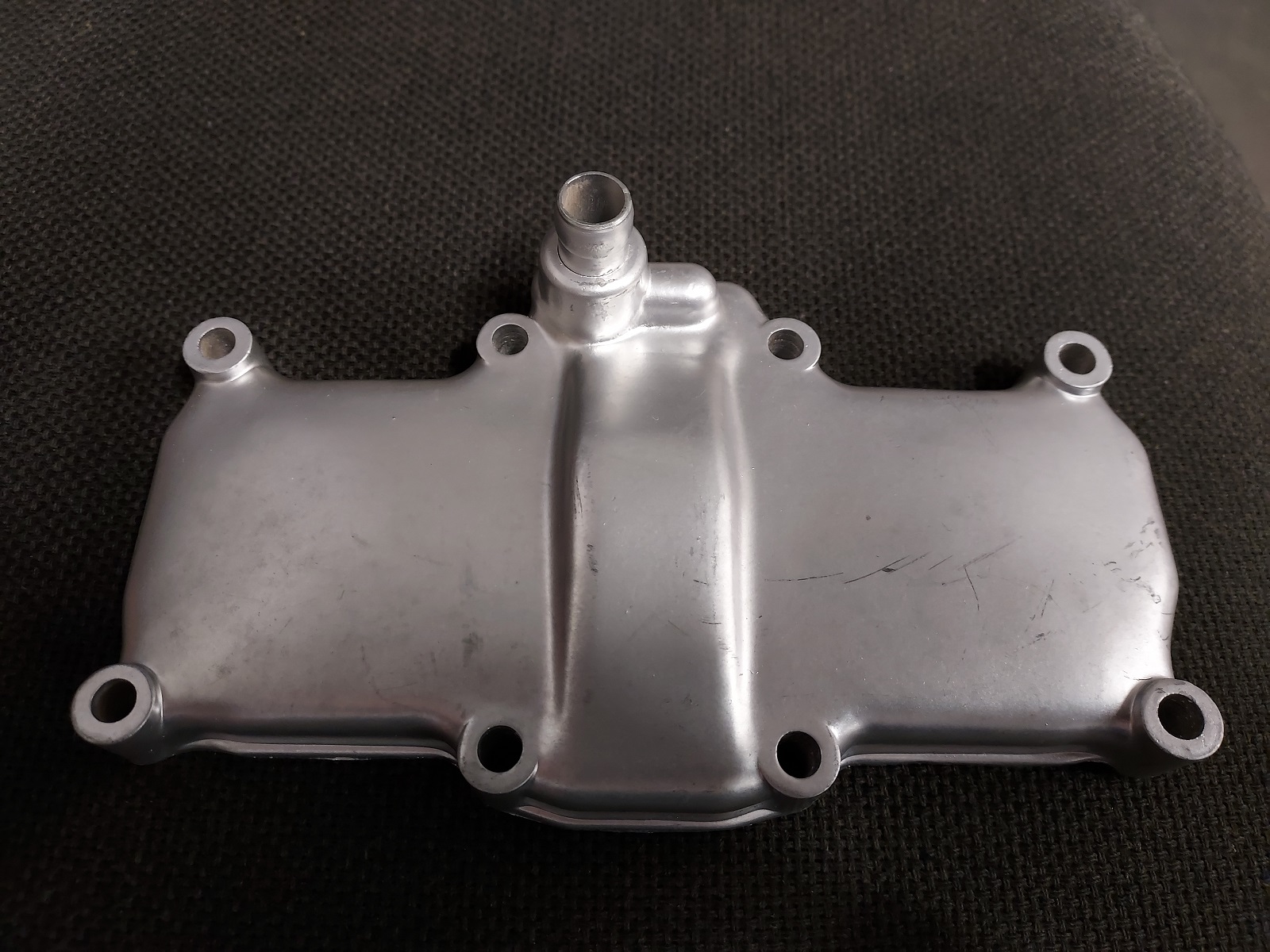
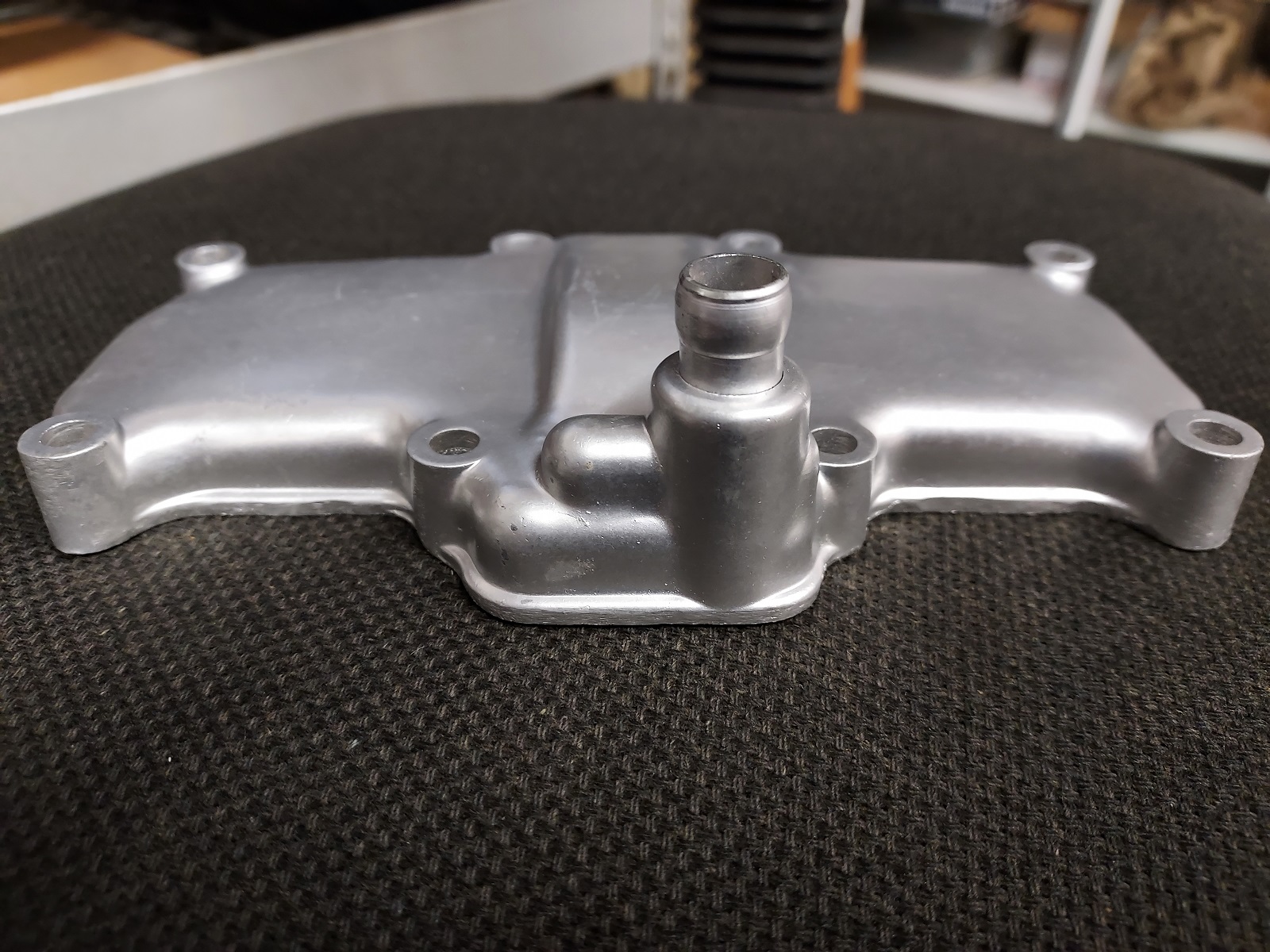
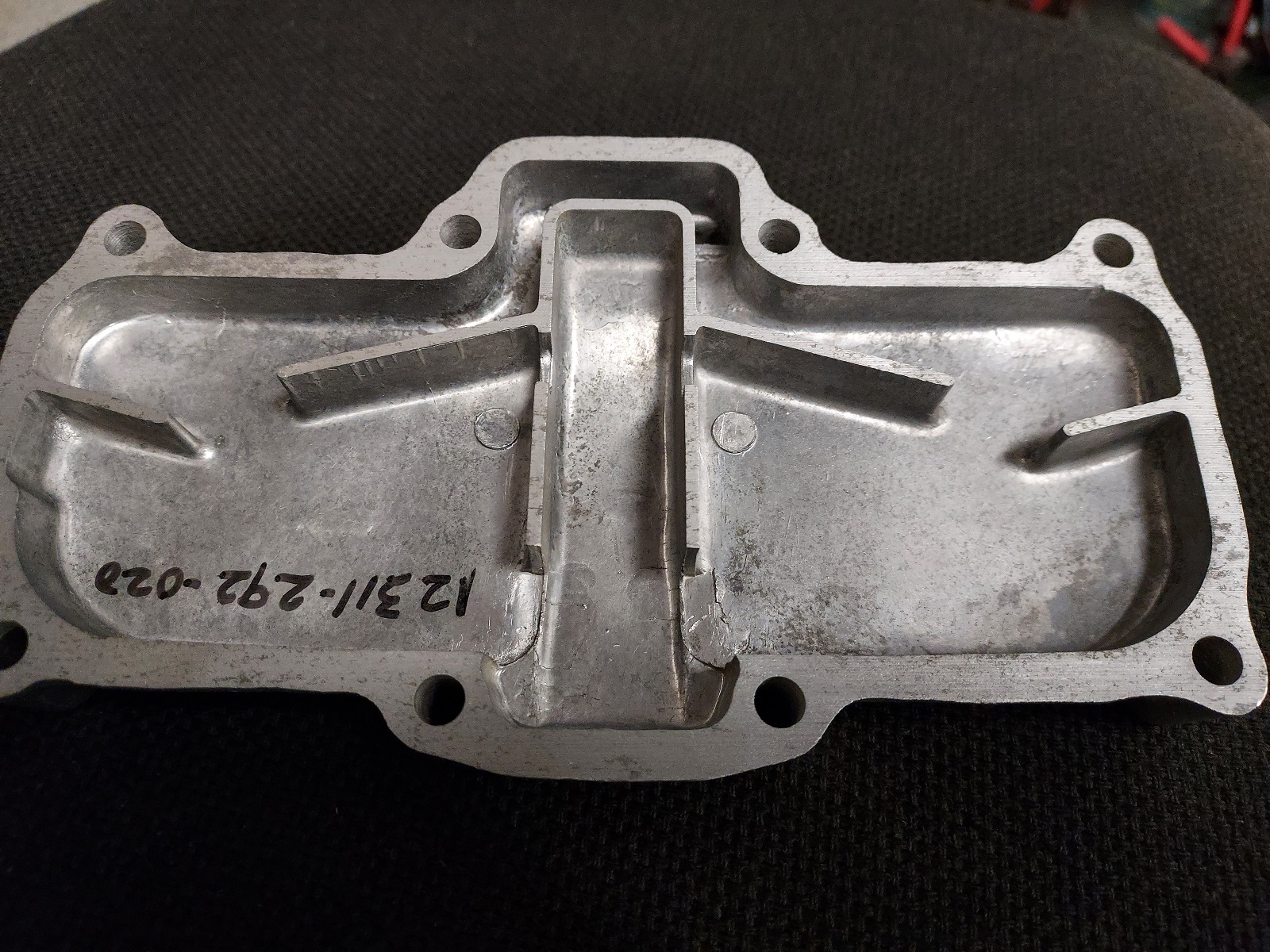
More used parts gathering within my stash of accumulated stuff, found this intake valve cover I'd gotten in a group of covers and baffle plates I bought some time ago. Never paid much attention to it, but while cleaning it up yesterday I noticed this cover must have been NOS and the seller didn't realize it - looks to have never had bolts tightened up on the cover outside, nor a gasket stuck to the inside (or an old gasket ever scraped off it)

Qc9O6aF.jpg


utiI5Vr.jpg


1tT49mw.jpg


It's amazing all the little parts you can forget are involved when you're trying to assemble a complete engine from bits acquired at different times. Still finding the need for certain screws, bolts, washers and various other hardware, more trips to Ace on the horizon. And I checked all the well-known outlets for a replacement bolt for the long, double-ended threaded stud that is the lower motor mount where the footpegs also attach. Needs to be a 12x285mm and no one sells anything longer than about 200mm. Just wanted to avoid using a couple extra washers on the original bolt to take up the space from the missing thickness of the footpeg brackets, but oh well.
 
That's only a few ounces. I should be far more concerned with the excess dead weight in my middle that I'll be adding to it as cargo...

True, Sumo training may not be compatible with drag racing but at least it's well distributed near your center of gravity. ;)
 
The new LiFePO4 battery arrived a couple days ago, fits like a glove. The factory Yamaha battery strap fits over it like it was designed for it too.

I neglected to think about checking for enough clearance for the drive chain to run below the battery when I chose the mounting spots and the resulting height it placed the battery and box. Looks like it will be enough for a hardtail where the slack can be minimal and the height of the top run never changes during use.

More used parts gathering within my stash of accumulated stuff, found this intake valve cover I'd gotten in a group of covers and baffle plates I bought some time ago. Never paid much attention to it, but while cleaning it up yesterday I noticed this cover must have been NOS and the seller didn't realize it - looks to have never had bolts tightened up on the cover outside, nor a gasket stuck to the inside (or an old gasket ever scraped off it)

It's amazing all the little parts you can forget are involved when you're trying to assemble a complete engine from bits acquired at different times. Still finding the need for certain screws, bolts, washers and various other hardware, more trips to Ace on the horizon. And I checked all the well-known outlets for a replacement bolt for the long, double-ended threaded stud that is the lower motor mount where the footpegs also attach. Needs to be a 12x285mm and no one sells anything longer than about 200mm. Just wanted to avoid using a couple extra washers on the original bolt to take up the space from the missing thickness of the footpeg brackets, but oh well.

Wow, a forty year old virgin cover. What a nice tidy job you're doing on all the details. I'm in the nitty gritty of all the minutia of reassembly on mine and enjoying all the long processes of pondering each fastener and washer too. It's worth it because we enjoy it and, these days we need a meditation away from the madness of the wider world.
 
Last edited by a moderator:
Wow, a forty year old virgin cover. What a nice tidy job you're doing on all the details. I'm in the nitty gritty of all the minutia of reassembly on mine and enjoying all the long processes of pondering each fastener and washer too. It's worth it because we enjoy it and, these days we need a meditation away from the madness of the wider world.

Actually it's potentially a 50 year old virgin at this point, it's the latest version of the intake cover which would have put it in the early '70s. I'm just amazed no one noticed how untouched by bolts it was as well as the as-factory-machined gasket surface. They'd have wanted $100 for it by itself had they known. :rolleyes:

Ain't that the truth about today's world. I just hope it doesn't get a whole lot worse before my wife and I check out.

Yes, I'm enjoying getting back to this thing a little bit most every day, it lets me think about the little details. I did space out on the chain clearance when mounting the battery box, but when I look at previous pics taken with the lower case, countershaft/sprocket and chain in place (for alignment purposes) it seems there will be enough clearance though I suspect it might be close. I have one long piece of thick strap steel left that I'm considering making a chain guard out of if only to ensure the chain reacting to leaving the starting line doesn't jump up and hit the bottom of the battery box. Otherwise things are progressing pretty well, coming up with a little idea now and then and figuring out how to implement it.
 
It's amazing all the little parts you can forget are involved when you're trying to assemble a complete engine from bits acquired at different times. Still finding the need for certain screws, bolts, washers and various other hardware, more trips to Ace on the horizon. And I checked all the well-known outlets for a replacement bolt for the long, double-ended threaded stud that is the lower motor mount where the footpegs also attach. Needs to be a 12x285mm and no one sells anything longer than about 200mm. Just wanted to avoid using a couple extra washers on the original bolt to take up the space from the missing thickness of the footpeg brackets, but oh well.

I may have a solution for this bolt idea…
 
I may have a solution for this bolt idea…
Do tell, good sir.

Actually, I think it will only take one additional flat washer on each side (maybe 2 on one side) to take up the extra length so it might not be worth pursuing. I'm just trying to keep this build reasonably clean so it doesn't look like I cobbled this thing together out of parts I scrounged from a junkyard (despite some parts of it being exactly that). I hate that the metric bolts I had to buy for the tach bracket don't look like Honda's originals, but that's just me being picky about details. Turns out Ace has cut back a bit on their stock of metric nuts, bolts and washers due to lesser requests over SAE hardware so the selection this time wasn't as widely varied. I sure hope they have the nice flange headed bolts I used for the valve covers on the red 450, I like them. We'll see, still more to gather.
 
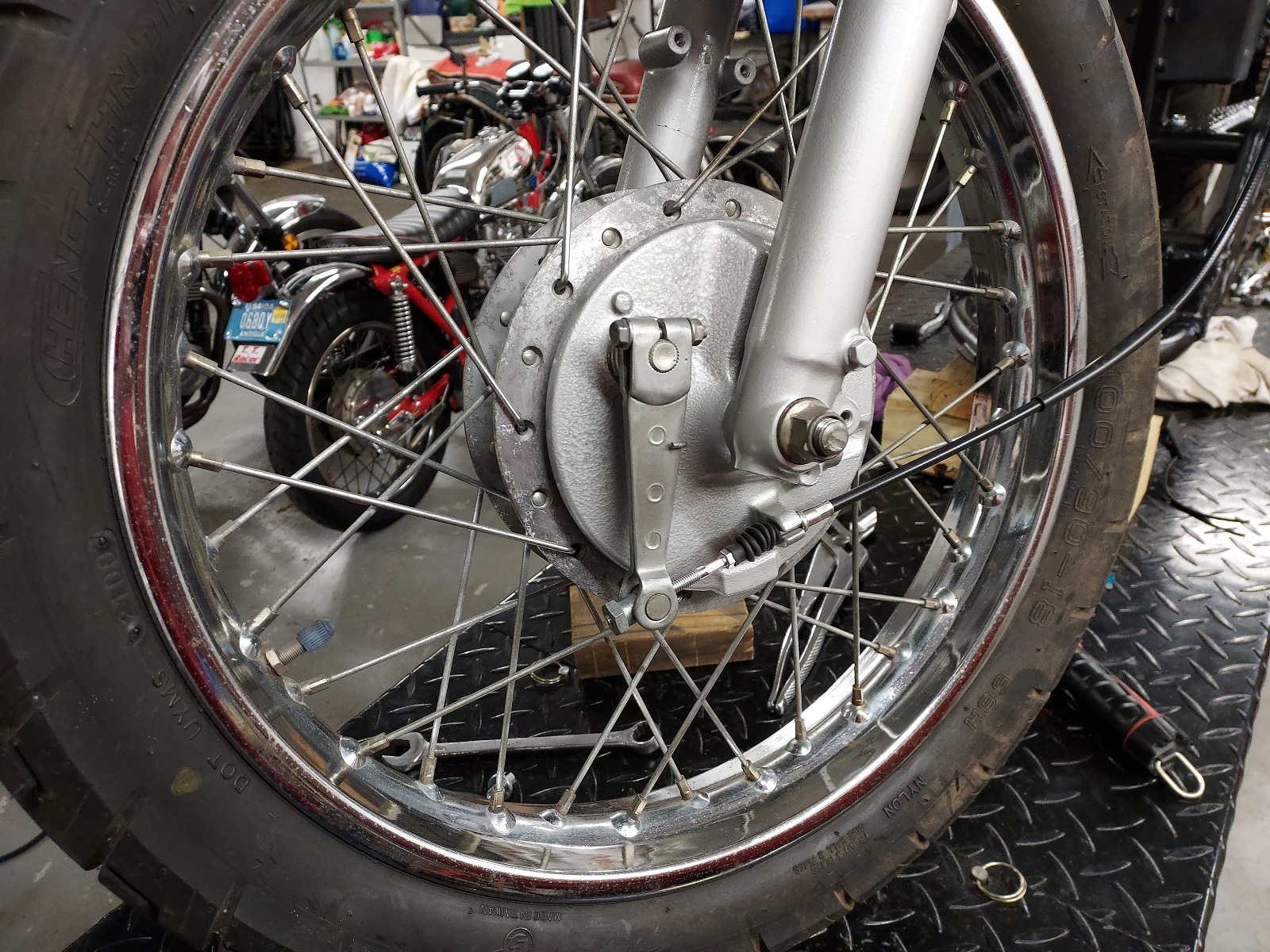
Found out a week or so ago that the front shoes didn't stop for squat so I ordered some new shoes and managed to get Vesrah. Cleared the lift today, moved all the engine parts to the table where the parts washer is and put the roller up on the lift. The shoes came in yesterday so I set out to get that done. Figured I'd have to arc them based on my last experience with shoes in general, and even the Vesrah set I bought to replace the EBCs for the red 450, both of which did not stop well when first installed. Got out the sandpaper and Sharpie, marked the shoes, taped the sandpaper into the drum and got to work. After a couple minutes it seemed the shoes were cleaning off pretty evenly so I hand/eyeball checked them before doing any more. Turned out these were very, very close right out of the box so that went quickly. A quick spin of the front wheel to check the shoes and it now stops in a hurry with minimal lever pressure. Also had to move the arm on the backing plate back one spline so the CT90(?) cable I bought would reach the arm and still have the length to fit the lever perch. New spring for the lower cable threaded section is on the way so no one thinks I forgot about it. :)

cxaC1TW.jpg


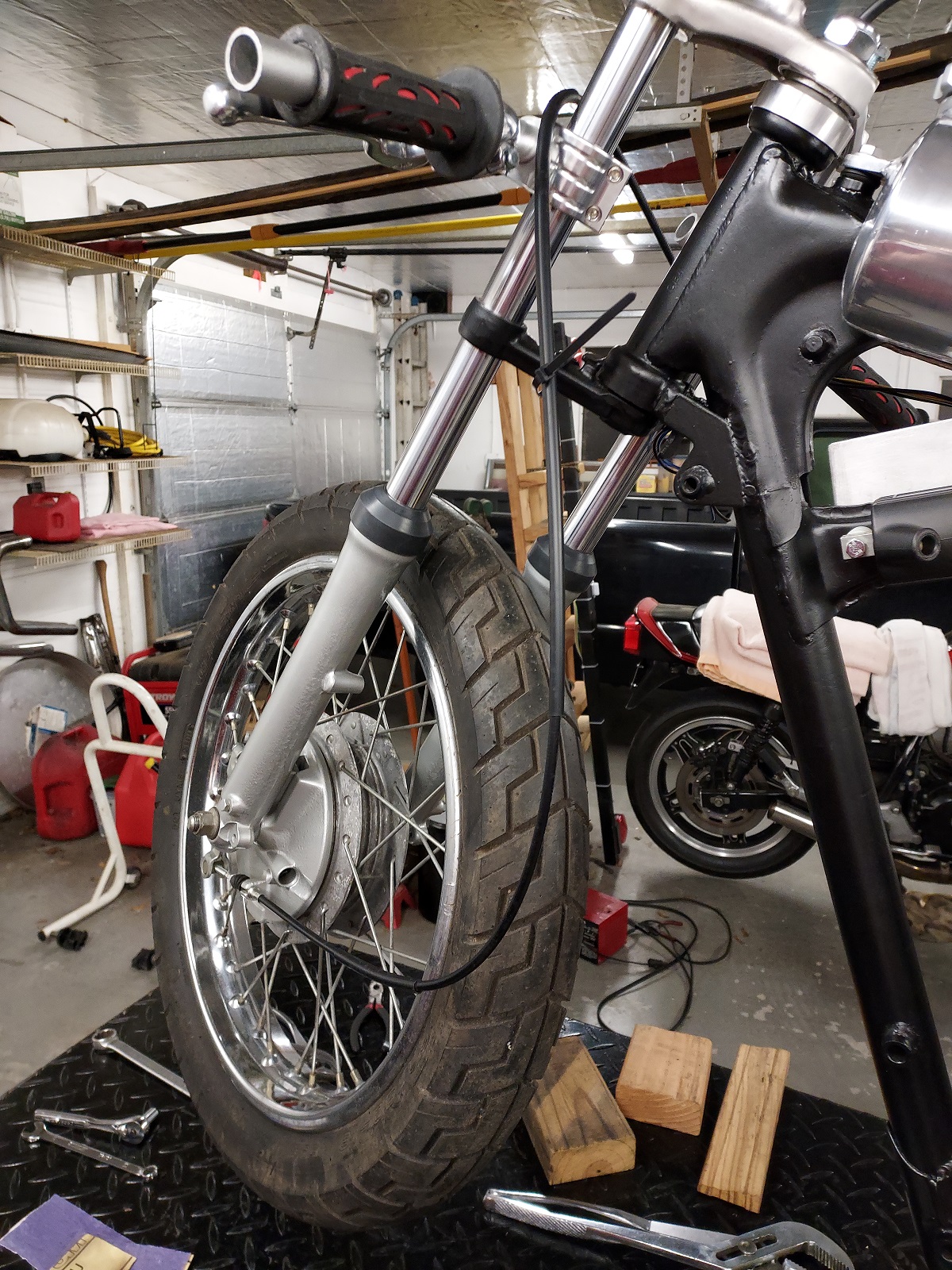
Now I need to make (or buy and reshape) a wire standoff for the cable so it doesn't flap in the breeze due to how short the span is with no proper place to tie it. For now, a long zip tie through the left headlight mount bracket hole in the lower bridge serves as a loop to keep it somewhat parallel to the bike but it looks like crap.

mnpJKSw.jpg


Also remembered that I need a fuse at the battery positive (duh), found the inline holder I'd bought previously and started planning that arrangement. Rear brake pedal and linkage is next.

8Q68OCa.jpg
 
I see what you mean about chain bounce being a maybe. Glad I'm not the only one who uses silhouettes for garage wall art but all mine are half size, I only use the fulls at the 200yd range.
 
It's amazing all the little parts you can forget are involved when you're trying to assemble a complete engine from bits acquired at different times. Still finding the need for certain screws, bolts, washers and various other hardware, more trips to Ace on the horizon. And I checked all the well-known outlets for a replacement bolt for the long, double-ended threaded stud that is the lower motor mount where the footpegs also attach. Needs to be a 12x285mm and no one sells anything longer than about 200mm. Just wanted to avoid using a couple extra washers on the original bolt to take up the space from the missing thickness of the footpeg brackets, but oh well.

I looked in the garage in a drawer of stuff like this bolt, and I have a hex head, 12mm diameter bolt that's 283 mm long over all, including the head. The head takes a 17 mm wrench and it has an 8 cast into it. There are threads only on the last 20 mm. PM me if you think this is what you're looking for and I can measure what else you might want to know or send a photo.
 
Glad I'm not the only one who uses silhouettes for garage wall art but all mine are half size, I only use the fulls at the 200yd range.

I've only ever been to a range once, last summer my daughter and I went to an armory in Dade City southeast of me. Really nice place, first time I'd actually shot my little .380 and I took one of my two Ruger Single Sixes as well. It's the only target I shot, probably a total of about 60 to 70 rounds between the two. I set the target about 20 yards out, thinking about home security distance and a little more. I hit about 60% or so of the shots in the kill zone, of course the Ruger was more accurate.
 
I looked in the garage in a drawer of stuff like this bolt, and I have a hex head, 12mm diameter bolt that's 283 mm long over all, including the head. The head takes a 17 mm wrench and it has an 8 cast into it. There are threads only on the last 20 mm. PM me if you think this is what you're looking for and I can measure what else you might want to know or send a photo.

Thanks for the offer Bob, I might take you up on it. I'm wondering how you'd end up with what has to be a 450 motor mount bolt of that length that you didn't use unless you just bought a parts/hardware lot. The other lower mount bolt on the 5 speed (only threaded on one end as you've described) is the shorter of the two lower bolts and IIRC when I tried it in the mount area where the double-threaded bolt goes it looked like it was just a bit short for a flat and lock washer under the nut. The parts fiche shows that bolt to be 275mm in length so what you have is surprising to me, makes me wonder which model it came from. I'll check again today and let you know.
 
Thanks for the offer Bob, I might take you up on it. I'm wondering how you'd end up with what has to be a 450 motor mount bolt of that length that you didn't use unless you just bought a parts/hardware lot. The other lower mount bolt on the 5 speed (only threaded on one end as you've described) is the shorter of the two lower bolts and IIRC when I tried it in the mount area where the double-threaded bolt goes it looked like it was just a bit short for a flat and lock washer under the nut. The parts fiche shows that bolt to be 275mm in length so what you have is surprising to me, makes me wonder which model it came from. I'll check again today and let you know.

The bolt with the 17 mm head is actually just about 275 mm from the beginning of the shaft below the head to the end. I do have a longer, threaded both ends, bolt as well. When I bought the Bomber it came with a box of parts and a plastic set of drawers with all sorts of stuff, mostly for later 450's. That's where the odd bolts and other stuff were.
 
The bolt with the 17 mm head is actually just about 275 mm from the beginning of the shaft below the head to the end. I do have a longer, threaded both ends, bolt as well. When I bought the Bomber it came with a box of parts and a plastic set of drawers with all sorts of stuff, mostly for later 450's. That's where the odd bolts and other stuff were.

Sounds like the stock bolt for the shorter location. Thanks for checking Bob, I appreciate the thought.
 
I don't know if this might help but is it possible to simply run a thread die and cut a few more threads on it? I got a great deal on amazon on a tap and die for $10 in 14mm.
 
Thanks for the idea, but it's as much about the unnecessary length as it is about the threads. Either way the "bolt" would still be the same length, just without the washers if I added a few more threads. It's just me being factory bolt-picky. I'm just going to let it go, after all it's a "budget" project anyway... :rolleyes:
 
Keep it on the wall to remind you to practice those perishable skills. Under stress, people typically perform at their lowest level of practice proficiency. Dry fire is cheap and effective for hand-eye and muscle memory retention, not to mention mechanism function ( slide racking, magazine changes, safety on/off, trigger break, etc.) familiarity. An NRA Pistol class is sooo worth it. Dry fire will not hurt your center fire 380 but excessive dry fire on a rim fire chambering (22) can wear the firing pin/hammer unless you have a spent shell casing or snap cap in place. Feel free to call (text first and not before noon), I will PM my cell to discuss further if interested.
 
Thanks for the idea, but it's as much about the unnecessary length as it is about the threads. Either way the "bolt" would still be the same length, just without the washers if I added a few more threads. It's just me being factory bolt-picky. I'm just going to let it go, after all it's a "budget" project anyway... :rolleyes:

Love it. Factory correct Drag Bike.
 
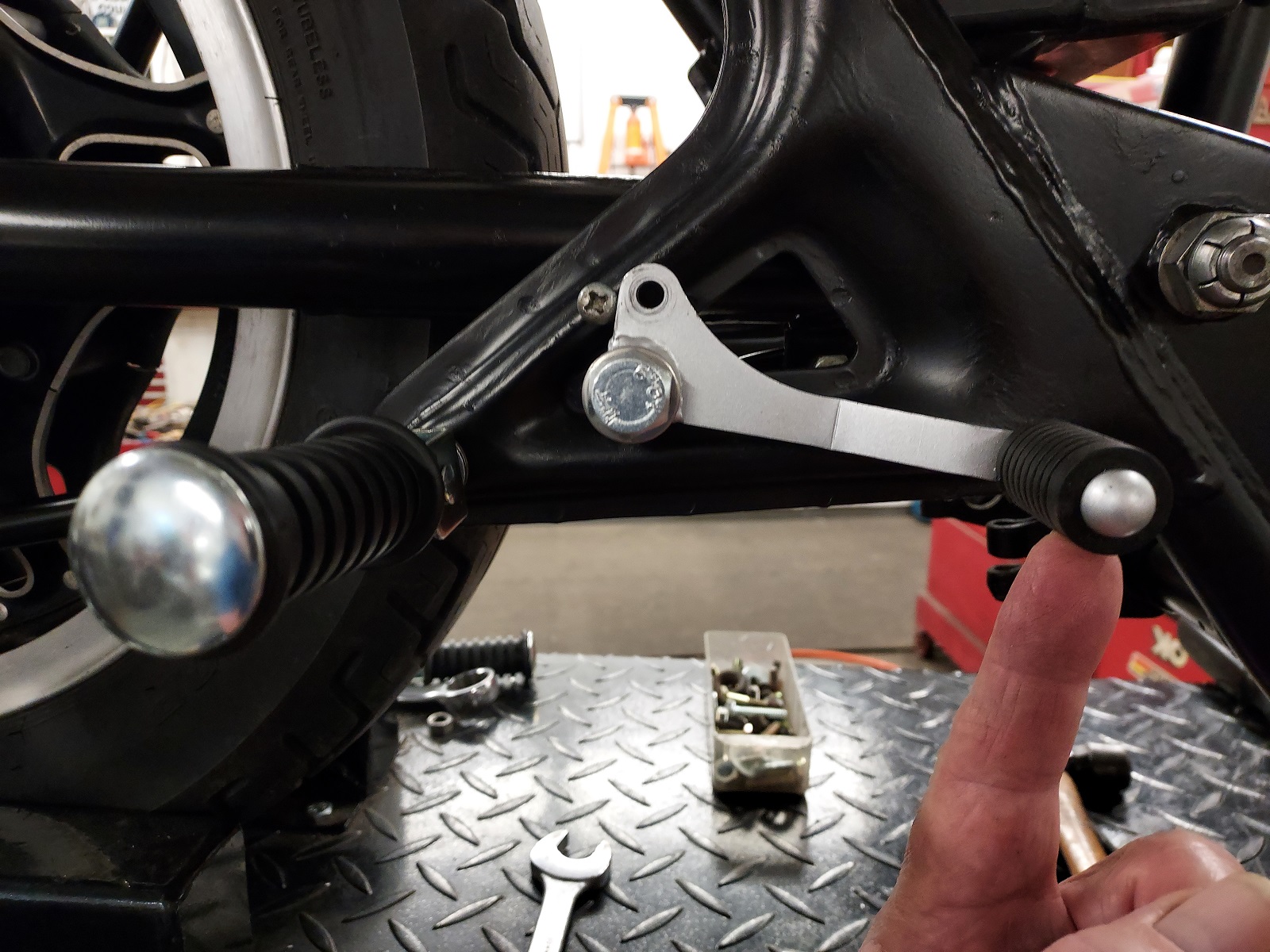
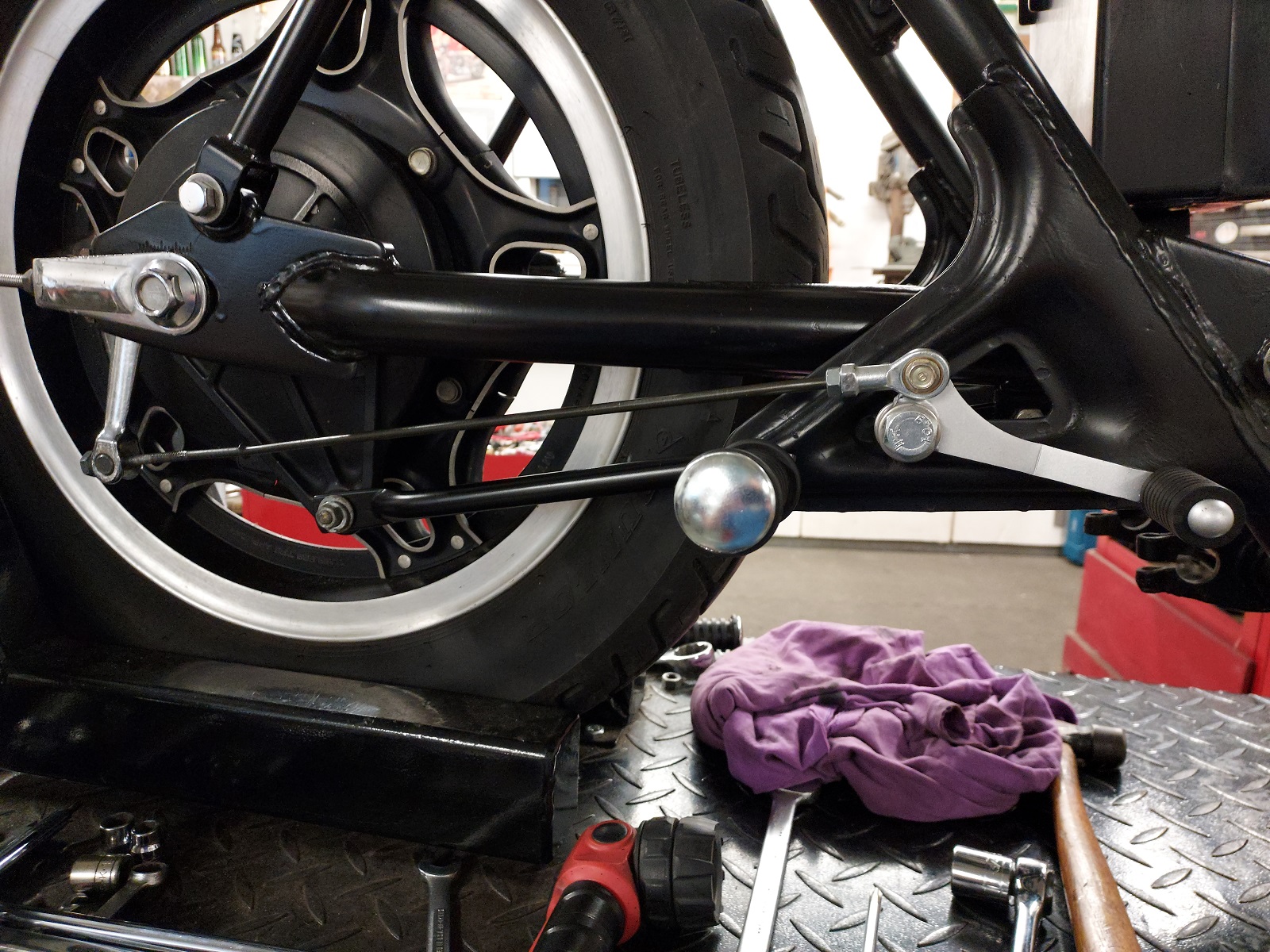
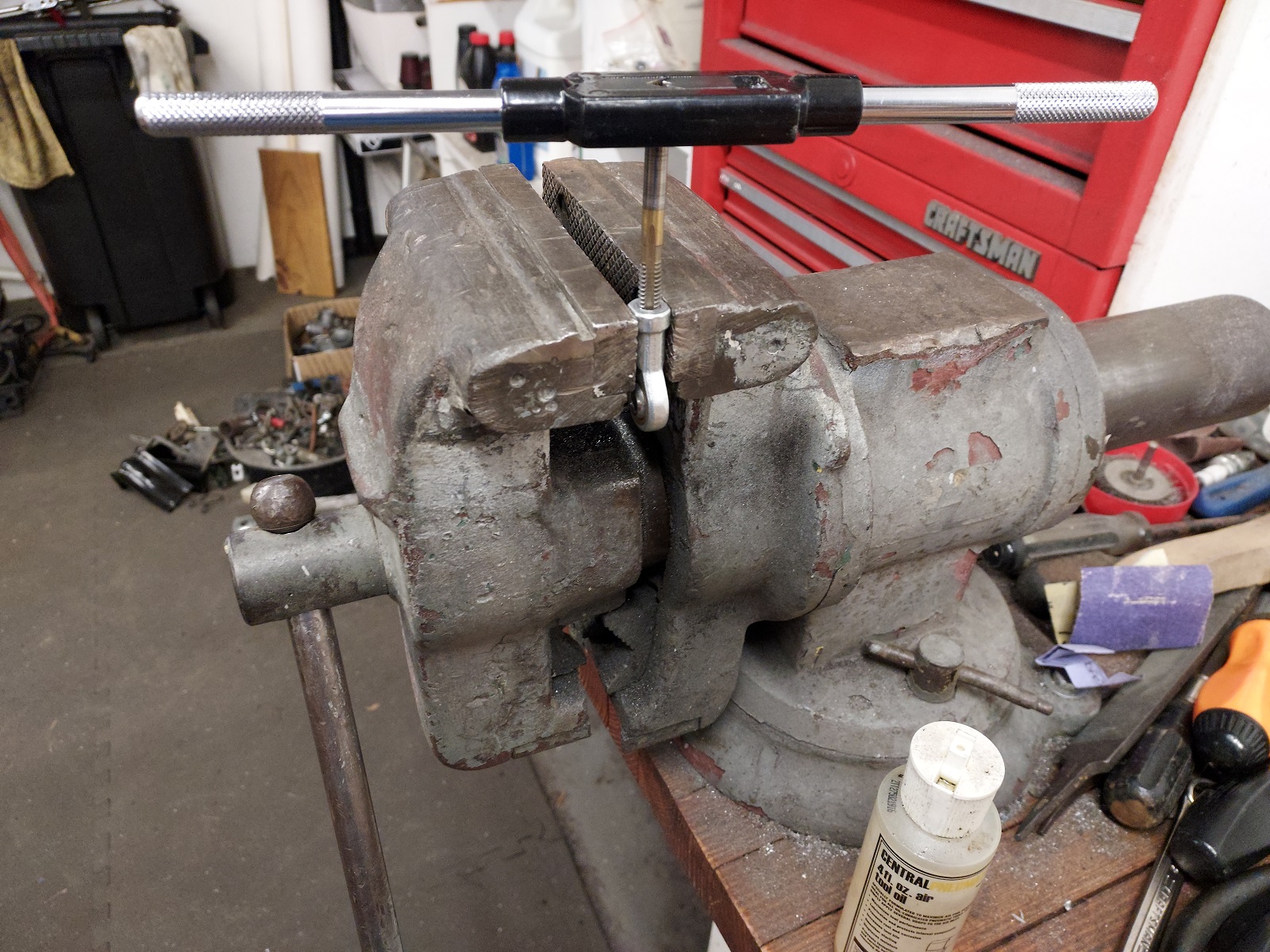
It's amazing how much time you can spend on something that sometimes seems so simple on the surface. It took me most of the afternoon today to put the rear brake pedal and rod arrangement together, admittedly in part because I didn't want to spend any more money on it and just use what I already had (plus the almost 30 mile round trip to Ace again, so fuel saved). I had some old pieces left over from putting together the shift linkage on the red 450 so I scrounged through them and found a heim joint, but it was metric thread. No problem, I'll whip out the tap and die set and thread the front end of the rod to 6x1.25. But wait, the tap and die set from 50 years ago doesn't have a 6x1.25 die in it, only 6x1.0. Grr. So I decided to alter the 6mm threads in the heim joint to 1/4-20, since 6mm is .236". Then I could thread the rod to 1/4-20 and everything would be happy.

BLc78M4.jpg


That in itself took almost an hour, tough going even with plenty of lube and the last thing I needed was to break off the tap in the only heim joint I could use. Obviously threading a 6mm rod afterward was a breeze and the threads aren't spectacular due to the slightly smaller size, but they'll be strong enough for the purpose. Put a couple of slight angle bends in it for the position of the pedal.

hI3kQmN.jpg


I'd bought this pedal a couple years ago, I think it came from a Suzuki shift linkage. I picked up a large bolt for the pivot while I was at Ace the other day, scrounged a thin nut for the backside of the pedal to sit up against the frame similar to what I did on the red bike for the shifter. The right length bolt runs out of threads at the right width for the shift lever to pivot on without tightening up when the bolt is tightened, kinda like a shoulder. Managed to drill the hole in the passenger peg mount area of the frame properly and bolted things up.

9fiPbbX.jpg


Then I had to figure out a stop for the pedal to properly accomplish adjustment without changing the height of the toe area of the pedal. Sure glad I have a stash of nuts, bolts and other junk to rummage through, found a perfect length spacer for the JIS screw to stop the pedal without interfering with it.

HlBGRza.jpg


Still a little tweaking to do to get it just right, but the parts are there now.

lcw4EeV.jpg
 
I've spent a couple of days working on the wiring harness for this thing. Even though it's ridiculously simple in theory, the way I want to do it adds a twist to what could simply be 2 wires and a switch.

I want maximum current delivery capability to the coils, so I chose to use heavier gauge wire than stock. I had a length of what is probably 12 gauge black wire lying around for decades from car accessory work (trunk releases, rear window defoggers), perfect for Honda switched power (and I'll be using it for the battery side too, cheating away from Honda colors). I originally intended to use the factory wiring from the later model Honda 4 cylinder right switch assembly with starter button for the shifter-kill as well as the factory kill switch. I made a plate to mount the condensers on and decided to move the relay to there as well, got the wiring all made up and just didn't feel comfortable with the skinny (probably 18 gauge) wires from the switch (yellow/red, black and black/white). Everything looked nice but the thought of feeding two 3 ohm coils from a single skinny black/white wire after the kill relay just didn't sit right with me.

So, I sat back and gave it some thought and came up with a better idea. But, it required making some significant changes. I'd rather the coils feed come off the relay direct from the battery but the later version handlebar switch worked on a positive starter button operation instead of negative grounded to the bars like the earlier models along with the headlight disconnect during cranking. This meant a single black wire fed both the starter button circuit and the kill switch. Time to re-wire the switch. (no internal pictures, sorry)

I had left just enough length in the (originally cut off short, unused) black/red and blue/white wires from the headlight disconnect section of the starter button functions to add onto, so I divided the kill switch power source from the starter button power source leaving the kill switch as just a switch with 2 wires, then connected it in series with the headlight disconnect wires so either/or will kill the 12v to the coils - the kill switch or the starter button will disconnect the ground from the relay and thereby disconnect the battery current from the coils when the relay releases. Yes, now the relay will be on all the time the engine is running, so I'll be buying a fuel pump relay designed for full-time use so the coil in the standard Potter & Brumfield relay won't overheat and burn out during use at some point. And yes, Honda green for ground now along with yellow/no stripe for starter button "output".

vloIQ8v.jpg
 
Revised wiring almost done, supper happened right as I was soldering the battery connectors and inline fuse so a little bit more to do yet. Main feed now straight from the battery + directly to terminal 87 on the delivery relay, smaller gauge + feed directly to the main switch which will supply power for the relay coil and LED in the toggle switch as well as the tach illumination LED. Right handlebar switch now provides ground directly from the battery into the series circuit of the kill switch and shifter kill button (former starter button) so either one will shut off the relay and interrupt 12v to the coils coming off terminal 30 on the relay. Ground from the battery also to the plate sandwiched between the coils where the condensers will be mounted, grounded by a pigtail off the main ground wire with a ring terminal at the plate/coil mount bolts and to the main switch for the tach illumination and the LED toggle. Had to trim back the nice vinyl sheathing at the coils area for relay control wiring (yellow without red stripe ground from the button/kill switch and small gauge black for power to the relay coil, terminals 85 and 86) so I covered the mid-section of the harness with self-adhering silicone tape in between the larger forward sheathing and smaller sheathing for the 3 wires going from there back to the battery.

It's amazing what the camera in my phone focuses on in the background instead of the subject right in front of it.

yVVRz0d.jpg


kHQnr02.jpg


vOF3CXX.jpg


AJoWJdg.jpg


wcezDA4.jpg


Might use a tension relief of some sort to take the "weight" off the 3 terminals on the switch, though there isn't enough to actually unplug them as they slide on pretty tightly. Only connections that are not soldered are the low draw terminals on the relay coil, everything else soldered with heat-shrink.
 
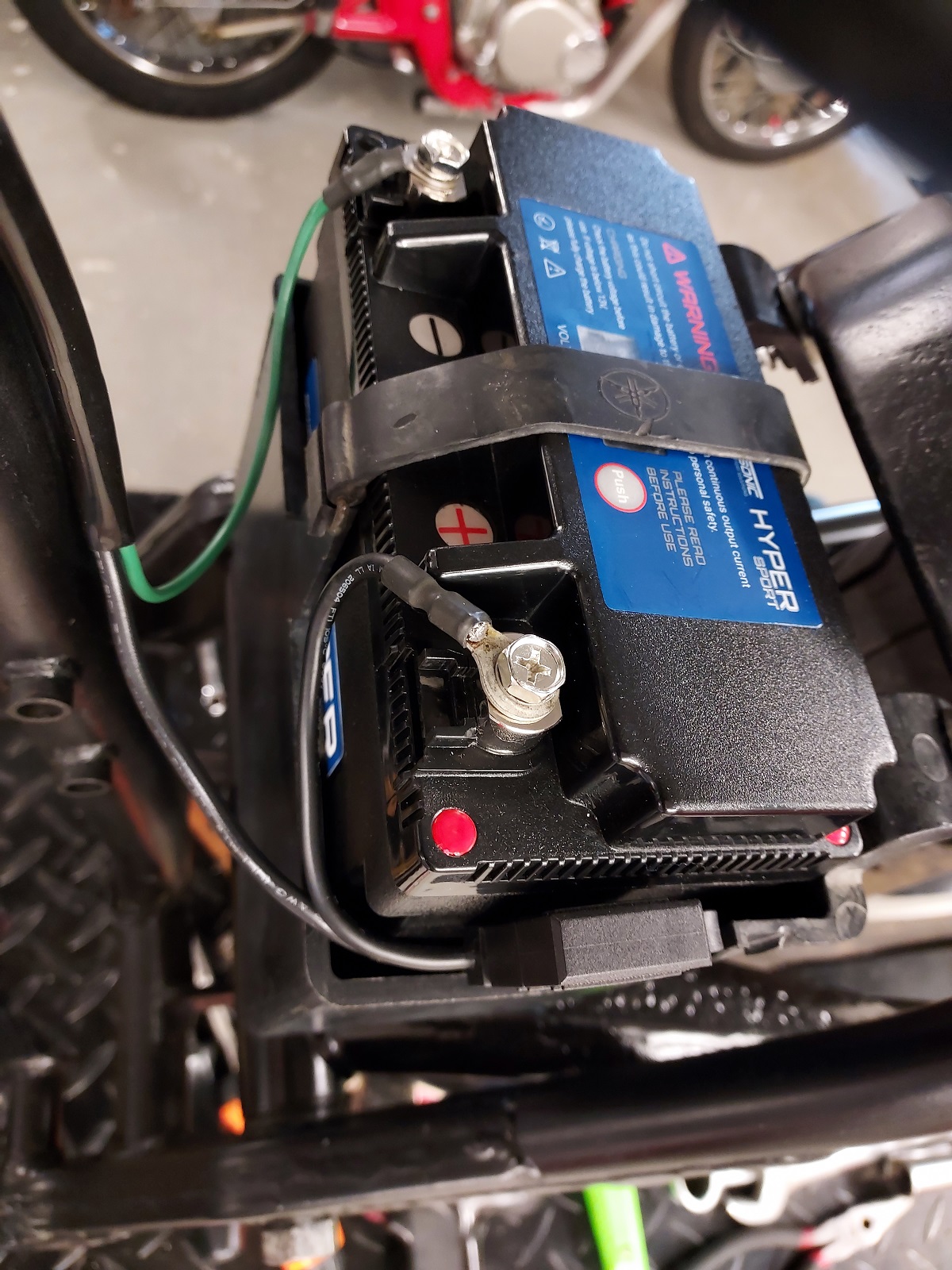
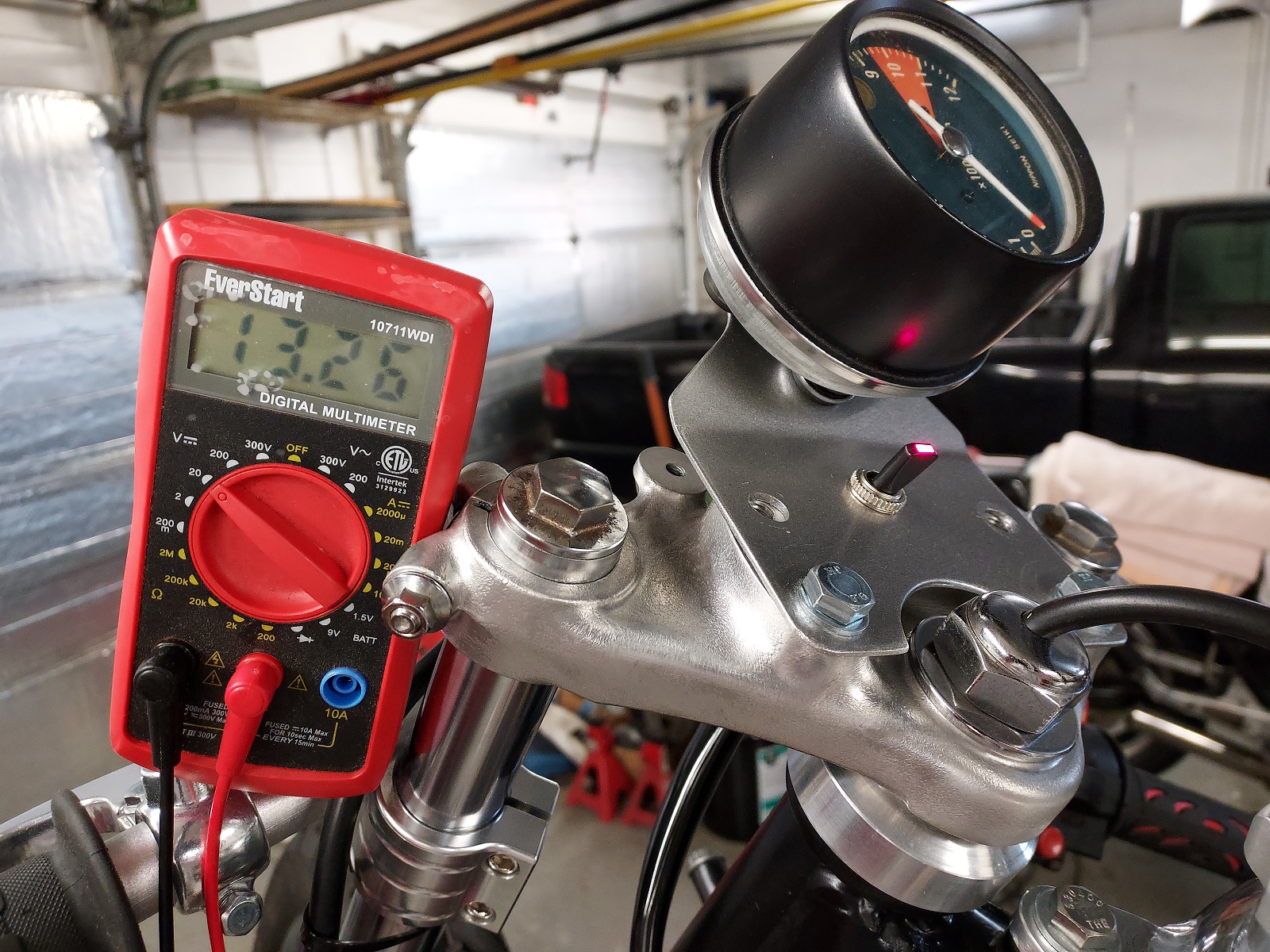
Had to use the propane torch to solder the two positive leads to the inline fuse wire, just a bit too large for my 250w Weller. I sliced the cover off a yellow butt connector and lightly crimped the wires into it, then soldered both sides. Got the ends done, slipped the battery in place and connected it to test the wiring. Switch LED comes on and the relay closes connection between 87 and 30, kill switch and shifter kill button both independently turn the relay off as intended.

C73hyRq.jpg


Checked the voltage at the battery and at the relay output to the coils, both equal.

RoqfxDF.jpg
 
Back
Top Bottom