1971 CB350 . . . 40 year hibernation

The spurting seemed to be more like a source from the oil circulation system, rather than just the relatively unpressurized internal cavity gravity return areas. I see on the diagram of the oil lubrication system, at the front and center, close oil gallery or column upwards delivery members, near your leak.
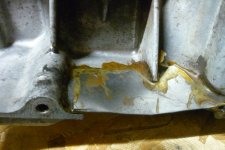
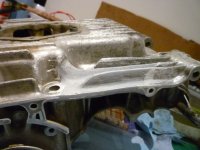
My interpretation of the oil slinging video is that the oil volume carried up and over the cam sprocket by the cam chain (per unit time) increases with RPM and, as some of that oil collects on the cam chain guide on its way down, a portion is finding a low-resistance path out of the cam chain tunnel through the casting defect(s). The lower picture in Post 1098 (three earlier) seems to show multiple fissures in the tunnel wall and those correspond with the locations where oil was ejected in the blurry video.

The pressurized oil pathways follow the two outer, rear studs on the way up. This leak seems to be in the air passage outside the cam chain tunnel (front/lower/left-center), away from the pressurized oil pathways. The cam chain can carry a lot of oil itself and that's what I think causes the spurting seen in the video.

Screenshot_20250819-060044.png

I'm always open to alternative points of view, especially when I'm wrong, so feel free to point out any competing theories or oversights.
 
I am just thinking outside the box here and this may not be a viable fix for the issue.

Is there anyway you can clean the area up on the outside with brake clean spray and then seal the area with some high temperature sealant. I don’t quite understand where your leaking from inside the rear of the small tunnel. If it is porosity in the aluminum then that maybe an option.
There are high temperature JB Weld epoxy putties. Also high temperature sealants which may not bond as well to the aluminum area as the JB epoxy.
 
I
Is there anyway you can clean the area up on the outside with brake clean spray and then seal the area with some high temperature sealant.
I was thinking the same thing, clean it really well with brake clean and carb spray and then try a scab patch on the outside. At the worst it fails at some point down the road but at the best it stops the leak and saves a tear down at least until the end of the riding season.
 
I am just thinking outside the box here and this may not be a viable fix for the issue.

Is there anyway you can clean the area up on the outside with brake clean spray and then seal the area with some high temperature sealant. I don’t quite understand where your leaking from inside the rear of the small tunnel. If it is porosity in the aluminum then that maybe an option.
There are high temperature JB Weld epoxy putties. Also high temperature sealants which may not bond as well to the aluminum area as the JB epoxy.
Actually, that's more or less the box I want to be in, but I want to investigate further right along the lines you suggest.

My plan is to get a better sense of the openings using a small file in that channel, working slowly and vacuuming out debris as I go. If the openings seem suitable for an epoxy fix, that's what I'd like to do. It seems that ordinary JB Weld can handle the operating temperature of the block, but I have been researching the extreme heat varieties also.

I'm seeing a casting defect that may have become compromised when the cylinders were cleaned up (vapor blasted) for the machine shop.

One challenge is the small working space, but I have little to lose by investigating a solution like this. Thanks for the encouragement.

I was thinking the same thing, clean it really well with brake clean and carb spray and then try a scab patch on the outside. At the worst it fails at some point down the road but at the best it stops the leak and saves a tear down at least until the end of the riding season.
Thanks, Rob. I hope by cleaning up the area with a file that I will be able to do slightly better than a scab or band-aid solution, but that remains to be seen. In any case, it's a worth a try.
 
It certainly does seem like it could be a flawed casting exacerbated by time and lots of heat cycles. I'd like to think a proper external cleaning might allow a repair of some sort, but the concern is that it would take a while of sitting to be sure no residual oil would seep out of the crack after prep but before the epoxy could set up.
 
Actually, that's more or less the box I want to be in, but I want to investigate further right along the lines you suggest.

My plan is to get a better sense of the openings using a small file in that channel, working slowly and vacuuming out debris as I go. If the openings seem suitable for an epoxy fix, that's what I'd like to do. It seems that ordinary JB Weld can handle the operating temperature of the block, but I have been researching the extreme heat varieties also.

I'm seeing a casting defect that may have become compromised when the cylinders were cleaned up (vapor blasted) for the machine shop.

One challenge is the small working space, but I have little to lose by investigating a solution like this. Thanks for the encouragement.


Thanks, Rob. I hope by cleaning up the area with a file that I will be able to do slightly better than a scab or band-aid solution, but that remains to be seen. In any case, it's a worth a try.
Get an epoxy that is rated for 500F as a little extra insurance, better to error on the upside. I use Tech-Steel a Canadian distributor handles the product and it is what I have used on various fin rebuilds and motor work in the past. I don't know if it is available in the USA, so the JB Weld maybe your backup product to try.

P1060842.JPG
 
It certainly does seem like it could be a flawed casting exacerbated by time and lots of heat cycles. I'd like to think a proper external cleaning might allow a repair of some sort, but the concern is that it would take a while of sitting to be sure no residual oil would seep out of the crack after prep but before the epoxy could set up.
AD if he can find the Tech Steel in the USA it is rock hard in 15 mins and a full cure in 1 hour. It is superior to the JB Weld product which has a longer cure time.

Here is a Googie search of the product which appears to be sold in the USA.

QUOTE - Yes, Tech Steel epoxy putty is sold in the USA. While the search results primarily highlight Canadian retailers like NAPA Canada and Lordco Auto Parts, it's also available from retailers like Walmart and Amazon.com in the US. You can also find it at various auto parts stores across the country. For example, J-B Weld offers a similar product, SteelStik, which is a hand-mixable, steel-reinforced epoxy putty.
 
Get an epoxy that is rated for 500F as a little extra insurance, better to error on the upside. I use Tech-Steel a Canadian distributor handles the product and it is what I have used on various fin rebuilds and motor work in the past. I don't know if it is available in the USA, so the JB Weld maybe your backup product to try.

Thanks, David. The JB Weld Steelstik is one of the products I was looking at. I did have one concern, though, and your experience with Tech Steel can likely speak to the concern.

That small tunnel provides zero workspace, so I was imagining using many small applicators to get the epoxy in the right spots. (Use once and then discard to avoid making a mess.) I read that the Tech Steel products have more of a Play•Doh-like consistency and I'm not sure how I could manipulate that in such a tight space.

The extreme heat JB products appear to be similar, but I was reading that ordinary JB Weld can handle temperatures up to 500 F.

Technical Info
 
I would really clean the area with brake clean with a straw to direct the fluid to get into the tight space. Spraying the compromised section well and it you have a compressor then blast the damaged area to push back any oil still in the cracked area. That will alleviate the concern AD had on the oil seeping while the material cures.
The JB Weld may have changed over the years in chemical composition, yet years ago the set up and cure time were much longer than the Tech Steel. If you go with the Tech Steel it will start to set up within 5-8 minutes and as I noted it is rock hard in 15 minutes. If the JB Weld now has those properties then it maybe a good substitute product.
I can't see you repair well in that spot. I would be less concerned about putting a chunk in there and sealing up the area. It is such a small spot that it likely will have no effect on the motor cooling, if you block the passage slightly with the repair material.
My recommendation is have your plan already and some tools like small spatula items. I have some tiny metal spatulas with flat ends like a flat blade screwdriver with various sizes on those ends. You can push a repair blob in there and use the tools to manipulate the material to stick vertically or horizontally inside the cavity. Do a few layers if needed once the 15-20 minute cure time has passed.
I rebuilt a few fins on a 1974 CB350F over a dozen years ago on a bike I sold to a customer. The repair has not failed and his wife still rides the bike regularly. I believe if you get a solid repair in there you will not likely have to address the leak again in the future.
 
Thanks, David. The JB Weld Steelstik is one of the products I was looking at. I did have one concern, though, and your experience with Tech Steel can likely speak to the concern.

That small tunnel provides zero workspace, so I was imagining using many small applicators to get the epoxy in the right spots. (Use once and then discard to avoid making a mess.) I read that the Tech Steel products have more of a Play•Doh-like consistency and I'm not sure how I could manipulate that in such a tight space.

The extreme heat JB products appear to be similar, but I was reading that ordinary JB Weld can handle temperatures up to 500 F.

Technical Info
That isn't the JB Weld I was thinking of, they have a product like the Tech Steel with Tootsie Roll sized two part epoxy in a as you noted Play Do consistency. You can roll up a small section into a elongated thin round tube and push it into the area and then spread it as I noted above.

I am not familiar with that JB Weld glue type epoxy and I would think that would be a much messier and more difficult product to work with in a small area. It also has a very long cure time of 15-24 hrs. So not a choice I would make for the repair material. I have has so much success with the Tech Steel it has become my fix it product now.

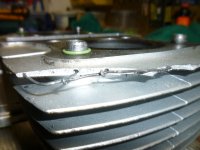
Here is a repair on my CL77 305 motor lower case where the drive chain broke at some point in the past and blew out a large section of the lower case. Someone glued a piece of sheet metal in there and called it good. I rebuilt the whoie area including the underneath where it took off some of the lower case fins too.

P1070928.JPG


P1070965.JPG
P1070994.JPG

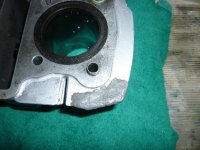
Here is a repair on a CL175 set of barrels that had a little mishap :unsure: So anything is possible.

P1060744.JPGP1060759.JPGP1060790.JPG
 
Last edited:
That isn't the JB Weld I was thinking of, they have a product like the Tech Steel with Tootsie Roll sized two part epoxy in a as you noted Play Do consistency.
I ordered the JB Weld Steelstik, which should be the one like Tech Steel. It's super hot here right now, so hopefully the expected cool front will arrive before the Steelstik. Right now it's 94 F with a feels like temperature of 106 F — made for a very sweaty ride home on my CB360 today.
 
Right now it's 94 F with a feels like temperature of 106 F — made for a very sweaty ride home on my CB360 today.
Yep, same here. Right now it's 91° in the shade here, 105° feels like temp. I just don't ride this time of year here, a few times during the summer I'll give the bike a short exercise run around 5 to 6 pm but no more than a few minutes. Sweating inside your helmet is no fun, that's reserved for the drag strip as far as I'm concerned.
 
Yep, same here. Right now it's 91° in the shade here, 105° feels like temp. I just don't ride this time of year here, a few times during the summer I'll give the bike a short exercise run around 5 to 6 pm but no more than a few minutes. Sweating inside your helmet is no fun, that's reserved for the drag strip as far as I'm concerned.
I usually ride to work early enough that it's almost pleasant, but in the summer I am often coming home in the middle of the afternoon at the hottest part of the day. Not too smart on my part, but who wants to stay at work longer than is needed?

I wanted to get another test ride in on the 360 and that went well, although I don't like idling at stoplights in this kind of heat. It feels like abuse to the motor.
 
Last edited:
My interpretation of the oil slinging video is that the oil volume carried up and over the cam sprocket by the cam chain (per unit time) increases with RPM and, as some of that oil collects on the cam chain guide on its way down, a portion is finding a low-resistance path out of the cam chain tunnel through the casting defect(s). The lower picture in Post 1098 (three earlier) seems to show multiple fissures in the tunnel wall and those correspond with the locations where oil was ejected in the blurry video.
On second thought, I think you're right Brody and I was wrong, especially about the solid vertical upwards arrow must be the right rear stud, not any forward oil supply. I was just taken with the seemingly rhythmical spurting.
Last, maybe dumb idea, with a clean cylinder, dam up the bottom with the HVAC tape and fill with red ATF to see exact spot of the leak.
 
Last, maybe dumb idea, with a clean cylinder, dam up the bottom with the HVAC tape and fill with red ATF to see exact spot of the leak.
Your input is always appreciated.

I could turn out to be wrong, but I believe I have locked in on a specific location for the leak in that lower left air channel. I can see the openings that would allow oil to escape, but it's difficult to get a good photo. Today was the first day of class, so I haven't been able to take the next step, but I will clean up the area, file a bit of the excess metal from the casting defect, and, if all continues to point in the same direction, use JB Weld Steelstik to seal the compromised surface.

Hopefully I can do this on Saturday, assuming the Steelstik arrives on time. I did receive the CB350F exhaust joint collars, so I'll also be able to test the fit of the Thai headers. I'm really curious to see how that goes.
 
Just an observational comment. The JB Weld Steelstik is available from any automotive parts supplier shop, or hardware store and probably even Wally World. Surprising that you would have to order it online in St Louis?
 
Just an observational comment. The JB Weld Steelstik is available from any automotive parts supplier shop, or hardware store and probably even Wally World. Surprising that you would have to order it online in St Louis?
You're right, of course. I was hoping Amazon could get it to me quick, but it didn't look that way (I don't do Prime) and I checked Home Depot and it could only be shipped to the store or ordered online. So, I ordered it on eBay with free shipping. The delivery range was August 21–25 and I figured that would be good enough. I think you're right that Walmart would have it on the shelf.

If I get impatient, I'll hit up Walmart. Now that you've shown me what Tech Steel can do, we both know I'm going to end up using at least two packages at some point. In fact, I had one of those oops moments with a fin on my XL350 cylinder!
 
No big deal. I was just curious as I am fortunate that many retail outlets locally sell the stuff right here in town.
 
Well, I got impatient. Walmart didn't end up having the Steelstik product despite having many varieties of JB Weld. They show it online, so this was disappointing.

PXL_20250823_132901464.jpg

I was wearing a Honda t shirt in Walmart and a guy started a conversation as I was walking by. He showed me pictures of his turbo CB750 and mentioned his YouTube channel: Jobe Customs. Looks like a pretty cool build.

Turns out that AutoZone has Steelstik, so now it's time to head to the garage.
 
I worked on a solution for the oil leak today and things seem to have gone well, at least so far. I appreciate everyone's input as this was being sorted out, especially @ancientdad for pointing me to that air channel and @Flyin900 for steering me towards the Tech Steel equivalent (JB Weld Steelstik).

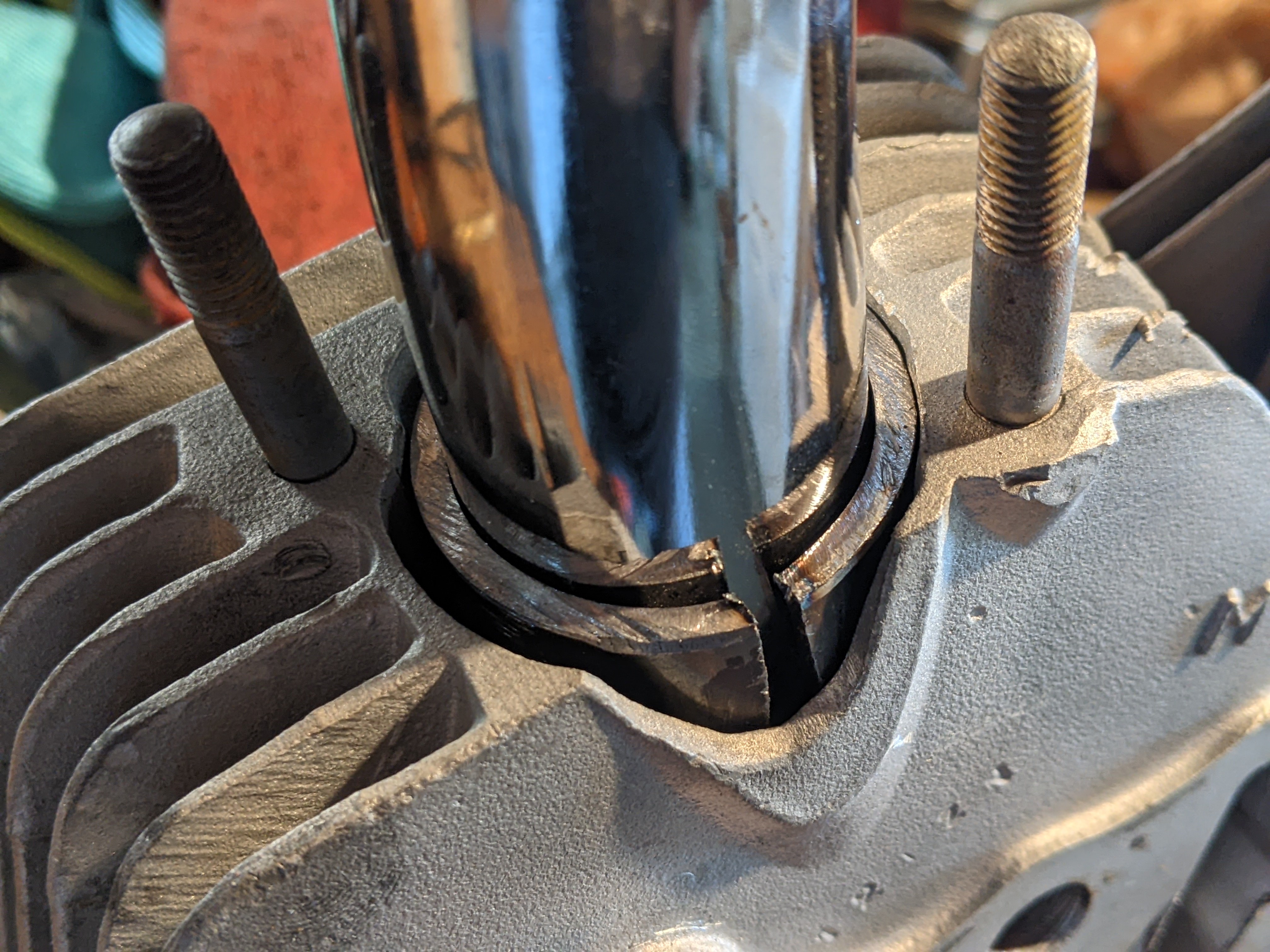
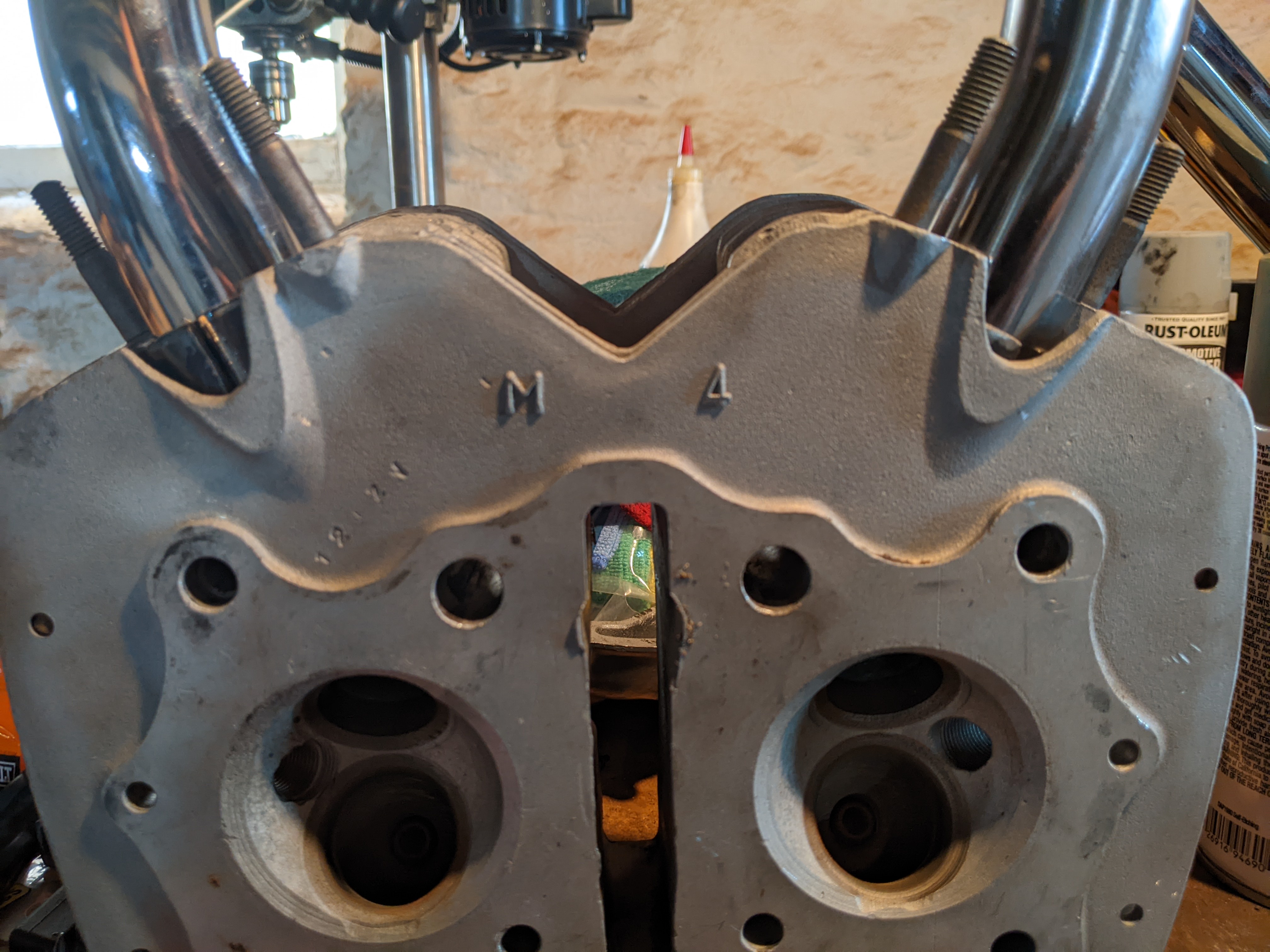
First, I cleaned up the oil in the area with brake cleaner. This is the lower left airway in the cylinders between the cam chain tunnel and the left cylinder wall, where oil has been spurting out since the first start on this build.

pIoOhPf.jpg


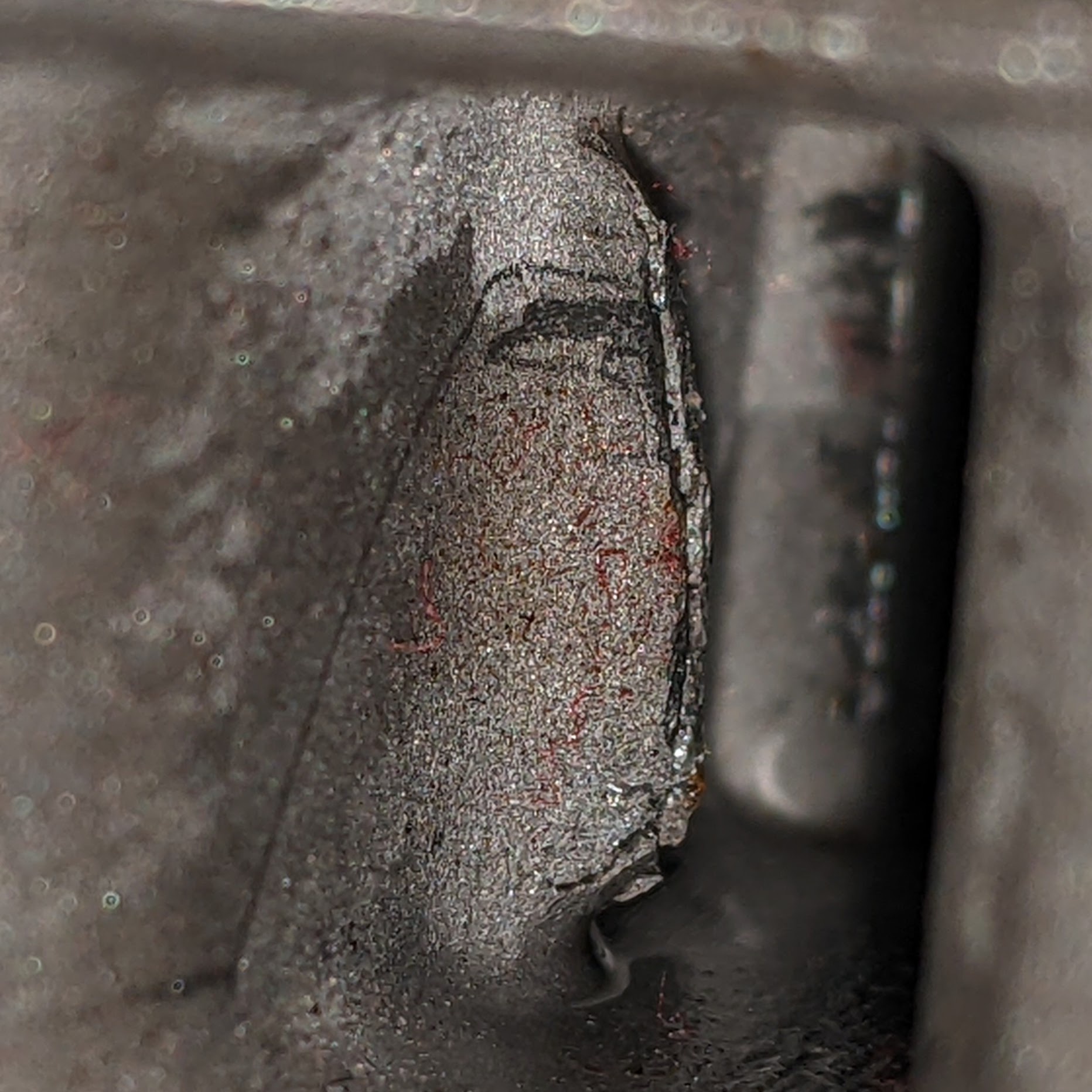
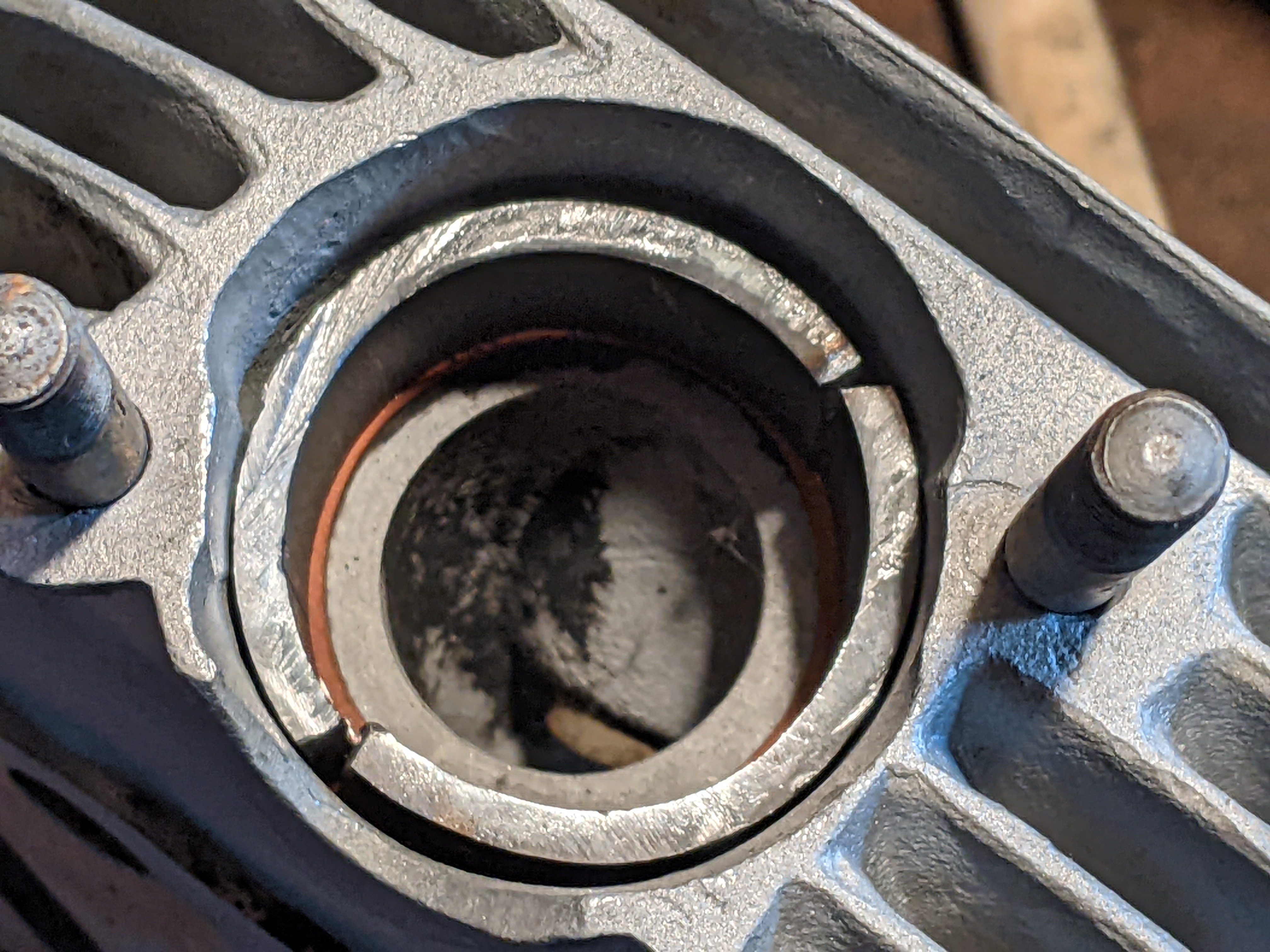
Next, I filed a little bit away from the sharp edge of the casting defect. My goal was to open up the gap to make it easier to get a good seal with the JB Weld SteelStik epoxy. The red visible here is due to fibers from a mechanic's rag. I blew air through the channel to clear out the filings before moving on with the epoxy.

8eNwPyY.jpg


Finally, I kneaded some of the epoxy and wedged it into place using some thin pieces of wood. This epoxy cures in one hour, so I tested it a couple of hours later. I ran the bike up and down the block as I had before with a max speed of maybe 40 mph and then returned to the garage. On all previous runs, I was leaving oil drips every couple of feet, but the motor was dry when I returned. The last picture shows the ugly, but well-hidden repair after the ride — dry so far.

UBtgDqg.jpg


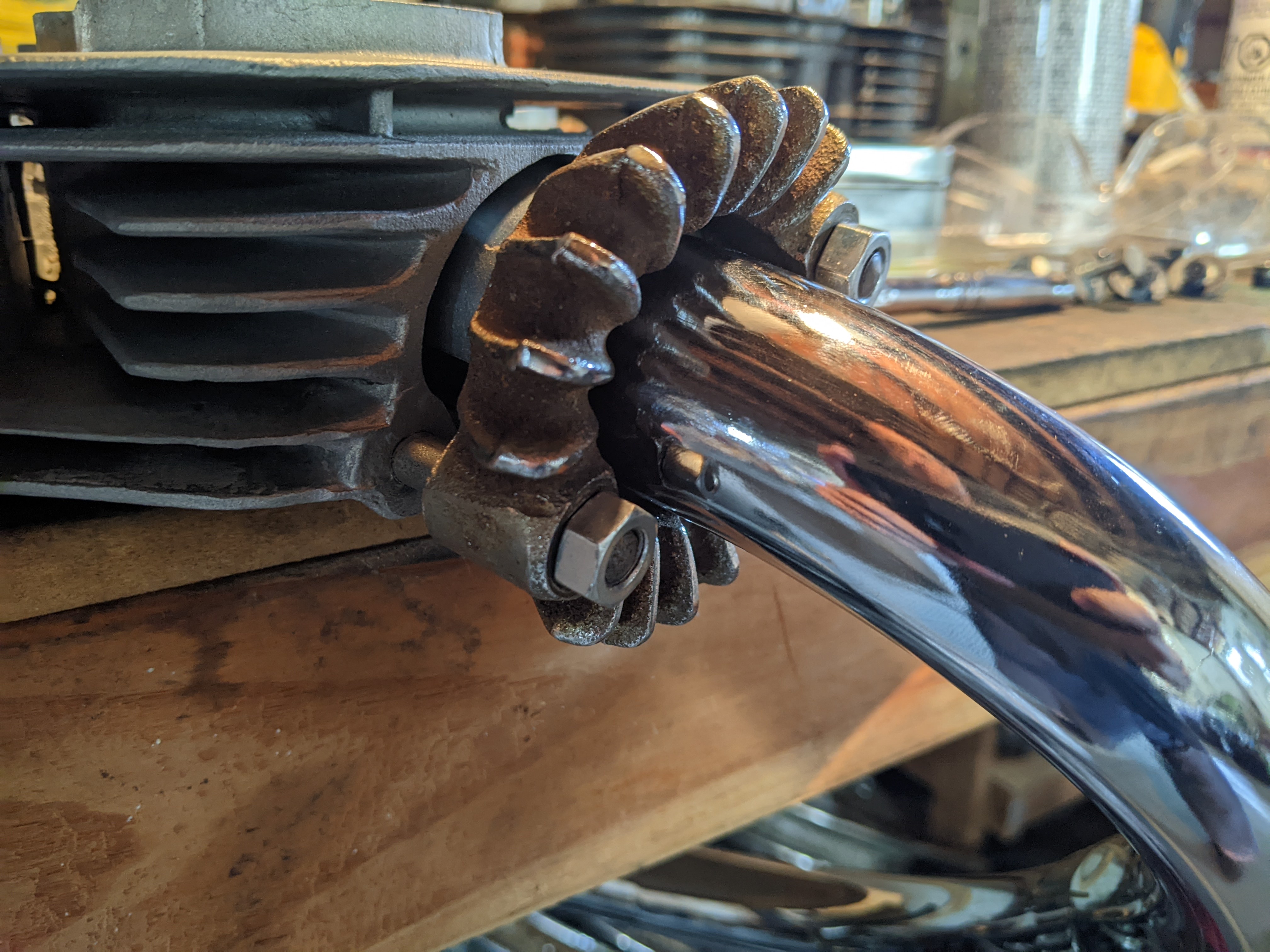
I had removed the headers to do the repair and also checked to see if the CB350F joint collars would enable installation of the aftermarket (Thai) headers I had purchased for the CB350. No go. I'll need to experiment with something else.

u8byWNj.jpg
 
Nice job on the leak repair, hopefully it holds up as advertised.
I had removed the headers to do the repair and also checked to see if the CB350F joint collars would enable installation of the aftermarket (Thai) headers I had purchased for the CB350. No go. I'll need to experiment with something else.
Before you give up on those, try laying them flat on a block of wood and use another block of wood on top, then gently hit the top of the curve with a hammer to try to spread the collar will slip over it. If it works but the outer edges of the ends are opened up a tad too wide, you could file the corners of the edges to fit inside the finned flange recess.
 
I worked on a solution for the oil leak today and things seem to have gone well, at least so far. I appreciate everyone's input as this was being sorted out, especially @ancientdad for pointing me to that air channel and @Flyin900 for steering me towards the Tech Steel equivalent (JB Weld Steelstik).

First, I cleaned up the oil in the area with brake cleaner. This is the lower left airway in the cylinders between the cam chain tunnel and the left cylinder wall, where oil has been spurting out since the first start on this build.

pIoOhPf.jpg


Next, I filed a little bit away from the sharp edge of the casting defect. My goal was to open up the gap to make it easier to get a good seal with the JB Weld SteelStik epoxy. The red visible here is due to fibers from a mechanic's rag. I blew air through the channel to clear out the filings before moving on with the epoxy.


Finally, I kneaded some of the epoxy and wedged it into place using some thin pieces of wood. This epoxy cures in one hour, so I tested it a couple of hours later. I ran the bike up and down the block as I had before with a max speed of maybe 40 mph and then returned to the garage. On all previous runs, I was leaving oil drips every couple of feet, but the motor was dry when I returned. The last picture shows the ugly, but well-hidden repair after the ride — dry so far.


I had removed the headers to do the repair and also checked to see if the CB350F joint collars would enable installation of the aftermarket (Thai) headers I had purchased for the CB350. No go. I'll need to experiment with something else.

u8byWNj.jpg
Those headers are not the 350 type with the extra thick permanent collar. I'll get a pic with measurements.
 
Those headers are not the 350 type with the extra thick permanent collar. I'll get a pic with measurements.
You're right. I wasn't clear in my post. I did get a set of OEM headers (see below) this summer and that's what's on the bike now.

Screenshot_20250823-141907.png

The others were marketed as CB350 twin headers on eBay, but are incompatible with the OEM joint collars. That's why I'm searching for a replacement collar, to see if the Thai headers can be made to work.
 
You're right. I wasn't clear in my post. I did get a set of OEM headers (see below) this summer and that's what's on the bike now.

View attachment 48721

The others were marketed as CB350 twin headers on eBay, but are incompatible with the OEM joint collars. That's why I'm searching for a replacement collar, to see if the Thai headers can be made to work.
Ok, I didn't know that is what you're dealing with. That's a lot of distance to make up with only split collars. I would fab up some thick permanent collars to mod the headers to original spec, then use the standard collars. I bet some steel plumbing pipe could be used, split to fit over, or slid on. They could be tack welded in place or just rely on the compression to hold and seat them in place, when assembled. I could probably fab some from my junk pipe stash, if the end flange dimensions match the OEM headers and exhaust ports then it could work.
 
I would fab up some thick permanent collars to mod the headers to original spec, then use the standard collars. I bet some steel plumbing pipe could be used, split to fit over, or slid on. They could be tack welded in place or just rely on the compression to hold and seat them in place, when assembled.

Thanks — I like that idea. I'll need to do some research about a suitable piece of pipe. As you suggest, tack welding the two halves together once on the header might be all that is needed.
 
Thanks — I like that idea. I'll need to do some research about a suitable piece of pipe. As you suggest, tack welding the two halves together once on the header might be all that is needed.
Yeah, fit and crimp, or weld. Might not need to have two separate pieces, just slip on since it's down pipes. Galvanized or black water/gas pipe is probably thick enough to do it.
 
You're right. I wasn't clear in my post. I did get a set of OEM headers (see below) this summer and that's what's on the bike now.

View attachment 48721

The others were marketed as CB350 twin headers on eBay, but are incompatible with the OEM joint collars. That's why I'm searching for a replacement collar, to see if the Thai headers can be made to work.
These are just like the SOHC 400 pipes, the collar fits snug against the spacer, no sleeves used.
 
Thanks — I like that idea. I'll need to do some research about a suitable piece of pipe. As you suggest, tack welding the two halves together once on the header might be all that is needed.
Must shop the threaded pipe section at HD, not fence pipe or conduit, too thin walled:
1 1/2" pipe will work. Threaded pipe sizing is stupid and weird, never on spec.
1.6" inner, 1.9" outer, .15" wall thick

OEM header:
1.5" smaller diameter (it will slip over), 1.8" outer (it may be tight and require further reduction of fabbed collar to fit in head). Probably have too cut out about 1/4" and crimp down in vice. Could be done, but a lot of work. Sealing flange must first match your new header, or not workable. Hope all the bends match too.

Probably are SOHC 400 headers. That ebay vendor just failed the VHT BS meter test.
 
These are just like the SOHC 400 pipes, the collar fits snug against the spacer, no sleeves used.
This is exactly why I purchased CB350F/CB400F joint collars in an attempt to fit the Thai headers on the CB350. However, the picture posted earlier shows that the 350F collars will not fit on the Thai headers without being spread, as AD suggested.

Probably are SOHC 400 headers. That ebay vendor just failed the VHT BS meter test.
Honestly, I believe they are CB350T headers and will work fine on a CB350T once the joint collar issue is overcome. The overall geometry is a close match to the OEM headers with some differences.

I didn't think to ask the seller if they would work with the stock collars, but I'm disappointed that they did not include whatever they use to fit them in Thailand as part of the deal.
 
They do look like they could be made to work, with a lot of work, in the deep exhaust port pockets on the 350s. I forget why you don't just use the OEM headers.
I doubt the aftermarket ones are double walled like the OEM, for heat retention.
 
They do look like they could be made to work, with a lot of work, in the deep exhaust port pockets on the 350s. I forget why you don't just use the OEM headers.
I doubt the aftermarket ones are double walled like the OEM, for heat retention.
My project came with a usable scrambler exhaust that I intend to use, but I wanted to start with CB headers while sorting out the carb setup, to avoid removing and reinstalling the high pipes to get at the carbs. I couldn't find a good pair of OEM headers initially and decided to buy the Thai replacements instead, only learning about the fitment obstacle after purchase. Now, I have OEM CB headers, but would like to be able to fit the Thai headers since that could open the door for others who cannot find a good OEM option.
 
My project came with a usable scrambler exhaust that I intend to use, but I wanted to start with CB headers while sorting out the carb setup, to avoid removing and reinstalling the high pipes to get at the carbs. I couldn't find a good pair of OEM headers initially and decided to buy the Thai replacements instead, only learning about the fitment obstacle after purchase. Now, I have OEM CB headers, but would like to be able to fit the Thai headers since that could open the door for others who cannot find a good OEM option.
Ah, I understand. R&D for future options. At least you do have OEMs to use while sorting out the carbs.
 
Before you give up on those, try laying them flat on a block of wood and use another block of wood on top, then gently hit the top of the curve with a hammer to try to spread the collar will slip over it. If it works but the outer edges of the ends are opened up a tad too wide, you could file the corners of the edges to fit inside the finned flange recess.
I used a vise to spread two of the collars this afternoon. They now fit over the header snugly, but with two on opposite sides there are gaps between them. That would probably be okay, but it seems these collars are still too short to do the job.

On a whim, I contacted the seller through eBay to see if they can sell me compatible joint collars. We'll see if I hear anything back.
 
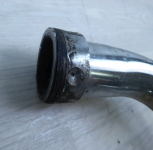
I got a reply from the eBay seller asking if I could provide pictures. So, I supplied the following three photos, explaining that the joint collars are too short for their headers.

PXL_20250828_233307152.jpg

PXL_20250828_233344606.NIGHT.jpg

PXL_20250828_233405001.NIGHT.jpg

The seller then replied that they don't have the joint collars. I'm not too surprised and I give them some credit for communicating with me. They also sent me an eBay offer for their combined set of headers and mufflers!

I guess my next step is to try to improvise the extra ring that the OEM headers have on the aftermarket pipes. No rush, since I've got the high pipes back on the bike now.
 
I got a reply from the eBay seller asking if I could provide pictures. So, I supplied the following three photos, explaining that the joint collars are too short for their headers.

View attachment 48979

View attachment 48980

View attachment 48981

The seller then replied that they don't have the joint collars. I'm not too surprised and I give them some credit for communicating with me. They also sent me an eBay offer for their combined set of headers and mufflers!

I guess my next step is to try to improvise the extra ring that the OEM headers have on the aftermarket pipes. No rush, since I've got the high pipes back on the bike now.
Just wondering but how about a piece of an exhaust pipe adapter or tailpipe extension the right size cut and split. Take the header and a caliper to AutoZone or another car parts place and I bet you can find what you need.
 
Just wondering but how about a piece of an exhaust pipe adapter or tailpipe extension the right size cut and split. Take the header and a caliper to AutoZone or another car parts place and I bet you can find what you need.
That seems like a good idea, as does @ballbearian's thought to check out pipes at a hardware store.
 

After cutting off the threaded end parts, there should be enough left, in the middle, to make two 17mm long rings. Then will need to cut a slit about an 1/8" wide or more to crimp/clamp around header to weld up the slit.
I have saws-all and 9"angle grinder to do this, also OEM headers to clamp and test slit fit.

Overall fixed collar length 19mm, including inner header lip.
 
After cutting off the threaded end parts, there should be enough left, in the middle, to make two 17mm long rings. Then will need to cut a slit about an 1/8" wide or more to crimp/clamp around header to weld up the slit.
I have saws-all and 9"angle grinder to do this, also OEM headers to clamp and test slit fit.

Overall fixed collar length 19mm, including inner header lip.

Thanks, Tom, for laying out a plan of attack for me. I'll make a trip to HD later today to see if I can find a suitable size/length of pipe. It's a good weekend for experimenting.
 
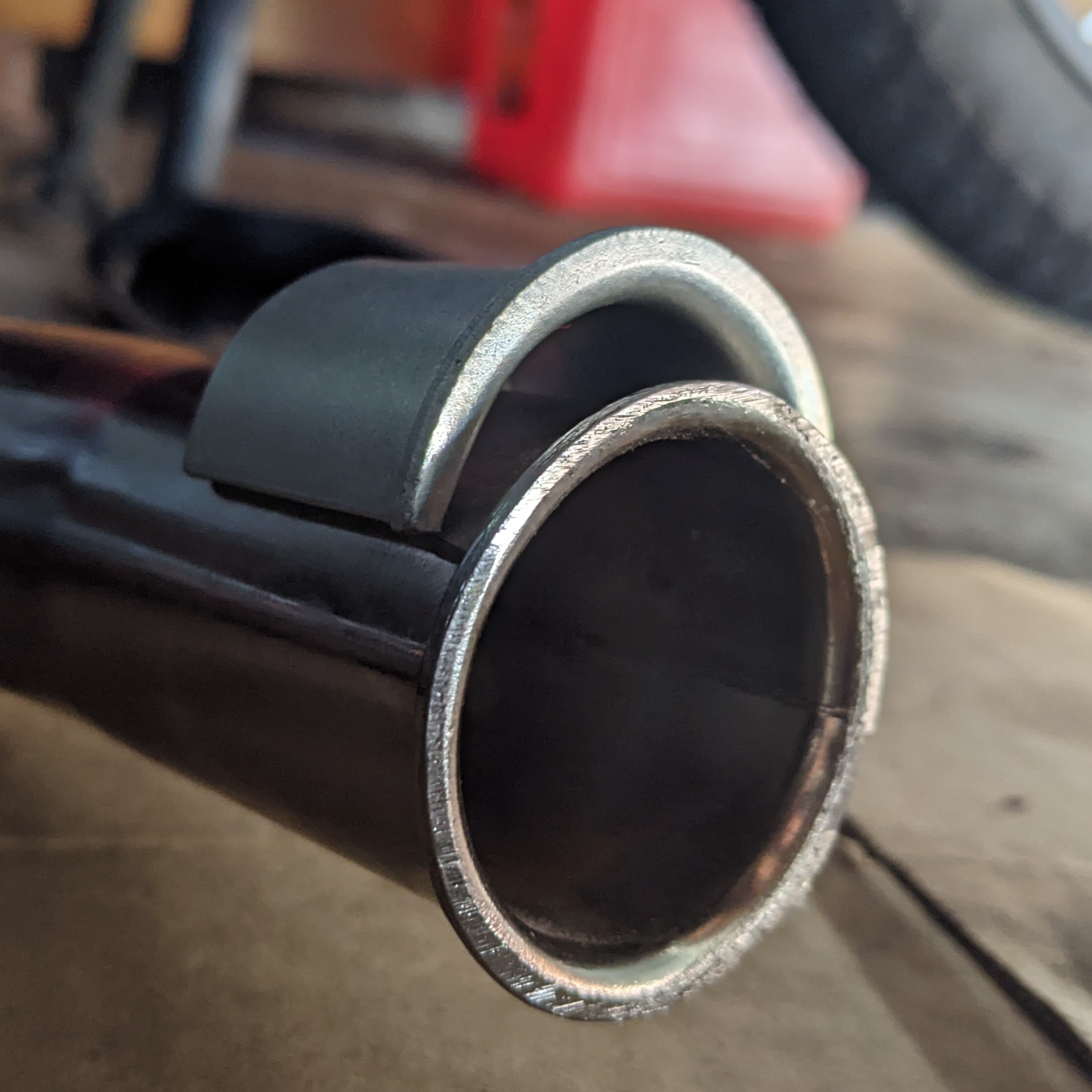
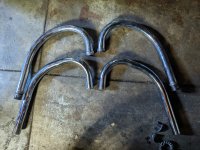
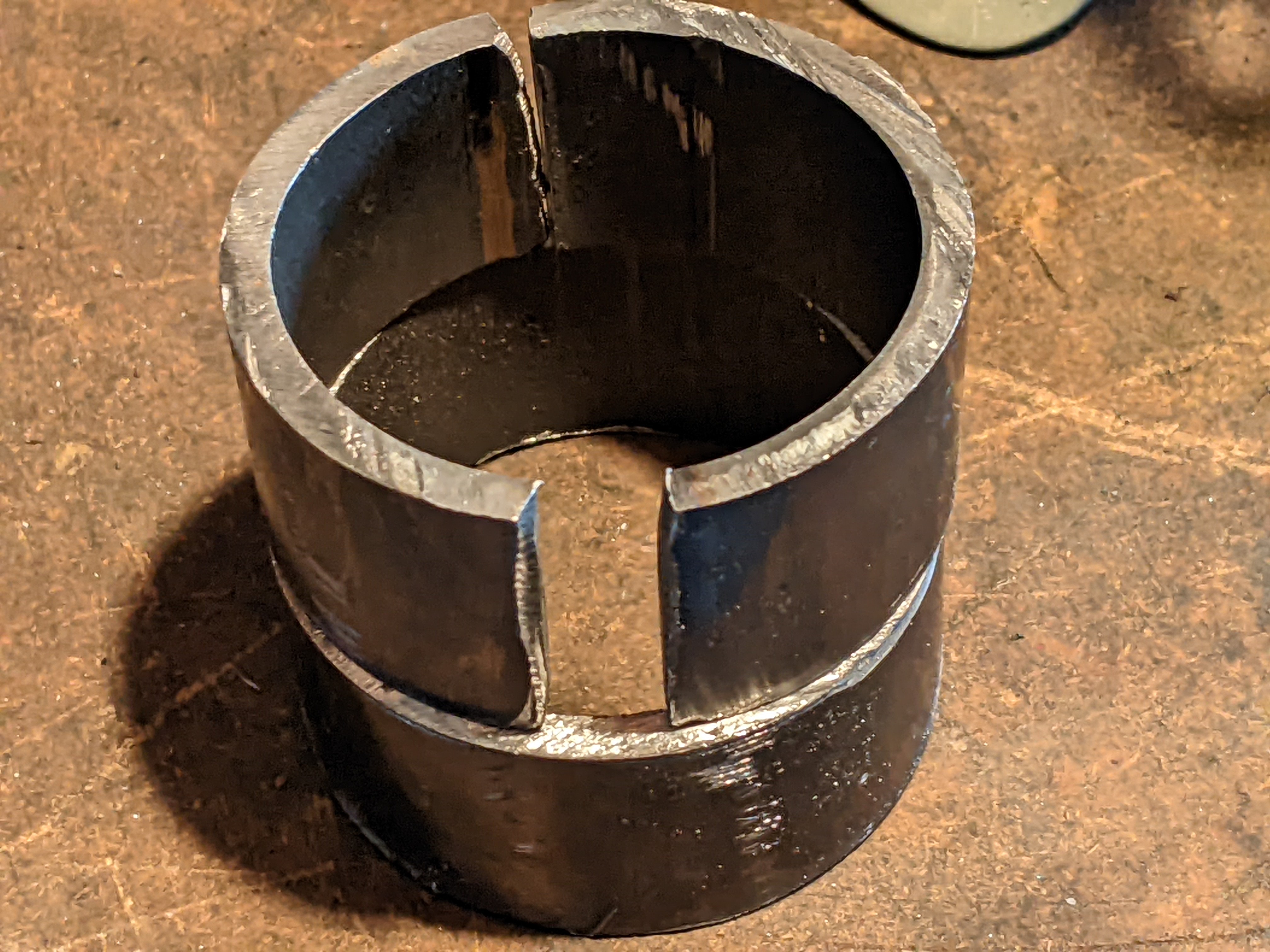
I was able to pick up the 1.5" galvanized pipe section suggested by the @ballbearian at the local box hardware store. I used a sawzall to remove the threaded sections and then checked the fit of the pipe in the exhaust port: too tight but close enough that it can be made to work. The inner diameter of the pipe is a loose fit on the aftermarket headers — I could run that section from the muffler end of the header all the way up to the other end, but not over the flange.

0cNsYxb.jpg


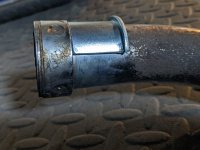
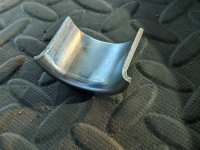
I decided to split the ring into two collars. I used a vise to squeeze the halves down to a smaller radius and then removed material so that the two halves did not interfere. The next picture shows the change in radius and how much material was removed — this will make it easier to produce a second set.

teXOeRh.jpg


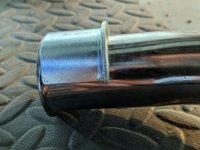
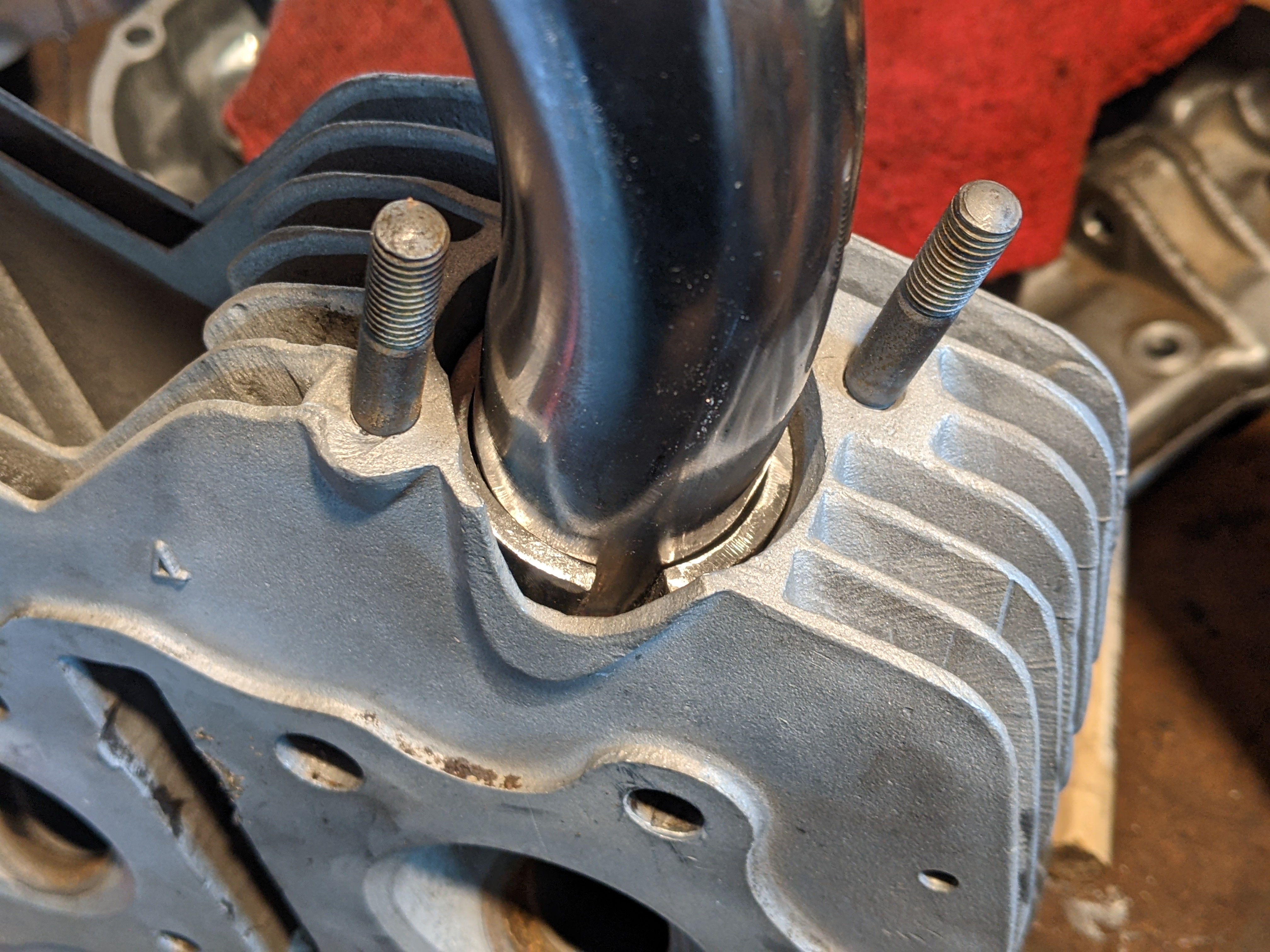
A test fit of the two halves in my spare CB350 head worked out after a few rounds of modification.

o2q9U0X.jpg


I'm waiting on a spare exhaust flange that may arrive today, then I can try to tighten everything down. If they end up working, I'll try to clean them up a little bit.
 
Wow, Brody. You spent less time doing it , than I spent thinking about it. I was hoping that only one cut to reduce it would be possible, with a few vice squeezings.

If you weld it and have any scraps of header wrap around, it helps to protect the chrome from welding.
 
Wow, Brody. You spent less time doing it , than I spent thinking about it. I was hoping that only one cut to reduce it would be possible, with a few vice squeezings.
I appreciate the fact that you did think about it and found a suitable raw material for the task. Once I get out all the cutting and grinding implements, I usually stick with it until the task is done or thoroughly botched, or both. Luckily, I had a pack of unused blades for the sawzall — I used two so far.

I'll see if I can do the second one with a single cut (actually two that remove a small section) now that lunch break is just about over. I bought two of the pipe sections, so I can try again if time and energy persist.
 
The exhaust collar arrived. The pipe clamped down using the longer 350F joint collars, so they should work fine with the 350T collars. I still need to make sure the two improvised pieces have the same length — the first one came out slightly taller.

Zds9Xws.jpg
 
The exhaust collar arrived. The pipe clamped down using the longer 350F joint collars, so they should work fine with the 350T collars. I still need to make sure the two improvised pieces have the same length — the first one came out slightly taller.
Nice effort, and resourceful. And it's always nice to come out on the winning side of a challenge to use something you paid for.
 
Back
Top Bottom