
Now that the fork lock is working you'll want to spray graphite lock lube in there, WD40 isn't a lube.


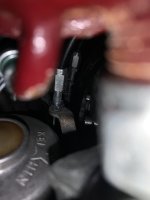
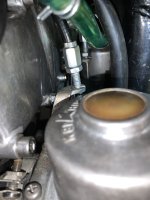

Take a piece of stiff but malleable wire, like an old school wire coat hanger, and cut a piece about 6" to 8" long. Start ahead of the kink in the hose and bend the wire around the hose to the same diameter as the unkinked section, making about 5 or 6 loops of proper diameter, then slide that over the kinked area to help it become round-shaped again. Leave it on there for a while, gently use a zip tie to hold it in place if necessary, and engine heat will slowly reshape the kinked area with help from the wire.Currently noticed two things.
The breather tube has been kinked for quite some time. I slightly moved it around to try and remove the kink.
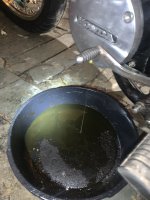
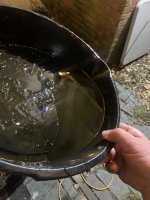
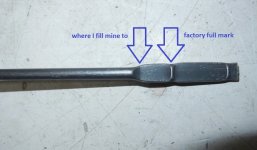
It's completely safe to fill the engine up to the top of the pressed-flat area of the dipstick, I've been running mine that way for 7+ years.Also, the oil level was previously filled with exactly three quarts. I checked the dipstick and it's filled maybe 1/8in to 1/4in above the second line. I'm assuming both of these issues are not healthy at all for the engine.
Aftermarket cables vary in both inner cable and outer cable lengths, so sometimes you have to compensate. You can unscrew the 90° elbow from the right switch bottom a turn or two to take up some slack, as well as use the cable adjuster on the end of the elbow. I'd run those at the carbs back in a couple of turns and try to take up the slack elsewhere so those aren't sitting at the end of their threaded area.I’m not super confident with the throttle cable setup. Here are the lengths of threading on the carb side. I have not locked down those nuts yet. I think I need some adjustment on the grip side.
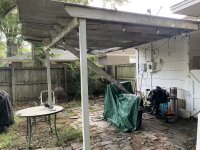
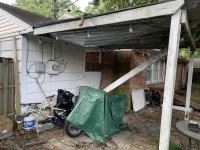
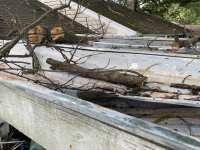
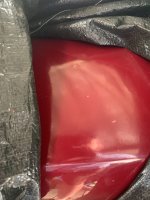
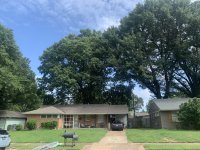

Dodged a bullet is right! Could have been so much worse, especially after putting so much time and money into the bike. Glad that's the worst of the outcome overall. Though not often, sometimes it is better to rent a place instead of own it.
Couldn't agree more. If it were mine, I'd move it to someone else's house while the work is being done. I wouldn't want to take the chance that they are careful around it and don't drop stuff on it themselves, and that they are honest and wouldn't come back later and steal it.Kind of sketched about having workers in the backyard with my bike back there if I’m not home. I’ll take some safety precautions. Probably nothing to worry about, I can be over paranoid about things like that.


I also have blink cameras around the house and added one on the front of my shed so I can see whats going on before anyone would gain entry. It does pick up the occasional limb moving in the wind or a bug flying around in front of it but overall is pretty nice.I installed a Blink camera inside my garage (motion activated Wi-Fi camera) as a precaution. I've never had anyone gain entry, but you never know. I can see a live view or capture a picture from the camera on my phone from anywhere I have signal.
The one downside for outside use is that it can be tricky eliminating false alarms. For example, if the wind were blowing your motorcycle cover around, the camera may detect that and alert you without good reason. It does have sensitivity settings and you can choose subsets of the viewed area to focus on. Those features help.
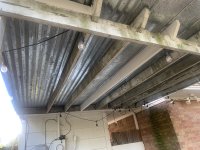
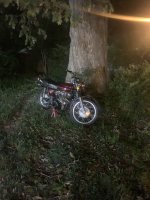
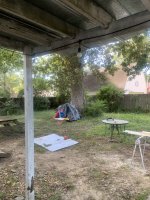
I learned this the hard way long ago, but covering a bike and leaving it that way from the cool, damp night (let alone any rainy days or nights) then into the hot day the next day can cause a lot of quick rust from trapped moisture under the cover. Hopefully you've just moved it there until he finishes work, but I thought I should mention it.
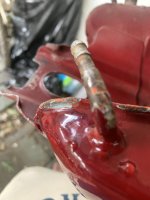
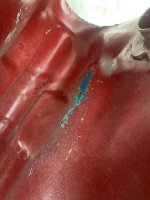
save the chemicals, grab your angle grinder and a dust mask
They do sell the same thing for a drill. Just zip tie the trigger closed and hold it sideways. Works way faster and cleaner. A tank takes about 20 minutes to get ready for a final sand before primer and or filler.Unfortunately, I only have a battery powered drill and a dremel. If the going gets tough I’ll see if I can borrow one.
They do sell the same thing for a drill. Just zip tie the trigger closed and hold it sideways. Works way faster and cleaner. A tank takes about 20 minutes to get ready for a final sand before primer and or filler.
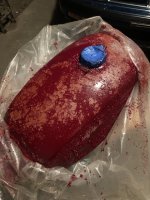
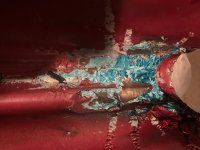
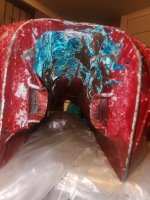
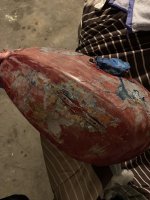


My cheapy $35 1/2" chuck amazon corded drill runs 3Krpm and the cordless are only half that. Better for wire wheels and abrasives. I us the grinder discs with just a hole by mounting with a 3'8" bolt washers and a nut.Unfortunately, I only have a battery powered drill and a dremel. If the going gets tough I’ll see if I can borrow one

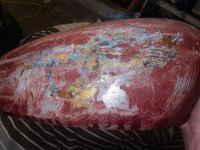
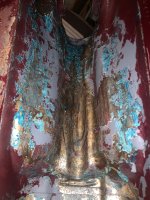
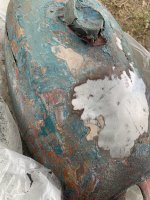
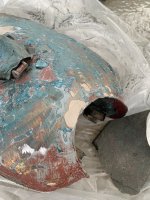
Could be. If it feels a bit chalky like dried joint compound or spackle, then it's some kind of filler. Be careful not to attack those areas too aggressively unless you are prepared to redo the filler.Is this bondo that I am seeing?
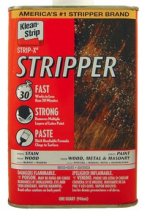
I used a can of this. About three times I let it sit for 35-40mins.Could be. If it feels a bit chalky like dried joint compound or spackle, then it's some kind of filler. Be careful not to attack those areas too aggressively unless you are prepared to redo the filler.
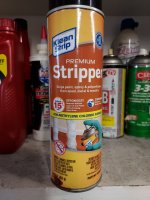
What kind of paint removal chemicals were you using? I'm surprised the old paint is resisting so well.


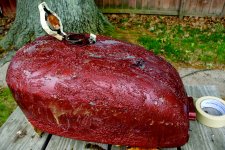
New can be applied over old, as long as there’s still adhesion. Kind of depends on how deep it is. Pretty much anything with a stripping wheel can be handled by a high build primer and sanding.Looks like I may have disturbed a few of the body-filled areas. Do I need to remove all of the body filler? Can new filler be applied over old?
I’ll definitely grab me some of that to clean up what the sanding disc can’t reach!I've had good luck with the Aircraft brand paint stripper, which is available in many auto parts stores. It goes on like a sloppy goop and if you let it sit for 30 minutes it can bubble up a few layers of paint, producing colored goop that you can scrape off easily. The photo below shows it in action on a tank I bought on eBay several years ago.
View attachment 35547
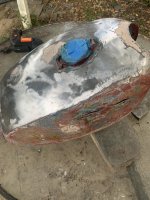

Dupli-Color offers a sandable or filler primer. The "filler" version says it's best for 'high-build' and filling scratches. I haven't ordered either of the two, as I wasn't sure which one I would need after removing paint. I assume I need the filler kind.It's coming along and you will be past this stage soon enough. Do you have some sanding materials and a fill/sand primer picked out already? Once it's paint-free, it will be good to get close-ups of areas that may need to be filled.
Don't be too disappointed with the PO and the the fact that the story doesn't match the evidence. I've run into filler on a couple of my used tank purchases and I would hazard to guess that better than half of the repainted tanks out there have some filler. Otherwise, why repaint it?
That and the scratches in the steel tell me you are bearing down, pressing too hard. Let the abrasive wheels do it's work. You shouldn't need to remove every speck of old paint if it's stuck on real good. The primer will seal it all down for the actual new paint.Do not touch where you just sanded, it will be very hot lol
I appreciate that advice. First time using a power drill with an abrasive disc. It was difficult to tell where the wheel was and was not hitting. Didn't help that all of the mixed colors looked like a psychadelic acid trip. I had the tank on a glass outdoor table out back, Not my best pick. The tank was sliding around so I decided to put pavers against the back of the tank to hold it. Should have had a towel underneath. Any ideas to better hold the tank in place, would be appreciated.That and the scratches in the steel tell me you are bearing down, pressing too hard. Let the abrasive wheels do it's work. You shouldn't need to remove every speck of old paint if it's stuck on real good.
I still have the right side of the tank to strip down. Would it be ok to go ahead and remove that side with the disc? Or just get enough off to start wet sanding?t's good that you are removing the two layers of repaint (they were probably a lot more bumpy lumpy than the original), but the original, besides dents and scratches is probably pretty smooth and well stuck down to the steel. Just start wet sanding and priming (repeat as necessary). You'll soon see what areas need more help.
And soon you'll be working smarter not harder.
A sheet of plywood would be best but several layers of cardboard would do in a pinch. Get those rocks away from your precious tank.Any ideas to better hold the tank in place, would be appreciated.
Your choice really. You are going to progress from coarse scratches (the disc) to more and more finer scratches. You'll probably miss spots and go back to the course stuff here and there.Would it be ok to go ahead and remove that side with the disc? Or just get enough off to start wet sanding?
Would these 400 grit blocks help the coarse scratches on the metal? I would hate to have "damaged" the surface of the tank.I use these after discs and wire wheels to get closer to the wet sanding 800-1000 phase. They can be used wet too and last longer.
https://www.amazon.com/Sanding-Kitc...8-3-spons&sp_csd=d2lkZ2V0TmFtZT1zcF9hdGY&th=1
The filler primer should take care of the steel scratches.Would these 400 grit blocks help the coarse scratches on the metal? I would hate to have "damaged" the surface of the tank.
Roger that. I have the 1/4in shank fine wire wheel for around the gas cap ordered and the 400 grit wet sanding blocksThe filler primer should take care of the steel scratches.
I could not find the paint stripper you posted anywhere online. Possibly discontinued? I could always try the alternatives though.You're working way too hard.
Get a can of that stripper I posted above. It will lift that paint down to the metal. I stripped my tank recently and didn't use a single piece of sand paper or other abrasive. A quart is more than enough.
It's also great for the area around the filler neck.
(Granted that was only a single coat of paint, it will work bit slower with thicker paint.)

Did you check Walmart? I don't know if they sell the gallon can, but I've bought a couple of large spray cans of Klean-Strip from them and it works well.I could not find the paint stripper you posted anywhere online. Possibly discontinued? I could always try the alternatives though.