
And a flat screwdriver in the gap where the bolt pinches the turn signal body to clamp it to the shaft, spread it apart slightly like you would to remove a shift lever.


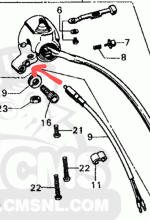
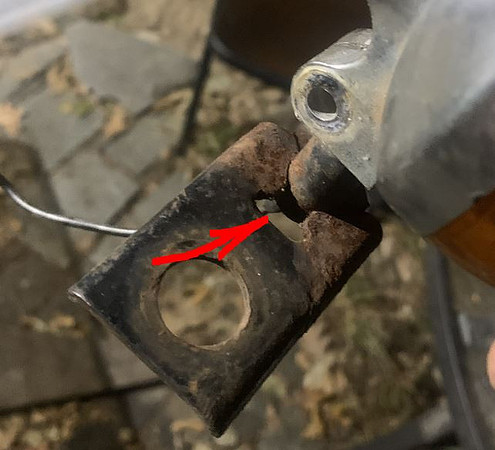
Thanks for pointing that out. I’m convinced now that a group of cavemen worked on this bike in the mountains somewhere around a campfire. I’ll be making a trip to the hardware store and add some PB Blaster to my arsenal.Your picture shows the hole where the ground wire is supposed to be routed. It should pass discretely through the hole I marked with the red arrow and along the stalk, nearly out of sight. That is probably why Tom did not remember the ground wire with the ring terminal.
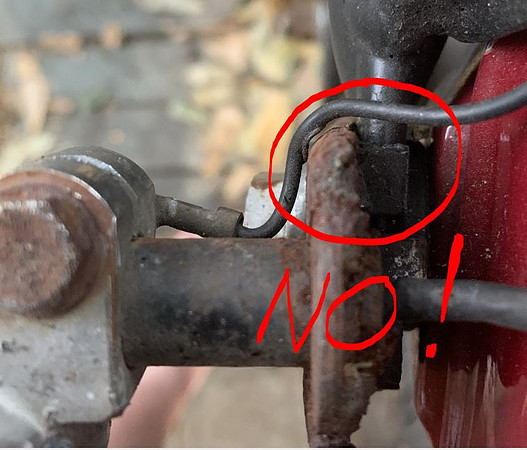
In your earlier picture, the wire was routed incorrectly outside the bracket.
WD40 may help, but PB Blaster or Liquid Wrench are far better penetrants.
The flathead trick removed it with ease.. thanks.And a flat screwdriver in the gap where the bolt pinches the turn signal body to clamp it to the shaft, spread it apart slightly like you would to remove a shift lever.

Different topic on the bike. Am I missing another D-Washer for the triple tree? Couldn’t help but notice this and ask.. I have tried to figure it out on the parts diagram to no avail.And a flat screwdriver in the gap where the bolt pinches the turn signal body to clamp it to the shaft, spread it apart slightly like you would to remove a shift lever.
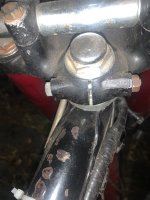
No, that gap is normal and did not come with any protective washer in gap. You are one of the lucky ones, we've seen so many cracked top bridges even when the D washers were in place, people just out of their minds when tightening the pinch bolts.Different topic on the bike. Am I missing another D-Washer for the triple tree? Couldn’t help but notice this and ask.. I have tried to figure it out on the parts diagram to no avail.
The two positives I have found while endlessly working on this bike: The horn still works, and the top bridge is not cracked!No, that gap is normal and did not come with any protective washer in gap. You are one of the lucky ones, we've seen so many cracked top bridges even when the D washers were in place, people just out of their minds when tightening the pinch bolts.

I get it and it helps to hear someone explain stuff, but remember this engine's valves adjust very differently than any you've worked on. Valves are valves, but familiarity and experience is important too.Went over basic maintenance tasks, like setting valves, cam chain, and greasing the felt on the points plate.
Not trying to take discussion away from here, but sometimes it's just easier to knock it out in a 20 minute phone call and then come back and recap. I mentioned to him to come back here for additional questions and to be sure to keep us posted on the progress.
Right, I did not give specific advice on how to adjust the valves. I mentioned that it is part of the maintenance that he should perform soon. I did mention to him that I am not familiar with this bike and it's quirks and that it's DOHC so the rules are different so that he should reach out to you in this thread for the specific procedures. The electrical and stuff like that has most of the same techniques that apply.I get it and it helps to hear someone explain stuff, but remember this engine's valves adjust very differently than any you've worked on. Valves are valves, but familiarity and experience is important too.
Again, pictures...I received a wiring harness from Brody, which is in very good shape to my knowledge. When compared to my old one, it’s a complete 180. I went over this harness with contact cleaner on all connections, and applied dielectric grease. I also wrapped it in heat resistant cloth tape. I’d be curious to know if it’s in good enough shape to go ahead and swap it out on the bike.
 but if Brody felt it was good enough to save, I'll trust his judgment on its usability.
I think it should be complete and usable, but it was definitely in need of some cleaning when I boxed it up. The plastic sheath going into the headlight is cracked and I would recommend removing the remaining plastic and replacing it with harness tape or new sheathing. It came off my parts bike, so I never ran any electricity through it.Again, pictures...
And if he wants to get some fresh shiny black plastic sheathing like the original was for where it goes into the headlight case, he can get it here:I think it should be complete and usable, but it was definitely in need of some cleaning when I boxed it up. The plastic sheath going into the headlight is cracked and I would recommend removing the remaining plastic and replacing it with harness tape or new sheathing. It came off my parts bike, so I never ran any electricity through it.

 www.vintageconnections.com

I am still building my arsenal of mechanical spray cans, lubes, etc. I think the closest thing I have is 3in1 oil.Very nice, it even still has the rubber bumpers on the weights both inside and outside. Nice clean breaker cam lobe for the points too, make them last a lot longer. I use a drop or two of PJ-1 chain lube on the felt for the breaker cam lobe and points rubbing block, and I wipe a small film of it on each rubbing block where it contacts the cam lobe. Slows down the rubbing block wear a lot so the points don't have to be adjusted as often.

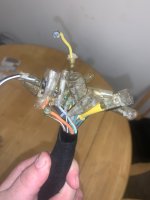
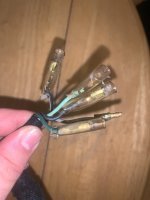
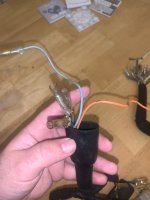
I like chain lube because it has graphite in it and thickens up, so it stays there and won't fly off and around the area, ending up on the points contacts in some cases of over-do.I am still building my arsenal of mechanical spray cans, lubes, etc. I think the closest thing I have is 3in1 oil.
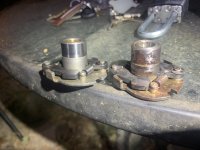
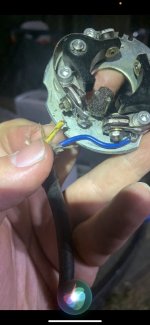
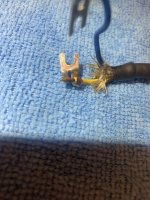

Can you repost that link?This is what I did with mine a little while back. Basically, I used crimp style eyelets for the points leads.
Yeah, I'm sure he meant to post this link - it's the one I believe he was referring to.Can you repost that link?
 www.vintagehondatwins.com
I fixed the link in the original post. Sorry about that.Can you repost that link?
Yes. Thanks, Tom. Didn't mean to create extra work for you!Yeah, I'm sure he meant to post this link - it's the one I believe he was referring to.
Jeez, it took all of 2 minutes looking in the section to find it. I think I'll survive!I fixed the link in the original post. Sorry about that.
Yes. Thanks, Tom. Didn't mean to create extra work for you!
Do you remember what size eyelets those were?I fixed the link in the original post. Sorry about that.
Yes. Thanks, Tom. Didn't mean to create extra work for you!
It was a cheapo eBay purchase and I don't think the sizes are labeled. The kit includes various sizes, but they are the proper crimp style, unlike what you tend to find in auto parts stores.Do you remember what size eyelets those were?
That helps a lot. Im assuming it was the smallest ones on the bottom right.It was a cheapo eBay purchase and I don't think the sizes are labeled. The kit includes various sizes, but they are the proper crimp style, unlike what you tend to find in auto parts stores.
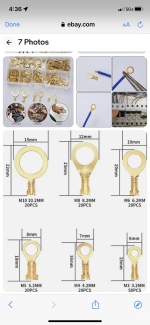
Yes, I believe so. I checked a spare set of points that I have laying around and the bolts were M3.That helps a lot. Im assuming it was the smallest ones on the bottom right.
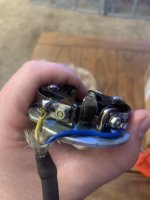
This was my 2nd attempt soldering. The problem I’m having is the 60/40 melting. I’ll have the iron heating for maybe 5-10 mins. I’ll hold the tip of the iron(30w/900F) on the area to be soldered for at least 30 seconds. Even up to a minute. When I press the solder, it doesn’t melt at all.With those old wires it just tends to not accept solder very well unless it's clean and a tiny bit of flux paste. I know the 60/40 solder has flux in it, but it never seems to be enough to be useful. Scuffing the area on the connector to be soldered and a small dab of flux on that area as well makes everything work nice and dreamy.
If you do more soldering be sure to clean the area you soldered with some rubbing alcohol or acetone. Flux can corrode connectors over time. Not instantly, but in like 5-10 years. Maybe sooner depending on how it's stored. I just keep old toothbrushes around to dip in a bottle of rubbing alcohol to clean the areas off. Q-tips work fine as well.


You had doubts?I'm also enjoying seeing the helpfulness and camaraderie of this forum on display.
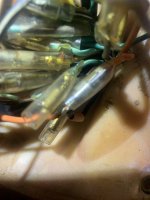

I’m thinking this bike is missing the black male and green w/ yellow stripe male wires. Or they were changed to different colors. Do these two wires come out of the handlebars or one of the gauges?Green w/Yellow is for the brake light. Black feeds the switch and Green w/Yellow feeds the bulb.
The stop switch should be installed on the brake lever perch (very close to the pivot) and it would have a black and green/yellow lead. Those wires would end up going to the headlight bucket to match up with the corresponding connectors on the harness.I’m thinking this bike is missing the black male and green w/ yellow stripe male wires. Or they were changed to different colors. Do these two wires come out of the handlebars or one of the gauges?
The stop switch should be installed on the brake lever perch (very close to the pivot) and it would have a black and green/yellow lead. Those wires would end up going to the headlight bucket to match up with the corresponding connectors on the harness.
Your bike may currently be missing the brake switch.
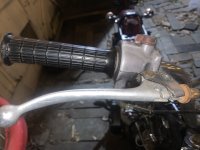
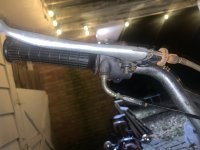
I would definitely like to get a K4 setup on hereIt appears you have a K1 or 2 switch pod so there's no provision on it for a front brake switch. I believe those models used a switch in the actual cable.