
Yes, and in my haste I overlooked that the bike was in that position.When on the side stand leaning that way, it will pour out.


Yes, and in my haste I overlooked that the bike was in that position.When on the side stand leaning that way, it will pour out.
The nut is a lock nut to hold the tappet adjuster still after adjustment (and while the engine is running, of course). So, loosen #21 a little so you can turn #20 and slip the feeler gauge between the tip of #20 (which protrudes underneath #5, basically on top of the valve tip). When you get the adjustment snug so the feeler gauge will go in between but not sloppy (in other words, when a .004" will slip in but a .005" will not) then tighten the lock nut to hold it at that setting. HOWEVER, this has to be done on the correct crankshaft positioning, at "T" on the rotor on compression stroke. Rotate the engine while watching the intake valve open, then close, and then stop at T right afterward. If you see the exhaust valve start to open you've gone too far.I'm trying to adjust the valves now. I have questions. I'm not sure exactly where I'm suppose to be measuring. Directly under the nut, there is not space. The .10mm gauge doesnt fit under on either. I'm assuming this is where the .1-.15mm gap should be, as under that the next gap is massive on both. Is under the nut the correct place to set that gap?
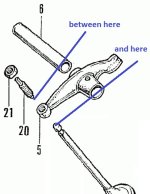
It took me a bit to get it, especially because it was so tight initially I couldn't find the gap, but It got it. Your reply helped tremendously, as always thank you AD!The nut is a lock nut to hold the tappet adjuster still after adjustment (and while the engine is running, of course). So, loosen #21 a little so you can turn #20 and slip the feeler gauge between the tip of #20 (which protrudes underneath #5, basically on top of the valve tip). When you get the adjustment snug so the feeler gauge will go in between but not sloppy (in other words, when a .004" will slip in but a .005" will not) then tighten the lock nut to hold it at that setting. HOWEVER, this has to be done on the correct crankshaft positioning, at "T" on the rotor on compression stroke. Rotate the engine while watching the intake valve open, then close, and then stop at T right afterward. If you see the exhaust valve start to open you've gone too far.
View attachment 28607
Nothing more true than that statement. First you need to understand 4 stroke engine processes better. And this is one of the many reasons we ask new members to introduce themselves and tell us a little bit about their mechanical background and experience.Trying to wrap my head around this, I have to understand the process before messing with anything.
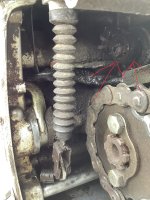

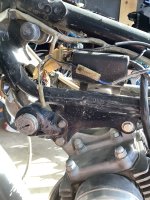
Possibly. I cleaned it up after I took the picture, took it for a spin, let it sit for a bit and looked again. The rubber behind the bolt is the highest spot I saw oil and there was a trail. It could have splattered up there, and might not be the source. Any advice if it is the harness grommet?The JIS screw (#28) in the end of the shaft on the shift drum holds the neutral switch in place (note the green with red wire leading away from it in your picture above). The seal behind the neutral switch parts isn't shown in this fiche (or any others either for whatever reason) but it doesn't appear to me that there's an oil trail from it in this pic (could be the angle and lighting). However, the alternator harness is wet and the rubber grommet around the harness is famous for getting hard and seeping oil, so it might be running along the harness and dripping further back.

hahahaha I cleaned it up after the picture. Guess I should have retaken another after.Since you're in FL and can still use a hose, I'd spray the whole area with a can of engine degreaser then blast it with hose because there is just way too much crud there to see anything.
Even better use the car wash.
You can't hurt much in that area so go crazy with the pressure wash.hahahaha I cleaned it up after the picture. Guess I should have retaken another after.
It's the wire that connects the points to the coil and condenser. If it isn't connected correctly at the points end the engine won't run. #7 hereThe cable coming out of the breaker point housing disconnected. It was ran and tucked up by the gas tank. What is this a ground, or is it supposed to be connected to something specific?

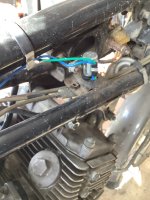

The wire that came apart had a wire in between the two wires and the connection was wires wrapped on each other and electrical taped... should have taken a picture of it, it was about a 4" middle connecting wire as the two cables have gotten short. Amazed it stayed connected as long as it did with how it was done. Very rigged and janky.The wiring all looks original except for the replacement condenser/wiring, not sure what you see that looks janky to you. I don't see a 'splice' anywhere, just Honda connectors that probably need a little attention like cleanup and a little squeeze to improve tightness of connection. The loose female gray wire could be for turn signals but since this is a '60s bike you'll want to look at the wiring diagram to be sure. Ballbearian will be better suited to answer these questions, it's been 50 years since I touched a 160.
I think your right, probably a later addition to the '67 for signals on that gray. My '65 doesn't even have one. Mike's diagram is one to print and as good as it gets. Never seen a later diagram.The wiring all looks original except for the replacement condenser/wiring, not sure what you see that looks janky to you. I don't see a 'splice' anywhere, just Honda connectors that probably need a little attention like cleanup and a little squeeze to improve tightness of connection. The loose female gray wire could be for turn signals but since this is a '60s bike you'll want to look at the wiring diagram to be sure. Ballbearian will be better suited to answer these questions, it's been 50 years since I touched a 160.
Yeah, that would seem janky for sure, wish we'd gotten to see it. The twist and tape era has been long gone for decades now.The wire that came apart had a wire in between the two wires and the connection was wires wrapped on each other and electrical taped... should have taken a picture of it, it was about a 4" middle connecting wire as the two cables have gotten short. Amazed it stayed connected as long as it did with how it was done. Very rigged and janky.
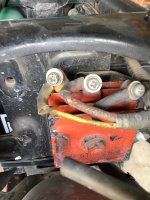
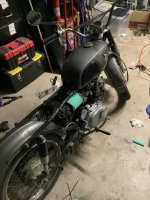
13.2 ain't bad for those old inefficient rectifiers. Eventually they 'leak' and will discharge your batt overnight. You do have a modern AGM type battery and if it'll hold at 12.4 or above after sitting a day then it might be good for now. These bikes had no regulator and relied on the battery for evening out the voltage. They only begin charging at around 2-3 K rpm's, not like a car. Watch the voltage go up when you rev it up some. Eventually get a Sparcksmoto rect/reg combo unit and we'll guide you through the conversion. ICR if I put good pics of doing mine in my build. Nope. Here's the project thread anyway. The motor was jacked, so it got the whole tamale. You may be interested.So here is the rectifier. Also just register 13.2v on the multimeter with the bike cold after sitting all night. After the jump at the gas station the ride home was about 25 miles. Accidentally hit the horn about 10 minutes in on the return ride and the bike did jump back momentarily with a loss of power. Made sure not to hit it again in risk of killing the battery again.
Unrelated, I rebuilt the air filters with the foam you recommended a few nights ago.
The screw holds the neutral switch contact and, yes, it is attached to the end of the shift drum, so 4 speeds and neutral positions. There is a seal there but you should clean all the oilyness then run it just long enough to figure which what is the leak source. It doesn't take long to fling oil everywhere and you'll never know from where.Trying to pinpoint my oil leak. Trying to remove the left crankcase cover. The shifter rod may not be level and is preventing removal. Any advise? It does look like its coming from the screw I pointed to in an above picture. I turned that screw and it has 5 positions. This is the transmission screw I'm assuming?
How do I go about repairing this? I just pulled off the left crankcase cover and it's either coming from one of the two you and I mentioned? How do I disconnect the alternator cable completely to fully remove the cover? I dont want to damage anything in here, I just held it while connected and peaked around.The JIS screw (#28) in the end of the shaft on the shift drum holds the neutral switch in place (note the green with red wire leading away from it in your picture above). The seal behind the neutral switch parts isn't shown in this fiche (or any others either for whatever reason) but it doesn't appear to me that there's an oil trail from it in this pic (could be the angle and lighting). However, the alternator harness is wet and the rubber grommet around the harness is famous for getting hard and seeping oil, so it might be running along the harness and dripping further back.
I got it off but leaked a good amount of oil. Can't run it as is a the moment. Nervous about the cable connection to the alternator. What replacement parts should I have on hand for replacement before proceeding? I'd like to get this oil leak taken care of.The screw holds the neutral switch contact and, yes, it is attached to the end of the shift drum, so 4 speeds and neutral positions. There is a seal there but you should clean all the oilyness then run it just long enough to figure which what is the leak source. It doesn't take long to fling oil everywhere and you'll never know from where.
I really hope your shifter shaft isn't bent. Look straight at it from the side. Bit of work to pull everything from the other side to remove it. If it's bent, even a little that shaft seal may be leaking.
Another thing that never hurts to check is the main fuse, both ends of it need to be clean and shiny (contacts inside the fuse holder too) to get full voltage to the works.Battery died after a long ride to a very remote area today. Very luckily it died at a gas station on the return. It wouldn't start after the fill up, luckily the gas station had a jump starter. Very fortunate it happened there and not where I went as I did shut down way out.
As soon as I connected the clamps and tried the headlight it had power and started on first kick. Guessing it was just the batteries time, but anything I should check that may be draining?
Mistake. What I asked about above recently, the breaker point cable.Not sure what you mean by 'timing cable'. I would take the wiring diagram and learn your whole electrical system and check all the wires and connections.. Just continuing to recharge the battery is not finding any problems. Also, look at the wiring coming out of the handlebars in the center, they get chewed up there. Also check all the connections in the headlight bucket for loose or shorts.
Ah, the points WIRE.Mistake. What I asked about above recently, the breaker point cable.
Clutch rod seals are just a press fit and are known to come out at times,Went through all the wires and believe the horn was the issue. Changed the battery for good measure.
Took the bike for a quick spin. Heard a strange sound at a light and looked down to see the bike pouring out oil. It did indeed look like a cut jugular. Shut the bike off immediately and proceeded to push her home about two miles.
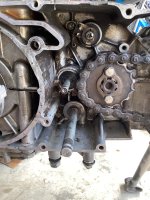
The clutch rod seal came straight off and was in the middle of the damn rod. How does this happen? What secures the seal in place?
The ride was less than 10 minutes total, so hopefully not long. It's always something, huh?Clutch rod seals are just a press fit and are known to come out at times,usuallyoften helped by crankcase pressure caused by the breather tube being kinked or blocked for some reason and crankcase pressure builds up as a result. The obvious worry is how long you rode with it leaking before you were aware. Hopefully not long, as the camshaft relies on oil flow to lube the aluminum cam 'bearings' to keep them from seizing to the camshaft. The rest of the engine can survive a little bit with limited or no oil flow, but the cam and rocker arms are critical.
It is, most of these poor things have lived lives of neglect and we're trying to make up for it as we get them back to consistent, reliable use. Since my 450 has some high-performance parts in it, I was concerned about the clutch rod seal popping out too so I made a 'retainer' plate for it.The ride was less than 10 minutes total, so hopefully not long. It's always something, huh?
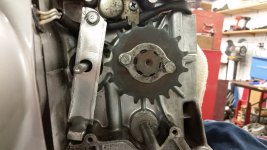
Proof of concept there.It is, most of these poor things have lived lives of neglect and we're trying to make up for it as we get them back to consistent, reliable use. Since my 450 has some high-performance parts in it, I was concerned about the clutch rod seal popping out too so I made a 'retainer' plate for it.
View attachment 30157
Don't know if I have the space for that, but something's gotta prevent that from happening again!It is, most of these poor things have lived lives of neglect and we're trying to make up for it as we get them back to consistent, reliable use. Since my 450 has some high-performance parts in it, I was concerned about the clutch rod seal popping out too so I made a 'retainer' plate for it.
View attachment 30157
You probably do, you'd just have to get creative. I used a piece of aluminum square tubing that I cut one side from, hence the edges. It isn't bolted at the bottom but the cover keeps it from moving outward enough to allow the seal out even if it did make enough crankcase pressure. Did you check your crankcase breather tube for restrictions that would cause a buildup of pressure?Don't know if I have the space for that, but something's gotta prevent that from happening again!
And don't overfill by checking level with it screwed in (read manual). Now you got me thinking I should Hondabond those seals in too.You probably do, you'd just have to get creative. I used a piece of aluminum square tubing that I cut one side from, hence the edges. It isn't bolted at the bottom but the cover keeps it from moving outward enough to allow the seal out even if it did make enough crankcase pressure. Did you check your crankcase breather tube for restrictions that would cause a buildup of pressure?
I have not checked the tube, I will when I get the time to tinker with things. You think the seal it self is still good or a replacement should be sought?You probably do, you'd just have to get creative. I used a piece of aluminum square tubing that I cut one side from, hence the edges. It isn't bolted at the bottom but the cover keeps it from moving outward enough to allow the seal out even if it did make enough crankcase pressure. Did you check your crankcase breather tube for restrictions that would cause a buildup of pressure?
And don't overfill by checking level with it screwed in (read manual). Now you got me thinking I should Hondabond those seals in too.
Cool, it's just a common mistake. It's an old bike, perhaps just it's time and an old seal to boot. Lean it to the right to keep oil away and clean it out good and use either hondabond or gasketcinch to put it back (a new one would be nice).Was not overfilled, oil was checked before the ride (not threaded in.)