Restoring and modernising an European Dream ('64 Honda C78)

jensen

Veteran Member
Joined
Jun 1, 2020
Total Posts
2,554
Total likes
2,537
Location
Blaricum, The Netherlands
Since there are many similarities between the CB72 and the C78 I thought it would be efficient to be treated / report together in one thread (both 250's / 305's). But with the build-up of the CB72, I'm seeing many differences between these bikes, so I think the C78'64 deserves it's own thread.
 
Last edited:
The differences between the US model (CA77/78) and the European model (C77/C78) are the winkers, wire harness, parking light, handlebar switch gear and a few other, minor differences. Mine is the late (1964) C78 model, which has the tubular steering handle.

I disassembled the engine of the bike many years ago, and I can’t even remember in what state it was. I took it apart because it used oil (smoking), but other then that, I'm not aware off. I was planning to fix and assemble the bike, but then came a CB72 to my shed, and the dream was forgotten. However, over the years I bought a lot of parts of 250's / 305's, but mainly CB stuff. Since booth bikes share more or less the same engine, I have plenty of parts to rebuild the engines. Later came the CB450 K0, but I kept restoring the CB72's in a slow pace, but never started to build-up the C78.

Family, work, travelling, other bikes, there were many reasons not to start the assembly. The dream wasn't a very popular bike to restore also, the prices of parts were high, and the value of restored dream was low, not a good combination, taking all these things into account, I can understand why other projects were getting more priority and attention. The dream was also an old-fashioned bike, a dull tourer, not able to maintain high speeds on the high-way, and the styling, well, you love it or you hate it (and most people hate it). A square headlight is period correct and acceptable, but square rear shocks ? really ? Well, times have changed, and looking at the dream while walking by in my garage did put a smile on my face lately. It's also the styling itself, it didn't change, it still has the square headlight, and the square shocks, but I think my taste changed a bit over the years, appreciating the classic Japanese appearance more and more. It was the time that Japan was searching, trying, experimenting, and copying. It was the time of the European monopolism on reliable bikes, and the dream has elements of the Adler MB250s, Puch's and many other European manufactured bikes.

So, I decided that the time has come to restore / rebuild the bike. I can't make the bike much faster (I will try to change in few things in favour of top speed), but I can make it a more modern. Since this is one of my last or even the last complete ground up restorations of the 250's / 305's (I have an incomplete C75 in parts, but I don't know If I will ever come to it), I will do a decent job.

The bike will stay black, but not with the same paint process of the CB72. Glossy, quality, that's what I want deep black, with a clear cote. It won't be a trailer queen, but a nice example of the distinguish style of the 60's. Always underappreciated and called an ugly-duck, discarded by many. In all the shows I've bin (in the Netherlands, and Belgium), I have never seen a nice, restored dream due to the reasons mentioned above.
 
I always liked the dreams. I would have bought one but when I was at the local dealership in spring 69 the Black Bomber was the one that caught my attention. Good thing as I used it to get back and forth from University, a 100km trip on a major highway and my only transportation for several years. I still remember flying along that highway at speed. The bomber was pretty fast but it could start to wonder on you and that made you slow down again... I look forward to your future posts.
 
I too was in the camp of "I hate them". I always thought they were the ugly duckling of the Honda line-up. But the styling is unique and draws attention. When I was transporting my C78 barn find back home, I took a short ferry ride and a few passengers on the small open ferry asked if they could take a picture, so it still has some appeal!
 
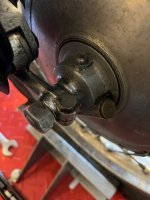
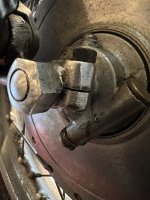
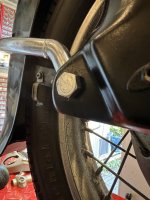
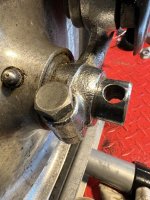
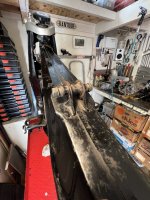
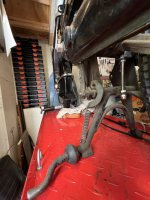
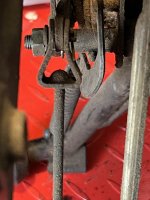
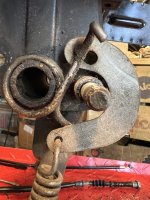
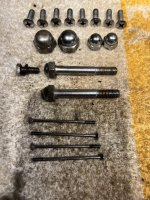
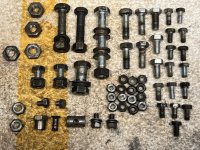
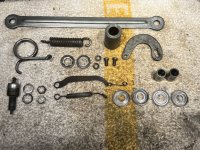
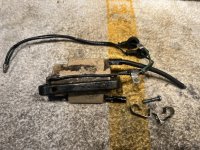
Since I have posted pictures here and there, I will put the pictures of the disassembly’s in this thread, starting with this post.

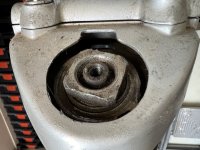
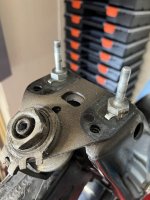
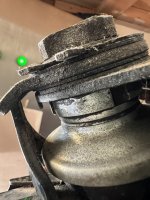
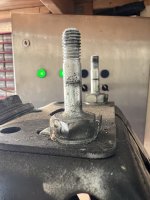
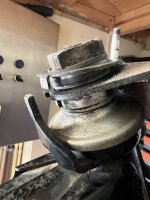
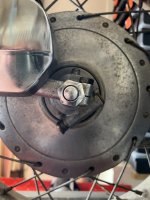
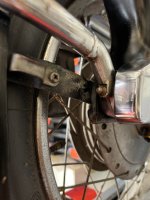
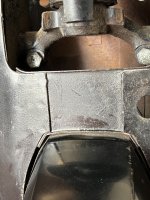
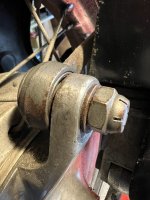
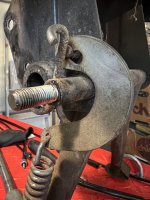
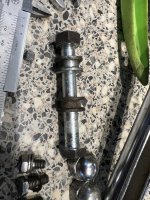
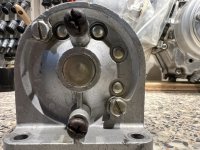
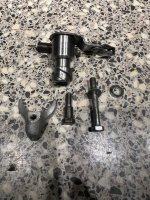
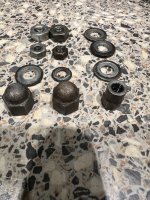
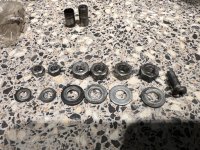
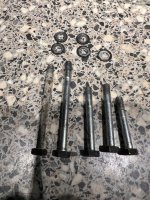
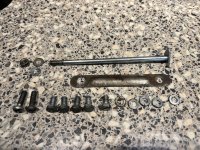
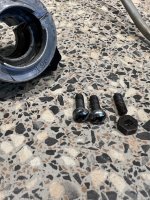
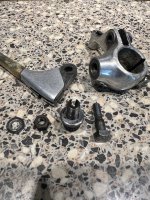
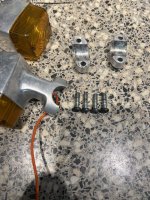
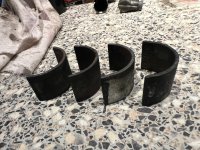
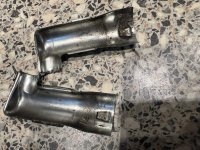
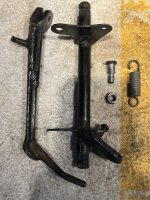
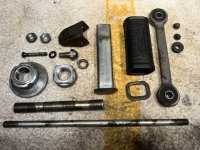
Starting with the steering damper, steering handle clamp and de build-up of the steering stem in general. Since this is a complex and somewhat strange assembly, I made lot's of pictures.

IMG_3655 (Gemiddeld).JPG

IMG_3657 (Gemiddeld).JPG

IMG_3680 (Gemiddeld).JPG

IMG_3681 (Gemiddeld).JPG

IMG_3686 (Gemiddeld).JPG

IMG_3688 (Gemiddeld).JPG

IMG_3689 (Gemiddeld).JPG

IMG_3691 (Gemiddeld).JPG
 
Last edited:
These pictures will come in handy for me later on during the assembly of my Dream. I thought I took a lot of pictures but not nearly as many as you did.
 
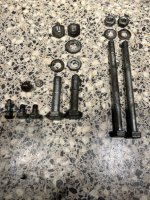
All parts are plated, and with the help of the pictures, all parts are now in the C78 boxes, and labelled per group.
 
Last edited:
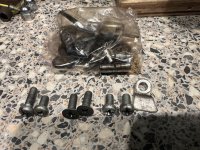
I noticed some of the screws had slots cut into them, obviously from the PO, did you try to repair before plating?

Some of the acorn nuts and front fork bolts are chrome, did you have these re-chromed or are they zinc plated? Mine are in the same shape and I'm debating what to do with them.
 
And the backside:
Great pictures for sure. The steering damper is unique and it took me a couple times to get the order of parts correct. The splines on your brake arm pivot shaft are very good, which is unusual, the return spring fights you to get full spline engagement during re-assembly and so they often get damaged.
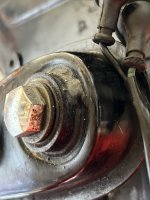
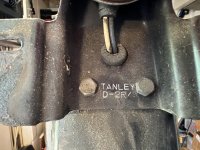
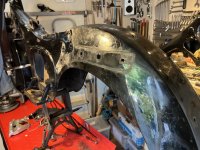
Surprisingly little rust and the oily dirt coating has helped preserve a lot.
What a good candidate for restoration.
 
Edit: mis post image. Can I blame solar flares?


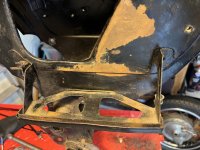
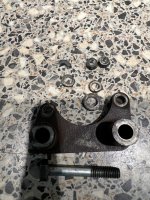
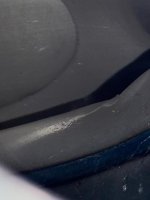
This is the only part that I don't recognize.
 
Last edited:
Hi Tom, I was a little too enthusiastic with the images, and resized them, it saves server space, but I had to remove and replace. Could you point out which part you mean ?
It is the cast rusty part with the 2 large 10mm(?) holes. 2nd to last pic in post #12.
 
I a;ways loved the Dreams, ever since my cousin had a white CA72. It rode wonderfully on the road and even climbed a few hills and occasionally jumped a dike (not always knowing what lay on the other side!)
 
I noticed some of the screws had slots cut into them, obviously from the PO, did you try to repair before plating?

Some of the acorn nuts and front fork bolts are chrome, did you have these re-chromed or are they zinc plated? Mine are in the same shape and I'm debating what to do with them.

Yes, the PO slaughtered those, I serviced them, and threw them in the plating bucket anyway, especially the Japanese 5 mm ones. The small chrome parts, that are not available any-more, are re-chromed, however, these acorn nuts were available, and thus cheaper to buy. When I have enough small chrome parts, I will de-chrome them and have them nickel plated, it's a lot cheaper.
 
Last edited:
Key-switch C78.jpg

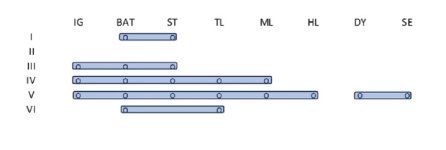
Yesterday I analyzed the Key-switch of the C78, lot's of contacts (8) and lots of positions (6). The functionality of this Key-switch is way more logic then the two combined functionality of switches on the CB72.

Pos I is made for priming the engine, the starter relay is directly connected to the Battery.
Pos II is the off-position, key can be removed
Pos III is ignition on, but no lights
Pos IV is ignition on with taillight, parking light and speedometer light on.
Pos V is ignition on, lights on and generator wired with the pink wire
Pos VI is parking, thus taillight and parking light on, key can be removed

This switch has all the functionality I wish for, the only thing I will alter is using relay's for the individual groups, to protect the (very expensive) key-switch. When I bought the C78, I was told that the keys were lost, so the seller bought a NOS Key-switch (in the 80's), and I got all three original keys with the bike.

Later, I will add this drawing to the wiring diagram, together with the handle bar switch gear schemes in one picture, just as I did with the CB72.
 
Last edited:
That's a lot of options. Is position 1 primarily for cold weather starting? And I guess 3/4/5 are daytime riding, night riding, and foggy riding?

I admit I'm a little confused about 4 & 5. I assume both include the headlamp, but perhaps I'm making a mistake there. I also assume 3 does not include the headlamp.
 
That's a lot of options. Is position 1 primarily for cold weather starting? And I guess 3/4/5 are daytime riding, night riding, and foggy riding?

I admit I'm a little confused about 4 & 5. I assume both include the headlamp, but perhaps I'm making a mistake there. I also assume 3 does not include the headlamp.
3 and 4 don't include the headlight, 5 includes the headlight (switching Hi/Lo is done at the handlebar switch).
 
Last edited:
IV must also power the small bulb in headlamp and connect to the ML terminal. No small bulb or position IV on US bikes. Nice diagram.
 
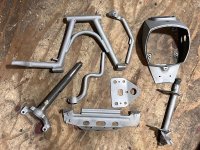
On some Friday afternoon's I use the machine shop at work for all kind things. Sometimes I use a lathe, or a milling machine, a large press or measurement tools. But today it was time for blasting. The coming weeks I take parts with me for blasting, to reduce the costs on paintwork. Since the C78 dream has lot's of parts, and this is the second batch, I think I need another Friday afternoon for finishing.

Afbeelding van WhatsApp op 2025-12-05 om 22.14.12_6120432d.jpg

These parts are ready for an black epoxy layer, and will be painted black afterwards. After blasting I always check for cracks, small damages or other glitches, but this time everything looked fine, no welding needed. There was a little surface rust on tool-tray, but that worked out fine.I tapped the area's that should not be blasted like threads and precision surfaces.

The frame and front mudguard are already blasted and at the painter. I decided to go for black, since that was the colour the bike had originally (with a red seat).
 
Last edited:
It is nice to have both the skills and work where you have the tools available for your hobby. I really miss the auto craft centers that are available on the military bases I was stationed at, work benches, stalls, lifts and most tools you needed for auto or bike repair, some even had paint booths you could rent.
 
It is nice to have both the skills and work where you have the tools available for your hobby. I really miss the auto craft centers that are available on the military bases I was stationed at, work benches, stalls, lifts and most tools you needed for auto or bike repair, some even had paint booths you could rent.
Sounds great ! I assume you are a pensionado ?
 
Yes, I am retired from the Air Force and I could still the facilities as a retiree but I live several hours from the nearest base so not really practical. I thought about starting a business with a similar setup where people could rent space to work on cars but quickly realized there are too many knuckleheads and you would need a team of lawyers for all the lawsuits where they would injure/kill themselves or someone else so a non starter. :rolleyes:
 
Great Start to your project. I was in the same group that thought the Dream was a little “cartoonish” (my description) in the design department. I bought mine on a kind of whim but it is really one of my favorites to ride. It’s not fast but it’s a joy to ride and draws lots of attention wherever I go. Looking forward to your restoration.
 
Today I took the last parts to my work for blasting, including the rear fork. It took me an hour at least to clean-up the rear fork, lot's of difficult angles and area's to reach. It was a very busy week, and as always, the weeks before the holiday's are the busiest of all. It was already late, so I though, let's add another hour :ROFLMAO:

Afbeelding van WhatsApp op 2025-12-12 om 19.13.38_da901986.jpg

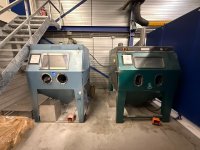
Two blast cabinets, one for aluminium and stainless steel (glass-beat), and the other one for more aggressive work on steel.


Afbeelding van WhatsApp op 2025-12-12 om 19.13.38_fcfad5ec.jpg

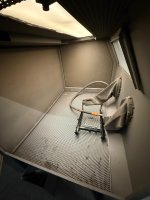
I use rubber to close-off holes and threads for blasting, as I don't want that stuff into my rear fork, and I want smooth threads too.

Afbeelding van WhatsApp op 2025-12-12 om 19.13.39_f168b788.jpg

The smaller parts went quicker, including keeping some nice details.

Afbeelding van WhatsApp op 2025-12-12 om 19.13.36_0156e63d.jpg

Afbeelding van WhatsApp op 2025-12-12 om 19.13.38_34179b75.jpg

Every thing is ready for painting now, so, after the CB72, this one will be build-up.
 
Last edited:
Reminds me of the machine I used to use. A supplier of blasting material had the machine in the warehouse and would rent it out for $75/hour and supplied the blasting material. They got rid of the machine :mad:
 
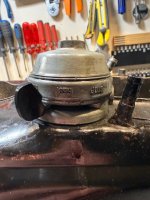
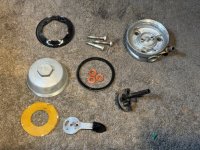
The last piece of metal for painting is the gastank, since everything else is already stripped, and bead-blasted. I put the gastank away with oil, so the first thing to do is clean the inside, but before I can do that, I need to take of the fuelcok.

WhatsApp Image 2026-01-18 at 16.13.50 (5) (Klein).jpeg

Unscrewing the bottom went OK, the oil penetrated the thread so I could do it without tools.

WhatsApp Image 2026-01-18 at 16.13.50 (6) (Klein).jpeg

Unfortunately, the gasket was totally gone, so has te to be replaced.

WhatsApp Image 2026-01-18 at 16.13.50 (7) (Klein).jpeg

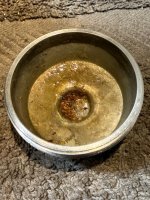
Some dirt inside, but not much

WhatsApp Image 2026-01-18 at 16.13.50 (8) (Klein).jpeg

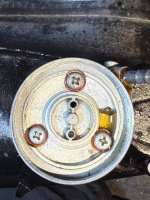
No rust, just a lot of oil, the screws came out easy.

WhatsApp Image 2026-01-18 at 16.13.51 (Klein).jpeg

All parts came out nice, probably due to 20 years of being lubricated with oil.

The inside was nice too:

WhatsApp Image 2026-01-18 at 16.14.58 (Klein).jpeg

WhatsApp Image 2026-01-18 at 16.14.58 (1) (Klein).jpeg

No rust, just a blueish colour due to welding.

After rinsing, it's ready for the paintshop
 
Thanks for posting, I need to do the same with my petcock but was worried about breaking something after decades of sitting without being used. I will be sure to oil everything up before starting to disassemble.
 
Hi Jensen,
My petcock is in poor condition too....rubber seals are bad, inlet standpipes are gone and the 3 red mount seals are bad. I was wondering where you plan on getting replacement parts. I saw a couple of ebay vendors having various repair kits for these but before I go there I thought I'd solicit some feedback from you or anyone else that chimes in here,
Thanks, Art
 
Hi Jensen,
My petcock is in poor condition too....rubber seals are bad, inlet standpipes are gone and the 3 red mount seals are bad. I was wondering where you plan on getting replacement parts. I saw a couple of ebay vendors having various repair kits for these but before I go there I thought I'd solicit some feedback from you or anyone else that chimes in here,
Thanks, Art

I just made the tank ready for painting, I didn't look for gaskets jet, but I think I use just sheet rubber and use our laser CNC laser cutter to cut out the gaskets
 
The upper gasket, packing A, is the most problematic with a beveled edge that acts like a bottle cork into the aluminium body of the petcock. Some of the aftermarket packing gaskets are too small diameter and cause leaks at the lever. It sits under the plate with the cruxiform spring riveted on it. Also, I've noticed the body castings vary on that diameter for the packing. I have reduced the thickness of the packing under the lever to get it to fit down tighter and seal around the beveled edge a few times with the aftermarket upper packing A.
Some sealing washers, for the 3 screws, are red fiber and some are soft aluminum, either should work.
Scrambler Cycle and Classic Honda Restorations had decent quality rebuild kits (packings),
 
The upper gasket, packing A, is the most problematic with a beveled edge that acts like a bottle cork into the aluminium body of the petcock. Some of the aftermarket packing gaskets are too small diameter and cause leaks at the lever. It sits under the plate with the cruxiform spring riveted on it. Also, I've noticed the body castings vary on that diameter for the packing. I have reduced the thickness of the packing under the lever to get it to fit down tighter and seal around the beveled edge a few times with the aftermarket upper packing A.
Some sealing washers, for the 3 screws, are red fiber and some are soft aluminum, either should work.
Scrambler Cycle and Classic Honda Restorations had decent quality rebuild kits (packings),
Unfortunately, these are made of NBR, and vulnerable for the modern fuels, I'll use a different material that withstands the ethanol.
 
If your CNC laser cutter can cut the bevel it would be great. Even so, a tight interference fit may seal. cuting from a 3mm, or so, thick sheet stock of Viton could work. The only drawback would be the extended nipple to support the stand pipe, if using a flat sheet stock.
 
Scrambler Cycle and Classic Honda Restorations had decent quality rebuild kits (packings),
"Had" I'm not finding the kits at Scramblers or CHR websites.
Unfortunately, these are made of NBR, and vulnerable for the modern fuels, I'll use a different material that withstands the ethanol.
You'd think by now someone would have offered these repair kits with materials that would tolerate whatever fuels made today. I guess I'll be stuck buying an ebay kit for $60-$80 and lasts a year or two I suppose!!?? Or go with that new fangled adapters that takes a "conventional" petcock ...yuck.
 
"Had" I'm not finding the kits at Scramblers or CHR websites.

You'd think by now someone would have offered these repair kits with materials that would tolerate whatever fuels made today. I guess I'll be stuck buying an ebay kit for $60-$80 and lasts a year or two I suppose!!?? Or go with that new fangled adapters that takes a "conventional" petcock ...yuck.
If it is not explicit stated that the kit can withstand modern ethanol containing fuels, the seals are made of cost effective materials like NBR.
 
I did cut find the first gasket, but this one is the easiest, the gasket between the fuel-tank and the fuel-kock will be a Viton O-ring which I ordered.

WhatsApp Image 2026-01-22 at 09.47.17.jpeg
 
If it is not explicit stated that the kit can withstand modern ethanol containing fuels, the seals are made of cost effective materials like NBR.
Yeah, I suppose it's worth asking first before buying. Thanks, Art
 
I got 16995-250-020 for the packing A part. The packing B , 16956-250-010 is sometimes cork , sometimes rubber. I prefer the cork, in case I need to make it thinner so the upper packing A fits tighter down in the aluminum body. I would search the A packing part for any NOS stock still out there, but some repops are ok too.
 
Back
Top Bottom