Replacing Air Filter Medium

stl360+450

Veteran Member
Joined
Aug 6, 2021
Total Posts
5,076
Total likes
2,620
Location
St. Louis, Missouri, USA
I have put off dealing with my grimy air boxes for too long and today I took the time to replace the original filter paper. I read some old threads in another location and decided to document what I did here since there doesn't seem to be a thread about it on VHT, at least for the dohc 450. My filters were really bad.
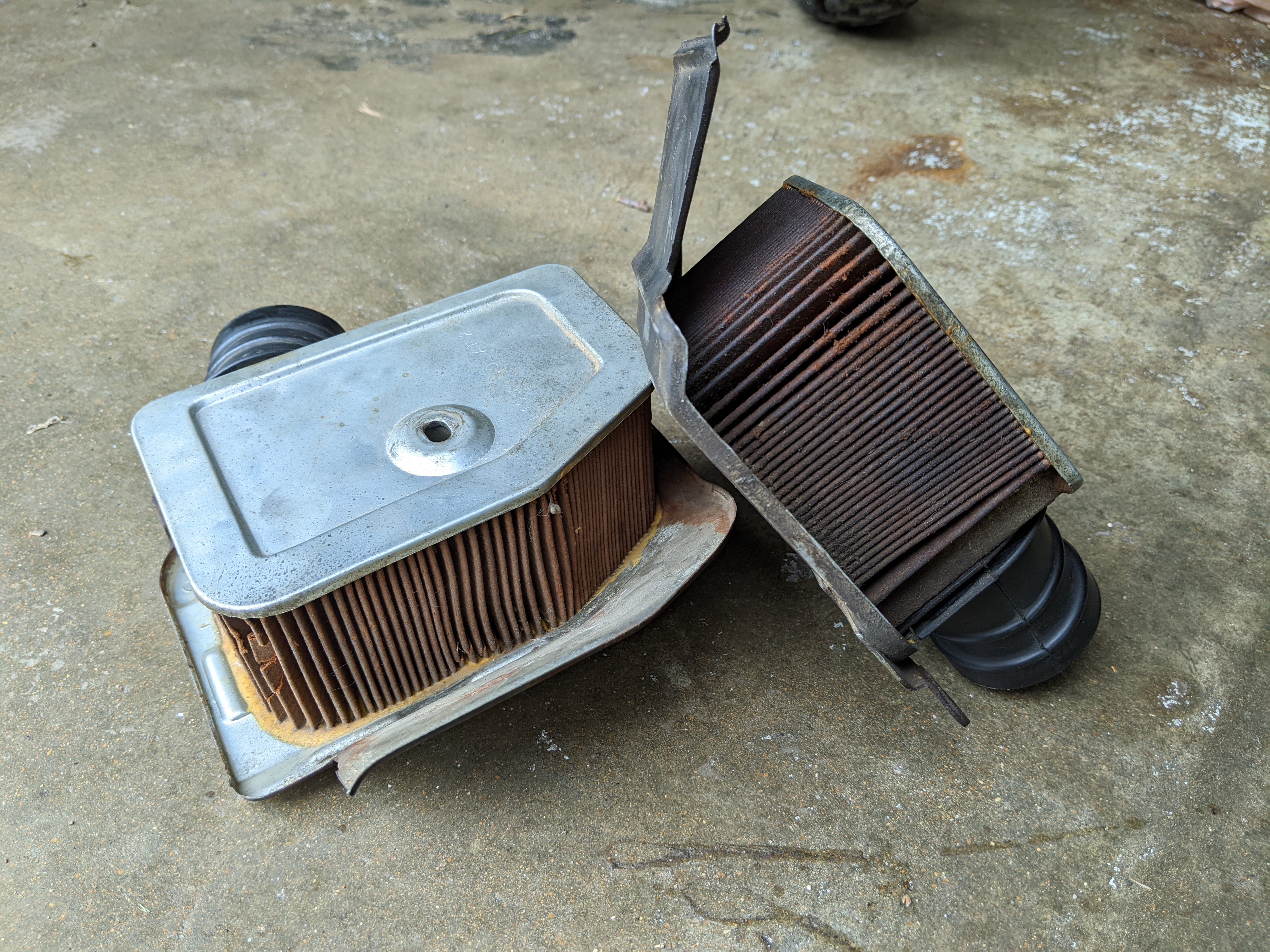
gWRSnun.jpg


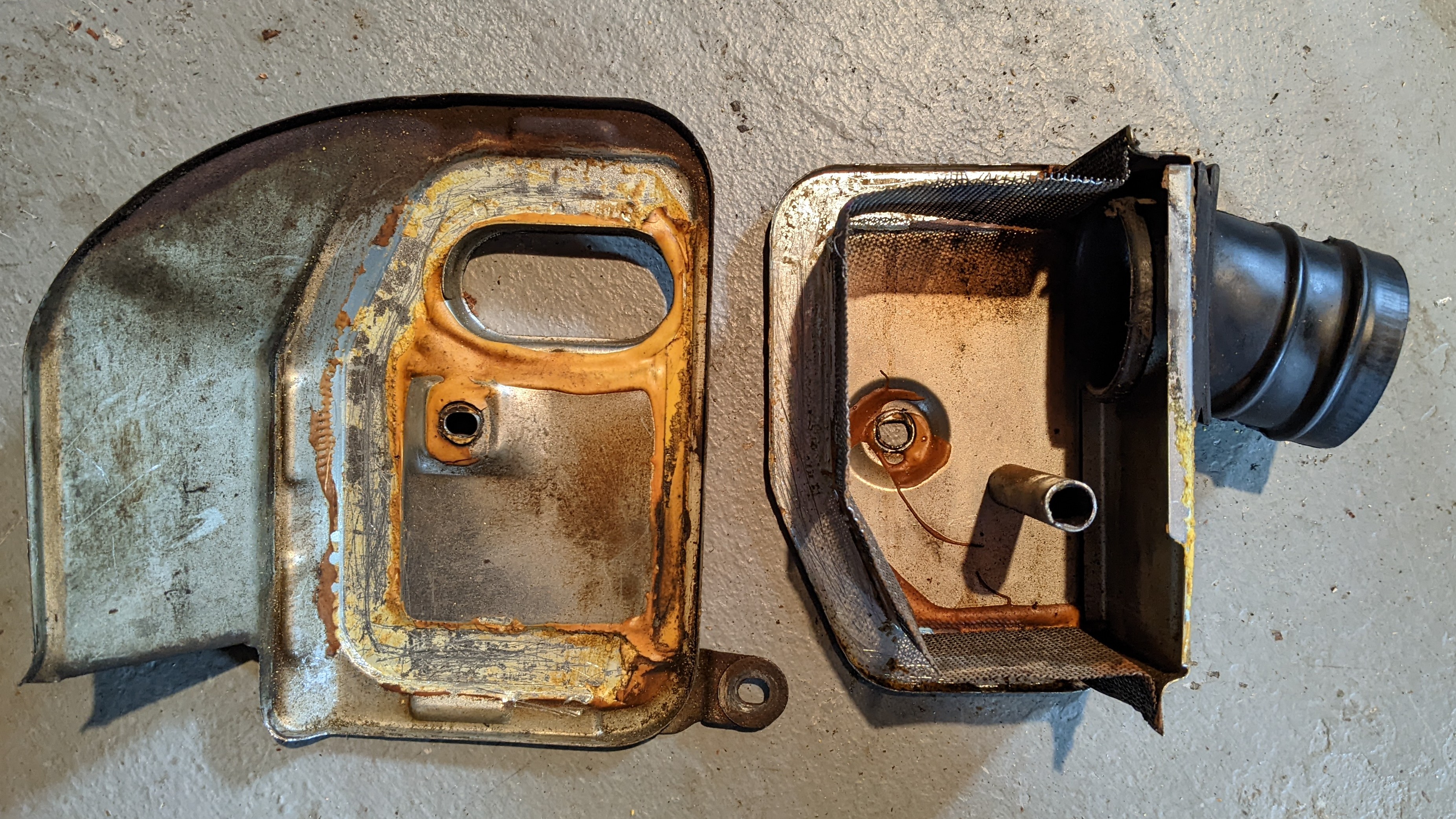
I removed the old material in a multi-step process. I started with a pair of pliers and ripped out the majority of the paper, leaving a little bit stuck in the glue.
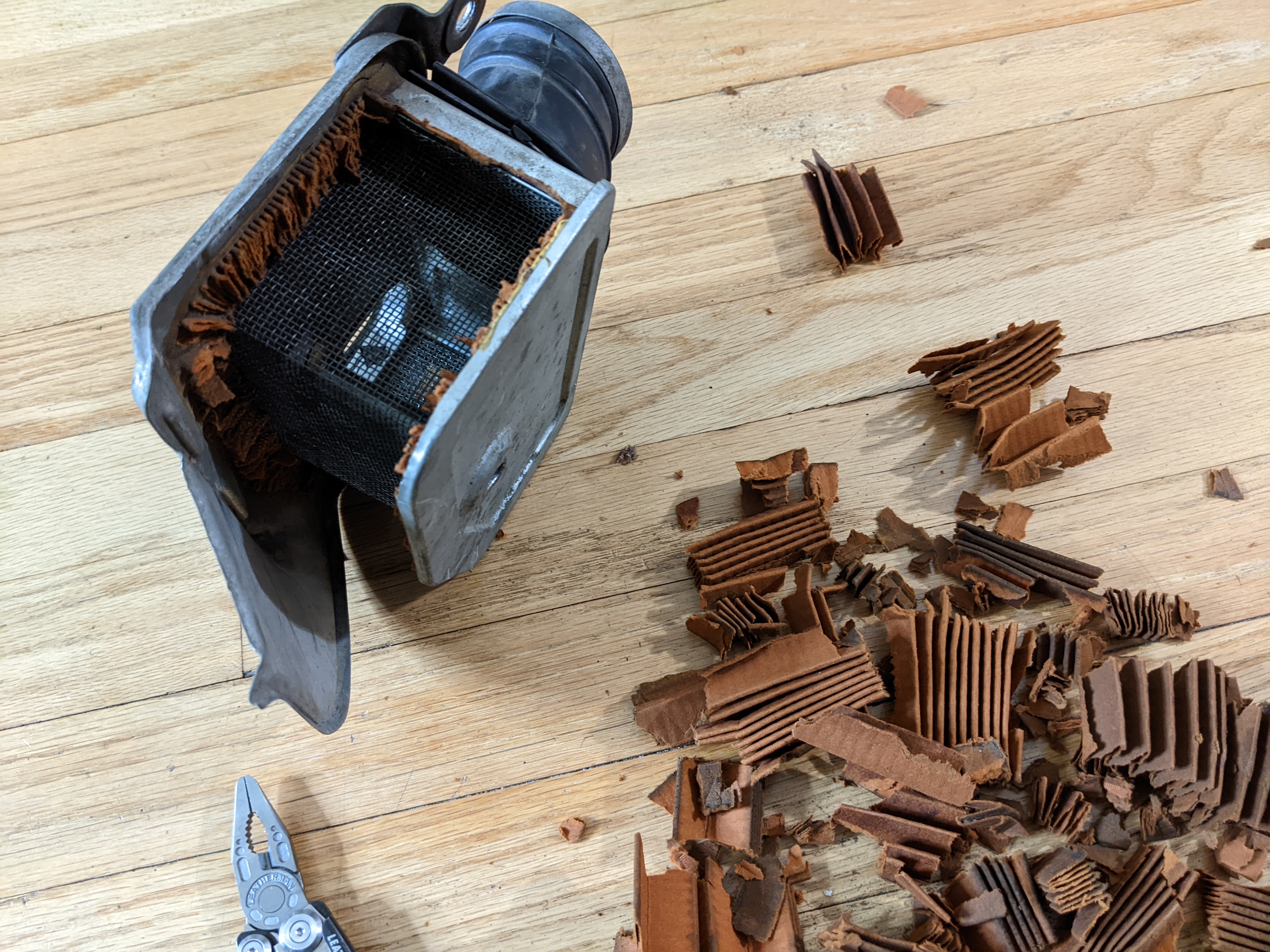
z7yP6lg.jpg


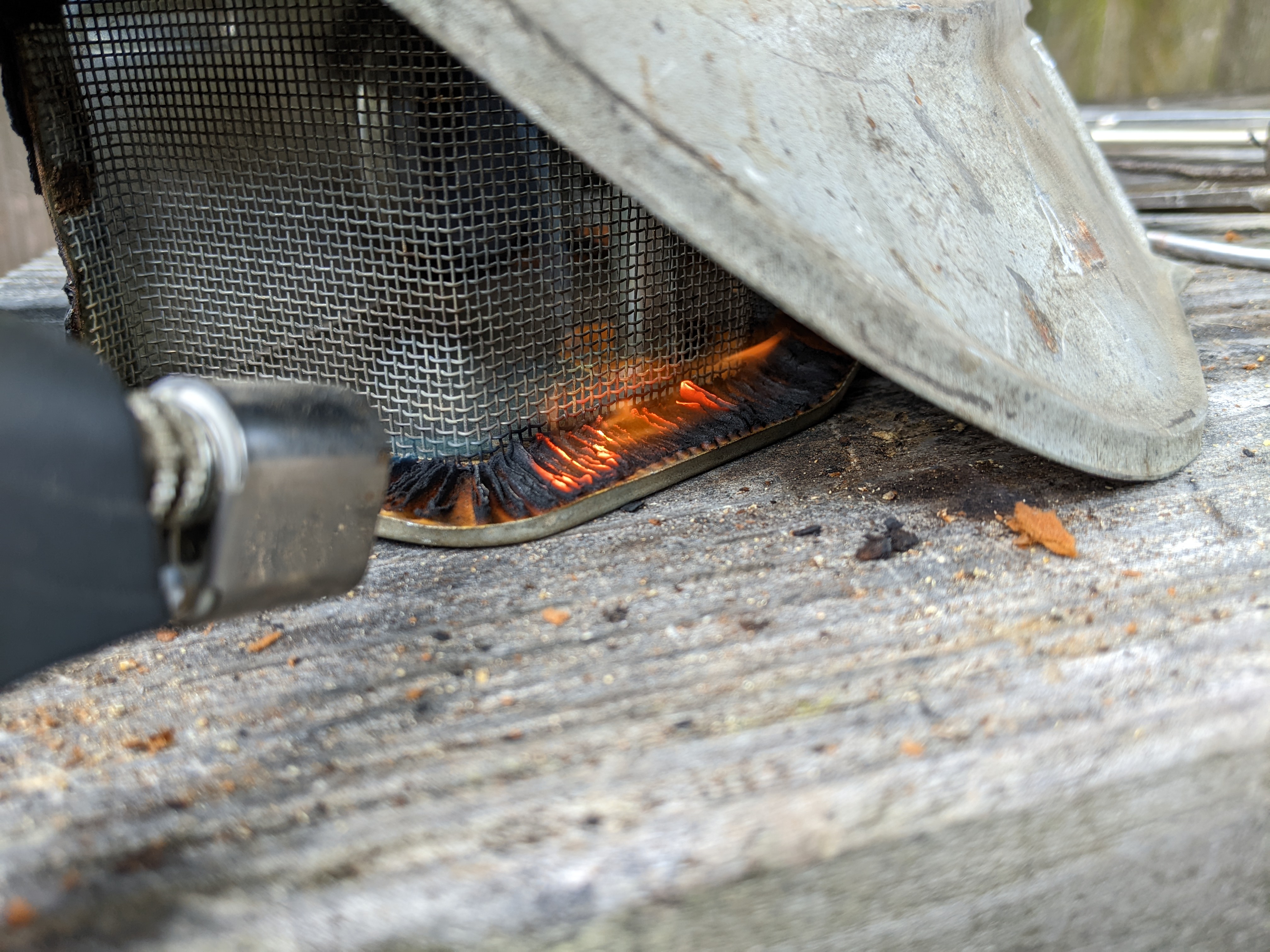
Then I used a micro-torch to burn the remaining paper and whatever of the glue I could.
B124JLT.jpg

Finally, I used a narrow chisel to remove as much of the remnants of paper and glue as I could. In one case, the glue chipped out in pieces, but I didn't have the patience to repeat that for the other one.
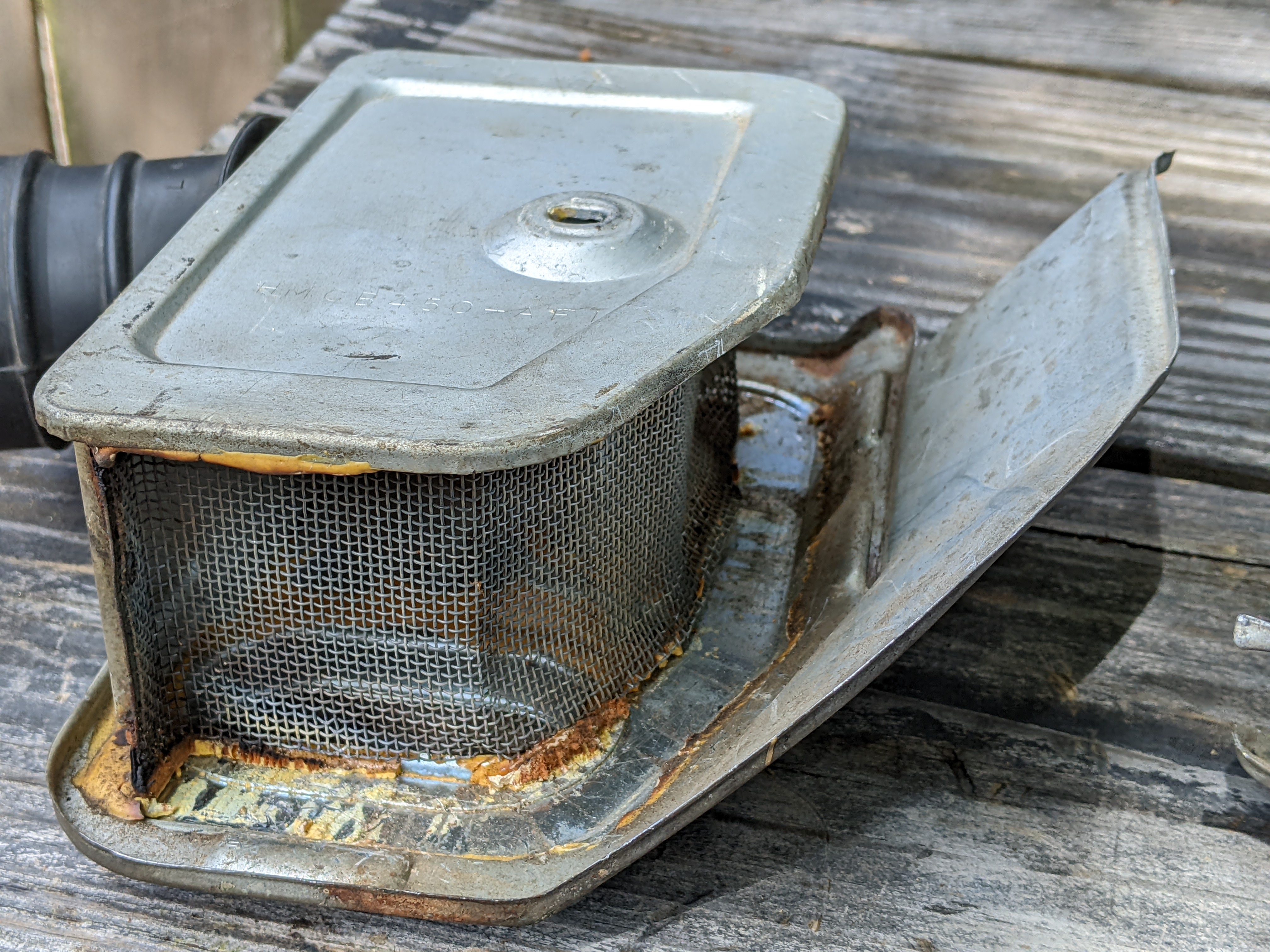
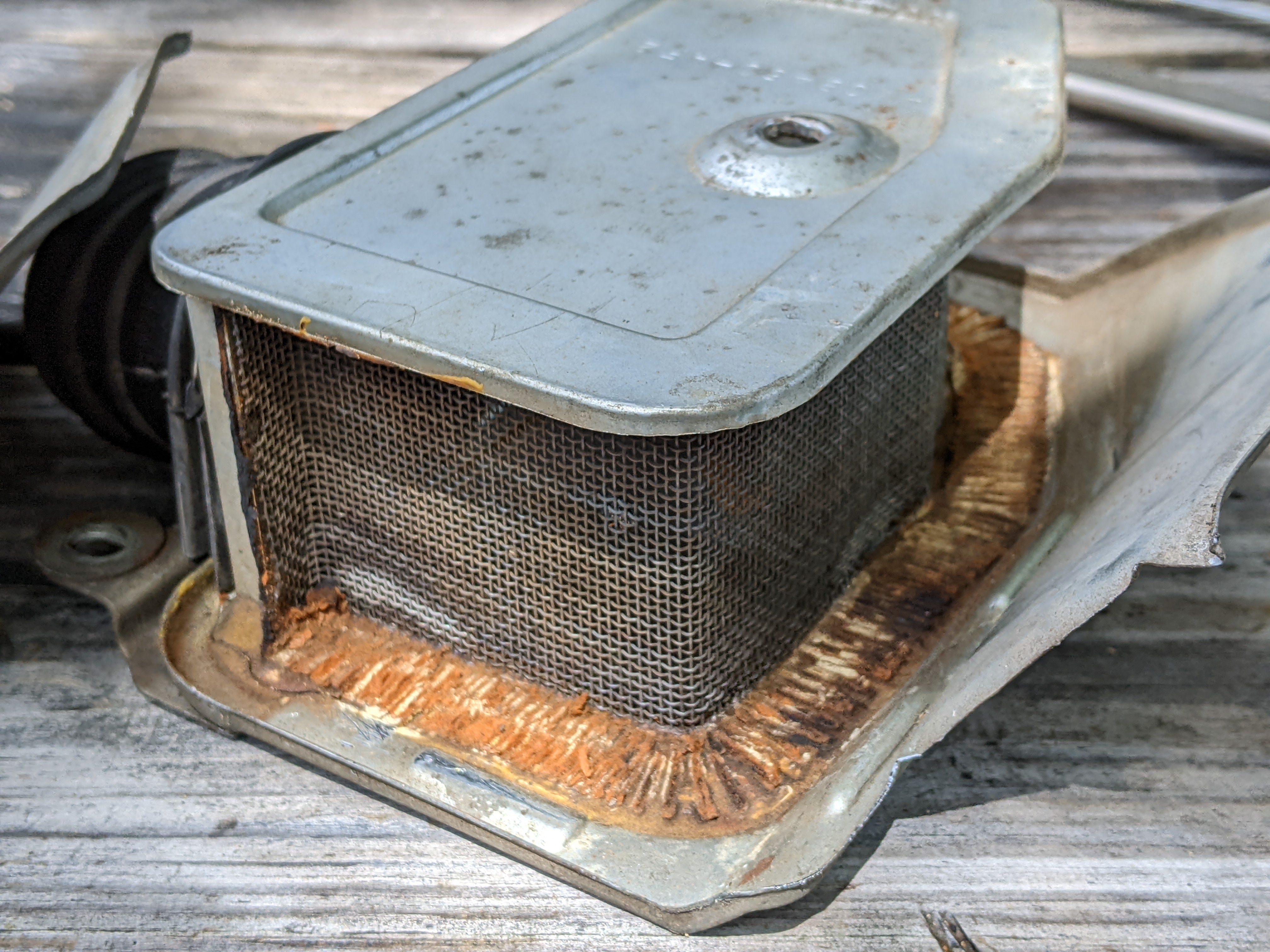
NSEb8fM.jpg


17Laoz1.jpg


I scavenged new filter paper from an automotive Microgard Air Filter (MGA42098) and the key thing about this filter is that it's height is 3" and the diameter is large enough that only one is needed to obtain an ample supply of material for both air boxes. I chose to use filter paper over foam because I didn't want to add the maintenance of oiling the foam.

It's a little tricky to extract the material. I made one cut with a hack saw and then separated the wire mesh from the rest of the filter by hand. Then, inch by inch, I was able to flatten the paper by tearing the rubber all along the edges of the filter.
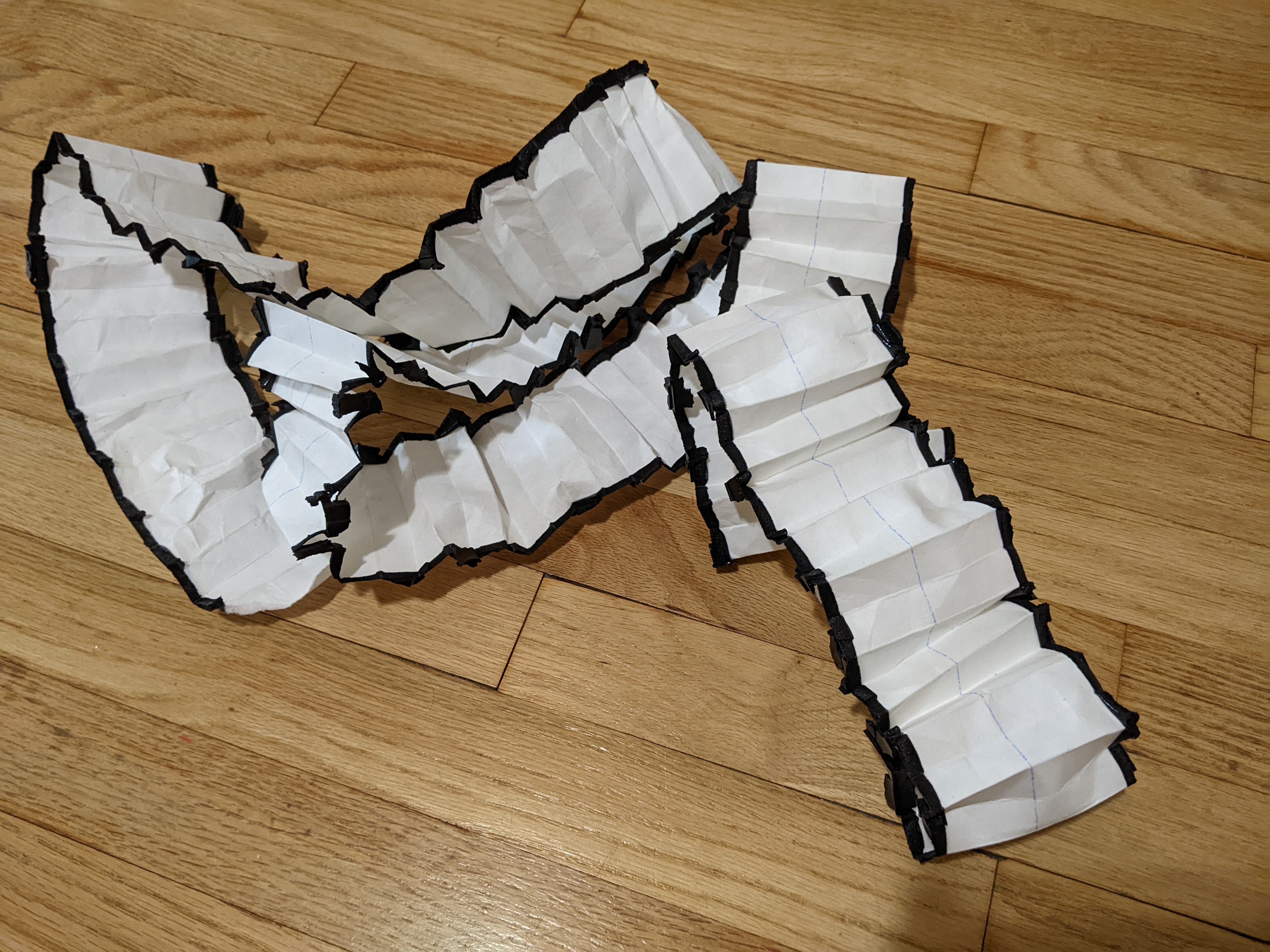
CqltC4V.jpg

The next step was trimming the material to the maximum possible width for test fitting.
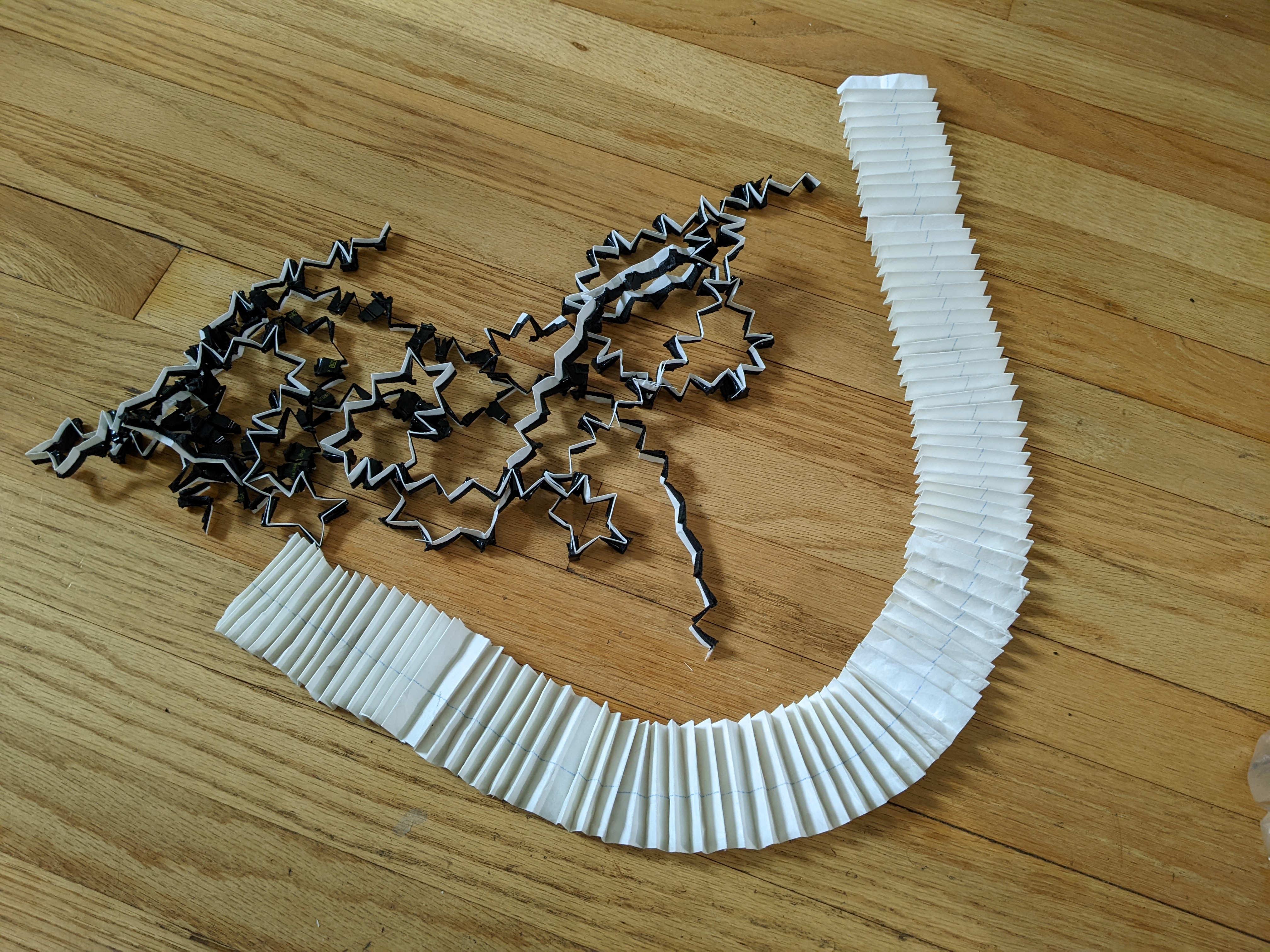
X3XxSnE.jpg


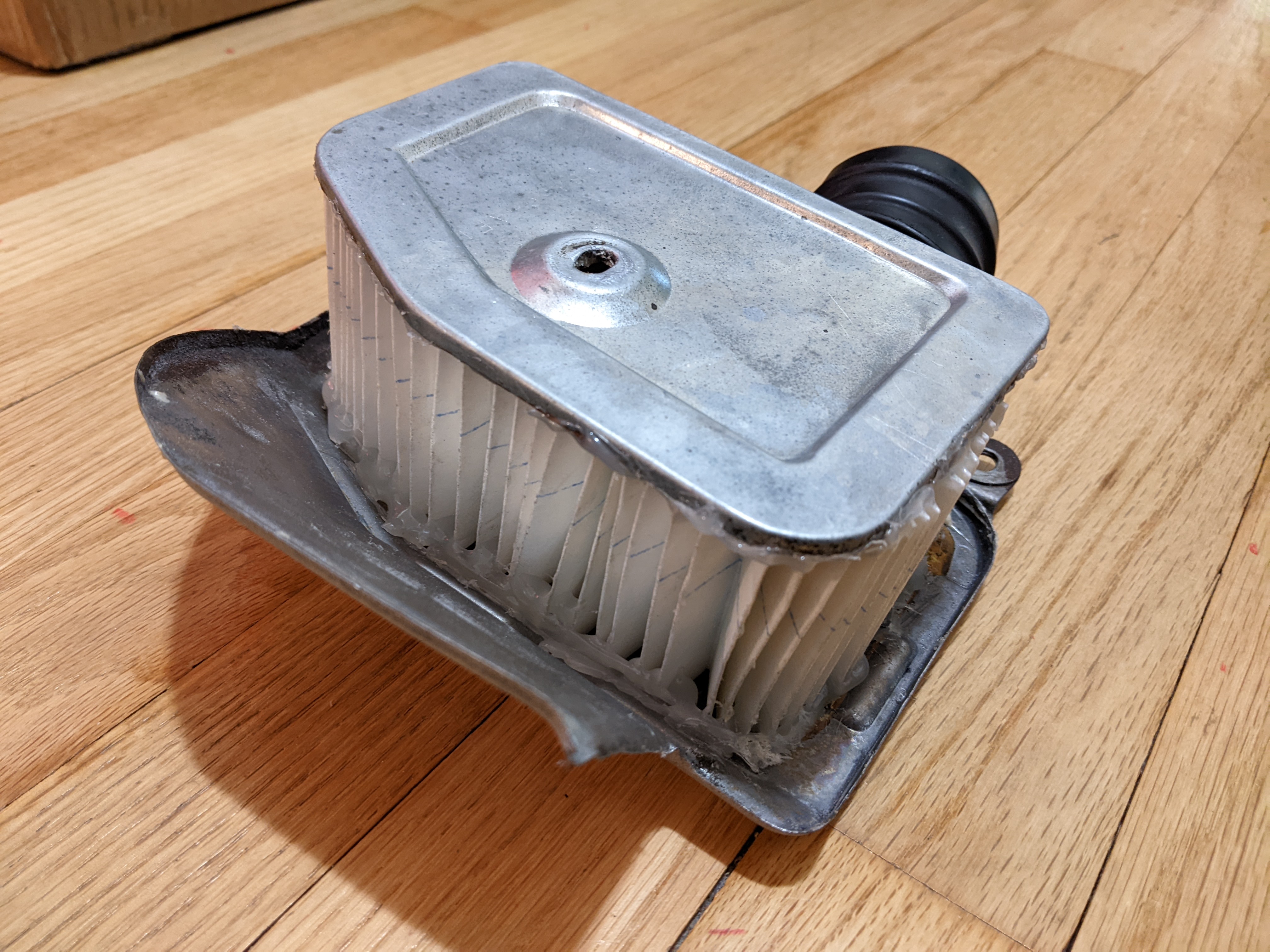
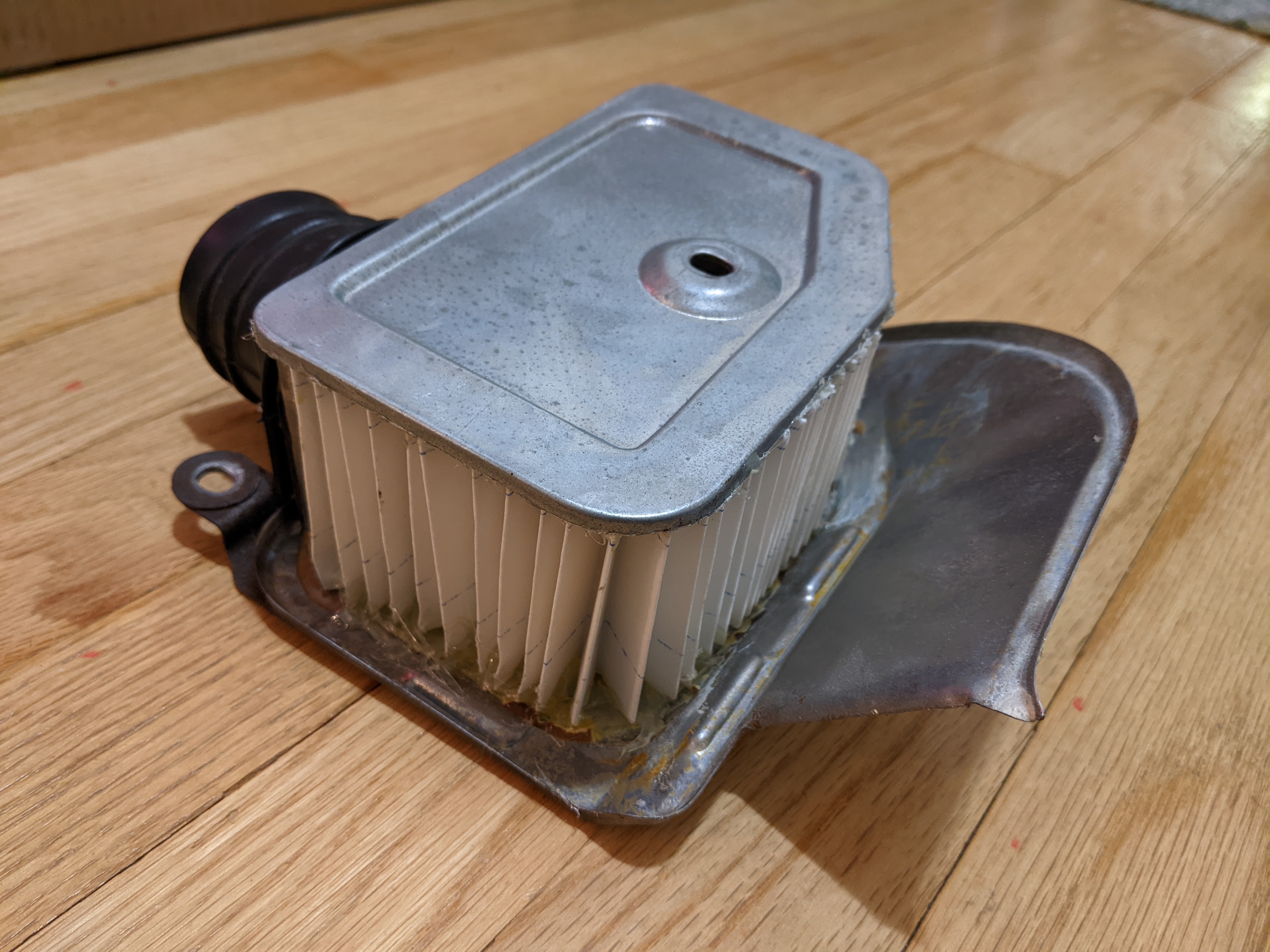
I trimmed with scissors by cutting off a tiny amount along the entire length of the material until it was the right width to fit on the air box. I think it's right around 2.5", so the 3" filter gives a little margin for error. Then I glued the paper into the air box with a glue gun. The glue hardens quickly so I put glue along each side of the air box about 1" at a time and then arranged some folds in the paper over the section I had just glued. (I found this to be neater than trying to glue after inserting the entire filter into the air box.)
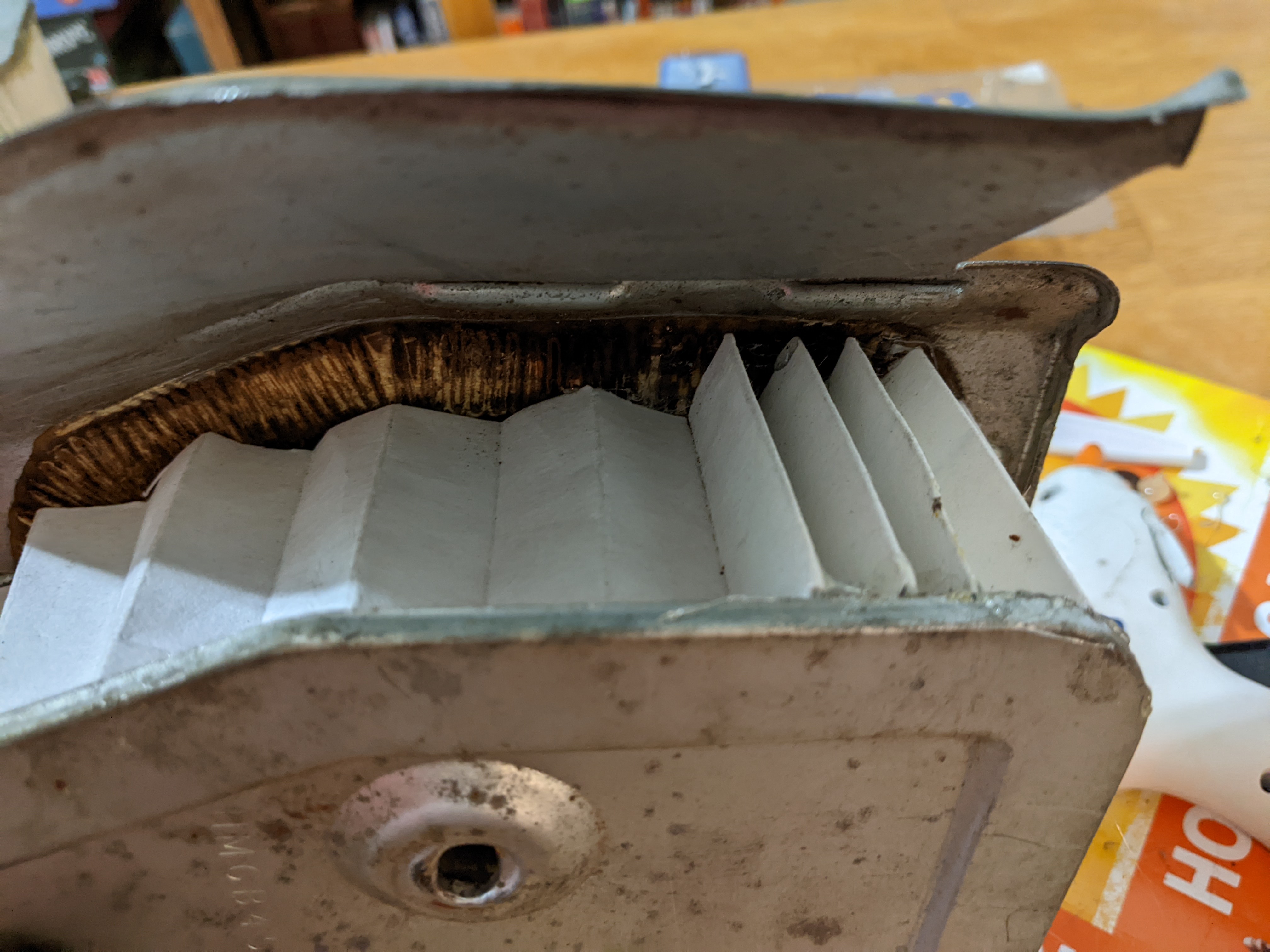
r2VTprY.jpg


This is the air box that I glued as described above.
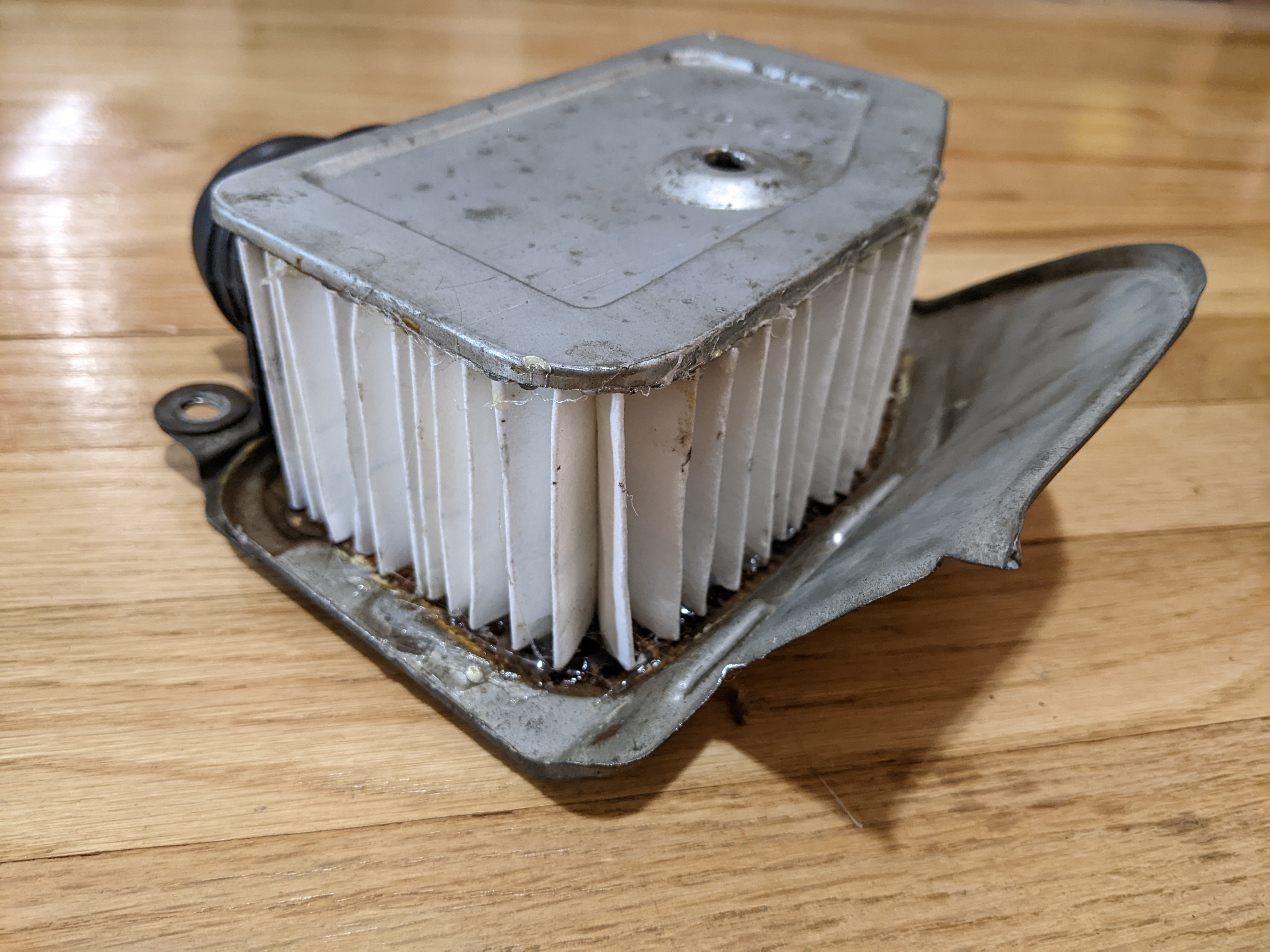
HLRn7S5.jpg


And this is the one that I tried to glue after installing all of the paper.
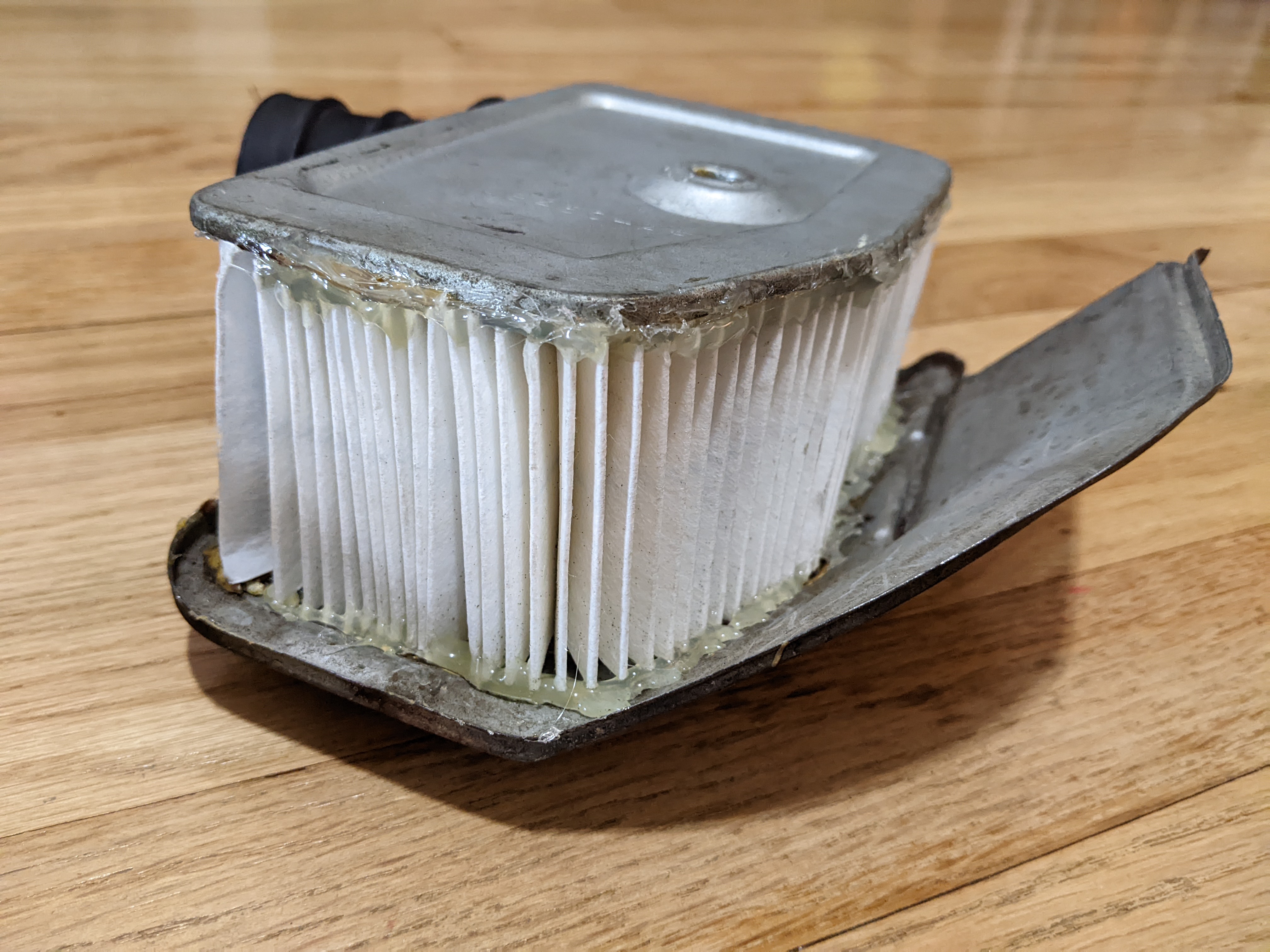
pDYh0QD.jpg
 
Someone mentioned on another thread they used a heat gun to soften the old glue enough so it scraped off.

I only tried the torch, although I do have a heat gun. In my case, the glue burned a bit, almost like charcoal. I have another set of dirty air boxes that I may try to clean up and I'll try the heat gun on those when I get around to it.
 
Kinda took the hard way here. I don’t think oiling the foam is strictly necessary, maybe unless you ride in extreme environments. I heated up the metal backsides to soften the glue enough to pull out the paper. New foam is held on with long zip ties


Sent from my iPhone using Tapatalk
 
On that subject, I don't oil the cotton in my K&Ns either despite it being suggested. They're more than adequate for the riding my bike gets, rarely in enough of a dusty environment to worry about it. However, I do like the idea of replacement filter material, I believe Richard Pitman used part of a paper car element on one of his bikes too.
 
RockReef: Kinda took the hard way here. I don’t think oiling the foam is strictly necessary, maybe unless you ride in extreme environments.


Yeah. It's something I have read about and wanted to try. I'll probably do it again, too, but will try to melt the glue with a heat gun next time and, overall, do a neater job. The torch didn't seem to soften the glue for me, only burn it.


Your method certainly sounds easier. I was concerned that the air flow rate of dry foam would be higher than oiled foam and, if the design is to use them oiled, then dry would result in a leaner mixture. And I knew I would neglect to oil them eventually.
 
I’ve done a few sets of filters for the 450 and 350. I will need to dig back through my thousands of digital photos and find some examples to post. I think the 5/8” Uni bulk foam is the simple and neat way to go for sure. For me the jury is still out on the oil/no oil approach after trying both. I will try to update and post some things I’ve learned about this process here in the near future.
 
I cleaned the old paper and most of the glue from another air box this morning using a heat gun and flat bladed screwdriver. I heated the metal as RockReef suggested and it helped, but it was still a laborious process. I think it's a good idea to separate the two halves before removing the bulk of the glue. Will follow up when I finish the second set - I'm hoping it will be tidier than the first.

qFTP9Ec.jpg
 
Most important thing is functionality of course, and the fact that sidecovers hide the air cleaners anyway makes the cosmetics of it a non-factor as long as they hold together properly.
 
The first set I did I separated the filter into halves also but have found it really isn’t necessary to go to that trouble. It is a pain to reattach them later and you need a flexible adhesive in order to do it. There is a sealant available called Seal-All that remains somewhat flexible and is also resistant to gas and oil. I have used it with good results. https://eclecticproducts.com/product/seal-all/
I use a razor knife to remove the original paper element, then a propane torch to burn away any remaining paper, and finally a small wire brush the remove the burnt residue. Using this method has not compromised the original adhesive and the filter halves remained intact with the wire screen.
 
I found these photos of a set of 350 filters I did with the 5/8” Uni foam. These were the ones where I separated the halves and removed all the original adhesive and used the Seal-All product mentioned in my last post. These were done in 2016 and the foam was not oiled. The bike ran great putting approximately 2500 miles on it. Recently I pulled the exhaust to access the left filter (yes, it is a CL350) and all still looked good and the Seal-All was still holding strong after 6 years. The foam was cleaned in warm soapy water but it really wasn’t very dirty. When I reassembled this time I did oil them with Uni filter oil. I wish I had put them in dry again however because now the bike is experiencing a stumble under heavy acceleration. I am wondering if the oil is causing a restriction. I really hate to have to remove the exhaust again to put in new dry foam so therefore the jury is still out on the oil/no oil debate for me. I will update when I get in the mood to remove the exhaust…
A91977FF-DDE8-4484-9EAD-2B9B3F1E18B4.jpg BDC433D2-FB1A-4A44-BFB5-7E372297E989.jpg
 
I found these photos of a set of 350 filters I did with the 5/8” Uni foam. These were the ones where I separated the halves and removed all the original adhesive and used the Seal-All product mentioned in my last post. These were done in 2016 and the foam was not oiled. The bike ran great putting approximately 2500 miles on it. Recently I pulled the exhaust to access the left filter (yes, it is a CL350) and all still looked good and the Seal-All was still holding strong after 6 years. The foam was cleaned in warm soapy water but it really wasn’t very dirty. When I reassembled this time I did oil them with Uni filter oil. I wish I had put them in dry again however because now the bike is experiencing a stumble under heavy acceleration. I am wondering if the oil is causing a restriction. I really hate to have to remove the exhaust again to put in new dry foam so therefore the jury is still out on the oil/no oil debate for me. I will update when I get in the mood to remove the exhaust…

It would be my guess that the filter oil is the reason for your flat/fat spot. I think the 6 years of reliable operation is living proof that they are adequate without oiling. I don't oil the K&Ns on my 450, nor did I back in the day with the K&Ns on my drag bike, and everything was fine. You could just try going out and blasting it through the gears, at least to the top of 3rd or 4th gear, and see if it draws enough of the oil out of them to make it run a little better. Or pull the exhaust again.
 
Thanks to all of you for this thread. I have this task ahead of me and I feel much more confident now that I've seen all the photos. VHT is focused on the restoration and maintenance parts of this hobby, and that's exactly what I want.
 
Yeah. It's something I have read about and wanted to try. I'll probably do it again, too, but will try to melt the glue with a heat gun next time and, overall, do a neater job. The torch didn't seem to soften the glue for me, only burn it.


Your method certainly sounds easier. I was concerned that the air flow rate of dry foam would be higher than oiled foam and, if the design is to use them oiled, then dry would result in a leaner mixture. And I knew I would neglect to oil them eventually.

It did get a little leaner I think because the dry foam (probably even the oiled foam) does flow better than the stock paper, especially seeing how dirty it was. Tweaked idle mixture and float level a tiny bit and the plugs have a nice color. No stumbles or flat spots either.

Edit: just read 12oz last posts. It’s really difficult to get oiling right without overdoing it. Another reason I don’t bother.


Sent from my iPhone using Tapatalk
 
The Uni foam is pricey, if you have a few to do. At 60 ppi (pores per inch), investigating furnace filters and hot glue might be worth it.
 
I finished rebuilding a second set of air boxes today, after running into an issue acquiring the same material I found for the first set.

WYQY1wa.jpg

b6ZYMAo.jpg


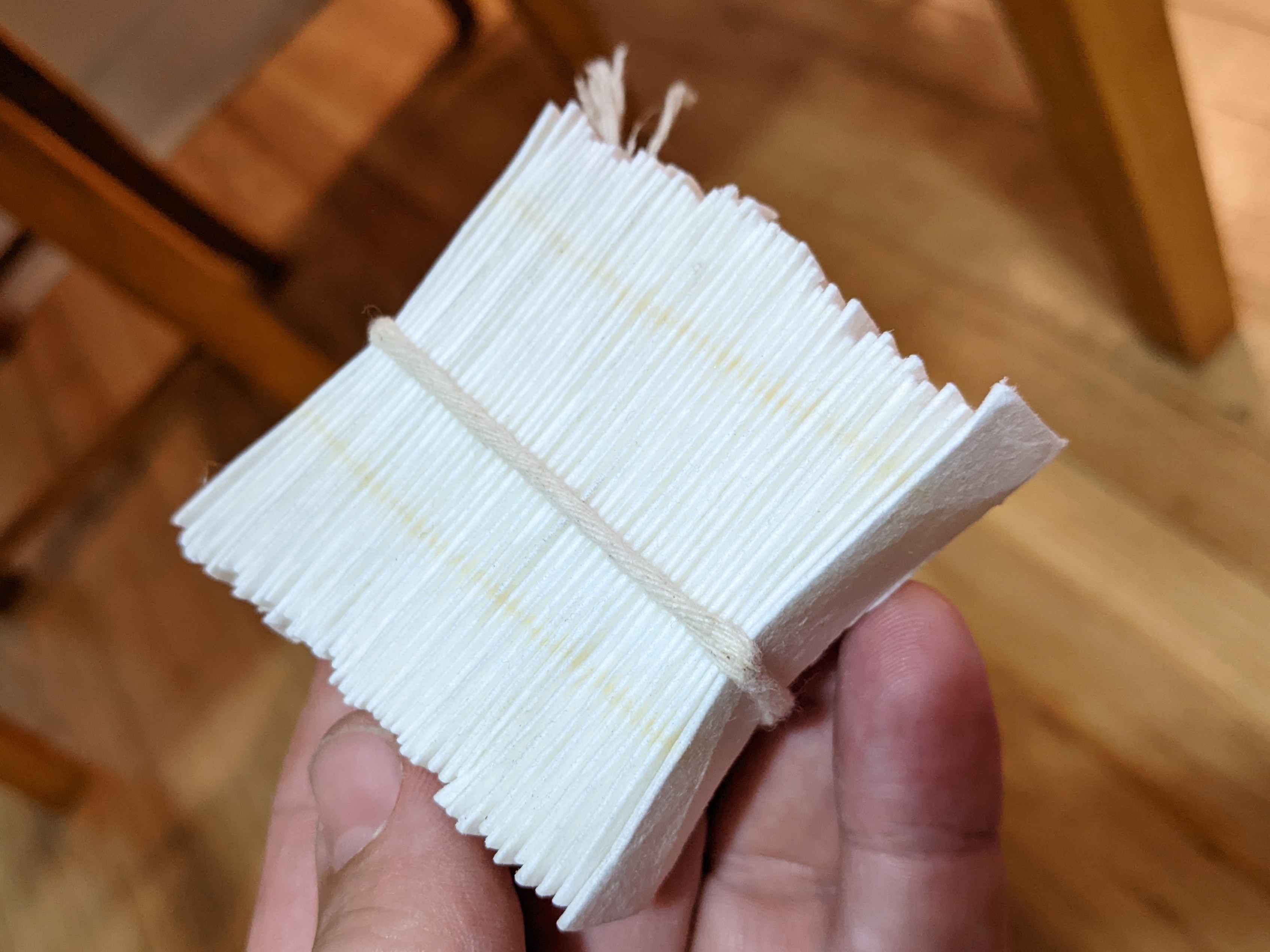
The first air filter I purchased was a Microgard MGA42098 and the paper inside was white with a couple of faint blue stripes.

6Lj7Q2R.jpg


I purchased another one a few days later and it had off-white paper with yellow stripes.

EYSjQkZ.jpg


The problem with the yellow-striped paper is that the pleats were taller than the white/blue paper and did not fit easily into the available space on the air boxes. Once I figured this out I was afraid I'd never find the white/blue paper again, but did manage to do so today. The upshot of all of this is that it's smart to pay attention to both the width of the paper and the height of the pleats when selecting a filter to scavenge.

I feel that my paper removal procedure is pretty efficient now that I've dismantled four automotive air filters, but it's still a lot more work than cutting a foam replacement for the original medium.
 
I still like the idea of paper filter element over foam. Though they are pleated cotton and not paper, it's one of the reasons I've always liked K&N filters over foam versions.
 
Nice work but that is a lot more work involved than I would have done it myself. I just used green uni foam and held in place with elastic hair bands. Easy to remove and wash as needed.
 
Nice work but that is a lot more work involved than I would have done it myself. I just used green uni foam and held in place with elastic hair bands. Easy to remove and wash as needed.

Fair enough. I had read about both options and really wanted to try the paper approach, so I have no regrets. However, I may go for foam next time, now that I've seen firsthand how much work the paper involves.
 
Is it Nomex or another aramid-paper alternative??

I don't believe either version that I purchased use such a material, although those engineered synthetic papers are probably better than what I used. The product description simply describes the material as cellulose and indicates that it is not cleanable. My understanding is that an engineered synthetic material would be cleanable.
 
I don't want to exceed Your patience, but if You will be able to take small part (5 cm/2 inches) and heat it up to 150 degC with standard paper with the same size. Cellulose will be much weaker than Nomex after such temp exposure.
 
I don't want to exceed Your patience, but if You will be able to take small part (5 cm/2 inches) and heat it up to 150 degC with standard paper with the same size. Cellulose will be much weaker than Nomex after such temp exposure.

I used three paper samples: copy paper, white with blue stripe filter paper, and off-white with yellow stripe filter paper. I set my oven to 300F and put the samples in for 15 minutes. They all seemed fine, although the copy paper started to brown a bit. So I raised the temperature to 350F and let them go for another 20 minutes. The white filter paper started to brown, but none of the samples feel crunchy or brittle. I snapped the samples of filter paper, pulling them quickly between my hands and they do not yield. Still, they do not appear synthetic to my eye, but they are robust.

I'll happily mail you fresh samples if you'd like to see them firsthand (feel free to send a PM). Would you not use one or the other for this purpose or is there another reason for your inquiry?
 
Thanks for these tests. There is no need to ship samples to Poland. Yellow stripe in most cases meant Nomex aramid paper in electric insulation. This material, developed by DuPont became standard in LV insulation at high temps and firerescue applications. Now it is delivered with yellow stripe and red DuPont stamp.

Thanks once more
 
I found that a heat gun ( used for paint stripping ) worked well at removing the original glue without damaging anything. I use Ram Air double density air filter foam, got it on all three 175s here. The mastic used for bonding in car wind screens, Tiger Bond or similar, works well, both for sticking the foam into place, and for sticking metal parts of the filter body back together.

I use the foam dry, as this particular foam is designed to be used. I'm encouraged that the SL175 uses foam filter socks as standard, and as this is the same engine as in the CB and CL variants I should be OK, although the foam Honda used IS oiled after cleaning.

EDIT I have a K&N filter in my CB600, cleaned and reoiled at service intervals, cheaper than continually replacing paper elements.
 
Looking to put foam over the filter bodies of my SL350 K1. UNI has various sizes rated from 30 PPI to 65 PPI. Any ideas about what would be the best for street riding?
 
Looking to put foam over the filter bodies of my SL350 K1. UNI has various sizes rated from 30 PPI to 65 PPI. Any ideas about what would be the best for street riding?

The Uni-foam sheets are color-coded, I think most doing what is suggested here use the green version. This from their page for sale of foam sheets (scroll down below the filter oil and cleaner)

BF-1 – 12″ X 16″ X 5/8″ – 65 PPI Grn fine foam - $16.95
 
On my bomber I use the BF-6, orange/white here in the Netherlands. I also oil the foam (very light). On the dyno I see that there's hardly any difference between an original paper filter and the Uni-foam set-up, nor in pick-up speed, nor in top speed.
 
On my bomber I use the BF-6, orange/white here in the Netherlands. I also oil the foam (very light). On the dyno I see that there's hardly any difference between an original paper filter and the Uni-foam set-up, nor in pick-up speed, nor in top speed.
I used the BF-6 on my CB350, lightly oiled too. I'll do the same on the 450. I rather thought oiling the 65ppi green would be too restrictive and I wanted the oil because of all the dust here.

69 CB350K1/68 CB450K0
 
On my bomber I use the BF-6, orange/white here in the Netherlands. I also oil the foam (very light). On the dyno I see that there's hardly any difference between an original paper filter and the Uni-foam set-up, nor in pick-up speed, nor in top speed.
Based on the conversation regarding teebo's 450k0, I figured it might be worth bumping Jensen's previous comment on this topic.

I'm still running the transplanted automotive air filter paper on my 450k7, but it hasn't been on a dyno and I tend to run my bikes a little on the rich side so I don't have to worry about over-lean scenarios.
 
I do use the BF6 on my 350 because I was battling a rich condition.

I started with BF6 on my 450, but changed to BF1 because I’m fighting a lean.

I may try the paper route. But why not just buy a suitably sized auto filter, cut it apart and use that paper?

I used the high heat silicone Hondabond. Nice thing is it’s easier to remove than that ultra-hard glue Honda used originally.

The question is which one?

I use a K&N with oil on my truck. I use oil on the unifilter foam. Since it’s synthetic, I’m not sure how long it stays around. Seems to me just a surface coating would remain.

Of interest is jensens comment that on a dyno he doesn’t see much difference between stock and BF6 lightly oiled.

Is there a practical way to test air flow on various material?
 
On my bomber I use the BF-6, orange/white here in the Netherlands. I also oil the foam (very light). On the dyno I see that there's hardly any difference between an original paper filter and the Uni-foam set-up, nor in pick-up speed, nor in top speed.

And nor in gas analyses too.

However, I am a lazy guy, that's why I use paper sometimes, from a suitable car air filter indeed. Taking out the foam, wash it, and rinse with oil again, is more work then replacement with a paper material (to me).

btw, don't forget that I'm riding and testing my bikes around / below sea level, -3 mtrs (-10ft), and Oklahoma city is 400 mtrs / 1300 ft above sea level. The air is denser where I ride, resulting in a more leaner mixture. the higher you get, the richer the mixture (too much fuel, less air).
 
Last edited:
However, I am a lazy guy, that's why I use paper sometimes, from a suitable car air filter indeed. Taking out the foam, wash it, and rinse with oil again, is more work then replacement with a paper material (to me).
I think you may have mis-translated practical as lazy. =) I don't think anyone is going to believe you are lazy around here!
 
I'm a Physics guy, always searching for the path of least resistance ;). Others call it lazy, but practical is a nicer translation.
I agree with this, 100%. And I don't feel any need to do a job the old way, when a tool can do it better, faster and more reliably.
 
I finished rebuilding a second set of air boxes today, after running into an issue acquiring the same material I found for the first set.

WYQY1wa.jpg

b6ZYMAo.jpg


The first air filter I purchased was a Microgard MGA42098 and the paper inside was white with a couple of faint blue stripes.

6Lj7Q2R.jpg


I purchased another one a few days later and it had off-white paper with yellow stripes.

EYSjQkZ.jpg


The problem with the yellow-striped paper is that the pleats were taller than the white/blue paper and did not fit easily into the available space on the air boxes. Once I figured this out I was afraid I'd never find the white/blue paper again, but did manage to do so today. The upshot of all of this is that it's smart to pay attention to both the width of the paper and the height of the pleats when selecting a filter to scavenge.

I feel that my paper removal procedure is pretty efficient now that I've dismantled four automotive air filters, but it's still a lot more work than cutting a foam replacement for the original medium.
 
Is there any sort of color coding of those stripes that helps identify filer size or efficiency? Or is it an aid in manufacturing or a brand labeling system?
 
Back
Top Bottom