


Since the DOHC450 and 500T use 120° plug caps, finding non-resistor caps to work with the BR8ES resistor plugs is more difficult (and expensive) than other models since NGK stopped selling them in the US. The older resistor caps had a threaded connector for the terminal stud on the plugs and they were easy to convert, but along the way the plug caps were changed to a different design with the connector for the terminal stud on the plug being molded permanently into that end of the cap. As a result, it seemed that we could no longer remove the resistor.
Someone here discovered that the threaded 'spike', where the plug wire connects when we 'screw' the caps onto the coil wires, was indeed removable. I was hesitant at first because it did not seem possible without causing damage, but in fact it can be done. Here are some pictures of how it comes apart and what is inside.
Reach into the end that screws onto the plug wire with a pair of needle nose pliers and tightly grab the threaded 'spike'. Pull hard enough and it will come out of the cap.
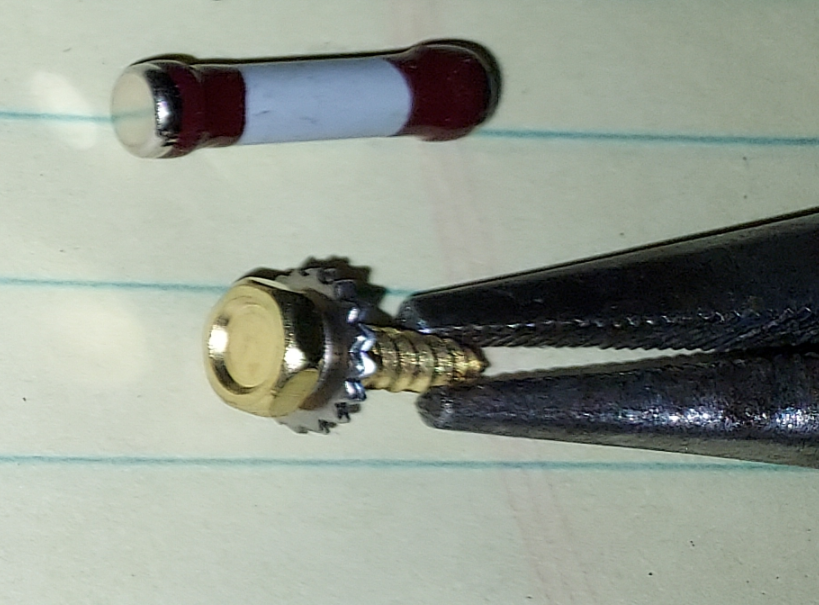
The 5K resistor from inside the cap is shown above the sheet metal screw with the two star washers, which provide the friction to hold the parts together in the cap.
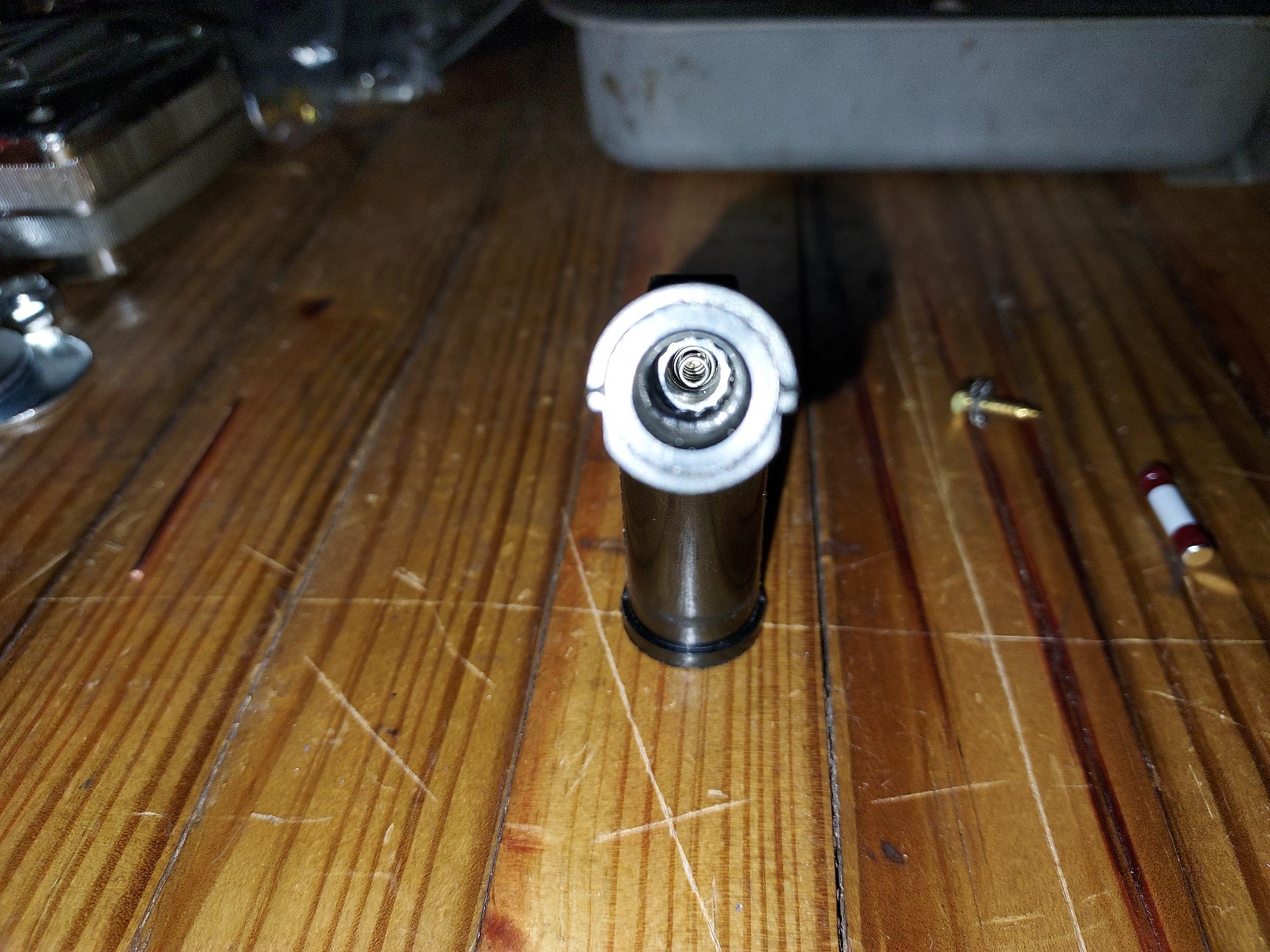
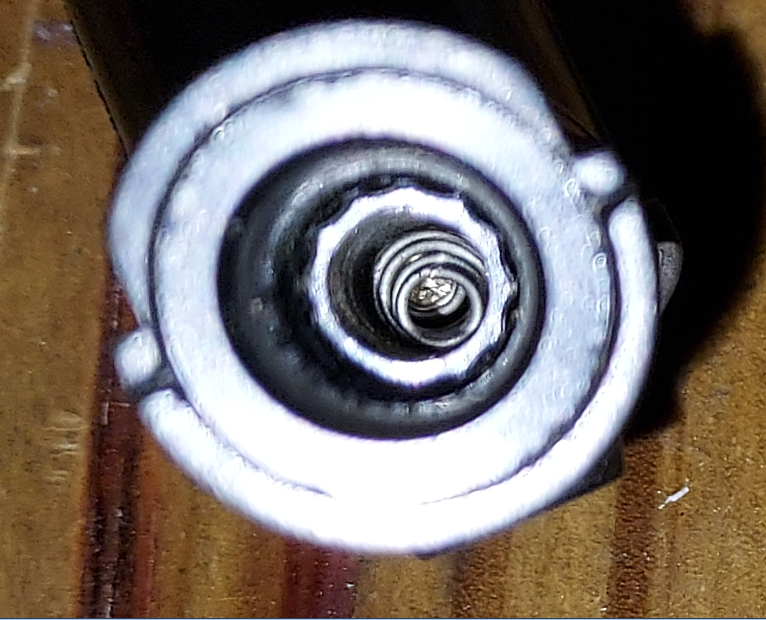
This is the view of the inside of the cap with the sheet metal screw and resistor removed. Note the spring inside that keeps pressure on the resistor, holding it against the head of the sheet metal screw.
Not having a larger gauge copper wire on hand, I used a length of copper from a short section of household Romex wire and doubled it over at just slightly longer than the length of the resistor.

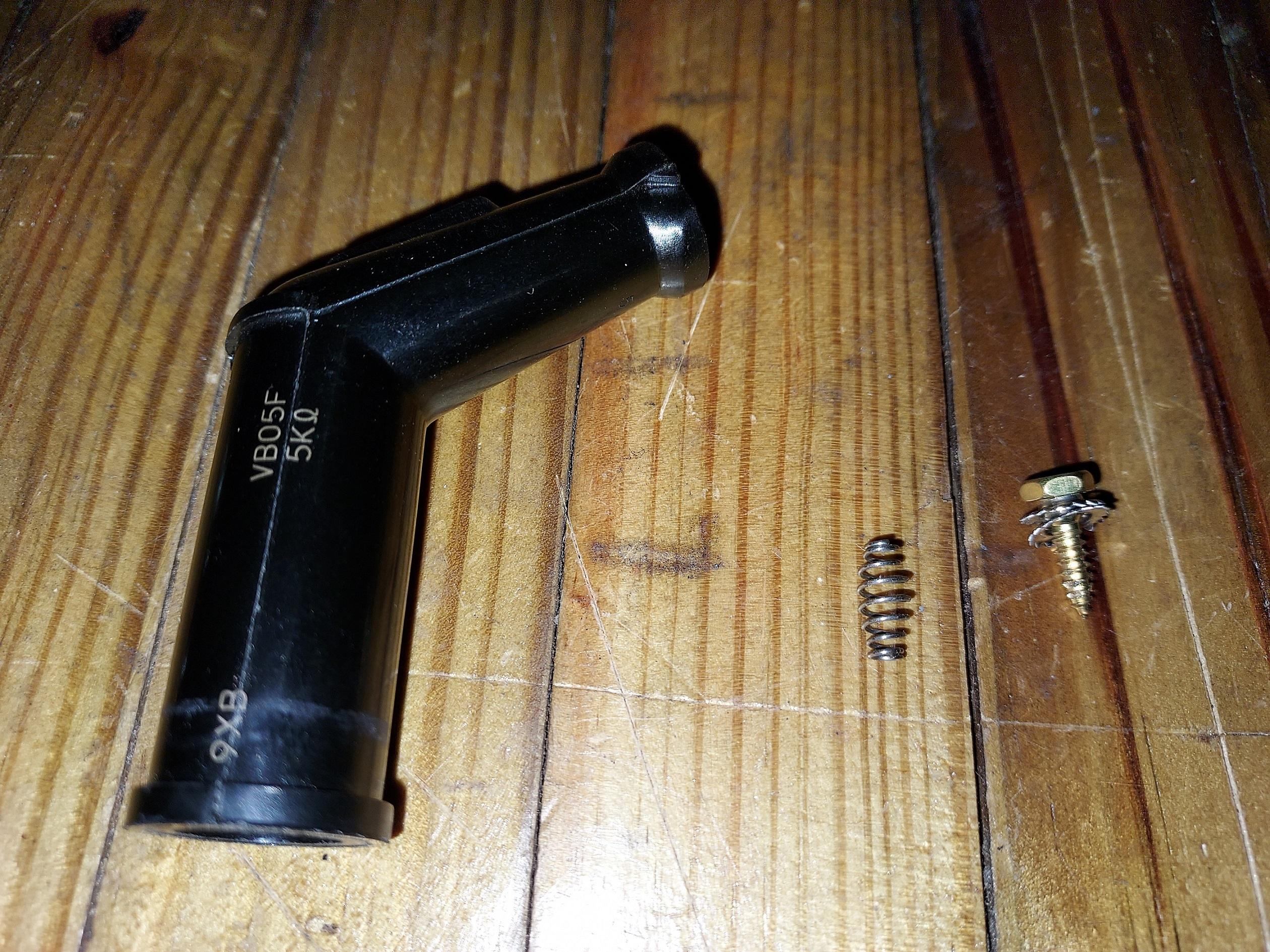
Slip the length of copper in place where the resistor was previously, then push the sheet metal screw back in until seated and you're done. Checking the cap's resistance afterward will show 0 ohms.
Someone here discovered that the threaded 'spike', where the plug wire connects when we 'screw' the caps onto the coil wires, was indeed removable. I was hesitant at first because it did not seem possible without causing damage, but in fact it can be done. Here are some pictures of how it comes apart and what is inside.
Reach into the end that screws onto the plug wire with a pair of needle nose pliers and tightly grab the threaded 'spike'. Pull hard enough and it will come out of the cap.
The 5K resistor from inside the cap is shown above the sheet metal screw with the two star washers, which provide the friction to hold the parts together in the cap.
This is the view of the inside of the cap with the sheet metal screw and resistor removed. Note the spring inside that keeps pressure on the resistor, holding it against the head of the sheet metal screw.
Not having a larger gauge copper wire on hand, I used a length of copper from a short section of household Romex wire and doubled it over at just slightly longer than the length of the resistor.
Slip the length of copper in place where the resistor was previously, then push the sheet metal screw back in until seated and you're done. Checking the cap's resistance afterward will show 0 ohms.
Last edited:


