Progressive Fork Spring Direction

saffy

Member
Joined
Jun 28, 2020
Total Posts
45
Total likes
6
Location
Colorado
I'm changing my leaky fork seals on my 74 CL360, and when I took the fork springs out, the tapered side of the spring with the coils of smaller diameter was facing DOWN. You can see the slightly tighter wound coils facing down in the picture below. I am now seeing on various forum posts that the tapered side of the fork spring should face UP. I wanted to confirm this before reversing the direction they were on the bike, and was also wondering why this matters from a physical standpoint.
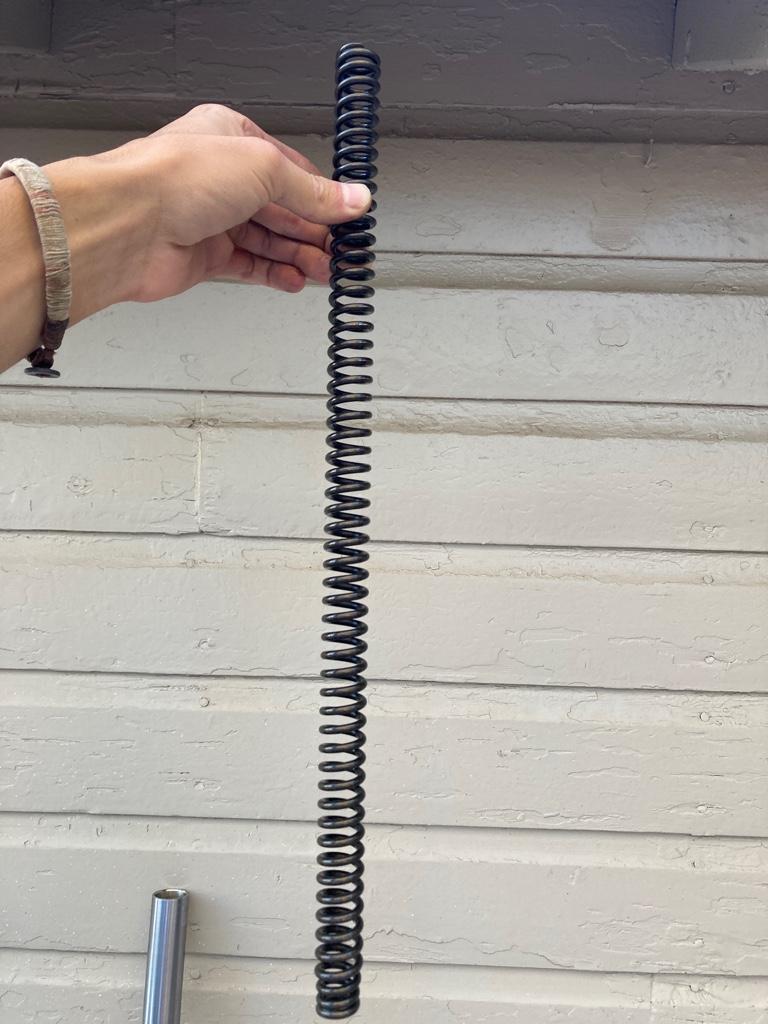
333d7c8d1b351bc06ed4bb7693154fdd.jpg


in more exciting news, look at my freshly polished shiny forks
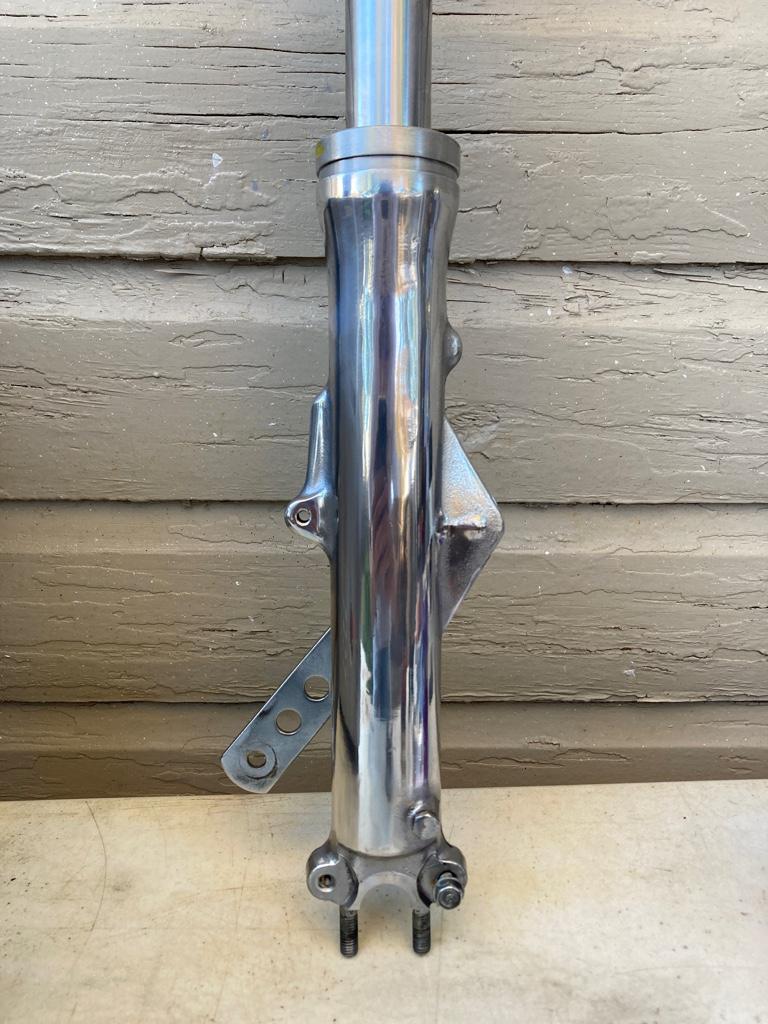
25d48ddec2ed93fb04c6c93b470ad975.jpg


Sent from my iPhone using Tapatalk
 
Last edited by a moderator:
Don't know about the springs but that's a mighty fine polishing job!
 
Place springs in a way the the least mass is always on the unsprung weight / mass side, in this case the bottom leg (more material per volume, thus leading to higher weight per volume), more explanation here: https://en.wikipedia.org/wiki/Unsprung_mass

interesting. so I'm gonna assume the part of the spring with the taper has less mass than the opposite end of the spring. just gonna reinstall them the way they came.

what's interesting though, is that I was doing this same job on a CB550F a few weeks ago, and those springs have the end with tightly spaced coils (more mass) facing down. there was no taper in this spring, the diameter was constant throughout, meaning the heavier side of the spring was facing down, increasing unsprung weight.

I'd also think that flipping fork spring direction would change the volume of recommended fork fluid, as you'd now be submerging a different volume of fork into the fluid. I think I'm overthinking this. just gonna call it good.
 
A smaller diameter on one end could be to fit in a recess on top of the damper rod to keep it centered so it doesn't rub on the id of the tube. As far as the close coil-wide coil end orientation thing goes the instructions, that came with the Progressive Suspension springs I bought, said in the real world it doesn't really make a whole lot of difference which end goes up. As far as perceived differences in unsprung weight or oil displacement goes you would be hard pressed to tell the difference between one and the other. Great fodder for forum denisons to bandy back and forth about, almost as good as ring gap spacing or oil threads.
 
It's simple physics, and if you're looking at any machine as a set of basic physic functions, it's not so hard to understand why and what. That's also the reason why I don't ask questions often, the answer is often be found right before your nose if you understand how functional design, mechanics and physics works. If you wrench on any machine, and follow the basic physics about inertia, torque, force as a vector, etc, you don't have to ask. It's the same with electrics, if you understand the physics around basic electricity and magnetism, you understand how it works, no need to look at an electrical scheme then only for location related items.

And yes, you're right about the influence of some designer rules, sometimes more theoretical than practical, but that doesn't matter. There is no such thing as in theory and in practice, there is only physics.

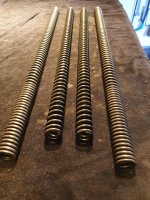
Below, the springs of my CB400f, much more difference between the original and new progressive springs in unsprung weight.


361185ea-2f9d-48e2-a216-eee99cfef487.jpg
 
Back
Top Bottom