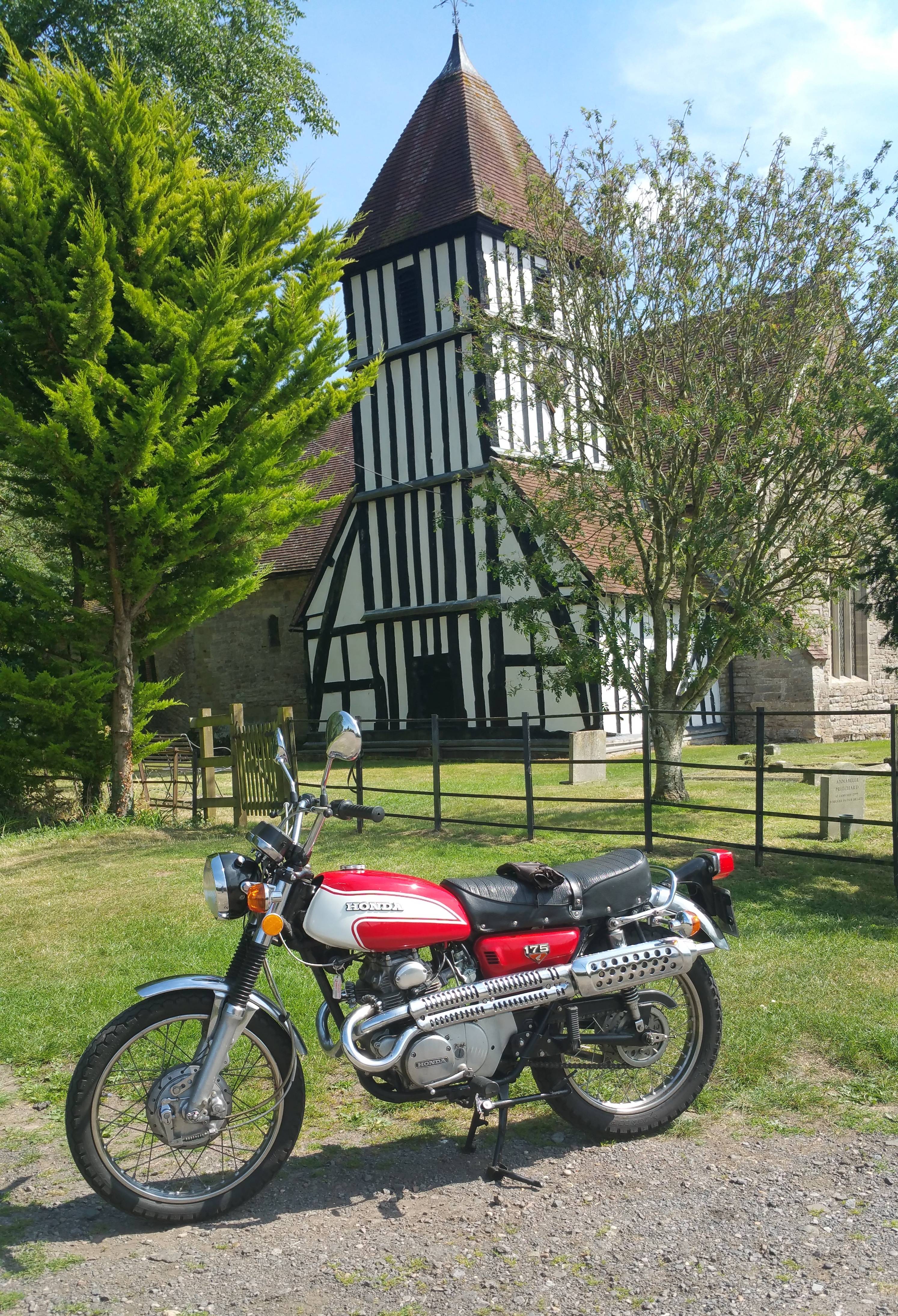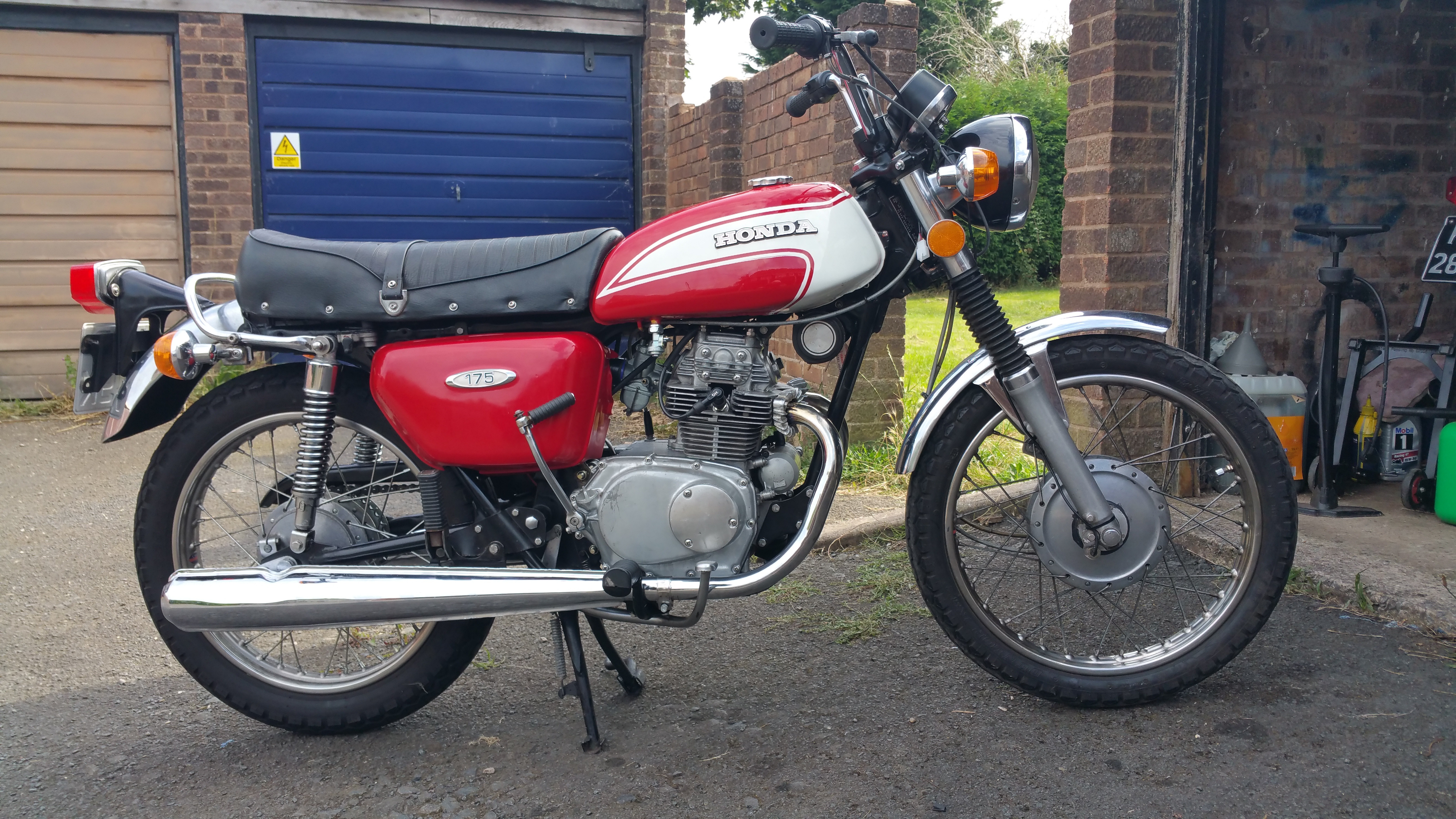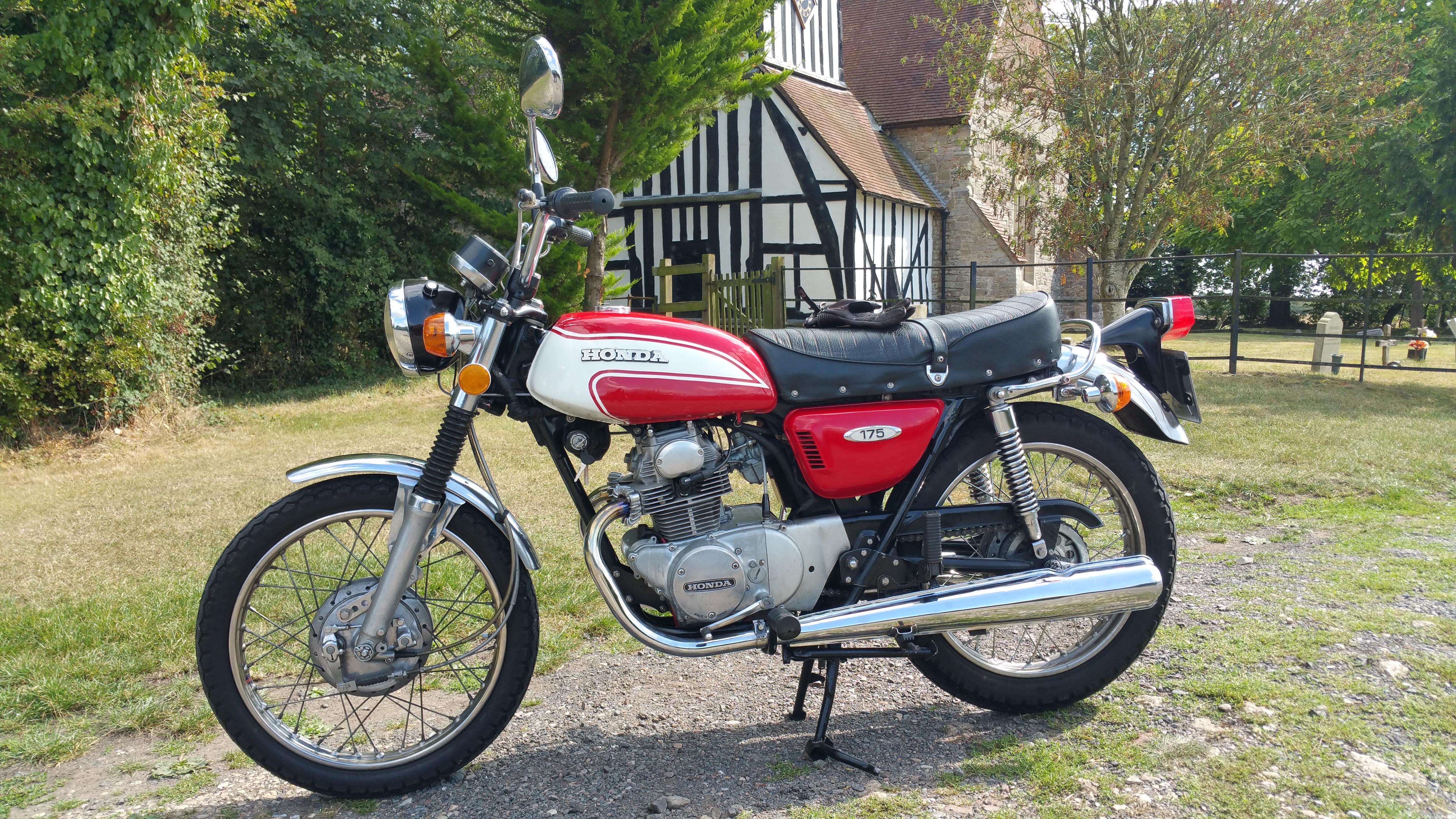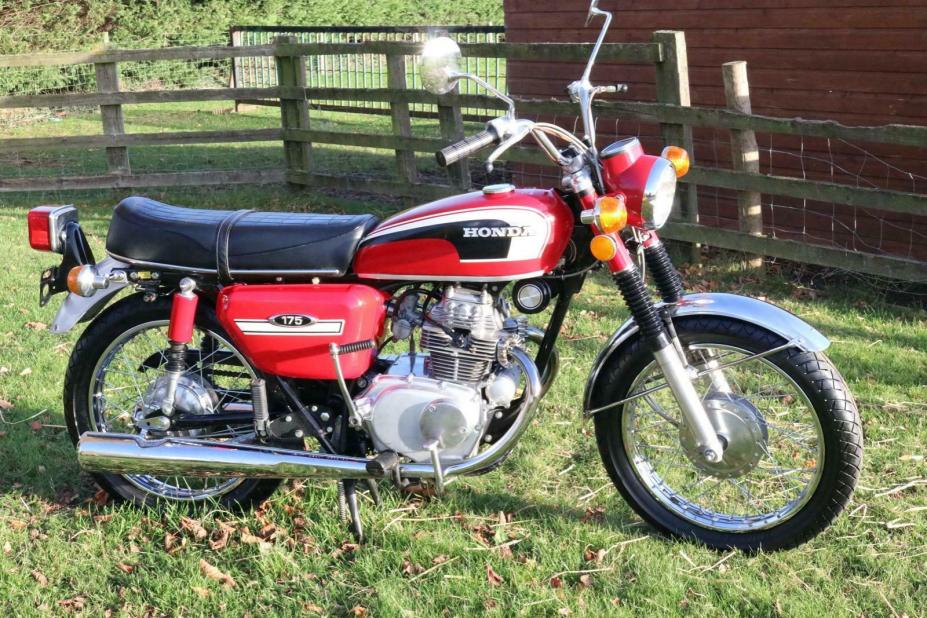
My CL175K7

Great looking bike there, Richard and glad you are ironing out the initial problems ok.
By the way did you use any type of joint sealant on the the gasket for the left side engine cover? I had a similar oil leak on my CD175 which I could never quite eradicate even after changing the gasket and scrupulously cleaning the surfaces. I was loath to use any kind of silicone sealant as the stuff seems to get everywhere even if you are careful, but thought something like Wellseal might be better. I tried a very thin smear along the bottom edge of the cover and it seemed to do the trick.
Dave Mitchell recommends it on his Classic Motorcycle Channel as an alternative to silicone stuff - https://www.youtube.com/watch?v=McX_66NyIcA mainly for cylinder heads.
Wellseal info here - https://ldsengineering.co.uk/produc...alant-engine-block-cylinder-head-gasket-shim/

Or is any kind of sealant near circulating oil a big no-no?
 
I'm not familiar with it, but if it doesn't harden then you'd have to use the same precautions as you would with silicone sealer which I've used for decades, just sparingly and a safe distance from oil passages.
 
Thanks AD. That sounds sensible. I've heard stories of oil-ways being blocked by stray bits of sealant squishing out the inside and have tried to be very sparing when I have used it. Did Honda use it anywhere on their engines from new or did they rely on the gaskets only?
 
In my experience these Honda castings are so well made that oil leaks don't happen, except as a result of user error, such as careless use of gasket scraper, levering cases apart and damaging the gasket surface, reusing a gasket too many times etc. Only place Honda use sealant ( Three Bond, Yama Bond etc ) is between faces that don't use gaskets, such as between crankcase halves, and on some rubber gaskets, for example where the stator wires emerge, or on my Hornet, at a couple of places on the camshaft cover.

My CL175 oil leak was because the gasket had slipped out of place. When I refitted the new gasket I did put some smears of ThreeBond on the back of it, to hold in place while I fitted the outer cover whilst battling with limited access due to the exhaust pipes.

Mentioned this before, but a regular contributor to Classic Motorcycle Mechanics advocates the use of WellSeal on gaskets on his Kawasaki rebuilds. Perhaps Kwackers leak more than Hondas ….
 
Now that my CL has got the OEM exhaust on it, it seemed sensible to revert to the original carb settings. I'd previously been running 98 mains with the DS pattern CB175 exhausts, CL should have 90 mains. I could not find my original jets, but I did have a pair of 92 mains, so I fitted those, leaving the 38 pilots already fitted, Keihin brass in OEMstd carbs.

Bike is still quite cold blooded, takes a few minutes to run cleanly from a cold start, but then runs well, although the tick over does rise once hot.

Jet change achieved with carbs in situ, bit of a fiddle to get at left carb then refit float bowl without displacing the gasket. Smear of grease held it in place long enough.
 
It's amazing how good we can get doing jet changes without taking the carbs out. I got quite used to it while trying to find an optimum on my machines. I have a favourite stubby screwdriver.
They are both alike in that they both run best on plus standard sizes. Stock is 88 on the 200's from memory. Interesting the other night watching Secrets Of The Transport Museum on TV. There was Allan Millyard tinkering with his Flying Millyard. It fouls his plugs on idle, something even he has to accept. He keeps the jetting to enable it to run smoothly at higher revs.
He was cleaning his plugs on the program with a blow torch. Burning away the deposits and leaving to cool before refitting. I've always used a brass brush but it's not the way according to him.
 
I use an M7 socket and 1/4" ratchet to remove the entire emulsion tube, then swap the jets away from the bike using a bigger screwdriver, holding the emulsion tube in a small adjustable spanner, or pliers if I'm being a bodger.

I've seen a video of Allen Millyard cleaning his Kawasaki stroker plugs on his back yard gas barbecue, which he also uses for a variety of non culinary heating tasks ..
 
Excellent thread. Tell me about the David Silver auctions - I've bought from them direct but if there is a chance for getting a deal on a CL exhaust system I am all ears!
 
I think I just got lucky, doubt that there are any more CL exhausts at DS. I got sent an emailed link to their auction, which might have been a one off event, maybe as I've been a fairly regular customer for quite a few years now, who knows ..

I do have very nice CL175 sloper exhaust in my loft, bought in error a while back.
 
CL175 has now awaken from winter slumber, oil changed after battle with sump plug, described elsewhere. Starting and running well, on the OEMSTD Chinese carbs and Charlies ignition.

( EDIT Another senior moment - it's running on original points ignition. Can't keep track of all these 175 engines )

Ethanol free fuel and (now) Mobil 1 15/50 fully synth oil.

However, senior moment today. Took a ride to a local motor spares shop ( Halfords ) to pick up some Dot4 brake fluid, intending to do a fluid change on my CB600 before using it this year. On the way there, the 175 started running badly, wouldn't rev cleanly. Almost felt as though it needed to go to reserve, although I'd only done 35 miles since brimming the tank yesterday. Limped to Halfords, got my brake fluid, had a chat to the lad behind the counter who couldn't ride his own bike as he'd been banned for speeding.

Returned to the 175, realised that the choke was still half on, mechanism hangs up in my over long tank balance pipe. Fully opened ( or should that read 'closed'?), bike running perfectly again, had a nice 35 mile bimble around the local lanes. It's odd, I really have no feeling of urgency to get back out on the 600, almost resent having to tax and MOT it.
 
Fully opened ( or should that read 'closed'?), bike running perfectly again, had a nice 35 mile bimble around the local lanes. It's odd, I really have no feeling of urgency to get back out on the 600, almost resent having to tax and MOT it.

"Fully opened", no longer choked which is when closed.

I realize you enjoy the size and comfort-level of the 175s and rightfully so, but if you sell your 600 you will regret it in short order, I can assure you. You might not ride it nearly as often as the 175s, but it's always there when you do want to experience the bigger horsepower level.
 
Decided to take the CL175 for a run today, pumped the tyres and oiled the chain, then tried to start it. It started up on one cylinder, as it often does, but other cylinder did not chime in as expected. Assumed it was a wet plug, but on removal looked fine, quite dry in fact. Tried tapping the float chamber, to see if float valve was stuck. No joy there.

I have OEMSTD carbs on this bike, and they have nice float bowl drain screws. Removing these showed a dry carb, on the (CL) exhaust side, which makes access difficult. Much easier to remove drain screw than float bowl with that high pipe in the way. On the other hand, as left hand carb is a copy of the right hand carb, fuel hose is easy to get at on that side. Pulled this off, no fuel flow with fuel tap ON. Other side clearly still getting fuel.

I blew through the hose, heard it bubbling inside the fuel tank. This seemed to clear whatever blockage was present, fuel flowed again, pipe reconnected and both cylinders then ran OK. This is all a bit puzzling, as both fuel hoses come from the same fuel tap. Fuel tap filter bowl clean as a whistle. Plenty of fuel in the tank. Fuel tap is one of those Chinese copies, with the RES and OFF positions incorrectly labelled, ie OFF is actually marked RES, but that wasn't the issue this time.

In the end, I didn't go for my ride. UK summer has arrived, 28C and humid, too sticky after above annoyance to think about putting my bike clobber on, I'm not a tee shirt and shorts meat crayon type.
 
I got my ride in today, 30 miles around the local back lanes, running well.

R7MVWCV.jpg


It was also a bit of a shakedown run for the Koso clone speedo pickup, bracket modified / strengthened as suggested by Jay. I will get around to installing that unit on this bike sometime, prior to fitting the SL175 engine with CD175 single carb head etc. SL engine modded to take e start.

3m8zaLA.jpg
 
Made a start on the single carb engine swap this afternoon. It's blisteringly hot today, so I just spent a couple of hours at it. Removed the CL exhaust first. Top tip - remove the left side outer exhaust header stud, whole system comes off relatively easily then. Before, I've spent hours wangling these systems on and off. Air filters and battery box removed, along with the electrics - starter solenoid and after market reg rec unit, along with a bunch of wiring.

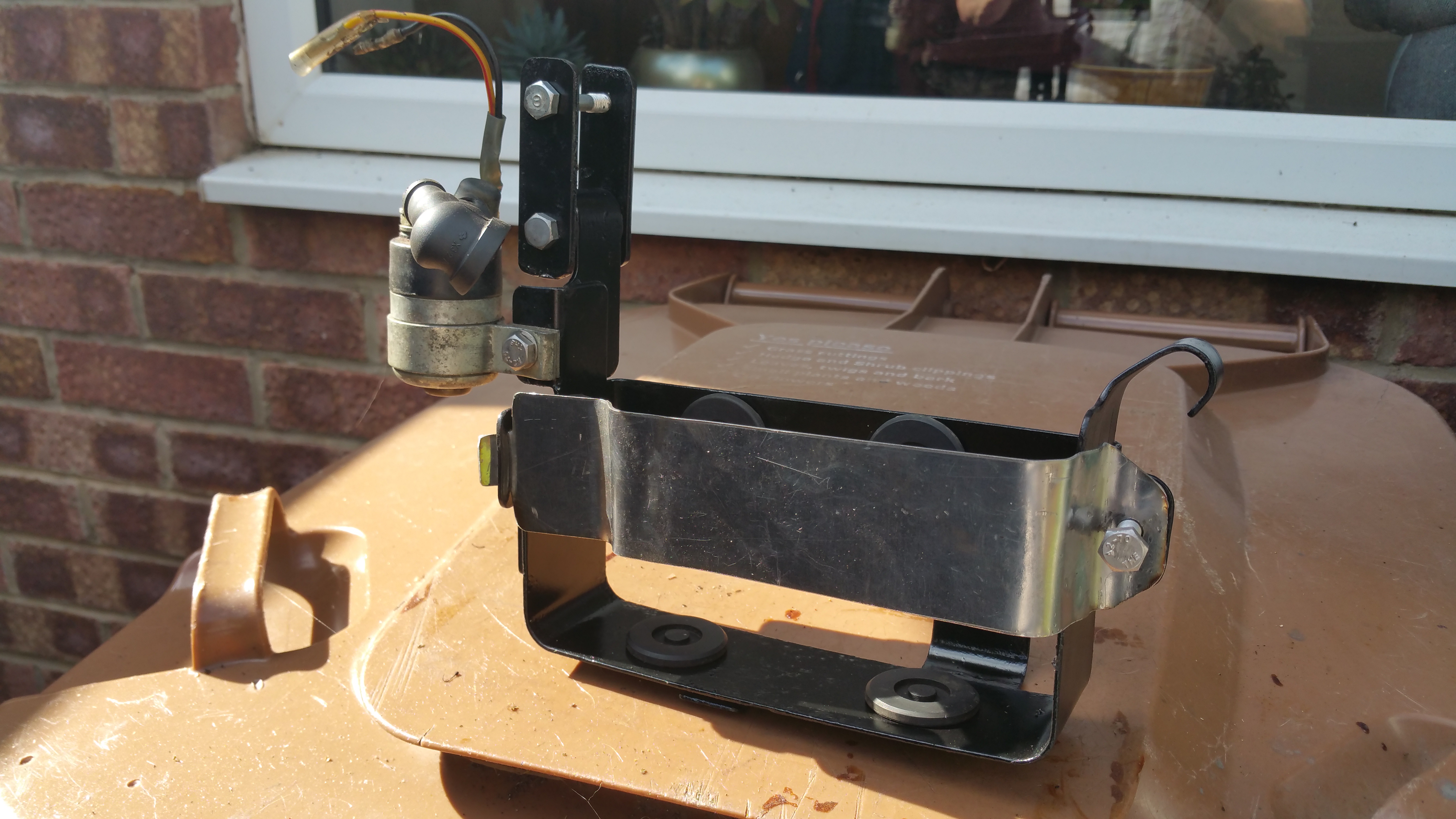
Home made battery strap is like that so that a slim 12v battery ( same as the one I've been running on my e-start SL 175 ) fits.

CD air filter then slotted nicely into place, clearing my aftermarket fuse box and flasher relay. The starter solenoid fits neatly on a threaded lug on the CD battery box, almost might have been made for the job. ( E start in some other market ?) I've wire brushed and painted the CD battery box, made up a pair of mounting straps for it, holes already present in CL frame to accept these, thank you Honda. Rubber buffers pushed out easily for painting, by pushing them out from behind using a JIS screwdriver to press on back of that central rubber button.

I know it seems a bit heretical, but I shall be fitting CB exhausts when this goes back together, CL system looks cool but really is a PITA. Reason for the single carb mod is that I'm hoping that I'll end up with a bike that starts easily, idles and runs without making a fuss, that I can just wheel out and ride. Also be interested to see in the real world how much horsepower difference it actually makes, given that this bike will have 5 speed box and CL final drive ratio.

0gO8ElV.jpg
 
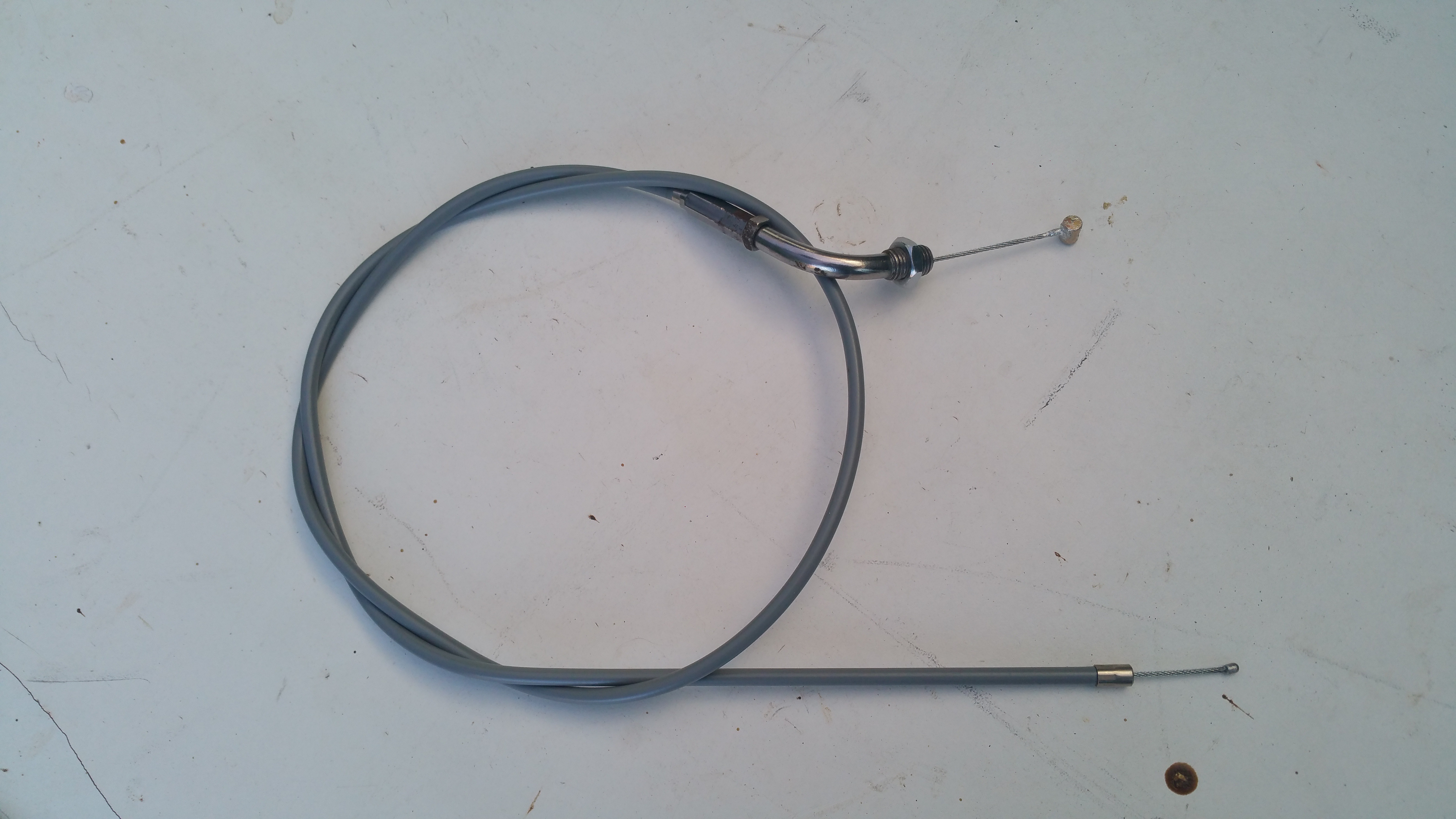
Other parts required. I've asked about a single outlet fuel tap elsewhere on this site, thanks to those who responded. After that, it occurred to me that I'd need a single throttle cable. On my test rig, I was using a CB/CL 1 into 2 cable, just connecting on side to the single carb, worked OK, but probably not a good idea out on the road, thinking stuck throttle etc. So I've just been to the Venhill site and ordered a single throttle cable kit. Grey conduit on back order, but I'm in no hurry.

 
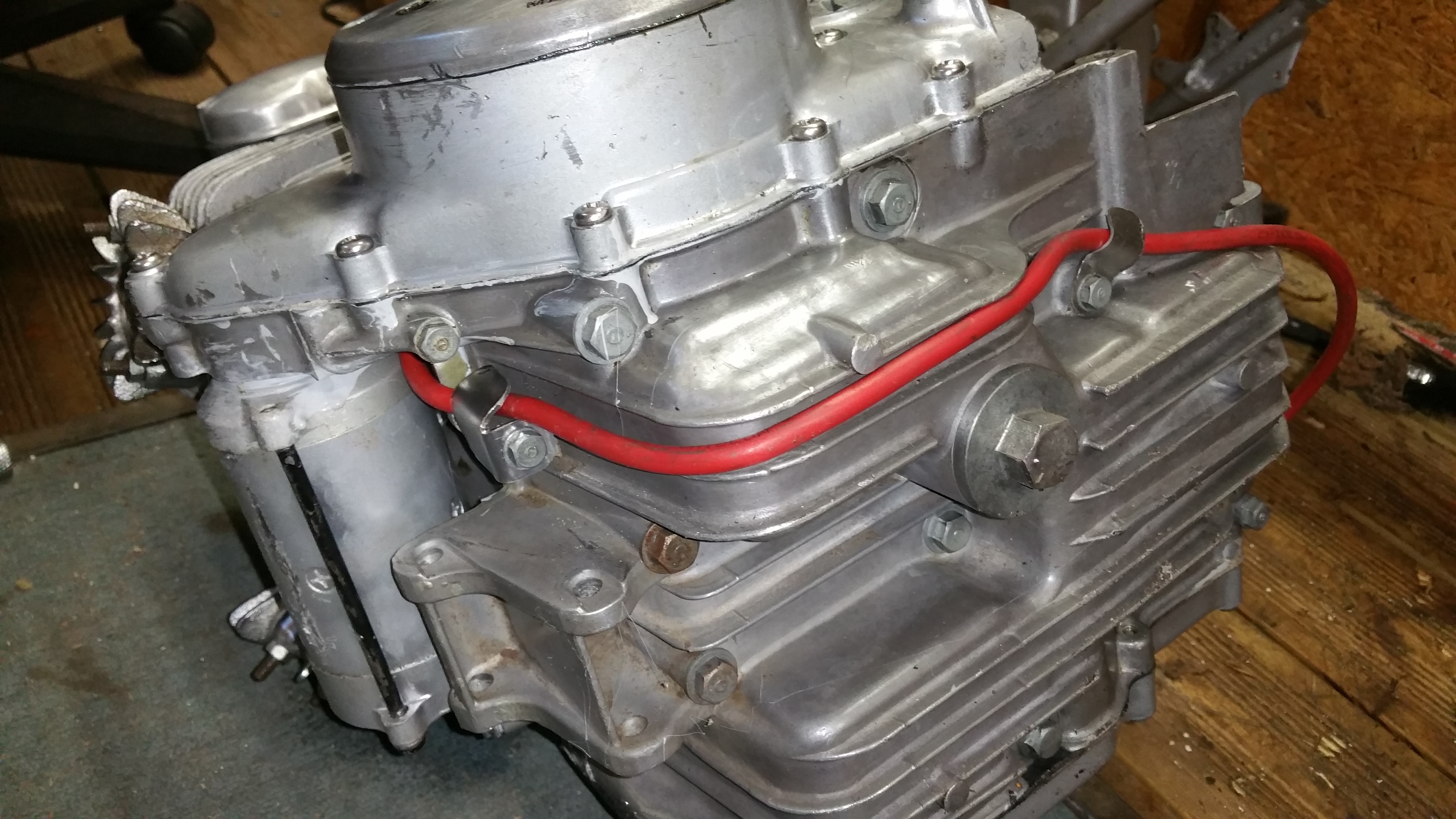
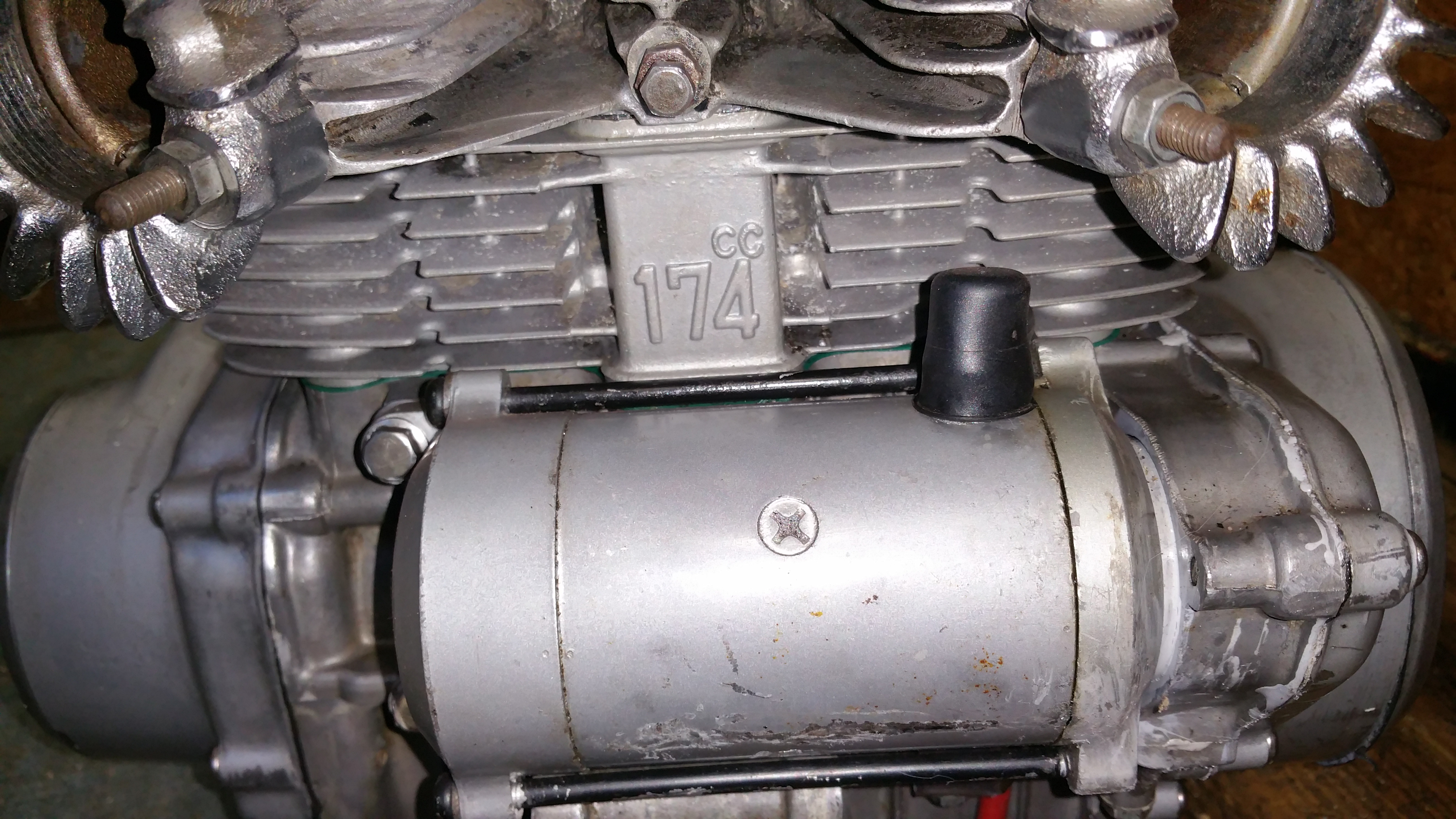
Hottest day of the year so far. Spent a little time threading the starter cable up behind the starter motor, and securing it to the crankcases. As this was originally not fitted with e start I had to make up my versions * of the clips that secure the cable to the underside of the engine. Much easier when the engine is out of the bike, but easily forgotten about, as we have often seen with some creative cable routings, post engine swap.

* some sweaty work with pillar drill, cutting disk in angle grinder, and power file. Not the neatest bit of metal work, but it won't be seen again :rolleyes:

The Hondabond horror show, excess sealant run down from the rather slack joint where the nose of the starter enters the hole that I bored in the crank case. Certainly not used on the case gasket as it appears. I've used car jump lead cable for the starter cables, if it'll handle starting a car engine it should be fine here.

99VhNbx.jpg


New boot and more Hondabond escapes

aAyAvod.jpg
 
No, I'll leave it like that, looks trick :geek: .

I've run out of the black cable from the other half of the jump lead set. The OEM starter cable has a massive rubber outer sheath where it runs under the engine, but I'm not taking this off road or anything like that, so I can't see it getting snagged or chafed in use. I've used this cable on my SL175, but of course that has a sump guard.
 
Jumper cables are the best deal for #8 wire. I used them to mount my 120volt inverter in my van cab. I like the red too.
 
Venhill cable kit arrived today, much earlier than expected. I removed the existing CL175 throttle cable as a pattern to cut the new cable to correct length. I've got a set of parrot mouth shears which cut cables and outers neatly without crushing.

I now need to have a go at making a 'birds nest' in the cable end. I remember reading here about how to make up a DIY tool for this, might have a go at that. And then I need to decide how to solder the twist grip end nipple. A solder pot is the obvious best choice, but I'm reluctant to do that for a 'one off' like this. Electric soldering iron and electrical multicore solder, or dig out my plumbing kit - propane torch, lead solder and flux paste, which is most appropriate ?
 
Venhill cable kit arrived today, much earlier than expected. I removed the existing CL175 throttle cable as a pattern to cut the new cable to correct length. I've got a set of parrot mouth shears which cut cables and outers neatly without crushing.

I now need to have a go at making a 'birds nest' in the cable end. I remember reading here about how to make up a DIY tool for this, might have a go at that. And then I need to decide how to solder the twist grip end nipple. A solder pot is the obvious best choice, but I'm reluctant to do that for a 'one off' like this. Electric soldering iron and electrical multicore solder, or dig out my plumbing kit - propane torch, lead solder and flux paste, which is most appropriate ?
Lead solder, not electrical.
 
An afternoon of dismal failure.

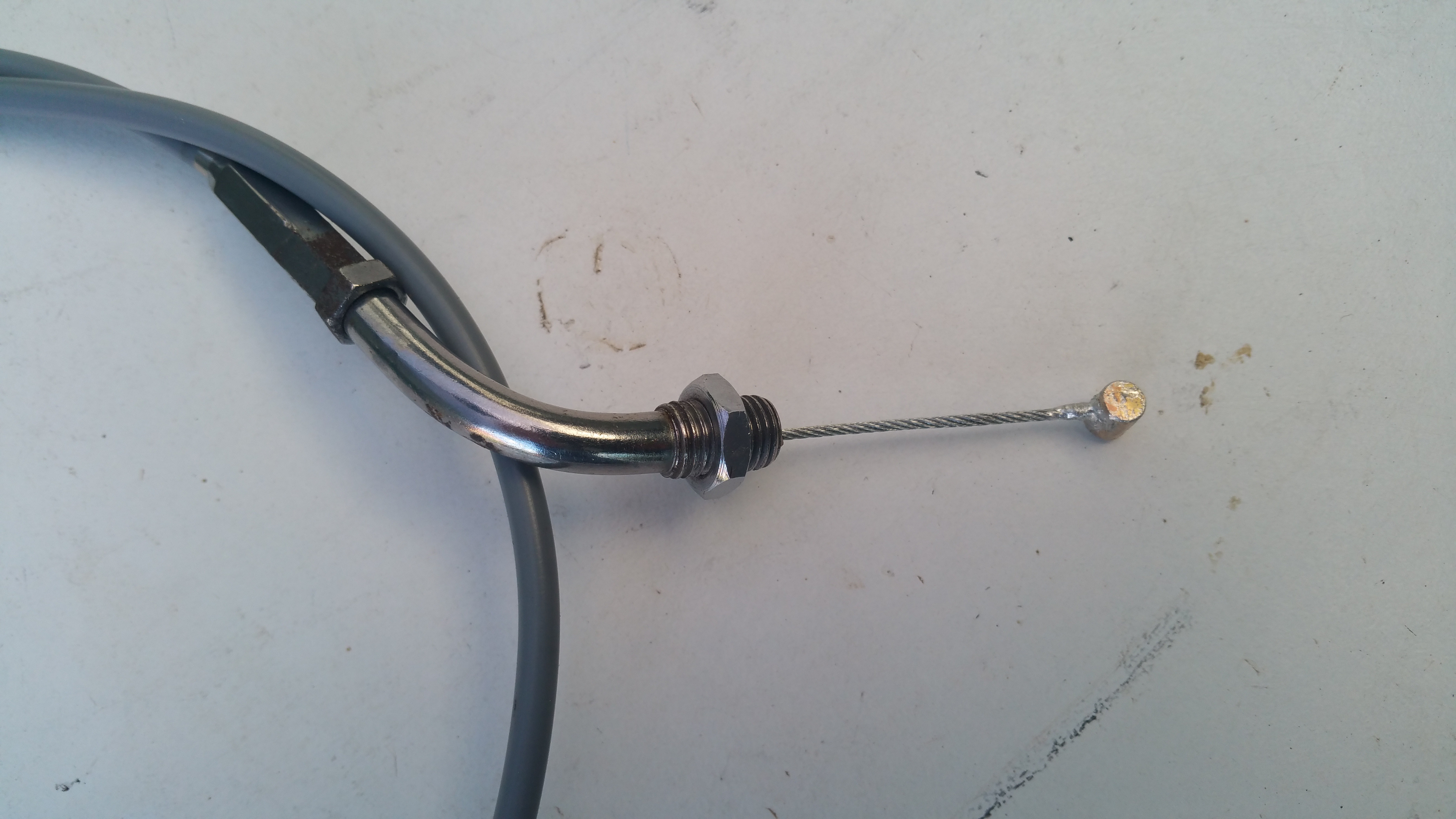
I did find a improvised ( ghetto ) method of bird caging the wire end. Hold the cut wire in the bench vise, drop the nipple on so that the wire just protrudes, then bash the protruding wire with a hammer to splay the end, then bodge it with suitable blunt instrument into the recess in the nipple. Probably not good enough for brake or clutch, but OK for throttle. Venhill cable is galvanised steel, they say 'normal' flux should be fine.

And then the failures. Dipped assembly in plumbing flux, heated with propane torch, applied plumbing solder. That didn't work, probably got cable too hot and oxidised it. That flux, solder and torch worked fine when I used them on copper plumbing fittings the other year.

Cleaned up, tried again with electrical multicore. That did at least tin the cable, and I reckon if I'd got a powerful enough soldering iron *, it would have flowed solder into the nipple. As it was, the torch just got everything sooty. Nipple stuck to cable, but failed to fill the birds nest with solder.

All above done as practice pieces, using spare nipples and off cuts of wire rope, haven't risked the actual throttle cable assembly yet. Gave up at this point, and ordered a cheap electric solder pot and some Bakers No3 flux, zinc chloride recipe. Expect I'll now get electrocuted by the dodgy Chinese electrics .. :sick:

* 100w, rather than my little 15w Antex iron.
 
Got any pics of these parts (cable end) and process? I did a clutch cable lever end (barrel, I think they call it), actually twice, but the second time it's held now for a good while. I think I used a micro butane torch like the crack smokers use.
Throttle cable ends are pretty small so I'll follow with great interest and encouragement.
 
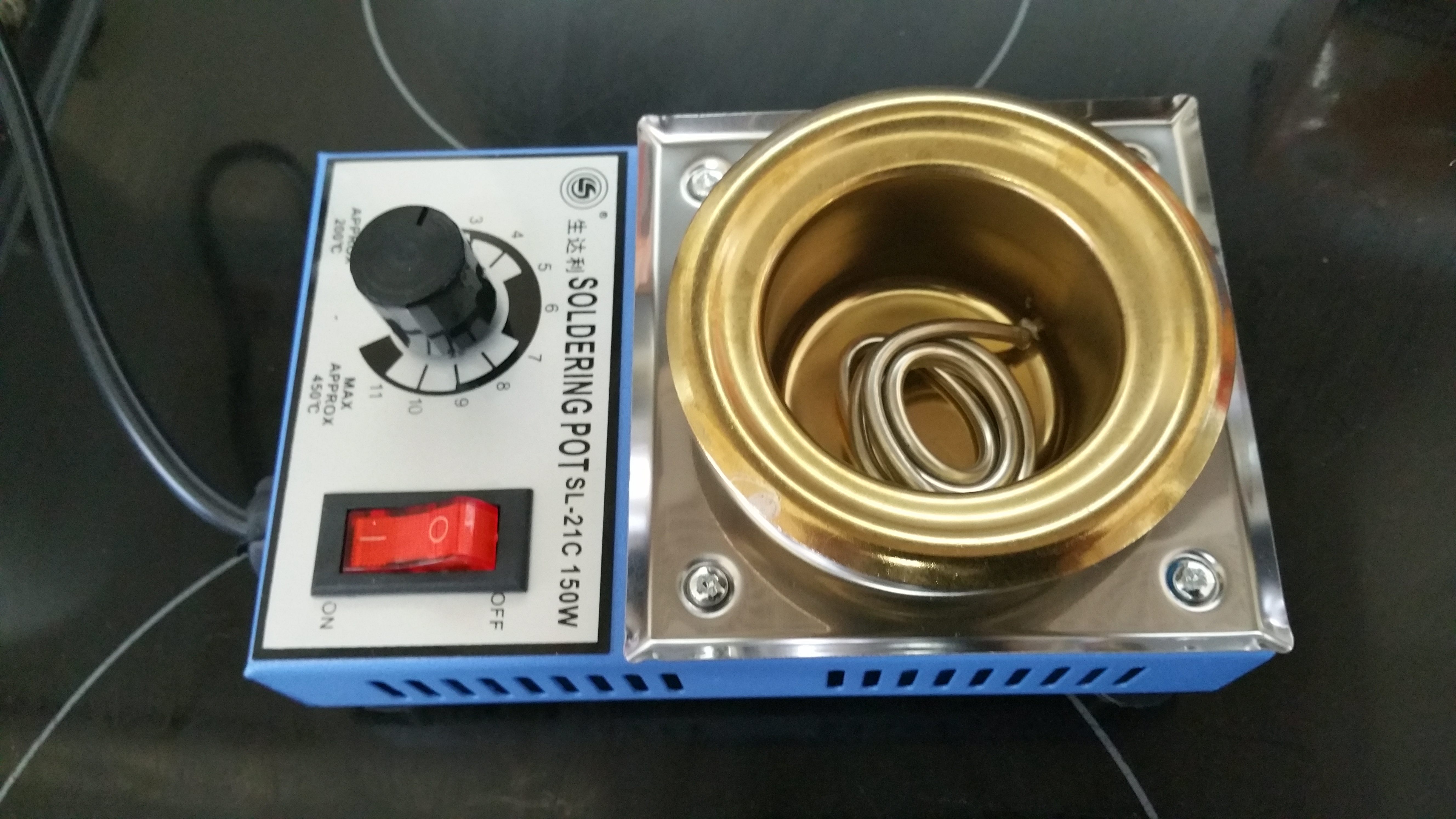
Cheap solder pot arrived midday today. It is as shoddy as expected, razor sharp metal edges on that silver square of metal, and a weird miniature 3 pin plug, which I cut off and replaced with a UK fused 3 pin plug. Ironically, I had to solder the stripped wire tails in order to make them a good fit in the terminals of my plug. After this, I got my meter out and checked that there was continuity between earth ( ground ) in the plug and exposed metal of solder pot, also continuity between the live and neutral terminals, with no short circuits.

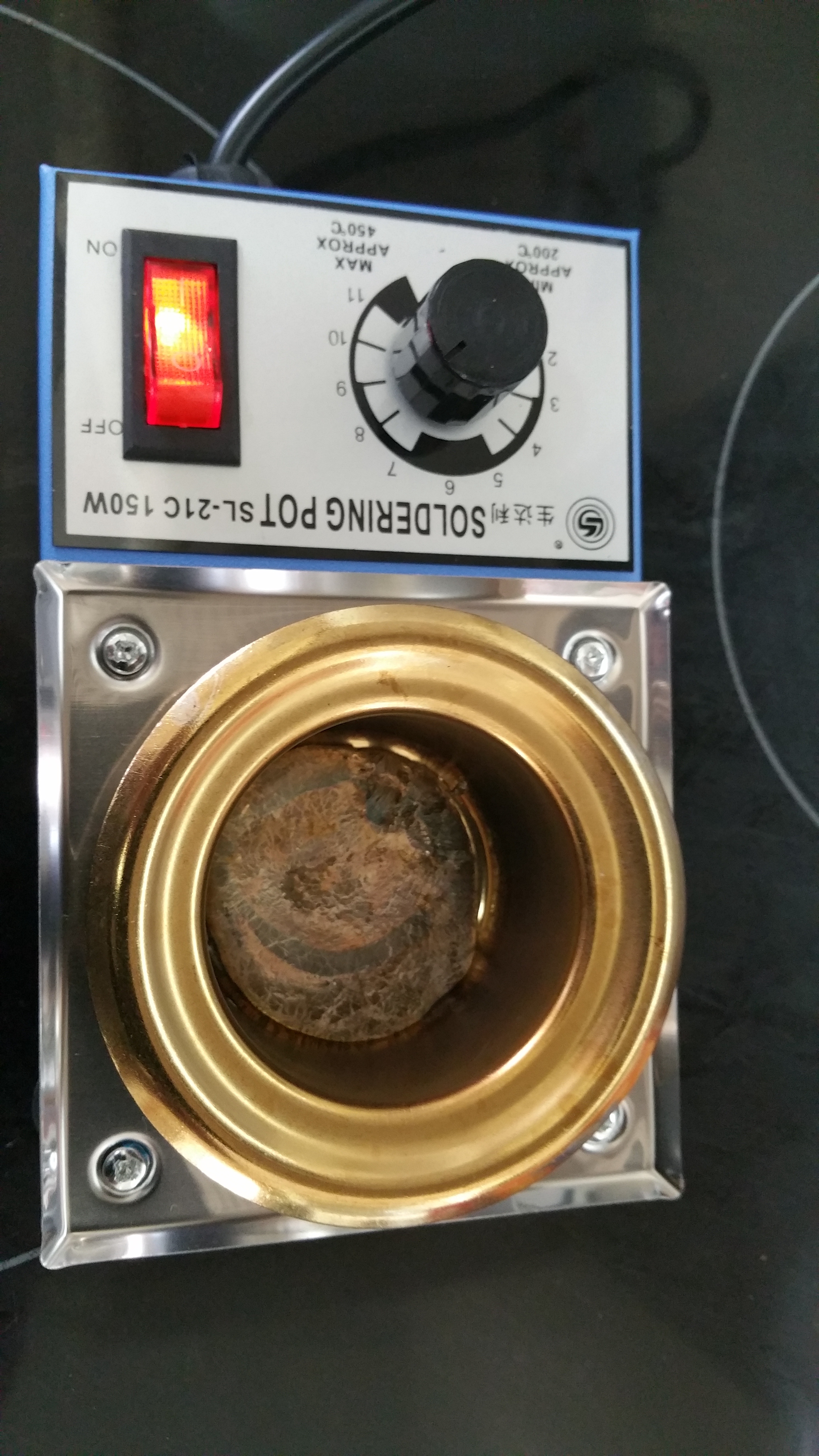
I put some of my plumbing solder into the pot and switched on, And waited. My solder has an MP of 230c. Took 10 - 15 minutes for it to heat up enough to melt the solder.

m4iQJ6r.jpg


Molten lead free plumbing solder

B36cKo9.jpg
 
I experimented with a spare nipple and off cut of cable as before. Dipped in flux, then dipped in solder. Brief flame and sizzle as flux evaporated, then removed from pot and cooled under tap. Soldered nicely, but I'd overdone the flux and solder had wicked up the cable, making it stiff just after the nipple. I then plucked up courage and soldered my actual cable, only using flux right at the end of the wire, around my improvised bird cage. Soldered successfully, just needed a bit of a clean up with a needle file.

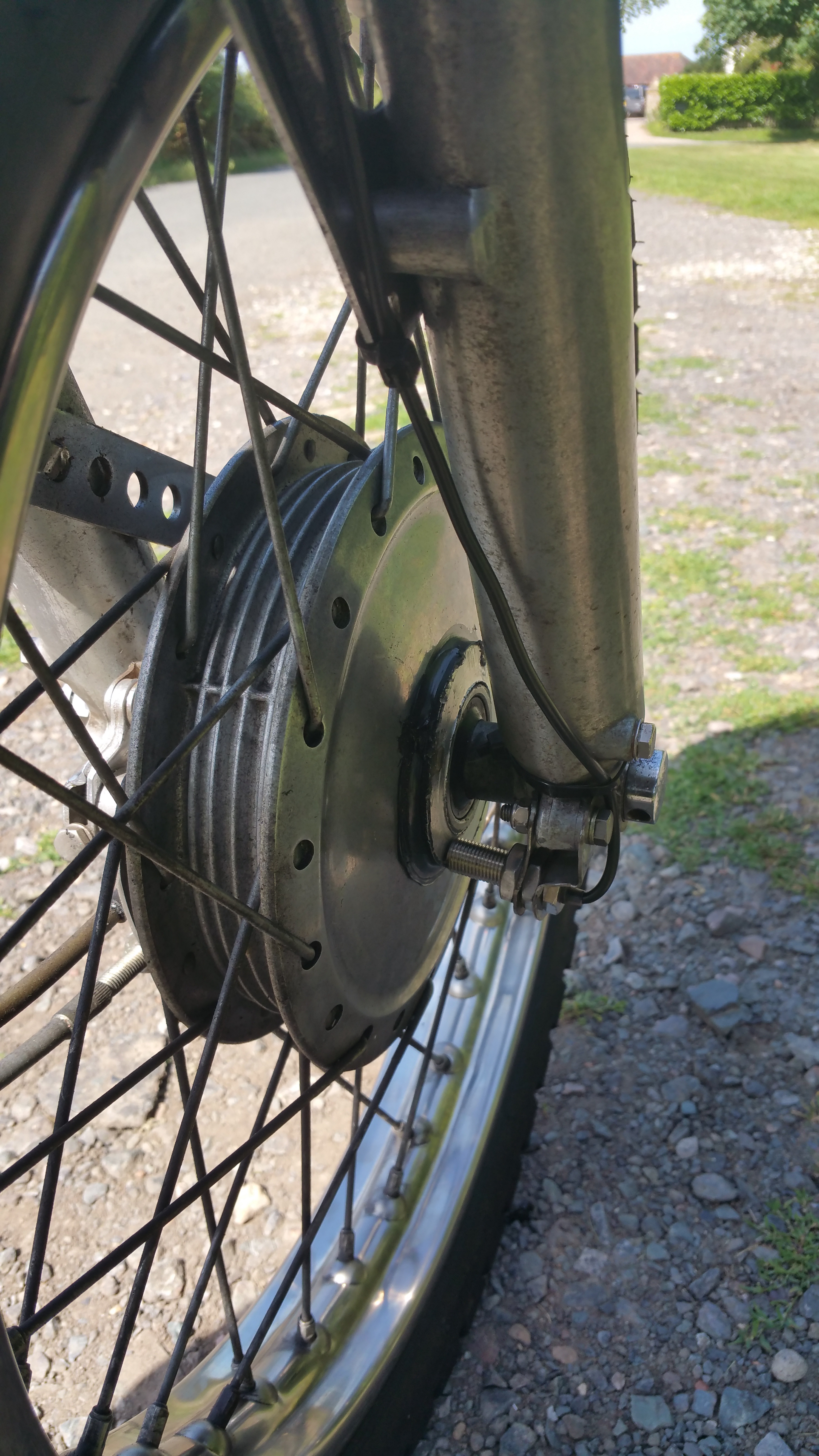
My plumbers flux worked out OK, but I expect the proper Bakers stuff will work better. Feeling more confident about tackling a clutch or brake cable when required, front brake cable on SL175 could do with a shorter inner, right on the limit of adjustment now, brake shoes not worn down.

vsbIt0o.jpg


998rZ0C.jpg
 
Well there's no returning it now! Hopefully you'll get enough use out of it before it dies to justify the cost.
Well yes, it's not the sort of thing you'd leave switched on 24/7 in a workshop, those cost several hundred quid. I guess this'll get used half a dozen time in its life, and for under 25 quid ( yes, even cheaper on Ebay, but I couldn't wait, went with Amazon :mad: ), it'll pay for itself. I did see a couple of nice second user Antec solder pots on Ebay for 75 quid, they'd make more sense for someone doing a lot of cables.
 
Well yes, it's not the sort of thing you'd leave switched on 24/7 in a workshop, those cost several hundred quid. I guess this'll get used half a dozen time in its life, and for under 25 quid ( yes, even cheaper on Ebay, but I couldn't wait, went with Amazon :mad: ), it'll pay for itself. I did see a couple of nice second user Antec solder pots on Ebay for 75 quid, they'd make more sense for someone doing a lot of cables.
Yes, at that price and with limited use, you did well.
 
My CL175 lives in my garage, 100 yds or so from my house and workshop ( small shed actually ). I keep two sets of the main tools in both locations, but there are obviously some things that I either only have one of, or need two of, like a pair of 14mm sockets for undoing the engine bolts. So I've spent the afternoon to-ing and fro-ing between the two locations. Getting my drill to make a new mounting hole for the reg rec, measuring a spacer then back to the shed to cut it down to size etc etc.

New throttle cable fits and works well, after I'd filed the nipple down to reduce its width, wouldn't quite pass through the hole in the switchgear. Another trip back up to the shed for a session with the power file.

Anyway, nearly there, existing engine now held in by one large bolt. Wiring sorted, CD air and battery boxes neatly mounted. Engine brackets look really manky, so they'll have to be cleaned up and painted before swapping the engines over.
 
Well yes, it's not the sort of thing you'd leave switched on 24/7 in a workshop, those cost several hundred quid. I guess this'll get used half a dozen time in its life, and for under 25 quid ( yes, even cheaper on Ebay, but I couldn't wait, went with Amazon :mad: ), it'll pay for itself. I did see a couple of nice second user Antec solder pots on Ebay for 75 quid, they'd make more sense for someone doing a lot of cables.
I've been well pleased with the "solder pot" that came out of my scrap bin, essentially for free. I've been using it for a number of years now, and it hasn't failed me yet. ;)

My most recent cable repair was to put a barrel fitting back onto the handlebar end of a throttle cable on a 2005 Royal Enfield. My friend who owns the bike was maybe 25 miles from home when the original end broke off and the engine slowed down to idle speed. He rode all the way home by holding the end of the wire between his thumb and forefinger to throttle the carburetor, this while shifting through the gears and everything, stopping at stop signs, etc. BTW, he is 84 years old! He never killed the engine even once!
 
He rode all the way home by holding the end of the wire between his thumb and forefinger to throttle the carburetor, this while shifting through the gears and everything, stopping at stop signs, etc. BTW, he is 84 years old! He never killed the engine even once!
That's age and experience right there. (y)
 
I've been well pleased with the "solder pot" that came out of my scrap bin, essentially for free. I've been using it for a number of years now, and it hasn't failed me yet. ;)
I have to admit, it did occur to me that if I could find a suitable crucible I could have used it to melt solder using my propane / butane torch. Thinking back to school days, balancing things on a tripod over a bunsen burner.
 
You are doing some nice work here, Richard. However, I recommend that you carry one or two extra silicon vacuum caps until you are confident of their resistance to ethanol. Should one fail, and you notice it in time, you could just switch off the petcock and install a new cap to carry you home.

Of course, a perfect storm would involve a leaking vacuum cap and a simultaneous fireball from a short in that unfused, positive battery cable under the crankcase. The only thing worse than that would be if it ignited the main battery on a passing Tesla! Of course that won't happen, but if it did, the BBC would have their lead story for the day.

(Now back to your regularly scheduled build story.)
 
More differences between CD and CB models discovered today. The CD has a massive right hand side cover. Top two mounts same as CB, but lower one sits further down and forward. I knew about this, and that I'd need to remove the CB tool box to make room for this bigger cover. So today, engine removed *, then I had access to the tool box securing bolts. I then discovered that I had to remove the recently fitted CD battery box before the CB toolbox would come out. Did all that, then offered up the CD side cover, fits nicely but the bottom mounting peg is hanging in space.

* Engine halfway out before I remembered that I'd needed to remove the foot bar before the engine would lift out.

Obvious answer is to fit a CD tool box, as that has the mount in the correct place. However, these are unavailable, except for one which looks as though it was dredged from a peat bog. Also, this leaves the bottom mount for the left hand side panel in the wrong place for the CB175K6 side panel that I intend to fit on the other side.

So it looks as though some CAD ( cardboard aided design ) is called for, to make up a hybrid bracket. I'll forget about having a tool box down there, particularly as though I've found a nice space under the seat on top of the CD air cleaner, just right for a little tool tray.

CD tool tray / side panel mount

toolbox2.jpg
CB tool box

toolbox3.jpg
 
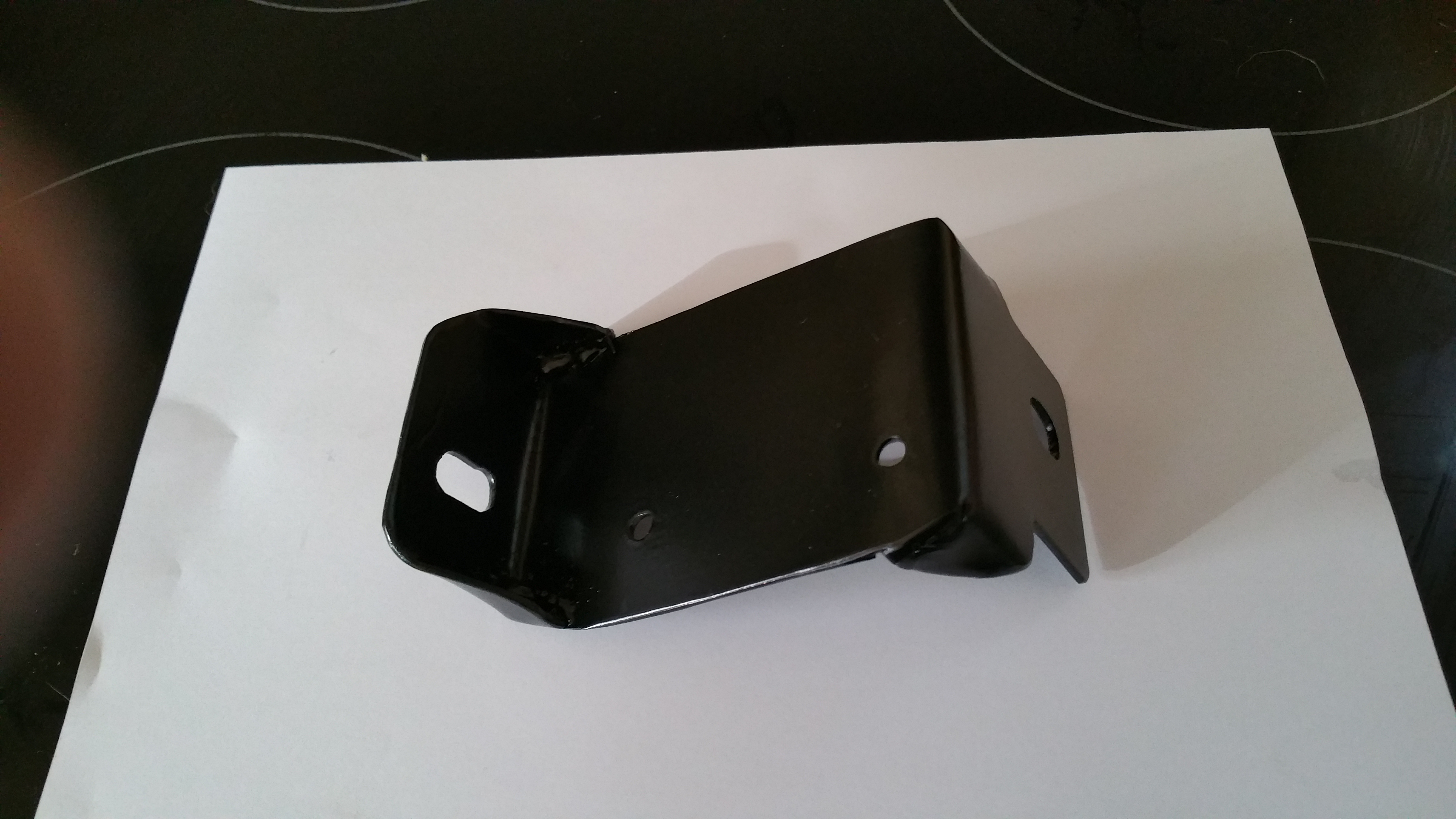
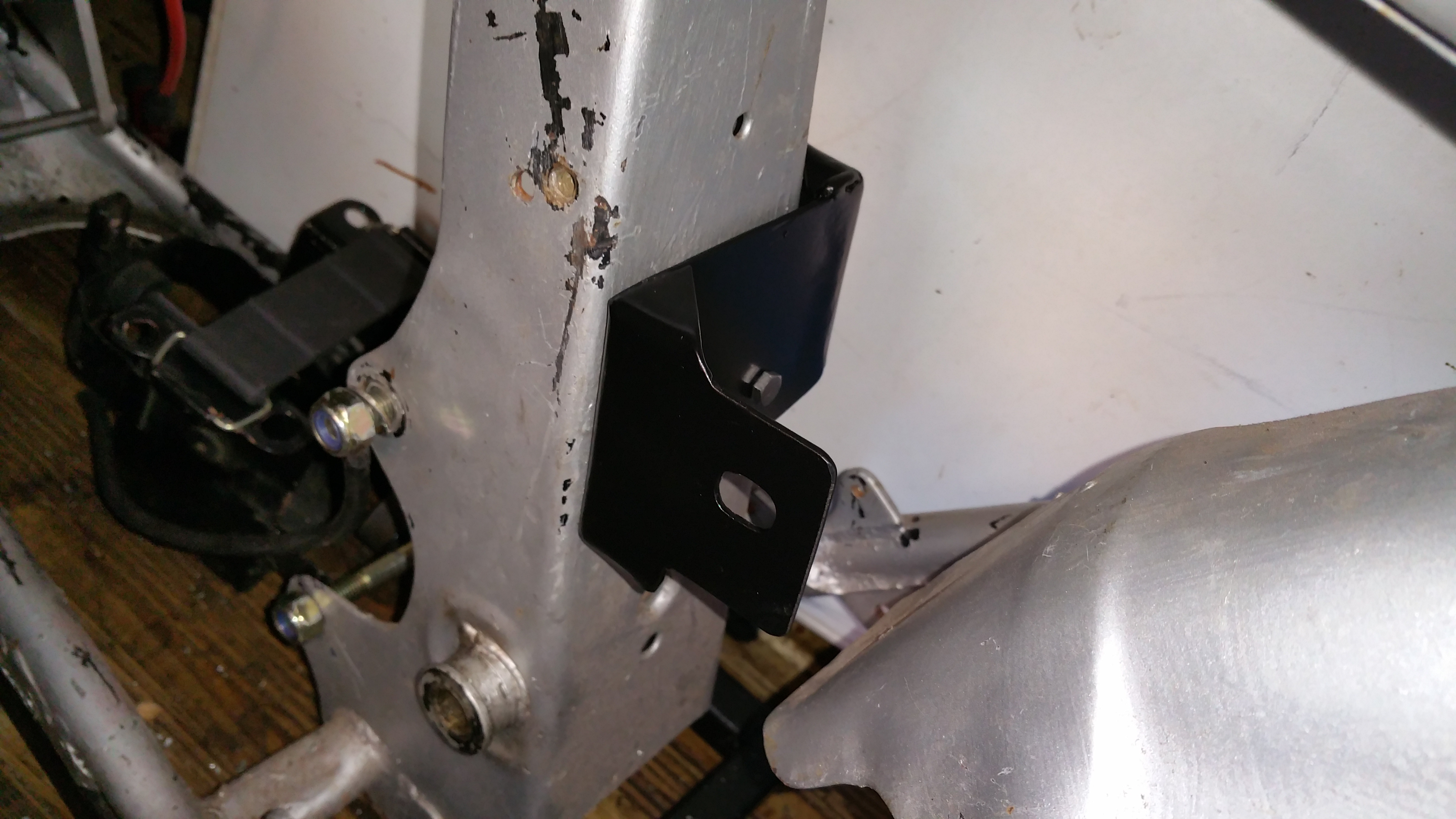
Enjoyable session in the shed yesterday afternoon produced this bracket. It helped that I had this spare frame to use as a template, then it was a matter of card board and scissors, followed by angle grinder with cutting disk, hammer, vice, pillar drill, welder, power file etc. I haven't welded for a while, last time I used it was on my Hornet side stand, where welder was turned up to max power. Probably not the right setting for 1.5mm mild steel - well, that's my excuse. :rolleyes:

Anyway, it fits nicely, all pegs on both side panels line up, just need to find some grommets, think I have some somewhere.

c3MaxhL.jpg


iiIrGRA.jpg
 
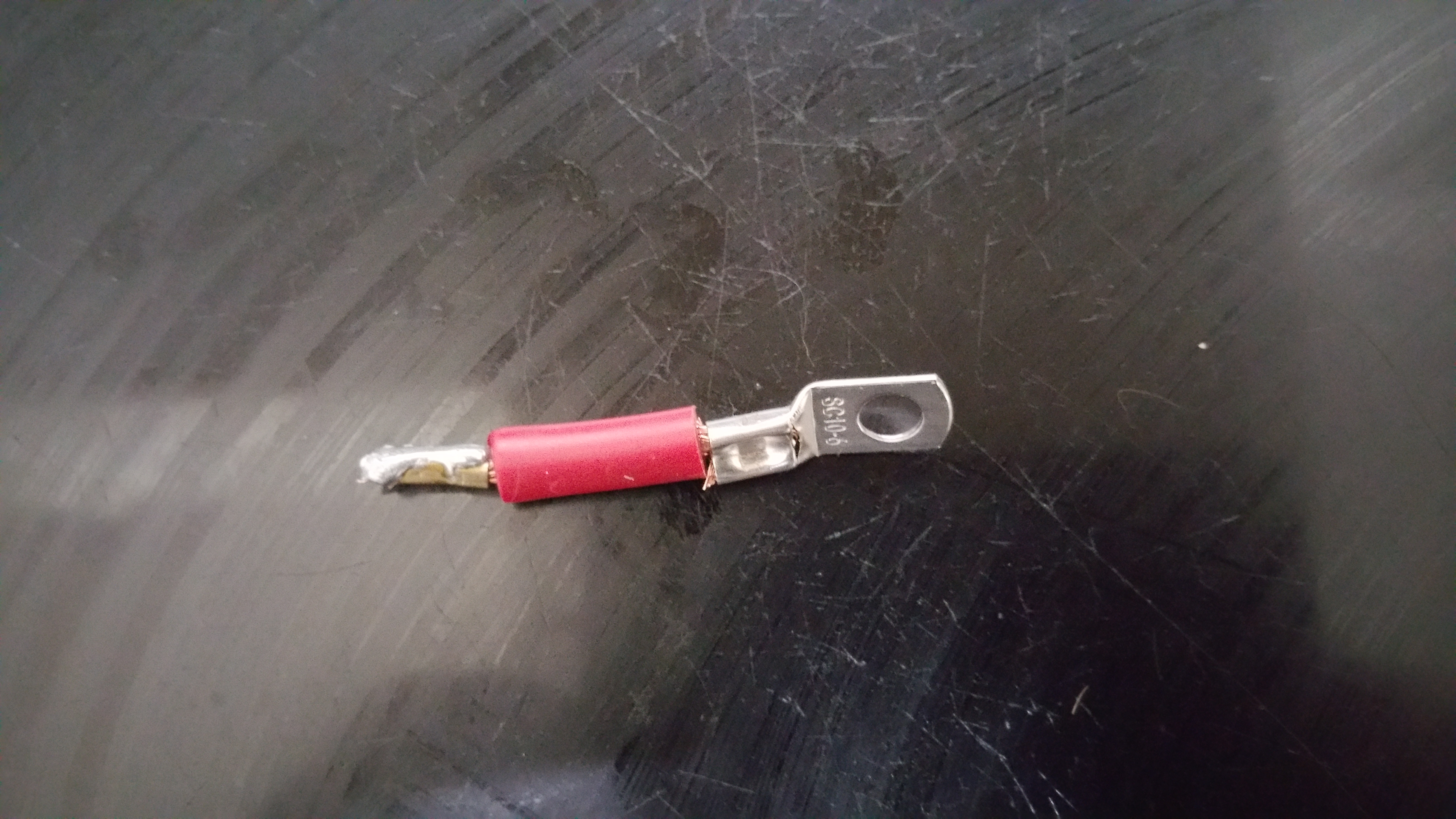
Engines swapped this afternoon, bracket fitted whilst engine bay empty. Clears the battery box and rear brake light switch OK, two things that it later occurred to me that I'd not checked for. With my remote ( 100 yds away ) garage, engine swap involves using my builders wheel barrow to transport the engines back and forth. After some levering and sweating the CD engine dropped into place, engine bolts slotted in etc. Remembered to thread the starter cable through the frame correctly, then the terminal at the solenoid end came off in my hand :mad: so I'm here on the computer sourcing some proper crimp on terminals, delivery tomorrow via Prime. Off to the shed again now, to cut some stainless bolts down to the correct length ( 45mm down to 40mm for the top engine mounts, replacing some rusty original bolts.).
 
I didn't picture your remote garage being quite that far away. Good idea using a wheelbarrow to move the engines back and forth.
 
More mysteries today. Why doesn't the gear change shaft stick out far enough for the lever splines to fully engage ? The circlip and washer are correctly located on the shaft, it just appears that the shaft is not long enough. I've looked back through photos of the engine build and it was OK back then (2022). Problem is my memory, I have vague recollections of swapping parts with another 175 engine after that, although gear selector shafts on the other engines all look ok. Weird. Bodgers solution would be to take 5mm off the case boss, so that shift lever will slide fully home. More investigation required. Shift lever is secured in place and will work, but I'm not happy. Assumed all vertical 175 gear selector shafts were identical.

Next issue. My new throttle cable came ready fitted with nipple and ferule at the carb end, all I have to do was finish the throttle end. What I didn't do was check that the pre fitted ferule would engage properly with the carb top. It didn't, too fat, possibly M7 rather than M6. Ended up filing the ferule off, took ages to do this without damaging the inner cable, cable now fits and works OK.

So that was most of this afternoons session wasted on those puzzles. On the plus side, engine bolted up in frame, foot bar back on, carb and air box fitted ( more swearing at airbox due to inflexible silicon air hose, expect OEM item (NLA) would be more flexible.) Just need to fit exhausts, chain and gearbox sprocket, sort out the wiring and we're done. Ever the optimist ...

Crimp on terminals arrived today, and a quick practice on some spare cable turned out very well, a hither to unused part of my budget crimping tool produced a very strong crimp, cable end doubled over inside crimp, very secure. Just needs a bit of heat shrink.

S6hyyuC.jpg
 
Well, I think I may have partially solved the mystery of the 'too short' gear selector shaft. I refitted the gear box sprocket and chain this afternoon, then tried to select a gear so that I could tighten the sprocket nuts. Gears refuse to select, box stuck in neutral, and yes, I was rotating the back wheel whilst waggling the gear lever.

I have a spare gear selector shaft from the CD175 engine, I swapped it for another one because the splines were damaged. Using this to measure against the 'short' one, circlip grove to to splined end, the one on the bike is anything up to 1cm too short.

When I bought the SL175 motor, it was missing the clutch, oil pump, primary gears and oil spinner, as well the right side case. Gear shaft was also missing. I sourced all the parts I needed, and put it all back together, correctly I assumed. :mad: The replacement gear shaft allegedly came from 'an upright 175 engine', and appeared to fit correctly. I now suspect that this is the wrong part, 'teeth', for want of a better word, not engaging correctly with gear selector drum.

So, oil is now draining, ready for me to return and whip off the cover and clutch etc, to see what is going on. I also notice that the gear selector shaft is missing from my CB200 parts engine, no recollection of what I did with that. Maybe check parts numbers, see if it is same or different, in case I'd fitted that in error.

Moral of story - always check that gear box selects OK, before buttoning everything up, rather than just assuming, as I did, that it all looked OK, so must be right.
 
We do sometimes take for granted the simple things we've done so many times before... good lesson learned though, I wouldn't have expected there to be any significant difference in shift shafts either.
 
Just checked the parts numbers and the upright CD and CB 175's, as well the CB200, all use the same shift shaft, so it'll be interesting to see exactly what I fitted to that engine.

I have this spare shift shaft, that I know is definitely a 175 part, just wonder if I can make it usable. Coupled with a decent shift lever with nice sharp splines, might get away with it.

Dredged from the sea bed ?

pfEhKP7.jpg
 
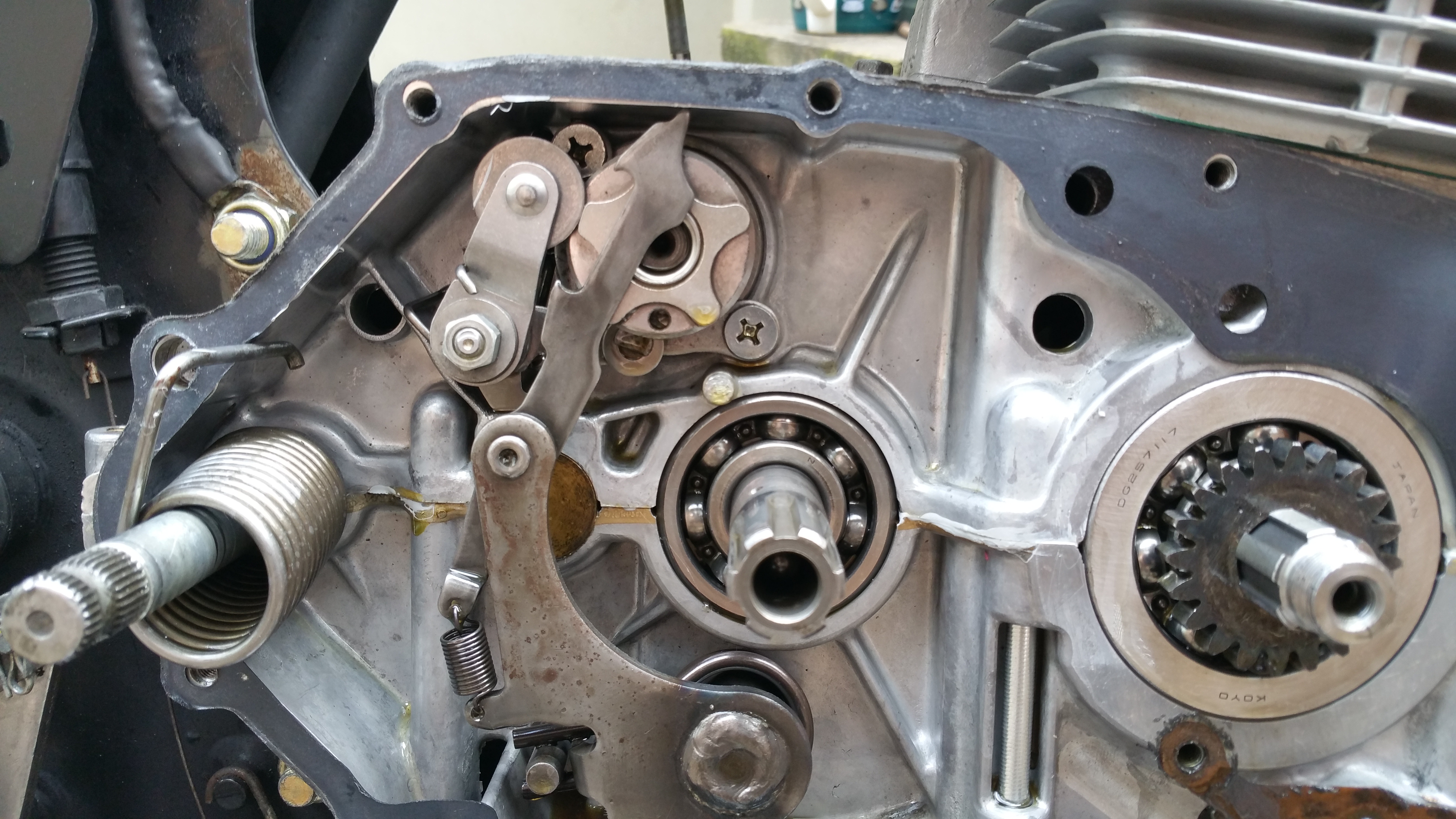
A picture is worth a thousand words.

gaoCR1D.jpg


bEBE23X.jpg


I have absolutely no idea of how it got like that, sure I would not have fitted the clutch with the selector not engaged like that. The gearbox side circlip and washer were correctly located, there must be quite a bit of side play even with those in place. Needless to say, my gears now select as expected and gear shift pedal now fully engages with shaft which has now moved outward into expected position.

I had to drag the bike up to the house so that I could use my mains powered impact tool on the crankshaft nut. My nut removal tool is 1/2" drive, while my cordless wrench only has adaptors for 3/8" and 1/4" drive sockets. Must look out for a 1/2" adaptor, would have saved a lot of grief ( and ear bending ) when negotiating my wife's flowers when squeezing up the garden path.

Not entirely wasted exercise though. The engine was internally as clean as I could get it when I first rebuilt it. Since then, it has only been run for a few minutes on the bench, but there was already a load of black sediment in the bottom of the cases. Muck off the clutch plates perhaps. Anyway, it needed an oil change. Oil spinner was quite clean inside.
 
Hooked up the fuel hoses, fitted the battery, then put some fuel in the tank. Already filled up with oil yesterday.

Quick check that all the electrics worked, then one press on the starter and it fired instantly and ran smoothly. As Allen Millyard often says in his videos, " I was really pleased with that !". Got the meter out and checked that it was charging correctly, 14.5v when revved.

Hopefully get a test ride in tomorrow. I've ridden it in circles in 1st gear out in the yard in front of the garage, and that all ( clutch and gear selection ) works OK. No smoke, nasty noises or leaks yet.

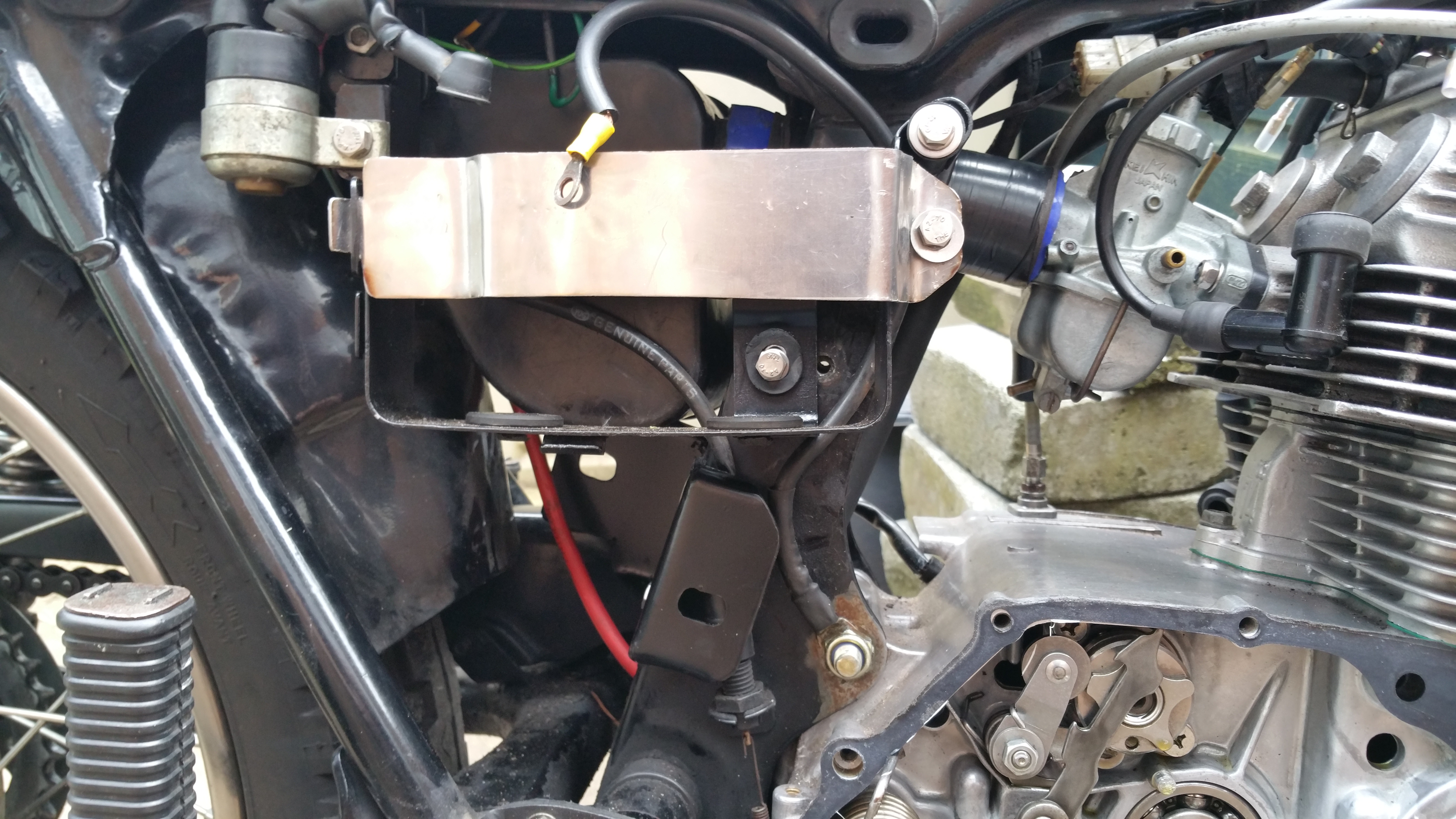
On the downside, the bracket that I made does not line up with the bottom pegs on the side covers. It was fine fitted to the K4 frame but not when fitted to this K7 frame. The K4 frame has, for some reason, two sets of mounting holes for the tool box, while the K7 frame just has the one set. The discrepancy in alignment appears to coincide with difference in height between the two sets of holes on the K4 frame. Put simply, I made my bracket fit the wrong set of holes on the K4 frame.

So, off with the bracket, not so easy with engine in frame. New holes for the side panel pegs cut, bracket repainted, waiting for it to dry before refitting. Using shorter bolts this time, nyloc nuts need to be ratcheted off the whole length of the thread, took ages because I'd been lazy and used over long screws.
 
I was only going to take it around the block, but ended up doing 36 miles around the lanes. I did have to come straight back in, after literal first turn around the block, to adjust the clutch, which was slipping badly, cable too tight, and also to turn the idle speed down. After that, I set off around the local lanes, not intending to push the bike or my luck too far, in case I did have to push the bike back home. But as the miles clicked by, my confidence grew. I stopped at one point for a quick walk round, nothing had dropped off, no leaks etc, all seemed good.

Engine bottom end was rebuilt some while back, just new seals and gaskets, top end more recently got new standard size IMD pistons and rings, in honed bores, along with new cam chain and Cappellini idler wheel, left over from an earlier aborted CB200 build. CD 175 head with new exhaust valves. So, I'm riding it gently, without lugging it, taking it up to 45mph in fifth. More tappet noise than I expected, also a slight whining noise, which I guess might be that steel idler wheel on the CCT mechanism. With respect to the new rings, I'm running it on Castrol Power One mineral 20/50w bike oil, in homage to the Castrol GTX 20/50w car oil I used back in the day.

I'll check the valve clearances etc before next run, but all seems good so far. Starts instantly, kick or electric, idles reliably, responds very smoothly to the throttle without any of the flat spots experienced on my Chinese twin carb setups. I need to take up a bit of slack in the throttle cable, also reposition the shift lever a bit higher so that I can get my boot under it for up changes.

Here it is, some 30 miles into todays test ride.

YjD76Mk.jpg
 
For comparison, this is the rare CD175T4 model, which also has estart and CB styling, but I think only has 4 speed box and SLS front brake on 17" rims.

CeSB1PF.jpg
 
What a way to spend an afternoon. Took the CL175 out for a spin today, brimmed the tank with E5 fuel and sent off down the lanes. Cruising at 40mph, with bursts up to 50mph now. 10 miles away from home it died on me. Obvious ignition fault rather than fuel or mechanical, stopped firing as if the switch was turned off, engine continued to rotate until we stopped. Turned around and free wheeled back to a convenient spot, a picnic area next to the river Avon, at Eckington.

Of course, as my bikes are so reliable I never carry any tools with me. :mad: My first thought was that the electronic point saving gizmo I'd fitted had failed, so I managed to lift the tank enough to get at it and disconnect it. Reconnected the condenser to the points and the coil. Wouldn't restart. Checked for a spark by pulling a plug cap and sticking my garage door key down it, shorting to the block. Still no spark. Gave up and rang recovery service, made it clear that bike needed to be recovered, not a road side fix. ( Not unless RAC carry 50 year old Honda parts in their vans.)

Luckily in a good 4G spot with a full charge on my phone. Various voice calls, SMS messages and visits to 'My RAC' website informed me that they'd be with me between 7:30pm and 10:30pm, this at 3:30pm in the afternoon. In the end, an RAC van with a very nice man turned up at around 5:30pm. We checked for a spark again, using a spare plug this time, no spark, so I suggested having a look at the points. We soon saw that the points weren't opening. As I'd adjusted the points gap and timing yesterday, it seemed obvious that points plate had slipped. Until we saw that points cam wasn't rotating when the engine was turned. Obviously, that 8mm retaining screw had come undone. And then the real reason for lack of sparks became apparent. 8mm advance mech retaining screw was fully tight, but ignition cam was rattling about loose.

So, it looks as though the end of the camshaft has snapped off. Top end of engine doesn't appear to have seized, engine still turns with apparent good compression. All I can think is that it is some sort of stress fracture, caused by previous rough treatment. This CD 175 cam from that engine that the chimps had worked on, so maybe that is the answer.

Luckily I have another good CD175 cam, also a reasonable CB175 cam. I might fit the CB cam and reinstate the mechanical tacho, put the Koso clone project on hold until this is sorted.

I eventually got home at 7:30pm, bike strapped to the car recovery truck that the RAC man called out.
 
Back
Top Bottom