
I've always wondered this, why Honda designed the CB/CL175 and 200 as twins and not singles. I was interested in getting a CB125 for a long time, cause I honestly prefer singles, but those things aren't really meant for cruising above 50/55mph. The 175/200s kind of bumps you up into that tier of being able to cruise and keep up with traffic on 55-65mph roads, making them far more practical and versatile bikes. But, I have to wonder if these bikes wouldve been even more practical just as singles, considering all that extra weight, not to mention the extra maintenance involved with a twin vs single. The CB125 weighs under 200 lbs, the CB175/200 weighs almost 300 lbs. 100 lbs more for 50cc larger displacement? How much more would a single cylinder CB175 weigh than the 125, 20-30 more pounds? I get that twins might be smoother than singles, but I'm not sure that even applies here since these engines are 360 deg crankshafts. I've been really digging my CL175 don't get me wrong, but I'm just wondering if there was some legitimate reason on a technical level that Honda made that decision to make these twins, and not offer a CB single in that 175/200 class (I know they had single enduros in that class).

-
Don't overlook our Welcome Package, it contains many links to important and helpful information about functions at VHT like posting pictures and sending PMs (private messages), as well as finding the parts you need.
AD
You are using an out of date browser. It may not display this or other websites correctly.
You should upgrade or use an alternative browser.
You should upgrade or use an alternative browser.
Is there a reason Honda made 175/200 twins and not singles
- Thread starter tmross
- Start date

As with many of these questions long after the fact, Honda didn't say much over the years as to why they did many of the things they did. As you mentioned, the later XL dual sport models included the XL175 and later the XL185 single cylinder models, to go along with the XL250 and 350, but they never sent a single cylinder street bike larger than 125 to the US AFAIK (none are shown in the US Honda ID Guide).

fxray
Veteran Member
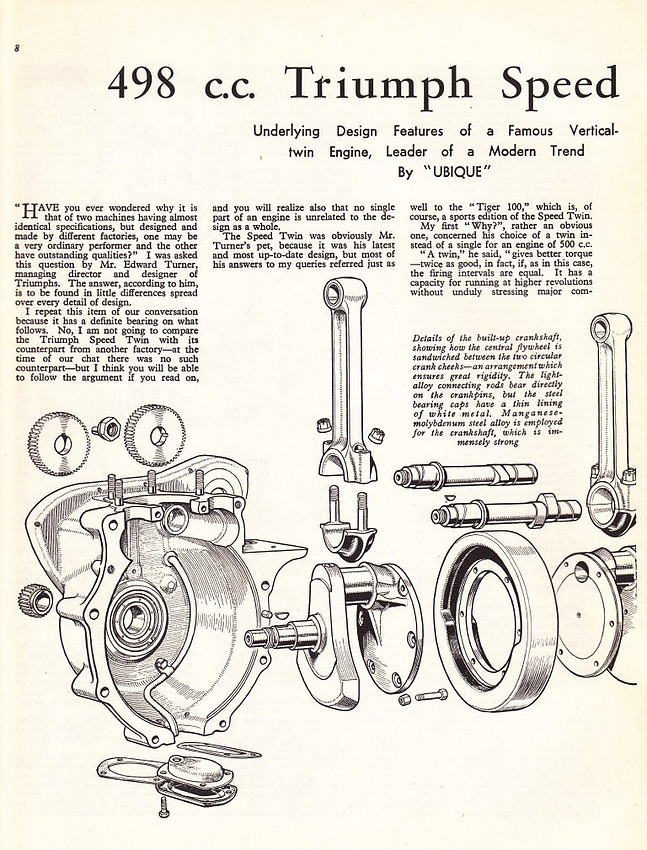
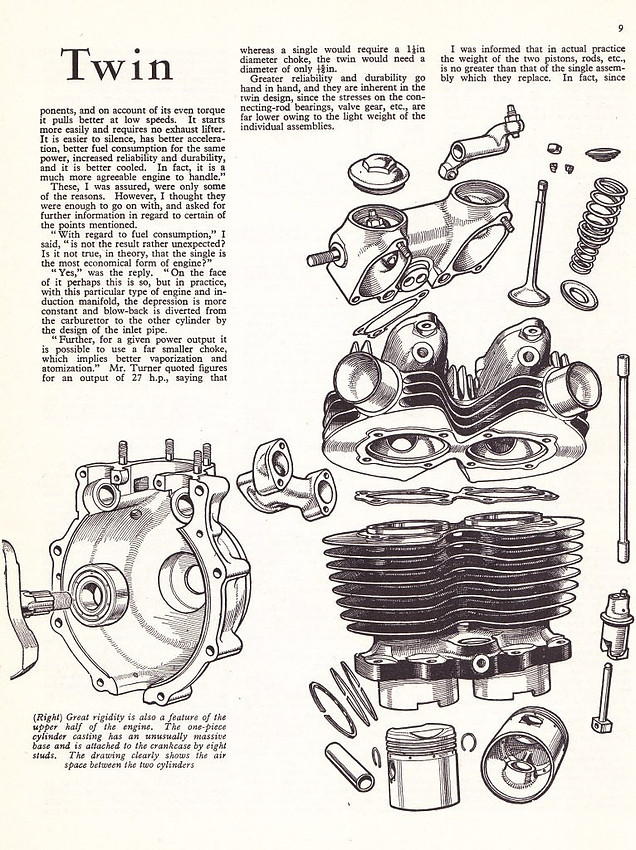
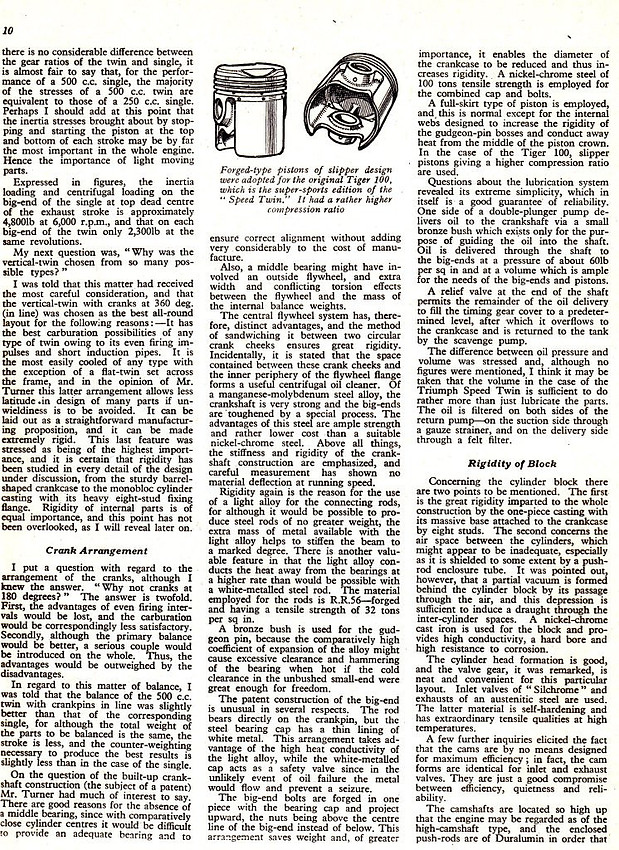
I have a book, British Motorcycle Engines, from 1951, published by Floyd Clymer, which is a compilation of interviews that had been published in the magazine, The Motor Cycle. Included is an interview of the great Edward Turner, of Triumph Motorcycle fame. He was asked why he designed his famous Triumph Speed Twin as a parallel twin instead of a single. It is a 360° offset, like your 125. I believe that his answer would cover your questions about your Honda as well. When he uses the word "choke", he is not using it in the sense of a resistive flapper plate, but in reference the diameter of the main passage through the carburetor, where the venturi is located.I've always wondered this, why Honda designed the CB/CL175 and 200 as twins and not singles. I was interested in getting a CB125 for a long time, cause I honestly prefer singles, but those things aren't really meant for cruising above 50/55mph. The 175/200s kind of bumps you up into that tier of being able to cruise and keep up with traffic on 55-65mph roads, making them far more practical and versatile bikes. But, I have to wonder if these bikes wouldve been even more practical just as singles, considering all that extra weight, not to mention the extra maintenance involved with a twin vs single. The CB125 weighs under 200 lbs, the CB175/200 weighs almost 300 lbs. 100 lbs more for 50cc larger displacement? How much more would a single cylinder CB175 weigh than the 125, 20-30 more pounds? I get that twins might be smoother than singles, but I'm not sure that even applies here since these engines are 360 deg crankshafts. I've been really digging my CL175 don't get me wrong, but I'm just wondering if there was some legitimate reason on a technical level that Honda made that decision to make these twins, and not offer a CB single in that 175/200 class (I know they had single enduros in that class).
His comments start near the top of the RH column on page 1:

Last edited:
There was the 1982-83 FT500 Ascot, which used the same engine as the XL500, a 500cc thumper. This actually just makes the whole situation weirder to me, you either get the little 125 or the 500 thumper, but nothing in between. If they had slapped the smaller XL engines (175/185/250) on a street bike like they did with the Ascot that would be the bike for me!As with many of these questions long after the fact, Honda didn't say much over the years as to why they did many of the things they did. As you mentioned, the later XL dual sport models included the XL175 and later the XL185 single cylinder models, to go along with the XL250 and 350, but they never sent a single cylinder street bike larger than 125 to the US AFAIK (none are shown in the US Honda ID Guide).
And @fxray thats a fascinating read and very cool to know those things about the 360 deg twin. He's saying the weight of his twin would be about the same as a comparable single, if thats true I wonder where the CB/CL175 is hiding that extra 100 lbs over the 125...
Yeah, I knew there was something larger but I forgot about the single cylinder version of the Ascot. My father had the v-twin version with shaft drive in his last couple years and I got to ride it, hadn't ever previously. It was a cool little bike and didn't vibe as much as you might expect from a v-twin. No experience with the single cylinder model at all. If only Honda had sent the GB500 here, but again it's larger.There was the 1982-83 FT500 Ascot, which used the same engine as the XL500, a 500cc thumper. This actually just makes the whole situation weirder to me, you either get the little 125 or the 500 thumper, but nothing in between. If they had slapped the smaller XL engines (175/185/250) on a street bike like they did with the Ascot that would be the bike for me!

mike in idaho
Veteran Member
I think, most likely, Honda researched the market to see what would make the best use of their production capacity, sales-wise, in the various markets around the world.I've always wondered this, why Honda designed the CB/CL175 and 200 as twins and not singles. I was interested in getting a CB125 for a long time, cause I honestly prefer singles, but those things aren't really meant for cruising above 50/55mph. The 175/200s kind of bumps you up into that tier of being able to cruise and keep up with traffic on 55-65mph roads, making them far more practical and versatile bikes. But, I have to wonder if these bikes wouldve been even more practical just as singles, considering all that extra weight, not to mention the extra maintenance involved with a twin vs single. The CB125 weighs under 200 lbs, the CB175/200 weighs almost 300 lbs. 100 lbs more for 50cc larger displacement? How much more would a single cylinder CB175 weigh than the 125, 20-30 more pounds? I get that twins might be smoother than singles, but I'm not sure that even applies here since these engines are 360 deg crankshafts. I've been really digging my CL175 don't get me wrong, but I'm just wondering if there was some legitimate reason on a technical level that Honda made that decision to make these twins, and not offer a CB single in that 175/200 class (I know they had single enduros in that class).

Richard Pitman
Veteran Member
Interesting read, that Edward Turner article. Glad that Honda didn't follow his lead when they designed the 175/200 crankshaft. Two centre bearings, rather than none at all, although I suppose you could regard the 175/200 bottom end as being two S90 cranks side by side, pretty much bullet proof.
I think Mike has hit it on the head though, the 175/200 range were a marketing decision, more attractive to buyers back then than the humble single cylinder bikes. The 175/200 had a definite 'big bike' feel, compared with the 125 single. That said, back in the day I had a ride on a CB125S, and it surprised me at how perky it felt. Not the same top end as my Cb175, but acceleration in the 0-40 range felt just as good, if not slightly better.
I think Mike has hit it on the head though, the 175/200 range were a marketing decision, more attractive to buyers back then than the humble single cylinder bikes. The 175/200 had a definite 'big bike' feel, compared with the 125 single. That said, back in the day I had a ride on a CB125S, and it surprised me at how perky it felt. Not the same top end as my Cb175, but acceleration in the 0-40 range felt just as good, if not slightly better.
Richard Pitman
Veteran Member
thats a fascinating read and very cool to know those things about the 360 deg twin. He's saying the weight of his twin would be about the same as a comparable single, if thats true I wonder where the CB/CL175 is hiding that extra 100 lbs over the 125...
Most of the weight is in the engine, the 175 lump is quite heavy. With the engine removed, the 175 chassis is like a push bike to wheel around.
I know it's a different configuration, but a 125 Lifan engine (C90 clone) is much easier to manhandle.
That said, back in the day I had a ride on a CB125S, and it surprised me at how perky it felt. Not the same top end as my Cb175, but acceleration in the 0-40 range felt just as good, if not slightly better.
I still really want a cb125s, in fact its prob my dream bike, specifically 1981 and later models (CDI !!!), always on the lookout. I picked up my CL175 cause it was $400 w/ spare running engine included and just wanted a fun project to work on, couldn't refuse that. I see the cb125s as basically a 4 stroke version of my MB5's, about the same weight and comparable power. The cb will have some actual low end torque and probably a little more top speed but I've been told by someone who owns both bikes that they're not far off. I love flinging little light weight bikes around town, you get to feel like you're racing everywhere but still stay below the speed limit (or close to it). I will say when I jump on the CL175 I can definitely feel that 300lbs under me.
bilbikek411
Veteran Member
I bought a 1981' CB125S with the intention of installing an XL185S(I now have an XL200R engine w/ a 6 speed transmission in it)engine and using it as a street bike;the cylinder sits 8.3mm higher and I had to modify the top motor mounts to make it fit.
The bike is light weight enough that if traffic was to get too stalled-out,I could jump off it and roll it up the road like a moped,etc.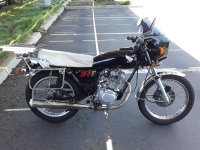
The bike is light weight enough that if traffic was to get too stalled-out,I could jump off it and roll it up the road like a moped,etc.
Last edited:
fxray
Veteran Member
Interesting read, that Edward Turner article. Glad that Honda didn't follow his lead when they designed the 175/200 crankshaft. Two centre bearings, rather than none at all, although I suppose you could regard the 175/200 bottom end as being two S90 cranks side by side, pretty much bullet proof.
I really admire the artwork from the hands of the British draftsmen (draughtsman) from back in those pre-computer graphics days. As I mentioned, that book excerpt is 73 years old. The old Triumph and BSA manuals are replete with the same quality of art.
I read that in 1960, Edward Turner went on a trip to Japan that was sponsored by Mikuni (side note: Mikuni got their start making carburetors under license from Amal of England). He visited Honda, Suzuki, and Yamaha, and reported back to BSA upper management. One comment he made was, "The surface finishes on machined parts and standards of accuracy were, I should think, better than our best work."
Back when I first started working on my TR6R, I remember remarking to a friend how similar the wheel bearings and distance pieces and brake hub were to the Honda I had just gone through. He said, "Well, yeah, but to some extent that's just how you build a motorcycle wheel."
That may be true, but the Brits did it way beforehand.
bilbikek411
Veteran Member
I've seen a Triumph Tiger Cub,from 'back in the day' and I think that's 200cc.
mike in idaho
Veteran Member
The Triumph cub had a little brother, the Triumph Terrier(150cc).I've seen a Triumph Tiger Cub,from 'back in the day' and I think that's 200cc.

CB450DX
Veteran Member
Sorry for reviving this topic, couldn't help myself, but here we go:I've always wondered this, why Honda designed the CB/CL175 and 200 as twins and not singles.
It's all about the market. Honda (and to be fair, many others) never thought that singles would sell in the US (other than dirt bikes and that kind of thing). Even Suzuki never imported their DR BIG (aka DR800) to the US.
It still boggles my mind why they ever went with a 360 crankshaft on the 400/450s. The british competition was pretty much done at that point, they always used 2 carburetors, so no benefit from making it cheaper with only one, and the balance shafts also never helped. I just think they did it because they could, just for the kick of it at this point.As with many of these questions long after the fact, Honda didn't say much over the years as to why they did many of the things they did.
And boy, am I glad.
Bingo.But they never sent a single cylinder street bike larger than 125 to the US AFAIK (none are shown in the US Honda ID Guide).
99% of the bikes we ever got here in Brazil were the most simple bikes possible, it's what worked for the market, and well... 50+ years later, it still is, but at least now we get overhead cams.
Lemme put down a brief history of the most sold bikes (who detains literally more than 50% of the market), the "Honda CGs", hope you guys can enjoy this.
1976-1982 CG125 - derived from the CB125. Also the first bike ever produced by Honda here in Brazil.
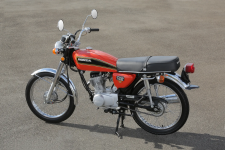
Not much to talk about it, what you see is what you get, except that it wasn't an overhead cam engine, but an overhead valve engine with pushrods.
On 1981 they also released what as far as I know is the first (production) bike to run on ethanol on that same engine, bike became popularly known as "CG Pelé"

I'm sure you guys understand why.
1983 - 1988 - The "New" CG 125

Not many changes. To note is the new carburetor with the "Ecco" system, which I never managed to figure out what it was, probably just a leaner mixture, but the bike was more efficient and did more mpg. In 1985, it got 5 gears (finally).
On the styling changes, the bike resembled quite a bit the first few Brazilian CB400's - Which kind of looked like your 1970's CB400T's but less Custom and more Naked.
There was also a "Cargo" model, meant for delivery work, main change being a metal structure on the back of the bike to do delivery work, the "Cargo" model kept existing on almost every single generation as well.
Just for additional context: up until this point where the imports were closed, Yamaha's response was the RD135, which, of course, being a 2 stroke, completely obliterated the CGs when it came to speed, but 2 strokes being 2 strokes... Maintenance, noise, smoke and oil smell. (but also fun).
1989 - 1993 - CG 125 "Today"
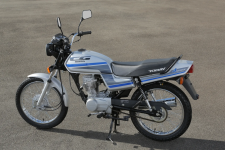
Sturdier frame, first CDI model (that's why it carried the "Today" name") and lots of styling changes. The bike resembled quite a lot the CB 450 DX, which had JUST started to lose its shine after the imports were opened again in 1989 (when the CBX 750F arrived, along with the RD350's).
74 changes to the frame, 69 changes to the engine, but still a pushrod, workhorse of a thing.
All of these engines were known to be built like a freaking tank, barely required any oil (or oil changes).
I never understood why the round gauges/etc with a square headlight, though.
1994-1999 - CG 125 Titan
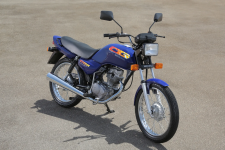
Few changes to the engine, sturdier clutch, but still a pushrod one, big changes to its appearance. They rounded out everything.
This one is also known as a freaking tank and if you ride in a city in Brazil, you're bound to see it. The right side o-ring leaks are common, though (although, easily fixable)
2000-2003 - 5th gen CG125.
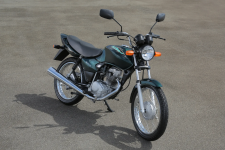
They finally rounded out everything, and added electric start to some models. The top of the line ES model (not pictured here), got electric start and a front disc brake.
To me, the best looking one to this day. They also released the CBX250 Twister right around the same time.
2004 - 2009 - CG 150 Titan / Sport + CG 125 Fan
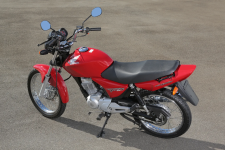
They introduced the 150cc model which finally was updated with overhead cams. They kept the 125 engine though, on the cheaper model, "Fan".
Also known as a tank horse, I've seen these bikes be overbored to 200cc's and run just fine on everyday use and even delivery work.
Competition engines are modified to run on more than 310cc's and methanol, to this day the number 1 engine for that.
The "Sport" model had a few apperance changes (mainly a silver side cover), with more agressive cams and just a tad more torque and HP.
2009 - 2013 - CG 150 "Titan Mix"

If not for the Speed Triple, this would be the worst looking headlight I've ever seen on a bike. It looks so much worse in person.
They kept the 150 engine but fuel injected it, and they kept a separate 125 engine for the CG125 Fan, although they updated it to be OHC as well.
The tail of this bike though... The sexiest the CG ever got, imo.
In 2013 they once again updated the appearances, added CBS and created yet another model - The Start model (which used two drum brakes) was also introduced.
2015 - 2024 - CG 160
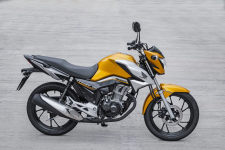
Lots of styling changes.
A new engine, which is also the same one you see on a bunch of international models like the CB190, caracterized by its very small head cap.
This engine, though... Kind of noisy around the head, not nearly as strong as the 150's when it comes to reliability or modifications.
They updated it in 2025, main changes include LEDs, FINALLY an aluminum swingarm and a disc brake in the back (although the rear disc brake is only for the top of the line CG Titan).
These bikes have become stupid expensive with the stupid economy/politics and the fact that... Well, a Honda is a Honda and I don't think there's anywhere in the world where this applies more than Brazil.
For context, this is the top 15 most sold bikes in Brazil in 2024, by month, total in the right side.
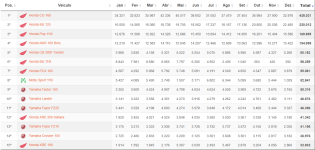
You can see how Honda CGs basically sell more than most of the other bikes combined.
Every single one of the bikes in the top 15 is a single cylinder bike, the only water cooled one is the PCX 160 (which is a scooter, so justified).
A brand new CG 160 costs around R$24k brand new. For context, an Yamaha Factor 150 costs R$17k (but costs more to maintain [because it's not a Honda], and is marginally slower).
You can get an old CB450 for around R$14k (and that's also way too high, less than 3 years ago they would cost around 8 thousand).
Other few notable singles I'd advise you guys to research if you're interested in Honda singles:
Biz 125 (C100 / 110 / 125) - Absurd workhorse of a Cub.
Runs without oil, runs with cooking oil, probably runs with vodka in the tank (I've seen videos of older models running with freaking Alcohol from a pharmacy), doesn't even have a clutch, just freaking runs, doesn't care about the pavement, doesn't care about suspension maintenance, or any maintenance at all for the matter. It is the Brazilian daughter of the C100 Dream, and in my opinion surpasses it. Same goes for the Pop 110i (which uses the old Biz 110 engine), but the Pop does have a clutch.
NX350 Sahara - 350cc RFVC motor - Ever wondered what would happen if you took the XL 350 and made it into a tourer? Well, look it up! This bike looks absolutely amazing to me and is a staple of the 90's, especially with its colors.
NX400 Falcon - 400cc RFVC motor, street bike but still quite high from the ground. To this day, people riding 600cc 4 cylinder bikes in big cities run away when they see a Falcon as it's still used by thiefs because of it's ridiculous torque and agility - For some reason, though, they removed the oil radiator/cooler from the 350's, so the Falcon suffers from overheating in certain conditions.
CBX200 Strada - Same engine as the XR200R - I don't know about its reputation back then, but nowadays it's known as quite troublesome. Even the dirt bike guys don't really like the XR200's anymore because of that.
CBX250 Twister - Exported as CBF 250 - DOHC Air cooled 250cc engine - Marked an entire generation, very strong engine, AWESOME (in my opinion) looks.
Gave birth to the fuel injected CB300R as well, which unfortunately had a chronic problem and would crack heads left and right. After a few years Honda changed the head design and moved the spark plug position along with using a smaller one, it didn't completely fix the problem, but helped. Despite its problems, the bike is stupidly fast (when not at the mechanic).
Last edited:
bilbikek411
Veteran Member
Thanks for the history of small Hondas in Brazil 
Last edited:
Thanks for the very interesting progression of Honda's small bikes in Brazil and elsewhere outside of the US, it's always been something I've wondered about. A Pele connection too, so cool for the time.
Though Honda used the 360° crankshaft in so many smaller and mid-sized engines along the way, it did surprise me they went with it on the later SOHC 400/450 models. It isn't like they won't rev, the 175 proves that with a stock 10,500 rpm redline, but I suppose they were looking for a broader powerband with more torque and added the balancer to help offset the vibes that came with it. Truth is they all vibe, even the 180° models, so it's kind of a moot point.It still boggles my mind why they ever went with a 360 crankshaft on the 400/450s.
CB450DX
Veteran Member
It kind of makes sense to me in the 60's/70's, going for Norton/Triumph, sure, but not much more after that...Though Honda used the 360° crankshaft in so many smaller and mid-sized engines along the way, it did surprise me they went with it on the later SOHC 400/450 models. It isn't like they won't rev, the 175 proves that with a stock 10,500 rpm redline, but I suppose they were looking for a broader powerband with more torque and added the balancer to help offset the vibes that came with it. Truth is they all vibe, even the 180° models, so it's kind of a moot point.
I thought about the powerband as well, but then again, the 90's CB500 Twin exists, it's an 180 degree and to this day it's the only 500 that I could find that has more torque than the 450, although, to be fair, it is water cooled (admittedly, I'm 100% going by specs sheets here) (and the modern day CB500F is a little bit weaker when it comes to torque).
And it starts to make less sense when you consider the Black Bomber as well... A little less torque, but just as fast (even if its speed comes later in the rpm range)...
On the CB250N models, it makes even less sense... Still used two carbs, still had the balance shafts (afaik, hard to confirm that)... Pretty expensive build for a 250...
It just doesn't make sense to me considering how, as far as I understand, Honda's philosophy has always been reliability, and a pillar of that is to make the engines as simple and "straight to the point" as possible... But then again, they also made the CX500 and CX500 Turbo just because they could...
LOL, and the inline air-cooled 6 cylinder CBX because they could... and the oval-piston V4 NR500 and 750 that were like V8s, because they could... yep, that's Honda.But then again, they also made the CX500 and CX500 Turbo just because they could...
While I've always thought of the 180° crankshaft as being the higher performer of the two, the smaller 360° twins (and the later 400/450 models with 360° cranks as well) proved that high rpm is not only for the 180° versions since they turn 10,000 rpm too. Typically the 360° engine is thought of as a torquier engine and was used in bikes like the 250 and 305 Dreams in the earlier decades but they can obviously be tuned for higher rpm horsepower too, so it really comes down to a choice of engine preference. And for an example of what the 175 engine can do with some enhancement, this bike turned 11,500 rpm for a power peak and shift point and would go 12,000 before power dropped off if you didn't shift in a hurry in the lower gears (wish I had video of it, but it was 50 years ago).I'm ignorant on the dis/advantages of the 360 crank vs 180 etc, from what I'm reading here I gather it allows for higher revs/ more torque?
CB450DX
Veteran Member
You're right, but there are quite a few ways to allow the engine to rev higher or have more torque, a lot of them much simpler in my opinion. (The black bomber for example, was an 180 twin and revved to 10000 rpm, same as the later 360 twin CB450, the black bomber only lost a tiny bit in torque).I'm ignorant on the dis/advantages of the 360 crank vs 180 etc, from what I'm reading here I gather it allows for higher revs/ more torque?
Advantages of the 360 crank include a very smooth ride when it comes to traction (because it has even firing intervals, so the "power pulse" gets transferred to the wheel evenly), however, vibrations happen because it's very unbalanced with the pistons going up and down together, so it uses a quite big balance shaft to smooth it out (far from completely smooth though, as @ancientdad pointed out).
To be honest, my bike uses rubber cushions between the handlebar stem and the clamps, and I'm still thinking of getting bar end weights to try and smooth it out just a bit more. The mirrors aren't that great at idle.
It can also use only one carburetor, even if Honda didn't go for that (it's a common mod where I live to put a 2 into 1 admission header and a single carb, and it was also done by some british brands that basically came up with the 360 in the 60's).
To me, the main advantage, in the end, is the exhaust notes. It roars like a 4 cylinder at high rpm (9000 rpm on a 360 twin sounds like 4500 rpm on a 4 cylinder). It just completes the rest of the bike, which in itself is full of character, be in its appearance or in its engine.
If you want to look further into the firing intervals, check out this video from Driving4Answers, it's pretty good and also goes in-depth into 270 cranks which are becoming the most common recently (they basically act like a 90 degree v-twin and are a lot more balanced, it's pretty interesting)
The CBX was the most absurd way to say "You all don't even come close to our craftsmanship, and we don't care about Benelli and their Sei"LOL, and the inline air-cooled 6 cylinder CBX because they could... and the oval-piston V4 NR500 and 750 that were like V8s, because they could... yep, that's Honda.
The crazy oval pistons were also the bike-ification of Soichiro Honda's absolute hate for two strokes. They were really trying ANYTHING to beat the two strokes back then. It didn't work at all on the races, but releasing street bikes with them was definitely a power move just because they could.
I also always found it funny how, despite them hating 2 strokes, everytime Honda gave up on 4 strokes and made a 2 stroke they usually would win absolutely everything (cue in the Honda Elsinore and the CR's)
Let's also not forget the CBR1100XX Super Blackbird, which was released just to put it out there that Honda could, but didn't want to, make the fastest bike (especially since the far better handling 900rr fireblade had already been out for a couple of years, and then CBR1000RR)
Jimmy Greaves
Well-known Member
I don't think anyone has mentioned the CB250RS single we had over here from around 1980 in the UK. I had several of them and they were brilliant.
Even better, with only a small amount of modification, the XL500/FT/Ascot 500cc single engine fitted into them too. I built one with the FT500 engine. A great way to surprise bigger bikes, particularly if you left the '250' stickers on the side panels.
The top one (except for the 'Hondastyle' fairing, I'm sure it was a genuine Honda accessory) is the standard 250, the bottom one the same bike after its transplant.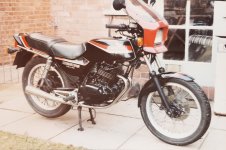
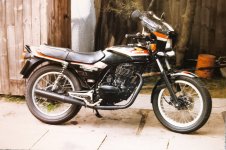
Even better, with only a small amount of modification, the XL500/FT/Ascot 500cc single engine fitted into them too. I built one with the FT500 engine. A great way to surprise bigger bikes, particularly if you left the '250' stickers on the side panels.
The top one (except for the 'Hondastyle' fairing, I'm sure it was a genuine Honda accessory) is the standard 250, the bottom one the same bike after its transplant.
If I've seen any pics of that model in the past, without knowing otherwise it would have seemed to be a twin with the dual exhaust ports. I wasn't aware of that model either. You can definitely see the difference with that 500 engine stuffed into the frame, nice.I don't think anyone has mentioned the CB250RS single we had over here from around 1980 in the UK. I had several of them and they were brilliant.
Even better, with only a small amount of modification, the XL500/FT/Ascot 500cc single engine fitted into them too. I built one with the FT500 engine. A great way to surprise bigger bikes, particularly if you left the '250' stickers on the side panels.
The top one (except for the 'Hondastyle' fairing, I'm sure it was a genuine Honda accessory) is the standard 250, the bottom one the same bike after its transplant.
Richard Pitman
Veteran Member
I've always thought that the CB 250 RS seemed like a nice bike. I've never ridden one, but I'd guess it would be at least as fast, if not faster than the 250 twins. Here's one on UK Ebay, with the typically salty UK price.
This one has an aftermarket Motad 2-1 exhaust, as standard it had a silencer on each side, 2-2.

This one has an aftermarket Motad 2-1 exhaust, as standard it had a silencer on each side, 2-2.
Honda CB 250RS 1981/W | eBay UK
Find many great new & used options and get the best deals for Honda CB 250RS 1981/W at the best online prices at eBay UK! Free delivery for many products!
www.ebay.co.uk
Richard Pitman
Veteran Member
This is one of the latest singles we get over here, a CB 300. Same engine as the off road CRF variant I guess. Shame it is so ugly.
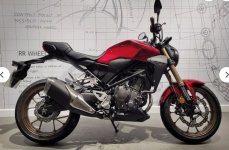
Agree, the style will never appeal to me. It's hard to understand quite how we got here, with gas tanks that all look similarly bulbous, ridiculous rear fender clearance that implies the rear suspension has more travel than the front, and in some ways the design looks too business-like and lacks any traditional style.Shame it is so ugly.
That CB250RS is gorgeous, that is my favorite Honda design style, early 80s hints of modern sleekness, still retro/classic, stands out - in a word, fun. My current dream bike is a CB450t Hawk, if I can ever find one.
And that CB300 is hideous. Indicative of everything wrong with vehicle design in the modern era, No harmony, weird bulbous blocky plastic pieces poking out randomly, headlight/front end looks like a weird insect troll creature. The whole thing looks like something out of a transformers movie, I thought good and long about buying a newer bike, cause fuel injection + modern tech would be quite nice, but I just ultimately couldn't get over how distasteful the design is. Like I couldn't let myself be seen riding one of these. Its funny I was never super in love with the "true classic" early 70s designs, like my CL175, but there are moments when I look at it and just think yeah that is a handsome bike. Many instances where I've seen people stop and admire it the parking lot. Who would look at that CB300 and admire it? Something to be said for the classic bikes as aesthetic works of art.
And that CB300 is hideous. Indicative of everything wrong with vehicle design in the modern era, No harmony, weird bulbous blocky plastic pieces poking out randomly, headlight/front end looks like a weird insect troll creature. The whole thing looks like something out of a transformers movie, I thought good and long about buying a newer bike, cause fuel injection + modern tech would be quite nice, but I just ultimately couldn't get over how distasteful the design is. Like I couldn't let myself be seen riding one of these. Its funny I was never super in love with the "true classic" early 70s designs, like my CL175, but there are moments when I look at it and just think yeah that is a handsome bike. Many instances where I've seen people stop and admire it the parking lot. Who would look at that CB300 and admire it? Something to be said for the classic bikes as aesthetic works of art.
Well said above, and it details what I've disliked about modern styling about as well as it can be described IMO. I suppose when you grow up in that era with those styles being all that is readily available new, you might grow to embrace it. But when you grew up with what so many of us have through the late '60s into the bikes of the '80s, it's too drastic a departure from the styling we've known and liked since our beginnings of involvement.And that CB300 is hideous. Indicative of everything wrong with vehicle design in the modern era, No harmony, weird bulbous blocky plastic pieces poking out randomly, headlight/front end looks like a weird insect troll creature. The whole thing looks like something out of a transformers movie, I thought good and long about buying a newer bike, cause fuel injection + modern tech would be quite nice, but I just ultimately couldn't get over how distasteful the design is. Like I couldn't let myself be seen riding one of these. Its funny I was never super in love with the "true classic" early 70s designs, like my CL175, but there are moments when I look at it and just think yeah that is a handsome bike. Many instances where I've seen people stop and admire it the parking lot. Who would look at that CB300 and admire it? Something to be said for the classic bikes as aesthetic works of art.
Richard Pitman
Veteran Member
Look what Royal Enfield have just done to their classic looking 650.
Function over form I suppose, need the longer suspension travel off road.
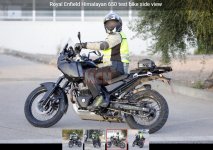
Function over form I suppose, need the longer suspension travel off road.
CB450DX
Veteran Member
Heh.This is one of the latest singles we get over here, a CB 300. Same engine as the off road CRF variant I guess. Shame it is so ugly.
Still better than our current CB300F Twister.
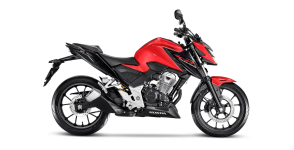
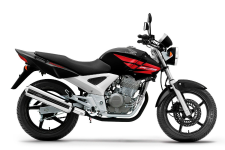
It's a far cry from the beautiful early 2000's CBX250 Twister:
Man... I don't know what RE is doing anymore.Look what Royal Enfield have just done to their classic looking 650.
I mean, the 411 was a good bike, even if way too heavy for what it was for and the fact that it struggled at highway speeds (even over here where that amounts to 70mph [110km/h] tops).
The 450, liquid cooled one was supposed to fix most of the issues, being shorter, taller and a tad lighter (around 10kg) while also being stronger.
A 650, though? I think that engine will be way too heavy for off road use... May work as a touring (like all their other 650's, to be fair) like the other big trail bikes...
But to be honest, I hope to be completely wrong. RE is one of the few brands that is bringing bikes to Brazil, any competition is good competition, especially considering the trash chinese brands (Shineray) that are gaining ground over here.
Just like so many products available on Amazon from China, who thinks up these crazy names? Do they think we will find them interesting? Like when you look for a product on Amazon and most of what you find are named things like "Tavaski" and "RMSTATOR" and "GXYWADY"... yeah I want one of those I've never heard of. /sespecially considering the trash chinese brands (Shineray) that are gaining ground over here.
I will say I don't hate the modern CBR look. The fairings give it a more balanced streamlined look. Its focused, unlike the CB's which just boggle my mind. My eyes don't know how to look at new CB's, such a confused jumble of plastic and metal. Never ridden a sport bike, not sure how I'd like that riding position, I like standard upright just fine. I've got a soft spot for the sport look though, 90s Ninja 250 etc.
Jimmy Greaves
Well-known Member
There's a few examples of the CB250RS on Facebook Marketplace here in Britain at present, all cheaper than Richard's eBay one too. They're always a bit of a gamble as they were very popular with despatch riders and tended to be ridden into the ground, but if you can find a good one, they're excellent.
Honda also brought out a CBX250RS in the mid 1980s, but it never achieved the popularity of its predecessor. I know a girl who had one from new and still has it. She really looks after her bikes and it might well be the best one remaining.
Honda also brought out a CBX250RS in the mid 1980s, but it never achieved the popularity of its predecessor. I know a girl who had one from new and still has it. She really looks after her bikes and it might well be the best one remaining.

Boosted
Veteran Member
Am I the only one 'round here with a 200-single ?
Richard Pitman
Veteran Member
There's a few examples of the CB250RS on Facebook Marketplace here in Britain at present, all cheaper than Richard's eBay one too.
I still don't do Facebook, guess I'm a bit of a Luddite. I've heard bad things about their Marketplace, same things about Gumtree, which is another place I haven't ventured into. Perhaps I'm missing out here.
Richard Pitman
Veteran Member
Regarding that CB300, the earlier CBF250 that we got here in the UK looks much nicer, in my opionion.

Interesting that it has somewhat similar lines but so much smoother look to it, and of course a much more realistic rear fender height. That's about as "modern" as I can tolerate there, and it looks pretty good overall.Regarding that CB300, the earlier CBF250 that we got here in the UK looks much nicer, in my opionion.
CB450DX
Veteran Member
You have no idea how much I hate Shineray... And for what is worth, all of these chinese brands that just makes trash and dumps it here in Brazil for cheap.Just like so many products available on Amazon from China, who thinks up these crazy names? Do they think we will find them interesting? Like when you look for a product on Amazon and most of what you find are named things like "Tavaski" and "RMSTATOR" and "GXYWADY"... yeah I want one of those I've never heard of. /s
All they do is import terrible low cc bikes from China, sell them here for cheap and then leave the owners to try to figure out what parts from other bikes fit into them.
Recently they started expanding (probably because of the high prices from other brands) and it's getting worse. I had to almost fight with 2 of my friends to not let them buy such bikes as, I kid you not, you can barely find brake pads or clutch discs for them.
Every single part you replace will be adapted from another bike, from pads, disks, to even the steering head bearings (and those also go bad in less than 3 months)
They're just terrible bikes. And Shineray dealerships have now started to tell the public that "they're a subsidiary from Honda" because Wuyang, the manufacturer which they buy bikes from, has a joint-venture to sell 125cc Honda scooters in china... Only 125cc scooters, only in china...
They're such terrible bikes... There's one 200cc trail bike from them which is disgusting. Uses BMW GS headlights, on a Honda NX150/160 Bros body on an engine that resembles the 1990's 200cc Honda OHC...
They also stated that they're going to import a QJMotors (yet another chinese manufacturer) SRK400... It's engine is a water cooled copy of the CB400... Same bore x stroke, 360 twin, water cooled... And yet still has less torque than the original CB400 from the 70's...
Not to mention the custom 250cc bikes which are 100% rip-offs of the Yamaha Virago 250, but that has also been done before... Decades ago by another brand.
Oh yeah, and Shineray also threatens to sue every single mechanic who makes videos showing the issues of their bikes, or even showing what parts from other bikes fit. I personally know at least 2.
That is 100% the CBX250 Twister we have here in Brazil. Very good bike. I read that you guys had it from 2004-2008, we had it from 2001-2008.Regarding that CB300, the earlier CBF250 that we got here in the UK looks much nicer, in my opionion.
Marked an entire generation, the handling is a very high point for it.
So much so that I have actually used its handlebar on my 450 and thought it improved quite a bit.
Last edited:
It's always interesting to get the perspective of someone living elsewhere about the bikes imported to their country, though none of that you mentioned is good news. Not really surprising considering the source though.You have no idea how much I hate Shineray... And for what is worth, all of these chinese brands that just makes trash and dumps it here in Brazil for cheap.
All they do is import terrible low cc bikes from China, sell them here for cheap and then leave the owners to try to figure out what parts from other bikes fit into them.
Recently they started expanding (probably because of the high prices from other brands) and it's getting worse. I had to almost fight with 2 of my friends to not let them buy such bikes as, I kid you not, you can barely find brake pads or clutch discs for them.
Every single part you replace will be from adapted from another bike, from pads, disks, to even the steering head bearings (and those also go bad in less than 3 months)
They're just terrible bikes. And Shineray dealerships have now started to tell the public that "they're a subsidiary from Honda" because Wuyang, the manufacturer which they buy bikes from, has a joint-venture to sell 125cc Honda scooters in china... Only 125cc scooters, only in china...
They're such terrible bikes... There's one 200cc trail bike from them which is disgusting. Uses BMW GS headlights, on a Honda NX150/160 Bros body on an engine that resembles the 1990's 200cc Honda OHC...
They also stated that they're going to import a QJMotors (yet another chinese manufacturer) SRK400... It's engine is a water cooled copy of the CB400... Same bore x stroke, 360 twin, water cooled... And yet still has less torque than the original CB400 from the 70's...
Not to mention the custom 250cc bikes which are 100% rip-offs of the Yamaha Virago 250, but that has also been done before... Decades ago by another brand.
Oh yeah, and Shineray also threatens to sue every single mechanic who makes videos showing the issues of their bikes, or even showing what parts from other bikes fit. I personally know at least 2.
Jimmy Greaves
Well-known Member
Ah, the FB Marketplace is the "wild west" of buying and selling, but it can be great.I still don't do Facebook, guess I'm a bit of a Luddite. I've heard bad things about their Marketplace, same things about Gumtree, which is another place I haven't ventured into. Perhaps I'm missing out here.
I've sold quite a bit on it, but you have to learn that the almost insulting offer you get might be the only one and take it.
On the other hand, I bought a Kenwood Chef kitchen mixer from it last Saturday for thirty quid* (tenuous connection to bikes here, well it does have a motor and gears...) which is great.
(*Thirty of His Majesty's Pounds Sterling (£), for our Colonial friends.)
Richard Pitman
Veteran Member
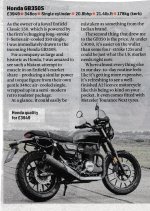
From last weeks Motor Cycle News

jensen
Veteran Member
A few months ago, I did a test ride on a Honda 125 Super Cub, just for fun. If I had room and wanted a modern bike, that would be my choice within the Honda brand.
CB450DX
Veteran Member
At the end of the day it`s not all bad. But it certainly got expensive to have anything more than a 250 (not that it wasn`t expensive before, to be fair).It's always interesting to get the perspective of someone living elsewhere about the bikes imported to their country, though none of that you mentioned is good news. Not really surprising considering the source though.
Covid, of course, didn't help either, especially with low cc's, food delivery boomed, so a lot of people went after 150's/'160's and the food delivery apps reached an all time high. And while you have to work non stop, the pay isn't that bad.
I, myself, chose to have the professional certification on my license because, if everything else fails...
NICE, so they are bringing this bike to other regions, interesting.From last weeks Motor Cycle News
This exists in India as the retro CB350 H'ness and the more "naked" CB350RS
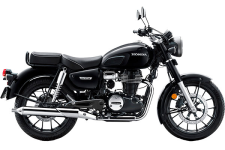
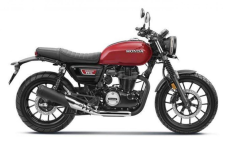
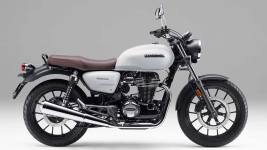
I've seen quite a few complaints that it isn't as good as the Royal Enfield 350's and that the gearing leaves something to be desired, but it does look like a motorcycle, at least.
About 20 horsepower @ 5500rpm, around 30nm/3kgfm of torque @ 3000rpm.
Quite torquey, not very fast, but it should be a very fun urban bike.