-
Don't overlook our Welcome Package, it contains many links to important and helpful information about functions at VHT like posting pictures and sending PMs (private messages), as well as finding the parts you need.
AD
You are using an out of date browser. It may not display this or other websites correctly.
You should upgrade or use an alternative browser.
You should upgrade or use an alternative browser.
CL350 Vintage racer project
- Thread starter Emlupi
- Start date


That'll wrinkle the pavement!

ballbearian
Veteran Member
That's a 40 hole. Are you going 18 or 19" rims?
EDIT: It is a 36 hole hub, not a 40.
EDIT: It is a 36 hole hub, not a 40.
Last edited:
ballbearian
Veteran Member
Okay. I'll be tickled to follow as you get to figuring your spoke lengths.I’m planning on using an 18” rim.
bilbikek411
Veteran Member
The hub has many different holes in it..Okay. I'll be tickled to follow as you get to figuring your spoke lengths.

The spoke holes in the hub could be
elongated(an optical illusion? )from what I can see.. when hub's spoke holes get that way,it's a pain and it will be a challenge to choose the holes in the hub that will be tight around the new spokes;you might want to get larger diameter spokes.The tighter the spokes fit into the hub,the stiffer the wheel will be,which gives better response to input.
Last edited:
What, exactly, is it that you will be so tickled about?Okay. I'll be tickled to follow as you get to figuring your spoke lengths.
Jimmy Greaves
Well-known Member
If it helps, the photo of my front wheel, which I posted on the previous page, shows an 18", 1.85, 36 spoke hole rim laced to the same front hub. Some of the spoke holes in the hub are unused.
I assume you mean this pic, here it is for ease of viewing for the OPIf it helps, the photo of my front wheel, which I posted on the previous page, shows an 18", 1.85, 36 spoke hole rim laced to the same front hub. Some of the spoke holes in the hub are unused.

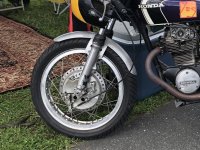
ballbearian
Veteran Member
Not in a snarky way. Only that it is a fairly complicated and interesting calculation. I began building wheels (mostly bicycles) long before there were even computer programs to do it.What, exactly, is it that you will be so tickled about?
My apologies for miss counting. It is a 36 hole hub. No problem, except my eyesight. Sorry for the confusion that caused.That's a 40 hole.
That's great that Jimmy Greaves has an example to work from, rather than starting from scratch.
bilbikek411
Veteran Member
Emlupi, how do your brake shoes look?
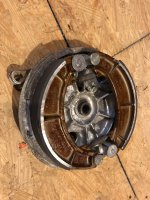
They are fresh and clean.Emlupi, how do your brake shoes look?

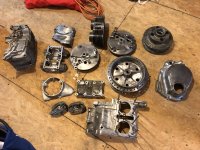
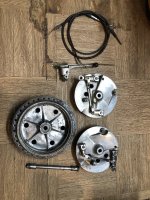
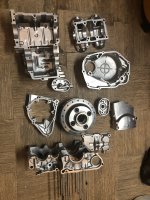
Here’s a pile of stuff that’s ready to go to the vapor blaster. Gotta get some screws to put into all the blind threaded holes.
Next, I need to go through the engine subassemblies and put together a list of parts for order. Stuff like gaskets, seals, missing or damaged hardware, etc.
My plan is to focus on the engine first and then chassis/suspension next.

The CM rebuild kit webpage has one good function - all the part numbers are listed in one place for the seals needed. Then you can just do part number searches on David Silver or Northeast Vintage - both of those places will have Honda parts, but their search function sucks.View attachment 39032
Here’s a pile of stuff that’s ready to go to the vapor blaster. Gotta get some screws to put into all the blind threaded holes.
Next, I need to go through the engine subassemblies and put together a list of parts for order. Stuff like gaskets, seals, missing or damaged hardware, etc.
My plan is to focus on the engine first and then chassis/suspension next.
bilbikek411
Veteran Member
I look forward to seeing all those parts nice vapor blasted I need to install one into my future shop-space.
I need to install one into my future shop-space.
New pistons and KA Performance slipper csm chain tensioner.
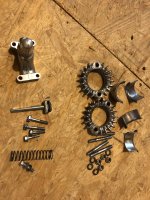
Going along and cleaning up parts that will be reinstalled.
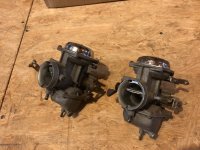
A pair of 722A carbs that need a little TLC. Rebuilds will be on the way.
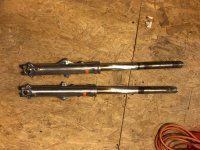
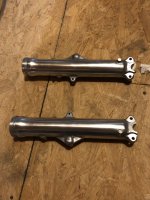
A set of 35mm forks from a CB550 which I hope to convert onto the front of the bike. Still sorting out which triple clamps to use. I will be replacing the crusty tubes and rebuilding the innards with the help of some RaceTech goodies.
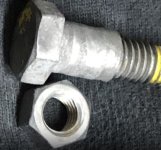
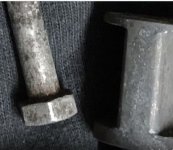
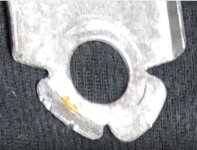
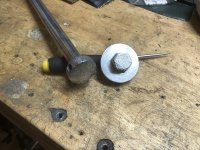
Some of the hardware was pretty crusty on this bike. The oil drain bolt was rusty and stuck pretty good and needed some heat and leverage to break it loose. Rear axle bolt was the same, petrified grease and grime plus a little rust made it tough to get out. Cleaned these items up and applied some zinc electroplating to protect them from further corrosion. They’re a little pitted in spots but ready to go back in service.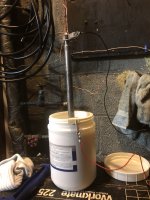

Ribrickulous
Veteran Member
View attachment 36659
I can see that OEM gaskets are unavailable and there are many “kits” around . I generally like to stick with factory rubber bits and gaskets but this set was included in a bin full of spares that came with the bike. I have no experience with this manufacturer, so don’t know if these are usable or not to bother. What is the consensus on gaskets and who has them?
I’ve used that kit and a versah kit for my rebuilds. They both work well.
I didn’t see anyone mention it, so I will - You’ll need to buy the OEM base gasket rings from Honda, they’re still available. None of the aftermarket kits have the right size o rings. It’s a big bummer to start the top end and have one of the first things there go wrong.

GaryJames
Veteran Member
Can I ask,why Zinc and not Nickel plating.?
I believe Nickel will last longer.
I have gathered all the items to do some trial Nickel Plating And have some trial parts to start on. Maybe next week…
I believe Nickel will last longer.
I have gathered all the items to do some trial Nickel Plating And have some trial parts to start on. Maybe next week…
O
To be honest, simply because that’s what I have on hand here. I didn’t really make any special considerations.Can I ask,why Zinc and not Nickel plating.?
I believe Nickel will last longer.
I have gathered all the items to do some trial Nickel Plating And have some trial parts to start on. Maybe next week…

One thing to consider is that the plating adds metal to a part, so axles may not fit bearings anymore.O
To be honest, simply because that’s what I have on hand here. I didn’t really make any special considerations.
I didn’t plate the entire axle bolt, only the rounded head with the hole through it. If you look at the picture of the bolt in the solution it is suspended with only that end submerged.One thing to consider is that the plating adds metal to a part, so axles may not fit bearings anymore.
Yeah, I saw that. Just mentioned the issue for future readers.I didn’t plate the entire axle bolt, only the rounded head with the hole through it. If you look at the picture of the bolt in the solution it is suspended with only that end submerged.
ballbearian
Veteran Member
so don’t know if these are usable or not to bother.
I wish I hadn't used a flimsy NE brand cam box gasket. I got an OEM ready for a motor out replacement sometime. The rest of the NE kit was fair for the upper head removal de-carbonize and valve clean up on my 73 CL 350.
I wish I hadn't used a flimsy NE brand cam box gasket. I got an OEM ready for a motor out replacement sometime. The rest of the NE kit was fair for the upper head removal de-carbonize and valve clean up on my 73 CL 350.

fxray
Veteran Member
In my experience, zinc plating is durable and lasts a long time. It will not build up thick enough to interfere with thread or bearing fitment in most cases.
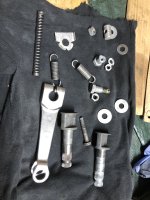
Emlupi, it looks like you are using a Caswell system? Mine is homemade, and the plating bath container I use is a plastic Folger's Coffee can. One time I wanted to plate a longer piece, but did not want to mix up a greater volume of electrolyte. Instead, I made a longer container and poured my existing electrolyte into it. When finished, I poured it back into the coffee can. The part was the brake reaction arm and related NLA hardware for my SL350 k0:

I built the bath chamber mostly out of stuff I had laying around, and kept it for future use.

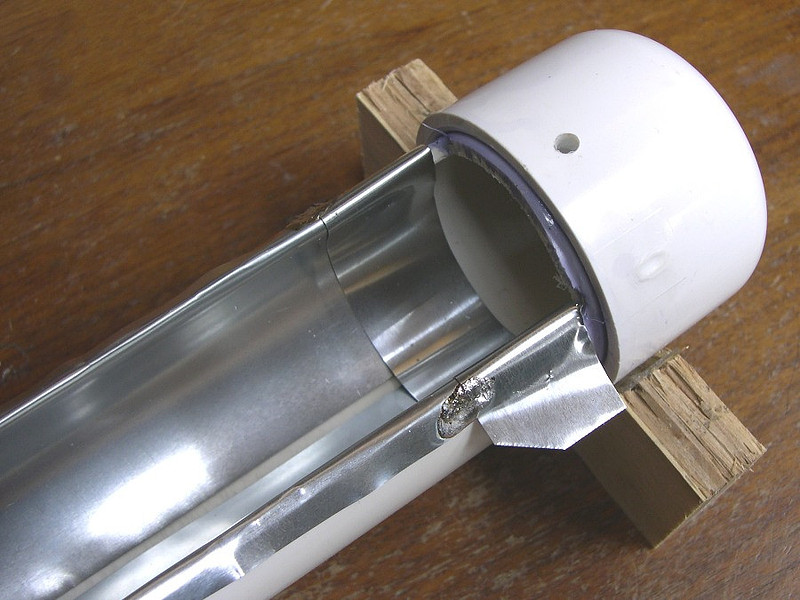

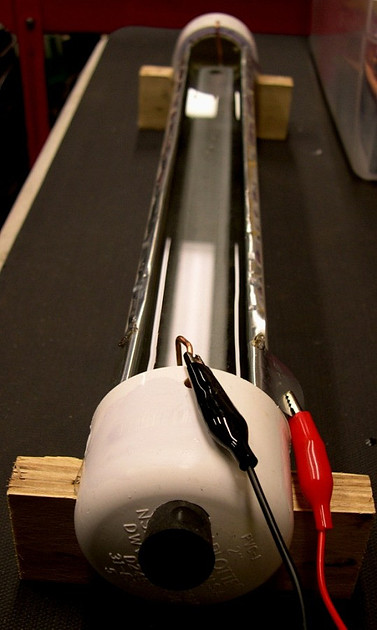
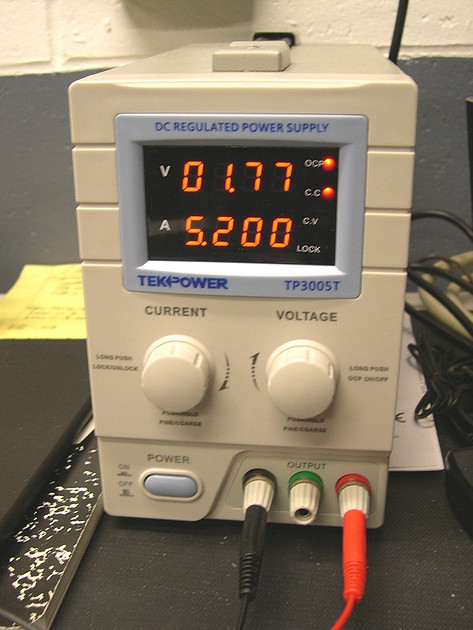

Although home plating is great when you only need to do one or two parts, which makes it impractical to take to a plating shop, it is too tedious and time consuming to do the full bike. On my SL350 K0, I did all the zinc plating just to see if I could. I have taken my other bike project hardware to a shop, and it is well worthwhile to do that.
Emlupi, it looks like you are using a Caswell system? Mine is homemade, and the plating bath container I use is a plastic Folger's Coffee can. One time I wanted to plate a longer piece, but did not want to mix up a greater volume of electrolyte. Instead, I made a longer container and poured my existing electrolyte into it. When finished, I poured it back into the coffee can. The part was the brake reaction arm and related NLA hardware for my SL350 k0:
I built the bath chamber mostly out of stuff I had laying around, and kept it for future use.
Although home plating is great when you only need to do one or two parts, which makes it impractical to take to a plating shop, it is too tedious and time consuming to do the full bike. On my SL350 K0, I did all the zinc plating just to see if I could. I have taken my other bike project hardware to a shop, and it is well worthwhile to do that.
Actually it’s the Eastwood kit but I’m sure there’s not much difference. I‘m right on board with what you’re saying. I originally got the plating kit for a ‘67 Triumph that I am working on. The original Triumph hardware is Cad plated but there aren’t many shops doing that work anymore. I was going to zinc plate and polish it out to get the “look” but the process would have been prohibitively tedious and time consuming. In the end, I sent all the hardware out to a plater and that was that.
My setup is not as elaborate as yours. I use D cell batteries to run my system so I don’t have the level of control that you would have with your power supply. I do it by trial and error to get the time right. I just check on the parts periodically and when they look pretty evenly coated I call it good. For a race bike project I don’t need concourse level results, I just want some corrosion protection for previously crusty looking hardware.
Your results are outstanding as would be expected from the level of effort you put into it. Well done.
My setup is not as elaborate as yours. I use D cell batteries to run my system so I don’t have the level of control that you would have with your power supply. I do it by trial and error to get the time right. I just check on the parts periodically and when they look pretty evenly coated I call it good. For a race bike project I don’t need concourse level results, I just want some corrosion protection for previously crusty looking hardware.
Your results are outstanding as would be expected from the level of effort you put into it. Well done.
I took all the aluminum stuff (engine cases, covers, hubs, brake panels) up to the vapor honing shop today. Probably be there for a couple of weeks. Still finalizing the shopping list for engine parts and then I’ll be putting an order in for that stuff.
Nothing produces an olfactory barrage quite like some decades-old fork oil hitting the atmosphere for the first time. Stunk up the whole room  .
.
Too bad the tops of the fork tubes are so rusty because the bottoms are in pretty good shape. All the bits and pieces are in good condition. I’m going to rebuild these with new tubes, springs, and emulators.
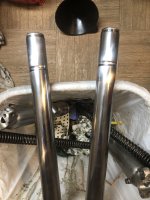
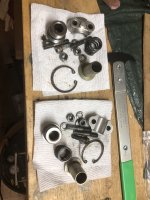
.Too bad the tops of the fork tubes are so rusty because the bottoms are in pretty good shape. All the bits and pieces are in good condition. I’m going to rebuild these with new tubes, springs, and emulators.
Old fork oil is as bad as it gets in my experience, can't say I've ever smelled any other fluid from any vehicle that smelled worse. Which reminds me, mine needs to be changed... ugh.Nothing produces an olfactory barrage quite like some decades-old fork oil hitting the atmosphere for the first time. Stunk up the whole room
Working on the swingarm while waiting for some engine work to be completed. Gave the swinger a good scrubbing with degreaser.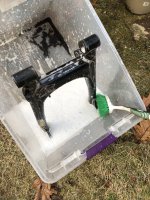
After cleaning I ground off the lugs for the chainguard as I won’t be needing it. When I get to the frame, I’ll do the same. Getting rid of all the lugs and tabs that aren’t necessary on the race bike.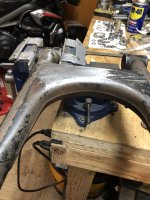
I also cleaned out the tubes for the pivot bushings in preparation to install the CBX Performance bronze bushings. Once I prep and paint the swingarm I will begin rebuilding with new pivot and shock mount bushings.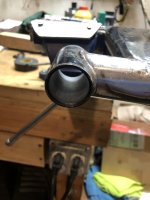

After cleaning I ground off the lugs for the chainguard as I won’t be needing it. When I get to the frame, I’ll do the same. Getting rid of all the lugs and tabs that aren’t necessary on the race bike.
I also cleaned out the tubes for the pivot bushings in preparation to install the CBX Performance bronze bushings. Once I prep and paint the swingarm I will begin rebuilding with new pivot and shock mount bushings.
ballbearian
Veteran Member
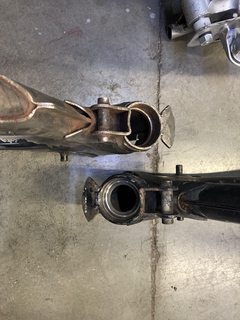
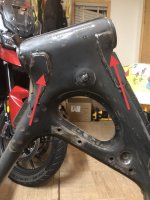
I guess you'll delete the metal box behind the lower steering bearings that was a part of the friction damper on the K0's.
I will consider itI guess you'll delete the metal box behind the lower steering bearings that was a part of the friction damper on the K0's.
I'll advise against removal. Best thoughts are the tube section was used as a hanger point during assembly but the boxed section appears to be a steering head stiffenerI guess you'll delete the metal box behind the lower steering bearings that was a part of the friction damper on the K0's.
I already cut it out. I don’t know if it would really add much stiffness to the steering head. It was only attached at the sides. Once I scored the weld beads, a couple of hammer whacks knocked it right off.I'll advise against removal. Best thoughts are the tube section was used as a hanger point during assembly but the boxed section appears to be a steering head stiffener
I’m certainly no chassis engineer but it seems to me that the two gusset plates are there to provide stiffness to the steering head. The damper box was along for the ride.
Last edited:
ballbearian
Veteran Member
The gusset plates were added sometime after the K0 series, and the box must've been retained only to mount the small assembly tube.the two gusset plates are there to provide stiffness to the steering head. The damper box was along for the ride.
Nice blasted parts, what a treat.
So, I know that it’s been quiet here but there are things going on behind the scenes for this project.
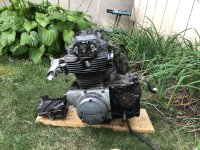
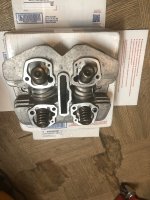
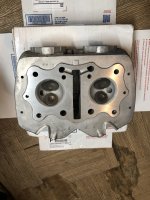
Cylinder head is out at Schumann waiting for rebuild.
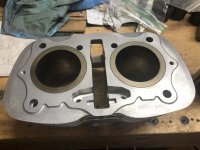
I’m getting the barrels ready to send out for a rebore with new Wiseco pistons.
Parts and pieces are on order and waiting for arrival.
Still working out a few details before going forward with other parts acquisitions but slowly getting there.
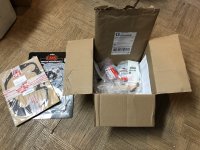
In the meantime I have received a major portion of the gaskets, seals, o-rings, etc for the engine. I am using Honda OEM parts where I can.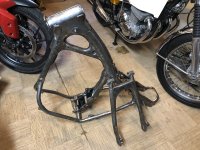
I also spent some time prepping the frame and swingarm for recoating. I am intending to use POR-15 chassis black top coat applied with a brush. Not going for concourse restoration, just want to clean up and protect the parts.
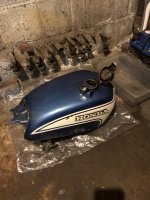
Fuel tank is soaking in Metal Rescue to get rid of rust. So far nothing has leaked out so that’s a good sign. I’ve heard that coating the inside with ATF will help protect against flash rusting, any other ideas or tips are always welcome and appreciated.
Cylinder head is out at Schumann waiting for rebuild.
I’m getting the barrels ready to send out for a rebore with new Wiseco pistons.
Parts and pieces are on order and waiting for arrival.
Still working out a few details before going forward with other parts acquisitions but slowly getting there.
In the meantime I have received a major portion of the gaskets, seals, o-rings, etc for the engine. I am using Honda OEM parts where I can.
I also spent some time prepping the frame and swingarm for recoating. I am intending to use POR-15 chassis black top coat applied with a brush. Not going for concourse restoration, just want to clean up and protect the parts.
Fuel tank is soaking in Metal Rescue to get rid of rust. So far nothing has leaked out so that’s a good sign. I’ve heard that coating the inside with ATF will help protect against flash rusting, any other ideas or tips are always welcome and appreciated.
Last edited:

So my experience with Evaporust which is like Metal Rescue is there is a chemical in the solution that stops flash rust. I used to use Evaporust and now Bilt Hamber and I can rinse a tank or parts with hot water after the soak and no flash rust.View attachment 40215
Fuel tank is soaking in Metal Rescue to get rid of rust. So far nothing has leaked out so that’s a good sign. I’ve heard that coating the inside with ATF will help protect against flash rusting, any other ideas or tips are always welcome and appreciated.
The ATF is what I use when I store the tank over the winter in my basement, which is warm and dry. I add about 6 ozs of ATF that I roll around in the tank once a month and no issues. I drain what ATF I can easily in the spring out of the bung and install the petcock again and fill with gas.

bilbikek411
Veteran Member
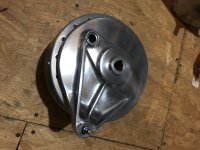
How's your nice dual front drum brake hub coming along ?
?????
?????
bilbikek411
Veteran Member
I see.It needs to be machined to fit the CB 750 fork spacing. Not done yet.
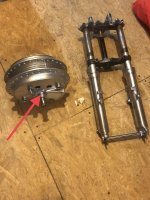
Since we’re on the subject of drums and forks I’ve done some mockup work with the front end components for my project. The Honda and Suzuki hub and axle systems are basically the same. The front axle bolt of each passes through the brake panels, bearings, hub, and spacers. When torqued the components are drawn together into a “unit” and the hub rotates around the axle via the wheel bearings.
The difference is in the width of the Buffalo hub/brake. The axle diameters are identical (15mm) but the brake plate axle bosses (red arrow) are too wide to fit between the Honda fork bottoms. So these bosses will have to be shaved down on either side to fit. Once that’s done I can use the Honda axle and bolt it right into the fork bottom saddles.
Just an observation, it’s remarkable how heavy these front ends are once you put all the components together. And that’s without wheels, tires and suspension innards.
fxray
Veteran Member
It's all looking very good, except for that hardware that you derusted and ran through the ultrasonic cleaner. If you take a close look, you can see the bare steel and the bits of the plating that remains. If you leave it like that, it will rust again in short order. It really should be blasted to bare steel and replated. That would be fairly cheap and easy to accomplish.