CL175K6 "Frame Over Engine" engine removal

Rickhoutx

Member
Joined
Sep 24, 2020
Total Posts
46
Total likes
0
Location
Houston, TX
Preparing for one-man engine removal. Is it better/easier to lay the bike on its left side and pull the frame over the engine? Or, should I lay the bike on its right side then lift the frame off?

Thanks
 
I haven't pulled a 175 engine in decades but IIRC it comes out the left side, and if so that would mean laying the bike on its left and lifting the frame off. The more experienced 175 owners will confirm
 
Lower frame loop is on the right side....LAY it on its right side....Left and right as IF you're astride it.....
 
And there's the confirmation I expected, of course I had it backwards of the two possible choices LOL
 
Lower frame loop is on the right side....LAY it on its right side....Left and right as IF you're astride it.....

Thanks Steve. I assume that I will need to remove the brake pedal first before lifting the frame off? For whatever it’s worth, the nuts on the engine mount bolts are on the right side.
 
Remove footpeg bar....Brake pedal CAN be moved out of way if disconnected from rear brake plate arm, but easier if pedal removed as well.. (but you will lose centerstand and sidestand doing this, so brace against a wall....
Obviously, sprocket cover and chain and start motor cable need to be removed as well.....
 
I've done this several times in the last few years.

I do it with the bike stood upright on the centre stand.

Fuel tank removed, ditto carbs, exhaust, foot rest bar, chain and sprocket cover, clutch cable and electrics. Disconnect the starter cable at the solenoid end, not at the starter motor. Disconnect the rear brake linkage to drop the pedal out of the way.

Engine bolts out, stand astride the bike and take the weight off the engine, then slide it out from the right hand side, threading the starter cable through the frame as you go. Makes life easier if you position a low table / jack alongside, to move the engine onto.
 
I've done this several times in the last few years.

I do it with the bike stood upright on the centre stand.

Fuel tank removed, ditto carbs, exhaust, foot rest bar, chain and sprocket cover, clutch cable and electrics. Disconnect the starter cable at the solenoid end, not at the starter motor. Disconnect the rear brake linkage to drop the pedal out of the way.

Engine bolts out, stand astride the bike and take the weight off the engine, then slide it out from the right hand side, threading the starter cable through the frame as you go. Makes life easier if you position a low table / jack alongside, to move the engine onto.

I've used this method myself up to a CB350 motor and I'm no weightlifter.
 
Thanks Gents. Mission accomplished.

Now to build a support base out of 2 x 4’s for the engine to sit on. Does anyone know the recommended inside dimensions for a CL175K6 engine?
 
1G_x45ddPRlL89M8fmTdzPJmZHVgrzc5d
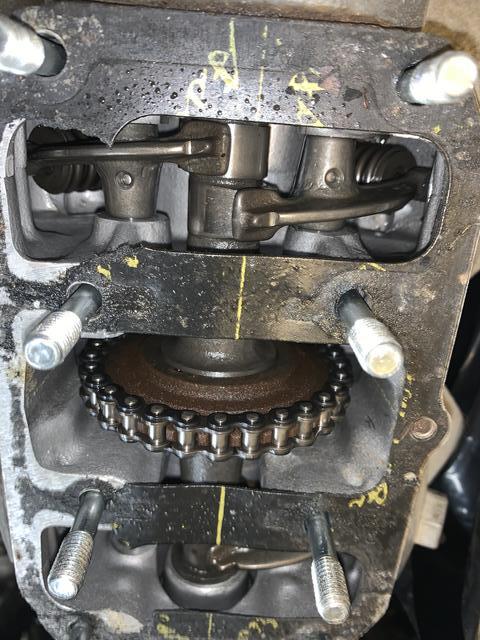
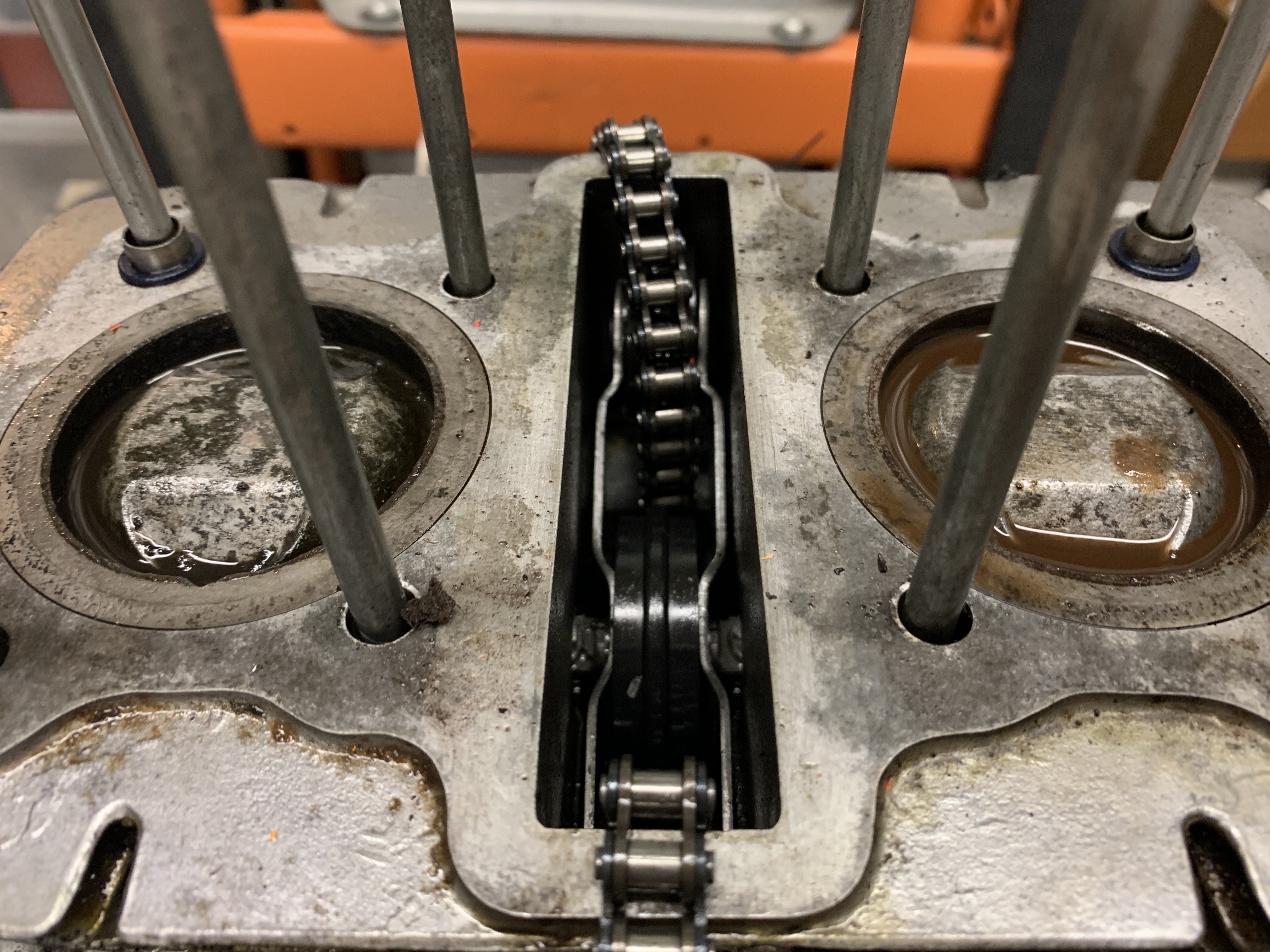
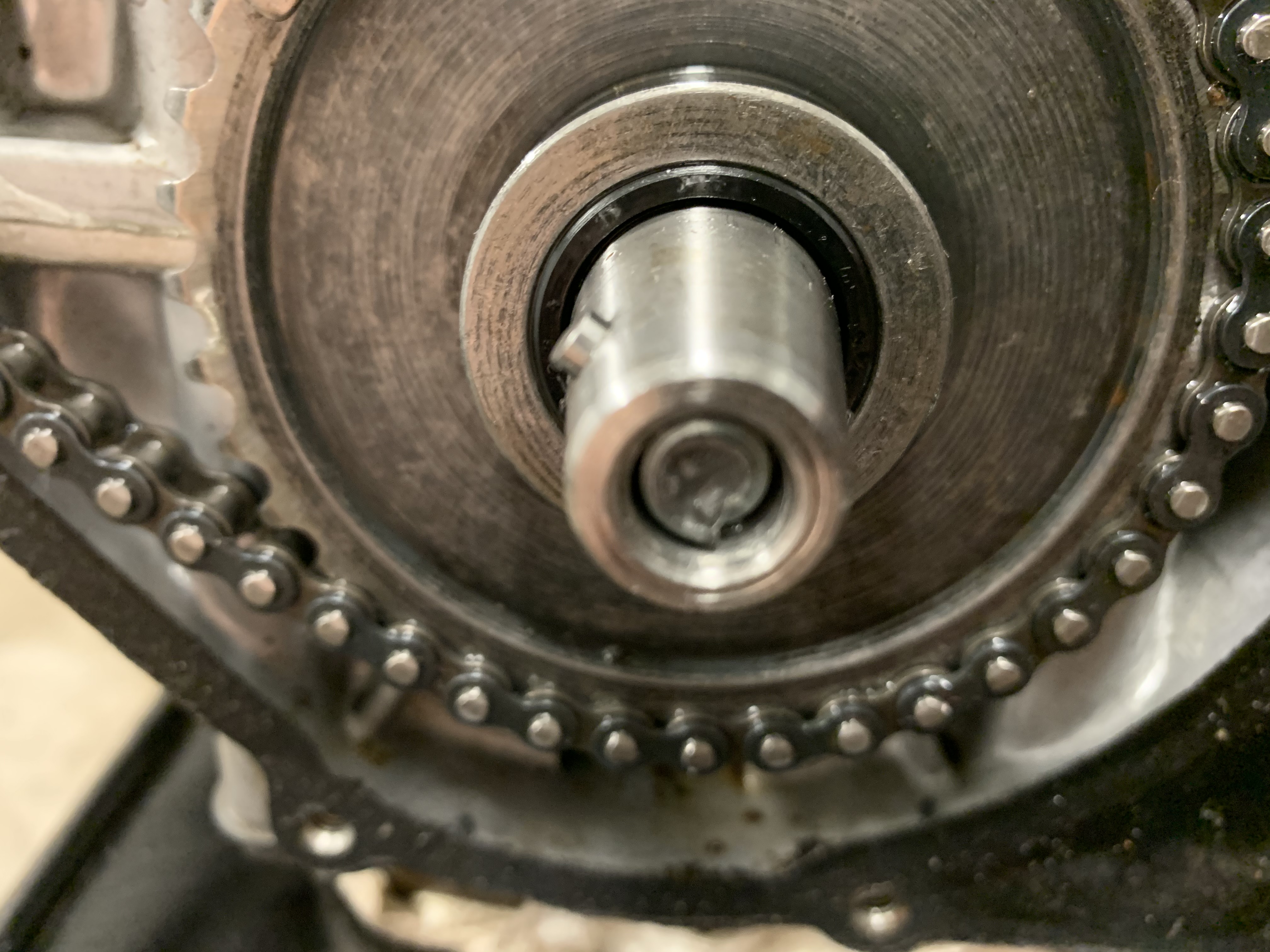
With the engine out it was time to assess the situation. I drained about a quart of oil through the drain plug. The oil was dirty but had no water content and still had some viscosity. I saved about half of the oil and filtered it carefully looking for any metal content. None was found. Unfortunately, one severely rusted spark plug disintegrated on my removal attempt and will have to be dealt with if the engine is deemed worth rebuilding. Removing the head cover revealed a clean cam chain area with some residual oil lubrication. The same was true of the for the oil filter and the stator side after removing the stator cover. Clean, no rust, with residual oil lubrication.

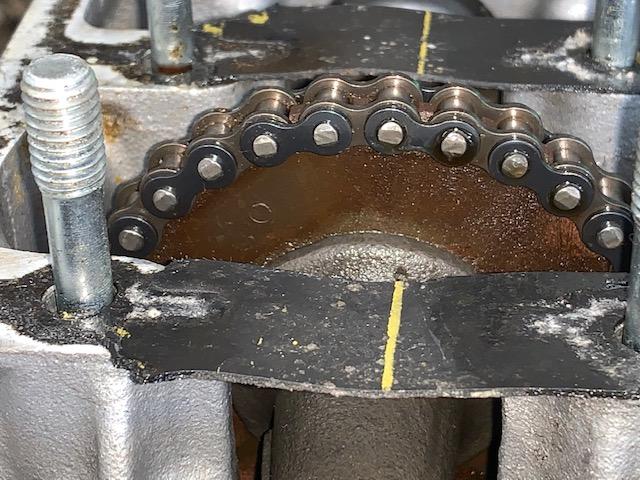
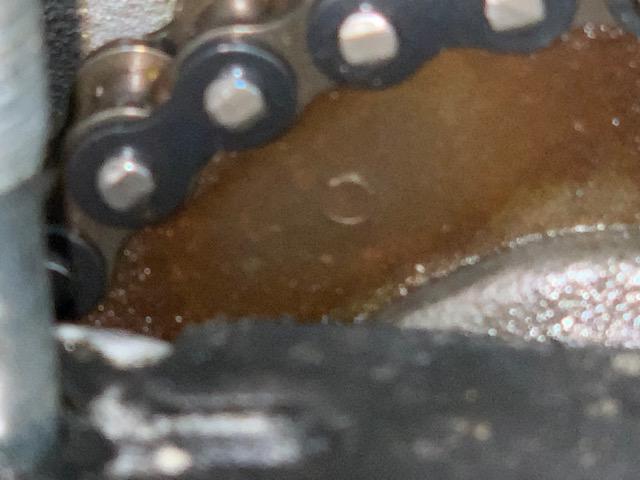
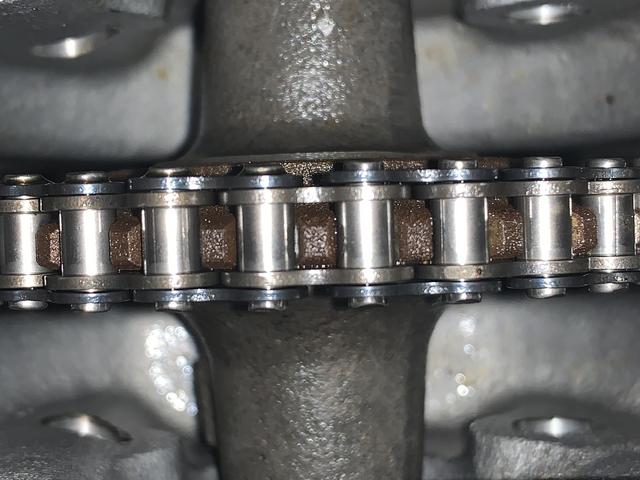
That bad news is that the pistons are, as expected, seized with the cam chain master link of course not visible with the head cover offer. Are there any "hail mary" suggestions on how to unsieze the engine without having to cut the cam chain?

Sorry, but I'm struggling to upload pictures at the moment.


w9RT2EN-z5h-r8T2biCRKSZbhZmnMk8b6M-sELiH8vQUtjZUCkTyUnpj5eilJJCi9HS11SlOLe2yYW52NoqYD7MtxpkDTKiJw_JJ6HKBj80pzJbyIUVp0Wdmnx6DA-UmCKXZNjNa
 
Last edited by a moderator:
Yes, if one or both pistons are stuck, you'll have to cut the cam chain where it sits unfortunately, or risk damage to one of the cam bearings by disassembling the head before breaking the chain.
 
Drill through the stuck spark plug if you can't get it out then use a 50/50 mixture of automatic transmission fluid and acetone to fill up the stuck cylinder (or both, won't matter)
ATF/acetone was found to be at least as good as the 'best' penetrating oils and far better than many of the well known brands
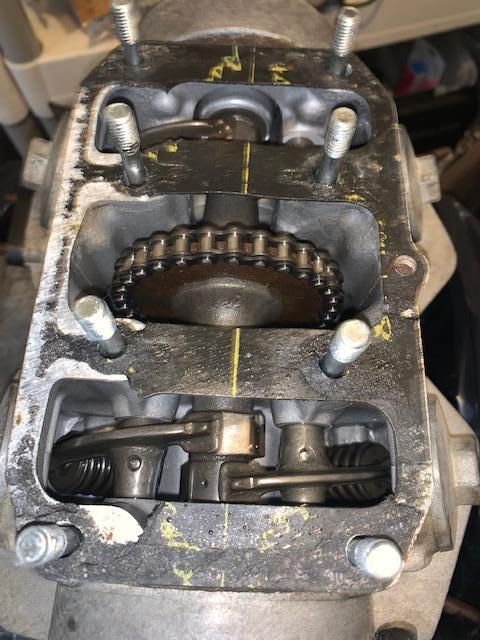
Damp has probably got in through the open valves on right side, you can see they are on overlap. It shouldn't be seriously stuck as there is still some lube on top end,
It's a pity I didn't see this before you pulled engine as I find it easier to put bike in top gear and 'walk it backwards' after a few days soaking.
You get a heck of a torque multiplication and the weight of bike keeps tyre gripping when going 'in reverse'
Having a better look at pic, looks like left intake and right exhaust opening so both sides could be stuck?
 
Last edited:
Drill through the stuck spark plug if you can't get it out then use a 50/50 mixture of automatic transmission fluid and acetone to fill up the stuck cylinder (or both, won't matter)
ATF/acetone was found to be at least as good as the 'best' penetrating oils and far better than many of the well known brands
Damp has probably got in through the open valves on right side, you can see they are on overlap. It shouldn't be seriously stuck as there is still some lube on top end,
It's a pity I didn't see this before you pulled engine as I find it easier to put bike in top gear and 'walk it backwards' after a few days soaking.
You get a heck of a torque multiplication and the weight of bike keeps tyre gripping when going 'in reverse'
Having a better look at pic, looks like left intake and right exhaust opening so both sides could be stuck?

Thanks Crazypj. I'll give the ATF/Acetone mix a try. Silly question; With the engine out, and after injecting the mixture through the 2 spark plug openings and letting it soak, what is the best way to apply force to the crankshaft in order to free up the seized piston(s)?
 
Take the alternator cover off the left side of the engine (3 screw cover with Honda on it) and try turning the engine with the 14mm bolt head in the crankshaft. Obviously, if you turn in the direction of rotation it will loosen the bolt but for your purposes you can try to turn the engine backwards, just in the interest of getting the pistons loose.
 
If that doesn't work, it's probably better to remove clutch cover and oil filter then turn on the primary drive gear which has far less chance of breaking (particularly if you use a wide reatively thinpry bar to pry at base of gear tooth)
 
I put about 1.5 ounces of the 50/50 acetone and ATF mix into each spark plug hole today. I'll do a daily squirt of penetrating oil into each plug hole to help "remix" the solution and then try torquing on it this weekend. If that fails, I may just cut the cam chain and pull the head off, but was hoping to avoid that if possible.

This will be a learning experience for me either way as I have never rebuilt the top-end of an engine before.
 
Last edited:
^^^What you've tried to show is private content, either inside your Google storage or email so nothing displays
 
Sorry. I have failed miserably in trying to share pictures.

This is what I see when I go to Edit the empty post:

docs.googleusercontent.com/docs/securesc/86emsn6ecfp93ie2aohu69fl2vjk7jhu/e779gus2gqpius4o2cp65cmg1ghl21bn/1603850175000/03643338141837642560/03643338141837642560/1brdQgADSQ79Db4gxL8ke7csC_JEzWuev?e=download&authuser=0

The bold portion above tells me it's not shared content, and the "docs" part of it seems to indicate you stored them in Google Docs...?
------------------------------------------------------------
You haven't failed until you've quit trying. Are those pictures you tried to display above in your email? Or did you upload them to a Google Drive account? If they're in a Google Drive account, either the individual pictures or the folder they are in has to be shared or it will require someone to log in to see them. If they are in your Gmail, they can't be shared from there. Perhaps an Imgur account is what you need, posting them once uploaded there is actually pretty simple. Let me put together a tutorial for it.
 
Last edited:
DmR4lHI.jpg
OsXEtD0.jpg
5s9BRrv.jpg
5puwbi3.jpg
NVONz0e.jpg
iPBFNGg.jpg
n9UkadS.jpg
GgjwIdW.jpg
5h138EV.jpg
dZoI0Ob.jpg


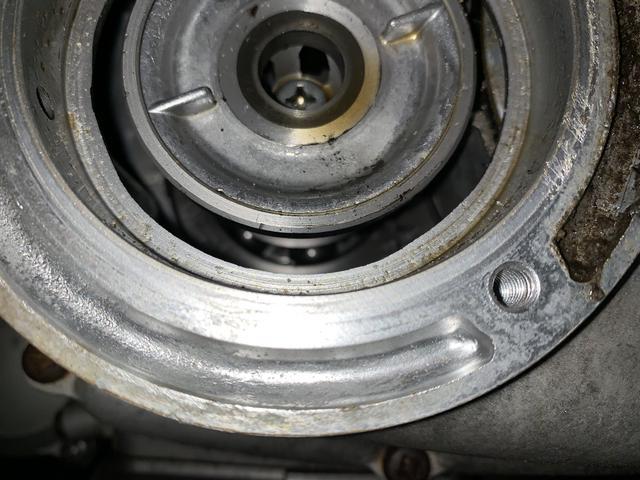
Going from bad to worse. I managed to break off the 14mm bolt (middle of ROTOR) that connects to the crankshaft on the left side of the engine. Cursing ensued.

"Project Boat Anchor" is on track.
 
Last edited by a moderator:
AD - Thanks for the Imgur write up. Can you see the "Project Boat Anchor" pictures now?
Absolutely - all 10 of them, which I find curious BTW. The limit of 10 per post was something I thought only applied to uploaded pictures to our server, but apparently the forum software sees pictures hosted elsewhere in the same way. Well done, glad my tutorial helped.
 
AD,

Coincidentally, I think I only attempted to link to 10 images from my Imgur site in my earlier post. I tried linking to 15 images in this post, but received error message below. It seems that your 10 pic limit applies when using the URL link method. Just fyi.

Errors

The following errors occurred with your submission


  1. You have included a total of 15 images in your message. The maximum number that you may include is 10. Please correct the problem and then continue again.

    Images include use of smilies, the BB code tag, and HTML <img> tags. The use of these is all subject to them being enabled by the administrator.
    [/LIST]

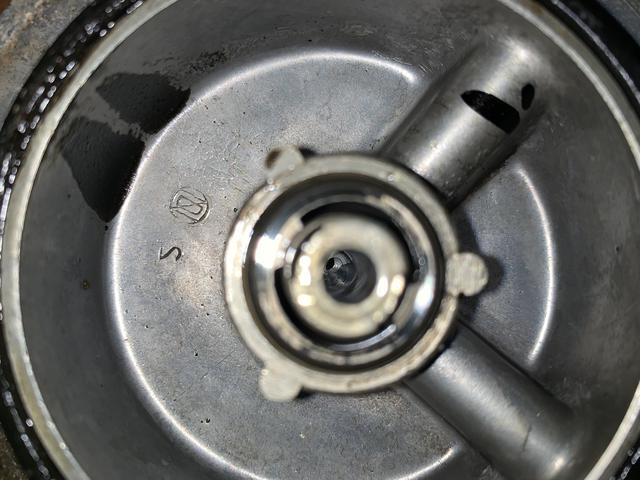
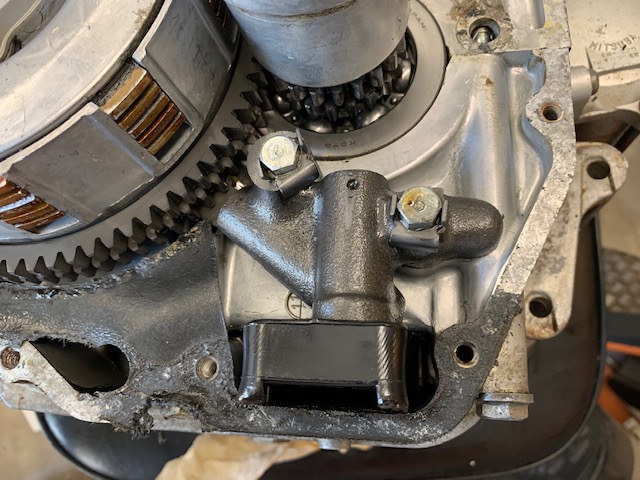
    [/COLOR]Given that I broke the 14mm bolt in the center of the stator, do you have any other suggested methods for trying to free up the seized engine? I did manage to get the clutch side cover off (see first two pics below). If not, what is the suggested method for cutting the cam chain?

    Rick

    (CEO of Project Boat Anchor)


    [IMG][IMG]https://i.imgur.com/MUpUj7v.jpg
    WLmdLZk.jpg
    q5fEY0K.jpg
    DmR4lHI.jpg
    OsXEtD0.jpg
    5s9BRrv.jpg
    5puwbi3.jpg
    NVONz0e.jpg
    5h138EV.jpg
    dZoI0Ob.jpg
    [/IMG]
 
Apart from being seized, that engine looks to be in nice condition, very clean inside.

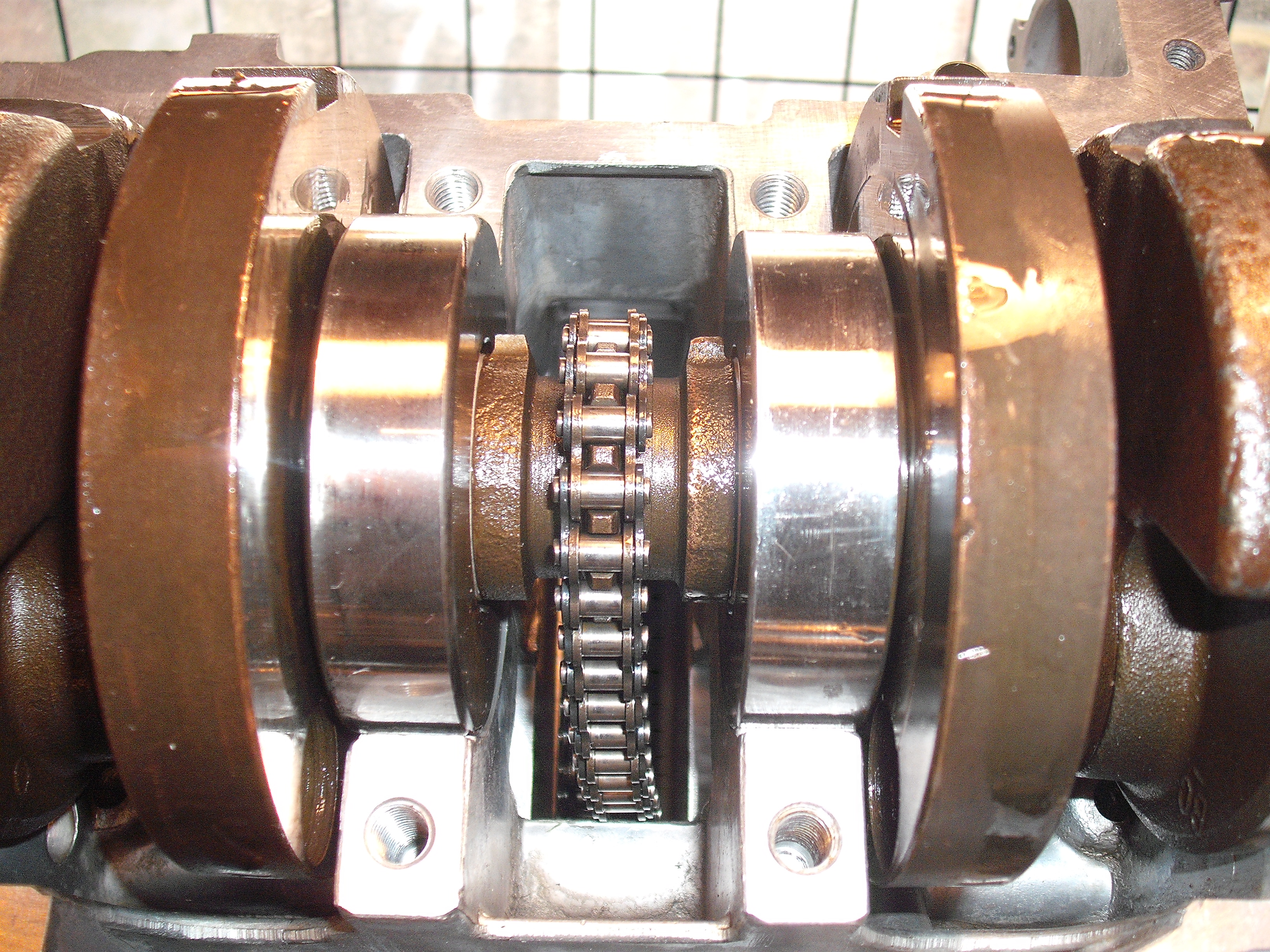
I'd try splitting the cases next, you just might get lucky and find the split link accessible from the underside.

zhubTvP.jpg
 
Richard - Thanks for the "split the case" suggestion. It offers the added benefit of my project creating multiple boat anchors. But before I go that route. I'd like to continue with the attempt to free up the seized pistons.

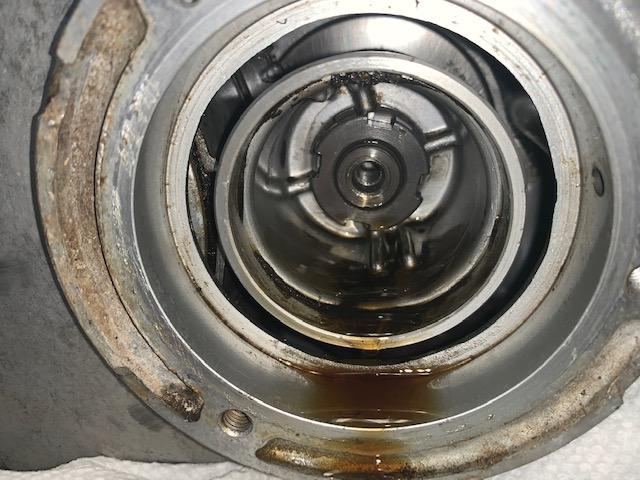
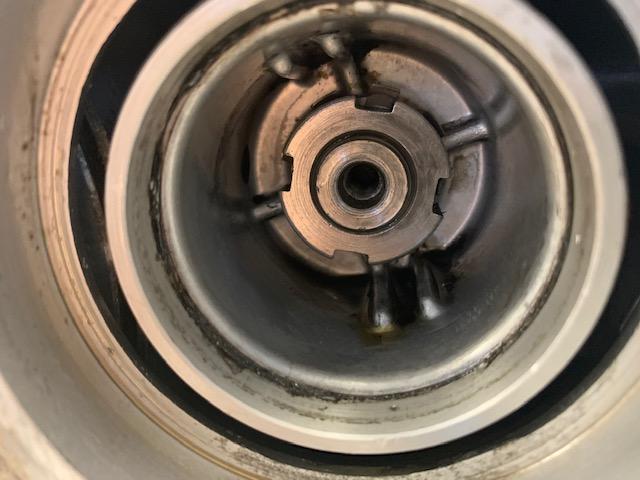
Looking at the FSM, I don't think I have the proper tool (lock nut wrench) to remove the oil filter rotor and gain access to the primary drive gear or crank shaft. I'm wondering if I can use an over-sized oil filter remover tool to apply torque to the clutch. Any other suggestions are welcome.

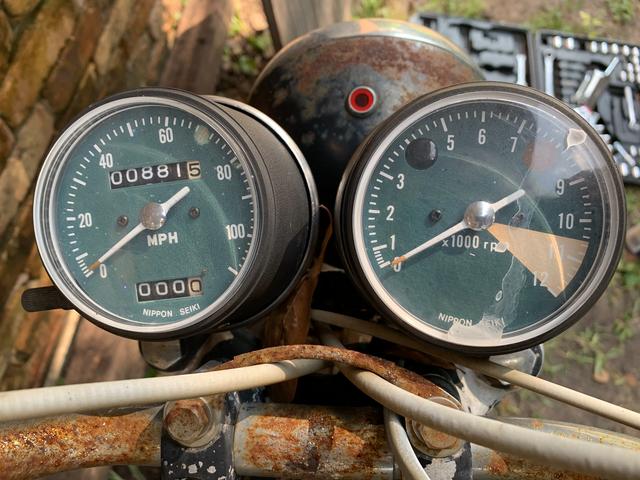
The engine really is quite clean inside which is consistent with the original owner's account (and odometer) that the engine had less than 900 miles on it before it was parked. By the way, I did not buy the bike from the original owner. He sold his house with many possessions left inside. I bought it from the purchaser of his house. I spoke with the original owner after buying the bike and he had no reason to mislead about the mileag"e.

"Project Boat Anchor" continues.
 
Going from bad to worse. I managed to break off the 14mm bolt (middle of ROTOR) that connects to the crankshaft on the left side of the engine. Cursing ensued.

"Project Boat Anchor" is on track.

Now you know why I said to remove clutch cover. Broken bolt shouldn't be too tough to remove, you need rotor out the way first though. Has it broken off just below surface of crank?
You may as well try a strap wrench on the rotor to turn engine over, if rotor comes off you haven't 'lost' anything and can then tap broken bolt around with a sharp centre punch.
If rotor doesn't come off, use a proper puller (20mm bolt? should be same as rear axle)
 
Last edited by a moderator:
I broke a link on the cam chain and pulled the head off. The clutch side of the head/piston/cylinder was far worse off than the rotor side. I've been patiently soaking the pistons/cylinder this week and have been alternating between evaporust and acetone/ATF mix. Cosmetically, things are looking much better but I may use some more "persuasion" tomorrow in another attempt to unseize the pistons. Fingers crossed.
 
Some progress today on "Project Boat Anchor", but probably more bad news than good news.

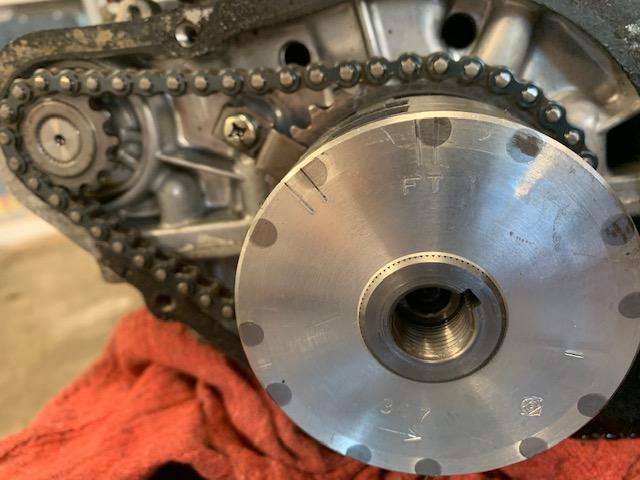
First the good news; I was able to free-up the pistons. I also was able to remove the rotor in order to gain better access to the broken (10mm?) bolt inside the rotor-side crankshaft.

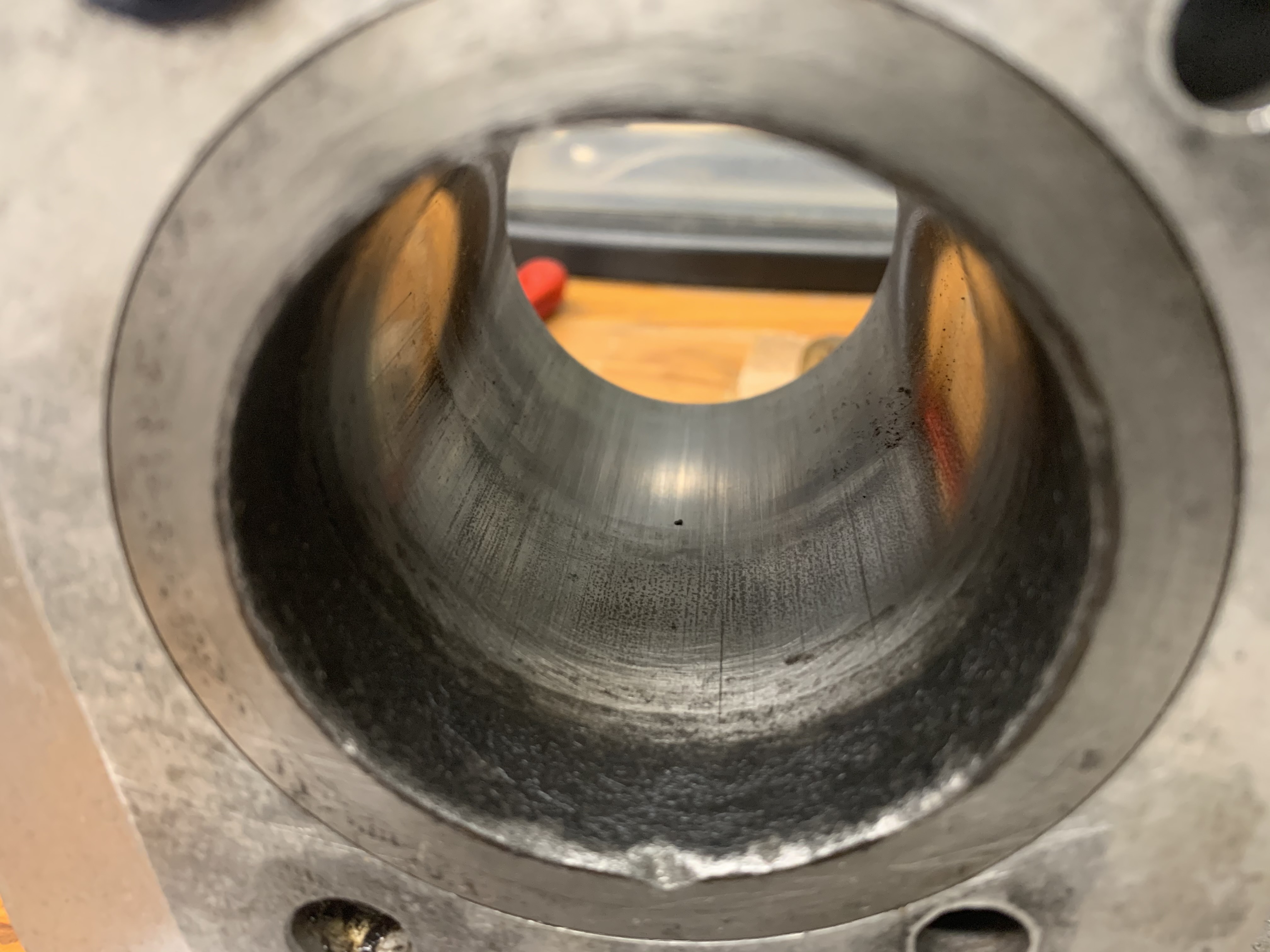
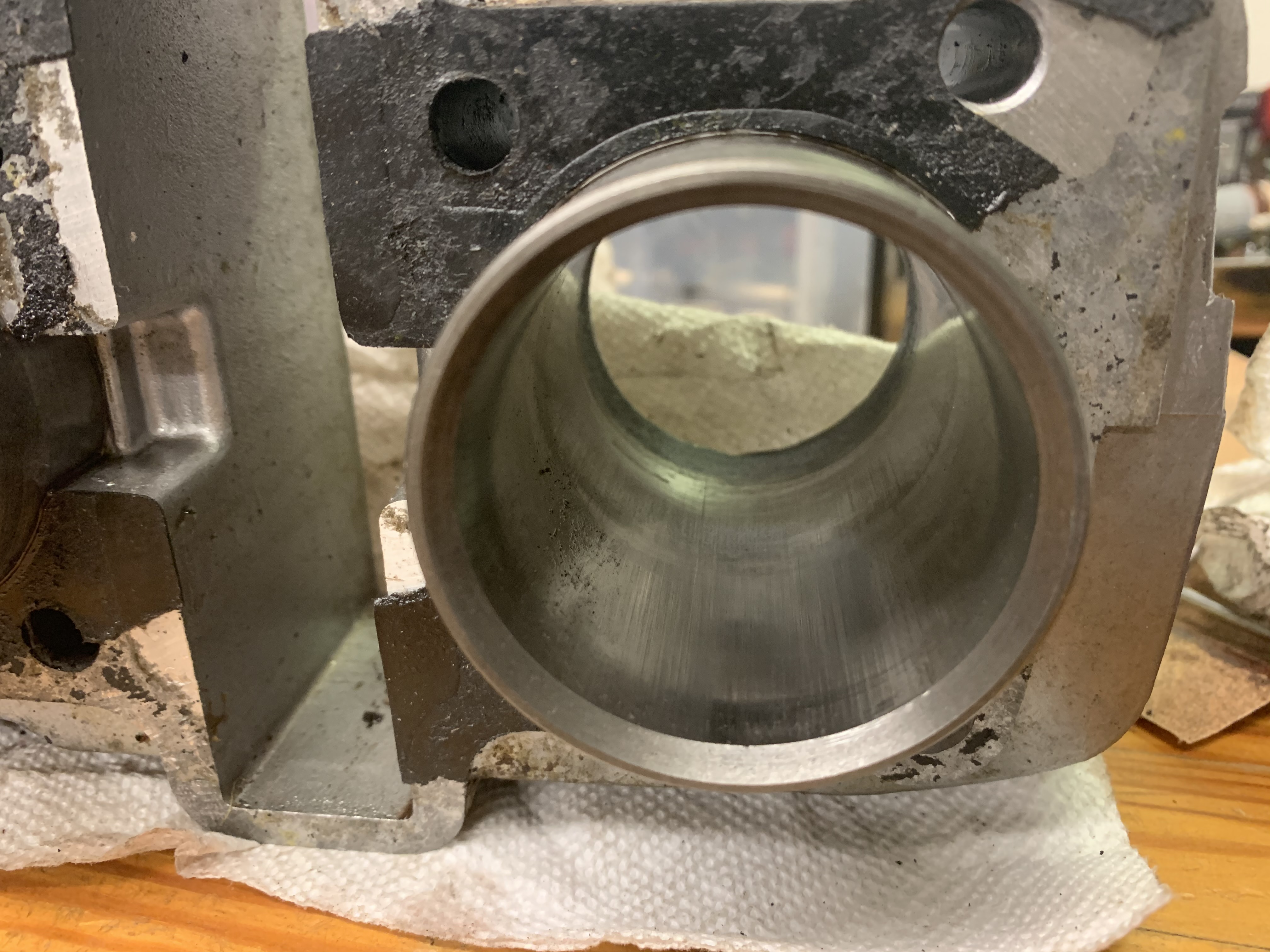
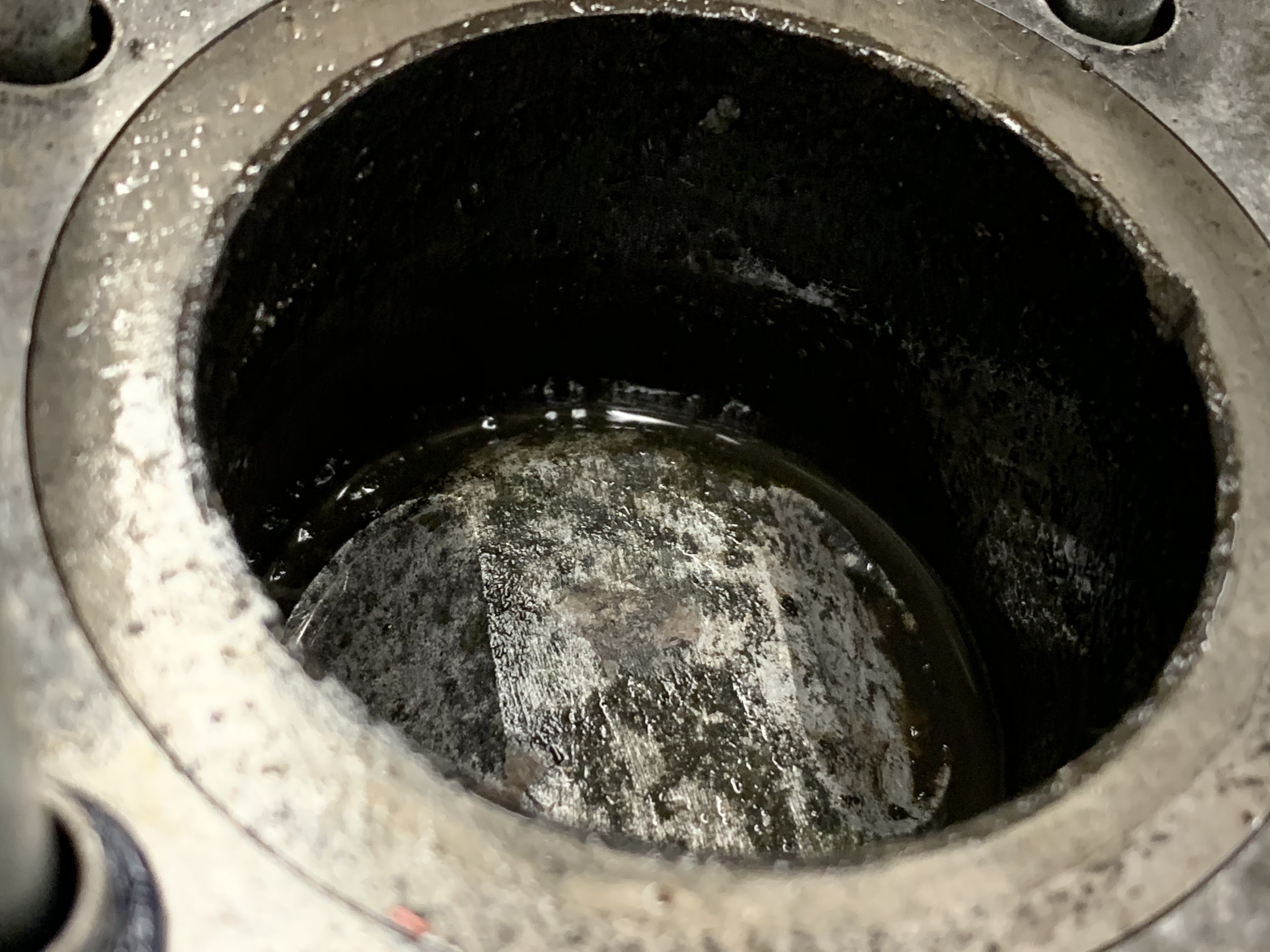
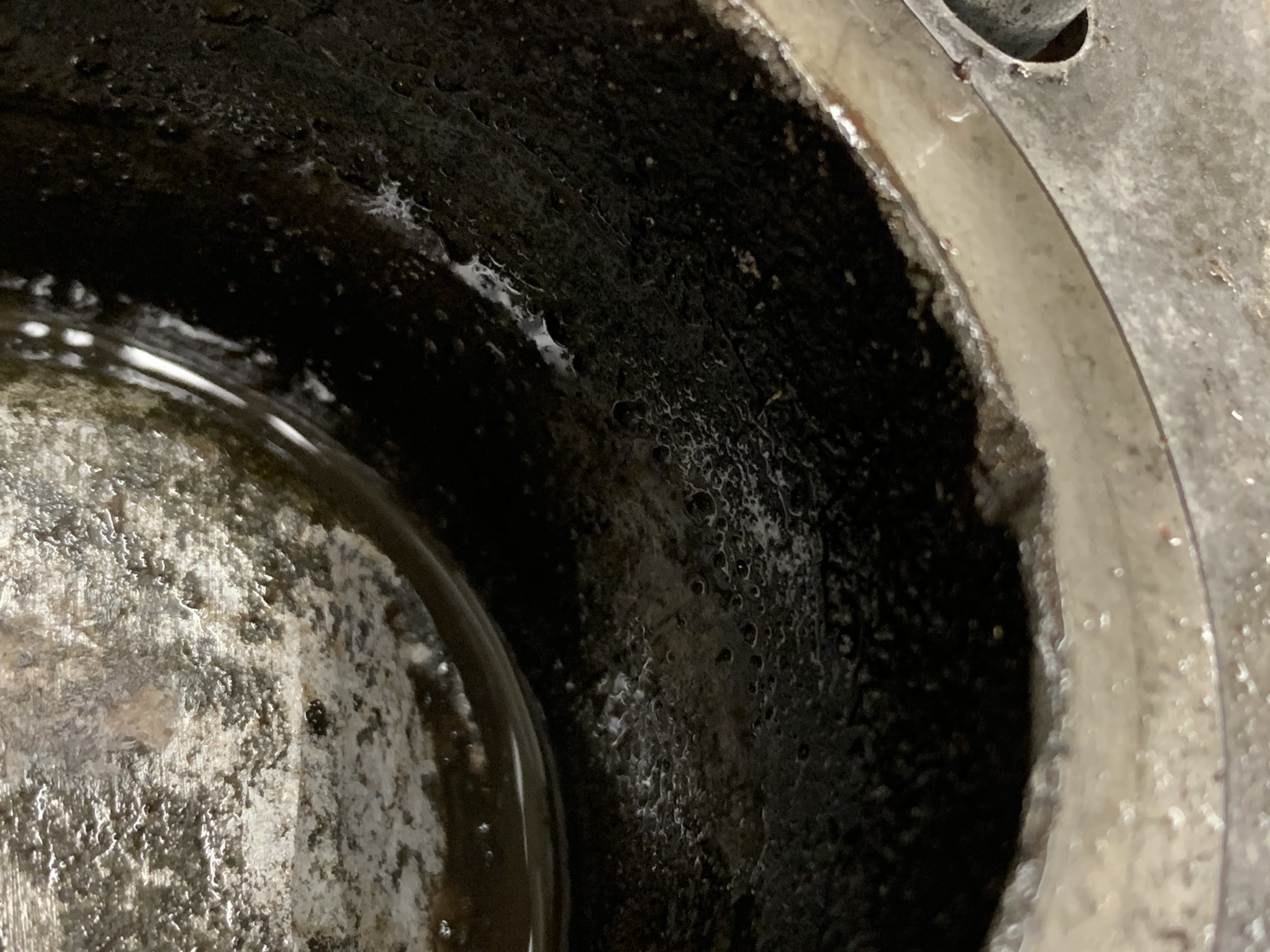
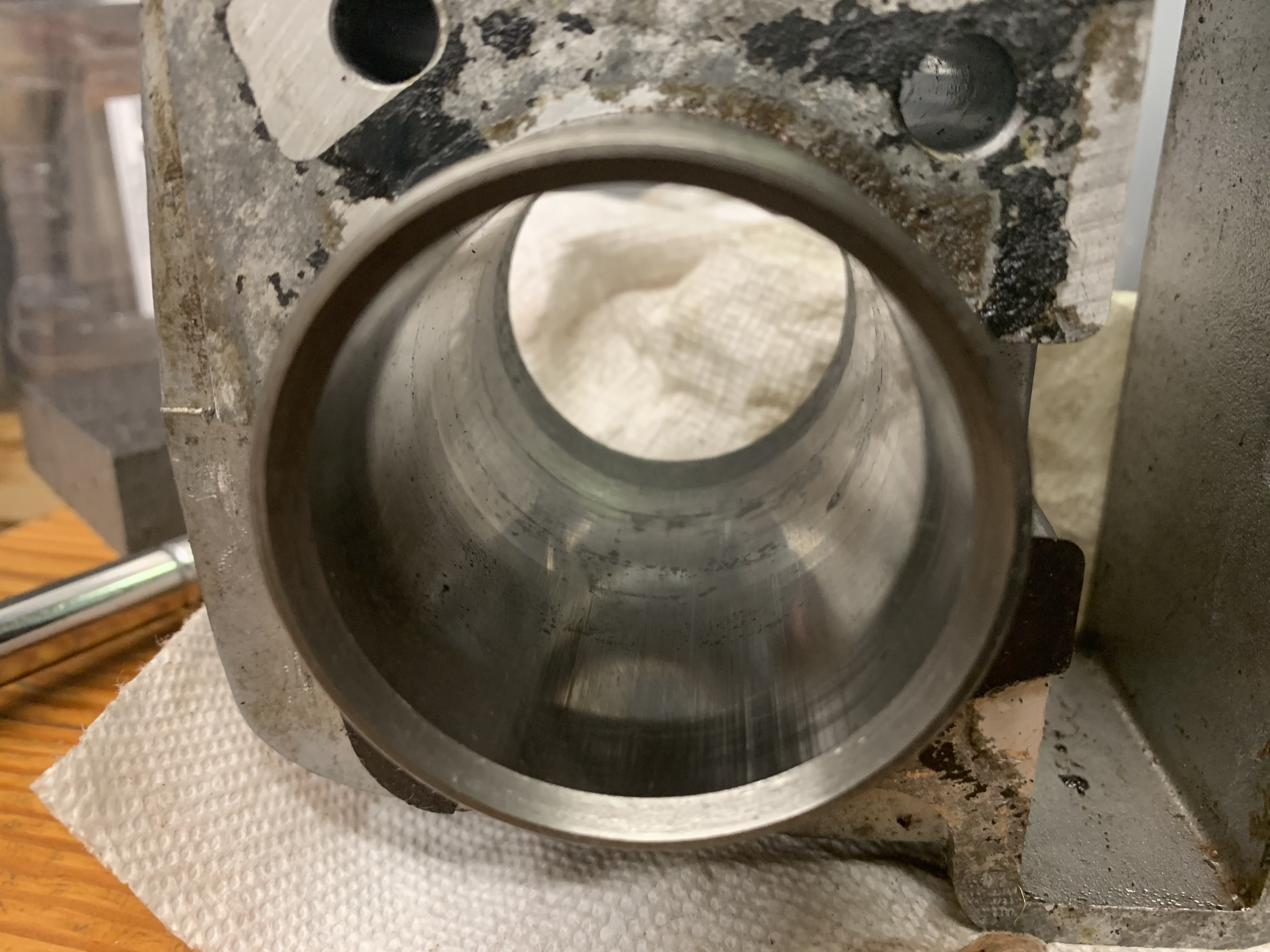
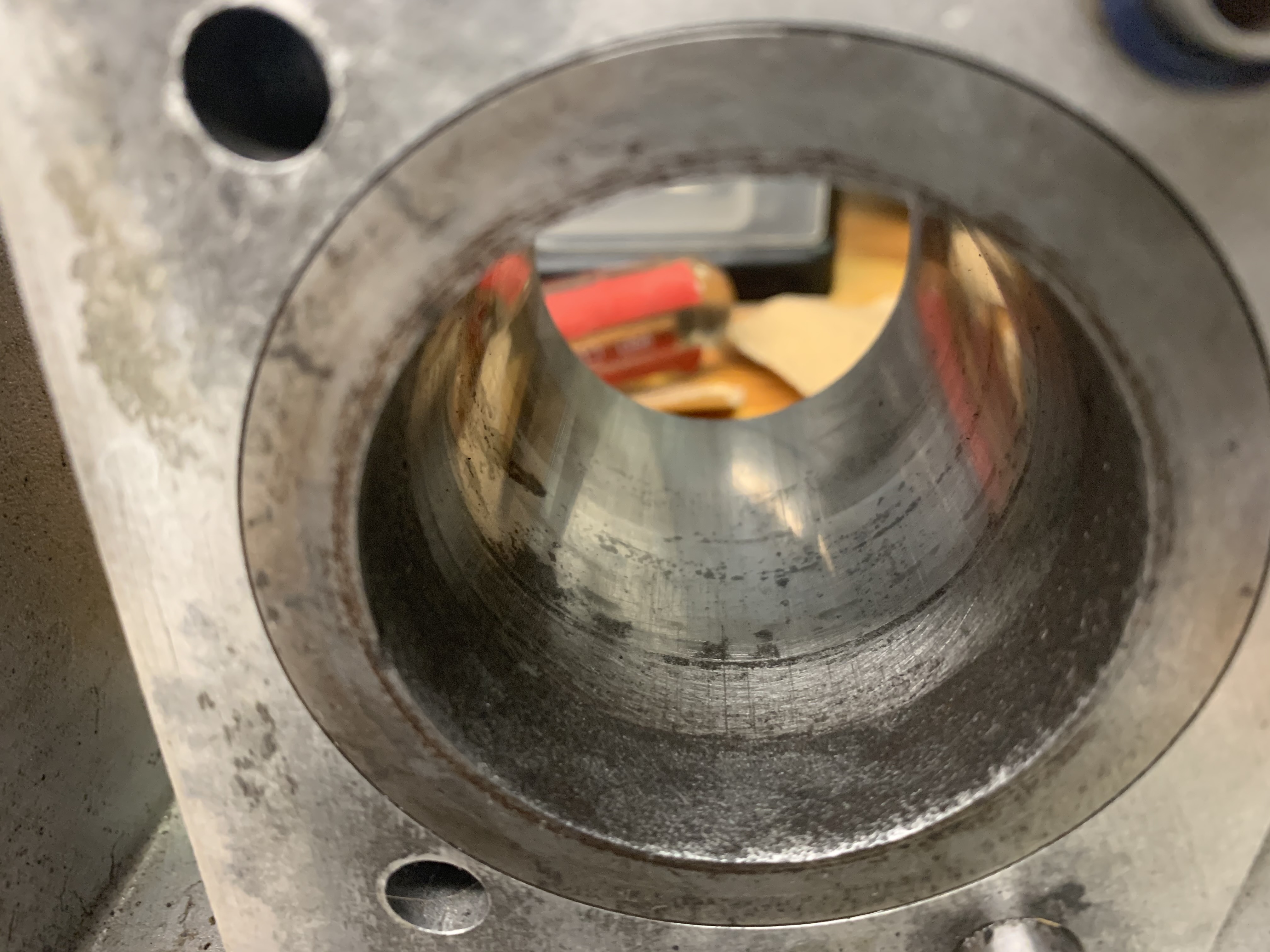
Now for the bad news; I am not able to obtain a full revolution of the motor (when rotating in either direction) as it gets stuck when the pistons reach near top dead center. Even worse, the clutch-side cylinder sleeve may be beyond repair even with an over bore. Someone who shall remain nameless may have contributed to a chip at the top of the sleeve which already has heavy, heavy pitting. Since this is my first exploration into a motor, I will defer to others on the usability of the cylinder/sleeves.
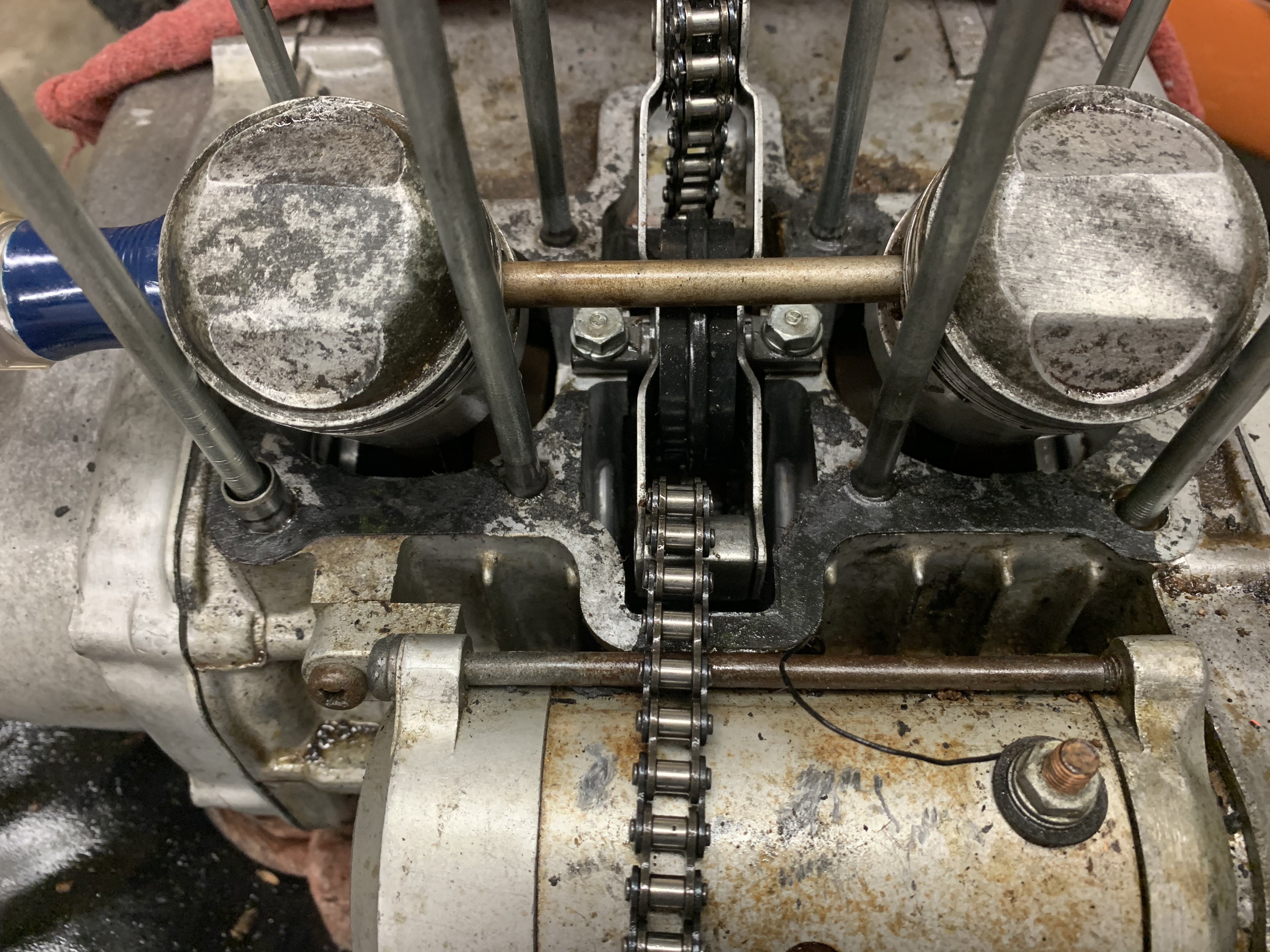
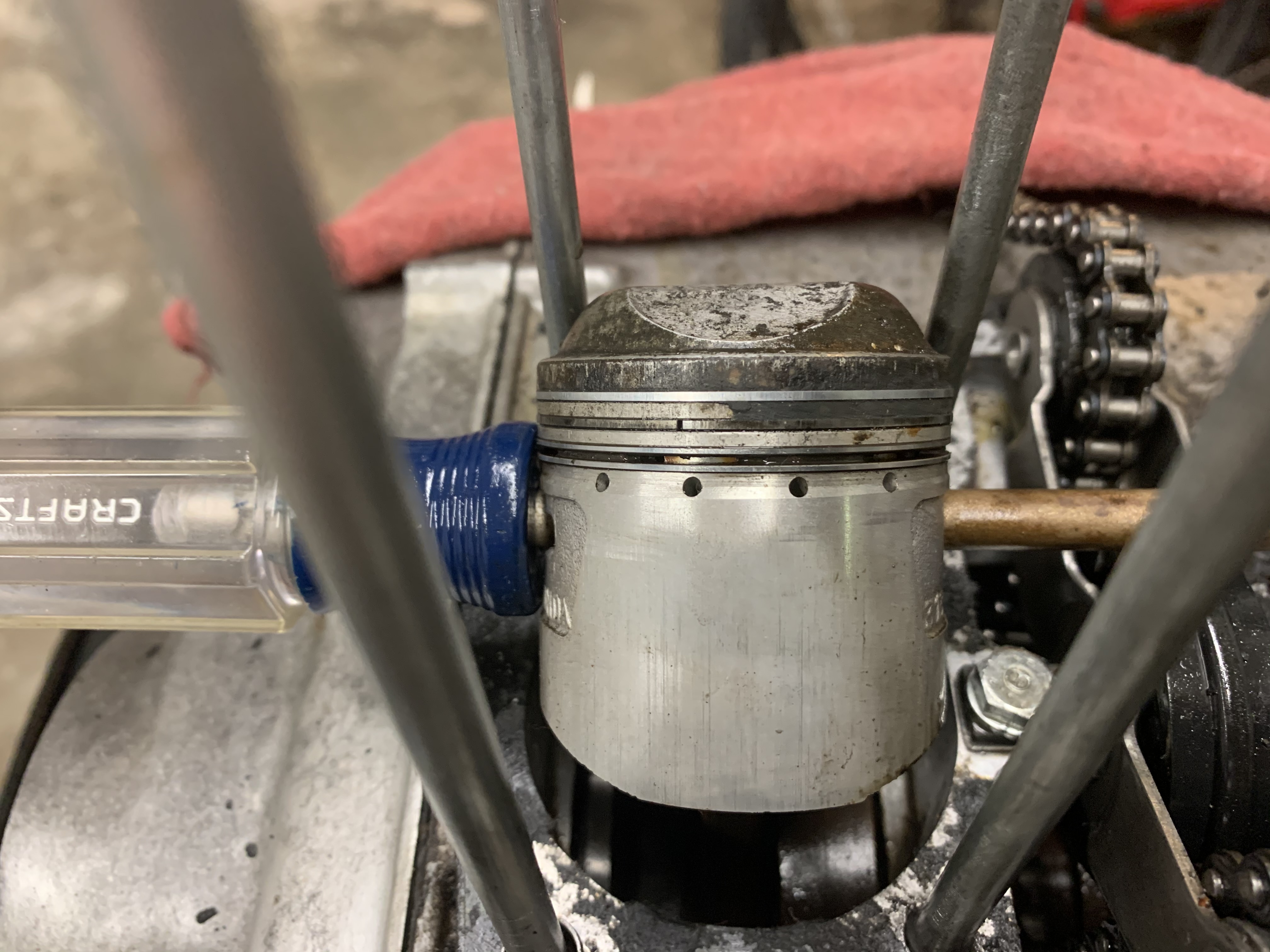
Dumb guy question; What needs to be loosened/removed in order to lift the cylinder barrel over the pistons? I tapped all around the cylinder with a rubber mallet, but the cylinder does not want to budge. For once, I did not want to force it off and risking breaking something.

The cylinder head is a work in progress (soaking in Evaporust) but again, the clutch-side of the head may not be usable.

Pictures to follow in a subsequent post.
 
Some progress today on "Project Boat Anchor", but probably more bad news than good news.

First the good news; I was able to free-up the pistons. I also was able to remove the rotor in order to gain better access to the broken (10mm?) bolt inside the rotor-side crankshaft.

Now for the bad news; I am not able to obtain a full revolution of the motor (when rotating in either direction) as it gets stuck when the pistons reach near top dead center. Even worse, the clutch-side cylinder sleeve may be beyond repair even with an over bore. Someone who shall remain nameless may have contributed to a chip at the top of the sleeve which already has heavy, heavy pitting. Since this is my first exploration into a motor, I will defer to others on the usability of the cylinder/sleeves.
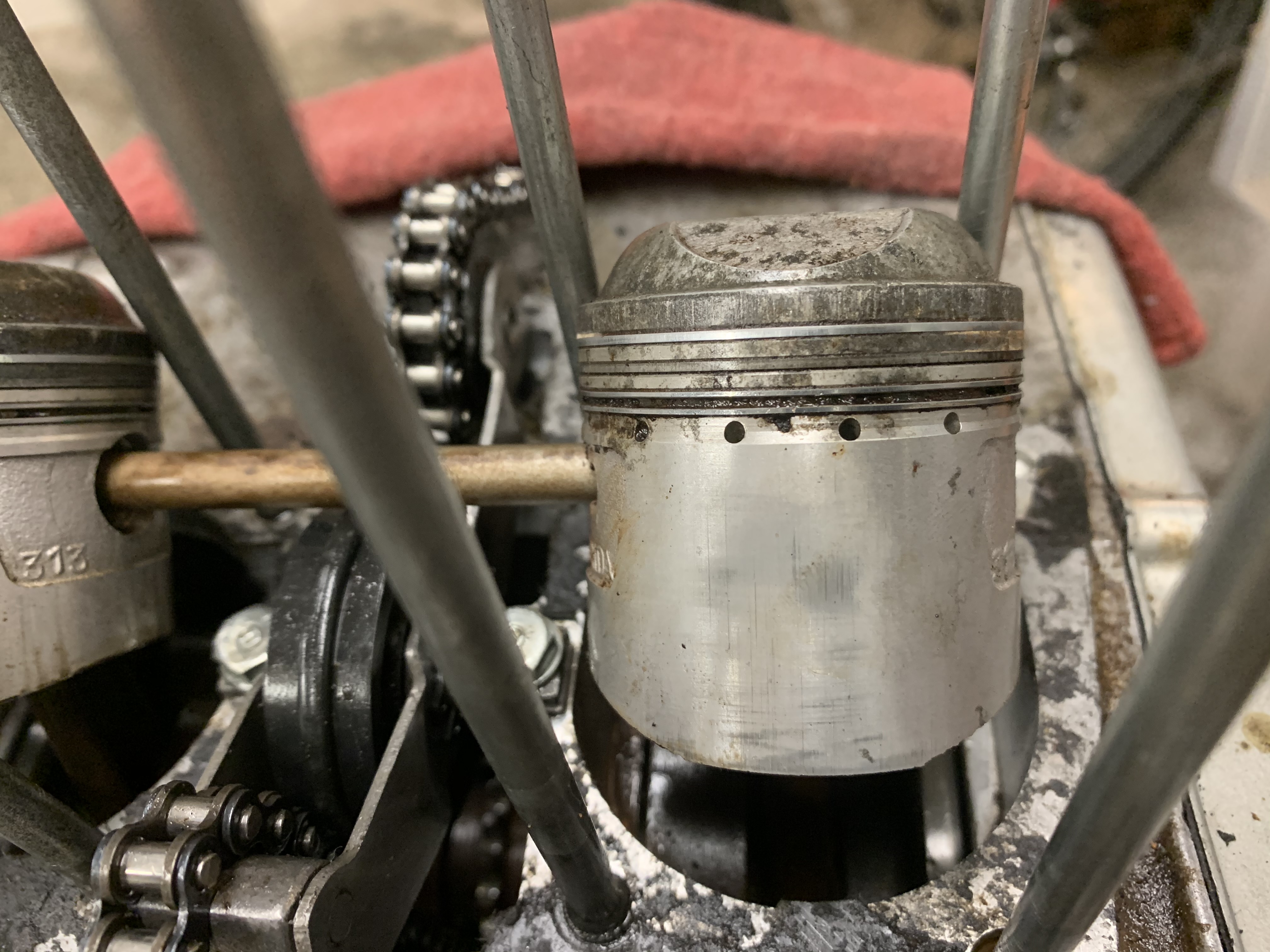
Assuming the rest of the sleeve will clean up with a bore job, as long as that ding in the cylinder wall is above the top ring travel it should be ok.
 
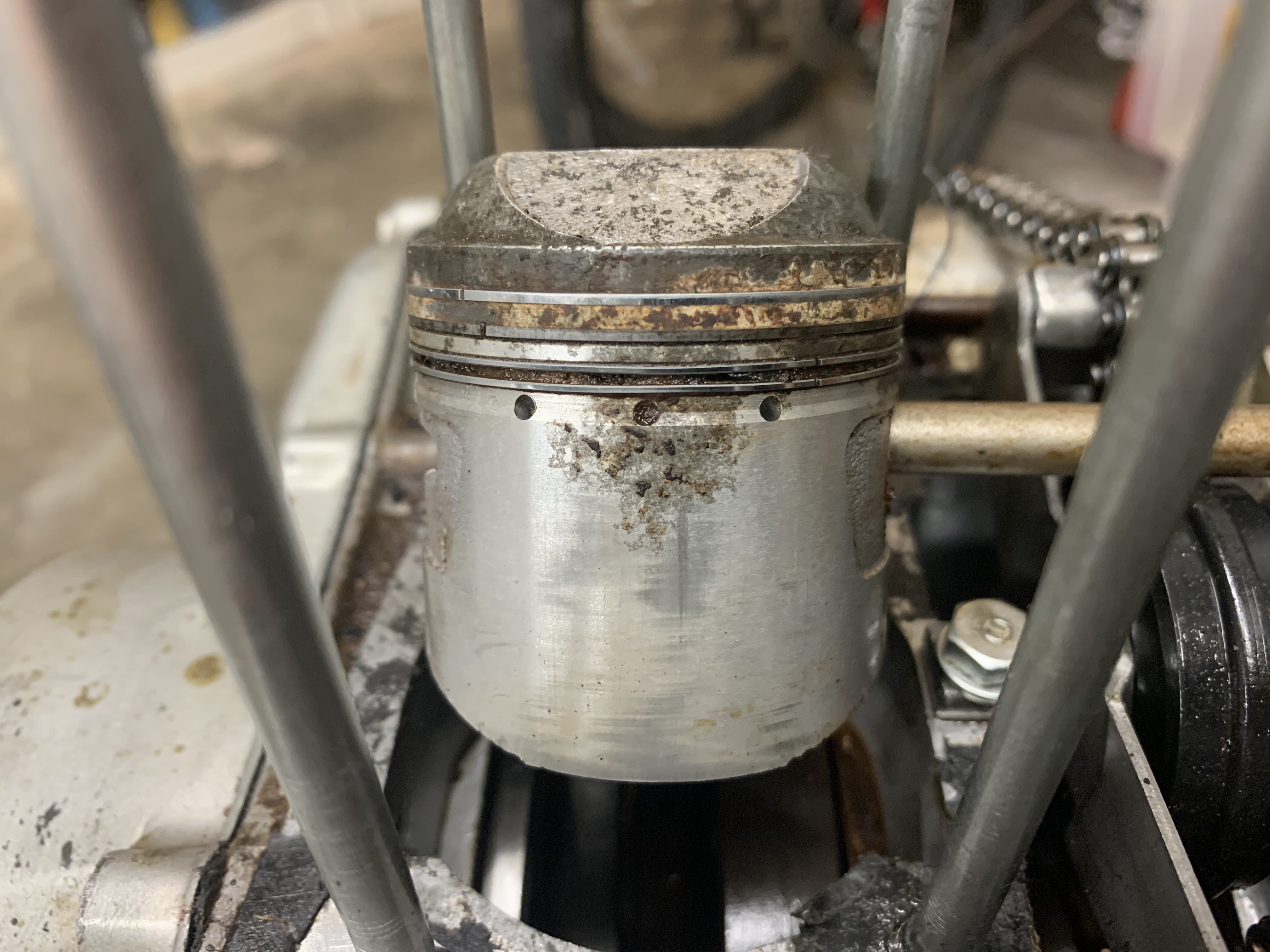
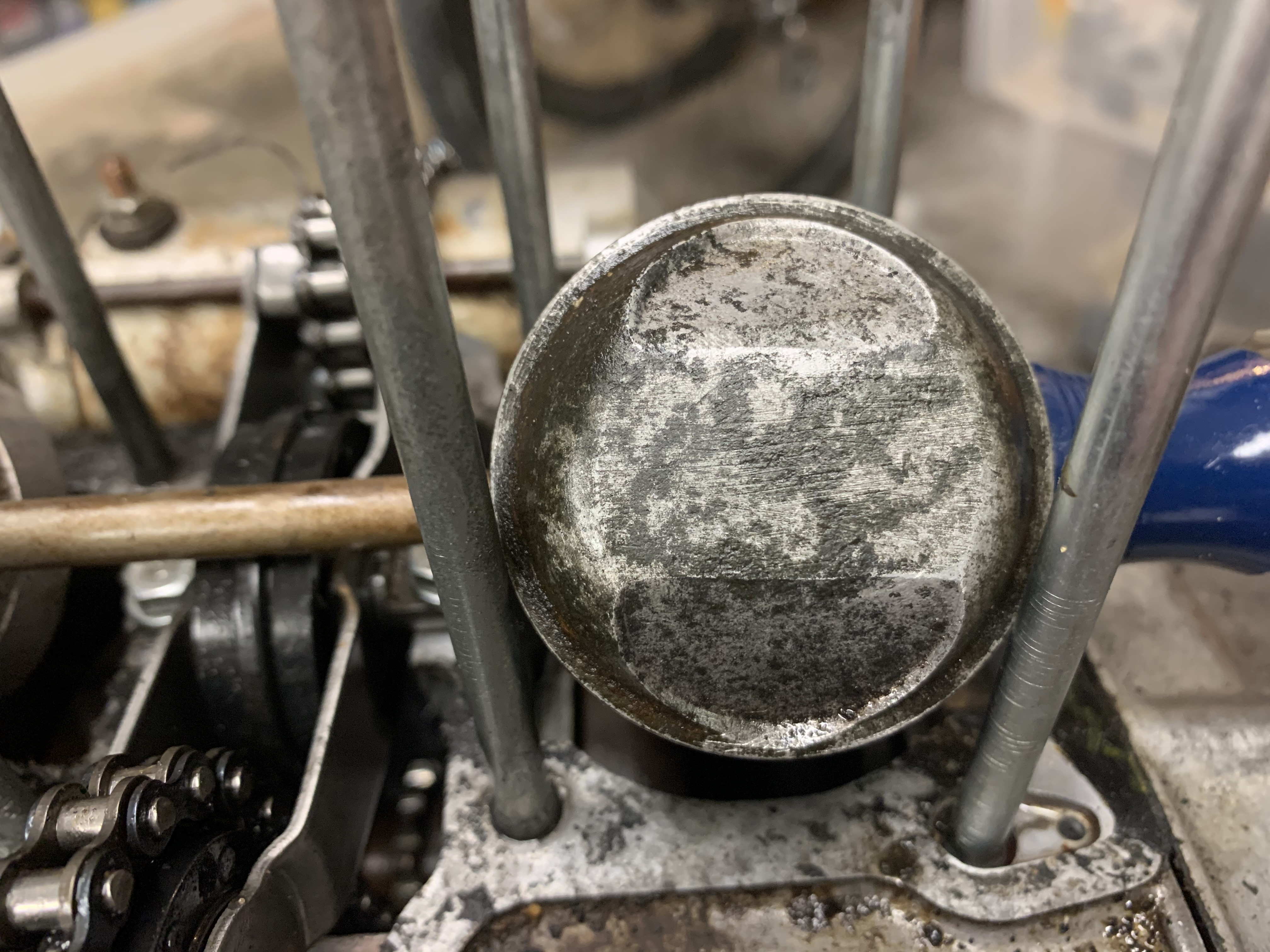
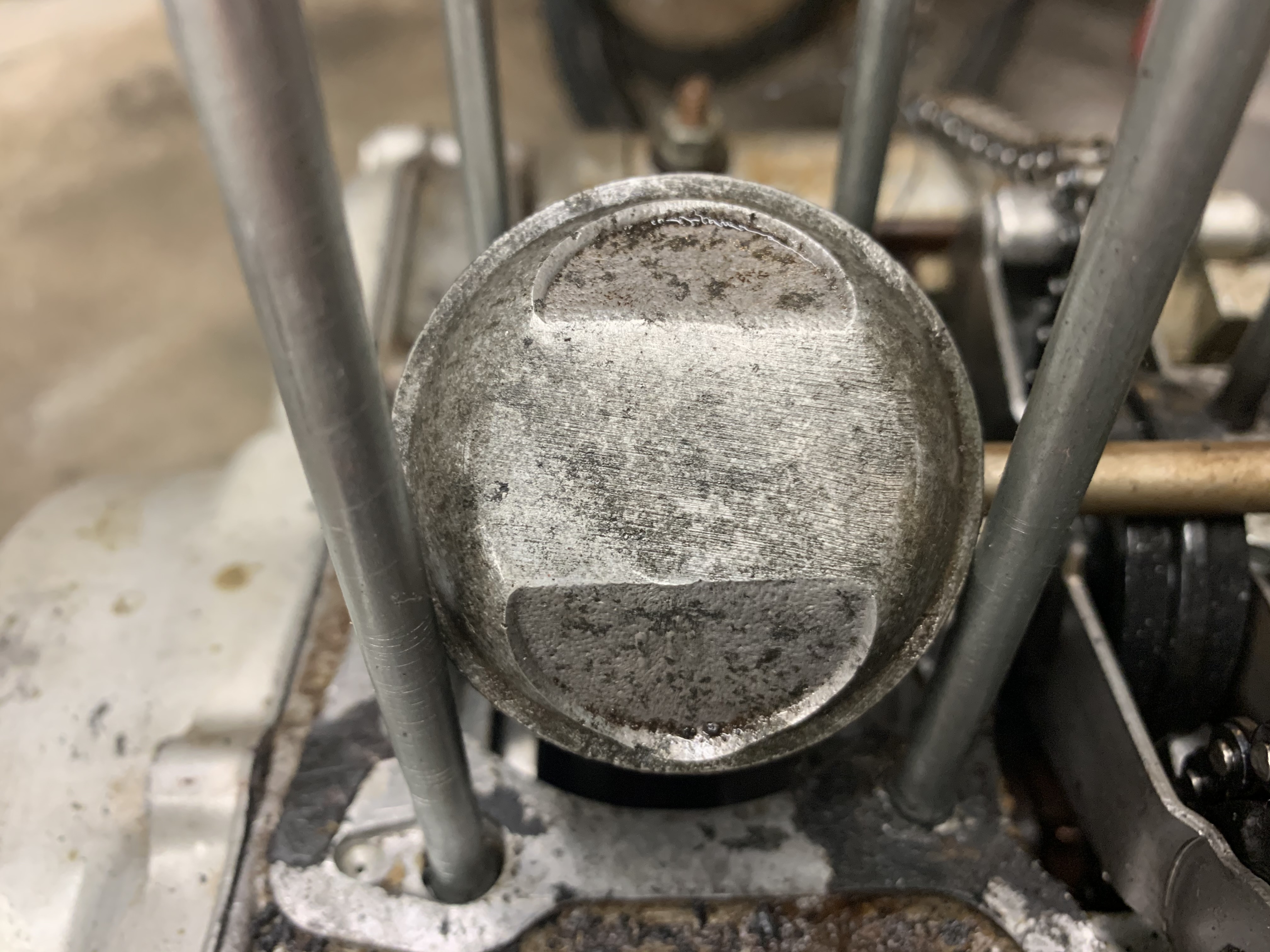
More progress today. "We have liftoff...of cylinder". It just needed more persuasion from the rubber mallet. Unfortunately, a 1-inch section of of cooling fin paid the price. I was surpised that the pistons and rings looked as good as they do. I fully expected the rings to have rusted in place. None are.

111ncQZ.jpg

6b6CaYk.jpg

EZeCGeD.jpg

yquJ6DA.jpg

cgd1zqI.jpg

h8G3QtZ.jpg

kbZc1ks.jpg
 
But the rings are firmly stuck in the pistons as expected. My concern when using force getting stuck pistons loose is for the big end rod bearings
 
But the rings are firmly stuck in the pistons as expected. My concern when using force getting stuck pistons loose is for the big end rod bearings

If the cylinder sleeves are determined to be usable via over bore, I would need new pistons and rings anway, correct? So does it really matter if the rings in these original pistons are stuck in place?
 
If the cylinder sleeves are determined to be usable via over bore, I would need new pistons and rings anway, correct? So does it really matter if the rings in these original pistons are stuck in place?

You’re correct; you’ll need new rings and pistons.
Thanks for the great photos!

FWIW, you mentioned a fin got broken while removing the cylinder head. Happens more often than you think. Save the broken piece and take it with the cylinder head to a reputable welder. I had a broken fin tig welded and with some filing and sanding; you couldn’t tell anything happened.
 
Last edited:
"Project Boat Anchor"

Chapter: "So now what?"

As a quick recap of earlier chapters; I bought this CL175K6 for less than $100 because...well because I wanted to. It has fewer than 900 miles on it but has not run since 1973. Unfortunately, it was stored outside, under the eve of a house for much of the last 5-10 years with the carbs off. As expected, the engine was seized and so too were both wheels. Having never explored the inside of motor, I started to disaassemble it in order assess what I have and whether or not I can/want to rebuild it. If nothing else, I learn a few things and have fun tinkering with it.

The top end has now been removed (see prior pictures) and I am uncertain if the cylinder sleeves will be usable even after an over bore. Along the way, I managed to break off the severely corroded spark plug on the clutch side and the m10 bolt in the center of the rotor. Before I worry about addressing the broken plug and bolt I would like to continue with the assessment of possible rebuild. If I reach a dead end, well...it happen ssometimes. In addition to the uncertain usability of the cylinder/sleeves, I would also like to know if I need or maybe just "should" crack into the lower end. There might be one possible "need" if the kick starter spindle is broken. Before pulling the motor,I tested the kick starter and expected it to not budge. But it did and obviously is was not rotating the motor.

"So now what?"

With the motor now pulled and top-end disassembled, it there a way to further test the functionality of the kick starter?

If the kick starter is functioning as intended, is it generally recommended to crack into the lower case anyway? If so,why?

If I take the cylinder to a local machine shop for assessment, should I attempt to remove the sleeves first?

And, if on the rarest of chances I get this thing running again, I will likely never be able to ride it unless I can come up with a clutch solution as I no longer have enough function in my left hand to use a standard clutch lever. Nevertheless, I am enjoying the process which has stoked my interest in riding again to the point that it will happen. It may not be this bike, but it will happen.
 
"Project Boat Anchor"

"So now what?"

With the motor now pulled and top-end disassembled, it there a way to further test the functionality of the kick starter?

If the kick starter is functioning as intended, is it generally recommended to crack into the lower case anyway? If so,why?

If I take the cylinder to a local machine shop for assessment, should I attempt to remove the sleeves first?

And, if on the rarest of chances I get this thing running again, I will likely never be able to ride it unless I can come up with a clutch solution as I no longer have enough function in my left hand to use a standard clutch lever. Nevertheless, I am enjoying the process which has stoked my interest in riding again to the point that it will happen. It may not be this bike, but it will happen.

You can operate the kick starter, but carefully hold the connecting rods as you move the lever.

Since the carburetors were off and water got into the cylinders; makes sense to assume that some water made its way into the crankcase. I would split the cases and inspect, look for rust, especially in the crankshaft bearings. If the crank and other parts look good; it would be good to make sure the connecting rods are “straight”. Your local machine shop should be able to do the inspection. I would suggest bagging & labeling parts as you disassemble, taking photos really help too.

I would leave the sleeves in the cylinder.
 
Look up jockey shifts or sometimes referred to as suicide shifter (and centrifugal clutch too). The bike in my avatar is my dads and he has the same left hand issue, no strength or dexterity in his fingers to operate a clutch lever.

So he operates the clutch with his left foot like you would in a car and rows the gears with a large lever under his left thigh


Sent from my iPhone using Tapatalk
 
Engine disassembly, inspection and reassembly can be daunting. I plan on doing another detailed 175 project in the fall/2021 (will be posted on this forum). It will be similar to the ‘71 CB175 restoration that was done a while back.
Heres a link. Hope it helps and inspires you to complete your project.

1971 CB175 K5 Restoration
 
Last edited by a moderator:
Back
Top Bottom