1976 XL350K2 - An Off and On Project

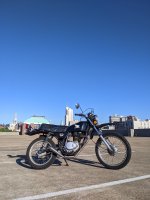
I owned a 76 C&J frame XL350 for 19 years. It was 403cc when I bought it. After a few years passed I bought a bigger piston and had it bored to 412cc. Eventually it became 440cc by using a stroked crankshaft and a shortened connecting rod.
I did everything on that bike. Used it as a commuter, competed in desert races and road racing. I also rode it to the Brooks Range in Alaska from Vancouver, BC. (and back) by myself in 1981. Wish I still had it!
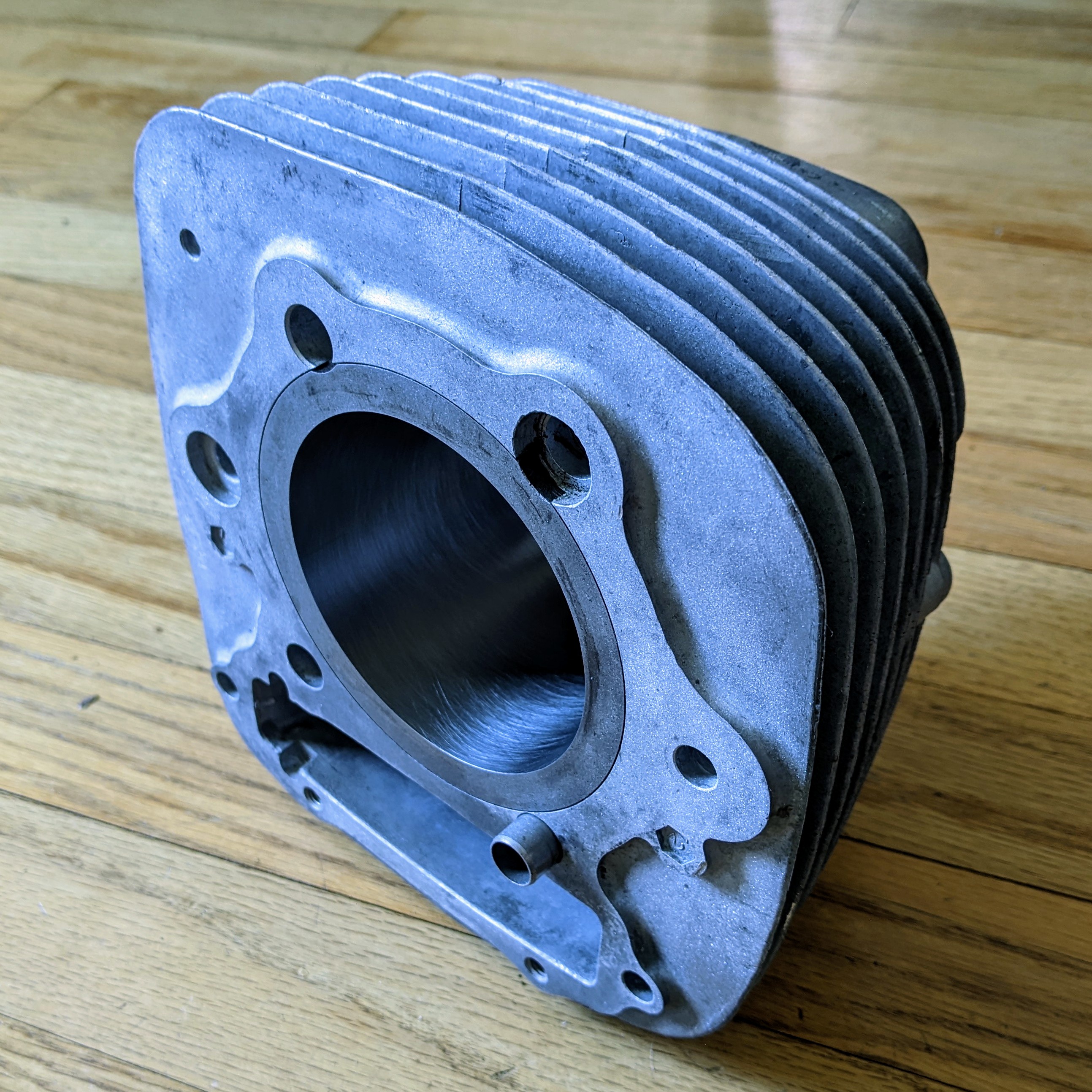
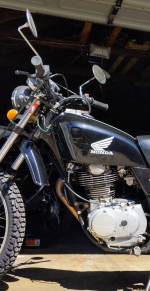
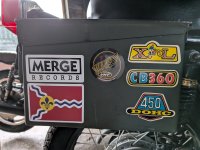
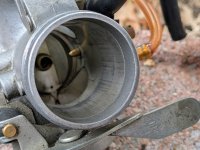
View attachment 33077View attachment 33078View attachment 33079View attachment 33080
Did you adapt a hand-lever compression release to it ?
 
Did you adapt a hand-lever compression release to it ?
I tried but it would leak oil. I'd back it up until it was off the compression stroke, put it in neutral and kick it. Kind of inconvenient but I got used to it.
 
Thanks for sharing! Four pictures and three completely different configurations! I was a little kid when these were produced, so I actually first Heard about the XL bikes by looking at various Hondas on the website motorera — I wanted an XL350 as soon as I saw it and found one about four hours away within a month.

So many cool things on display in those pictures, but what fenders are shown in the second photo? They both appear to be metal, which would be nice.

I was planning to go to 412cc this summer, but Dave at XLint talked me down to the high compression piston kit, since I'm just a street rider. Gathering parts for that now. I would guess you've crossed paths with Dave?
Those are Preston Petty plastic fenders. I talked to Dave somewhere. Steamboat maybe. I bought all my engine parts except the cams from Powroll. The cams were midrange reqrinds. I don't remember who did them but I never bought a Megacycle.
 
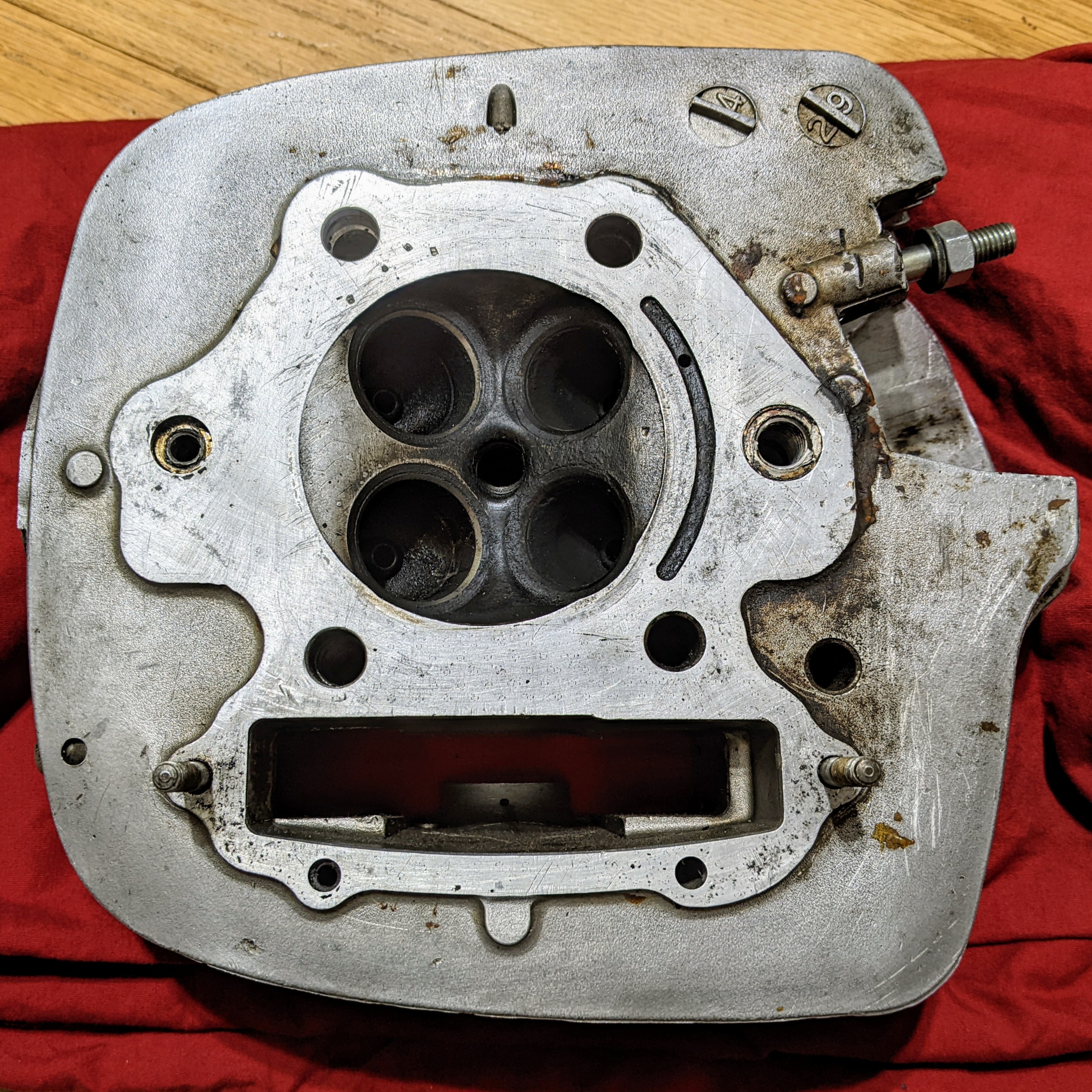
I'm mulling over the idea of prepping the head for the push-button compression release before bringing the head to the shop. Here's a picture of the bottom side.

UwkRXQ2.jpg


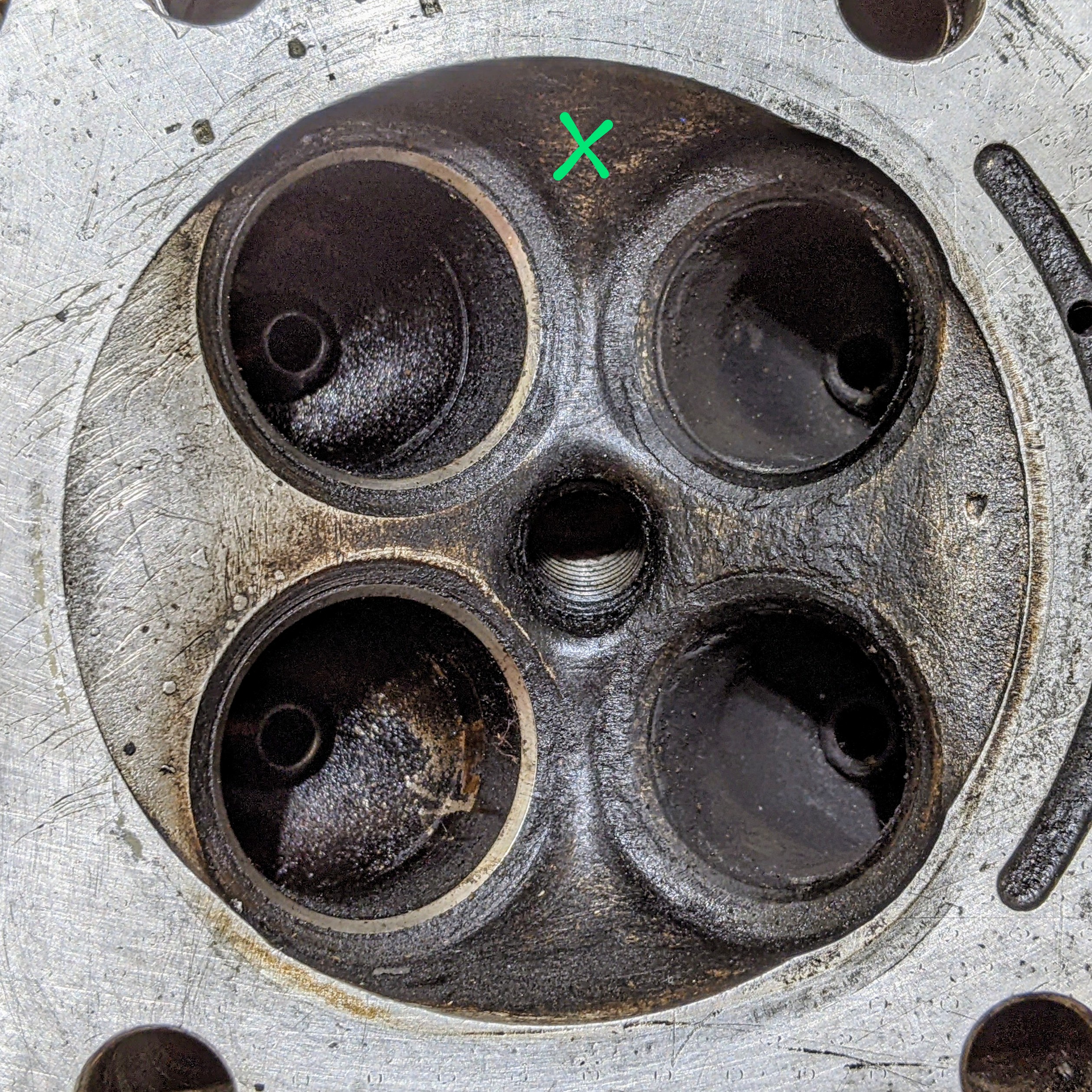
Next, a close-up of the combustion chamber with a green X added to show the proposed location for the compression release.

CQuKQsv.jpg


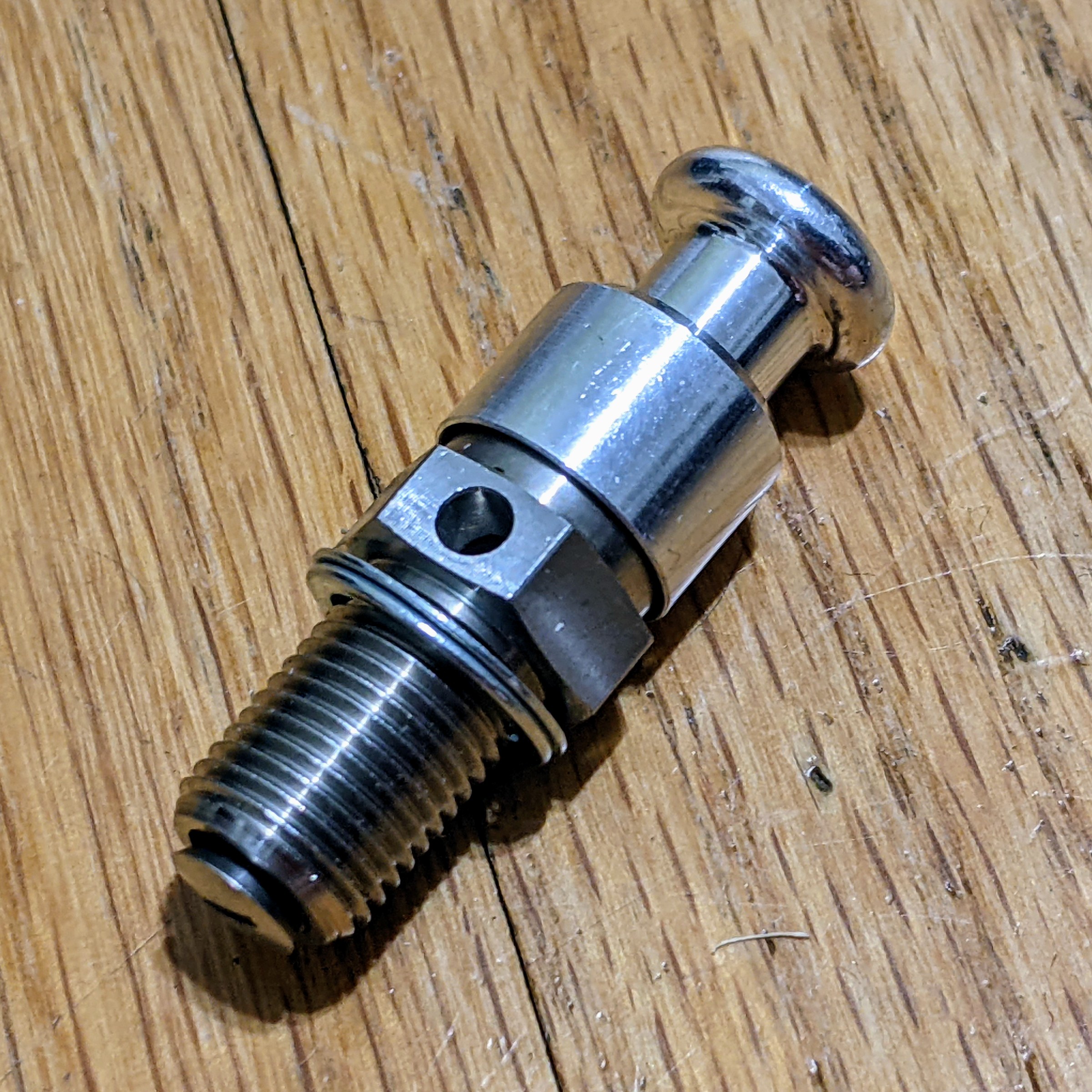
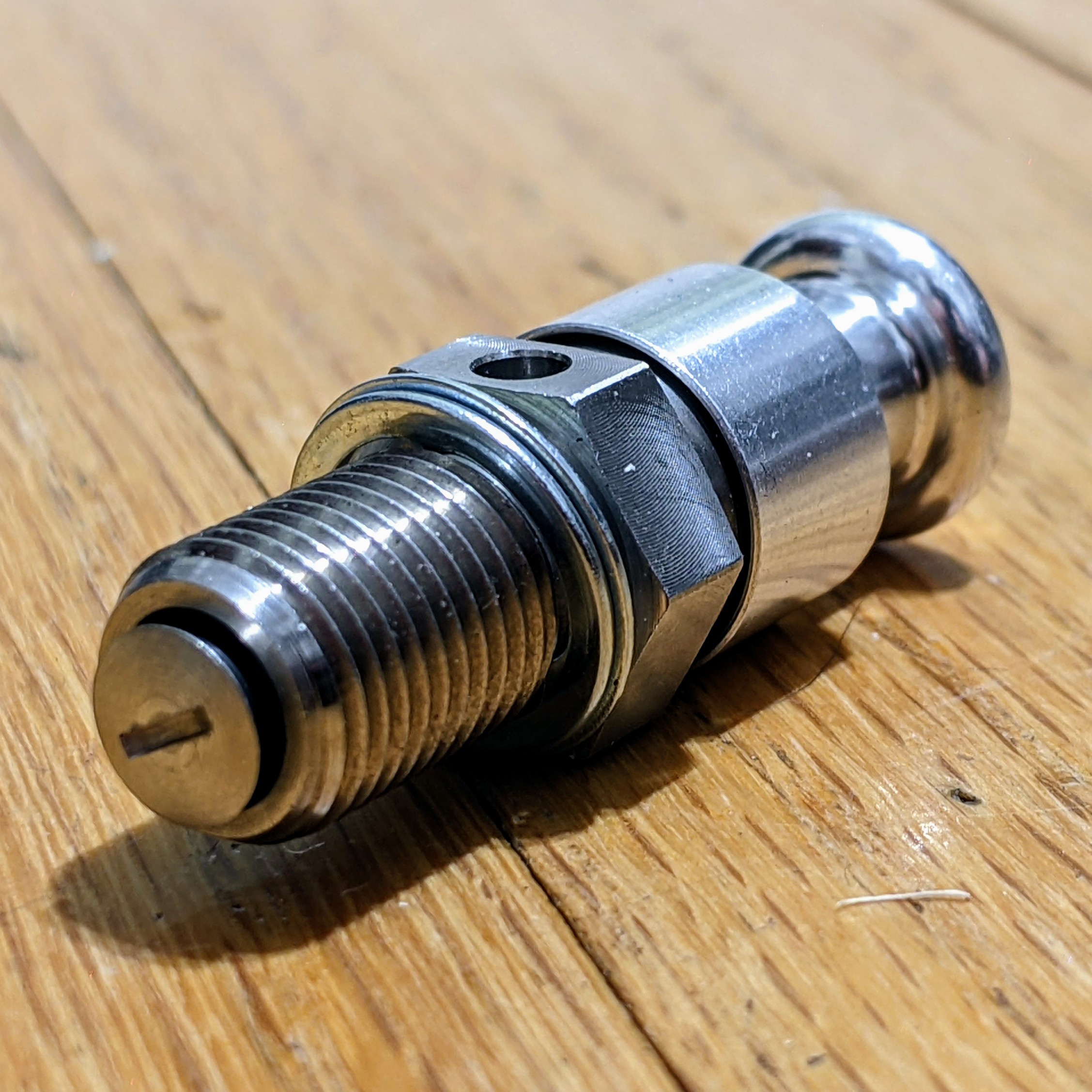
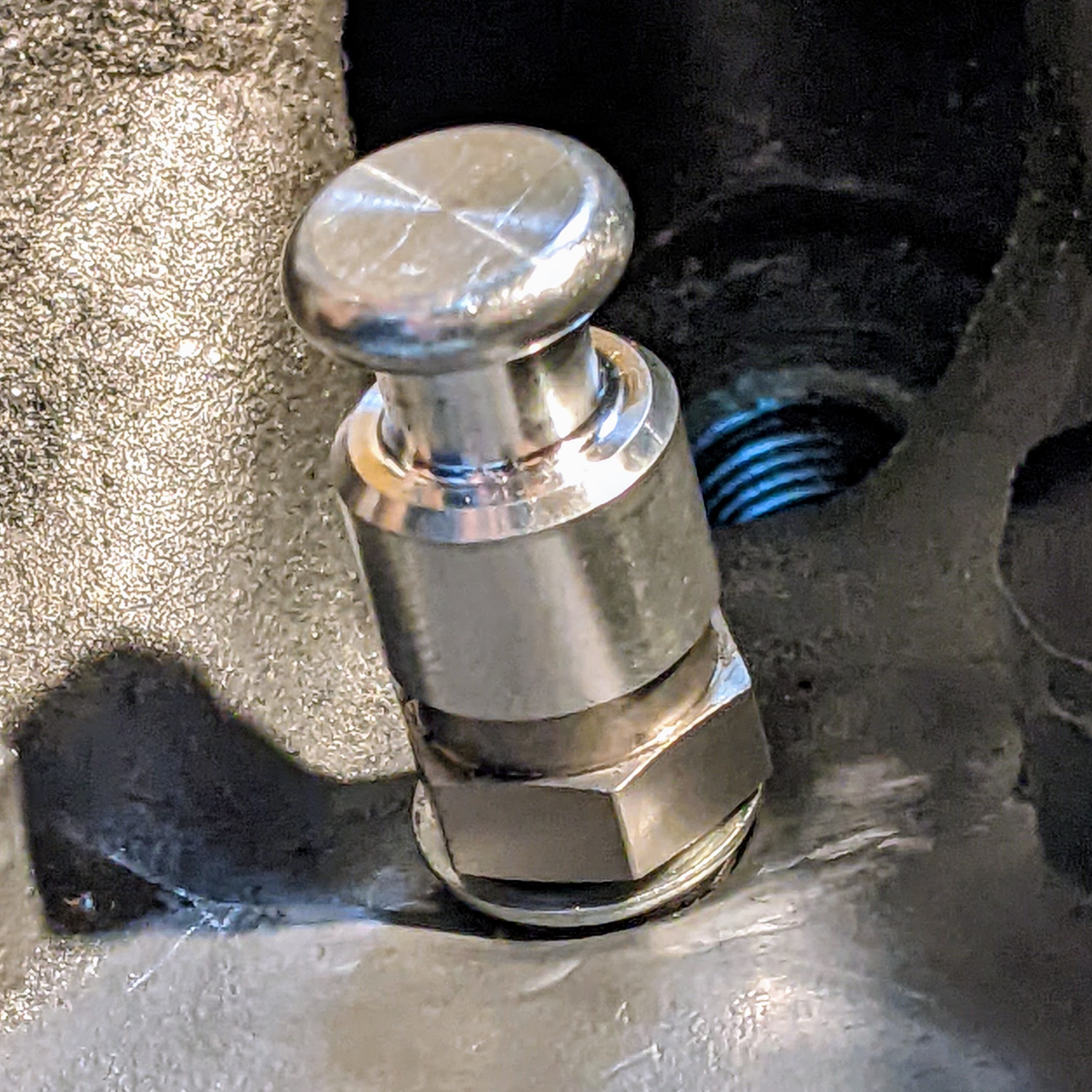
My plan would be to drill from the inside at the marked location, parallel to the spark plug hole using a bit with a small diameter, perhaps on the order of 1mm. Once a through hole has been established, I would then drill from the outside with a larger diameter to accommodate an M10 x 1.0 tap for the compression release. The larger hole would only be deep enough for the tap. The threaded section on the compression release is about 13mm in length. Here are a couple of pictures of the mechanism itself, in the open state.


csMu0go.jpg


sG3K4yz.jpg
 
Last edited:
I'm mulling over the idea of prepping the head for the push-button compression release before bringing the head to the shop. Here's a picture of the bottom side.

UwkRXQ2.jpg


Next, a close-up of the combustion chamber with a green X added to show the proposed location for the compression release.

CQuKQsv.jpg


My plan would be to drill from the inside at the marked location, parallel to the spark plug hole using a bit with a small diameter, perhaps on the order of 1mm. Once a through hole has been established, I would then drill from the outside with a larger diameter to accommodate an M10 x 1.0 tap for the compression release. The larger hole would only be deep enough for the tap. The threaded section on the compression release is about 13mm in length. Here are a couple of pictures of the mechanism itself, in the open state.

csMu0go.jpg


sG3K4yz.jpg
This one is just for an aid in starting when hot ?
 
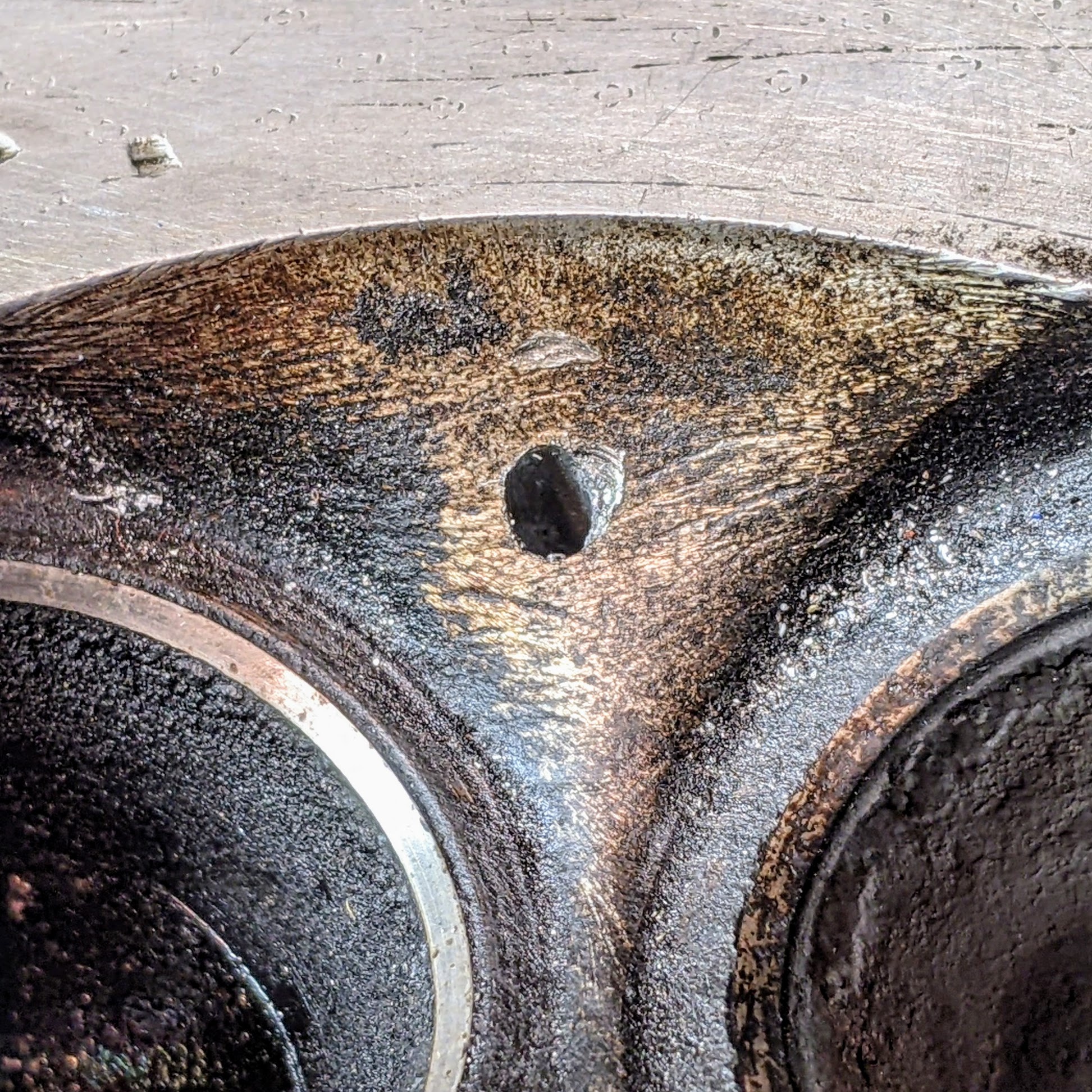
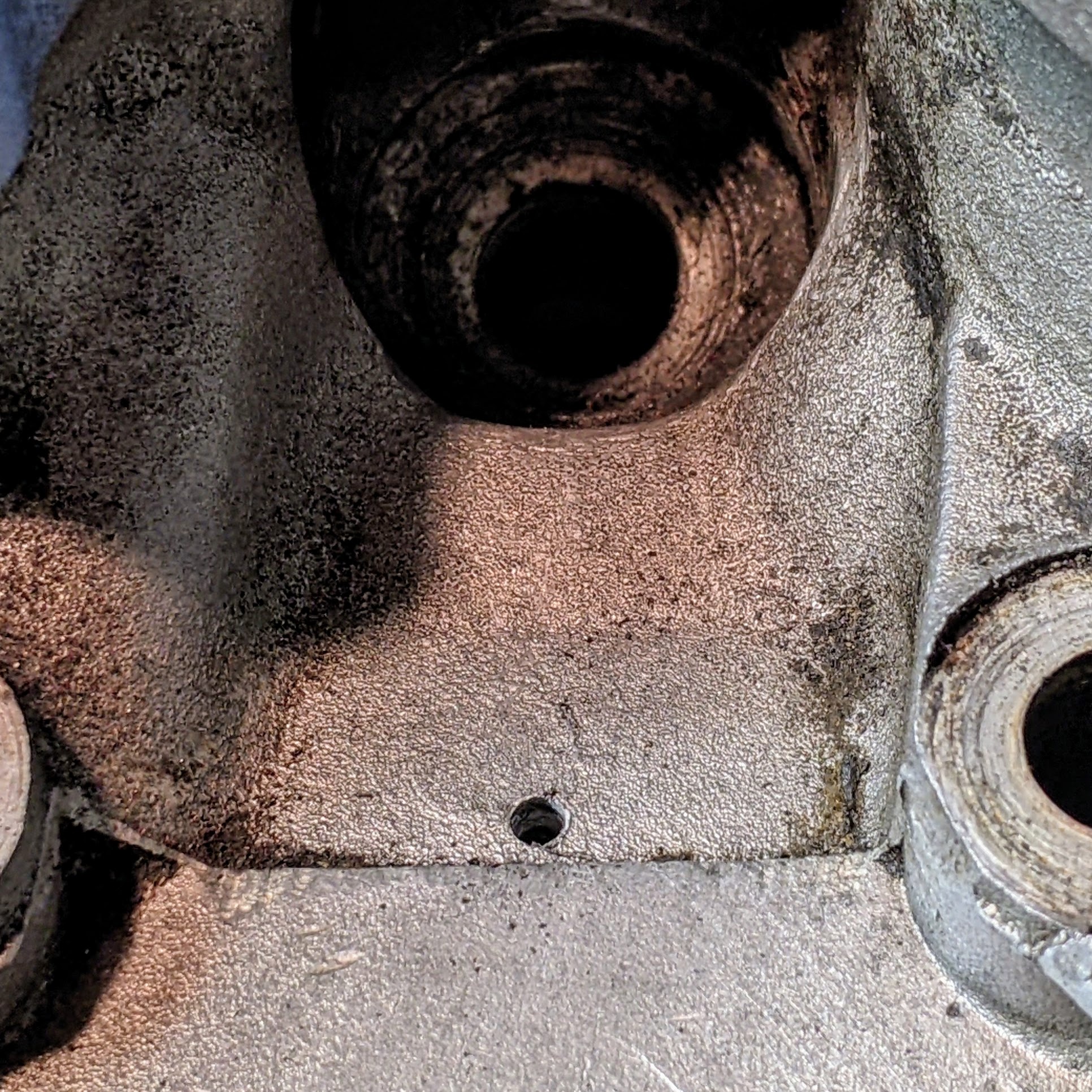
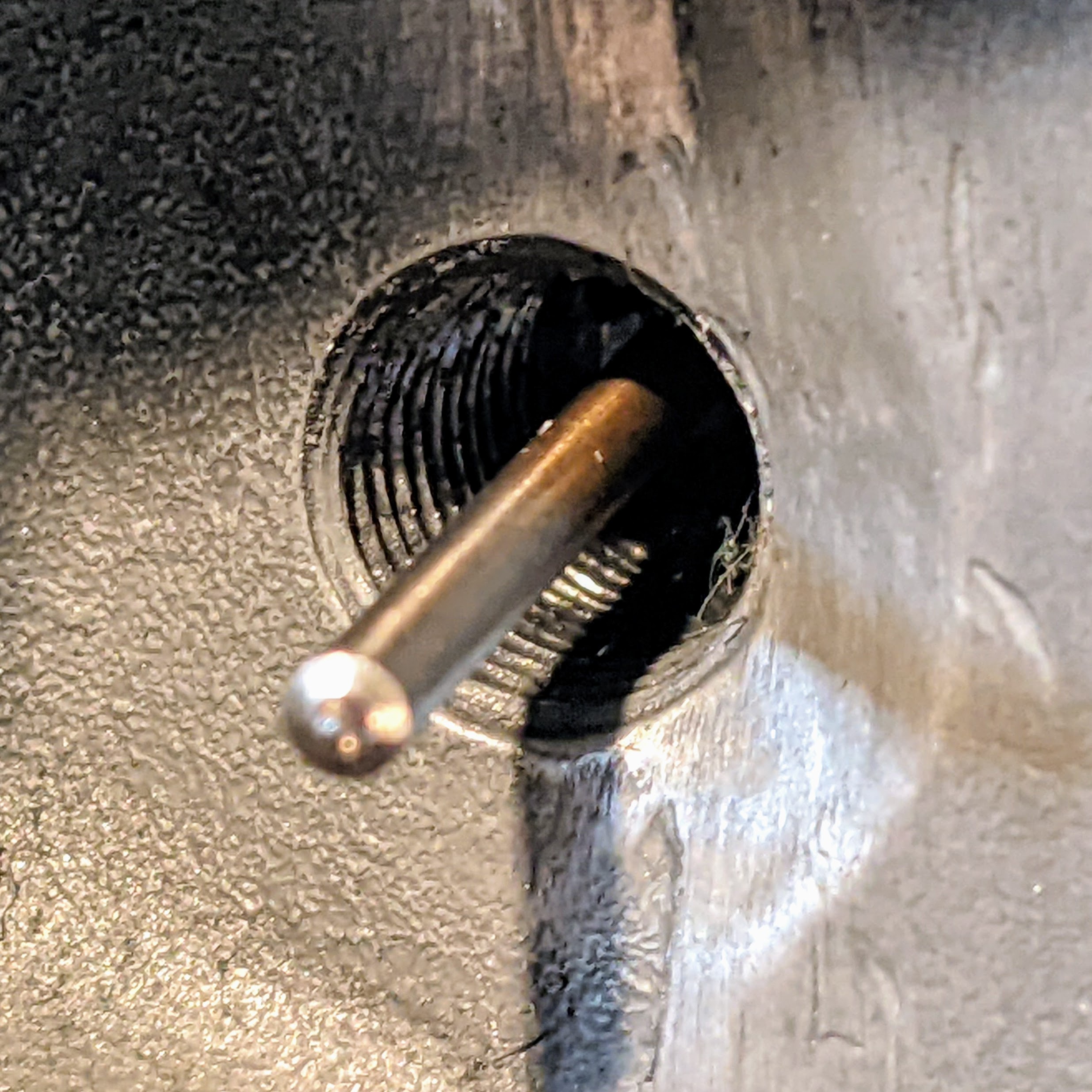
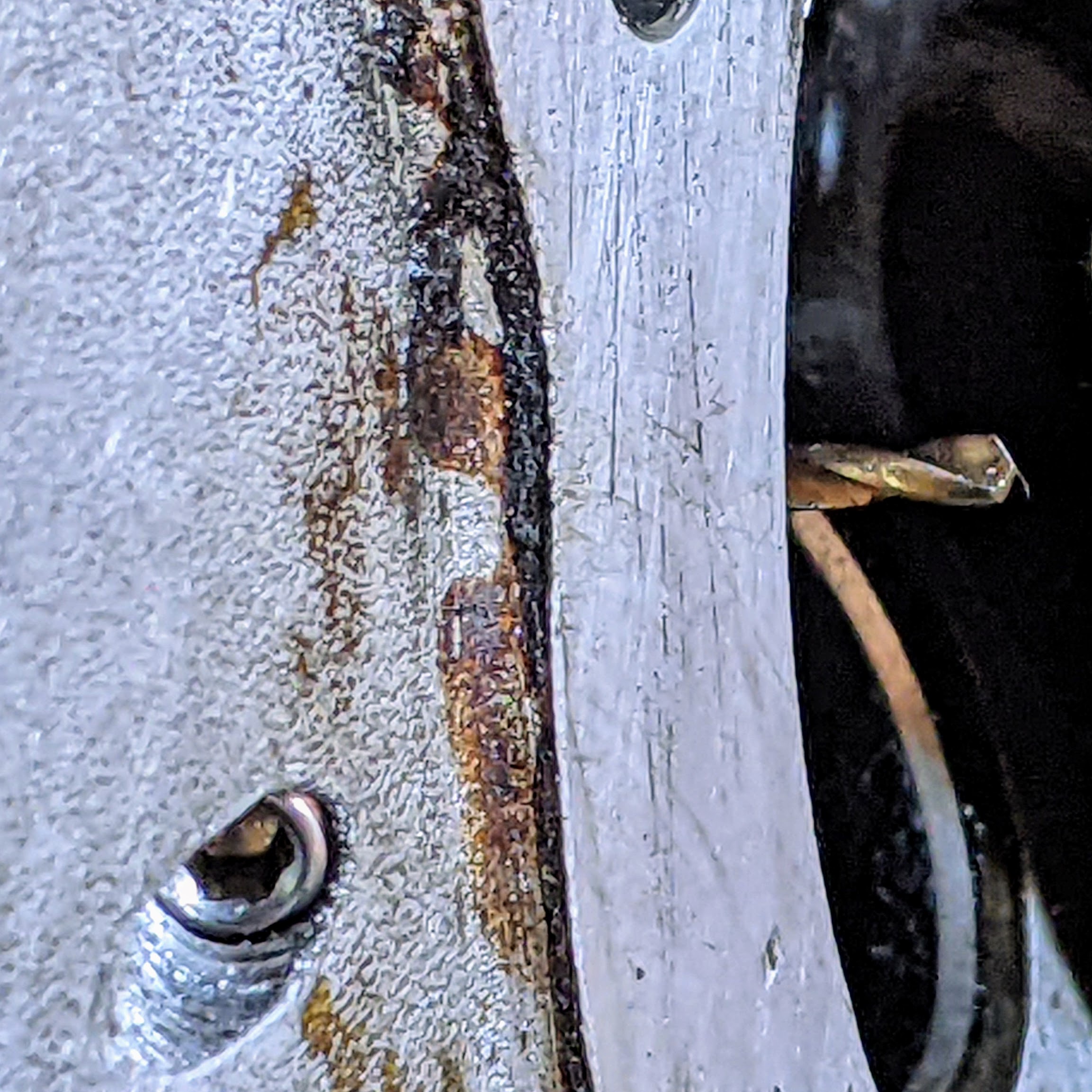
The compression release setup consumed the whole morning, but is more or less finished. I started with a small hole from the combustion chamber to the outside of the head. As I was drilling this hole, I felt the bit cut into a void, which turned out to be a cross-drilled hole that I assume was used during the machining process. This is the top hole visible in the first picture of post #204. This presented a complication that I resolved to work around by tapping that hole for a set screw, in order to prevent compression loss through the cross-drilled hole.

ozXYWGS.jpg
1E0h2If.jpg


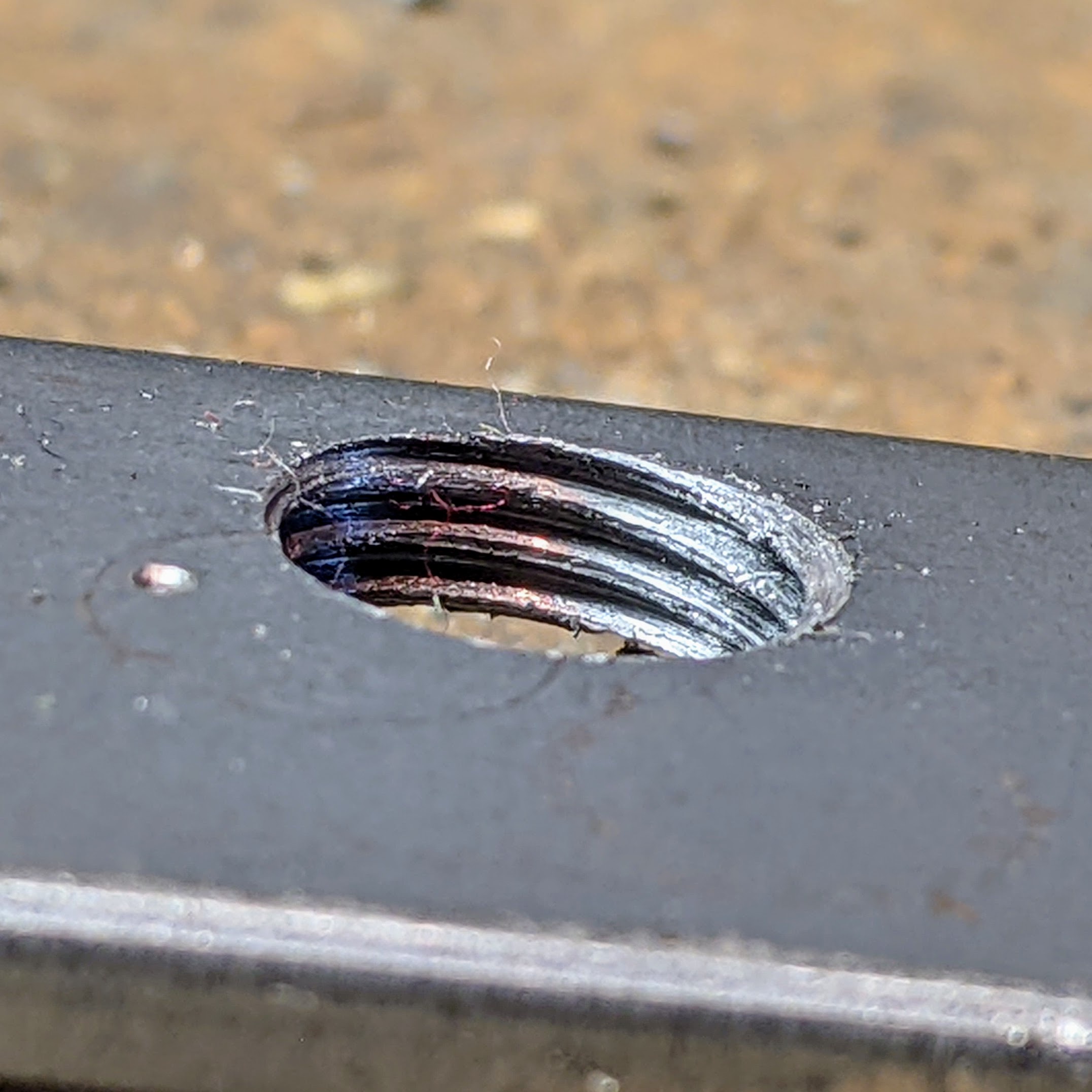
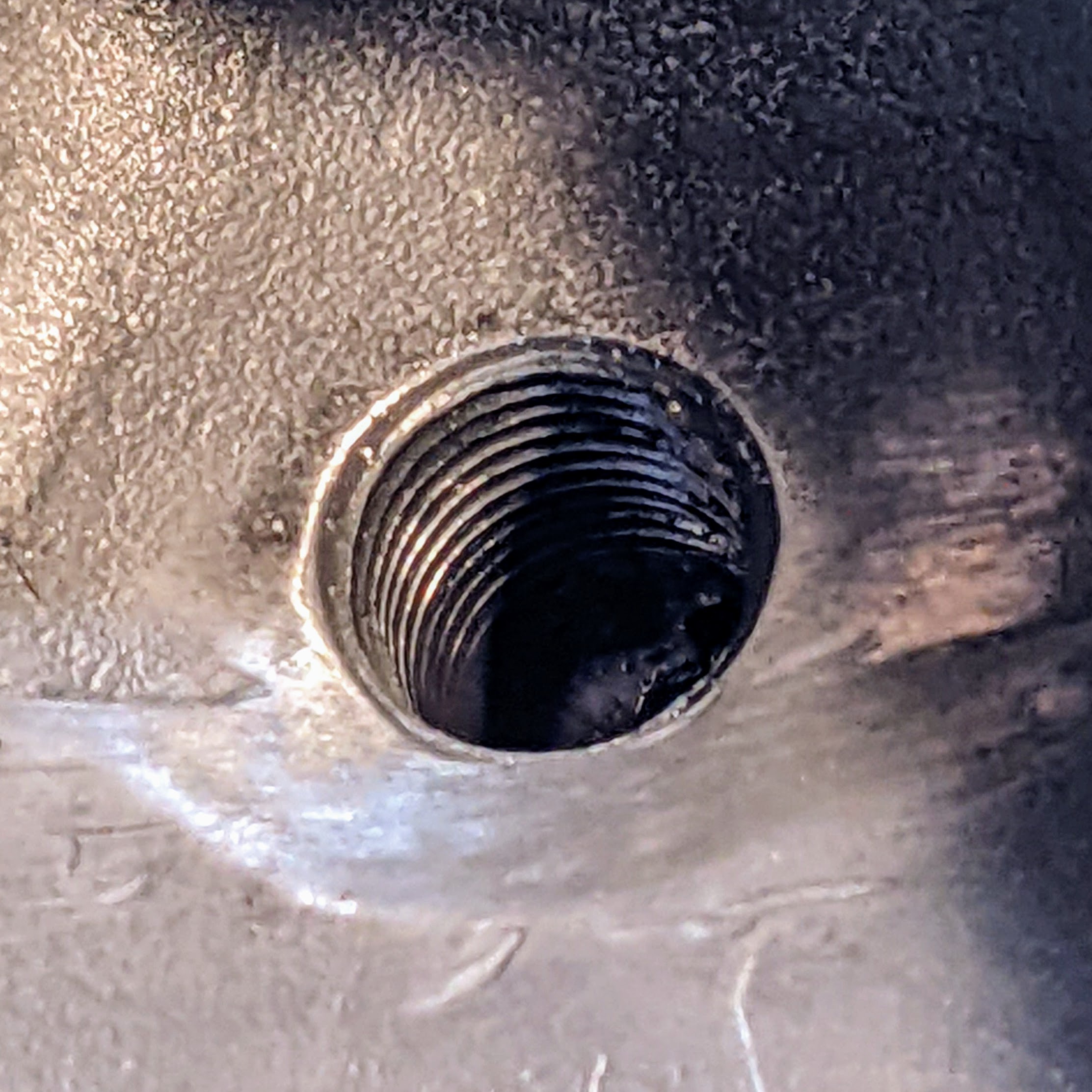
The hole I created measured at 30mm in length. Working up in drill bit size, I gradually increased the size of the hole from the outside to an approximate depth of 18mm. I have only standard drill bits and chose to drill for the M10 x 1.0 tap using an 11/32" bit. The recommended bit size was 9mm on the packaging for the tap. I am always concerned about drilling with the wrong size bit, so I used a piece of flat stock for a test. It worked fine with the tap as well as the threads on the compression release mechanism, so I then proceeded to drill and tap the hole for the compression release. Lacking a mill, I used my Dremel to clean up the outer surface for the crush washer — this is one aspect of the work that may need refinement.

6qnLvbb.jpg
1FRVVwl.jpg


I then drilled and tapped the cross-drilled hole for a 1/4"-20 set screw (no metric set screws available locally) and installed a 1/2" long set screw. I wanted as long a set screw as I could use without blocking the hole for the compression release.

wHgnjUq.jpg
nfUarwN.jpg


Finally, a picture with the compression release threaded into the hole — not tightened down as of yet.

p3vaWjW.jpg


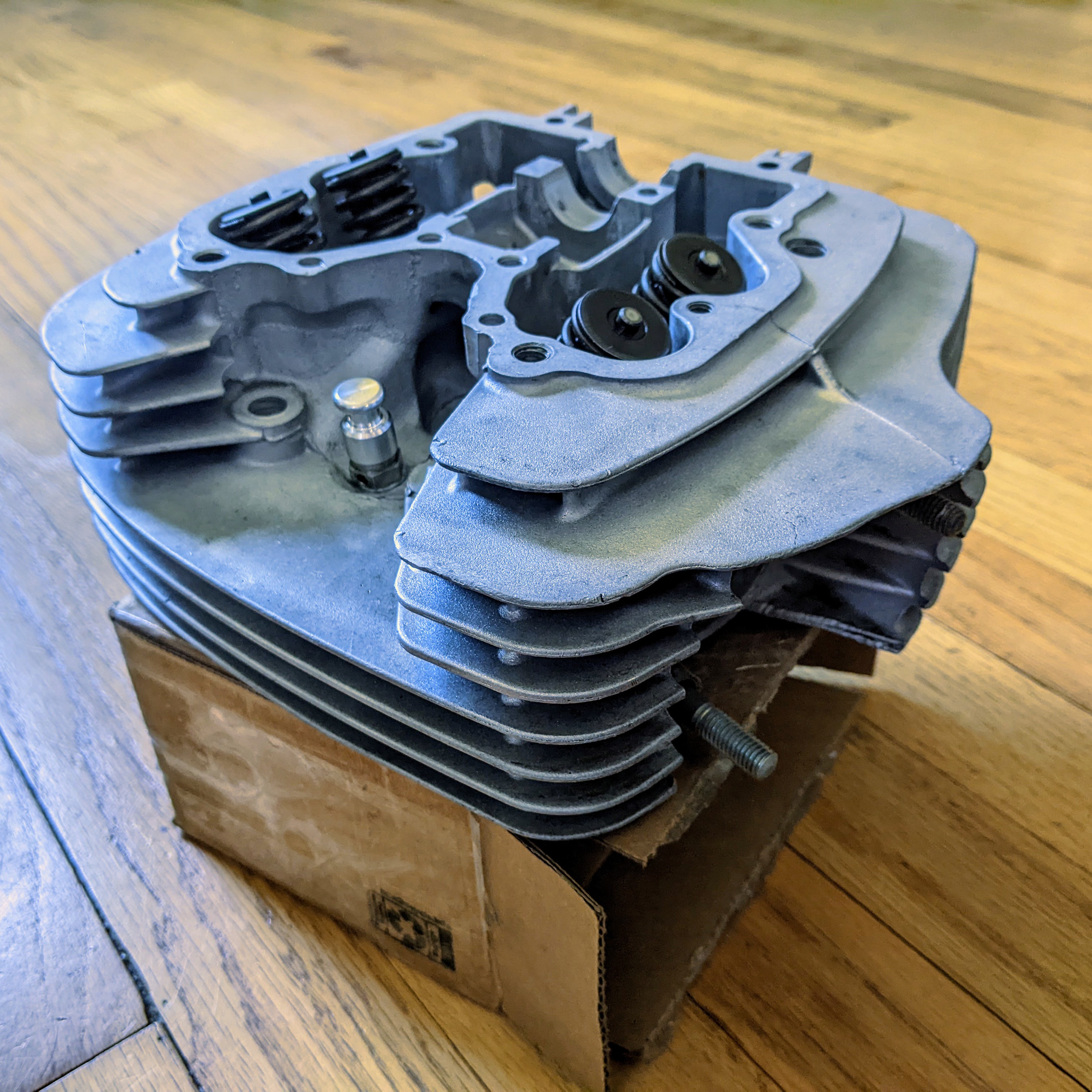
I'll leave the set screw and compression release out when I bring the head to the shop. They will vapor blast the whole thing, so it will come back looking a lot better.

Addendum:
I forgot to mention that I felt like I was making an Ichiban Moto video while completing this task.
 
Last edited:
I think I'd use some red loctite on that set screw during the final installation.
I was wondering about that and wasn't sure what temp was needed to remove red loctite. I just checked and I guess it's about 500 F, so that should do it. I definitely don't want that set screw going anywhere.
 
The machine work on the cylinder and head are now finished and I brought everything home this morning. Coincidentally, I received an M10x1.0 bottoming tap in the mail today that allowed me to add a few more threads to the blind hole for the compression release.

5RQh2wx.jpg


TPvAT6m.jpg


t8uvybr.jpg


I think I'd like to reach the first start phase of my CB350 project before pulling the motor on this bike for the upgrades.
 
Last edited:
I think you can do the top end of the XL350 in the frame, can't recall for sure but I believe so.
 
Looking at the parts fiches doesn't confirm it, but I believe it comes apart like the XL250 did/does (I've done a top end on the 250) and the CB/CL360 engine does - rocker/cam cover on top, then the nuts for the cylinder studs are inside that and the head is reasonably thin so it comes off, then the stud height should be short enough to remove the cylinder.
 
Looking at the parts fiches doesn't confirm it, but I believe it comes apart like the XL250 did/does (I've done a top end on the 250) and the CB/CL360 engine does - rocker/cam cover on top, then the nuts for the cylinder studs are inside that and the head is reasonably thin so it comes off, then the stud height should be short enough to remove the cylinder.
The stroke on the XL250 is 57.8mm, while the XL350 stroke is 71.0mm and they seem to use different studs. Maybe the combination of all of the differences in the top ends allow in-frame work on the 250, but not on the 350?

The link I added to my previous post suggests that even the head can't come off in the frame for the 350.
 
The stroke on the XL250 is 57.8mm, while the XL350 stroke is 71.0mm and they seem to use different studs. Maybe the combination of all of the differences in the top ends allow in-frame work on the 250, but not on the 350?
Maybe. Ironic, as an aside, that the 250's stroke is exactly the same as the DOHC 450 (but with a flat top version of the same 74mm bore as mine, which is 4mm over). I looked pretty hard for an XL350 FSM but could only find one for the later XL350R in the mid '80s and it was read-only. When it's time to do it, you could certainly try... or buy the FSM somewhere to be completely sure.
 
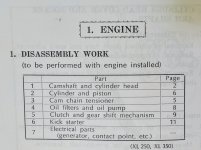
I have a binder reprint copy of the Honda FSM, but it's not very clear. The amount of text in it is far less than those I have for other bikes and it doesn't make much distinction between the 250 & 350. This snippet suggests it can be done.

PXL_20240613_201104958.NIGHT.jpg

However, the link comes from the same site that I use to buy parts and the owner is an XL250/350 specialist, so I figure he would know. I believe I even tried to remove the head in frame previously and lifted the head only to find there was insufficient clearance on the studs to remove it. My memory of that is a bit foggy, which is why I didn't mention it earlier. I know I ended up pulling the motor to clean up the head and replace the rings at that time.

In any case, I can give it a go when I'm ready to do the work.
 
Last edited:
My memory of that is a bit foggy, which is why I didn't mention it earlier. I know I ended up pulling the motor to clean up the head and replace the rings at that time.
I either didn't remember or didn't know that you'd been in it before. I can understand if it doesn't since the stroke is so long, something else I didn't pay much attention to about the bike previously just thinking it was similar to what they always do, short stroke+big bore.
In any case, I can give it a go when I'm ready to do the work.
Certainly can't hurt to try.
 
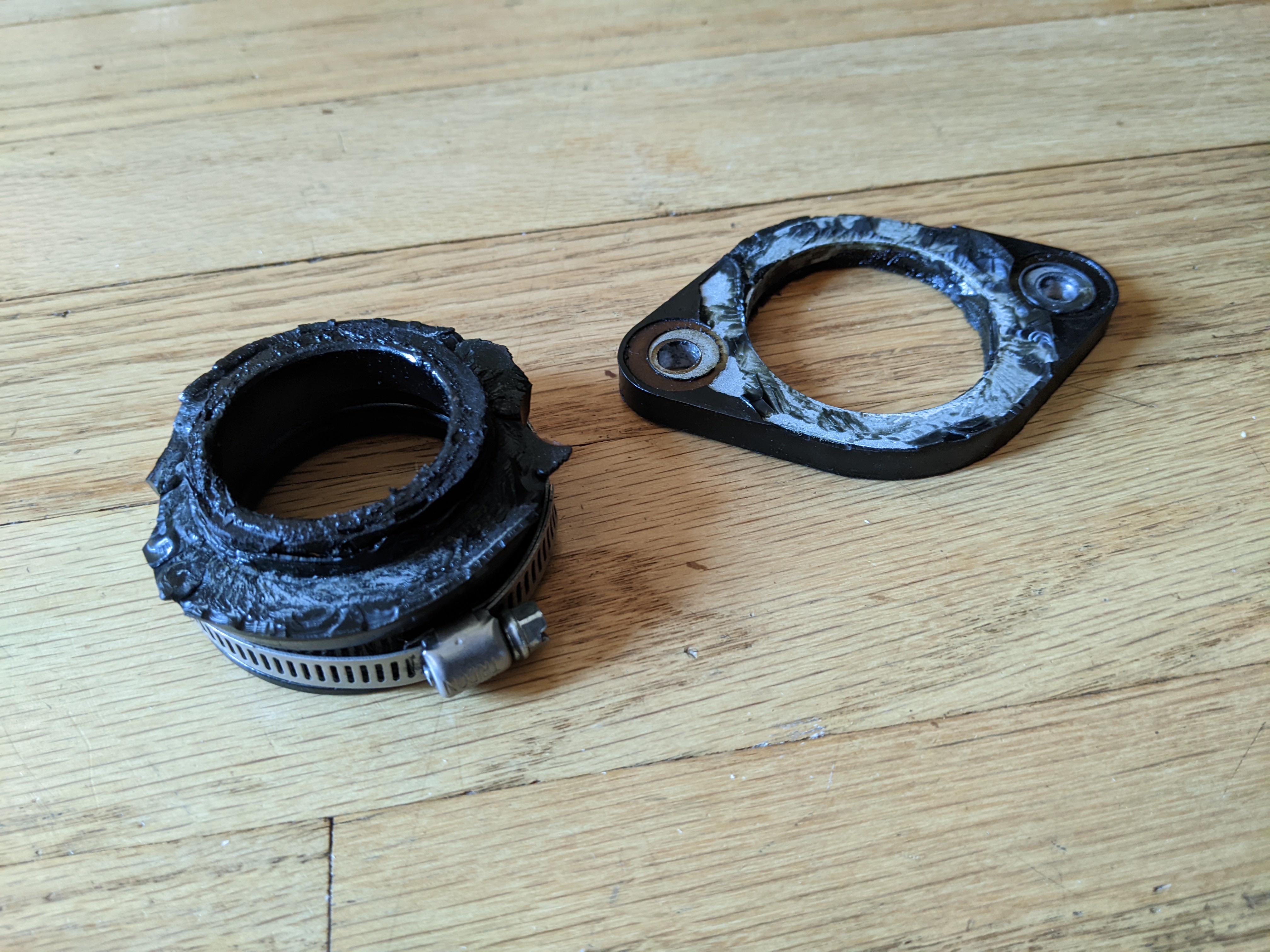
My most recent posts in this thread have focused on a rebuild I am planning with a high-compression piston and a smaller rear sprocket that I hope will make the bike more fun to ride on the street. I've been putting off that job while completing work on other bikes, since the XL350 is running fine as-is. Earlier posts, however, had touched on some trouble I have had with this bike in cold weather. Last November (2024), I decided to make a needle adjustment as a possible fix for that and pulled the carb in order to get at the internals. The carburetor boot split in two as I pulled the carb out.

JSM80on.jpg


Unfortunately, this put the XL350 on the shelf until the spring because I didn't have time to deal with the issue right away. The disruption also erased from my memory what I was going to do with the needle — I made the change I wanted, but can't decide whether I was raising the needle one notch or lowering it. I'm about 80/20 that I was raising the needle (lowering the clip). It was the kind of task that should have taken 15-30 minutes, but got thrown off track by the failure of the boot.

The destroyed boot was not made for the XL350 and I believe I got it from Dime City Cycles as a replacement part for a Yamaha XS650. The bolt spacing did not match the XL350 head, so I had to file the holes to make it work. I also couldn't find that same boot again. Eventually, I purchased a carb boot intended for the Mikuni VM32 carburetor that I run on this bike, knowing that the bolt spacing would be way off. Once I found the time, I filled the bolt holes in the carb boot with JBWeld and then drilled new holes with the proper spacing for the head. I also realized that OEM carburetor boot uses an o-ring as a seal between the boot and the head. The aftermarket boot I used before did not and I had not added a gasket, either. So, I made a custom gasket for the new boot and I wonder whether it is the gasket or the needle adjustment that made the difference, but the bike runs better now than it did before. It's still very slightly temperamental when warming up in the cold, but most of the time I can take off immediately.

I also decided to start keeping written notes in a small Moleskine notebook so I won't forget what I was doing a few months ago. Eventually, I will have a reason to pull that carb again and will check to see where the needle clip is...
 
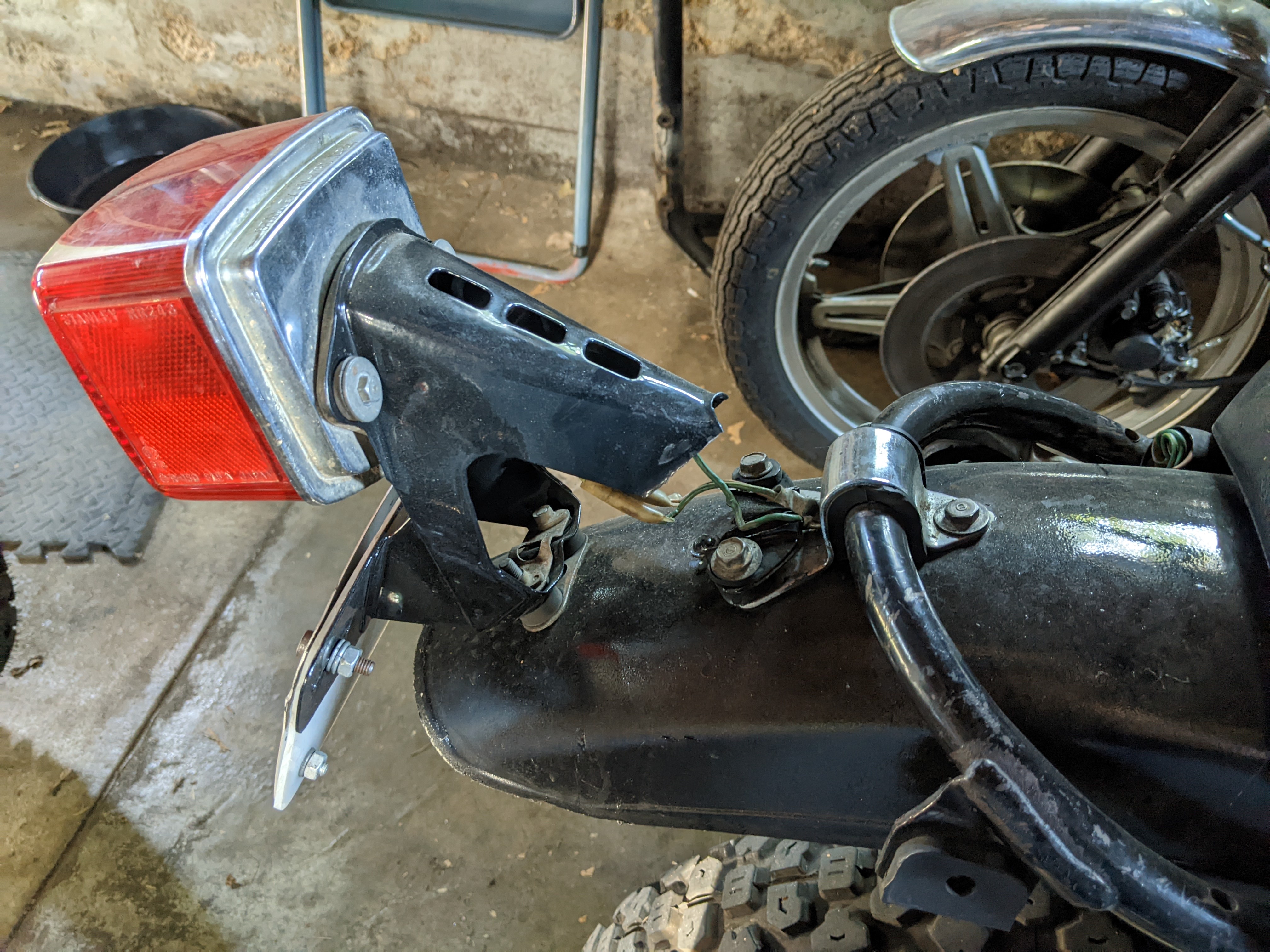
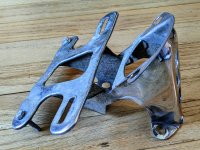
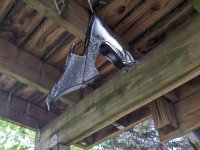
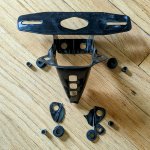
I took the XL350 to work yesterday morning and when I returned home, I noticed that my aftermarket tail bracket had already broken from vibration fatigue. The original broke in spring 2024 and I replaced it with a new part from Thailand (I think) in April 2024. Looks like I will be searching for an OEM replacement.

3XaYUR3.jpeg
 
Are the sleeves inside all 4 of the mounting grommets? It allows the bolts to be tightened without squashing the grommet so the vibes don't transmit to the bracket as easily.
 
Are the sleeves inside all 4 of the mounting grommets? It allows the bolts to be tightened without squashing the grommet so the vibes don't transmit to the bracket as easily.
I do believe so, but I will confirm or replace when I get my hands on a new bracket. It's probably a good idea to replace all of the grommets, too.
 
Thats a welder-tunity, especially if it's the second one to fail.

Meaty Beaty Big and Bouncy is what it needs.

That thing must shake like a hussy.
 
Last edited:
Thats a welder-tunity, especially if it's the second one to fail.
For sure. I need to see if I kept the broken OEM bracket and, if so, I will try to weld it.

I also ordered a rusty OEM replacement on eBay and I was thinking: why not preemptively reinforce the weakest parts with Tech Steel? The two brackets broke in essentially the same location, but I think I would reinforce in all similar areas. It's worth thinking more about.

The second one to break was aftermarket and the materials were somewhat suspect, but it's all thin sheet metal and highly susceptible to fatigue. And it definitely shakes. The bracket is fairly heavy with the tail light assembly and license plate on a plastic fender — if there were a good way to stiffen the fender it might help also. I should inspect to make sure its underside bracing is not damaged. The earlier models had a metal fender in the rear, not sure about the front. If I could fit one of those, that might help also.
 
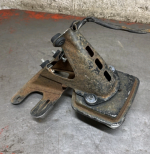
This is the OEM bracket, which failed much less spectacularly than the aftermarket bracket shown in a previous post. It's a little wonky, but I might be able to correct its shape and weld/reinforce it.

PXL_20250824_140909731.NIGHT.jpg
 
I welded my cracked OEM bracket and reinforced it with some JB Weld Steelstik (Tech Steel in Canada). I also received a solid, but rusty bracket from an early XL350 via eBay. That one had been painted black, presumably at some point in the distant past after the chrome had pitted. I confirmed that it had once been chrome using a wire wheel and then primed and painted both brackets with SprayMax 2K Satin Black.

Neither will be a show-stopper (using either meaning of that phrase), but they will keep the bike as an entrant in the one contest that matters to me: last one standing. It should be pretty obvious which is which from the photos below.

PXL_20250901_221008429.jpg

PXL_20250901_221026494.jpg
 
Pitted, you say? :ROFLMAO::ROFLMAO:

If you zoom in, it's hard to see anywhere that ISN'T pitted. Wow.
At least I didn't have to worry about the primer adhering, once the surface rust was removed!

Addendum: This is what you get for $50 nowadays in the used XL250/350 taillight bracket market.

Screenshot_20250901-184737.png
 
Last edited:
The post-mortem on the aftermarket bracket shows what you get for roughly $50 on the new, aftermarket XL250/350 taillight bracket market.

PXL_20250902_171507885.NIGHT~2.jpg

The rubber mounts were not as soft as they once were, but the collars were all intact. I replaced the rubber mounts and the collars when installing the welded OEM bracket.
 
Not much there worth $50. Before I knew better, I bought an aftermarket taillight assembly for an SL100/125/175/350K1 and it didn't last 60 miles of riding, the spotwelds came apart and the lens and screws ended up on the road behind me. Didn't know it until I got home and was fortunate to go back and find them along with the gasket, lying in the street. Good thing it was a rural road not well-traveled. Bought a used OEM SL100 assembly and it's been on the bike ever since.
 
It's really strange to me that someone will put all the effort into manufacturing a direct bolt-on replacement that is so under-designed that it cannot even withstand a year of limited riding on city streets, albeit in St. Louis.

I was checking the going rate on eBay just a moment ago and, believe it or not, I saw one listing for the same bracket priced at $549. It seems they want to trick an unsuspecting buyer into thinking it is NOS or something.

My first stop when this one failed was CMS, but they didn't have any brackets available and that pushed me to the used market.
 
My first stop when this one failed was CMS, but they didn't have any brackets available and that pushed me to the used market.
But as durable as the originals were, at least you can still find one in solid enough condition to use despite having to deal with an ugly appearance. I'm happy to refinish any good quality used parts, shame that the pitting on that bracket is so heavy everywhere. Satin or flat black would help hide it a little better (unless that WAS satin black).
 
That thing must shake like a hussy.
In a word, yup.

I started the bike up today after mounting the repaired OEM bracket to check taillight function and it passed the 6V barely-visible-in-direct-sunlight test. Brake light, too.

Noticed said shaking and observed as I rolled the throttle off-idle. It dies out pretty quickly as the motor speed passes 1200-1400 RPM, so the bulk of the fatigue is likely resulting from idle speed vibration.

The rear fender has metal bracing underneath and I am now considering adding additional bracing to stiffen the overall structure. This would likely mean that max oscillations occur at a higher engine speed, but as long as it's not a cruising speed, it should be better than having a lot of shaking at idle.
 
Very cool definitely an urban commando! OK so I watch too many movies. :giggle:
I like the imagery and with the condition of the roads, it's easy to imagine that I'm riding alongside Kurt Russell and Ernest Borgnine in Escape from New York, which was, coincidentally, filmed mainly in St. Louis.
 
Posting a picture of the dent(s) in my tank for @RobMan to take a look at. Don't want to cross thread his thread!

369.png

I may try pulling this dent next summer when I get around to doing some other work on the bike.
 
Posting a picture of the dent(s) in my tank for @RobMan to take a look at. Don't want to cross thread his thread!

View attachment 50972

I may try pulling this dent next summer when I get around to doing some other work on the bike.
I would certainly try pulling the dent as much as I could before doing any other body work just to try limit the amount of Bondo needed to fill the hole.
 
The eBay seller through which @RobMan found those vintage reflective Honda helmet stickers had a few cool items related to my XL350, including an issue of Motorcyclist magazine with an article about the 1976 XL350, a dealer brochure for the same model, and, of course, a generic XL helmet sticker.

379.jpg

The brochure can be accessed for the time being using this link, but I'll come back eventually (in a week or two) to remove the link.
 
Cool bike, cool ad. I've had a lot of fun at construction sites.
I've been tempted to go off-road in the city when there is a lot being worked over or a huge pile of dirt being worked into a park, but, alas, I am cannot bring myself to do it. Rules! Someday!

My consolation is that city streets here are maintained with enduros in mind, so I get to use the better part of the suspension travel without leaving the asphalt.
 
I've been riding the XL350 to work about once a week or so and started noticing that the throttle sometimes stays partially open when I release it, not at the throttle tube, but in terms of the slide in the Mikuni VM32 carburetor.

Suspecting varnish on the slide, I cleaned the carburetor and checked the sediment bowl on the fuel tap. The gas in the sediment bowl was clean and there were a few little bits from the tank in it that I cleaned out.

I found vertical wear marks inside the carburetor that caused some concern and, after cleaning, the sticking phenomenon is still occurring from time to time. If I flick the throttle it will usually cause the slide to drop all the way down.

413.jpg

I'm wondering if I should polish the carb some or if perhaps the throttle cable needs to be lubed. I would prefer to try one potential remedy at a time and I'm leaning towards lubing the cable first.

Is this kind of wear typical for the round slide carburetors?
 
Can you measure the ovality of the slide area ? Do you see irregular pattern of these vertical marks ? Remember, this is ZAMAC, a very soft kind of aluminium alloy with up-to 90% zinc. It deforms easily under stress, for example, when you tighten the top of the carburettor (known issue of the 250/305 carburettors). And believe it or not, ZAMAC cannot withstand high temperatures, depending on the alloy, 120 - 130 Celsius (250-270 F) is already a problem.

So, in short, the material in itself is soft, and these marks can originate by, for example, dirt, rust particles, remaining blasting material particles, hardened varnish particles etc. But after checking cable's, routing, slide spring strength, and throttle handle.

But before you do anything, you want to know were it clamps, and my suggestion would be using Prussian blue on the slide or slide area in the carburettor to make it visible (instead of Prussian blue you can use the poor man's version, being a regular marker).
 
Last edited:
But before you do anything, you want to know were it clamps, and my suggestion would be using Prussian blue on the slide or slide area in the carburettor to make it visible (instead of Prussian blue you can use the poor man's version, being a regular marker).
That's a good point, many of these carb bodies are known to distort when the flange nuts are over-tightened. But I think Brody's carb slips into a rubber manifold and doesn't bolt directly to the head like some of the older engines, so I wonder what might have caused the body of his carb to get slightly distorted if so.
 
Can you measure the ovality of the slide area? Do you see irregular pattern of these vertical marks?
Thanks for your advice, Jensen.

I don't think I can make a worthwhile measurement of the slide bore. Your question inspired me to order a bore gauge, but the lower end of the range is 50mm and the diameter of the slide is about 35.5mm. A caliper could only give me rough information near the top.

My impression is that the slide is not sticking near the threaded area of the carb top, but rather closer to the idle stop on the bottom, although it's hard to be sure. It doesn't race when it sticks, but idles high until I flick the throttle and sometimes it takes multiple flicks. I only tighten the top by hand, so hopefully it's not distorted, but I will investigate further.

As Tom mentioned, there is a rubber insulator that clamps over the throat of the carburetor to protect it from heat. I suppose the clamp could have been overtightened.

The scuffs and scratches are mostly vertical in the slide bore and those that wander are thinner/lighter.

I think I will start with cable routing and cable lube before progressing to a marking compound for the slide/top.
 
Last edited:
I think I will start with cable routing and cable lube before progressing to a marking compound for the slide/top.
I didn't pay enough attention to the earlier post where you showed the open carb top, now I realize it's a single cable arrangement like my Mikunis are. I was wrongly thinking about the stock carb and how the dual cable system would have prevented that issue. Yeah, I'd check the cable routing and lube it a bit before suspecting the carb. Those are big heavy slides, with the added spring pressure from the original Mikuni slide return spring it's hard to believe it would be sticking.
 
Back
Top Bottom