1973 CL350 Restore - First Timer!

66Sprint said:

First, the wheel DOES NOT spin on the axle, it spins on the bearings...

The axle is just the oversized bolt that torque loads the spacers and bearing centers to the swingarm... (they don't spin either)....
As long as it is structurally sound, a little surface pitting will not be a problem....
As for the "hash" marks, you could file/sand or polish them mostly off, but if they don't interfere with insertion or withdrawal of the axle they aren't a problem either......
Never hurts to wipe on a film of grease during re-assembly to reduce further corrosion....

Darn.... Tom posted while I was typing and beat me to the punch..... :lol::lol::lol:
 
Hey guys, a few quick updates on some small progress I am making on the motorcycle. I have lots of irons in the fire right now and big things are coming soon, but for now I've just tied up a few loose ends and am making small but sure progress.

With everything torn down, I started cleaning up hardware for the reassembly process. I soaked in metal rescue overnight, then dunked in mineral spirits and scrubbed with brass bristle brushes and an assortment of other brushes to get them as clean as possible.

I debated zinc electroplating, but ultimately decided I don't have the time to fiddle around with finding the right power source and do trial and error until I get results that I like. As with most things in the restoration world, there are a million and one variations of how to do it online and everyone is getting slightly different results, so I decided to replace what I can with stainless from boltdepot.com. As for the Honda unique stuff that isn't easily replaced, I'll just grease a little and use as is. I had some reassuring replies in this thread that I'd be fine doing that.


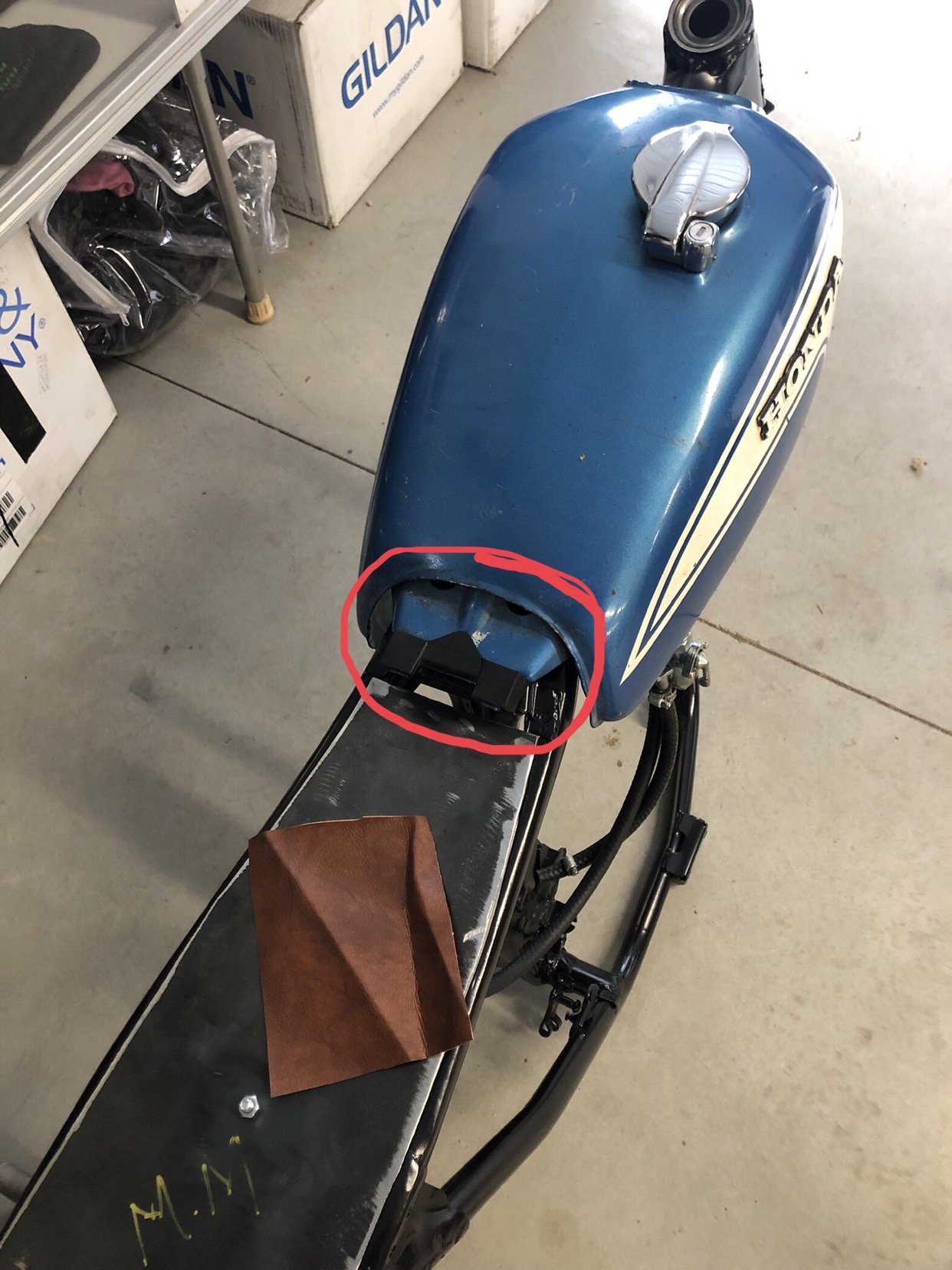
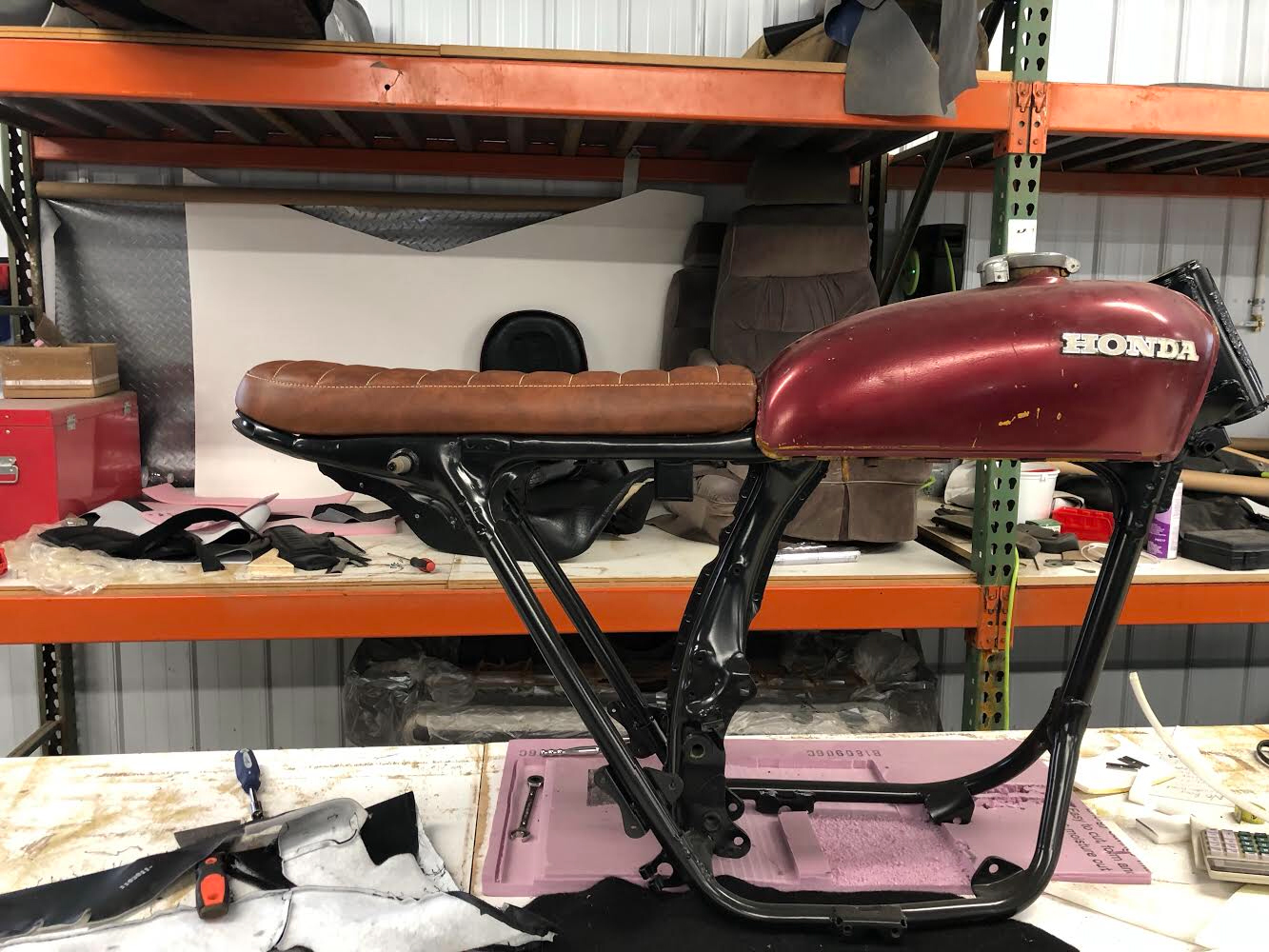
I also dropped my tank off with a professional upholsterer to have a custom seat made. And that was the first time I really put my tank on the frame alongside the new seat pan. Lo and behold, the CL350 tank is to short and there would be an incredibly ugly gap between the front end of the seat and the back end of the tank.

(swatch of the vinyl color I chose for the seat is also pictured below)

p6SrmvM.jpg


After some research (this thread), I discovered that the CB350 tank is longer but the mounts are in the exact same place. This is what I wanted, because the tank will still fit my frame but eliminate the ugly gap shown above. I picked up a CB tank from eBay and will be bringing it to the upholsterer tomorrow so he can measure a nice snug fit for the seat.

My new tank and seat! You can tell the difference with where the tabs are in comparison to the lip of the tank itself.

d3LlGcE.jpg
 
Boys...gather 'round. It's time I told you the tale of how a DIY mechanic noob tore down his forks. There's grease, there's grime, there's double-crossing, there's even a wizard and a dash of magic. Now settle in and listen up.

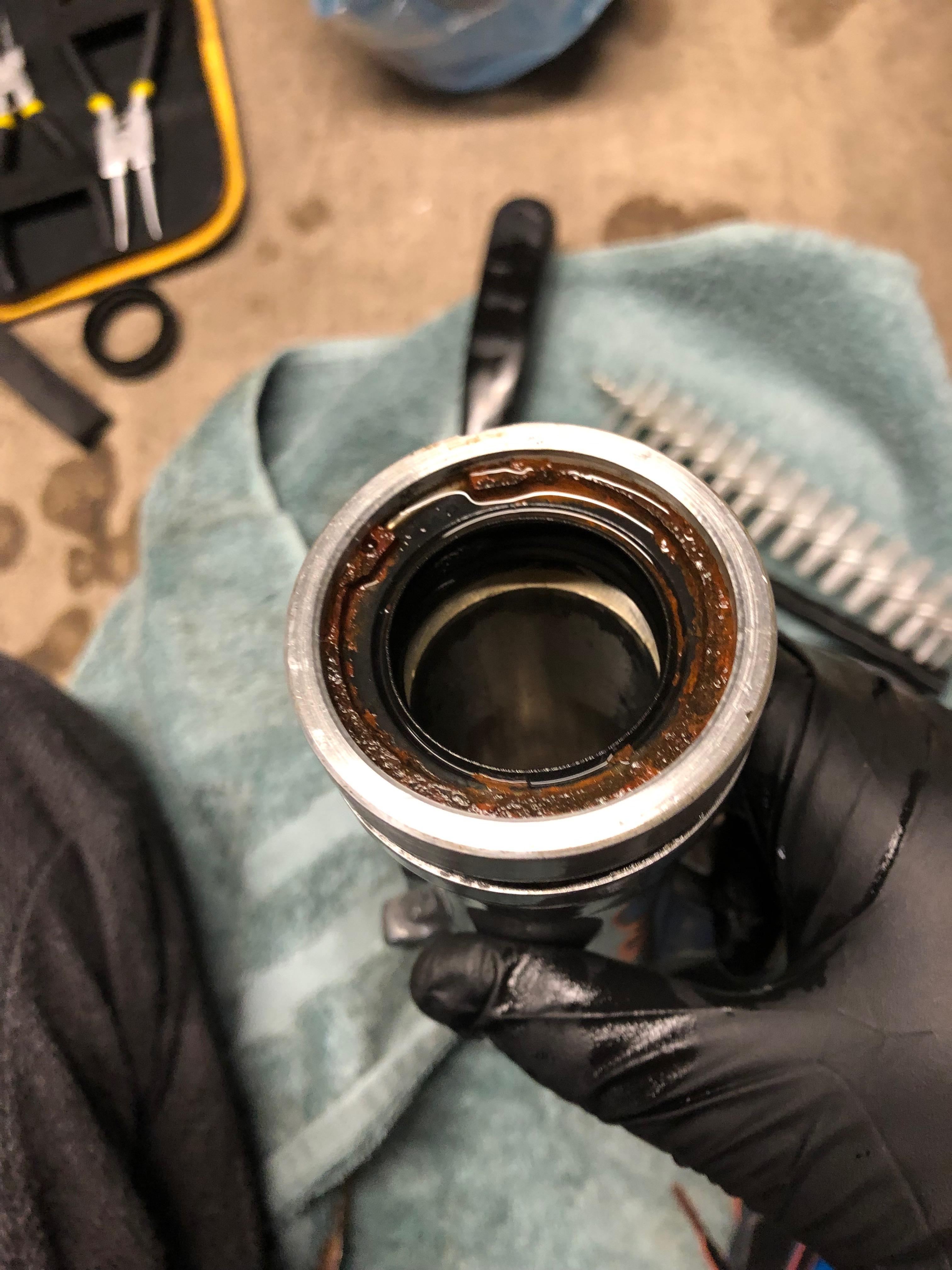
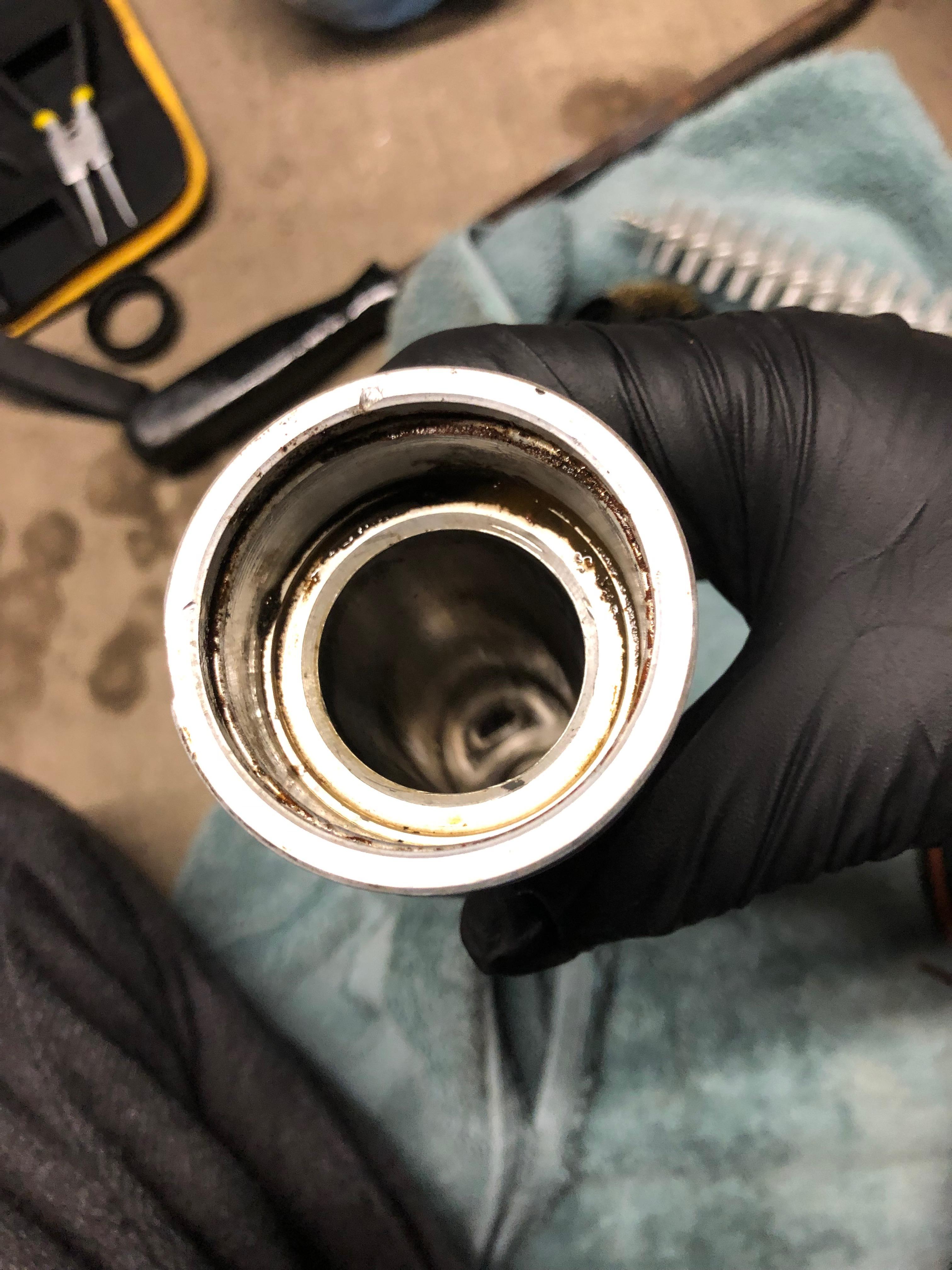
This is not a how-to on removing your forks from your frame. (That story involves a dead blow mallet and 2-3 million years worth of rust where Honda cut corners chroming the fork tubes.) This simply the method I used to disassemble the forks themselves.

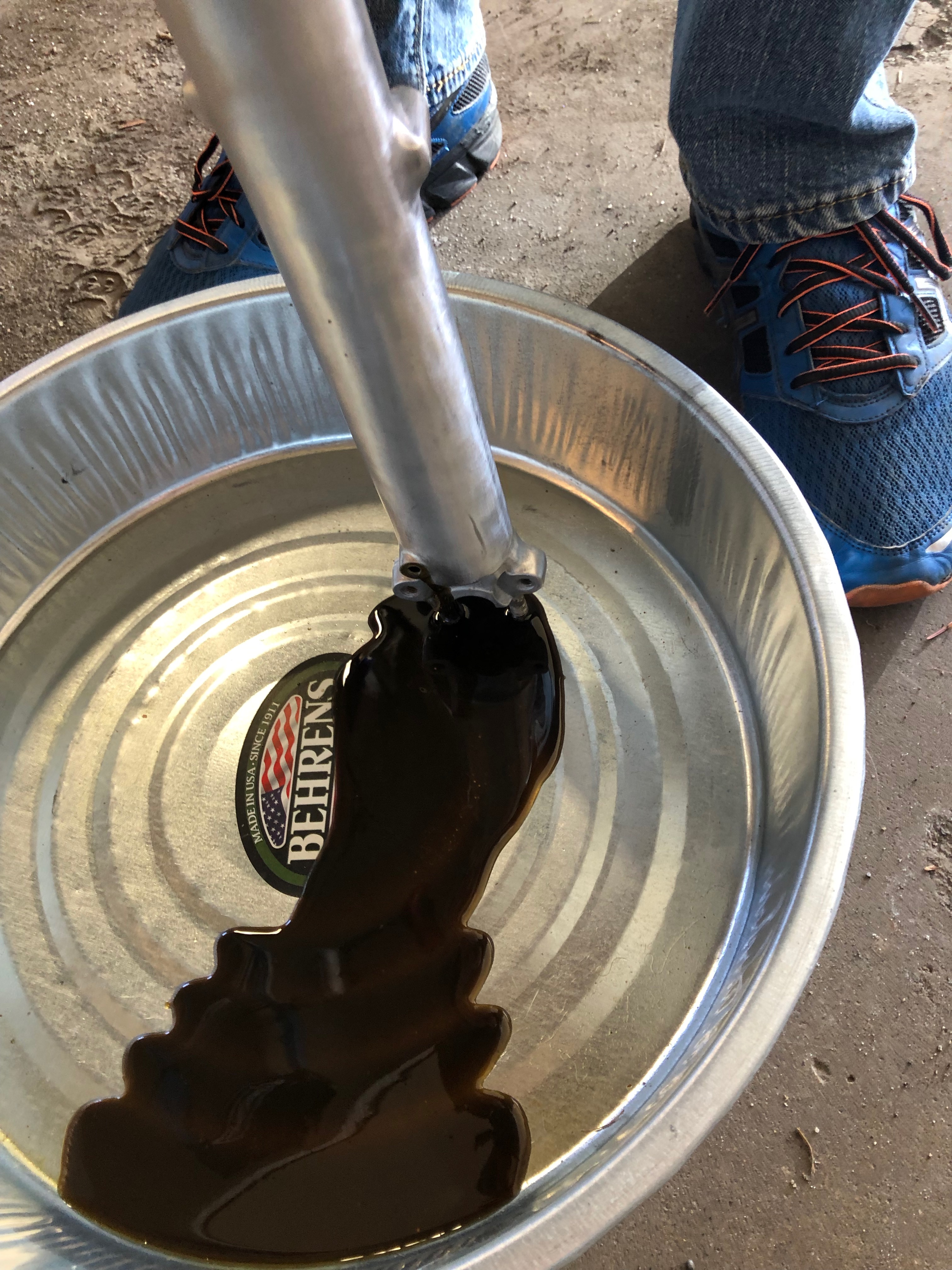
First we need to relieve the forks of their oil. To do that, find yourself a nice WIDE oil pan with decently high walls (we all think we have better aim than we actually do) and remove the fork cap bolt at the very top of the fork. This will relieve spring tension and let you squeeze out more oil by being able to pump the fork tube farther down without resistance. Then, remove the oil drain bolt at the bottom of the fork. Pump the fork until oil no longer comes out. You may have to pump faster at the end to get out as much as possible. It smells awful.

Repeat for fork number 2...I didn't really need to add that, did I?

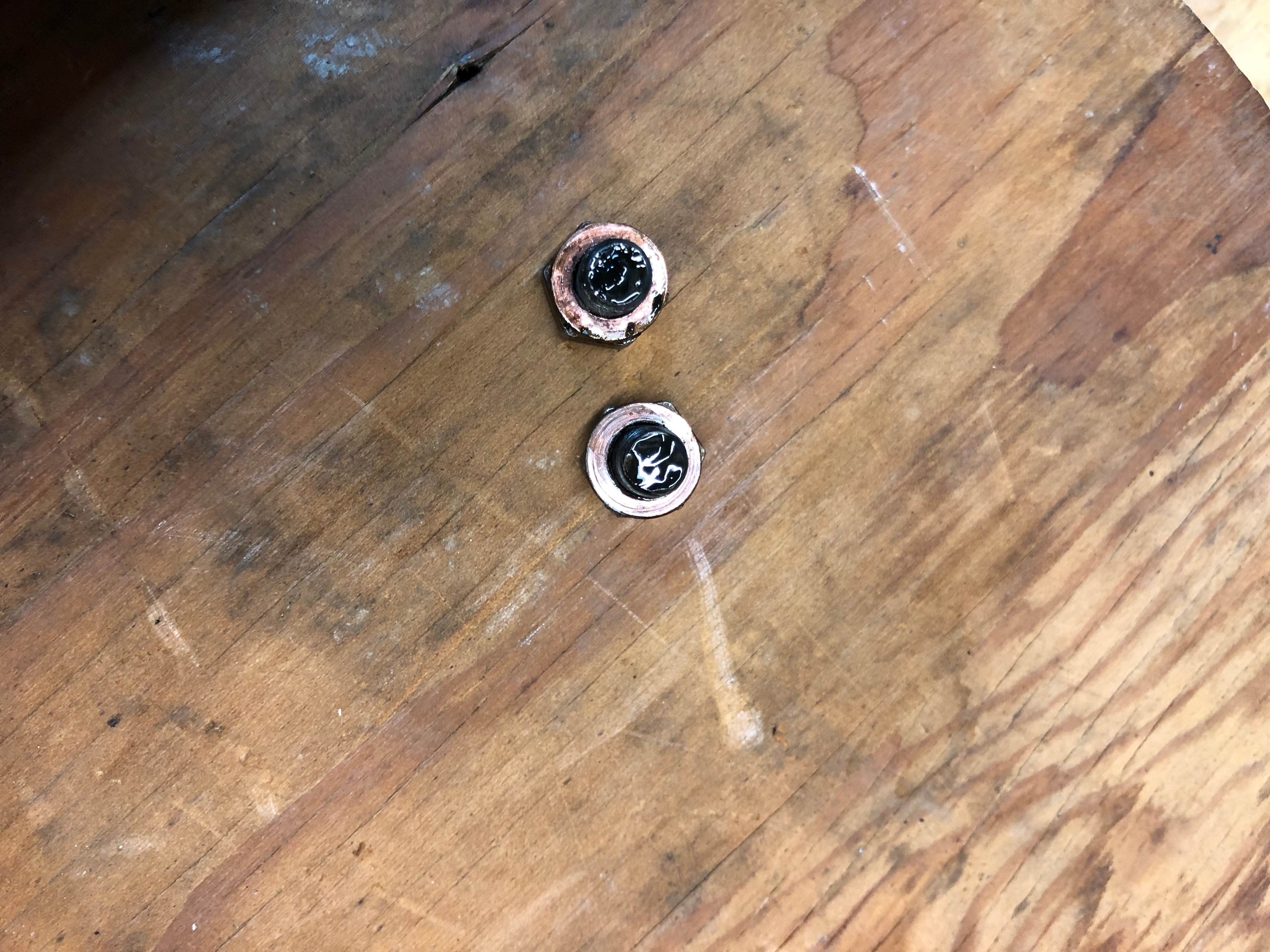
There will be copper sealing washers underneath the drain bolts. Save these. You can get NOS ones, but I hear they can be re-used. Don't take my word for it, take Tom's...he's replaced millions.

These washers act as a seal to keep in the fork oil without having to apply too much torque on the bolt itself, which could destroy the softer aluminum threads in your fork leg. And nobody wants that!

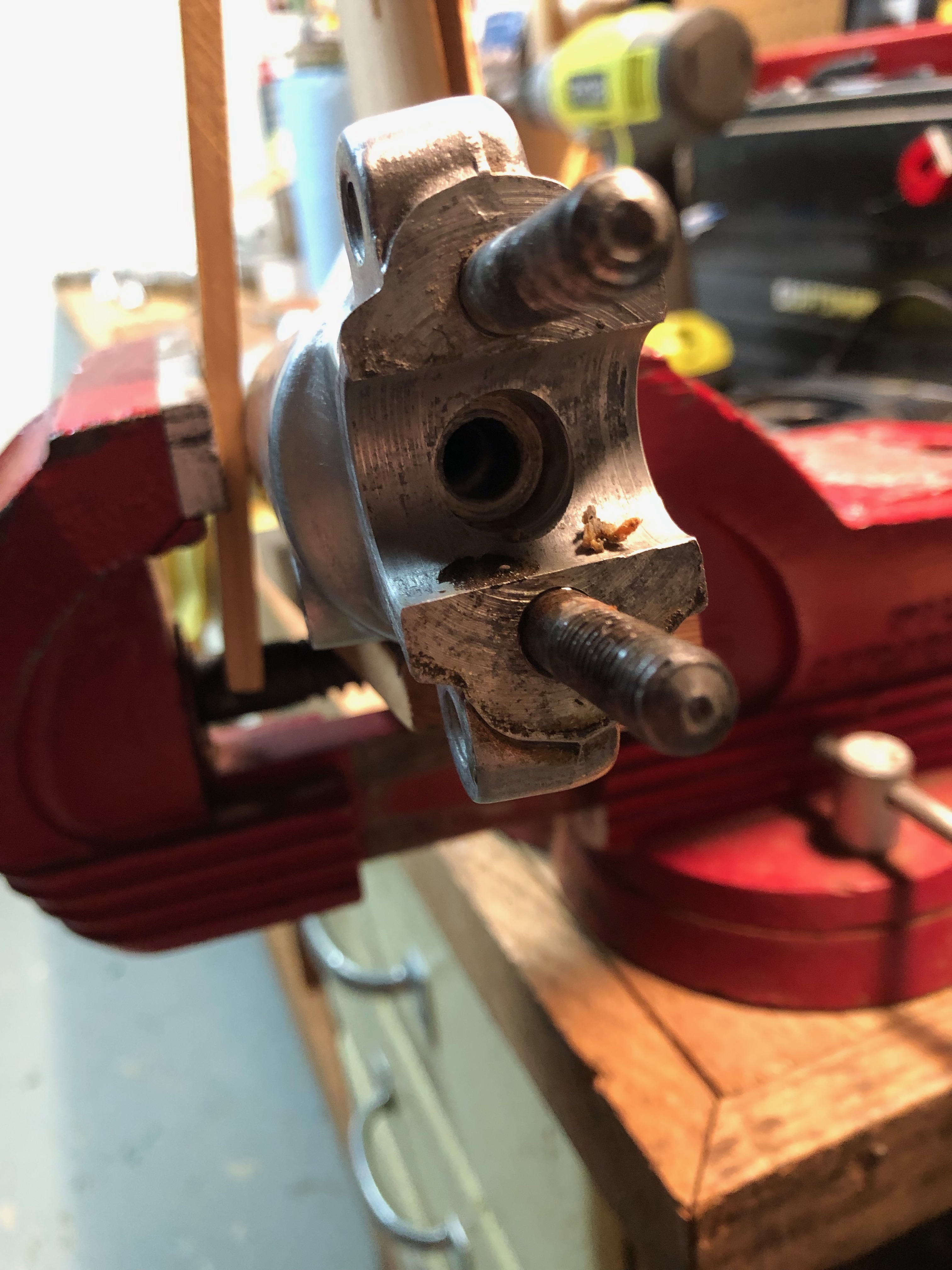
Right, now take your forks over to the bench, but mind the drip because 40-year-old fork oil is some really foul stuff! Second things second, we're going to remove the bottom bolt that goes upward into the damper that is nested inside the fork leg between the axle retaining bolts. This is quite fun as there is some hardened glue on these buggers from the factory and there is a fair chance you'll just turn the damper instead of unthreading the bolt and be really screwed! But we won't shy away from this battle. We have a few secret weapons: A vice, a heat gun, a socket/breaker bar with an allen head socket, and some legendary pieces of scrap wood!

Mount your fork leg in the vice, protecting it from damage with scrap wood (or shop towel) on either side. Now weaken the glue and prep the bolt with its ultimate weakness -- heat! When it's hot enough and you're ready to remove it with the socket wrench, apply one sharp hard tug to break it loose instead of gradual pressure. This will increase your chances of not simply rotating the damper inside the fork. There are more copper crush washers under these bolts, so make sure you find and save them for reassembly.

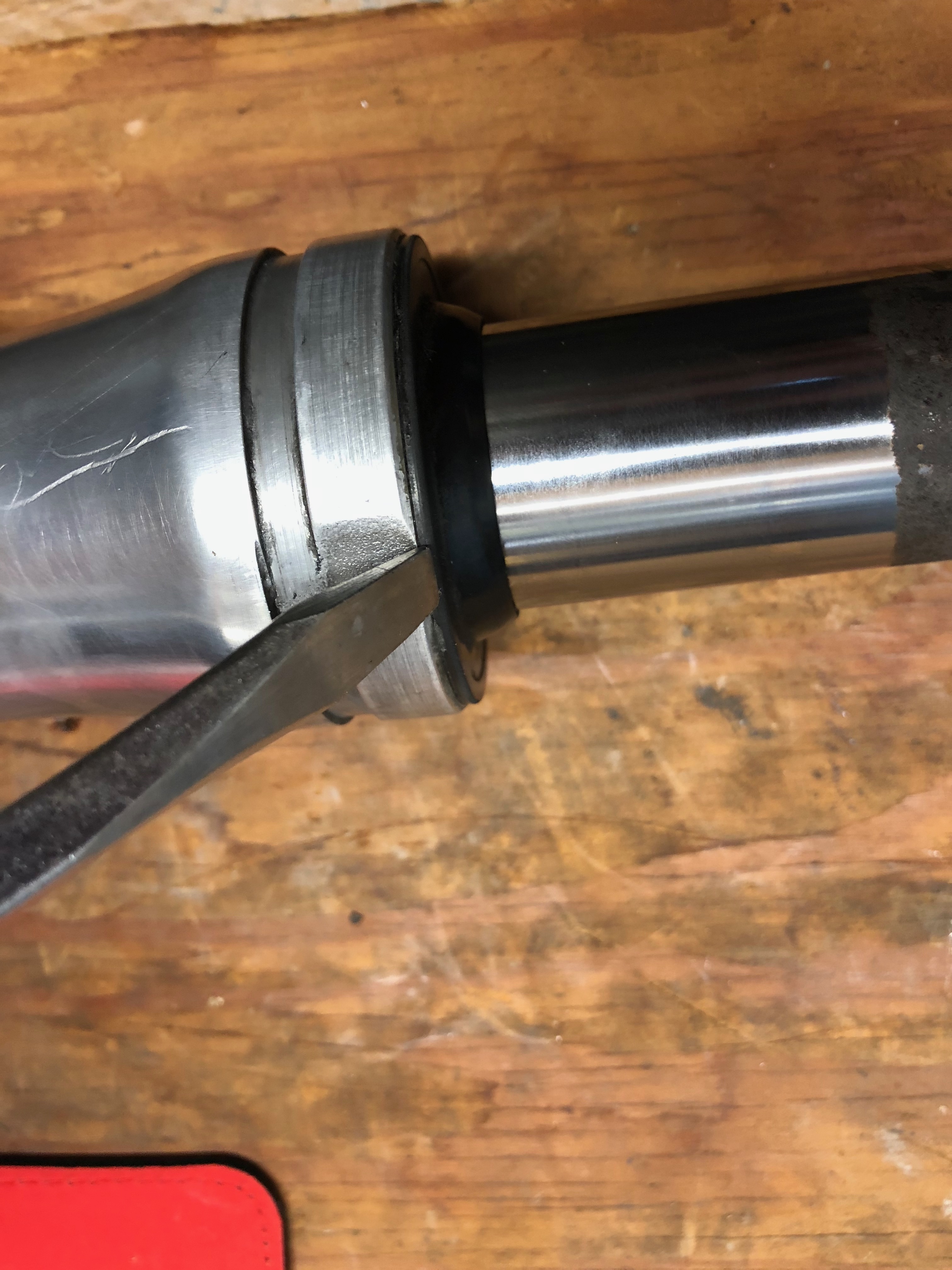
Next, remove the dust seals with a screwdriver on the flat part of the OD (outer diameter) on your fork leg. Be careful when removing these. NOS replacements are available but at $30 dollars each, its best to simply reuse the ones you have.

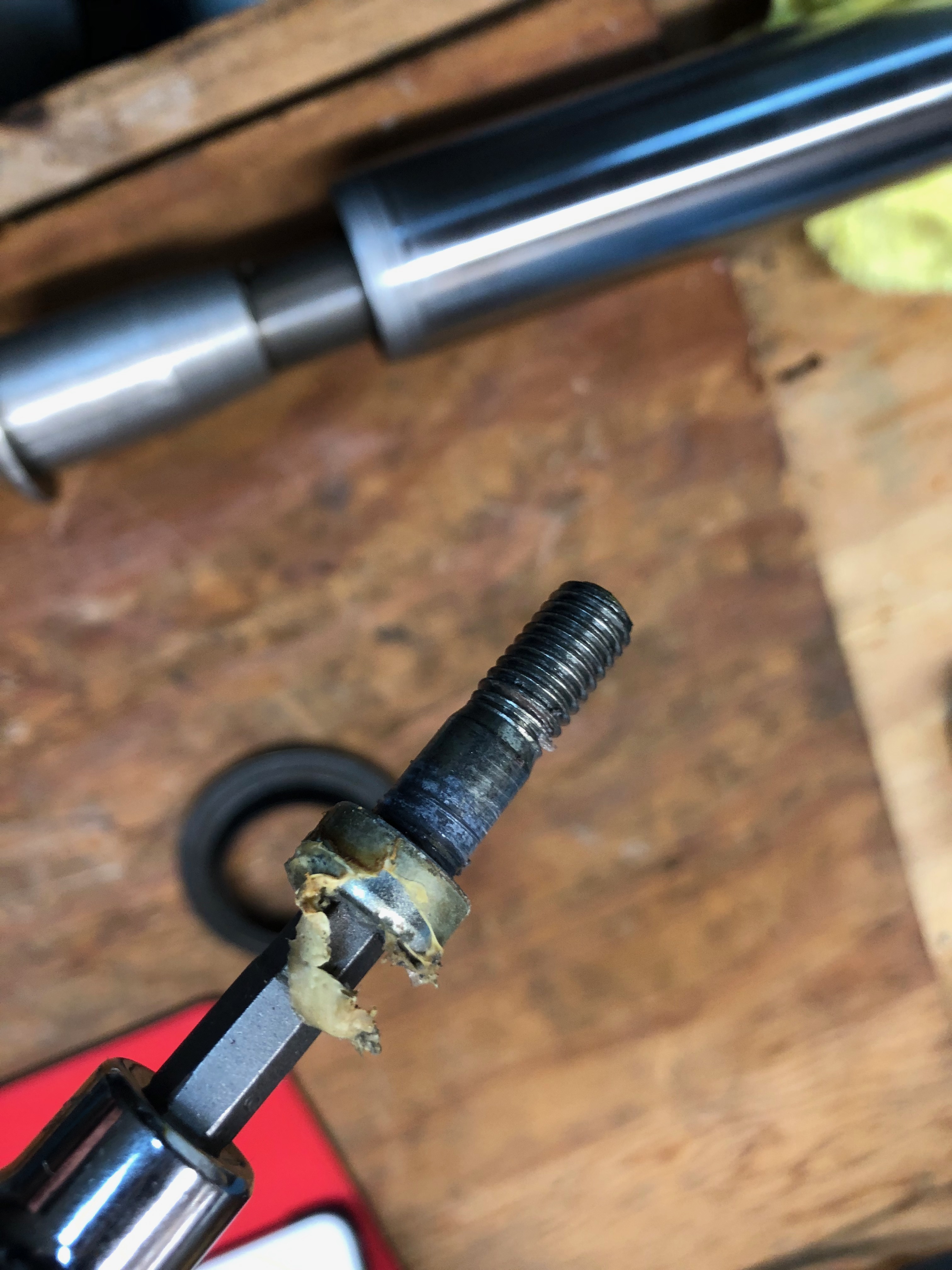
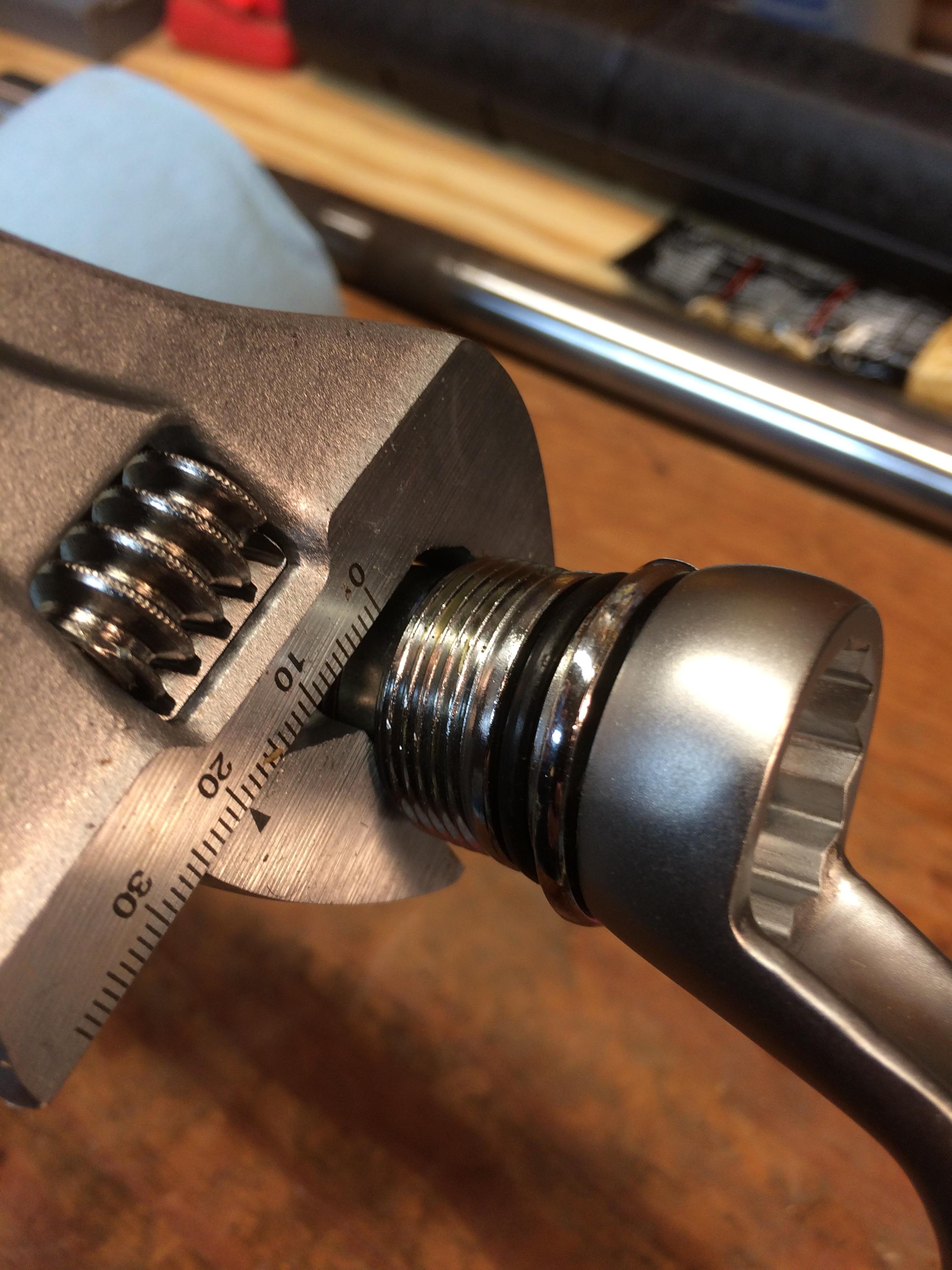
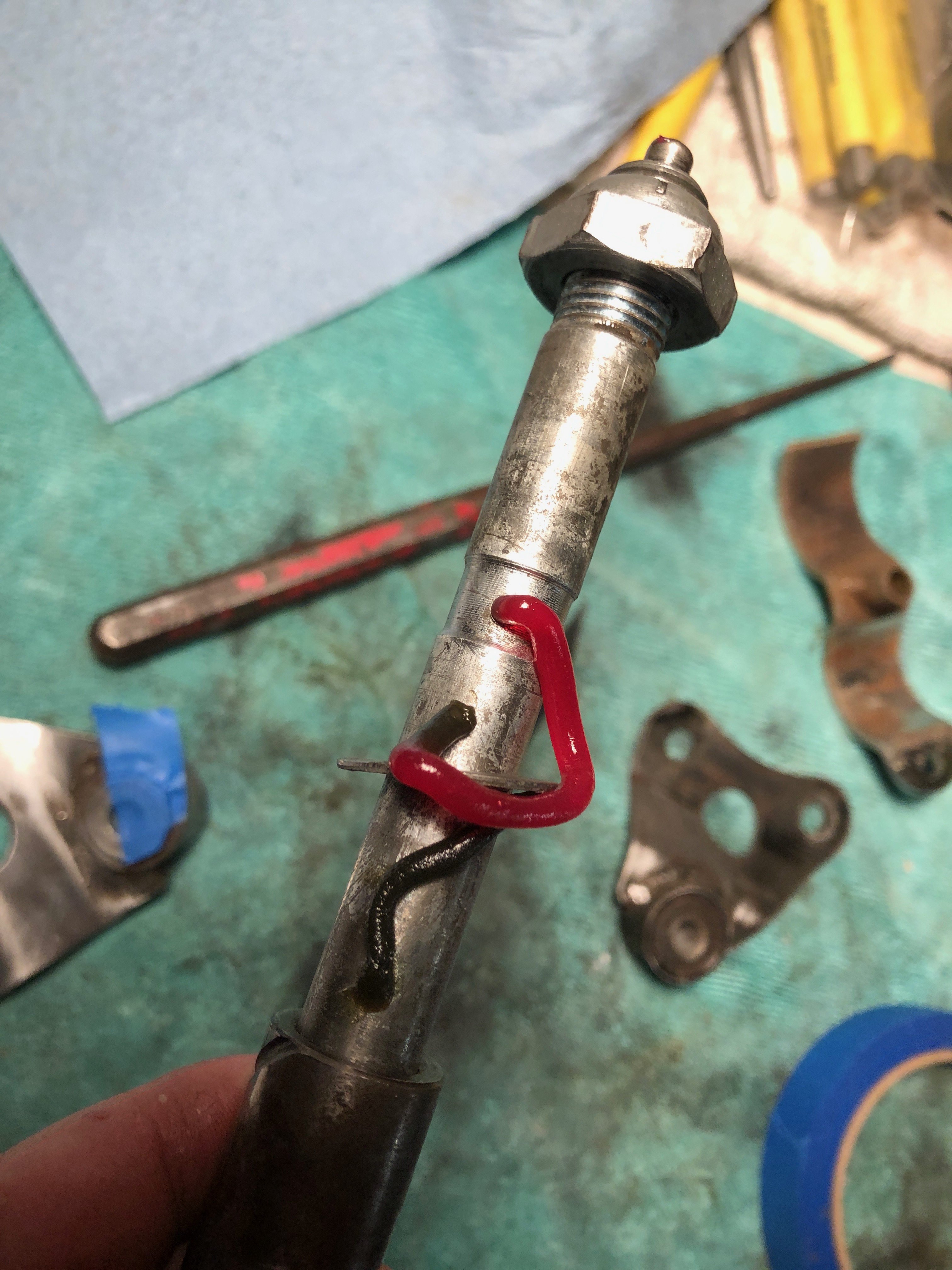
The last step before removing the guts of the fork is to remove the fork cap bolt. Here is where the double-crossing I promised you comes into the tale. This deceitful menace easily passes by as one cohesive piece, when in fact it is two (a bolt and lock nut)! No amount of heaving, yanking, wrenching, biting, or riddle-solving will coerce it to loosen. I have heard tell that a few poor lads have unknowingly monkeyed with this bolt for four hours before learning the wisdom of the truth.

eEQAiSl.jpg


8cJ7rmC.jpg


N0i3ga7.jpg


1K4hR4N.jpg


OIclUs3.jpg
 
Luckily for me, my dad is a very wise and powerful wizard, and he was able to use his hocus-pocus to remove these stubborn fork cap bolts and lock nuts.


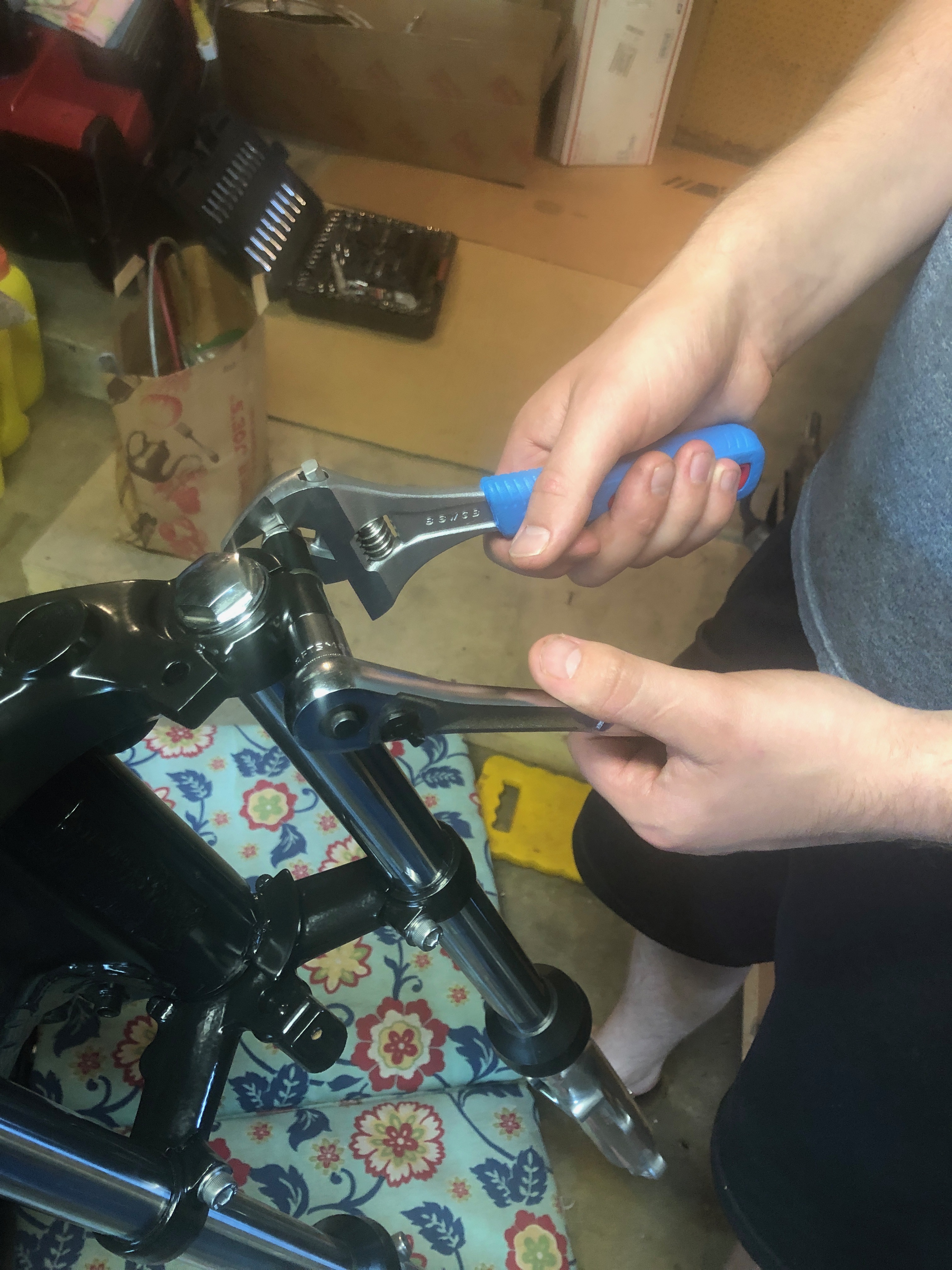
For the rest of you puny mortals, a thin-jaw crescent wrench will work beautifully. Normal wrenches are too wide and overlap the fork spring, preventing you from getting a good purchase on the lock nut and potentially damaging your spring in the process.

Now we may pull the spring and damper from the fork tube.

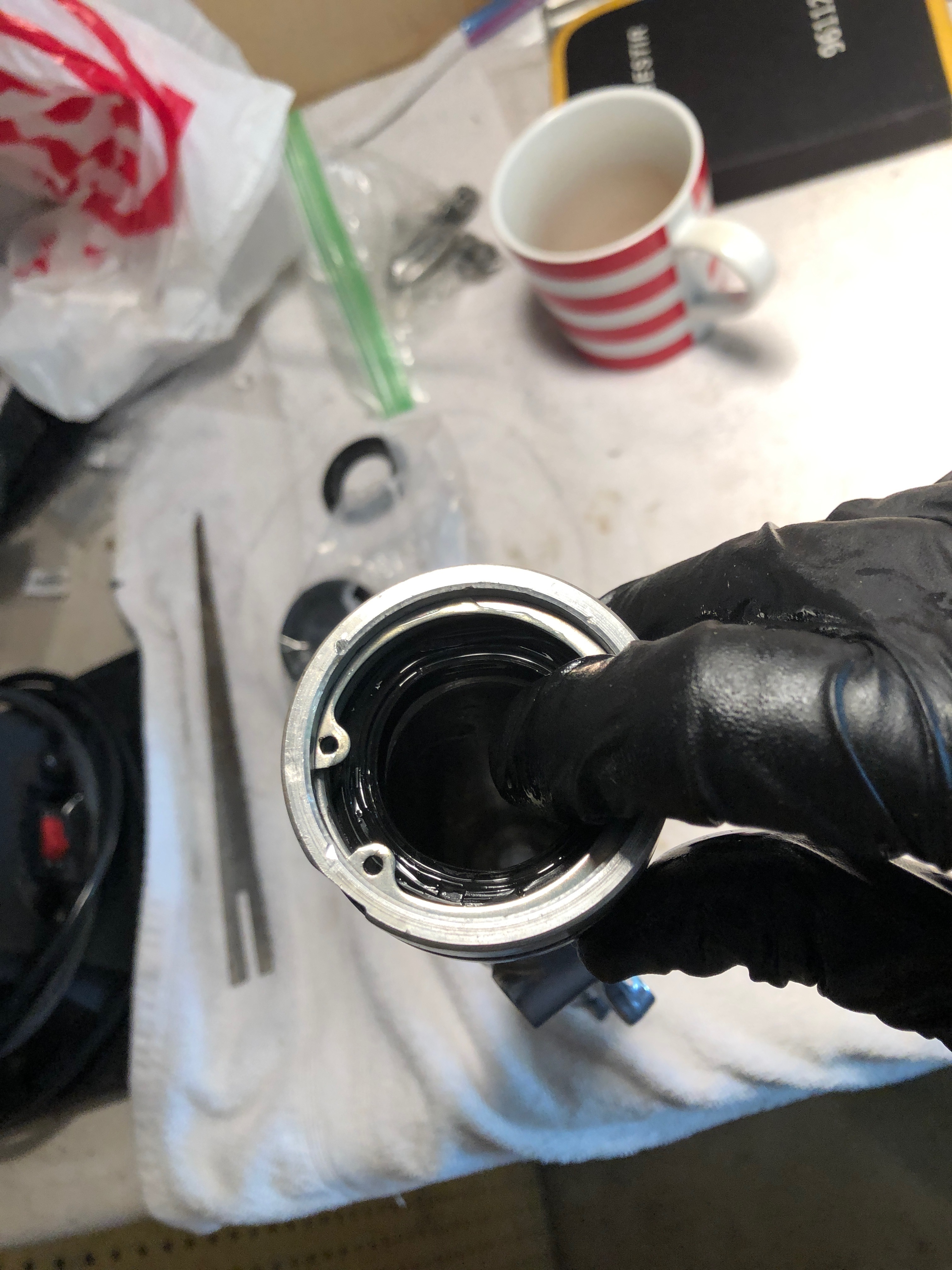
Back to the fork leg, there is the matter of removing the fork oil seal. First remove the circlip, then use a pry bar to gently lift the seal out, applying force all around the circumference and never using too much force so as to avoid damaging the aluminum rim of the fork leg.

and of course catalog your loose hardware so you remember what goes where when you re-assemble.

THE END.

...or is it?


(it is.)

8Zh06pF.jpg


hAS2F38.jpg


3AKTq7C.jpg


0LcrivQ.jpg
 
ancientdad said:

You spin quite the fable of yore, young squire... :lol::lol: your posts are great entertainment!
 
My dad had his chance to work some wiz biz on my forks–now it's my turn.

Following my process for shining aluminum (detailed extensively on page 10 of this thread) I brought them up to a mirror finish. Lumos!

The canvas we started with:


d7f5b439b490e5bb53afcbfb9e9d3e56.jpg


After wet sanding by hand with 220, 400, and 800 grit sandpaper.


e58a605fa4a21f1bbb8e494b09dc651f.jpg


After buffing on the bench grinder with black compound + rope sisal wheel, brown compound + sewn cotton wheel, and white compound + loose cotton wheel. I also used brown compound and loose cotton wheel to get into the nooks and crannies that are impossible with the sewn wheels. But those parts face in toward the wheel for the most part, so I wasn't too worried about it.


078c90eb333bcc1498f784dbb4b0e596.jpg


64e197e10f2e89780c7088fee39d7d79.jpg


Oh, and I cleaned up the threads of those bolts on the brass wire wheel, too.


afc46244a42e05bfc60a6dc8cd0857b5.jpg


Show Full Signature
1973 CL350 - Project Log
 
ancientdad said:

Very nice, Mike - it's going to look good on the bike and frankly, I'm not sure you need to bother with clearcoat. All the stuff I polished on my 450 is fine without clear, even here in the capital of humidity. The polished surface is less likely to corrode, and clear would dull the nice finish a bit
 
I live in Minnesota, land of 10,000 lakes, so my humidity can get bad too. I know clear will mute the finish a bit but won’t it provide protection from rock and stone chips?
 
No, I'm definitely going to think about it if the polish will stay nice. Mainly I wanted to avoid a lot of maintenance by re-polishing with autosol every so often. I guess I'm just not that in-tune with what materials corrode, how quickly, and in which environments yet.

Since my flash rust fiasco after soda blasting and vinegar washing my motor parts, I'm always concerned about leaving things un-coated or using hardware as is after cleaning up.
 
ancientdad said:

My bike stays in the garage, has never been ridden in rain since I finished it, and I've only had to wipe things down. While I had the engine apart last summer, I did touch up the some of polishing on the engine parts, mostly the top end stuff, but it really wasn't necessary... and I haven't touched the lower fork legs except to wipe them down. And here's something else to add to that - while the bike was at Barber for a week, it sat outside in our camp overnight every night and I used a cover on it at first, but I found out after a couple of days that it got a heavy coating of dew every night whether I covered it or not, even under the cover. I stopped covering it, had to wipe it down every morning (literally soaking wet) but only a couple of old OEM bolts that had marginal plating showed a little rust - nothing that is polished aluminum corroded
 
HondaPete89 said:

Polishing is half the fun, sometimes wish my aluminum would oxidize faster. Your fork oil looked very oily, not milky at all. When it comes to forks (and motorcycles in general) I find a quality penetrant, heat gun and big f'ing hammer handle most jobs. Seems you're having fun, you will miss these days once you're finished... That's why you buy another.
 
A couple of weekends ago (sorry for the late post) life let me wrench on the bike and I made some exciting progress!

The motor is now mounted in the frame! She’s all up from here and will soon take the shape of a motorcycle once more.


2875c329728b16618c6dc1fab32803ae.jpg


It was actually much easier than it’s made out to be, and I didn’t scratch my new powder coated frame.

The key here I think is to lay the frame on its side with something soft underneath. These old chair cushions worked well for me, and you will see why in a bit.

Lay the frame on the left side so the right side with the larger opening is facing up to accept the engine. You may want to protect areas of the frame with pool noodles or something, but I didn’t need to.


3809b6e9aa1fc4b9234c7b5d8ad339a9.jpg


That’s...kind of it. Time to button it up with new stainless steel hardware. I think they’re 11mm x 1.5 of varying lengths, so check that manual.

But here is where the chair cushions come in. You have the frame with the right side up, and the manual states that the bolts go in from the left side (facing the ground currently). The cushions offered me juuuuuust enough room to get my bolts through the holes from the “left” (underneath).


dce030378fc7685515c4aec1954d8ed5.jpg


Also don’t forget that spacer that goes on the front right motor mount. I put mine on the wire wheel to shine it up and rubbed a little autosol on it for protection.


ad31af0a5bc41d97a379109a043df853.jpg


For fun I mocked it up with pipes and my seat.


69e485405ac9393825c62dc7d2b3086c.jpg


The plan is to cut the tabs off the pipes, lengthen them so they can be attached to the rear upright of the frame, and coat them in chrome cerakote.

Anyone know of a good way to attach pipes to the frame in that way? Thanks!

I also got my starter motor put back together and tested it with jumper cables and a 12V battery.


eb8376b3b49d9bb2f2171560cde8f983.jpg
 
Use the original pipe mount bracket from the swingarm bolt for the pipes, that keeps everything tight and secure.
Did you put the ground strap on the top rear engine mount bolt? goes on the head/right side.
 
Mike, LEGALLY, you can only copy and re-post what YOU wrote originally.....
We can get into trouble if we allow you to post any materials belonging to/copyrighted by others
as VS has shared interest of ownership (publication rights) due to the original sign-up agreement.....
 
Mike, LEGALLY, you can only copy and re-post what YOU wrote originally.....
We can get into trouble if we allow you to post any materials belonging to/copyrighted by others
as VS has shared interest of ownership (publication rights) due to the original sign-up agreement.....

Generally you CAN repost if you link to the original work and make it clear they were not your words. That's why I was attributing it to their usernames and not editing their content. Plus the link to the original content is at the top of the thread.

However, I was only going into such detail here because I was asked to. I can simply repost only my own posts and it will be a lot less work for me before I get to my new, current stuff! Thanks Steve.

EDIT: I am speaking from a general standpoint using my background as a professional writer. I don't know anything about the "sign-up agreement" mentioned.
 
This will be kind of a hodgepodge post. I have a few random updates to the build. It’s mostly small niggling things that will allow for far greater progress on a variety of projects. Right now I’m inching closer to a roller and it feels so close yet so far!

First, I dismantled the wheels. Removing the tires revealed more rust cakes than I can begin to describe. I probably don’t even need to say that the rim straps were disintegrated. I got most the spoke nipples off with a drill but sadly some spokes met the business end of an angle grinder and cutoff wheel.


9427f001095300963a8e025af1a9fa19.jpg


42ca7e51cf7a6130cd887be78c39dc66.jpg


Then I polished 3 of my hubs lol. Yeah, I’m going to do the last one but one of the chromed brake cable arms (insert technical term here) was being stubborn and I didn’t get it off while I had access to my bench buffer.


e60df3e5404007437a132c91a2b47071.jpg


Moving on, I tested some rubber-damped P-clamps and pipe clamps as an exhaust support. I’m really excited about these but don’t have pics at the moment. Sending the pipes to be elongated a bit, then having them cerakoted chrome.

I made some good progress on the “new” CB tank. I removed the badges using Then I used aircraft remover to get rid of a few spare planes...I mean remove the paint. There were layers from 3 different color schemes as well as a small dent with a poor bondo job. I removed the bondo since there was rust underneath and ordered up some bondo to redo it.


f80b44cf82b4a64e3e3db047022a8115.jpg


52d55ae19ac6916a6e4d1fcbfb8550ec.jpg


05280236db2724e475291e7637922aa3.jpg


When that’s done, the tank is ready to send out for paint. This is the scheme I have in mind.


dc0db6a504c0fdcdac49a6c4fe7e2936.jpg


Also attempted to build my forks but didn’t bring the right tools...always prepare for a job! The noob is strong with this one.
 
My CL tank is honestly in better condition. There are no dings or dents. I also prefer the boxy shouldered look better than the rounded edges of the CB tank.

But it doesn’t jive with how I had my seat made so I’m running the CB tank. With the CL tank being shorter, the entire red circled area is visible between the tank and seat.


ed55f9d6cc1127ea68634d55d2627d97.jpg

 
Alrighty boys, I got a big update from last weekend's wrench session! I got a lot done and I'm pumped to be that much closer to having a roller. I can't wait to wheel it around the garage and make motorcycle sounds with my mouth...
yH5BAEAAAAALAAAAAABAAEAAAIBRAA7
My first order of business was assembling the forks. I've had these apart to polish for so many weeks I can't tell you how good it feels to see them back in one piece, and shiny to boot.

As with all of my larger updates, this isn't a full-on how to. It likely is not the only - or even the best - way to do things. It's just how I did things. But it should give beginners who walk this path behind me a solid idea of what they are undertaking and a really good foundation upon which to base their research. But DO RESEARCH. And read the manual.

But enough said. Let's wrench!

First install fork seal in fork leg. There is a lip inside the mouth that appears to seat the seal, but it doesn’t. Try as you might, the seal won’t go down that far. However, it only has to pass the seat for the circlip. So rather than mangling your seal, don’t smash the living daylights out of it.

Then install circlip in fork leg.

Pro tip: When I built my engine, I learned there is a front and back to these. It likely does not matter in this application, but the slightly rounded side usually faces away from the part while the totally flat side butts up against it.


Moving away from the fork leg, place spring seat and spring on damper rod. If the spring looks way too long to fit over the damper rod, then the rod is seized in a compressed position inside the damper and must be pulled out. It’s more than likely slick with fork oil and too difficult to get a good purchase on it with your bare hand. So just thread the fork cap nut on the end of the rod and pull apart....just ask me how I know this :grin:

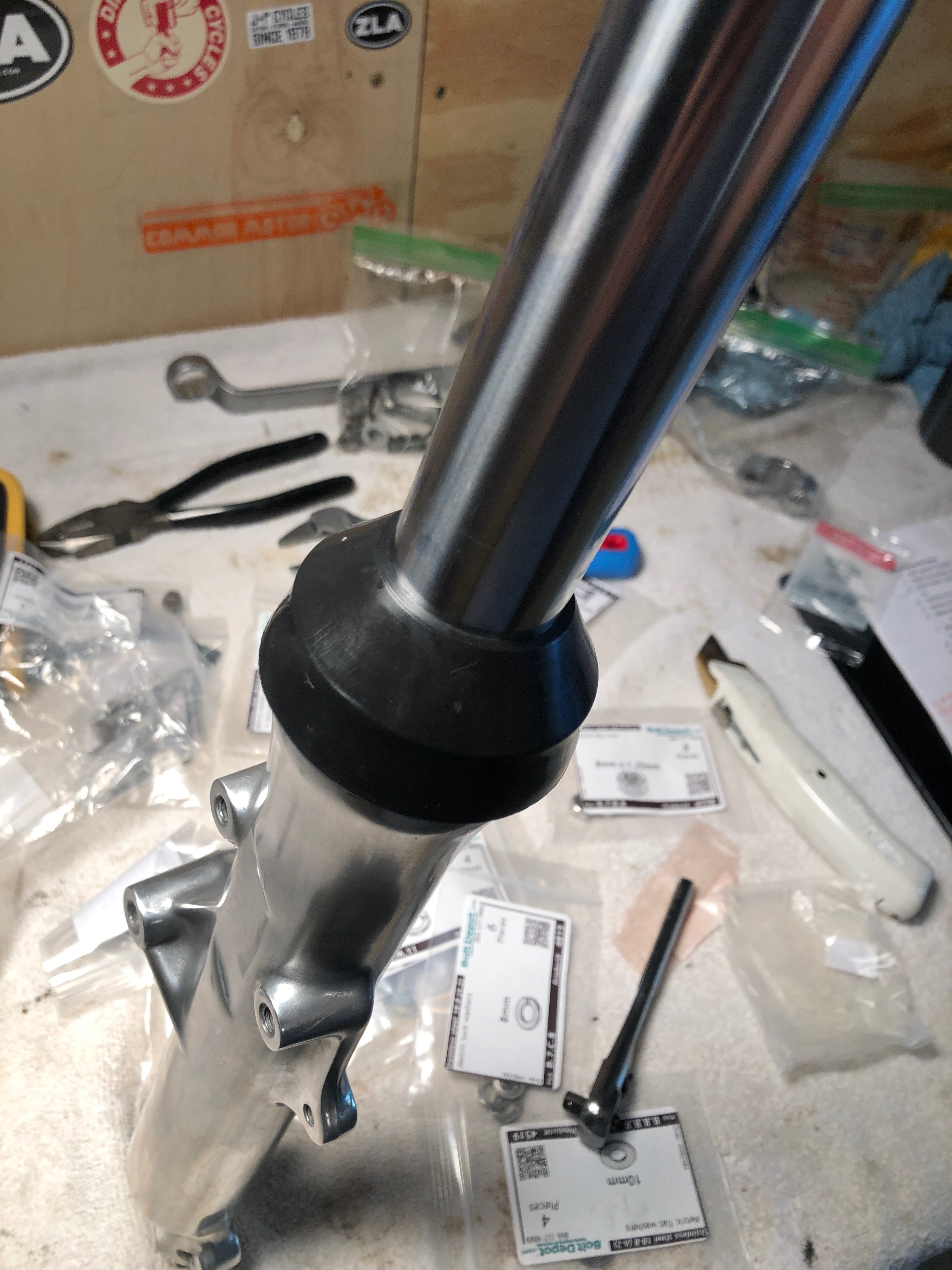
Insert the damper rod into the fork leg by angling it past the circlip and oil seal. Then insert the fork tube into the fork leg over the damper and spring.

Replace cap nut o-ring. Prior to assembly, coat with fork oil or grease. Install cap nut on fork tube.

Place the assembly in a bench vice. If you don't want the vice jaws to gouge your fresh finish, protect it with microfiber rags and soft wood.

Apply thread locker to the bottom bolt (threads into damper) and install it with a copper crush washer. I got new copper washers, but I hear the old ones work just as well. Do not tighten too much as you could break the soft aluminum threads in your fork leg. Install the 6mm drain bolt and copper washer on the side of the fork leg as well.

Tighten lock nut against cap nut by turning thin-jaw adjustable wrench and crescent wrench in opposite directions.

Measure and pour about 135 ml of 15w fork oil into the fork tube.

Torque cap bolt in fork tube. Install the two rubber dust seals.

Install axle parts so you don’t lose them. 1 lock washer, washer, and nut per post. Don’t over tighten lock washers until axle is in place.

KsPkGZf.jpg


1gUhCTH.jpg


Vyrts6X.jpg


yTiBLwg.jpg


4pKMeiP.jpg
 
Part 2 of last weeks wrenching is here! With those beautiful forks built, I couldn't just leave them laying there. I had to install them on the bike! And to do that, the bike would need the steering head and top bridge installed, along with fresh All Ballz tapered roller bearings.


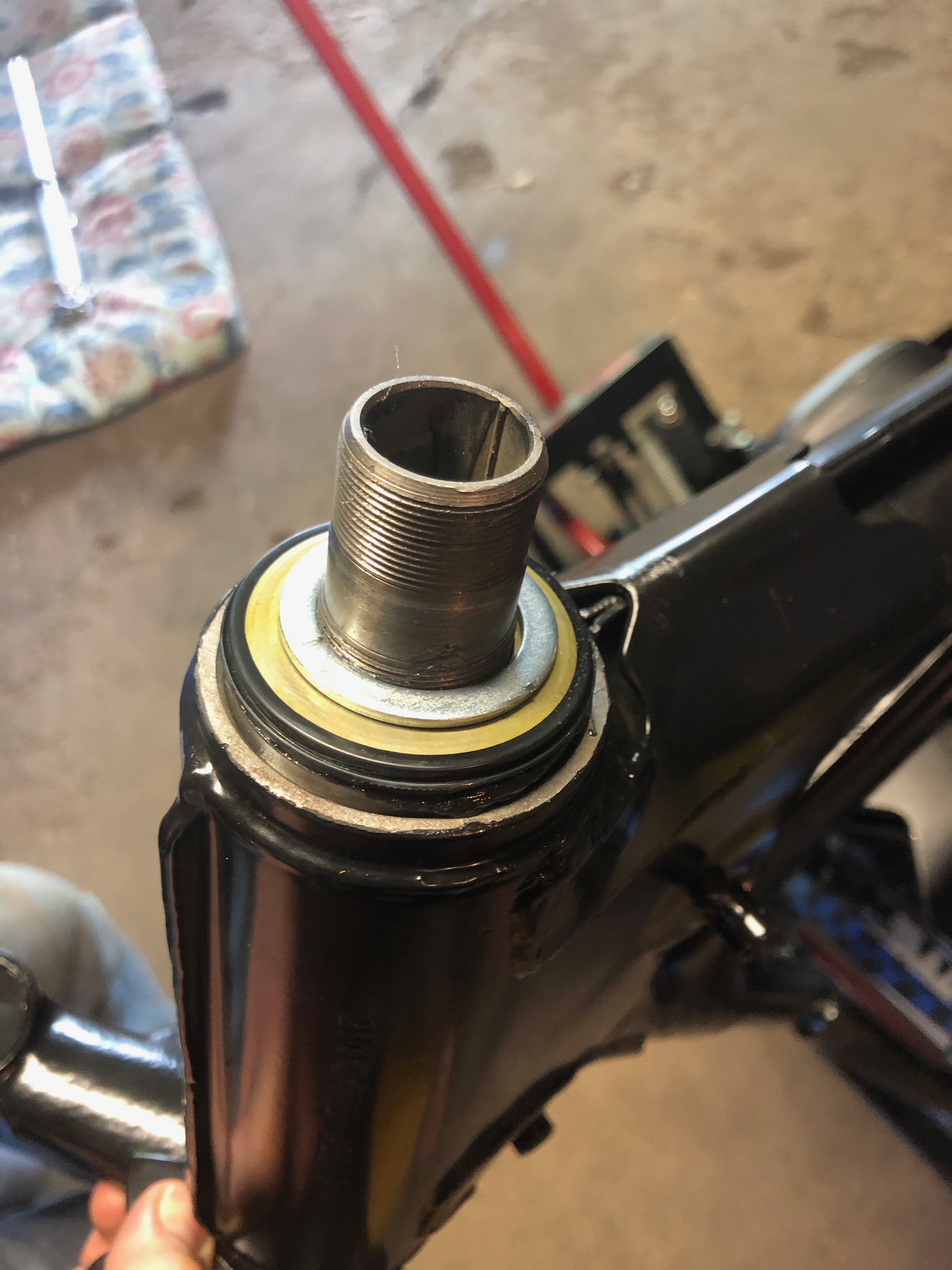
If you haven’t already, remove the lower race and dust cap from the bottom of the steering stem. I didn’t end up having to do this myself so I can’t speak to it, but I hear it’s a bear. Good luck…


Measure the lower All Balls bearing against the stock ball bearing to determine which shim to use. The All Balls lower race must match the height of the stock ball bearing with some balls in it.


Then place the new races and the steering stem in the freezer and have a beer while you wait. This, of course, is to shrink t he races so they are easier to install on the frame. Having a beer will shrink your drinking hand, therefore making your fingers more nimble for detail work.


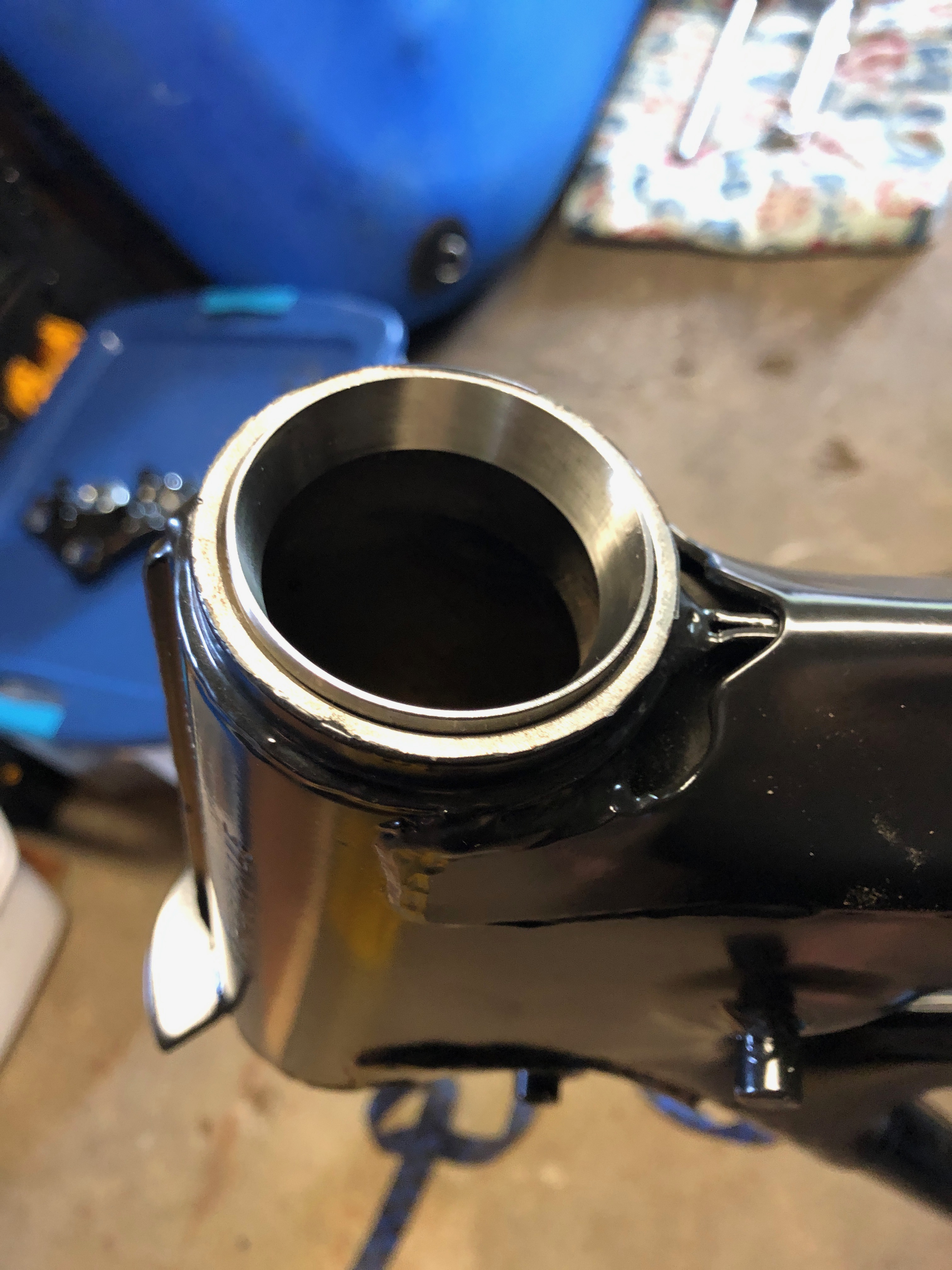
Note: the upper and lower bearings are NOT the same size. The lower bearing (left) has a larger diameter and the upper bearing (right) has a smaller diameter.


Now install the frozen races. The race with the smaller diameter goes on the top of the frame. Tap it in gently in with a brass hammer. When seated, the lip of the race sticks above the frame. Check often with your fingernail to see if the race has seated so you don’t unnecessarily beat on it.


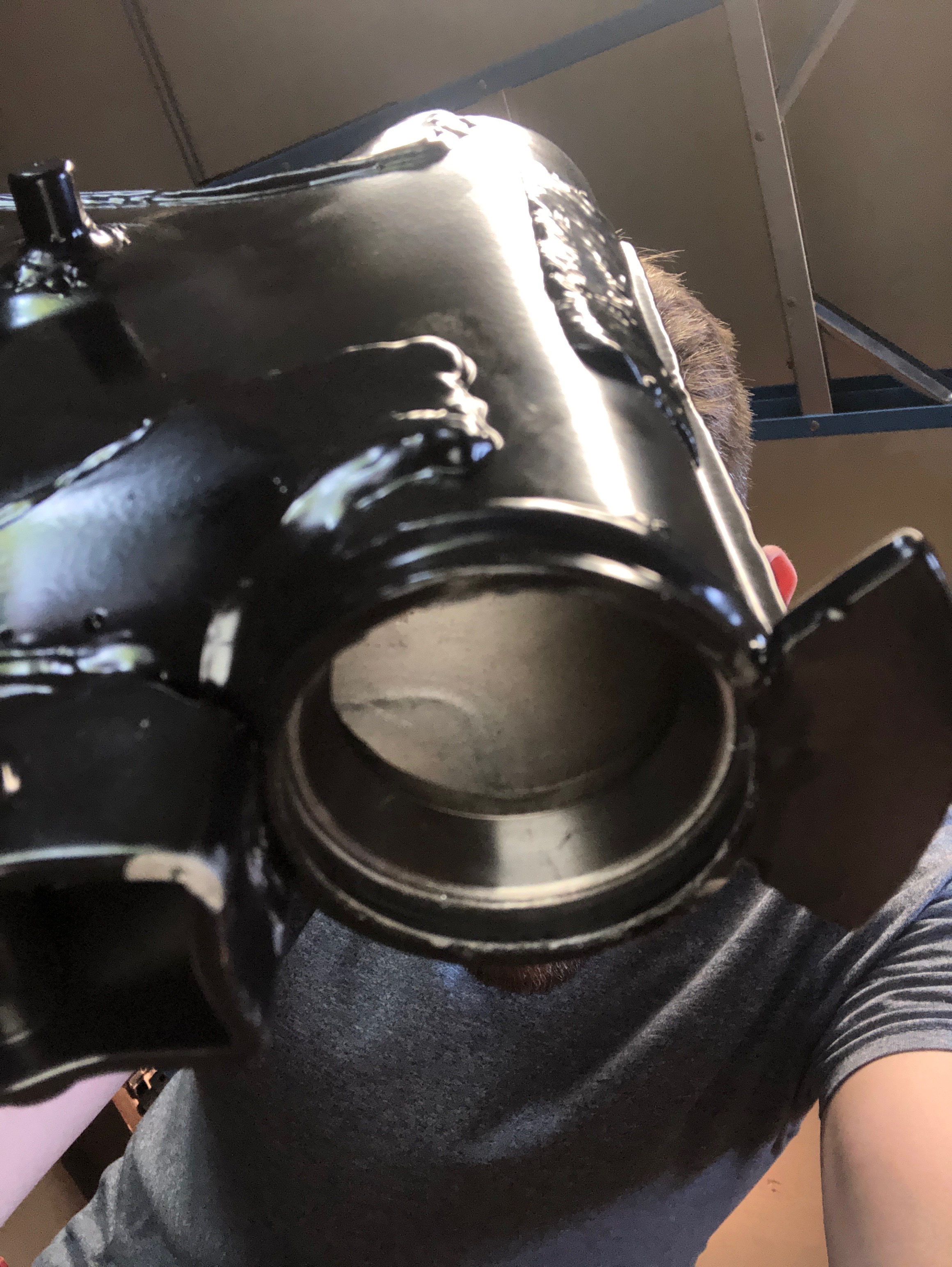
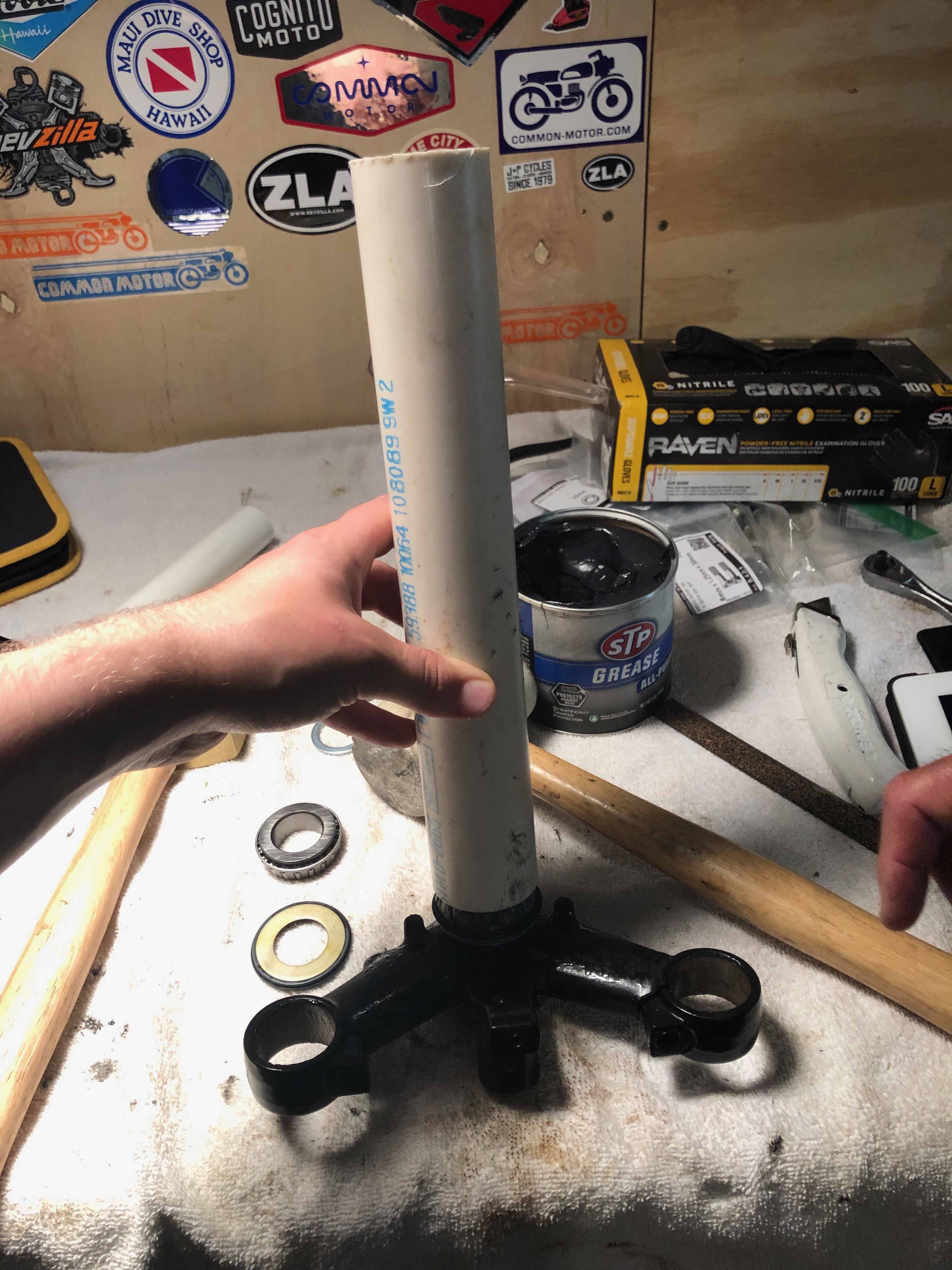
Install the lower race (larger diameter) in much the same way, albeit upside down. Oppositely, this race will recessed into the frame opening when seated, so you will need a creative implement to drive it all the way in. I used a piece of plumbing pipe.


Now retrieve your steering stem from the freezer. If your fingers back to regular size, grab another beer as well. :D Drop your selected shim over the steering stem and drop your lower bearing seal (smaller OD) over that.


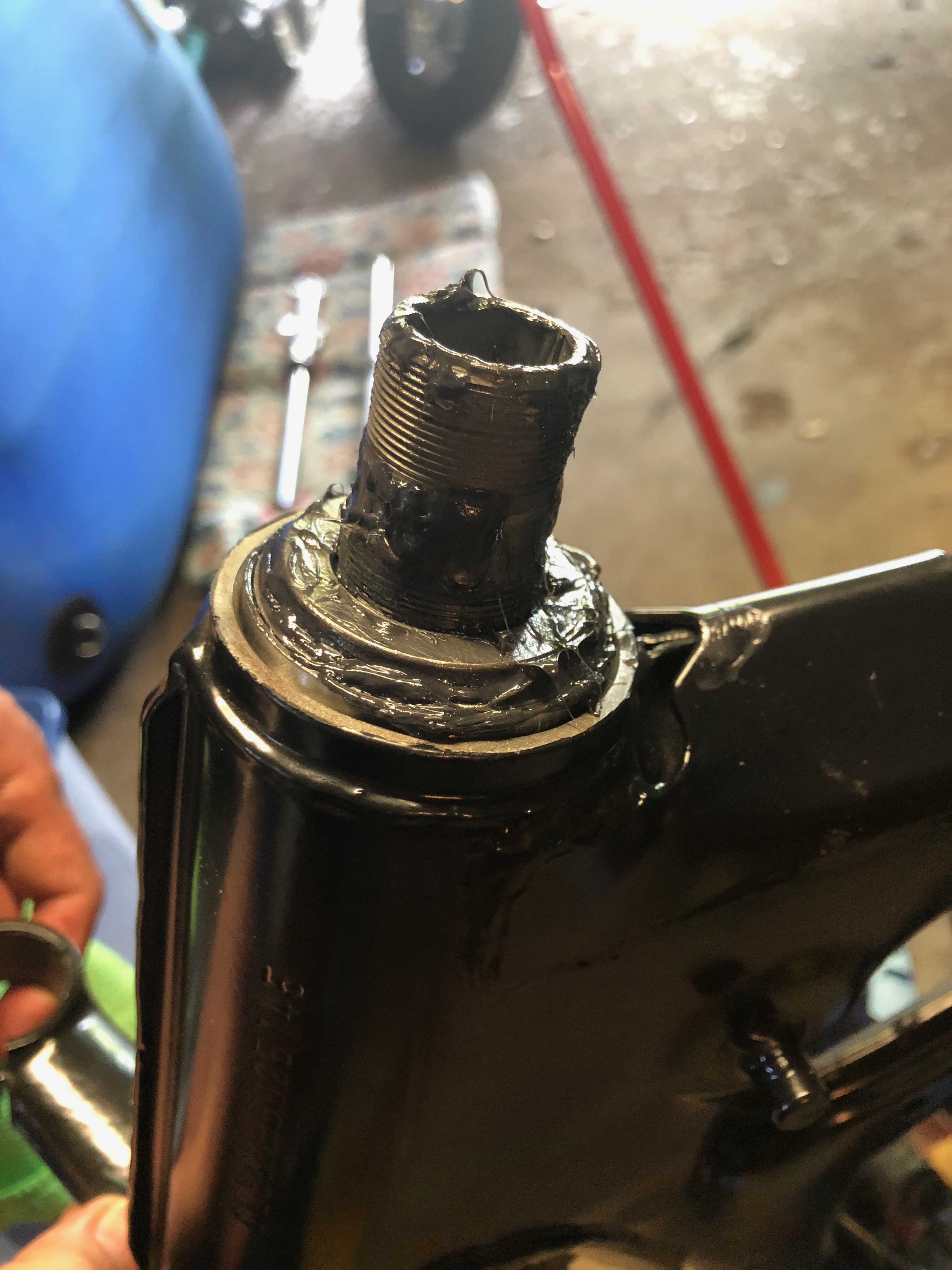
Grease up your lower (smaller diameter) bearing. Hold it like a chip and scoop bearing grease like salsa. Work it in between the races using the palm of your other hand until grease is oozing out the top and sides. Place it over the steering stem and drive it down.


You will need a special implement for this. Use a pipe that matches the diameter of the inner race and is longer than the steering stem. This prevents damage to the delicate roller cage. It is seated when the shim and seal are unable to rotate on the steering stem. Despite talking about NOT doing exactly this just a few days ago in this thread, I only had a pipe that was too large. I used the my unused shim from the bearing kit to distribute the force more evenly and gently tapped the bearing on with no damage done.


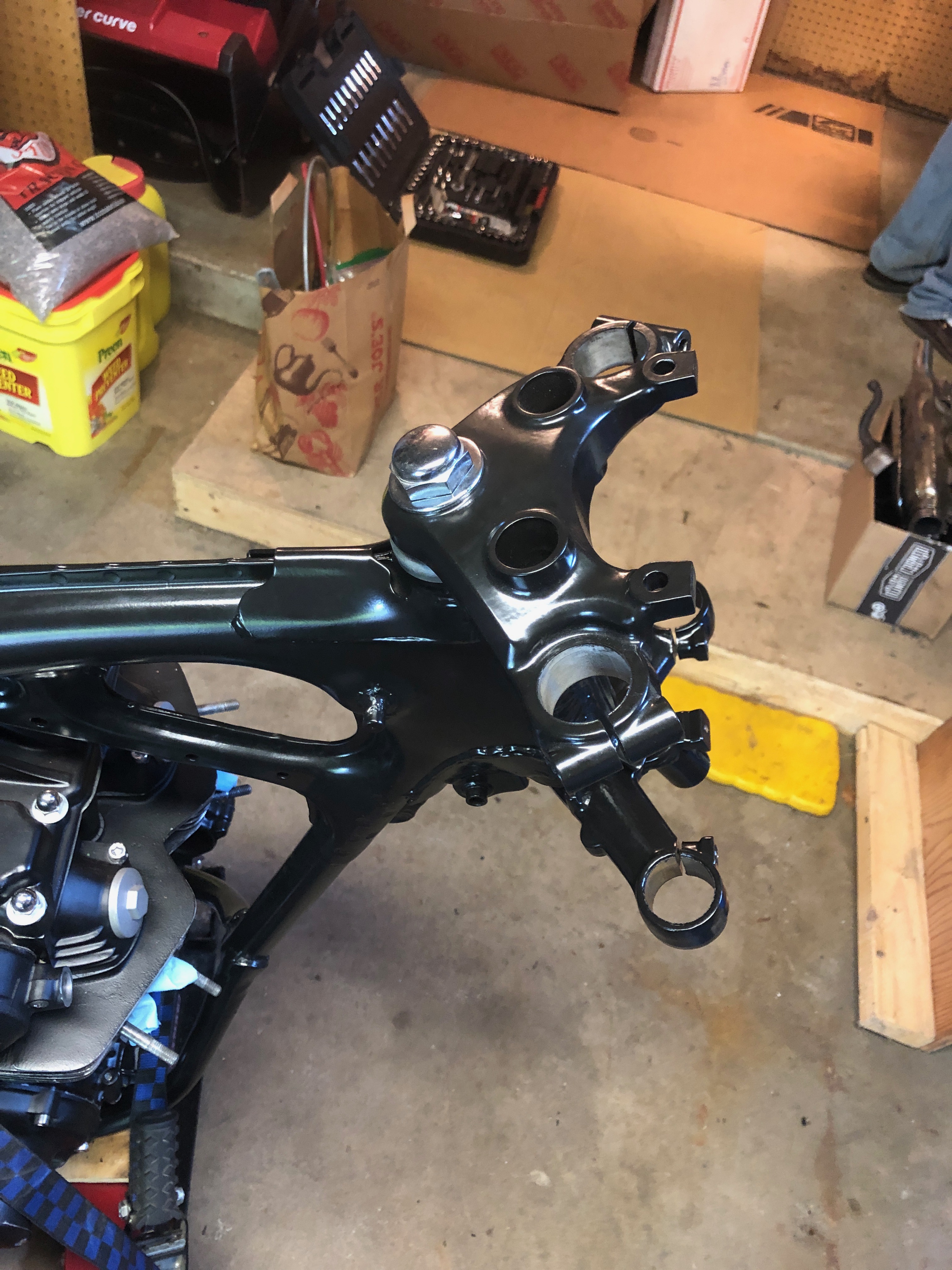
Thread steering stem through the frame from the bottom and drop the greased upper bearing in from above.

Install top bearing seal, then washer, then steering top cap.

turn the steering stem to the right so that it hits the steering stop on the frame. Use a C spanner to tighten the top cap to set the bearing preload. This is largely determined by feel. You don’t want it too tight or too loose or it will affect handling in corners. As a first-timer, it’s nearly impossible to get right, so expect to come back and adjust once things settle a bit.

Drop the top bridge on and install the final washer and cap nut.

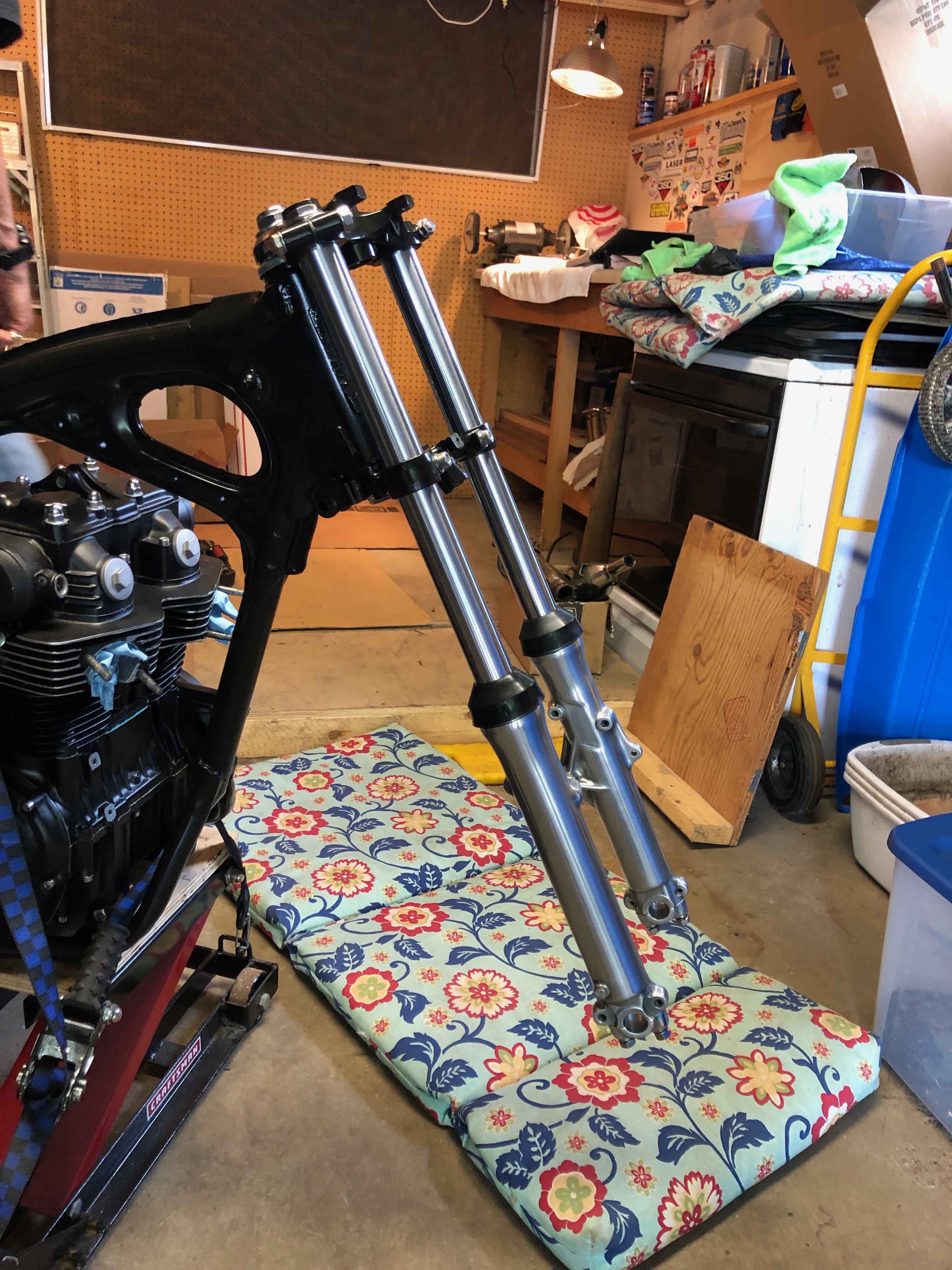
You boys didn't think I was just going to rebuild those beautiful forks and leave them laying there, did ya? Nope, the last effort of last Saturday's wrench session is installing the forks! This one is literally as easy as checking against the CSMNL parts fiche to ensure that you have the right hardware, and then tightening these puppies down.

There's really no scientific way to make sure the forks are even. You just have to line up the top of the fork tube with the lip of the top bridge. I replaced all the hardware with new stainless stuff, except for these two dark-colored specialty washers. I don't know what they're called, but they go in between the pinch part of the top bridge and are flat on one edge to accommodate the fork tubes. The lower bridge just has one bolt and washer.

And you're done. She's starting to look like a motorcycle again!


iB4x4tF.jpg


6chGOee.jpg


Ez9Z19F.jpg


CQO18xh.jpg


1nkXzWZ.jpg


deq2M2T.jpg


tGuEn4p.jpg


hlH4pVv.jpg
 
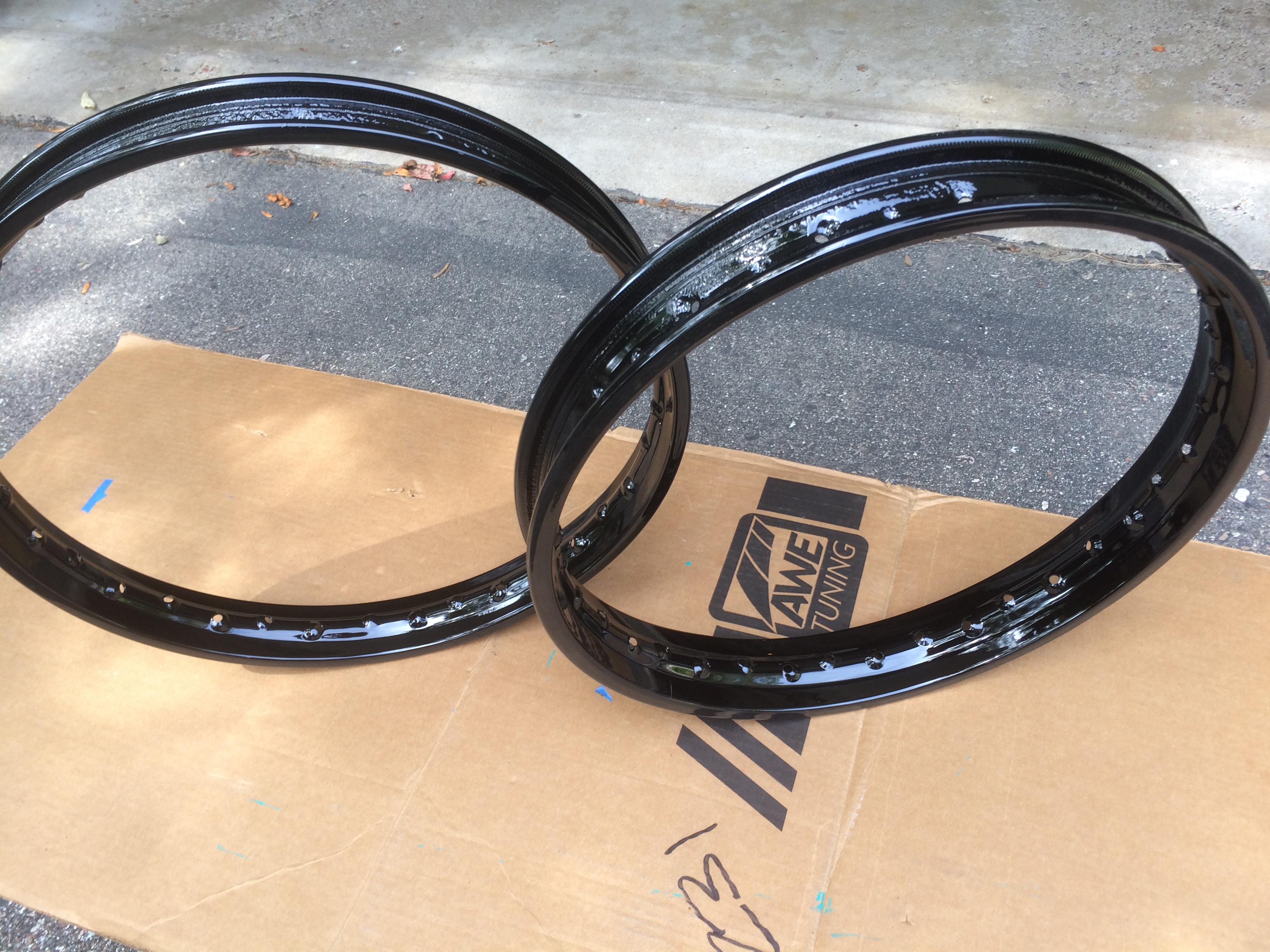
I'm gearing up to install new All-Ballz wheel bearings in my hubs this weekend, which is my final step before sending parts out to have the wheels laced and trued. I got new stainless steel spoke kits from Dime City and got my rims back from the powder coater along with some other miscellaneous frame pieces.

pXizGqD.jpg


Then I plan to tap and drill my rear suspension clevis mounts because the holes it came with are smaller than OEM and won't work with the 10mm holes in the swingarm.

Question: I ended up having the swingarm powder coated without removing those shock mount dampening bushings. Am I going to be fine running the old ones? I am having trouble finding new ones anyway and NOS rubber is probably just as hard anyway... I'm facing the same question with the rubber bushings in the motor hanger mounts. What do you guys think about running the OEM rubber bushings?

Lastly I'll mock up the exhaust with the new mount I got from 12ozPBR (thanks!) to see how everything fits before I have the pipes fabbed up to be a bit longer. I bought some universal baffles that I'm excited to mock up as well.


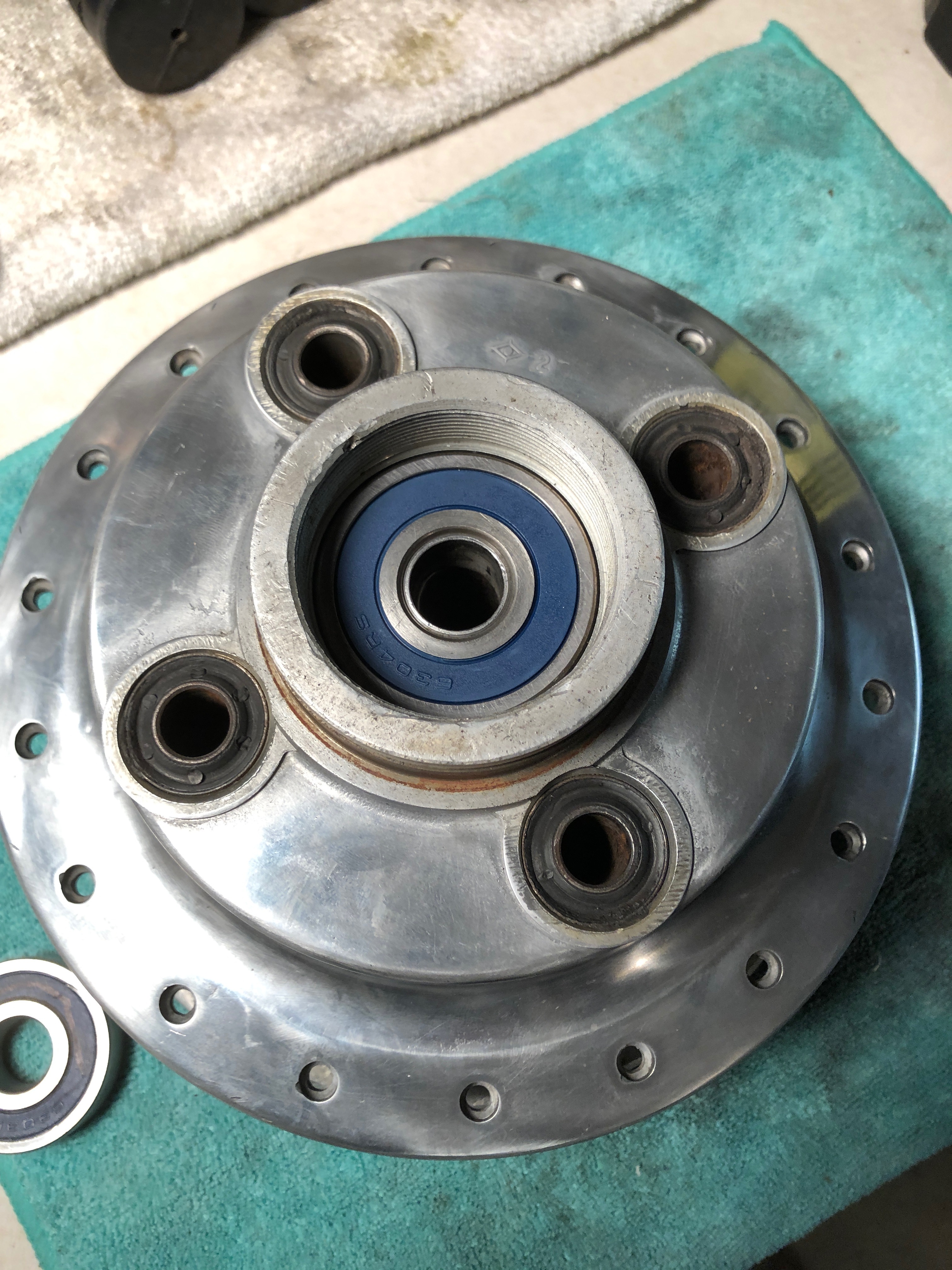
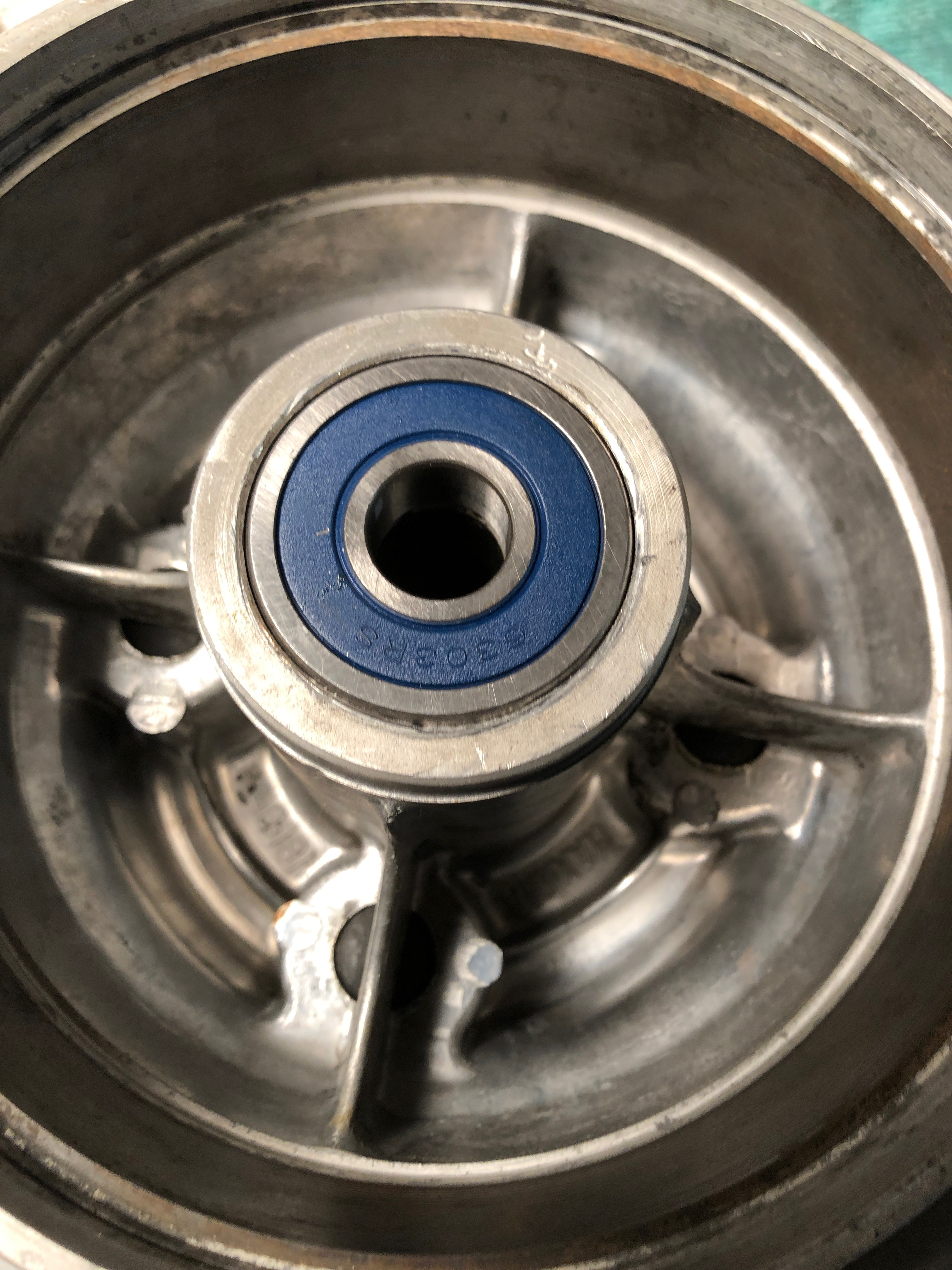
Well guys, I got my wheel bearings installed. Here's what I did:

Rear wheel
Place new All Ballz bearings in freezer. This will shrink them to fit easier in the hub.

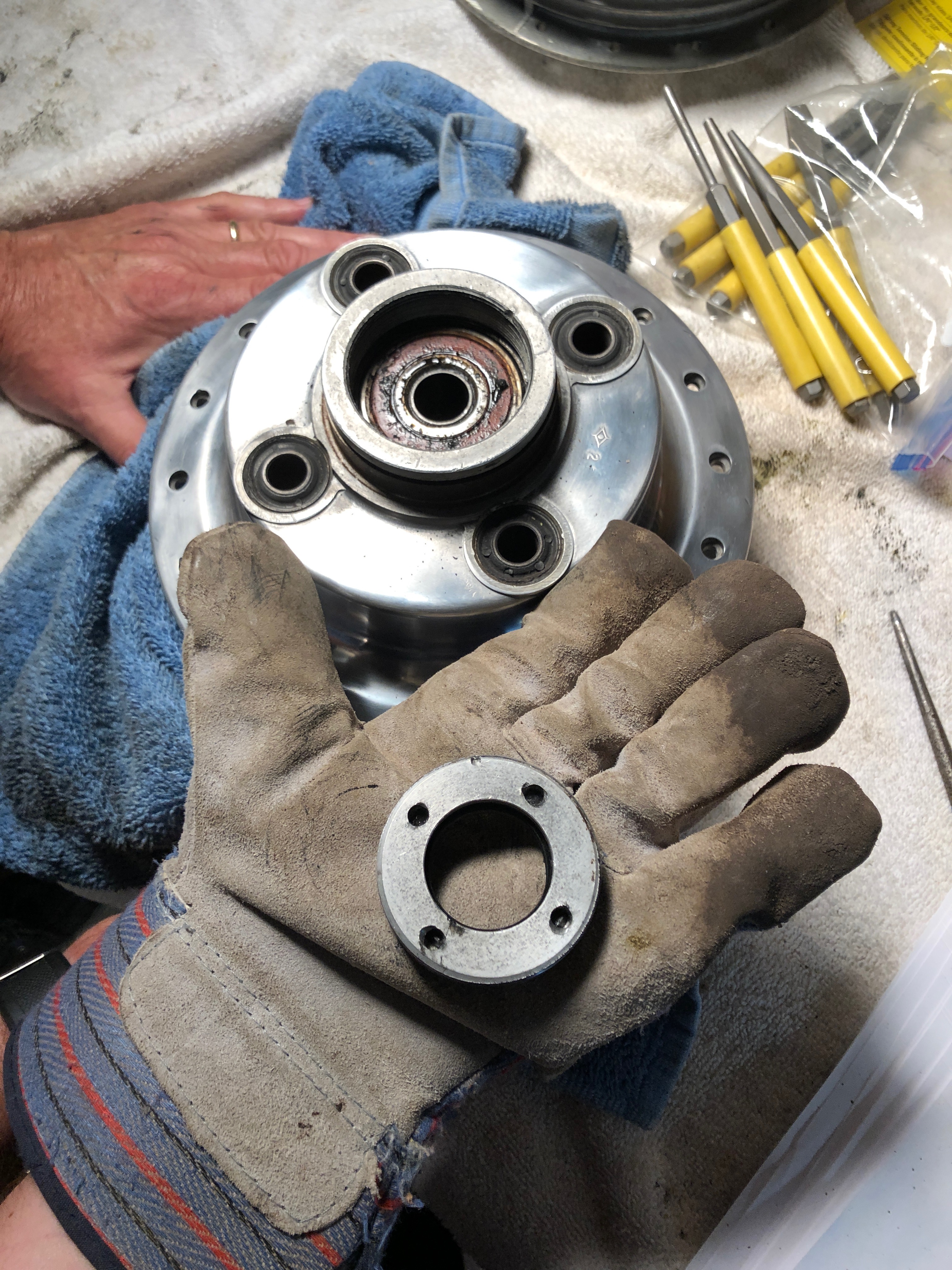
Remove the bearing retainer. Use a new, sharp drill bit to drill through the peen that is holding it in place.

Apply penetrating fluid like PB Blaster. Wait at least 10 minutes for penetration.

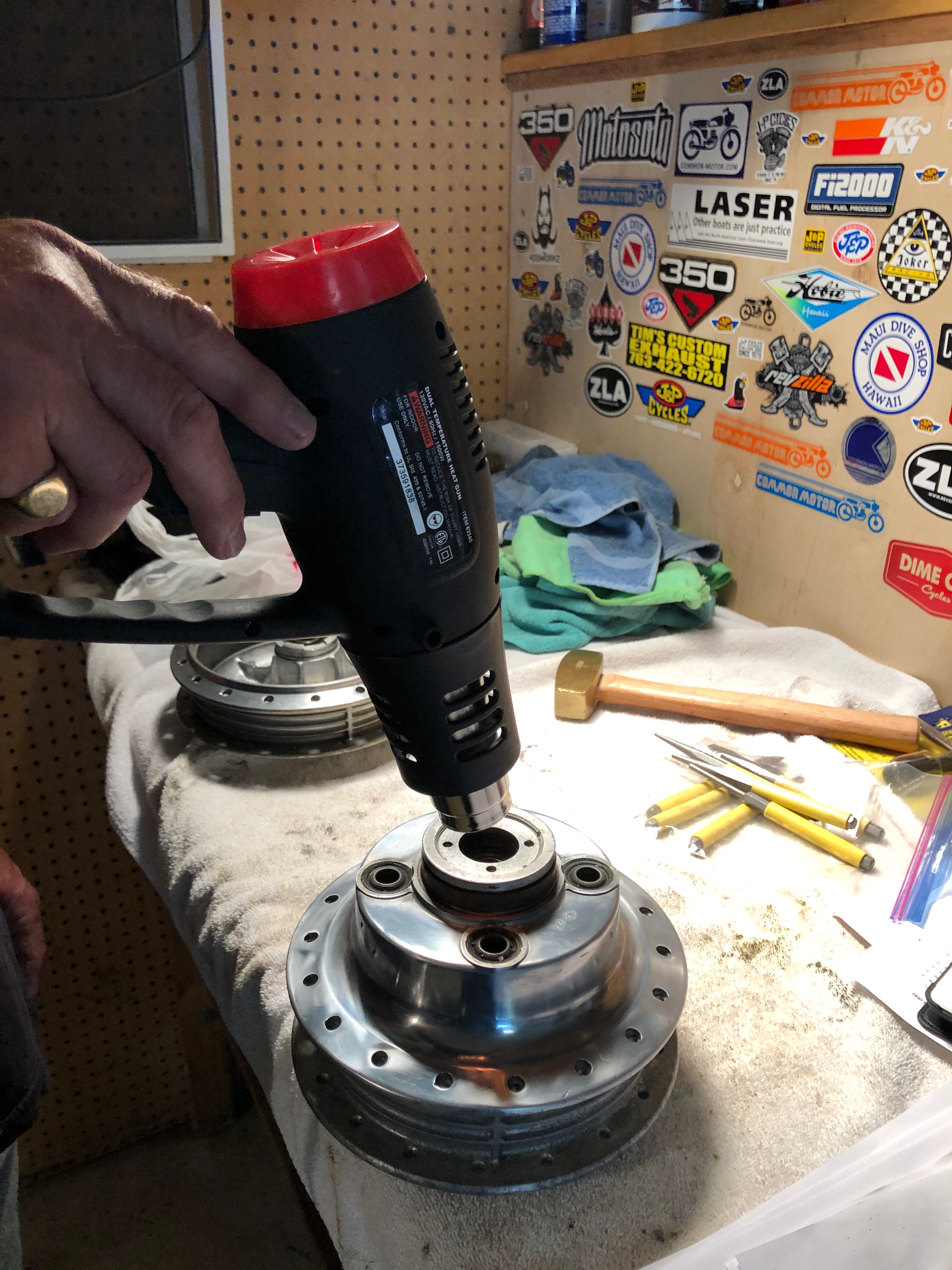
Heat wheel bearing with heat gun. Apply heat for up to 20 min.

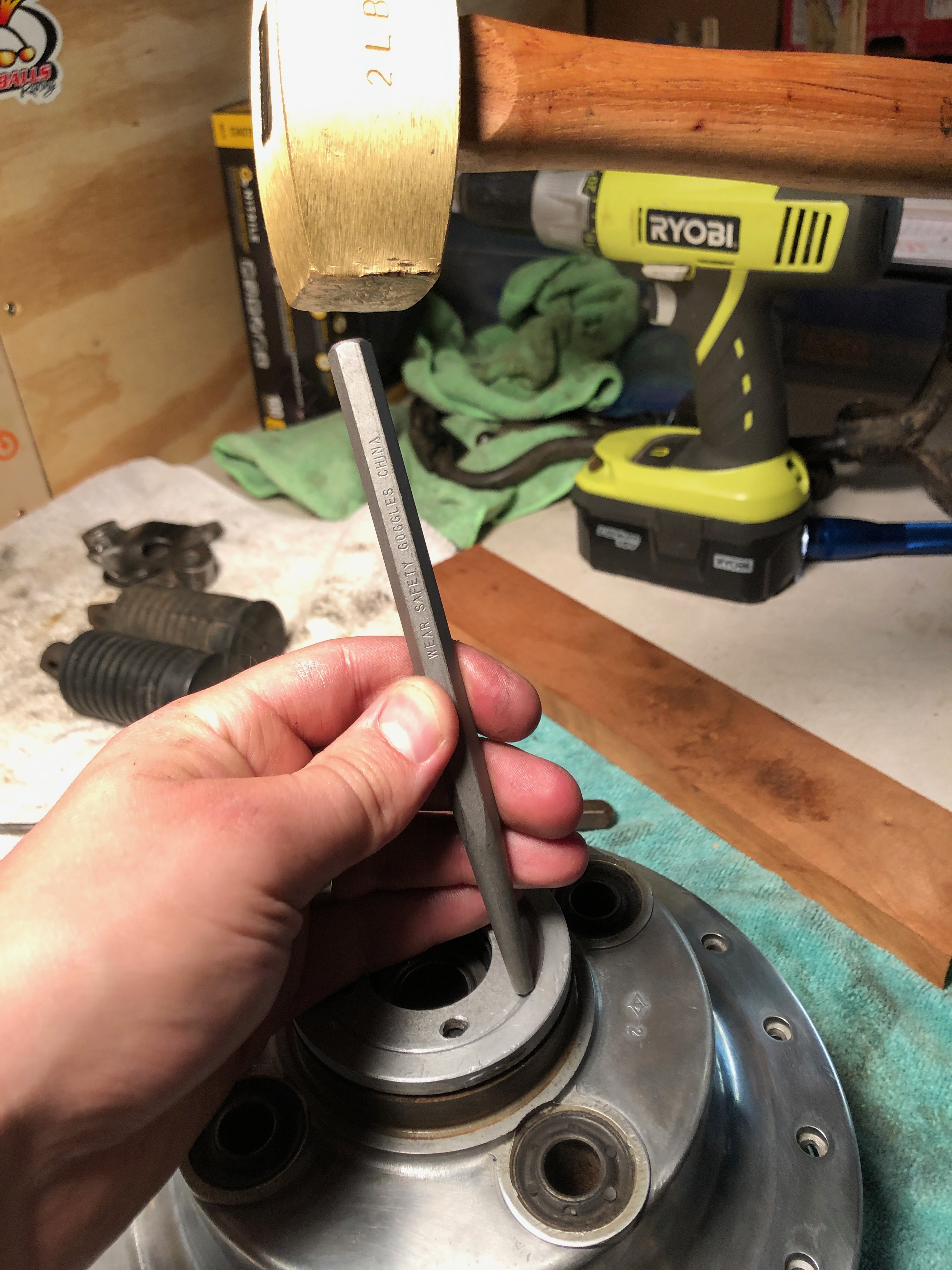
Use brass hammer and drift to tap it out. If you mess up the retainer, you can buy a new one for the same price as the specialized tool anyway. Mine came off with fairly little mangling of the 4 holes in the retainer.

Using a punch from the opposite side of the hub, hit the lip of the bearing inner race to tap it out. Remove bearing spacer. Flip hub and tap out other bearing with brass hammer and punch. I also used a socket that just fit inside the larger bearing (retainer side) to tap out the smaller spacer that nests inside the inner race.

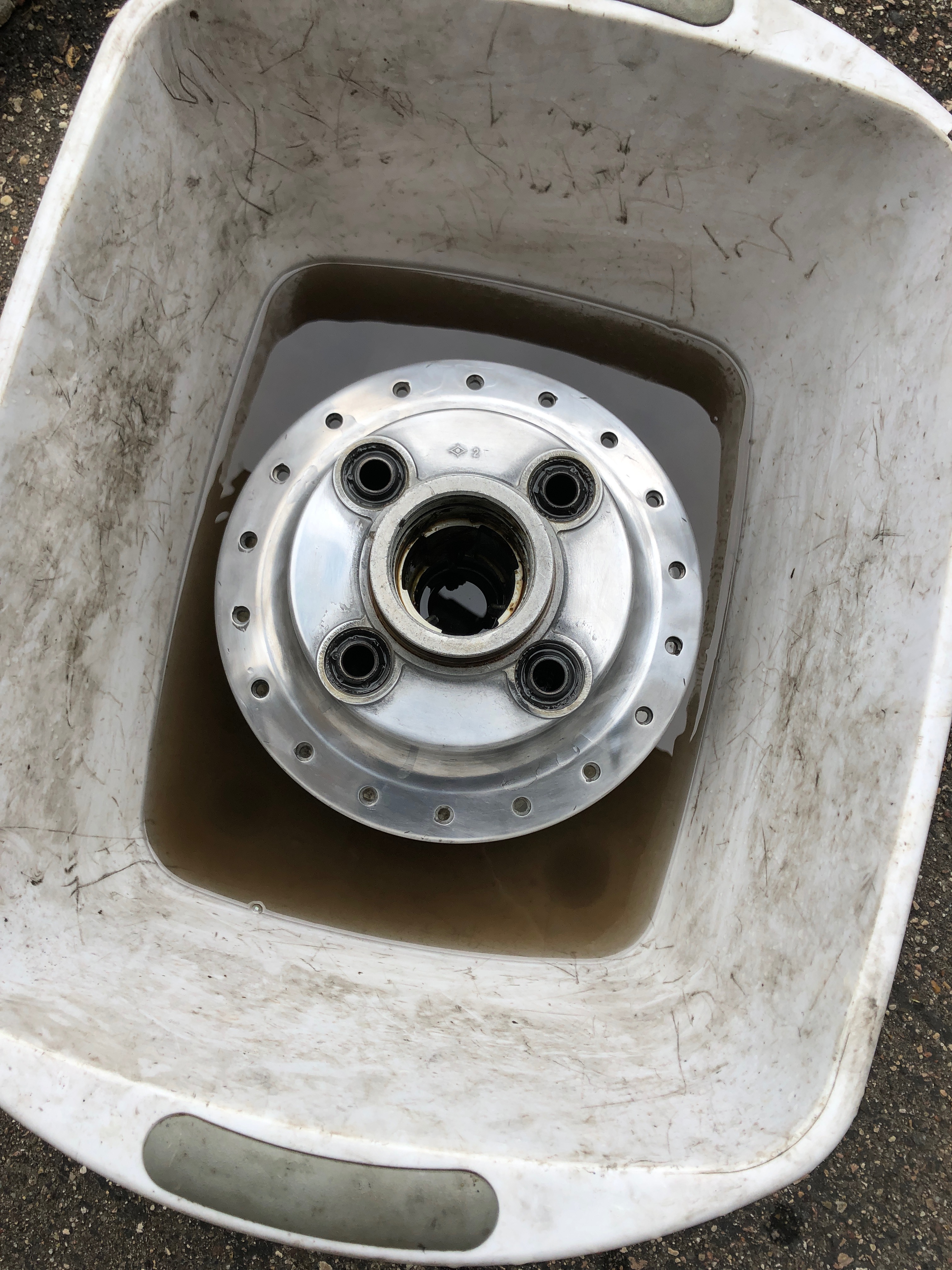
Degrease hub and spacer in mineral spirits.

Install the bearing opposite the retainer side first. It has a seat for positioning while the other bearing (with the retainer) relies on its position and the position of the spacer for proper seating. This is the SMALLER bearing of the two.

Heat hub with heat gun and place frozen bearing in with fingers. Drive in with old bearing or similar-sized socket to seat. The key is to only apply force to the OUTER race. Doing otherwise will fatally damage the bearing. It should be flush with the top of the hub, but flip hub and visually check that bearing is fully seated.

Do the same with the larger bearing on the retainer side. But first insert the long tubular bearing spacer, and tap in the small spacer that nests inside the inner race. For this bearing, make sure to drive it in until the spacer stops rattling, but not too far. If too much pressure is on the inner race, the bearing won't spin.

Finally, install the bearing retainer. Swap the seal out on the underside (be sure to grease the rubber first). Then apply anti-sieze to the threads (you're welcome, "next guy"), and hand tighten in the hub as much as possible. I finished torquing by tapping it around with the drift and brass hammer same as how I uninstalled it.

Put a new peen in with a center punch to ensure it doesn't go anywhere.

The front hub is basically the same as the rear. See a parts fiche for minor differences.

lAzWlEf.jpg


L6Zd1pr.jpg


lZbFioz.jpg


n3qtpc9.jpg


W3Kqcsl.jpg


map70Er.jpg


JeuGGh0.jpg


With my rims powder coated, wheel bearings in, stainless spoke kits from Dime City Cycles, new rim straps, and Heidenau K34 tires, I was prepared to get my wheels trued and laced. I decided to outsource this job to a mechanic because it wasn't something I wanted to trust with my noob skills.

First I taped up the rims just as a precaution to protect against scratching. My powdercoater recommended this and said lots of guys come back to have rims re-coated when they leave this step out.

Unfortunately I got a call from the mechanic the other day saying that the rear spokes were too long and he couldn't lace that wheel. Turns out DCC sent me two spoke kits for 19" wheels and the CL has a 19" front and 18" rear. They're going to send me the correct spokes when they receive the return.

But I have one wheel! And it is a beaut.
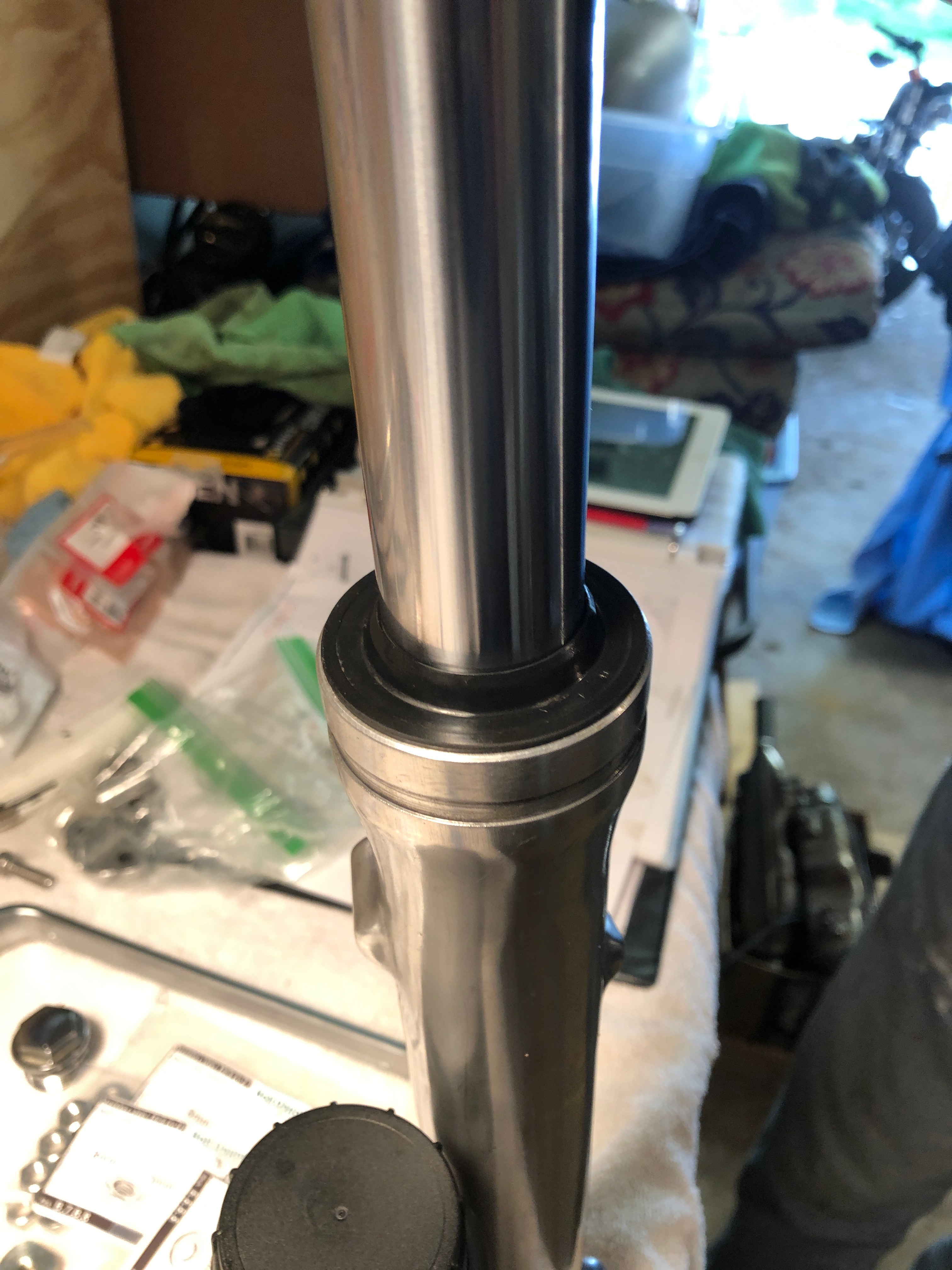


Waiting for the other wheel, I got more work done on the bike. This time I installed the swingarm and new shocks.

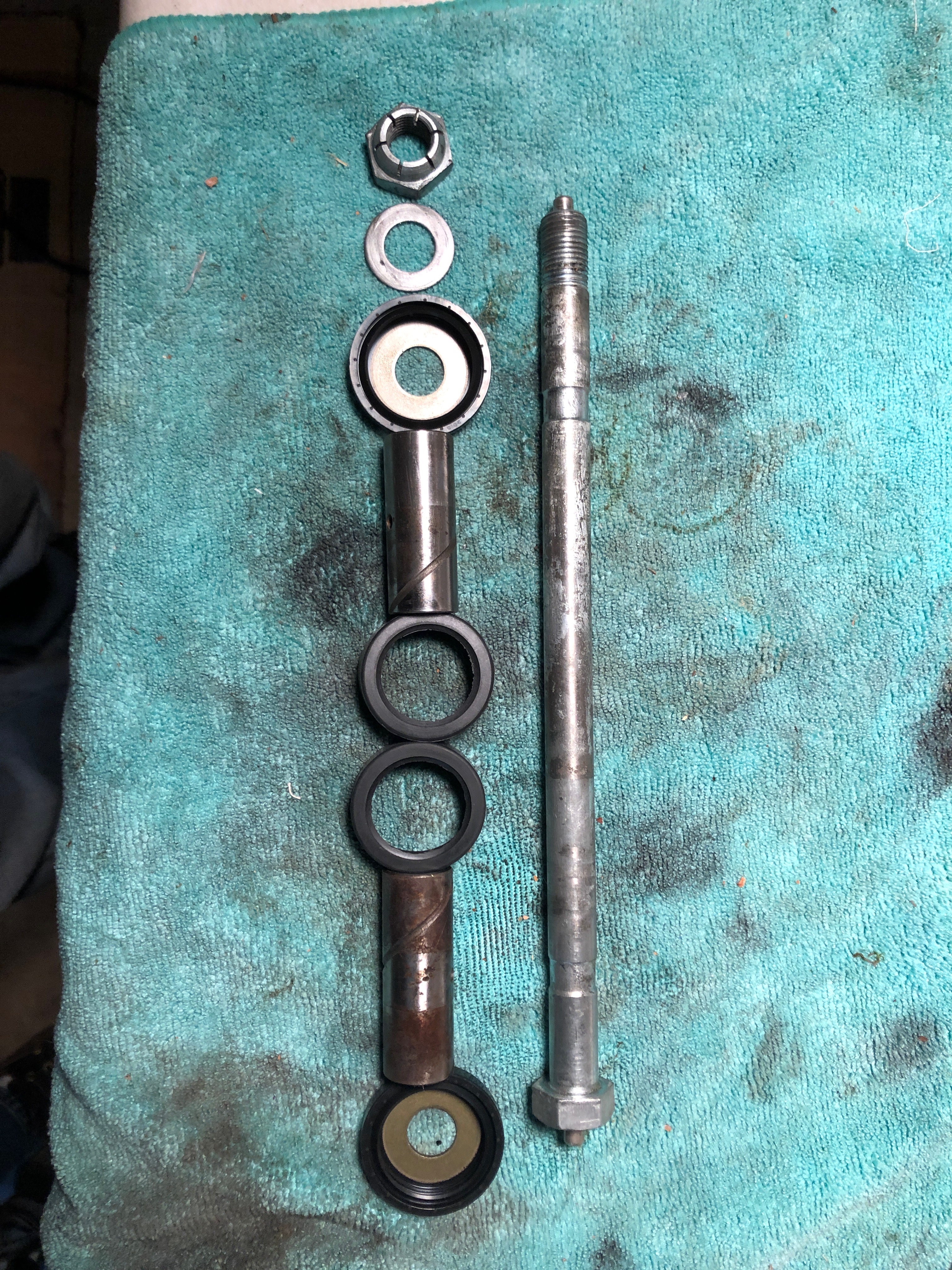
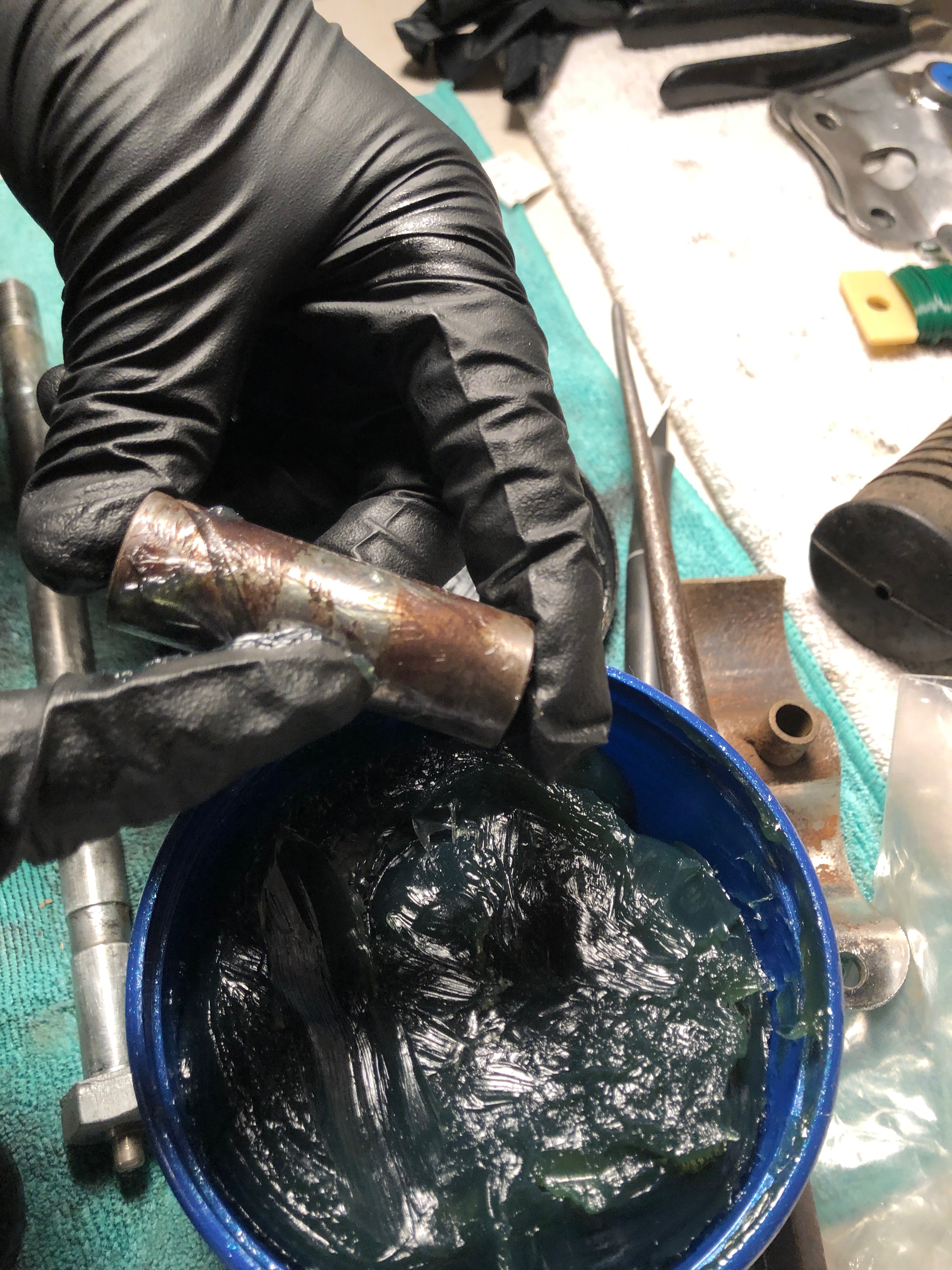
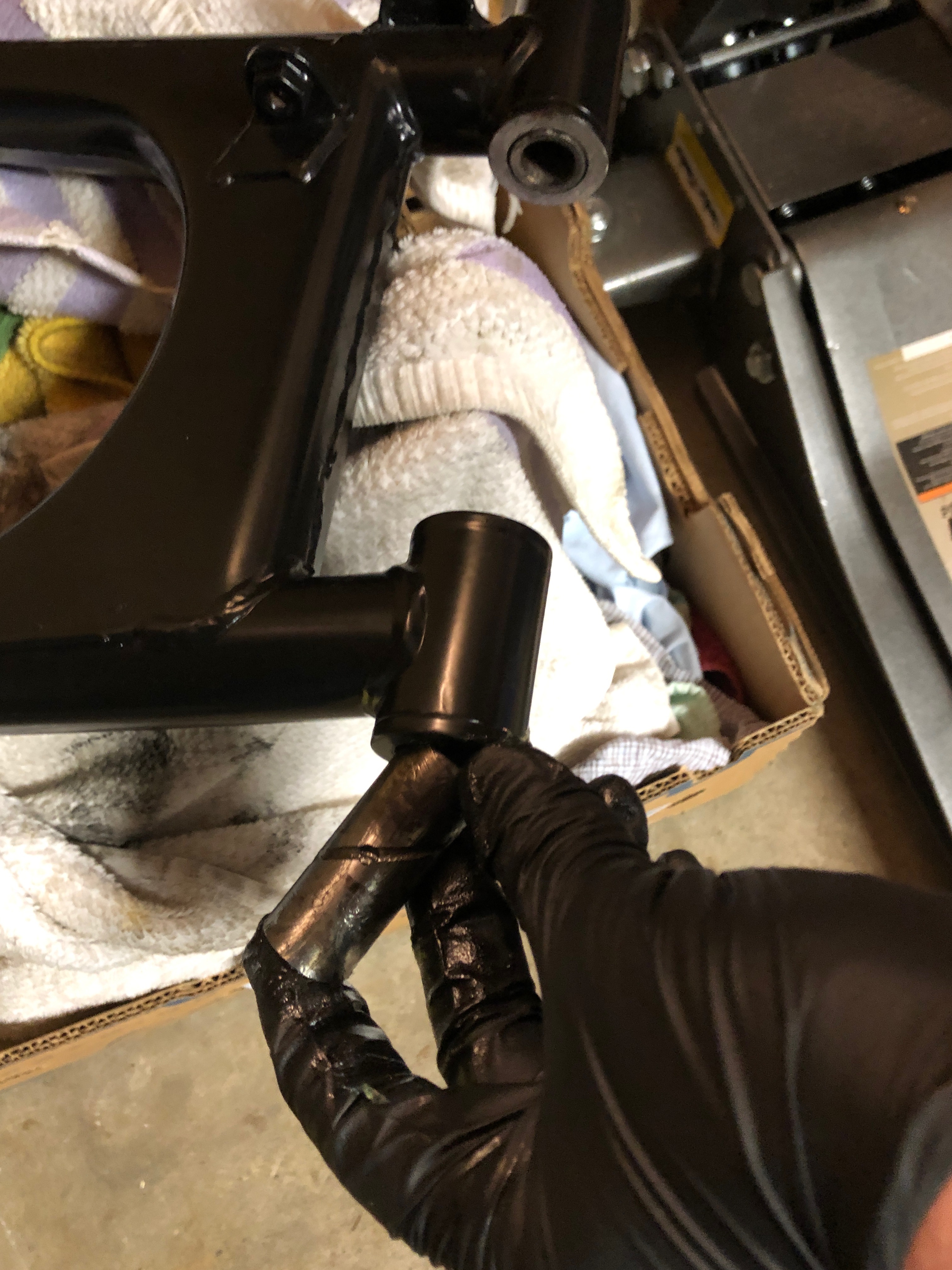
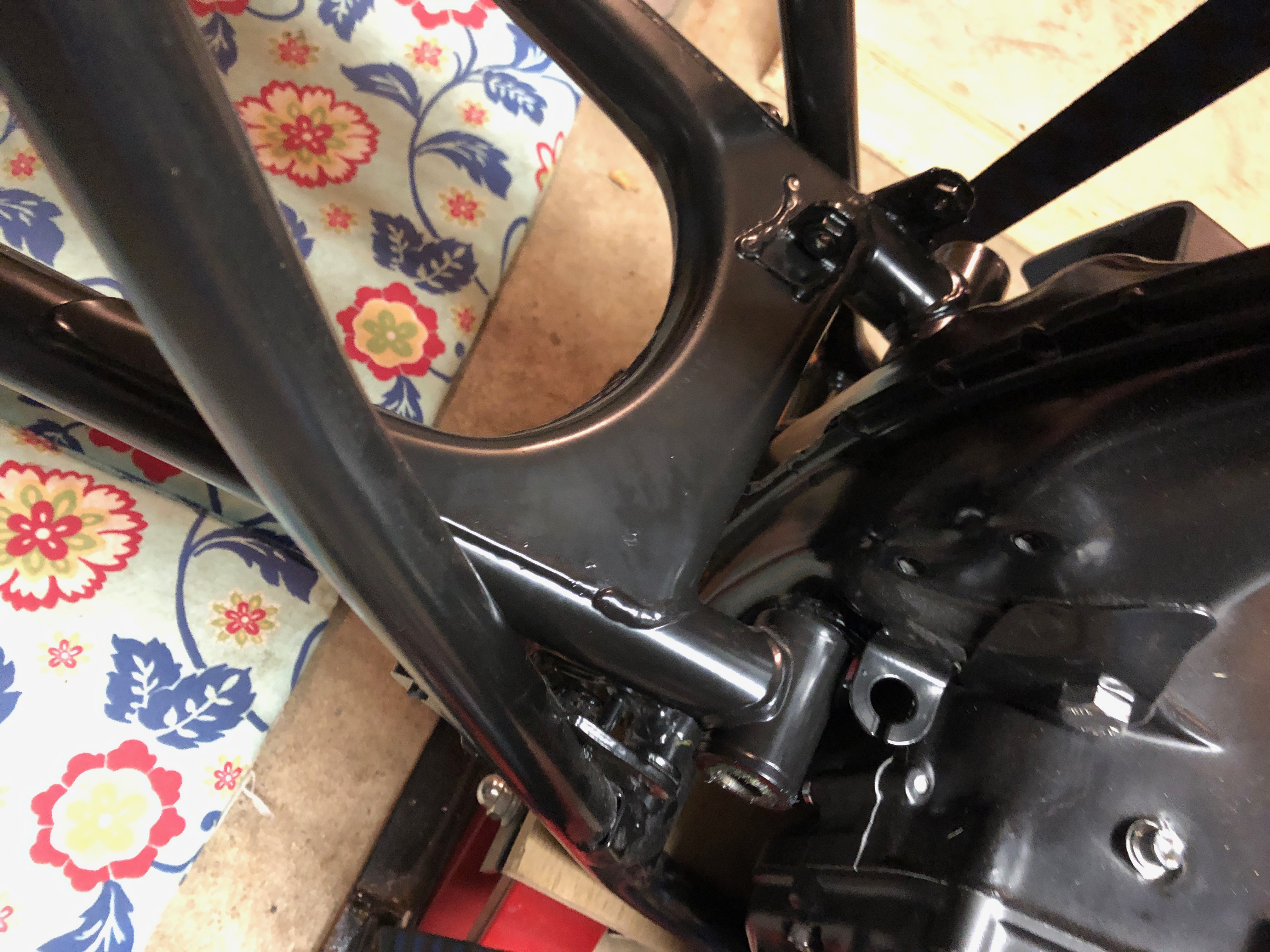
I made sure the zerks worked in the swingarm shaft first by heating up the ends with a heat gun and running grease through until fresh grease started oozing out of the hole that lubes up the two roller bushings. I also coated the bushings and the shaft in grease before installing the swingarm and using a grease gun on the zerks to really fill it up.

My question is: the swingarm axle rotates with the swingarm. Should the axle stay still while the swingarm rotates on the rollers? What torque do you use on the axle nut? I couldn't find a figure in the manual.

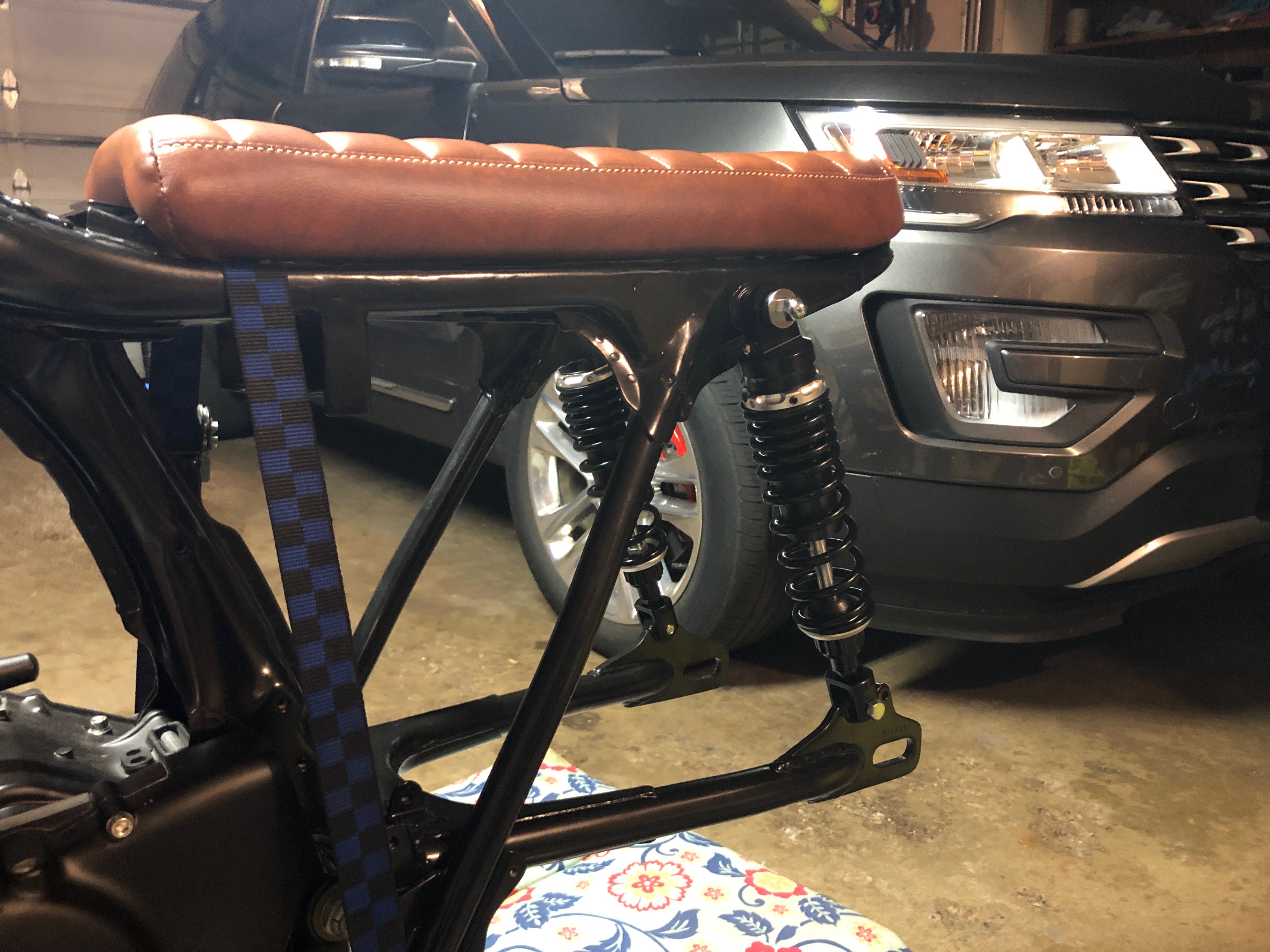
Shocks went on without major issue. The top mount is thinner than OEM, so I'll have to make sure the shock itself is perfectly vertical and shim it on both sides of the mounting post. On the swingarm end, the shock clevis is juuuuust a bit wide for the swingarm bushing, so I'll have to shim that as well. I'm thinking any play there is pretty bad.

Oh, and the mounting holes in the clevises were too small so I drilled and tapped them for the M10 bolt. Of course new stainless acorn nuts up top.

smR2MT0.jpg


0y7Ln7d.jpg


dscFZqO.jpg


i5bBgKK.jpg


YoKmmXb.jpg


IoXdeW5.jpg
 
The second picture in the swingarm post shows everything in the order that I installed it.

Is the brake stopper arm supposed to go on the swingarm pivot bolt? I can’t tell from the fiche


83bc166d1d757491c64e4df8bb075b3a.gif
 
My new aftermarket inner dust seals (#13) are very pliable and just sit on top of the swingarm-frame connection point. Could it be that they should actually be pinched between the swingarm and frame, providing more bulk on the pivot bolt.

It’s like I get to the end of the threads with the pivot bolt but before it’s tight enough to prevent rotation.
 
Oh yeah, that’s gotta be it for sure. Thanks a ton Steve. I don’t have those plates on and my pivot bolt is sticking out this much.


76870b271298ba05d54fb4d224aff00c.jpg

 
Thanks to Steve, I got my passenger peg plates on and the swingarm bolt bow torques correctly and does not rotate when the swingarm rotates.


4bd89ef7a691147ebc4620a30e7de246.jpg


065bc888adfc582b12a90efa7e295b91.jpg


Got a couple of other items squared away too.

Top motor mount now installed with stainless hardware. the bolts are kinda long, but they will be hidden by the tank anyway.


f20607f266b1a617327ee2fdf27fd8cf.jpg


The other wheel is done now too (with correct spokes lol)! Building up the hubs and installing the wheels is next on the docket.

Also, if you’re wondering how many manufacturer stickers it takes to build a bike, I am counting!

Progress so far in the Miller’s Wrench workshop


77d00dfb30f457d9c57889c120e43b42.jpg

 
So I ran into some trouble this weekend trying to get my wheels on. I got the shoes on the brake hub covers just fine, but finding a loose spoke halted progress on the front wheel, and I forgot to bring the 4 studs that connect the sprocket to the hub. I live 90 minutes away from my dad's garage where the bike is kept, so it wasn't a "oh, I'll just run home and get them" sort of deal.

As I said, I installed the shoes just fine, and lubed up the appropriate parts with a bit of caliper grease (very sparingly!) without getting any on the shoes' abrasive material.

My one question is did I lube up the tach drive gears in the front hub correctly? I just used standard grease and packed it full. Too much? too little? Different grease?


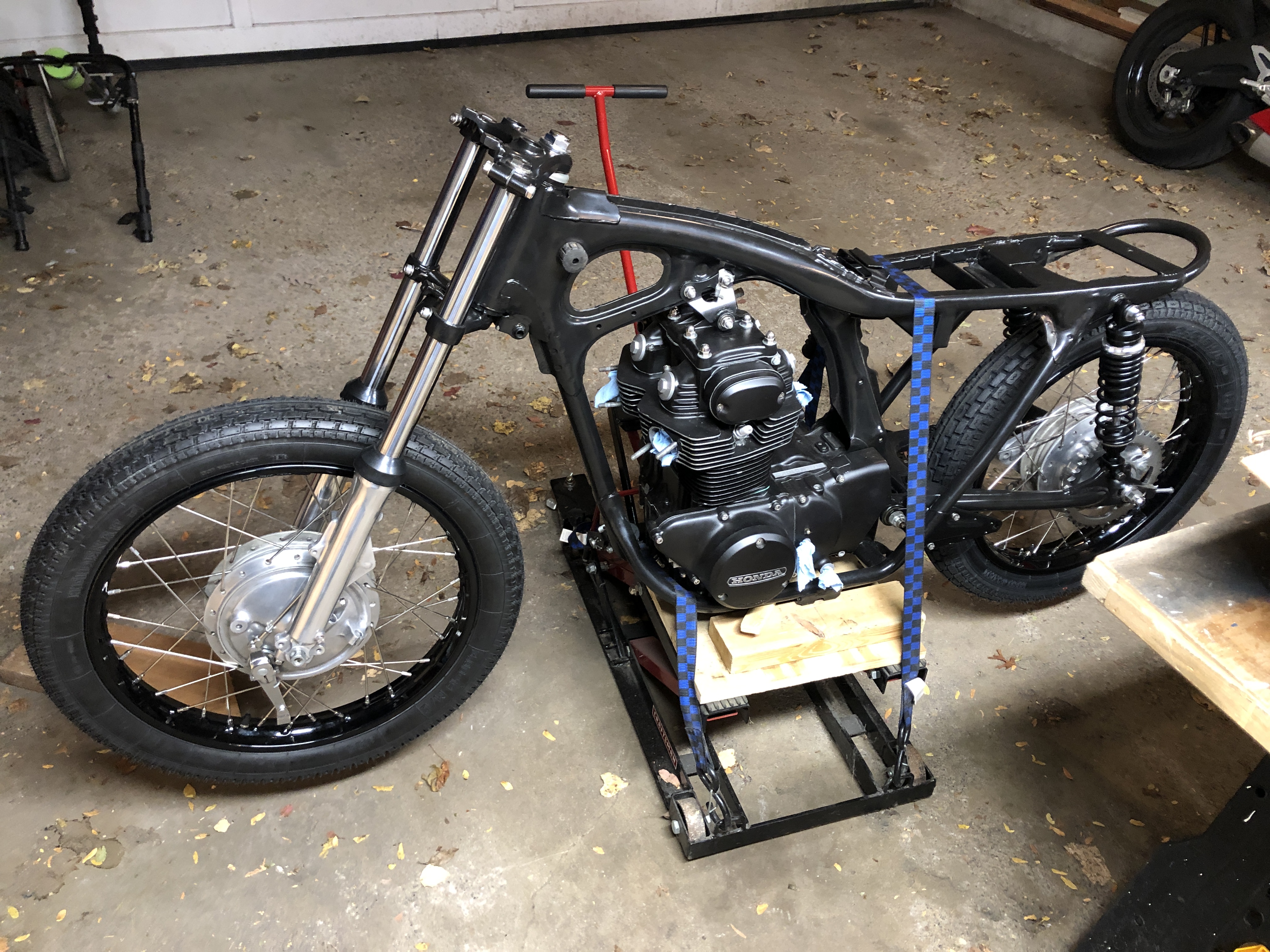
Check it out gents, WE HAVE A ROLLER! woo hoo!

Eh, kinda sorta. There are still a few niggling issues that I still have to sort out before I can truly say the wheels are done and move on to the next thing.

1. I need chain adjusters. I bought new chain adjuster screws and nuts and didn't test them in the adjusters themselves until the day of the job. Of course, the threads are wrong on one, and the other adjuster was tapped by the PO, so the hole is too big. I'm picking some up off the good ol' fleaBay.

2. What's with the gap? I know the fork leg caps are directional and I installed them with the high side facing the front of the bike. However, the right leg has a considerable gap. Can anyone help me diagnose this? (sorry about the strange orientation of the photo.)

3. I can't stop without front brakes. This is the most concerning one. I bought new brake shoes from 4into1.com and they seemed to fit perfectly on the brake plate. But it was a really really tight squeeze to get them into the drum. Then, putting any torque whatsoever on the axle nut bound up the wheel completely. When I took the shoes out and assembled the wheel without them, it spun freely. I am ready to order the front brake shoes from those guys in Houston but see that one renewer also had problems with the wheel binding up. Anyone know what product fits right?

4. How to torque. How do you guys secure the axle to get 45 ft lb of torque on the axle nut? I had trouble with that so my torque is low.

Lastly, what is the torque figure for the rear axle?

I appreciate help with all these line items. In the meantime, I'm leaving the wheels, kickstand, and unfinished handlebar on as is so I can transport the bike to a custom exhaust shop that I have lined up to lengthen my pipes. That's a big hurdle I've been antsy to surpass so I can bring her into the basement and continue on the build over the winter.

XIFr8F0.jpg


Guys I went to bat for another round with my front brake hub and lost again. I am at my wits end and have no more ideas. It seems to be an impossible situation that I can’t solve. The dia of the brake shoes (installed) is almost the exact same as the inside dia of the hub. So the shoes are rubbing up on the hub when the plate is installed and the plate completely binds up when any torque is placed on the axle.

After another failed installation I took measurements with the shoes installed on the plate and then uninstalled sitting in the hub. The numbers were the same, making it an impossible fit.


f5bd230b137709a89007fb1da17bdb45.jpg


3c01d151e4de6d16bc401d4964a67a99.jpg


Here is what I don’t get. By my measurement the inner dia of the hub is 179 mm. But the manual stares it is 181 mm and the listed dia for CL350 front shoes is 180 mm on the website ancientdad recommended. How could my hub be too small? Where can I go from here?

I did see at least one other forum member who posted this exact same issue in 2013, but his questions were never answered.
 
HALLELUJAH, WE HAVE A ROLLER!!

I guess the third time really is the charm, because I applied the advice I got here on my thread and made my front brake shoes fit! Thank you very much to you guys for sticking with me until this issue was fixed, especially Steve and LDR! You guys are heroes.

First I inspected the drum and noticed that it looked like one of the cams was being applied slightly. I checked the punch marks on the other side and one wasn't quiiiiite matched up. I moved the arm one tooth over, and the punch mark went slightly too far the other way, but the cam faces looked more even. Then I slotted a ruler between the cam faces and the cup things and fine-tuned the linkage rod until both cams were perfectly in line with each other.


I arced my brake shoes just like LDR said above, by placing a sheet of 220 sandpaper in the drum and rubbing the shoe back and forth. I found coarser grits to "grab" the shoe to much so that it dragged the paper back and forth with it. I drew lines to test for high marks like LDR showed, and sanded until all the Sharpie disappeared twice for each shoe.


In the photo there was a clear high spot in the middle and at the lower end.

Then I took Steve's advice and "ramped" the ends of the shoes and chamfered the edges. I also took some 120 grit and sanded the steel face inside the hub (although I could not feel a lip or ridge). I sanded up, not around, then changed angles 45 degrees to cross-hatch. I vacuumed the brake dust out of the hub with a shop vac and then used brakleen to wipe it out.

Finally, I filed the cupped sides of the shoes to remove high spots, casting "pimples" and other defects.


Now that the joy from solving that problem has subsided and I returned from my vacation to Hawaii, I'm wrestling with something new: installing the header pipes to the cylinder head.

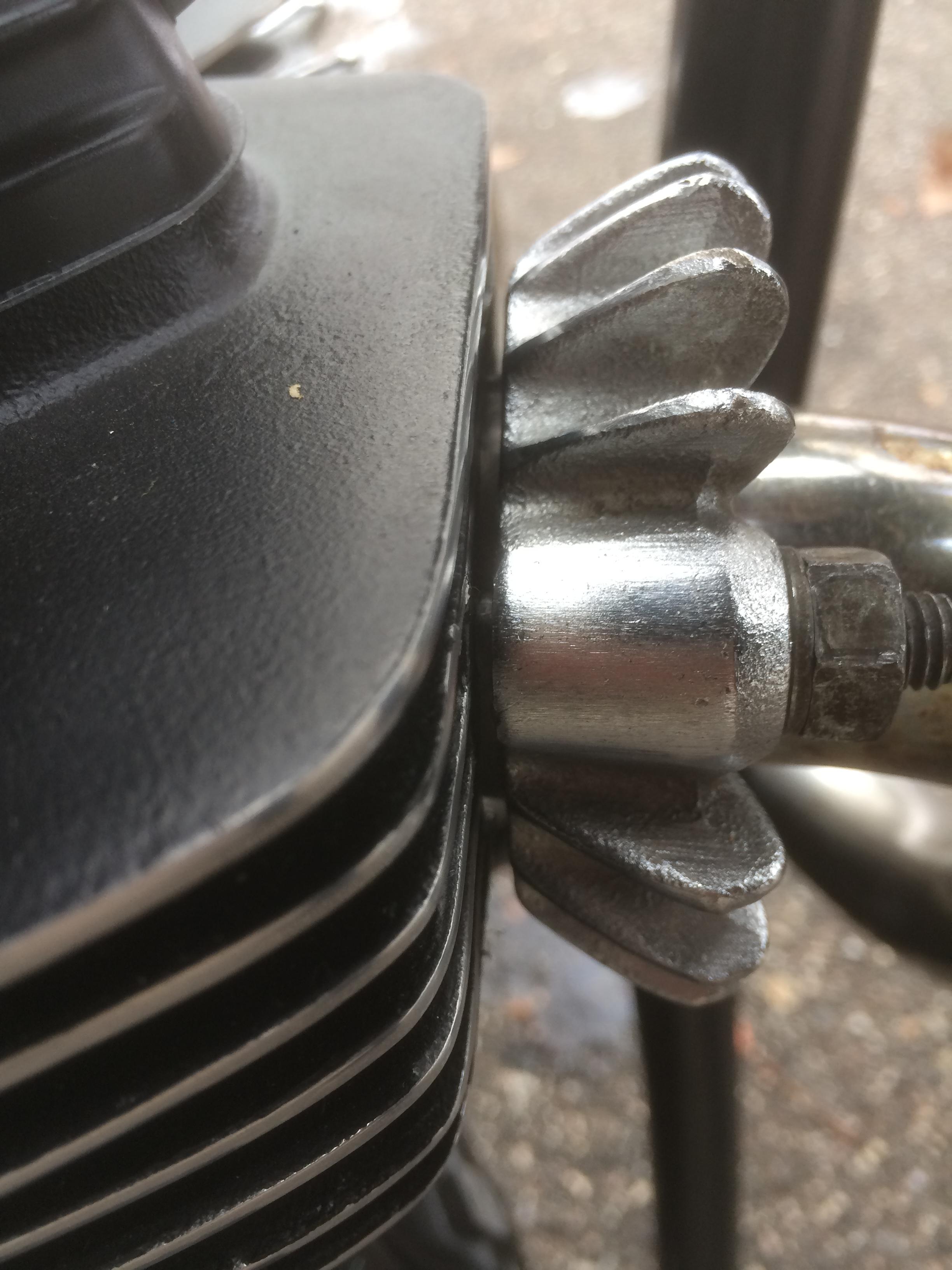
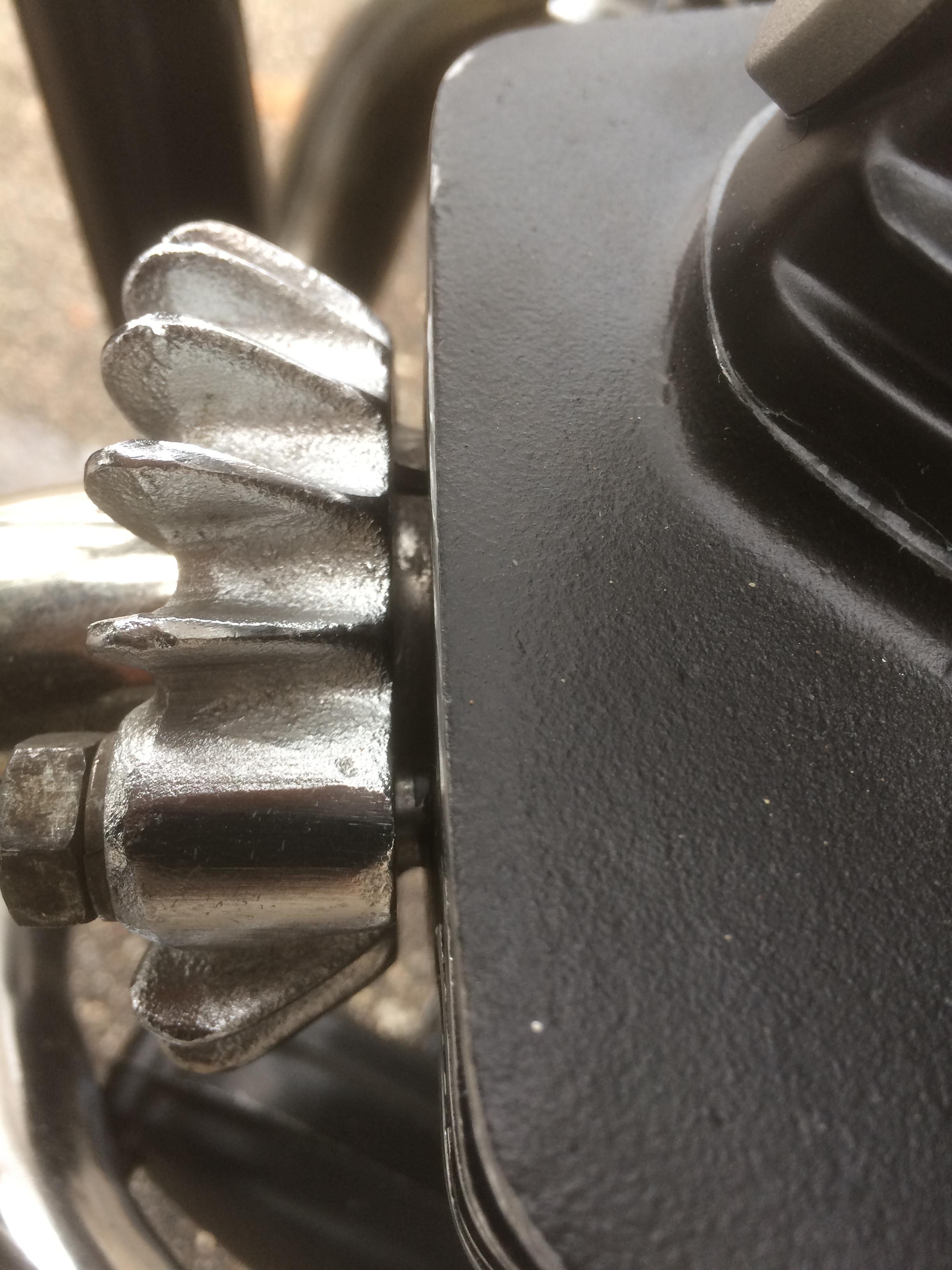
Maybe this isn't precision science, but I'm having trouble getting the big star flange to sit flush against the head, especially the right one. The two inner pieces that hug the pipe fit in ok when I mock them up in the head by themselves, but when I install them with the pipe they poke out from the head and the star flange can't sit flush with the motor.

Aside from not looking the greatest, is this an issue for any mechanical reasons?

Sadly the pipes have been off the bike for more than a year and I didn't take any good close-up pictures of them before disassembly.

Tomorrow I'll post some pics of what they look like now.

Right side

mtH5ZiM.jpg


Left side

9liKqeV.jpg
 
Here’s a quick little update boys. Evidently the gap is normal. I'm still not sure why one is larger than the other, and the copper crush gaskets will make the gaps larger, but I'll run with it and check for leaks on first start up.

Furthermore, I got the bike back from the fabricator and he did a beautiful job adding some length to the shorter header. Everything looks nice and straight. He also ground down my baffles which were sliiiightly too wide for the ID of my pipes and those fit great now too.


fddfa92144c7f4e35f772404cda34023.jpg


Now I’m getting stuff coated. The pipes and front of the bracket will have a chrome-colored ceramic coating and the back of the bracket, kickstand assembly, and some odd ends are getting the black powdercoat treatment. Then I won’t need the bike lift anymore!

I have baffles in the pipes so maybe that will minimize the carbon output on the rear shock. Either way that will be Future Mike’s problem AFTER I get this thing running! Haha

Moving slowly but surely boys. We are gonna get this thing done.
 
Hey guys, I've been doing some research on the implications/ramifications of my exhaust mods (chopping off the mufflers) and need help replacing/tuning the carburetors to match the drag-style pipes.

I know that running drag pipes (completely unrestricted tubes) allows exhaust gasses to flow out extremely quickly, which is great for high-rpm use but not so good for low-mid-rpm riding. And drag pipes in particular introduce "drag pipe sag", or lost power in the midrange due to exhaust gasses coming back up the unrestricted pipe.

I also know that when you modify the exhaust, you also have to adjust fuel delivery to maintain a proper fuel/air mixture. Otherwise the extra air passing through the motor could cause a lean condition and overheat motor parts.

What I don't know is which carbs, jets, and air filters to run to accommodate for the changes I made on the exhaust side. I currently have the stock CL350 Keihin VC carbs. Are Mikuni round slide carbs worth the money? What size carbs would match my exhaust modifications? What jet sizes should I start with? Any help is much appreciated. Admittedly, I'm not at the point of installing and tuning the carbs yet, but I do want to finalize the general carb and air filter setup.

Also I installed these universal drag pipe baffles. Hopefully they break up the exhaust pulses enough to prevent harmonic reversion?

 
I talked to a guy the other day who suggested going up 3 main jet sizes, 1 pilot jet size, and maybe shimming the needle would be all I need to do to add enough fuel to the increased air output from the drag pipes and high-flow UNI foam filters.

He was also of the opinion that the VC carbs are the best for the 350 twin and Mikuni roundslides are not a good option. (He liked the roundslides for other models though).

What do you guys think of all of the above?
 
According to Tom (quote form old site)

Mike, using stock carbs will make life easier for you, but I disagree with the statement about Mikunis. I'm running 36mm Mikunis on my red 450 and its rideability is more than decent, bottom to top of the rev range. The cams in my bike make it flat in the lower rev range (below 4000) but the carburetion is still reasonably smooth. It might be harder for you to get things completely right with the stock carbs only because of the need to shim the needle as it doesn't have graduated grooves, but in any change of exhaust and intake there will always be the need for re-jetting. Since you're going to be breaking in the engine as well, I'd recommend baffles in the drag pipes (which you probably plan to do anyway) to help keep it from running too lean from the start, but you also don't want it too rich during break-in either or the excess fuel could wash too much oil from the cylinders while the friction level is higher than normal from the fresh bore
 
Hey Tom, yep I have baffles installed. See my post above for the exact ones. I'm committed to them already, but its always good to know if they'll do.

I'm going back and forth on the Mikunis. The guy I talked to is a local mechanic who specializes in carbs. His sentiment was only that Honda engineers poured ridiculous amounts of time and money into these bikes and you should stick to the type of carb (VC or roundslide) that the bike has stock. Are the benefits of manually controlling the slide vs just the butterfly actually that noticeable?

What do you think of the carb kits that come "tuned to your specific bike" like what Speed Moto Co offers?

If I did go for the Mikunis, should I get VM28 or VM30? I think the stock Keihin carbs are 28mm, but not positive.
 
Tom again:

If you go to the Mikunis, get 28s (same size as stock) if they have those pre-jetted. They may still have to be jetted to fit your scenario, but if SpeedMotoCo does their job right it should be close. Sorry I didn't remember the baffles but now that you remind me, I do recall seeing them. You might end up cutting a little off them if they are too quiet = too restrictive. The guy you talked to is right as far as Honda's time and effort in making these carbs, air boxes and filter, and exhaust work so well together - which is why we always recommend that people keep their stock carbs, air filters and exhaust...
yH5BAEAAAAALAAAAAABAAEAAAIBRAA7
as for the advantage of CV carbs over slides (and that is the way it really is), it was for smooth throttle transition. Beginners tended to turn the throttle hard and quickly back when I was working in the industry, expecting the same response as with a car engine and with standard slide carbs and no accelerator pump, if you turn the throttle too far too fast you end up with no vacuum and the engine stumbles or outright stalls. If you whack the throttle wide open from idle with CV carbs, it just revs as the engine builds vacuum and with no hesitation
 
After some more discussion and deliberation, I ended up going with the stock CV carbs and UNI foam air filters (the short one with the cap on the end).
 
Got a new lower scrambler bar in satin black. Love the position and the look.


98b7d5e6148f504d2003f3f23c5b30a9.jpg


a473342da8fffc42b361bee8d33ab8cc.jpg


I got my kickstand assembly back from powdercoat, threw the springs and bolts on the wire wheel, protected them with autosol, and assembled it. Putting the spring on the kickstand was very difficult but with some persistence and heat, I got it done.


2077be479af7cd391c0dd799d17ff5de.jpg


31d7a7f5c097f0866cd5f07cfad494eb.jpg


3e4f9e91d324bb5b123e1c0c8b38e5ed.jpg


Lastly I put these cheapo passenger pegs on so my wife can take a spin with me.


6e4d75c5303849ea307f71742e7d9902.jpg


Only God knows why she won’t ride this one with me!


b3fab5697b8254deeaef50f30ba5ce0a.jpg
 
Back
Top Bottom