Mousetown, my own 73 CL350

ballbearian

Veteran Member
Joined
Nov 22, 2021
Total Posts
10,175
Total likes
5,187
Location
Hagerstown MD USA
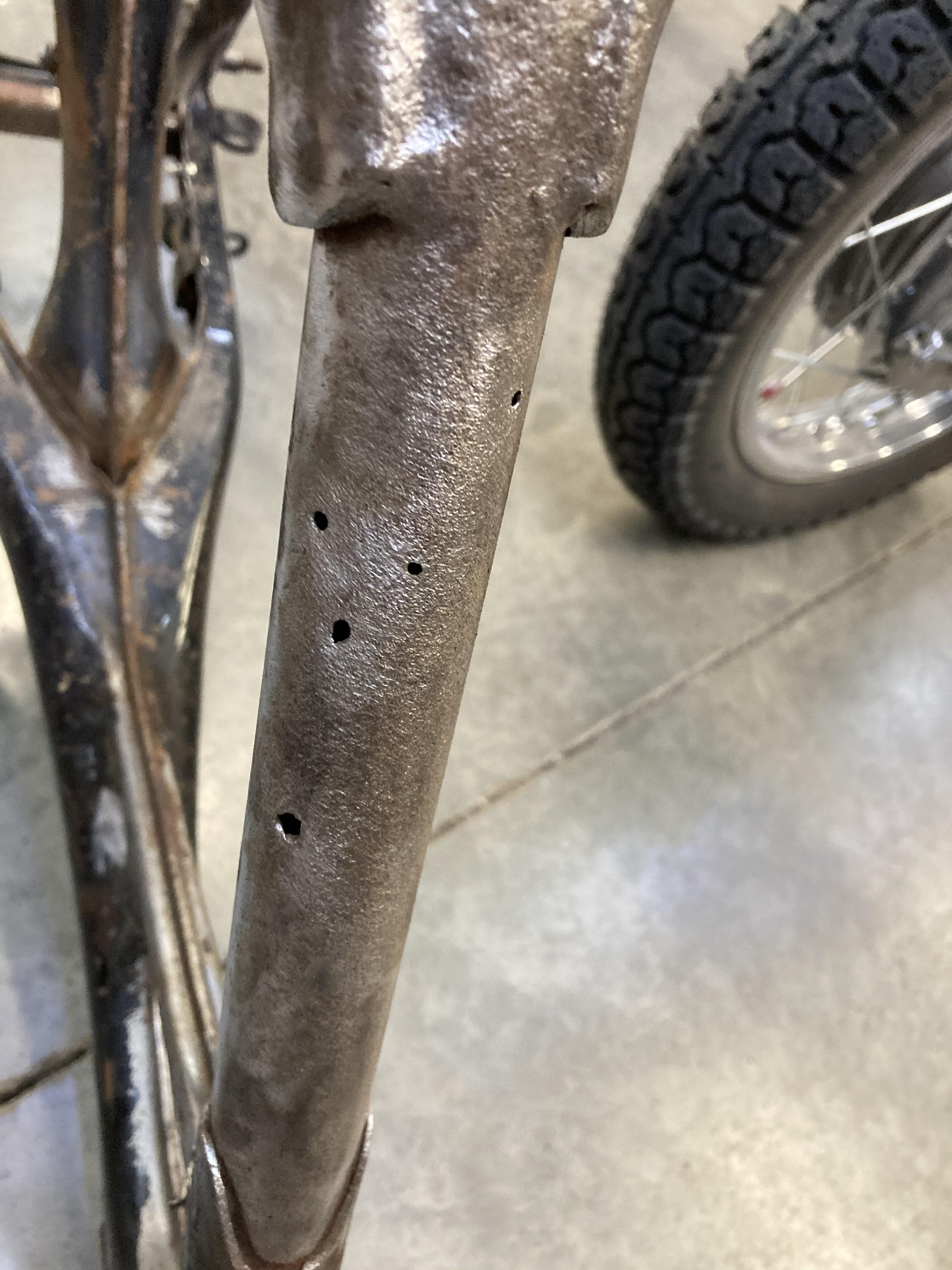
I bought it 2 1/2 years ago for cheap but it had a title. No carbs or side covers but not bented and danged. Motor was free and, once home showed 160 and 170 compression. Damp barn storage had supplied mucho patina so I stripped it down to roller with motor in it and it's been hanging out with a hunk of carboard across it as my gasket table. At some point I saw some small holes near the steering neck so I began poking in them and found a lot of debris coming out. After stirring with a screwdriver and suction of shop vac, I had a couple quarter sized holes and a few smaller ones. A pile of pea sized seeds of some sort and lint hunks suggested a rodent redoubt. Now I had an even better reason for procrastinating.

A couple days ago I decided it needed to get moving, somehow. I forgot the previous comp test so re-did it getting 160 from the 170 and the previous 160 had only 100, even with oiled rings. Now I had two reasons to drop the motor, which I did and pulled the wheels, fork and swingarm so I could flip the frame to knock out the last of Mousetown.

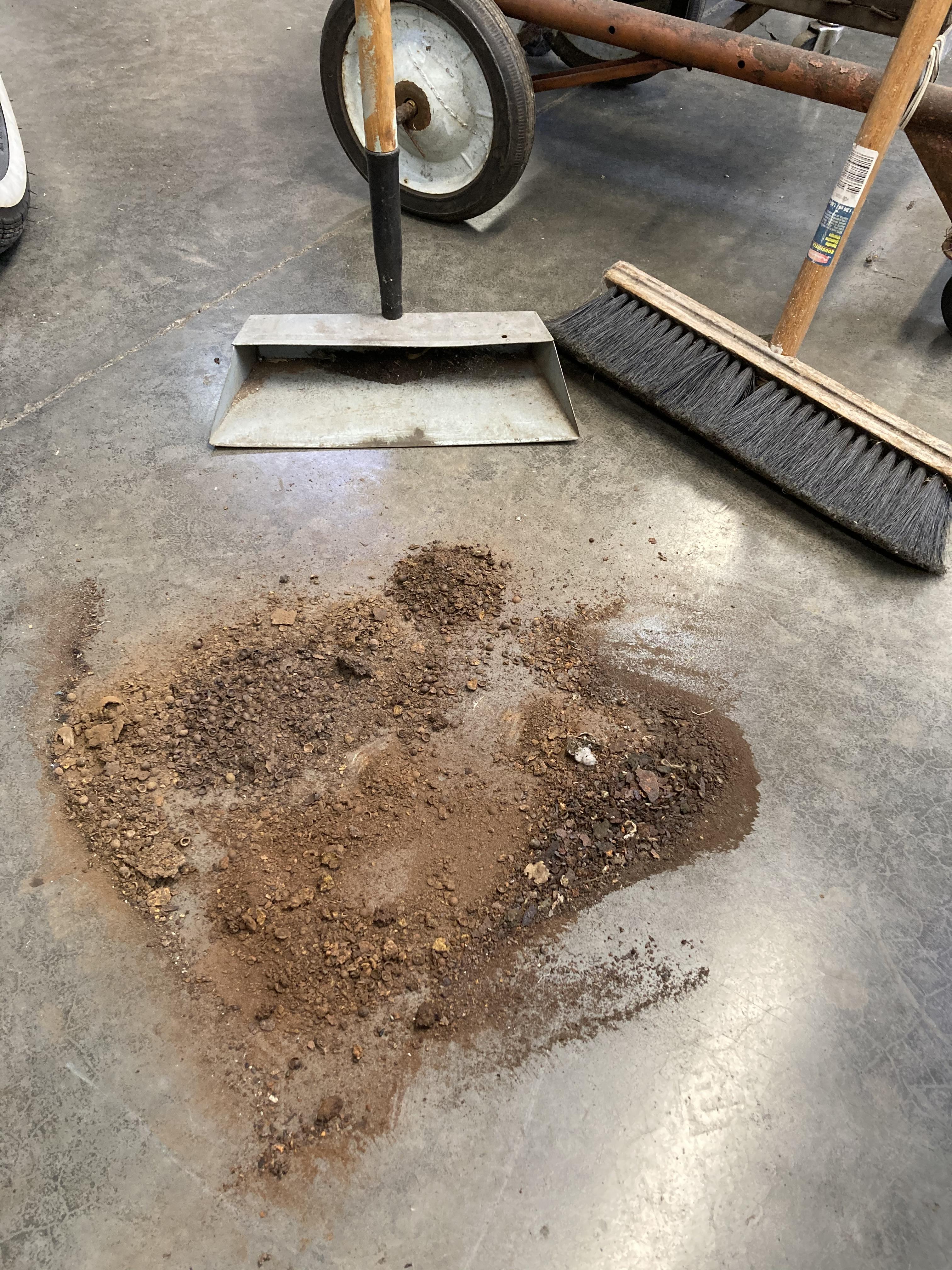
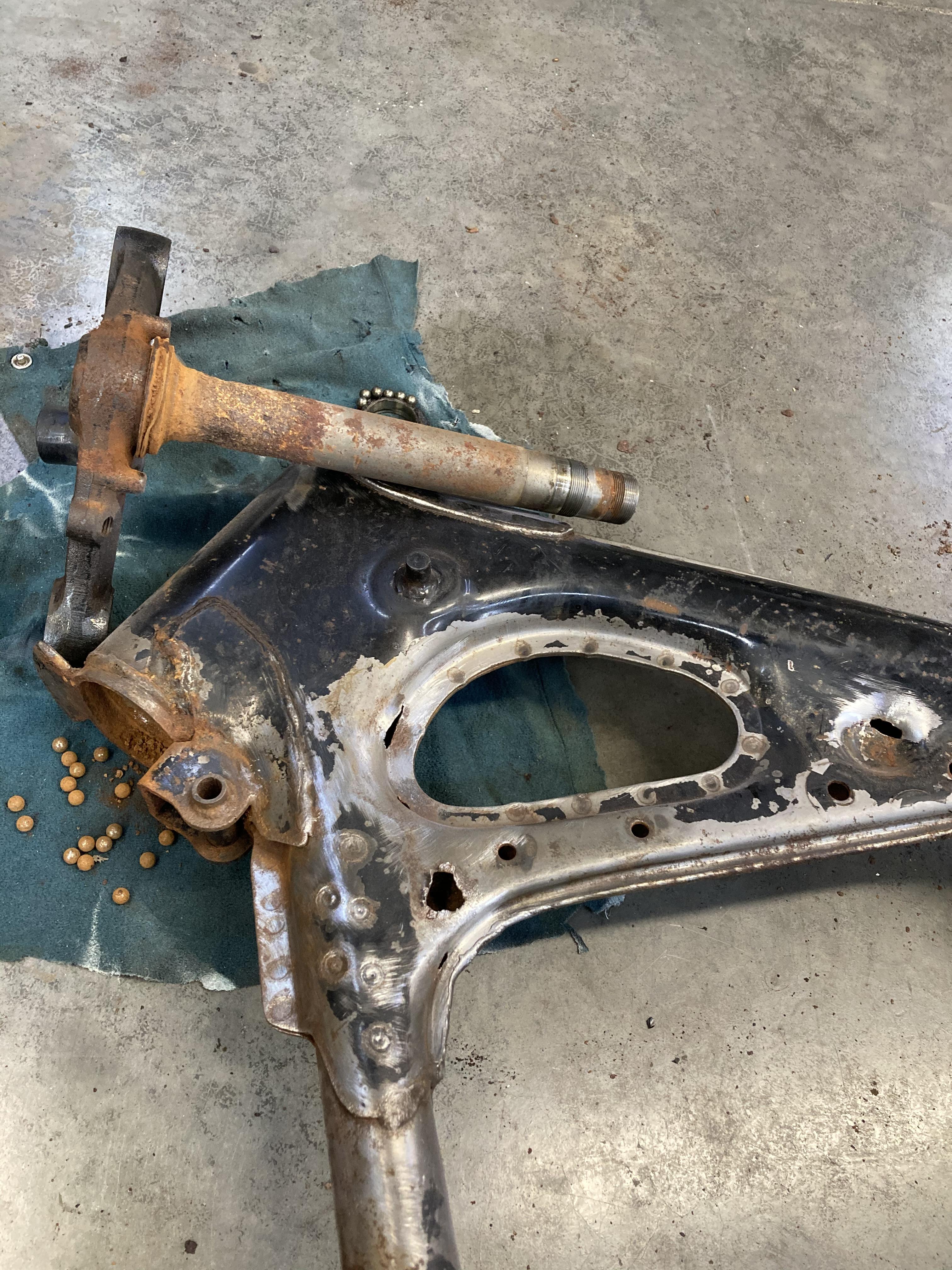
The sewer for Mousetown was all the way forward and over the lower steering bearing race. The thick walled steering stem appears to be about halfway rusted through, I think my 70 parts bike one will work. There was a lot of rust and seeds in there, a lot more than the dust pan would hold.
BJJYhrX.jpg


The Bilt Hamber Deox-C bucket is going to get a good trial and I can practice my cheesy welding skills some more to patch the holes.

xw8LSa6.jpg
 
Tom, I'm sure this thread will be both entertaining and educational (for me, at least), so sign me up.

What sort of welder do you have? I've got the cheapo110v flux welder from Harbor Freight. Some of those holes are in fairly thin areas, aren't they? Thin metal is the enemy of novice welders - I learned that the hard way. At the same time, I suspect you may be under selling your welding ability.

I welcome your continued advice on my 350 thread as we may be working on similar issues at times. My goal is to put the bike on the road before school starts in the fall. We'll see if I can deliver.

Edit: I was talking to a welder not that long ago about welding thin metal and he mentioned using a heavier piece underneath (if possible) to serve as a heat sink and help prevent the welder from burning through.
 
Tom, I'm sure this thread will be both entertaining and educational (for me, at least), so sign me up.

What sort of welder do you have? I've got the cheapo110v flux welder from Harbor Freight. Some of those holes are in fairly thin areas, aren't they? Thin metal is the enemy of novice welders - I learned that the hard way. At the same time, I suspect you may be under selling your welding ability.

I welcome your continued advice on my 350 thread as we may be working on similar issues at times. My goal is to put the bike on the road before school starts in the fall. We'll see if I can deliver.

Edit: I was talking to a welder not that long ago about welding thin metal and he mentioned using a heavier piece underneath (if possible) to serve as a heat sink and help prevent the welder from burning through.


I've got the same HF, 90 amp flux wire, no extra gas. While not as nice of welds, the flux wire supposedly works good on dirty, rusty metal. I'll use the low setting and a slow feed at first. If I can weasel a scrap of metal inside the holes then hold it in place with a magnet, I'll try that. After that it's gonna be using JBweld as a filler and file/sand like Bondo. I'm sure the strength integrity is somewhat compromised but (since it has a title) I'm counting on Honda extra design limits making it safe for a daily driver, no Isle of Maniacs stuff or Grand Canyon jump attemps.
I've been beating every square millimeter with my ball peen to detect any soft spots and to knock loose anything not solid.

Heck, I may even pop for the tapered roller steering bearing set since I'm halfway there on needing to replace the entire bottom stack.
 
Last edited by a moderator:
I would knock the galvanizing off of a carriage head bolt either chemically or bead blaster, cut off the threads or not, put it in the hole, weld around the perimeter then blend it in with a flap wheel. Smaller holes I have ground a machine screw flat, in the hole it goes and weld over it.
 
Almost ten years ago I picked up a bike with a cut on the lower frame tube close to one of the motor mounts. The cut went through the tubing wall and was maybe 1/2" to 1" long. It almost looked like something a Dremel could do, but I have no idea how it got there. The frame had been outside and the cut area was rusted, so I was really concerned about it being a weak spot. I wouldn't have dreamed of attempting it myself back then and found a welder at an auto shop who basically fixed it for free. He knew the welder would punch through, but was able to backfill the weak area nicely and I ground down the excess at home. It was hard to get him to take $20 so he could at least have lunch on me, but he did accept that small payment before I left.

Point being only that you might be able to find someone willing to help at a reasonable cost. It'd be nice to know all those holes were filled with steel rather than include any JB Weld. I'll be curious to see what you can do with the flux welder and I like the idea of working small scraps of metal inside/under the area you're welding. If the magnets don't work maybe a tack weld would.
 
Almost ten years ago I picked up a bike with a cut on the lower frame tube close to one of the motor mounts. The cut went through the tubing wall and was maybe 1/2" to 1" long. It almost looked like something a Dremel could do, but I have no idea how it got there. The frame had been outside and the cut area was rusted, so I was really concerned about it being a weak spot. I wouldn't have dreamed of attempting it myself back then and found a welder at an auto shop who basically fixed it for free. He knew the welder would punch through, but was able to backfill the weak area nicely and I ground down the excess at home. It was hard to get him to take $20 so he could at least have lunch on me, but he did accept that small payment before I left.

Point being only that you might be able to find someone willing to help at a reasonable cost. It'd be nice to know all those holes were filled with steel rather than include any JB Weld. I'll be curious to see what you can do with the flux welder and I like the idea of working small scraps of metal inside/under the area you're welding. If the magnets don't work maybe a tack weld would.


Boomer has some great dope there. Even a thick washer on a carriage bolt to pull up, weld, cut off.

I find patience is sometimes key for welding. Tack a bit then wait to cool some then some more, wait, more. I learned this good, patching fender cracks on the pressed steel CA models. Otherwise too much heat starts things warping too.
 
A mouse found a way into your frame ?
The rodent must have some strong teeth :evil:

The only metal munching mice I know of were on Rocky and Bullwinkle many years ago. :lol:


I must say that the Honda steering bearing lower seals are very good at keeping dirt out and mouse pee in.
 
The only metal munching mice I know of were on Rocky and Bullwinkle many years ago. :lol:


I must say that the Honda steering bearing lower seals are very good at keeping dirt out and mouse pee in.

I have never heard of mice getting into that area and it pisses me off :exclamation:
I hope they didn't compromise the integrity of your frame in the steering head area.

I wonder if it was the mouse from that movie 'The Green Mile' !
The one I'm thinking of had lots of life to it.. :eek:
 
I have never heard of mice getting into that area and it pisses me off :exclamation:
I hope they didn't compromise the integrity of your frame in the steering head area.

I wonder if it was the mouse from that movie 'The Green Mile' !
The one I'm thinking of had lots of life to it.. :eek:

Mr. Bojangles
 
Mr. Bojangles

Lol :lol:
I remember the scene where that Large prisoner with the 'magic touch' brought 'mr. jingles' back to life. :biggrin::rolleyes:
That mouse could probably gnaw through steel: :whistle: that hole at the bottom looks like he exploded right out of there ! You didn't find him inside there,did you??
He's on his way to mouseville.
 
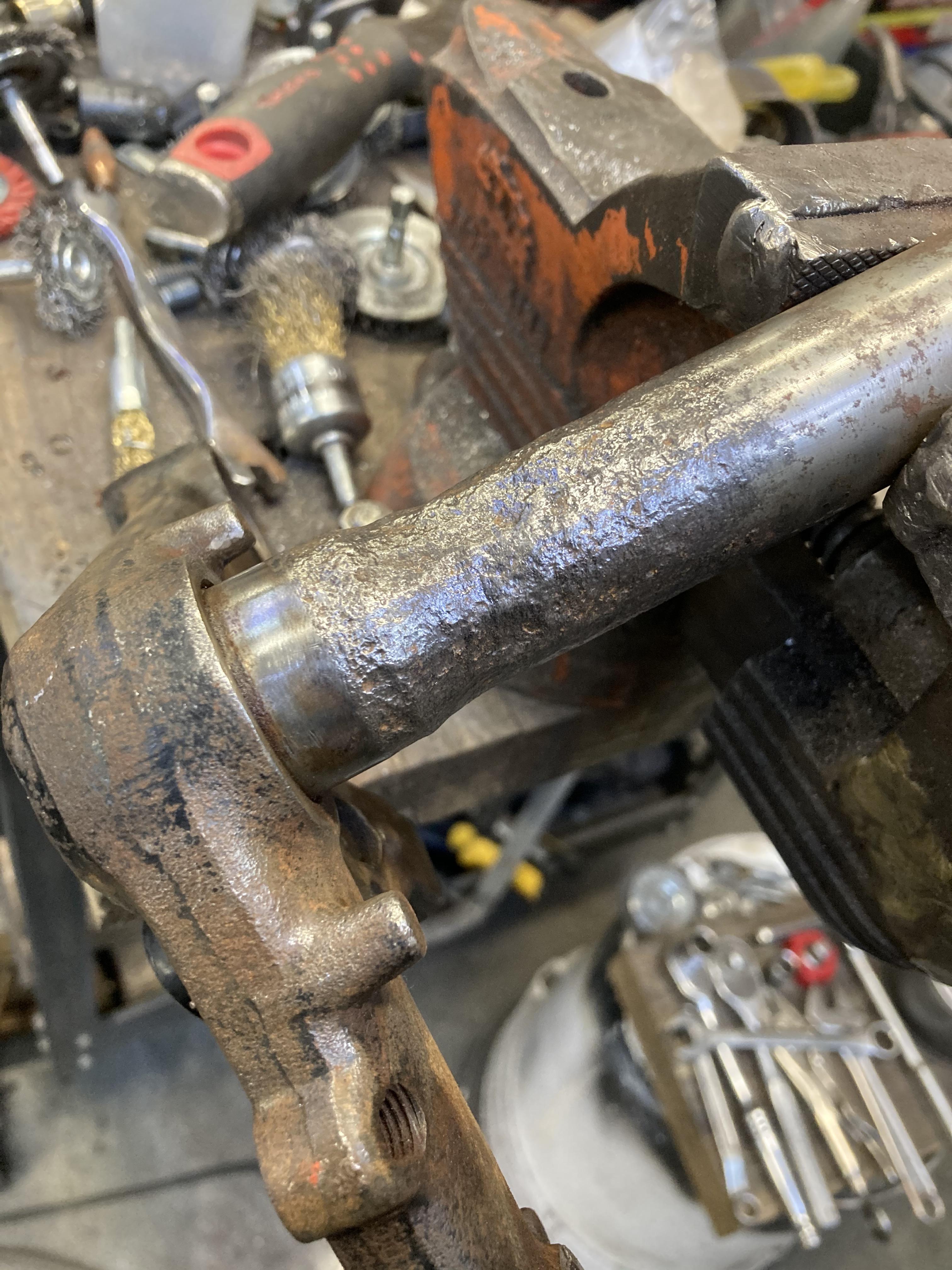
I won't give up. More damage on this upside down frame on the forward lower side of the front downtube just above where it forks to the two motor cradle tubes. Current plan to add a layer wrapped around and welded of 34mm OD chromoly bicycle frame tubing.

5euDpXS.jpg


Better pic of the steering stem damage, almost 1/8 deep erosion.

SiWKtOq.jpg


Mice can certainly be a problem.

Mouse Spotted on SpaceX rocket || Falcon 9 Rocket Launch || Mouse on rocket - YouTube
 
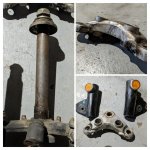
I'm planning to use a 360 front end on my project, which means the 350 steering stem I have is of no use to me. I'd be happy to ship it to you for your project. The top bridge I have seems to have two broken tabs, but the parts manual doesn't show tabs, so I have been puzzled. Edit: CMSNL shows the tabs, which I guess are for the gauge bracket.

20230609_055519-COLLAGE.jpg
 
I'm planning to use a 360 front end on my project, which means the 350 steering stem I have is of no use to me. I'd be happy to ship it to you for your project. The top bridge I have seems to have two broken tabs, but the parts manual doesn't show tabs, so I have been puzzled. Edit: CMSNL shows the tabs, which I guess are for the gauge bracket.

View attachment 22365


Thanks for the offer. I'll have to look as this is a 73 and I do have a 71 and 72 projects that I can compare. I know the top bridge is different on this with the clamp style that seems to crack (as mine is) but I already have a those guys in Houston repop so will want to stay 73 for the stem, etc. Come to think of it, the 73 forks may be the same as the 360's.
 
I just looked at CMSNL and it seems the 73 CB350s at least share the steering stem with the 360s. Mine seemed to come from a 71, so it wouldn't have worked for you, anyways. Sorry about that.

Seriously thanks for the offer. It's also great to have you in on this thread. Seems we both been down the funky frame and title road. I just was checking your build and did a quick review of the whole thing. What a saga it's been.
 
Seriously thanks for the offer. It's also great to have you in on this thread. Seems we both been down the funky frame and title road. I just was checking your build and did a quick review of the whole thing. What a saga it's been.

I'm still a little nervous about the salvage title I'm working with, but it should be fine. I don't even plan to use the first motor I tore down because the salvage yard motor I found later had good compression. Keep those spares in mind when you dig into your motor. My spare had bent valves and a good amount of wear in the valve train, but some components should still be useable.
 
Tom,I hope you soak the front of the frame in a type of bath that will neutralize the harsh stuff that mouse family deposited inside the frame.
I like the plan of adding good quality steel to the outside of those frame sections.
I know of a good quality product which can be sprayed directly into your frame after you've finished all your cleaning and welding;it's called Fluid Film made by the Eureka Chemical Co. and was originally used(starting in 1943)for the inside bulkheads of ships. fluid-film.com
I've sprayed it into a couple motorcycle frames which I've owned so far.

I'm fairly certain that all CB350 lower triple/steering stems are interchangeable and can be used between years;the difference is in the upper triples.

The CB/CL360 parts and front-end will fit your CL350 and fits the CB350.
 
Tom,I hope you soak the front of the frame in a type of bath that will neutralize the harsh stuff that mouse family deposited inside the frame.
I like the plan of adding good quality steel to the outside of those frame sections.
I know of a good quality product which can be sprayed directly into your frame after you've finished all your cleaning and welding;it's called Fluid Film made by the Eureka Chemical Co. and was originally used(starting in 1943)for the inside bulkheads of ships. fluid-film.com
I've sprayed it into a couple motorcycle frames which I've owned so far.

I'm fairly certain that all CB350 lower triple/steering stems are interchangeable and can be used between years;the difference is in the upper triples.

Fluid film is excellent product but will migrate so may affect painting.

K0 to K3 front ends do not mix with K4 and K5 other than the hub and wheel assemblies. Axle, spacers, fork lowers, forks, triples and top are all different. Early set up is also narrower than later. Instrument brackets and instrument mounts also vary but the instruments can be adapted to various models.
 
I won't give up. More damage on this upside down frame on the forward lower side of the front downtube just above where it forks to the two motor cradle tubes. Current plan to add a layer wrapped around and welded of 34mm OD chromoly bicycle frame tubing.

The look of the exterior pitting and holes on that tubing indicates serious rot on the interior. I would not trust it as is by any means. Wrapping it in larger tubing like you mention and tying that new tubing into solid original tube would be a logical fix. Some sort of repair is an absolute must.
 
Last edited by a moderator:
Tom,can you get anymore chromoly(flat?)steel which you can form around the original shape of your frame,then weld those pieces onto the frame in all the areas which are the most corroded to give it much more strength ?
I would suggest getting a small camera to connect to your phone;a type of camera which can feed through the hole up front there and view the inside of your CL350 frame to see the damaged areas.
 
More damage on this upside down frame on the forward lower side of the front downtube just above where it forks to the two motor cradle tubes. Current plan to add a layer wrapped around and welded of 34mm OD chromoly bicycle frame tubing.

What is the wall thickness on that bicycle frame tubing? Would the plan be to slice it down the length, spread it so it can wrap around the downtube, and then press it around and weld the seam?

A wild thought struck me a little while ago that you could possibly reinforce from within using resin or even concrete. Might keep you off the salt flats, but it would add strength. The mice have even given you some nice injection ports.

Addendum: Epoxy Resin
 
Cut the rotten section out, replace with new/better tubing and use plugs on either end between the old and new. Leave a small gap between the tubing and weld both all three together at same time.

You may have to either have plugs made or grind to fit, you will need to do some sliding of them to get the tube in.

Frame alignment should be checked before and after. You are into some serious work.
 
Cut the rotten section out, replace with new/better tubing and use plugs on either end between the old and new. Leave a small gap between the tubing and weld both all three together at same time.

You may have to either have plugs made or grind to fit, you will need to do some sliding of them to get the tube in.

Frame alignment should be checked before and after. You are into some serious work.
Before cutting anything you need to build a frame jig. Use the swing arm pivot, both lower engine mounts and the steering head as hard/fixed mounting points. This will keep the frame as square as it started. A 1mm oops in tubing length will throw the frame out. Mounting the lower case half in the frame with the jig will provide even better alignment. Something similar to this:
motorcycle_frame_jig_full_adjustable_standard_2.jpg
 
I would suggest getting a small camera to connect to your phone;a type of camera which can feed through the hole up front there and view the inside of your CL350 frame to see the damaged areas.

I have one of those Android endoscopes, so I made a video using my spare frame to show you what you might be able to see. I taped the camera onto a thin dowel so I could feed it into the downtube and rotate the camera by twisting the dowel. There are probably much higher quality cameras than what I have.

<u>


Edit
: Playback at 0.5 speed is recommended. I think the video sped up when I uploaded it to Google Photos.
 
I have one of those Android endoscopes, so I made a video using my spare frame to show you what you might be able to see. I taped the camera onto a thin dowel so I could feed it into the downtube and rotate the camera by twisting the dowel. There are probably much higher quality cameras than what I have.

Edit: Playback at 0.5 speed is recommended. I think the video sped up when I uploaded it to Google Photos.


Thanks. That was actually quite informative. I can see there is no intrusion at the bottom, from the side cradle tubes. Judging by scale near the top, entering into the down tube, that the wall thickness must be near 1/8".
 
Last edited by a moderator:
Before cutting anything you need to build a frame jig. Use the swing arm pivot, both lower engine mounts and the steering head as hard/fixed mounting points. This will keep the frame as square as it started. A 1mm oops in tubing length will throw the frame out. Mounting the lower case half in the frame with the jig will provide even better alignment. Something similar to this:
View attachment 22393


If I can avoid cutting all the way through then a jig may not be necessary. I'm hoping that the upper rear facing surface of the down tube can be left in place. More cutting and exploration is needed but it's not looking good .
 
Cut the rotten section out, replace with new/better tubing and use plugs on either end between the old and new. Leave a small gap between the tubing and weld both all three together at same time.

You may have to either have plugs made or grind to fit, you will need to do some sliding of them to get the tube in.

Frame alignment should be checked before and after. You are into some serious work.

I'm right there with you and Chris (12ozPBR), concerned with whether there is enough decent metal to weld any replacement tube to.
 
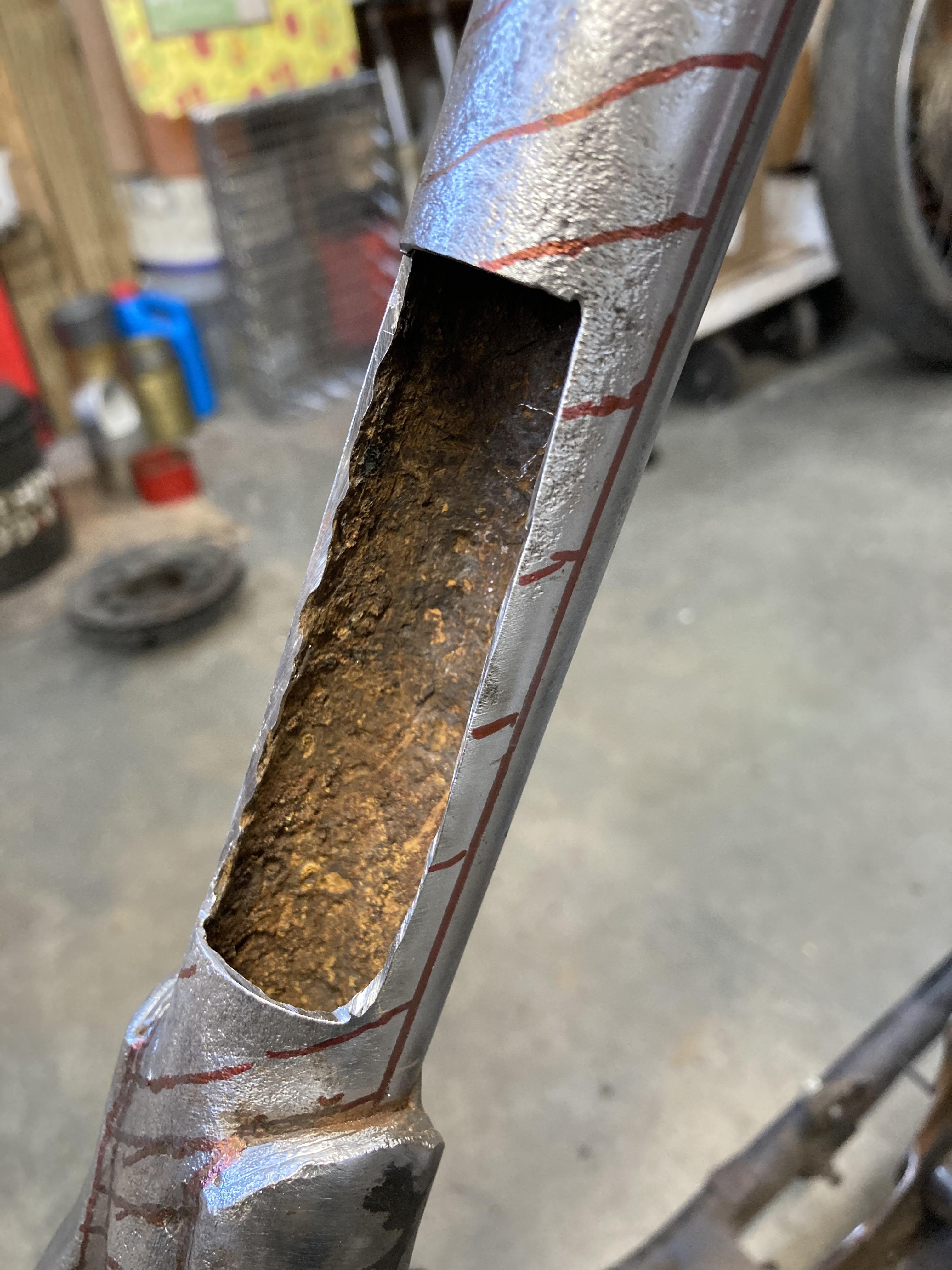
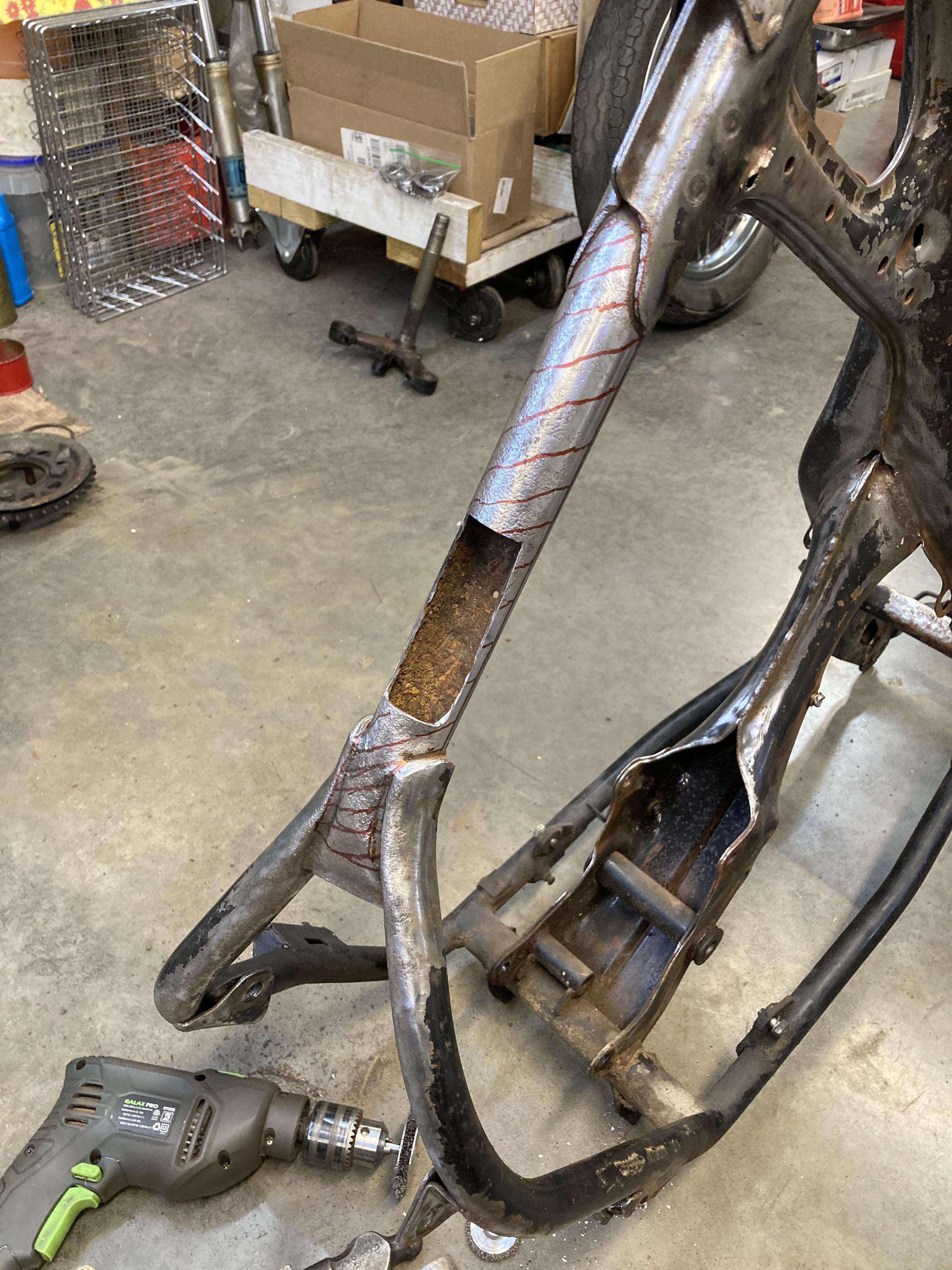
Cutting into the worst spot showed that the wall thickness is about half what is was. If you look close at the cut edge it gives an idea of the depth of corrosion. It's so uneven that putting something inside would be pretty hard and then how would I weld it in? I outlined in red the area that an outside 'splint' could be fitted. I could weld this all the way around and even tie it to the upper stamped head stock as well as extending all the way down onto the fork of the motor cradle tubes. It still needs a long soak at the Deox-C spa and hope it doesn't look much worse after that.

A6CoIM2.jpg


E1RNwvT.jpg


I need about a foot of good 1/8" thick 1 1/4 ID tubing. If needs be I could then put another splint on the top/ rear side.
 
Nothing like just digging in and going for it! I like your spirit. I believe your thinking of using a larger outer tubing to extend and tie together the lower engine cradle to the stamped head portion is your best and most sound option without cutting the piece out completely. This way you can avoid disturbing the geometry of the frame and as long as you control the heat in the process you can avoid a jig setup. Go slow with any welding, do short passes so as to keep heat build up in one area to a minimum to prevent distortion. For the best tubing options check and see if you have a Metal Supermarket in your area. You can buy almost anything in 1’ increments. It ain’t cheap but you don’t need much. https://www.metalsupermarkets.com/
 
Nothing like just digging in and going for it! I like your spirit. I believe your thinking of using a larger outer tubing to extend and tie together the lower engine cradle to the stamped head portion is your best and most sound option without cutting the piece out completely. This way you can avoid disturbing the geometry of the frame and as long as you control the heat in the process you can avoid a jig setup. Go slow with any welding, do short passes so as to keep heat build up in one area to a minimum to prevent distortion. For the best tubing options check and see if you have a Metal Supermarket in your area. You can buy almost anything in 1’ increments. It ain’t cheap but you don’t need much. https://www.metalsupermarkets.com/

Last time I was in your garage it looked like you were the metal supermarket. :lol: Great suggestion though.
 
Good discussion here! I never imagined a mouse could do so much damage. I'm definately going to pay closer attention to any other bikes I buy....
 
Thanks, Chris, for the vote of confidence and everything you said that backs up my cheapskate strategy. I'm still digging around here for a tube but there is, or was, not sure, a couple metal yards around this once productive town. I'll post pics of possible candidates.
 
Cutting into the worst spot showed that the wall thickness is about half what is was. If you look close at the cut edge it gives an idea of the depth of corrosion. It's so uneven that putting something inside would be pretty hard and then how would I weld it in? I outlined in red the area that an outside 'splint' could be fitted. I could weld this all the way around and even tie it to the upper stamped head stock as well as extending all the way down onto the fork of the motor cradle tubes. It still needs a long soak at the Deox-C spa and hope it doesn't look much worse after that.

I admire your head-on approach to this challenge and I'm excited to see what you can do with it.

Have you located a kiddie pool large enough to to accommodate the full length of the frame? I saw in old episodes of cowboy shows like Rawhide where they would dig a hole to dip cattle for ticks and things like that - would probably work for a frame if you could round up some drovers to dig the hole and then lined it with a tarp.
 
Seriously thinking of keeping bait blocks in the air box.

Tom,we were speaking about this. :undecided:
I still like the idea of getting another CL350(or CB350,same dimensions)frame which has been away from those horrible,corrosive rodents;another frame with a title.
We were joking around about transplanting the vin numbers from this frame to another good frame :rolleyes: :biggrin: but I know that's not what's done.. :rolleyes:
The frame you've got here is going to steal lots of your time and effort;quite a project.
I wouldn't take-on a project like this;I do value your gumption and effort to restore it.
 
Tom,we were speaking about this. :undecided:
I still like the idea of getting another CL350(or CB350,same dimensions)frame which has been away from those horrible,corrosive rodents;another frame with a title.
We were joking around about transplanting the vin numbers from this frame to another good frame :rolleyes: :biggrin: but I know that's not what's done. The frame you've got here is going to steal lots of your time and effort;quite a project.
I wouldn't take-on a project like this;I do value your gumption and effort to restore it.

I know Bill, I know.

When I was pretty young I watched an episode of "Then came Bronson" when he straightened his seriously bent forks in a barn, owned by a pretty widow, on an anvil with a forge.
I must have been pretty afflicted by that.
 
I know Bill, I know.

When I was pretty young I watched an episode of "Then came Bronson" when he straightened his seriously bent forks in a barn, owned by a pretty widow, on an anvil with a forge.
I must have been pretty afflicted by that.

Lol :biggrin:
I liked that show !
 
I admire your head-on approach to this challenge and I'm excited to see what you can do with it.

Have you located a kiddie pool large enough to to accommodate the full length of the frame? I saw in old episodes of cowboy shows like Rawhide where they would dig a hole to dip cattle for ticks and things like that - would probably work for a frame if you could round up some drovers to dig the hole and then lined it with a tarp.

Thanks for the encouragement.
Important concept of reducing volume but a ground hole would be harder to keep warm. I'm thinking a medium size tote tub with a plastic garbage bag in it and something around that to take up space. My enclosed sun porch can get pretty hot and I can scoop up some to reheat in the microwave.
The Deox-C directions say that you can use 1/4 the amount of water for heavy rust, so I may go one half and have 2 1/2 gallons per kilo of powder. It also says the working life will be extended that way.
 
Thanks for the encouragement.
Important concept of reducing volume but a ground hole would be harder to keep warm. I'm thinking a medium size tote tub with a plastic garbage bag in it and something around that to take up space. My enclosed sun porch can get pretty hot and I can scoop up some to reheat in the microwave.
The Deox-C directions say that you can use 1/4 the amount of water for heavy rust, so I may go one half and have 2 1/2 gallons per kilo of powder. It also says the working life will be extended that way.

What about building a tall rectangular trough and sealing it up with paint, caulk, and/or flex-seal?
 
I still like the idea of getting another CL350(or CB350,same dimensions)frame which has been away from those horrible,corrosive rodents;another frame with a title.
We were joking around about transplanting the vin numbers from this frame to another good frame :rolleyes: :biggrin: but I know that's not what's done.

I fully understand that criminals 'ring' and sell stolen vehicles, and that this is a real and serious crime. As would be misrepresenting the provenance of a vintage bike. However, when I bought my Cb175 K4 I found some frame damage, and as I really wanted a K6 anyway, I bought a good ( 50 years old ) K6 frame from a well known UK importer and breaker of bikes sourced from the US. Frame numbers would never have been on a UK database.

I got a replica VIN plate made up, from an online site in Switzerland, if memory serves me correctly. I ground the stamped frame number off the 'new' frame and got it powder coated, then riveted the new VIN in place. I have the original frame and VIN in the shed, in the event that the 'man' catches up with me. I have no intention in ever selling this bike on, my heirs and executors can deal with any fall out further down the time line.

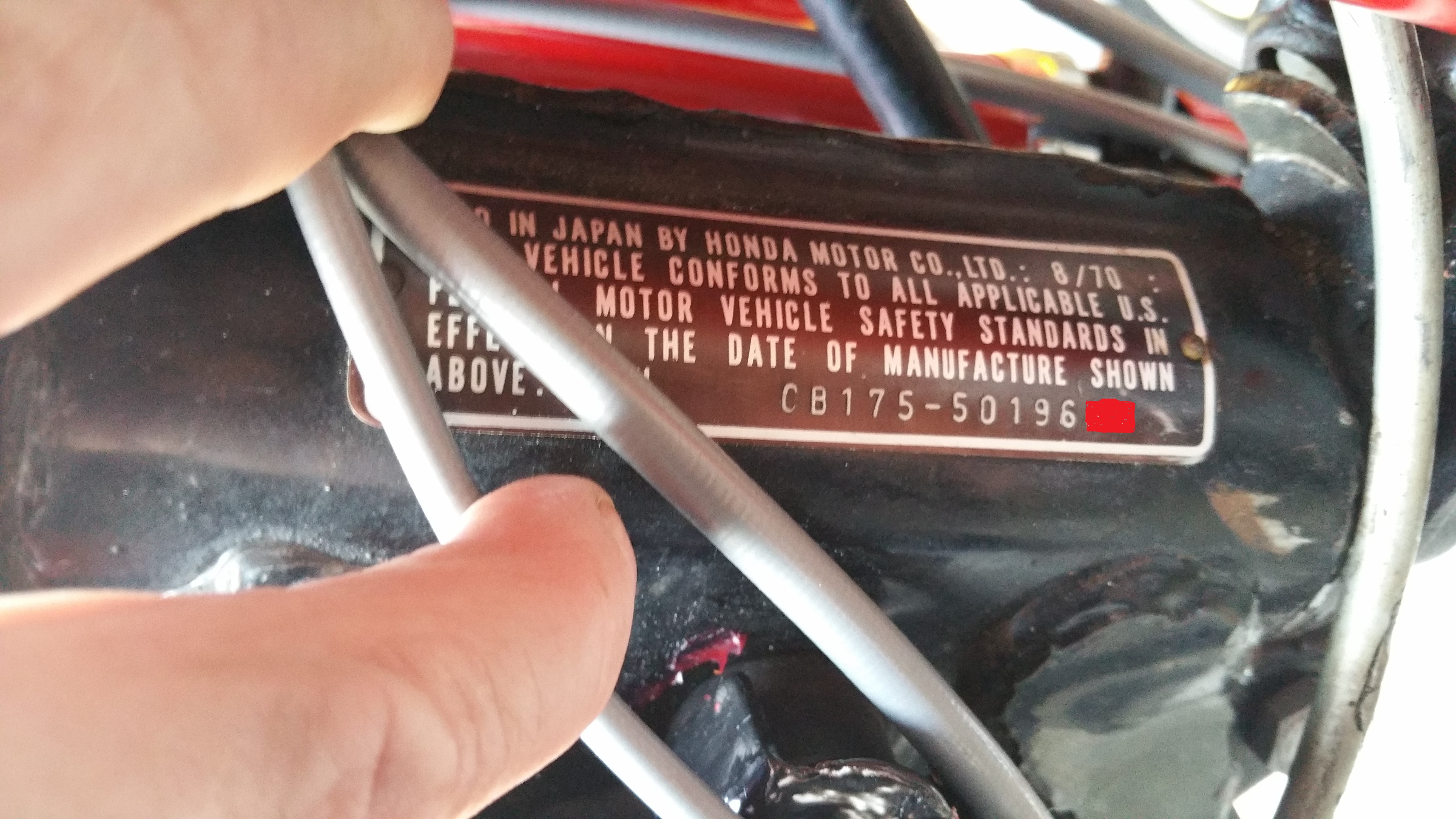
Original VIN

sFAsGLp.jpg


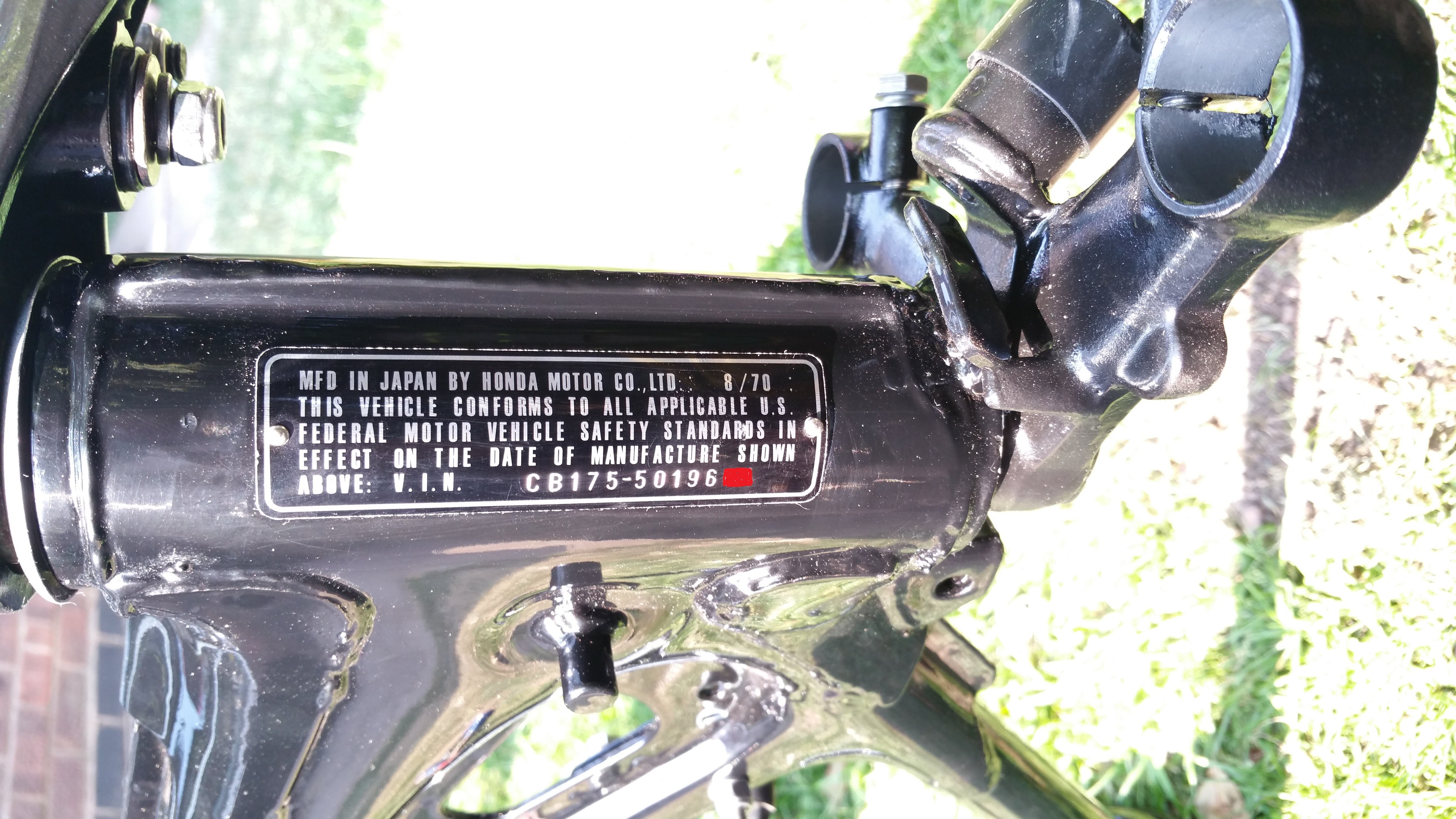
Cloned VIN

CnEr8vE.jpg
 
I fully understand that criminals 'ring' and sell stolen vehicles, and that this is a real and serious crime. As would be misrepresenting the provenance of a vintage bike. However, when I bought my Cb175 K4 I found some frame damage, and as I really wanted a K6 anyway, I bought a good ( 50 years old ) K6 frame from a well known UK importer and breaker of bikes sourced from the US. Frame numbers would never have been on a UK database.

I got a replica VIN plate made up, from an online site in Switzerland, if memory serves me correctly. I ground the stamped frame number off the 'new' frame and got it powder coated, then riveted the new VIN in place. I have the original frame and VIN in the shed, in the event that the 'man' catches up with me. I have no intention in ever selling this bike on, my heirs and executors can deal with any fall out further down the time line.

Original VIN

Cloned VIN

Richard,does the U.K. use only the VIN tag for identification purposes ?
I moved to Ca. from the East and Ca. uses the VIN # on the frame and the engine # for identification purposes.
 
Last edited by a moderator:
In the UK we have something called a 'V5' ( also known as the logbook in the olden days ), which is the vehicle registration document. This includes both frame (VIN) number AND engine number, also the name and address of the vehicles keeper. These details are held on a national computer system at the DVLA (Driver and Vehicle Licensing Agency). You are supposed to notify the DVLA if the vehicle details change, for example an engine swap or change of body colour.

The V5 is transferred with the vehicle when it is sold to a new keeper, record updated to reflect change of name and address.

When a bike is imported to the UK from the USA, we have to get it registered with the DVLA, who then issue a brand new V5, in the case of vehicles more than 40 years old as an 'Historic Vehicle', no road fund tax or annual MOT inspection required. I've registered three bikes in this way, and found the whole process quite painless, provided that you provide every thing the DVLA request, forms filled in correctly, photos of bike with closeups of VIN and engine number, also a 'dating' letter, usually from a brand expert at the UK VJMC.

Of course, once you have this new V5, who knows what one gets up to in ones shed ? :lol:
 
In the UK we have something called a 'V5' ( also known as the logbook in the olden days ), which is the vehicle registration document. This includes both frame (VIN) number AND engine number, also the name and address of the vehicles keeper. These details are held on a national computer system at the DVLA (Driver and Vehicle Licensing Agency). You are supposed to notify the DVLA if the vehicle details change, for example an engine swap or change of body colour.

The V5 is transferred with the vehicle when it is sold to a new keeper, record updated to reflect change of name and address.

When a bike is imported to the UK from the USA, we have to get it registered with the DVLA, who then issue a brand new V5, in the case of vehicles more than 40 years old as an 'Historic Vehicle', no road fund tax or annual MOT inspection required. I've registered three bikes in this way, and found the whole process quite painless, provided that you provide every thing the DVLA request, forms filled in correctly, photos of bike with closeups of VIN and engine number, also a 'dating' letter, usually from a brand expert at the UK VJMC.

Of course, once you have this new V5, who knows what one gets up to in ones shed ? :lol:

Oh,I see what you mean Richard,about getting a vintage bike from the USA having it's benefits (y)
The U.K. does require the engine number to stay current with what the owner has in it and to be documented(same in Ca.),plus the U.K. vintage(only?) frames don't have stamped numbers/letters on their steering head area:is that true ? Just the VIN# tag is all that's required ?

I like the fact a MOT is not required for vintage.
 
Back
Top Bottom