1976 XL350K2 - An Off and On Project

Having never worked on a bottom end of any of the big singles (XL250/350 and above) I can't speak to their shift mechanism or long-term wear and shifting performance. Typically, the hard to find neutral is just the clutch dragging a bit when disengaged in my experience, and my 450 is also a bit guilty of it but on mine, the clutch cable stretches when hot. It is not due to any changes in the mechanism adjustment, simply too much slack in the cable after heating up fully. I've never had to readjust the mechanism, just the cable adjuster at the perch while riding if it becomes too much of a problem, which is rare. Normally I'll ride it with the same adjustment that works when cold and just click into neutral while still slowly moving prior to stopping, or just kill-switch it right before coming to a stop.
 
Having never worked on a bottom end of any of the big singles (XL250/350 and above) I can't speak to their shift mechanism or long-term wear and shifting performance. Typically, the hard to find neutral is just the clutch dragging a bit when disengaged in my experience, and my 450 is also a bit guilty of it but on mine, the clutch cable stretches when hot. It is not due to any changes in the mechanism adjustment, simply too much slack in the cable after heating up fully. I've never had to readjust the mechanism, just the cable adjuster at the perch while riding if it becomes too much of a problem, which is rare. Normally I'll ride it with the same adjustment that works when cold and just click into neutral while still slowly moving prior to stopping, or just kill-switch it right before coming to a stop.

Interesting that you mention the cable stretch. I will actually adjust mine on the fly if I notice more play on the perch than I like. I was wondering recently if anyone else does that. On this bike, it hasn't helped with the issue of disengaging first while stopped. I even tried incremental increases in tension once to no avail.
 
Interesting that you mention the cable stretch. I will actually adjust mine on the fly if I notice more play on the perch than I like. I was wondering recently if anyone else does that. On this bike, it hasn't helped with the issue of disengaging first while stopped. I even tried incremental increases in tension once to no avail.

What oil are you using in the XL350? That might be a factor.
 
I have been using a 10w40 conventional motorcycle oil, but was planning to use Rotella T4 after I reassemble this time. I already switched over on my 450.

Yeah, I was just wondering about it because while I was still using Brad Penn and a little ZDDP I encountered a day when, after racing my local riding buddy Ray on his GL650 a few times during a ride, my 450 got so tight in shifting that it wouldn't downshift or upshift for a few minutes until it cooled down. Of course, it was also well before changing the shift detent parts too.
 
Yeah, I was just wondering about it because while I was still using Brad Penn and a little ZDDP I encountered a day when, after racing my local riding buddy Ray on his GL650 a few times during a ride, my 450 got so tight in shifting that it wouldn't downshift or upshift for a few minutes until it cooled down. Of course, it was also well before changing the shift detent parts too.

I don't think I understand how the oil played into that shifting issue. I would expect thinner (hotter) oil to be more prone to slipping and thicker oil to be more prone to clutch drag. And clutch drag would likely make it harder to shift.
 
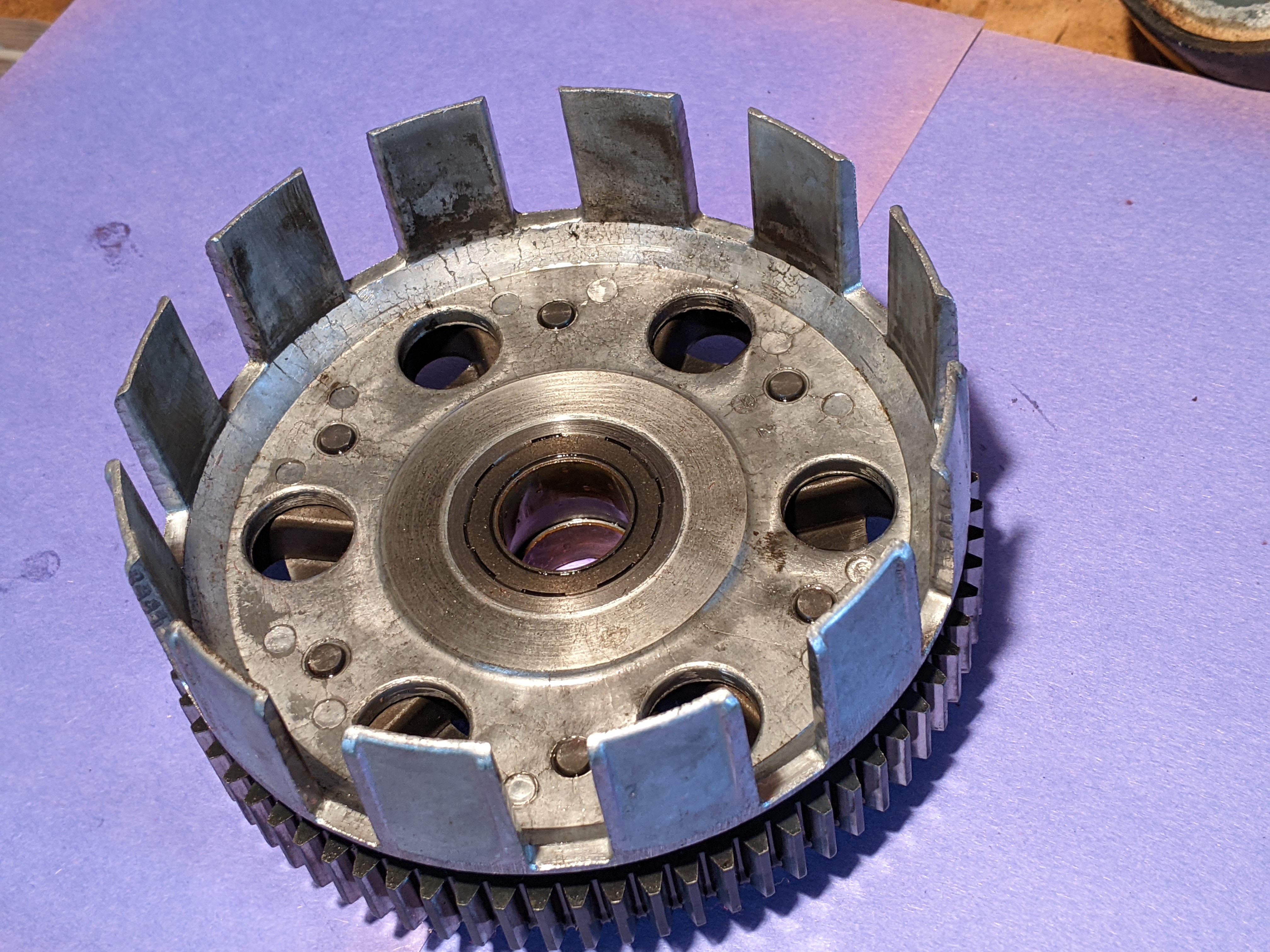
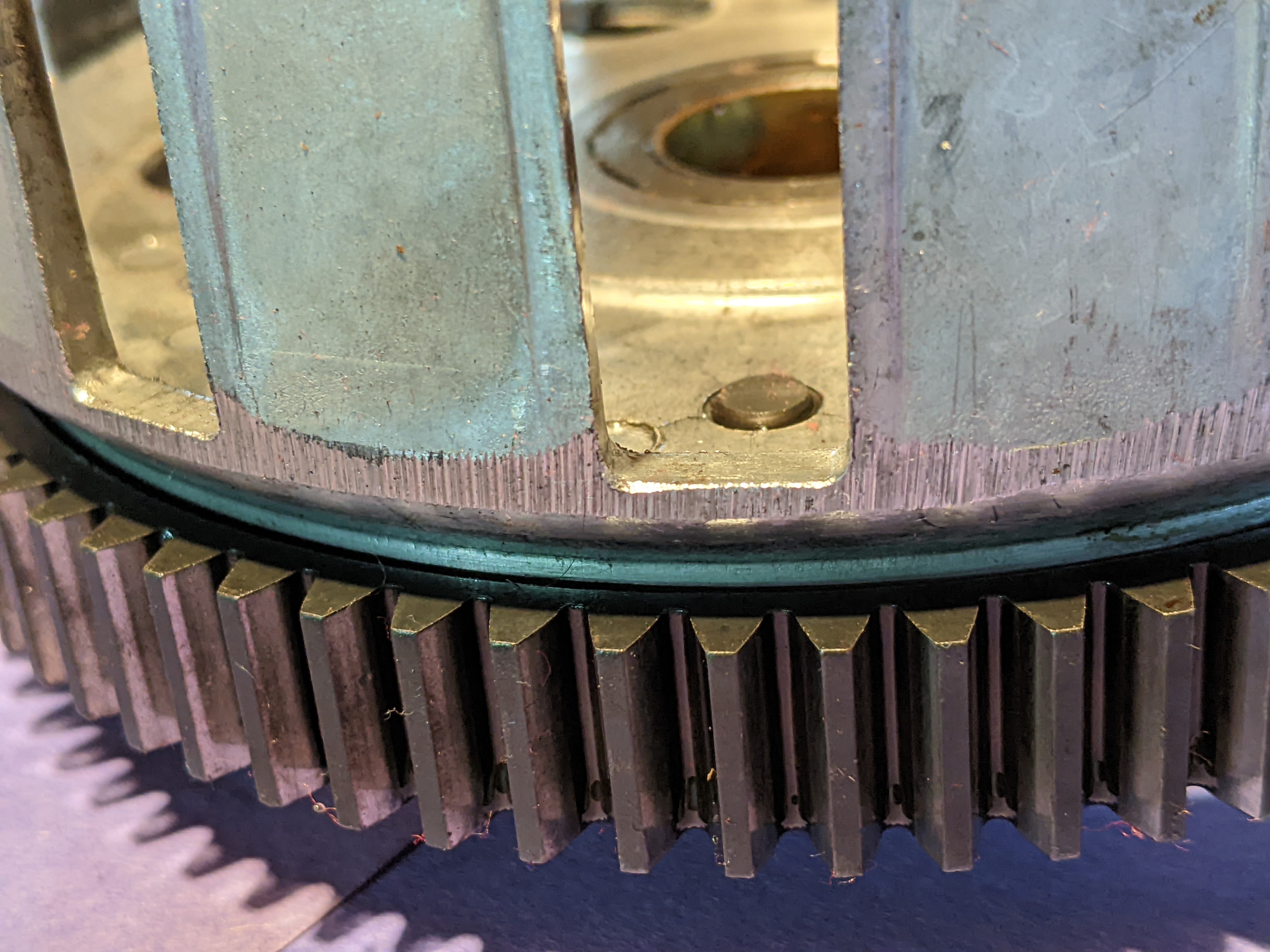
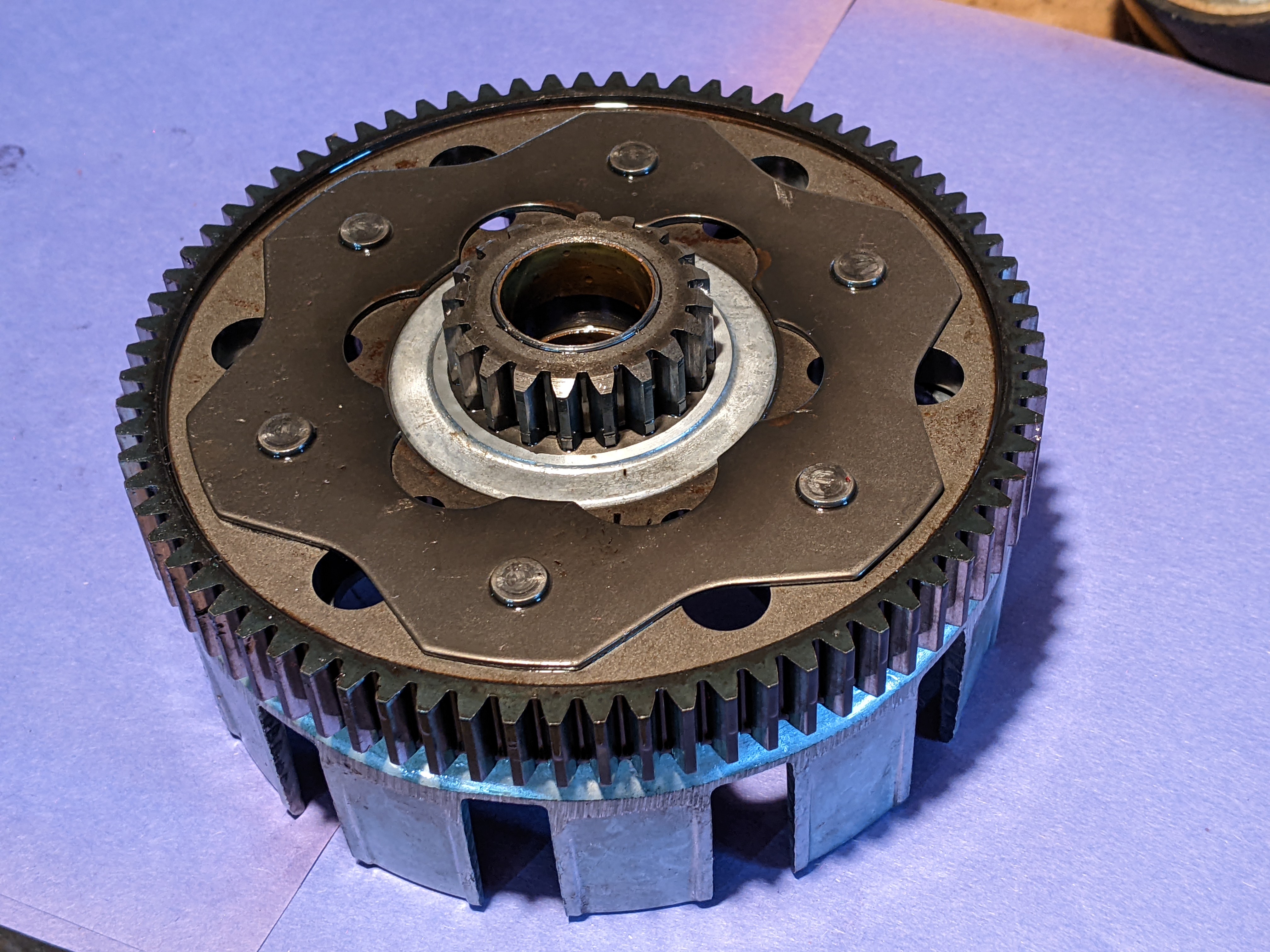
Here are a few pictures of the clutch basket (outer clutch). The third picture shows wear on the outer surface of the basket. Is this harmful in any way?

z9jfHRA.jpg


cD3MGaO.jpg


nme8OFr.jpg


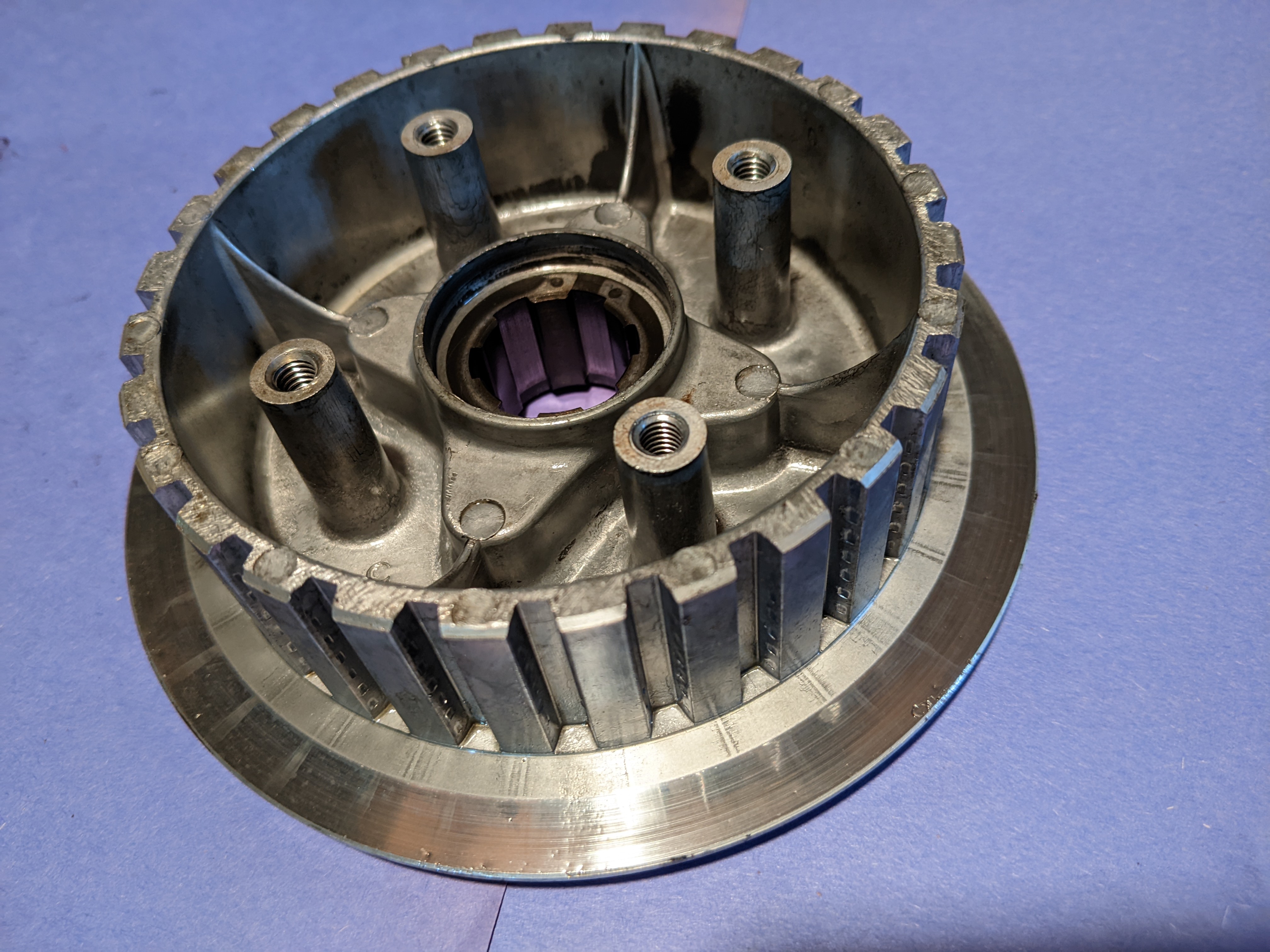
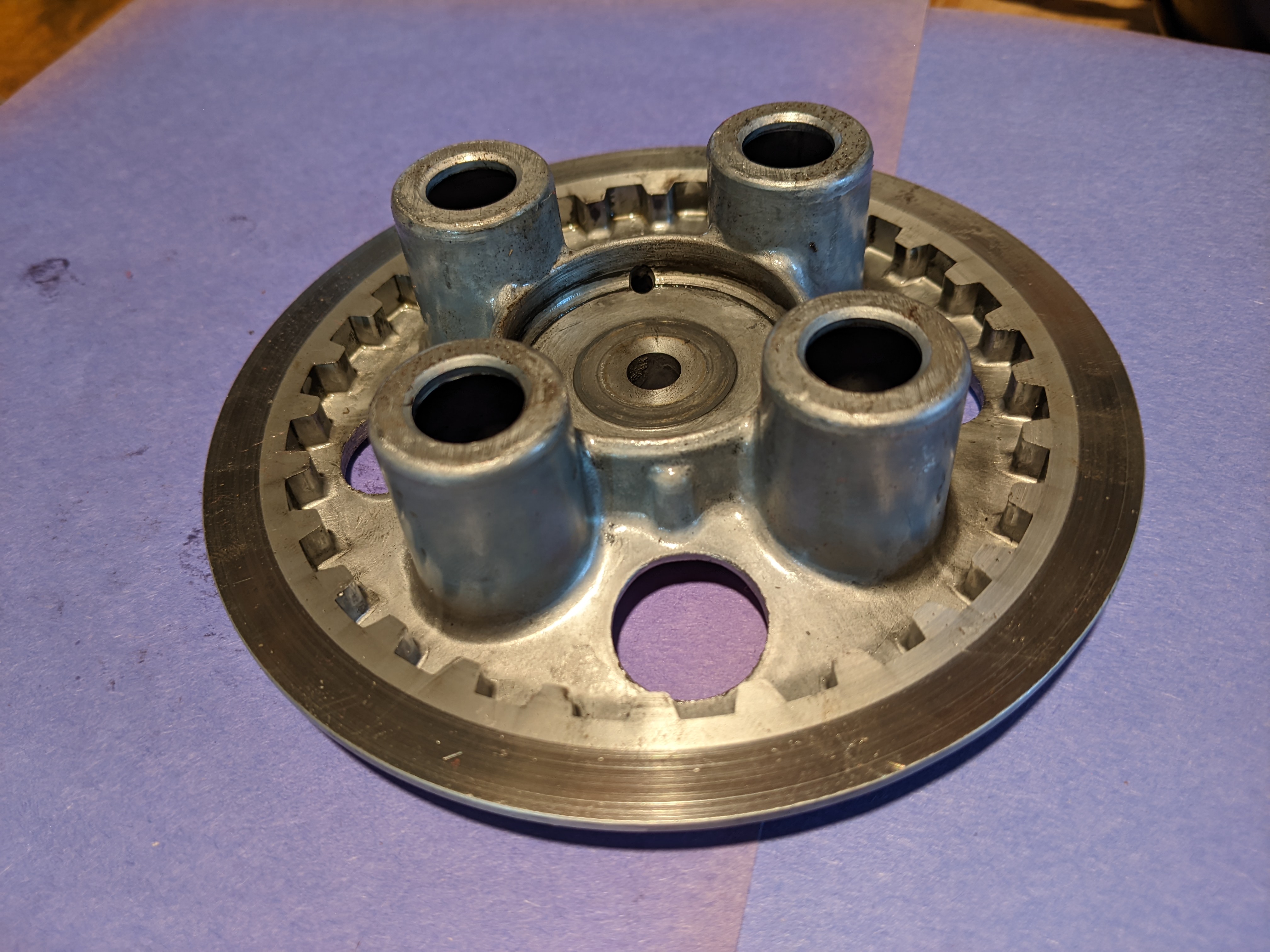
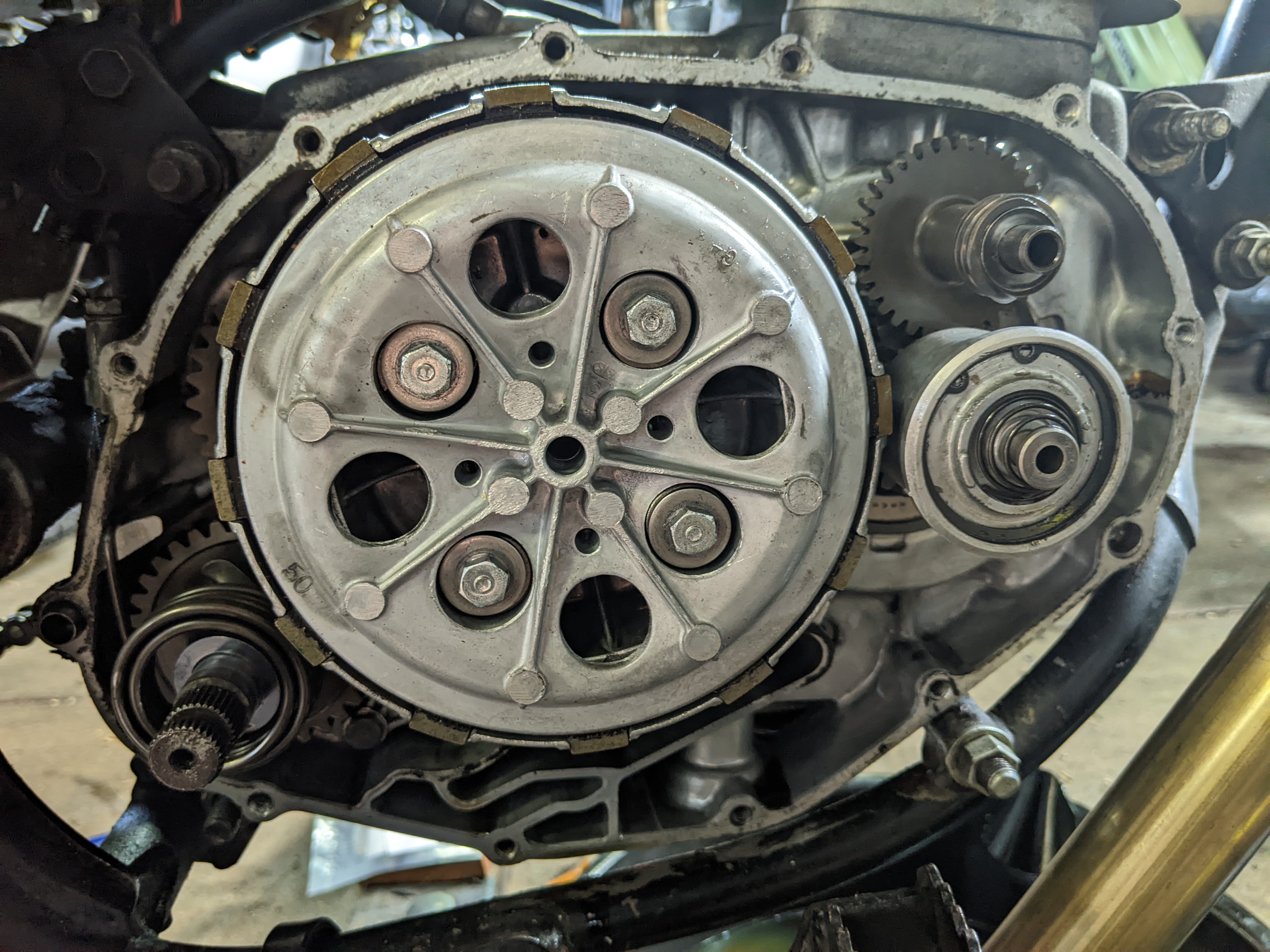
Next are the center clutch and pressure plate. I don't see anything amiss with either part.

nDymasp.jpg


tBKxUx1.jpg
 
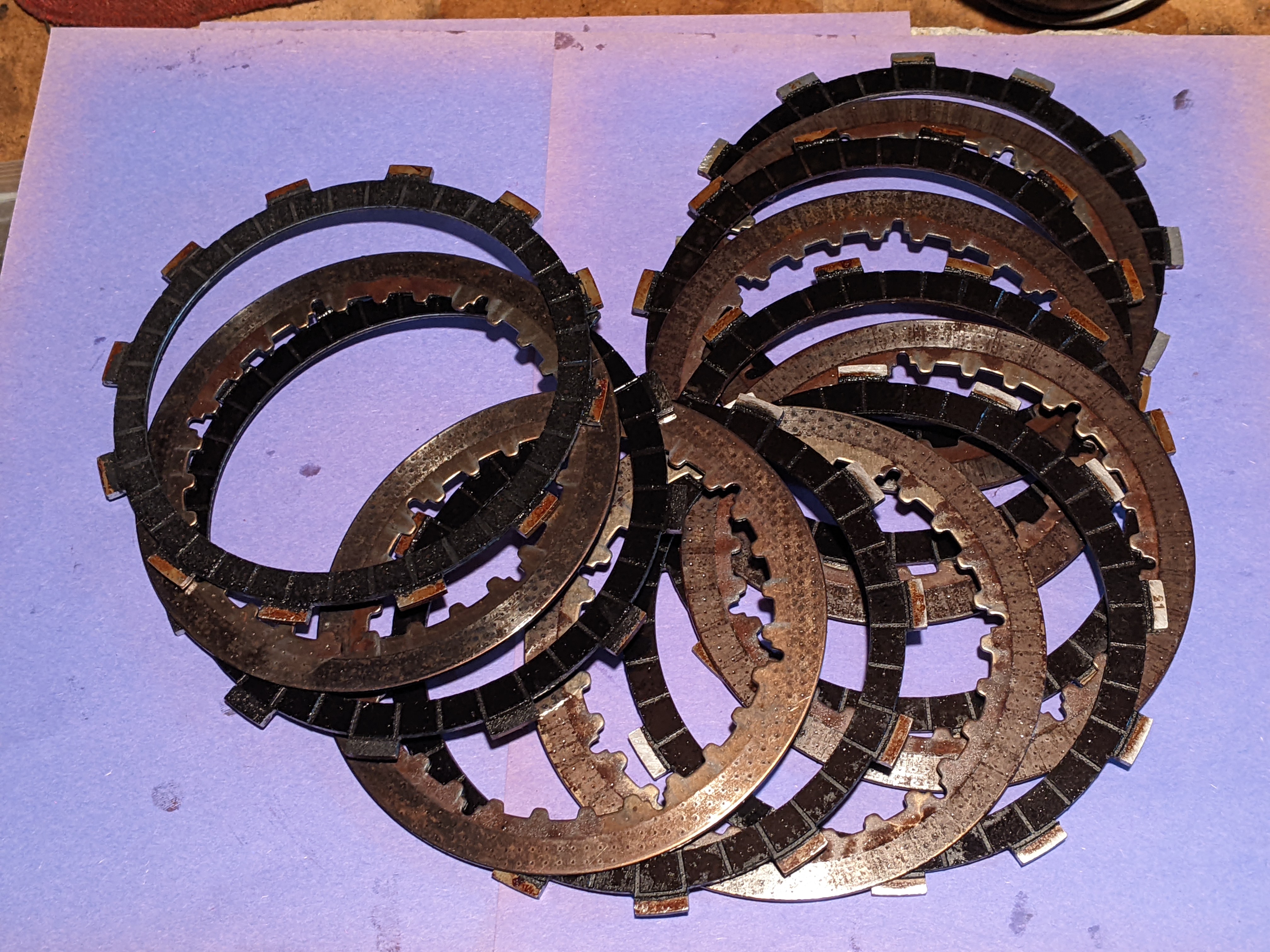
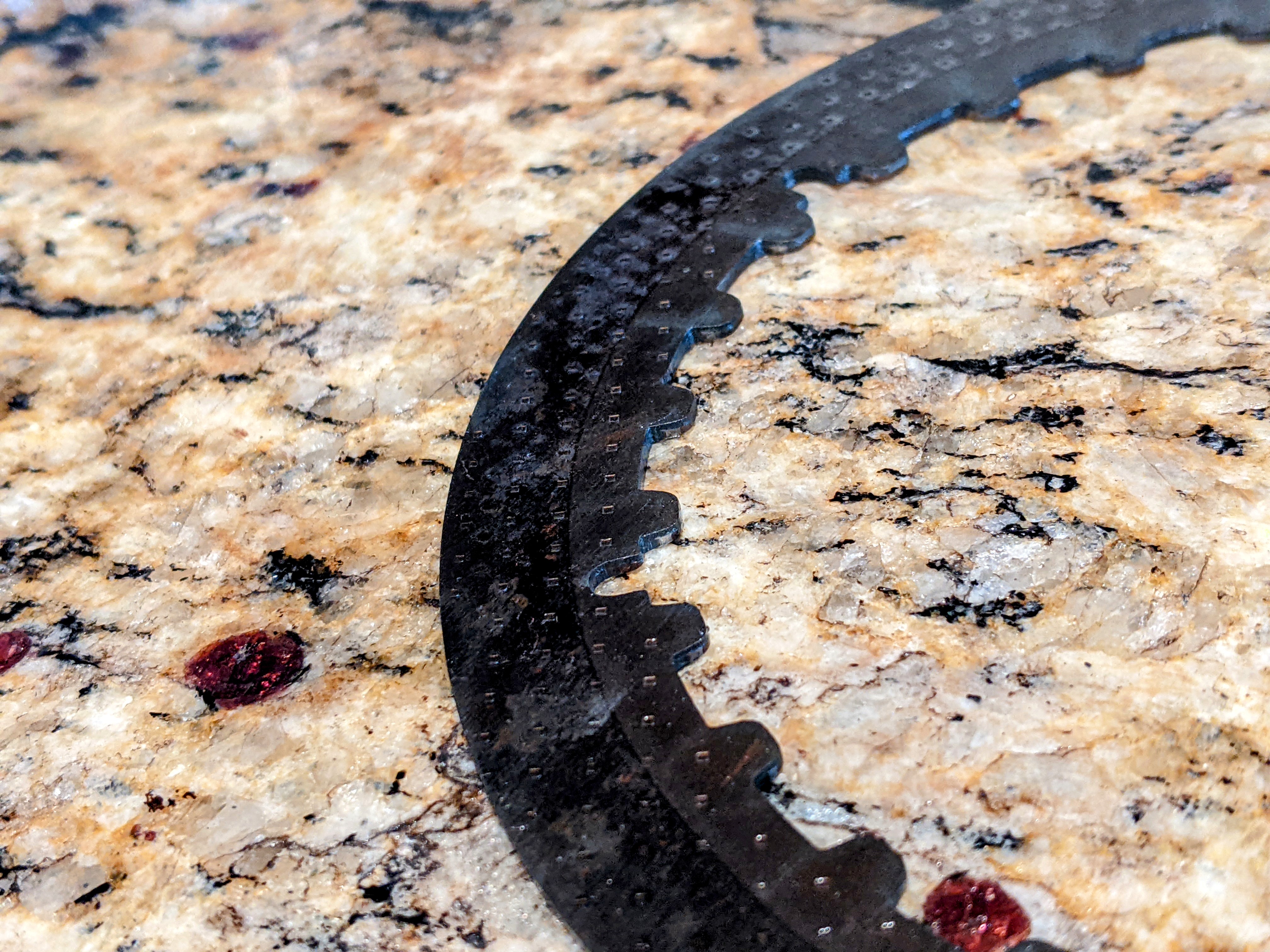
The steel plates and friction plates seem a bit dark to my eye, but I don't know if that's typical for a clutch with 10,000 miles on it or not. None of the plates seem to be warped, but there are some abrasions on the steel plates. A typical example is shown below. (BTW: Is clutch plate "run-out" another way of referring to a warped plate?) Also, the thickness of the friction plates is within (actually at) spec and the clutch springs are a smidge longer than what the FSM shows as the spec.

ThJGCO4.jpg


t7CZTKO.jpg


FjhRxqh.jpg


V06tY81.jpg
 
That's not wear on the outside of the clutch basket, it's unfinished grinding marks where the factory cleaned up the casting, nothing unusual there. In between the "fingers" of the basket, grooves can get worn into the sides of the fingers causing the plates to move in a jerky fashion. Notice the similar wear marks/grooves in between the "splines" on the inner clutch hub, can work the same for the steel plates moving there if bad enough though from the picture yours looks typical. It's possible that the steel plates expand slightly and get "notchy" in the tiny worn spots in the inner hub splines when hot. Pressure plate looks fine and typical.
 
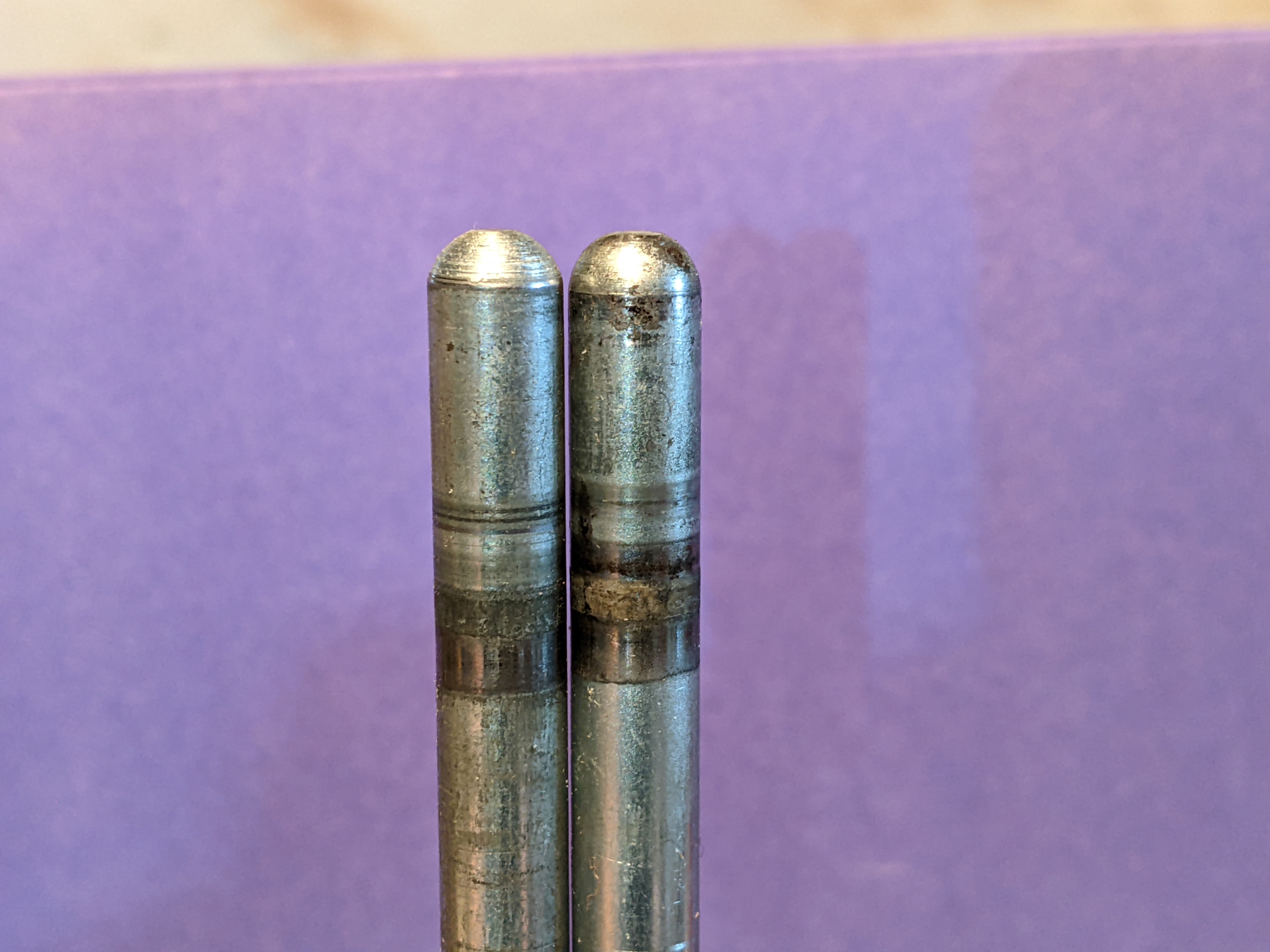
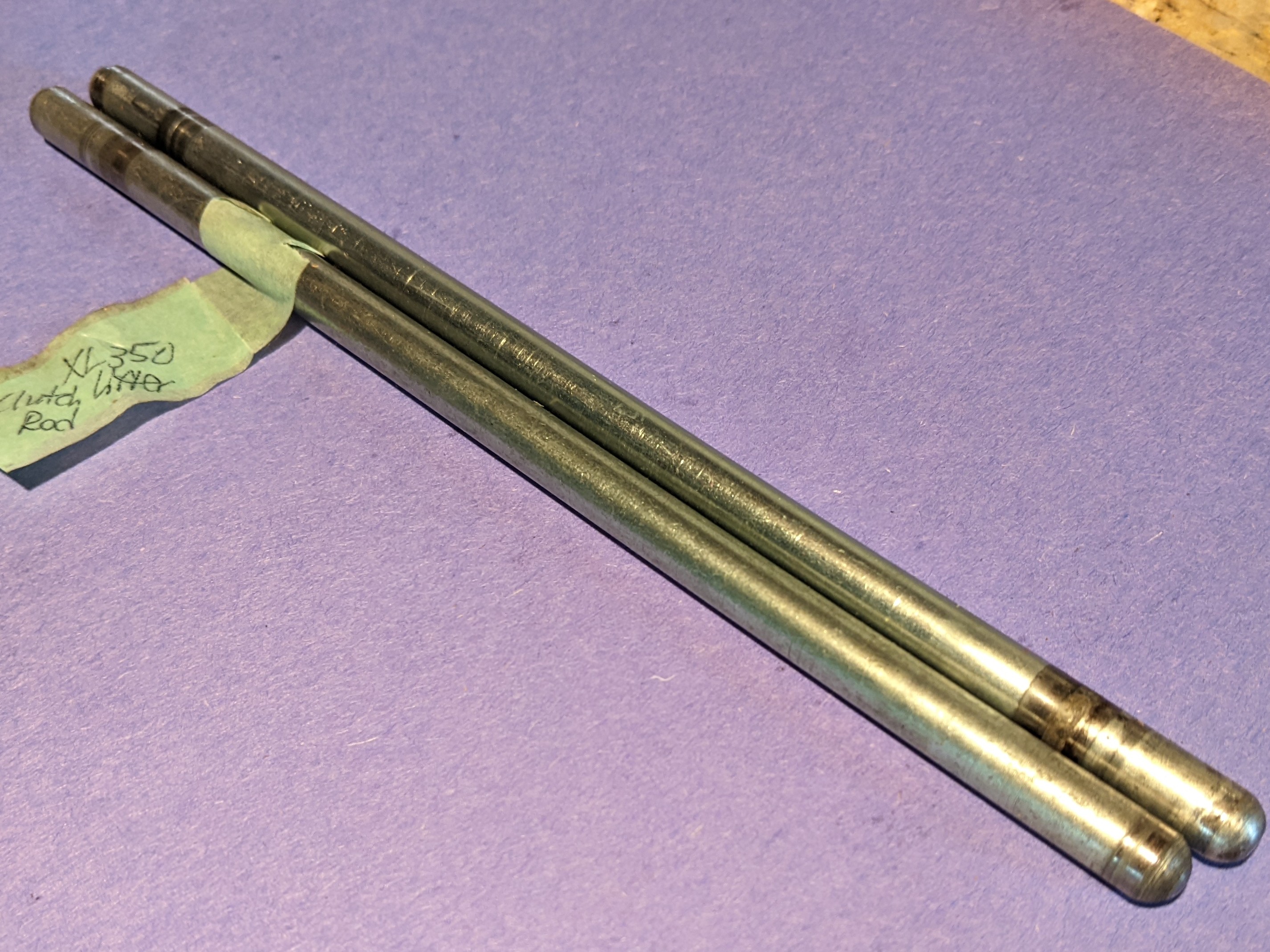
I have a spare bottom end and pulled the lifter rod and lifter rod piece (used in place of a ball bearing found on other models) for comparison with the ones I was using. It appears that the spare lifter rod shows less overall wear and is actually longer by a small amount. It also appears that the one in the motor had be installed both ways, while the spare must have only been installed in one orientation (note wear on both sides vs. wear on only one side). The amount of wear on the lifter rod makes me wonder if it would be beneficial to grease the rod when it is installed. It also makes me wonder if I should order a new rod to start with no wear on this part.

JW7Z4kA.jpg


7hd1gvP.jpg


6wvR3B9.jpg


The spare, smaller lifter rod piece (below, right) also seems to show less wear than the one pulled from my bike.

RNlvuVj.jpg
 
That's not wear on the outside of the clutch basket, it's unfinished grinding marks where the factory cleaned up the casting, nothing unusual there. In between the "fingers" of the basket, grooves can get worn into the sides of the fingers causing the plates to move in a jerky fashion. Notice the similar wear marks/grooves in between the "splines" on the inner clutch hub, can work the same for the steel plates moving there if bad enough though from the picture yours looks typical. It's possible that the steel plates expand slightly and get "notchy" in the tiny worn spots in the inner hub splines when hot. Pressure plate looks fine and typical.

Thanks, Tom. That is reassuring. I couldn't even imagine what would be causing wear in that location, so thank you for explaining where it comes from.
 
Thanks, Tom. That is reassuring. I couldn't even imagine what would be causing wear in that location, so thank you for explaining where it comes from.

But don't rule out the little notches that have formed in the grooves in the inner hub from the tips of the steel plates, as well as the small grooves in the fingers of the basket from the edges of the tabs on the fiber plates. Both can affect the movement of the fibers and steels respectively, though that might not be the problem. I agree that the clutch rod looks like it was installed both ways, though from that later version lifter design it might not be an issue. The wear on the tip and the wear on the secondary lifter piece in the last picture could also be in play with this situation. Couldn't hurt to use the better of all those parts for reassembly. And greasing the rod can't really hurt, but remember it runs inside the mainshaft where there's always some oil flow.
 
But don't rule out the little notches that have formed in the grooves in the inner hub from the tips of the steel plates, as well as the small grooves in the fingers of the basket from the edges of the tabs on the fiber plates. Both can affect the movement of the fibers and steels respectively, though that might not be the problem.

I can feel some of those notches just by rubbing my finger across the edge. The FSM indicates they can be dressed with an oil stone, but I suppose that comes at the expense of possibly increasing backlash.
 
I can feel some of those notches just by rubbing my finger across the edge. The FSM indicates they can be dressed with an oil stone, but I suppose that comes at the expense of possibly increasing backlash.

A little extra, but free, movement might be better than the potential binding. This is a difficult thing because I've seen many baskets and inner hubs with some marks but none that ever seemed to affect clutch or shifting activity. My reference earlier to oil and binding when hot was more about the transmission internals like shift drum and forks, but I believe the XL250/350 use the later shift forks on a rod setup than the earlier forks around the drum arrangement so it might not be as big a factor there. Your worn clutch rod and lifter piece could be a bigger part of this.
 
A little extra, but free, movement might be better than the potential binding. This is a difficult thing because I've seen many baskets and inner hubs with some marks but none that ever seemed to affect clutch or shifting activity. My reference earlier to oil and binding when hot was more about the transmission internals like shift drum and forks, but I believe the XL250/350 use the later shift forks on a rod setup than the earlier forks around the drum arrangement so it might not be as big a factor there. Your worn clutch rod and lifter piece could be a bigger part of this.

Thanks, Tom. I may have gone a little overboard, but I'd like this bike to run well for a while, so I decided to invest in a couple of new parts from CMSNL. This is my first CMSNL purchase and I ordered a basket, lifter rod, joint piece, and the tappet screw. I found new steel plates and fiber plates domestically at lower cost, so I ordered those separately.
 
Thanks, Tom. I may have gone a little overboard, but I'd like this bike to run well for a while, so I decided to invest in a couple of new parts from CMSNL. This is my first CMSNL purchase and I ordered a basket, lifter rod, joint piece, and the tappet screw. I found new steel plates and fiber plates domestically at lower cost, so I ordered those separately.

Okay, then you've covered most of it. Hopefully you didn't buy Barnett fiber plates.
 
Okay, then you've covered most of it. Hopefully you didn't buy Barnett fiber plates.

The plates are supposed to be Honda NOS. I found them using the part number rather than model/year. So I think I'm good.

I assume the Barnett fiber plates are to be avoided? Poor quality?
 
The plates are supposed to be Honda NOS. I found them using the part number rather than model/year. So I think I'm good.

I assume the Barnett fiber plates are to be avoided? Poor quality?

No, they're actually good, just more for high-performance engines that get hammered a lot. They can be grabby while slipping the clutch to get moving, the main reason I don't care for them.
 
No, they're actually good, just more for high-performance engines that get hammered a lot. They can be grabby while slipping the clutch to get moving, the main reason I don't care for them.

Ah. Good to know. I feel like I got hammered a bit on the prices of the various things, but I guess the total parts cost is still less than a typical clutch job on a car. Hopefully things will be smoother after the refresh.
 
Ah. Good to know. I feel like I got hammered a bit on the prices of the various things, but I guess the total parts cost is still less than a typical clutch job on a car. Hopefully things will be smoother after the refresh.

I can only imagine what you spent, and of course the big shipping from there didn't help. Maybe take some emery cloth to the marks on the inner hub too, hopefully between all of it things will be better.
 
I can only imagine what you spent, and of course the big shipping from there didn't help. Maybe take some emery cloth to the marks on the inner hub too, hopefully between all of it things will be better.

Thanks, Tom. The basket was the big ticket item, but I figured I would add some of the other, cheaper parts for extra insurance.
 
I've also used the part#'s when ordering parts on Ebay,etc. as OEM parts(NOS)are great quality and a good deal.
I like Vesrah friction plates which are comparable to OEM in my experience.
 
I've also used the part#'s when ordering parts on Ebay,etc. as OEM parts(NOS)are great quality and a good deal.
I like Vesrah friction plates which are comparable to OEM in my experience.

Good to know about the Vesrah friction plates -- thanks. It does seem like there are decent deals on eBay with NOS parts, but this time the sellers for the plates multiplied their shipping charge by the number of plates - seemed excessive for a set of six or seven.
 
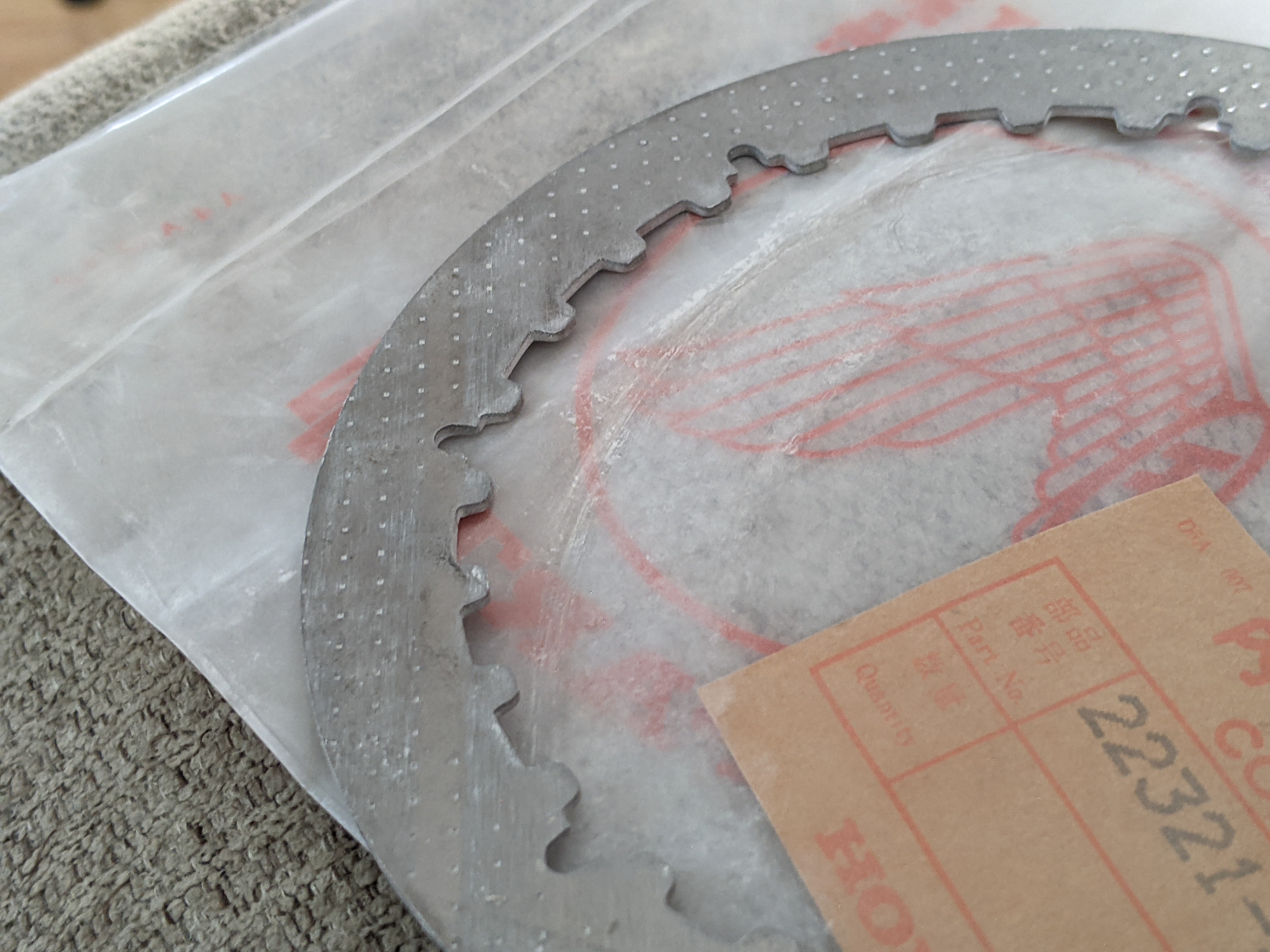
I have received all of the parts I ordered to rebuild the clutch. The steel plates are still in the original Honda packaging, which seems to include a white powdery substance in the plastic wrap. Is that a rust prevention coating? Is it okay to clean the plates with brake cleaner?

68rGigm.jpg

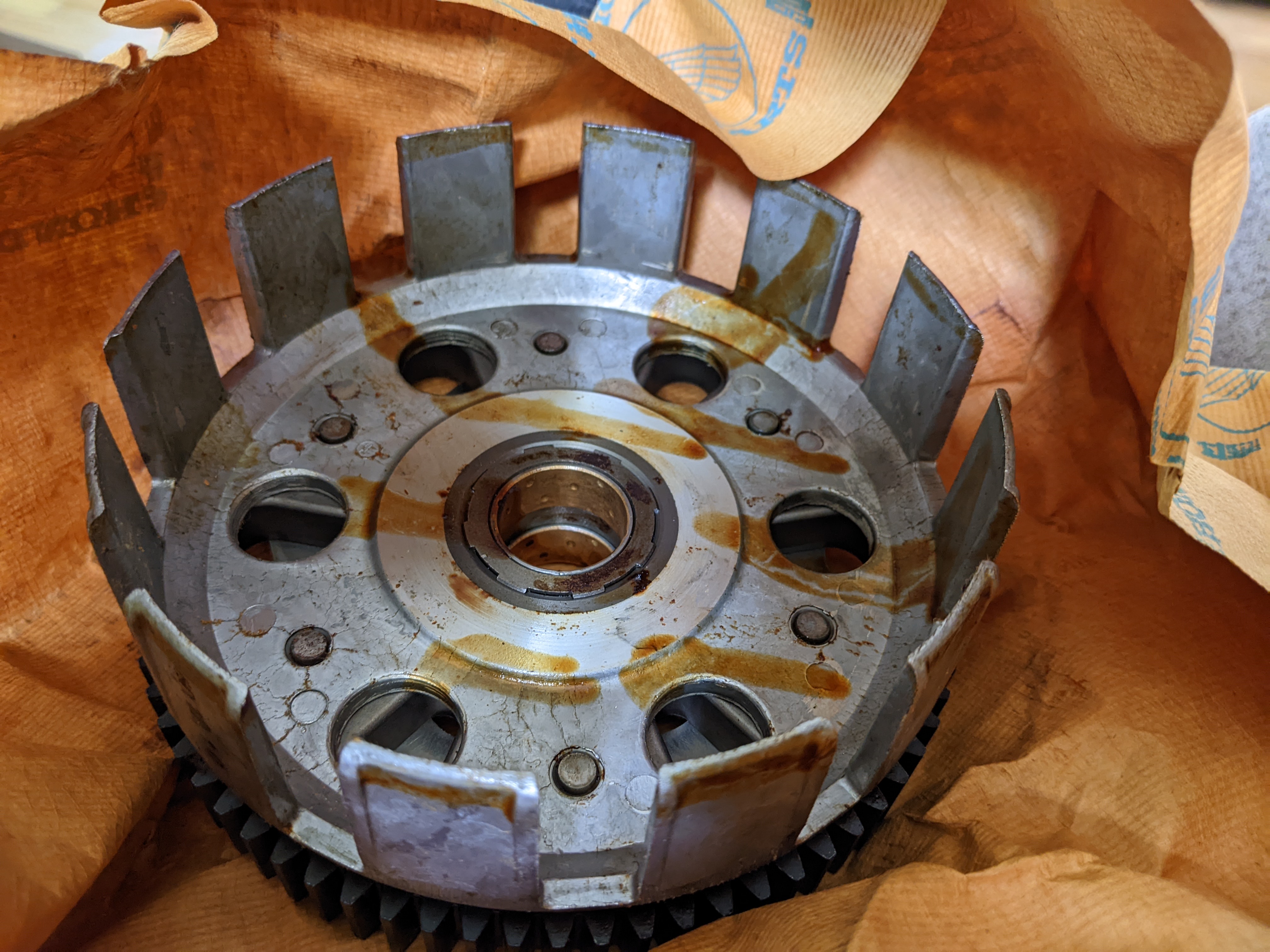
Similarly, the NOS clutch basket has a sticky substance on it that I assume has something to do with rust prevention. What is the right/best way to remove that?

jwfdXVZ.jpg
 
I started cleaning gasket surfaces, soaking the friction plates, and getting all the parts together to rebuild the clutch this morning. I ran into an obstacle when I unpackaged the NOS steel clutch plates. Note that I bought these from a single eBay seller rather than tacking then onto my CMSNL order.

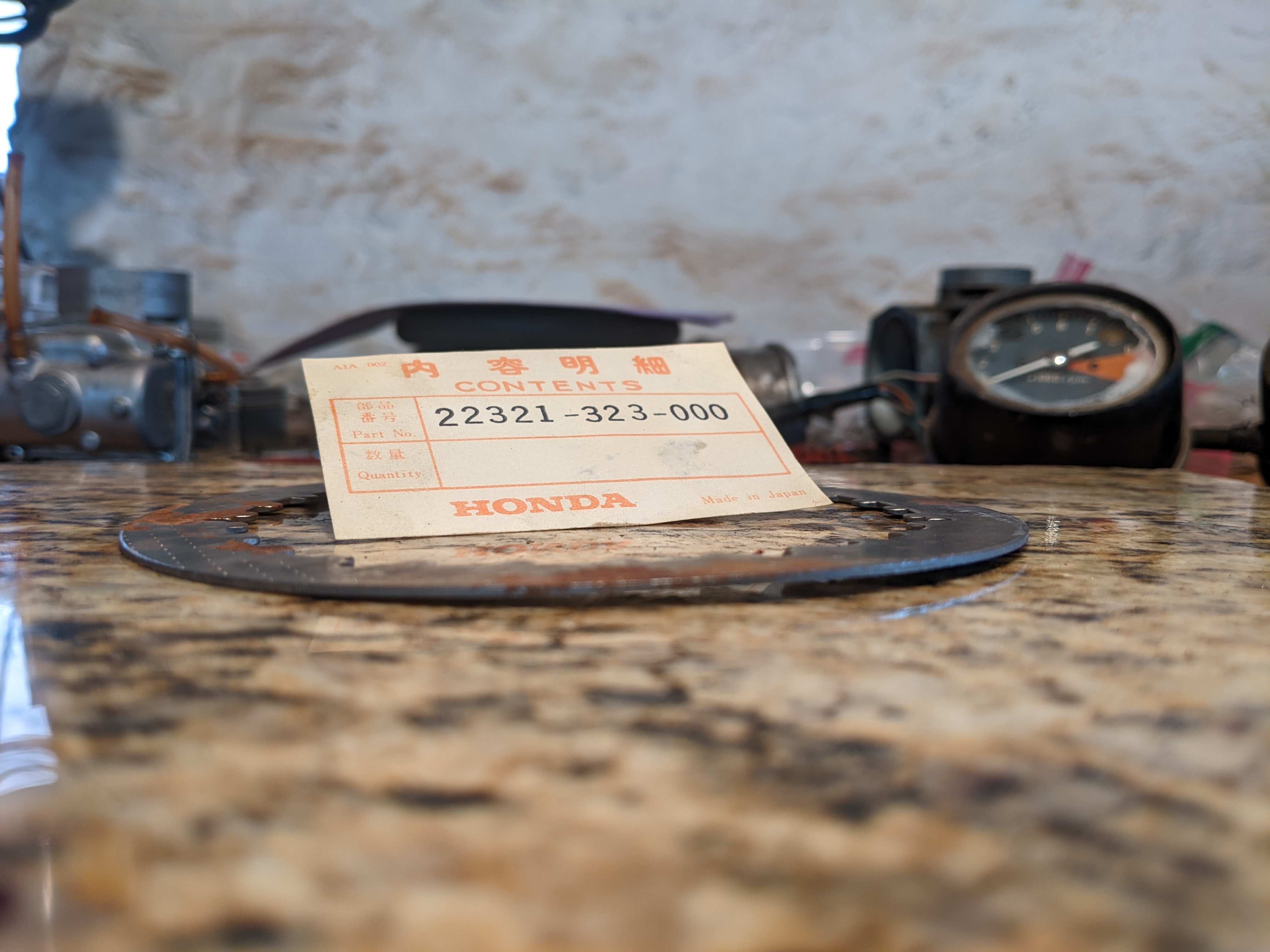
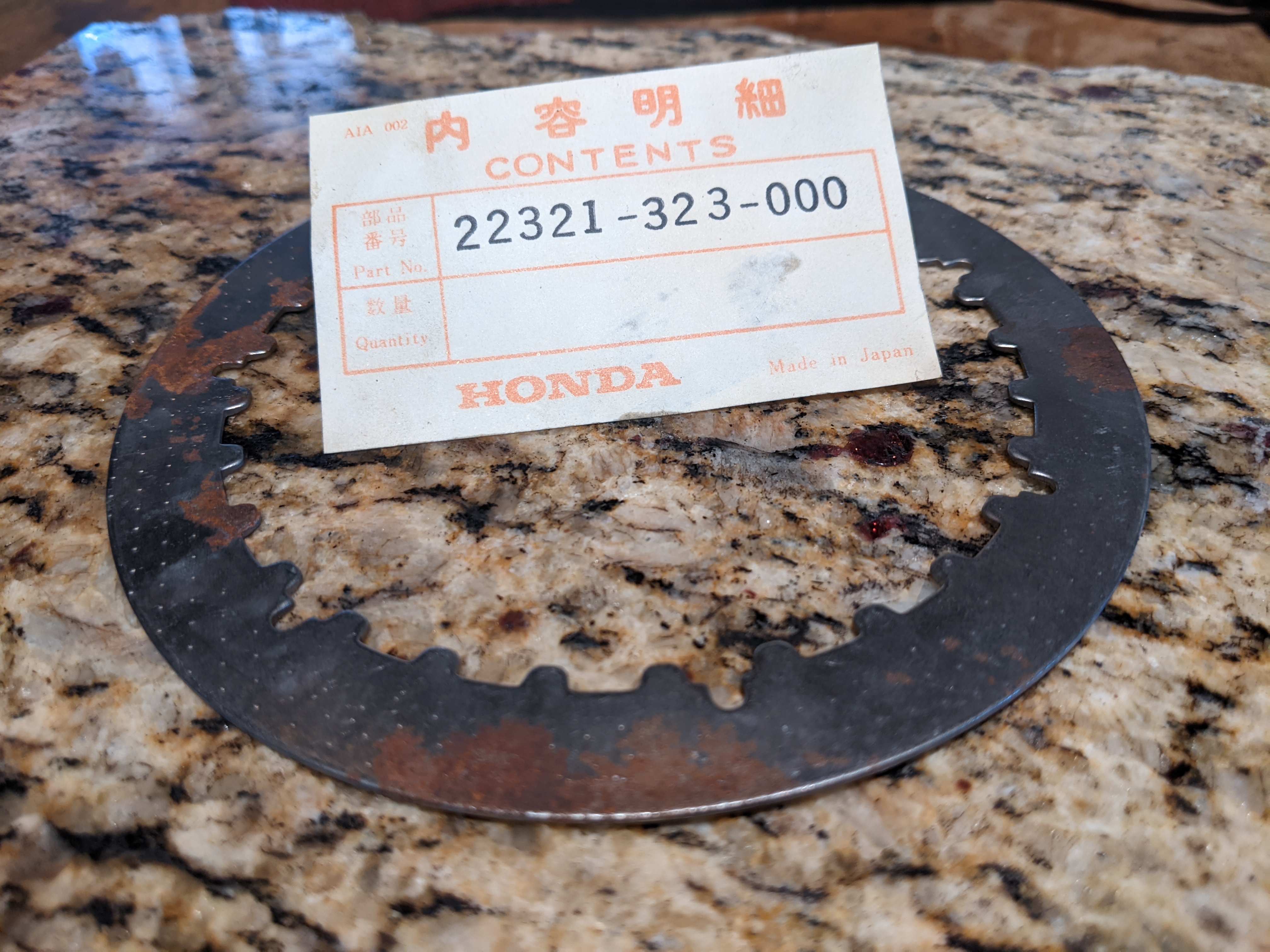
The first problem was that one of the plates has a different part number and is both rusty and warped.

hHxbiGF.jpg

SfoYf1h.jpg


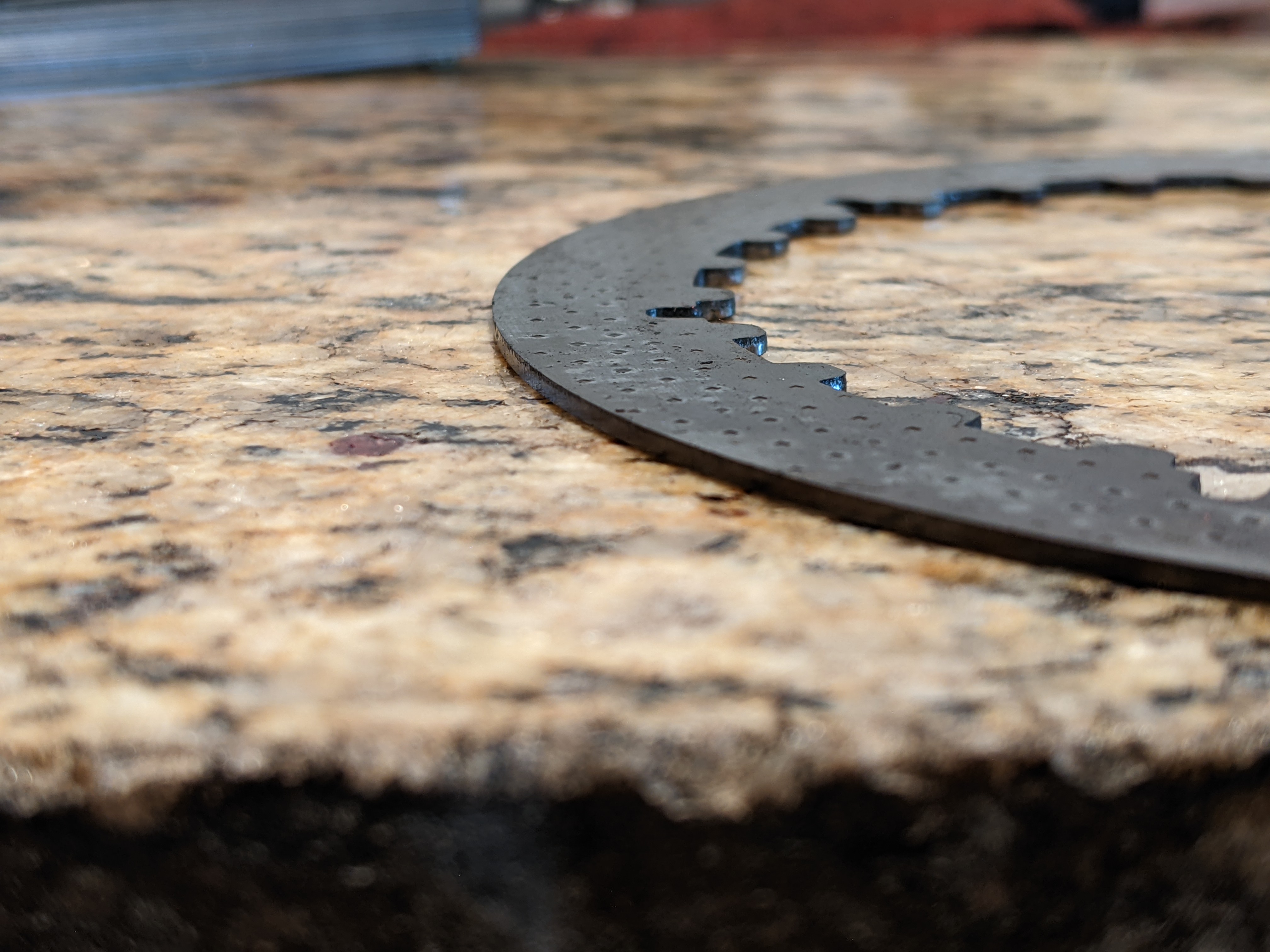
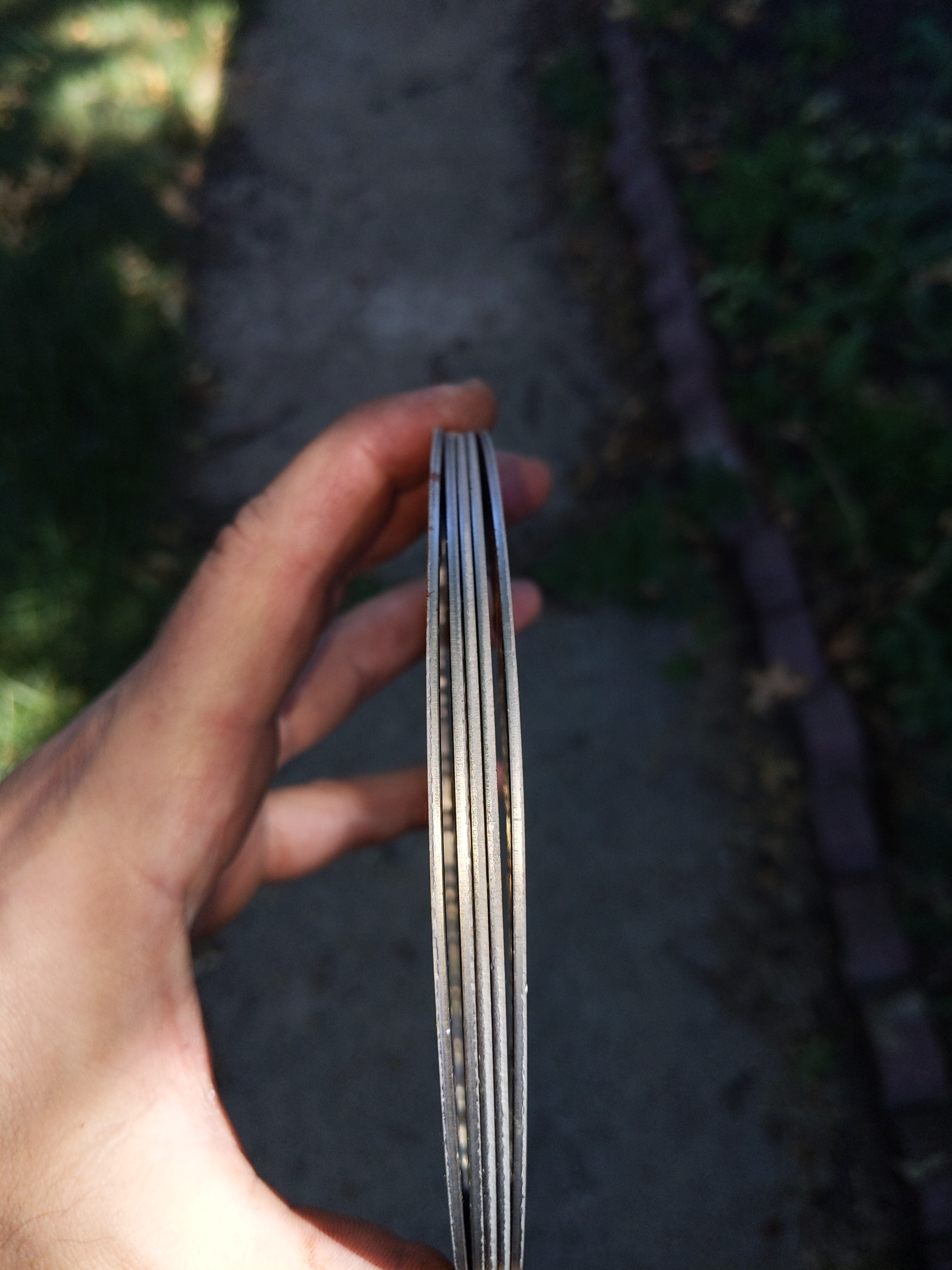
Then I noticed that two of the other plates are visibly warped.

bmB4T7N.jpg


Here are three old plates with the three good, new plates for comparison. I'm going to pull the clutch on my spare bottom end this afternoon to scavenge the best plates. If I find three really nice ones, I'll use them, otherwise I'll order three more from a different seller.

6GSnmr9.jpg


Finally, here's a video that compares one good and two warped plates - no feeler gauge required.

 
I hate it when eBay sellers don't bother to check the part numbers against what they BELIEVE they have. Everything but your XL350 including CB500K (I knew the 323 middle number right away). Even then, with them bent as badly as they are (can hardly call them warped it's so bad) he must have thought he was selling them to someone with his mentality level. Jeez...
 
I hate it when eBay sellers don't bother to check the part numbers against what they BELIEVE they have. Everything but your XL350 including CB500K (I knew the 323 middle number right away). Even then, with them bent as badly as they are (can hardly call them warped it's so bad) he must have thought he was selling them to someone with his mentality level. Jeez...

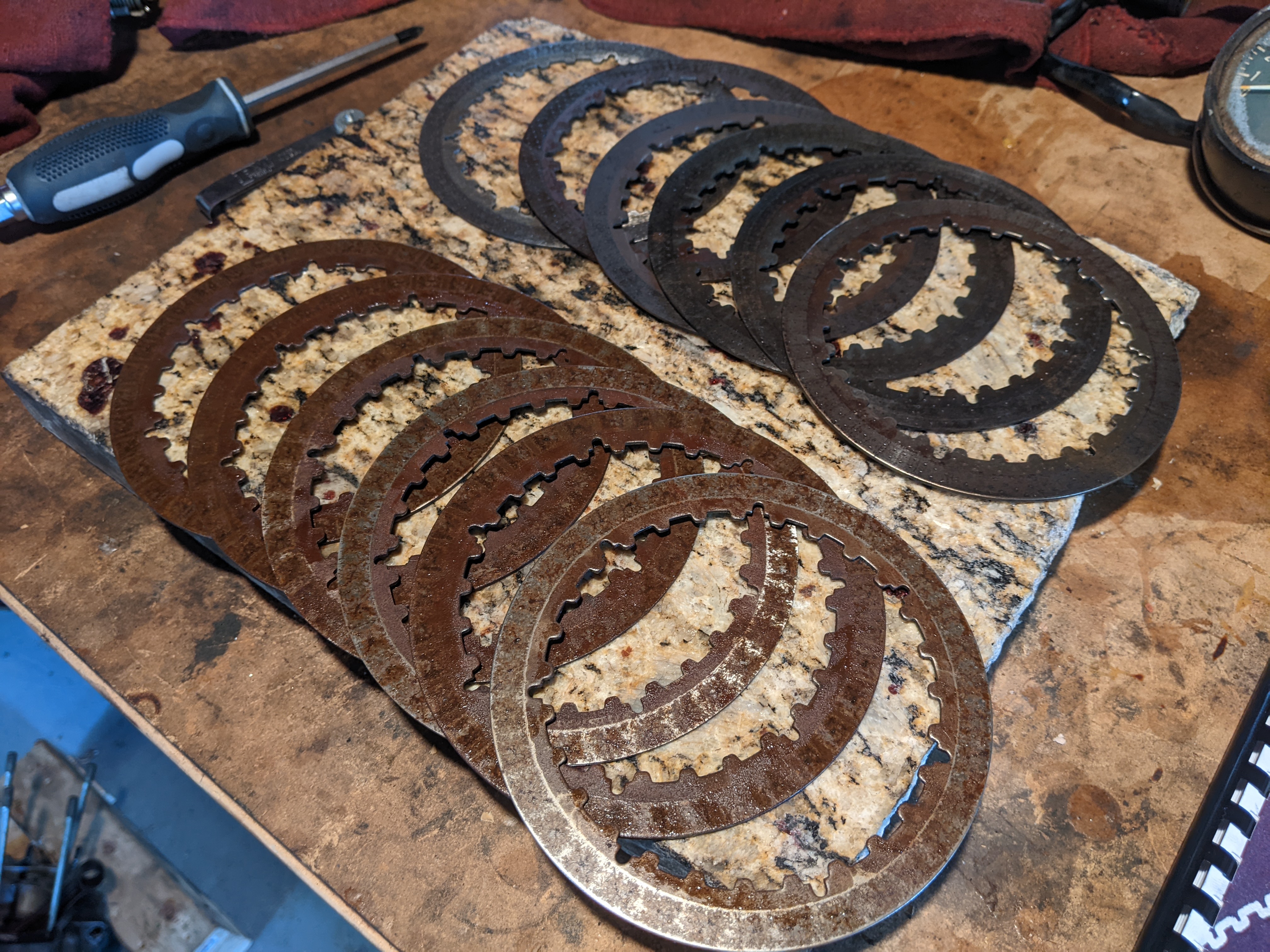
Yeah, disappointing to say the least. Here are the twelve used plates I have. The rustier ones come from the spare bottom end, which has been sitting around for who knows how long. It came with the bike when I bought it in 2016.

t4sSXWS.jpg


Can I use steel wool on the plates? If so, I think I'll clean up three that came out of the running bike. Otherwise, I'll order new.
 
I've almost never replaced any steel plates, and certainly never seen any that warped. I've seen some that had turned color from heat but were not warped. I typically lightly sand them with emery cloth to remove rust, as long as those used ones are flat then clean them up, they'll be fine.
 
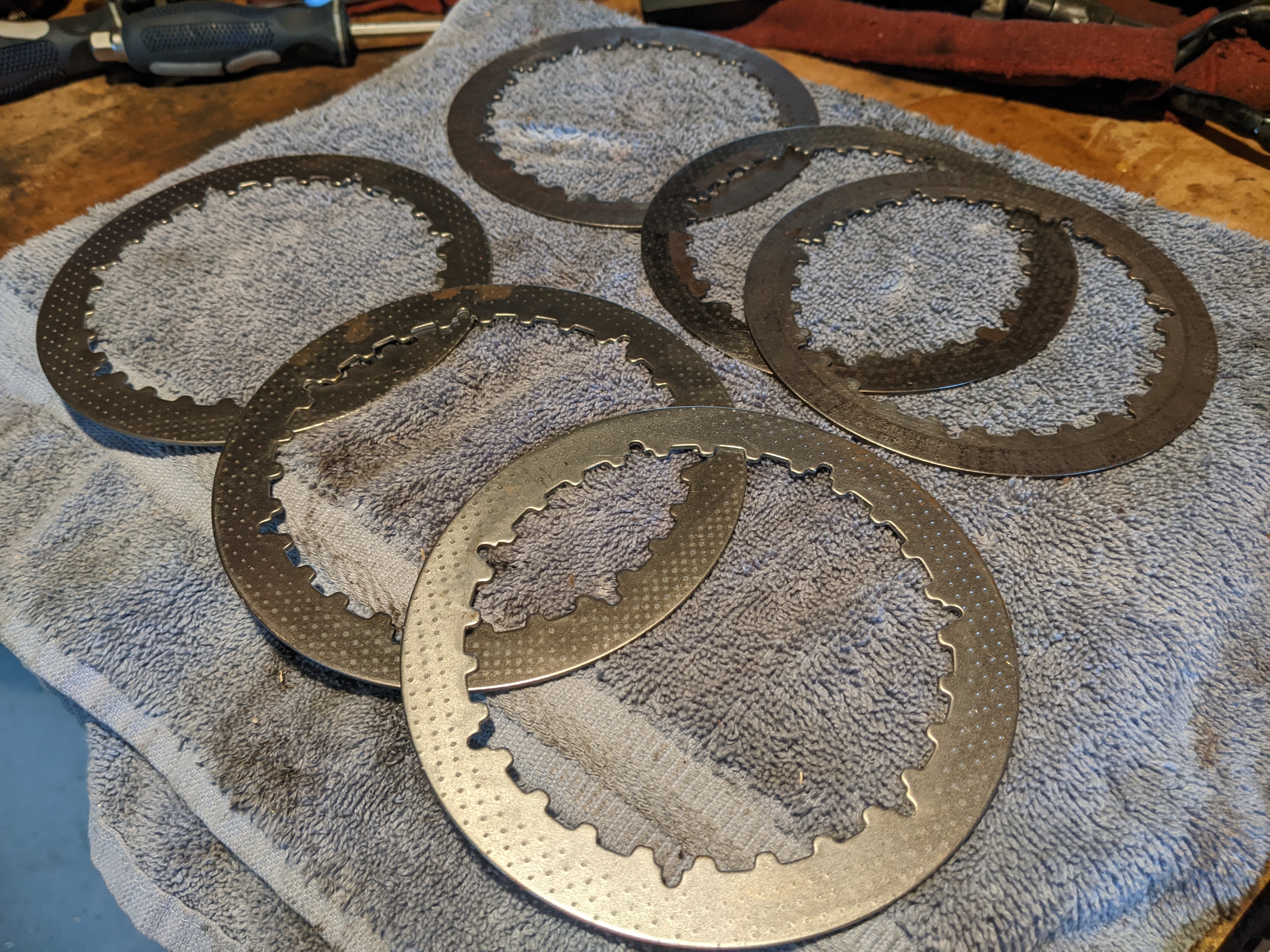
I'll save the vinegar tip for another day, since I was able to pick three plates from the non-rusty set to clean up and use with the three new plates. I used a combination of 1000 wet/dry paper on my granite slab along with 000 steel wool.

SV3AvZv.jpg

Gasket surfaces were cleaned and everything is back together now. I need to pick up some more Rotella T4 in the morning to finish the job. Once the oil is in, I'll see how everything works with the new parts.

VOTYBuK.jpg


IZm2nKM.jpg


4v6WI51.jpg
 
It's always interesting to see the changes in design of some components, like the later shift mechanisms, neutral switch and oil filter cup/valve. I'd only been into the XL250 myself, and only deep into one of them for a friend who raced motocross with his. For quicker acceleration at the time we removed the huge, heavy rotor and he ran total loss ignition. That thing revved as quickly as a 2 stroke with the big bore, short stroke design and running without that 6 lb rotor.
 
I'd only been into the XL250 myself, and only deep into one of them for a friend who raced motocross with his. For quicker acceleration at the time we removed the huge, heavy rotor and he ran total loss ignition. That thing revved as quickly as a 2 stroke with the big bore, short stroke design and running without that 6 lb rotor.

I bet it would also make it a lot easier to install the left crankcase cover. That thing was giving me fits today!
 
I bet it would also make it a lot easier to install the left crankcase cover. That thing was giving me fits today!

I can see how it might, it's been too long to remember how it went with the 250. Lots of magnetic pull from that huge rotor, but the low-end grunt it helps maintain is one of the bike's very positive traits.
 
I can see how it might, it's been too long to remember how it went with the 250. Lots of magnetic pull from that huge rotor, but the low-end grunt it helps maintain is one of the bike's very positive traits.

The magnetic pull was definitely the complicating factor. I'm excited to see how the clutch feels tomorrow. I'd like to ride this bike a lot more than I have been.
 
The magnetic pull was definitely the complicating factor. I'm excited to see how the clutch feels tomorrow. I'd like to ride this bike a lot more than I have been.

They're definitely fun. I was fortunate to own one of the first XL250s while working at Honda Village in Tampa in early '72 after having an SL350K1 prior, it was quite the upgrade in handling, lighter weight and with broad power. And it was their first big single.
 
They're definitely fun. I was fortunate to own one of the first XL250s while working at Honda Village in Tampa in early '72 after having an SL350K1 prior, it was quite the upgrade in handling, lighter weight and with broad power. And it was their first big single.

Sounds like you made good use of it. I've only had mine on trails a couple of times, but sometimes when I see a fresh construction site or an open lot in the city, I daydream about hopping the curb and having some fun. If I ever move again I'd like to go to a location where trail riding would be more accessible.
 
F14DB589-6D05-4BBF-9FC4-F802E7AD5C79.jpg I take my 75 XL250 to upstate PA and ride the forest service roads. Hundreds of miles of them available. I’m like a kid in a candy store.
 

Attachments

  • 78D9C188-BE99-4ADD-80BD-92AB5F9A536C.jpg
    78D9C188-BE99-4ADD-80BD-92AB5F9A536C.jpg
    179.1 KB · Views: 9
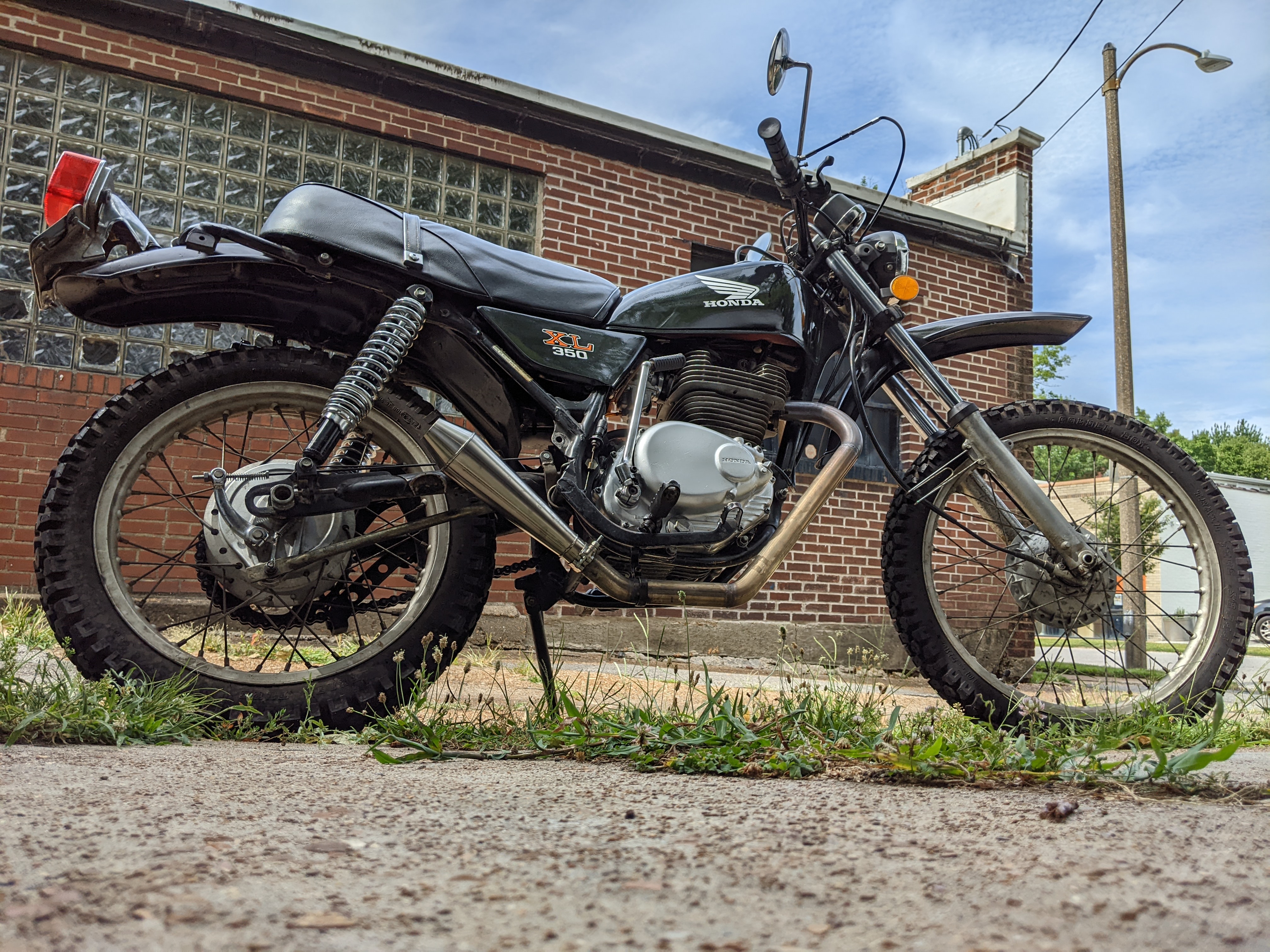
Oil is in and the first ride with the new clutch parts went smoothly. The shifting-to-neutral issue usually presented itself after the bike warmed up, so the jury will remain out until I've taken it out on a longer ride. So far, so good.

tie7MjB.jpg
 
Needed to come in to campus today, so I was able to get the XL350 good and warm on the ride in. Thankfully, I was still able to shift into neutral at the end of the ride, so I'm hoping the new basket and other bits will keep it shifting smoothly for a long while.

tPpsrZd.jpg


Back
Top Bottom