CB360G yard find — ongoing project log

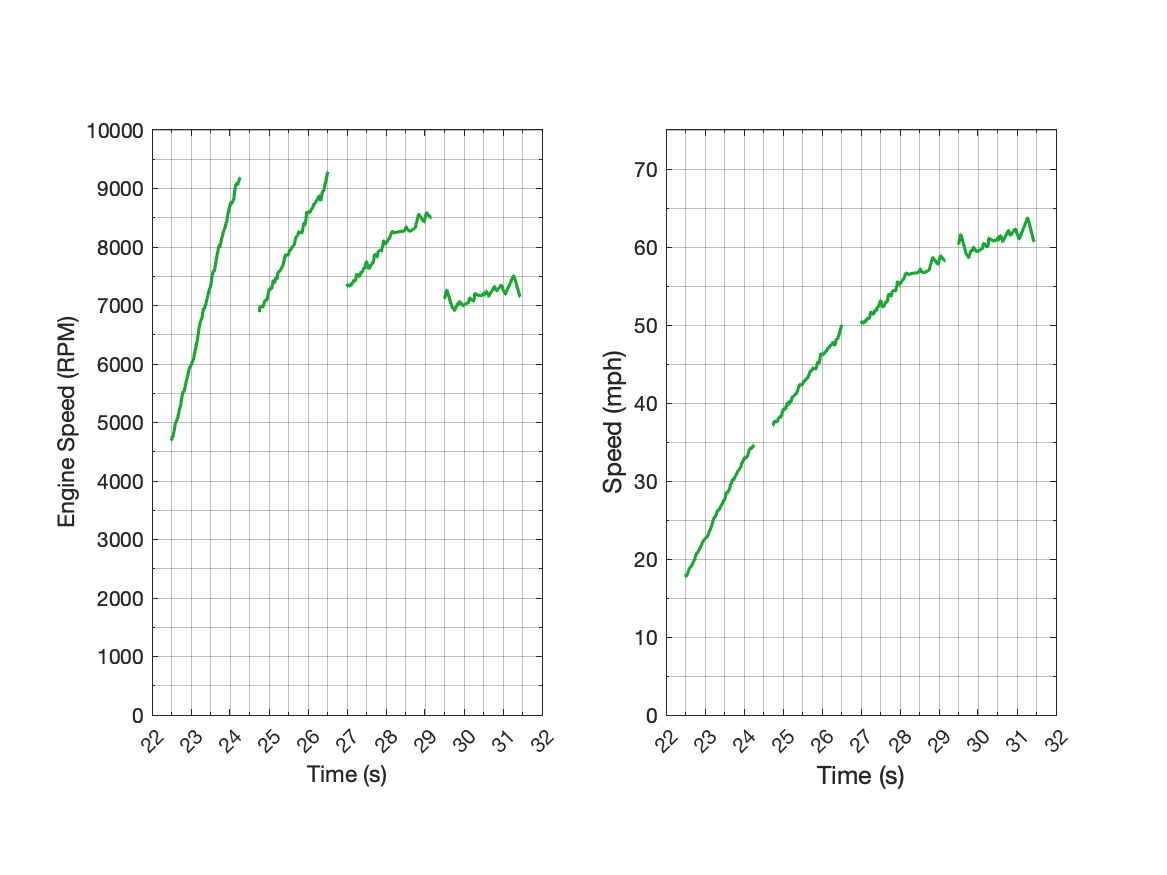
Last week I posted an audio recording from my CB450 to demonstrate the performance of some replacement springs in the spark advancer. I realized it is possible to extract the engine speed from the audio (at least if it is clean) and have been goofing around with a computer program to automate this process. There are several things I have to tweak to get it to work well, but it does seem to work. I took the CB360G out this morning on a route where I could capture some decent data and I'll share the audio track here along with the RPM and [calculated] speed data below. I ran out of physical space in fourth gear due to an upcoming stop sign.

EbIvQZN.png


How are plugs looking with new gaskets in place?
Pipes need tightening again?
I rode the bike this morning to capture the audio track discussed above. No popping today and I didn't change a thing. Still need to check the plugs.

One possible suspect is that the idle adjuster screw on the right-hand Keihin 723A carburetor has a weak spring. I sometimes tighten it by hand if I notice the idle is low, so I wonder if it could be backing out and that might be related to the popping. I happened to turn that adjuster in a bit before starting my ride today.
 
Last edited:
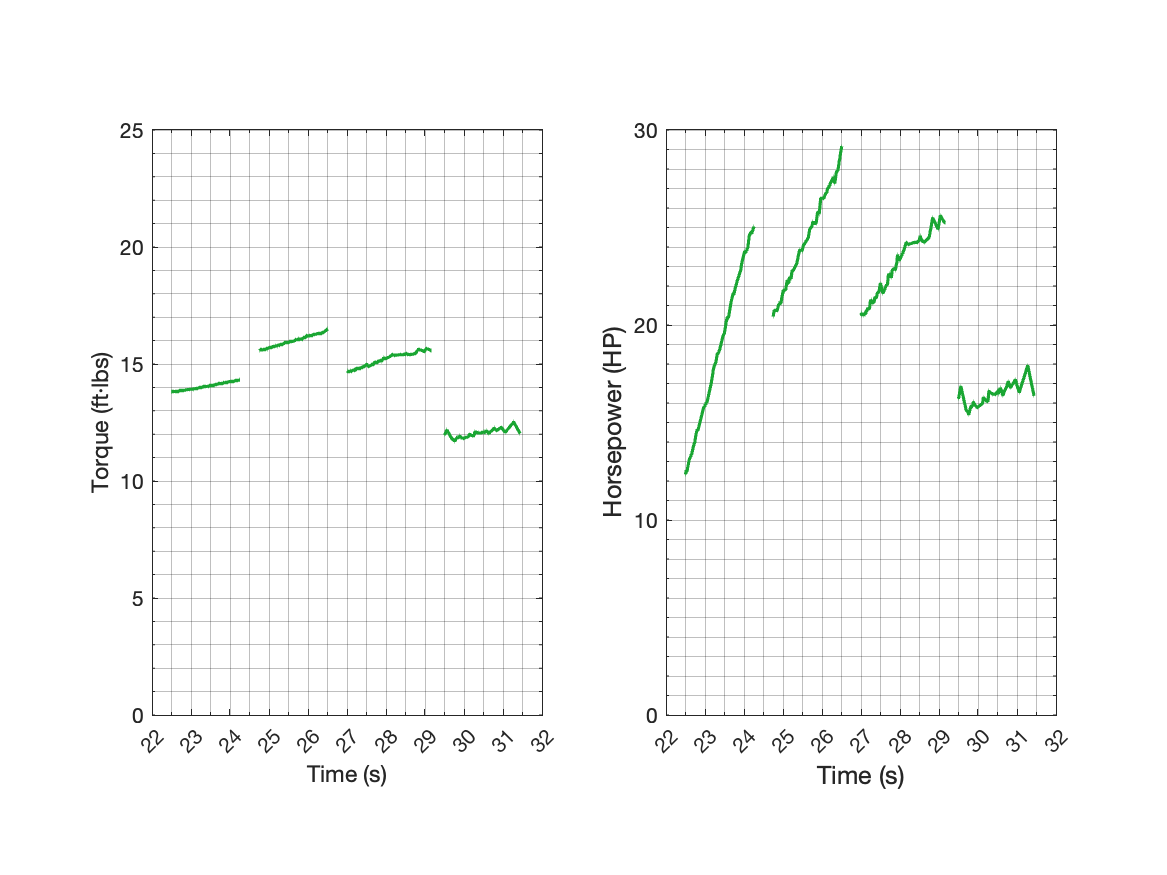
I went a little further with my analysis of the CB360G exhaust recording. The goal was to make very rough estimates of torque and horsepower from the acceleration data obtained from the RPM and speed graphs. I did a little research about how to incorporate wind resistance and rolling resistance and used ballpark numbers for those terms. Without the wind resistance, the numbers would drop off a lot in third and fourth gear.

JL6qDtI.png


The fourth gear data above isn't really meaningful because I didn't have room to wind out fourth gear during the run. The other numbers seem pretty decent for a fifty year old motor that sat in a yard for thirty-four years and is still running the original pistons (rings were replaced).
 
Last edited:
Oh, rolling backwards in gear is also the best way to find TDCC for 'push start' race bikes.
I was very surprised I had to explain it to experienced vintage racers
PJ, I borrowed your quote from another thread to avoid thread drift. I just want to make sure you don't have to explain it to me.

Forward: (with ignition)
  1. Piston falls with intake open.
  2. Piston rises with valves closed. Pow.
  3. Piston falls with valves closed.
  4. Piston rises with exhaust open.
Reverse: (without ignition)
  1. Piston rises with intake open.
  2. Piston falls with exhaust open.
  3. Piston rises with valves closed, but it's stopped as pressure rises. (TDCC)
You might have to explain it. 🤔
 
The main thing though, going forwards to bump start, crankshaft has one full rotation before it gets to compression again so you have a little momentum to help.
Not really a problem with multi cylinder bikes but on a 500 single it just stops
Exactly what I was wondering about. I was imagining a multi-cylinder race bike, but realized it would give a "free" rotation on a single.

I have experiential learning for that with my XL350. If it's not in the correct position for kick-starting you need to cycle it through to get there.
 
Back
Top Bottom