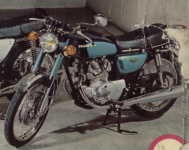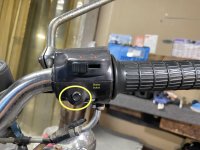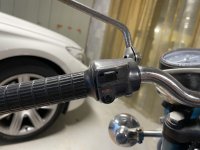
CB125 K5 '76 - 1st weekend.

Hans Freekit

Member
Joined
May 15, 2026
Total Posts
37
Total likes
9
Location
Marseille
After getting it home I've had a chance to evaluate a little. Had lots of fun trying to get the seat up, but worked it out eventually. Under the seat I found a missing 15A main fuse. The two fuse holder spade-ends pushed together - the wire either side melted! So after a little Heath Robinson re-wire and addition of a fuse - I turned on the ignition. The only light that came on was the Headlight. No neutral light on the tacho.
I checked for spark and was happy to find spark on both sides! I tried kick-starting it a few times but nothing.
So, on first review it's concerning that there's no neutral light on the tacho. That maybe something else is fried because of the missing fuse and melted wires. But the previous owner said it was running well the last time he used it. But that might be a load of bunkum. We'll see... Oh, one more thing.. I got the points cap off on the left hand side and a brief inspection they looked ok. But on the right had side is a plate above the spark plug with stripped screws that I cannot get off as yet. What is that? Is there a set of points on both sides? Or is it something to with the Tacho - because a cable goes from there to the tacho. Temp gauge or something?
Anyway, I have spark. I'll take that.
What's next Carburettor inspection?
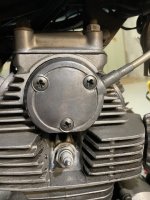
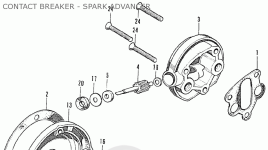
IMG_7572 (1).jpeg
 
Cool, Thank you. I guess that means I can leave it. Who wants to start messing with stripped screws? Not me.
And though you could replace the screws in it if you could get them out without too much damage, it would not be advisable to actually remove the cover when the screws were out because it is also a cam support bearing (bushed internal surface).
 
Probably your best starting point for a new-to you bike is to get a copy of the service manual - it should be in the library here, so you can request a copy of that.

Go to the maintenance and adjustment section and start at the top and work down. Keep a good list of parts that look worn, shady or are just missing and bolts/screws that need to be replaced. There's a bunch of info in the Welcome Packet message that will have tips and tricks on finding the best vendors for parts, and locating which parts you need exactly.

If the bike has been sitting for a while, it's a virtual guarantee that there's some carb cleaning in your future. Tons of threads on that process here, but it's pretty straightforward on that carb model. One thing that will dramatically improve your experience in diagnosing a no-start, and even for tune ups or getting it dialed in the first time is one of these: Fuel IV
 
Probably your best starting point for a new-to you bike is to get a copy of the service manual - it should be in the library here, so you can request a copy of that.
Unfortunately, his is the mini-CB175-style CB125 twin and we do not have the FSM for it as it's a model never sent here.

@AndrewJK owns one like it, perhaps he knows where to find the FSM. I did find this one but it's not in English or French.

 
Unfortunately, his is the mini-CB175-style CB125 twin and we do not have the FSM for it as it's a model never sent here.

@AndrewJK owns one like it, perhaps he knows where to find the FSM. I did find this one but it's not in English or French.

I think most of that is covered in the 125*160 twin FSM (at least basic maintenance-wise). I know the 125 twin kept on being produced into the late 70's before they completely replaced it.
 
Hello, another small bike in the forum, great news. Good luck with project.

Concerning neutral light, it will be worth to check:
1) light bulb (if it is working)
2) connector inside lamp (with black wire)
3) neutral switch operation. It is light blue/red cable which comes from the sprocket cover together with stator cables.

Check ignition points and verify nominal gap distance and ignition timing.

Concerning tacho cable, if there is no leak, leave it free. Otherwise it would be good to replace screws, gasket and simmering (unusual size avalaible in Honda dealership).

Before You will dissassembly carbs, count turns for idle screws for slides and mixture and position of cable bushings. It will give You good base for future tuning.

Good luck, just ask if in doubt.
 
Hello, another small bike in the forum, great news. Good luck with project.

Concerning neutral light, it will be worth to check:
1) light bulb (if it is working)
2) connector inside lamp (with black wire)
3) neutral switch operation. It is light blue/red cable which comes from the sprocket cover together with stator cables.

Check ignition points and verify nominal gap distance and ignition timing.

Concerning tacho cable, if there is no leak, leave it free. Otherwise it would be good to replace screws, gasket and simmering (unusual size avalaible in Honda dealership).

Before You will dissassembly carbs, count turns for idle screws for slides and mixture and position of cable bushings. It will give You good base for future tuning.

Good luck, just ask if in doubt.
Awesome thank you
 
Probably your best starting point for a new-to you bike is to get a copy of the service manual - it should be in the library here, so you can request a copy of that.

Go to the maintenance and adjustment section and start at the top and work down. Keep a good list of parts that look worn, shady or are just missing and bolts/screws that need to be replaced. There's a bunch of info in the Welcome Packet message that will have tips and tricks on finding the best vendors for parts, and locating which parts you need exactly.

If the bike has been sitting for a while, it's a virtual guarantee that there's some carb cleaning in your future. Tons of threads on that process here, but it's pretty straightforward on that carb model. One thing that will dramatically improve your experience in diagnosing a no-start, and even for tune ups or getting it dialed in the first time is one of these: Fuel IV
Noted. Thank you.
 
Welcome to this forum. I’m fairly new here - but I’ve found the advice and information to be first class.

I’m looking forward to hearing about your 125 project - I think you have enough good advice to get started; I’ll look in from time to time to see how you are getting on.

Alan :)
 
How Do I Get The Gas Tank Off! No idea - I'm stumped. Help!
 
Last edited by a moderator:
How Do I Get The Gas Tank Off! No idea - I'm stumped. Help!
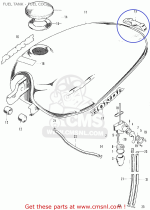
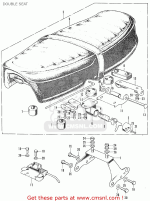
The back of the tank is secured by a rubber strap. Lift the seat to access it, though it seems there might be two different latch designs for your seat.

1779191632400.png

1779191774371.png

You can help yourself quite a bit, and often save time, by looking up the parts involved in things you can't figure out about your bike by going to either CMSNL or Partzilla and looking at the subject area, like above, and often you won't even need to ask a question once you see the pieces and how they fit together.

And, this information is in your Welcome Package of helpful links I posted in my reply to your introduction.


Welcome Package

 
Last edited:
The back of the tank is secured by a rubber strap. Lift the seat to access it, though it seems there might be two different latch designs for your seat.

View attachment 57766

View attachment 57767

You can help yourself quite a bit, and often save time, by looking up the parts involved in things you can't figure out about your bike by going to either CMSNL or Partzilla and looking at the subject area, like above, and often you won't even need to ask a question once you see the pieces and how they fit together.

And, this information is in your Welcome Package of helpful links I posted in my reply to your introduction.


Welcome Package

Noted thank you.
 
I managed to remove it - as you said - rubber back / slide off - but there was a chin strap underneath - another pipe - anyway, took that off and Lordy was there gas!
In the other half. I was very glad there was only a bit in. And the floor needed a gasoline clean anyway, so..
Noobs will noob. 💦
 
I managed to remove it - as you said - rubber back / slide off - but there was a chin strap underneath - another pipe - anyway, took that off and Lordy was there gas!
In the other half. I was very glad there was only a bit in. And the floor needed a gasoline clean anyway, so..
Noobs will noob. 💦

Tank removal will be easier, if You will replace short rubber tube (part 22) with two longer ones with quick lock connector. Put attention for the rubber tubes, it should be made of material which is compaitble with current fuel standards (E5/E10) as standard tubes can detoriate quite fast. Results can be catastrophic (fire or fuel in oil). For the same reason, check the petcock and always keep it closed at the stop. Even atmospheric pressure varation can result in fuel leaking carbs.
 
Today, I have a question about the carb.
After cleaning and putting back together.
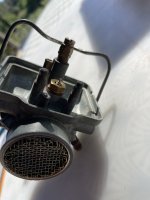
I want to check whether this float valve is the right way up.
IMG_7598.jpeg
 
Thank you Ancient Dad. I also did a compression test yesterday. One of those Amazon kits. I got 120 psi approx on both sides. So thats an ok number right?
I don't know what the spec range is for that engine but based on the variations between compression gauges, it's probably acceptable despite being a bit low. It might not have quite the power it could have, but it might also improve with some runtime too.
 
Hello, from FSM:
(...)
d. The normal cylinder compression pressure is 10kg/cm2 (142.3 lb/in2).
e. In case the compression pressure exceeds 12 kg/cm2 (172 lb/in2), it is an indication of heavy carbon
deposit accumulation on the cylinder head or the piston. The deposits should be removed by disassemblying
the cylinder head from the cylinder.
f. When the compression pressure registers less than 8kg/cm2 (114 lb/in2), it is an indication of pressure
leak. First check the tappet adjustment and see if the condition can be corrected. disassemble the engine
and inspect the condition of the valves, the head gasket and piston rings.
(...)
 
Last edited:
Hello, from FSM:
(...)
d. The normal cylinder compression pressure is 10kg/cm2 (142.3 lb/in2).
e. In case the compression pressure exceeds 12 kg/cm2 (172 lb/in2), it is an indication of heavy carbon
deposit accumulation on the cylinder head or the piston. The deposits should be removed by disassemblying
the cylinder head from the cylinder.
f. When the compression pressure registers less than 8kg/cm2 (114 lb/in2), it is an indication of pressure
leak. First check the tappet adjustment and see if the condition can be corrected. disassemble the engine
and inspect the condition of the valves, the head gasket and piston rings.
(...)
Awesome. Thank you Andrew.
 
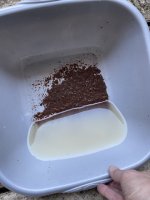
Look at the rust that came from the fuel tank.! I had it soaking in vinegar for 48 hours.
I also cleaned out both carbs last week - they were relatively clean and the parts looked good so I left it at ordering new gasket and o-rings. I'm also going to renew all the fuel lines and try to get a fuel filter in there for both carbs.
IMG_7626.jpeg
 
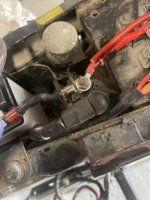
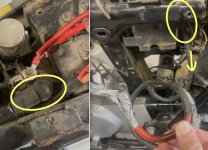
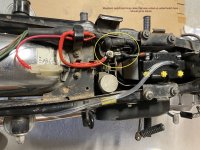
Another puzzle this week was this coiled up wire in the frame - traced it back and it is attached the relay up top or is it the starter? What the hell is this?
IMG_7615.jpegIMG_7614.jpeg
 
Looks like someone's auto parts store replacement cable with ends already on it so they didn't have to make one themselves maybe? coiled up to reduce the length
 
Actually a very bodged-up part of the charging circuit. Your main fuse should be on that run somewhere, with the other leg to the rectifier.
 
Actually a very bodged-up part of the charging circuit. Your main fuse should be on that run somewhere, with the other leg to the rectifier.
Yeah the fuse is on the red wire going off the toip right of the photo. So what SHOULD this be attached to?
 
Oh my god! The plot thickens. So you're saying that this thing came with a starter?
There is no starter button on the handlebars - in fact there's very little on the handlebars - No OFF switch - which I've seen on other models of the time - and just a low / high switch on the right and a blinker set on the left (handlebar).
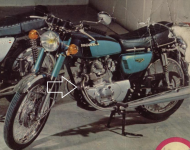
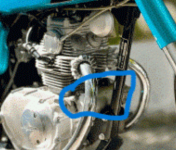
But looking at your photo Ancient Dad I do have something there - about the size of a small can - that is yet un-identified. So, that could be it. A starter motor! Bonus.
If this is the case - then maybe I could re-instate a switch and go starting all over the place. Randomly or at will. We could have a starter party.

:sneaky:
 
If you don’t have a starter, what’s covering the big hole in the front of the case?

If there’s no starter, connect that line direct to the battery and remove the magnetic switch.
a. Don't know.
b. could you explain to a newbie what would happen if I did such a thing? I'm guessing something would blow up? Am I close? ;)
 
a. Don't know.
b. could you explain to a newbie what would happen if I did such a thing? I'm guessing something would blow up? Am I close? ;)
Ok. First and foremost then we need to figure out what is actually there. Pictures would help here. Front of the engine between the pipes should be a starter - the magnetic switch has one short cable that goes to the positive terminal of your battery, with another side that runs all the way forward to this starter. This will be heavy gauge wire.

If there’s no starter and it’s been blanked off, that whole magnetic switch circuit isn’t needed so it can all be removed.

So get some more photos of the battery area and the coils and the engine from enough distance to see everything and post them. We can get a basis to work off from there.
 
Oh my god! The plot thickens. So you're saying that this thing came with a starter?
There is no starter button on the handlebars - in fact there's very little on the handlebars - No OFF switch - which I've seen on other models of the time - and just a low / high switch on the right and a blinker set on the left (handlebar).
But looking at your photo Ancient Dad I do have something there - about the size of a small can - that is yet un-identified. So, that could be it. A starter motor! Bonus.
If this is the case - then maybe I could re-instate a switch and go starting all over the place. Randomly or at will. We could have a starter party.

:sneaky:
There are versions with and without starter. All are 6V, so battery capacity combined with starter consumption results in small startup margin. As such there engine covers with slot for starter as well as covers without this slot. My bike (red) does not have starter. My brother's bike (gold) has starter from the factory.


The OFF switch is on key. The unit pointed by AncientDad is starter indeed.

Rubber gaskets for carbs expands while contacting modern fuels. Use hot water bath to shrink them to the original size. Otherwise bowl assembly will be tricky.
 
There are versions with and without starter. All are 6V, so battery capacity combined with starter consumption results in small startup margin. As such there engine covers with slot for starter as well as covers without this slot. My bike (red) does not have starter. My brother's bike (gold) has starter from the factory.


The OFF switch is on key. The unit pointed by AncientDad is starter indeed.

Rubber gaskets for carbs expands while contacting modern fuels. Use hot water bath to shrink them to the original size. Otherwise bowl assembly will be tricky.
Thanks for sharing the video. Cool looking bike - and sounds sweet as well. Didn't know that about the carb gasket - so thanks for that. And I'll take some more photo's tomorrow of the topics of discussion.
 
Ok. First and foremost then we need to figure out what is actually there. Pictures would help here. Front of the engine between the pipes should be a starter - the magnetic switch has one short cable that goes to the positive terminal of your battery, with another side that runs all the way forward to this starter. This will be heavy gauge wire.

If there’s no starter and it’s been blanked off, that whole magnetic switch circuit isn’t needed so it can all be removed.

So get some more photos of the battery area and the coils and the engine from enough distance to see everything and post them. We can get a basis to work off from there.
I appreciate that Sir, and I will take some photo's tomorrow.
 
Good morning.
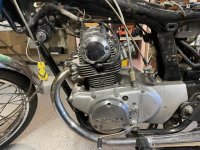
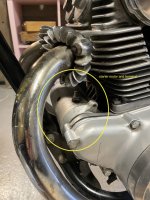
So here are some photos of the engine sides and the battery area. Looks like I have a starter motor. Begs the question.. why was it disconnected? Haha. Oh, and the button I thought was the Horn - is now the starter button. This is all a nice surprise. I hope I can get it all working again. The first two are wide shots of the engine area as requested.

IMG_7641.jpegIMG_7643.jpegIMG_7640.jpegIMG_7646.jpegIMG_7644.jpegIMG_7645.jpeg
 
Back
Top Bottom