

Based on how much was cleaned up on some of them, I'm thinking they'll need to be plated again.


All hardware is going to be plated as well as many other pieces that were originally zinc plated and no longer have any lustre.Based on how much was cleaned up on some of them, I'm thinking they'll need to be plated again.
I don't know about your success doing that, but I tried it on a few nuts and bolts I overexposed to vinegar during my 450 build and the clear doesn't stop them from at least getting dark again afterward, or just re-rusting.Or just cheat and use touch-up clear coat after you install them.
The plater I use seems to charge the same amount whether there is a lot of items or only a few. My plan is to give him everything at once in one big batch, so a hanfull of bolts and screws will be basically free.Or just cheat and use touch-up clear coat after you install them.
Anything I would do that on is a car show piece like my ca95. Wouldn't do that on something I rode in the rain.I don't know about your success doing that, but I tried it on a few nuts and bolts I overexposed to vinegar during my 450 build and the clear doesn't stop them from at least getting dark again afterward, or just re-rusting.
You must have better luck than me then because my bike has never been washed or ridden in the rain.Anything I would do that on is a car show piece like my ca95. Wouldn't do that on something I rode in the rain.
Then what is eating the clear coat?You must have better luck than me then because my bike has never been washed or ridden in the rain.
Florida dampness getting under it is the only thing that I can think of. It's only even sat outside in the rain just once, all day, but otherwise always in my garage. Just didn't work for me, but let's get back to Brad's C78.Then what is eating the clear coat?
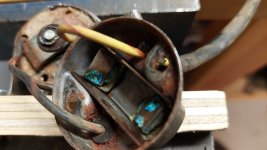
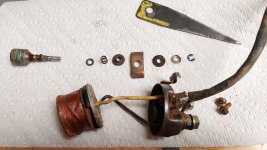

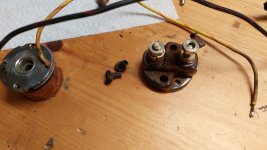


Looked at the starter solenoid which was pretty rusty. I tested it and it was seized so I decided to see if I could salvage it, since I had nothing to lose. I thought I had a picture of it's initial state from when it was on the bike, but I guess I never took one. I should have taken a pic before I removed the 2 screws that hold the top of the solenoid. There is one later on during the disassembly that will give you an idea of the condition. Here is the inside of the top cover that contains the 2 heavy and corroded contact points for the cables between the battery and the starter motor.
View attachment 53235
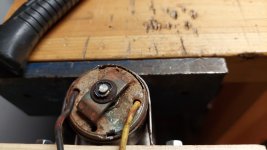
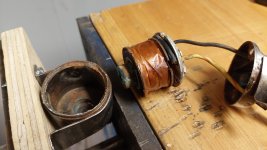
The lower half of the solenoid contains the windings and the "plunger" that moves upward when the starter button is pressed to energize the windings. The top of the plunger has a copper contact that connects the two contacts for the cables. In my case there was hardly any movement in the plunger, so I decided to open up the lower half. I had to go around the circumference and gently pry up the edge. I soon had the windings and plunger out of the lower case.
View attachment 53236View attachment 53237
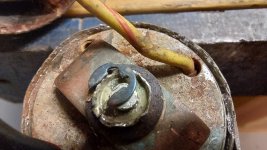
The plunger is attached to the contact plate with a small c-clip which is encased in a cup washer. I had to peel back the washer to get at the clip. Here is the plunger and all of it's pieces - the plunger is insulated from the contact plate with fiber washers.
View attachment 53238View attachment 53242
To get the cap off I then un-soldered the bullet connectors and pulled the wires out of the top case.
View attachment 53240View attachment 53241
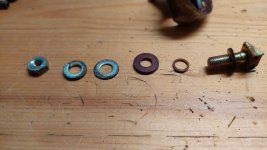
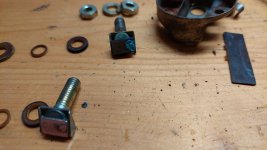
Each post in the top case was taken apart. The posts are insulated from the case with fiber washers. Two large strips of fiber keep the big contact on the plunder from touching the metal case.
View attachment 53243View attachment 53244
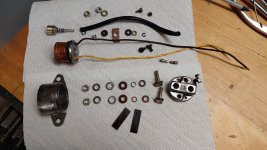
Here is the solenoid and all of it's components after a clean.
View attachment 53245
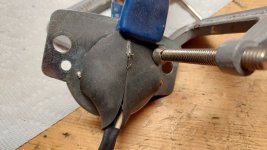
The casings are fairly rusted and there are rust holes in them so they are no longer water tight. I might try to epoxy them and then paint the cases. I will re-assemble and see if it works. If not I found another solenoid in a box of parts. It tested ok and it looks like the mounting bracket has the screw holes at the same distance as the original, so I might be able to mount it with the flat bracket.
I see you also unsoldered the 3.5mm male electrical connectors off the wires. I am impressed!Looked at the starter solenoid which was pretty rusty. I tested it and it was seized so I decided to see if I could salvage it, since I had nothing to lose. I thought I had a picture of it's initial state from when it was on the bike, but I guess I never took one. I should have taken a pic before I removed the 2 screws that hold the top of the solenoid. There is one later on during the disassembly that will give you an idea of the condition. Here is the inside of the top cover that contains the 2 heavy and corroded contact points for the cables between the battery and the starter motor.
View attachment 53235
The lower half of the solenoid contains the windings and the "plunger" that moves upward when the starter button is pressed to energize the windings. The top of the plunger has a copper contact that connects the two contacts for the cables. In my case there was hardly any movement in the plunger, so I decided to open up the lower half. I had to go around the circumference and gently pry up the edge. I soon had the windings and plunger out of the lower case.
View attachment 53236View attachment 53237
The plunger is attached to the contact plate with a small c-clip which is encased in a cup washer. I had to peel back the washer to get at the clip. Here is the plunger and all of it's pieces - the plunger is insulated from the contact plate with fiber washers.
View attachment 53238View attachment 53242
To get the cap off I then un-soldered the bullet connectors and pulled the wires out of the top case.
View attachment 53240View attachment 53241
Each post in the top case was taken apart. The posts are insulated from the case with fiber washers. Two large strips of fiber keep the big contact on the plunder from touching the metal case.
View attachment 53243View attachment 53244
Here is the solenoid and all of it's components after a clean.
View attachment 53245
The casings are fairly rusted and there are rust holes in them so they are no longer water tight. I might try to epoxy them and then paint the cases. I will re-assemble and see if it works. If not I found another solenoid in a box of parts. It tested ok and it looks like the mounting bracket has the screw holes at the same distance as the original, so I might be able to mount it with the flat bracket.
View attachment 53246

The CB72 and C78 dream are using 3.8 mm connectors, the later Honda bikes 3,5 mm. The difference doesn't seems much, but it is.I see you also unsoldered the 3.5mm male electrical connectors off the wires. I am impressed!
As already noted great write up with pictures for anyone in the future who needs a reference guide. The old Honda parts are so robust that I would be surprised if it doesn't work after reassembly.
I have an old Weller 2 stage soldering gun (100 and 140 w). About 30 secs on "high" and they pop right off. I will then take a small drill to clean out the solder and re-use them.I see you also unsoldered the 3.5mm male electrical connectors off the wires. I am impressed!
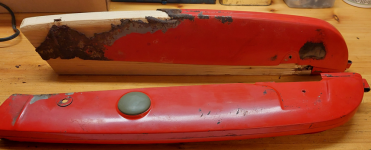
wow, that's a steal !I was going to patch up my lower chain case as OEM replacements were fetching around $200~250.
View attachment 53328
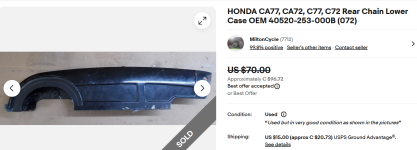
I priced some sheet metal locally and it was $30 for a one foot square piece. Then I came across this on ebay and made an offer.
View attachment 53327
By the time I factored in the welders fee and the sheet metal, I figured this was the easier and cheaper route, plus it will fit perfectly.
Yes, still lots of parts out there but there are some hard to find items. Currently looking for a rear sprocket but that has eluded me so far. There are some used ones available but mostly worn. The search continues...Pretty amazing how much NOS stuff is still out there (ebay) at pretty reasonable prices.

Not at home now so don't have access to my parts list, but I do need a 29 tooth 4 hole sprocket. Certainly looks good and the price can't be beat. Thanks @RobManIs the part number you are looking for 41201-266-000? I was looking and ran across this, supposed to be NOS but I can't tell for sure from picture. Great price US dollars. If you have already seen then disregard.
Getting over the crud and too cold to work in the garage so just amusing myself so may look a bit more.
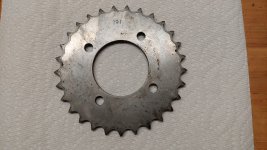

SKF has different production plants, and plants focus on a specific family of products, Italy, in this case.Here is my sprocket, quite worn in my opinion once you start to see pointy teeth.
View attachment 53357
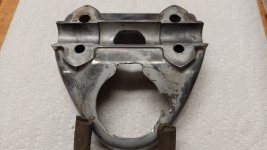
Some good and bad news. There was a piece of rubber on the handle bar top plate and when I removed it, the reason was obvious. Looks like someone was prying on the plate and broke a chunk out. Fleabay to the rescue. I ordered a used one for $17 US shipping included.
View attachment 53359
Also received my bearings for the cam shaft and wheel hubs. I though it was a Canadian supplier but it looks like they actually came from the UK and are manufactured in Italy. They were ordered Dec 4th and arrived today.
View attachment 53360
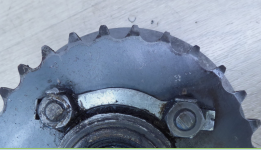
If you are gonna use that, at least remove it from the hub and flip it over. That is not in good shape - look at the arcsFound a used sprocket that looks to be in very good shape. Got is for under $40 including shipping. Here is a pic of the teeth. It also came with the hub which is damaged but luckily mine is good and I wont need that part.
View attachment 53396
In my experience a worn sprocket usually has the tip of the teeth worn to a point which elongates the gap between the teeth. If the teeth are square on the ends I assumed there was not much wear. Is your reference to the "arcs" the space between the teeth and why do you say it is worn?If you are gonna use that, at least remove it from the hub and flip it over. That is not in good shape - look at the arcs
Ah, ok. I see what you mean. I will flip it over and hopefully get some use out of it.Looking left to right at the round part of the sprocket dips, they are deeper towards the right. Visualize where the centerline is
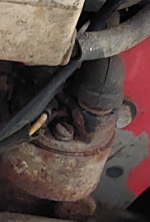
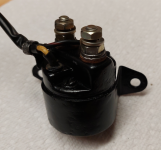
That is pretty amazing. I would have just got the checkbook outAlso got the starter solenoid back together and it works perfectly, albeit a little shabby looking. I filled in some of the bigger rust holes with TechSteel to at least keep any moisture out and gave it a quick coat of paint. It's behind the side cover so out of sight. Before and after...
View attachment 53398 View attachment 53399
Thanks, in most cases I would also get out the checkbook, but I never had a solenoid apart so thought it would be a good learning experience, plus I saved an original part.That is pretty amazing. I would have just got the checkbook out
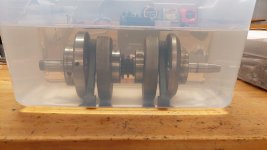
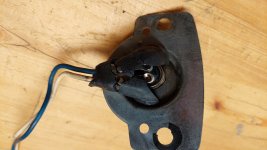
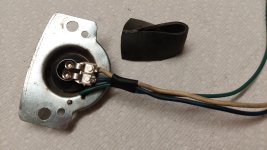
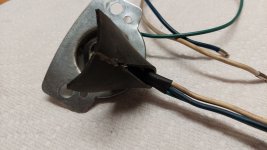
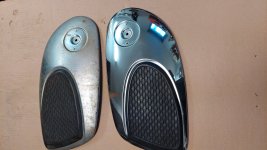
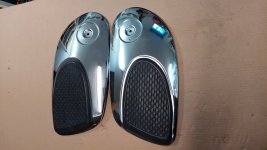
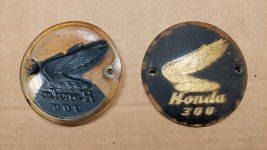
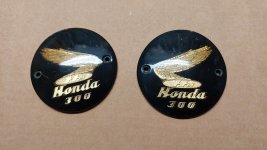

I had them on the buffing wheel but didn't want to go too far as the plastic can melt if too aggressive. I might do another gentle buff to see if I can improve things.Everything is cleaning up pretty nicely so far. You could use some cleaner polish with light compound in it (or buffing rouge) to take more of the scratches out of the tank badges if you wanted to smooth them out more.
Yes I was very happy with the results. There are still some little pin points of rust but you can hardly see them and there is a good coat of chrome polish on there to protect.That's got to be very satisfying seeing the shine come back on those panels.
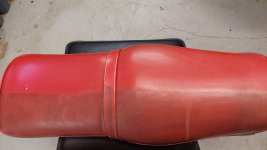
Seat is cleaning up nicely, also. Makes me wonder if you've ever left the house with your face half-shaved, though.
Yeah sorry, I did mean by hand. Though you could use a buffing wheel if you were gentle.I had them on the buffing wheel but didn't want to go too far as the plastic can melt if too aggressive. I might do another gentle buff to see if I can improve things.
I had a coworker at the City job who once shaved half his moustache off while he was in the service to see if the sergeant would notice during inspection.Never left the house half shaved, but did grow a beard a few years ago and only shaved half off to see which side I liked better. I preferred the clean shaven look,

 caswellcanada.ca

Very gentle. I ruined a good set by overtightening the screws. Came back a month later and had fractures. Maybe a micro dot of locktite and just snug.Yeah sorry, I did mean by hand. Though you could use a buffing wheel if you were gentle.
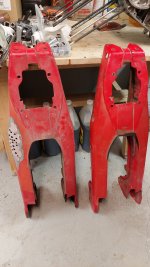
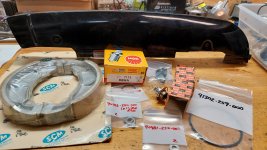
Scored everywhere there! The brake shoes look VG in sealed what seems to be a moisture proof packaging, so it has led a quality storage life seems.Good to know about the brake shoes. They look very clean with no signs of any corrosion.


