Blue Dream CA78

Thanks for the vote of confidence. This is my first engine breakdown. Last year I got 3 finished up and back on the road but they were running, sort of. '63 CA95 (head off, repaint), '73 CB350G and '78 CB400Tii Hawk (last two mainly fuel system and hydraulics). I got this one in August and Had no idea what a molested bag of tales it would be. I've found non metric fasteners, home brew shims on trans shafts, broken and missing spokes on frozen nipples, just yesterday I noticed a trans gear that is from a later trans with under cur engagement dogs. With 2 engines and some more ebay parts, it gets confusing sometimes, but at least I got options. It's titled, plated, registered and insured so I'm on a forced march. :)


Do you still have a black 305 Dream ?
 
Do you still have a black 305 Dream ?

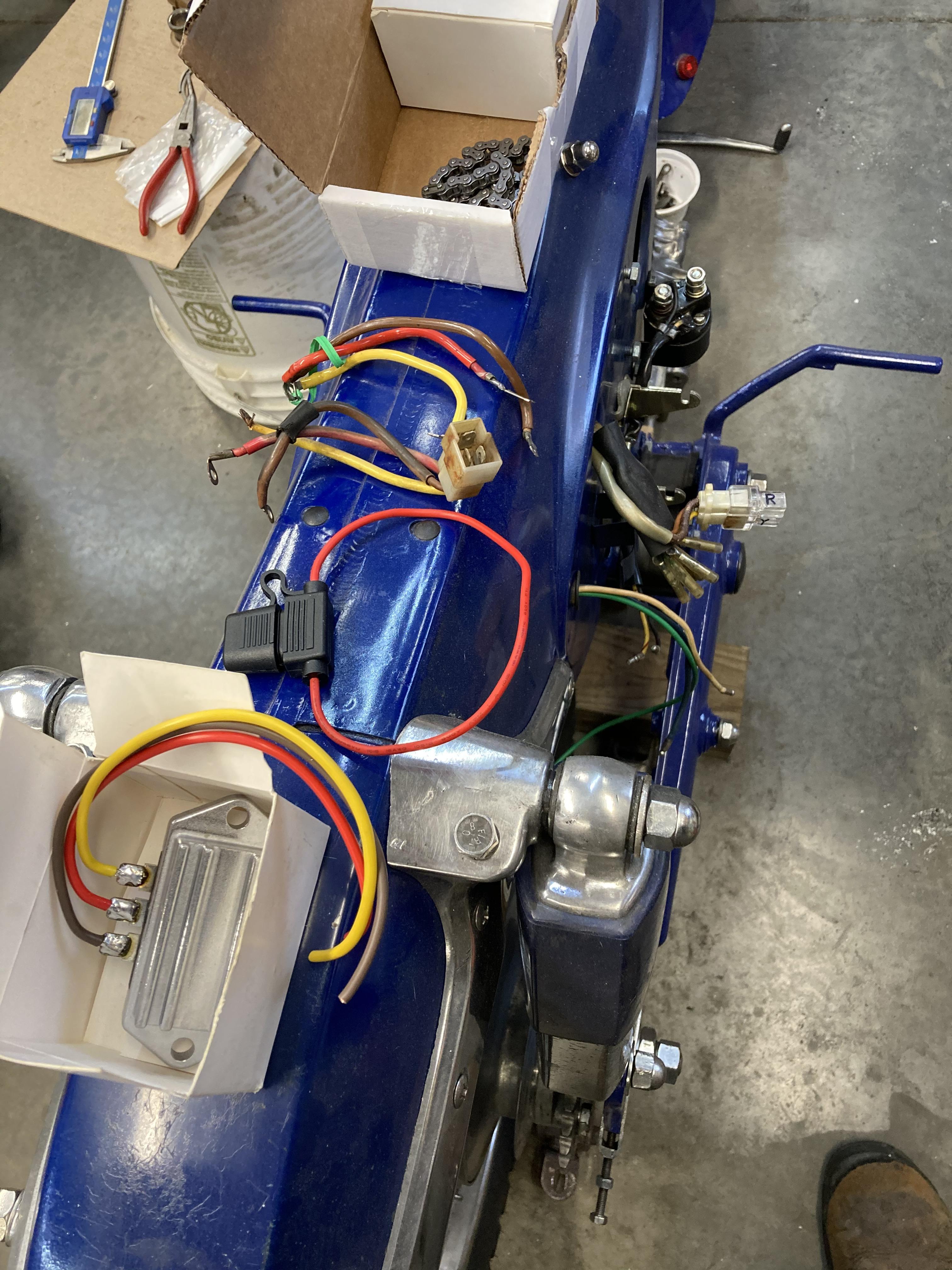
Yeah, the black 65 Dream is just a renter that lives in my garage (it belongs to Charles, my riding buddy). It just got the dedicated ground wire treatment for the new ebay rectifier after limping home with a drained battery on the last ride. It seems that lately everything I do is X2 or X3 with all the bikes. This is a temporary fix, as plans to have regulators on these CA's from the '60s.
 
Regulator/Rectifier upgrade

Combo units from Vintage Honda Shop arrived. Only 3 wires for stator/battery hook up (same as rectifier only), no black sensing wire. I'm not an electronics guy so I don't know if this is Ok. I'm pretty sure it is just the way it is and Jimmy Soldo doesn't sell junk. The Sparks Moto unit has a sensing wire...

Wcx17yS.jpg


The VHS unit comes with a blade fuse (15amp) pig tail to replace the glass fuse OEM unit at battery
 
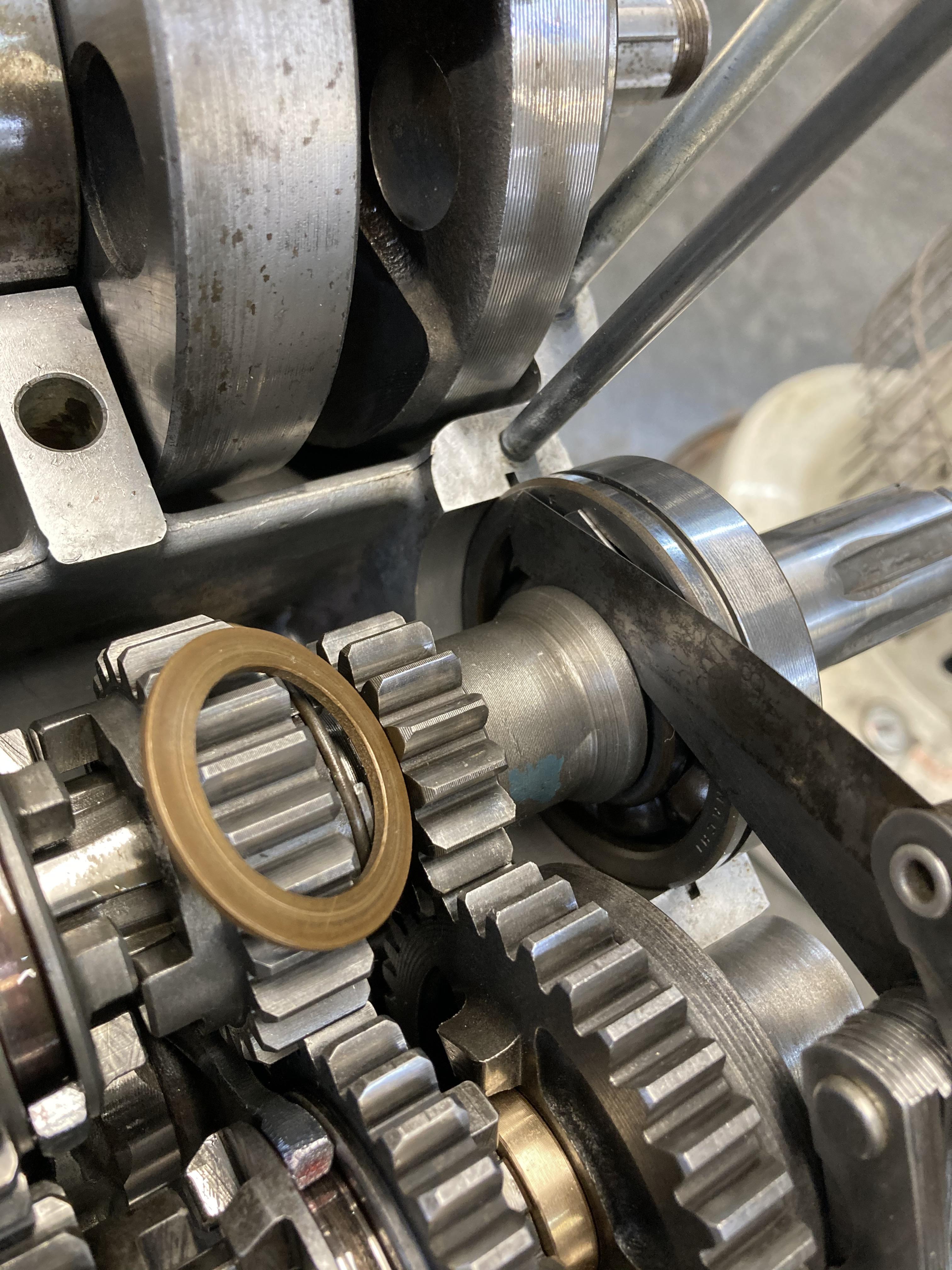
This shows the PO's attempt to fix main shaft end play, by adding this bronze 1.84mm shim. Way too much and crushed/ ground down the OE pressed in bronze bushing in the end of the output shaft gear. It only had 1.35mm end play, so I swapped to a spare gear with minimal/normal wear and now have .67mm end play. I'll live with that.

9Ou9K6z.jpg


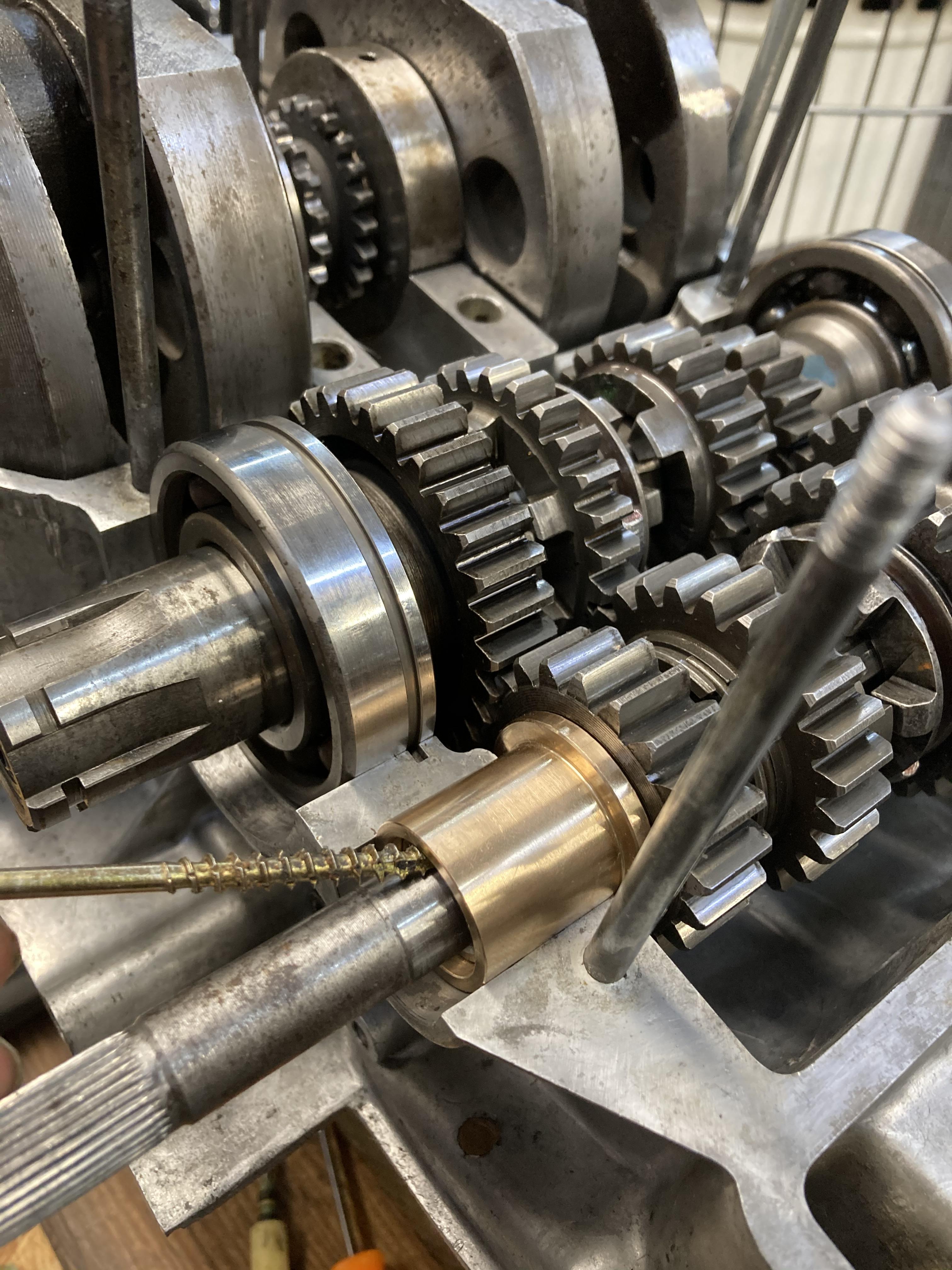
There was some binding on the counter shaft that I wasn't happy with, probably due to slight mushrooming of the interference fit replacement 14mm bushing that I slide hammered in with the gears on the sliding sleeve gear. Another 2 stone hone spin and diligent following of Graham's instructions to not allow that bushing to be "proud" of the sleeve gear end. I made it flush with emery cloth on a flat surface and the same treatment to the new bronze end bushing that rides against the 35 tiny new rollers (this meant fitting all those little duds, and they are little) and then taking them out and cleaning up grit then re installing them. Gotta say, this countershaft is smooth now with zero wobble anywhere on the kickstart spindle.

Only concern left is the lack of interference fit between the spindle shaft and the new hardened bearing sleeve, which supports the tiny rollers. It could, conceivably, slide out towards the end of the new bronze end support bushing and away from supporting the rollers.
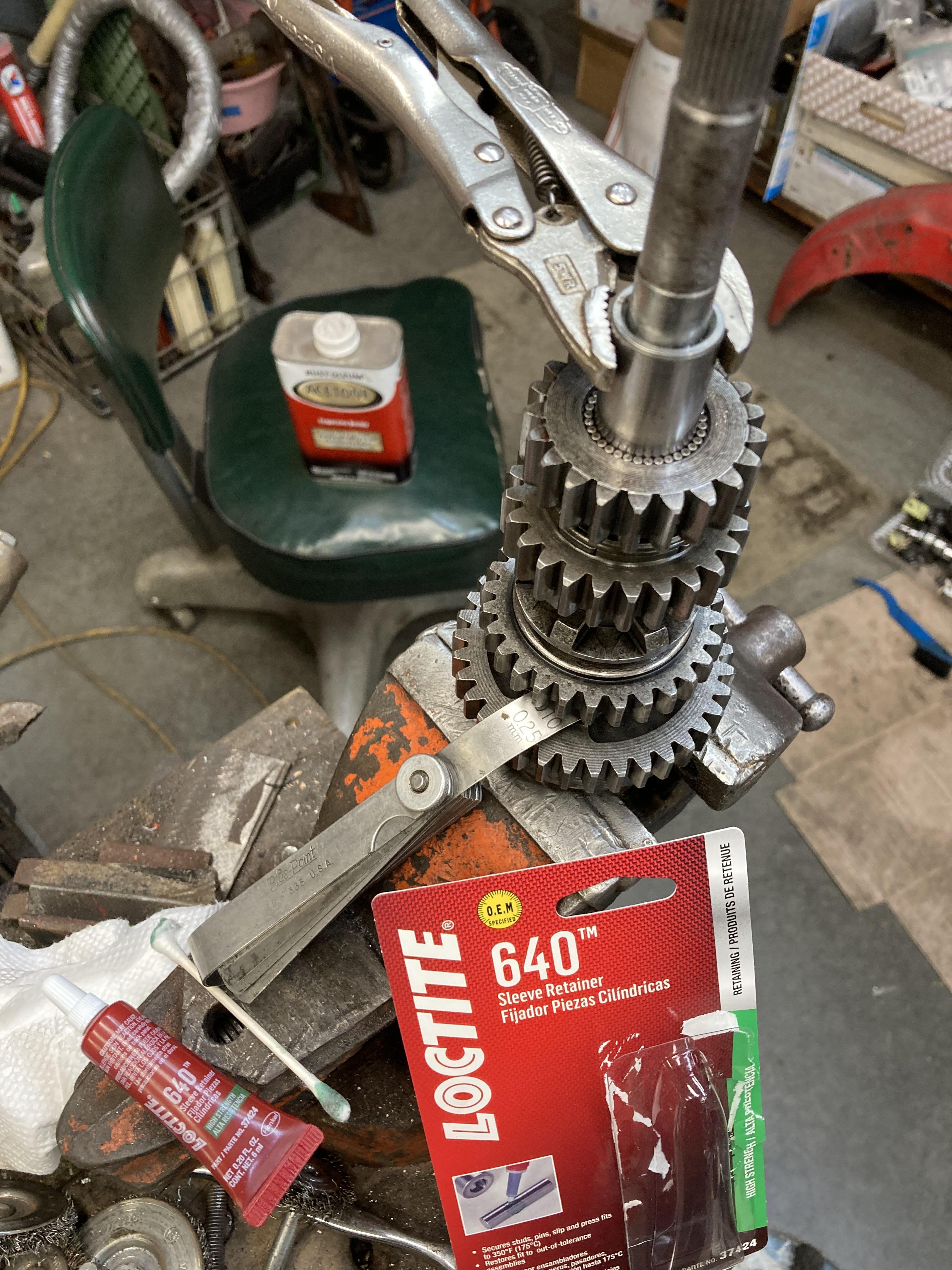
I could use some loctite bearing mount goop.
I could (if I had cool machining tools) put a groove inside the end support bush to accept an internal snap ring.

I better reach out to Graham on this, I'm sure I'm not the first with a spindly spindle.
 
Where the screw is pointing is where I would loctite or ...., so the hardened bushing/bearing won't slide out.

MOjrIbv.jpg


Once resolved, will, hopefully, be the end of the "Good, the Bad and the Ugly" saga of the three transmission gear sets.

BTW, the ebay seller that Flying 900 steered me to that sold me the 3rd gear set was overall a solid seller, as I used a goodly portion of that set, or will in the spare engine build up.
 
Yours may be the most complicated 305 transmission effort to date here, seems you've run into pretty much everything one could run into. Glad you're making progress.
 
Loctite on the sleeve sounds like a proper solution but I would talk with Graham about this first since he created this repair.

Graham responded with an OK on Loctite. Suggested 648, 620, I found a 640 for sleeves that he had not tried but said Ok. He also said he is considering a slip fit with loctite for future kits as no press required for disassembly.
 
Quite an interesting repair solution and the loctite does make sense to allow for removal if needed in the future. Nice that you were able to use those transmission parts as purchased from EBay.
The opposite kickstarter side is my next repair task by getting a new bushing machined for the engine case at the knuckle for the kicker shaft.
 
Quite an interesting repair solution and the loctite does make sense to allow for removal if needed in the future. Nice that you were able to use those transmission parts as purchased from EBay.
The opposite kickstarter side is my next repair task by getting a new bushing machined for the engine case at the knuckle for the kicker shaft.

Yes, the engagement dogs on the ebay
gears were better than what I had.

Have you pressed out that bushing from the right side case? IIRC someone said they were cast in place, making removal difficult or impossible. I've heard of them being welded then machined out.
 
Have you pressed out that bushing from the right side case? IIRC someone said they were cast in place, making removal difficult or impossible. I've heard of them being welded then machined out.

I am taking the case to my machinist friend today for a look and pressing it out. The kickstarter is sloppy in there even after having the knuckle hard chromed again. I measured it incorrectly for the hard chrome, so a replacement bushing is in order now.
It looks like it is two different materials and hopefully a press fit and not cast in place. The other option would be to sleeve it to size after more machining of the old bushing.
Thats beyond my pay grade and better minds need to be consulted.
 
Last edited by a moderator:
I am taking the case to my machinist friend today for a look and pressing it out. The kickstarter is sloppy in there even after having the knuckle hard chromed again. I measured it incorrectly for the hard chrome, so a replacement bushing is in order now.
It looks like it is two different materials and hopefully a press fit and not cast in place. The other option would be to sleeve it to size after more machining of the old bushing.
Thats beyond my pay grade and better minds need to be consulted.

I'd love to see a pic of the damaged items, especially the case. I also wonder if G-man, Graham Curtis has ever considered this issue which seems to plague the kick start only CL77s.
 
I'd love to see a pic of the damaged items, especially the case. I also wonder if G-man, Graham Curtis has ever considered this issue which seems to plague the kick start only CL77s.

No joy on the bushing, it is a special process to place it in there. My machinist friend had the terminology, yet your correct it is almost like a cast in place bushing that is really locked in there.
When I emailed Honda Classics in GB and realized the bushing he has is for your Dream style bikes with the electric start, so they use a smaller 17mm bushing vs the 22mm in the CL77 motor case. Makes sense since that is the only start option, so a little more robust bushing and knuckle assembly for the kicker.

Mine wasn't damaged per se it was worn through the chrome finish on the knuckle where it passes through the bushing. I measured 21.85mm on that knuckle and I unfortunately used my cheap plastic calipers and measured 22 mm inside the bushing. So I had the knuckle hard chromed to 22mm which in hindsight was a mistake. It is easier to make it bigger on the hard chrome part and ream the bushing if it is too tight.

When I got the part back from hard chrome it was 21.97 mm so close enough to my 22mm request, better yet still sloppy in the bushing. So now I measured with my better calipers and got 22.20 mm inside diameter. I should have spec'd a 22.25 mm hard chrome finish and honed the bushing to spec.

We are getting some bronze 1.25 inch round stock and Paul will machine a proper sized bushing and machine out most of the original bushing. When trying to press that bushing out it was very solid and would have likely split the case if more pressure was applied. It never budged a fraction, yet did make a cracking noise once. :sad:

This is almost fun. ;)
 
No joy on the bushing, it is a special process to place it in there. My machinist friend had the terminology, yet your correct it is almost like a cast in place bushing that is really locked in there.
When I emailed Honda Classics in GB and realized the bushing he has is for your Dream style bikes with the electric start, so they use a smaller 17mm bushing vs the 22mm in the CL77 motor case. Makes sense since that is the only start option, so a little more robust bushing and knuckle assembly for the kicker.

Mine wasn't damaged per se it was worn through the chrome finish on the knuckle where it passes through the bushing. I measured 21.85mm on that knuckle and I unfortunately used my cheap plastic calipers and measured 22 mm inside the bushing. So I had the knuckle hard chromed to 22mm which in hindsight was a mistake. It is easier to make it bigger on the hard chrome part and ream the bushing if it is too tight.

When I got the part back from hard chrome it was 21.97 mm so close enough to my 22mm request, better yet still sloppy in the bushing. So now I measured with my better calipers and got 22.20 mm inside diameter. I should have spec'd a 22.25 mm hard chrome finish and honed the bushing to spec.

We are getting some bronze 1.25 inch round stock and Paul will machine a proper sized bushing and machine out most of the original bushing. When trying to press that bushing out it was very solid and would have likely split the case if more pressure was applied. It never budged a fraction, yet did make a cracking noise once. :sad:

This is almost fun. ;)

Cracked cases seems to be a thing. Glad you have a plan and a good attitude. If Paul is a TIG man you are definitely covered.
 
Cracked cases seems to be a thing. Glad you have a plan and a good attitude. If Paul is a TIG man you are definitely covered.


No welding required, as the case wasn't cracked to begin with and is still good. I think the crack noise we heard was the bushing telling us to back off or else! ;)
 
Advancers

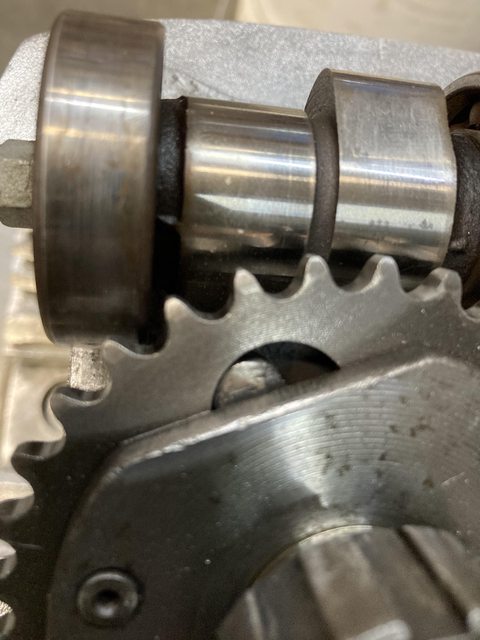
I was looking for the little rubber cushions on the advancer weights. I guess mine went away with no trace on both units. If anyone has a picture of one on a C72/77, I'd love to see it.
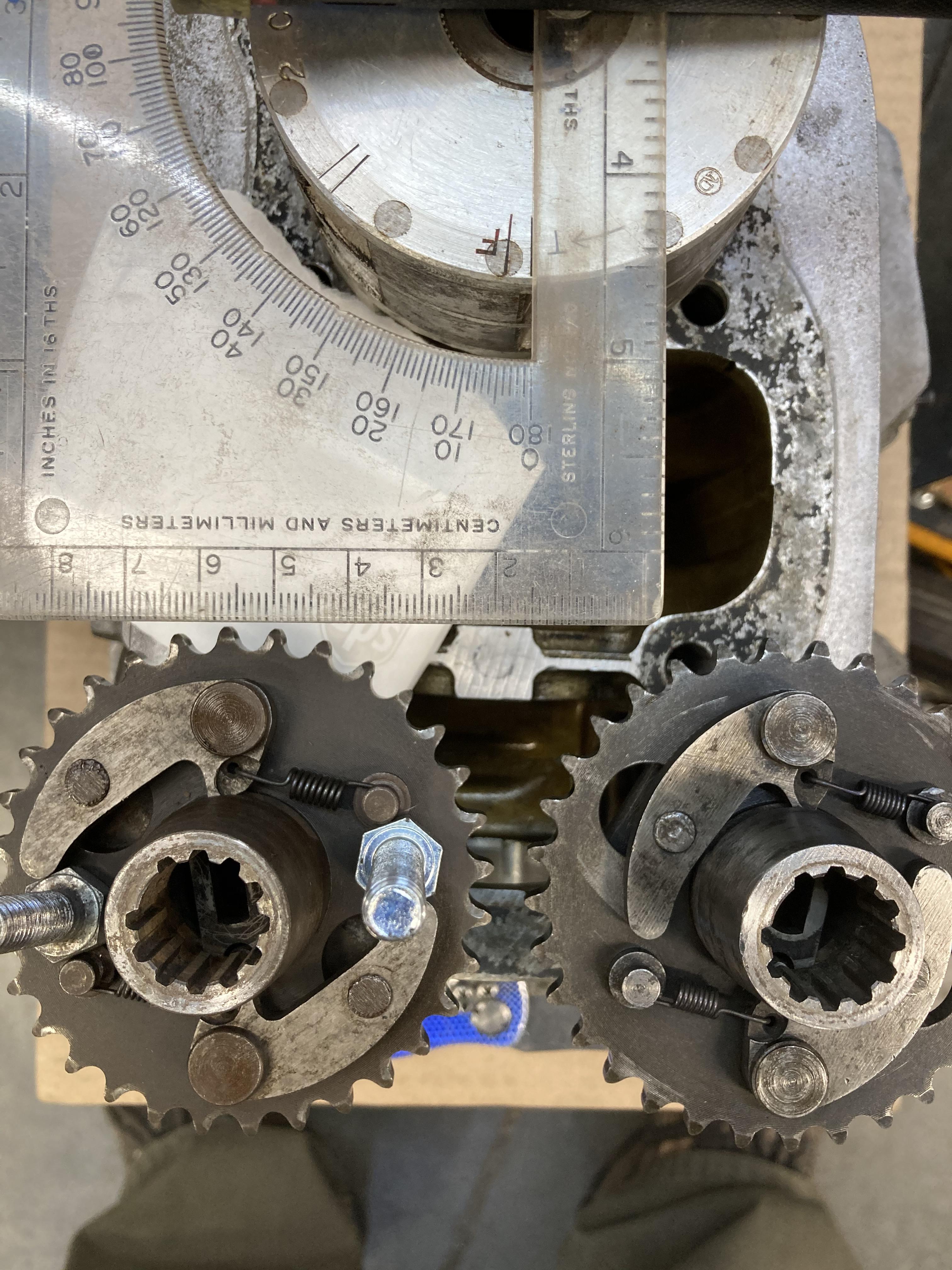
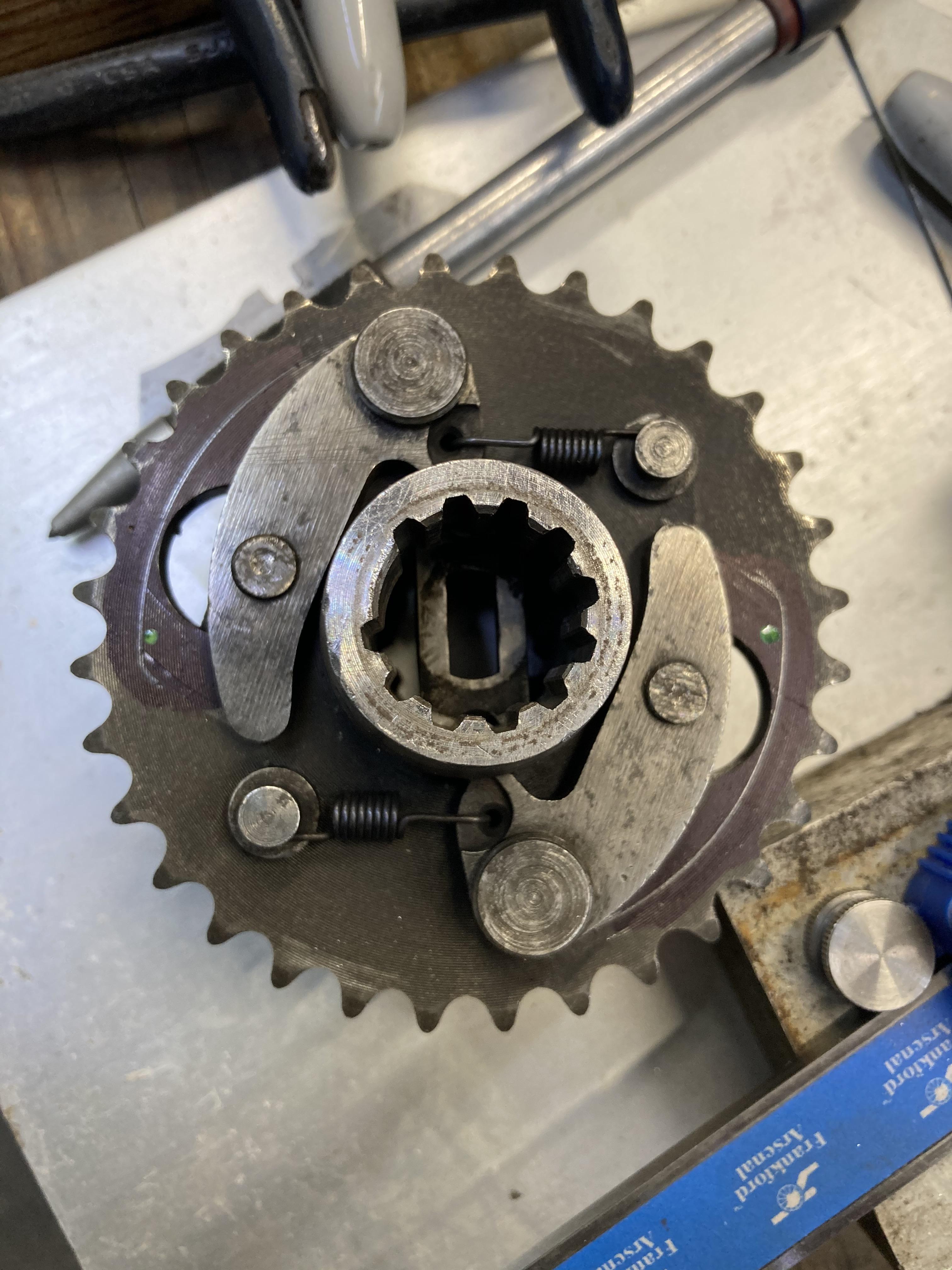
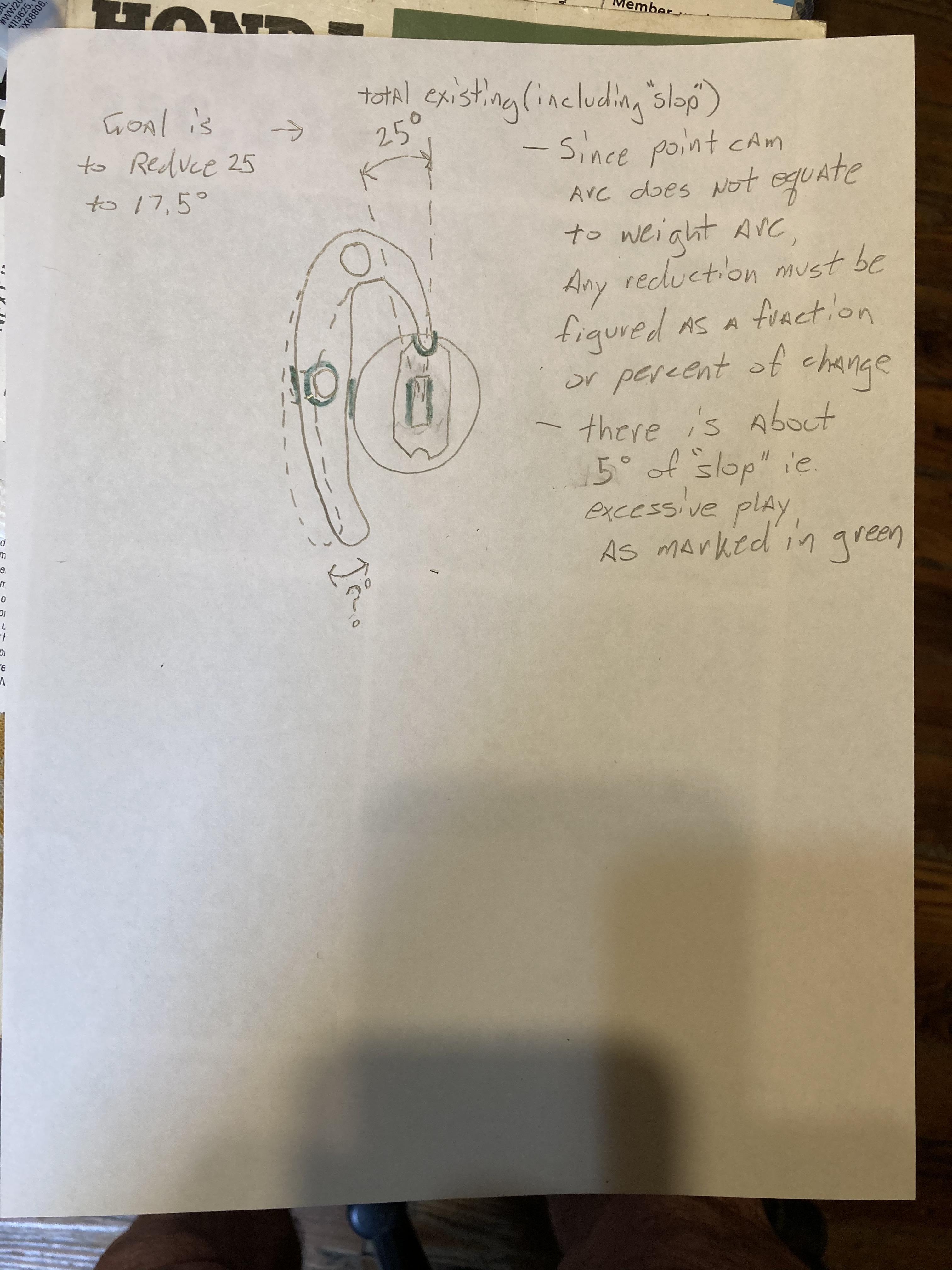
The pic below shows the range of advance, Left= full, Right = none. As best as I can measure/guess, looks like about 25 degrees. Seems it should be more, especially w/out cushions.
Add to that 5 degrees initial/static setting. 25+5=30 total?
Protractor on rotor shows 45 and 48 degrees advance from T (0 or TDC), which indicates max advance permissible, as specified.
So, where is the missing 15+ degrees? That is a lot to call a fudge factor.

ztGHxsb.jpg


In the real world, we put the strobe on Charles 65 Dream and got about 55 degrees max advance (it was set static last year) so we retarded to 48, which idled about TDC or 0. He said it pulls up from idle good but may not have the top end. I haven't ridden it yet. It starts good.

Maybe I've had too much to think.:geek:
 
Bottom left picture. Are both advance weight up against the stops? I have seen some centrifugal advance units where one weight hit well before the 2nd, like a 2 stage advance. Not on Honda's.
 
Bottom left picture. Are both advance weight up against the stops? I have seen some centrifugal advance units where one weight hit well before the 2nd, like a 2 stage advance. Not on Honda's.

Yes, both are pinned to their max with the bolt heads. The "ball and socket" joints between weights and slotted center plate are the same, not staggered, so if one weight is pulled out the other must follow.
 
25+5 does not equal 45

I measured the mechanical advance range again at the points cam. 25 maybe 26 degrees. How can it make 45-48 degrees advance at speed?

GCk0UE9.jpg
 
You are comparing apples and oranges......
Rotor (Crankshaft) degrees are NOT the same as CAM degrees, they differ by a factor of 2 or 1/2 depending on how you observe them.....
 
NO, the "correction" math is often confusing, and not just for you, as I also had to think it through, and NOT sure it's 100% correct, but just somewhere in the ballpark....

The 26 cam degrees equates to 52 crank degrees... MINUS the initial F setting of 5 crank degrees then shows as 48 possible crank degrees of advance from T as marked/measured on rotor.....The 5 degrees are subtracted because the advancer's (cam gear's) zero is that 5 degrees early to begin with (different than the T index)..... Even a small 1 degree error in measuring the advance unit compounds quickly......
 
Last edited:
NO, the "correction" math is often confusing, and not just for you, as I also had to think it through, and NOT sure it's 100% correct, but just somewhere in the ballpark....

The 26 cam degrees equates to 52 crank degrees... MINUS the initial F setting of 5 crank degrees then shows as 48 possible crank degrees of advance from T as marked/measured on rotor.....The 5 degrees are subtracted because the advancer's (cam gear's) zero is that 5 degrees early to begin with (different than the T index)..... Even a small 1 degree error in measuring the advance unit compounds quickly......

So, Dynamic cam advance X 2 = Dynamic crank advance. Four strokes with cam mounted advancer only. (from Sensei's book of motorcycle math for dummys)

The real world keeps me humble. Thanks Steve.
 
So, Dynamic cam advance X 2 = Dynamic crank advance. Four strokes with cam mounted advancer only. (from Sensei's book of motorcycle math for dummys)

And with that clarification, you just became the editor of that book.......(Where can I get a copy?).......;)
 
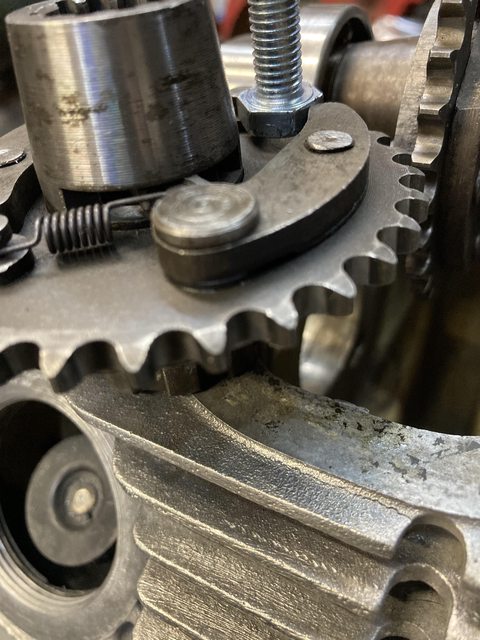
In order to overcome the rotted, missing advancer weight bumpers, which must have been on the round pin in the round "window". I'm thinking, if one were to drill out the rivet (and pivot) for the weight arms, then disassemble and put some non-perishable bushing on the pin to limit travel and so to limit advance (and retard), then all would be back to original spec.

Tap out the sprocket to 7mm and use a bolt and locknut on the back (there is room). Use stock springs. Ideally, have a 10 degree BTDC at idle. Thanks Bill Silver for the idea.

Whadyathink 72/77 owners ?

PpsyfGRl.jpg
cZjrlnyl.jpg
 
Sounds like a good plan to fix the advance. You want to use a partial thread bolt so the pivot action of the weights doesn't wear down threads making it sloppy, something similar to the special cam bolt we use on the 350 cam gears. For the pin I think a stainless steel sleeve would do the job nicely.
 
I might have an easier/quicker/simpler fix if anyone's interested....... NO disassembly required.....
 
Phone please......I will post the answer as soon as I get it drawn up.....meanwhile, phone.....
 
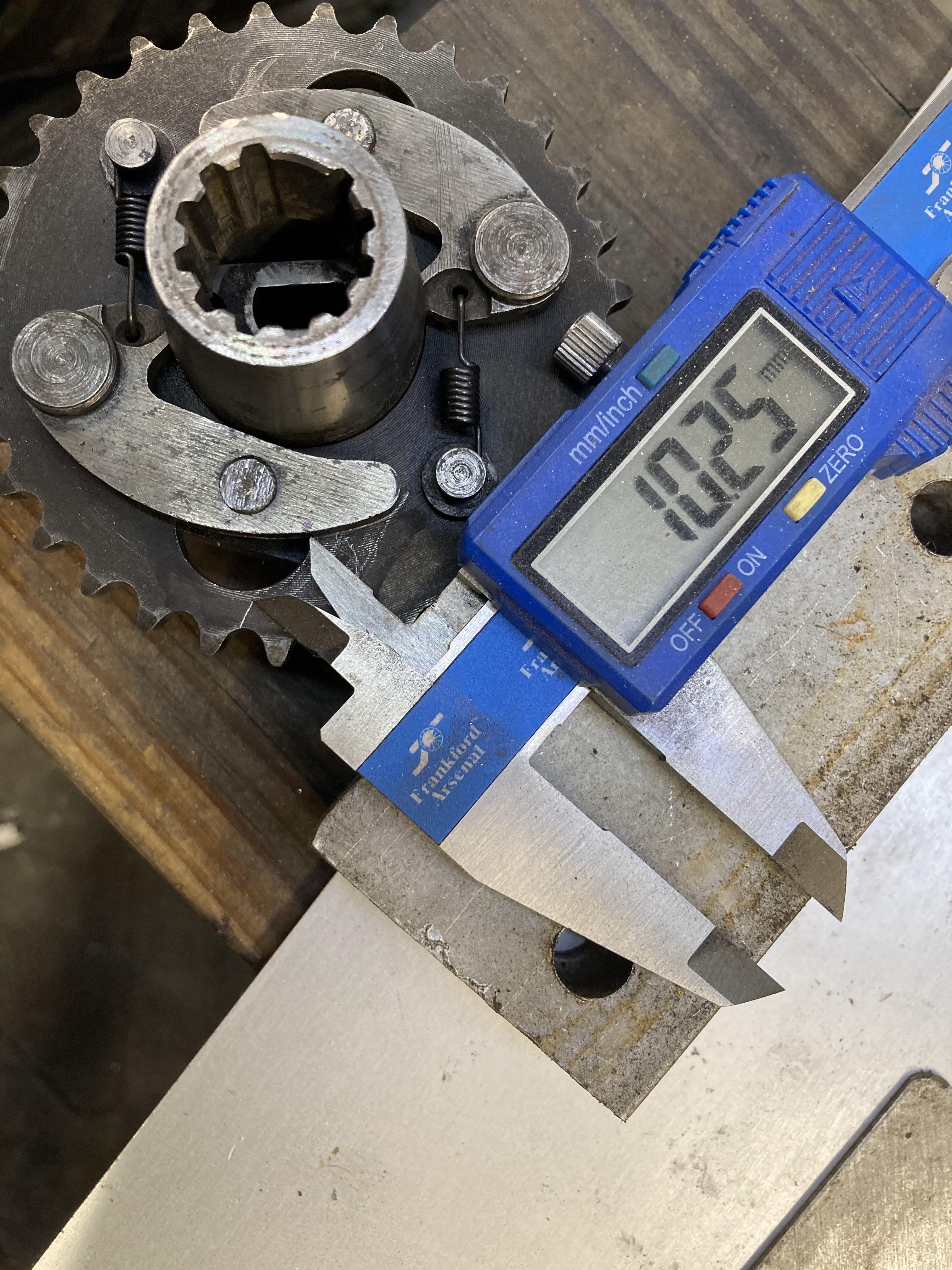
At a fixed point (tiny felt tip mark) on the weight, I measured the swing distance of the weight. Any reduction here will be doubled in terms of final advance.
Sorry bout the lighting. Hard to see the outer scribe mark for the weight at full swing.

dDD2a0M.jpg


The goal is 35 degrees advance from initial 10 for a total of 45 degrees BTDC or T on the rotor.
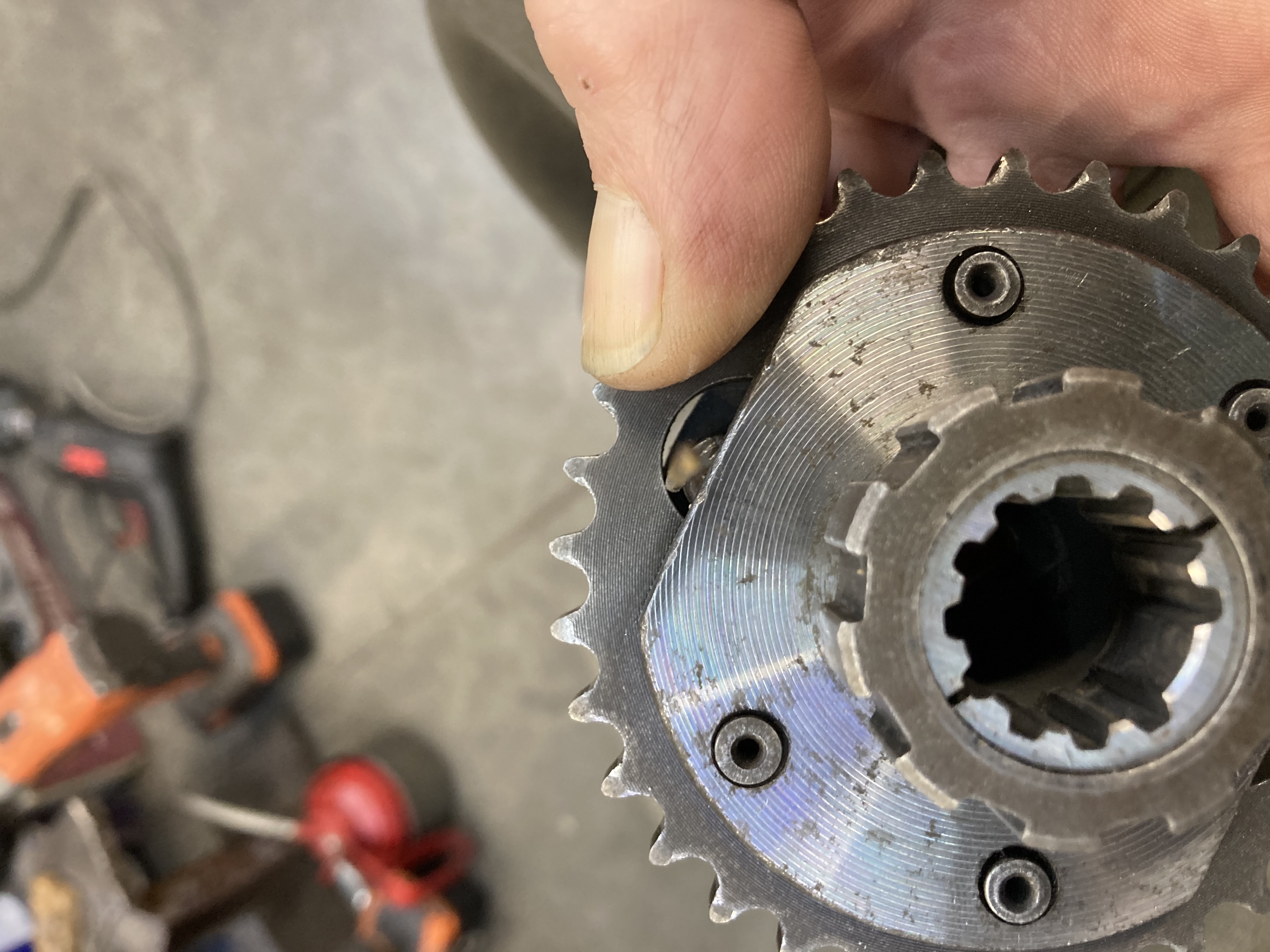
The original bumpers/cushions did this in the 16mm hole in the sprocket with the pin attached to the weight.

7OhnK0Q.jpg


It's blurry but there is a 1/16" (1.57mm) drill bit in the space where the rubber once was.
 
Yes, it's a sort of foam rubber (neoprene ?), it can withstand oil but will deteriorate due to petrol residue's and degreaser.
 
The goal is 35 degrees advance from initial 10 for a total of 45 degrees BTDC or T on the rotor.
The original bumpers/cushions did this in the 16mm hole in the sprocket with the pin attached to the weight.
.

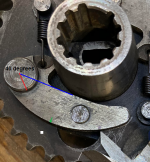
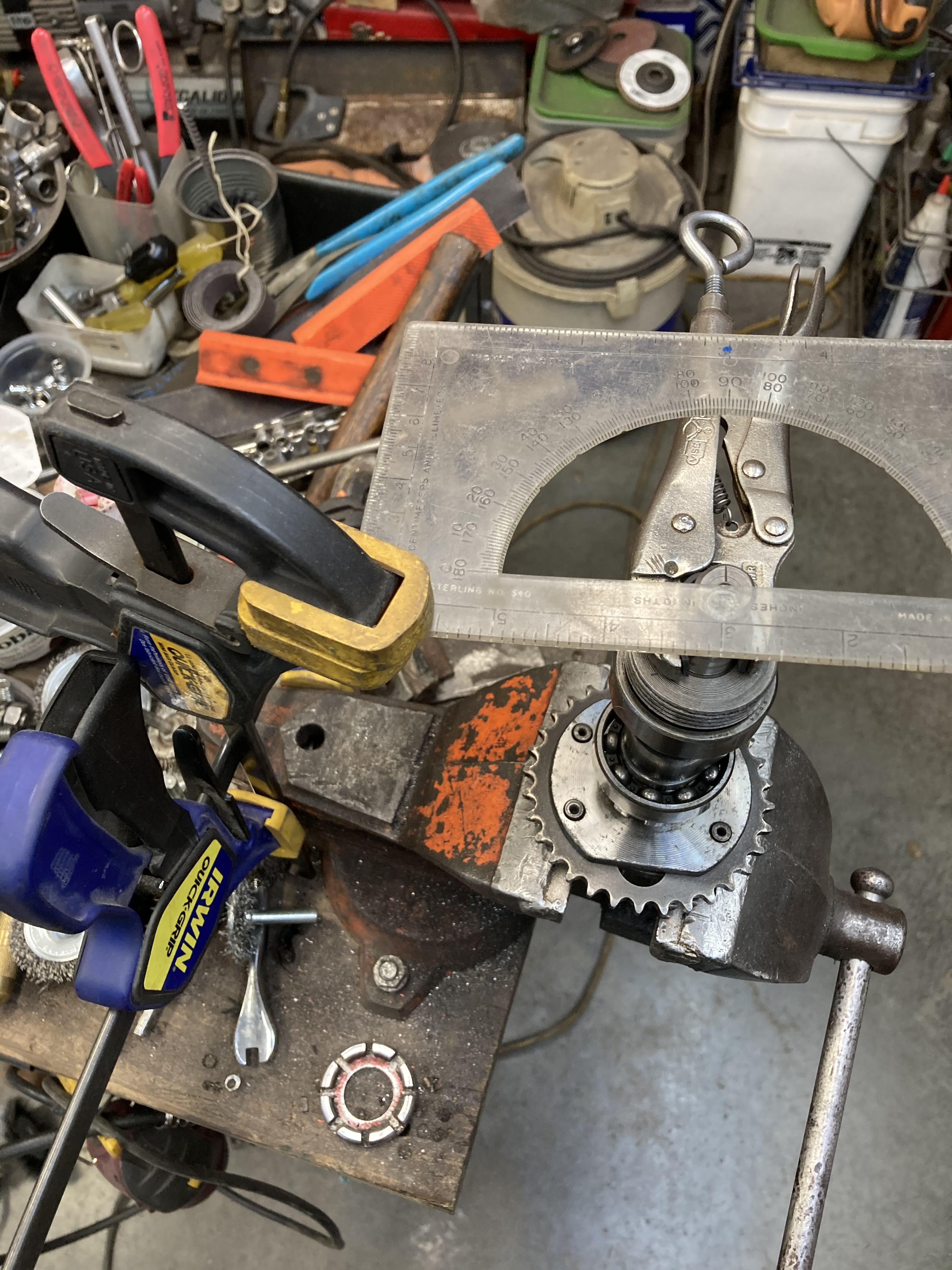
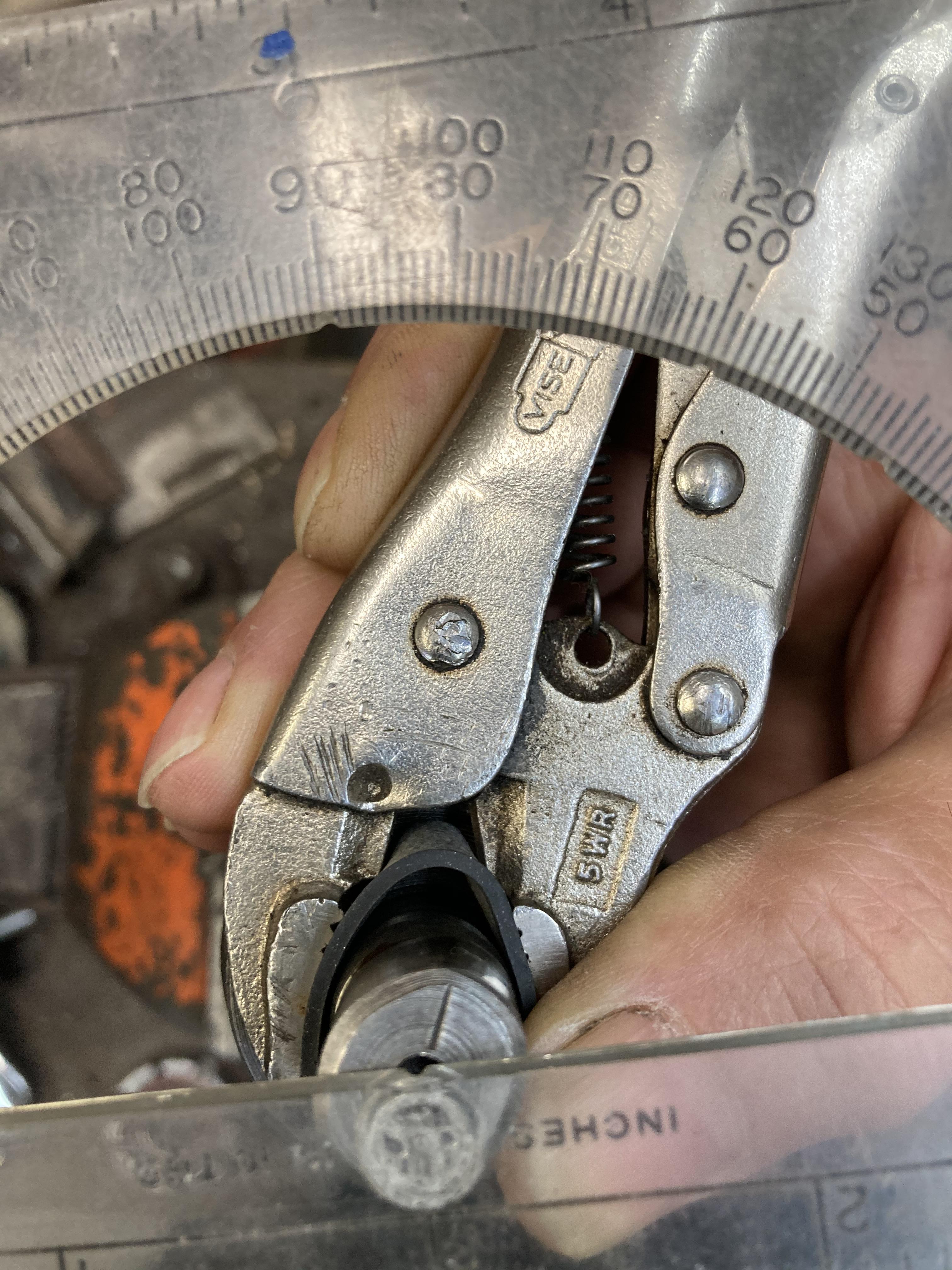
NO!.....phone about this pic if it isn't clear what I mean by it.......40 Crank degrees is what you want to add to the initial static 5 degrees, so the angle you draw on the pin should be 20 cam degrees...... Rotate arm until blue line aligns with red line....Clamp.....Drill hole at point of green arrow but centered 1/2 the roll-pin diameter away from the edge of the fly-weight arm.....(White square position maybe?)

Untitled.png
 
Last edited:
Better picture showing approximate drill spot in green paint. Hard to show scribe marks. Hard to use a protractor, thus the above pic showing range of motion at 10.25 mm so I can figure how much reduction is needed.

L8vBUPs.jpg


Sorry Steve, you know, life... I'll call tomorrow.
 
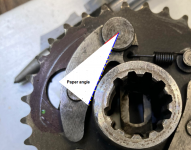
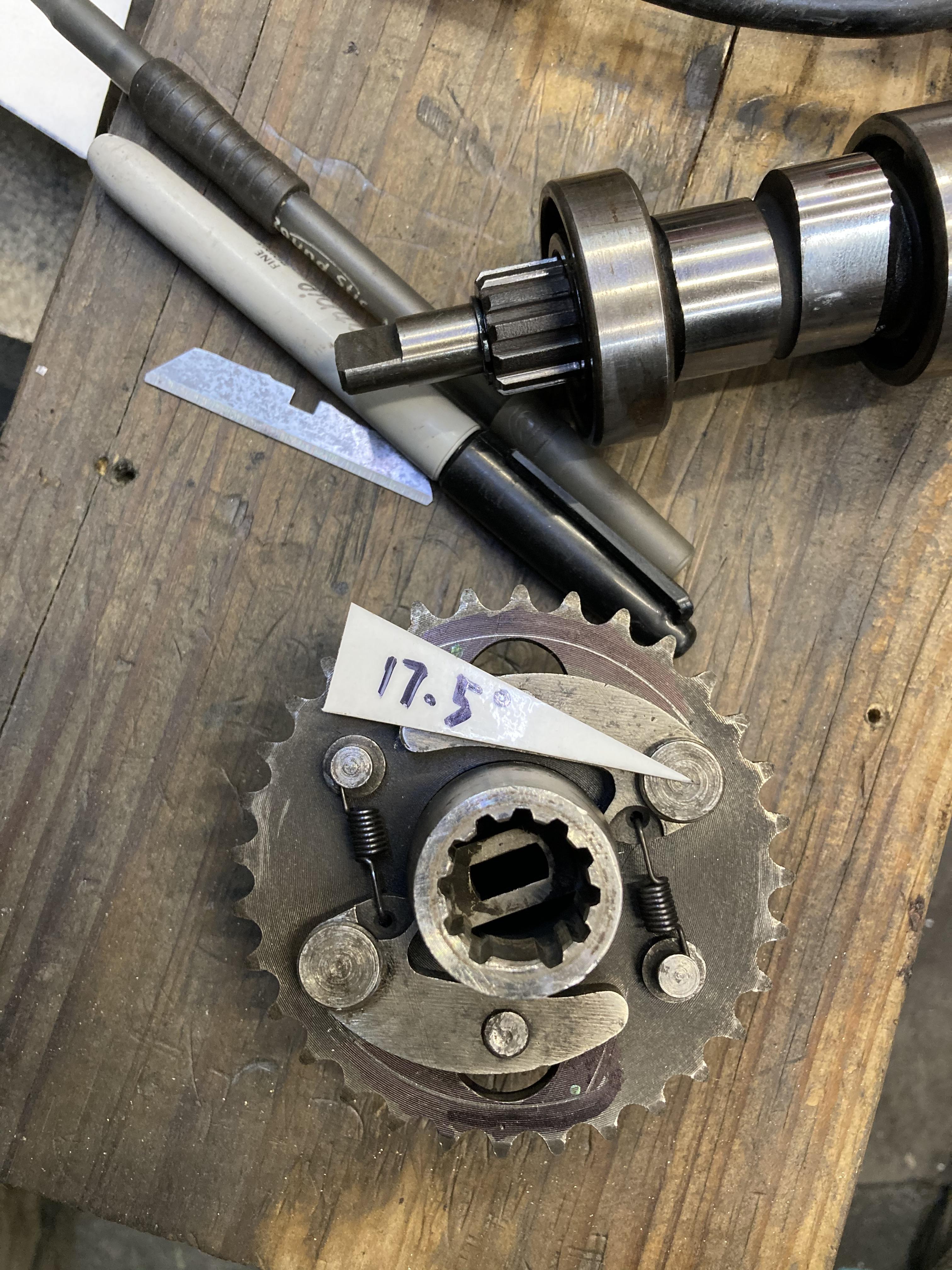
Draw the angle on paper and use the cutout triangular piece as your protractor/guide.......Center its point on the center of the pivot rivet post.....
phone again.......More hints during call.....

Untitled.png
 
Last edited:
First a backstory, an observation:
Static timing set on Charles Dream at F (5 BTDC). Strobe showed 55-60 BTDC at 4K(?) rpm. Reset points plate to show 48 BTDC, now idles at T (0 BTDC). Starts, idles Ok, good midrange but wimpy at WOT.
Not ideal but now safe. No doubt his advancer is in the same state as mine, missing weight bumpers, accumulated play in slotted plate joints to weights and the tang on points shaft.

g1yvhhH.jpg


MGKLtHc.jpg


Now it makes sense. (25)2 + 5 = 55.

I don't want it to auto-retard to 0 at idle but at 10 BTDC at idle. I want it to top out at 48 BTDC.

21TJKho.jpg


I'll get by with a little help from my betters.
 
To "dead-center" the pointer between the two index lines at full advance, your paper triangle should be 20.75 degrees, (IF you proceed from there using my method).....Phone....
 
Crappy drawing but perhaps clarifies problem of accurately, or at least being able to measure, where to put new stop point for swing weight.

fuPdflj.jpg


I will call or you can when it's good, Steve.
 
I will call or you can when it's good, Steve.

Just call him when you're ready, even if he isn't online here he will either take the call (text your username to him first with phone number so he knows it isn't a robo) or he'll let it go to voicemail if he can't.
 
NO... DEGREES change (arc) is the same..... But because of lever length, DISTANCE is not.....
 
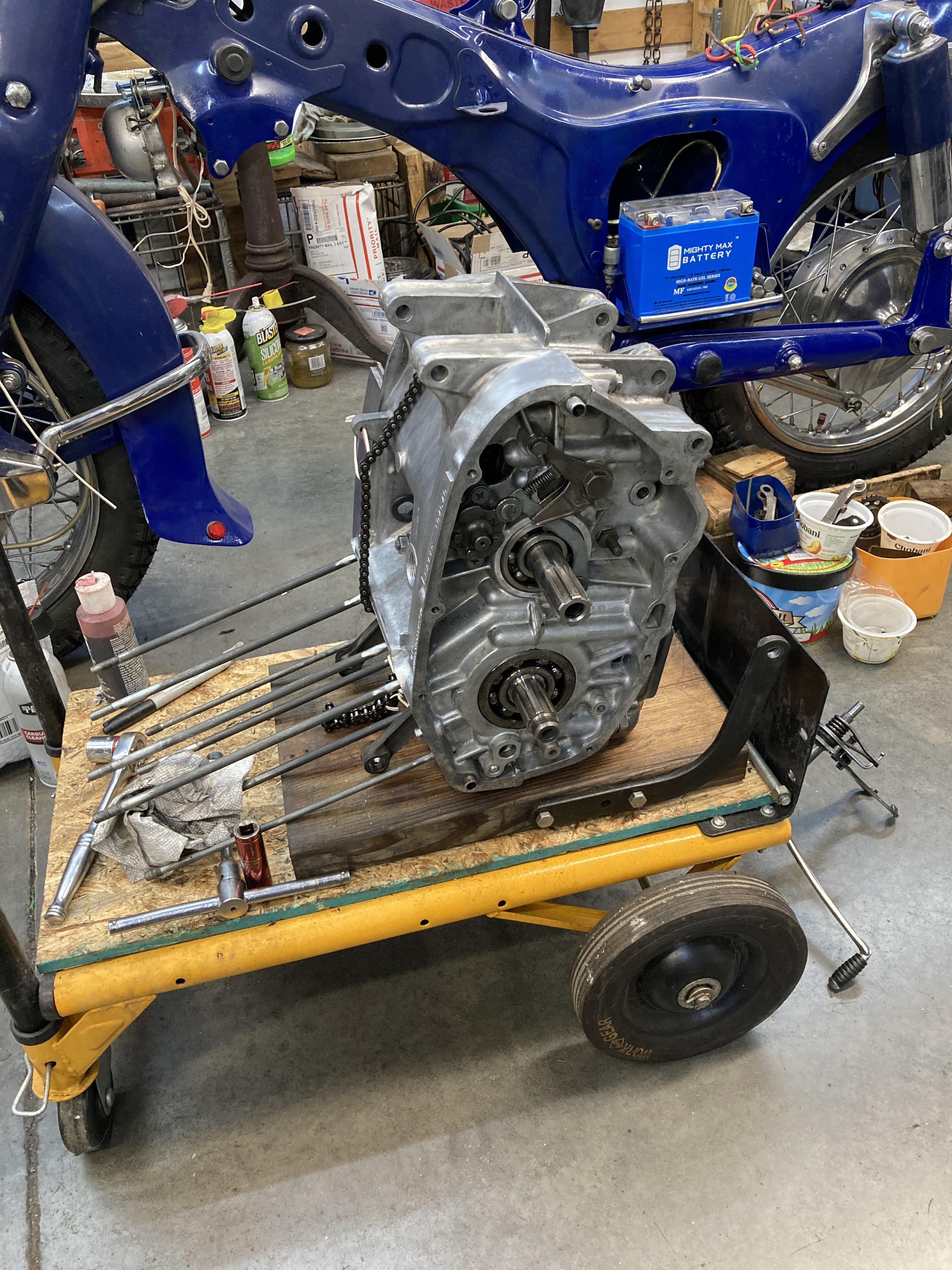
Still plodding along. Sealed the cases, nothing binding and watched the shifting function thru the oil pump hole.

90dI6aj.jpg


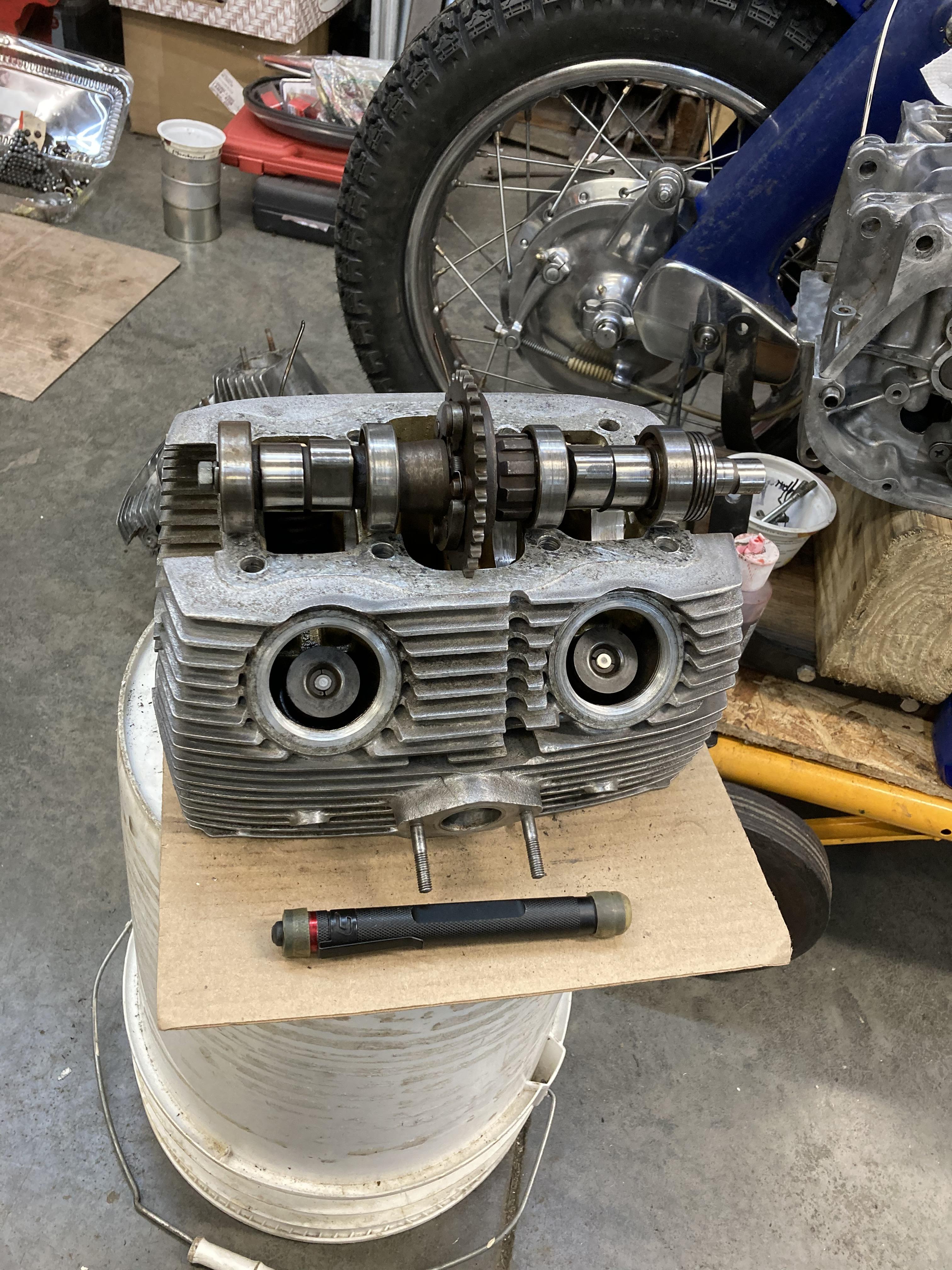
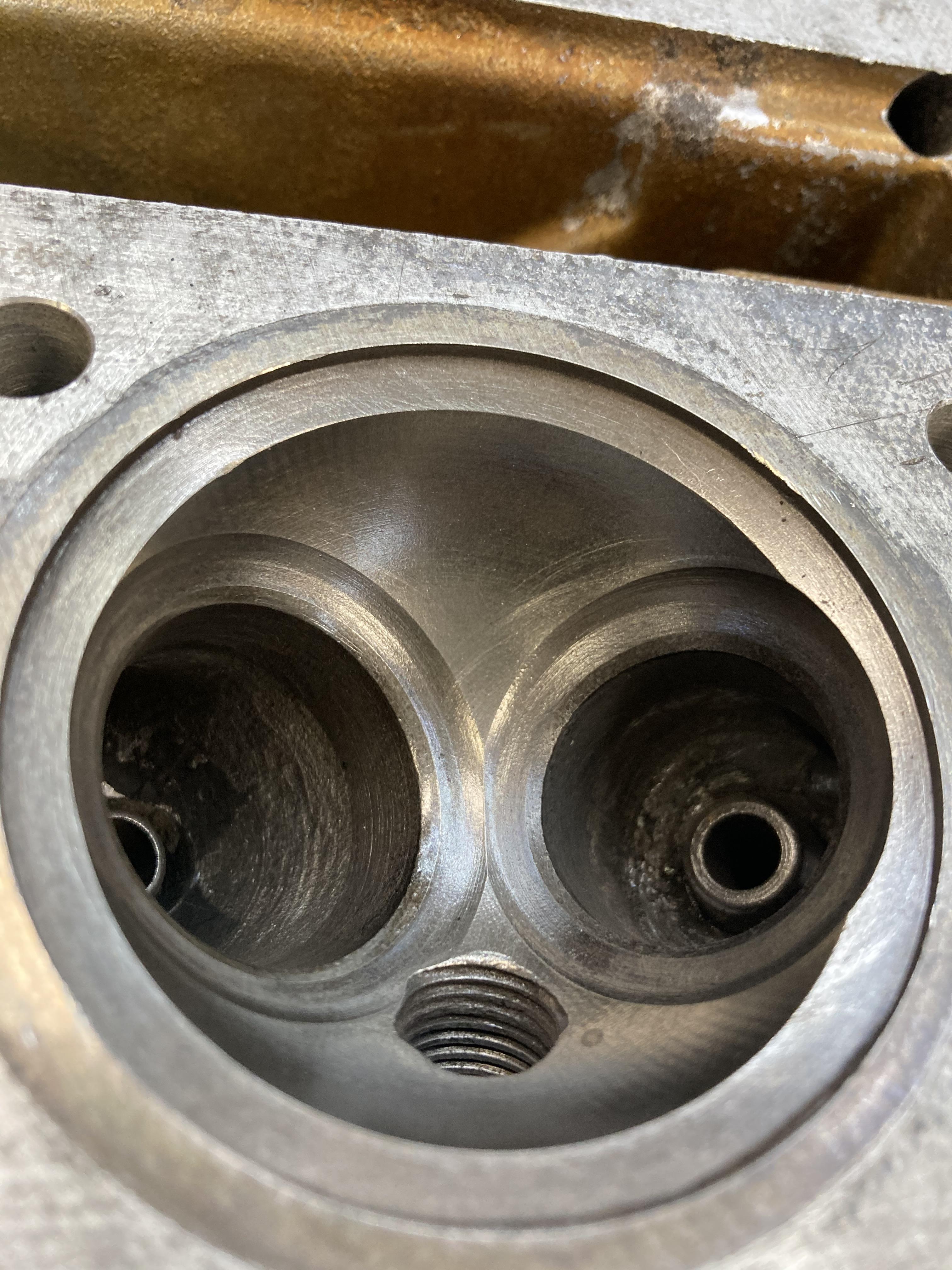
Both heads are about the same. Kinda shiny intake seats. I got new intake valves due to cupping. You can see the seats are rounded.

7bHlJq1.jpg


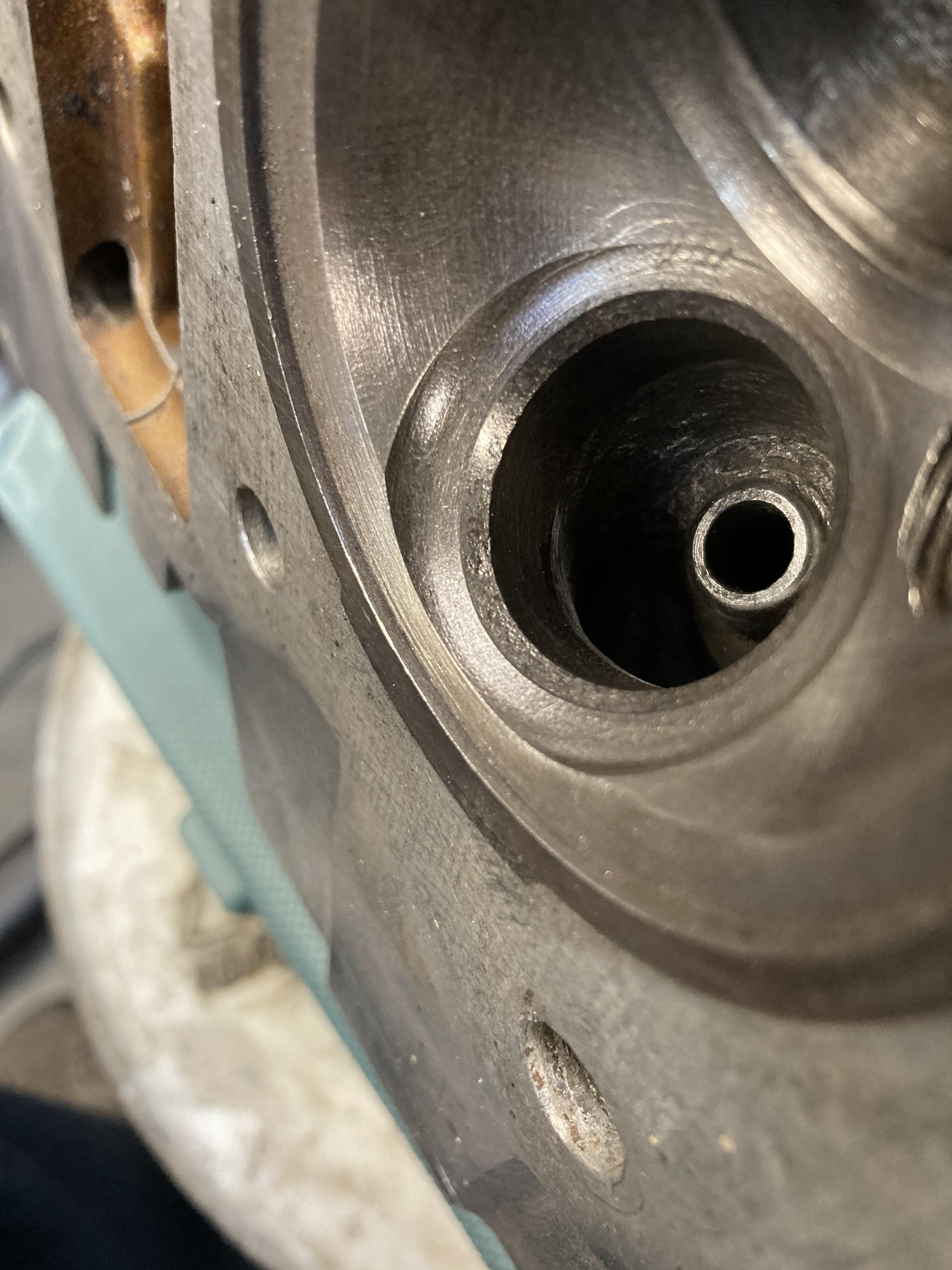
The exhaust seats were not too badly pitted except on one head (this will be a spare engine). All are way wider than the 1mm recommended but are flat, not rounded, at least.

Wyi4A3U.jpg


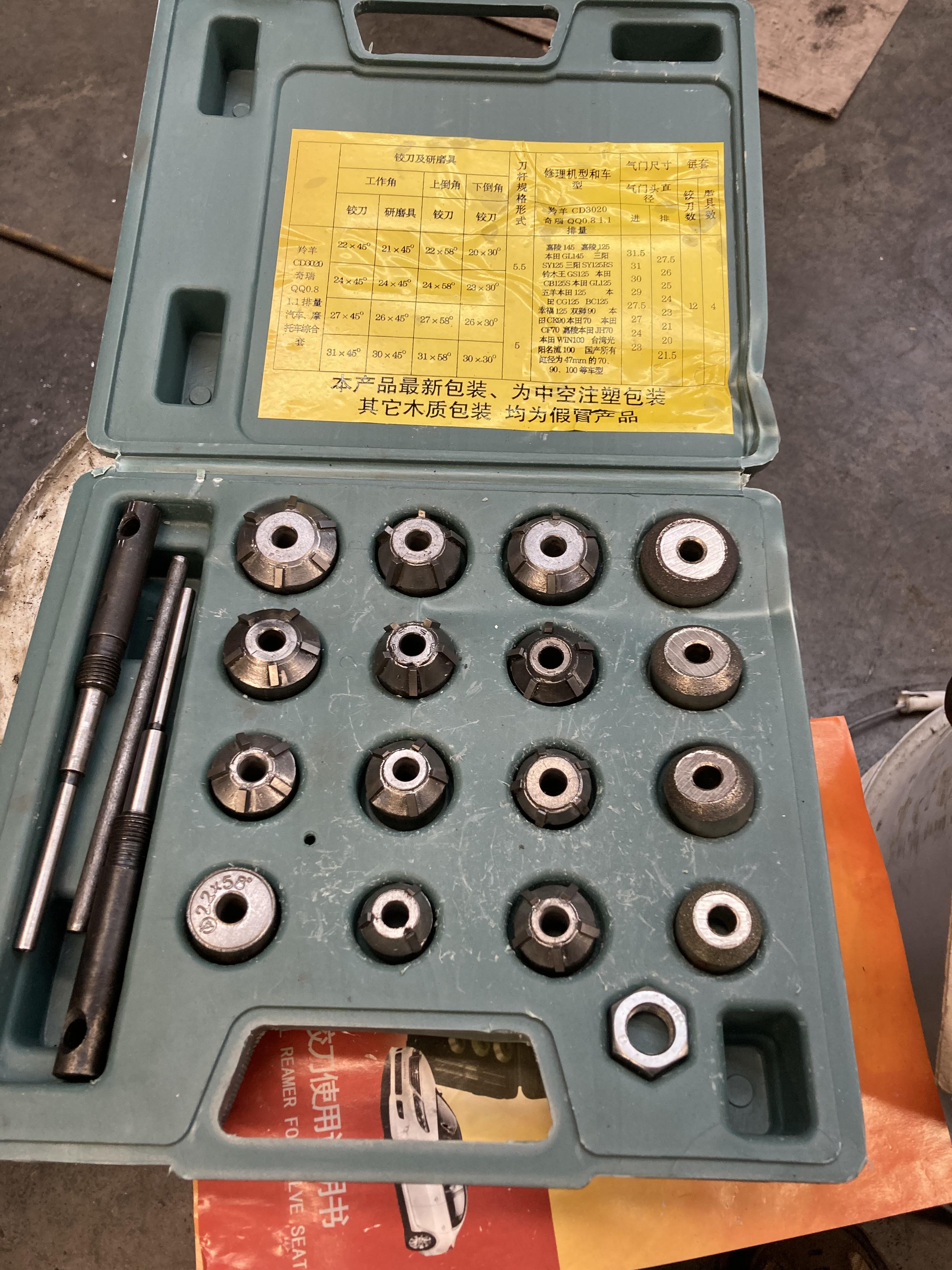
It's too bad my cheapo seat grinder set does not have a 7mm arbor for these guides. I have no idea if I could get one. If I was clever maybe I could sleeve up the 5 or 5.5mm ones included.

YnAJBMr.jpg


If anyone knows a home brew solution to dress up these seats, please let me know. I'm currently getting peeved at professional services when it comes to shops. It been 6 weeks the machinist has had my cylinders and hasn't returned a half dozen calls. I guess a house call is in order.
 
Tom, I could ask my machinist friend if he could do them; if so then a cost for you. You would have to ship the head and valves to Niagara Falls NY to my Cross Border Pickup account which would be cheaper than you shipping to Canada directly.
Shipping back would be Cross Border to USPS and again pretty inexpensive vs Canada Post or FedEx etc.
 
Tom, I could ask my machinist friend if he could do them; if so then a cost for you. You would have to ship the head and valves to Niagara Falls NY to my Cross Border Pickup account which would be cheaper than you shipping to Canada directly.
Shipping back would be Cross Border to USPS and again pretty inexpensive vs Canada Post or FedEx etc.


That is very generous Dave. I am now optimistic, in that britman has steered me to a 305 expert and machinist, a mere 2 hours away. I do thank you very much though.
 
That is very generous Dave. I am now optimistic, in that britman has steered me to a 305 expert and machinist, a mere 2 hours away. I do thank you very much though.

if you can keep it local that is much better for sure. I have been interested in your work on the advancer and if that has been solved for you. I only checked for play in the bushings, not realizing there is damper material inside the arm area too.
 
Update: As I was ready to go repo my cylinder, I tried one more call to the machinist. He answered and said he'd have it by Thurs.!!!
 
Back
Top Bottom