1971 CB350 . . . 40 year hibernation

Good, glad you got one. That pic looks decent but it still doesn't display the actual bearing surface inside as clearly as in person, but I'll take your word for it. BTW, my machinist Russ calculated the clearance for my left exhaust bearing with bronze bushing and repaired cam bearing surface by using the cam journal wear spec from the FSM and measuring a NOS left exhaust bearing I supplied, arriving at .0007"
 
Good, glad you got one. That pic looks decent but it still doesn't display the actual bearing surface inside as clearly as in person, but I'll take your word for it. BTW, my machinist Russ calculated the clearance for my left exhaust bearing with bronze bushing and repaired cam bearing surface by using the cam journal wear spec from the FSM and measuring a NOS left exhaust bearing I supplied, arriving at .0007"

That's impressive. We'll see how things check out once I get that cover and the other things I need to rebuild the top end. I don't feel like I've caught any breaks thus far with this project.

I think I'm going to postpone working on the lower half of the motor(s) until after my trip, but, like you, I'm curious to see what the oil spinner looks like. I wouldn't be surprised to find a broken or missing oil pump in the second motor. Given how torched the top end was on motor #2, I'll probably need to think carefully about which lower end to rebuild.
 
Given how torched the top end was on motor #2, I'll probably need to think carefully about which lower end to rebuild.

Torched is certainly a good description. When you do get into it, I'd be curious to see the color of the rods. I'd expect to see the small ends pretty dark based on everything above them, but I wonder if the big ends will be dark colored as well. If that is true, I wouldn't use that crankshaft.
 
Torched is certainly a good description. When you do get into it, I'd be curious to see the color of the rods. I'd expect to see the small ends pretty dark based on everything above them, but I wonder if the big ends will be dark colored as well. If that is true, I wouldn't use that crankshaft.

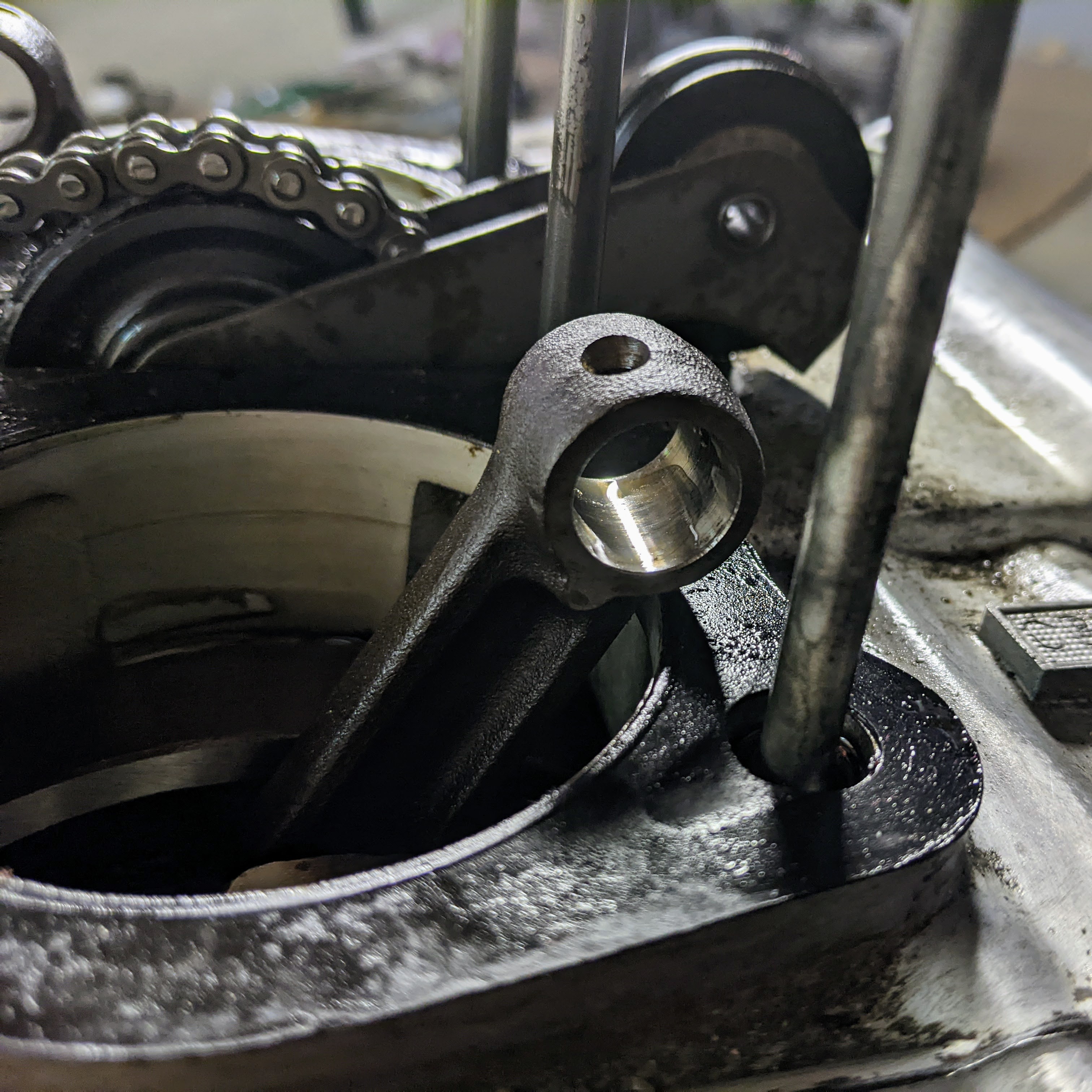
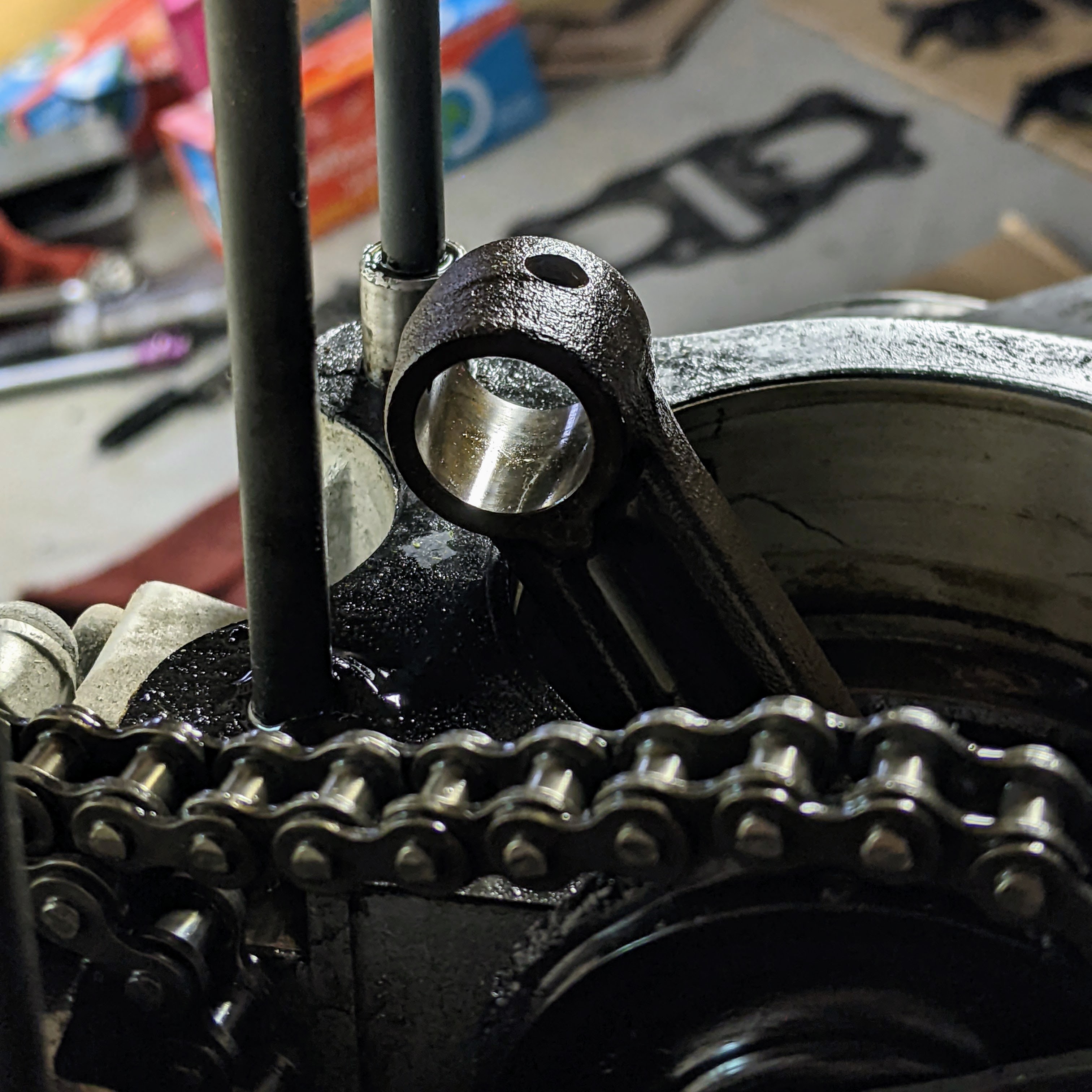
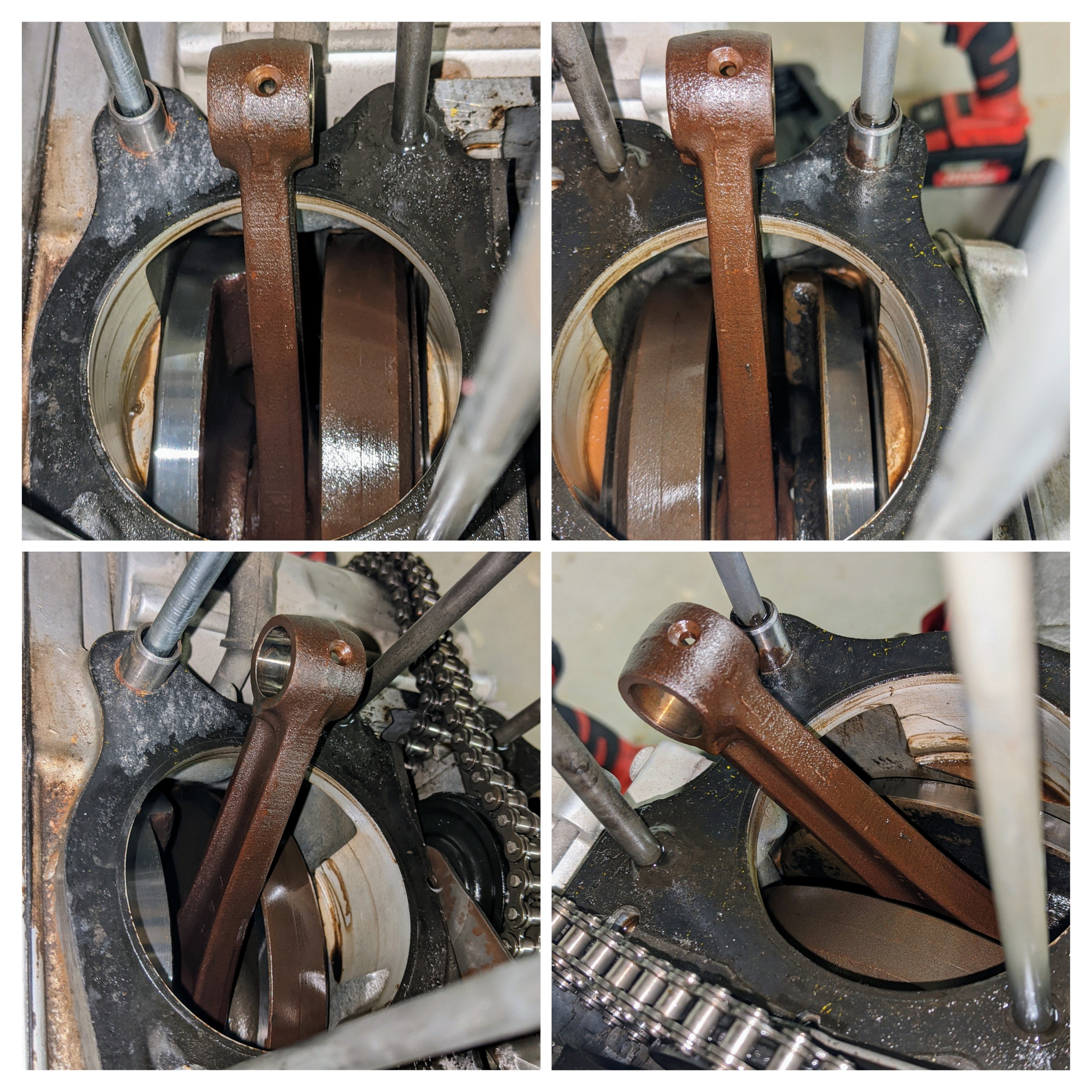
Here's a look at the small end of each rod: left, then right, and the wrist pin from the right. Everything looks about the same as the handful of other 70s motors I've been inside.

Snx4RFA.jpg


7NVYAr3.jpg


y6QpNR8.jpg
 
Too much glare on those rod pics to see the color I'm looking for. When the small end has run hotter than it should, it always has a darkened color to it, almost dark gray to black. I will say that the inside of each small end looks decent, sometimes you'l see gall marks when it has run dry and/or hot enough.

KeRTZhk.jpg


lhg6itF.jpg


Unfortunately I'll have to take the chance on this 4 speed crankshaft because of how hard they are to find good used and how expensive one would be.
 
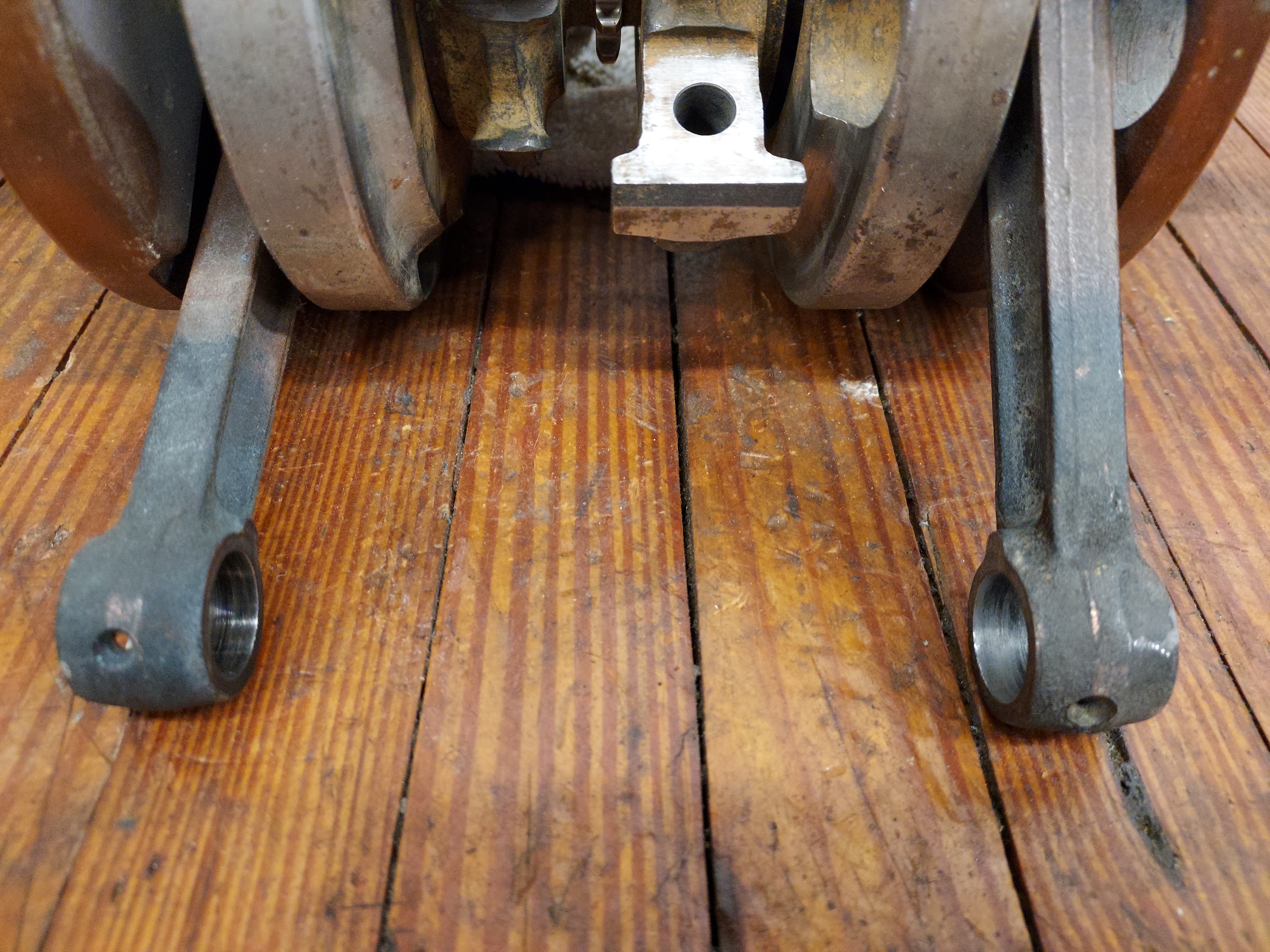
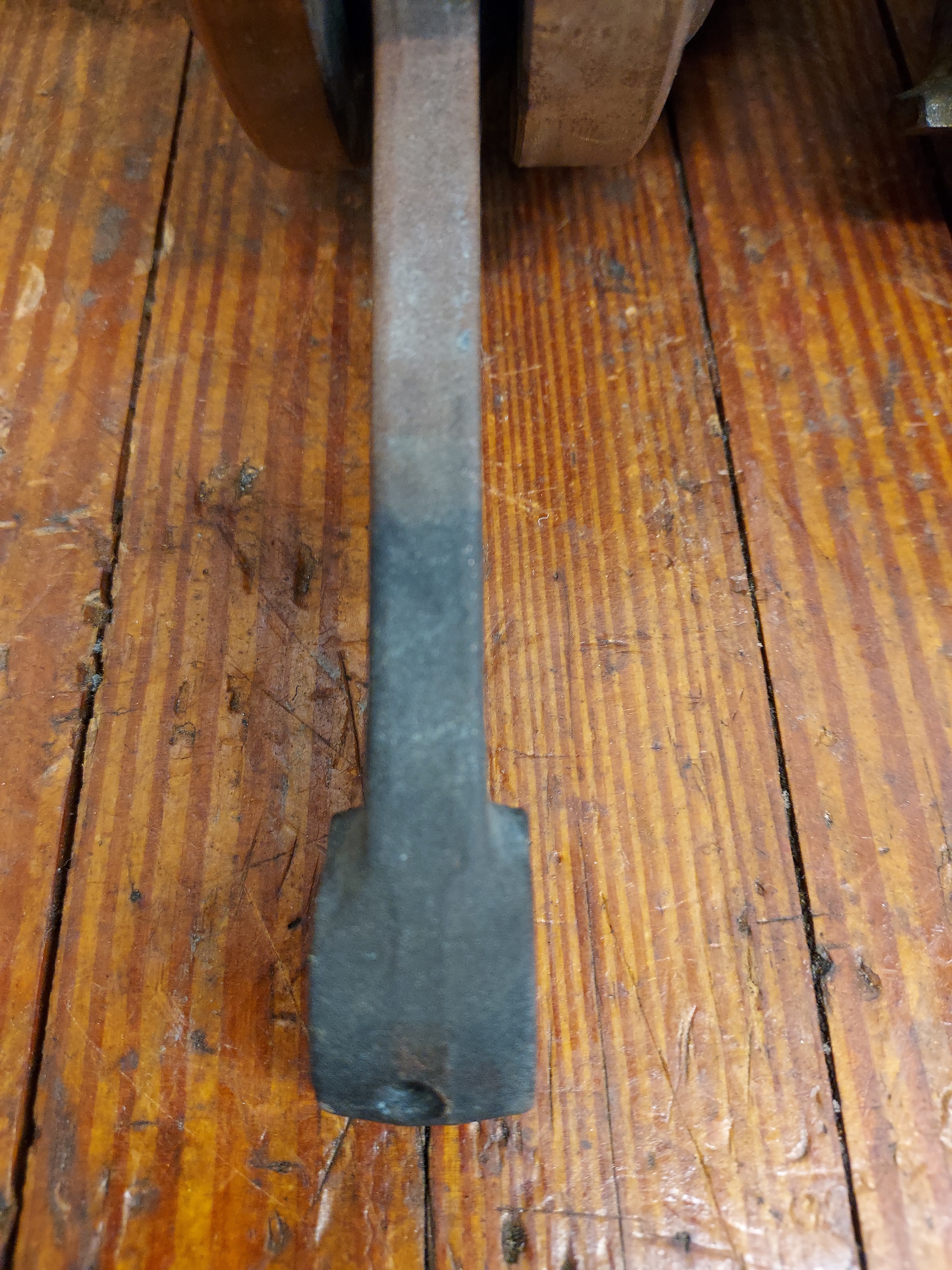
I thought you were thinking about the bearing surface for the wrist pin rather than the outer surface. I'll post separate pictures later today.
 
I thought you were thinking about the bearing surface for the wrist pin rather than the outer surface. I'll post separate pictures later today.

Ah, I understand the angle now. There is a correlation of course, one of my small ends was slightly galled inside and I cleaned it up with emery cloth. It isn't perfect but it will do for the limited (despite hard) hours this engine will be running.
 
The left rod outer surface looks a little drier than the right. When the rod get overheated the oil cooks into the metal leaving a dry appearance, happens before discoloration. From general appearance though I'd say it's fine to run.
 
The left rod outer surface looks a little drier than the right. When the rod get overheated the oil cooks into the metal leaving a dry appearance, happens before discoloration. From general appearance though I'd say it's fine to run.

You're referring to his, or mine?
 
Yep, they look fine. Which is actually amazing considering how ugly the top end was. Gotta be some gunk in the oil pump screen or a centrifugal filter packed full of metallic mud.
 
Yep, they look fine. Which is actually amazing considering how ugly the top end was. Gotta be some gunk in the oil pump screen or a centrifugal filter packed full of metallic mud.

Yeah, I really want to check that out, but tomorrow is the last day before I go visit family for a week and I'm going to prioritize evaluating the cylinder on motor #2. I hope I may be able to drop the head and cylinder off tomorrow to be cleaned and prepped for the rebuild.

On Monday, four packages were supposedly delivered for this project. Mostly rubber parts that I could only find from one seller, but totaling about $80. I was home and no packages arrived. I spent a lot of time on the phone with USPS all week and finally convinced them to check the porch deck box next door (neighbor was out of town), where all four packages had been delivered by mistake. I think I called them about four times and talked with the letter carrier each day. He was off Monday and a sub made the mistake. So frustrating.
 
Yeah, I really want to check that out, but tomorrow is the last day before I go visit family for a week and I'm going to prioritize evaluating the cylinder on motor #2. I hope I may be able to drop the head and cylinder off tomorrow to be cleaned and prepped for the rebuild.

On Monday, four packages were supposedly delivered for this project. Mostly rubber parts that I could only find from one seller, but totaling about $80. I was home and no packages arrived. I spent a lot of time on the phone with USPS all week and finally convinced them to check the porch deck box next door (neighbor was out of town), where all four packages had been delivered by mistake. I think I called them about four times and talked with the letter carrier each day. He was off Monday and a sub made the mistake. So frustrating.

Beats porch pirates anyday. I just gave up on amazon, even with prime, and re-ordered. NOS or used ebay parts are kind of special, glad you finally got them.
 
Beats porch pirates anyday. I just gave up on amazon, even with prime, and re-ordered. NOS or used ebay parts are kind of special, glad you finally got them.

Thanks, Tom. I totally agree. I suffered a rash of porch piracy a few years back, but all of the Ring and Blink cameras seem to have helped with that in my area. When it happened to me, my parts (like I order anything else) were usually thrown on the ground in my yard along with the packaging. This happened with a set of second-over Honda pistons for my 1977 CB750F. I had to find the little plastic bags with the clips in the grass, but all was accounted for in the end.
 
And I remember my parents leaving the empty milk bottles out with the money placed next to them to pay for the new delivery. By the way, I was very very young back then but I do remember!
 
And I remember my parents leaving the empty milk bottles out with the money placed next to them to pay for the new delivery. By the way, I was very very young back then but I do remember!

Maybe we'll get back to that level of trust someday, but, for now, I wouldn't even leave a spare key inside a fake rock in your garden!
 
On Monday, four packages were supposedly delivered for this project. Mostly rubber parts that I could only find from one seller, but totaling about $80. I was home and no packages arrived. I spent a lot of time on the phone with USPS all week and finally convinced them to check the porch deck box next door (neighbor was out of town), where all four packages had been delivered by mistake. I think I called them about four times and talked with the letter carrier each day. He was off Monday and a sub made the mistake. So frustrating.

Glad you got your packages, but yes it's VERY frustrating. That ONE day when your regular carrier is not working, of course. In the 7 years we've been where we are now, we've lost a couple of regular, long-term and reliable delivery people to retirement (UPS and propane) and each time the service has dropped off dramatically, with some packages simply being dropped by our split rail fence out by the street or, when they do take the time to come up our foot long driveway, dropped on the concrete outside our side-entrance garage door where we would never see it (and not under cover) unless we actually open the garage to leave in my truck. Worst part is we'll be losing our longtime mail carrier in a couple years to retirement, and the fill-in people have all made similar mistakes over the last couple years when she is off for any reason. And in these times, calling to report and complain is generally pointless, nothing changes.
 
Glad you got your packages, but yes it's VERY frustrating. That ONE day when your regular carrier is not working, of course.

Worst part is we'll be losing our longtime mail carrier in a couple years to retirement, and the fill-in people have all made similar mistakes over the last couple years when she is off for any reason. And in these times, calling to report and complain is generally pointless, nothing changes.

I was more or less ready to give up and my last call was going really similarly to the previous ones where the person on the other end was about to blow me off by saying they would call back (no one ever called back) when I asked if they would allow me to ask one more question. The person agreed and then we ended up figuring the whole thing out. I suspect that most mis-delivered mail has a less happy outcome, but I was lucky that the packages were left next door. It was easier to get them to check and I knew my neighbor wasn't home, so it would explain the error not being discovered on that end.

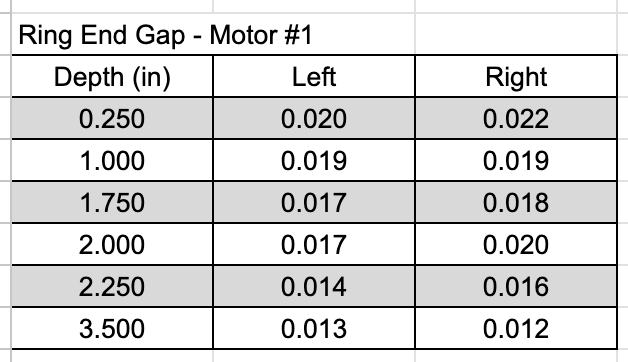
I checked out the cylinders from motor #2 today. Things look tighter than on motor #1, but, technically, they both seem to be within the serviceable limit of 0.030". I used the rings from motor #1 for both sets of measurements and I wonder whether (and how much) the gaps would change with a new set of rings. The shop where my powder coating was done does boring and honing and the owner who does the work has a lot of experience. I'm going to bring a box of stuff over there today so he can look it over with me and decide what my best options are between the pistons and cylinders I have. He's also going to clean/prep the head from motor #2 and replace the valve seals during reassembly.

SO1VXtW.png


W9d7Rf8.png
 
Are those just the top ring? or both rings with no differentiation between? IIRC the second ring has a slightly different spec range. He'll check for taper on the bore which seems to be a bit true based on the ring gap results. Also, I don't believe the 350 has valve stem seals.
 
Are those just the top ring? or both rings with no differentiation between? IIRC the second ring has a slightly different spec range. He'll check for taper on the bore which seems to be a bit true based on the ring gap results. Also, I don't believe the 350 has valve stem seals.

Top ring only. I was assuming there were valve stem seals and then was confused as to why my gasket set did not include them. Apparently some gasket sets for the CB/CL350's do come with them, but they were not a factory part and do not show up in the parts manual, at least for the K3.
 
Yep, no valve seals on 350's unless the guides are replaced with ones made for seals. Kibble-White sells them IIRC.
Both cylinders are tapered going by your measurements, #2 being the worse. Piston measurements will be needed to confirm if they can be reused. I suspect not but unless the bores have damage you're looking a 1st oversize.
 
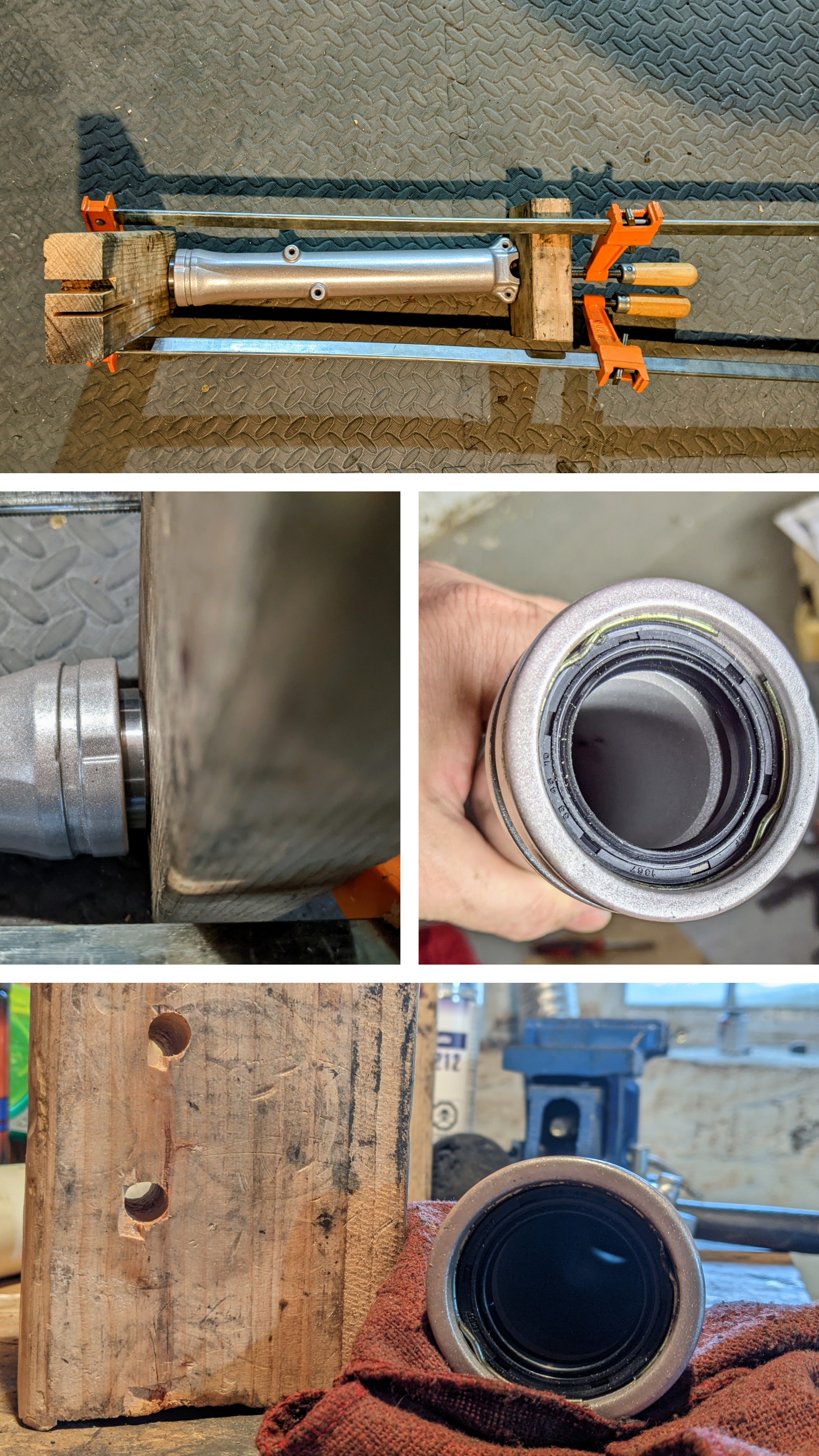
I pressed in new fork seals to the freshly powder coated lower fork tubes this evening. In the past I have often driven them using a short piece of PVC pipe, but today I tried a couple of long wood clamps, two blocks of wood, and one of the old bearings from the front wheel. It worked pretty well as long as I tightened each clamp a little at a time to keep the seal squared as it worked its way into place.

KRQmJN5.jpg


It seems like there is a fair amount of dust inside as a result of the powder coat process, so I'm going to clean them before assembling the forks. The drain bolts were powder coated in place, too, so I won't plan on using those anytime soon.
 
Looks good, just be careful with solvents when you rinse it out. I found that carb spray will wipe powdercoat right off.
 
Looks good, just be careful with solvents when you rinse it out. I found that carb spray will wipe powdercoat right off.

Good call. I'm planning to be very careful and mostly wipe it out with some old motor oil.

They PC'd the seal area enough to cause your problem.

That's right. I was hoping they would have ways to avoid that, but I'm still happy with the way everything turned out.
 
The powdercoating shop didn't cover the tapered bearing races on my 450 frame and when I asked about it, he told me to just use some carb spray to wash it off.
 
Hi Brody,

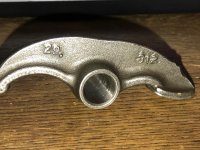
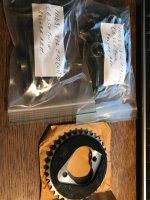
I found them, can you verify if these parts are indeed 312 ?

Jensen

img 1.jpg

img 2.jpg

img 3.jpg

NOS, never used.

I also found dozens of NOS valves, valve guides, points, The valves don't have a p/n, however, all Honda. They where in the same stash as the parts pictured.
 
The 312 rockers are the only ones with a cast number on them. The 286 rockers don't have any cast number other than the mold number, 2 digit.
Those are 312's.
 
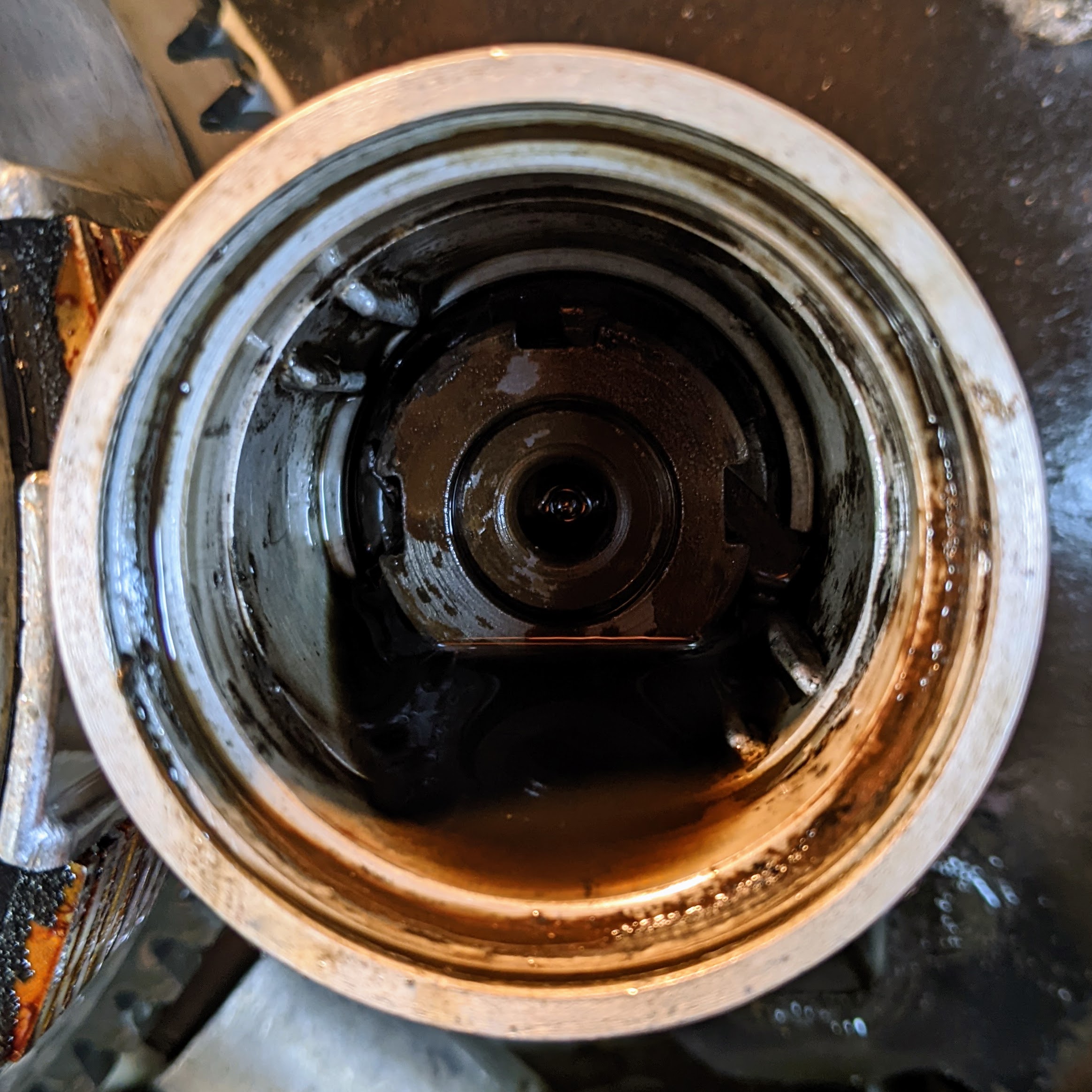
Engine teardown continued today on motor #2. This motor showed signs of oil starvation or overheating in the top end, particularly on the cam lobes, cam bearings, and followers. Surprisingly, the centrifugal oil filter did not have any sludge like I have seen in my other bikes.

OPkJVXM.jpg


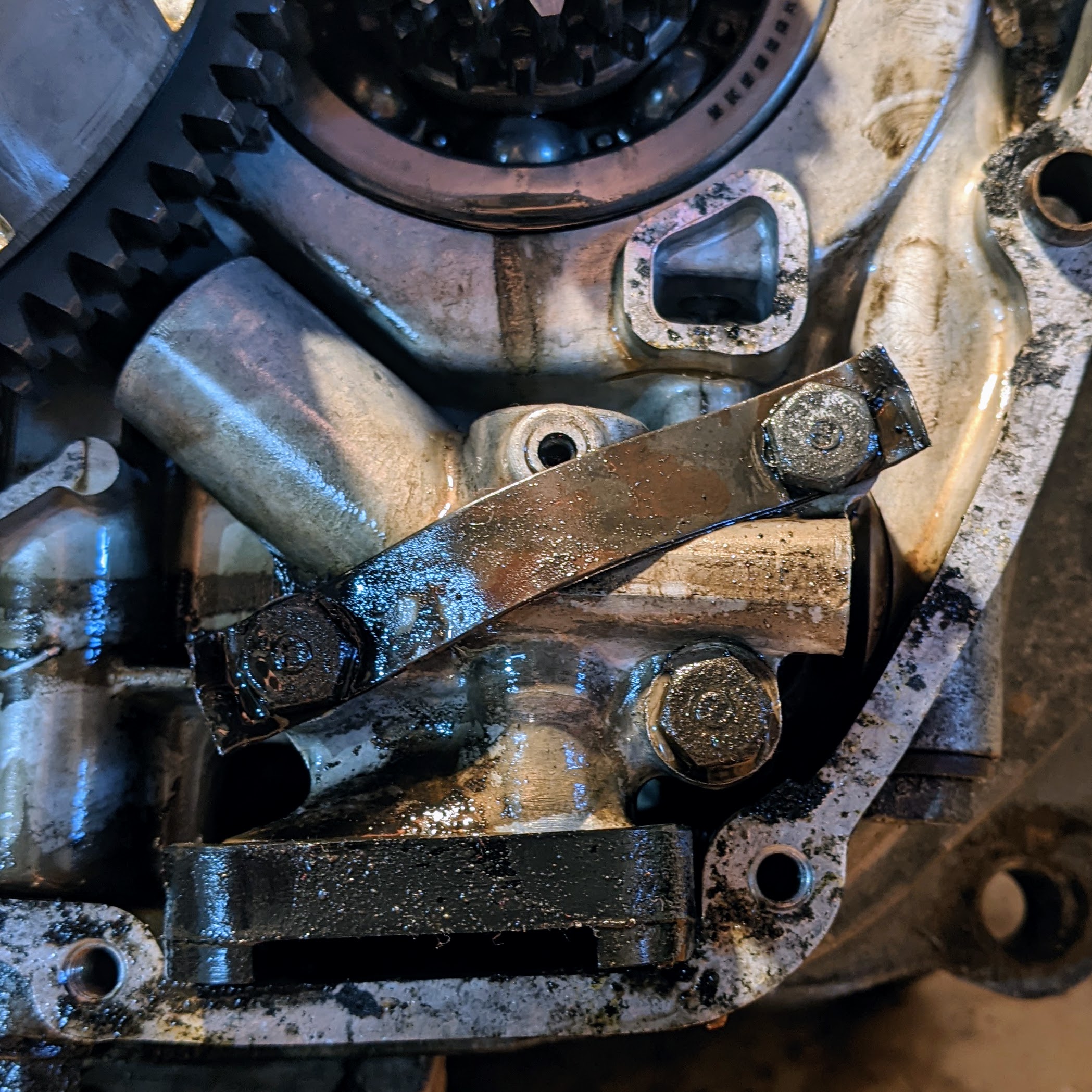
I didn't realize until after checking the parts diagram that Honda secured the oil pump with a rectangular lock washer. I figured it was something done by the PO.

Bez3Amq.jpg


The oil screen was fairly clean as well -- I was expecting more gunk.

1qrJezQ.jpg


I removed the clutch basket and visually inspected things. The plates are a little brownish (rust?), but flat. I couldn't feel or see any notching on the clutch basket.

sRQoLwU.jpg


On the rotor side, I removed the starter and starter chain as well as the front sprocket, which will be replaced. My cordless impact wrench couldn't budge the rotor set bolt. I guess I need to apply some heat and try again.

D5nASRL.jpg


My plan is to split the cases soon so I can clean the lower case and inspect the bottom end. Suggestions for things to watch out for will be appreciated. I'll try to take good photos and get input before sealing things back up.
 
Is that rotor bolt and rotor loose yet? If an impact won't get it (and hard to hold it anyway) you may need to slip the clutch basket on to jam a penny in the primary drive gears to remove it.
 
The head of that rotor bolt looks boogered up like a PO used a less than successful method previously. They do need to be tight, but because of the rotation direction they don't need to be so tight that you can never get them out. I'm surprised a modern cordless impact couldn't get it, so you might have to resort to the penny wedge and use a breaker bar with the bottom end bolted down.
 
Is that rotor bolt and rotor loose yet? If an impact won't get it (and hard to hold it anyway) you may need to slip the clutch basket on to jam a penny in the primary drive gears to remove it.

I got the set bolt out this morning after applying heat. I was planning to use the rear axle to pull the rotor, but I haven't gotten it loose and it's hard to generate torque by hand. I think I'm going to try to scrounge up a proper puller or an M16 x 1.5 bolt of an appropriate length. Looks like the box stores don't have fine thread in that size.
 
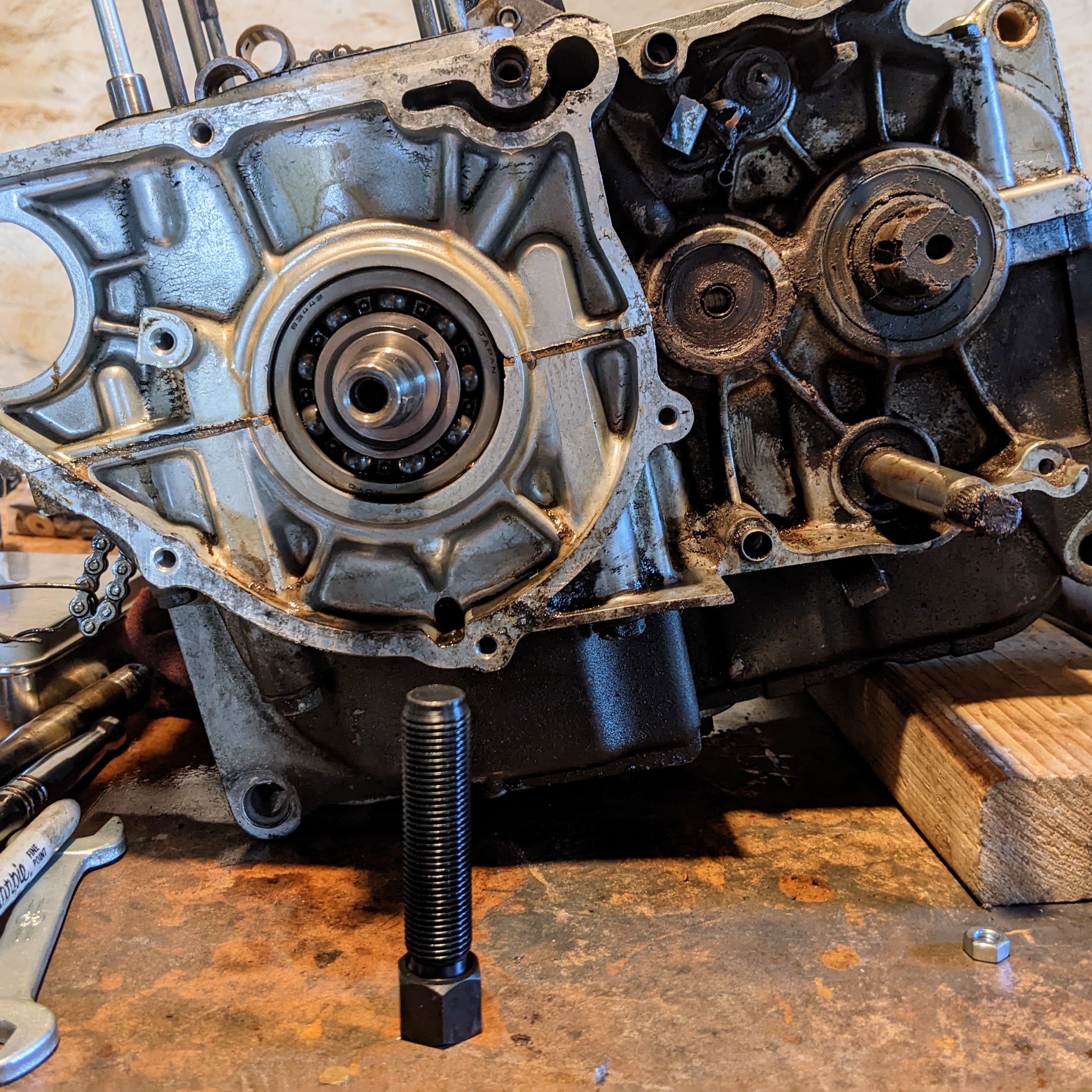
It's always good to have the proper tool. I was long overdue in acquiring an M16 x 1.5 rotor puller. Rotor and Starter Sprocket are removed. I hope to split the cases this weekend for an inspection of the bottom end.

w13zKIw.jpg
 
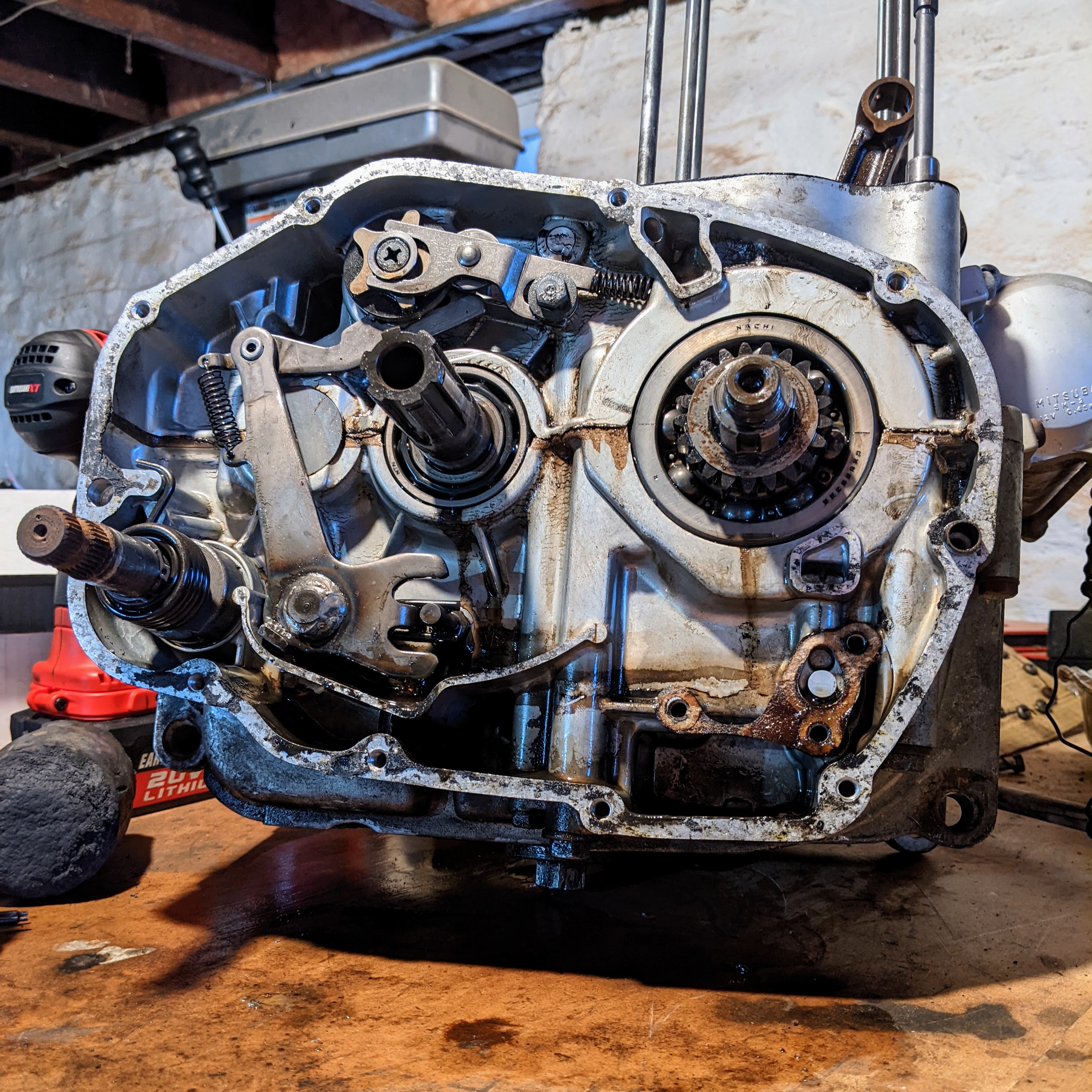
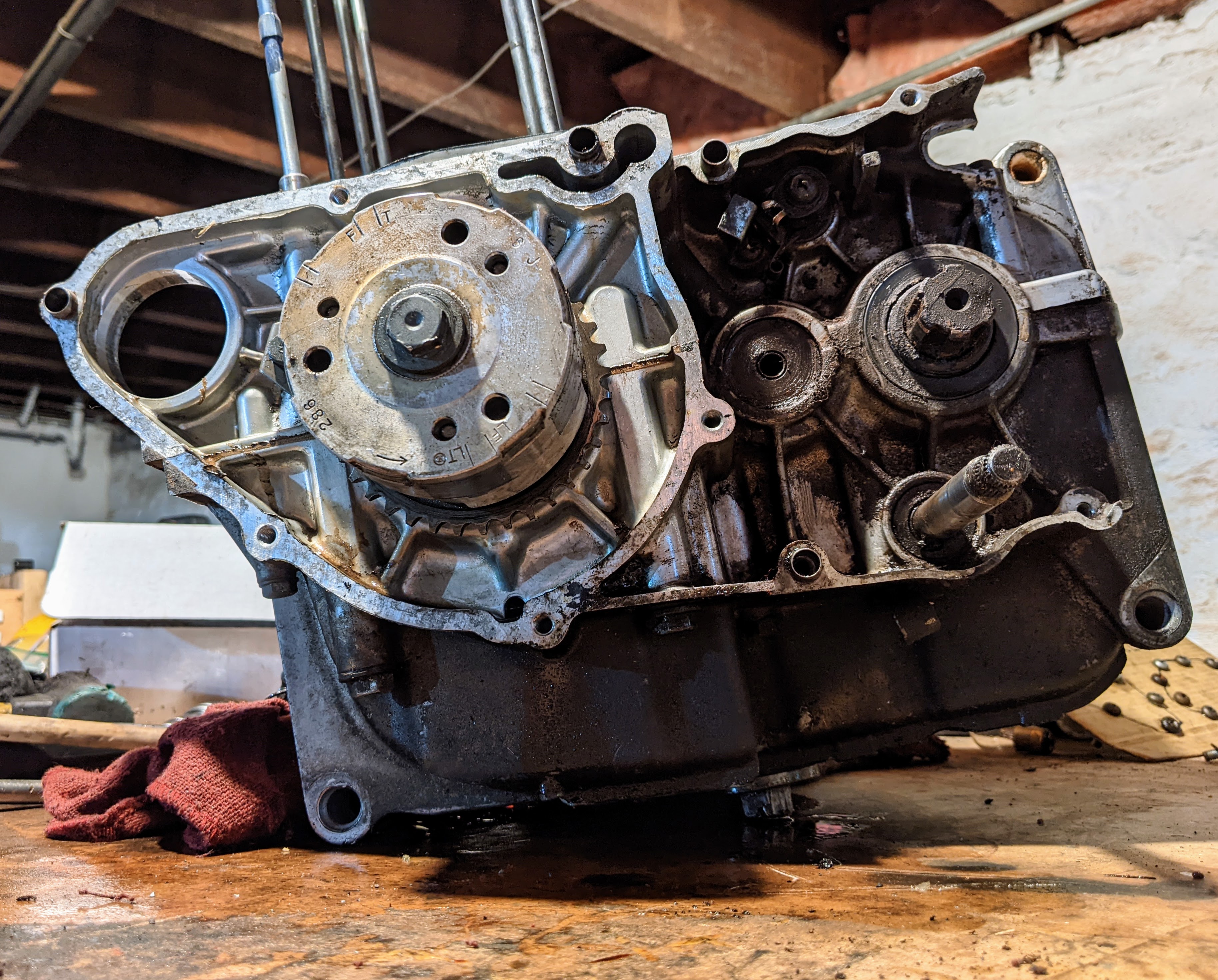
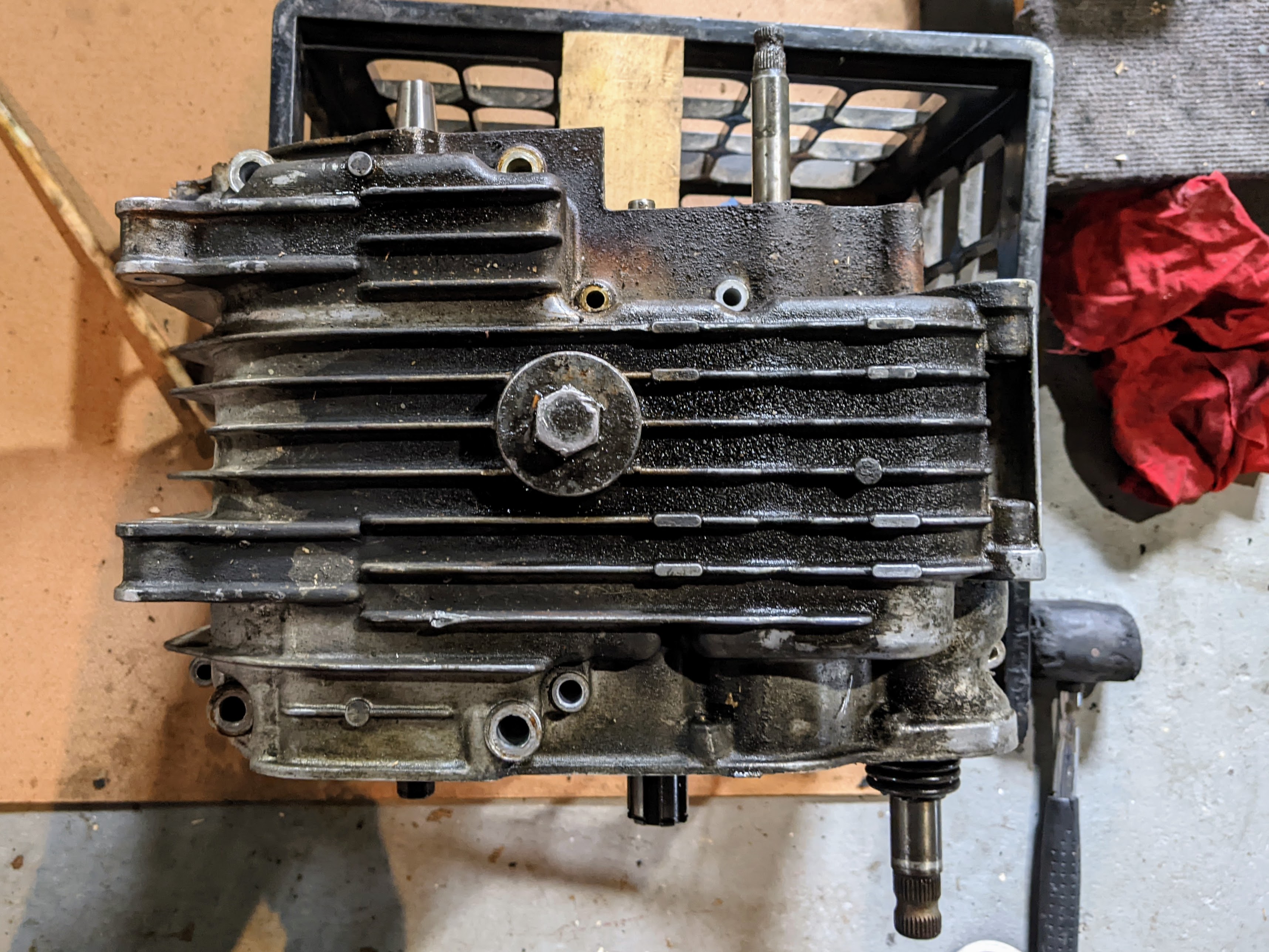
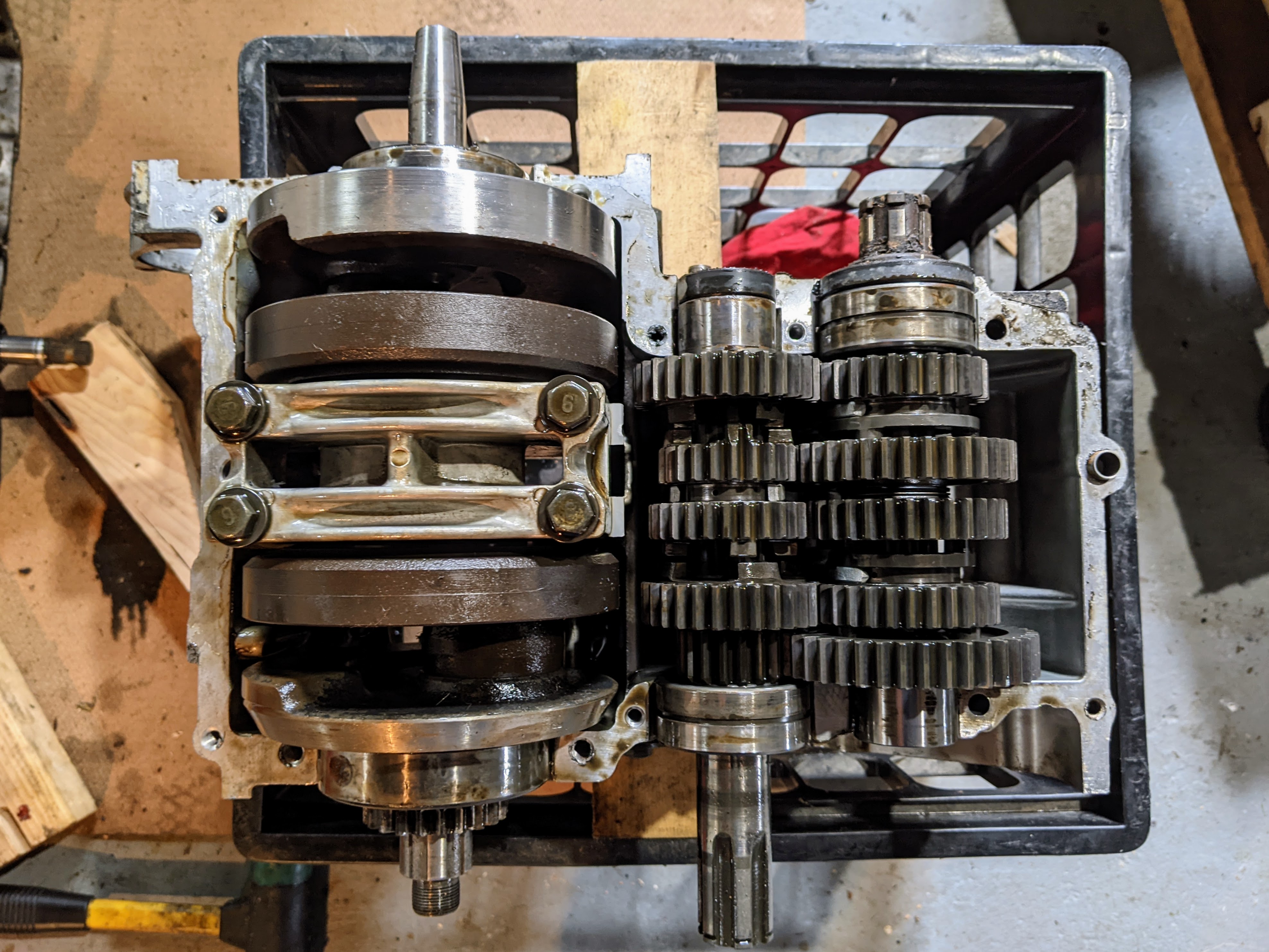
The FSM is a little short on advice in the case splitting department. I removed the two bolts in the top and the twelve in the bottom. I've tapped solid locations on the lower case with a rubber mallet to try to break the seal, but it hasn't come apart thus far. Is there a recommended method for separation?

IJxvFyA.jpg
 
Once you're sure all bolts are out, it's just stuck together. Rust/corrosion on the dowel pins is probably part of it. Just use a rubber or dead-blow hammer and smack the motor mount areas on front and back of the lower case and it will eventually give you that hollow sound that it's come loose. Just don't force anything in between the case halves, of course, but then I know you won't approach it like a Neanderthal.

Edit: the 175 has one bolt hidden by the drain plug but I do not believe the 350 does.
 
Thanks, Tom. I stopped when that 1% or so of Neanderthal DNA was about to kick in, but round two went in my favor.

Hyc33yX.jpg


The only other time I split cases was to replace the crankshaft on my CB450. In that instance, I cleaned up the lower case, replaced the crankshaft, and said "Yup, there's a bunch of stuff in here, so I'll leave it all alone," before sealing the cases back up. I'm going to clean up that case as much as possible, but I should also look at the shift forks and I guess that means I'll have to remove something. Back to the FSM...
 
The FSM disassembly procedure encompasses the whole bottom end and describes crankshaft removal prior to removal of the main shaft. It looks like I ought to be able to remove the main shaft without disturbing the crankshaft. Is that correct? I'd say the less I take apart, the better.
 
If you believe the crankshaft is fine you don't necessarily have to remove it, though the added weight will make cleaning the upper case a lot more physically difficult. However, if you plan to replace the cam chain with an endless one (advisable), you will need to remove the crank. There really is not specific order to remove things, you can lift the transmission shafts out however you like. You don't have to remove the shift drum or forks if all looks good and the drum and forks move freely, nor the detent mechanism if all appears good there..
 
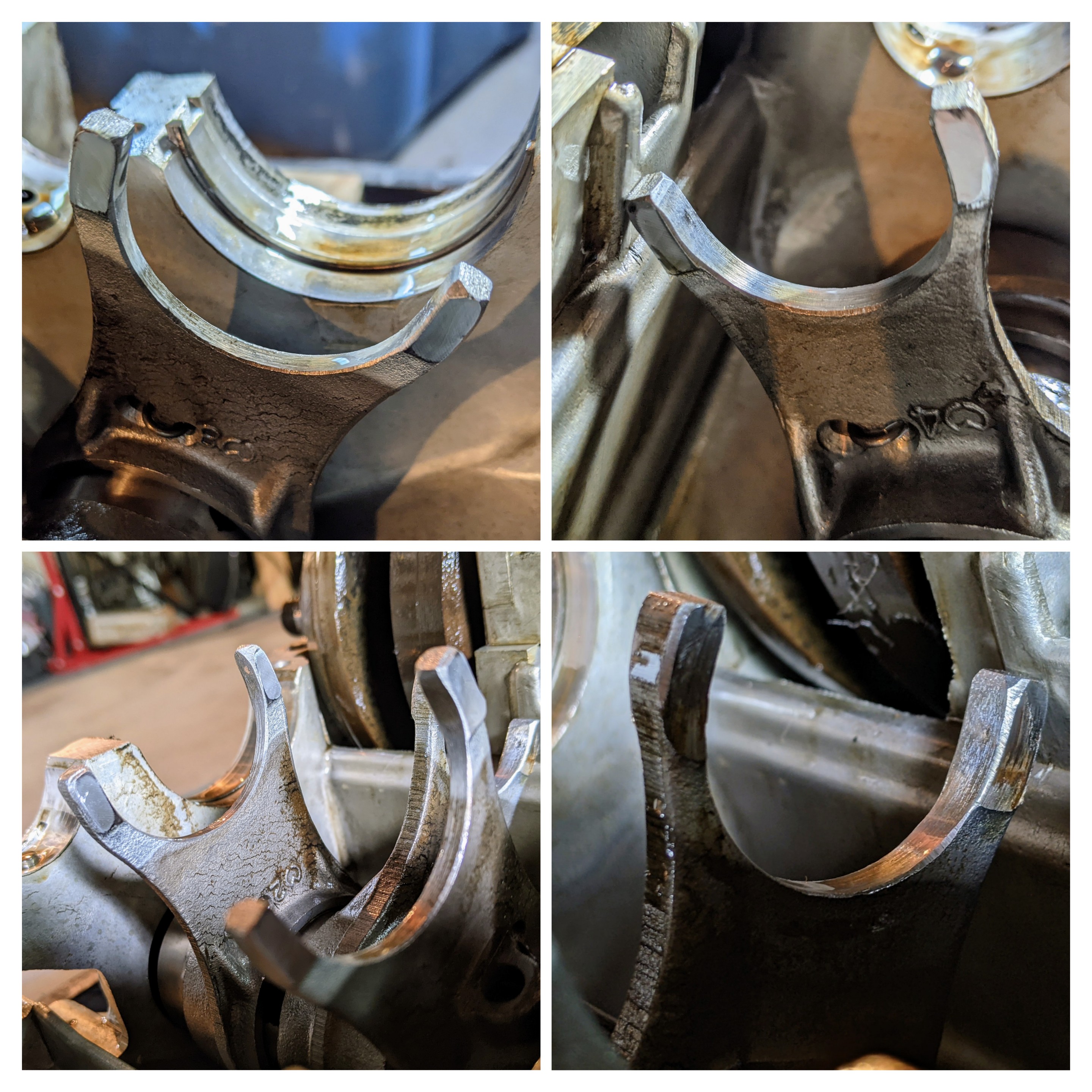
Here are a few pictures of the shift forks. I don't think I have a sense of good, bad, or ugly with these. I need to have a look at the detent mechanism next.

r98IV6H.jpg
 
From what is in the pictures they look fine, no nasty gouged half-circles from rubbing a gear which is typical of a bent fork. Remember, though this is exaggerated, this is what a bad shift fork looks like.

shift fork bad.jpg
 
From what is in the pictures they look fine, no nasty gouged half-circles from rubbing a gear which is typical of a bent fork. Remember, though this is exaggerated, this is what a bad shift fork looks like.

View attachment 23206


At least when you find a fork that looks that bad you know exactly what needs to be done.

Was there a lot of gunk in the bottom half? Sometimes the sludge in there is surprising. I've tried running a magnet around in the sludge to see if there are any steel filings in there as a way to figure out how worn things were. It wasn't much help. But now that you're this far you should take the time to do a thorough job.

Every once in a while we should say a quiet thank you to the Honda engineers who decide to split the cases horizontally like they did. They really thought the whole project out.
 
Every once in a while we should say a quiet thank you to the Honda engineers who decide to split the cases horizontally like they did. They really thought the whole project out.

Definitely worth mentioning Bob, and it was one of the things my father and I noticed about the twins once we graduated to them from our early singles in '68 and '69. We paid more attention to the fact that so many leaky bikes out there at the time (American and British) had vertically-split cases and Honda's horizontally-split cases made so much more sense.
 
From what is in the pictures they look fine, no nasty gouged half-circles from rubbing a gear which is typical of a bent fork. Remember, though this is exaggerated, this is what a bad shift fork looks like.

¡Ay caramba! Exaggerated wear is really helpful to see — sets a scale for comparison. I'll have another look, but my impression is that the forks were all straight.

Am I correct to think that anything sitting in the case halves should get Hondabond upon reassembly? In particular, I'm thinking about where the main shaft and countershaft ends sit in the case.

At least when you find a fork that looks that bad you know exactly what needs to be done.

Was there a lot of gunk in the bottom half? Sometimes the sludge in there is surprising. I've tried running a magnet around in the sludge to see if there are any steel filings in there as a way to figure out how worn things were. It wasn't much help. But now that you're this far you should take the time to do a thorough job.

Every once in a while we should say a quiet thank you to the Honda engineers who decide to split the cases horizontally like they did. They really thought the whole project out.

Good thought. There is a unhealthy layer of gunk in the bottom. I still do not have a parts washer, so I am planning to try to clean the case in stages. The first stage will be removing the gunk into an oil pan for recycling. Later stages have yet to be pinned down. I'll keep an eye out for metal once everything is in the oil pan.

It is nice how the cases go together. My little Puch ZA50 motor splits vertically — I'm guessing you've run into similar things with your scooter background.
 
¡Ay caramba! Exaggerated wear is really helpful to see — sets a scale for comparison. I'll have another look, but my impression is that the forks were all straight.

Am I correct to think that anything sitting in the case halves should get Hondabond upon reassembly? In particular, I'm thinking about where the main shaft and countershaft ends sit in the case.

Yes, the fork picture I posted is about as ugly as it gets. ANY marks like that, no matter how light or small, indicate activity that should not have happened so even the slightest scoring on the side of the fork means something. As for the shafts in the transmission... remember that the outer covers seal the oil inside the horizontally-split cases, so the inner walls do not need any sealant on them. On the 350 and 450 it helps to put some Hondabond around the circumference of the clutch rod seal for retention help as they are known to blow out at times (or you could fashion a simple retainer like I did for my 450), but there is no reason to put any on the inner surfaces where the cases meet or the bearing outers either since the bearings are all held in place by alignment pins and set rings.

I still do not have a parts washer...

The HF washer is cheap and you can use typical oil-based solvents in it despite their disclaimer about only using water-based stuff (I've done it for almost 7 years now in mine, works just fine) but it's a double-edged sword - it takes up space when you aren't using it, which is about 95% of the time, and the solvents do evaporate even if you keep it closed all the time. BUT, there's nothing like being able to immerse parts in good cleaning solution.
 
As for the shafts in the transmission... remember that the outer covers seal the oil inside the horizontally-split cases, so the inner walls do not need any sealant on them. On the 350 and 450 it helps to put some Hondabond around the circumference of the clutch rod seal for retention help as they are known to blow out at times (or you could fashion a simple retainer like I did for my 450), but there is no reason to put any on the inner surfaces where the cases meet or the bearing outers either since the bearings are all held in place by alignment pins and set rings.

Thanks for that explanation. I wasn't thinking about it correctly. On the rotor side the main shaft and countershaft are exposed to the environment, but, of course, that's why there are seals on that side. So, Hondabond around the new seals, but not on the outer radii of those shafts, on either side. The side wall in the vicinity of the front sprocket should get Hondabond as well then. I guess I'm just talking through what you explained to make sure I'm thinking correctly now.
 
So, Hondabond around the new seals, but not on the outer radii of those shafts, on either side. The side wall in the vicinity of the front sprocket should get Hondabond as well then. I guess I'm just talking through what you explained to make sure I'm thinking correctly now.

Yes, any crankcase wall that has outside exposure gets sealant, inner areas are covered by the crankcase cover for that area. The countershaft seal is sturdy and typically clamped well in the case halves so it isn't a risk (never seen one get blown out) but the clutch rod seal is somewhat notorious.
 
Back
Top Bottom